
Font size
 Worksheets
Carbon, Macromolecules of Life, and Enzymes
Total questions: 104
Worksheet time: 2hrs 44mins
What is the main function of nucleic acids?
Speeds up important chemical reactions in living things
Keeps the bodies of animals warm
Gives instructions for how the body works and gives information about an organism’s traits
Provides short term energy
Which macromolecule is organic?
carbohydrates
proteins
lipids
nucleic acids
all choices are correct
Glucose and starch are examples of?
protein
carbohydrate
lipid
nucleic acid
In order for something to be classified as "Organic," it would need to contain what atom?
Hydrogen
Oxygen
Carbon
Nitrogen
Which macromolecule makes up the majority of the cell membrane?
nucleotide
lipid
protein
carbohydrate
Which type of macromolecule passes genetic information from parents to their children?
lipids
proteins
carbohydrates
nucleic acids
compound made up of carbon, hydrogen, and oxygen atoms; source of short-term energy for the human body
carbohydrates
lipids
proteins
nucleic acids
compound made up of carbon, hydrogen, and oxygen atoms; stores long-term energy for the human body
carbohydrates
lipids
proteins
nucleic acids
macromolecule group that includes fats, oils, and waxes
carbohydrates
lipids
proteins
nucleic acids
macromolecule group that includes sugars and starches
carbohydrates
lipids
proteins
nucleic acids
biomolecule needed by the body for growth, repair, and bodily functions
carbohydrates
lipids
proteins
nucleic acids
macromolecule group that is found in DNA and RNA (genetic material)
carbohydrates
lipids
proteins
nucleic acids
compound made up of carbon, hydrogen, oxygen, nitrogen, and phosphorus atoms
carbohydrates
lipids
proteins
nucleic acids
a very large organic molecule composed of many smaller molecules
atom
nucleotide
monosaccharide
macromolecule
building block of nucleic acids
nucleotide
amino acid
fatty acid
protein
building block of proteins
amino acid
fatty acid
monosaccharide
nucleic acid
building block of carbohydrates
amino acid
fatty acid
nucleotide
monosaccharides
What element is known as the "element of life" and is found in organisms? It is able to form four strong covalent bonds.


Which of the following stores and transmits hereditary information?
carbohydrates
lipids
protein
nucleic acid
Which of the following are found on the surface of cell membrane to help cells recognize each other and fight diseases?
carbohydrates
lipids
proteins
nucleic acids
The monomer MONOSACCHARIDE is used to build which macromolecule?
carbohydrates
lipids
proteins
nucleic acids
The monomer AMINO ACID is used to build which macromolecule?
carbohydrates
lipids
proteins
nucleic acids
The monomer NUCLEOTIDE is used to build which macromolecule?
carbohydrates
lipids
proteins
nucleic acids
Forms the cell membranes?
lipids
carbohydrates
proteins
nucleic acids
Which biomolecule helps form muscles?
Nucleic Acid
Carbohydrate
Protein
Lipids

Which substance is considered a building block for all living things?
Carbon
Glucose
Which reason best explains why carbon is able to form macromolecules?
Carbon can bond with many elements.
Carbon CANNOT bond with many elements.
Which statement best illustrates why carbon is so important to life on Earth?
Carbon-based macromolecules are found in living things.
Carbon-based macromolecules are NOT found in living things.
In what form is carbon found in the atmosphere?
CO2
C6H12O6
H2O
ATP
Which statement best describes the relationship between photosynthesis and cellular respiration?
Photosynthesis removes carbon from the atmosphere, and cellular respiration releases carbon back into the atmosphere.
Photosynthesis is part of the carbon cycle, and cellular respiration is not.
Only plants perform
Photosynthesis releases carbon into the atmosphere, and cellular respiration removes carbon from the atmosphere.
Which macromolecule provides the blueprint for living things by storing and transmitting genetic information?
protein
carbohydrate
lipid
nucleic acid
Which reason best explains why carbon is able to form macromolecules?
Carbon is a very large element.
Carbon can bond with many elements.
Carbon is found in all living things.
Carbon is found in energy-storing molecules.
Which statement best illustrates why carbon is so important to life on Earth?
Carbon occurs as a solid, a liquid, and a gas.
Carbon is found in both the living and nonliving worlds.
Carbon is stored in large quantities in fossil fuels.
Carbon-based macromolecules are found in living things.
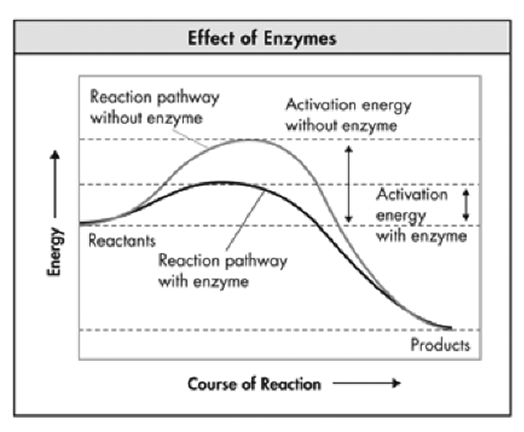
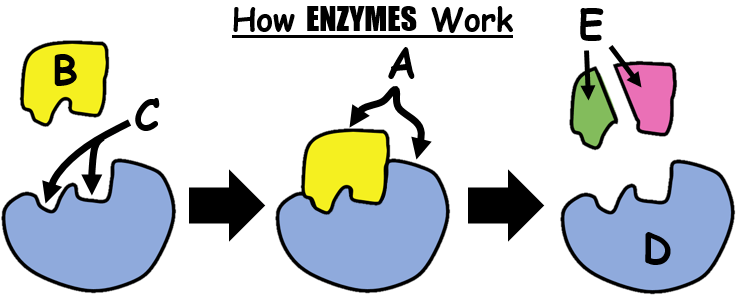
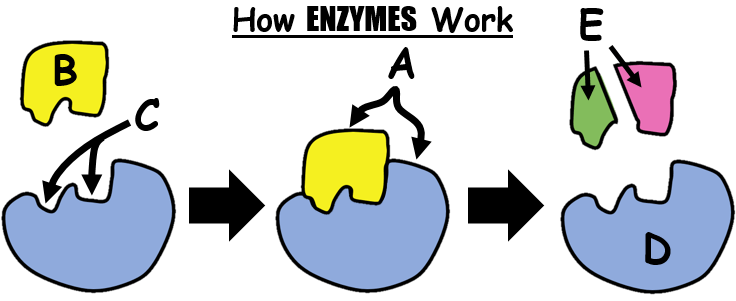
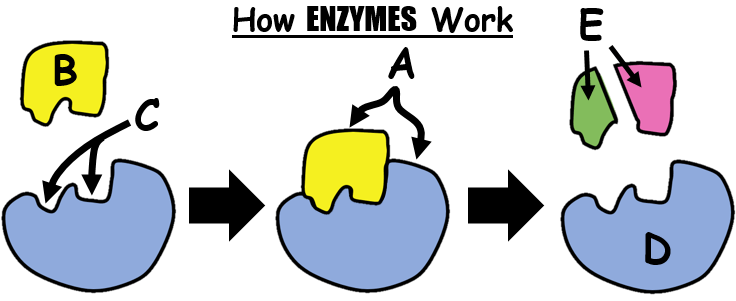
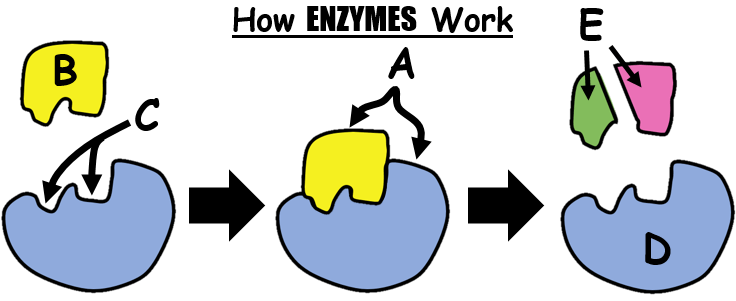

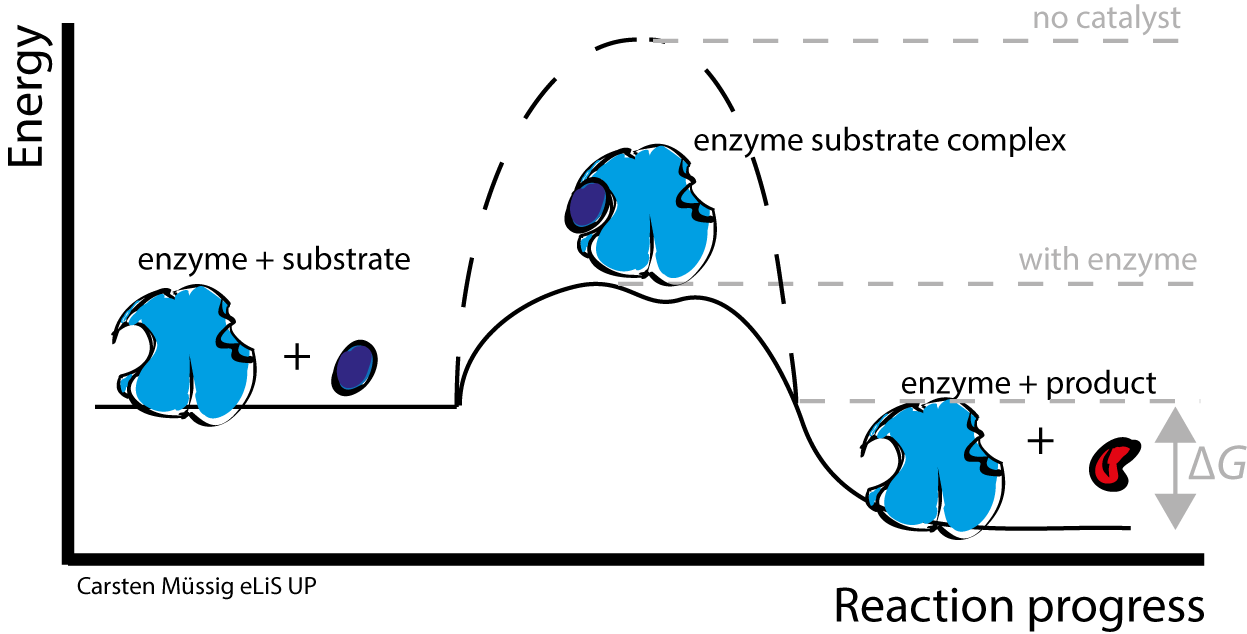
Enzymes are _______________ that _____________________ chemical reactions by ____________ the amount of activation energy required to start the reaction.
carbohydrates, slow down, lowering
proteins, speed up, increasing
lipids, speed up, lowering
proteins, speed up, lowering
A baby is locked in the car on a hot day. What is most likely to happen to the child?
The child's body will adjust and cause it to maintain homeostasis
The child's enzymes will denature causing chemical reactions to speed up in the body, which will lead to death.
The child's enzymes will denature causing chemical reactions to slow down in the body, which will lead to death.
The activation energy for chemical reactions will remain unchanged and therefore the child will live.
All of the following affect the functioning of an enzyme EXCEPT:
pH
temperature
metabolism
enzyme concentration, substrate concentration
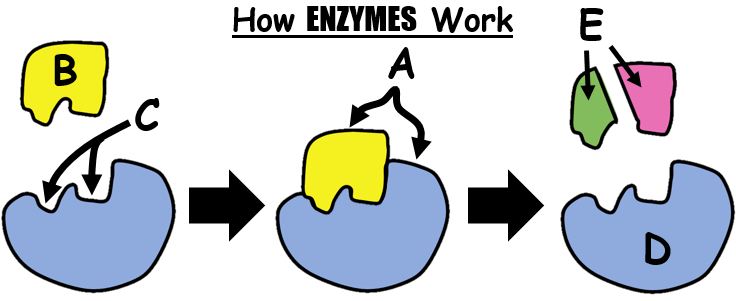
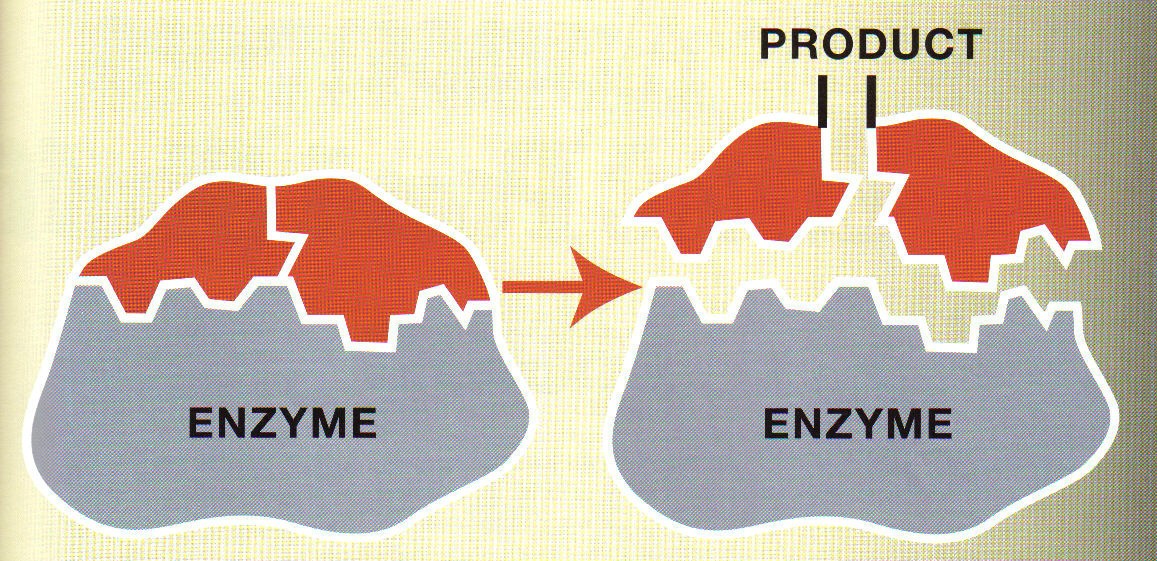
Where do substrates bind to an enzyme?
calcium channels
active site
receptor molecules
voltage-gated channels
What is the purpose of an enzyme?
control how many reactions occur
raise activation energy
give permission for the reaction
speed up chemical reactions
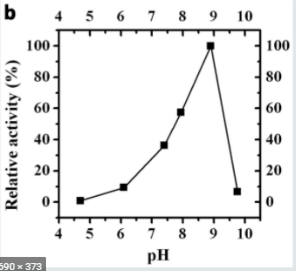
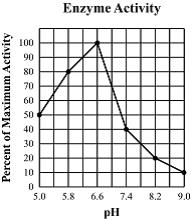
What is the optimal pH for this enzyme?
6
10
9
7
Changes in pH and temperature can ___________________ an enzyme which causes it to lose its shape and affects its function.
puncture
denature
double
delete
Which of the following best explains why enzymes are necessary for reactions in our cells?
The reactions are too slow to meet the needs of the cell if enzymes are missing.
Enzymes supply the oxygen necessary for the reactions.
Enzymes change reactants from solid to liquid during the reactions.
The reactions take up too much space in the cell if enzymes are missing.
In what ways do enzymes help a cell carry out its chemical reactions?
Enzymes lower the amount of reactants needed for the reaction to occur.
Activation energy and the rate of reaction are both increased by enzymes.
Enzymes speed up chemical reactions by lowering the activation energy needed.
Enzymes slow the reaction down by increasing the amount of energy produced.

Enzymes are specific. This means that an enzyme only works with molecules that are....
the right size and shape
broken down already
present in water
too big for the body to handle
What does an enzyme need in order to work properly?
The right amount of oxygen & CO2
The right temperature & amount of water
The right temperature & pH
The right temperature & pressure
Which category of macromolecules do enzymes belong to?
Carbohydrates
Proteins
Fats/Lipids
Lipids/Carbohydrate provide long-term energy for cells.
Lipids
Carbohydrates
Lipids / carbohydrates are also called fats.
Lipids
Carbohydrates
DNA and RNA are made up of nucleotides / amino acids.
nucleotides
amino acids
Nucleic acids / Carbohydrates provide proteins with specific instructions for cell growth and repair.
Nucleic acids
Carbohydrates
All of the following can cause an enzyme to work less effectively EXCEPT -
Concetration (amount of) substrate
Temperature
pH
Perfect Conditions
Which of the following best defines denature?
An enzyme working in optimal conditions
An enzyme's shape changes causing it to no longer catalyze reactions.
A substrate's shape changes to match the enzyme
An enzyme shape changes to match the substrate.

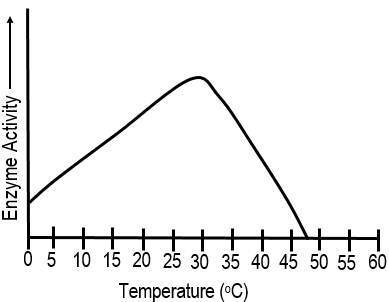
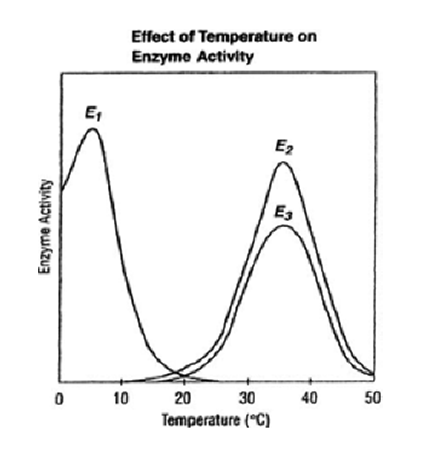
Based on the graph, what is the optimal temperature for the enzyme?
20
40
43
60

Based on the graph, what pH does Enzyme C work best at?
1.5
6
8
9
What does an enzyme do for the activation energy?
It raises it
It slows it down
It speeds it up
It reduces it
What are the enzymes called when they are at high temperature or extreme pH?
denatured
Killed
inactive
normal

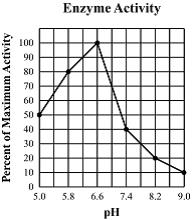
Cells can only work if their enzymes are functioning. What can you infer from the graph?
Cells function best at low pH values
Cells function fine at all pH values
Cells function best at high pH values
Cells do not function well if the pH is too high or too low
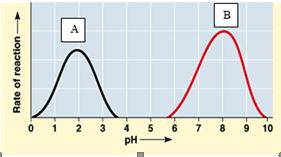
What is the optimal pH of enzyme A?
8
2
5.7-10
10

What is the optimal pH of trypsin?
3.5
4
7.8
10
What happens to pepsin at a pH of 5.8?
Denatures
Works the best
Doubles
Changes in pH and ___ can alter the work of an enzyme.
Substrates
Reactants
Sunlight
Temperature

Which reaction would occur quicker?
Reaction with enzyme (blue)
Reaction without enzyme (red)

What happens to the reaction without an enzyme?
It does not occur.
It occurs but takes longer.
It speeds up.

