
Font size
 Worksheets
Unit 3 Review
Total questions: 128
Worksheet time: 4hrs 27mins
Which of the following is NOT a part of photosynthesis?
Calvin cycle
Light reactions
Light independent reactions
Krebs cycle
Where do the light reactions take place?
Cytosol
Thylakoid membrane
Stroma
Mitochondrial matrix
What is the input for the light reactions?
Light energy
ATP
NADPH
H2O
What is the output for the light reactions?
Light energy
ATP
NADPH
H2O
Where does the Calvin cycle take place?
Cytosol
Thylakoid membrane
Stroma
Mitochondrial matrix
What is the input for the Calvin cycle?
CO2
H2O
NADPH
ATP
G3P
What is the output for the Calvin cycle?
CO2
H2O
NADPH
ATP
G3P
How many CO2 molecules are needed to make 1 G3P?
1
2
3
6
How many turns of the Calvin cycle are required for 1 G3P to be synthesized?
1
2
3
6
How many NADPHs are required for the Calvin cycle?
2
3
6
9
How many ATPs are required for the Calvin cycle?
2
3
6
9
Which of the following describes the pathway of electrons in the light reactions?
O2 → PS II →
PS I → NADH
O2 → PS II →
PS I → NADPH
O2 → PS I →
PS II → NADPH
O2 → PS I →
PS II → NADH
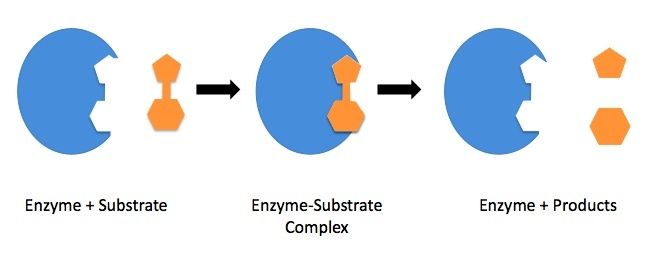
Label the parts of the enzyme model

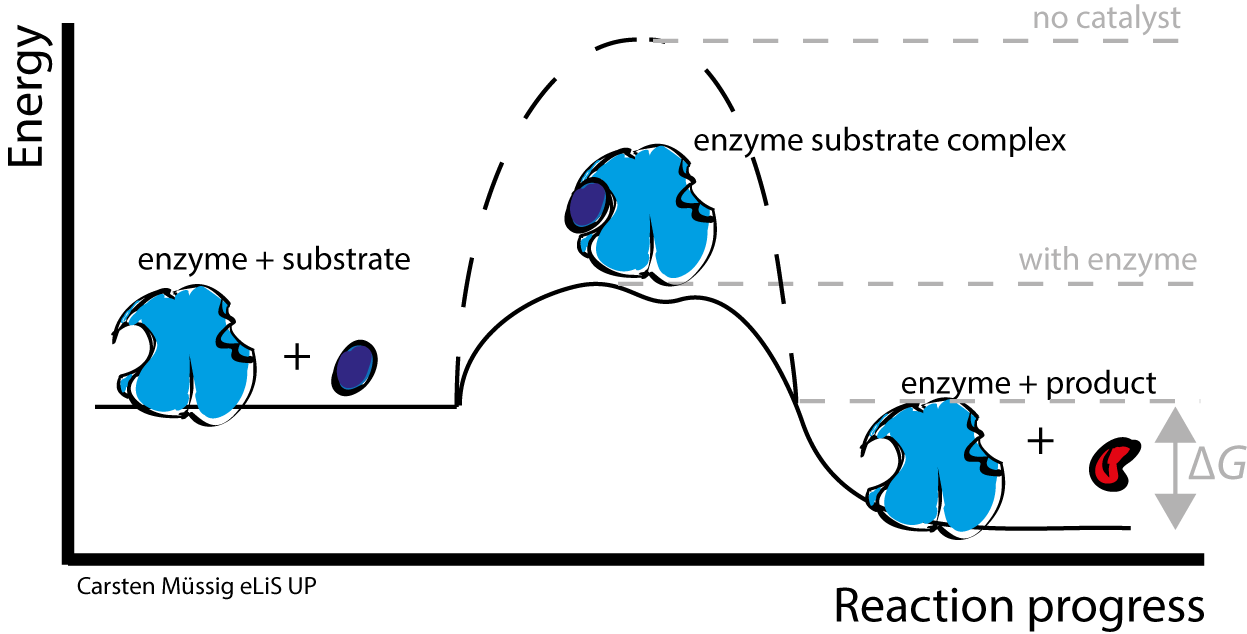
Enzyme can be used again and again
True
False
Enzymes act on many different substrates
True
False
Allosteric inhibitors block the active site
true
false
What is an inhibitor?
the region of an enzyme that attaches to a substrate
a change in the shape of a protein
substance that can bind to an enzyme and prevent the substrate from binding
macromolecules that contain carbon, hydrogen, oxygen, and nitrogen
What are vitamins and minerals?
Part of our food, give us energy
activators
inhibitors
enzymes
Which term most precisely describes the cellular process of breaking down large molecules into smaller ones?
catabolism
metabolism
anabolism
dehydration
Which of the following is true for all exergonic reactions?
The products have more total energy than the reactants
The reaction proceeds with a net release of free energy.
The reaction goes only in a forward direction: all reactants will be converted to products, but no products will be converted to reactants.
A net input of energy from the surroundings is required for the reactions to proceed
You have discovered an enzyme that can catalyze two different chemical reactions. Which of the following is most likely to be correct?
The enzyme contains a-helices and b-pleated sheets.
The enzyme is subject to competitive inhibition and allosteric regulation.
Two types of allosteric regulation occur: The binding of one molecule activates the enzyme, while the binding of a different molecule inhibits it.
Either the enzyme has two distinct active sites or the reactants involved in the two reactions are very similar in size and shape.
Increasing the substrate concentration in an enzymatic reaction could overcome which of the following?
the need for a coenzyme
allosteric inhibition
insufficient cofactors
competitive inhibition
Match the following
Binds to active site to slow reaction
Competitive
Binds at a different spot on enzyme to change shape
Allosteric
Binds to active site
Substrate
Speeds up a chemical reaction without being used up
Catalyst
Part of enzyme where reactants bind to
Active Site
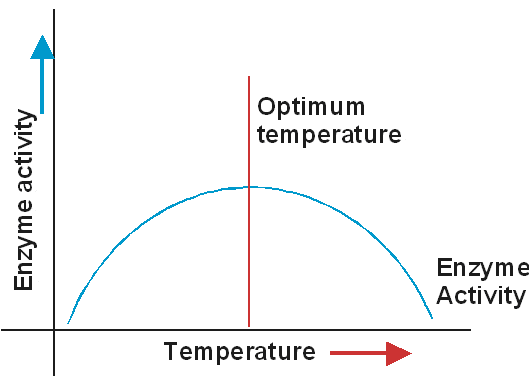
Enzyme X has an optimum rate of reaction at 97 degrees Fahrenheit. How would rate of reaction be affected if temperature fell to 92 degrees Fahrenheit?
increase - not as hot
decrease - no substrate would be produced
increase - more substrate would be produced
decrease - cause a change in the shape of the protein


Which of the following is NOT a step in cellular respiration?
Glycolysis
Krebs Cycle
Oxidative Phosphorylation
Calvin Cycle
Where does glycolysis take place?
Cytosol
Mitochondrial matrix
Mitochondrial cristae
Stroma
Thylakoid membrane
What is the input of glycolysis?
Glucose
Pyruvate
NADH
G3P
What is the output of glycolysis?
Glucose
2 pyruvate
2 NADH
2 ATP
2 FADH2
What is the main function of glycolysis?
To complete the breakdown of glucose
To generate a proton gradient and synthesize ATP
To split a glucose molecule in half and synthesize NADH
Where does the Krebs Cycle take place?
Cytosol
Mitochondrial matrix
Mitochondrial cristae
Stroma
Thylakoid membrane
What is the input of the Krebs Cycle?
Pyruvate
Acetyl CoA
Glucose
NADH
What is the output of the Krebs Cycle (one turn)?
3 NADH
1 FADH2
1 ATP
2 CO2
Acetyl CoA
What is the main function of the Krebs Cycle?
To complete the breakdown of glucose
To generate a proton gradient and synthesize ATP
To split a glucose molecule in half and synthesize NADH
Where does oxidative phosphorylation take place?
Cytosol
Mitochondrial matrix
Mitochondrial cristae
Stroma
Thylakoid membrane
What is the input of oxidative phosphorylation?
NADH
FADH2
Pyruvate
Glucose
ATP
What is the output of oxidative phosphorylation?
ATP
NADH
FADH2
Glucose
What is the main function of oxidative phosphorylation?
To complete the breakdown of glucose
To generate a proton gradient and synthesize ATP
To split a glucose molecule in half and synthesize NADH
Which step of cellular respiration REQUIRES oxygen?
Glycolysis
Krebs Cycle
Oxidative Phosphorylation
Calvin Cycle
Which step can be performed by prokaryotes AND eukaryotes?
Glycolysis
Krebs Cycle
Oxidative Phosphorylation
Calvin Cycle
Where does glycolysis take place?
Cytosol
Mitochondrial matrix
Mitochondrial cristae
Thylakoid
Glycolysis requires oxygen.
True
False
What is the starting material for glycolysis?
Pyruvate
Acetyl CoA
Glucose
G3P
What is the main function of glycolysis?
To rearrange the glucose molecule to be broken down
To split the glucose molecule to release energy
To recreate acetyl CoA for the Krebs cycle
To absorb and store energy in ATP molecules
What process takes place if NADH is unable to be oxidized?
Krebs cycle
Electron transport chain
Chemiosmosis
Fermentation
There are 10 steps in glycolysis, how many enzymes catalyze these steps?
8
9
10
11
What are the products of glycolysis?
2 ATP, 2 NADPH, 2 pyruvate
2 ADP, 2 NADH, 2 pyruvate
2 ATP, 2 NADH, 2 pyruvate
2 ADP, 2 NADPH, 2 pyruvate
How does glycolysis lead to ATP synthesis?
Glucose provides the phosphate for ADP to synthesize ATP
Glycolysis splits the glucose molecule to create G3P
High energy electrons are stored in NADH for the ETC
Acetyl CoA is synthesized for the Krebs cycle
Justify that glycolysis evolved before oxygen was present in the atmosphere.
Glycolysis does not require oxygen which represents that it evolved prior to free oxygen in the atmosphere
Glycolysis does not take place in the mitochondria and thus does not require oxygen
Glycolysis splits a glucose molecule into 2 pyruvate molecules which does not require oxygen
Glycolysis takes place in all living organisms which means it evolved prior to free oxygen in the atmosphere
Justify that glycolysis evolved prior to the mitochondria.
Glycolysis takes place in the cytosol
Glycolysis does not require a membrane which represents that it evolved prior to membrane bound organelles
Glycolysis has instructions in the nuclear DNA
Glycolysis does not require mitochondrial DNA which represents that it evolved prior to membrane bound organelles
What are the two parts of oxidative phosphorylation?
Glycolysis & Krebs cycle
Krebs cycle & Electron transport chain
Electron transport chain & Chemiosmosis
Glycolysis & Chemiosmosis
Where does oxidative phosphorylation take place?
Chloroplast
Mitochondrial cristae
Mitochondrial matrix
Cytosol
Which direction are protons pumped during the electron transport chain?
Into the mitochondrial matrix
Into the intermembrane space
Into the cytosol
Into the thylakoid
Which part of the cell will have the highest pH due to cellular respiration?
Cytosol
Mitochondrial matrix
Intermembrane space
Thylakoid
How does the electron transport chain facilitate the synthesis of ATP?
The ATP is synthesized at the end of the electron transport chain
The ATP is synthesized by the protons combining with the oxygen in the electron transport chain
The ATP is synthesized by the protons flowing down their concentration gradient after being pumped out by the ETC
The ATP is synthesized by the ATP synthase found in the electron transport chain
What is the function of decoupling oxidative phosphorylation in the electron transport chain?
Generate heat to regulate body temperature in endotherms
Generate heat to regulate body temperature in ectotherms
Generate ATP to power cellular activity in cells
Generate ATP to power activity in organisms
What does the NADH and/or FADH2 that is brought to the electron transport chain come from?
Glycolysis
Krebs cycle
Pyruvate oxidation
Cytoplasmic reactions
Where would you find an electron transport chain in a plant cell?
Mitochondrial cristae
Thylakoid membrane
Endoplasmic reticulum
Golgi bodies
Describe what would happen if the mitochondrial inner membrane was ruptured.
ATP synthesis would be inhibited
ATP synthesis would be promoted
The electron transport chain would increase in activity
The electron transport chain would decrease in activity
FUN FACT: How many ATPs are synthesized from the energy carried by NADH and FADH2 (on average)?
1 NADH = 1 ATP
1 FADH2 = 1 ATP
1 NADH = 2 ATP
1 FADH2 = 1 ATP
1 NADH = 3 ATP
1 FADH2 = 2 ATP
1 NADH = 2 ATP
1 FADH2 = 3 ATP
What organelle does photosynthesis
chloroplast
mitochondrion
nucleus
leaf
Which color light will have the fastest photosynthesis
green only
red only
blue only
white light
What are the two reactants for photosynthesis?
sun
water
oxygen gas
carbon dioxide
What are the two parts of photosynthesis? Select both answers
light reaction
glycolysis
Calvin cycle
electron transport chain reaction
What two energy molecules are made by the light reaction? Select both answers.
NADPH
glucose
ATP
oxygen gas
What is the goal of the Calvin cycle
make sugar
make oxygen gas
make ATP
make water
Which molecule supplies chlorophyll with electrons
sun
water
oxygen gas
NADPH
Photosynthesis makes and uses ATP.
True
False
The oxygen gas we breathe comes from the splitting of water during the light reaction
True
False
The carbon dioxide is used by the plant during
the light reaction
the Calvin cycle
Plants use their stomata to obtain
water
carbon dioxide
oxygen gas
The more CO2 in the air, the faster photosynthesis can occur
True
False
Chlorophyll
converts light energy to electron energy
takes CO2 and combines it with water
absorbs green light
is located in the stroma of a chloroplast
Plants are producers and autotrophs
true
false
Which molecule has more energy?
water
carbon dioxide
sugar
Where is chlorophyll located?
stroma
cytoplasm
thylakoid membrane
stomata
Disc-like structures found in the chloroplasts?
thylakoids
stomata
chlorophyll
stroma
Which of the following are products in the process of cellular respiration?
carbon dioxide and oxygen
carbon dioxide and water
glucose and oxygen
glucose and water
Which of the following are reactants in the process of cellular respiration?
carbon dioxide and water
glucose and oxygen
carbon dioxide and oxygen
glucose and water
Cellular respiration is a process that __________ energy.
absorbs
captures
releases
stores
What is the electron carrier molecule involved in cellular respiration?
DNA
mRNA
NADH
NADPH
What is the alternative name for the Krebs cycle?
acetic acid cycle
carbon fixation
citric acid cycle
pyruvic acid cycle
Aerobic means __________ .
"requires hydrogen"
"needing electrons"
"forming ATPs"
"requires oxygen"
The correct order of stages of cellular respiration is
glycolysis - the Calvin cycle - electron transport.
the light reactions - glycolysis - the Krebs cycle.
glycolysis - the Krebs cycle - electron transport.
electron transport - glycolysis - the Krebs cycle.
Which of the following represents the correct cycling of gases?


Which of the following represents the correct cycling of gases?

Four students classified the main energy conversions that occur during photosynthesis and cellular respiration. Which student best classified the energy conversions that occur in the two processes?
student 1
student 2
student 3
student 4
A cell in the leaf of a green plant performs both photosynthesis and cellular respiration, often at the same time. Which statement best describes how these processes are related to each other?
Both processes produce carbon dioxide.
Both processes require energy directly from the Sun.
Products of one process are used as some of the reactants for the other process.
Thermal energy from one process is used as the energy source for the other process.
Which statement best describes both mitochondria and chloroplasts?
They both contain their own RNA and are involved in transcription.
They both contain their own DNA and are involved in energy conversions.
They both contain their own DNA and are involved in controlling the activities of a cell.
They both contain their own RNA and are involved in storage of nuclear genetic material.
An organism carries out both photosynthesis and cellular respiration. Which statement describes a difference between these two processes?
Only cellular respiration creates chemical energy.
The processes occur in different types of animal cells.
Only photosynthesis changes light energy into chemical energy.
The processes occur at different times during the animal’s life cycle.
What are the THREE outputs of cellular respiration?
ATP
carbon dioxide
glucose
oxygen gas
water
The electron transport chain of photosynthesis is initiated by ____ in _____.
Photosystem I; absorption of light
absorption of light; Photosystem I
Photosystem II; absorption of light
absorption of light; Photosystem II
Electron transport helps establish a _____ that powers ATP production.
proton gradient
vacuole
peroxisome
power vault
When Photosystem II absorbs light, it becomes ____.
dull
light
excited
Photosystem IV
This excites the chlorophylls, making its electrons move faster.
Light Photons
Protons-E
Proton Gradient
Neurogen Light
Where does the ETC get the resources it needs to carry out its processes? (Choose all that apply)
glycolysis
Krebs
photosynthesis
mitosis
Enzymes are an example of
lipids
carbohydrates
protein
nucleic acid
What is a substance called if it speeds up a chemical reaction?
reusable
catalyst
specific
fragile

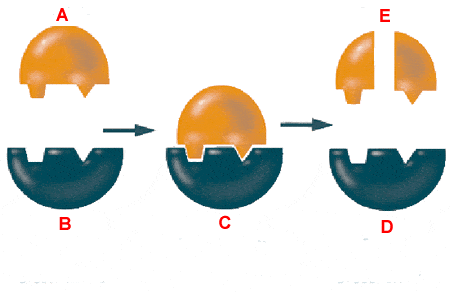
In the diagram, what is letter A?
product
enzyme-substrate complex
substrate
active site

Letter D...
enzyme
active site
substrate
products

Letter B...
substrate
active site
enzyme
products

Letter C...
products
substrate
enzymes
active site

Letter E...
active site
products
substrate
enzyme
An enzyme speeds up a reaction by
raising the activation energy
lowering the activation energy
releasing energy
absorbing energy.
What happens when enzymes are heated to a high temperature?
The shape of the enzyme are changed and it denatures
The enzymes die
The enzymes' amino acid sequence changes
The enzymes remain the same
What happens to an enzyme when it is denatured?
Activation energy is lowered
It becomes stronger
It loses its shape
Activation energy is raised
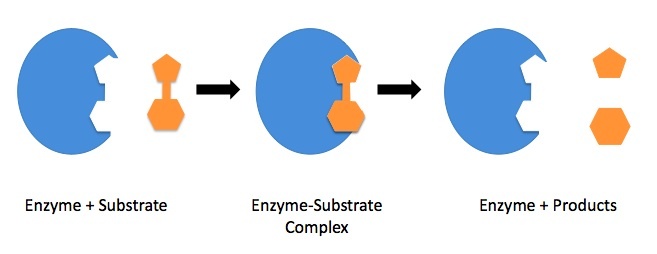
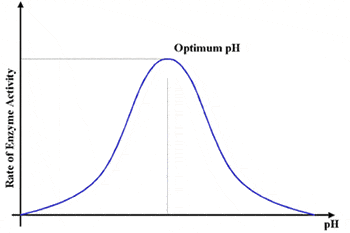
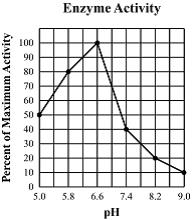

Which of the following would be Most likely to be found in the stomach?
chymotrypsin
pepsin
cholinesterase
papain
Activation energy
proteins that speed up chemical reactions
Changing substances by breaking and forming bonds (includes hydrolysis and dehydration reactions)
the capacity for doing work
the energy needed to start a chemical reaction

