
Font size
 Worksheets
Physical Science Semester 1 Exam
Total questions: 101
Worksheet time: 51mins
How well a measurement is known, how uncertain it is
Precision
Volume
Density
Inference
Evidence
One possible conclusion that is supported by evidence
Precision
Volume
Density
Inference
Evidence
The amount of space an object takes up: aka it’s size
Mass
Volume
Density
Inference
Evidence
Data or observations used to support an idea
Precision
Volume
Density
Inference
Evidence
The amount of matter (stuff) in something
Mass
Volume
Density
Inference
Evidence
The amount of matter IN a SPECIFIC amount of space
Mass
Volume
Density
Inference
Evidence
A prediction or explanation without a lot of evidence (yet)
Mass
Volume
Hypothesis
Inference
Evidence
You want to measure the volume of a glass of milk. Which of the following METRIC units would be the most appropriate to do this?
Milligrams (mg)
Ounces (oz)
Centimeters (cm)
Kiloliters (kL)
Milliliters (mL)
1 milliliter (mL) is the exact same as
1 cubic centimeter (cm³)
1 millimeter (mm)
1 centimeter (cm)
1 cubic meter (m³)
Which of the following is NOT a metric (SI) unit?
meter
pound
second
gram
none of these
The metric base unit used to measure length is a _______________.
b. meter
a. liter
c. gram
d. second
The reading on the following centimeter ruler is best given by:
23 cm
23.5 cm
20.35 cm
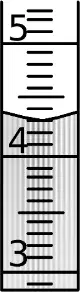
To the left is a 10 mL graduated cylinder with some liquid in it. What is the volume of liquid in the graduated cylinder?
5.70 mL
4.3 mL
4.38 mL
4.6 mL
The number 149,000,000 is usually written in scientific notation as
0.149 x10^9
1.49 x10^8
149 x 10^6
1490 x 10^5
True or False: All scientists use the same method for all scientific endeavors.
True
False
What is the mass of the solution when 1 kg of salt is dissolved in 20 kg of water?
More than 21 kg.
21 kg.
Between 20 and 21 kg.
20 kg.
Less than 20 kg.
What is your height in centimeters if you are 0.002km tall?
2 cm
200 cm
2000 cm
0.02 cm
0.2 cm
How many milliliters is 0.005 L?
0.5 mL
5 mL
0.50 mL
0.000005 mL
200 mL
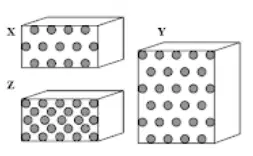
Of the three boxes, which one has the largest volume?
X
Y
Z
Both Z and Y
Can't tell from the information given
What is 5.96 x 10^5 in standard notation (not in scientific notation)?
0.00000596
596,000
5,960,000
59,600,000
How many meters is 76 km?
76,000 m
7,600 m
760 m
0.076 m
0.76 m
What is 0.000062 in scientific notation?
6.2x10⁻⁴
6.2x10⁻⁵
6.2x10⁴
6.2 x 10^5

On the right is a cylinder containing water. An object with a mass of 21 g and a volume of 15 mL is lowered into the water. The water level changes, so what will the new water level read?
41 mL
47 mL
38 mL
11 mL
None of these are correct
How many liters is 840 mL?
84000 L
8400 L
84 L
8.4 L
0.84 L
Total length of path traveled or an object moved.
Displacement
Speed
Velocity
Acceleration
Distance
The distance the object travels in one unit of time
Displacement
Speed
Velocity
Acceleration
Distance
The rate of change of velocity divided by the time it took for the change to occur.
Displacement
Speed
Velocity
Acceleration
Distance
The change in position of an object. vector quantity
Displacement
Speed
Velocity
Acceleration
Distance
A push, pull, or twist
Displacement
Speed
Velocity
Acceleration
Force
Mass x velocity
Momentum
Speed
Velocity
Acceleration
Force
The scientific unit of forces.
Newtons
Speed
Velocity
Acceleration
Force
an object’s resistance to changing its motion.
Newtons
Friction
Velocity
Acceleration
Inertia
a force that opposes the motion of an object when two surfaces are in contact, essentially acting against the direction of movement.
Newtons
Friction
Velocity
Acceleration
Inertia
Speed in a given direction; vector
Newtons
Speed
Velocity
Acceleration
Force
What is the unit of speed in the International System of Units (SI)?
kilometer
meter/second
meter
hour
Which of the following best describes displacement?
The total distance traveled
The amount of time taken
The change in position from the starting point
The speed at which an object is moving
If the slope of a distance vs. time graph is a straight line, what does it indicate about the object's motion?
The object is accelerating
The object is at rest
The object has a constant speed
The object is moving backward
When is an object's velocity considered constant?
When its speed is increasing
When its speed is decreasing
When its speed and direction remain unchanged
When it is standing still
What does a horizontal line on a distance vs. time graph indicate?
The object is accelerating
The object is moving backward
The object is moving at a constant speed
The object is not changing its position
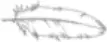
A boy lets go of a feather. The feather is acted upon directly downward by the force of gravity with 5 Newtons and by the force of air resistance in the opposite direction (upwards) with 2 Newtons. The net force on the feather is
3 Newtons upward
8 Newtons downward
3 Newtons downward
8 Newtons upward
A satellite in deep space is on a mission to Neptune. It fires its engines to change its velocity toward Neptune at a speed of 200 kilometers per hour. Suddenly, the engines stop working. After a few minutes, what is the velocity of the satellite?
100 kilometers per hour, towards Neptune
200 kilometers per hour, towards Earth
100 kilometers per hour, towards Earth
200 kilometers per hour, towards Neptune
The momentum of a falling rock is found to be 200 kg·m/s. What is the mass of the rock if it falls with a velocity of 5.0 m/s? p = m x v
40 kg
1000 kg
0.025 kg
205 kg
During the Running of the Bulls in Spain, Evan Wolf (mass = 85 kg) gains a momentum of 250 kg·m/s as he attempts to outrun a charging bull. How fast is Mr. Wolf running?
2125 m/s
2.94 m/s
0.34 m/s
335 m/s
What is the momentum of a large rock (mass = 4.0 kg) moving at a velocity of 2.0 m/s?
2.0 kg m/s
6.0 kg m/s
8.0 kg m/s
An astronaut would weigh less on the moon than on Earth because gravity is ______ on the moon than on Earth.
Stronger
weaker
Why does the Moon orbit Earth?
There is chemical attraction between the Earth and the Moon.
There is gravitational attraction between the Earth and the Moon.
There is mechanical attraction between the Earth and the Moon
There is magnetic attraction between the Earth and the Moon.
What is the rate of acceleration due to gravity?
12.2 m/s²
9.5 m/s²
9.8 m/s²
8.6 m/s²
What is the primary difference between mass and weight?
Mass is measured in newtons, weight in kilograms
Weight varies with gravity, mass remains constant
Mass is a force, weight is a measurement
They are the same thing with different names
When a person jumps up, what law explains why the Earth moves slightly in the opposite direction?
Law of Conservation of Energy
First Law of Motion
Second Law of Motion
Third Law of Motion
The energy stored in an object due to its height above the ground is called ___________ potential energy.
Gravitational
Kinetic
Elastic
Joule
Potential
When a ball is thrown into the air, at its highest point, it has maximum ________ energy.
Gravitational
Kinetic
Elastic
Joule
Potential
A compressed spring has _____________ potential energy.
Gravitational
Kinetic
Elastic
Joule
Potential
________________ energy is the energy of motion.
Gravitational
Kinetic
Elastic
Joule
Potential
The SI unit of energy is the ________________.
Gravitational
Kinetic
Elastic
Joule
Potential
The movement of energy from a warmer object to a cooler object is called _____________
Convection
Heat Transfer
Conduction
Radiation
Temperature
The transfer of energy through direct contact is called ____________
Convection
Heat Transfer
Conduction
Radiation
Temperature
_______________ is heat transfer by electromagnetic waves.
Convection
Heat Transfer
Conduction
Radiation
Temperature
The transfer of energy through direct contact is called ____________
Convection
Heat Transfer
Conduction
Radiation
Temperature
Heat transfer through fluid motion is called ____________________.
Convection
Heat Transfer
Conduction
Radiation
Temperature
measurement of the amount of heat in an object.
Convection
Heat Transfer
Conduction
Radiation
Temperature
What type of energy does a roller coaster have at the top of a hill?
Kinetic Energy
Gravitational Potential Energy
Thermal Energy
Chemical Energy
Which of the following is an example of kinetic energy?
A stretched rubber band
A moving car
A book on a shelf
A battery
When a pendulum swings, at which point is its potential energy the highest?
At the lowest point of the swing
At the midpoint of the swing
At the highest point of the swing
Potential energy is constant
Which factor does NOT affect gravitational potential energy?
Mass of the object
Height of the object
Speed of the object
Gravitational acceleration
What is the formula to calculate gravitational potential energy?
KE=21mv2
( PE = mgh )
( F = ma )
( W = Fd )
Which method of heat transfer occurs when you touch a hot stove?
Radiation
Convection
Conduction
Insulation
Which of the following is NOT an example of radiation?
Sunlight warming your face
Heat from a fireplace warming the room
Heat from a stove burner warming a pot
Microwaves heating food
Which method of heat transfer is most efficient in a vacuum?
Conduction
Convection
Radiation
None of the above
Which material is a good conductor of heat?
Wood
Plastic
Copper
Rubber
5.0 g of copper was heated from 20°C to 80°C. How much energy was used to heat Cu? (Specific heat capacity of Cu is 0.092 cal/g °C) Q = m x ΔT x C
27.6 cal
9.2 cal
60 degrees
36.8 cal
What is the specific heat of an unknown substance if a 2.50 g sample releases 12 calories as its temperature changes from 25°C to 20°C? Q = m x ΔT x C
0.86 cal/g°C
0.96 cal/g°C
1.2 cal/g°C
1 cal/g°C
What is the formula for calculating work?
Force × Distance
Mass × Velocity
Power × Time
Energy × Speed
Which of the following is a unit of power?
Joule
Newton
Watt
Kilogram
If a car engine does 5000 joules of work in 10 seconds, what is its power output?
500 watts
50 watts
5000 watts
50000 watts
Which scenario requires more power?
Lifting a box slowly
Lifting a box quickly
Pushing a box on the ground
Holding a box still
75. In a ________ circuit, there is only one path for the current to flow.
series
parallel
open
closed
76. In most atoms, the charges of the protons and electrons cancel each other out and the atom has no ______________________.
overall charge
mass
neutrons
energy
77. Electric current is measured in _______________.
amperes
volts
ohms
watts
Atoms become charged by gaining or losing ________________.
electrons
protons
neutrons
atoms
79. In a ________ circuit, there are multiple paths for the current to travel.
parallel
series
open
closed
The electric charge flows from higher to lower due to the _________________
voltage difference
magnetic field
current flow
resistance
An electric field surrounds every electric charge and exerts __________ on the charge.
force
heat
light
sound
The ______________ is the component that uses the electrical energy, such as a light bulb, motor, or resistor.
load
switch
battery
wire
The total resistance in a series circuit is the ________ all of the resistances.
sum of
difference between
product of
average of
Type of magnet that keeps its magnetic properties for a long time
permanent magnet
temporary magnet
electromagnet
bar magnet
Type of magnetic poles that repel one another
like poles
unlike poles
north-south poles
neutral poles

Which diagram below best represents a magnetic field between two magnetic fields?
A) [Diagram]
B) [Diagram]
C) [Diagram]
D) [Diagram]
Charging by Conduction is the process of charging by:
Contact
Rubbing
No direct contact
Charging caused by rubbing an object is called
Friction
Conduction
Induction
Directing an electric charge into the ground through contact is called
Grounding
Wiring
Conducting
Which material would experience the least resistance in an electrical circuit?
Copper
Wood
Glass
Rubber
Which wire diameter would have the most resistance?
.5 mm
1 mm
2 mm
3 mm
An engineer is deciding which route to run the wire in a house to provide the least resistance, should he choose the longer or shorter route?
Longer
Shorter
The temperature of the day changes the resistance in the power lines. On which day would the powerlines experience the least resistance?
20° F
50° F
80° F
Which statement is TRUE about series circuits?
All parts share the same current.
Each part has its own path for current.
The total resistance is less than any single resistor.
They never work with light bulbs.
What happens to the total resistance when more resistors are added in series?
It decreases.
It stays the same.
It increases.
It disappears.
In a parallel circuit with two resistors, R₁ = 4Ω and R₂ = 6Ω, what is the total resistance?
2.4Ω
10Ω
24Ω
5Ω
What is the main advantage of parallel circuits over series circuits?
They use less wire.
If one component fails, others still work.
They are more expensive.
They have only one path for current.
If three resistors, 2Ω, 3Ω, and 5Ω, are connected in series, what is their total resistance?
10Ω
5Ω
3Ω
2Ω
What happens when you turn off the electric current in an electromagnet?
It becomes stronger
It stays the same
It loses its magnetism
It explodes
Adding additional loops of wire on an electromagnet _________the strength of the electromagnetic field.
Increases
Decreases
Does not affect

