
 Worksheets
Marine Science Semester 1 Exam – Mrs. Sousa
Total questions: 90
Worksheet time: 45mins
The deepest trench is the ________?
Peru-Chile Trench
Java Trench
Mariana Trench
Puerto-Rico Trench
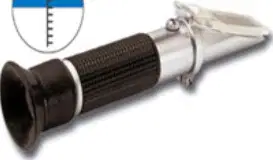
The instrument shown here is called a refractometer. You would use this to determine:
The temperature of a water sample.
The turbidity of a water sample.
The salinity of a water sample.
The nutrient levels of a water sample.
The deep ocean has a constant temperature around
0°C
2°C
10°C
15°C
The waters around the Bahamas have very clear water. Which is true?
The water have high levels of phytoplankton and bacteria
The water has low levels of phytoplankton and bacteria
All of the above
What region is always cold, and has the least biodiversity?
Polar
Temperate
Tropical
None of the above
What region has temperatures that fluctuate seasonally?
Polar
Temperate
Tropical
None of the above
What region never gets too cold, and has the most biodiversity?
Polar
Temperate
Tropical
None of the above
Manatees take part in which animal group in the ocean?
Reptiles
Mammals
Fish
Birds
Penguins take part in which animal group in the ocean?
Reptiles
Mammals
Fish
Birds
Rays take part in which animal group in the ocean?
Reptiles
Mammals
Fish
Birds
Sponges take part in which invertebrate group?
Echinoderms
Mollusks
Poriferans
Arthropods
Shrimp take part in which invertebrate group?
Arthropods
Mollusks
Echinoderms
Cnidarians
Octopus take part in which invertebrate group?
Echinoderms
Mollusks
Poriferans
Arthropods
Urchins take part in which invertebrate group?
Echinoderms
Mollusks
Poriferans
Arthropods
The thermocline is _________________ .
A. an ocean layer where rapid change in temperature occurs
B. the deepest part of the ocean
C. a layer where salinity is highest
D. the surface layer of the ocean
The water of the Amazon River often looks brown, due to runoff of sediment upstream. This water has a
Low turbidity
High turbidity
A water molecule is held together by ____________.
C. 1 covalent bond
A. 2 ionic bonds
B. 3 hydrogen bonds
D. 2 metallic bonds
Ice floats because:
it is less dense than liquid water.
it is heavier than liquid water.
it contains air bubbles.
it is warmer than liquid water.
Which of the following would INCREASE salinity in a location?
Runoff from land
Ice melting
Evaporation
Heavy rainfall
Which is the Biotic factor in marine communities?
Sunlight
Kelp
Salinity
Temperature
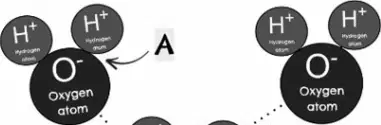
In the figure to the above, which is the hydrogen bond?
Bond A
Bond B
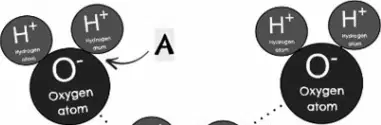
In the figure to the above, which is the covalent bond?
Bond A
Bond B
Have a blessed exam. And a safe Christmas break may you be intentional with your time with God and may you feel His presence over break in a fresh and new way. My prayer is that you seek him intentionally towards the end of 2025.
Blessings Mrs. Sousa
Wrong answer
Wrong answer
Wrong answer
How much time passes between one spring tide and the next spring tide?
About a week
About 2 weeks
About a month
About 2 months
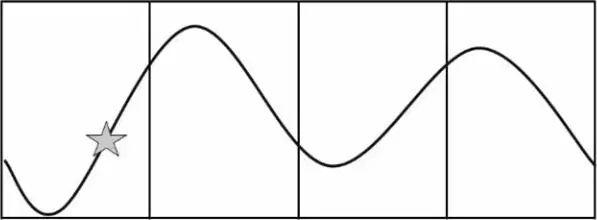
In the chart above, what type of tide is occurring where the star is located?
Flood tide
Ebb tide
Slack tide
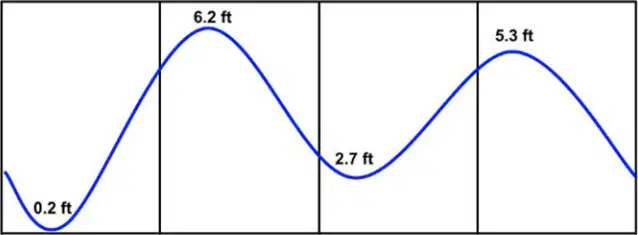
In the chart above, what is the tidal range?
6 ft
6.2 ft
0.9 ft
2.5 ft
During a full moon, the high tide will be
Cold water
Warm water
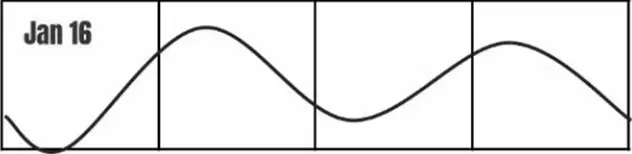
From the charts shown above, which day is Spring tide occurring?
Jan 16
Jan 24
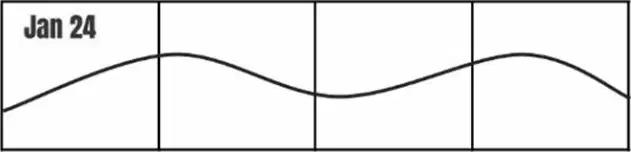
From the charts shown above, which day has the smallest tidal range?
A. Jan 16
B. Jan 24
If high tide occurs every 12 hours, then the location has a __________ tide.
Diurnal
Semidiurnal
A location with a diurnal tide will experience low tide every
6 hours
12 hours
24 hours
Which is NOT true of a spring tide?
It occurs during a full moon
It occurs during a quarter moon
It causes the highest high tides of the month
It causes the lowest low tides of the month
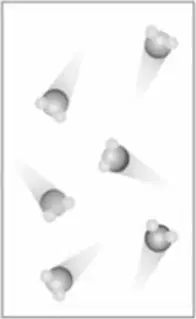
In the figure above, in which phase do water molecules move the fastest?
Phase A
Phase B
Phase C
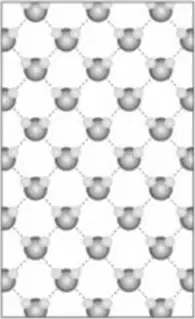
What phase of water is represented?
Solid
Liquid
Gas
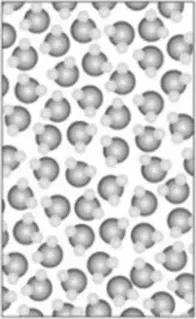
What phase of water is represented?
Solid
Liquid
Gas
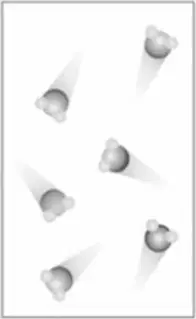
What phase of water is represented?
Solid
Liquid
Gas
Which Ocean is getting larger?
Atlantic Ocean
Pacific Ocean
What causes the downwelling in the Northern Atlantic Ocean?
strong winds from the Arctic Ocean
salty water becoming very cold and dense in the Northern Atlantic
During an El Nino year, the Tradewinds
Tradewinds are weaker
Tradewinds are stronger
Tradewinds don’t change
Downwelling delivers water from the surface to the deep that is rich in
Fish
Nutrients
Oxygen
Strong upwellings occur along coastline with strong winds (such as Peru), but where else in the ocean can cause upwellings?
A. Seamounts
B. Deep Sea trenches
C. Earthquakes
D. High salinities
The Ocean Conveyor Belt is also called thermohaline circulation because it is driven by
Winds
Coriolis Effect
differences in temperature and salinity
El Nino
Coriolis Effect affects surface currents by
making them warmer
deflecting them left or right
forcing them downwards
making them faster
Which of the following is a major factor affecting ocean currents?
Coriolis Effect
Winds
Gravitational pull of the Moon
All the above
Alfred Wegner proposed the Theory of ____________?
Plate Tectonics
Continental Drift
Hot spots
Earth’s Magnetic Field
What is large flat, featureless expanses of seafloor?
continental shelf
continental slope
hydrothermal vents
abyssal plains
Which of the following is NOT true of the Mariana Trench?
It is in the Atlantic Ocean
It is around 6 miles deep
The deepest part is called the challenger Deep
Only specialized subs can reach the bottom
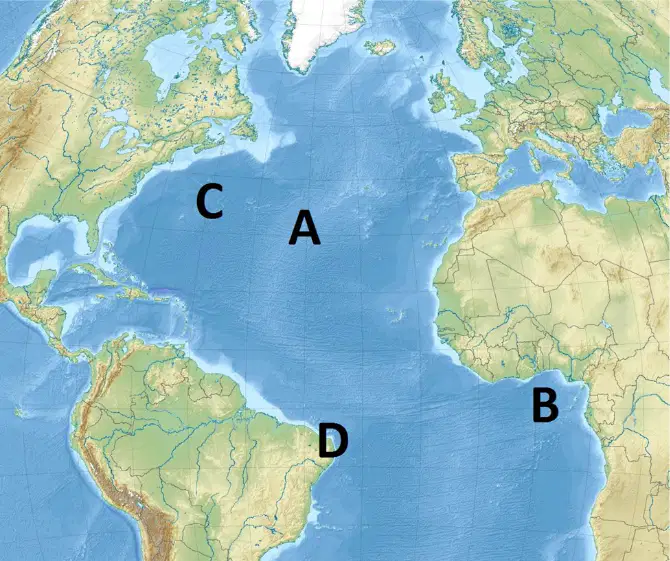
In which of these locations would you expect the rocks of the seafloor to be the youngest?
Location A
Location B
Location C
Location D

In which of these locations would you find the abyssal plains?
Location A
Location B
Location C
Location D
The discovery of coal deposits in Antarctica tell us?
that the continent must have been exposed to warmer climates at some point in time
that tropical plants must have been adapted to polar temperatures at some point in time
that maybe coal doesn’t actually come from ancient plant matter
it has below freezing temperatures in this location
How are islands eroded?
Wind
Water
Landslides
All the above
Caused by a sudden release of energy on the seafloor, this energy displaces a large volume of water.
Tsunamis
Earthquakes
Hydrothermal vents
Abyssal plains
What feature of an Ocean Basin is shallow along the coastline around the continents and is home to marine ecosystems forming kelp, coral, and seagrass?
continental shelf
continental slope
abyssal plains
None of the above
Caused when plates get stuck and do not move for a period of time?
tsunamis
earthquakes
hydrothermal vents
abyssal plains
Cracks in the crust occurring along the plate boundaries and water seeps down?
tsunamis
earthquakes
hydrothermal vents
abyssal plains
Which of the following is NOT needed by a plant to carry out photosynthesis?
Carbon dioxide
Oxygen
Chlorophyll
Light
How much energy is transferred from one trophic level to the next?
About 20%
About 15%
About 10%
About 90%
What is an example of a primary producer?
Phytoplankton
Macroalgae
Kelp
All the above
Herbivores are always
Trophic level 1
Trophic level 2
Trophic level 3
Trophic level 4
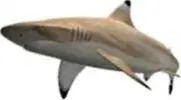
Using the food chain above, if there were a toxin being absorbed from the water by the red algae, which species in the food chain would have the highest concentration of the toxin, due to biomagnification?
Red algae
Surgeonfish
Black grouper
Blacktip reef shark
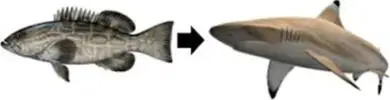
In the food chain above, which organism is the secondary consumer?
Red algae
Surgeonfish
Black grouper
Blacktip reef shark
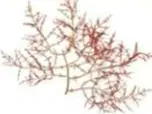
What is an example of a primary producer?
Red algae
Surgeonfish
Black grouper
Blacktip reef shark
Highly toxic man-made compounds that were banned in 1977.
ABCs
FDAs
PCBs
PCDs
The build up within an individual overtime as they accumulate substance faster than they can excrete it?
Biomagnification
Bioaccumulation
Trophic transfers
Decomposers
An increase in concentration with each step of the food web?
Biomagnification
Bioaccumulation
Trophic transfers
Decomposers
What is an example of a grazer?
Snails
Turtles
Urchins
All the above
Which of the following could cause the population of manatees in a bay to drop below its carrying capacity?
A. A phytoplankton bloom that blocks sunlight and decreases seagrass growth
B. A disease that kills off fish.
C. Protected by humans
D. A change in freshwater flow from a river, that decreases salinity slightly and causes a higher density of the seagrass.
A community that is unable to return to original state, and shifts to a new one.
Phase Shifts
Indicator Species
Foundation Species
Topic Cascades
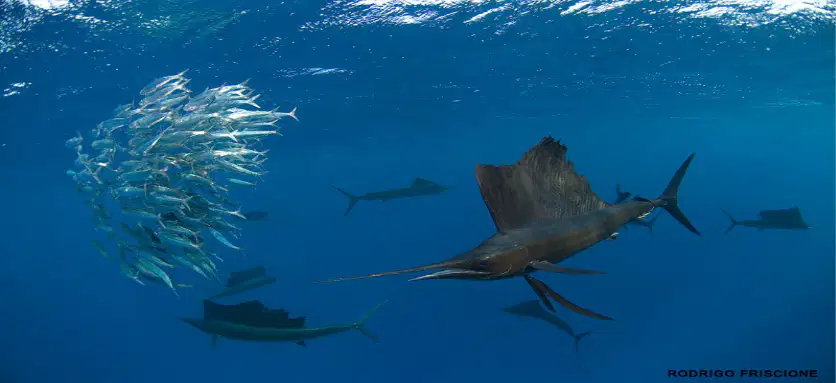
Five sailfish are feeding on the same 'bait ball' of smaller fish and are therefore competing for the food source. What type of competition is this?
A. Intraspecific
B. Interspecific
Which of the following is an example of parasitism?
A. Sea lice attached to and feeding on the flesh of a fish.
B. A clownfish living within an anemone.
C. An anemone attached to a boxer crab’s shell.
D. All of these are parasitism
A close relationship between two organisms of different species in which one of the species is benefitting in a way that is detrimental to the other.
Mutualism
Commensalism
Parasitism
None of the above
A close relationship between two organisms of different species in which one benefits and the other neither benefits nor is harmed.
Mutualism
Commensalism
Parasitism
None of the above
A close relationship between two organisms of a different species in which both benefit.
Mutualism
Commensalism
Parasitism
None of the above
Clown fish live among the tentacles of anemones for protection. The fish sometimes act as a lure for the sea anemone’s prey, and they also drop food particles for the anemone. The clownfish gets protection and shelter from the anemone.
Mutualism
Commensalism
Parasitism
None of the above
Hermit crabs make a home out of an old, abandoned conch shell when their shell is no longer big enough to contain them. The conch is no longer living and is not affected by this relationship.
Mutualism
Commensalism
Parasitism
None of the above
A close relationship between two organisms of different species in which both species are being harmed.
Mutualism
Commensalism
Parasitism
None of the above
Which of the following is an example of intraspecific competition?
Two pink anemones need substrate (rock) to attach to a reef.
A grouper and a barracuda both feed on small snapper.
Bull kelp and giant kelp absorbing nutrients from the surrounding water in the same kelp forest.
Killer whales and leopard seals both hunt down penguins around Antarctica.
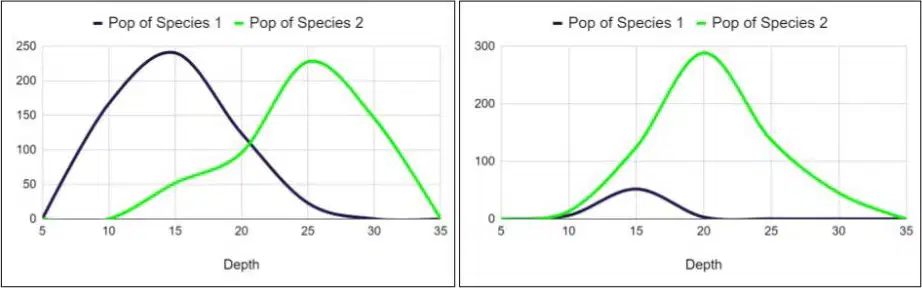
Species 1 and Species 2 have a niche overlap, meaning that they have some of the same resource needs. One of those is the need for space. The graphs below show the populations of the two species under two different scenarios. In which scenario is a stronger competitor dominating and excluding the other species almost entirely from the niche?
Scenario A
Scenario B
A change to one (keystone) species influences the entire food web.
Phase Shifts
Indicator Species
Foundation Species
Trophic Cascades
Which statement best describes what a COMMUNITY is?
The sea urchins and all the other living species that share a habitat.
Multiple species of sea urchins living in the same habitat.
A group of purple sea urchins living together.
None of these describe a community.
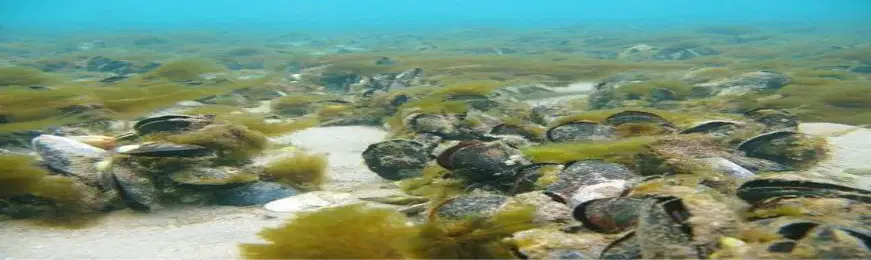
What type of competition would this be?
A. Interspecific
B. Intraspecific
Oysters in estuaries are often monitored because they are sessile and cannot leave under unhealthy conditions and their health declines in measurable ways. This would be an example of ________.
Phase Shifts
Invasive Species
Indicator Species
Foundation Species
Which is NOT an Abiotic factor in marine communities?
Sunlight
Kelp
Salinity
Temperature
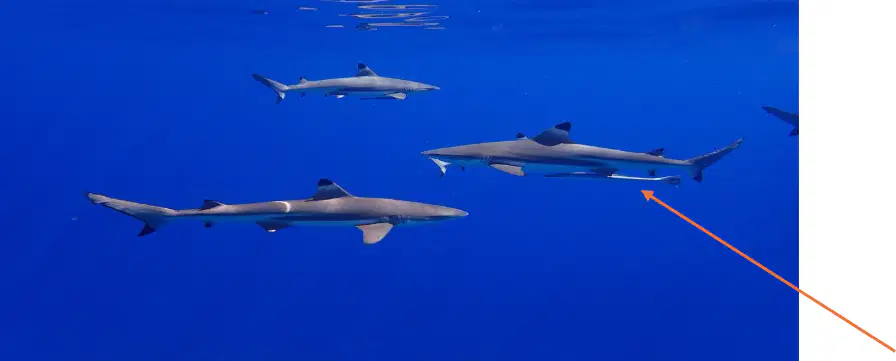
Some sources online state that the relationship between a shark and a remora is mutualism, while others call it commensalism. Which of the following situations would make it MUTUALISM?
If the remora is just catching a free ride.
If the remora is removing and eating parasites from the scales of the shark.
If the remora is sucking blood from the shark.
None of the above
Which of the following is NOT a reason that lionfish are considered an invasive exotic species in Florida and throughout the Caribbean?
A. Hundreds of fishermen and divers die each year form their lethal sting.
B. they have no native predators here.
C. They are extremely hard to eradicate.
D. They eat native fish.
What is not a method of introduction of invasive species?
Unintentional transport ballast water
Pet release
Intentional introduction
All of the above
Which ocean is located at the North Pole?
Arabian Sea
Arctic
Antarctic
Indian Ocean
Which ocean touches the east coast of North America and the west coast of Europe?
Pacific Ocean
Atlantic Ocean
Gulf of Mexico
Mediterranean Sea
Which body of water touches the coast of Alabama?
Pacific Ocean
Atlantic Ocean
Mediterranean Ocean
Gulf of Mexico
Which ocean touches the Coast of Antarctica?
Arctic
Antarctic
Atlantic
Indian

