
 Worksheets
Integrated Science Final Exam Review
Total questions: 111
Worksheet time: 1hrs 18mins


cell are called ____________________.

Which macromolecule is shown?
lipid
protein
nucleic acid
carbohydrate


Imagine you are a locksmith. How would you explain the relationship between the structure of a key (enzyme) and its function?
The key (enzyme) releases the energy in the lock (substrate).
The key (enzyme) reacts with the lock (substrate).
The unique cut of the key (enzyme's active site) allows it to fit with only one specific lock (substrate molecule).
The key (enzyme) interacts with the lock (substrate) like a welder building a steel skyscraper.
Why is the “lock and key” analogy often used to describe enzyme function?
Each enzyme is the same as its substrate.
Each enzyme will fit with only one specific kind of substrate.
Each enzyme can only be used once in a reaction and cannot be used again.
Each enzyme has its own active site that will not fit with other active sites.
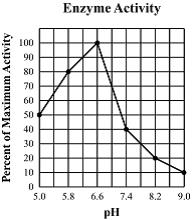
Most human enzymes operate under an optimal pH near neutral. Which pH range would best represent this environment?
4–6
6–8
8–10
10–12
Amylase is a biocatalyst that hydrolyzes starch into simple sugar molecules in the pancreas. Which best describes amylase?
lipid
protein
fatty acid
carbohydrate
The enzyme amylase can digest carbohydrates, but it cannot digest proteins. Which explains the effect of amylase on the digestion of carbohydrates compared to proteins?
Amylase is a protein, so it is restricted to acting on non-protein molecules such as carbohydrates.
Amylase can digest carbohydrates because it is an enzyme, but proteins cannot be digested by enzymes.
Amylase can digest carbohydrates because carbohydrates, unlike proteins, are excellent sources of cellular energy.
Amylase lowers the activation energy required for the digestion of carbohydrates, but has no impact on the activation energy required to digest proteins.
Which is a building block for a lipid?
glycerol
nucleotide
amino acid
monosaccharide
Which best describes the importance of lipids to organisms?
They provide keratin in hair and outer layers of the skin.
They keep cellular organelles hydrated within an organism.
They provide storage for cellular waste within an organism.
They serve as cellular membrane components and as concentrated energy sources.
If nucleic acids code for proteins, which is a function of proteins?
to store hereditary information
to store energy for long-term use
to provide a quick supply of energy
to provide structure and transport materials in cells
Which of these statements describes how monomers combine and create macromolecules?
Amino acids combine to make proteins.
Glucose molecules combine to make nucleic acids.
Nucleic acids combine to make starch.
Proteins combine to make glucose.
Which type of organic molecule should a person limit in order to lose weight?
Carbohydrates, because they store twice as much energy/gram. If they are not used, they will cause weight gain.
Lipids, because they store twice as much energy/gram. If they are not used, they will cause weight gain.
Carbohydrates, because they are nonpolar molecules and are insoluble in water.
Lipids, because they are nonpolar and soluble in water.
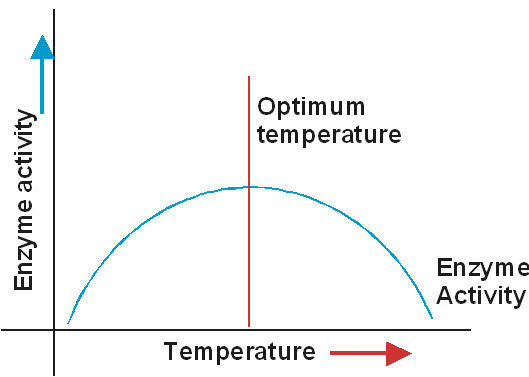
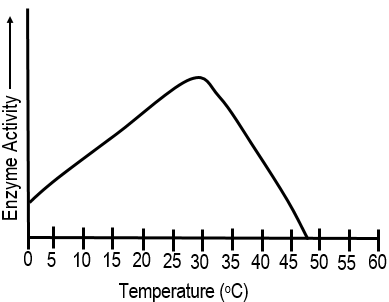
Salivary amylase is an enzyme in the human body that digests carbohydrates from food. When food mixed with saliva enters the stomach, the action of salivary amylase slows dramatically. Which causes salivary amylase enzyme to stop digesting food?
The pH of the stomach is lower than in the mouth.
The concentration of food decreases in the stomach.
The temperature of the food increases in the stomach.
The food is mixed more in the mouth than in the stomach.
Which statement BEST explains why enzymes bind to specific substrates?
An enzyme can be inhibited so its active site is altered.
An enzyme folds differently in the presence of different substrates.
Different amino acid sequences cause variations in the shapes of an enzyme’s active sites.
Enzyme-substrate binding is based on size so only large enzymes can bind to large substrates.

What are the "X" shaped things in the drawing.
PMATs
Chromosomes
Ribosomes
Telophase

During what phase of Mitosis do the chromosomes line up in the Middle
Metaphase
Prophase
Telophase
Anaphase
PMAT helps us remember the correct order of the phases of Mitosis. Which of the following has the phases of Mitosis in the correct Order
Interphase, Mitosis, Cytokinesis
Prophase, Metaphase, Anaphase, Prophase
Anaphase, Telophase, Prophase, Telophase
Prophase, Metaphase, Anaphase, Telophase
In which phase of Mitosis do the Chromosomes pull Apart
Metaphase
Prophase
Anaphase
Telophase
What is the purpose of Mitosis?
Growth of an organism and Repair of damaged tissue
To help the body get rid of extra cells
To increase the amount of classwork you have to do
To get rid of the nucleus


Which stage of the Life Cycle of the cell is this cell in (look close-the DNA hasn't formed Chromosomes (X) yet)
Interphase
Prophase
Anaphase
Telophase
The phase of the Cell Cycle in which the cell membrane pinches in and splits the cell into two
Prophase
Metaphase
Anaphase
Telophase
Cytokinesis
Phase of the cell cycle in which DNA is copied
Interphase
Prophase
Metaphase
Anaphase
Two nuclear envelopes reform around chromosomes
Prophase
Metaphase
Telophase
Cytokinesis

What phase is represented here?
Prophase
Metaphase
Anaphase
Telophase


Structure (c) is a ____. Hint: It is one half of the X shape.
chromosome
sister chromatid
centromere
What is cancer?
The cell cycle moves too slowly
Mitosis is skipped in the cell cycle
A cell enters into the G1 phase
Uncontrolled growth of Cells
Tumors are...
all malignant
mass of abnormal cells that can grow uncontrollably
usually benign
always metastasizing
Any substance that is known to cause cancer is called a...
Carcinogen
metastasizer
Pathogen
Retrovirus


Which of the following are TRUE statements? (Select ALL that apply)
Photosynthesis takes place in the chloroplasts of leaf cells
Photosynthesis means "making food using sun"
Photosynthesis can occur in the dark
All plants, plant-like protists, and some bacteria go through photosynthesis
Why do plant breeders place bags of fungi inside greenhouses?
the fungi will improve soil quality
the fungi will increase the concentration of oxygen in the greenhouse
the fungi will increase the concentration of carbon dioxide inside the greenhouse.
A student is measuring photosynthesis in pond weed. In one experiment she counted 85 bubbles of oxygen produced. In the second experiment, she only counted 10. Which of the following could best explain the difference.
in the second experiment, she moved the plant farther from the light source
in the second experiment, she moved the plant towards the light source
human error
which of the following is not a limiting factor of photosynthesis?
light intensity
temperature
oxygen concentration
carbon dioxide levels
Which organism go through cellular respiration?
animals
plants
both animals and plants
none

What type of respiration requires oxygen?
Aerobic
Anaerobic

Select ALL the products of Cellular Respiration? *clue: 3*
oxygen
glucose
carbon dioxide
water
ATP (energy)
water and carbon dioxide and ATP
water and glucose and ATP
carbon dioxide and oxygen and ATP
glucose and oxygen and ATP
Which reaction is NOT part of cellular respiration?
Calvin Cycle
Glycolysis
Krebs Cycle
Electron Transport Chain (ETC)
What's the chemical formula for water?
H2O
6H2O
H2O6
H6O
What's the chemical formula for oxygen?
6O2
2O6
O2
O6
What's the chemical formula for glucose?
6C6H12O6
C12H6O12
C6H12O6
CHO
Which molecule is the product of the Krebs Cycle?
oxygen
pyruvic acid
carbon dioxide
water
The Electron Transport Chain is a series of chemical reactions in which energy is transferred to form a large amount of what molecule?
glucose
oxygen
pyruvic acid
ATP
What is formed at the end of the Electron Transport Chain by the combination of its reactant and hydrogen?
water
oxygen
carbon dioxide
glucose
Photosynthesis _________ the energy that cell respiration ______.
builds ; breaks
breaks ; build
eats ; builds
___ is needed for cellular respiration, it comes from food.
glucose
water
oxygen
carbon dioxide
In a cell, the mitochondria is like the ___.
powerhouse
kitchen
control center
highway system
What is the last stage of cellular respiration?
glycolysis
Kreb's cycle
ETC
Calvin Cycle
What is the second stage of respiration and occurs in the mitochondria of the cell?
Glycolysis
Kreb's cycle
ETC
Calvin Cycle

What is decomposition?
the movement of carbon from the nonliving environment into living things and back
a compound made from carbon and oxygen
a chemical reaction that breaks down dead plants and animals
the movement of carbon from the nonliving environment into living things and back
Open System
Product
Carbon Cycle
Natural Resource
process that releases energy from food in the presence of oxygen
Fossil Fuel
Photosynthesis
Cellular Respiration
Aerobic
(a) is the process by which plants and some other organisms use light energy to convert water and carbon dioxide into oxygen and high-energy carbohydrates such as sugars and starches
Luna, Evelyn, and Olivia are studying about different carbon cycles in their science class. They learned that Decomposition and Photosynthesis are part of which carbon cycle?
Geological
Biological
Jackson, Mason, and Aiden are discussing the composition of all living things. Jackson says that all living things are composed of Carbon. Is he correct?
True
False
Energy that drives the carbon cycle is provided by?
The sun and the Earth's interior

