
Font size
 Worksheets
Earth Materials and Resources Quiz
Total questions: 137
Worksheet time: 2hrs 35mins
Which of the following is a renewable resource?
Wind
Coal
Petroleum
Natural gas
What forms from extreme heat and pressure?
Metamorphic rocks
Sedimentary rocks
Igneous rocks
Fossil fuels
Fossil fuels like coal and petroleum form over:
Millions of years
A few days
A few months
One lifetime
Which process involves the dropping of sediments in a new location?
Deposition
Erosion
Weathering
Crystallization
Which of the following is NOT a renewable resource?
Petroleum
Solar
Wind
Hydropower
What is the process called when rocks are moved from one place to another?
Erosion
Weathering
Crystallization
Cementation
Which rock type is formed from magma or lava?
Igneous
Sedimentary
Metamorphic
Fossil fuel
Which of the following is a vocabulary word related to rocks?
Igneous
Photosynthesis
Evaporation
Respiration
Which of the following is formed from the remains of ancient plants and animals?
Fossil fuels
Renewable resources
Metamorphic rocks
Sedimentary rocks
Which process is NOT involved in the formation of sedimentary rocks?
Melting
Deposition
Compaction
Cementation
Which rock type forms from extreme heat and pressure?
Metamorphic
Sedimentary
Igneous
Fossil fuel
Which of the following is a process that moves sediments from one place to another?
Erosion
Crystallization
Cementation
Melting
Which of the following is an example of a renewable resource?
Hydropower
Coal
Petroleum
Natural gas
What is the process called when sediments are dropped in a new location?
Deposition
Erosion
Weathering
Crystallization
Which of the following is a key concept in the study of Earth's materials?
Rocks change through weathering, erosion, deposition, heat, and pressure
Animals migrate for food
Water boils at 100°C
Plants grow through photosynthesis
Which of the following is NOT a vocabulary word listed in the study guide?
Respiration
Weathering
Erosion
Deposition
Which of the following is an abiotic factor?
Rainfall
Predators
Prey
Competition
What is it called when organisms compete for the same resource?
Competition
Predation
Carrying capacity
Abiotic factor
What does resource availability refer to?
How much of a resource is present
The speed of animals
The color of plants
The temperature of water
What is carrying capacity?
The maximum population an environment can support
The number of predators in an area
The amount of rainfall in a year
The speed at which prey run
Which of the following best describes resource availability?
The presence of food, water, and shelter
The number of predators
The amount of sunlight
The speed of prey
Which of the following is an example of a limiting factor?
Lack of water
More sunlight
Extra food
Increased temperature
Why do populations rise and fall?
Based on available resources
Because of the color of animals
Due to the sound of water
Because of the shape of leaves
Which of the following is a renewable resource?
Sunlight
Coal
Oil
Natural gas
What happens when organisms need the same resource?
Competition occurs
Predation increases
Abiotic factors disappear
Carrying capacity decreases
What is the effect of abiotic factors on populations?
They affect population size
They always increase populations
They only affect predators
They have no effect
Which term describes the maximum number of individuals an environment can support?
Carrying capacity
Limiting factor
Predator
Abiotic factor
If rainfall decreases, what might happen to a population?
It may decrease
It will always increase
It will stay the same
It will become a predator
Why is competition important in ecosystems?
It affects population sizes and resource use
It makes animals faster
It changes the color of plants
It increases rainfall
Which of the following is an example of a physical change?
Melting ice
Burning wood
Rusting metal
Gas production
Which process breaks down rocks into smaller pieces?
Compaction
Melting
Cementation
Weathering
What is an example of a chemical change?
Freezing water
Boiling water
Breaking glass
Burning paper
Which factor is biotic in an ecosystem?
Temperature
Water
Sunlight
Plants
Which of the following is a limiting factor for population growth?
Sound of water
Food supply
Shape of leaves
Color of rocks
What type of rock is formed by the cooling and solidification of magma?
Fossil fuel
Metamorphic
Sedimentary
Igneous
Which of the following is NOT a renewable resource?
Coal
Wind
Hydropower
Sunlight
Which of the following is an example of an abiotic factor in an ecosystem?
Fungi
Sunlight
Grass
Rabbit
What type of rock is formed by the cooling and solidification of magma?
Fossil fuel
Metamorphic rock
Sedimentary rock
Igneous rock
Which of the following best describes a chemical property?
Ability to conduct electricity
Ability to react with oxygen
Melting point
Density
What happens to iron when it reacts with oxygen in the presence of water?
It melts
It rusts
It evaporates
It freezes
Which of the following is NOT a chemical property?
Flammability
Reactivity with acid
Ability to tarnish
Color
Which state of matter has a definite volume but no definite shape?
Liquid
Solid
Gas
Plasma
What happens to the particles in a solid when it is heated and changes to a liquid?
They move farther apart and slide past each other
They become electrically charged
They move closer together
They stop moving
Which of the following is an example of matter changing from a gas to a liquid?
Freezing water
Melting ice
Condensation of water vapor
Boiling water
What is the atomic number of Carbon on the periodic table?
6
8
12
14
Which of the following is a sign that a chemical reaction has occurred?
Change in size
Change in shape
Change in mass
Change in color
What does the formation of a gas during a reaction usually indicate?
A chemical reaction is taking place
A physical change is happening
The temperature is decreasing
The substance is dissolving
Which of the following is NOT a common sign of a chemical reaction?
Production of light
Change in state from solid to liquid
Temperature change
Formation of a precipitate
What is the smallest unit of an element that retains the properties of that element?
Compound
Mixture
Atom
Molecule
Which subatomic particle is found in the nucleus of an atom and has a positive charge?
Electron
Neutron
Proton
Photon
What determines the identity of an element?
The number of protons in its atoms
The number of neutrons in its atoms
The number of electrons in its atoms
The mass of its atoms
Which of the following is a physical property?
Ability to rust
Ability to burn
Melting point
Reactivity with acid
What happens to the mass of a substance during a physical change?
It disappears
It decreases
It stays the same
It increases
Which of the following best describes density?
The color of a substance
The temperature at which a substance boils
The ability to react with oxygen
The amount of matter in a given volume
What best defines a pure substance?
A substance with variable composition
A substance that can be separated by physical means
A mixture of two or more substances
A material made up of only one kind of particle
Which of the following is the best example of thermal energy transfer by conduction?
Warm air rising in a room
Boiling water in a pot
Sunlight warming the Earth
Heating a metal rod at one end
What happens to the particles in a substance when its thermal energy increases?
They move slower
They become larger
They stop moving
They move faster
Which device is commonly used to measure thermal energy?
Compass
Microscope
Thermometer
Barometer
Which method of heat transfer occurs through direct contact between particles?
Conduction
Convection
Radiation
Evaporation
What is the main way heat is transferred from the Sun to Earth?
Absorption
Conduction
Radiation
Convection
Which of the following materials is the best conductor of heat?
Glass
Plastic
Wood
Metal
What is a molecule?
A group of atoms bonded together
A single atom
A type of cell
A form of energy
Which of the following is an example of a molecule?
Electron
Neutron
Iron (Fe)
Oxygen gas (O2)
What holds the atoms together in a molecule?
Gravity
Chemical bonds
Magnetic force
Light energy
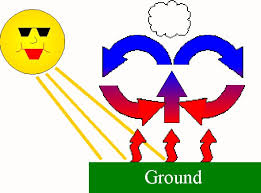

Thermal energy that is transferred from one substance to another.
heat
temperature
thermal energy
radiation

Hand Warmer in a Hand
Heat is being transferred from the hand warmer to the hand.
Heat is being transferred from the hand to the hand warmer.
The hand is getting warmer. The hand warmer is getting cooler.
The hand warmer is getting warmer. The hand is getting cooler.


The following diagram shows water in contact with an ice cube and warmer air.
Which way will energy flow?
From the air to the water
From the water to the air
From the ice cube to the air
From the ice cube to the water


The transfer of thermal energy from a hotter area to a colder area.
liquid
heat
kinetic energy
water vapor


Melting ice cream is an example of _________________ energy.
Thermal
Potential
Electric
Kinetic

Heat ALWAYS moves from
cold to hot
hot to cold
it doesn't move
we destroy it
Which subatomic particle determines an atom's identity?
Proton
Neutron
Electron
Nucleus

How are elements organized in the Periodic Table?
Elements are ordered by atomic weight
Elements are ordered by atomic number
Elements are arranged alphabetically
Elements are grouped color
The atomic NUMBER tells you what?
number of electrons
number of protons
number of neutrons
number of protons AND electrons in an element
The atomic MASS tells you what?
number of electrons
number of protons
number of neutrons
the number of protons + neutrons

How many PROTONS does Beryllium have?
4
9
5
13

How many PROTONS does Boron have?
11
5
16
6

How many ELECTRONS does Fluorine have?
19
10
9
28

Properties that can be observed of measured without changing the identity of the matter.
Mechanical properties
Physical properties
Chemical properties
Biological properties
The amount of space taken up by a solid object.
Mass
Weight
Medium
Volume
A student determined the mass and volume of a gold ring. What physical property of the gold can be determined using these two measurements?
Its reactivity
Its expansion rate
Its density
Its melting point
The density of an object is dependent upon the object’s mass and —
height
volume
area
weight


anything that takes up space and possesses mass
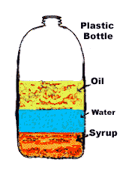


Harry found an old key and wanted to know what it was made from. He measure the mass to be 39.5 and the volume to be 5. What type of metal is the key made from?
aluminum
copper
steel
brass

We study properties so we can _______________ a substance.
smell
measure
identify
change

Which of the following is NOT an example of a physical change?
dissolving sugar in water
bending a metal rod
melting an ice cube
burning paper
A property that is observed without making changes to the substance.
Chemical Reaction
Chemical Property
Physical Property
Physical Reaction
When baking soda mixes with vinegar, a chemical reaction occurs. This reactivity is an example of a _______________.
Chemical Property
Physical Property
A substance that enters into a chemical reaction is called __________________
Reactant
Product
Exothermic reaction
endothermic reaction
A substance formed as a result of a chemical reaction is called ___________________
Reactant
Product
Exothermic reaction
Endothermic reaction
_________________ is an observable change that a chemical reaction occurred from a solid or liquid.
Color change
Precipatation
Temperature
Gas production
Combustion creates which two chemical changes?
Light and heat
Acid and a base
precipitate and color change
exothermic and endothermic heat
Kinetic energy is
energy stored in chemical bonds
stored energy
the energy of motion
energy because of position
The total kinetic and potential energy of all the particles of an object is
mechanical energy
thermal energy
nuclear energy
electrical energy
A measure of the average kinetic energy of the individual particles in an object is called
thermal energy
conduction
convection
temperature
A measure of the average kinetic energy of the individual particles in an object is called
thermal energy
conduction
convection
temperature

Heat transfers from an area of ________ temperature to an area of _______ temperature.
high to low
low to high
high to high
low to low
The movement of thermal energy from a warmer object to a cooler object is called
heat
temperatur
motion
momentum
Heat transfer occurs
in many directions
both from warm objects to colder ones and from cold objects to warmer ones
only from warm objects to colder ones
only from cold objects to warmer ones
What is an example of a solid turning into another state of matter?
breaking a chair into pieces
adding food coloring to water
water freezing
What do all liquids have in common?
They are clear
They can be poured
They are sticky
You can drink them
What is the total kinetic energy of all the particles that make up an object?
Radiation
Kinetic energy
Thermal Energy
Conduction

What state of matter does this picture show?
Liquid
Matter
Gas
Solid

What state of matter does this picture show?
(a)
Which form of matter does not take the shape of its container?
Liquid
Solid
Gas
When you heat water it turns into a ____
Solid
Gas
Liquid
A gas
has a definite shape but no definite volume
has fast-moving particles
has a definite volume but no definite shape

Which state of matter has a definite shape?
Solid
Liquid
Gas
Plasma
Freezing
Solid to gas
Gas to solid
Liquid to solid
Particles in a ______________________ move quickly and are far apart.
Solid
Liquid
Gas

What is happening when my ice cream changes from a solid to a liquid?
Freezing
Boiling
Melting
Erosion

