
 Worksheets
Practice Final PS
Total questions: 140
Worksheet time: 3hrs 50mins
Which statement best describes whether the pendulum investigation supports the law of conservation of energy?
The investigation supports the law of conservation of energy because the combined total of the kinetic and potential energies of the pendulum is always equal to the total mechanical energy of the system.
The investigation supports the law of conservation of energy because the combined total of the kinetic and potential energies of the pendulum is greater than the total mechanical energy of the system.
The investigation does not support the law of conservation of energy because the combined total of the kinetic and potential energies of the pendulum is always equal to the total mechanical energy of the system.
The investigation does not support the law of conservation of energy because the combined total of the kinetic and potential energies of the pendulum is lesser than the total mechanical energy of the system.
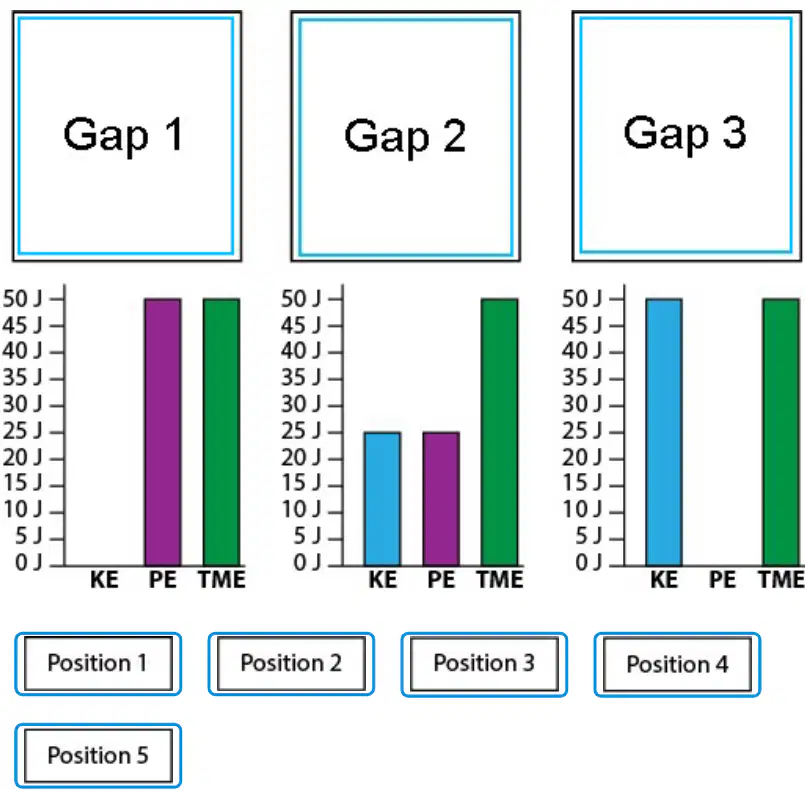
The students represent their findings of energy while the pendulum is in motion. Gap 1 shows a bar chart where kinetic energy is near zero, potential energy is at a maximum (about 45–50 J), and total mechanical energy is constant (about 45–50 J). Which positions match Gap 1?
Position 1
Position 2
Position 3
Position 4
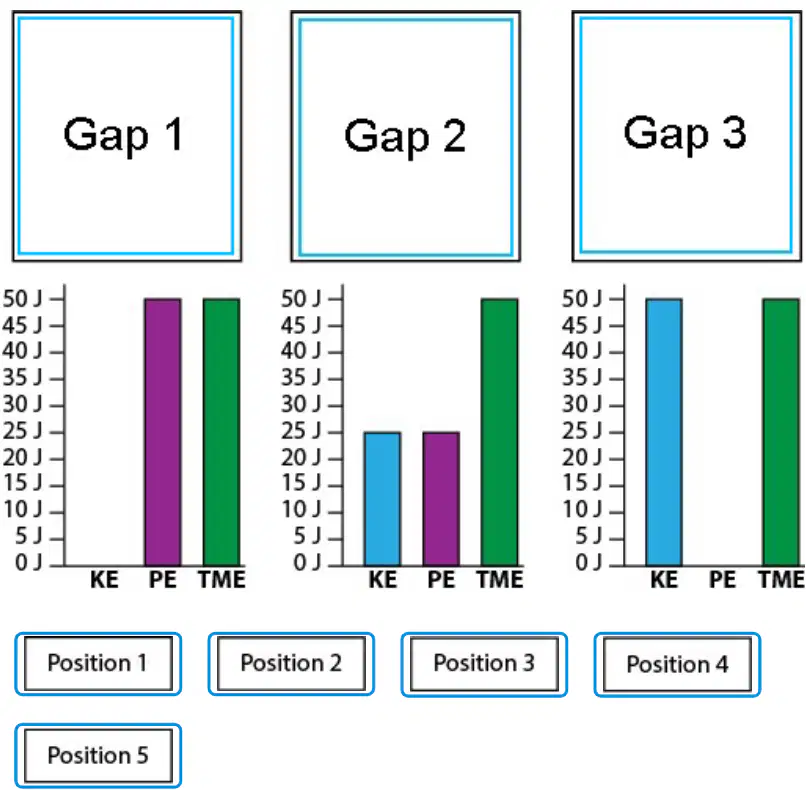
The students represent their findings of energy while the pendulum is in motion. Gap 2 shows a bar chart where kinetic energy and potential energy are equal and moderate (about 20–25 J each), and total mechanical energy is constant (about 40–50 J). Which positions match Gap 2?
Position 1
Position 2
Position 3
Position 4
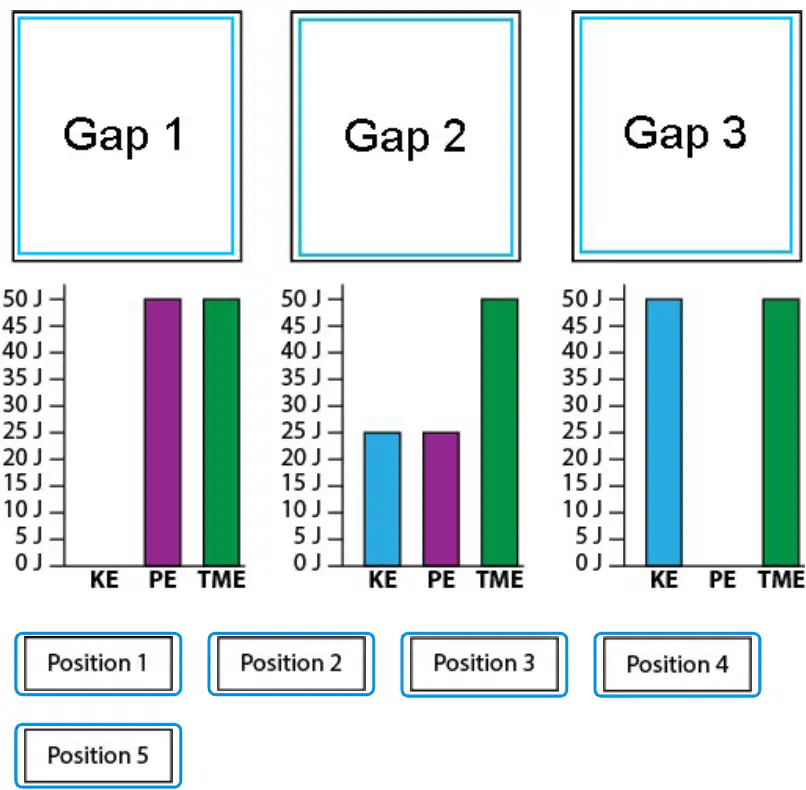
The students represent their findings of energy while the pendulum is in motion. Gap 3 shows a bar chart where kinetic energy is at a maximum (about 45–50 J), potential energy is near zero, and total mechanical energy is constant (about 45–50 J). Which position matches Gap 3?
Position 1
Position 2
Position 3
Position 4
Select three statements that correctly describe the energy of the pendulum.
The gravitational potential energy of the pendulum is equal at Position 1 and Position 5.
Moving from Position 5 to Position 3, the pendulum is experiencing a decrease in kinetic energy and an increase in potential energy.
The pendulum is experiencing an equal amount of kinetic energy and potential energy at Position 4.
The pendulum is experiencing greater kinetic energy at Position 2 than Position 4.
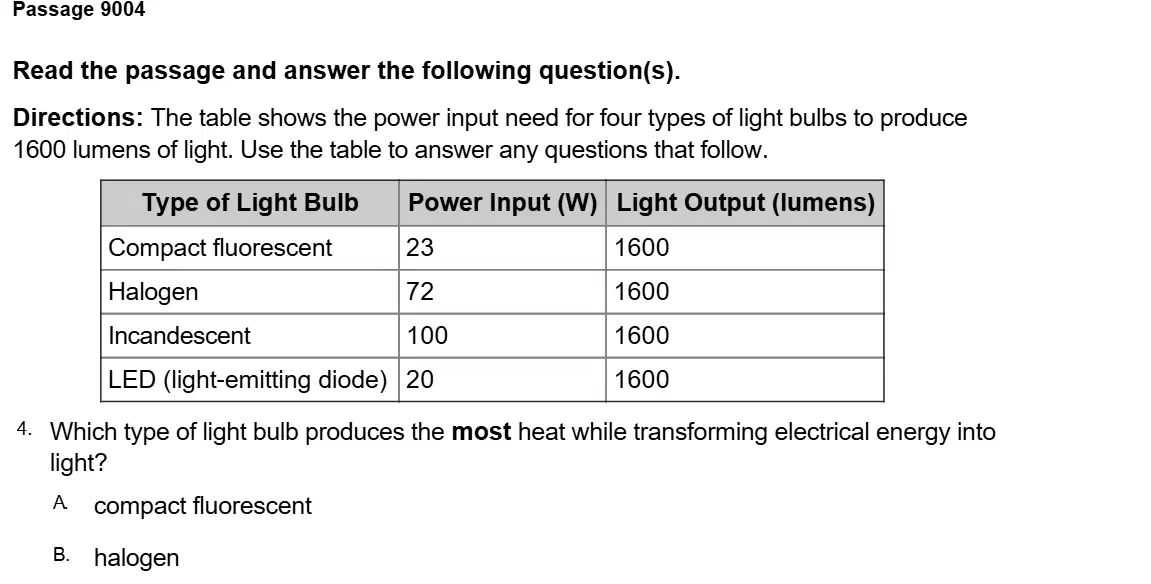
A table shows the power input needed for four types of light bulbs to produce 1600 lumens of light: compact fluorescent 23 W, halogen 72 W, incandescent 100 W, LED 20 W. Which type of light bulb produces the most heat while transforming electrical energy into light?
compact fluorescent
halogen
incandescent
LED
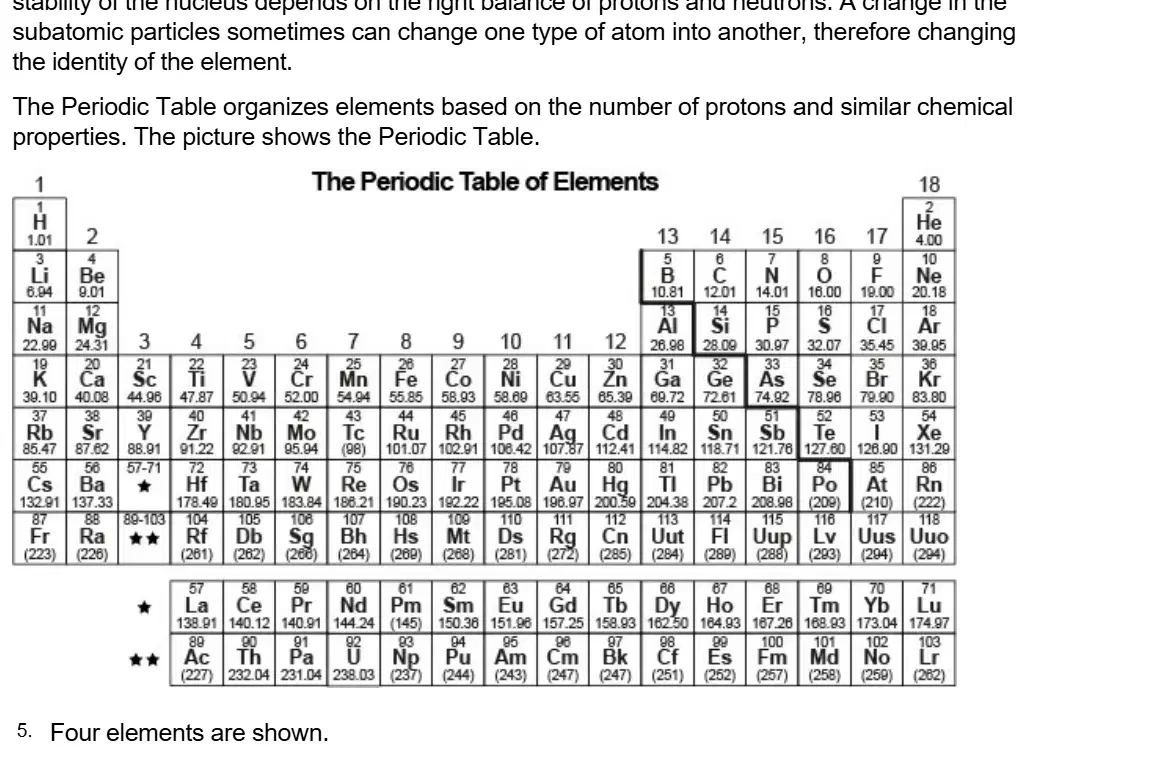
Read the passage about subatomic particles and use the periodic table to answer. Four element tiles are shown: 6 C Carbon (12.01), 16 S Sulfur (32.07), 2 He Helium (4.00), 17 Cl Chlorine (35.45). Use the periodic table to choose the most stable element.
Carbon
Sulfur
Helium
Chlorine
Based on periodic trends, select ALL that correctly describe what happens across a period from left to right.
Atomic radius decreases
Energy level increases
Based on periodic trends, select ALL that correctly describe what happens down a group from top to bottom.
Atomic radius increases
Electronegativity decreases
A student creates the model of a carbon-12 atom with 6 protons and 6 neutrons in the nucleus. He wants to add 3 more sub-atomic particles to create a carbon-15 atom. Identify how many protons and neutrons he should add to the model.
Add 0 protons and 3 neutrons; the element remains carbon.
Add 3 protons and 0 neutrons; the element changes to oxygen.
What would most likely happen to the electric current if the magnet moved very quickly through the cardboard tube?
The electrons in the wire would be pushed more slowly, but the same amount of electric current would be generated.
The electrons in the wire would be pushed more quickly, so more electric current would be generated.
The electrons in the wire would be pushed more quickly, but the same amount of electric current would be generated.
The electrons in the wire would be pushed more slowly, so less electric current would be generated.
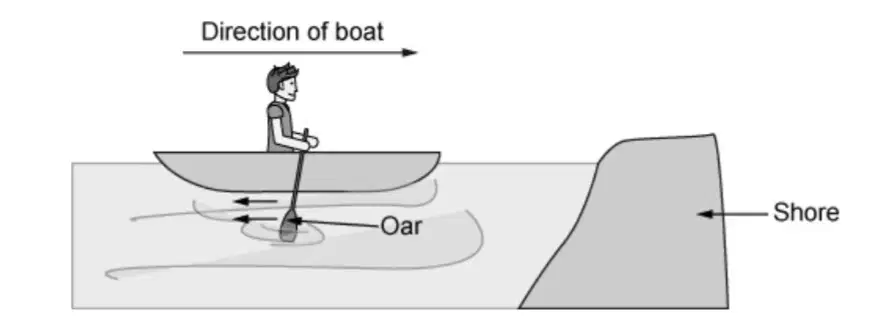
Read the passage and answer the following question(s). The picture shows a boy rowing a boat toward the shore. Use the picture to answer. What is causing the boat to move toward the shore?
The moving water applies a force on the boat, which results in the boat pushing back on the water, propelling the boat forward.
The moving wind applies a force on the boat, which results in the boat pushing back on the wind, propelling the boat forward.
The boy applies a force on the oars, which results in the water pushing back on the oars, propelling the boat forward.
The boy applies a force on the oars, which results in gravity pushing back on the oars, propelling the boat forward.
Which forces act on the boat while it is stationary?
The force of buoyancy from the water pushes up on the boat and is met with an equal force of friction from the oars.
The force of friction from the oars pushes on the water and is met with an equal force of gravity from the shore.
The force of gravity pulls down on the boat and is met with an equal force of buoyancy from the water.
The force of gravity pushes up on the boat and is met with an equal force of friction from the water.
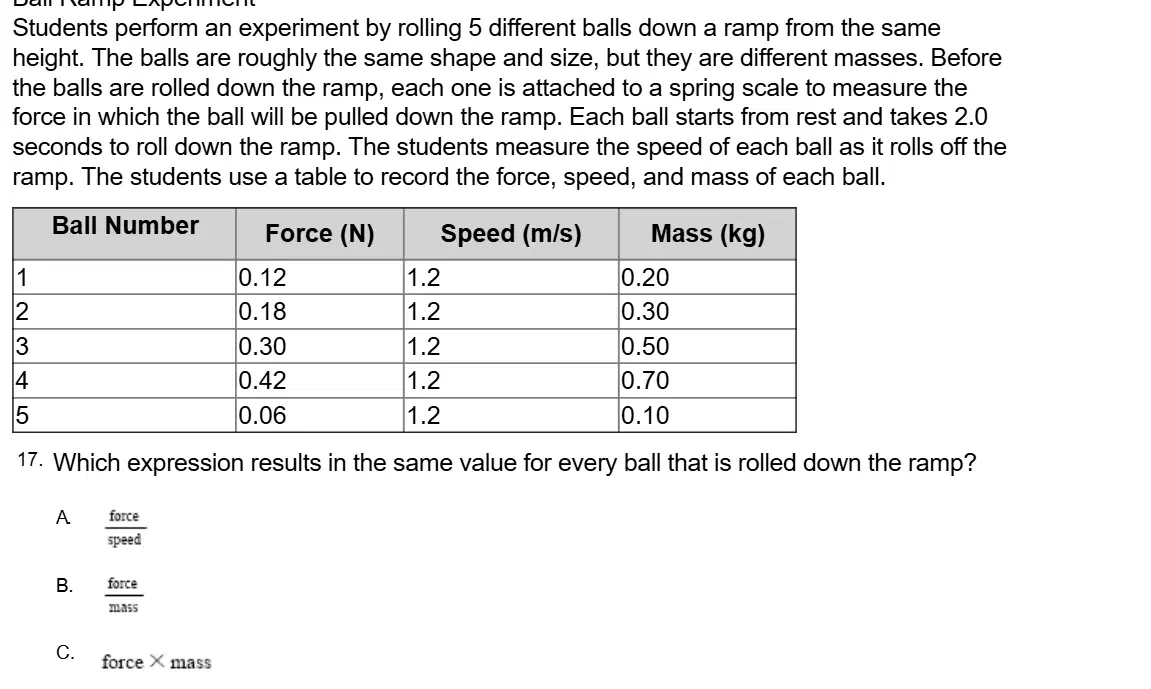
Read the passage and answer the following question(s). Ball Ramp Experiment: Students roll 5 different balls down the same ramp from the same height. Each ball starts from rest and takes 2.0 seconds to roll down the ramp. A spring scale measures the pulling force on each ball. The measured speed for every ball as it leaves the ramp is 1.2 m/s. The recorded data are: Ball 1: force 0.12 N, mass 0.20 kg; Ball 2: force 0.18 N, mass 0.30 kg; Ball 3: force 0.30 N, mass 0.50 kg; Ball 4: force 0.42 N, mass 0.70 kg; Ball 5: force 0.06 N, mass 0.10 kg. Which expression results in the same value for every ball that is rolled down the ramp?
force over speed
force over mass
force × mass
mass × speed
A student analyzes the Ball Ramp Experiment data for two balls. Complete the statement about the data by choosing the correct combination. The mass of Ball 1 is [equal to / twice / half] the mass of Ball 5; the force that pulls Ball 1 down the ramp is [equal to / twice / half] the force that pulls on Ball 5; this causes Ball 1 to accelerate at a rate [equal to / twice / half] the rate at which Ball 5 accelerates.
equal to; equal to; equal to
twice; twice; equal to
twice; half; twice
half; twice; half

Which graph shows a plot of the ball’s mass and the force on the ball down the ramp for all 5 balls?
Graph A
Graph B
Graph C
Graph D
What form of energy is generated by the movement of electrons and powers cell phones and computers?
chemical energy
electrical energy
nuclear energy
mechanical energy
What type of energy is generated by the random motion of particles in a system?
sound energy
thermal energy
gravitational potential energy
elastic potential energy
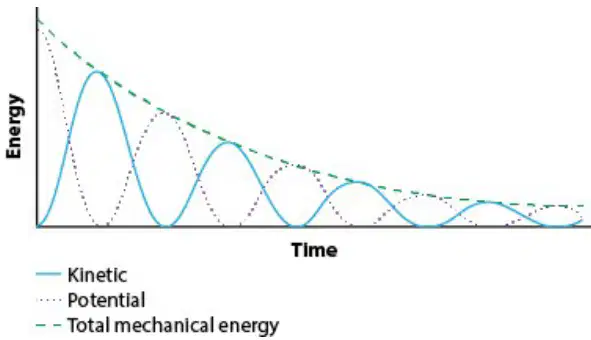
Part A: The students perform a second pendulum investigation. In this investigation, the students allow the pendulum to swing for an extended period of time, and the effect of air resistance is noticeable in the data. After several minutes, the pendulum comes to rest. Their results are shown. Which statement BEST describes if the second pendulum investigation follows the law of conservation of energy?
The second investigation does not follow the law; energy cannot leave and must remain within a system.
The second investigation follows the law; adding air resistance adds additional gravitational force to a system.
The second investigation follows the law; a change in energy of a system equals the energy transferred out of the system.
The second investigation does not follow the law; different energies within a system cannot equal the total energy of the system.
Part B: The students perform a second pendulum investigation in which the pendulum swings for an extended time, air resistance is noticeable in the data, and after several minutes the pendulum comes to rest. What happens to the energy of the system in the second investigation?
Energy moves from the air particles to the pendulum, increasing the total mechanical energy within the system.
Less potential energy is created from the air particles, which causes less kinetic energy within the system to be created.
Some of the kinetic energy is transferred to the surrounding air particles outside the system, and some of it leaves as heat.
The kinetic energy is destroyed as it encounters the air particles, which causes the potential energy to decrease in the system.
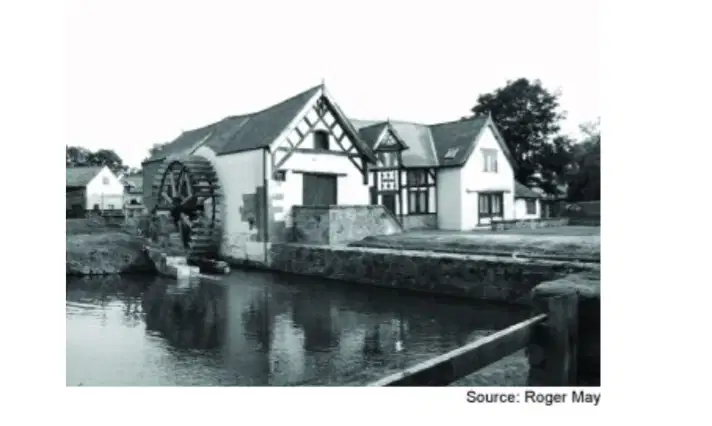
The picture below shows a water wheel powering a house. How does the water wheel make electricity?
The force of the wheel turning pulls down the water and turns into electricity.
The force of sound made by the water pushes the wheel and turns into electricity.
The force of the water turns the wheel and makes energy that can be made into electricity.
The force of the Sun pushes the wheel around and makes energy that can be made into electricity.
What type of energy requires breaking bonds in the nucleus of an atom?
Nuclear energy
Chemical energy
Thermal energy
Solar energy
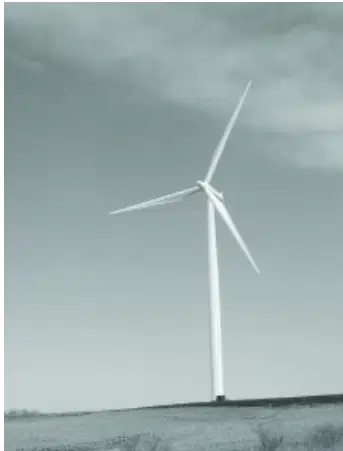
The picture below shows a machine called a turbine that is used to make electricity. How does the turbine make electricity?
Energy from the Sun turns the blades, and the turbine changes that energy into electricity.
Energy from the wind turns the blades, and the turbine changes that energy into electricity.
Energy from sound pushes on the blades, and the turbine changes that energy into electricity.
Energy from gravity pulls down on the blades, and the turbine changes that energy into electricity.
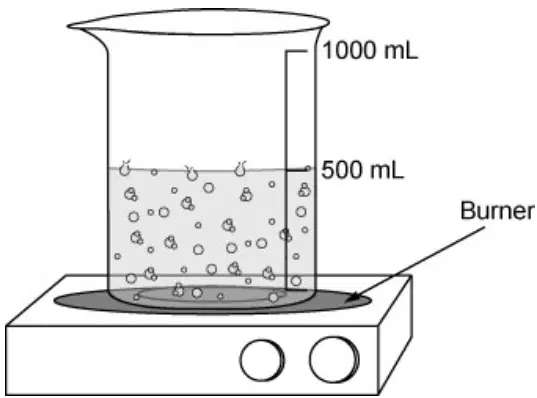
The picture below shows the setup for an experiment involving a 1000 mL beaker, sitting on a burner, filled with 500 mL of water, where the burner represents the Sun’s energy, and the beaker of water represents Earth’s oceans. During the experiment, black pepper was added to the water as it boiled strongly, and the pepper moved in a circular pattern from the top of the water to the bottom and back again. What does the circular pattern of the pepper represent?
the radiation of thermal energy being passed from the Sun into the ocean
the evaporation of ocean water due to conduction of thermal energy
the pressure of water pushing particulates to the bottom of the ocean
the convection of ocean currents as warm water rises and cool water sinks
What form of energy is visible light?
thermal energy
chemical energy
electromagnetic energy
nuclear energy

The diagram shows the setup for an experiment involving a 1000 mL beaker, filled with 500 mL of water, sitting on a burner. Which best describes the molecular motion of the water particles as the burner supplies heat?
The molecular motion will increase as less thermal energy is absorbed.
The molecular motion will decrease as less thermal energy is absorbed.
The molecular motion will increase as more thermal energy is absorbed.
The molecular motion will decrease as more thermal energy is absorbed.
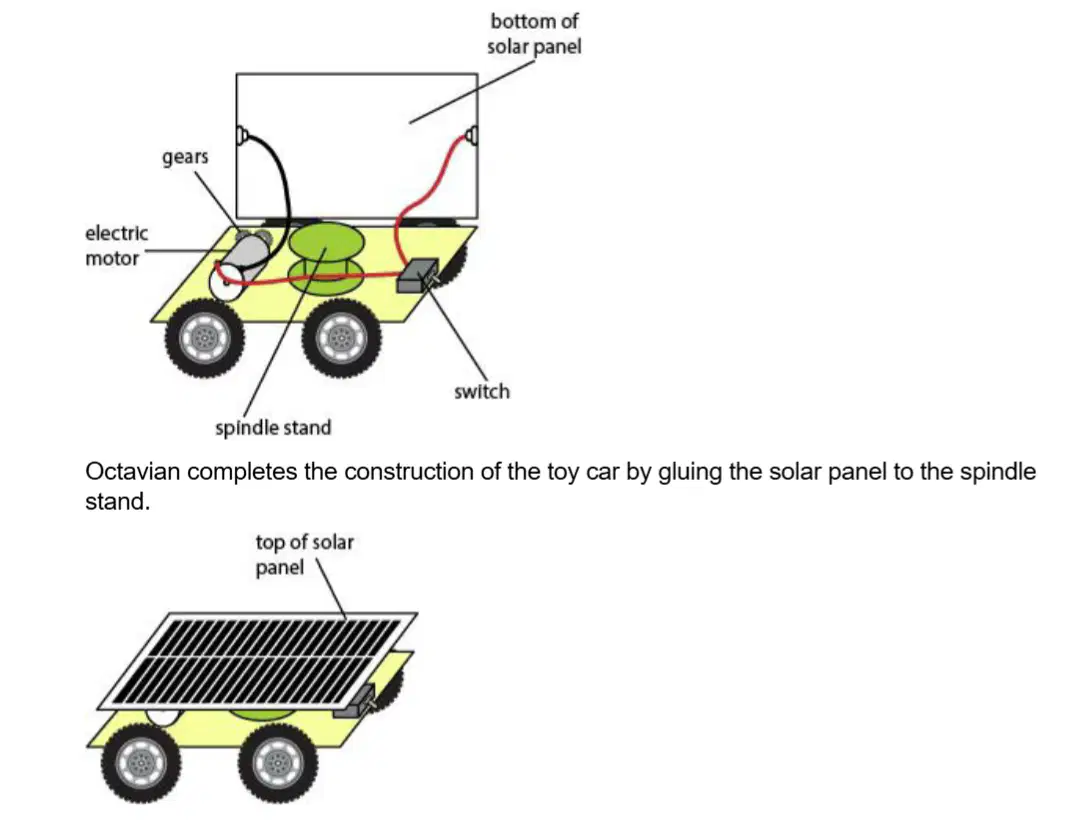
Octavian is building a solar powered toy car. The graphic shows the inside of the toy car. Octavian completes the construction of the toy car by gluing the solar panel to the spindle stand. Octavian turns the switch on and places the car on a sidewalk. The car moves forward on the ground. Identify the parts of the system that transform energy and describe their role in the system.
Solar panel: transforms light energy into electrical energy; Motor: transforms electrical energy into mechanical energy
Switch: transforms light energy into electrical energy; Wheels: transform electrical energy into mechanical energy
Switch: transforms light energy into chemical energy; Wires: transform chemical energy into electrical energy; Motor: transforms electrical energy into mechanical energy
Solar panel: transforms light energy into chemical energy; Wires: transform chemical energy into electrical energy; Wheels: transform electrical energy into mechanical energy
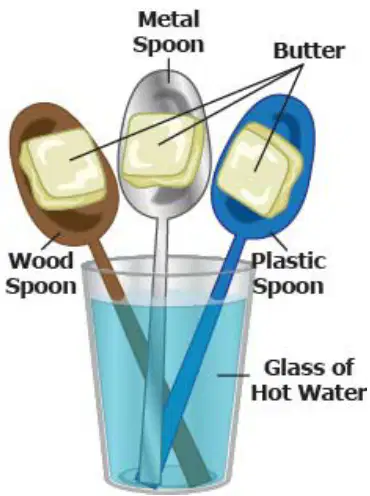
A student conducts an experiment that involves the transfer of energy. The student places one metal spoon, one plastic spoon, and one wooden spoon in a glass that contains hot water. A small pat of butter is placed onto each spoon. The pat of butter on the metal spoon is the first to melt and slide down the spoon. Which of the following descriptions best explains the results of this experiment?
The metal material has a rigid structure with little molecular movement, allowing heat to transfer directly from one end of the spoon to the other.
The metal material is made up of well-spaced molecules, allowing the heat to travel through the air pockets and reach the butter the fastest.
The metal material transfers energy from molecular collisions up the length of the spoon the fastest, allowing the heat to reach the butter the fastest.
The metal material condenses steam quickly, allowing the heat from the steam to warm both the metal spoon and the butter on it the fastest.
Which could be the pH of an aqueous solution with a H3O+ ion concentration that is less than its OH− ion concentration?
2
3
4
9
A sample of pure water contains
a smaller concentration of H3O+ ions than OH- ions.
a larger concentration of H3O+ ions than OH- ions.
equal concentrations of OH- and H3O+ ions.
neither OH- ions nor H3O+ ions.
The H3O+ of a solution is 1 × 10^-8. This solution has a pH of
8, which is basic.
8, which is acidic.
6, which is basic.
6, which is acidic.
Which relationship is present in a solution that has a pH of 7?
[H+] < [OH-]
[H+] = [OH-]
[H+] + [OH-] = 7
[H+] > [OH-]
The chemical equation below represents a reaction that occurs under standard conditions. KOH + HNO3 → KNO3 + H2O. Which process is represented by this equation?
addition
esterification
substitution
neutralization
When hydrochloric acid is neutralized by sodium hydroxide, the salt formed is sodium
chlorate.
chloride.
perchloride.
hydrochlorate.
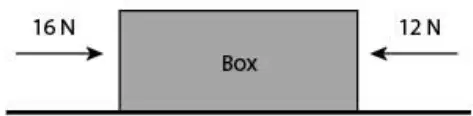
The picture below shows two forces being applied to a box on a frictionless surface. What is the mass of the box if it is accelerating at 2 m/s^2?
2 kg
6 kg
8 kg
14 kg
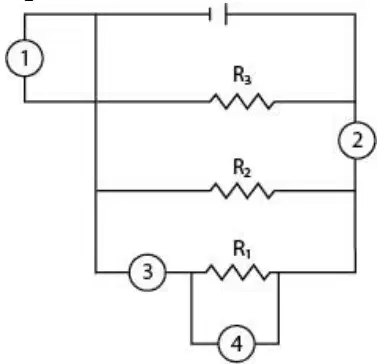
Where should an ammeter be located to correctly measure the current of both R1 and R2, and where should a voltmeter be located to correctly measure the voltage of both R1 and R2?
Ammeter at 3 and voltmeter at 4
Ammeter at 2 and voltmeter at 3
Ammeter at 2 and voltmeter at 4
Ammeter at 4 and voltmeter at 2
A box is initially at rest on a frictionless surface. It then experiences two forces, as shown in the picture. Which best describes what will happen to the box?
It will move at a constant speed to the left.
It will move at a constant speed to the right.
It will move at an increasing speed to the left.
It will move at an increasing speed to the right.
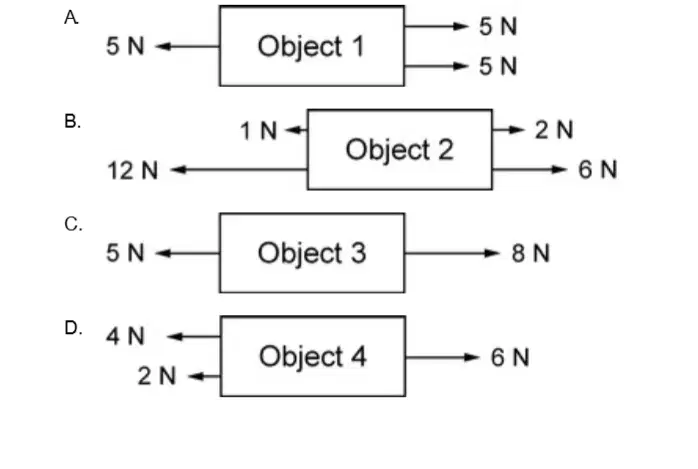
The drawings below show four objects that are acted upon by different forces. The direction of the forces are represented by the arrows, and the units of the forces are in newtons (N). Based on Newton's law of inertia, which object is moving at a steady speed, assuming that all four objects are moving on a frictionless surface?
Object 1
Object 2
Object 3
Object 4
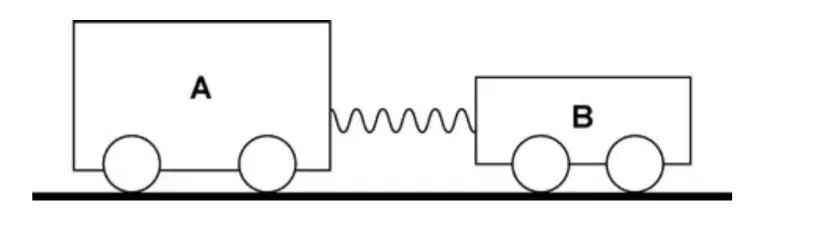
Two carts, A and B, are joined by a compressed spring, as shown in the diagram. The mass of cart A is twice that of cart B. Which of the following statements best describes what will happen when the spring is released?
Both carts will have the same change in velocity.
Cart B will have the greater change in velocity.
Neither cart will experience a change in velocity.
Cart A will have the greater change in velocity.
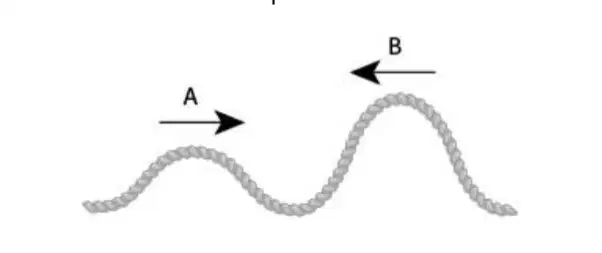
Wave A and Wave B are traveling towards each other on a rope, as shown in the diagram. Which statement describes the amplitude of the resultant wave when Wave A and Wave B overlap?
The resultant wave will have a smaller amplitude than both waves.
The resultant wave will have a greater amplitude than both waves.
The resultant wave will have a greater amplitude than Wave A but a smaller amplitude than Wave B.
The resultant wave will have no amplitude.
A student is given information on a wave. They are asked to determine if the wave is mechanical or electromagnetic. Which of the following questions could the student ask to help determine which type of wave it is?
Can the wave be reflected?
Can the wave transmit energy?
Does the wave travel faster in air or in water?
Does the wave travel through organic matter?
A wave travels through a medium because
the medium transfers electromagnetic energy.
the wave’s energy passes from particle to particle.
the wave increases the potential energy of its medium.
the medium’s particles are carried along with the wave.
Which is NOT correct about waves?
Waves travel through a medium.
Wave energy come from vibrations.
Waves transfer matter and not energy.
Waves transfer energy and not matter.
Waves that transfer energy parallel to the direction of vibration are known as
water waves.
transverse waves.
longitudinal waves.
electromagnetic waves.
A sound wave transfers energy by
causing the air particles to vibrate.
creating a vacuum between areas of air particles.
creating high and low pressure areas that push and pull the air around them.
filling the space left when a vibrating object moves in a direction opposite to the wave’s motion.
When the particles of a medium are vibrating at right angles to the direction of energy transfer, then the wave is a
longitudinal wave.
transverse wave.
sound wave.
standing wave.
In a wave, the forward motion that is visible to the eye is caused by
the movement of energy through a medium.
the movement of matter from one place to another.
the movement of matter and energy through a medium.
the movement of sound and vibrations from one place to another.

The figure shows the pattern produced by a double-slit interference experiment with a central bright band and labeled fringes P Q R S T U from left to right. Which of the following fringes have a path length difference of half a wavelength?
Q and T
Q and U
R and S
P and T

The figure shows four light rays striking a plane mirror with a normal line at the point of incidence. Incident rays are labeled P Q R S on one side of the normal; reflected rays are labeled T U V W on the other side. Which letters represent the correct pairing of an incident ray and the reflected ray?
P and T
R and T
P and U
R and U


What would you call this?
Reflection
Diffraction
Refraction
Friction
Which of the following best explains why a transverse wave can travel through a rope but not through a liquid?
Transverse waves require a medium with no mass.
Liquids have particles that are too closely packed to allow any wave to travel.
Liquids do not have enough elasticity to support vibrations perpendicular to the direction of energy transfer.
Ropes cannot transmit energy in any direction.
What happens to the amplitude of a wave as it passes from a less dense medium to a more dense medium?
The amplitude remains the same regardless of the medium.
The amplitude becomes zero as the wave cannot pass through.
The amplitude decreases because some energy is reflected or absorbed.
The amplitude increases because more energy is transferred.
Which statement correctly describes the difference between longitudinal and transverse waves?
Longitudinal waves vibrate perpendicular to the direction of energy transfer, while transverse waves vibrate parallel.
Both types of waves vibrate in the same direction as energy transfer.
Transverse waves require a medium, but longitudinal waves do not.
Transverse waves vibrate perpendicular to the direction of energy transfer, while longitudinal waves vibrate parallel.
The force or push that causes electric charges to move is called ______.
resistance
voltage difference
current
static electricity
This contains a piece of metal that melts if it gets too hot in order to open a circuit.
conductor
insulator
fuse
circuit breaker
A material through which electrons do NOT flow easily is a(n)
insulator
fuse
conductor
circuit breaker
Electric charges always flow from (a) areas to (b) areas.

What does the symbol labeled #1 represent?
light
battery
resistor
switch
What does the symbol labeled #2 represent?
light
battery
resistor
switch
Circuit ___ is wired in parallel, and circuit ___ is wired in series.
A;B
B;A
Circuit (a) is the type of circuit that causes an entire string of lights to go out when one of the bulbs burns out.
Opposite charges (a) . Like charges (b) .
Electric charge flows from (a) voltage to (b) voltage.
Explain how lightning is created.
Include which type of electric charge transfer it is.
(This should have three main points described.
This question will not be graded until I manually grade it.)
Draw a series circuit with two batteries, two resistors,
a light, and a switch to turn the whole thing off.
(This will be graded manually by me.)

The Law of Conservation of Charge states that _____
charge can be created or destroyed, but NOT transferred
charge cannot be created or destroyed, but it can be transferred
charge cannot be created or destroyed and it cannot be transferred
none of the above

Which of the following statements is true about the pictured circuit?
There are 2 batteries, 2 switches, and 2 resistors.
There are 2 batteries, 2 switches, and 3 resistors.
There is 1 battery, 2 switches, and 3 resistors.
There are 3 batteries and 3 resistors.
(a) = positively charged particles in an atom
(b) = circuit that only has one pathway for current to travel through
(c) = a device that measures the voltage difference in a circuit
(a) = particles in the atom that have no charge
(b) = circuit that has more than one pathway for current to travel through
(c) = temporary magnet made by placing a piece of iron inside a current carrying coil of wire
Explain one way (we discussed two) to keep a circuit from overheating.
Explain = what is it, and how does it work?
(this will be manually scored after your test is submitted)

Which symbol would represent a device that can easily turn the circuit on or off?
A
B
C
D
An outlet has a current of 10 amperes and a resistance of 14 ohms.
Find the voltage difference.
(this will be manually scored after test is submitted)
Houses with carpet are much quieter than houses with tile or hardwood floors because of sound wave
diffraction
reflection
absorption
refraction
Which is an example of a longitudinal (compressional) wave?
X-ray
gamma ray
sound wave
water wave
Increasing the amplitude of a sound wave will make it ________.
louder
have a higher pitch
travel faster
produce beats
An echo is an example of sound wave ______
absorption
reflection
diffraction
refraction
Wave A carries more energy than wave B. Wave B must have a smaller (a) than wave A.
What is the matter through which a wave travels through called?
compression
amplitude
medium
frequency
Sound waves travel the fastest in (a) .
A tuning fork starts to vibrate when a certain note is played on the piano. This is an example of _____.
reflection
refraction
pitch
resonance

B
amplitude
C
trough
A
crest
D
wavelength
What type of wave is pictured?
transverse
compression
longitudinal
sound

What is label B?
rarefaction
amplitude
compression
wavelength
What is label C?
rarefaction
amplitude
compression
wavelength
Which letters to indicate one wavelength?
a to e
b to d
a to b
a to i
What is the velocity of a wave having a frequency of 25 Hz
and a wavelength of 10m?
250 m/s
2.5 m/s
35 m/s
0.4 m/s
In 1 second, 4 crests of a wave pass a certain point. What is the wave's frequency?
0.25 Hz
0.25 m/s
4 Hz
4 m/s
Matter that has a definite volume and a definite shape is a (a)
Matter in which the particles are free to move in all directions until they have spread evenly throughout their container is a (a)
In which phase of matter are the molecules of the substance
farthest apart from each other?
liquid
gas
solid
condensate
The air that you breathe is an example of a(n) ______ solution.
solid
liquid
gas
plasma
When two more more substances are
physically combined, the result is a(n) ______.
chemical change
element
compound
mixture
As a sample of matter is heated, its particles ____.
are unaffected
move more quickly
move more slowly
stop moving
The color of ink is a _______.
physical change
physical property
chemical change
chemical property
Three examples of physical change are
sawing wood, crushing a can, and burning a marshmallow
burning of gasoline, rotting an egg, and exploding fireworks
freezing of water, evaporation of gasoline, and rusting of a nail
boiling of water, blowing up a balloon, and melting a candle
Which of the following is evidence that a physical change has occurred?
Broken glass
Rust
Bubbles
Formation of a solid precipitate
Which of the following is not a physical property?
Color
Odor
State
Reactivity with oxygen
The amount of energy needed to change a material from the solid state to the liquid state is the heat of ____.
condensation
vaporization
fusion
evaporation
CaCO3 is an example of which type of matter?
Element
Compound
Heterogenous Mixture
Homogenous Mixture
A type of matter formed by chemically joining two or more elements is known as
compound
solution
colloid
mixture
The particles in a liquid are usually
closer together and lower energy than in a solid
farther apart and lower in energy than in a solid
farther apart and higher in energy than in a gas
closer together and lower in energy than in a gas
The Law of Conservation of Mass states:
Mass never stays constant
Mass is always added during a chemical change
Mass is always lost during a chemical change
Mass is not lost or created during a chemical change
Label whether the mixture is homogenous or heterogenous.
SALTWATER
HOMOGENOUS
HETEROGENOUS
Label whether the mixture is homogenous or heterogenous.
SALAD DRESSING
HOMOGENOUS
HETEROGENOUS
Label whether the mixture is homogenous or heterogenous.
TRAIL MIX
HOMOGENOUS
HETEROGENOUS
Label whether the mixture is homogenous or heterogenous.
GATORADE
HOMOGENOUS
HETEROGENOUS
Label whether the mixture is homogenous or heterogenous.
HOT COCOA WITH MARSHMALLOWS
HOMOGENOUS
HETEROGENOUS
Label whether the mixture is homogenous or heterogenous.
VEGETABLE SOUP
HOMOGENOUS
HETEROGENOUS
Label as a physical property or chemical property.
FRAGRANCE OF A FLOWER
PHYSICAL
CHEMICAL
Label as a physical property or chemical property.
ABILITY TO ROT
PHYSICAL
CHEMICAL
Label as a physical property or chemical property.
FLAMMABILITY OF A SUBSTANCE
PHYSICAL
CHEMICAL
Label as a physical property or chemical property.
DENSITY OF AN OBJECT
PHYSICAL
CHEMICAL
Label as a physical change or chemical change.
BURNING POPCORN
PHYSICAL
CHEMICAL
Label as a physical change or chemical change.
INFLATING A TIRE
PHYSICAL
CHEMICAL
Label as a physical change or chemical change.
RUSTING OF A FISHING POLE
PHYSICAL
CHEMICAL
Label as a physical change or chemical change.
BOILING WATER
PHYSICAL
CHEMICAL

3
liquid
2
heat of fusion
1
solid
5
gas
4
heat of vaporization
Use the provided terms to label the chart. Each word will only be used once.
A graduated cylinder has 33.5mL of water. A piece of metal is added to the water and the new volume is now 46.2mL. If the metal has a mass of 16.25g, what is its density?
(This will be manually graded once submitted. Don't forget the correct labels.)
Atoms of the same element with a different number of neutrons
Ion
alloy
Isotope
Quarks
Calculation used to find the number of neutrons in an atom
Mass Number- Atomic Number
Atomic Number - Mass Number
Mass Number - Electrons
protons = electrons = neutrons
The __________ of an atom is the sum of the protons and neutrons in the nucleus of that atom.
mass number
atomic number
ionic charge
isotope weight
Subatomic particles with a negative charge
Electrons
Neutrons
Protons
Quarks
Isotopes of an element have a different number of...
Protons
Neutrons
Electrons
Mass

Element name C
Calcium
Caesium
Carbon
Cobalt

What do we call the electrons that are involved in chemical reactions and are in the outermost shell?
Valence Electrons
Isotopes
Atomic Numbers

Using this section of the periodic table, how many protons does an atom of Calcium have?
20
40.078
24
132.905

Using this section of the periodic table, what is the chemical symbol for Silicon?
S
Si
C
Cl

When elements are in the same ROW they are all in the same-
Chemical Symbol
Period
Family

When elements are in the same COLUMN they are all in the same-
Chemical Symbol
Period
Group

