
 Worksheets
Midterm Review (Chemistry and Physics)
Total questions: 60
Worksheet time: 34mins
Which statement best distinguishes a substance from a mixture?
A substance is pure and has one kind of particle
A substance is made of two unrelated materials
A mixture is pure and has identical particles
A mixture is one element with fixed particles
Which list contains only types of pure substances?
Solution, Atom, Element
Atom, Mixture, Solution
Mixture, Product, Reactant
Element, Molecule, Compound
In the reaction 2Mg + O2 → 2MgO, which are the reactants?
2Mg and O2
2MgO
MgO and O2
MgO and Mg
In a balanced chemical equation, what must be equal on both sides?
Amount of energy released
Number of molecules formed
Number of each type of atom
Number of different substances
A student writes Na + Br2 → NaBr. What coefficient is needed to balance the equation?
2 only in front of Br2
2 in front of Br2 and NaBr
2 only in front of Na
2 in front of Na and NaBr
Which statement best explains conservation of mass in a reaction?
Reactants always have more atoms than products
Mass decreases if gas is produced
New atoms appear to make the products
Atoms are rearranged but not created or destroyed
Which observation is valid evidence that a chemical reaction occurred?
Liquid freezing into a solid
A solid precipitate is formed
Melting a solid
Dissolving one substance in another
Which set lists five common signs of chemical change?
Shine, hardness, magnetism, luster, texture
Evaporation, condensation, freezing, melting, boiling
Mass change, size change, shape, density, volume
Temperature change, precipitate, gas, odor, color
An ice cube melts and then boils into steam. Which conclusion is correct?
No change occurs because temperature stays constant
No chemical change occurs because it is still H2O
A chemical change occurs because color changes
A chemical change occurs because gas forms
During a chemical reaction, what rearranges to form new molecules with new properties?
Energy
Atoms
Mass
A student dissolves 5 g of salt in 10 g of water. What is the mass of the saltwater?
20 grams total mass
10 grams total mass
5 grams total mass
15 grams total mass
Which property would help identify an unknown substance rather than describe how much you have?
Mass of the sample
Boiling point of the material
Amount in the container
Volume of the sample
Which statement best describes how size or amount affects a substance’s properties?
Larger sizes always dissolve faster in any liquid changing its properties
Smaller amounts always melt at lower temperatures changing a substances properties
Changing amount does not change the properties of a substance
Changing the amount changes both density and melting point
Which feature distinguishes an open system from a closed system in a lab setup?
Matter and energy can enter or leave
Only energy can leave the system
Only matter can enter the system
Neither energy nor matter can move
In a closed system reaction that is sealed, what happens to total mass?
Mass changes with reaction speed
Mass increases as energy enters
Mass decreases as gas escapes
Mass of the system stays the same
Two solids have the same melting point and the same solubility in oil.
What is the best claim based on that information?
The solids are identical only if colors match
The solids must be mixtures of substances
The solids are different because masses differ
The solids are likely the same substance
A data table contains information about Liquid 1 and Liquid 4.
Both liquids have a density 0.93 g/cm³, no color, and a melting point −98 °C.
What conclusion is most supported?
Liquid 1 and 4 are the same substance
Liquid 1 is denser than Liquid 4
Mass proves Liquid 1 and 3 match
Liquid 2 and 3 are the same substance
Why is mass not used to identify an unknown pure substance?
Mass is a property of matter
Mass equals density times temperature
Mass is always the same for all samples
Mass depends on amount of sample present
A copper sample has volume 2 cm³ and mass 18 g. What is copper’s density from this data?
2 g/cm³
20 g/cm³
18 g/cm³
9 g/cm³
What is the Density of a substance that has a mass of 50 grams and a volume of 2 cm3?
Density is 5 g/cm³
Density is 25 g/cm³
Density is 100 g/cm³
Density is 48 g/cm³
What is solubility?
The ability of one substance to dissolve in another substance
The property of a substance to change color in water
The ability of a liquid to evaporate into the air
The tendency of particles to settle at the bottom
If 10 g of salt is not soluble in a large container of oil, will 20 g of salt be soluble in the same container?
No, solubility is a property so adding more solute will not make it dissolve
Yes, because more grams always increase dissolving in any solvent
No, because oil becomes a different solvent with more solute
Yes, a larger mass of solute will always dissolve if added slowly
According to the law of conservation of mass, what happens to mass during a chemical reaction?
The total mass changes unless the reaction occurs in a closed jar
The total mass decreases because gases escape into the air
The total mass increases because products are heavier than reactants
The total mass remains the same because matter is not created or destroyed
During a chemical reaction, how does the mass of the products compare to the mass of the reactants when equations are balanced?
They are the same because each type of atom is conserved
Products are greater because new atoms are formed
They differ because balancing only matches molecule counts
Reactants are greater because some atoms disappear
What term describes the energy of an object in motion?
Gravitational energy
Chemical energy
Thermal energy
Kinetic energy
Which TWO factors influence the amount of kinetic energy of a moving object?
Height and air pressure around it
Temperature and surface texture
Mass and speed of the object
Volume and color of the object
What term describes the energy of an object that is raised off the ground?
Nuclear energy
Gravitational energy
Kinetic energy
Elastic energy
Which TWO factors determine the gravitational energy of a raised object?
Speed of the object and surface friction
Temperature of the object and color of the object
Volume of the object and air resistance
Mass of the object and height above the ground
Which term describes the energy stored when an object is stretched or compressed?
Elastic energy
Gravitational energy
Magnetic energy
Chemical energy
What does an energy conversion diagram show for a system like a roller coaster?
Air resistance values over time
Exact speeds at every location
Track friction forces precisely
Amounts of energies at different points
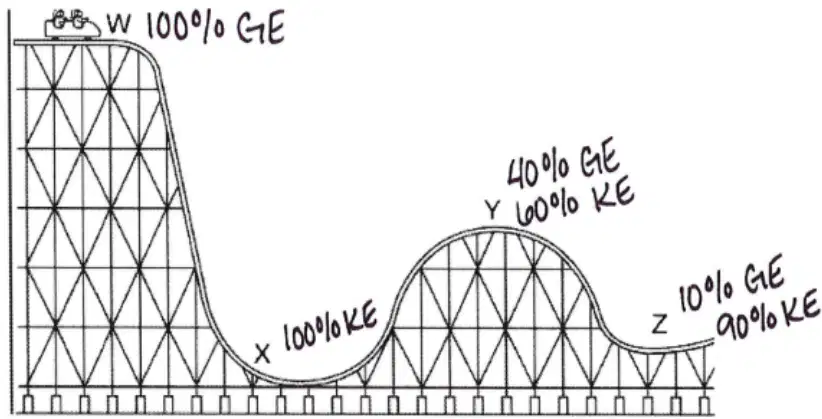
At the top of the first hill on a roller coaster, which energy is greatest if the car is momentarily at rest?
Gravitational potential energy
Sound energy
Kinetic energy
Thermal energy
As a roller coaster speeds through the lowest point of a valley, which energy is largest while some energy becomes thermal due to friction?
Kinetic energy is largest there
Gravitational energy is largest there
Elastic energy is largest there
Chemical energy is largest there
Which term describes the energy from the motion of particles in matter?
Elastic potential energy
Electric potential energy
Nuclear binding energy
Thermal energy (TE)
Which two factors most influence the amount of thermal energy in an object?
Altitude of object and shape
Air pressure and brightness
Volume of object and color
Mass of object and temperature
An energy transfer diagram for two balls colliding should show what key idea?
Only mass determines final speed
Energy moves from one object to another
All energy stays in the first object
Energy disappears completely as heat
Four cars move as listed. Which has the greatest kinetic energy?
A) 1000 kg at 60 m/s,
B) 5000 kg at 50 m/s,
C) 500 kg at 50 m/s,
D) 1000 kg at 5 m/s
C) 500 kg at 50 m/s
A) 1000 kg at 60 m/s
D) 1000 kg at 5 m/s
B) 5000 kg at 50 m/s
On a swing set, where is gravitational energy greatest and least? Choose the best statement.
Greatest at highest point, least at lowest point
Greatest at mid‑swing, least at start
Equal at all points of the swing
Greatest at lowest point, least at highest point
As a pendulum swings upward toward its highest point, which change in energy happens?
Gravitational energy decreases while kinetic increases
Gravitational energy increases while kinetic decreases
Both gravitational and kinetic energy decrease together
Both gravitational and kinetic energy increase together
Why does a bouncing basketball eventually stop if it is not repeatedly dribbled?
Energy transfers to the ground and air as sound and heat
Elastic energy increases without limit in the basketball
No forces act on the ball during each bounce
Energy is created inside the ball during impacts
How does increasing the kinetic energy of particles affect an object’s thermal energy?
More particle kinetic energy means higher thermal energy
More particle kinetic energy means lower thermal energy
Particle kinetic energy does not affect thermal energy
Thermal energy increases only when mass decreases
What is sound energy best described as?
Energy moving as a wave through a vibrating substance
Energy stored in chemical bonds of a material
Energy radiated as light from a hot object
Energy from electric charges moving in a circuit
Which statement describes particle motion when sound travels through a medium?
Particles vibrate back and forth and hit nearby particles
Particles move away permanently in one direction
Particles rotate in circles around the source
Particles stop moving as the wave passes
In which type of medium does sound travel fastest, and why?
Solid, because particles are closer together
Liquid, because particles are far apart
Vacuum, because there are no particles
Gas, because particles are tightly packed
Why does a sound get quieter the farther it travels from its source?
The source creates more energy at larger distances
Air particles gain mass and absorb no energy
The vibration energy spreads out over a larger area
Sound waves speed up and grow stronger

A stretched rubber band that is released demonstrates which energy change?
Chemical potential energy changing into sound energy
Elastic potential energy changing into kinetic energy
Kinetic energy changing into elastic potential energy
Gravitational potential energy changing into thermal energy
Which two factors determine how much elastic potential energy an object stores?
How stretched and how compressed the object is
Its mass and its temperature
Its speed and its direction
Its color and its surface texture
A ball rolls down a hill from point 1 (top) to point 4 (lower). Compared with point 1, the gravitational potential energy at point 4 is
the same because mass stays constant
greater because it is at higher elevation
greater because speed increases downhill
less because it is at lower elevation
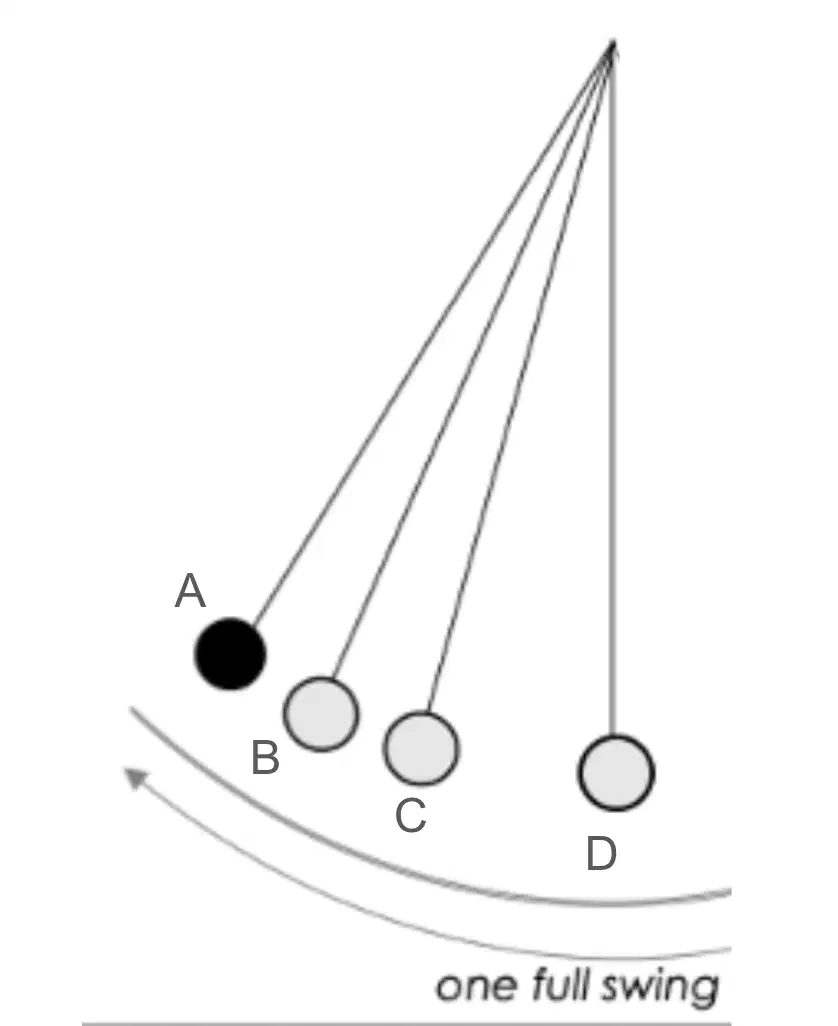
A pendulum swings from its highest point A to lowest point D. At which point does the bob have the greatest kinetic energy?
Point D at the lowest point
Point B near the top
Point A at maximum height
Point C midway down

As a pendulum swings through air, what trend best describes the energy changes over many swings?
Thermal energy decreases as air slows it
Gravitational energy decreases while thermal increases
Kinetic and thermal energy both decrease
Gravitational energy increases each swing
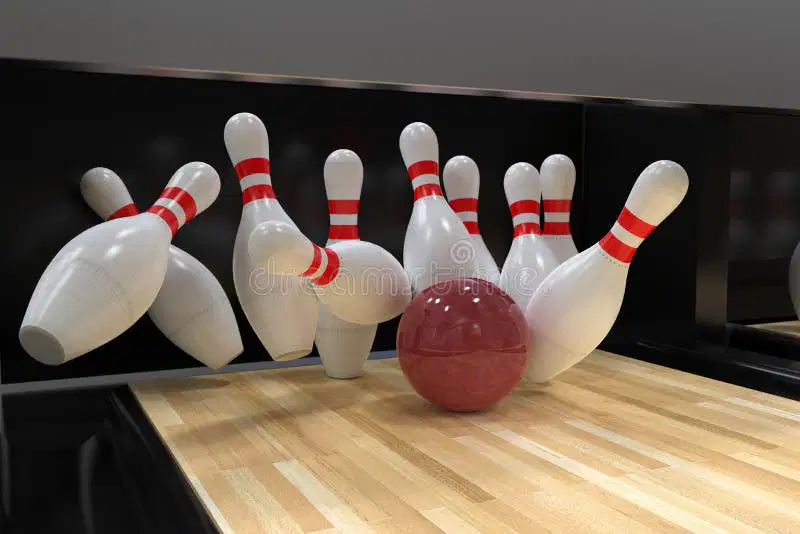
Which statement best explains the energy transfer during bowling when a ball hits the pins?
Pins transfer GE to ball; no TE forms
Ball transfers KE to pins; some TE forms
Ball gains KE from pins; no transfer occurs
Pins convert all KE into GE instantly
Why can a batter hit a ball farther when it is pitched faster rather than slower?
The bat loses energy with faster pitches
Slower pitches carry greater momentum
Faster pitches have more energy to add
Faster pitches have less mass overall
Some balls stop bouncing after a while. What is the best explanation?
Energy is created during each bounce
Gravity weakens over each bounce
Energy is transferred to surroundings
Mass increases and stops the motion
At the same temperature, which has more thermal energy: a coffee mug of water or a huge pot of water?
Coffee mug, because it is hotter overall
Huge pot, because it has more mass
Coffee mug, because it cools faster
Both equal, because temperature matches
Equal masses of ice and steam are compared. Which has more thermal energy and why?
Ice, because it has less volume
Both, because mass is identical
Steam, due to higher temperature
Ice, due to lower particle motion
Label the states of matter
liquid
gas
solid
ice

Heat is the energy that is transferred from a (a) object to a (b) object.

Is this equation BALANCED?
YES
NO
H2 + O → H2O
When writing a chemical equation, reactants are on the _____________ while products are on the _________________.
top, bottom
right, left
left, right
bottom, top
What is the right part of a chemical equation called?
H2 + O → H2O

