
Font size
 Worksheets
Final Exam Review: Ecosystems and Biodiversity
Total questions: 130
Worksheet time: 1hrs 24mins
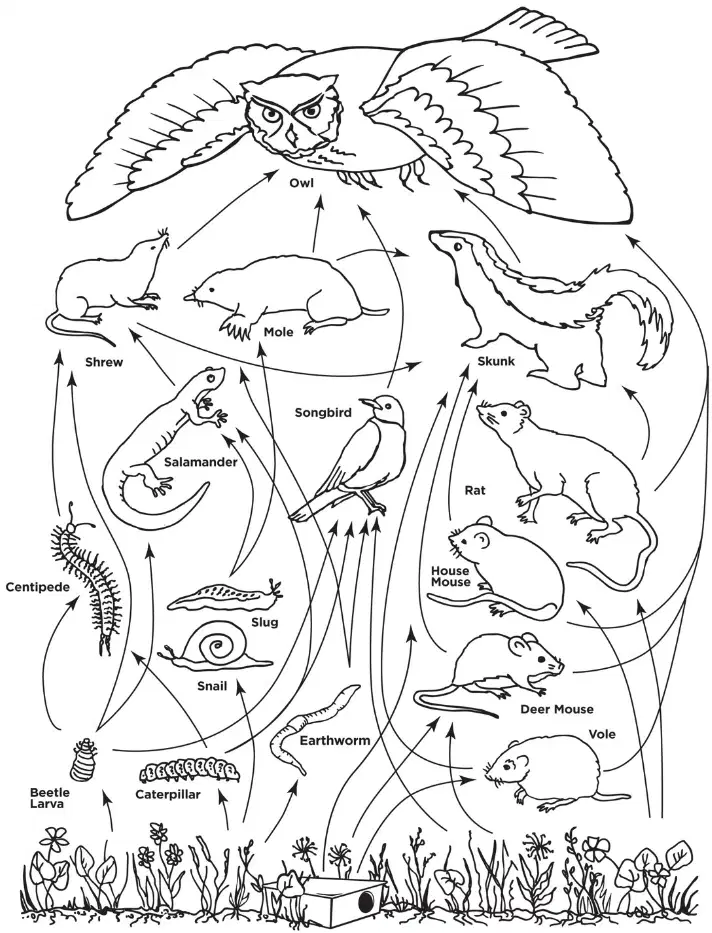
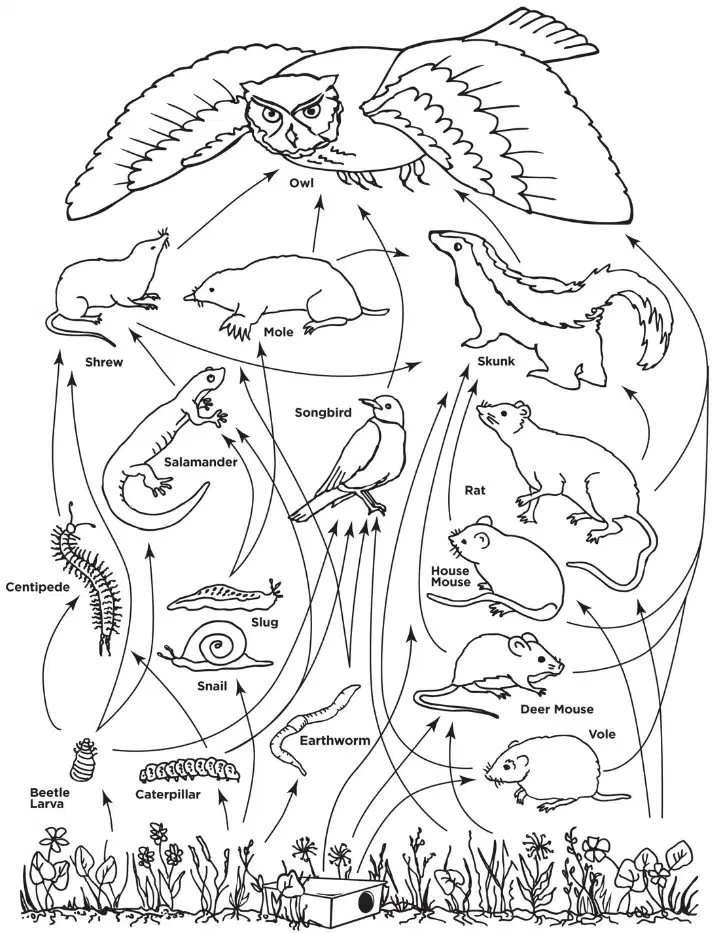
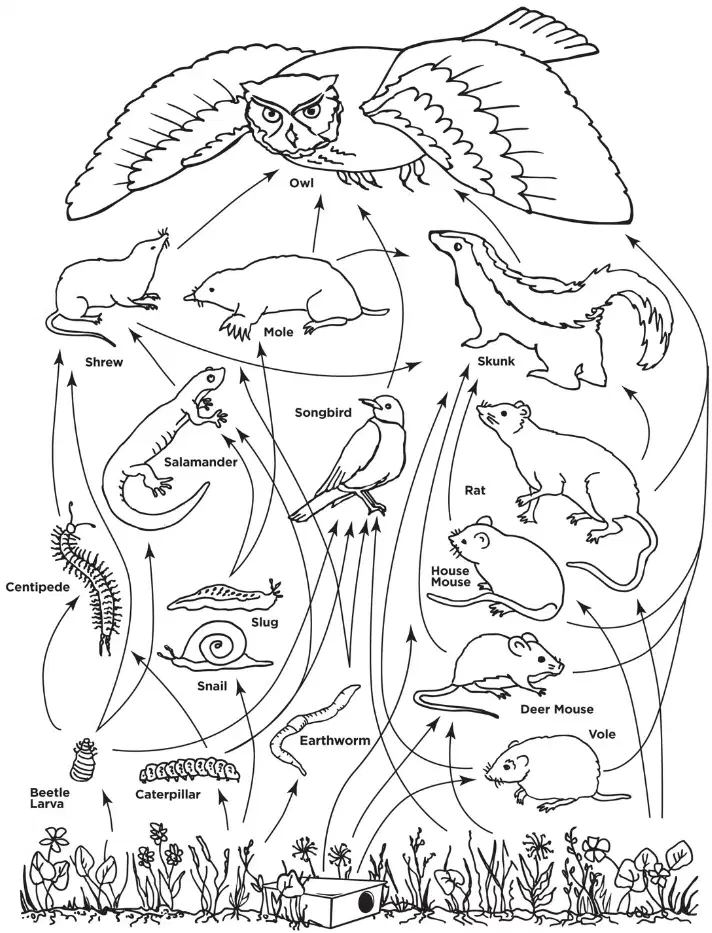
Which ecosystem role commonly filled by fungi is missing from the depicted food web?
Keystone species maintaining community structure
Top predators controlling herbivore numbers
Decomposers that recycle organic matter
Primary producers that photosynthesize energy
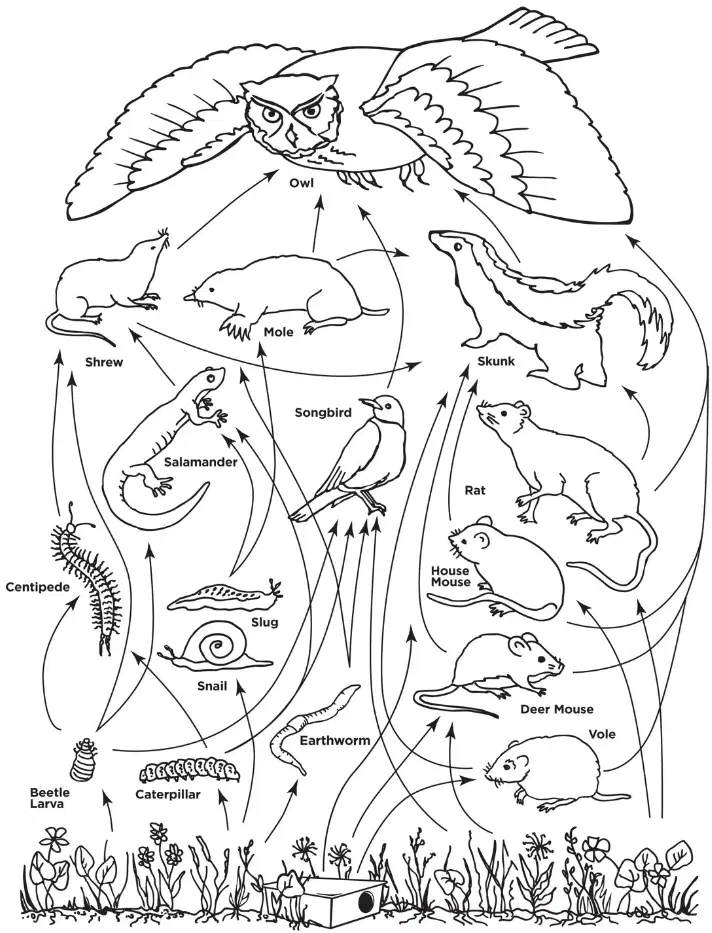
Which pair correctly identifies one abiotic and one biotic factor that could affect shrew populations?
Temperature range and river flow
Soil moisture and predator abundance
Sunlight intensity and rock type
Rainfall pattern and wind speed
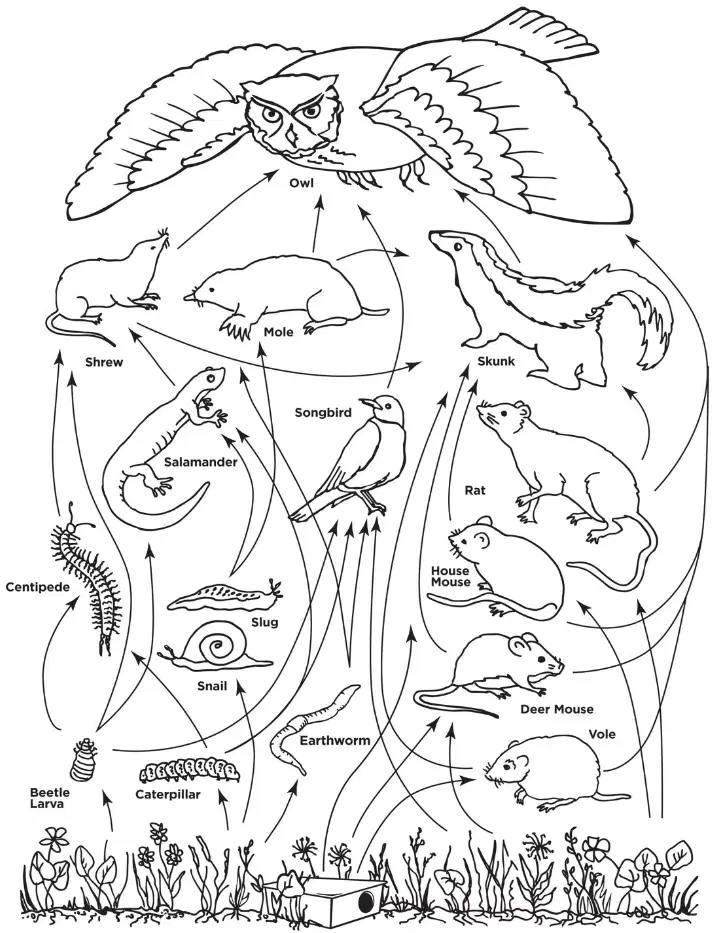
In this food web, which organism most likely decreases if caterpillars, beetle larvae, and centipedes are killed by pesticide?
Mole feeding on plant seeds
Songbird feeding on caterpillars
Snail consuming grasses and herbs
Earthworm relying on leaf litter

Which two organisms are most likely to increase after the pesticide kills caterpillars, beetle larvae, and centipedes?
Snails due to increased rainfall
Shrews due to fewer predators
Owls due to more prey options
Grasses due to reduced herbivory
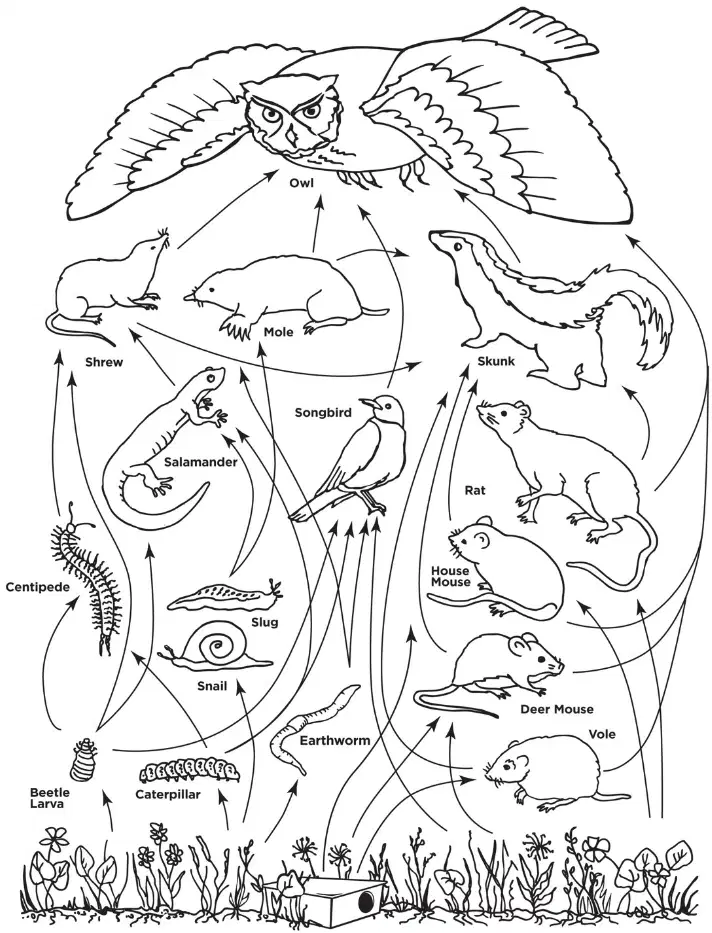
Which trait best helps the owl acquire prey in this ecosystem?
Bright plumage for mating displays
Camouflaged feathers reducing detection
Long beak specialized for nectar
Webbed feet for swimming faster
Which practice, other than pesticide use, has contributed significantly to biodiversity loss in agricultural landscapes over the last century?
Monoculture over large areas
Conservation tillage with cover crops
Crop rotation across small fields
Integrated pest management programs
Why does widespread monoculture directly reduce species diversity in farm ecosystems?
It creates diverse niches that support many species
It provides a single habitat that excludes specialists
It boosts food web complexity at multiple trophic levels
It increases habitat heterogeneity for wildlife
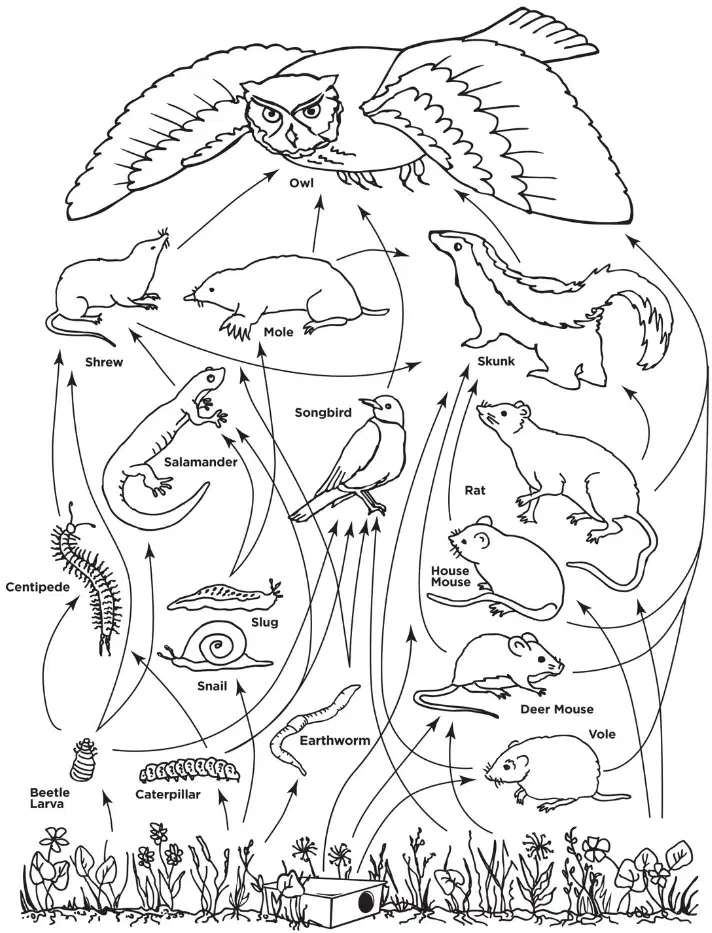
Which interaction shown in the food web best illustrates a trophic cascade risk if songbirds declined sharply?
Increase in caterpillars leading to plant damage
Decrease in grasses leading to herbivore starvation
Increase in owls leading to fewer rodents
Decrease in earthworms leading to soil compaction
Which plate boundary creates new crust at mid-ocean ridges, but does not cause major earthquakes?
Divergent boundary at spreading centers
Convergent subduction plate boundary
Convergent continental collision zone
Transform boundary with sliding motion
Which term describes water freezing in roads, expanding, and making potholes?
Chemical weathering through reactions
Physical weathering by expansion
Erosion by moving sediments
Biological weathering by roots
Below are gases you can find in the atmosphere. Which gas is not a greenhouse gas?
Carbon dioxide from combustion
Nitrogen (N₂) as a major component
Methane used as natural gas
Water vapor forming clouds
In which location would you expect to find the lowest air pressure?
The exosphere near space
The stratosphere layer of air
Top of Mount Everest summit
Baltimore, Maryland at sea level
Which gas is the most common in Earth's atmosphere, and what type of organism uses it the most?
Nitrogen (N₂) used mainly by plants
Oxygen used mainly by animals
Nitrogen (N₂) used mainly by animals
Oxygen used mainly by plants
A snowstorm rolls through a mountain range, resulting in a couple avalanches in the nearby forest. Does this event classify as weather or climate?
Climate due to seasonal cycles
Climate as a long-term trend
Weather as a short-term event
Weather because it’s regional
A heat wave makes a Baltimore summer day unbearable to be outside. Is this weather or climate?
Weather due to local conditions
Weather because it is temporary
Climate because it is typical
Climate due to global warming
Baltimore is prone to snowstorms but is typically drier during the winter months. Does this statement describe weather or climate?
Weather about humidity changes
Climate about short-term events
Climate describing long-term patterns
Weather describing current storms
Maryland’s colder winter makes it not an ideal state for growing avocado trees. Is this statement weather or climate?
Climate because yearly precipitation
Weather because a cold front passed
Climate because long-term temperatures
Weather due to seasonal anomalies
Greenhouse gases like carbon dioxide were doubled overnight. How would winters on Earth be different?
More variable but overall cooler
Warmer with fewer severe cold snaps
Colder with stronger polar vortices
Unchanged due to ocean buffering
A forecast map shows a giant H over Ohio/Indiana/Kentucky and a giant L over a cloudy swirl dropping snow over the Atlantic. Predict the next weather for Baltimore and explain the reasoning.
Fog as humidity increases inland
Thunderstorms from a warm front
Heavy snow from the offshore low
Clearing skies as high pressure approaches
Which change during the Columbian Exchange most directly reduced native North American biodiversity?
Isolation of Americas from global trade
Spread of native bison into eastern forests
Introduction of European livestock to open ranges
Removal of invasive species by early settlers
During which era did humans begin large-scale habitat conversion through settled farming?
Modern digital era, past 50 years
Post-Neolithic Revolution, 10,000–7,000 years ago
Hunter-gatherer era, 15,000–12,000 years ago
Industrial Revolution, 300–200 years ago
Which modern fishing practice most contributes to global fishery collapse compared with traditional rod-and-reel fishing?
Recreational single-hook fishing trips
Small canoe line fishing near shores
Seasonal catch-and-release programs
Trawling with large nets across seafloors
Which mining method is most likely to cause extensive habitat loss compared with historic small-scale mining?
Hand-dug narrow shaft mining
Panning for gold in streams
Open-pit mining for metal ores
Small artisanal pick mining
Why do many farmers still choose chemical pesticides over ecological alternatives like traps or releasing predators?
They require less regulation than other methods
They are safer for pollinators under all uses
They always improve soil biodiversity long term
They offer quicker broad control over many pests
Which fuel source below is used to manufacture the plastics on Earth?
Coal
Hydroelectric Dams
Natural Gas
Nuclear Power
Oil
Which fuel source, when it catastrophically fails, results in the flooding of entire communities and habitats?
Coal
Hydroelectric Dams
Natural Gas
Nuclear Power
Oil
Which fuel source produces the following pollutants: heavy metals, sulfur dioxide, carbon dioxide, mercury, and more?
Nuclear Power
Hydroelectric Dams
Oil
Natural Gas
Coal
Which fuel source is commonly used regularly in Maryland to heat homes, cook food, and power electricity?
Hydroelectric Dams
Natural Gas
Coal
Oil
Nuclear Power
Which fuel source can be mined from the ocean, but is liable to toxic spills that can wipe out aquatic ecosystems?
Oil
Coal
Natural Gas
Nuclear Power
Hydroelectric Dams
Which fuel source takes advantage of the energy released when atoms are fissured in a chain reaction?
Coal
Natural Gas
Oil
Nuclear Power
Hydroelectric Dams
Which fuel source was originally used heavily for transportation, but got phased out in the 1900s and now is only used for electricity?
Coal
Hydroelectric Dams
Oil
Nuclear Power
Natural Gas
Which fuel source is used to power aircraft and diesel trains?
Coal
Nuclear Power
Oil
Hydroelectric Dams
Natural Gas
Which fuel source can take advantage of tidal energy and convert it into electricity?
Hydroelectric Dams
Coal
Nuclear Power
Oil
Natural Gas
Which fuel source is extracted via fracking, and consistently leaks methane during extraction, storage, and transportation?
Coal
Hydroelectric Dams
Natural Gas
Nuclear Power
Oil
Which of the following sources of electricity is considered nonrenewable?
Wind Turbines
Solar power
Nuclear power
Hydroelectric Dam
Which of the following energy sources utilizes the boiling of water into steam, which turns a turbine, generating electricity?
Hydroelectric Dam
Solar power
Nuclear power
Wind Turbines
Which of the following energy sources is powered by photons?
Nuclear power
Wind Turbines
Solar power
Hydroelectric Dam
Which of the following energy sources takes up the least space on Earth, and can double its land use for pastures and farming?
Hydroelectric Dam
Solar power
Nuclear power
Wind Turbines
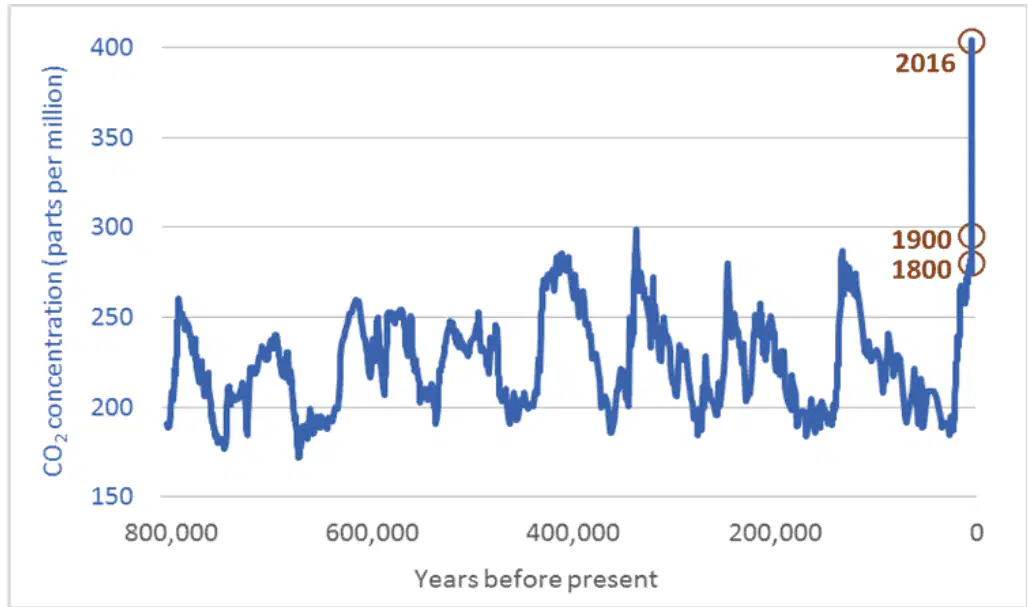
Describe one specific reason why the carbon levels in this current peak far exceed any of the peaks from the last 800,000 years.
Rapid industrialization burning fossil fuels
Enhanced ocean carbon absorption
Stronger solar radiation cycles
Increased volcanic activity globally
Identify another gas being emitted by humans that also contributes to a stronger greenhouse gas effect.
Oxygen (O2) from plants
Neon (Ne) from lights
Methane (CH4) from agriculture
Nitrogen gas (N2) from air
Coal was not widely combusted until 1800. Identify one-way human activities added excess carbon to the atmosphere before that point.
Deep-sea carbon sequestration
Geothermal power expansion
Windmill electricity generation
Deforestation and biomass burning
Which fossil fuel was introduced and widely spread at the 1900 mark, leading to an even greater surge in carbon emissions?
Oil for transportation
Natural gas for cooking
Wood for steam engines
Peat used for heating
Which direct impact of coal combustion most clearly affects nearby communities and wildlife?
Lead exposure from solar panel manufacturing
Particulate matter that harms lungs and habitats
Increased local ozone from agricultural fires
Higher fluoride in groundwater from rainfall
A state seeking to replace coal with wind power should expect which balanced outcome?
Benefit: lower air pollution; Drawback: variable supply
Benefit: abundant baseload; Drawback: high emissions
Benefit: cheaper mining; Drawback: toxic ash waste
Benefit: stable combustion; Drawback: increased smog
Which water pollutant is essential to monitor to keep urban swimming areas safe for people and animals?
Silica from weathered sandstones
E. coli indicating fecal contamination
Dissolved nitrogen from bedrock
Table salt used for winter roads
Which climate consequence is a reasonable expectation if atmospheric greenhouse gas concentrations keep rising over the next century?
Global cooling with more sea ice expansion
Sea-level rise from thermal expansion and ice melt
Lower evaporation rates and fewer heat waves
Decreased storm intensity across all regions
In dense cities, excess emissions from gasoline cars most directly cause which health effect, and which pollutant is primarily responsible?
Asthma exacerbation caused by PM2.5
Bone fractures caused by ozone
Food poisoning caused by nitrate
Skin burns caused by sulfur dioxide
Which land-use change best helps protect the quality of water bodies in urban areas?
Channelizing streams with concrete walls
Installing riparian buffers of native vegetation
Replacing wetlands with parking lots
Removing trees to increase storm runoff
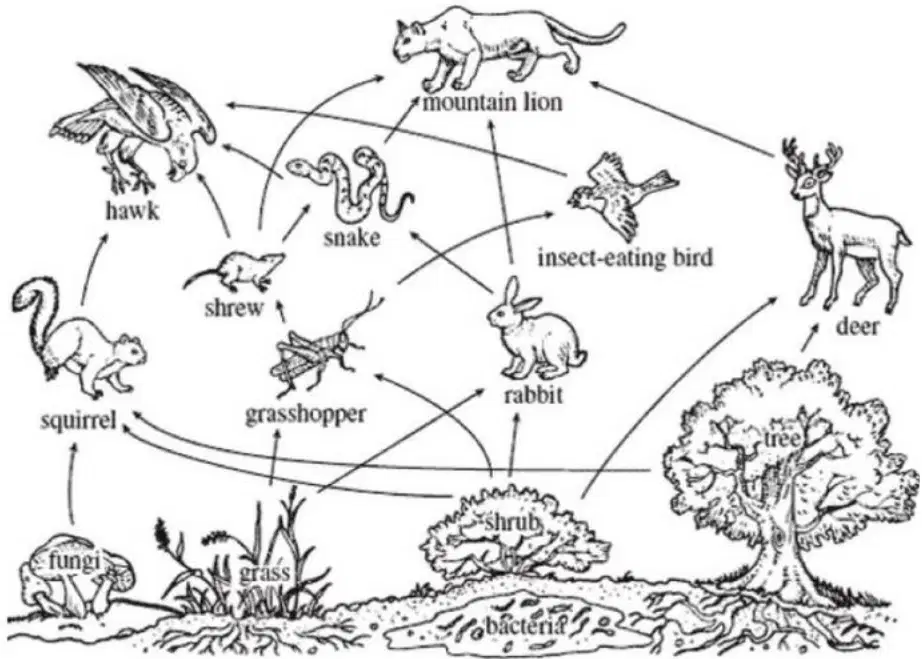
Use the food web to answer: Identify the herbivore with the most diverse diet.
Rabbit feeding on shrubs and grass
Deer feeding on tree leaves and shrubs
Shrew feeding on insects and seeds
Grasshopper feeding on grasses only
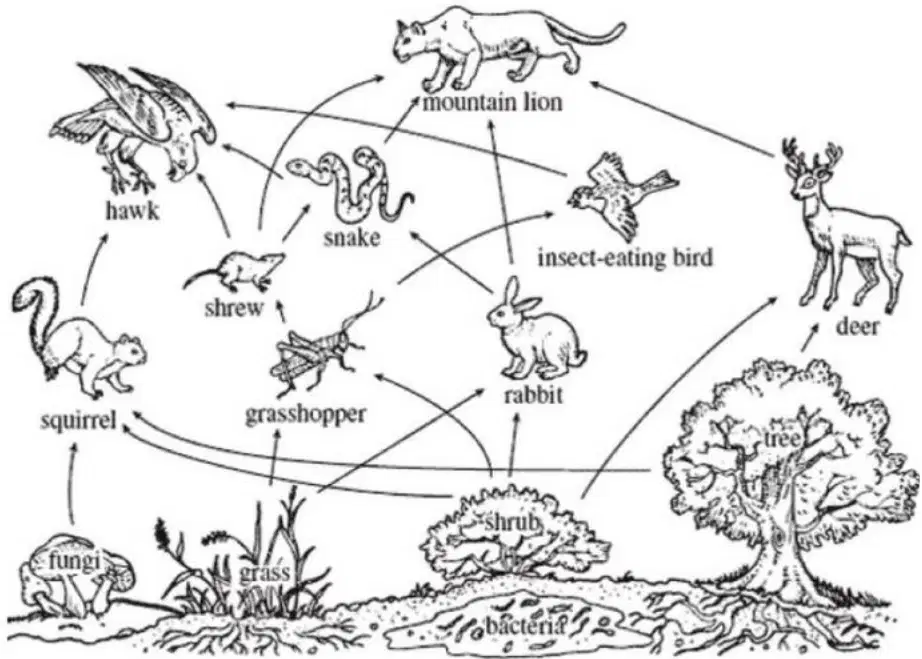
Use the food web to answer: Identify a predator who can be classified as a specialist species since it eats only one species.
Mountain lion eating deer only
Insect-eating bird eating grasshoppers only
Snake eating shrews and rabbits
Hawk eating shrews and rabbits
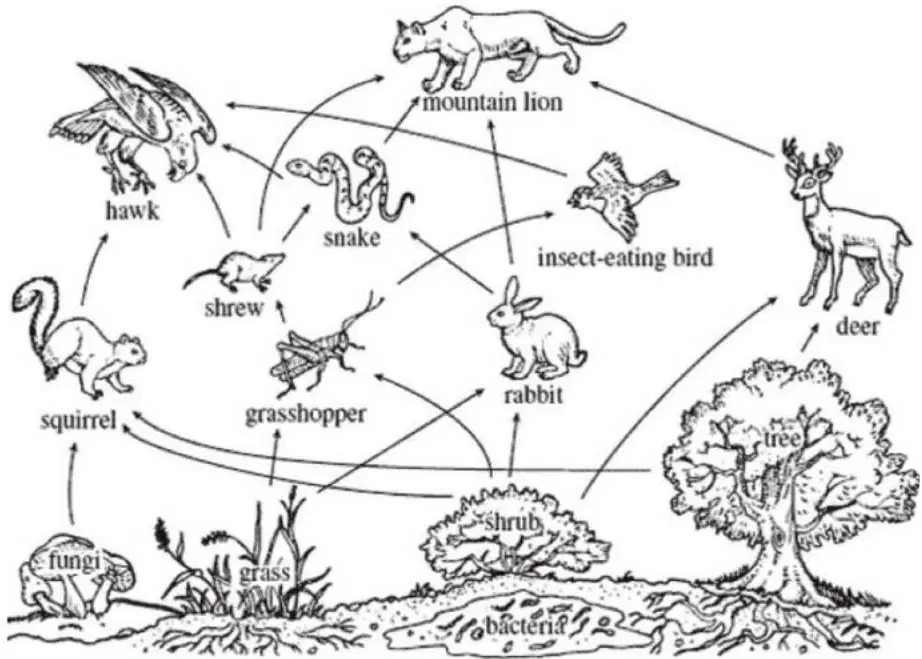
Use the food web to answer: Which organisms release methane and carbon dioxide via decomposition?
Fungi and bacteria decomposers
Shrubs and trees producers
Grass and shrub consumers
Hawk and mountain lion predators
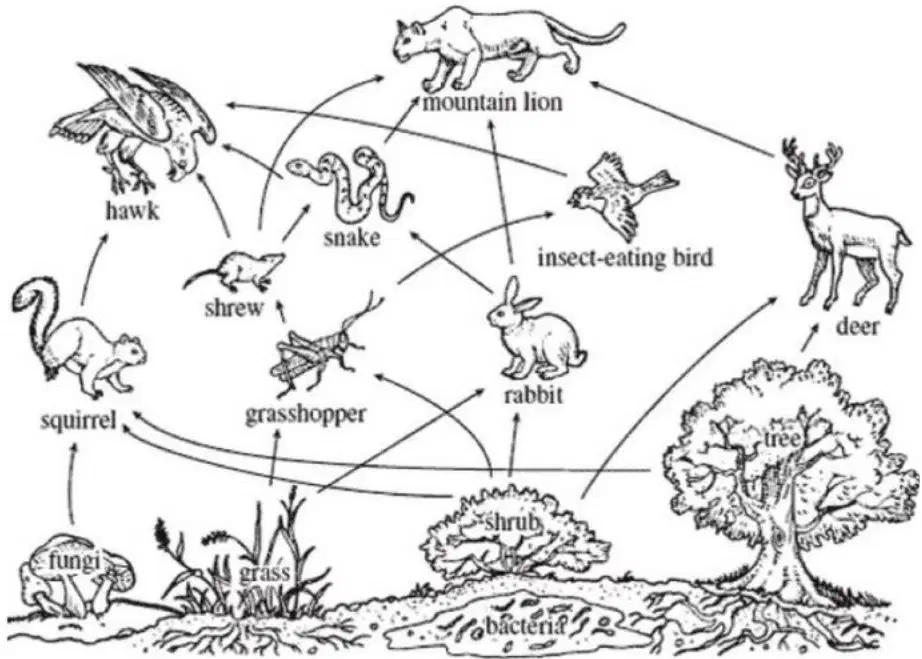
Use the food web to answer: Identify an abiotic factor and a biotic factor that could reduce rabbit population.
Sunlight increase and fewer hawks
Drought and increased snake predation
Soil nutrients and more grasses
Heavy rainfall and more shrubs
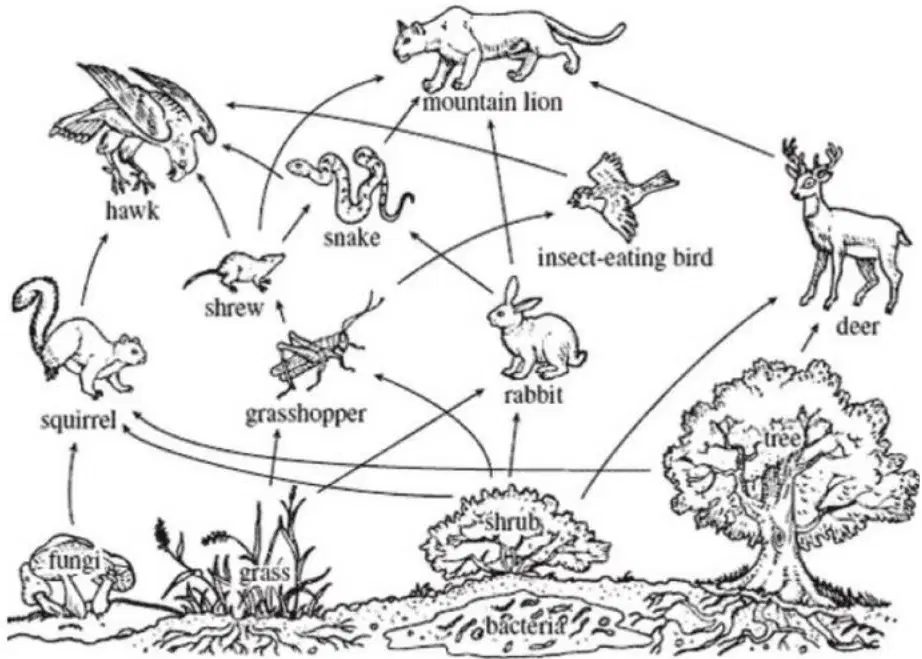
Imagine a pesticide is sprayed on this field, killing grasshoppers and other insects. Which species population would most likely increase after this event?
Grasshoppers due to reproduction
Snakes due to more insects
Hawks due to more prey
Shrubs due to less herbivory
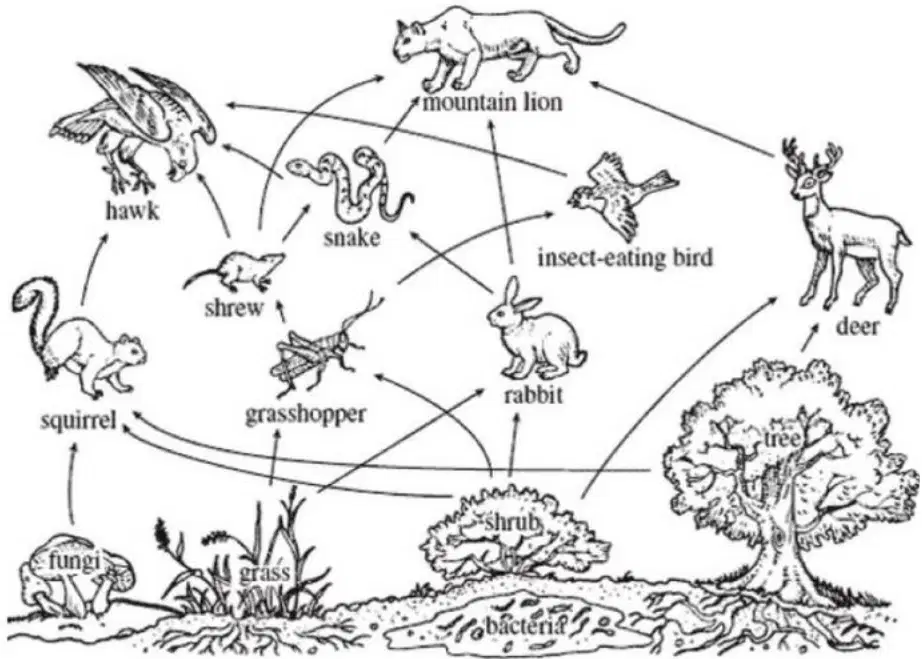
After the pesticide event described, which two species would most likely decrease in population?
Hawks and insect-eating birds
Deer and rabbits
Shrubs and trees
Fungi and bacteria
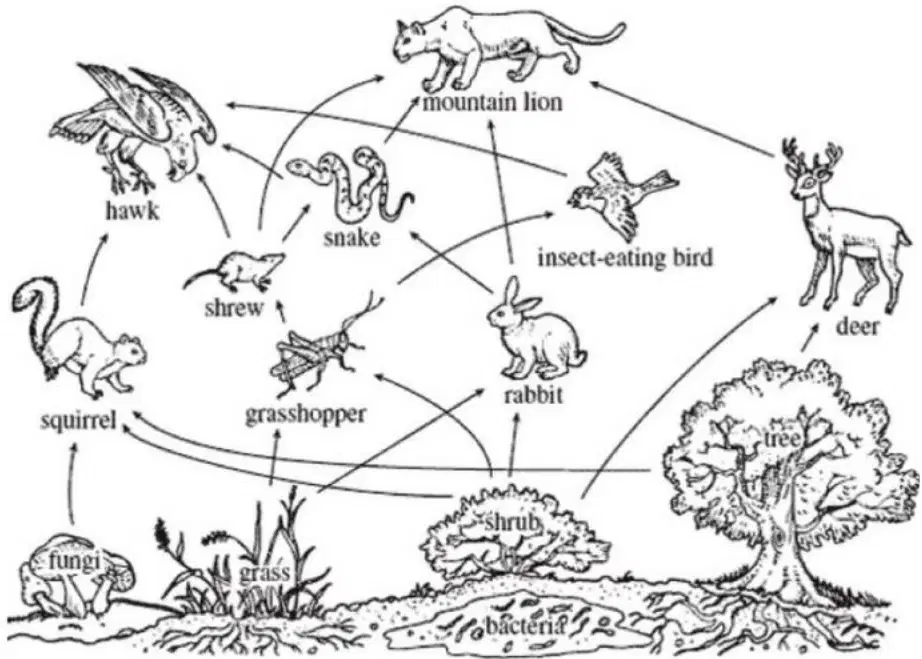
Which trait has the deer likely evolved to help it gather food and avoid threats in this ecosystem?
Broad molars for chewing leaves
Venom for stunning prey
Camouflage for ambushing rabbits
Night vision for hunting shrews
Identify an agricultural practice, other than pesticides, that has contributed to biodiversity loss over the last 100 years.
Drip irrigation use
Monoculture crop planting
Organic composting
Rotational grazing
How does the agricultural practice identified reduce the diversity of species in an ecosystem?
It creates more ecological niches for wildlife
It boosts predator populations and food webs
It increases soil organisms and plant varieties
It replaces varied habitats with uniform fields
A forecast map shows a giant L with a snowy swirl over the Midwest and a giant H over the Atlantic. What weather is most likely for Baltimore next, and why?
Dry winds as the low weakens quickly
Thunderstorms from a warm front stalling
Snow arrives as the low moves eastward
Clear skies as the high strengthens offshore
Which plate boundary involves plates sliding past each other, typically producing earthquakes without creating new crust?
Convergent subduction forming trenches
Divergent boundary creating rift crust
Convergent continental collision
Transform boundary with lateral motion
Statues and limestone rocks dissolving due to acidic rain are best described as which process?
Erosion by wind transporting particles
Physical weathering through abrasion
Chemical weathering by acidic reactions
Deposition by settling sediments
Which atmospheric gas is not a greenhouse gas, while another listed is also known as natural gas for heating and electricity?
Argon is not; methane is natural gas
Water vapor is not; argon is natural gas
Carbon dioxide is not; methane is natural gas
Methane is not; carbon dioxide is natural gas
Where would you expect the greatest air pressure?
Baltimore at sea-level elevation
Exosphere at outer boundary
Top of Mount Everest summit
Stratosphere above the troposphere
Which gas is most abundant in Earth's atmosphere, and which organism group uses it most?
Nitrogen
Oxygen
Carbon Dioxide
Argon
If carbon dioxide and other greenhouse gases were suddenly reduced by half, what change would most likely occur in winters on Earth?
Stormier winters with more rain
Unchanged winters due to oceans
Milder winters with less snow
Harsher, colder winters globally
A heat wave makes a Baltimore summer day unbearable. Does this describe climate or weather?
Climate: global circulation averages
Weather: short-term atmospheric conditions
Climate: long-term regional patterns
Weather: average seasonal statistics
Baltimore is prone to snowstorms but usually drier in winter. Is this climate or weather?
Weather: isolated local thunderstorm
Climate: global ocean trends
Weather: a single day’s condition
Climate: typical seasonal tendencies
A snowstorm crosses a mountain range and triggers avalanches nearby. Is this climate or weather?
Weather: event-specific and short-term
Climate: decades-long averages
Climate: long-term risk profile
Weather: mean monthly conditions
Maryland’s colder winters make it unsuitable for growing avocado trees. Is this climate or weather?
Weather: weekly forecast pattern
Climate: single storm characteristics
Climate: long-term temperature limitations
Weather: today's cold front passage
Which reason best explains why many farmers still choose chemical pesticides over alternatives like traps or pheromones?
They offer rapid, broad pest knockdown
They are safer for beneficial insects
They cost more but work longer
They eliminate pests without resistance
Which modern mining method most directly causes widespread habitat loss compared with historic small-scale mining?
Selective underground tunneling
Hand panning in river sediments
Open-pit extraction with large machinery
Artisanal ore sorting by hand
Which modern fishing practice has most contributed to recent global fishery collapses, and how does it differ from traditional rod-and-reel fishing?
Industrial trawling uses giant nets; rods target single fish
Spearfishing uses divers; rods target single fish
Drift netting uses buoys; rods target single fish
Fish farming uses cages; rods target single fish
During the Columbian Exchange, which introduction most directly reduced native North American biodiversity through competition and habitat change?
European livestock like pigs and cattle
Native maize spread within tribes
Local beavers moved eastward
Wild bison increased on plains
Which era experienced greater biodiversity loss, and what major human activity drove it?
Ice Age; natural glacial expansion
Paleolithic era; stone tool crafting
Hunter‑gatherer era; nomadic small bands
Post‑Neolithic Revolution; agriculture and settlement
Which of the following sources of electricity is considered nonrenewable?
Hydroelectric dams
Solar power
Nuclear power
Wind turbines
Which energy source uses boiling water to create steam that spins a turbine to generate electricity?
Solar power
Wind turbines
Nuclear power
Hydroelectric dams
Which energy source is powered by photons striking a material to produce electricity?
Hydroelectric dams
Nuclear power
Solar power
Wind turbines
Which energy source does Maryland use the most for generating electricity?
Wind turbines
Hydroelectric dams
Solar power
Nuclear power
Which energy source takes up the least land area and can double its land use for pastures or farming?
Solar power
Nuclear power
Wind turbines
Hydroelectric dams
Which fuel source is used to manufacture many plastics?
Oil
Nuclear power
Hydroelectric dams
Coal
Natural gas
Which fuel source, when it catastrophically fails, can flood communities and habitats?
Coal
Hydroelectric dams
Natural gas
Oil
Nuclear power
Which fuel source produces heavy metals, sulfur dioxide, carbon dioxide, and mercury among its pollutants?
Oil
Natural gas
Nuclear power
Hydroelectric dams
Coal
Which fuel source is commonly used in Maryland to heat homes, cook food, and generate electricity?
Nuclear power
Natural gas
Hydroelectric dams
Coal
Oil
Which fuel source can be extracted from the ocean but risks toxic spills that devastate aquatic ecosystems?
Oil
Nuclear power
Natural gas
Hydroelectric dams
Coal
Which fuel source relies on energy released when atoms split in a chain reaction?
Nuclear power
Natural gas
Hydroelectric dams
Oil
Coal
Which fuel source was once used widely for transportation but is now mainly used for electricity generation?
Hydroelectric dams
Oil
Natural gas
Coal
Nuclear power
Which fuel source below is used to power aircraft and diesel trains?
Oil
Coal
Natural Gas
Hydroelectric Dams
Nuclear Power
Which fuel source can take advantage of tidal energy and convert it into electricity?
Nuclear Power
Natural Gas
Coal
Oil
Hydroelectric Dams
Which fuel source below is extracted via fracking, and consistently leaks methane during extraction, storage, and transportation?
Oil
Nuclear Power
Natural Gas
Hydroelectric Dams
Coal
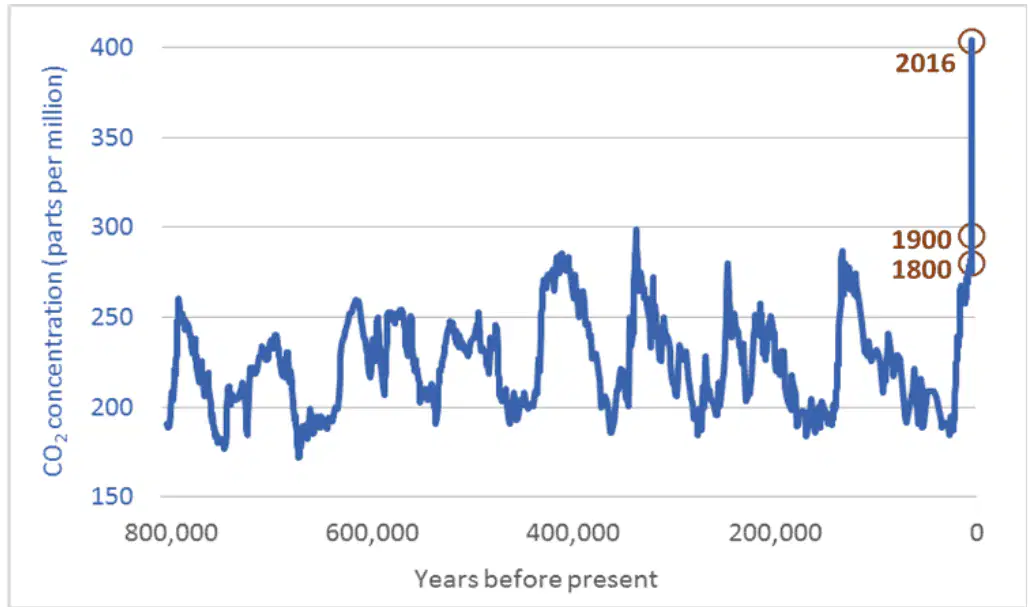
Coal was not widely combusted until 1800. Identify one-way human activities added excess carbon to the atmosphere before that point.
Commercial aviation burning jet fuel
Hydroelectric dams releasing carbon dioxide
Deforestation for agriculture and timber
Underground nuclear testing worldwide
Mass use of tidal turbines for power
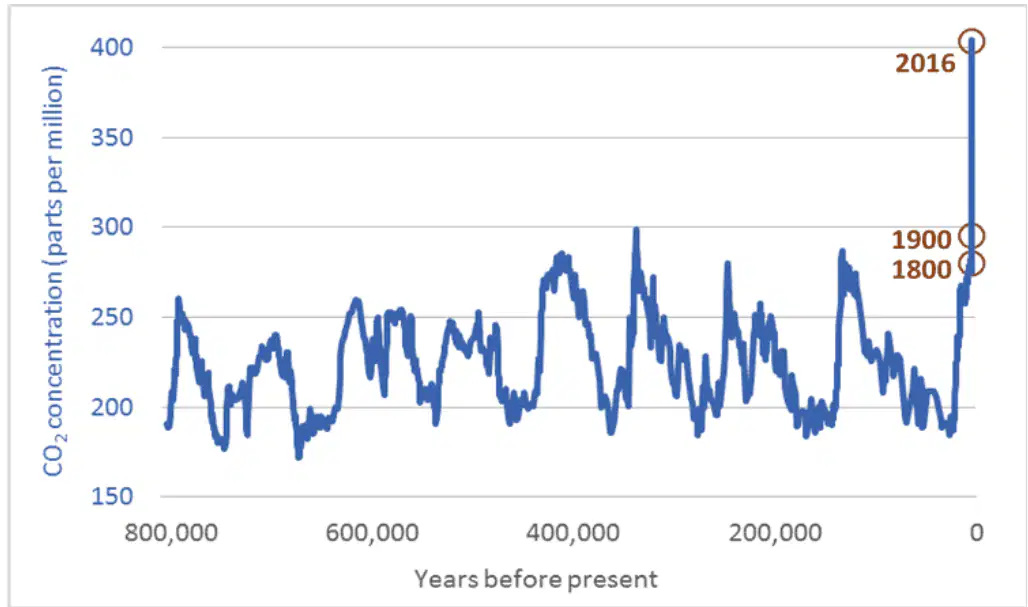
Which fossil fuel was introduced and widely spread at the 1900 mark, leading to an even greater surge in carbon emissions?
Oil for automobiles and transport
Nuclear power plants deployment
Hydropower replacing fossil fuels
Natural gas for home heating
Coal expansion in steam engines
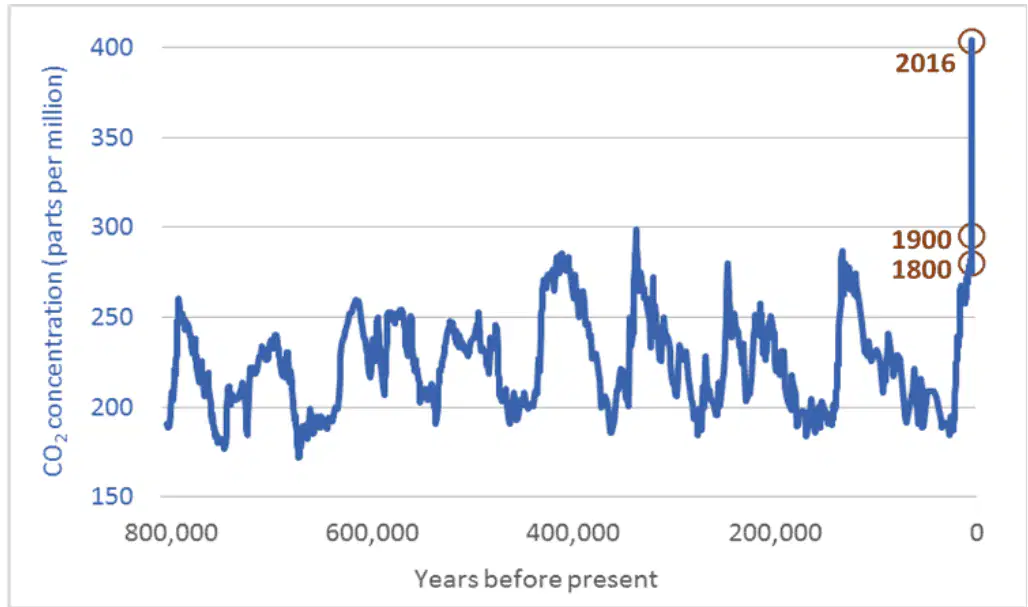
Describe one specific reason why the carbon levels in this current peak far exceed any of the peaks from the last 800,000 years.
Natural methane sinks increased
Human combustion of fossil fuels
Volcanic cycles intensified globally
Solar output permanently decreased
Stronger tidal energy conversion
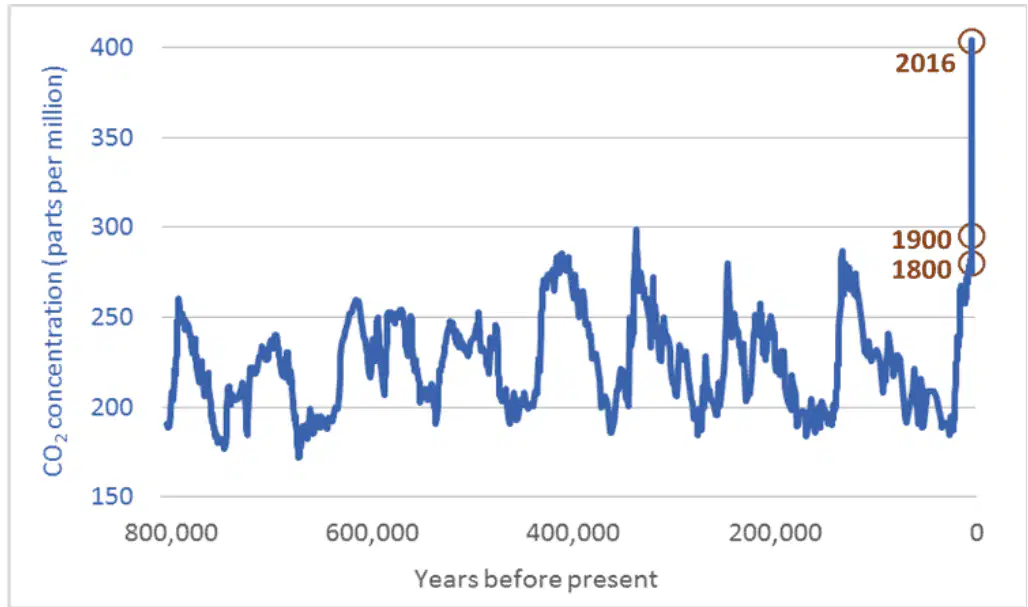
Identify another gas being emitted by humans that also contributes to a stronger greenhouse gas effect.
Nitrogen gas from the atmosphere
Neon from lighting systems
Methane from fossil operations
Helium released by balloons
Oxygen from plant photosynthesis
Which pair best describes likely climate consequences as atmospheric greenhouse concentrations rise over the next century?
Fewer droughts and more stable rainfall
Higher sea level and more heat waves
Lower sea level and stronger polar ice
Cooling oceans and weaker storms
Which pollutant from excess gas-powered automobiles most directly causes respiratory irritation in urban residents?
Water vapor from exhaust
Carbon dioxide from tailpipes
Ground-level ozone in smog
Nitrogen gas from the air
If a state converts all cars to battery-electric but charges them using a coal-dominated grid, what happens to total greenhouse gas emissions from transportation?
They become zero emissions statewide
They remain exactly the same forever
They increase dramatically overnight
They shift from tailpipes to power plants
A coal-reliant state seeks an alternative energy source. Which option provides electricity with lower air pollution and one notable drawback of that option?
Oil with abundant sulfur emissions
Coal with improved mercury controls
Diesel with high particulate benefits
Natural gas with methane leaks risk
Which water pollutant should cities regularly monitor to ensure local waters are safe for swimming and aquatic life?
Fecal coliform bacteria levels
Soil clay particle size
Atmospheric nitrogen levels
Indoor radon concentrations
Which land-use change around water bodies most effectively protects water quality?
Installing vegetated buffer strips
Channelizing streams for speed
Paving floodplains for parking
Removing riparian vegetation buffers
Which process describes the increase in concentration of toxic substances as they move up the food chain?
Biomagnification
Bioaccumulation
Photosynthesis
Decomposition
Which solid waste disposal method is most effective at reducing landfill volume and returning nutrients to the soil?
Landfilling
Composting
Recycling
Incineration
Urban runoff most commonly leads to which environmental problem in nearby rivers and lakes?
Improved water clarity
Increased biodiversity
Reduced water temperature
Eutrophication from nutrient pollution
A ____________ is a waste disposal facility where wastes are put in the ground and covered each day with a layer of dirt, plastic, or both.
landfill
incinerator
compost heap
aquifer
Which of the following is NOT a benefit of incinerating waste?
It reduces the material sent to landfills
It produces energy in the form of heat
It can be used to produce electricity
It neutralizes all of the toxic materials
Most of the municipal solid waste in the United States is
stored in landfills
recycled
incinerated
none of the above
Toxic water that infiltrates through a landfill and collects at the bottom.
leachate
compost
tipping fee
What is a benefit of using incinerators?
Methane gas produced by decomposition can be used like natural gas
It is very cheap
Reduces the amount of solid waste
It is highly regulated
What is a cost of using incinerators?
produces air pollution
high-level radioactive waste is disposed of unsafely
difficult to get it approved
all of these are costs of incinerators
Examples of ways that you can produce less waste include
using canvas shopping bags
composting
using rechargeable batteries
all
Which of the following is not a benefit of composting?
It keeps organic wastes out of landfills
Anything can be composted
It increases the number of beneficial soil organisms
all
What role do microorganisms play in the composting process?
They help sort the compost
They break down the organic material
They remove harmful gases
They remove plastic from the compost
Harmful agricultural waste includes
Dead plant matter and water
Fertilizer and pesticides
Oil and animal waste
biodegradable materials

Which organism in the food web shown to the right would
contain the lowest concentration of chemical pollutants?
producers
primary consumers
secondary consumers
tertiary consumers
Consider the following food chain:
Algae > Mayfly > Minnow > Trout
In a polluted ecosystem, which organism would likely have the HIGHEST level of toxic chemicals in its body?
Algae
Mayfly
Minnow
Trout
What are examples of toxins? (3 answers)
water
salt
pesticides
mercury
insecticides

Which organism would have the most bioaccumulation?
grass
rabbit
snake
hawk

Which organism would have the most bioaccumulation?
A because it consumes all the toxins from B, C, and D
D because energy is lost as heat
A because I'm not really reading what this says.
D because it consumes all the toxins from B, C, and D
How does biomagnification put a top predator at a disadvantage?
Food is much harder to find the farther up the food chain you go.
Toxins and chemicals accumulate in the bodies of everything that was eaten by the food that you eat.
Toxins and chemicals bind to the tissue of larger animals better than smaller ones.
The loss of energy up the food chain is directly proportional to the amount of toxins taken up by the body.
What are some examples of POPs?
DDT, PCBs, dioxins, and chlordane
Aspirin, Ibuprofen, Acetaminophen, and Naproxen
Ozone, Carbon Dioxide, Methane, and Nitrogen
Lead, Mercury, Cadmium, and Arsenic
What is the impact of POPs on human health?
POPs can lead to serious health issues, including cancer, reproductive disorders, and endocrine disruption.
POPs have no significant impact on human health.
POPs are beneficial for human health and promote well-being.
POPs only affect the environment and not human health.
What is the significance of the term 'bioaccumulation'?
The process by which organisms absorb and store substances, such as pesticides or other chemicals.
A method of reducing pollution in water bodies.
The ability of organisms to detoxify harmful substances.
The transfer of substances from one trophic level to another.
How do POPs affect wildlife?
POPs can enhance reproductive success in wildlife.
POPs can cause reproductive, developmental, and immune system problems in wildlife due to their toxic nature.
POPs have no significant impact on wildlife.
POPs improve the overall health of wildlife populations.
What are Persistent Organic Pollutants (POPs)?
A. Organic compounds that are easily degraded in the environment.
B. Organic compounds that bioaccumulate in the food chain and pose risks to human health and the environment.
C. Inorganic substances that are harmful to aquatic life.
D. Compounds that are beneficial for agricultural practices.
What is the primary route of human exposure to POPs?
Through inhalation of contaminated air
Through the consumption of contaminated food
Through skin contact with contaminated surfaces
Through drinking contaminated water

