
Font size
 Worksheets
Biology Review
Total questions: 83
Worksheet time: 42mins
Which statement best defines metabolism in living organisms?
All processes of growth and reproduction only
All chemical processes occurring within an organism
Only the reactions that break down food molecules
Only energy-releasing reactions in mitochondria
Which list includes characteristics common to all living things?
Made of cells, respond to stimuli, use energy
Able to photosynthesize, have cell walls, move freely
Have bones, breathe oxygen, drink water regularly
Contain only DNA, reproduce sexually, have organs
According to cell theory basics, what is the most accurate statement about cells?
They cannot function independently from tissues
They only exist in plants, fungi, and protists
They are smaller than molecules and atoms in organisms
They are the smallest units that can perform life’s processes
Which comparison correctly distinguishes prokaryotic and eukaryotic cells?
Prokaryotes contain organelles; eukaryotes lack organelles
Prokaryotes are larger; eukaryotes are always smaller
Prokaryotes only exist in animals; eukaryotes in plants
Prokaryotes lack a nucleus; eukaryotes have a nucleus
A biologist identifies over 200 types of specialized cells in humans. What conclusion is best supported by this observation?
Cells are diverse in structure and function
Diversity of cells disproves cell theory
All human cells carry out identical roles
Specialization only occurs in plant tissues
Which scenario best illustrates an organism responding to a stimulus?
A pupil constricts when light intensity increases
A tree’s mass increases during summer growth
Mitochondria oxidize glucose to release energy
A seed contains DNA as its genetic material
Which statement accurately describes genetic material in living things?
All organisms contain only RNA and never DNA
Cells contain DNA or RNA serving as genetic material
Only eukaryotes possess heritable genetic molecules
Genetic material exists only inside the nucleus
Which description best defines organelles within cells?
Tissues formed by groups of similar cell types
Membranes that separate organisms from the environment
Specialized structures that work together for cell function
Smallest particles that make up chemical elements
Which statement best describes the cytoplasm in a typical cell?
A stack of flattened sacs for export
A jelly-like fluid mostly water
A rigid network of microtubules
A double-membrane surrounding DNA
Primary function of cytoplasm in cell organization is to
Synthesize ATP in mitochondria
Pump ions across membrane
Hold organelles in place
Package proteins for secretion
Which arrangement correctly describes the phospholipid bilayer of the plasma membrane?
Hydrophilic heads outward, hydrophobic tails inward
Hydrophobic heads outward, hydrophilic tails inward
Hydrophilic heads alternating with proteins
Hydrophobic tails facing extracellular fluid
Hydrophilic and hydrophobic refer to phospholipid regions that
Carry oxygen or release oxygen
Interact with water or avoid water
Attract sodium or repel sodium
Bind sugars or break sugars
Selective permeability of the plasma membrane means it
Permits only water to cross ever
Lets any molecule pass freely
Blocks all molecules from crossing
Allows some substances through more easily
Which membrane component primarily aids transport of nutrients and signals across the membrane?
Cholesterol droplets in cytoplasm
Carbohydrate-only side chains
Free ribosomes on cytosol
Embedded proteins in the bilayer
Carbohydrates in the cell membrane mainly contribute to
Providing structure and cell recognition
Generating ATP for the cytoplasm
Catalyzing glycolysis in cytosol
Driving DNA replication fidelity
Which change would most decrease membrane permeability to small polar molecules?
Fewer protein channels present
More cytoplasmic water added
Longer hydrophilic head groups
Shorter fatty acid tail length
A new drug inserts into hydrophobic tails of the bilayer. Most direct immediate effect is
Raising cytoplasmic pH significantly
Increasing nuclear transcription rate
Promoting ribosome assembly quickly
Altering membrane fluidity and barrier
If phospholipid heads became nonpolar due to a mutation, the membrane would most likely
Become a thicker rigid cell wall
Lose stable bilayer orientation
Transport glucose more efficiently
Expand cytoplasm water content
Maintaining homeostasis by the plasma membrane depends largely on
Blocking all extracellular signals
Balancing selective permeability
Maximizing cytoplasm viscosity
Eliminating hydrophilic groups
Which drawing choice best labels a single phospholipid?
Polar phosphate head, two fatty acid tails
Sugar head group, three protein tails
Nonpolar head group, single RNA tail
Ionic head group, two peptide tails
Which molecules move across the phospholipid bilayer most easily without transport proteins?
Charged macromolecules and proteins
Large polar hydrophilic molecules and ions
Small nonpolar hydrophobic molecules and water
Glucose polymers and nucleic acids
Why are some molecules unable to pass easily through the cell membrane?
They are neutral so they diffuse too quickly
They are polar or large, needing channels or vesicles
They are too small to interact with lipids
They are hydrophobic so water repels them
Primary role of the cell (plasma) membrane in homeostasis is to
Package enzymes for secretion
Synthesize proteins from amino acids
Produce ATP for cellular energy
Regulate what enters and leaves the cell
Transport proteins in membranes primarily enable
Vesicles to fuse during exocytosis
Nonpolar gases to diffuse through lipids
Polar molecules to cross via specific channels
Lipids to form the bilayer spontaneously
Which list correctly names the three cytoskeleton types?
Microtubules, intermediate filaments, microfilaments
Elastic fibers, collagen cables, fibrin strands
Centrosomes, cilia fibers, spindle threads
Actin fibers, myosin motors, keratin strands
General functions of the cytoskeleton include
Support, shape maintenance, motility, regulation
Gene replication, transcription, translation control
ATP synthesis, redox balance, heat generation
Lipid storage, pigment formation, toxin defense
Centrioles are best described as structures that
Are DNA rings that control spindle genes
Are membrane sacs that store spindle fluids
Are made of actin and drive cytokinesis
Are made of microtubules and form a centrosome
During which event do centrioles help by pulling chromosomes apart?
Cytokinesis in bacteria
Prophase of meiosis
Interphase in growth
Anaphase of cell division
Cilia and flagella motion relies mainly on which cytoskeletal element?
Keratin bundles with desmosomes
Microtubules arranged in axonemes
Intermediate filaments cross-linked
Microfilaments forming sarcomeres
A small neutral hydrophobic drug diffuses into cells rapidly. The best explanation is that it
Uses aquaporins for facilitated entry
Moves by active transport pumps
Requires a vesicle-mediated endocytosis
Passes through the lipid bilayer easily
Which statement best distinguishes chromatin from chromosomes in a typical body cell?
Chromatin is threadlike DNA; chromosomes are condensed rods
Chromatin is condensed rods; chromosomes are loose threads
Chromatin contains RNA only; chromosomes contain only proteins
Chromatin exists only in sex cells; chromosomes exist in plants
What is the primary function of the nucleolus within the nucleus?
Exporting completed proteins to the rough ER
Assembling ribosomal subunits from rRNA and proteins
Storing lipids for membrane synthesis inside nucleus
Degrading old chromosomes during cell division
Genes are best described as which of the following?
Sugar chains in cytoplasm that label vesicles
DNA segments on chromosomes that code for proteins
Protein clusters on ribosomes that store energy
RNA segments in nucleolus that digest lipids
Which structure controls what enters and leaves the nucleus?
Golgi apparatus cisternae stacks
Smooth endoplasmic reticulum tubules
Intermediate filaments surrounding mitochondria
Nuclear envelope with selective pores
Where would ribosomes be found if the cell plans to export many proteins?
Embedded in lysosomal membranes only
Attached to rough endoplasmic reticulum membranes
On microvilli projecting from plasma membrane
Inside the nucleolus near chromosomes
Ribosomes floating free in the cytoplasm primarily make proteins for what destination?
Use within the cell's cytosol and organelles
Immediate secretion into extracellular space
Storage inside the nucleus for later use
Insertion only into lysosome external membranes
Which pair correctly matches structure to function involving cell motility?
Cilia are nonmotile microvilli; flagella are contractile
Cilia are long and few; flagella are short and many
Cilia move whole cells through fluid; flagella move fluids
Cilia move fluid across surfaces; flagella move whole cells
Compared with cilia, flagella in eukaryotic cells are typically described as what?
Longer and fewer, usually one to three
Only present on plant epidermal cells
Shorter and more numerous, hundreds
Structurally identical to microvilli
A cell shows numerous short projections that do not move but increase surface area for absorption. What are these structures called?
Cilia driving fluid currents
Pseudopodia forming vesicles
Flagella attached to nucleus
Microvilli on the cell surface
During early steps of protein production, which sequence of locations is most accurate for a secreted protein?
Ribosome on rough ER, lumen of rough ER, export pathway
Free ribosome, nucleus interior, secretory vesicle
Nucleolus assembly, lysosome matrix, plasma membrane
Smooth ER synthesis, chloroplast stroma, extracellular
A muscle cell needs rapid replacement of membrane proteins used in ion transport. Which organelles and processes must be most active?
Lysosomes digesting DNA and cilia beating
Mitochondria copying chromosomes and vacuoles
Peroxisomes oxidizing lipids and microvilli waving
Nucleolus forming ribosomes and rough ER translation
A mutation damages nuclear pores so mRNA cannot leave the nucleus. Which immediate effect is most likely?
Golgi cisternae will form additional nuclear envelopes
Cytoplasmic ribosomes cannot translate needed proteins
Mitochondria will stop producing ribosomal RNA
Rough ER will convert chromatin into chromosomes
Which organelle is primarily responsible for synthesizing membrane lipids in eukaryotic cells?
Golgi apparatus cisternae stacks
Smooth endoplasmic reticulum membranes
Free ribosomes in cytosol
Rough endoplasmic reticulum membranes
A protein destined for secretion most likely follows which pathway?
Rough ER to Golgi to vesicle
Nucleus to mitochondrion to ER
Smooth ER to peroxisome to Golgi
Ribosome to cytosol to lysosome
Which feature distinguishes rough ER from smooth ER?
Presence of surface ribosomes
Attachment to the nucleus
Network of membrane sacs
Role in intracellular transport
The Golgi apparatus mainly functions to do which set of tasks for proteins?
Process, modify, and sort cargo
Replicate and transcribe DNA
Generate ATP by oxidation
Degrade and recycle organelles
Vesicles budding from the ER are best described as what?
Energy factories for metabolism
Mini-carts transporting cargo
Permanent parts of membranes
Genetic repositories for RNA
Smooth ER in muscle cells stores Ca2+. What is the main significance of this storage?
Provides carbon for glycolysis
Triggers specific cell responses
Increases nuclear transcription
Enhances ribosomal translation
Which statement about lysosomes is most accurate?
They replicate nuclear chromosomes
They synthesize polypeptides de novo
They contain hydrolytic enzymes
They produce ATP for movement
A drug blocks vesicle fusion with the Golgi. Which immediate outcome is most likely?
Cytoskeletal filaments depolymerize
Mitochondrial ATP production rises
Secretory proteins remain in ER
Nuclear pores close completely
During apoptosis, which organelle’s enzymes most directly contribute to controlled cell breakdown?
Mitochondria releasing kinases
Ribosomes releasing peptidylases
Lysosomes releasing hydrolases
Peroxisomes releasing catalase
Which cellular scenario best illustrates division of labor in the endomembrane system?
Golgi synthesizes DNA for ribosomes
Lysosomes package proteins for secretion
Smooth ER modifies steroids for export
Ribosomes make lipids for membranes
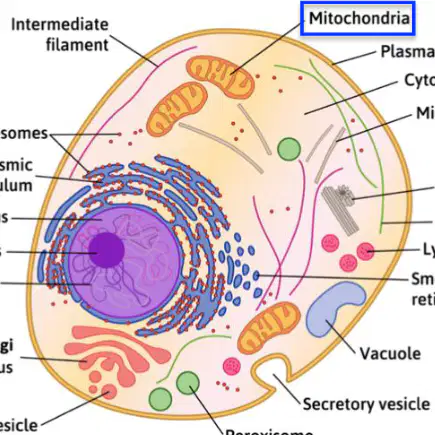
Which organelle is the primary site of cellular respiration that releases usable energy as ATP?
Vacuole with stored solutions
Golgi stack of flattened sacs
Mitochondrion with cristae and matrix
Lysosome with hydrolytic enzymes
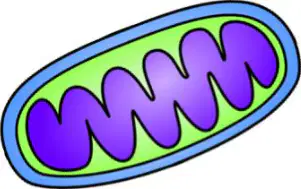
What structural feature of mitochondria increases surface area for ATP-producing reactions?
Stacked cisternae called grana
Outer capsule called tonoplast
Tubular network called plasmodesmata
Folded inner membrane called cristae
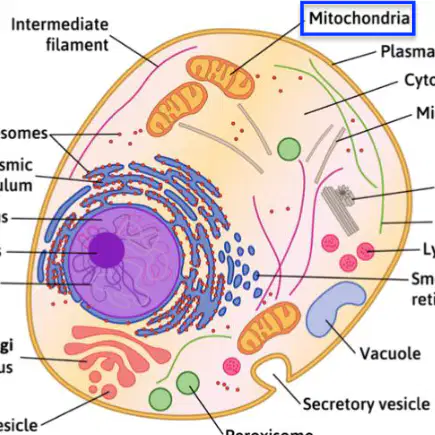
Which term best describes the enzyme-rich fluid filling the mitochondrion interior?
Lumen containing pigments
Cytosol containing ribosomes
Stroma containing thylakoids
Matrix containing metabolic enzymes
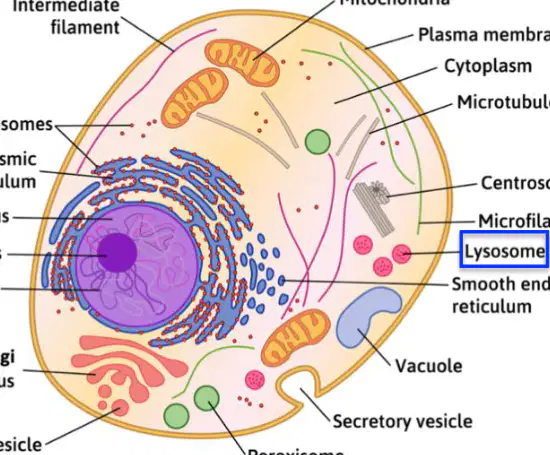
A cell suddenly cannot efficiently break down damaged organelles. Which organelle is most likely malfunctioning?
Rough ER synthesizing proteins
Mitochondrion making ATP
Vacuole responsible for storage
Lysosome responsible for digestion
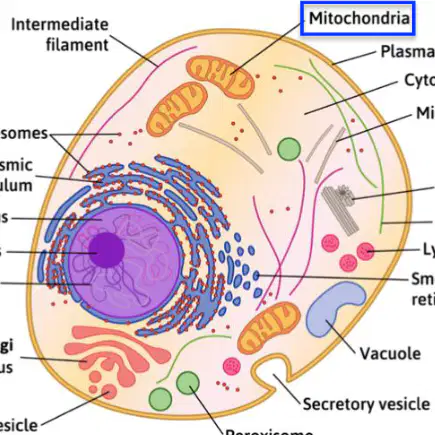
Which process directly generates ATP inside mitochondria from food molecules?
Replication in nuclear chromatin
Photosynthesis in thylakoid membranes
Cellular respiration in cristae and matrix
Fermentation in cytosolic channels
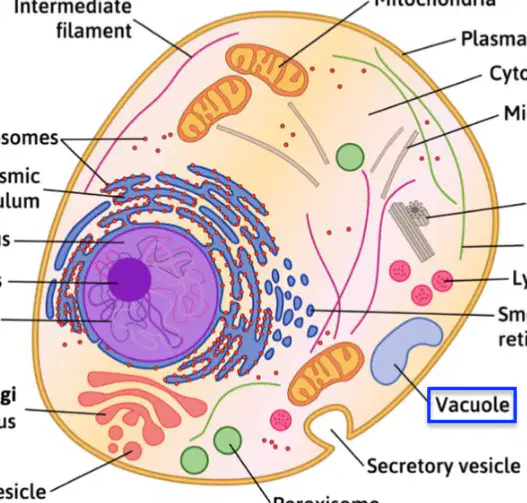
In typical animal cells, vacuoles are described as which of the following?
Pigmented and photosynthetic
Larger and usually single
Smaller and often more numerous
Rigid and cellulose-reinforced

Which function is correctly paired with the vacuole in an animal cell?
ATP synthesis by oxidative enzymes
Replication of genomic DNA
Storage of water, nutrients, wastes
Protein folding with chaperones
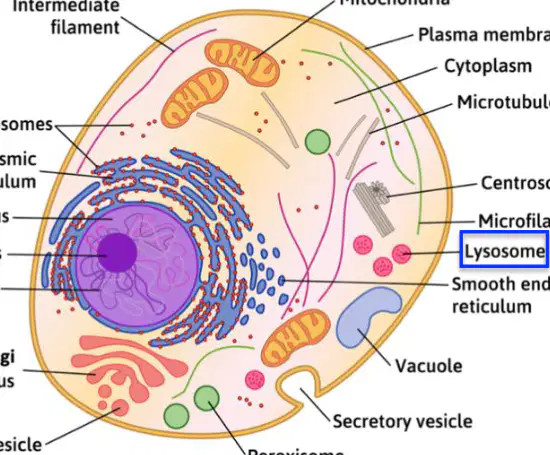
Lysosomes are specialized for which biochemical capability?
Hydrolytic enzyme-mediated digestion
Lipid biosynthesis in smooth ER
ATP generation in Krebs cycle
Protein secretion from Golgi
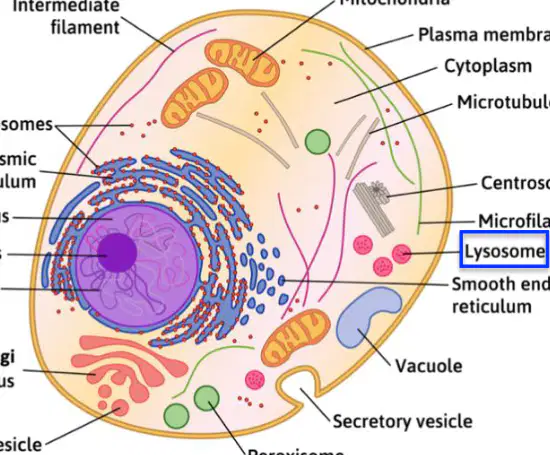
Programmed cell death can be facilitated by which organelle releasing enzymes?
Lysosome through apoptosis pathways
Vacuole through turgor pressure
Mitochondrion through photosystems
Ribosome through peptide bonds
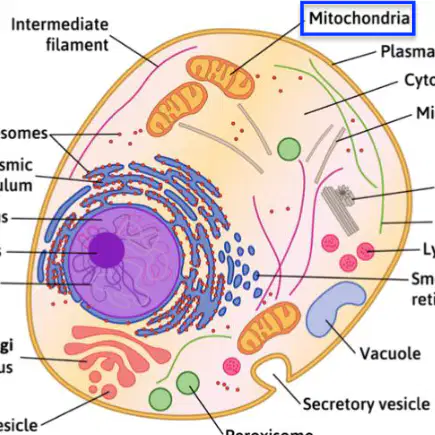
A muscle cell requires high ATP output. Which structural adaptation would best support this demand?
Few vacuoles with stored waste
Thick microtubules near membrane
Many mitochondria with dense cristae
Large lysosomes with hydrolases
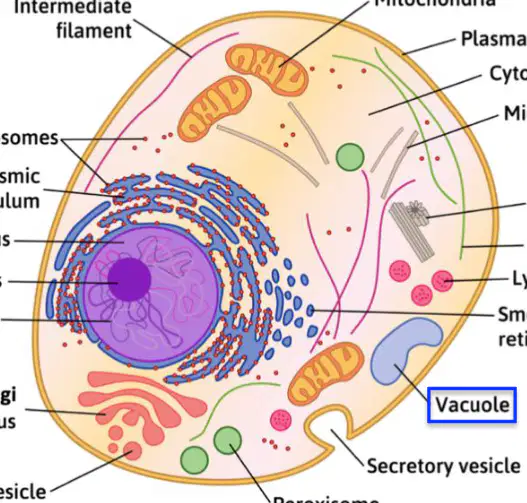
On the provided cell diagram, which label points to a membrane-bound sac marked for storage functions?
Mitochondrion near cytoskeleton
Nucleolus near chromatin fibers
Lysosome near the Golgi stacks
Vacuole near the cell periphery
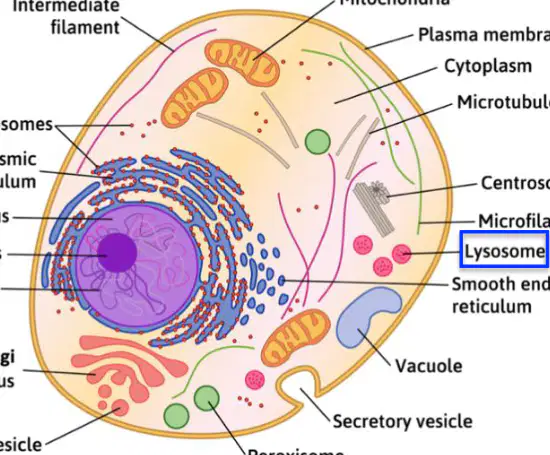
Which statement best distinguishes lysosomes from vacuoles in animal cells?
Lysosomes digest materials; vacuoles store materials
Both are nuclei; both control genes
Lysosomes store wastes; vacuoles digest wastes
Both mainly make ATP; both store fats
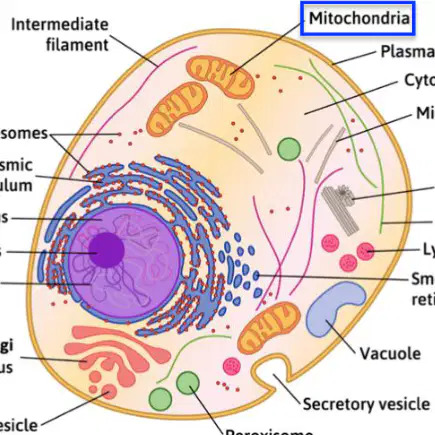
ATP produced by mitochondria is immediately useful for which cellular need?
Translating codons into heritable traits
Driving energy-requiring cellular processes
Maintaining pigment color in chloroplasts
Storing long-term genetic information
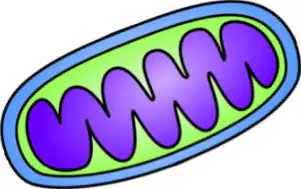
Which pair correctly matches structure and location inside a mitochondrion?
Stroma is the cytosol inside lysosomes
Grana are folds of the outer membrane
Matrix is the space between two cells
Cristae are folds of the inner membrane
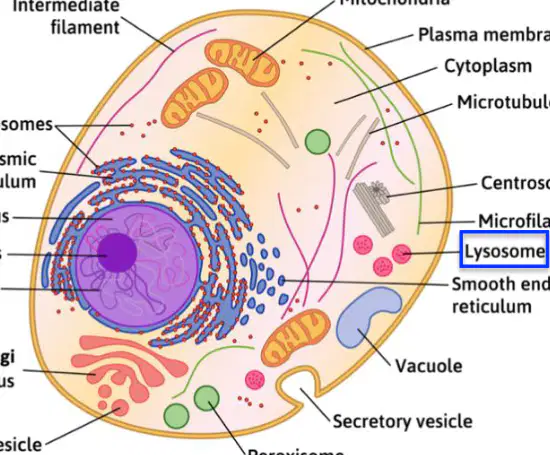
A researcher stains hydrolytic enzymes in vesicles and sees many labeled structures. Which organelle was most heavily stained?
Mitochondria with ATP synthase
Lysosomes packed with hydrolases
Peroxisomes with catalase
Vacuoles filled with pigments

In the cell diagram (numbered), which structure is labeled 1 at the outer boundary and functions as a selective barrier regulating transport?
Cell membrane controlling passage of substances
Cytoplasm filling the internal cell space
Nuclear envelope surrounding the chromosomes
Cell wall providing rigid external support
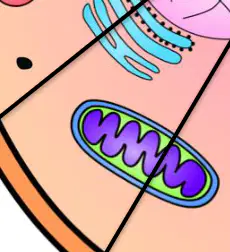
Label 3 points to a bean-shaped organelle with inner folds. What is its primary role?
Lipid packaging and vesicle export
DNA storage and transcription control
ATP production through cellular respiration
Protein synthesis on bound ribosomes
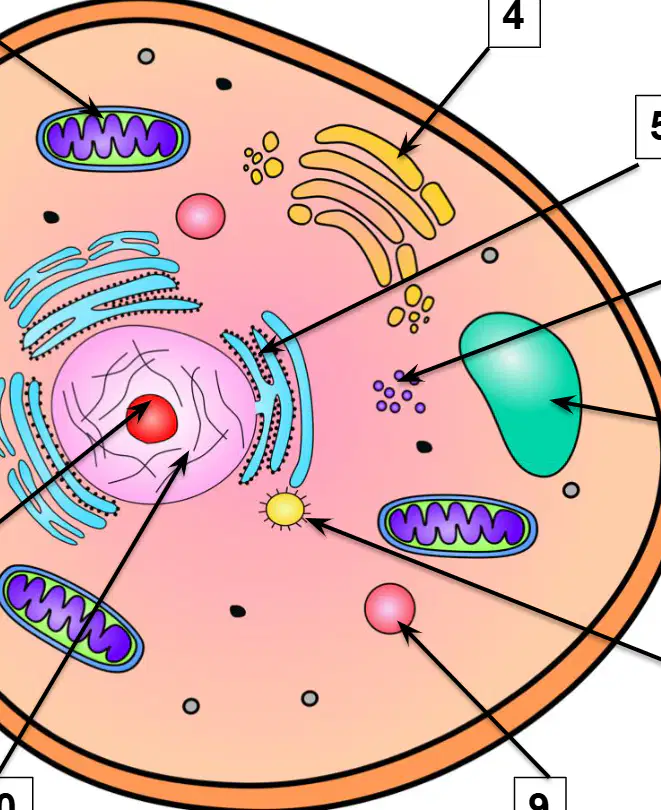
Which organelle is indicated by label 4 with stacked, curved sacs near the membrane?
Golgi apparatus modifying and sorting proteins
Smooth ER synthesizing membrane lipids
Rough ER covered in ribosomal subunits
Lysosome digesting worn cellular parts
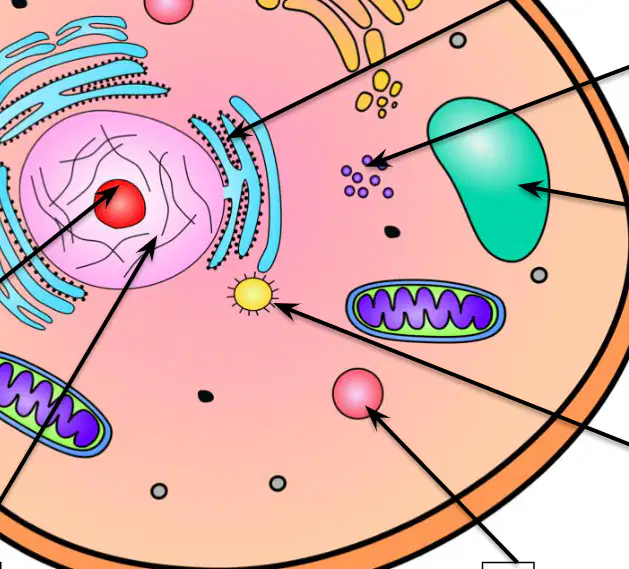
Label 6 points to small purple dots clustered in the cytoplasm. What are they?
Peroxisomes detoxifying reactive species
Secretory vesicles storing packaged enzymes
Free ribosomes synthesizing cytosolic proteins
Centrioles forming spindle microtubules
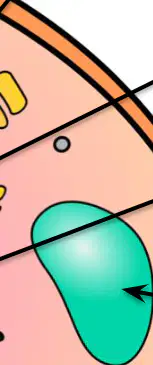
What function best matches the structure labeled 7, a green sac-like organelle within the cytoplasm?
Genetic information storage and replication
Storage and transport within vesicular compartments
Photosynthesis using chlorophyll pigments
Protein folding on membrane-bound ribosomes

Which component is labeled 10 as a small yellow sphere near the center?
Centriole organizing microtubule assembly
Vesicle carrying secretory proteins
Peroxisome removing hydrogen peroxide
Ribosome building polypeptide chains
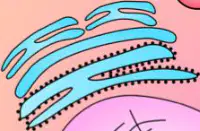
Label 11 arrows to a blue membrane network dotted with particles. What is its identity?
Rough endoplasmic reticulum studded with ribosomes
Cytoskeleton of actin and microtubules
Golgi apparatus of flattened cisternal stacks
Smooth endoplasmic reticulum lacking bound ribosomes
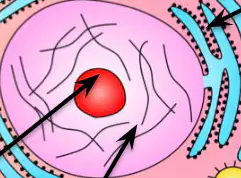
The red sphere at label 12 sits inside a larger pink structure. Which pair correctly names both?
Nucleolus within the nucleus
Lysosome within the vacuole
Ribosome within the Golgi
Mitochondrion within the cytosol
Which statement about tissues is most accurate?
Organs are smaller units within each tissue
Tissues are made of only nonliving materials
Single cells act independently of one another
Groups of cells cooperate for a shared function
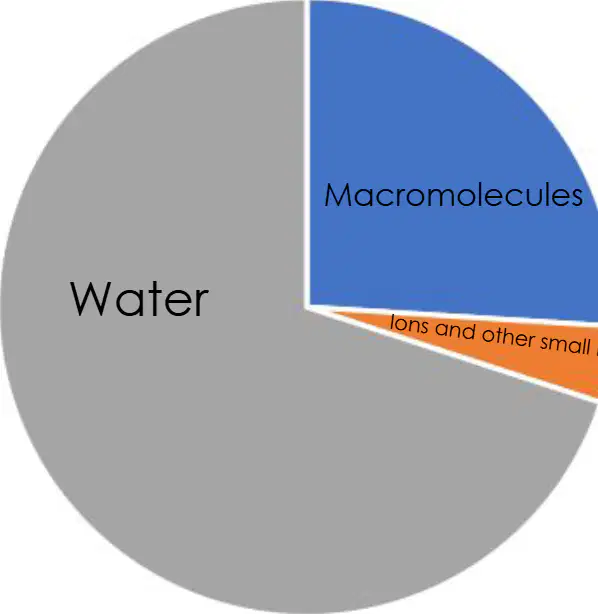
According to the composition chart, which component makes up the largest proportion of living tissue by mass?
Ions at approximately twenty percent
Vitamins at around ten percent
Water at roughly seventy percent
Macromolecules at near fifty percent
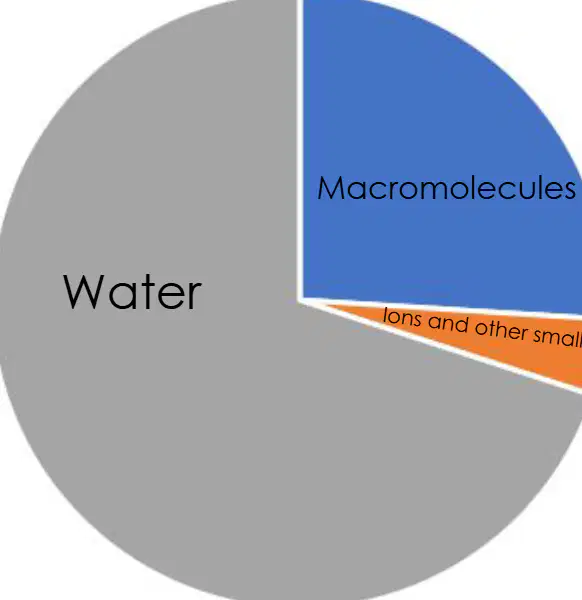
What approximate percentage of living tissue is composed of macromolecules?
About twenty-six percent total
Roughly seventy percent total
Close to ten percent total
Approximately forty-five percent total
Which list correctly identifies biological macromolecules most responsible for structure and function?
Water, salts, gases, minerals, vitamins
ATP, NADH, hormones, neurotransmitters
Glucose, amino acids, nucleotides, ions
Proteins, nucleic acids, lipids, carbohydrates

Ions and other small molecules represent the smallest fraction of tissue mass. Which choice best explains their importance despite small quantity?
They power photosynthetic carbon fixation
They form membranes and energy reserves
They provide long-term genetic information
They regulate signaling and osmotic balance
A dehydration scenario reduces body water from ~70% to ~60% by mass without changing macromolecules. What immediate effect is most likely at the cellular level?
Cell volume decreases causing hypertonic stress
Protein synthesis halts due to DNA loss
Mitochondria stop ATP production entirely
Ions become zero due to membrane collapse
A cell increases rough ER surface area. Which outcome most directly results from this change?
Reduced ATP generation from respiration
Improved DNA replication fidelity
Greater production of secreted proteins
Enhanced lipid breakdown during starvation
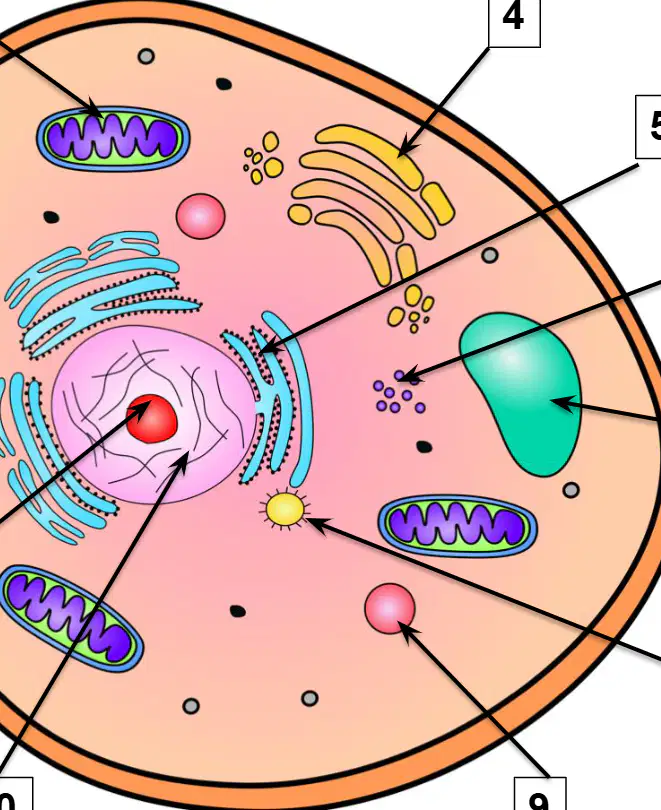
If the Golgi apparatus (label 4) were inhibited, which process would be most immediately disrupted?
Transcription of ribosomal RNA genes
Assembly of spindle fibers in mitosis
Modification and sorting of export proteins
Generation of proton gradients in matrices

