
 Worksheets
Ch. 11: Endocrine System
Total questions: 149
Worksheet time: 1hrs 16mins
Which statement best describes the thyroid gland’s location?
Small node within cranial cavity near pituitary
Ring-shaped organ encircling esophagus
Two lobes posterior to kidneys bilaterally
Single lobe behind sternum near heart
Two lobes in anterior neck below larynx
Which cells produce and secrete thyroid hormones within the gland?
Adipocytes in interstitial fat
Follicular cells surrounding colloid
Neurons embedded in stroma
Extrafollicular cells in capsule
Chondrocytes within cartilage
What is the primary role of thyroid colloid?
Barrier preventing iodine absorption
Channel for pituitary hormone transport
Site of calcitonin receptor expression
Reservoir for inactive thyroid hormones
Matrix forming thyroid cartilage rings
Which combination lists the hormones secreted by the thyroid gland?
Thyroxine, triiodothyronine, calcitonin
Oxytocin, vasopressin, prolactin
Insulin, glucagon, somatostatin
Parathyroid hormone, renin, erythropoietin
Aldosterone, cortisol, androgens
Which statement best distinguishes T3 from T4?
T3 acts only locally; T4 never systemic
T3 synthesized in kidney; T4 in liver
T3 is the more active form; T4 is converted to T3
T3 stored in blood; T4 stored in bone
T3 is peptide; T4 is steroid hormone
Two thyroid hormones primarily help regulate what physiological aspect?
Synaptic neurotransmitter turnover
Red blood cell hemoglobin synthesis
How many calories the body consumes
Blood oxygen partial pressure
Pancreatic enzyme secretion rate
Which function is associated with calcitonin?
Triggers uterine contractions during labor
Increases water reabsorption in kidneys
Supports bone growth and calcium balance
Stimulates glycogen breakdown in liver
Enhances platelet aggregation in vessels
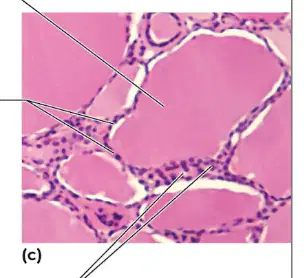
In the microanatomy figure, which structure is the jelly-like center of thyroid follicles that stores the thyroid hormones?
Sinusoid vascular channel
Colloid within follicle lumen
Capsule surrounding thyroid
Nerve plexus between lobules
Trabecula forming septa
Which hormone from the hypothalamus stimulates pituitary secretion of TSH?
TRH from hypothalamus
GnRH from hypothalamus
Somatostatin from hypothalamus
CRH from hypothalamus
TSH primarily acts on which tissue to increase thyroid hormone synthesis?
Pancreatic beta cells
Follicular thyroid cells
Skeletal muscle fibers
Adrenal cortex cells
T3 is described as how potent compared to thyroxine (T4)?
Half as potent as T4
Ten times more potent than T4
Five times more potent than T4
Equal potency to T4
Which statement best describes the negative feedback control of thyroid hormones?
High T3/T4 suppresses TRH and TSH release
High T3/T4 increases TRH and TSH release
TSH inhibits TRH while raising T3/T4
Low T3/T4 suppresses TRH but raises TSH
Which physiological variable is most directly influenced by thyroid hormones?
Basal metabolic rate regulation
Glomerular filtration rate
Plasma osmolarity regulation
Arterial blood pressure reflexes
Which thyroid hormone lowers blood calcium and phosphate concentrations?
Thyroxine circulating form
Triiodothyronine active form
Calcitonin from extrafollicular cells
TSH from anterior pituitary
Which mechanism explains calcitonin’s effect?
Stimulates osteoclast resorption
Inhibits osteoclast activity
Reduces renal calcium excretion
Increases intestinal calcium uptake
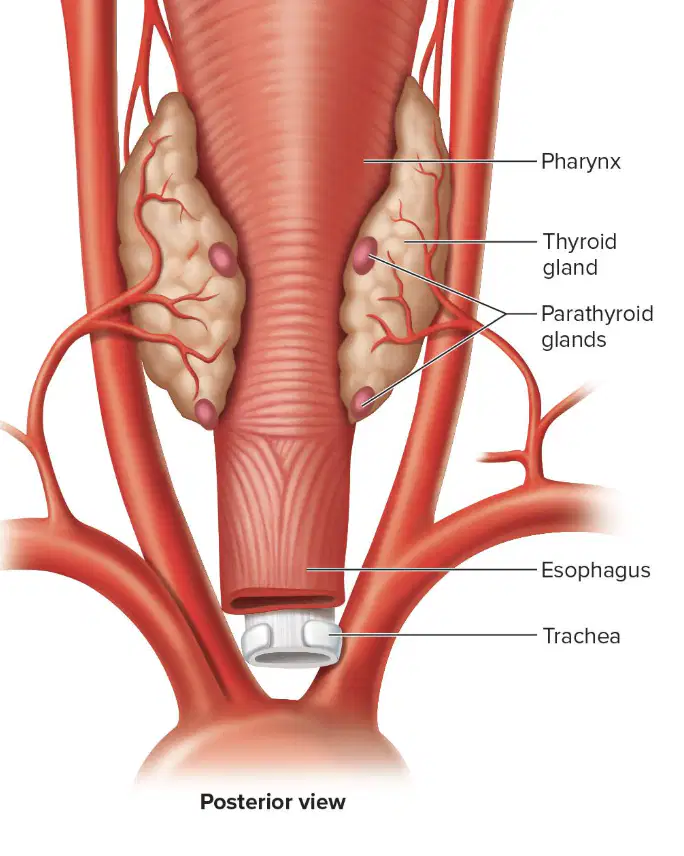
Which statement best describes the location of the parathyroid glands in relation to the thyroid?
Embedded on posterior thyroid lobes surfaces
Scattered within anterior thyroid isthmus tissue
Nestled inferior to thyroid along tracheal rings
Suspended superior to thyroid near larynx cartilage
The primary action of parathyroid hormone (PTH) on bone tissue is to:
Increase collagen deposition in matrix
Stimulate osteoclasts to release calcium
Inhibit osteoclasts lowering blood calcium
Stimulate osteoblasts to store calcium
Which organ increases calcium reabsorption under PTH influence?
Kidneys in distal tubules
Spleen white pulp regions
Liver sinusoids and ducts
Pancreas exocrine acini
PTH indirectly raises intestinal calcium absorption by:
Stimulating vitamin D activation
Boosting pancreatic enzyme release
Increasing bile salt secretion
Enhancing gastric acid production
Which change triggers increased PTH secretion from the parathyroid glands?
Rising plasma phosphate concentration
High blood glucose after meals
Falling plasma calcium concentration
Elevated thyroid T4 concentration
Calcitonin’s effect on blood calcium primarily involves:
Inhibiting osteoclasts
Activating osteoclasts
Increasing renal calcium reabsorption
Stimulating renal phosphate excretion
If PTH increases blood calcium levels and calcitonin decreases blood calcium levels, the expected net effect on blood calcium is:
Decrease below normal levels
Oscillate without reaching equilibrium
Maintain the normal range
Remain unchanged despite hormones
Which statement best explains the antagonistic relationship between PTH and calcitonin?
They both decrease phosphate excretion by kidneys
They both increase renal calcium reabsorption
They synergistically increase intestinal absorption
They produce opposite effects on bone resorption
Which statement best defines a hormone in the endocrine system?
Chemical messenger carried in the blood
Electrical impulse across neuron membranes
Digestive enzyme released into lumen
Structural protein embedded in cell walls
Which organs coordinate to maintain homeostasis through body-wide communication?
Urinary and digestive systems
Skeletal and muscular systems
Cardiovascular and respiratory systems
Nervous and endocrine systems together
Which feature makes the endocrine system unique compared to many other body systems?
Effects are always immediate and brief
Signals are strictly electrical impulses
Organs are not anatomically adjacent
Glands function only within one organ
Which statement contrasts neurotransmitters and hormones most accurately?
Neurotransmitters act faster; hormones last longer
Hormones act faster; neurotransmitters last longer
Both act quickly and last longer
Both act slowly and last briefly
Which gland is located in the neck region and paired with parathyroid glands?
Thyroid gland
Pituitary gland
Pancreas
Adrenal gland
Which endocrine organ directly secretes into blood to affect target cells with specific receptors?
Goblet cells secreting mucus
Neurons releasing neurotransmitters
Glandular cells releasing hormones
Exocrine ducts carrying enzymes

Which pair correctly matches organ and general location shown in the diagram?
Adrenal glands above kidneys
Placenta inside cranial cavity
Pineal gland in lower abdomen
Thymus behind kidneys
Which statement about target cells in endocrine signaling is accurate?
Effect occurs only inside neurons
Response requires synaptic cleft
Only cells with receptors respond
All nearby cells respond equally
Which gland acts as a major control center for endocrine functions within the brain?
Hypothalamus regulating pituitary
Thymus directing adrenal cortex
Pancreas controlling pineal gland
Ovary regulating thyroid gland

Which label on the diagram identifies reproductive endocrine organs?
Ovary and testicle shown
Pituitary and pineal shown
Thyroid and thymus shown
Pancreas and adrenal shown
Which statement best describes autocrine signaling?
Signals act on distant organs through blood
Signals act on adjacent neighboring cells
Signals act on synapses between neurons
Signals act on the same cell that secreted them
Which secretion typically has the longest duration of action?
Autocrine
Paracrine
Neurotransmitters
Endocrine
In endocrine signaling, target cells are usually located where?
Postsynaptic neurons only
Adjacent cells in immediate area
Same cell secreting the signal
Cells in different organs or tissues
What is the chemical signal of the endocrine system?
Action potentials
Hormone molecules
Second messengers
Neurotransmitter molecules
Which key term correctly matches its definition: gland secretions that only affect neighboring cells?
Endocrine system
Hormones
Paracrine
Autocrine
Which key term describes the organ system that includes glands secreting hormones into blood?
Autocrine system
Paracrine network
Nervous system
Endocrine system
Which statement best describes steroid hormone solubility and transport in blood?
Hydrophobic; dissolves readily in blood
Hydrophilic; binds membrane transporters only
Hydrophobic; requires protein carriers in blood
Hydrophilic; circulates freely in blood
Steroid hormones are primarily synthesized from which precursor molecule?
Fatty acids with short chains
Cholesterol with a large carbon ring
Glucose-derived pyruvate
Amino acids with polar groups
Nonsteroid hormones are generally derived from which building blocks?
Cholesterol with fused rings
Nucleotides forming DNA strands
Amino acids with polar functional groups
Triglycerides forming lipid droplets
Which step occurs first in the classical steroid hormone mechanism inside a target cell?
Crossing the cell membrane into cytoplasm
Activation of intracellular protein receptor
Translation of hormone-induced mRNA
Export of mRNA from the nucleus
In the steroid hormone pathway, what directly activates transcription of specific mRNA?
Hormone–receptor complex in nucleus
Hormone alone binding ribosomes
Membrane-bound tyrosine kinase
Second messenger cAMP cascade
Which feature distinguishes amine hormones like norepinephrine from steroids?
Derived from cholesterol skeleton
Cross nucleus to bind DNA directly
Composed of amino acids with modified groups
Stored in adipose tissue droplets
Which hormone class is most likely to use membrane receptors and second messengers?
Amines with polar side groups
Cholesterol esters in lipoproteins
Steroids with hydrophobic cores
Vitamin D metabolites only
During steroid hormone action, what happens immediately after mRNA exits the nucleus?
It binds membrane receptors
It is translated by ribosomes into protein
It triggers cAMP production
It degrades into amino acids
Which property allows a steroid hormone to cross the cell membrane?
High water solubility enables diffusion
Lipid solubility enables diffusion
Active transport via membrane pumps
Charge attraction to phospholipids
After entering the target cell, what is the next step in the steroid hormone mechanism?
Binding to a specific intracellular receptor
Phagocytosis by lysosomal enzymes
Immediate activation of ribosomes directly
Exocytosis back across the membrane

Where does the hormone–receptor complex primarily interact to initiate gene transcription in the depicted process?
Mitochondrial matrix
Nuclear DNA sequences
Endoplasmic reticulum cisternae
Golgi apparatus lumen
Which statement best describes the role of mRNA in the pathway shown?
mRNA stores hormones inside the nucleus
mRNA degrades steroid hormones rapidly
mRNA carries genetic instructions to ribosomes
mRNA transports lipids into membranes
Which cellular location is the site of protein synthesis in the depicted mechanism?
Nuclear envelope exterior
Ribosome in cytoplasm
Lysosome surface
Plasma membrane interior

Which ordered sequence best matches the numbered pathway in the diagram?
Diffusion, receptor binding, mRNA synthesis, mRNA export, translation
Facilitated transport, receptor blocking, mRNA degradation, apoptosis
Active pumping, vesicle fusion, tRNA charging, chromosome condensation
Endocytosis, receptor binding, DNA replication, mitosis, secretion
What characteristic of the cell membrane prevents nonsteroid hormones from entering the cell directly?
Hydrophobic lipid core of the membrane
Active export pumps in the cytoplasm
Nuclear envelope pore selectivity
Tight junctions between adjacent cells

Which step immediately follows a nonsteroid hormone binding to its membrane receptor?
Direct phosphorylation of target proteins
Translocation of receptor to the nucleus
Conversion of ATP into cAMP
Activation of adenylate cyclase by G protein
What enzyme catalyzes the formation of cyclic AMP in this pathway?
Adenylate cyclase on the membrane
Phosphodiesterase in the cytosol
Tyrosine kinase receptor subunit
Protein kinase A holoenzyme
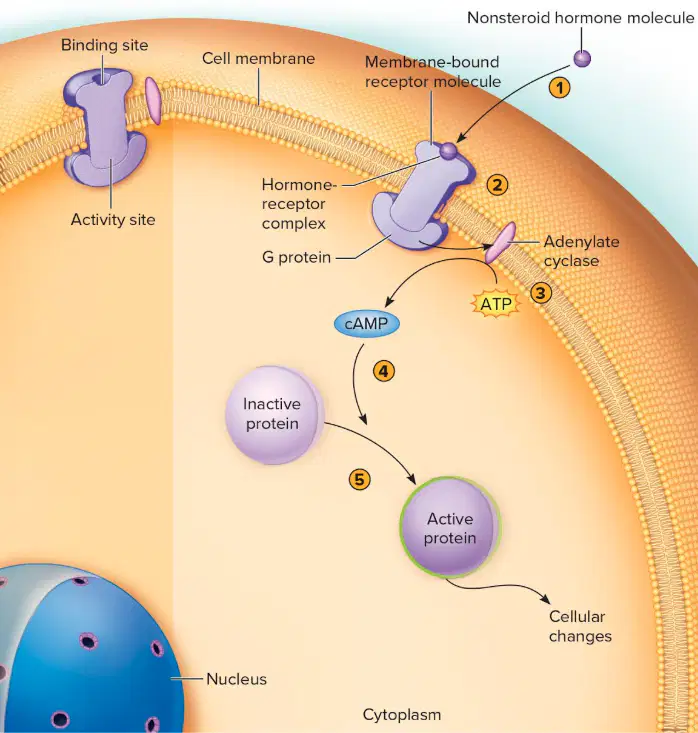
Which molecule serves as the second messenger for many water‑soluble hormones in the diagram?
Diacylglycerol lipid fragment
Calcium ions released locally
Inositol trisphosphate
Cyclic adenosine monophosphate

In the illustrated sequence, what is the source substrate that is converted to cAMP?
ATP in the cytoplasm
AMP in the nucleus
ADP in mitochondria
GTP at the receptor
Which statement best describes signal transduction as shown?
Membrane pumps import hormone into cytosol
Hormone diffuses across lipid bilayer directly
Extracellular hormone triggers intracellular responses
Receptor migrates to the nucleus to bind DNA
Which event explains why a water‑soluble hormone requires a receptor on the membrane?
It cannot cross the lipid bilayer unaided
It binds covalently to cytosolic enzymes
It is rapidly degraded in the nucleus
It must be packaged into vesicles first
Once cAMP is produced, what is its immediate functional role in the pathway?
Breaks down GTP bound to G protein
Initiates hormone synthesis in the cell
Opens nuclear pores for hormone entry
Activates existing proteins to change activity

Which sequence correctly orders the steps shown in the diagram?
Hormone enters cytosol; receptor binds DNA; ATP becomes ADP; proteins synthesized
Hormone binds receptor; adenylate cyclase converts ATP to cAMP; cAMP activates proteins
Receptor internalizes; GTP becomes GDP; cAMP degraded; hormone exocytosed
Hormone binds nuclear receptor; phospholipase C forms IP3; calcium activates enzymes
Which feature best distinguishes prostaglandins from classic endocrine hormones?
They are stored long term before release
They are secreted only by endocrine glands
They circulate widely through the bloodstream
They act locally near their synthesis site
Which brain region houses the pituitary gland as part of its structures?
Diencephalon
Cerebellum
Midbrain
Cerebrum
The anterior and posterior lobes of the pituitary gland are best distinguished by which feature?
Different hormonal synthesis and storage methods
Identical cells with shared portal veins
Same hormones released by both lobes
Both store hypothalamic hormones only

In the feedback loop shown, thyroid hormones primarily exert which effect on TRH and TSH secretion?
Alternating inhibition then stimulation
No feedback on either secretion
Positive feedback stimulation of both
Negative feedback inhibition on both
Which component is NOT part of the diencephalon?
Hypothalamus
Cerebellum
Thalamus
Pineal gland
Which statement best describes the functional relationship between the hypothalamus, pituitary gland, and target endocrine organs?
Target glands release TRH to stimulate hypothalamus
Pituitary directly controls neurons of cortex
Hypothalamus regulates pituitary, which regulates glands
Anterior and posterior lobes regulate each other
Which statement best describes the hypothalamus’s role in hormone control?
It replaces thyroid function when hormone levels fall
It controls the pituitary gland that regulates other glands
It blocks pituitary signals during stress responses
It directly secretes all body hormones to tissues
Which structure connects the hypothalamus to the pituitary gland, allowing hormonal communication?
Pituitary stalk
Optic chiasma junction
Sphenoidal sinus ridge
Oculomotor nerve tract
Hormones released from the pituitary gland enter the bloodstream to mainly affect what?
Cerebral ventricles
Peripheral nerves only
Other endocrine organs
Skeletal muscles only
Which hormone is abbreviated TSH in endocrine terminology?
Thalamic signaling hormone
Thyroxine storage hormone
Thyrotropin-releasing hormone
Thyroid-stimulating hormone
Which hormone is correctly matched with its common abbreviation?
Oxytocin ACTH
Growth hormone LH
Prolactin PRL
Antidiuretic hormone FSH
Which pair lists gonadotropins produced by the anterior pituitary?
ADH and OT
ACTH and TSH
GH and PRL
FSH and LH
Where does the pituitary gland sit relative to the skull base?
Inside the third ventricle
Above the sphenoidal sinus
Within the sella turcica
Behind the optic chiasma
Which lobe of the pituitary primarily stores and releases hormones produced by the hypothalamus?
Intermediate pituitary
Optic pituitary
Anterior pituitary
Posterior pituitary
Which organ is a direct endocrine target of pituitary gonadotropins listed in the key terms?
Pancreatic duct
Adrenal medulla
Thyroid cartilage
Ovary or testis
Which structure transports hypothalamic releasing hormones directly to the anterior pituitary?
Hypophyseal portal veins
Third ventricular ducts
Posterior lobe axons
Systemic carotid artery
What is the immediate effect of hypothalamic releasing hormones on the anterior pituitary?
Inhibit blood flow entirely
Store peptides in terminals
Trigger neural action potentials
Stimulate hormone production
Where are posterior pituitary hormones stored prior to release?
Second capillaries
Nerve terminals
Anterior cells
Third ventricle
Which anterior pituitary hormone primarily promotes tissue growth and increases protein synthesis?
Prolactin
Thyroxine
Thyrotropin releasing hormone
Growth hormone
Which hormone is released by the hypothalamus to stimulate pituitary secretion of TSH when metabolic rate is low?
LH
ACTH
TSH
TRH
What is the primary role of thyroid‑stimulating hormone (TSH)?
Stimulate thyroid to produce thyroid hormones
Trigger cortisol secretion from adrenal cortex
Directly raise blood glucose in muscles
Induce milk ejection from mammary tissue
Which hormone from the anterior pituitary promotes milk production in the mammary glands?
Adrenocorticotropic hormone on cortex
Follicle‑stimulating hormone on follicles
Luteinizing hormone acting on ovaries
Prolactin acting on mammary glands
Thyroxine (T4) primarily has which effect on body physiology?
Decreases oxygen consumption and growth
Directly inhibits pituitary growth hormone
Increases metabolic rate and heat production
Stimulates adrenal cortex for aldosterone
Rising circulating T4 levels exert negative feedback that directly inhibits which releases?
TSH from pituitary and TRH from hypothalamus
FSH from pituitary and GnRH from hypothalamus
ACTH from pituitary and CRH from hypothalamus
GH from pituitary and insulin from pancreas
Which sequence best represents the normal pathway leading to thyroid hormone release under low T4 conditions?
Hypothalamus ACTH → Thyroid TSH → Follicles T4
Pituitary GH → Thyroid TRH → Bloodstream T4
Thyroid T4 → Pituitary TRH → Hypothalamus TSH
Hypothalamus TRH → Pituitary TSH → Thyroid T4
Which reasoning best explains why posterior pituitary secretions are considered hormones rather than neurotransmitters?
They are transported in the blood stream
They cross synapses to act on dendrites
They are stored only in synaptic vesicles
They function exclusively within the CNS
Explain the function of prolactin.
It promotes milk production in mammary glands
It stimulates cortisol release from adrenal cortex
It triggers uterine contractions during labor
It raises blood glucose by glycogenolysis
Which hormones are released from the posterior pituitary?
Aldosterone and cortisol
Antidiuretic hormone and oxytocin
Prolactin and growth hormone
Thyroxine and calcitonin
Which anterior pituitary hormone primarily stimulates body cell growth and increases amino acid uptake across membranes?
Thyroid-stimulating hormone (TSH)
Luteinizing hormone (LH)
Oxytocin (OT)
Growth hormone (GH)
Prolactin (PRL)
Which hormone is synthesized in the hypothalamus but released from the posterior pituitary and promotes water conservation by kidneys?
Antidiuretic hormone (ADH)
Oxytocin (OT)
Growth hormone (GH)
Follicle-stimulating hormone (FSH)
Prolactin (PRL)
Which structure is the endocrine gland attached to the brain base consisting of anterior and posterior lobes?
Thyroid gland structure
Pituitary gland structure
Pineal gland structure
Hypothalamic nucleus structure
Which statement best locates the adrenal glands in the body?
Embedded in the pancreas tail region
Behind the sternum near the heart
On top of each kidney as paired organs
Suspended from the hypothalamus directly
Which region forms the central portion of an adrenal gland?
Adrenal cortex
Connective capsule
Zona glomerulosa
Adrenal medulla
Which layers belong to the adrenal cortex?
Zona glomerulosa, fasciculata, reticularis
Medulla, capsule, bronchioles
Glomerulus, nephron, duct
Thalamus, pituitary, hypothalamus
Which pair lists the hormones secreted by adrenal medulla cells?
Insulin and glucagon
Thyroxine and calcitonin
Epinephrine and norepinephrine
Cortisol and aldosterone
Which statement correctly describes epinephrine and norepinephrine roles?
They are secreted only during sleep cycles
They act solely at neuromuscular junctions
They function only as lipid-soluble steroids
They act as both hormone and neurotransmitter
Which stimulus most directly triggers adrenal medulla secretion during stress?
Sympathetic impulses
Parasympathetic vagal inhibition
Thyroid hormone binding to cortex
Elevated pancreatic insulin release
Which respiratory change supports the fight-or-flight response of adrenal medulla hormones?
Bronchodilation increasing airflow
Bronchoconstriction limiting ventilation
Thickened alveolar membrane diffusion
Suppressed respiratory motor neurons
A student experiences acute stress. Which integrated outcome best represents adrenal medulla action?
Elevated heart rate, bronchodilation, muscle blood flow
Lowered heart rate, bronchoconstriction, skin perfusion
Stable heart rate, unchanged airflow, renal vasodilation
Elevated insulin, decreased glucose, hepatic glycogenesis
Which adrenal cortex hormone primarily regulates extracellular electrolyte balance by conserving sodium and excreting potassium?
Aldosterone, a mineralocorticoid
Cortisol, a glucocorticoid
Adrenal androgens, sex steroids
Epinephrine, a catecholamine
What is the main metabolic effect of cortisol on glucose availability during fasting between meals?
Prevents fatty acid release from adipose tissue
Blocks hepatic gluconeogenesis pathways
Directly increases glycogen breakdown in muscle
Stimulates glucose formation from noncarbohydrates
Which pituitary hormone stimulates the adrenal cortex to release cortisol?
Adrenocorticotropic hormone (ACTH)
Thyroid-stimulating hormone (TSH)
Follicle-stimulating hormone (FSH)
Growth hormone (GH)
Negative feedback in the hypothalamic–pituitary–adrenal axis primarily acts by cortisol inhibiting secretion of which upstream hormones?
CRH and ACTH secretion
FSH and LH secretion
Insulin and glucagon secretion
TSH and TRH secretion
Blood sodium and potassium concentrations primarily regulate secretion of which adrenal cortex hormone?
Epinephrine secretion rate
Adrenal androgen release
Cortisol secretion levels
Aldosterone secretion levels
Adrenal androgens mainly serve which role in the endocrine system?
Supplement gonadal sex hormones
Drive acute fight‑or‑flight response
Regulate blood electrolyte balance
Control thyroid hormone synthesis
Which statement best describes aldosterone’s classification and primary action?
Mineralocorticoid regulating ion concentrations
Glucocorticoid modulating carbohydrate metabolism
Peptide hormone controlling pituitary output
Catecholamine enhancing heart rate and BP
During acute stress, the HPA axis increases cortisol. What mechanism ensures levels return toward baseline afterward?
Sympathetic afterdischarge summation
TSH-mediated positive feedback
Enhanced insulin feedforward signaling
Cortisol-mediated negative feedback
Which upstream signal originates in the hypothalamus to stimulate pituitary ACTH release?
Prolactin-inhibiting hormone (PIH)
Thyrotropin-releasing hormone (TRH)
Gonadotropin-releasing hormone (GnRH)
Corticotropin-releasing hormone (CRH)
Which structure is the inner part of the adrenal gland?
Adrenal medulla
Renal hilum
Zona glomerulosa
Adrenal cortex
Which layer forms the outer section of the adrenal gland?
Renal capsule
Pituitary lobe
Adrenal medulla
Adrenal cortex
Which hormone is secreted by the adrenal medulla during stress?
Renin
Cortisol
Epinephrine
Aldosterone
Which statement best describes norepinephrine in this context?
A neurotransmitter also secreted as a stress hormone
A kidney peptide controlling blood pressure
An enzyme that degrades synaptic catecholamines
A cortical steroid regulating glucose metabolism
Which adrenal cortical hormone primarily regulates blood sodium and potassium levels?
Norepinephrine
Epinephrine
Aldosterone
Cortisol
Mineralocorticoids primarily affect which aspect of body homeostasis?
Electrolyte concentrations in body fluids
Heart rate during acute stress
Neurotransmitter release at synapses
Rate of protein synthesis in muscle
Which hormone is classified as a glucocorticoid secreted by the adrenal cortex?
Epinephrine
Aldosterone
Norepinephrine
Cortisol
Glucocorticoids from the adrenal cortex primarily affect which processes?
Neuromuscular junction depolarization
Bone calcium deposition rates
Electrolyte balance and fluid volume
Carbohydrate, fat, and protein metabolism
Which description best defines the adrenal gland itself?
Exocrine organ within the renal pelvis
Pancreatic islet near the duodenum
Endocrine gland on the superior kidney
Thyroid tissue attached to the trachea
Which statement best describes the pancreas as a dual-function gland?
Stores bile and secretes glucagon and insulin
Acts as exocrine and endocrine in one organ
Only endocrine tissue produces all pancreatic secretions
Secretes insulin and digestive enzymes together
Which cells in pancreatic islets secrete glucagon?
Alpha cells in the islets
Beta cells near ducts
Acinar cells around capillaries
Delta cells in exocrine tissue
Which hormone lowers blood glucose by promoting cellular uptake of glucose?
Insulin from beta cells
Glucagon from alpha cells
Epinephrine from adrenal medulla
Somatostatin from delta cells
Which process is stimulated by glucagon to raise blood glucose?
Enhanced glucose uptake by adipocytes
Increased insulin receptor expression
Formation of glycogen in muscle
Breakdown of glycogen in liver
During the hours after a meal, which secretion pattern is expected?
Increased glucagon secretion
Reduced insulin secretion
Increased insulin secretion
Equal insulin and glucagon secretion
Which best explains negative feedback regulation of insulin?
High glucose increases insulin release
Low glucose increases insulin release
Insulin rises independent of glucose
Insulin release raises blood glucose
Which pairing correctly matches cell type with hormone?
Acinar cells produce insulin
Alpha cells produce glucagon
Beta cells produce glucagon
Alpha cells produce insulin
Which outcome follows increased insulin after a carbohydrate-rich meal?
Ketone formation in liver
Cellular uptake of glucose
Glycogen breakdown predominates
Noncarbohydrates convert to glucose
In Type 1 diabetes, which mechanism primarily leads to hyperglycemia?
Peripheral tissues become resistant to insulin binding
GLUT4 overexpression causes continuous glucose influx
Excessive hepatic glucose uptake lowers blood glucose
Autoimmune destruction reduces beta-cell insulin
Which feature distinguishes Type 2 diabetes?
Complete absence of beta cells from birth
Insulin resistance with gradual production decline
Immediate restoration of glucose channel opening
Exclusive involvement of alpha cells of pancreas
Which statement best defines the pancreas in the context of glucose regulation?
Neural tissue that controls blood sugar via nerves
Gland that only releases digestive enzymes into intestines
Muscular organ that stores glycogen in the liver
Endocrine organ that secretes insulin and glucagon
Which hormone primarily raises blood glucose concentration during fasting?
Insulin produced by pancreatic islets
Somatostatin from delta cells
Glucagon released by pancreatic islets
Epinephrine from adrenal medulla
A patient’s blood glucose is high after a meal. Which hormone will most directly lower it, and by what cellular action?
Glucagon by inhibiting glycogen synthesis
Insulin by increasing hepatic glycogenolysis
Glucagon by converting amino acids to glucose
Insulin by stimulating cellular glucose uptake
Which hormone from the pineal gland primarily helps regulate circadian rhythms tied to the light–dark cycle?
Melatonin secretion during daylight exposure
Melatonin released in response to darkness
Cortisol produced by adrenal cortex daily
Serotonin synthesized in gastrointestinal tract
Where is the thymus located relative to major organs in the thorax?
Just above the heart in mediastinum
Below diaphragm beside liver
Behind lungs near spinal column
Within neck anterior to trachea
Thymosins are best described as which type of biological molecules?
Group of peptides acting as hormones
Amino acids functioning as neurotransmitters
Glycoproteins made by placenta
Steroid derivatives from cholesterol
What is a primary effect of thymosins on the immune system?
Stimulate erythrocyte oxygen transport
Affect lymphocyte production and differentiation
Enhance neutrophil phagocytic activity
Increase platelet aggregation in vessels
Which stimulus most directly modulates melatonin secretion from the pineal gland?
Circulating thyroid hormone levels
External light conditions detected by retina
Body temperature fluctuations overnight
Blood glucose concentration changes
Which set lists hormones produced by the placenta?
Testosterone, inhibin, oxytocin
Insulin, glucagon, somatostatin
Estrogens, progesterone, gonadotropin
Aldosterone, cortisol, catecholamines
What best describes a circadian rhythm in human physiology?
Irregular behavior during acute stress
Random fluctuations in body temperature
Pattern of repeated behavior over months
Pattern of behavior linked to night and day
What hormone is primarily elevated in the resistance stage to sustain the stress response?
Cortisol
Thyroxine
Melatonin
Insulin
Which sequence correctly traces the HPA axis during prolonged stress?
Cortisol → ACTH → CRH
ACTH → CRH → cortisol
CRH → cortisol → ACTH
CRH → ACTH → cortisol
Which immediate physiological change occurs in the alarm stage?
Body temperature drops
Urine volume increases
Blood calcium decreases
Blood glucose increases
In the alarm stage, which circulatory effect is typical?
Blood pressure increases
Blood pressure decreases
Hematocrit decreases
Platelet count increases
Which change supports enhanced ventilation during the alarm stage?
Alveolar fluid increases
Diaphragm relaxes fully
Air passages dilate
Air passages constrict
Which stage keeps the fight-or-flight response persistently active, leading to sustained cortisol release?
Resistance stage with prolonged cortisol
Alarm stage with acute catecholamines
Recovery stage with parasympathetic tone
Exhaustion stage with hormone depletion
Which long-term consequence is most directly linked to sustained activation in the resistance stage?
Enhanced immunity against pathogens
Persistent hypoglycemia and fatigue
Hypertension and cardiovascular strain
Decreased blood amino acid levels
Define stressor using correct terminology suitable for physiology.
Emotional outcome after coping efforts
Factor capable of stimulating a stress response
Neural reflex that resolves homeostasis
Hormone secreted during alarm stage
Which statement best distinguishes stress from a stressor?
Both describe life-threatening pathogens
Both are hormones released by adrenal glands
Stress is the factor; stressor is the reaction
Stress is the response; stressor is the factor

