
 Worksheets
Functions of Lipids and Intro to Amino Acids
Total questions: 150
Worksheet time: 1hrs 15mins
Which statement best describes the energy yield of lipids upon oxidation in cells?
Lower than proteins and carbohydrates
Comparable to carbohydrates but lower than proteins
Higher than proteins and carbohydrates
Equal to proteins but higher than carbohydrates
Which property allows amphipathic lipids to act effectively as emulsifiers?
High melting point and rigidity
Presence of both polar and nonpolar regions
Ability to form peptide bonds
Strong ionic charges in the backbone
Which is a correct general formula for an amino acid side chain attachment?
R–COO––CHNH2
R–CH2–NH3+
R–CHNH2–COOH
R–NH2–CH–COO–
Which component gives an amino acid its acidic properties in solution?
Amino group on the alpha carbon
Carboxyl group attached to the alpha carbon
Peptide bond between residues
Side chain heteroatom substitution
Which classification fits serine and threonine based on their side chains?
Hydroxy amino acids with alcohol groups
Sulphur-containing amino acids with thio groups
Aromatic amino acids with benzene rings
Simple amino acids without functional groups
Which amino acids are correctly matched to having basic side chains with –NH2 groups?
Aspartic acid and glutamic acid
Lysine and arginine
Phenylalanine and tyrosine
Methionine and cysteine
Which pair consists of amino acids classified as acidic due to carboxyl side chains?
Tryptophan and histidine
Asparagine and glutamine
Aspartic acid and glutamic acid
Glycine and alanine
Which statement accurately describes primary protein structure?
Arrangement of multiple polypeptide subunits
Linear sequence and covalent peptide connections
Overall three-dimensional conformation state
Helical folding stabilized by hydrogen bonds
Which description best distinguishes an α-helix from a β-pleated sheet?
α-helix forms in silk; β-sheet forms in keratin
α-helix is tertiary only; β-sheet is primary only
α-helix is a specific coiled chain; β-sheet is extended strands
α-helix uses ionic crosslinks; β-sheet uses covalent bonds
Which statement about amino acids serving as buffers is most accurate?
Buffering arises from both amino and carboxyl groups
Buffering occurs only in eukaryotic cytosol
Buffering requires peptide bond formation first
Buffering arises from side-chain aromaticity
Which bond forms during peptide bond formation between two amino acids?
Between amino nitrogen and carbonyl carbon
Between side-chain R groups
Between carboxyl oxygen atoms
Between two alpha carbon atoms
Which statement best characterizes primary protein structure?
Aggregation of multiple polypeptide chains
Specific loops stabilized by disulphide bonds
Regular hydrogen-bonded sheet structures
Sequence of amino acids in a polypeptide
What stabilizes an alpha-helix in secondary structure?
Hydrogen bonds between backbone atoms
Ionic bonds among charged side chains
Covalent crosslinks along the backbone
Hydrophobic packing of R groups
Beta-pleated sheets are primarily stabilized by which interaction?
Disulphide bridges across strands
Van der Waals between sulfur atoms
Ionic pairing of carboxylate groups
Backbone hydrogen bonding between strands
Which set of interactions commonly stabilizes tertiary structure?
Glycosidic and ester bonds
Peptide bonds and phosphodiester bonds
Only backbone hydrogen bonds
Hydrogen, ionic, hydrophobic, disulphide bonds
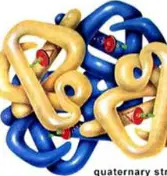
Quaternary structure is best described as
Local sheet formation within one chain
Pattern of alpha-helix turns
Arrangement of multiple peptide chains
Folding of a single peptide chain
Which term applies when quaternary subunits are identical?
Heterogeneous quaternary assembly
Symmetric secondary motif
Homologous quaternary structure
Amphipathic tertiary bundle
Hemoglobin exemplifies which structural feature?
Heterogeneous quaternary structure
Single-chain tertiary protein
Homologous tetrameric enzyme
Purely secondary-coil protein
Which protein role is correctly matched with an example?
Oxygen transport — secretin
Antibody defense — ferritin
Hormone regulation — insulin
Energy storage — hemoglobin
If dietary protein intake exceeds maintenance needs, what may occur?
Quaternary units dissociate permanently
Alpha-helix content always increases
Peptide bonds are hydrolyzed to DNA
Excess converted to fat stores
Which statement about enzymes is accurate?
Enzymes decrease reaction rates
Most body reactions proceed efficiently without enzymes
Enzymes are proteins that increase reaction rates
Enzymes store oxygen in the liver
Ferritin’s described function relates to which process?
Storage of iron in the liver
Regulation of blood sugar
Digestion of carbohydrates
Transport of oxygen in blood
Which statement best describes a general biological role of proteins in the body?
Provide exclusive energy through fermentation
Form the primary component of cell walls
Store long-term genetic information
Serve as building blocks for tissues
Insulin illustrates which protein function most directly?
Catalysis of DNA replication
Mechanical support of connective tissue
Oxygen storage in muscle cells
Hormonal regulation of blood glucose
Hemoglobin’s core role in physiology is to:
Maintain osmotic balance in plasma
Transmit nerve impulses across synapses
Hydrolyze dietary triglycerides
Transport oxygen in red blood cells
Sickle cell disease demonstrates the link between protein structure and function because:
Extra carbohydrate groups boost hemoglobin solubility
Loss of iron completely halts heme synthesis
A single amino acid change alters hemoglobin behavior
Phospholipid tails stiffen erythrocyte membranes
In hemoglobin S, the substitution of valine for glutamate at beta chain position 6 leads to:
Greater flexibility of the red cell cytoskeleton
Stronger interactions with arterial endothelium
Enhanced binding to oxygen at high pO2
Hydrophobic patches that promote aggregation
Why do red blood cells sickle during a crisis in individuals with hemoglobin S?
Deoxygenated hemoglobin exposes sticky sites
Excess insulin blocks heme oxygenation
Lipids crystallize in the membrane bilayer
Enzyme loss prevents ATP production
Which amino acid substitution causes hemoglobin S in sickle cell disease?
Valine to glutamate at β6 position
Lysine to arginine at α1 position
Glutamate to valine at β6 position
Glycine to alanine at β143 position
Why does hemoglobin S tend to aggregate under low-oxygen conditions?
Extra negative charge repels water strongly
Hydrophobic valine promotes sticky interactions
Higher affinity for oxygen induces polymerization
Covalent crosslinks form between β chains
Which trigger most directly increases the likelihood of a sickle cell crisis?
Elevated body temperature
High-carbohydrate meals
Increased plasma calcium
Hypoxia during intense exercise
What primary structural change explains altered red blood cell shape in sickle cell disease?
Alternative splicing of γ-globin mRNA
Phosphorylation of α-globin tails
Deletion of the heme prosthetic group
Single amino acid substitution in β-globin
Which best describes the structure–function relationship in hemoglobin S?
A polar substitution improves solubility
A larger side chain increases flexibility
An added charge enhances ionic interactions
A nonpolar residue exposes a hydrophobic patch
Predict the effect of substituting a nonpolar residue with a charged residue at a protein surface.
Decrease solubility and enhance aggregation
No change in solubility or aggregation
Always denature the protein completely
Increase solubility and reduce aggregation
Which intervention most directly reduces polymerization of hemoglobin S during a crisis?
Oxygen supplementation to raise saturation
High-fat diet to lower metabolism
Calcium infusion to stabilize membranes
Heat therapy to expand blood vessels
A patient with sickle cell disease ascends to high altitude. Which outcome is most plausible and why?
Increased sickling due to reduced oxygen
Decreased sickling due to cold air
Improved erythrocyte flexibility due to pressure
No change due to rapid acclimatization
In the glycolysis diagram, what immediate product is formed from glucose before entering the citric acid cycle?
One molecule of acetyl-CoA
One molecule of citrate
Two molecules of pyruvate
Two molecules of lactate
Which statement best describes activation energy in enzymatic reactions?
Energy required to form products
Energy stored in ATP bonds
Maximum energy released by enzymes
Minimum energy to start a reaction
In the Krebs cycle diagram, which cofactor is shown being reduced to capture high-energy electrons?
ADP to ATP
CoA to acetyl-CoA
FADH2 to FAD
NAD+ to NADH
During β-oxidation feeding into the TCA cycle, what molecule combines with oxaloacetate to form citrate?
Acetyl-CoA
Pyruvate
Succinyl-CoA
Malate
Lysozyme’s antibacterial action primarily targets which bacterial component?
Phospholipid membranes
DNA replication enzymes
Cell wall polysaccharides
Ribosomal proteins
Which model explains lysozyme specificity for its substrate in the binding pocket illustration?
Lock-and-key model
Induced fit model
Random collision model
Sliding clamp model
What forms when an enzyme binds its substrate prior to catalysis?
Enzyme–substrate complex
Transition state analog
Product–enzyme adduct
Cofactor-bound holoenzyme
Which step directly increases ATP yield after glycolysis according to the pathway diagram?
Citric acid cycle oxidation of pyruvate
Pentose phosphate pathway diversion
Transport of NADH into the nucleus
Conversion of citrate to isocitrate
Antibodies recognize antigens via specific sites. What is the antigen portion that fits the antibody binding site called?
Epitope
Paratope
Hapten
Allotype
IgG antibodies have a quaternary structure with how many polypeptide chains?
Three heavy and one light
Two light and two heavy
Two heavy and one light
One heavy and one light
Which bond type links antibody chains into their quaternary structure as indicated in the figure?
Ionic bonds
Peptide bonds
Hydrogen bonds
Disulfide bridges
After binding, how do antibodies assist defensive cells in clearing pathogens as described?
Insert pores into membranes
Hydrolyze viral RNA directly
Activate glycolysis in viruses
Tag pathogens for engulfment
Which statement best describes the role of contractile proteins in cells and tissues?
They catalyze metabolic reactions rapidly
They regulate membrane fluidity primarily
They enable movement within cells and muscles
They store genetic information stably
In skeletal muscle, which pair works together to produce contraction?
Actin and myosin filaments
Tubulin and dynein chains
Collagen and elastin fibers
Keratin and intermediate filaments
What is the primary function of the insulin receptor in muscle and fat cells?
Initiate DNA replication directly
Facilitate glucose uptake via transporters
Degrade excess insulin molecules
Export glucose against its gradient
Binding of insulin to its receptor in muscle cells triggers which immediate cellular effect?
GLUT4 translocation to the membrane
GLUT4 synthesis in the nucleus
Glucose breakdown in lysosomes
ATP release into the bloodstream
Which statement distinguishes simple diffusion from facilitated transport?
Diffusion requires ATP hydrolysis
Facilitated uses protein channels
Facilitated occurs only for gases
Diffusion moves against gradients
For small gases like O2 and CO2, movement across the lipid bilayer occurs primarily by which mechanism?
Facilitated diffusion via carriers
Endocytosis through vesicles
Simple diffusion down gradients
Active transport using pumps
Which property explains why polar molecules generally cannot cross the lipid bilayer unaided?
External pH neutralizes them
Hydrophobic core repels charges
Too small to interact strongly
Membrane proteins block passage
During carrier-mediated facilitated diffusion, what event immediately follows substrate binding?
Carrier phosphorylation by ATP
Conformational change moving substrate
Proteolytic cleavage of the carrier
Substrate polymerization inside cell
Active transport differs from facilitated diffusion primarily because active transport
Moves substances against gradients using ATP
Uses transmembrane proteins exclusively
Stops when extracellular ions are high
Operates only for small nonpolar molecules
A cell with higher intracellular K+ than extracellular K+ maintains this gradient using
Gap junction channels
ATP-dependent transport proteins
Passive glucose transporters
Simple diffusion pathways
Recognition proteins embedded in membranes contribute mainly to which cellular process?
Signal detection and response pathways
Mitochondrial genome replication
Secretion of digestive enzymes
Cytoskeletal polymerization dynamics
Which scenario best illustrates DoK Level 2 application of transport concepts?
Defining contractile proteins briefly
Predicting O2 flow when intracellular O2 rises
Listing amino acids in insulin
Naming insulin receptor subunits
A molecule moves from high to low concentration through a specific channel without ATP use. Identify the mechanism.
Simple diffusion across lipids
Primary active transport pump
Facilitated diffusion via proteins
Secondary active cotransport
Which statement best describes a water-soluble vitamin characteristic?
Stored extensively in adipose tissue
Excreted readily in urine
Requires bile for absorption
Accumulates long-term in the liver
Which vitamin helps your body use protein, fat, and carbohydrate to make energy and supports enzyme function?
Vitamin B3 (niacin)
Vitamin K
Vitamin A
Vitamin D
Which is a realistic dietary source of vitamin B3?
Citrus fruits and papaya
Peanut butter, meat, fish, poultry
Fortified soy beverages
Dark green leafy vegetables
Biotin primarily allows the body to do what?
Make blood proteins for clotting
Use protein, fat, and carbohydrate from food
Absorb calcium and phosphorus
Act as a major antioxidant in membranes
Which food listed is a common source of biotin?
Cantaloupe and Swiss chard
Liver and fish oils
Sweet potatoes and nonfat milk
Broccoli and wheat germ
Vitamin B6 helps make and use which stored energy form in muscle and liver?
Triglycerides
Creatine phosphate
Glycogen
Ketone bodies
Low levels of which vitamin can cause a type of anemia due to impaired red blood cell formation?
Vitamin E
Vitamin B12 (cobalamin)
Vitamin K
Vitamin D
Folate is crucial for which biological process at the cellular level?
Producing and maintaining DNA and cells
Neutralizing gastric acid secretion
Collagen cross-linking in skin
Oxidative phosphorylation in mitochondria
Adequate folic acid intake lowers the risk of which developmental issue?
Hemophilia in infants
Rickets in adolescents
Spina bifida in newborns
Night blindness
Which set includes typical folate-rich foods?
Citrus fruits, kiwi, mangoes
Milk, cheese, fish liver oils
Asparagus, spinach, chickpeas, wheat germ
Avocados, peanut butter, sunflower seeds
Which vitamin may help prevent cell damage and reduce risk for heart disease by acting as an antioxidant?
Vitamin C
Vitamin K
Vitamin A
Vitamin D
Which foods are commonly rich in vitamin C?
Whole grains and enriched pasta
Citrus fruits, kiwi, strawberries
Fortified margarine and fish oils
Liver and organ meats
Vitamin A supports which function most directly?
Raises calcium deposition in teeth
Causes blood to clot during bleeding
Increases iron absorption from foods
Helps you see in the day and at night
Carotenoids such as beta-carotene act mainly as what?
Insulin mimetics for glucose uptake
Antioxidants protecting from free radicals
Membrane phospholipids
Pro-coagulant cofactors
Vitamin D primarily increases absorption of which minerals from the gut?
Iron and zinc
Calcium and phosphorus
Magnesium and copper
Sodium and potassium
Which is a plausible dietary source of vitamin D listed in the material?
Fortified milk and margarine
Vegetable oils and avocados
Whole grains and lentils
Citrus fruits and papaya
Vitamin E helps maintain a healthy immune system and acts as what at the cellular level?
Coenzyme for blood clotting
Antioxidant protecting cells from damage
Enzyme digesting dietary lipids
Hormone stimulating calcium uptake
Vitamin K is directly involved in producing which type of proteins?
Blood clotting proteins
Antioxidant enzymes
Collagen fibrils
Membrane transporters
Which foods commonly provide vitamin K according to the reference bank?
Broccoli, soybeans, collards, spinach
Peanut butter, meat, enriched grains
Citrus fruits, kiwi, mangoes, papaya
Milk, cheese, fortified margarine
Which statement best defines lipids in terms of solubility and relation to fatty acids?
Readily dissolved in aqueous buffers, peptide-linked
Water-soluble polymers, free of fatty acids
Relatively insoluble in water, related to fatty acids
Soluble in water, unrelated to fatty acids
Which classification correctly matches simple lipids with their chemical nature?
Isoprenoid antioxidants in membranes
Complexes of lipids with proteins
Esters of fatty acids with alcohols
Polymers of amino acids
What distinguishes fats from oils among triacylglycerols at room temperature?
Fats are saturated, oils are unsaturated
Fats are polar, oils are nonpolar
Fats are ionic, oils are covalent
Fats are solid, oils are liquid
Which statement about waxes is accurate based on classification?
Short-chain fatty acids with glycerol
Esters of long-chain fatty acids with other alcohols
Triacylglycerols with three different acids
Phospholipids containing sphingosine
Which complex lipid contains glycerol as the alcohol and often a nitrogenous base?
Sphingophospholipids
Lipoproteins
Glycerophospholipids
Glycolipids
In sphingophospholipids, which molecule serves as the backbone alcohol?
Ceramide
Cholesterol
Glycerol
Sphingosine
Which complex lipid includes a fatty acid, carbohydrate, and nitrogenous base but lacks glycerol and phosphate?
Glycerophospholipids
Lipoproteins
Sphingophospholipids
Glycolipids
Which category comprises macromolecular complexes of lipids with proteins?
Lipoproteins
Steroid hormones
Sulfolipids
Wax esters
Which are examples of derived lipids obtained by hydrolysis of simple and complex lipids?
Polysaccharides and nucleotides
Glycoproteins and peptidoglycans
Phosphodiesters and ceramides
Fatty acids, glycerol, steroid hormones
Which group correctly lists neutral lipids found in biological systems?
Phospholipids and sphingomyelins
Mono-, di-, triacylglycerols
Glycolipids and lipoproteins
Sulfolipids and aminolipids
Which statement best describes a core function of lipids in organisms?
Maintain cytosolic pH buffering
Provide primary nitrogen source
Catalyze redox enzyme reactions
Serve as concentrated fuel reserve
Fat-soluble vitamins carried by lipids include which set?
PPARs, prostacyclin, thromboxane
B1, B2, B6, B12
C, folate, biotin, niacin
A, D, E, K
Which statement about fatty acids is accurate?
Polyhydric alcohols with phosphate groups
Isoprenoid units forming cyclic terpenes
Nitrogenous bases linked to sugars
Carboxylic acids with hydrocarbon side chain
Most natural fatty acids have how many carbon atoms relative to parity?
Odd carbons, commonly 13–21
Odd carbons, commonly 3–9
Even carbons, commonly 6–12
Even carbons, commonly 14–20
Which pair represents common even-chain saturated fatty acids?
Propionic and valeric acids
Linoleic and linolenic acids
Palmitic and stearic acids
Arachidonic and oleic acids
What distinguishes saturated from unsaturated fatty acids?
Absence versus presence of double bonds
Presence versus absence of carboxyl group
Presence versus absence of hydroxyl groups
Presence versus absence of keto groups
A fatty acid with two or more double bonds is termed what?
Saturated fatty acid
Polyunsaturated fatty acid
Hydrogenated fatty acid
Monounsaturated fatty acid
Which suffix is used for unsaturated fatty acids in nomenclature?
-ate indicates unsaturation
-anoic indicates unsaturation
-enoic indicates unsaturation
-yl indicates unsaturation
In shorthand, 18:1;9 most correctly conveys what?
18 carbons, one double bond at C9
18 carbons, two double bonds at C9
18 carbons, one double bond at C3
18 carbons, one triple bond at C9
When writing fatty acid shorthand, what is the order of information?
Total carbons, number of double bonds, first double-bond position
Number of double bonds, total carbons, saturation level
First double-bond position, carbonyl index, chain length
Chain length, hydrogen count, omega series
Which notation indicates the first double bond between carbons 9 and 10 counting from the carboxyl end?
Δ9 denotes the position
C9* marks the position
▲9 denotes the omega index
ω9 denotes the position
Naturally occurring unsaturated fatty acids commonly fall into which omega series?
ω7, ω5, ω2 series
ω12, ω10, ω8 series
ω9, ω6, ω3 series
ω4, ω3, ω1 series
Which lipid grouping is best categorized as miscellaneous lipids?
Phosphatidylcholine, sphingomyelin, cerebrosides
Triacylglycerols, sterols, cholesteryl esters
Glycolipids, lipoproteins, sulfolipids
Carotenoids, squalene, pentacosane, terpenes
Which statement best explains why linoleic acid and linolenic acid are classified as essential in human nutrition?
Humans lack enzymes to add double bonds beyond C9
Dietary omega-3s are always converted to glucose
Humans cannot synthesize any saturated fatty acids
Eicosanoids require only monounsaturated precursors
Arachidonic acid (20:4; 5,8,11,14) becomes essential under which dietary condition?
Excess linolenic acid blocking desaturation
Insufficient linoleic acid as its precursor
High intake of oleic acid but low palmitic
Complete absence of dietary cholesterol
Which pair lists the correct carbon count and double-bond positions for linolenic acid?
20 carbons; double bonds at 5, 8, 11, 14
18 carbons; double bonds at 3, 9, 12, 15
16 carbons; one double bond at 9
18 carbons; double bonds at 9, 12 only
Which clinical condition is specifically associated with deficiency of essential fatty acids?
Phrynoderma characterized by toad skin
Beriberi with peripheral neuropathy
Rickets causing bone demineralization
Kwashiorkor presenting with edema
Select the most accurate description of eicosanoids in relation to essential fatty acids.
Glycolipids derived exclusively from cholesterol
Storage lipids produced by beta-oxidation of EFAs
Signaling molecules synthesized from polyunsaturated EFAs
Structural proteins formed from saturated fats
Which function is NOT primarily attributed to essential fatty acids?
Direct inhibition of glycolysis enzymes
Membrane structure and function maintenance
Transport of cholesterol via lipoproteins
Prevention of fatty liver under certain conditions
Identify the correct systematic naming for palmitoleic acid shown in the table.
cis-9-Octadecenoic acid
n-Hexadecanoic acid
cis-9-Hexadecenoic acid
All cis-5,8,11,14-Icosatetraenoic acid
Given the notation 18:2; 9,12, which common fatty acid is described and why is it important?
Palmitic acid; key in eicosanoid formation
Linoleic acid; precursor for arachidonic synthesis
Arachidonic acid; essential only in omega-3 diets
Oleic acid; major saturated membrane lipid
Which statement best describes triacylglycerols in biological systems?
They are polar lipids soluble in water
They are esters of glycerol with fatty acids
They are polymers of repeated isoprene units
They are membrane structural components
Which arrangement is typical for mixed triacylglycerols?
Four fatty acids per glycerol backbone
Same fatty acid at all three carbons
Two or three different fatty acid residues
No fatty acids attached to the glycerol
Plants generally have triacylglycerols with what characteristic compared to animals?
Lower total fatty acid chain length
Lower unsaturated fatty acid content
Higher saturated fatty acid content
Higher unsaturated fatty acid content
During enzymatic hydrolysis of triacylglycerols by lipases, which products are released?
Amino acids and glycerol
Ketone bodies and glycerol
Free fatty acids and glycerol
Monosaccharides and alcohols
What is produced when triacylglycerols undergo alkali hydrolysis in saponification?
Glycerol and soaps (R–COONa)
Glycerol and phospholipids
Glycerol and aldehydes
Glycerol and triglyceride dimers
Hydrolytic rancidity is primarily due to which process?
Oxidation by atmospheric oxygen
Partial hydrolysis by bacterial enzymes
Addition of iodine to double bonds
Thermal cracking of long chains
Which antioxidants are commonly added to commercial fats to prevent rancidity?
Ascorbate and glutathione
Propyl gallate, BHA, and BHT
Niacin and biotin
Ceramides and sphingosine
In vivo lipid peroxidation generates which damaging species?
Free radicals and peroxides
Carbohydrates and peptides
Sterols and wax esters
Inert nitrogen gases
What does the iodine number of a fat or oil quantify?
Milliliters of 0.1 N KOH for neutralization
Grams of iodine absorbed by 100 g sample
Milligrams of KOH per gram of sample
Percentage of water in the sample
How is the iodine number related to the degree of unsaturation?
Unrelated to double bond density
Directly proportional to chain length
Inversely proportional to unsaturation
Directly proportional to unsaturated content
What does the saponification number measure for a fat or oil?
Average molecular size of fatty acids
Amount of phospholipid contamination
Total cholesterol concentration present
Number of double bonds per molecule
Which sample would have a higher saponification number, assuming typical composition?
Fat with very long chain acids
Fat with short chain fatty acids
Fatty acid methyl ester mix
Oil with no free fatty acids
Reichert–Meissl number is most useful for detecting adulteration of which product?
Coconut oil with lauric acid
Human adipose tissue lipids
Butter containing volatile fatty acids
Olive oil rich in oleic acid
Which statement about the acid number of oils is correct?
Expressed as grams iodine per 100 g oil
Unrelated to safety for consumption
Measured as mg KOH to neutralize free acids
High value indicates fewer free fatty acids
Which head group distinguishes lecithin from cephalin in glycerophospholipids?
Inositol head group
Serine head group
Choline head group
Ethanolamine head group
Which phospholipid is a key component of the inner mitochondrial membrane and has diphosphatidylglycerol structure?
Phosphatidylinositol monophosphate
Plasmalogen phosphatidylethanolamine
Phosphatidylserine glycerophospholipid
Cardiolipin diphosphatidylglycerol
Identify the sugar alcohol attached to phosphatidic acid in phosphatidylinositol.
Glycerol three-carbon alcohol
Sphingosine long-chain base
Myo-inositol six-carbon ring
Choline quaternary amine
Which statement best differentiates glycerophospholipids from sphingophospholipids?
Both contain glycerol backbone
Sphingophospholipids lack glycerol backbone
Glycerophospholipids lack fatty acids
Sphingophospholipids contain triacylglycerol
In sphingomyelin, the alcohol group of sphingosine is linked to which head group?
Diphosphatidylglycerol head group
Phosphorylcholine head group
Phosphatidylserine head group
Phosphatidylinositol head group
Respiratory distress syndrome in infants is most associated with insufficient production of which lipid?
Cardiolipin mitochondrial lipid
Phosphatidylinositol signaling lipid
Phosphatidylserine membrane lipid
Phosphatidylcholine surfactant
Plasmalogens are characterized by which linkage at C1 of glycerol?
Ester linkage at C1
Ether linkage at C1
Amide linkage at C1
Glycosidic linkage at C1
Which function is directly attributed to phosphatidylinositol in membranes?
Regulating membrane permeability
Signal transmission across membranes
Transporting cholesterol into tissues
Forming the myelin sheath matrix
Sphingomyelins are abundant constituents of which tissue type?
Cardiac muscle tissue
Brain and nervous tissues
Adipose connective tissue
Hepatic parenchyma tissue
Which pair correctly matches phospholipid and its nitrogenous base?
Cephalin—serine base
Lecithin—choline base
Phosphatidylinositol—ethanolamine base
Cardiolipin—glycine base
Which structural feature forms ceramide from sphingosine?
Ester bond to fatty acid
Amide bond to fatty acid
Ether bond to fatty acid
Phosphate bond to fatty acid
Which role of phospholipids supports reverse cholesterol transport?
Lower pulmonary surface tension
Enhance intestinal fat absorption
Participate in lipoprotein synthesis
Maintain electron transport conformation
Which component is common to phosphatidic acid, lecithin, and cephalin structures?
Sphingosine backbone present
Ceramide backbone present
No phosphate group present
Glycerol backbone present
Which statement best explains why only about 20 standard amino acids are commonly found in proteins across organisms?
Ribosomes degrade nonstandard residues immediately
Genetic code specifies incorporation of ~20 residues
Protein folding prohibits inclusion of most residues
Cell membranes restrict uptake of extra residues
In the general amino acid structure, which groups are attached to the same α-carbon in most proteinogenic amino acids?
Two amino functional groups
A carboxyl and carbonyl group
Two carboxyl functional groups
Amino and carboxyl functional groups
Which property describes amino acids existing predominantly as zwitterions in biological systems?
They act solely as strong bases
They are neutral under all conditions
They bear both positive and negative charges
They act solely as strong acids
Which amino acid lacks optical isomerism because its α-carbon is not chiral?
Leucine has a longer aliphatic chain
Alanine has a methyl side chain
Glycine lacks a distinct side chain
Valine has a branched side chain
What defines optical isomerism in amino acids with a chiral α-carbon?
Four different substituents on the α-carbon
Two identical substituents on the α-carbon
Planar symmetry around the α-carbon
Presence of conjugated double bonds
The D and L convention for biomolecules was historically related to reference structures of which compound?
Glyceraldehyde stereoisomers as standards
Glucose mutarotation equilibrium forms
Lactic acid enantiomeric mixtures
Acetaldehyde tautomeric pairs
Which classification criterion groups amino acids into essential and non-essential categories?
Nutritional requirement for human diet
Presence of aromatic ring systems
Metabolic fate in hepatic pathways
Polarity of side-chain substituents
Which set includes branched-chain amino acids with aliphatic side chains?
Aspartate, glutamate, asparagine trio
Phenylalanine, tyrosine, tryptophan trio
Alanine, glycine, serine trio
Leucine, isoleucine, valine trio
Which amino acids contain hydroxyl groups in their side chains among the standard set?
Alanine and valine residues
Serine and threonine residues
Aspartate and glutamate residues
Leucine and isoleucine residues
Amino acids can be grouped by metabolic fate. Which description fits ketogenic amino acids?
Form succinyl-CoA as major product
Yield pyruvate via transamination
Converted primarily to oxaloacetate
Catabolized to acetyl-CoA or acetoacetate
Which statement correctly contrasts glycogenic (glucogenic) and ketogenic amino acids?
Glucogenic yield glucose precursors; ketogenic yield ketone bodies
Both yield exclusively acetyl-CoA; neither forms glucose
Both yield only fatty acid precursors; neither forms glucose
Ketogenic form glucose precursors; glucogenic form ketone bodies
Which feature differentiates aliphatic amino acids like alanine from aromatic amino acids like phenylalanine?
Backbone contains an extra carbonyl group
Side chain contains a sulfur heteroatom
Side chain lacks an aromatic ring system
Amino group is secondary instead of primary

