
Font size
 Worksheets
Special senses part-1
Total questions: 81
Worksheet time: 41mins
Which of the following best describes the function of the cranial nerves?
They transmit sensory and motor information between the brain and various parts of the head, neck, and body.
They are responsible for hormone production in the brain.
They regulate blood flow throughout the body.
They control the movement of the spinal cord.
The conceptual relationship between the structure and function of special senses and the autonomic nervous system is best described as:
Special senses provide sensory input that influences autonomic responses.
The autonomic nervous system controls voluntary muscle movement in special senses.
Special senses and the autonomic nervous system operate independently without interaction.
The autonomic nervous system is responsible for processing sensory information from special senses.
Examine the structure of the following and describe their function: nose, tongue, ear, eye.
Nose helps in smelling, tongue in tasting, ear in hearing, and eye in seeing.
Nose helps in tasting, tongue in hearing, ear in seeing, and eye in smelling.
Nose helps in seeing, tongue in smelling, ear in tasting, and eye in hearing.
Nose helps in hearing, tongue in seeing, ear in smelling, and eye in tasting.
Describe the nerve pathway of the following: sense of smell, sense of taste, sequence of hearing, sense of equilibrium, sequence of vision.
The nerve pathways for smell, taste, hearing, equilibrium, and vision involve the olfactory, gustatory, auditory, vestibular, and optic nerves respectively.
All senses use the same nerve pathway for processing information.
The sense of taste and vision share the same nerve pathway.
Equilibrium and hearing do not involve any specific nerve pathways.
Age-related changes to sensory function of the nervous system include:
Decreased sensitivity to stimuli
Increased sensitivity to pain
Improved sense of taste and smell
Enhanced visual acuity
Use correct terminology related to the special senses.
Olfaction, gustation, vision, audition, equilibrium
Digestion, respiration, circulation, excretion
Photosynthesis, transpiration, germination, pollination
Flexion, extension, abduction, adduction
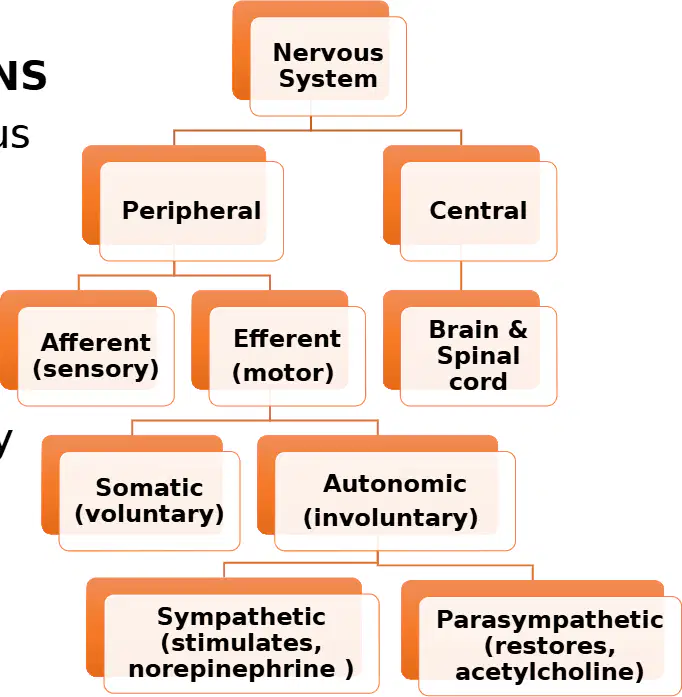
Which subdivision of the nervous system is the Autonomic Nervous System a part of?
Central Nervous System
Efferent Peripheral Nervous System
Afferent Peripheral Nervous System
Somatic Nervous System
The Autonomic Nervous System functions without conscious effort.
True
False
What does the Autonomic Nervous System regulate?
Functions of internal organs
Movement of skeletal muscles
Production of hormones
Conscious thought processes
The Autonomic Nervous System assists in maintaining ________.
homeostasis
digestion
respiration
movement
How many divisions does the Autonomic Nervous System have?
2
3
4
5
Name the two divisions of the Autonomic Nervous System.
Sympathetic and Parasympathetic divisions
Central and Peripheral divisions
Somatic and Sensory divisions
Motor and Sensory divisions
What is the main function of the Sympathetic division of the Autonomic Nervous System?
Prepares the body for restful situations
Prepares the body for stressful situations that require energy, such as increasing heartbeat and breathing rates to flee from threatening situations
Controls voluntary movement of skeletal muscle
Controls the central nervous system
Refer to the diagram of the Nervous System. Which of the following is NOT a part of the Peripheral Nervous System?
Somatic
Autonomic
Brain
Sympathetic
Fill in the blank: The Autonomic Nervous System is divided into the _______ and _______ divisions.
Sympathetic and Parasympathetic
Central and Peripheral
Somatic and Motor
Cranial and Spinal
Which neurotransmitter is found at preganglionic synapses (in CNS) in the autonomic nervous system?
acetylcholine
dopamine
serotonin
norepinephrine
Which neurotransmitter is found at postganglionic synapses (to effector in PNS) in the autonomic nervous system?
norepinephrine (noradrenaline)
acetylcholine
dopamine
serotonin
In the autonomic nervous system, acetylcholine is found at which of the following locations?
Preganglionic synapses (in CNS)
Postganglionic synapses (to effector in PNS)
Both A and B
Neither A nor B
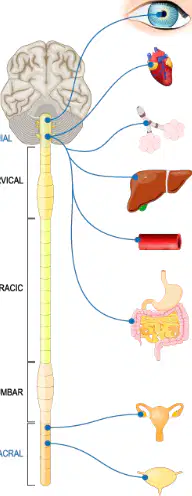
Match the following organs with their response under the parasympathetic and sympathetic nervous systems:
Constriction
Constriction
Slow heartbeat
Slow heartbeat
Constricts
Constricts
Stimulate bile release
Stimulate bile release
Dilate
Dilate
According to the information provided, under what conditions does the parasympathetic division operate?
Under normal non-stressful conditions.
During intense physical activity.
When experiencing extreme stress.
Only while sleeping.
What is the main neurotransmitter of the parasympathetic division?
Acetylcholine
Dopamine
Norepinephrine
Serotonin
Which of the following is a function of the parasympathetic division?
Increases heart rate
Stimulates digestion, urination & defecation
Dilates pupils
Stimulates sweat gland secretion
The parasympathetic division restores the body to a non-stressful state.
True
False
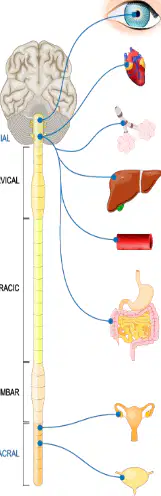
What effect does the parasympathetic division have on the pupil?
Dilation
Constriction
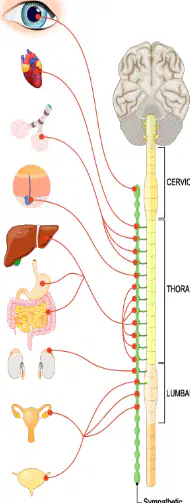
Which division increases heart rate?
Parasympathetic
Sympathetic
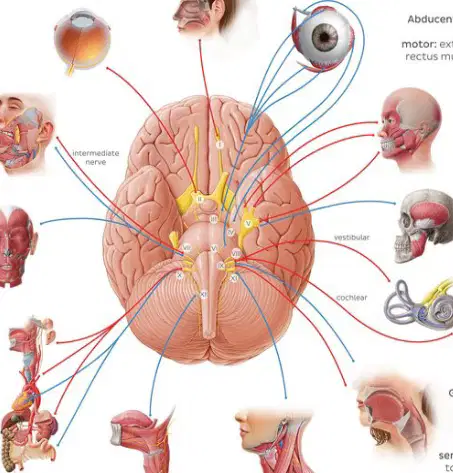
What is the function of the Olfactory nerve (I)?
smell
vision
hearing
balance
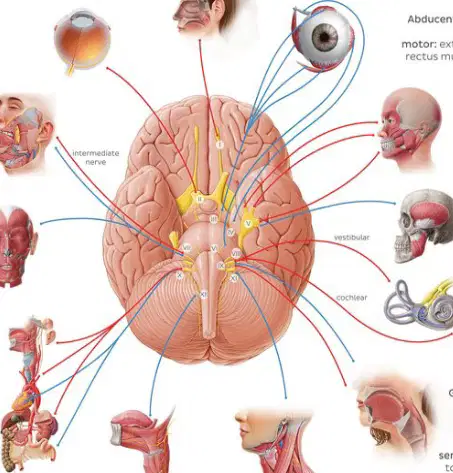
What is the function of the Optic nerve (II)?
sight
hearing
balance
taste
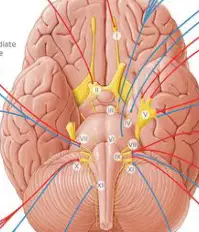
What is the function of the Oculomotor nerve (III)?
movement of eyeball, constriction of pupil
hearing and balance
taste sensation from the tongue
regulation of heart rate
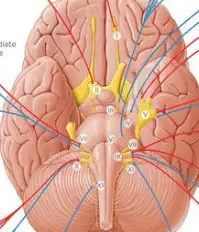
What is the function of the Trochlear nerve (IV)?
movement of eyeball
hearing
taste sensation
facial expression
Which cranial nerve is responsible for chewing and sensations in teeth?
Trigeminal (V)
Facial (VII)
Optic (II)
Olfactory (I)
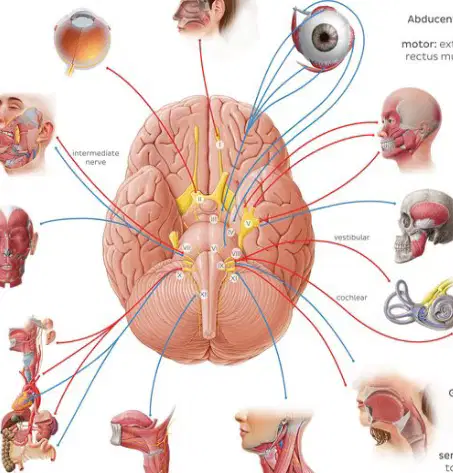
Which cranial nerve controls the movement of the eyeball?
Abducens (VI)
Facial (VII)
Trigeminal (V)
Vagus (X)
Which cranial nerve is involved in facial expression, taste, and tear/salivary glands?
Facial (VII)
Trigeminal (V)
Glossopharyngeal (IX)
Oculomotor (III)
Which cranial nerve is responsible for equilibrium and hearing?
Vestibulocochlear (VIII)
Optic (II)
Oculomotor (III)
Trigeminal (V)
What is the main function of the Glossopharyngeal (IX) nerve?
swallowing, taste, salivary glands
vision, eye movement, pupil constriction
hearing, balance, facial expression
chewing, facial sensation, tongue movement
Which cranial nerve is responsible for certain muscle movements, sensory impulses, and controls heart rate?
Vagus (X)
Optic (II)
Trigeminal (V)
Facial (VII)
The Accessory (XI) nerve is involved in which functions?
swallowing, head movement
vision, hearing
taste, smell
balance, coordination
Which cranial nerve is responsible for swallowing and speech?
Hypoglossal (XII)
Olfactory (I)
Optic (II)
Trochlear (IV)
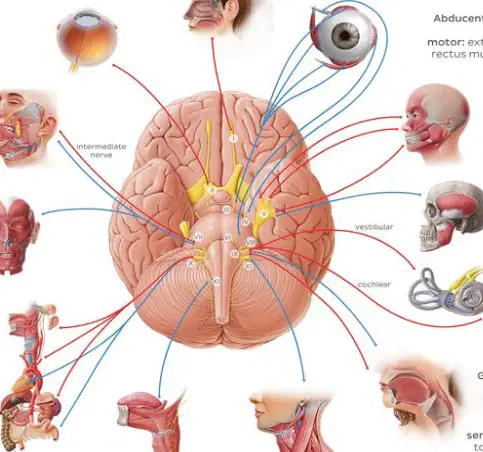
What is the function of the Olfactory (I) cranial nerve?
Sensory: nose (sense of smell)
Motor: eye movement
Sensory: vision
Motor: facial expression
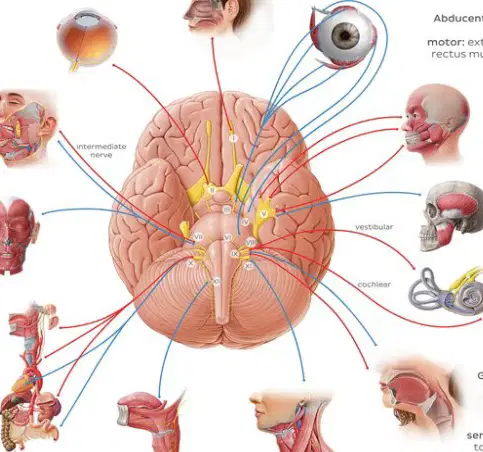
Which cranial nerve is responsible for vision?
Optic (II)
Oculomotor (III)
Trochlear (IV)
Trigeminal (V)
What is the function of the Oculomotor (III) cranial nerve?
Motor: all eye muscles except those supplied by IV and VI
Sensory: vision
Motor: muscles of mastication
Sensory: hearing
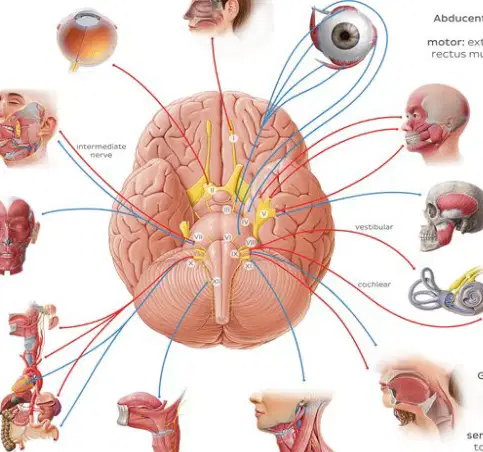
What is the function of the Trigeminal (V) cranial nerve?
Sensory: face, sinuses, teeth, etc. Motor: muscles of mastication
Motor: controls tongue movements
Sensory: hearing and balance
Motor: controls eye movement
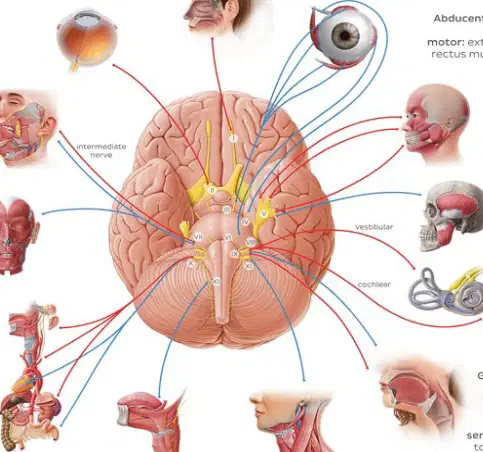
Which cranial nerve is responsible for the muscles of the face?
Facial (VII)
Trigeminal (V)
Oculomotor (III)
Glossopharyngeal (IX)
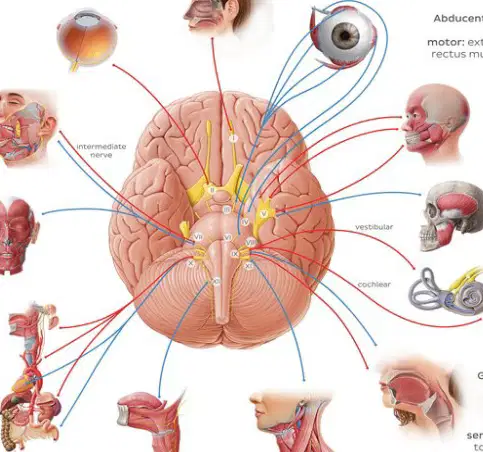
The Vestibulocochlear (VIII) cranial nerve is associated with which sense?
Sensory: inner ear (hearing and balance)
Sensory: vision
Sensory: smell
Sensory: taste
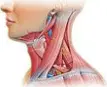
What is the function of the Glossopharyngeal (IX) cranial nerve?
Motor: pharyngeal musculature. Sensory: posterior part of tongue, tonsil, pharynx
Motor: eye movement. Sensory: vision
Motor: facial expression. Sensory: taste from anterior two-thirds of tongue
Motor: mastication. Sensory: touch from face
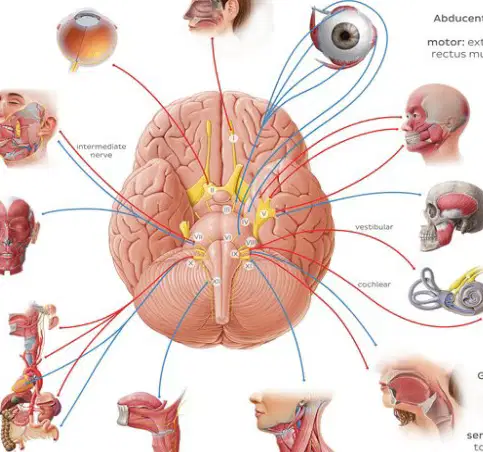
Which cranial nerve is responsible for the heart, lungs, and gastrointestinal tract?
Vagus (X)
Optic (II)
Facial (VII)
Trigeminal (V)
The Accessory (XI) cranial nerve controls which muscles?
Motor: sternocleidomastoid and trapezius muscles
Motor: masseter and temporalis muscles
Motor: biceps brachii and triceps brachii muscles
Motor: deltoid and pectoralis major muscles
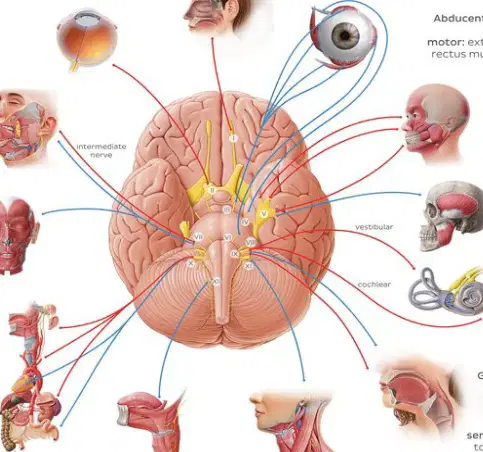
What is the function of the Hypoglossal (XII) cranial nerve?
Motor: muscles of the tongue
Sensory: taste from the anterior two-thirds of the tongue
Motor: muscles of facial expression
Sensory: hearing and balance
What mnemonic can be used to remember the order of the 12 cranial nerves?
Oh, Oh, Oh, To Take A Family Vacation! Go Vegas After Hours
On Old Olympus Towering Tops, A Finn And German Viewed Some Hops
Old Oliver Owes The Tiny Ants Five Grapes And Honey
Only Owls Observe The Tall And Fearless Giraffes At Home
What is the name of the cranial nerve (I)?
olfactory nerve
optic nerve
trigeminal nerve
facial nerve
The oculomotor nerve (III) is mainly:
Sensory
Motor
Both
The trigeminal nerve (V) is mainly:
Sensory
Motor
Both
The facial nerve (VII) is mainly:
Sensory
Motor
Both
The glossopharyngeal nerve (IX) is mainly:
Sensory
Motor
Both
The accessory (spinal accessory) nerve (XI) is mainly:
Sensory
Motor
Both
What is the name of cranial nerve I?
Olfactory
Optic
Trigeminal
Facial
What is the name of cranial nerve II?
Optic
Olfactory
Trochlear
Abducens
What is the name of cranial nerve III?
Oculomotor
Trigeminal
Facial
Optic
What is the name of cranial nerve IV?
Trochlear
Olfactory
Trigeminal
Facial
What is the name of cranial nerve V?
Trigeminal
Facial
Oculomotor
Abducens
What is the name of cranial nerve VI?
Abducens
Oculomotor
Trigeminal
Facial
What is the name of cranial nerve VII?
Facial
Trigeminal
Optic
Vagus
What is the name of cranial nerve VIII?
Acoustic
Olfactory
Trigeminal
Facial
What is the name of cranial nerve IX?
Glossopharyngeal
Vagus
Facial
Trigeminal
What is the name of cranial nerve X?
Vagus
Trigeminal
Facial
Oculomotor
What is the name of cranial nerve XI?
Spinal Accessory
Optic
Facial
Vagus
What is the name of cranial nerve XII?
Hypoglossal
Oculomotor
Trigeminal
Facial
Match the cranial nerve number to its correct name:
Olfactory
Olfactory
Optic
Optic
Oculomotor
Oculomotor
Trochlear
Trochlear
Trigeminal
Trigeminal
Which cranial nerves are responsible for eye movement?
Oculomotor, trochlear & abducens
Facial, glossopharyngeal & vagus
Olfactory, optic & trigeminal
Vestibulocochlear, hypoglossal & cranial accessory
Which cranial nerves are responsible for taste?
Oculomotor, trochlear & abducens
Facial, glossopharyngeal & vagus
Olfactory, optic & trigeminal
Vestibulocochlear, hypoglossal & cranial accessory
Fill in the blank: The ________, trochlear, and abducens nerves are responsible for eye movement.
oculomotor
optic
facial
vagus
Fill in the blank: The facial, glossopharyngeal, and ________ nerves are responsible for taste.
vagus
trigeminal
optic
hypoglossal
Match the cranial nerve to its function:
Eye movement
Oculomotor
Taste
Facial
Taste
Glossopharyngeal
Eye movement
Abducens
Molecules in air dissolve in _________?
nasal mucus
saliva
blood
lung tissue
Which type of neurons transfer the chemical impulse in the sense of smell?
Motor neurons
Bipolar sensory neurons
Interneurons
Unipolar neurons
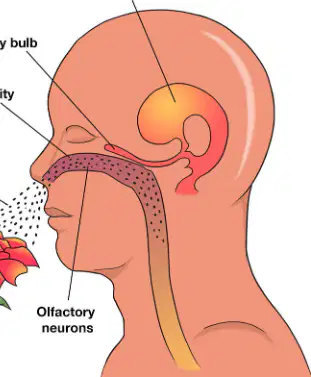
The ________ receive the impulse in the sense of smell.
Olfactory bulbs
Optic nerves
Taste buds
Auditory canal
Where is the impulse sent after being received by the olfactory bulbs?
Olfactory cortex
Cerebellum
Medulla oblongata
Thalamus
Odor variety is dependent on brain interpretation.
True
False
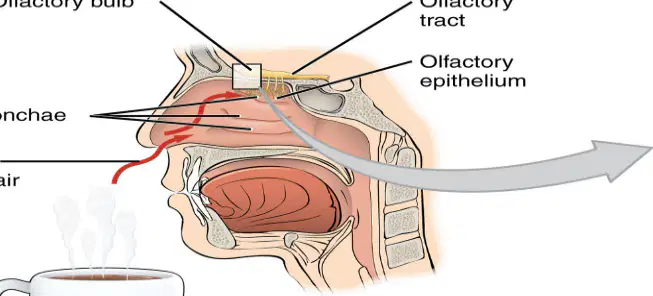
Refer to the diagram labeled (a) Nasal cavity. Which part is responsible for detecting odor molecules?
Nasal conchae
Olfactory bulb
Olfactory epithelium
Olfactory tract
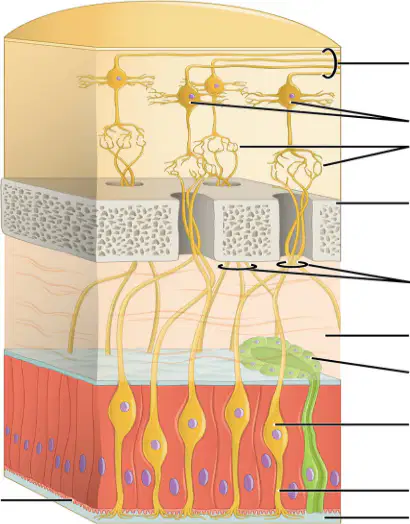
In the diagram labeled (b) Olfactory system, what is the function of the olfactory cilia?
Olfactory cilia detect odorant molecules in the inhaled air.
Olfactory cilia produce mucus to trap dust particles.
Olfactory cilia transmit electrical signals to the brain directly.
Olfactory cilia regulate airflow through the nasal cavity.
Match the following parts of the olfactory system with their correct functions:
Detects odor molecules
Transmits signals to the brain
Transmits signals to the brain
Detects odor molecules
Traps and dissolves odor molecules
Traps and dissolves odor molecules
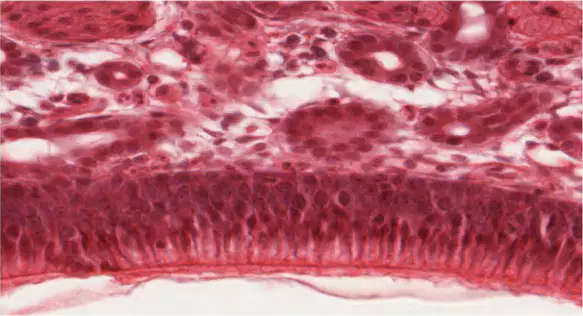
What is the main function of the olfactory epithelium?
The main function of the olfactory epithelium is to detect odor molecules and initiate the sense of smell.
The main function of the olfactory epithelium is to regulate blood pressure.
The main function of the olfactory epithelium is to produce mucus for digestion.
The main function of the olfactory epithelium is to control body temperature.

