
24 Q
1st - 5th
10 Q
3rd
20 Q
2nd - Uni
20 Q
2nd - 4th
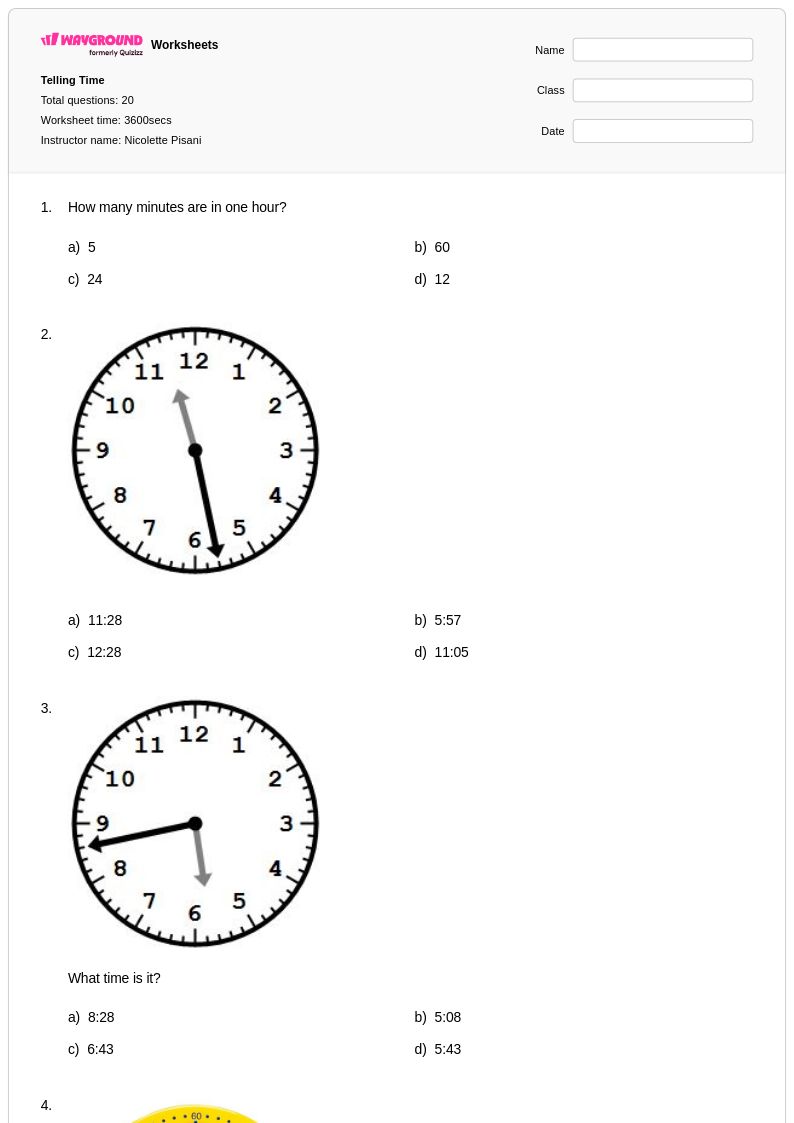
20 Q
3rd
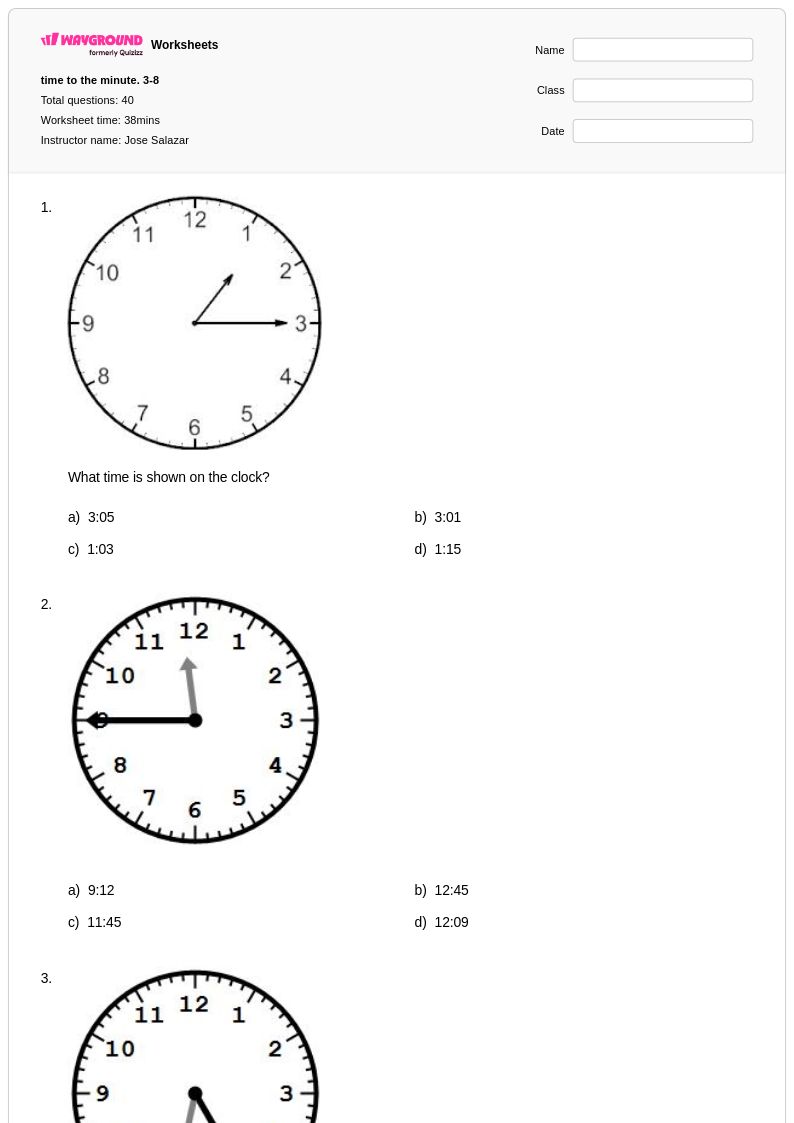
40 Q
3rd - 4th
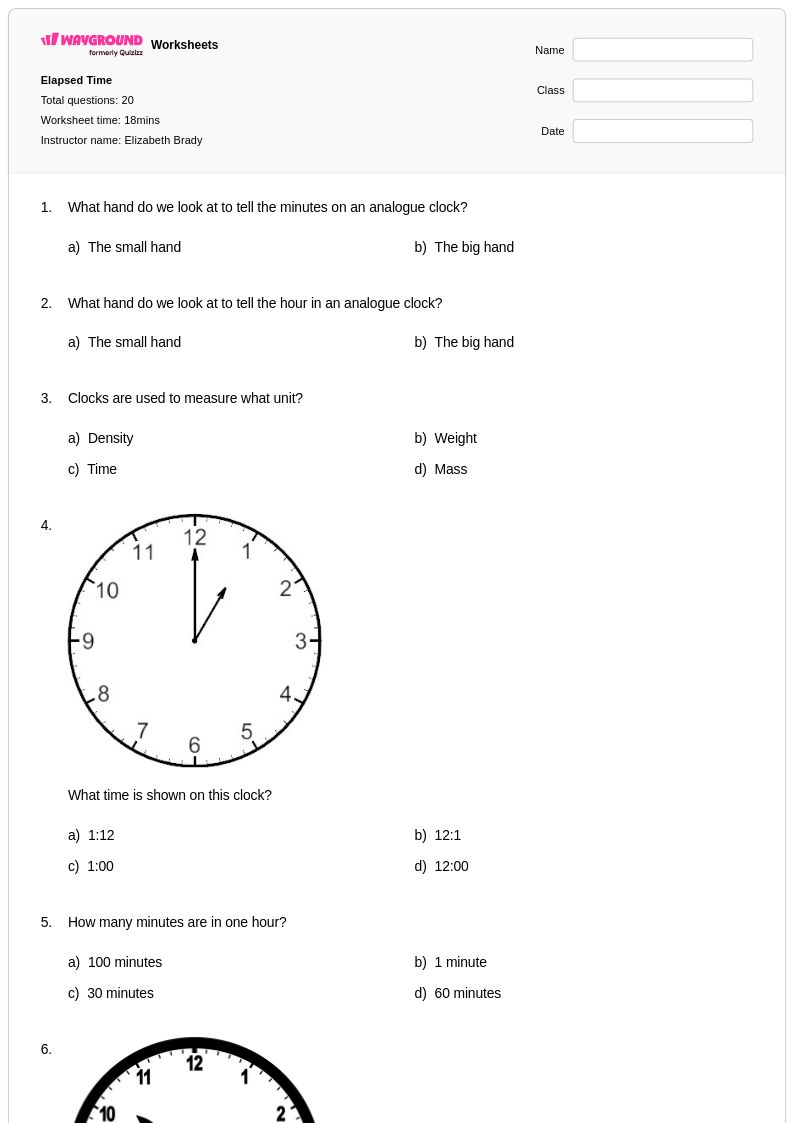
20 Q
3rd
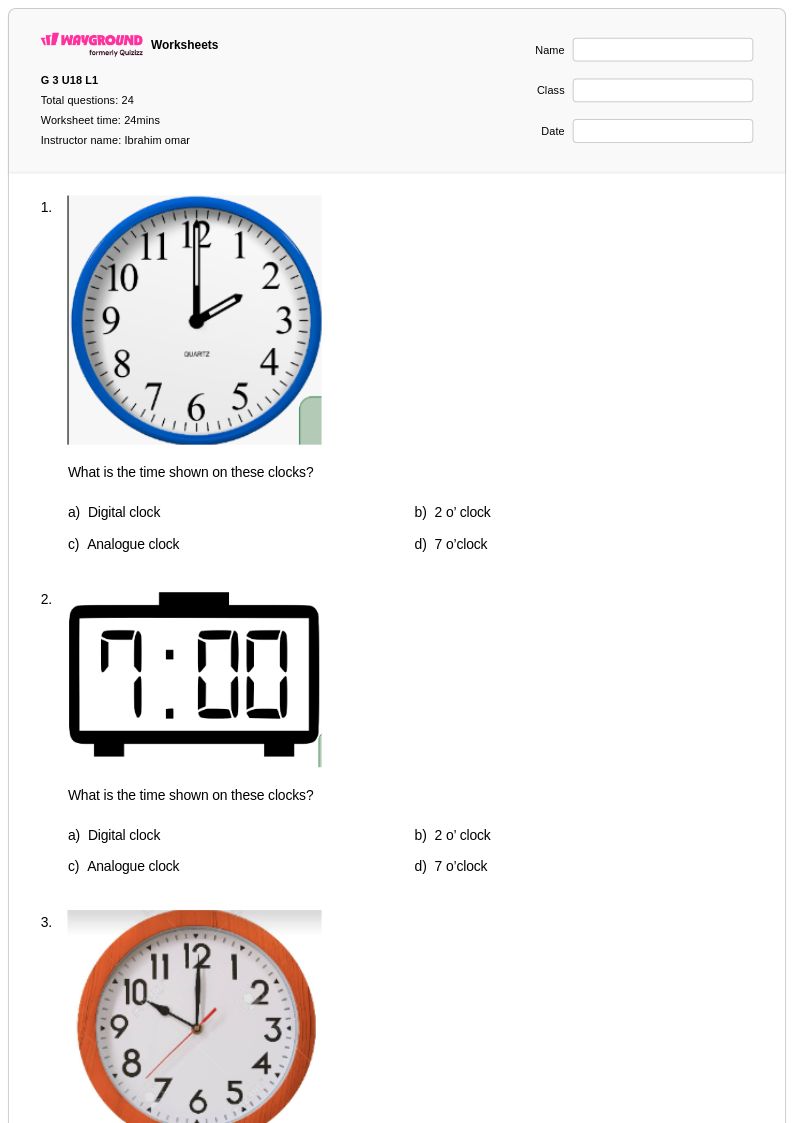
24 Q
3rd
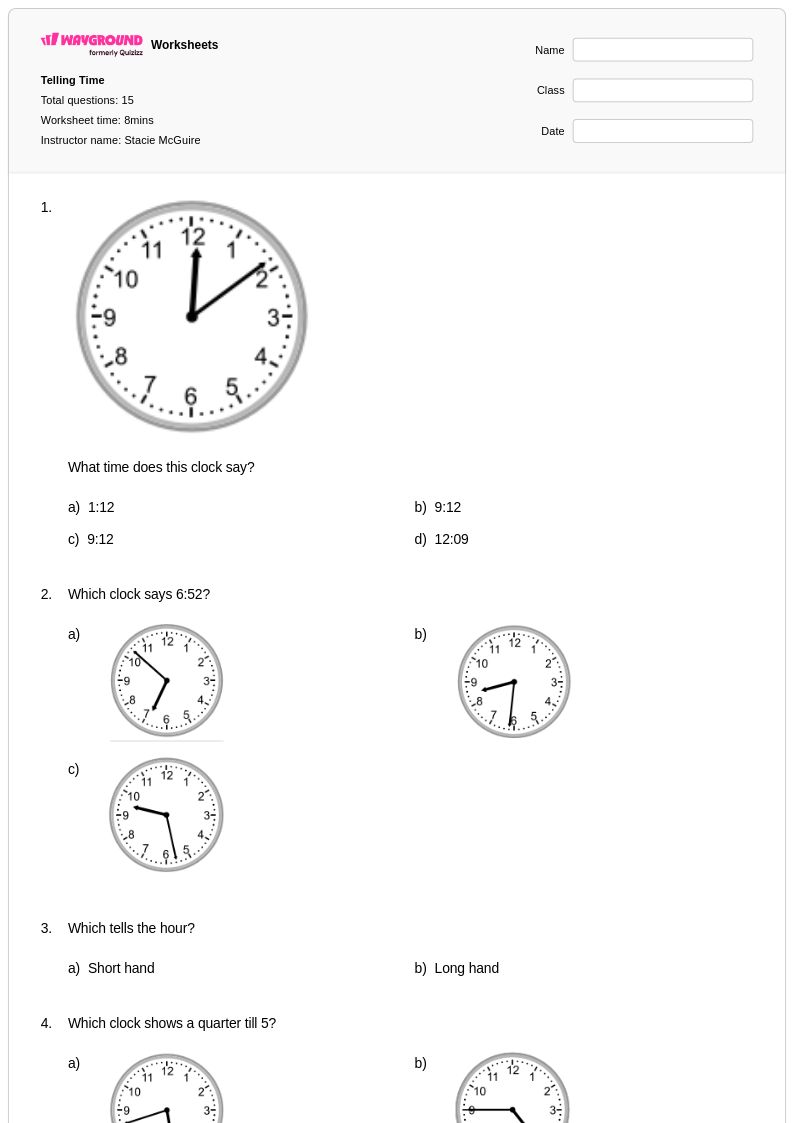
15 Q
3rd
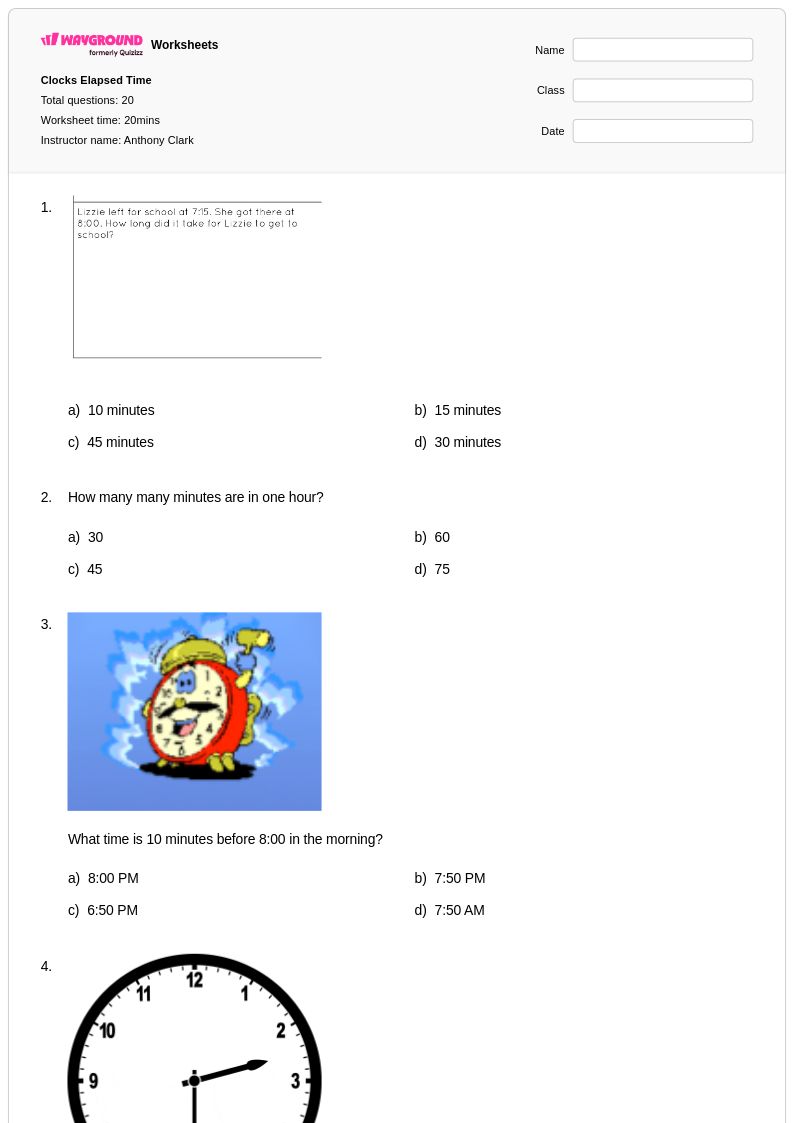
20 Q
3rd - Uni
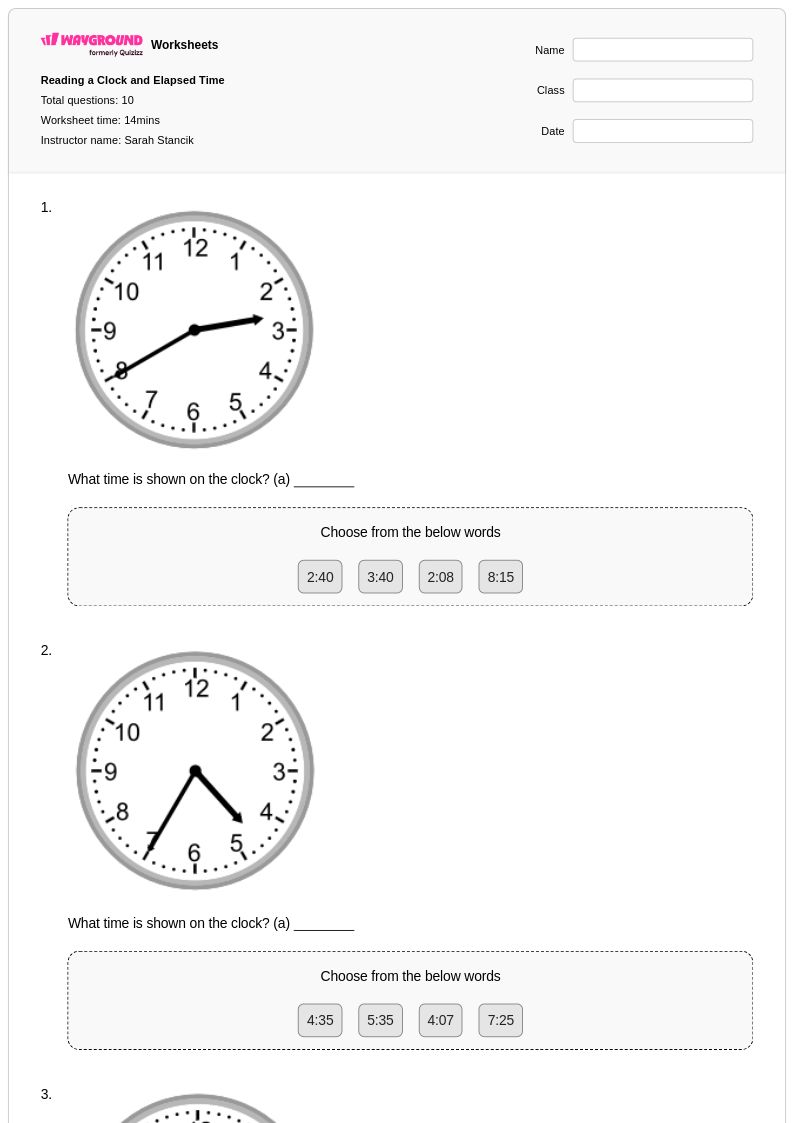
10 Q
3rd
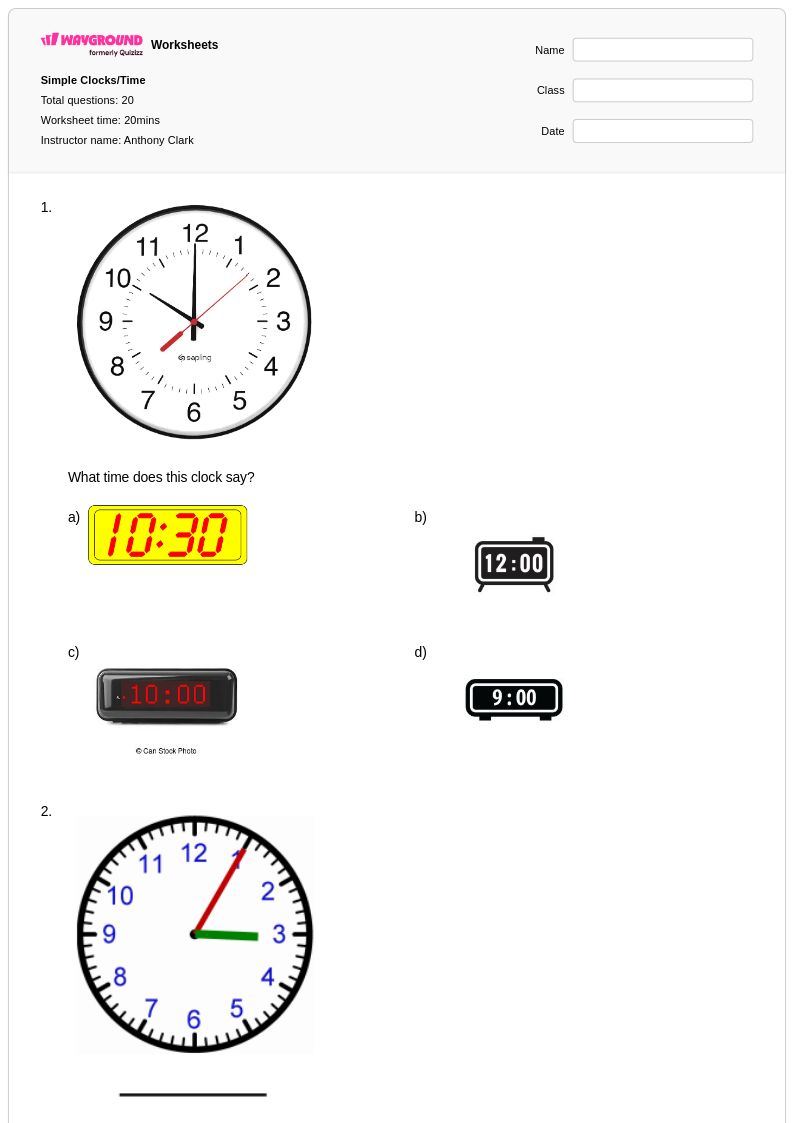
20 Q
2nd - Uni
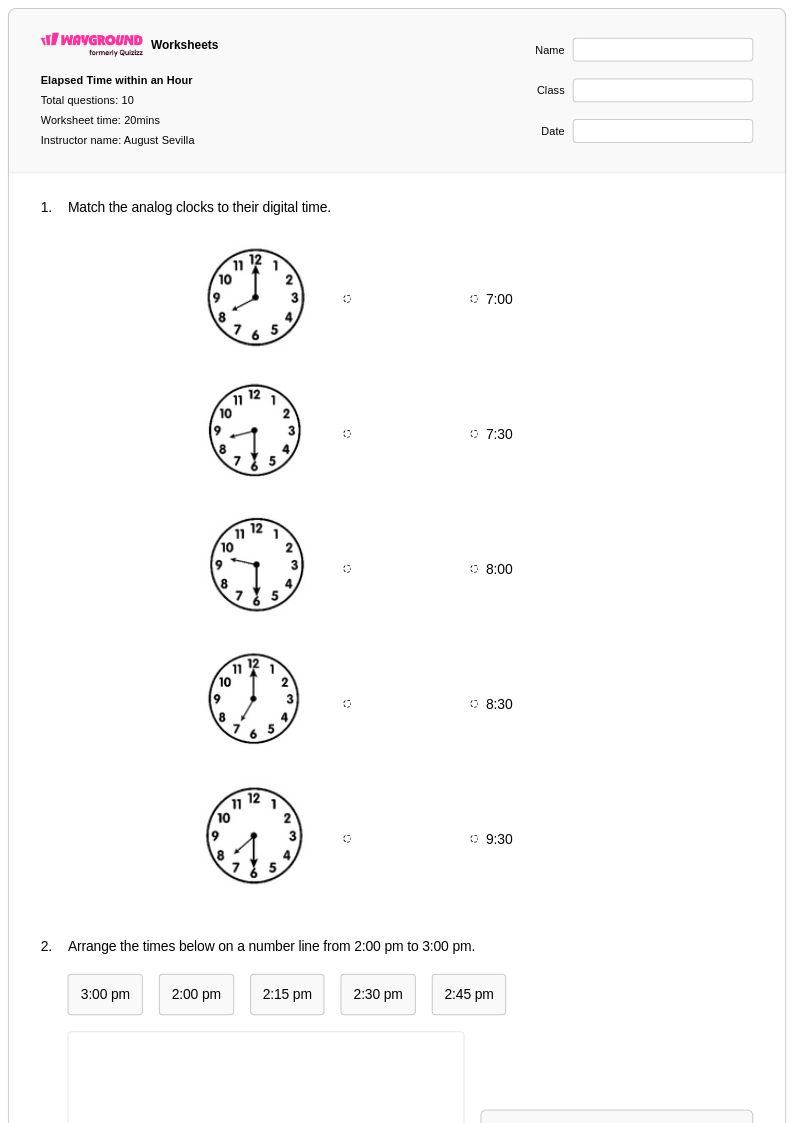
10 Q
3rd
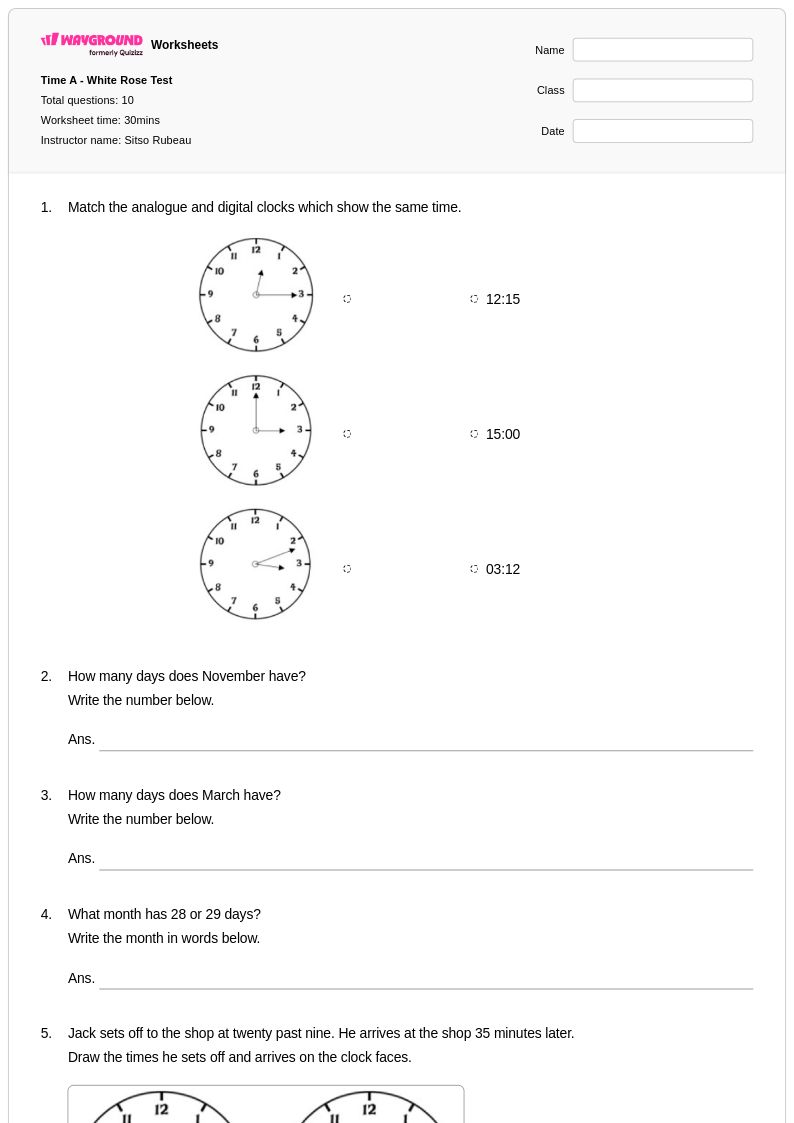
10 Q
3rd
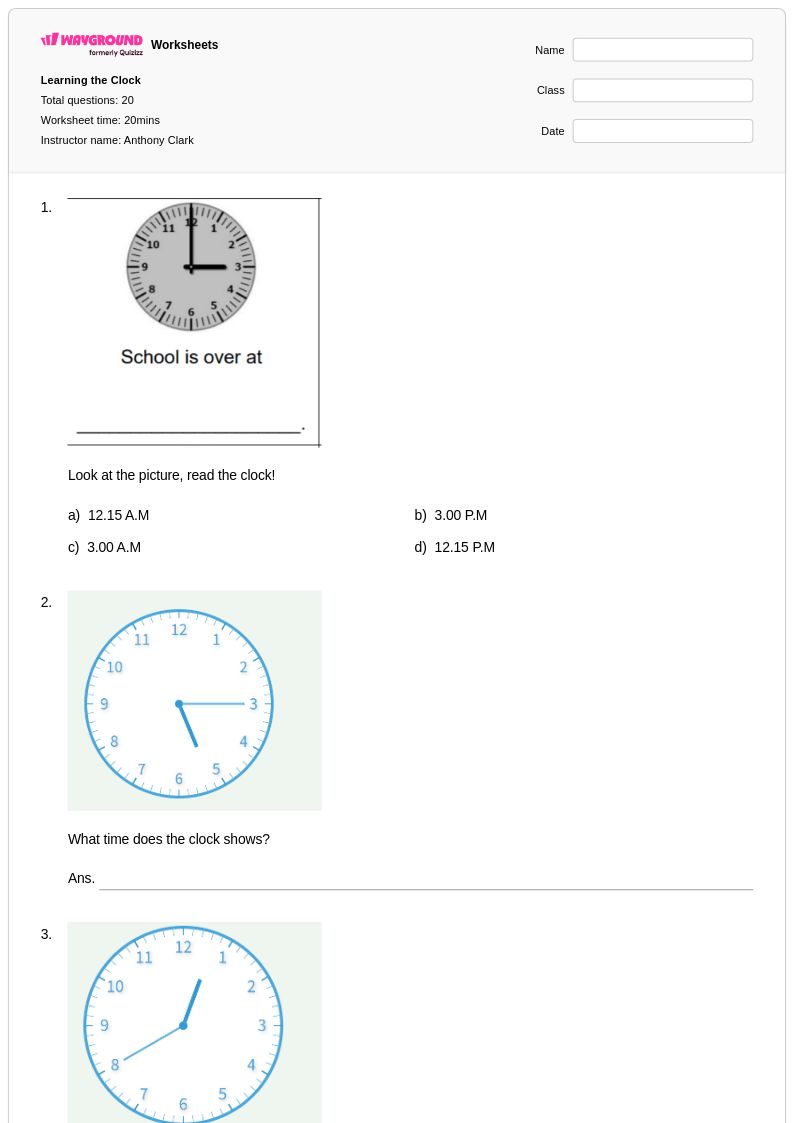
20 Q
2nd - Uni
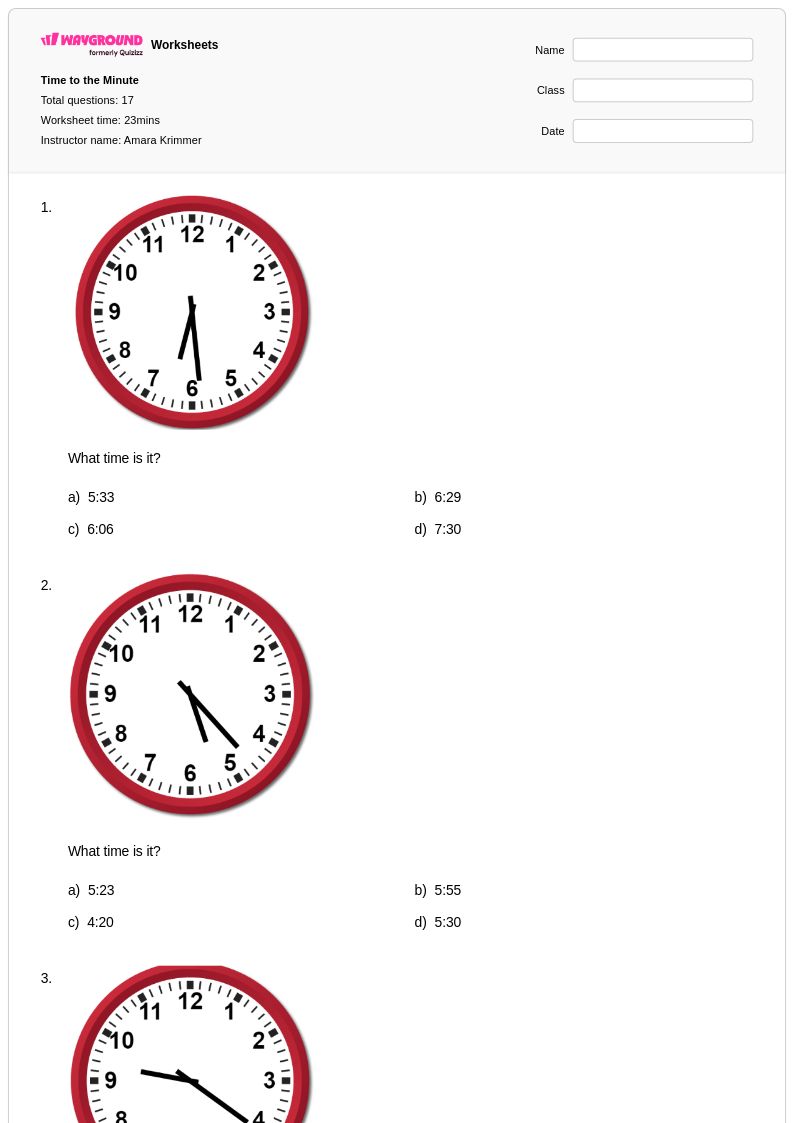
17 Q
3rd - 4th
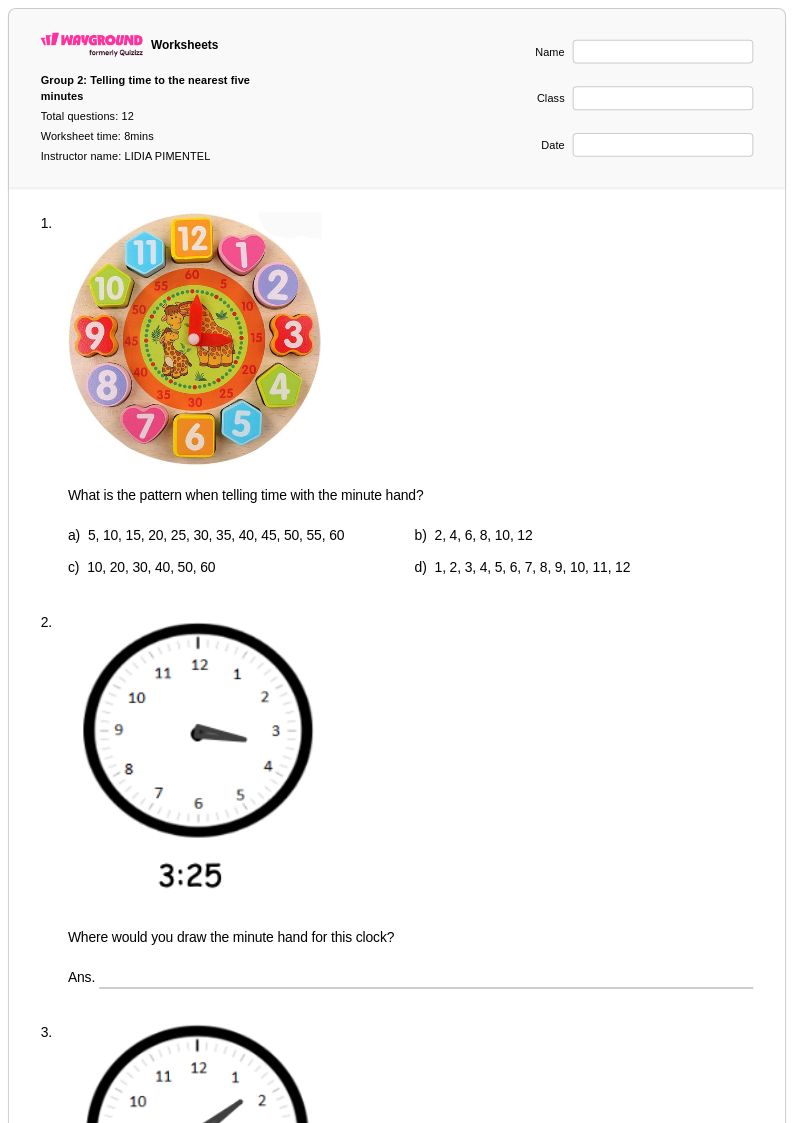
12 Q
1st - 3rd
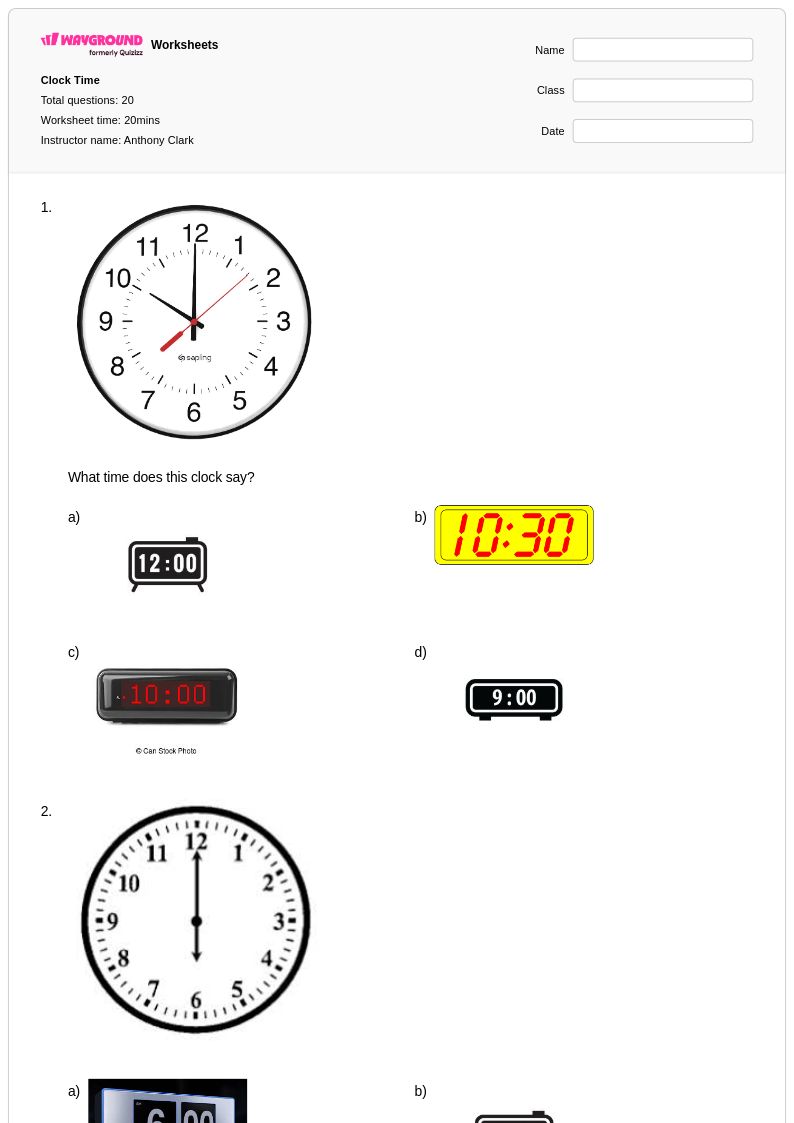
20 Q
2nd - Uni
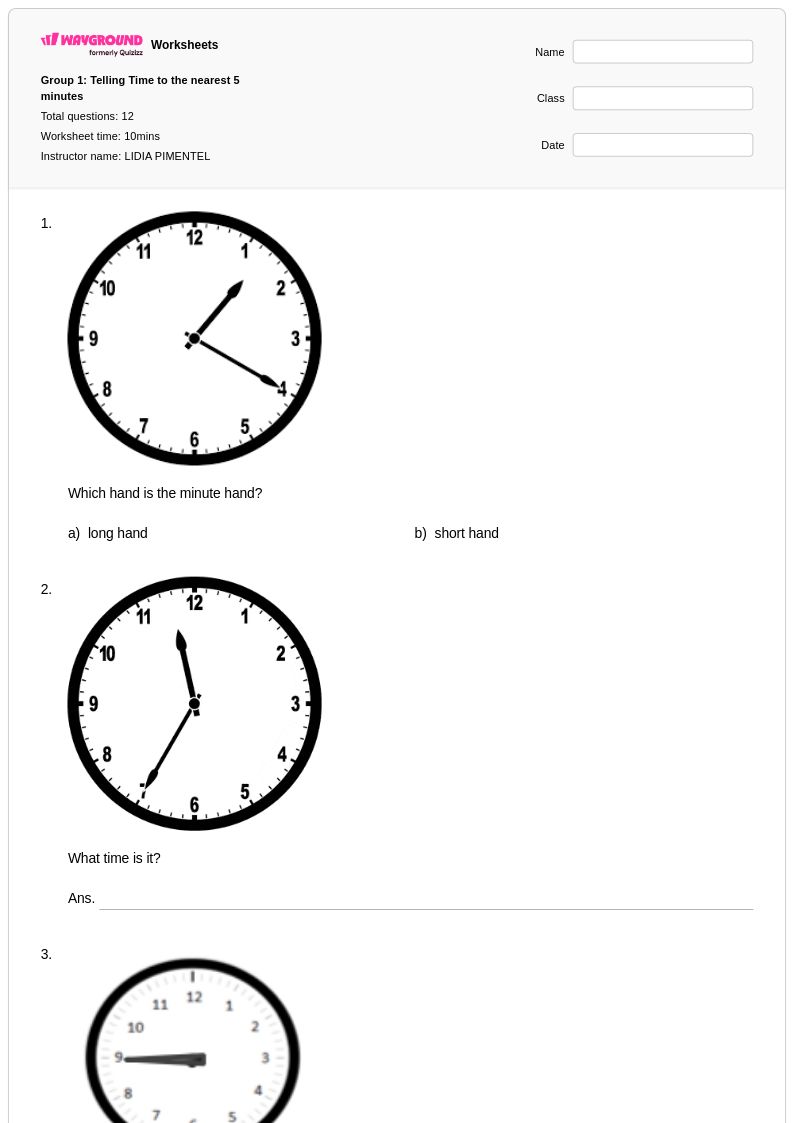
12 Q
1st - 3rd
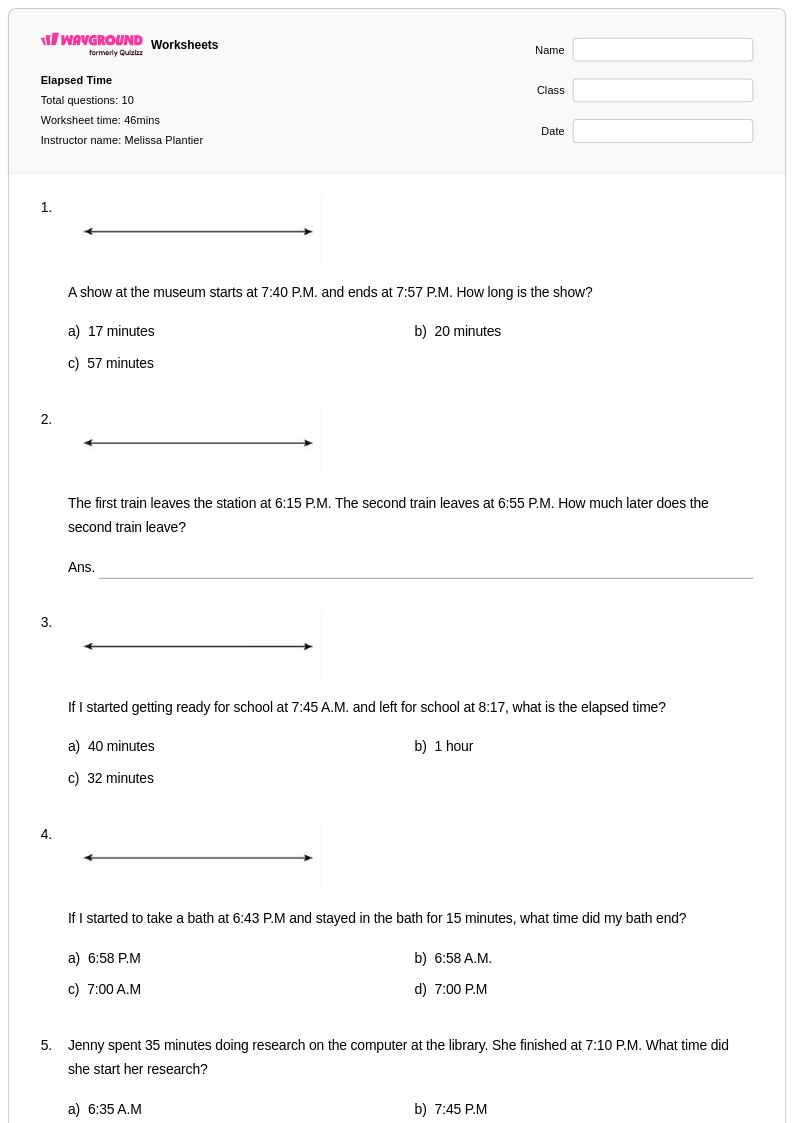
10 Q
3rd - 4th
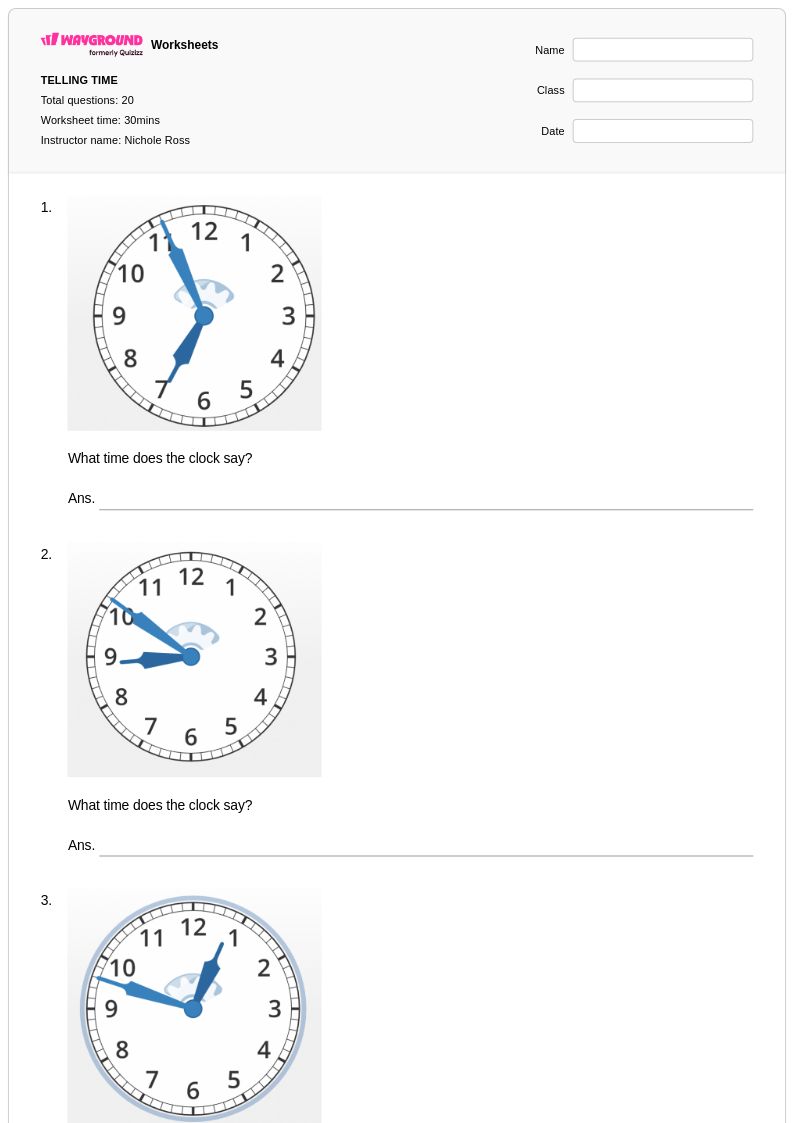
20 Q
3rd
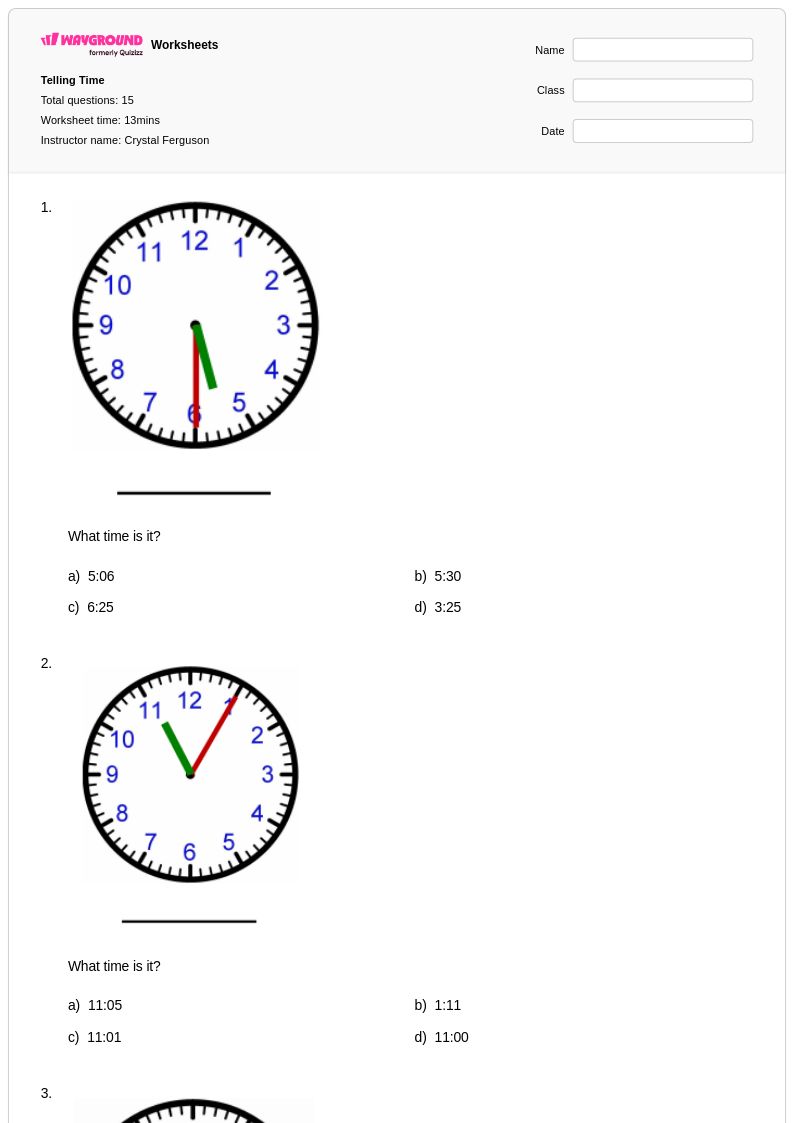
15 Q
3rd
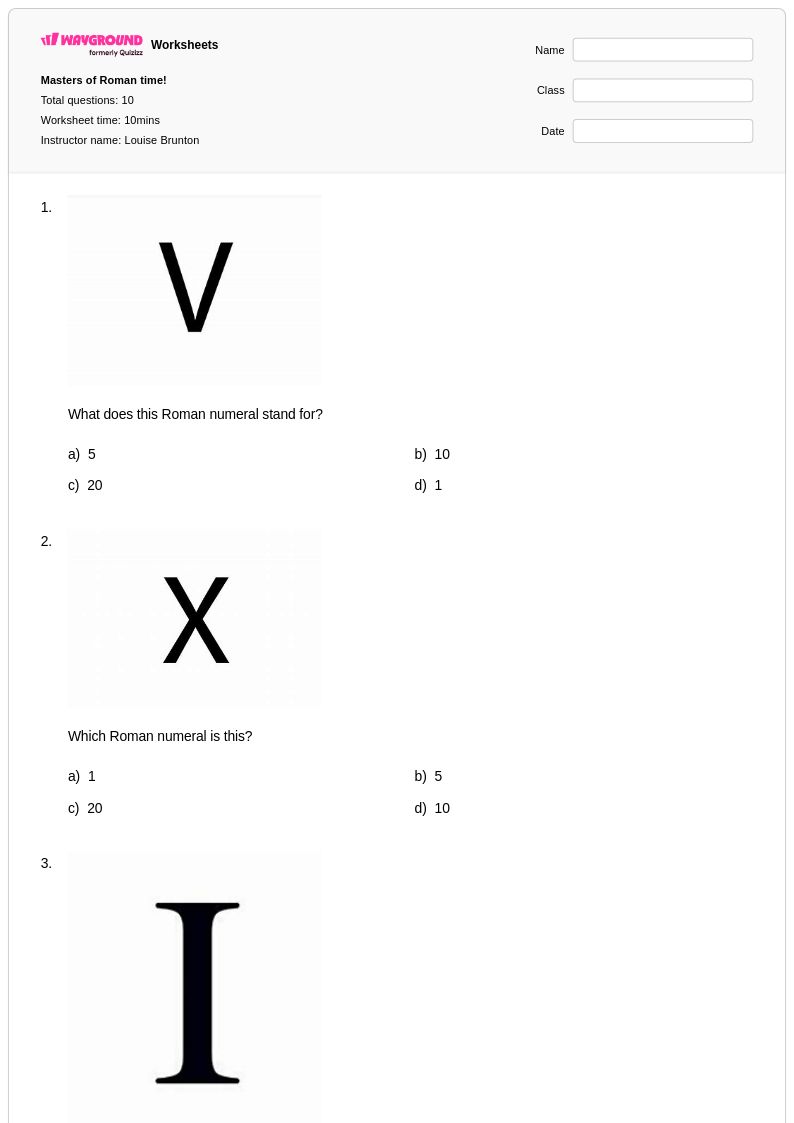
10 Q
3rd
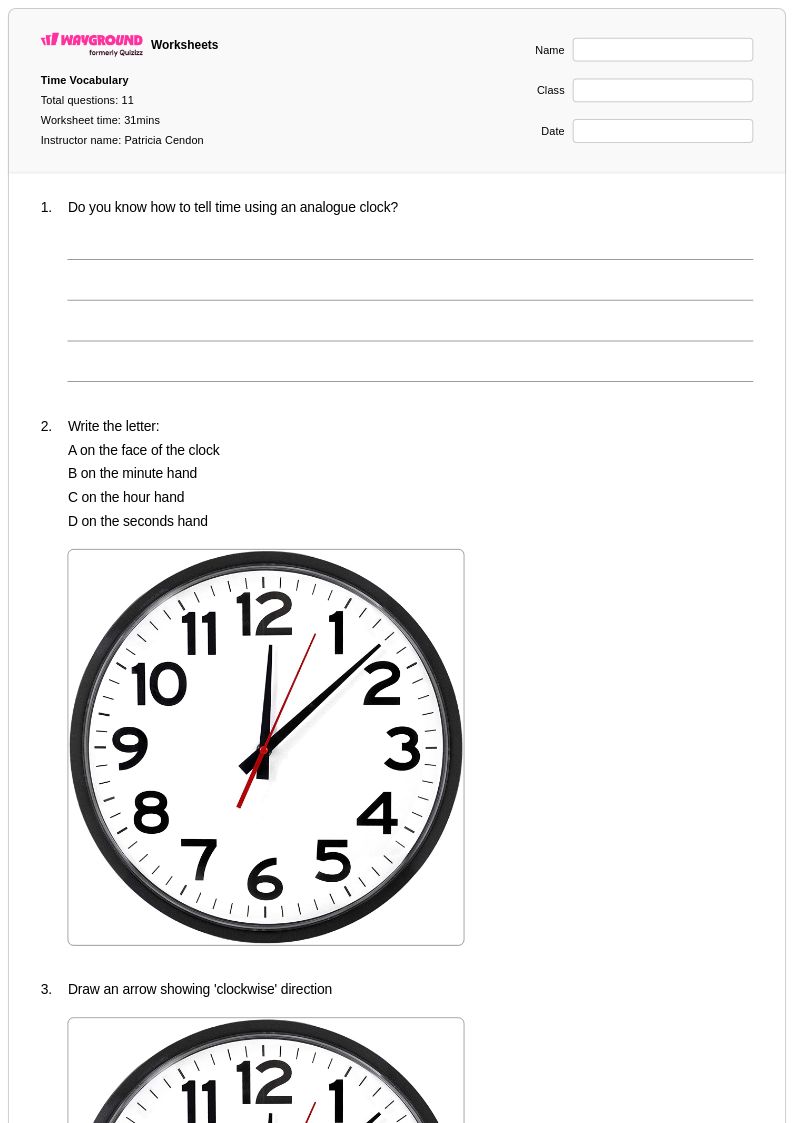
11 Q
3rd - 4th
Explore Other Subject Worksheets for year 3
Explore printable Analogue Clocks worksheets for Year 3
Analogue clocks present a fundamental challenge for Year 3 students as they bridge abstract time concepts with visual interpretation skills. Wayground's comprehensive collection of analogue clock worksheets provides structured practice opportunities that help third graders master reading time to the hour, half-hour, quarter-hour, and five-minute intervals. These carefully designed printables strengthen essential mathematical skills including number recognition, spatial reasoning, and understanding of time relationships through engaging practice problems that progress systematically from basic concepts to more complex time-telling scenarios. Each worksheet includes a detailed answer key, making it simple for educators to provide immediate feedback and assess student comprehension, while the free pdf format ensures easy access and distribution for classroom or home learning environments.
Wayground's extensive library, featuring millions of teacher-created resources, empowers educators with robust search and filtering capabilities specifically designed to locate analogue clock materials that align with Year 3 mathematics standards and individual classroom needs. The platform's differentiation tools allow teachers to customize worksheets based on student ability levels, ensuring appropriate challenge and support for diverse learners while maintaining focus on core time-telling competencies. Available in both printable and digital formats, these resources facilitate flexible lesson planning whether educators need quick remediation activities, enrichment challenges, or regular skill practice sessions. The comprehensive collection supports various instructional approaches, from whole-class instruction to individual practice, helping teachers address the specific analogue clock reading challenges that third-grade students commonly encounter while building confidence in this critical life skill.
FAQs
How do I teach Grade 3 students to read analogue clocks accurately?
What analogue clock activities are useful in Grade 3?
What mistakes do third graders make with analogue time?
How should I use these Grade 3 analogue clock worksheets?
How do analogue clocks fit the Common Core Grade 3 progression?
How can I differentiate analogue clock practice in a mixed-ability Grade 3 class?
What time-telling skills should Grade 3 students know?