Free Printable Circulatory System Worksheets for Year 9
Year 9 Biology circulatory system worksheets and printables help students master heart anatomy, blood circulation, and cardiovascular functions through comprehensive practice problems, free PDF resources, and detailed answer keys.
Explore printable Circulatory System worksheets for Year 9
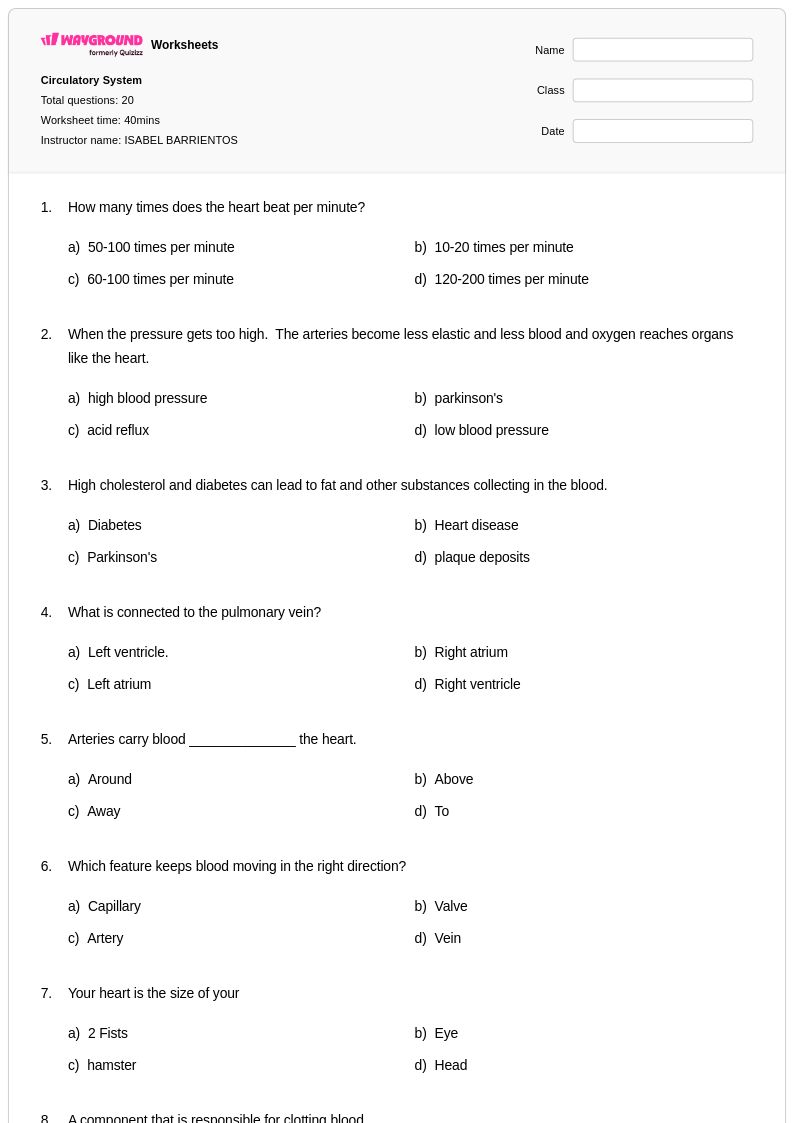
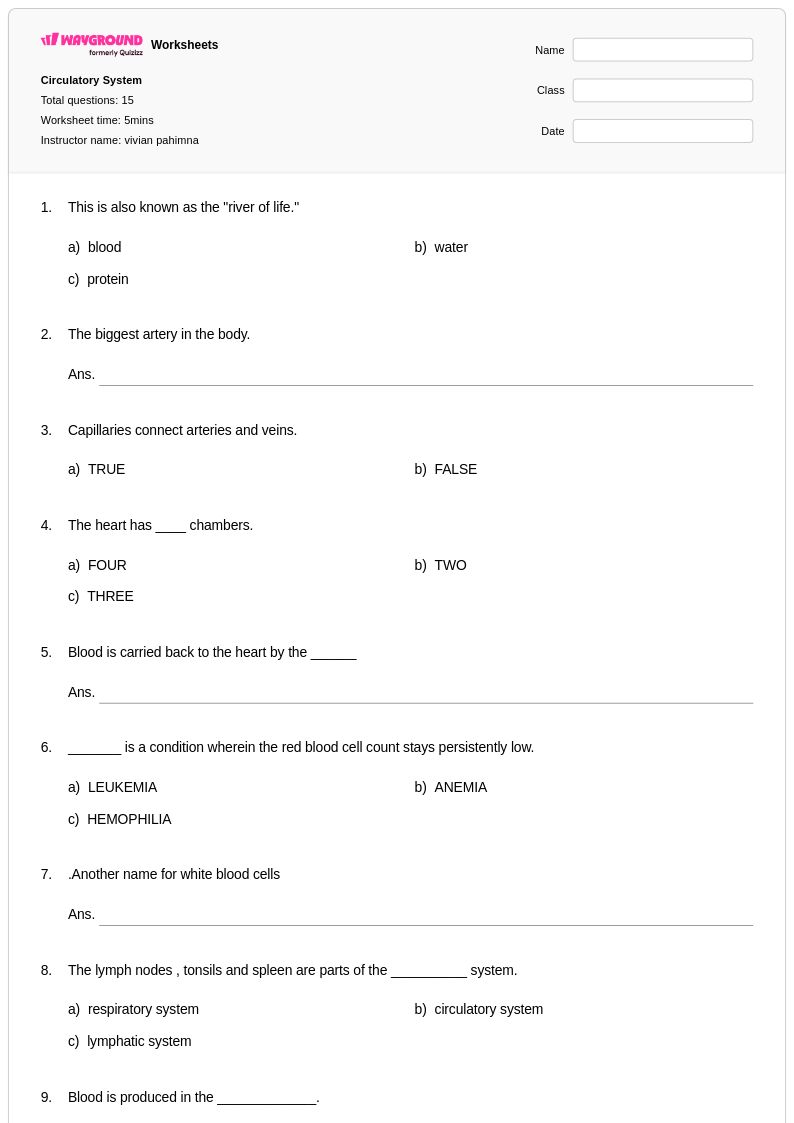
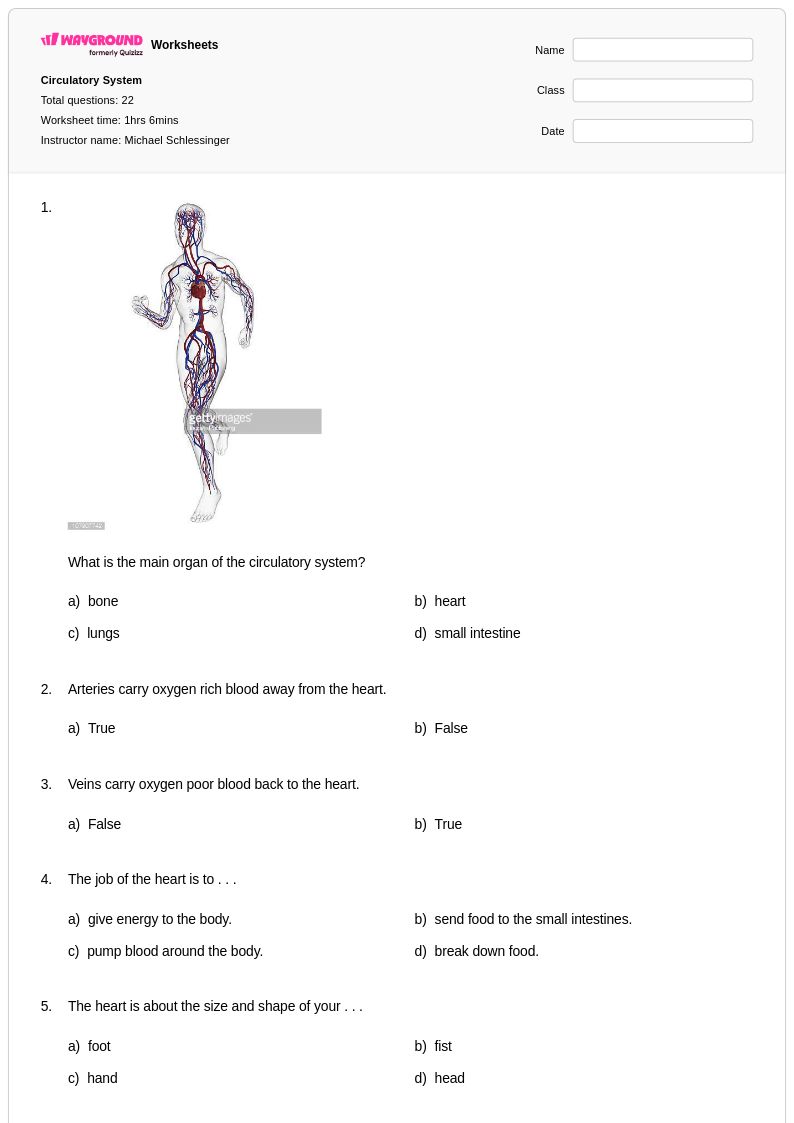
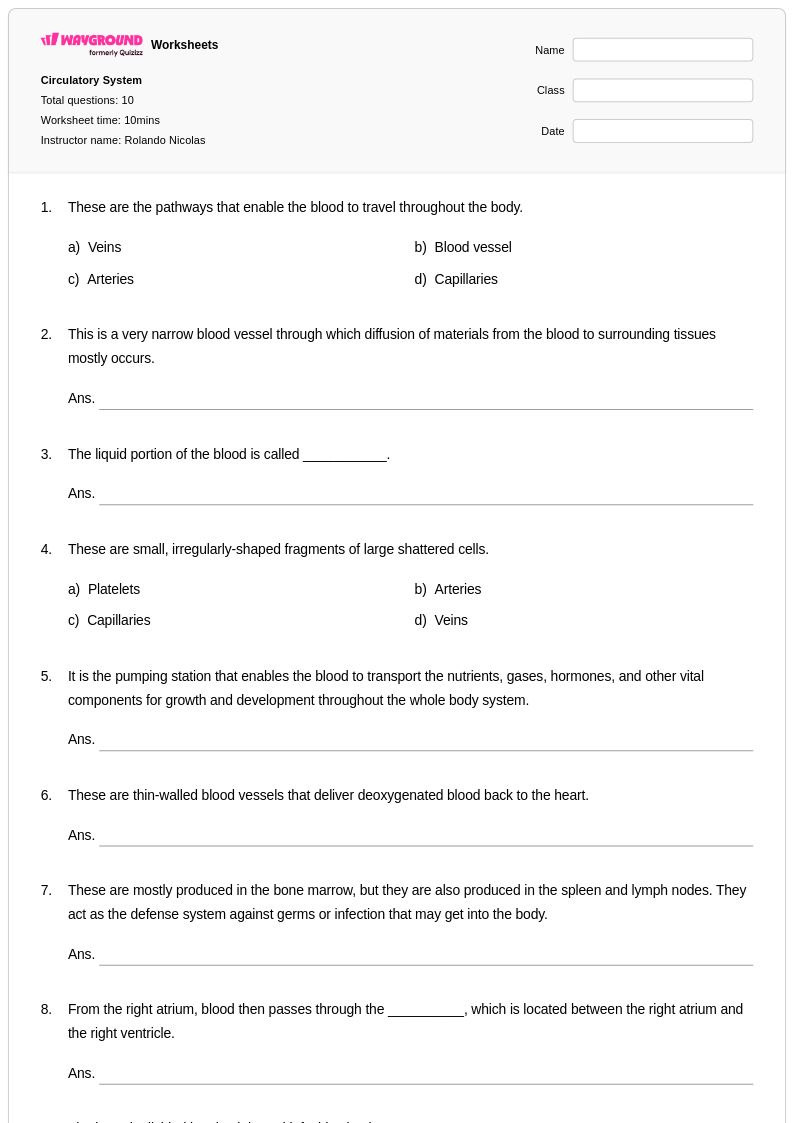
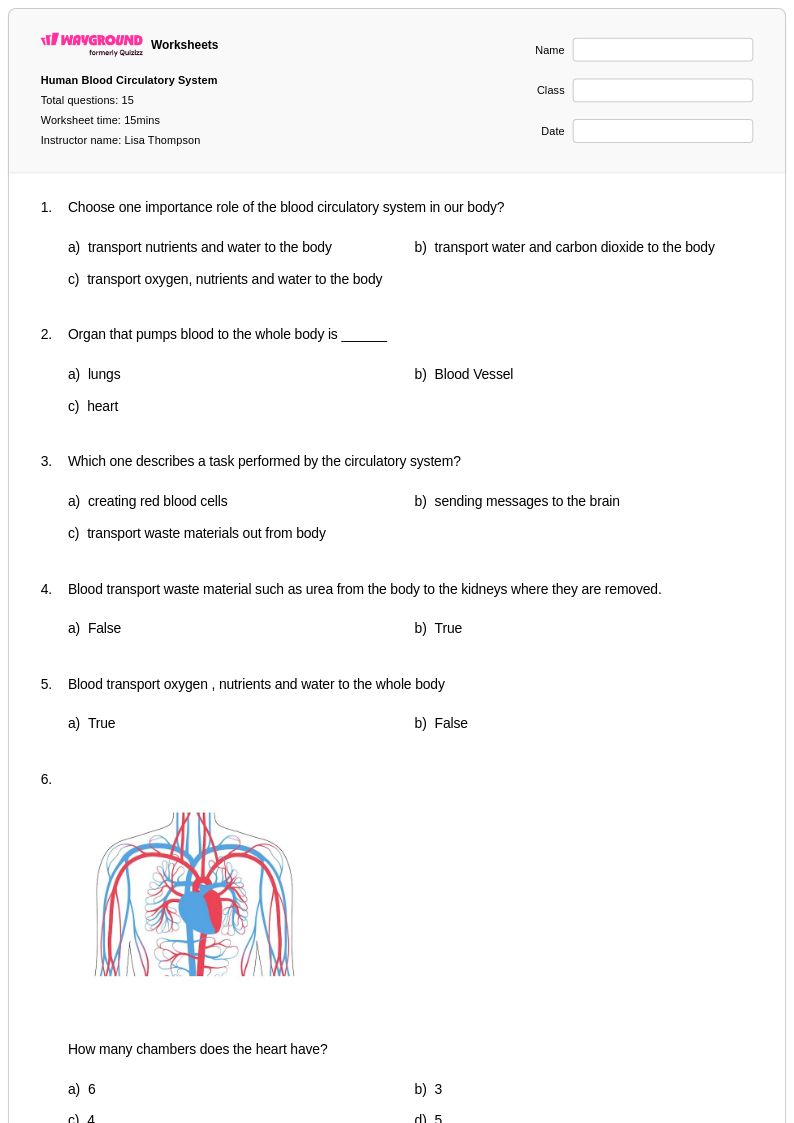
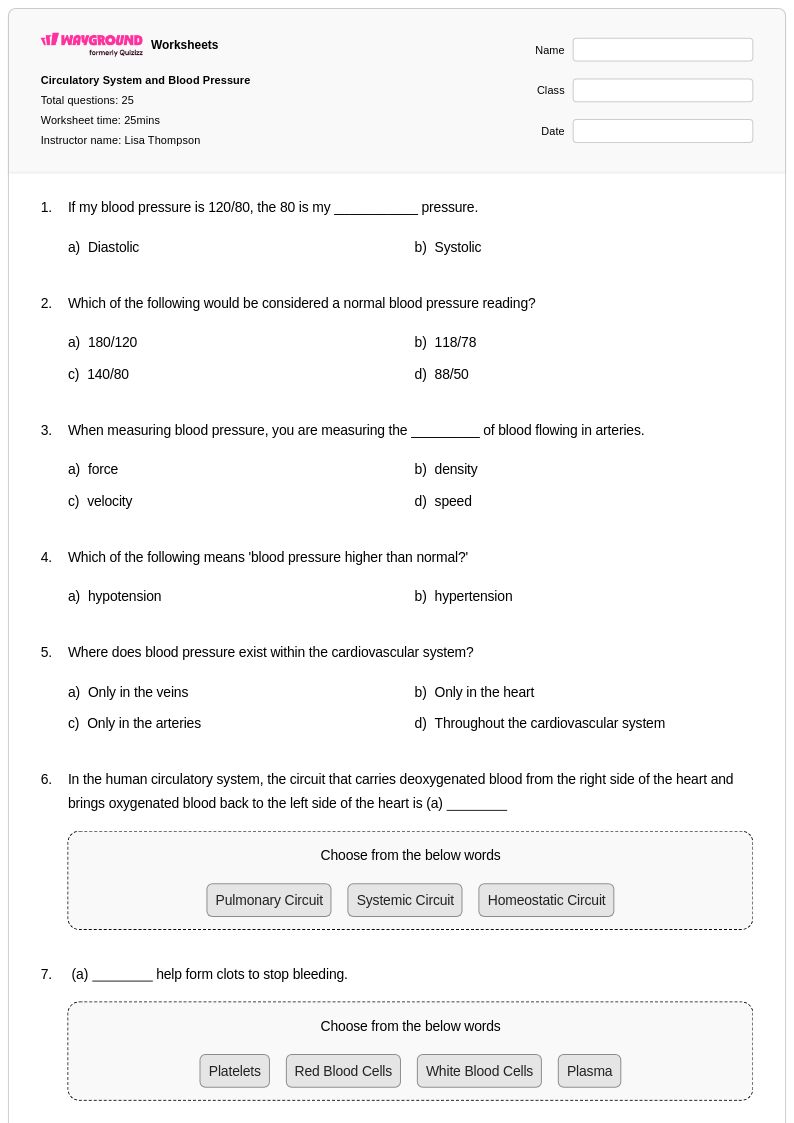
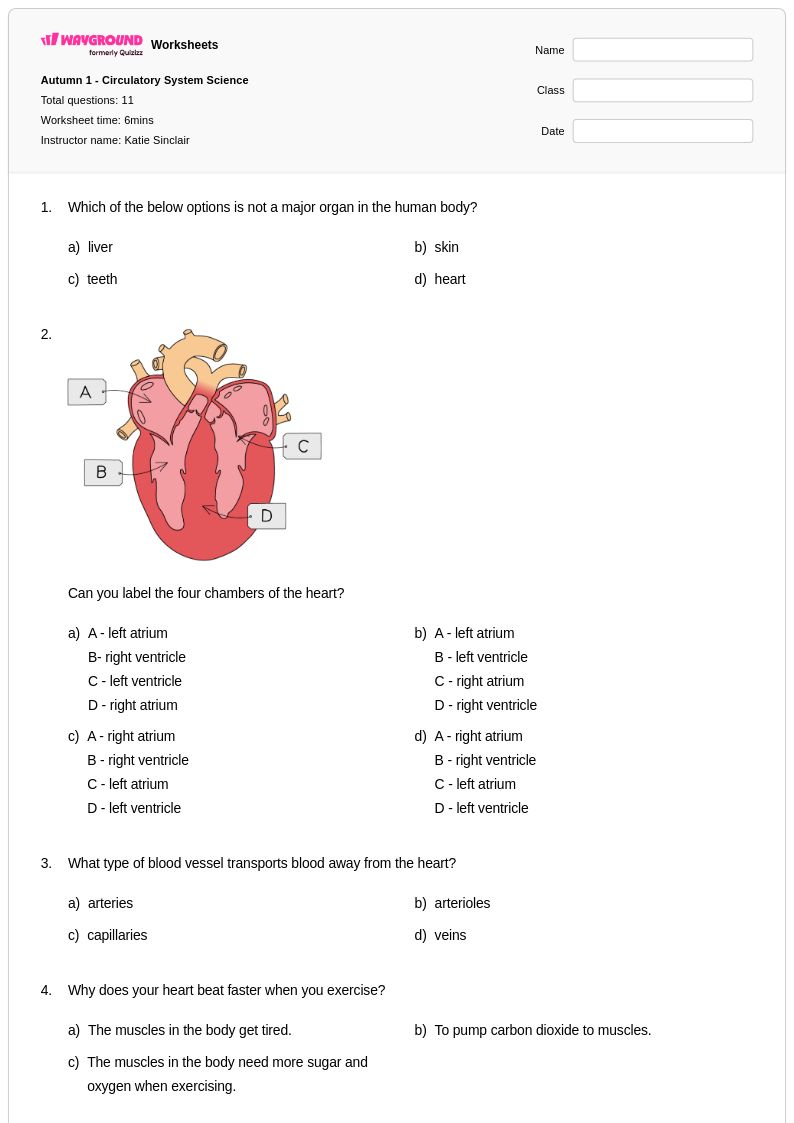
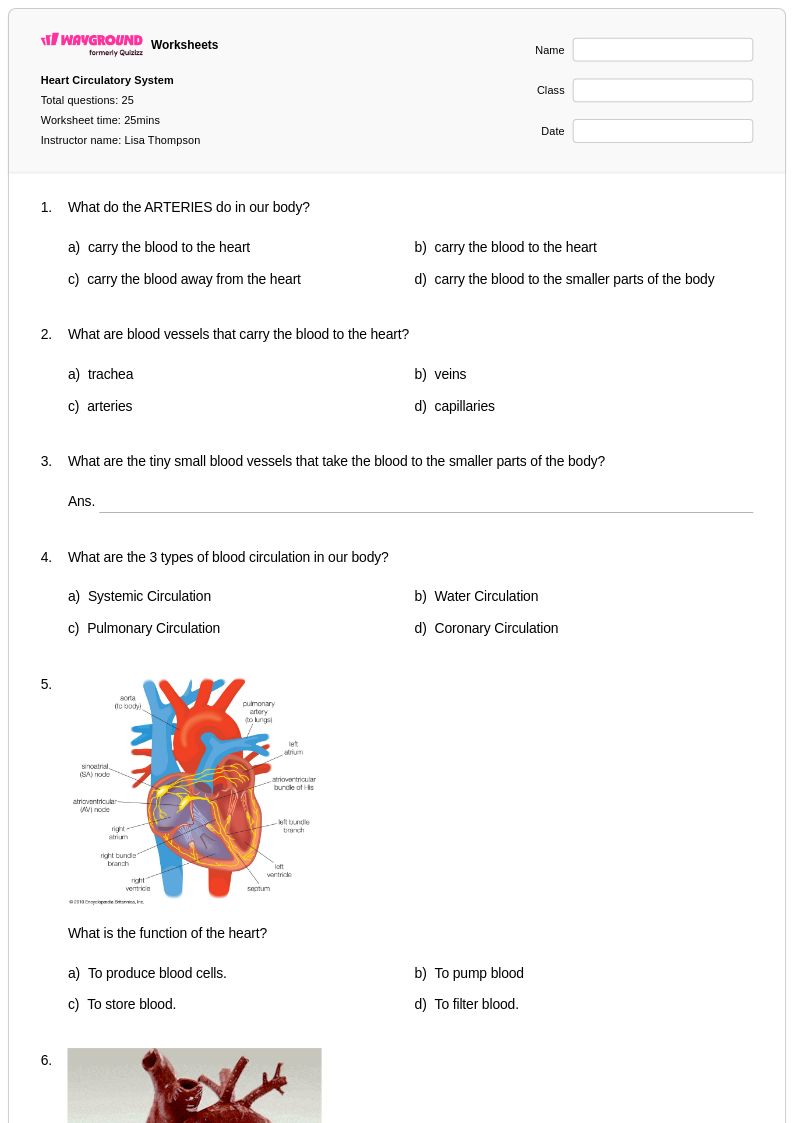
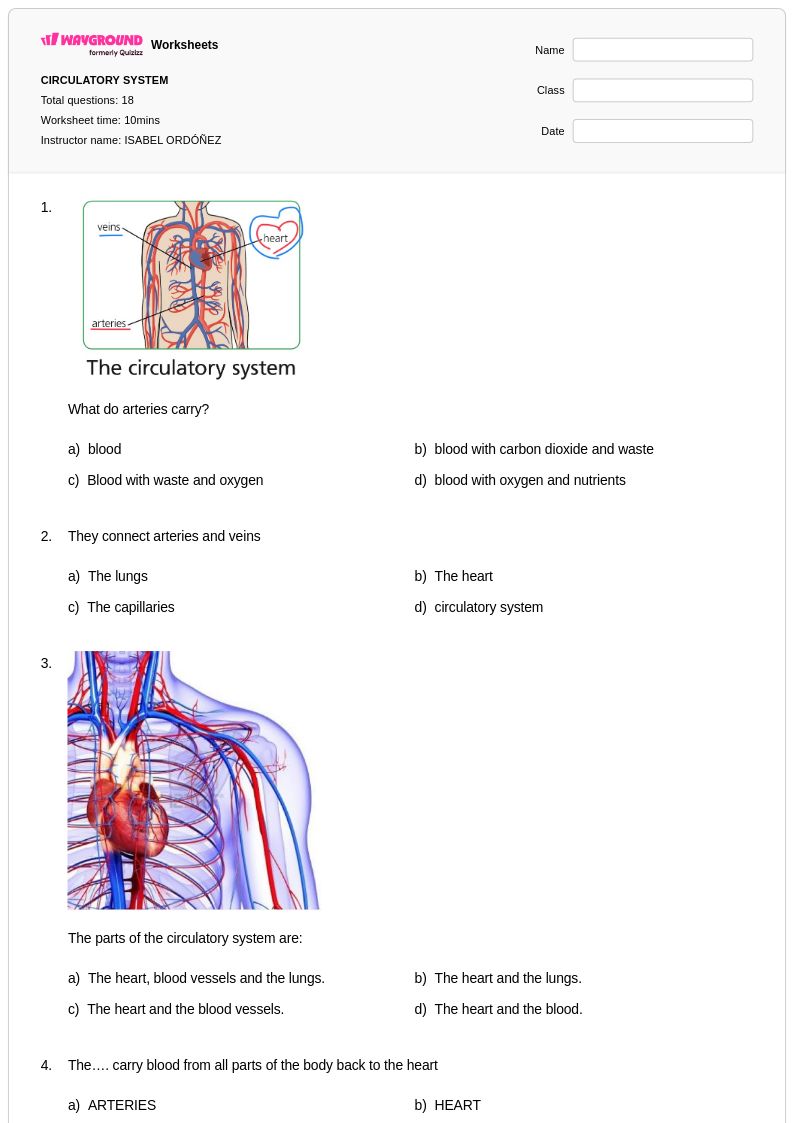
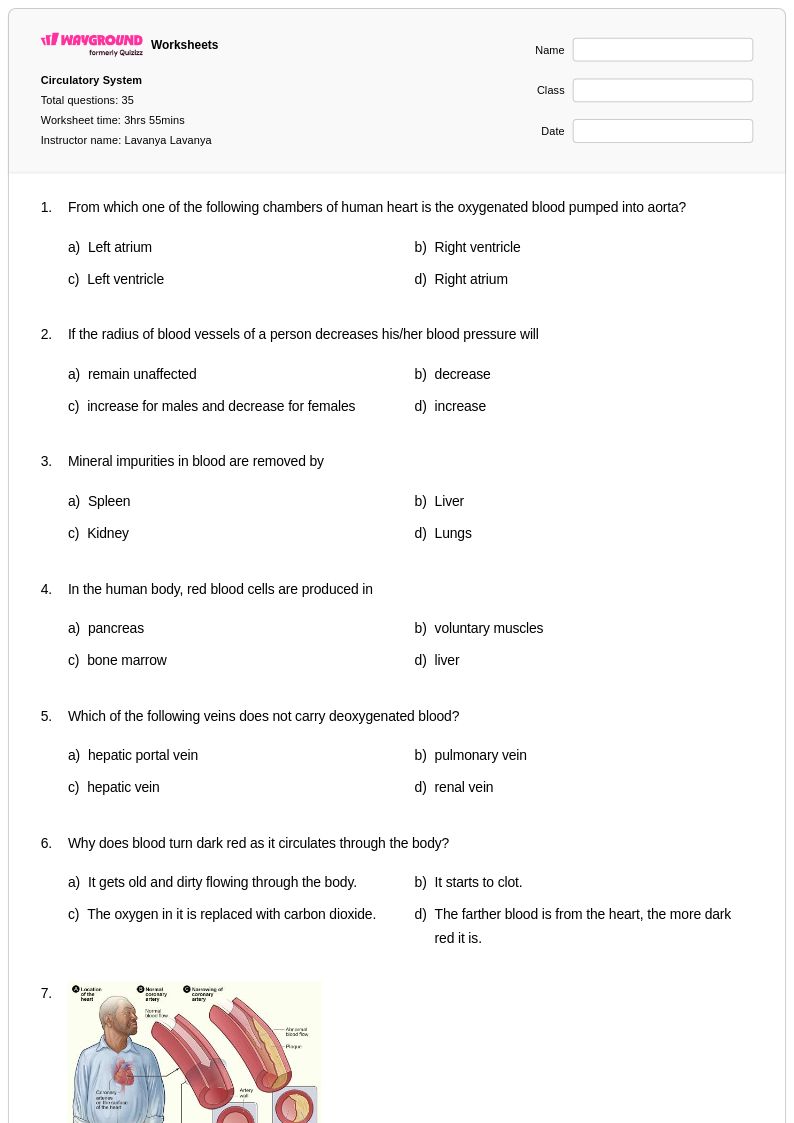
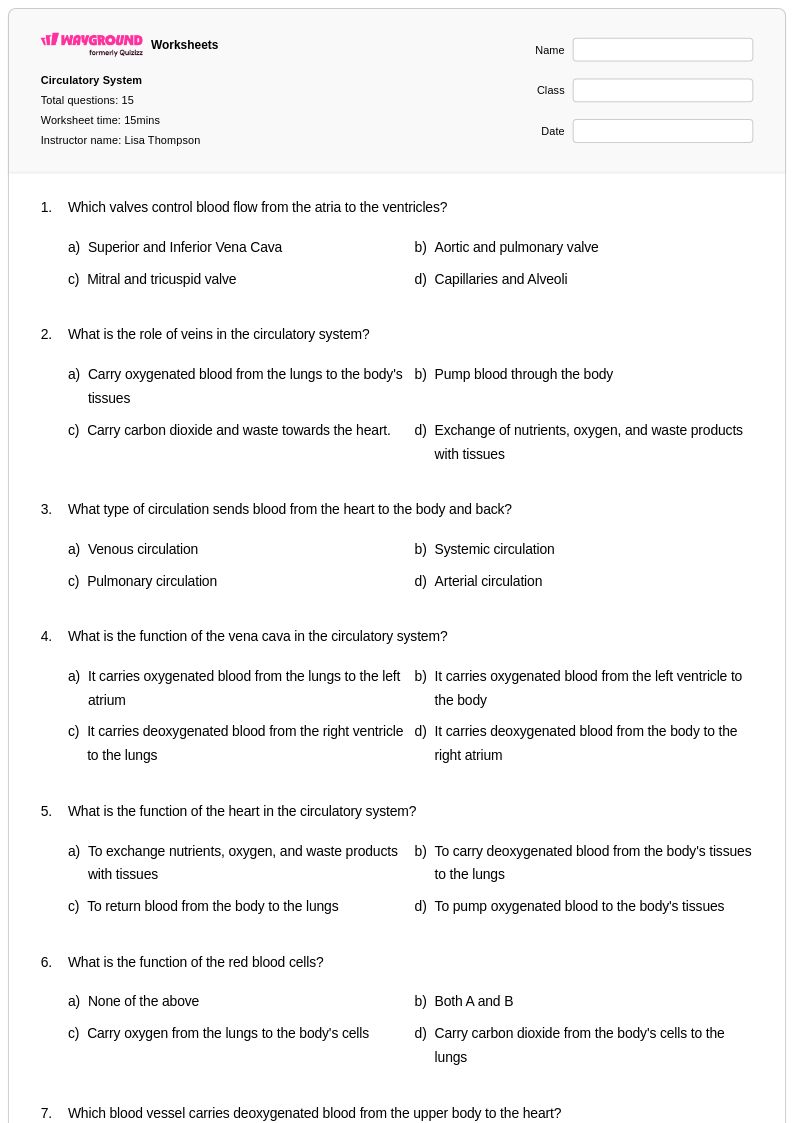
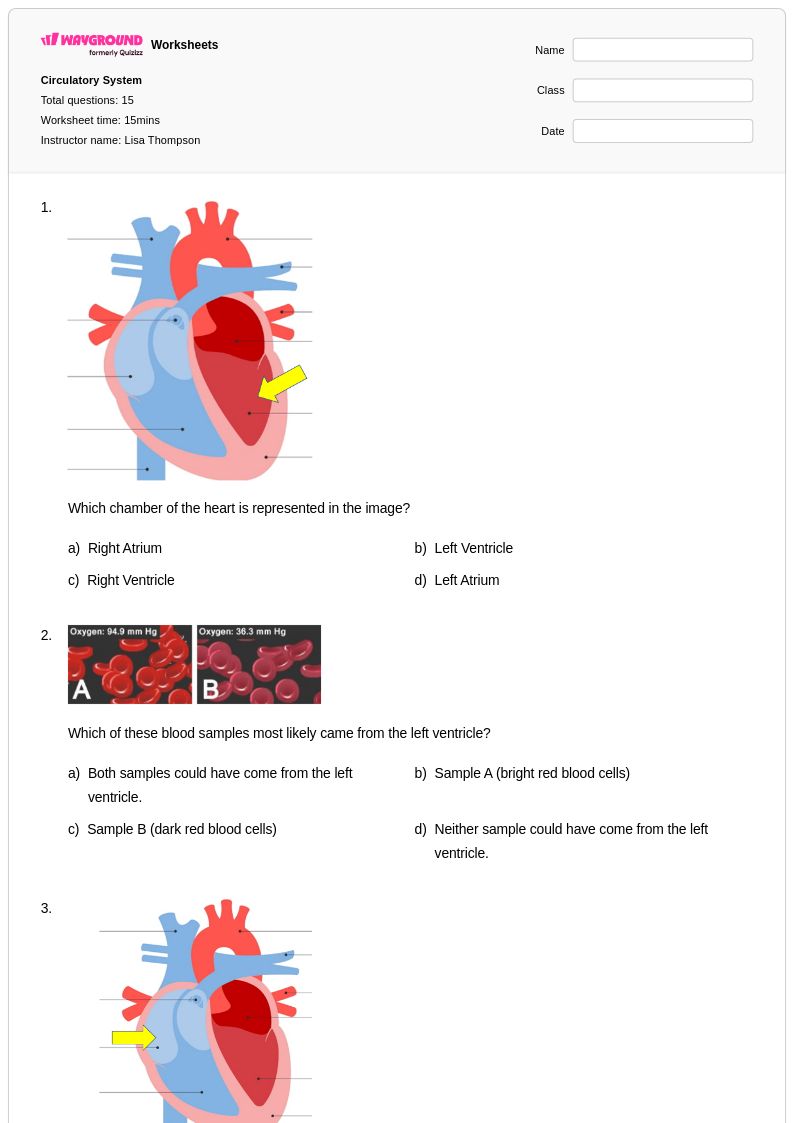
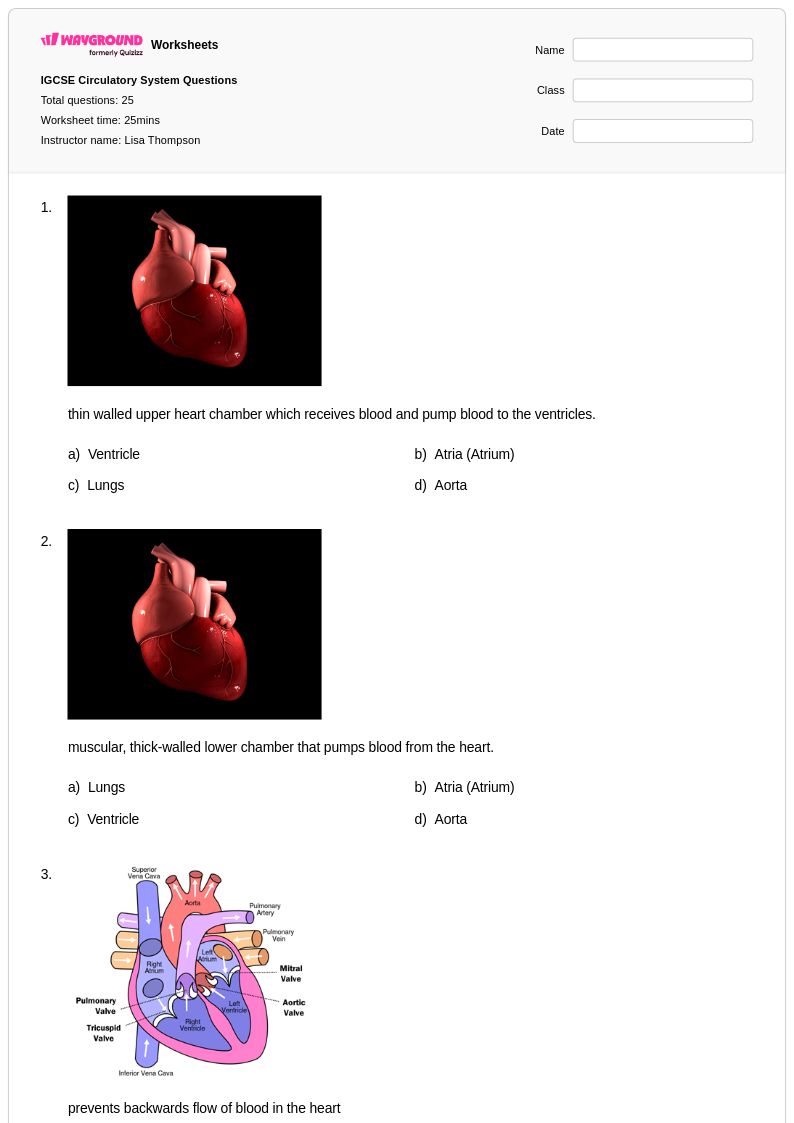
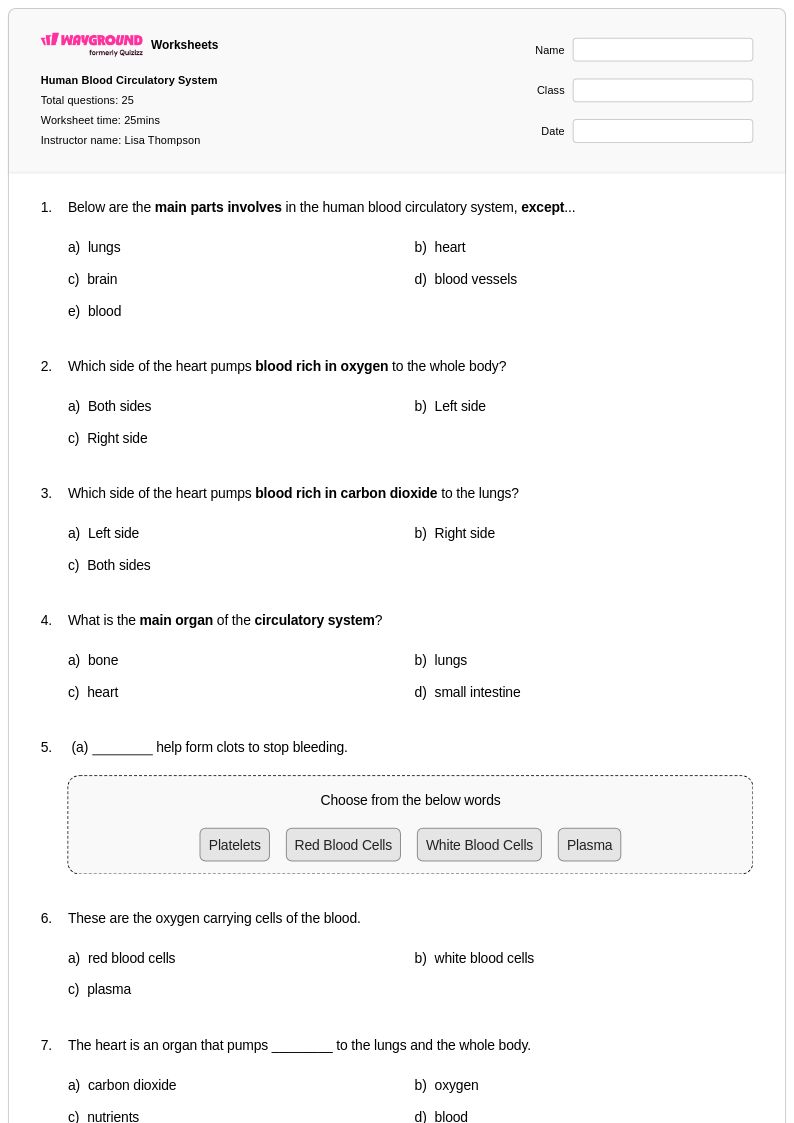
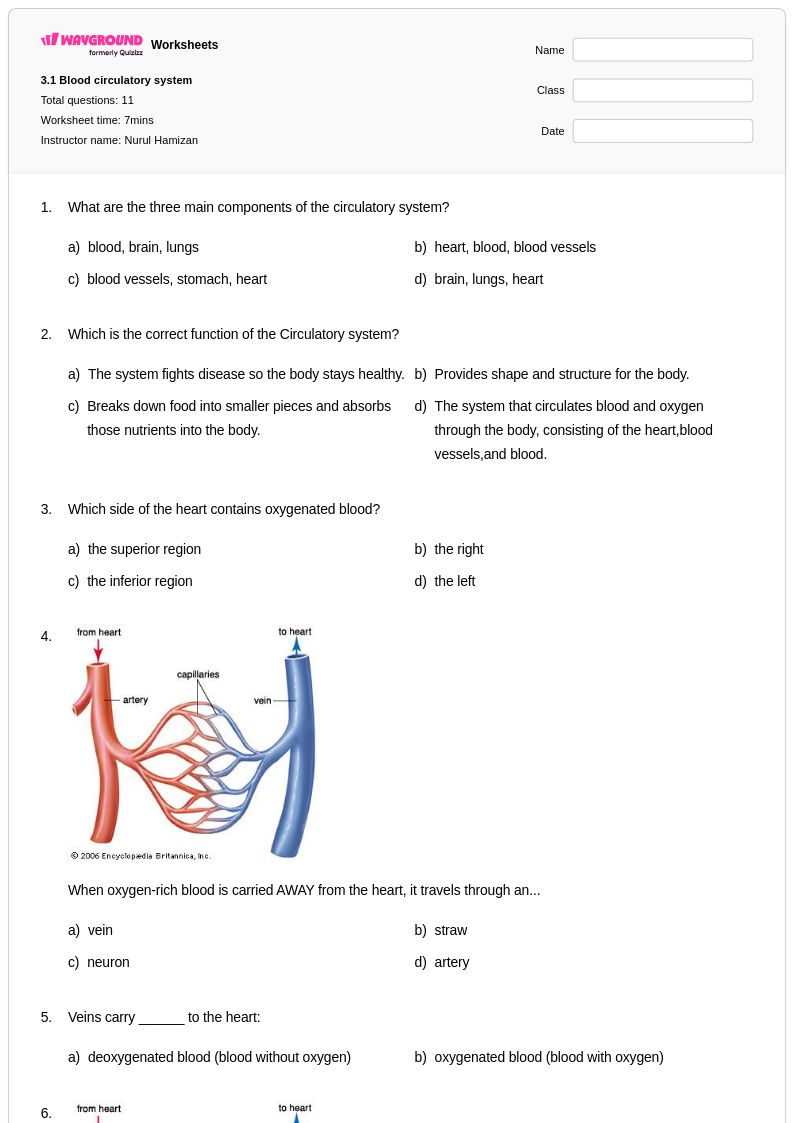
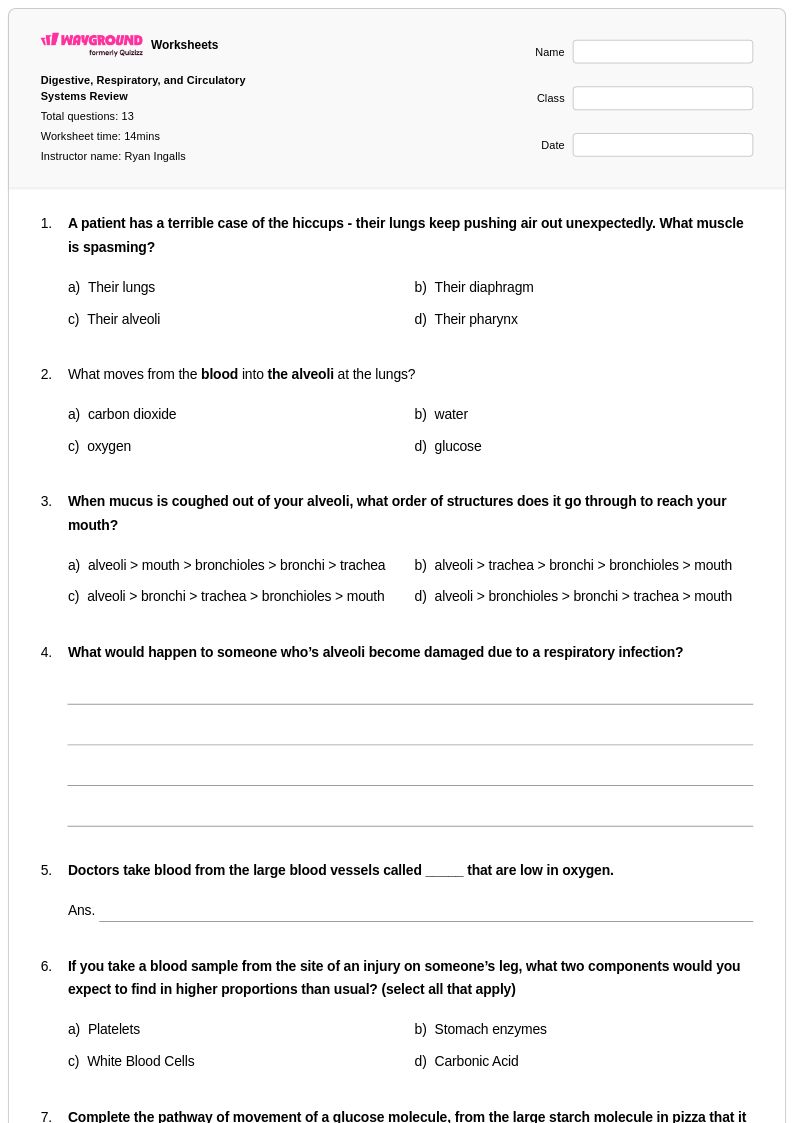
Year 9 circulatory system worksheets available through Wayground (formerly Quizizz) provide comprehensive coverage of cardiovascular anatomy and physiology essential for high school biology students. These educational resources systematically guide students through the structure and function of the heart, blood vessels, and blood components while reinforcing critical concepts such as cardiac cycle mechanics, blood pressure regulation, and circulation pathways. The worksheets strengthen analytical skills through detailed diagram labeling exercises, process sequencing activities, and comparative analysis of systemic versus pulmonary circulation. Students engage with practice problems that challenge their understanding of oxygen transport, nutrient delivery, and waste removal processes, while comprehensive answer keys support independent learning and self-assessment. These free printable resources in pdf format ensure accessibility for diverse classroom environments and study preferences.
Wayground's extensive collection of teacher-created circulatory system worksheets draws from millions of educational resources specifically designed to meet the rigorous demands of Year 9 biology instruction. The platform's advanced search and filtering capabilities enable educators to quickly locate materials aligned with specific learning standards and curriculum requirements, while built-in differentiation tools allow seamless adaptation for students with varying ability levels. Teachers can customize worksheets to emphasize particular aspects of cardiovascular function, from basic heart anatomy to complex hemodynamics, making these resources invaluable for targeted skill practice, remediation of misconceptions, and enrichment activities. The flexibility of both printable and digital pdf formats streamlines lesson planning and supports diverse instructional approaches, whether implementing traditional paper-based assessments or integrating technology-enhanced learning experiences that deepen student comprehension of this fundamental biological system.
FAQs
How do I teach the circulatory system to middle or high school students?
Start by anchoring instruction in the heart's structure before expanding outward to pulmonary and systemic circulation pathways. Use labeled diagrams to walk students through the sequence of blood flow, emphasizing the role of each chamber, valve, and major vessel in maintaining one-way circulation. Connecting structure to function — for example, explaining why the left ventricle has thicker walls than the right — helps students build conceptual understanding rather than just memorizing parts.
What types of exercises help students practice circulatory system concepts?
Labeling diagrams of the heart and major blood vessels is one of the most effective practice formats because it requires students to recall both location and function simultaneously. Tracing blood flow pathways — from the body through the heart to the lungs and back — reinforces sequence and directionality, which are frequent trouble spots. Analytical practice problems involving oxygen transport, blood pressure, and cardiac cycle phases push students beyond identification into applied understanding.
What mistakes do students commonly make when learning about the circulatory system?
The most common misconception is that veins always carry deoxygenated blood and arteries always carry oxygenated blood — students often struggle with the pulmonary circuit, where this rule is reversed. Many students also confuse the two sides of the heart, incorrectly mapping which chambers receive versus pump blood. A third frequent error is treating the cardiac cycle as a single event rather than a coordinated sequence of systole and diastole across all four chambers.
How do I help students who struggle to trace blood flow through the heart?
Break the circulation route into two distinct loops — pulmonary and systemic — and teach each separately before combining them. Color-coding oxygenated versus deoxygenated blood on diagrams is particularly effective for visual learners. Having students physically sequence labeled cards representing heart chambers, vessels, and organs can also reinforce the correct order before they attempt written or diagram-based tasks.
How can I use Wayground's circulatory system worksheets in my classroom?
Wayground's circulatory system worksheets are available as printable PDFs for traditional classroom use and in digital formats for technology-integrated or hybrid learning environments, and can also be hosted as a quiz directly on Wayground. All worksheets include complete answer keys, making them practical for independent practice, homework, or formative assessment without additional preparation. Teachers can adjust worksheet complexity and content focus to support remediation or enrichment, and individual student accommodations such as read aloud, extended time, and reduced answer choices can be applied directly through the platform.
How do I differentiate circulatory system instruction for students at different levels?
For students who need support, reduce the complexity of diagrams and focus on the four chambers and the basic pulmonary-systemic distinction before introducing valves and vessel names. For advanced students, extend into cardiac output calculations, blood pressure regulation mechanisms, or the relationship between cardiovascular disease and structural changes in the heart. On Wayground, teachers can modify worksheet complexity and apply individual accommodations — such as read aloud or reduced answer choices — so that each student works at an appropriate level without singling anyone out.