Free Printable Counting Atoms in Chemical Formulas Worksheets for Year 9
Free Year 9 counting atoms in chemical formulas worksheets and printables help students master identifying and calculating the number of atoms in molecular compounds through engaging practice problems with complete answer keys.
Explore printable Counting Atoms in Chemical Formulas worksheets for Year 9
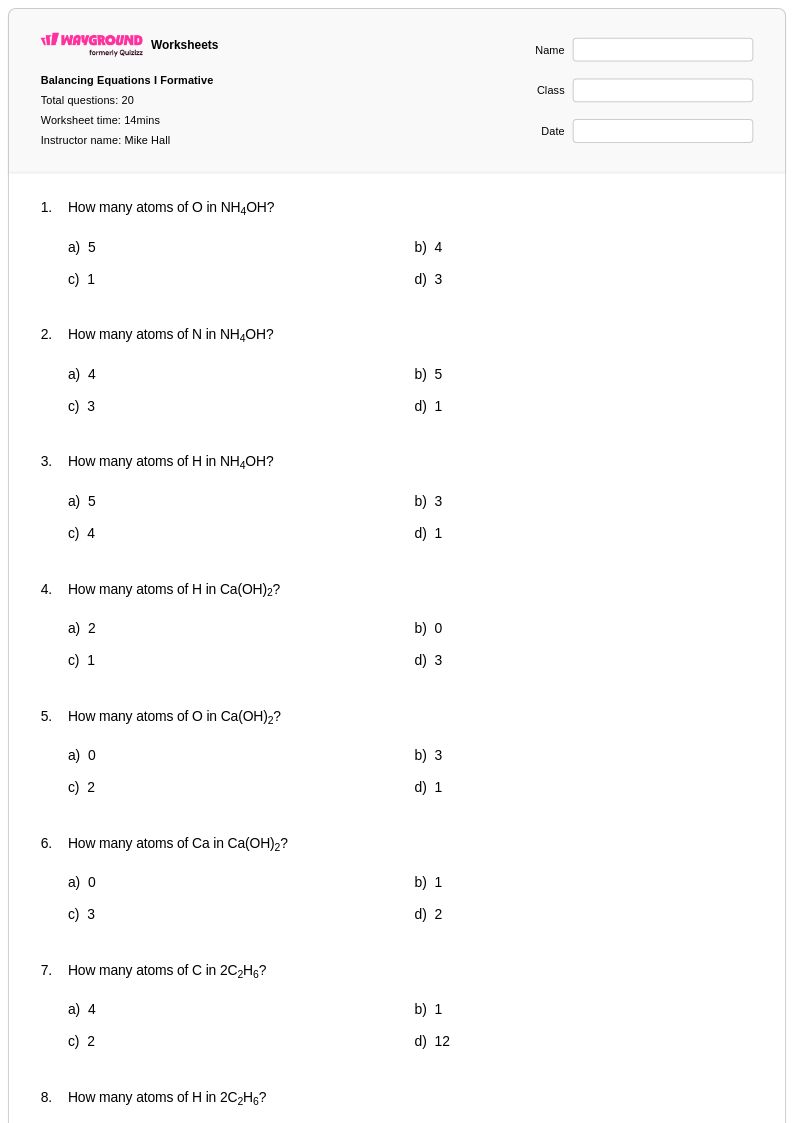
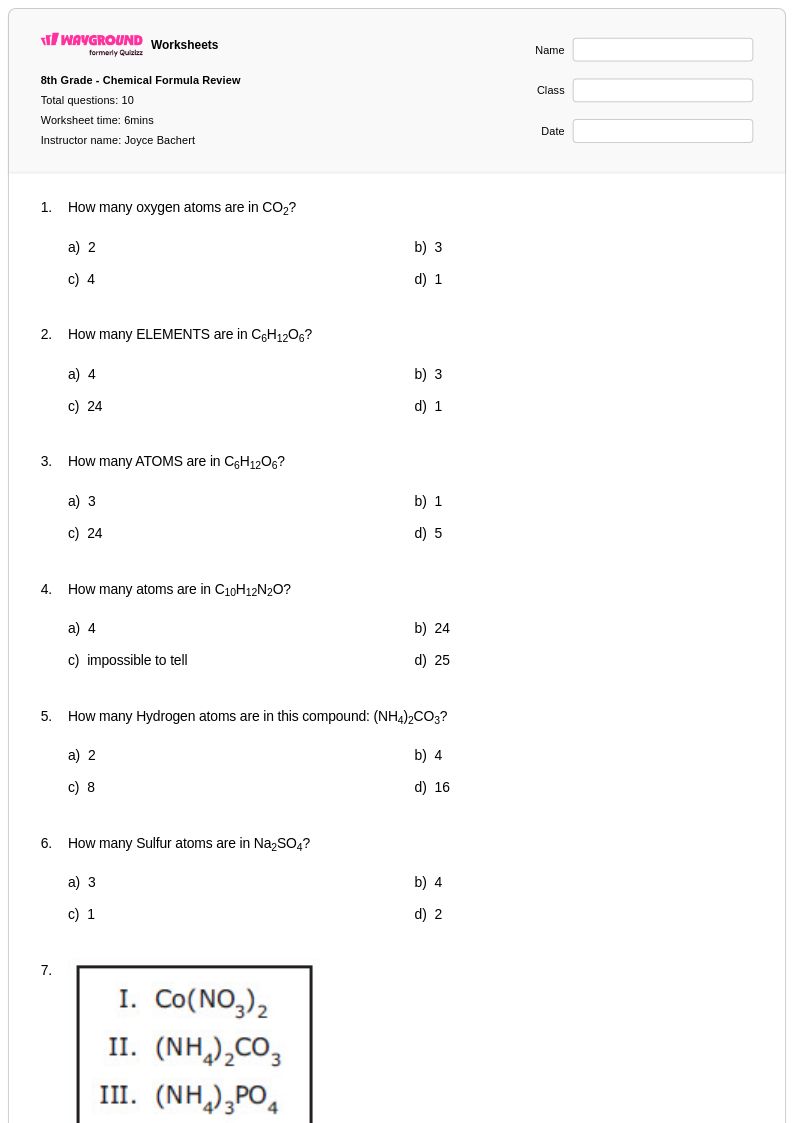
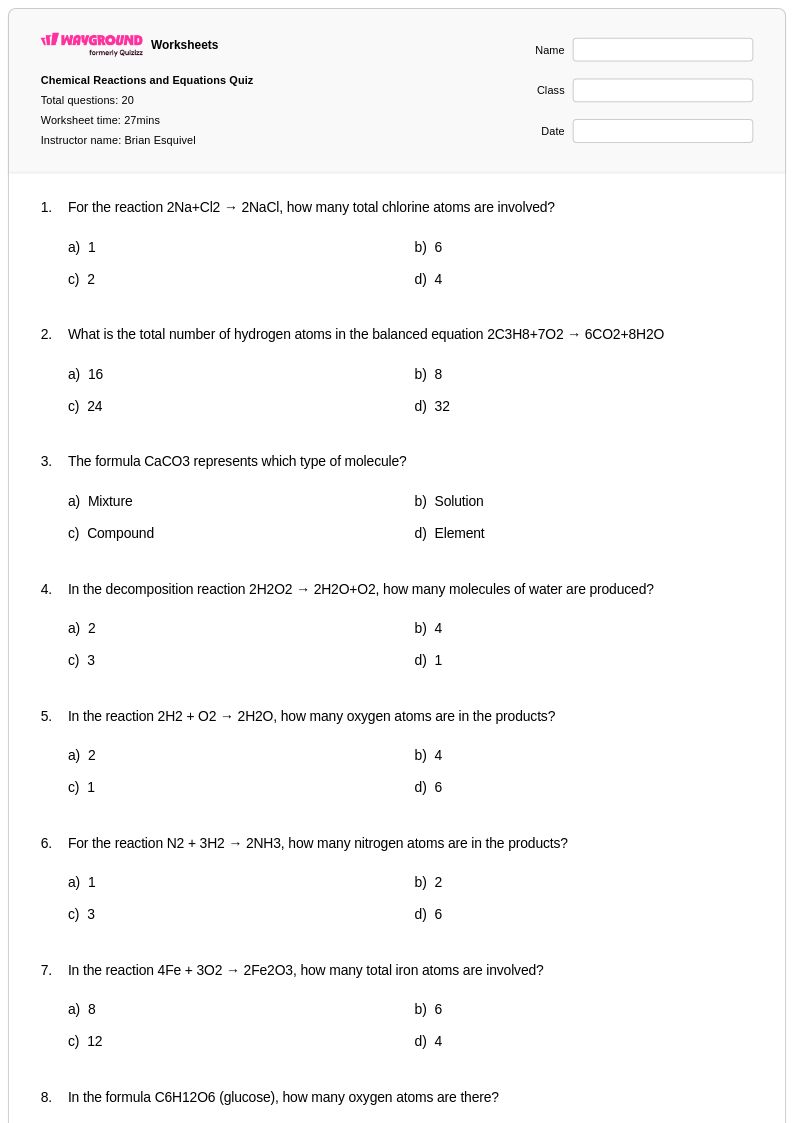
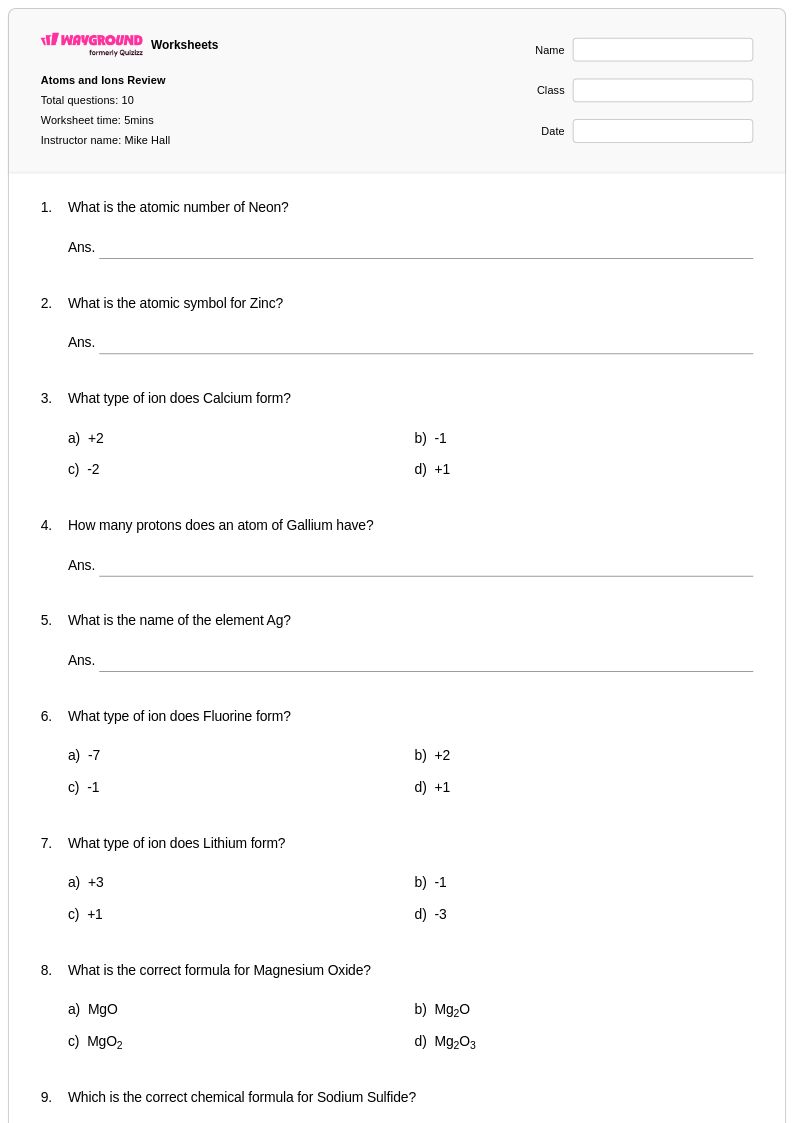
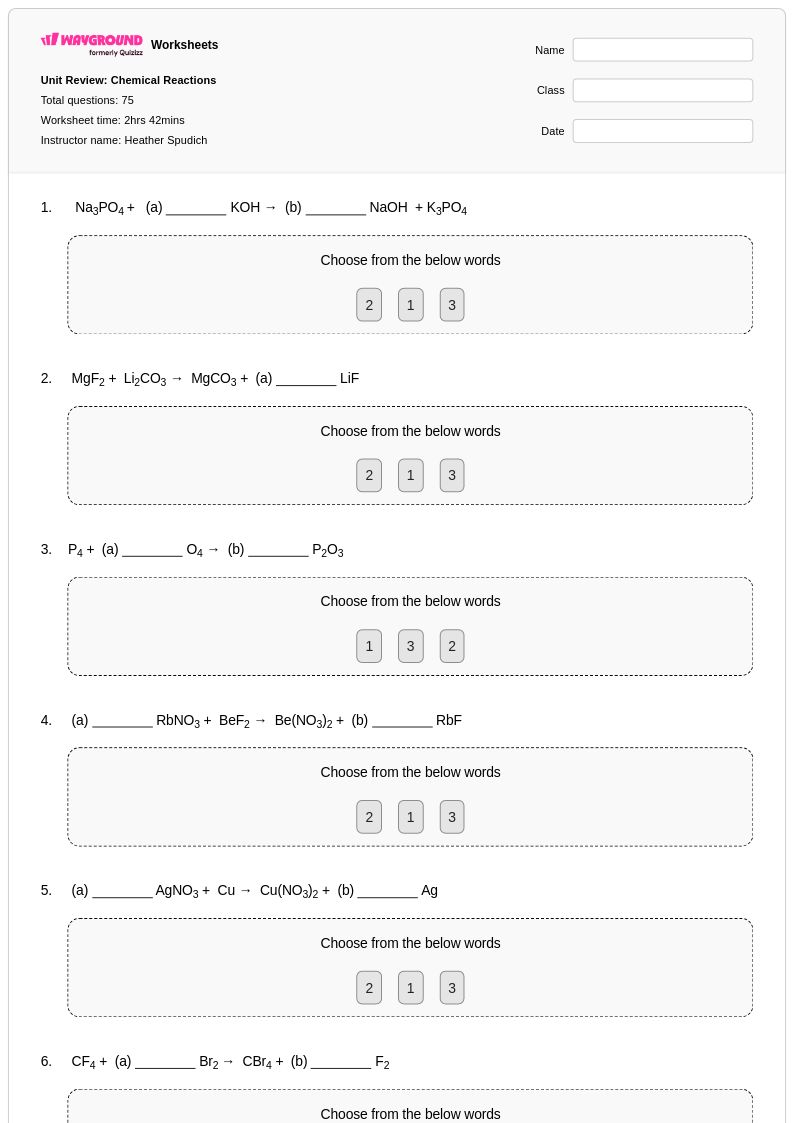
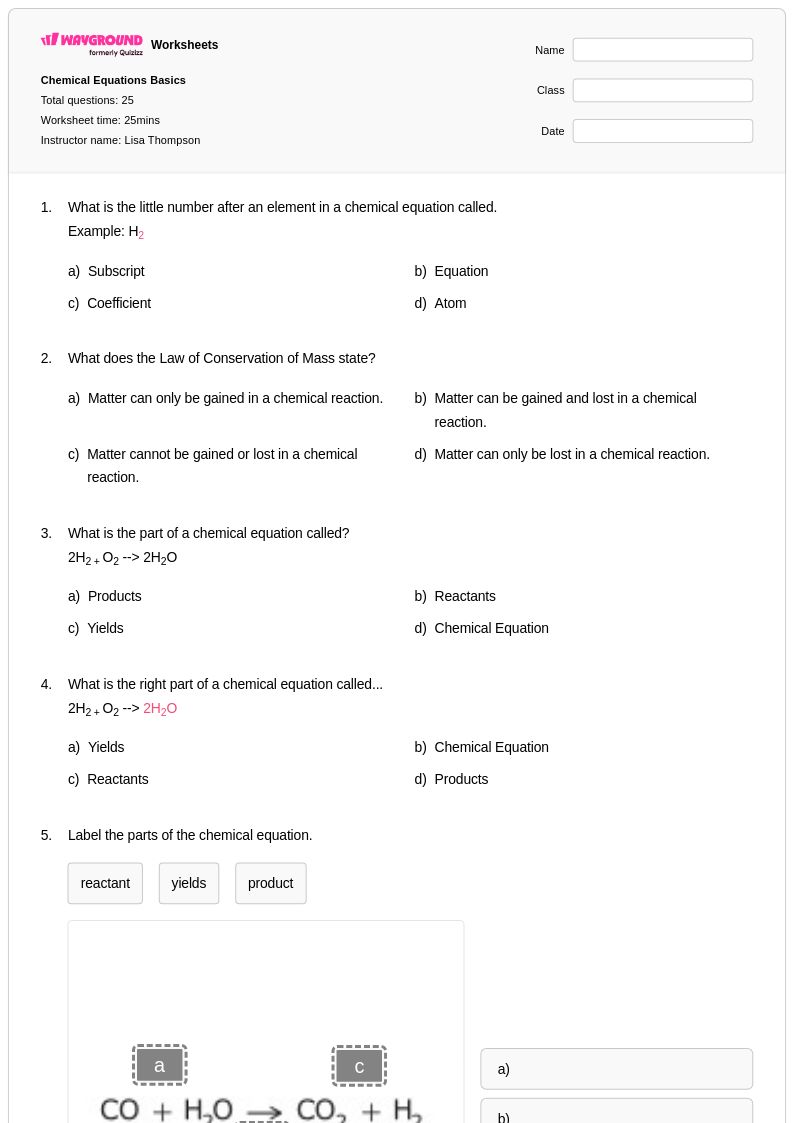
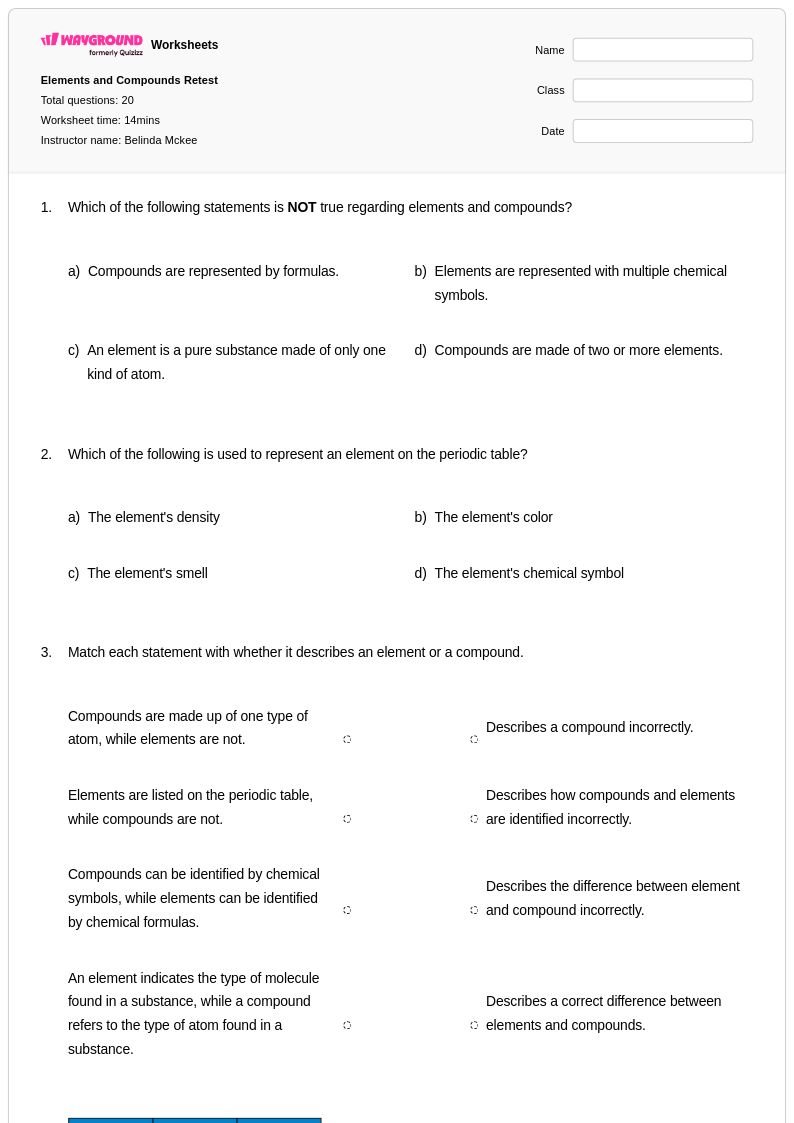
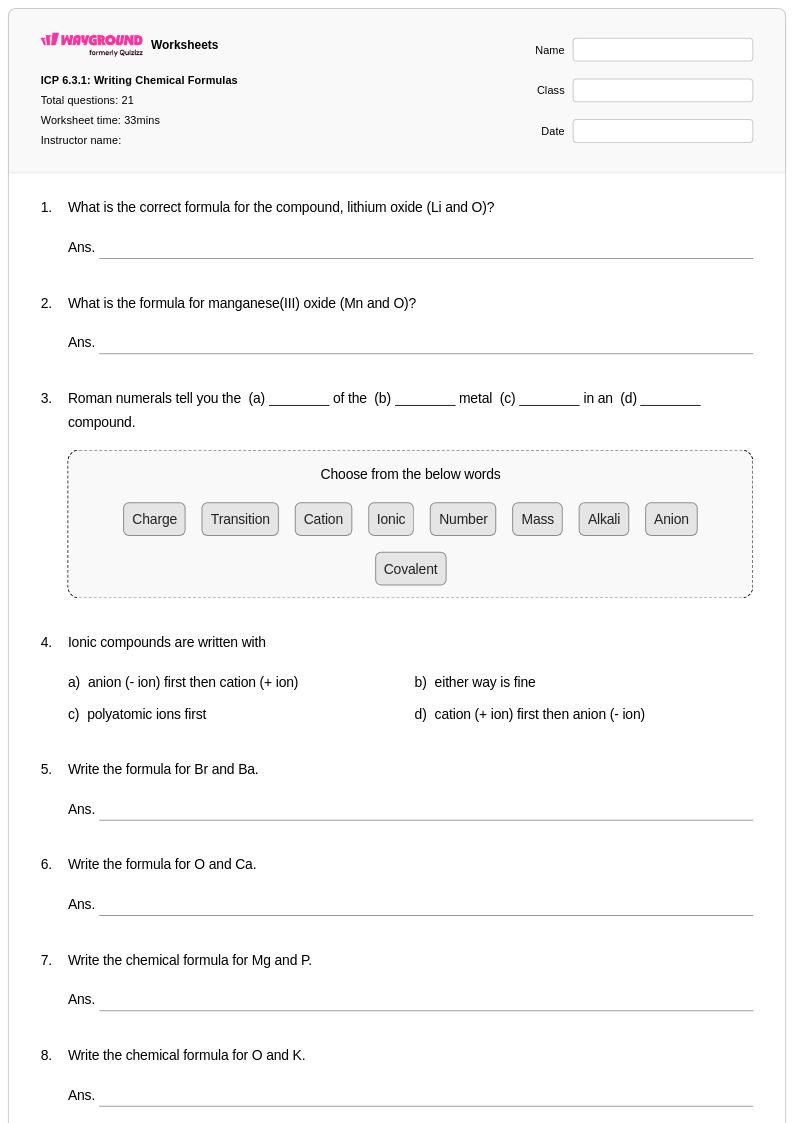
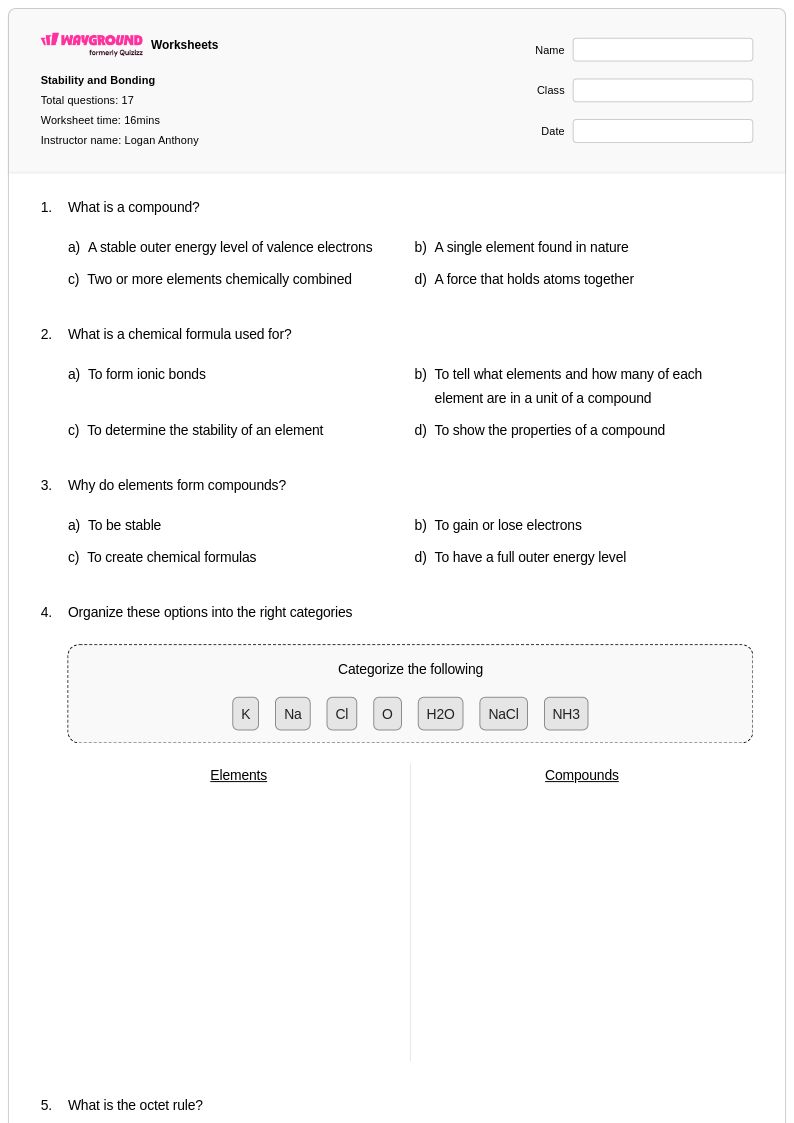
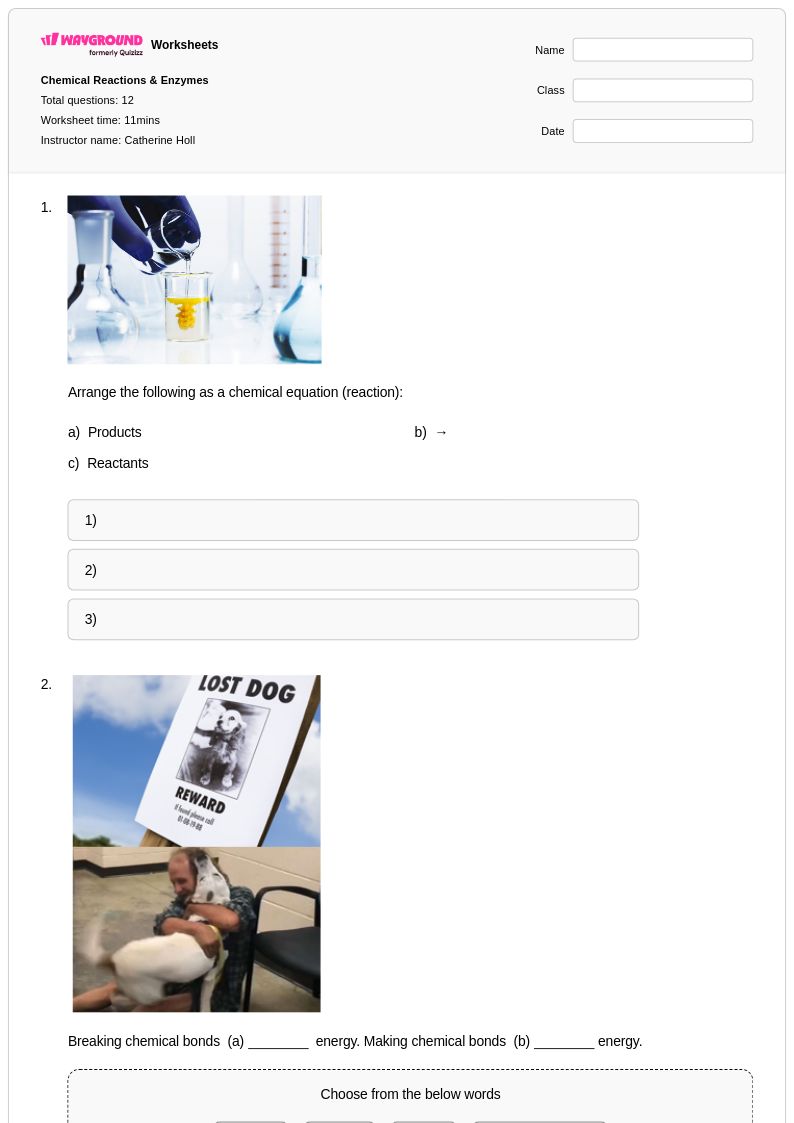
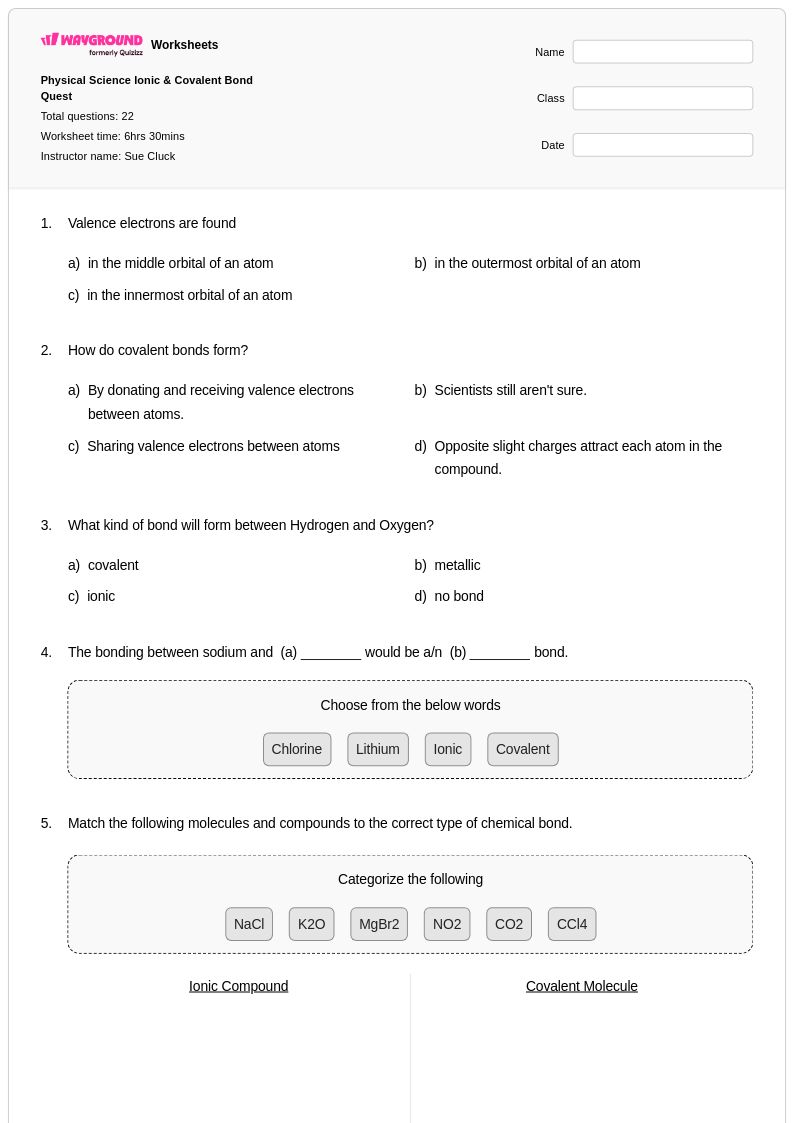
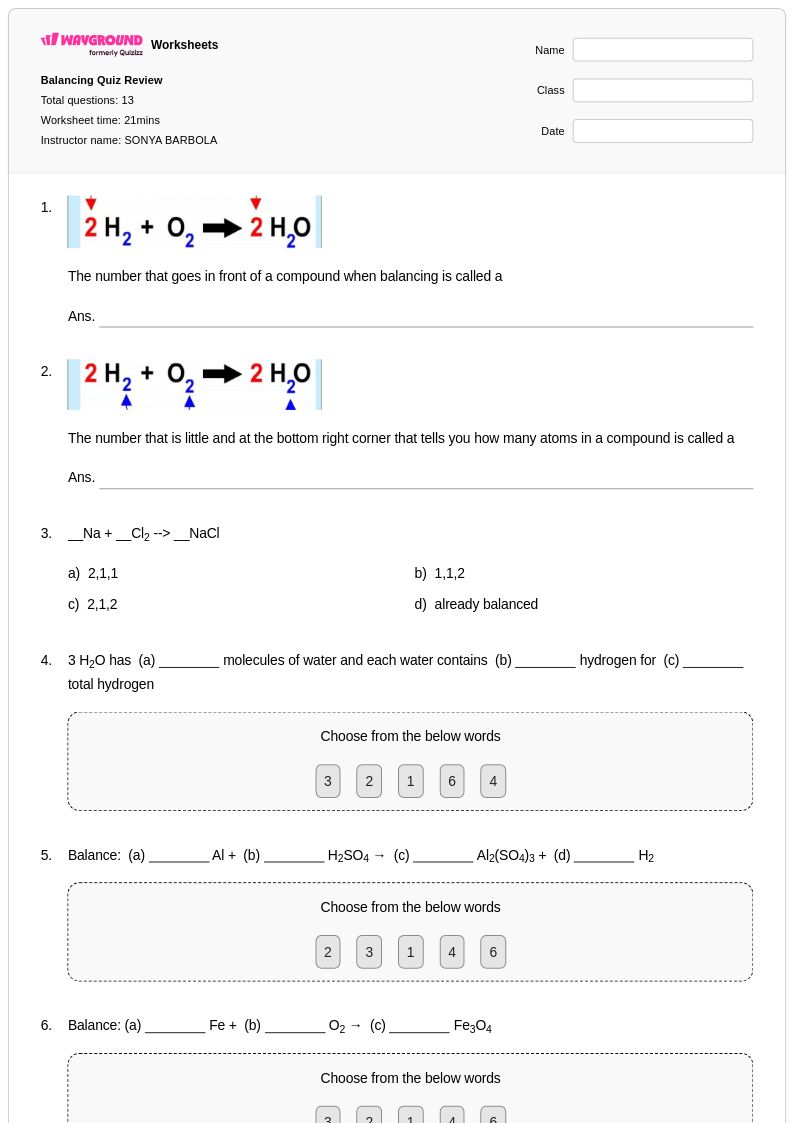
Counting atoms in chemical formulas represents a fundamental skill that Year 9 chemistry students must master to understand molecular composition and stoichiometry. Wayground's comprehensive collection of worksheets focuses specifically on developing students' ability to accurately count atoms of each element within various chemical compounds, from simple binary compounds to complex polyatomic molecules. These carefully designed practice problems strengthen essential skills including identifying subscripts, understanding parentheses in formulas, and calculating total atomic quantities across different molecular structures. Students work through progressively challenging examples that build confidence in analyzing chemical formulas, with each worksheet providing structured practice opportunities alongside complete answer keys. The printable pdf format ensures easy classroom distribution, while free access removes barriers to consistent skill reinforcement both in class and at home.
Wayground's extensive library draws from millions of teacher-created resources, offering educators an unparalleled selection of counting atoms worksheets specifically tailored for Year 9 chemistry instruction. The platform's robust search and filtering capabilities enable teachers to quickly locate materials that align with specific curriculum standards and match their students' current skill levels. Advanced differentiation tools allow educators to customize worksheet difficulty, providing remediation support for struggling learners while offering enrichment opportunities for advanced students. Whether delivered in traditional printable format or through interactive digital assignments, these resources support comprehensive lesson planning and targeted skill practice. Teachers can seamlessly integrate these materials into their existing curriculum, using them for initial instruction, homework assignments, test preparation, or intervention activities that address individual student needs in chemical formula interpretation.
FAQs
How do I teach students to count atoms in chemical formulas?
Start by teaching students to read subscripts and coefficients separately before combining them. A subscript applies only to the element immediately before it, while a coefficient multiplies every atom in the formula. Once students can handle simple binary compounds like H2O and NaCl confidently, introduce parentheses in polyatomic ions so they understand that the subscript outside the parentheses multiplies every atom inside. Scaffolding from one-element formulas to multi-element ionic compounds with parentheses is the most effective instructional sequence.
What exercises help students practice counting atoms in chemical formulas?
The most effective practice exercises progress from simple binary compounds to formulas containing parentheses and polyatomic ions. Structured worksheets that ask students to create an atom inventory table — listing each element and its total count — build the habit of systematic analysis rather than guessing. Timed drills on common compounds reinforce fluency, while mixed-difficulty problem sets help students consolidate the rules for coefficients, subscripts, and parentheses into a single reliable process.
What mistakes do students commonly make when counting atoms in chemical formulas?
The most common error is failing to distribute a coefficient across all atoms in a formula — students often multiply only the first element listed. A second frequent mistake is misreading subscripts inside parentheses: for example, in Ca(NO3)2, many students count only one nitrogen and three oxygens rather than one nitrogen and six oxygens. Students also occasionally count the subscript as an atom count on its own without checking whether a coefficient is present. Targeted practice with parenthetical formulas directly addresses these three misconceptions.
How do I use Wayground's counting atoms worksheets in my classroom?
Wayground's counting atoms in chemical formulas worksheets are available as printable PDFs for traditional classroom use and in digital formats for technology-integrated or remote learning environments. Teachers can also host them as a quiz directly on Wayground, which allows for structured assessment without paper. Each worksheet includes a complete answer key, so they work equally well for guided practice, independent work, or homework review. The digital format also supports student-level accommodations such as read aloud, extended time, and reduced answer choices for students who need additional support.
How does counting atoms in chemical formulas connect to other chemistry skills?
Counting atoms is a gateway skill that directly supports molar mass calculations, percent composition, and stoichiometry. A student who cannot accurately determine the number of each type of atom in a formula will struggle to calculate molecular weight or set up a balanced equation correctly. Building fluency with atom counting early in a chemistry course reduces the cognitive load when more complex quantitative topics are introduced later.
How can I differentiate counting atoms practice for students at different skill levels?
For foundational learners, begin with simple formulas containing two elements and no parentheses, and provide an atom inventory table as a graphic organizer. Intermediate students can work through formulas with polyatomic ions and parentheses. Advanced students benefit from multi-compound problems that require them to count atoms across several reactants or products simultaneously. On Wayground, teachers can apply individual accommodations such as reduced answer choices or read aloud to specific students, while the rest of the class works through the standard version without disruption.