Free Printable Dipole Moments Worksheets for Year 10
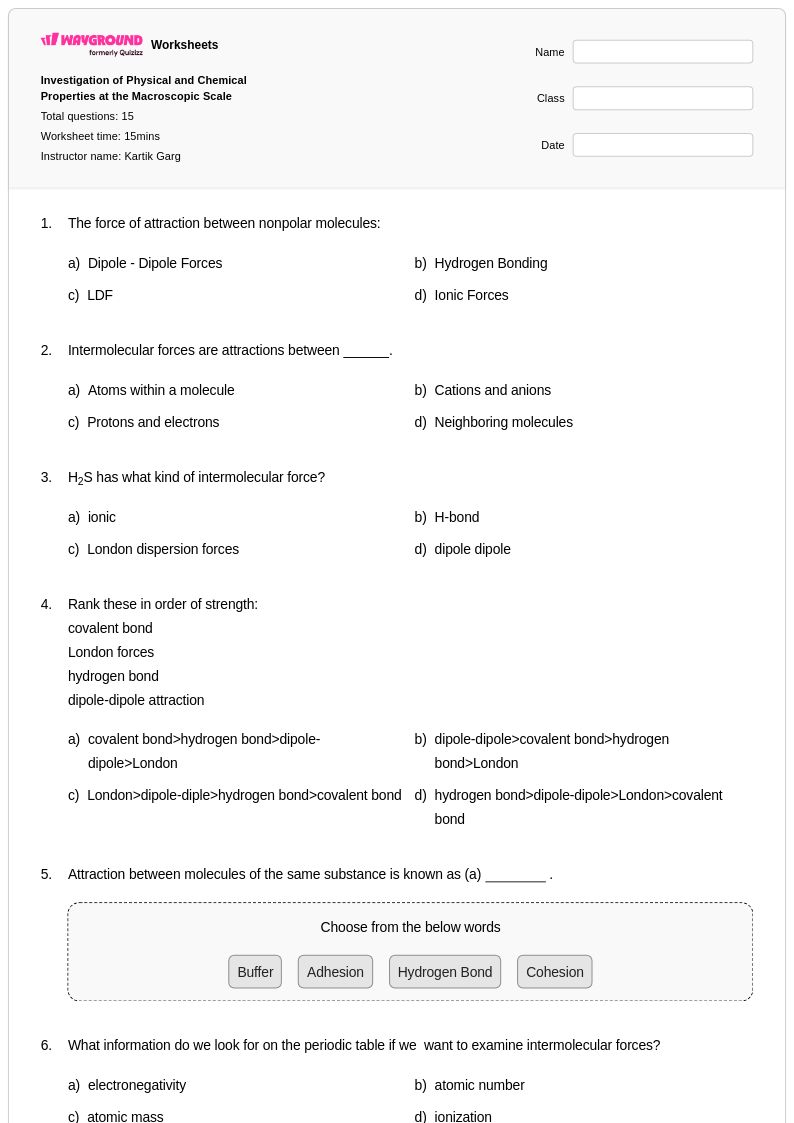
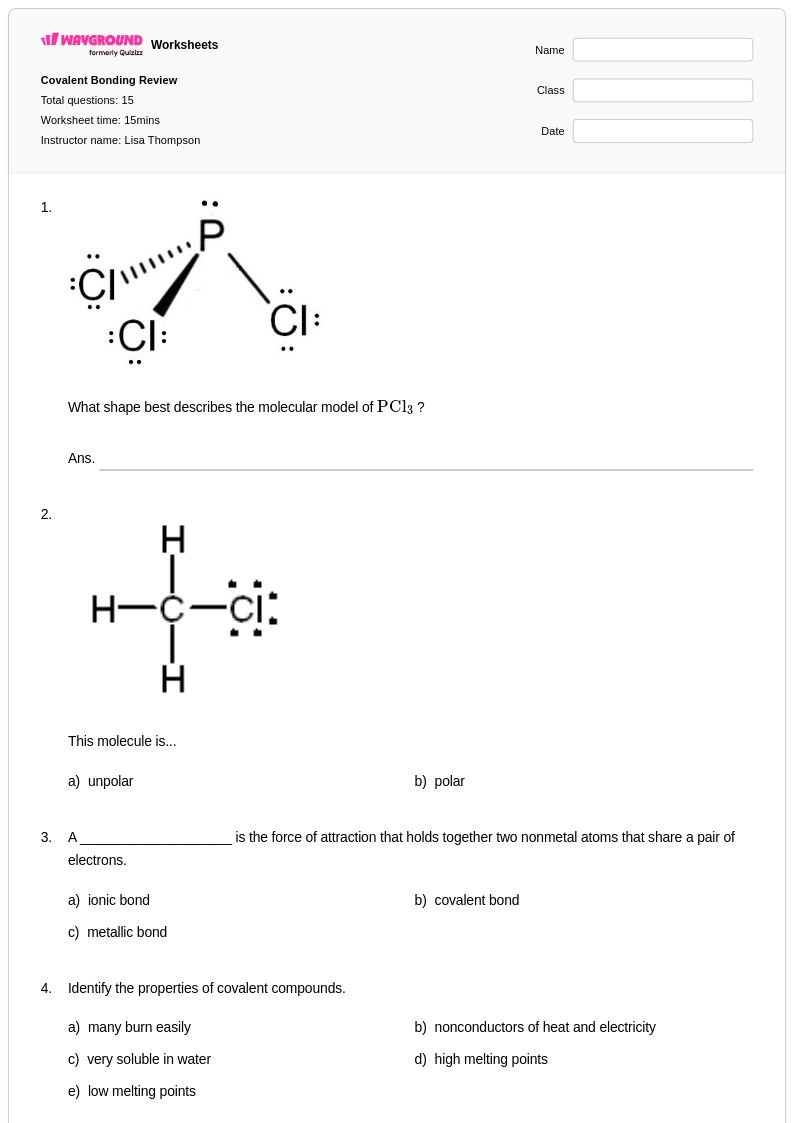
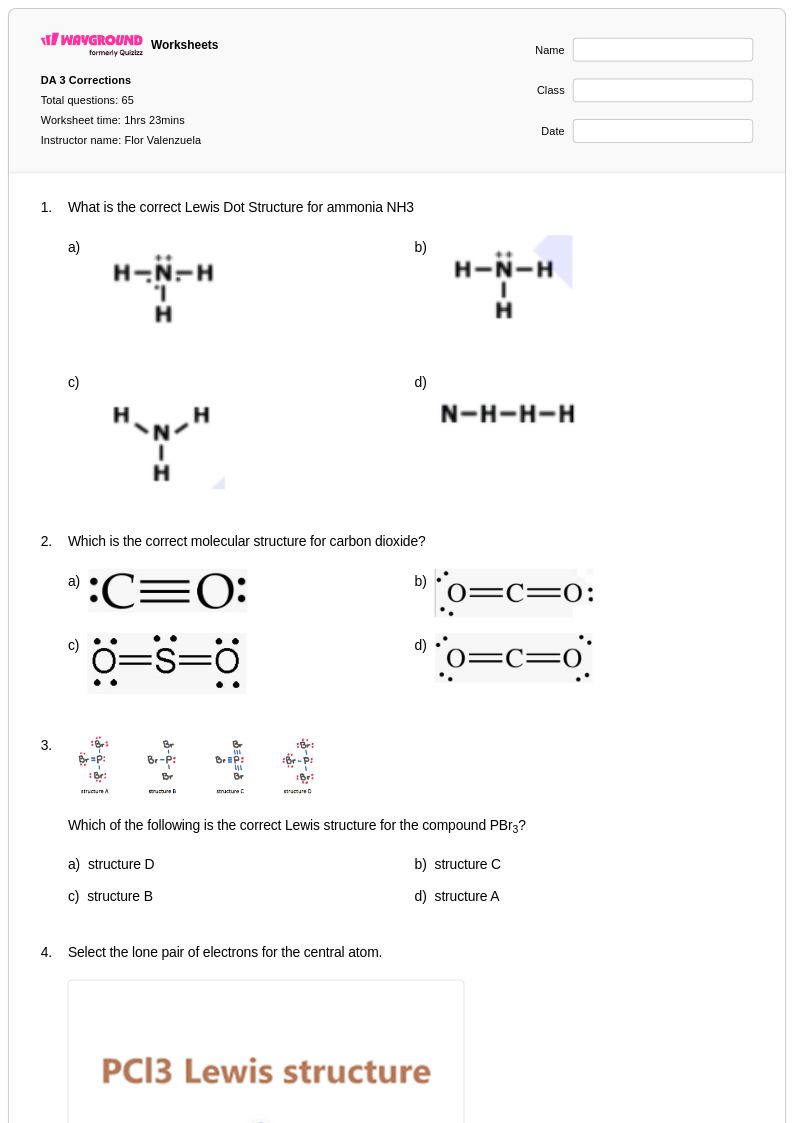
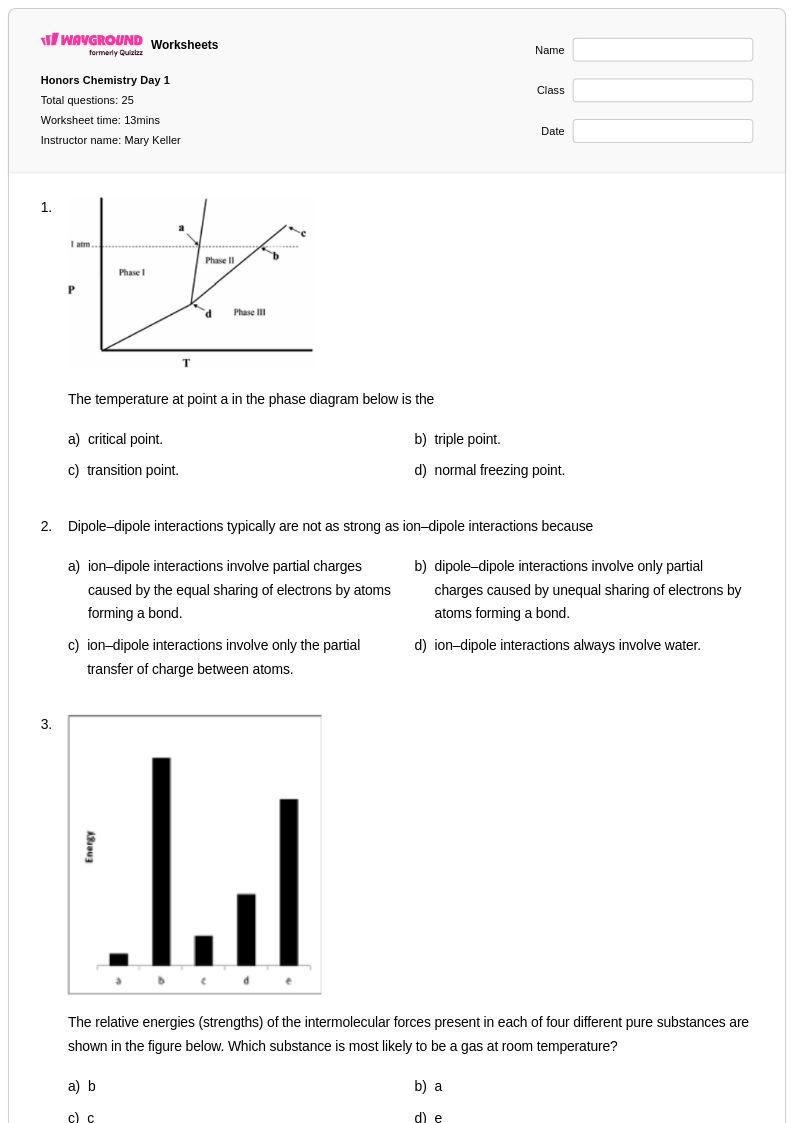
Year 10 dipole moments worksheets from Wayground offer comprehensive printables and practice problems that help students master molecular polarity concepts, complete with answer keys and free PDF downloads.
Explore printable Dipole Moments worksheets for Year 10
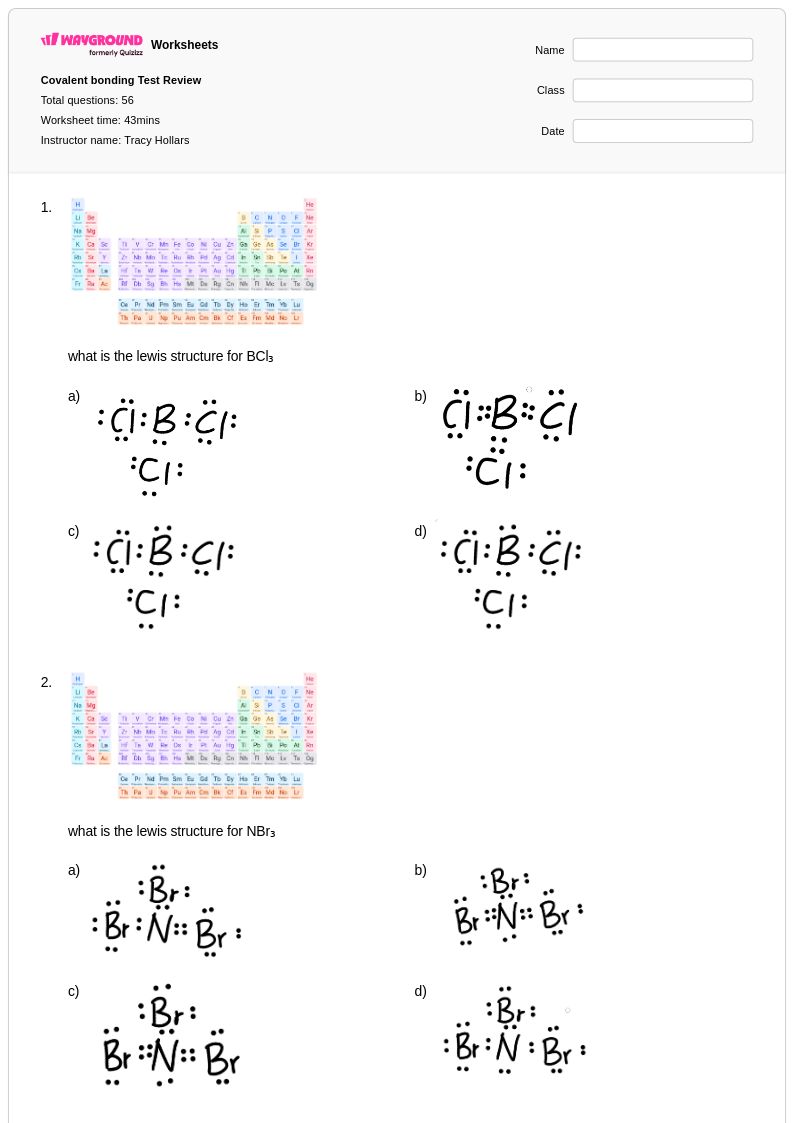
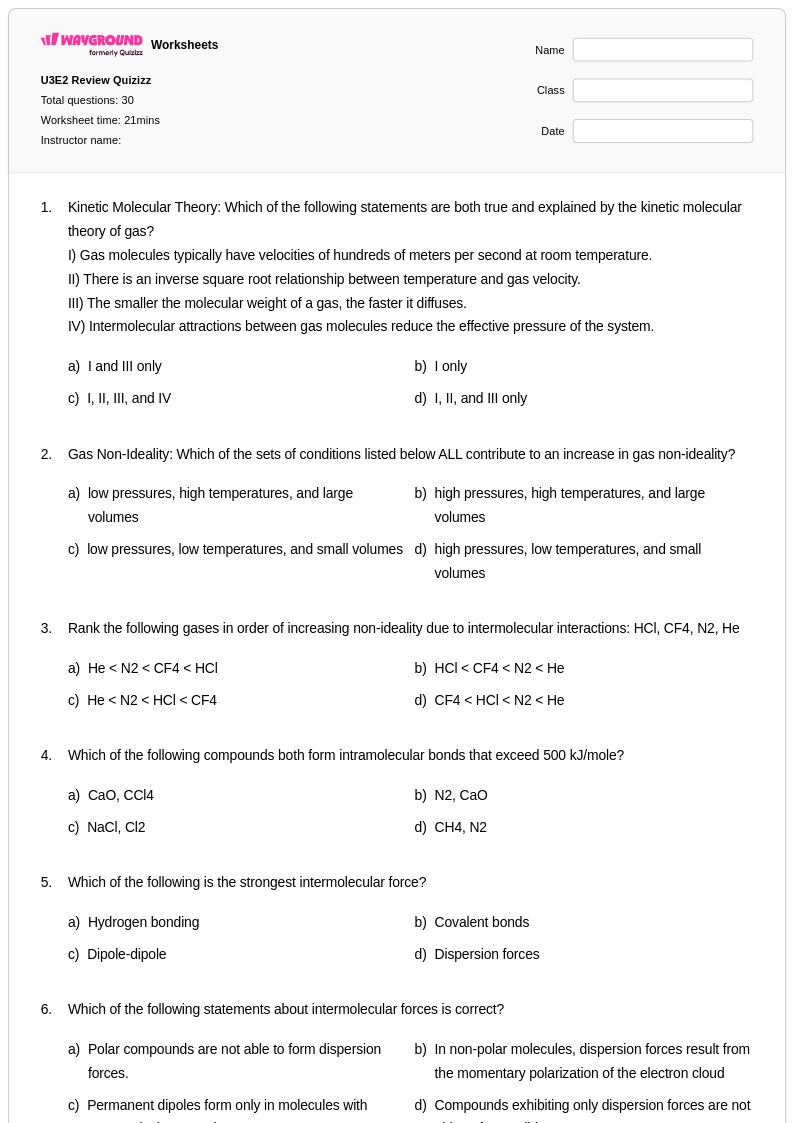
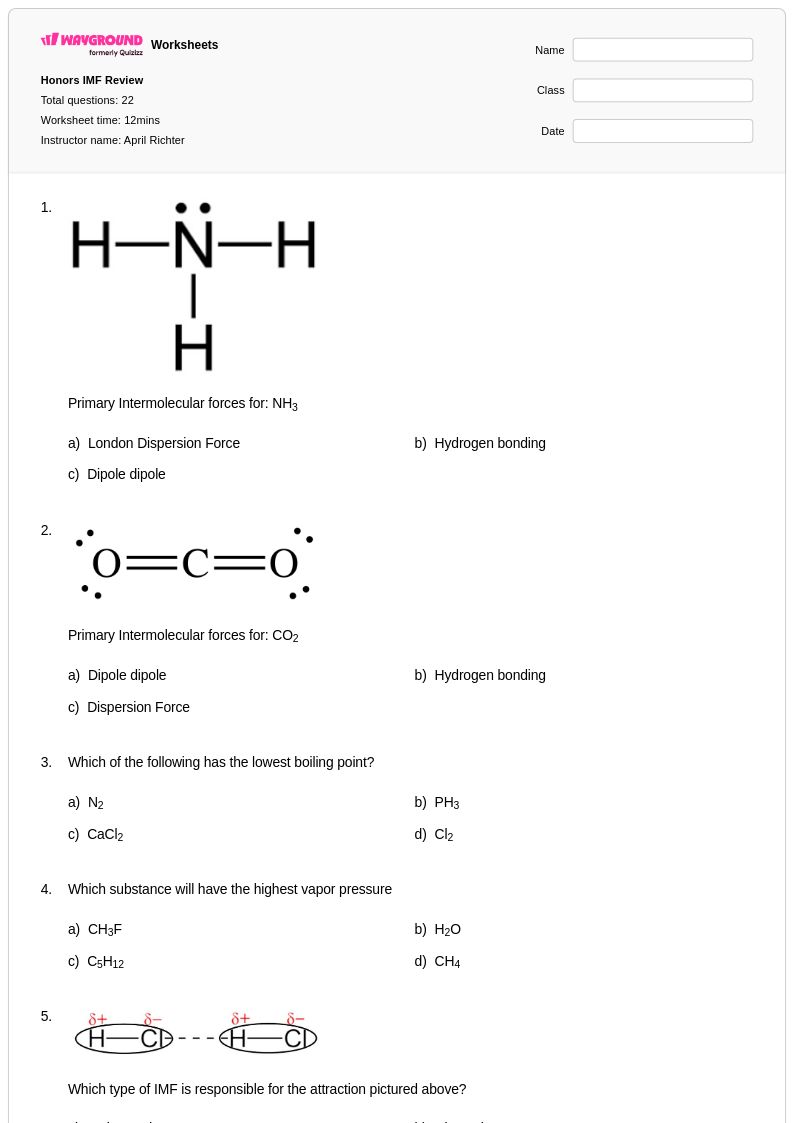
Dipole moments represent a fundamental concept in Year 10 chemistry that bridges molecular structure with chemical behavior and properties. Wayground's comprehensive dipole moment worksheets provide students with systematic practice in calculating dipole moments, predicting molecular polarity, and understanding the relationship between electronegativity differences and bond polarity. These free printables strengthen essential skills including vector addition of bond dipoles, distinguishing between polar and nonpolar molecules, and connecting molecular geometry to overall dipole moments. Students work through practice problems that cover everything from simple diatomic molecules to complex polyatomic structures, with each worksheet featuring a detailed answer key that guides learners through step-by-step solutions and reinforces proper problem-solving techniques.
Wayground's extensive collection of millions of teacher-created resources ensures educators have access to diverse, high-quality dipole moment worksheets that align with chemistry curriculum standards and support varied instructional needs. The platform's advanced search and filtering capabilities allow teachers to quickly locate materials targeting specific aspects of dipole moments, from introductory electronegativity concepts to advanced molecular polarity predictions. These differentiation tools enable seamless customization for students at different skill levels, while the availability of both printable pdf formats and digital versions provides maximum flexibility for classroom implementation, homework assignments, and remote learning scenarios. Teachers can efficiently plan comprehensive lessons, provide targeted remediation for struggling students, offer enrichment opportunities for advanced learners, and deliver consistent skill practice that builds mastery of this critical chemistry concept.
FAQs
How do I teach dipole moments to chemistry students?
Start by grounding students in electronegativity differences before introducing bond dipoles, then build toward net molecular dipole moments using vector addition. Emphasize the connection between molecular geometry and polarity — students need to understand that symmetrical molecules like CO₂ can have polar bonds yet a net dipole moment of zero. Using molecular model kits or 3D visualizations alongside practice problems helps students internalize how bond angles influence the direction and magnitude of dipole vectors.
What practice problems help students master dipole moment calculations?
Effective practice problems include calculating bond dipole vectors and applying vector addition to determine net dipole moments, comparing dipole moments across a series of molecules with similar structures, and predicting polarity based on molecular geometry. Problems that ask students to connect dipole moments to physical properties — such as boiling points or solubility — reinforce why the concept matters beyond the calculation itself. Worksheets that progress from simple diatomic molecules to polyatomic structures with multiple bond dipoles build confidence systematically.
What mistakes do students commonly make when working with dipole moments?
The most common misconception is assuming that any molecule with polar bonds must have a net dipole moment, which ignores the role of molecular geometry. Students frequently forget that dipole moments are vectors, not scalars, leading to errors when bond dipoles cancel due to symmetry — for example, treating BF₃ or CCl₄ as polar molecules. Another frequent error is conflating bond polarity with molecular polarity, particularly when students have not yet internalized how lone pairs affect molecular shape and therefore the direction of the net dipole.
How does molecular geometry affect dipole moments?
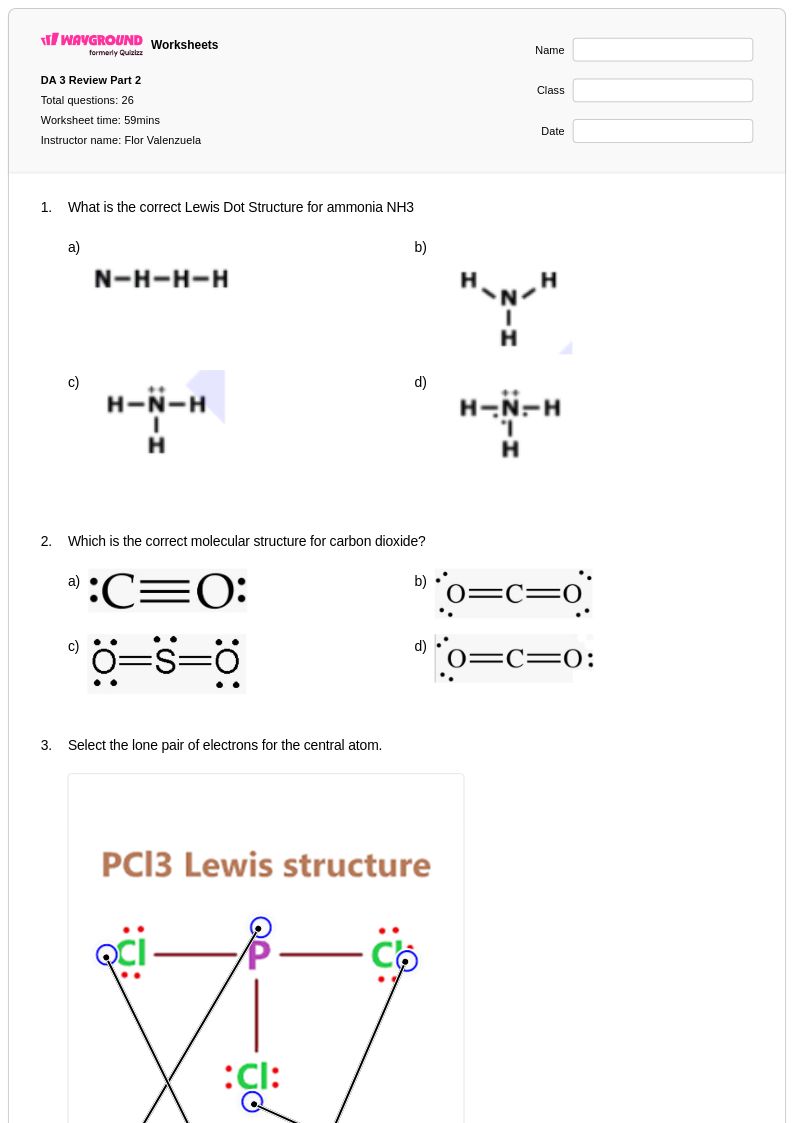
Molecular geometry determines both the direction and whether individual bond dipoles cancel or reinforce each other. In a linear or trigonal planar molecule with identical peripheral atoms, bond dipoles point in opposite or symmetrically equivalent directions and sum to zero, resulting in a nonpolar molecule despite polar bonds. In bent or trigonal pyramidal geometries, bond dipoles do not cancel, producing a net dipole moment — which is why water and ammonia are polar while carbon dioxide and boron trifluoride are not.
How do I use Wayground's dipole moments worksheets in my chemistry class?
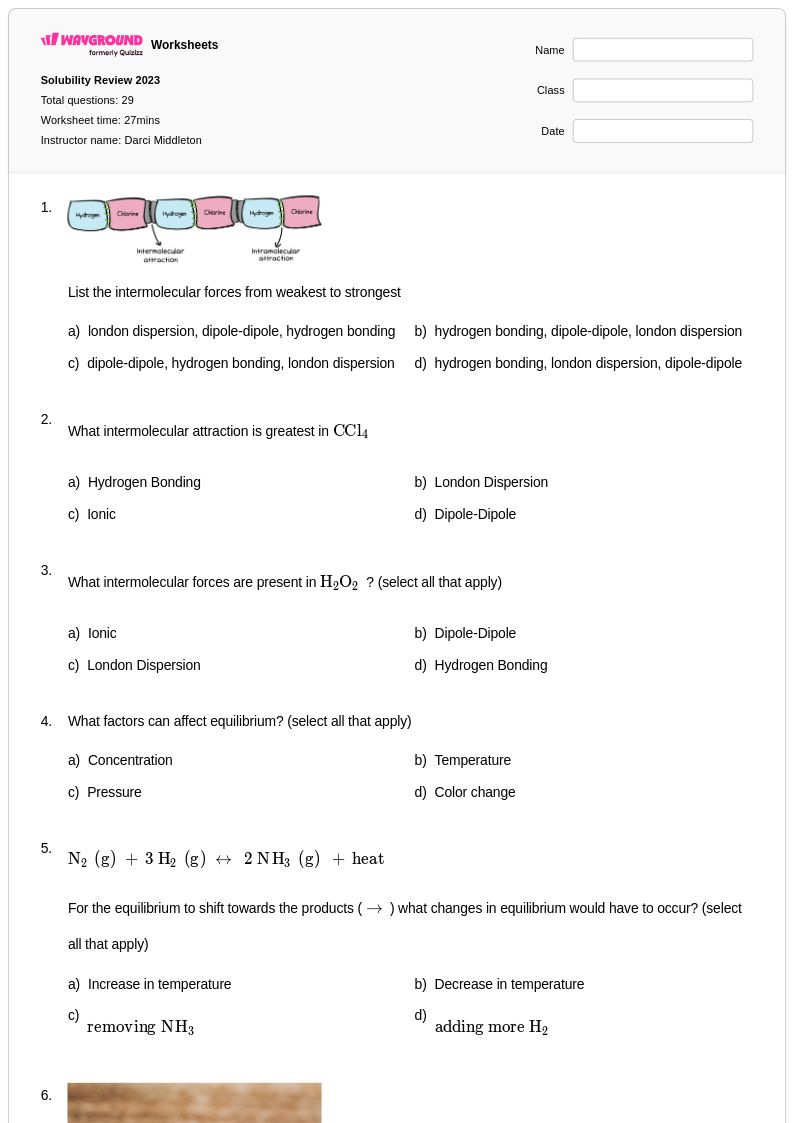
Wayground's dipole moments worksheets are available as printable PDFs for traditional classroom use and in digital formats for technology-integrated environments, giving you flexibility for homework assignments, in-class practice, or lab preparation. You can also host any worksheet as a quiz directly on Wayground, allowing students to complete problems interactively while you track responses in real time. Each worksheet includes a complete answer key, so students can self-check their work on dipole moment calculations and molecular polarity problems without waiting for teacher feedback.
How can I differentiate dipole moment instruction for students at different levels?
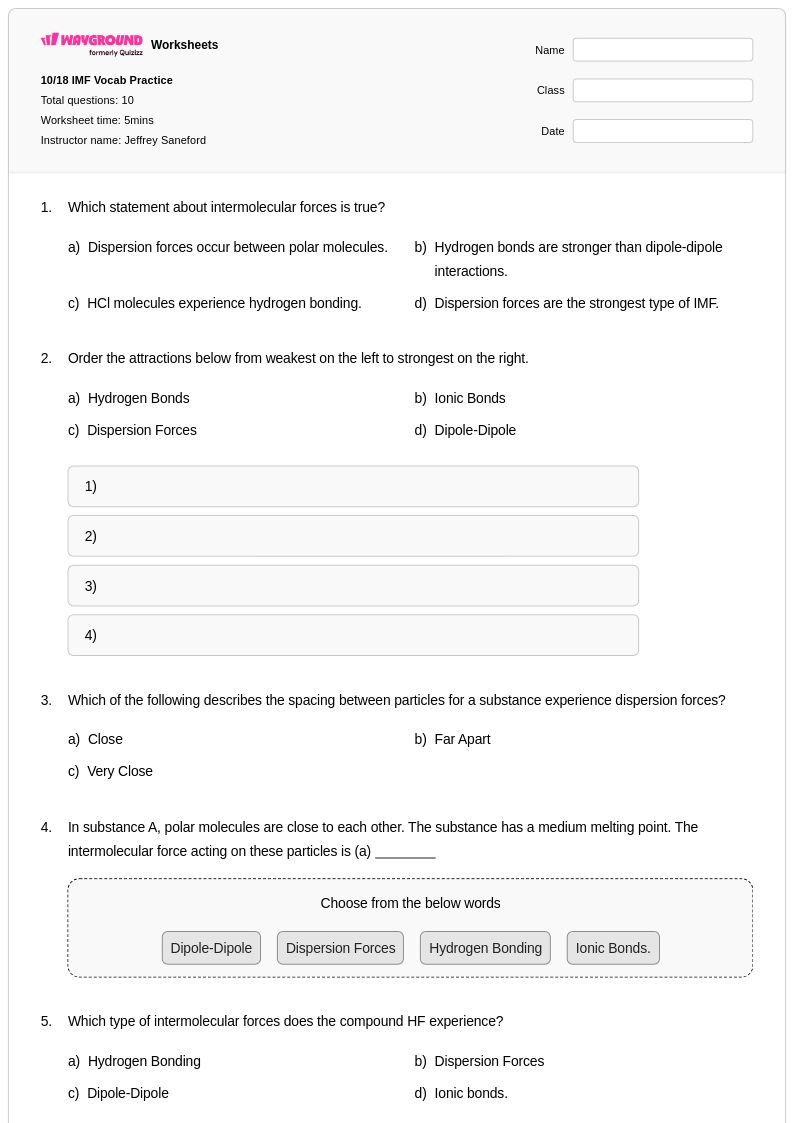
For struggling learners, start with worksheets that isolate bond dipole direction before introducing vector addition, and use Wayground's reduced answer choices accommodation to lower cognitive load on assessment problems. Advanced students can be directed toward problems that connect dipole moments to intermolecular forces and physical properties such as boiling point trends or miscibility. Wayground also supports read-aloud and extended time accommodations for individual students, which can be configured per student without disrupting the rest of the class.