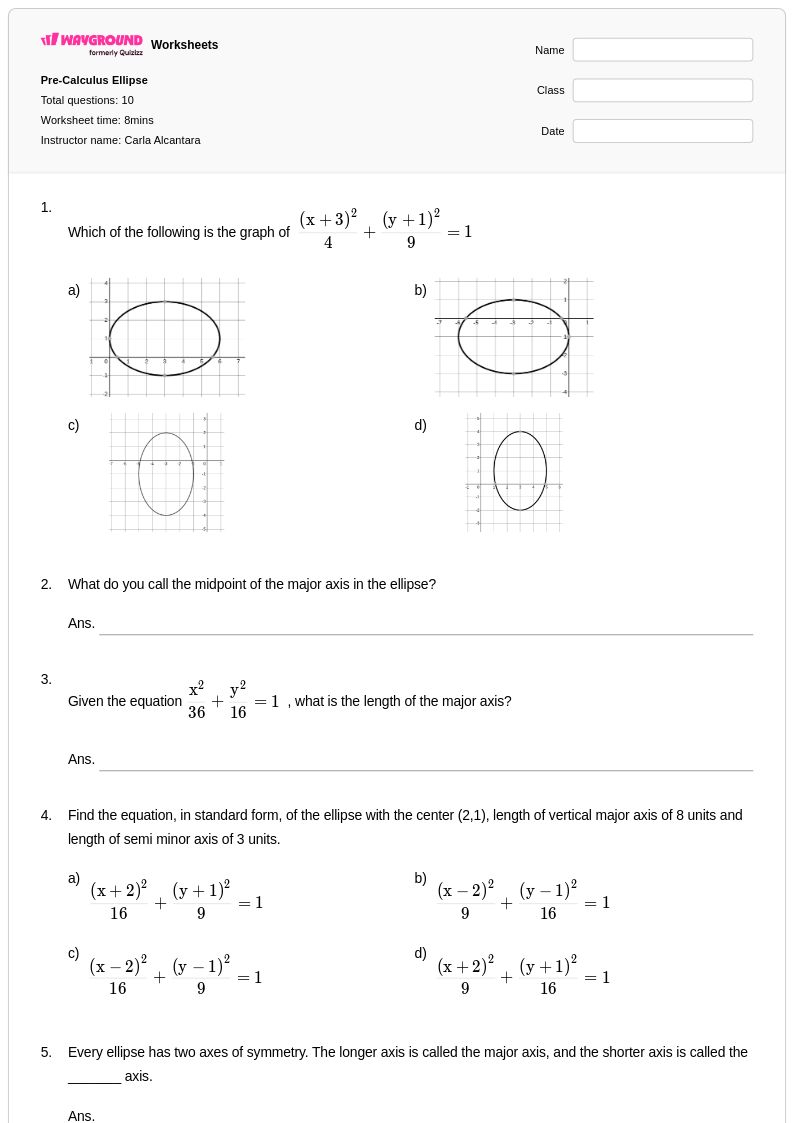
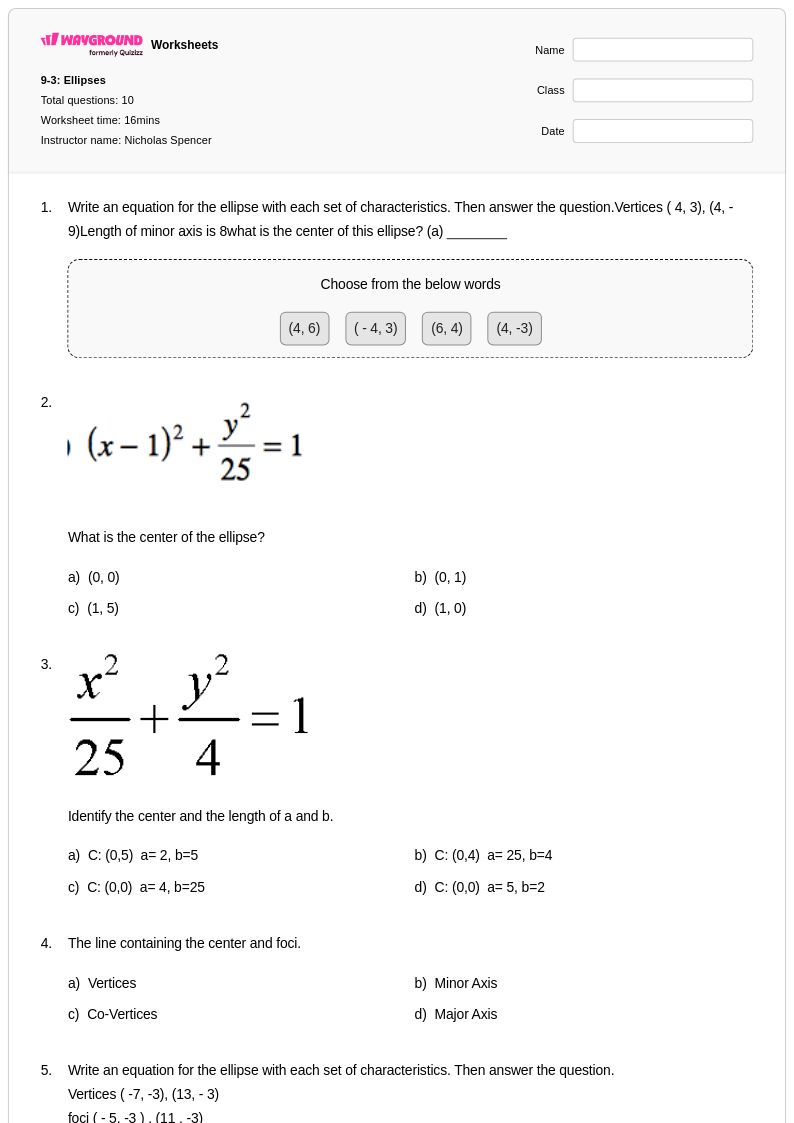
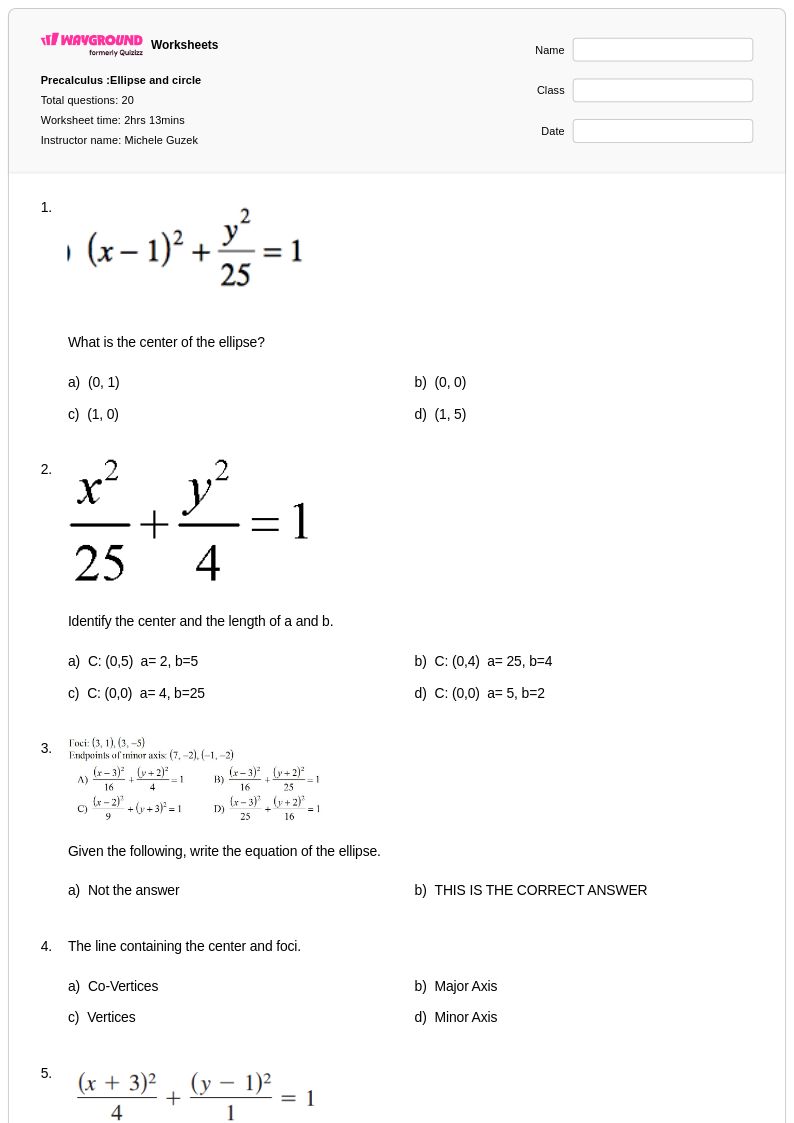
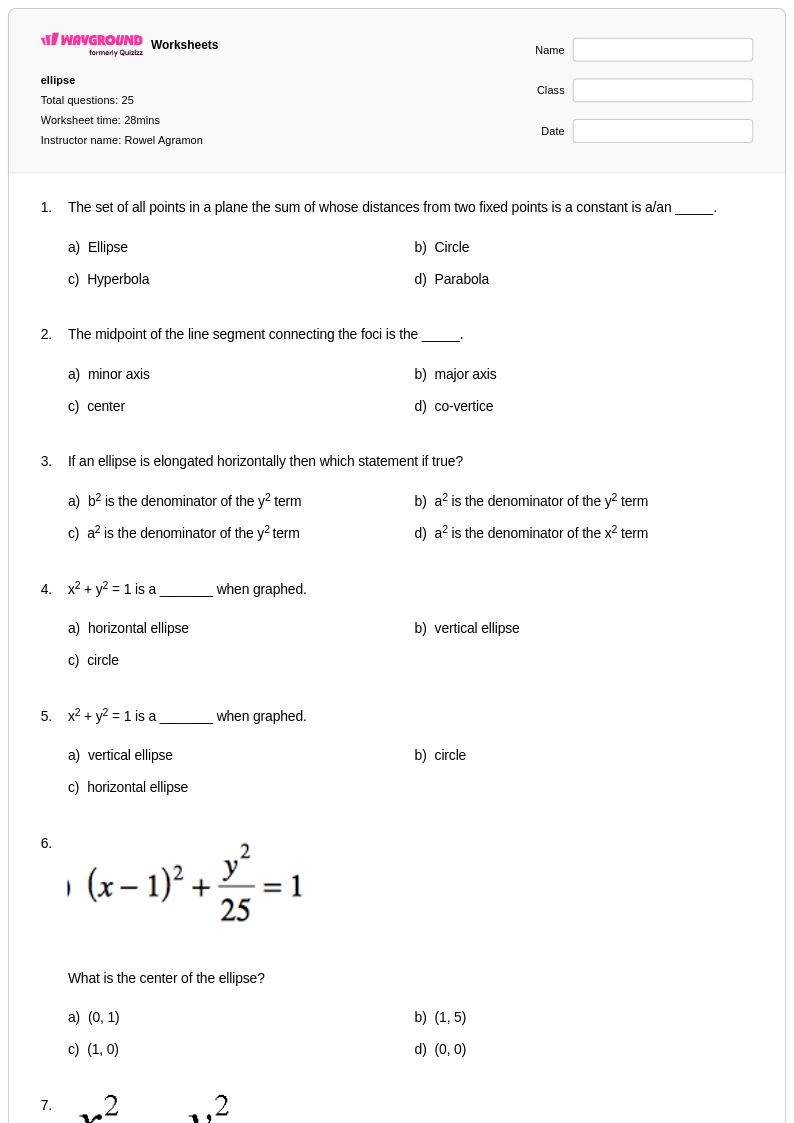
Explore Wayground's comprehensive collection of free ellipse worksheets and printables that help students master conic sections through engaging practice problems, step-by-step exercises, and detailed answer keys in convenient PDF format.
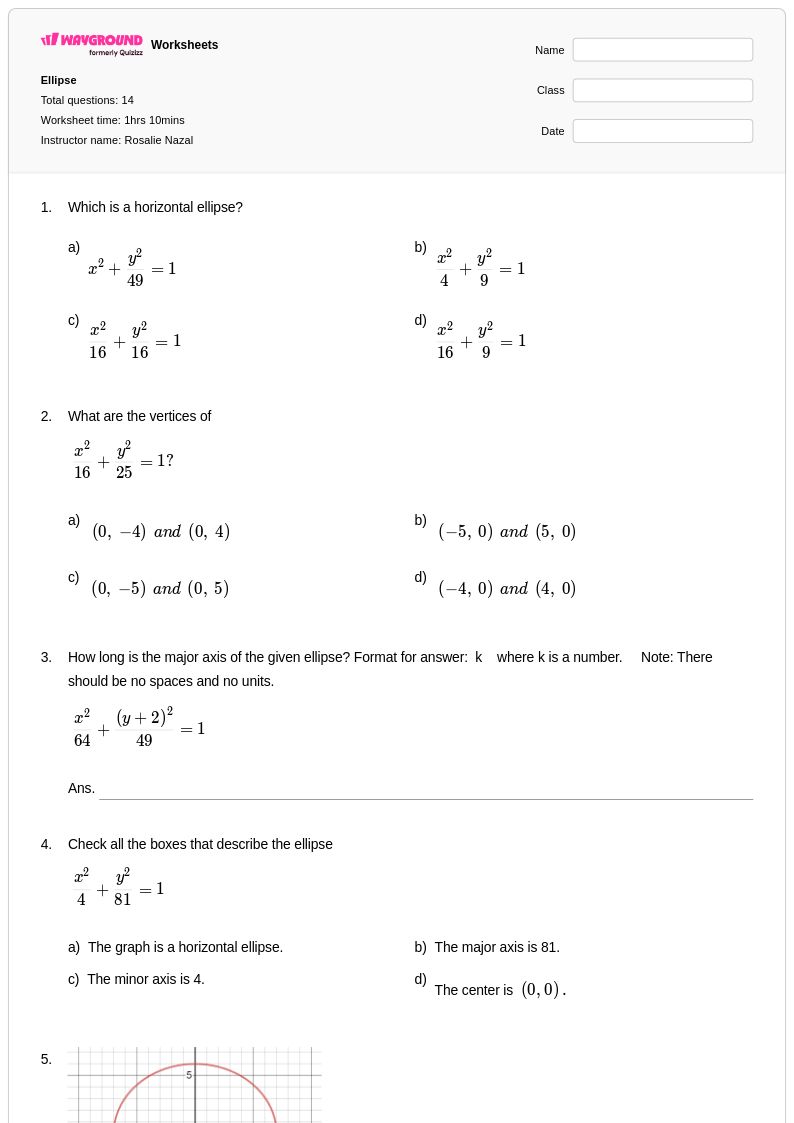
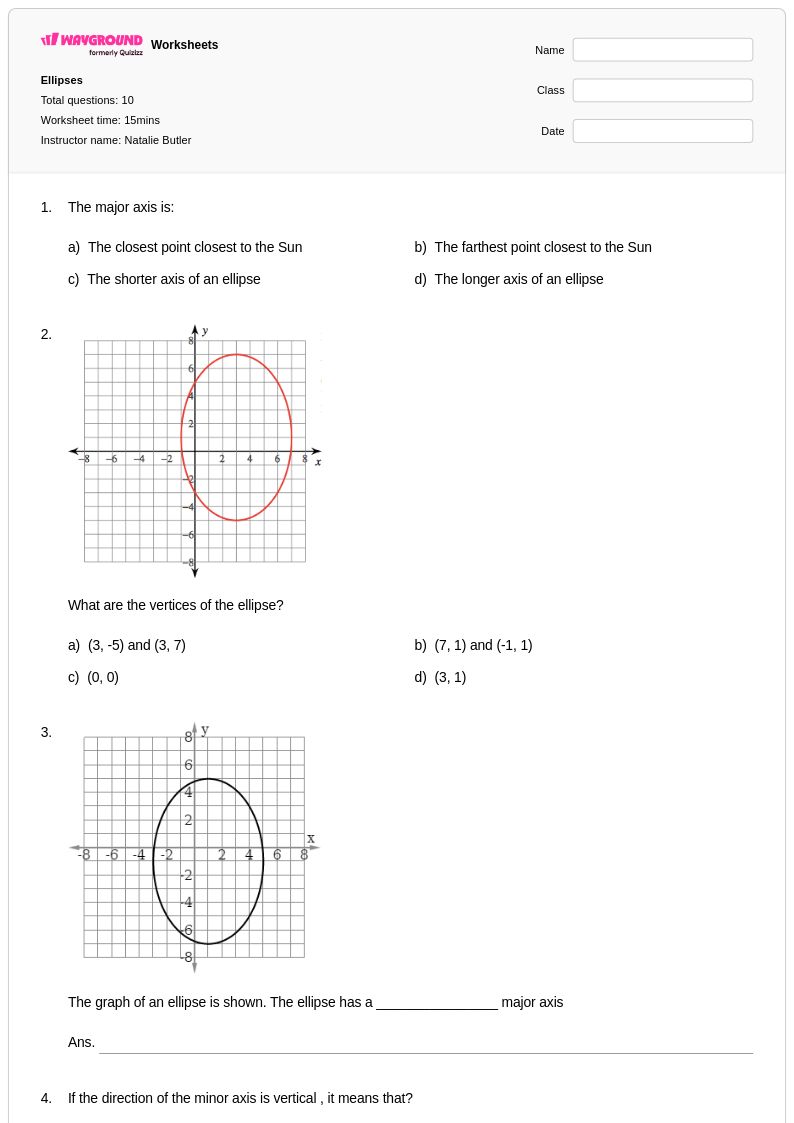
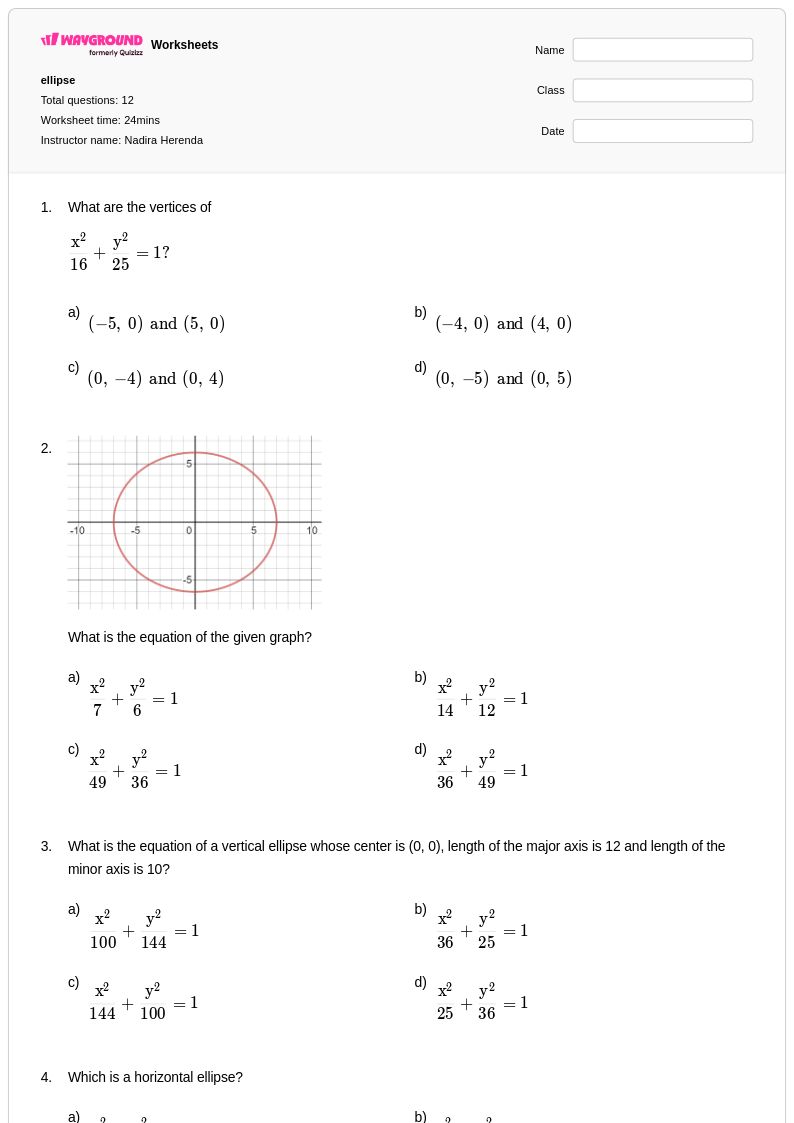
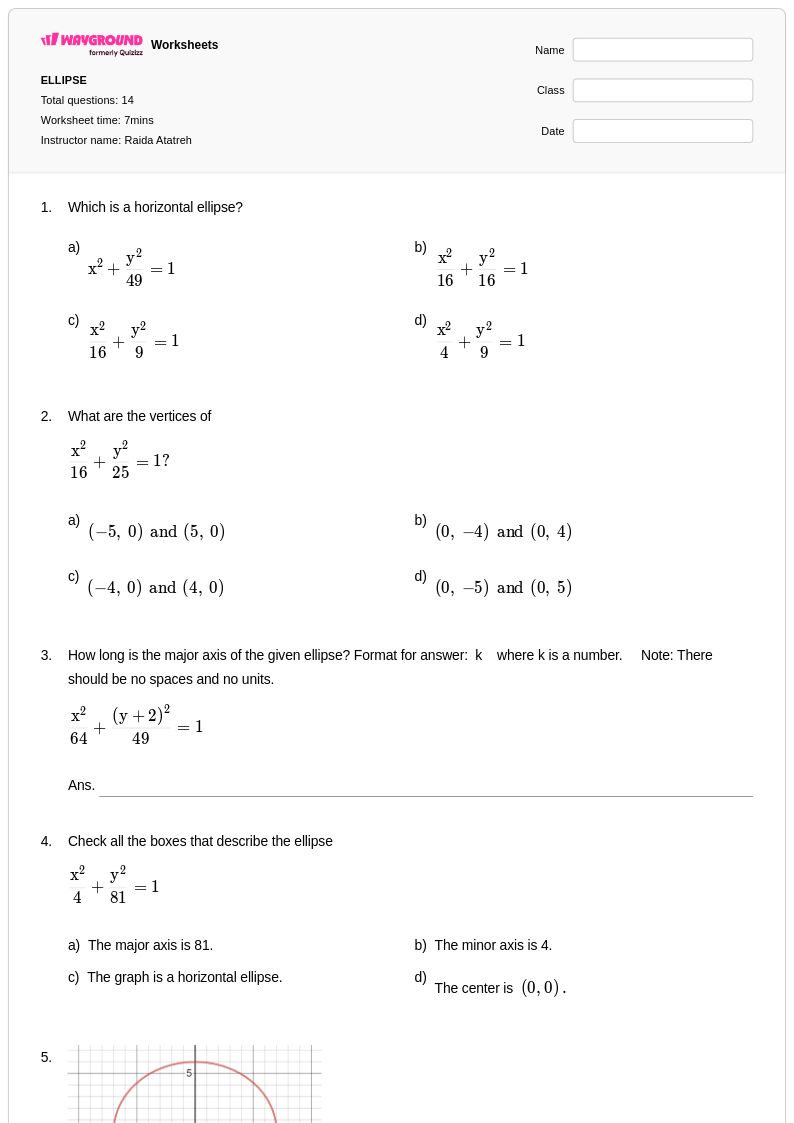
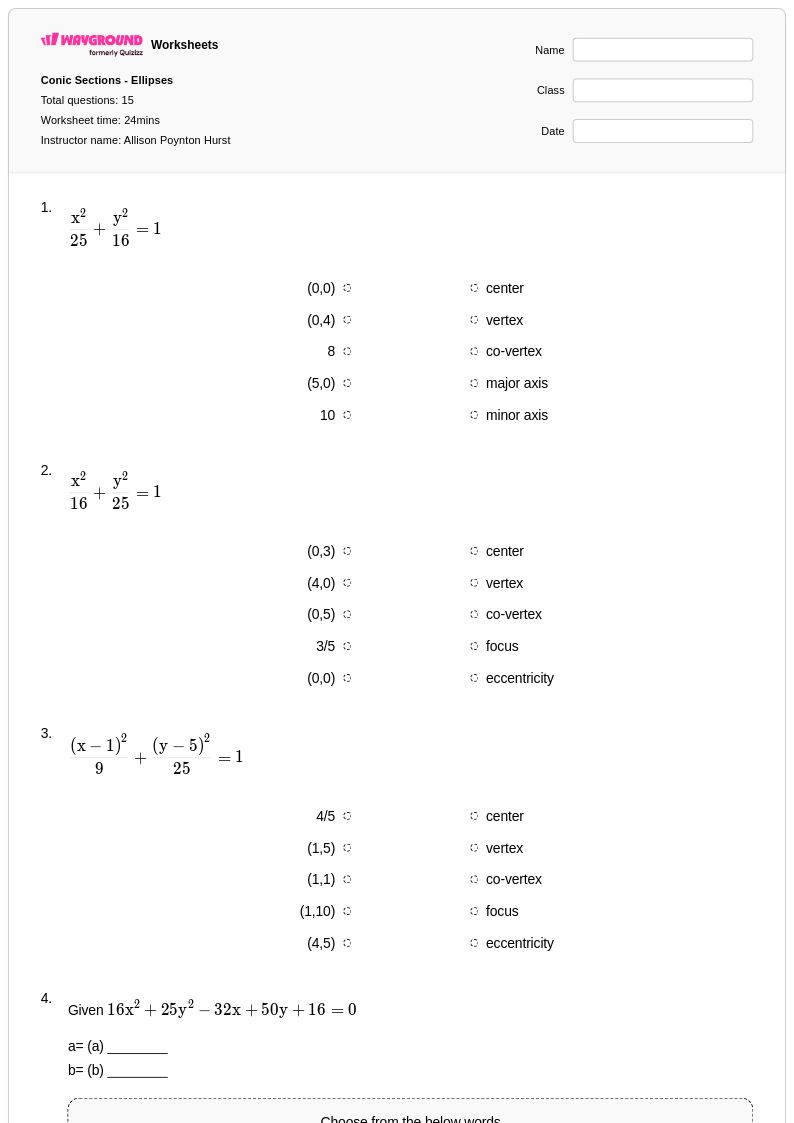
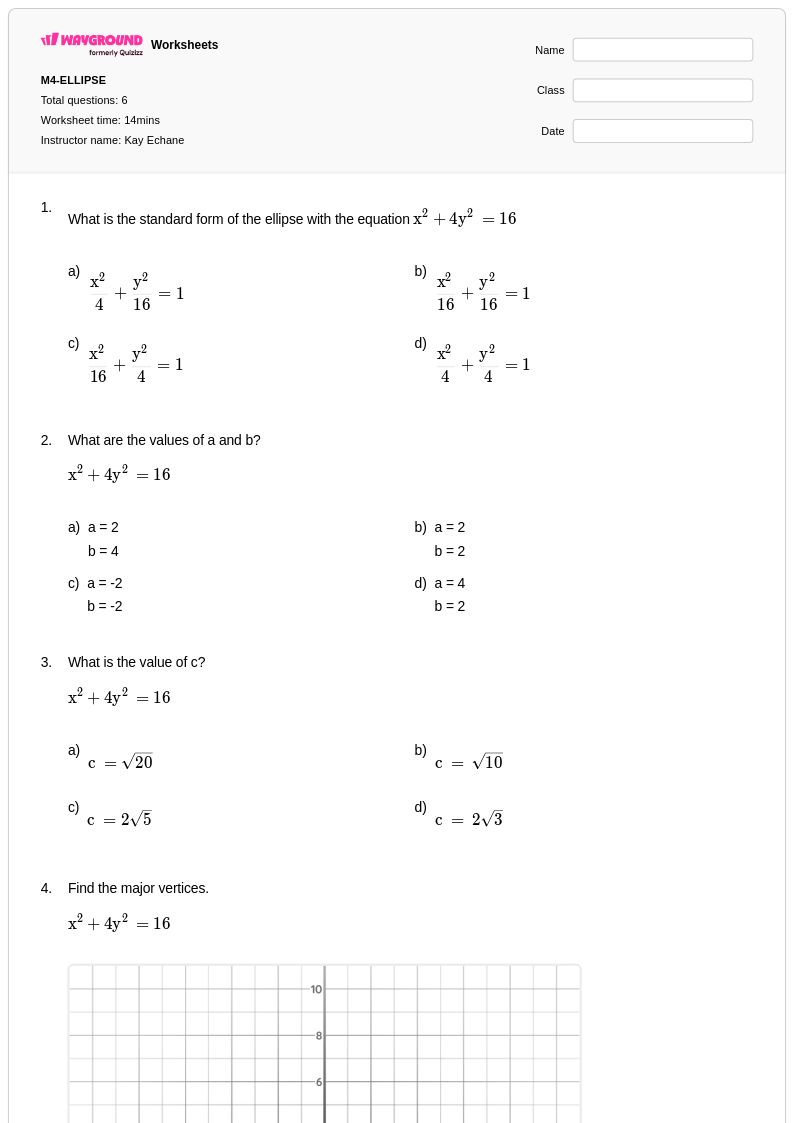
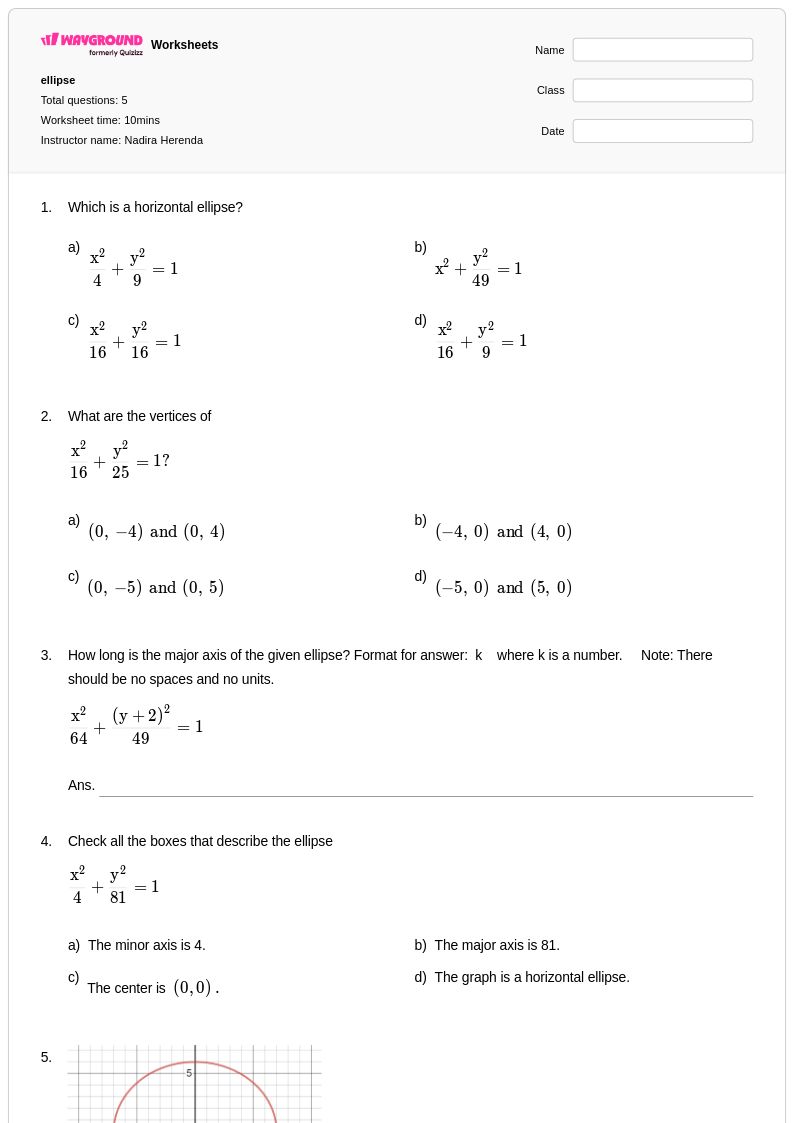
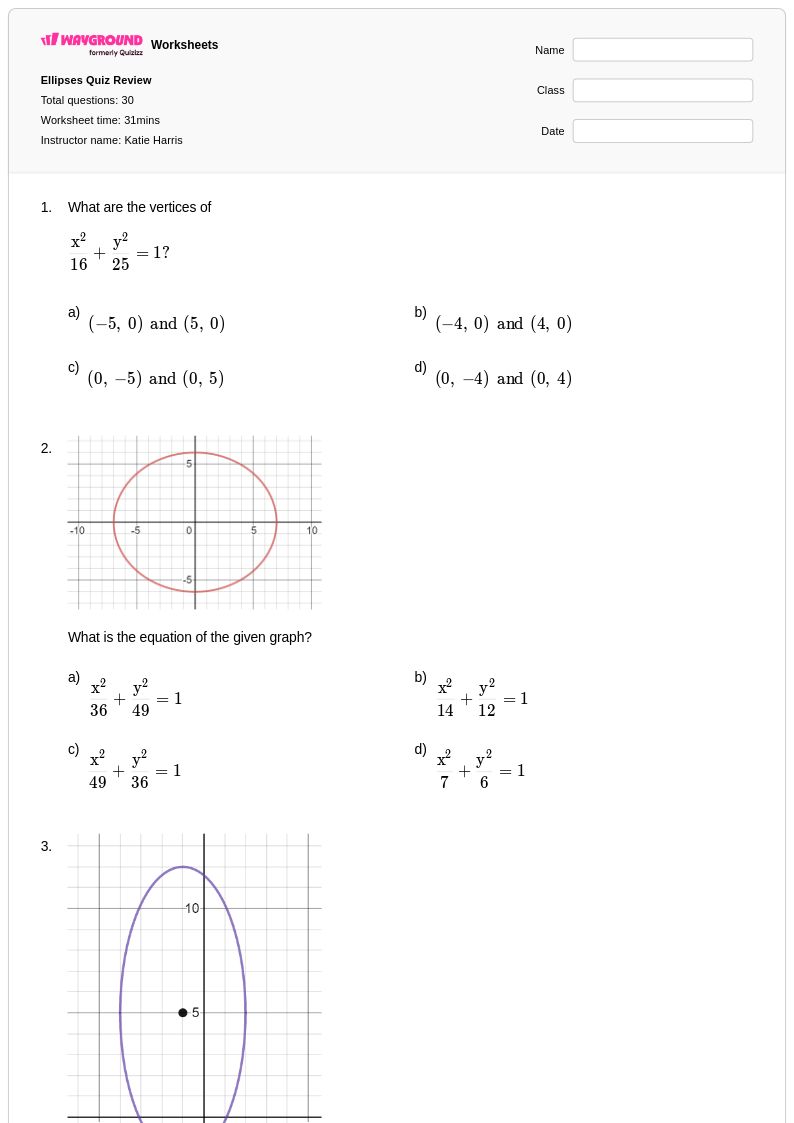
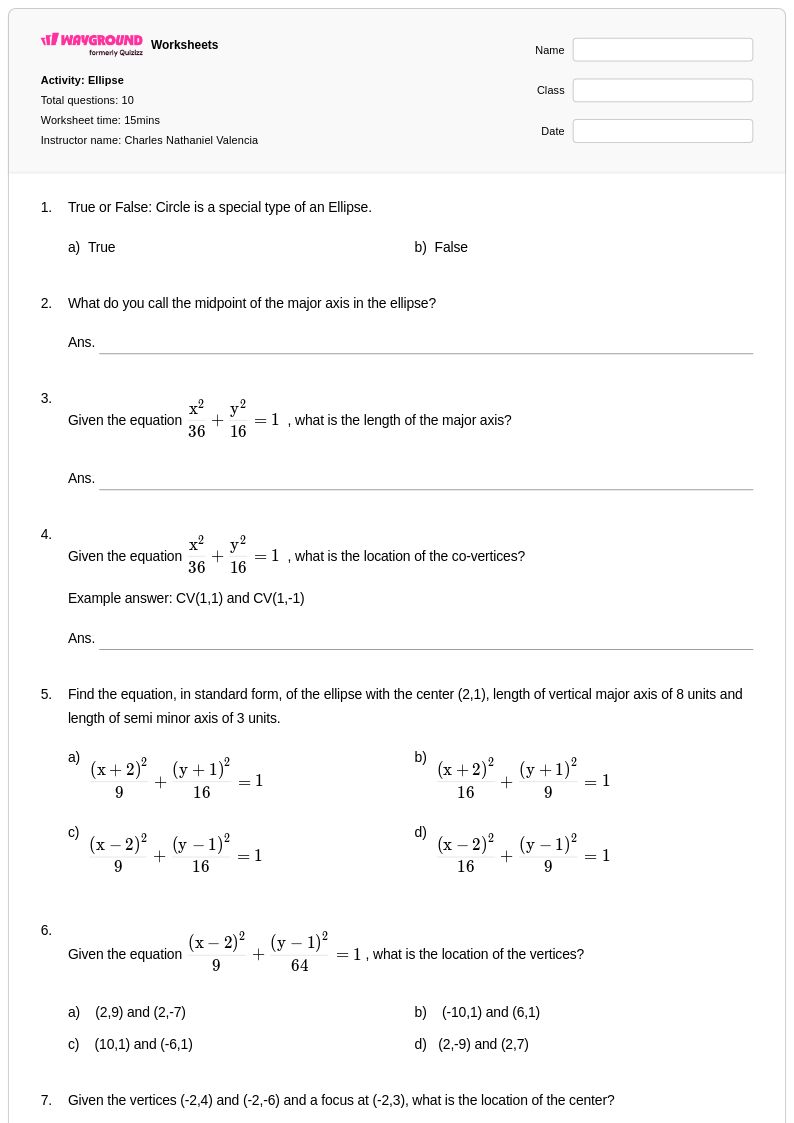
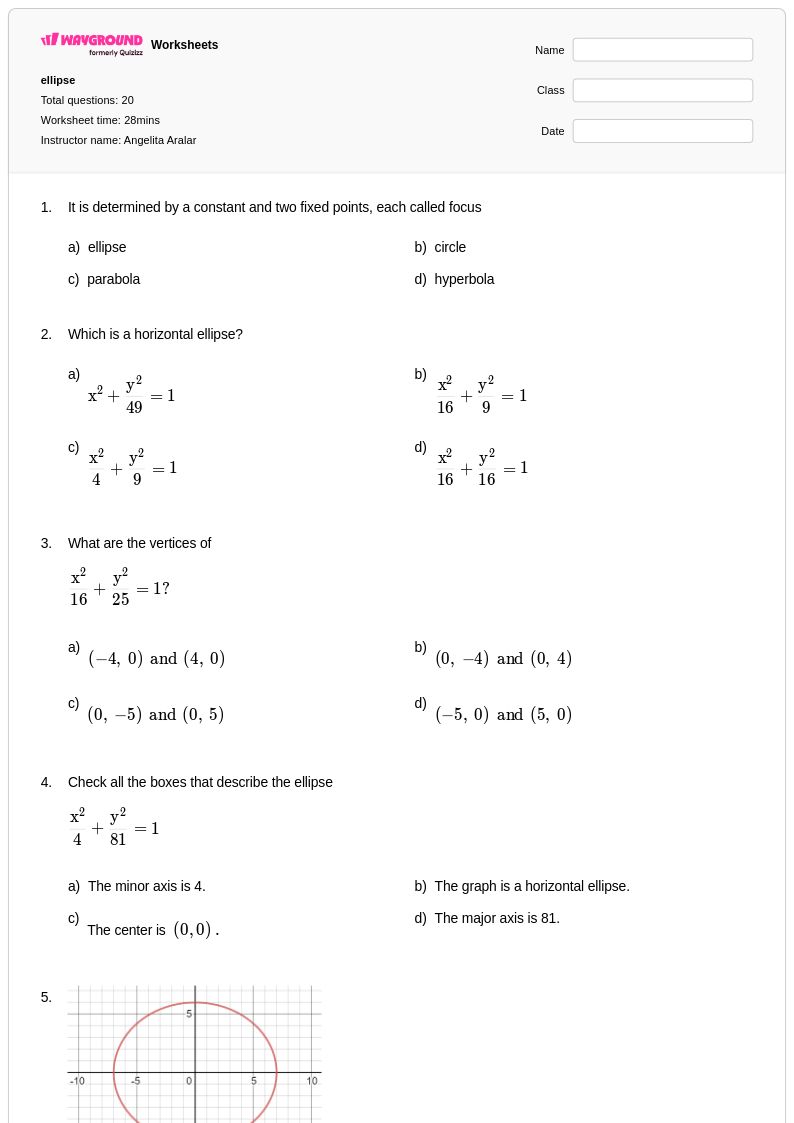
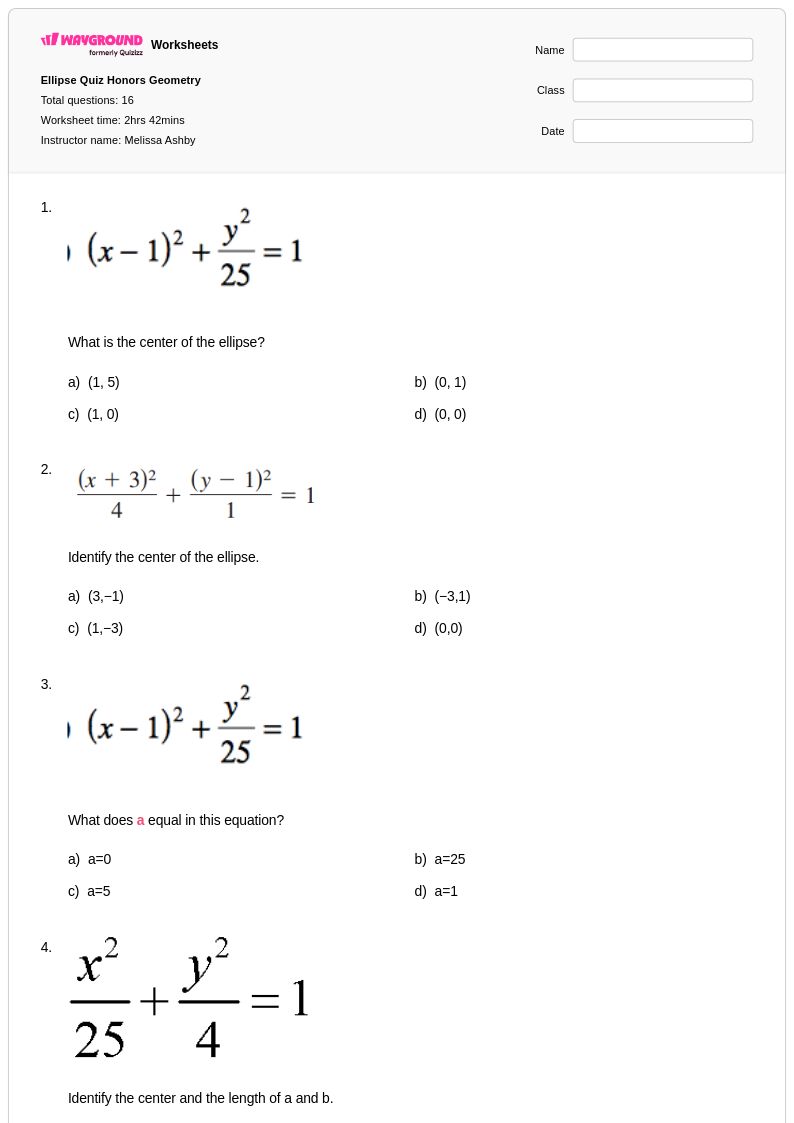
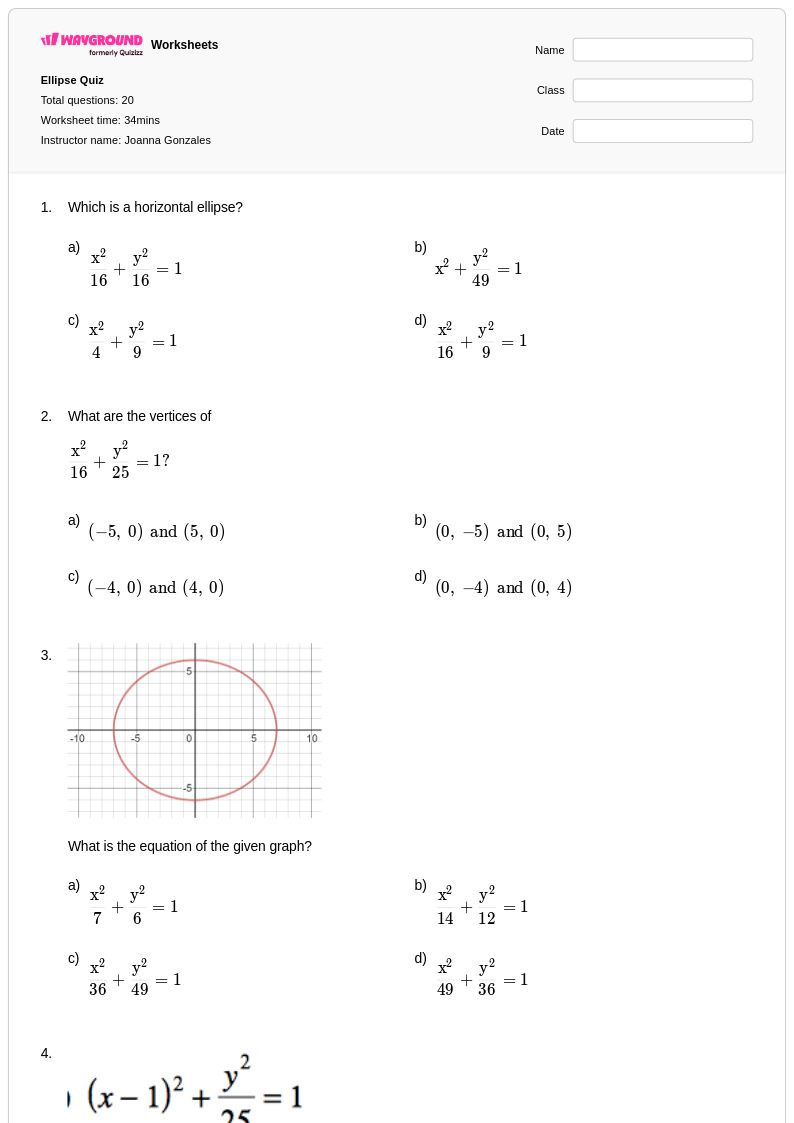
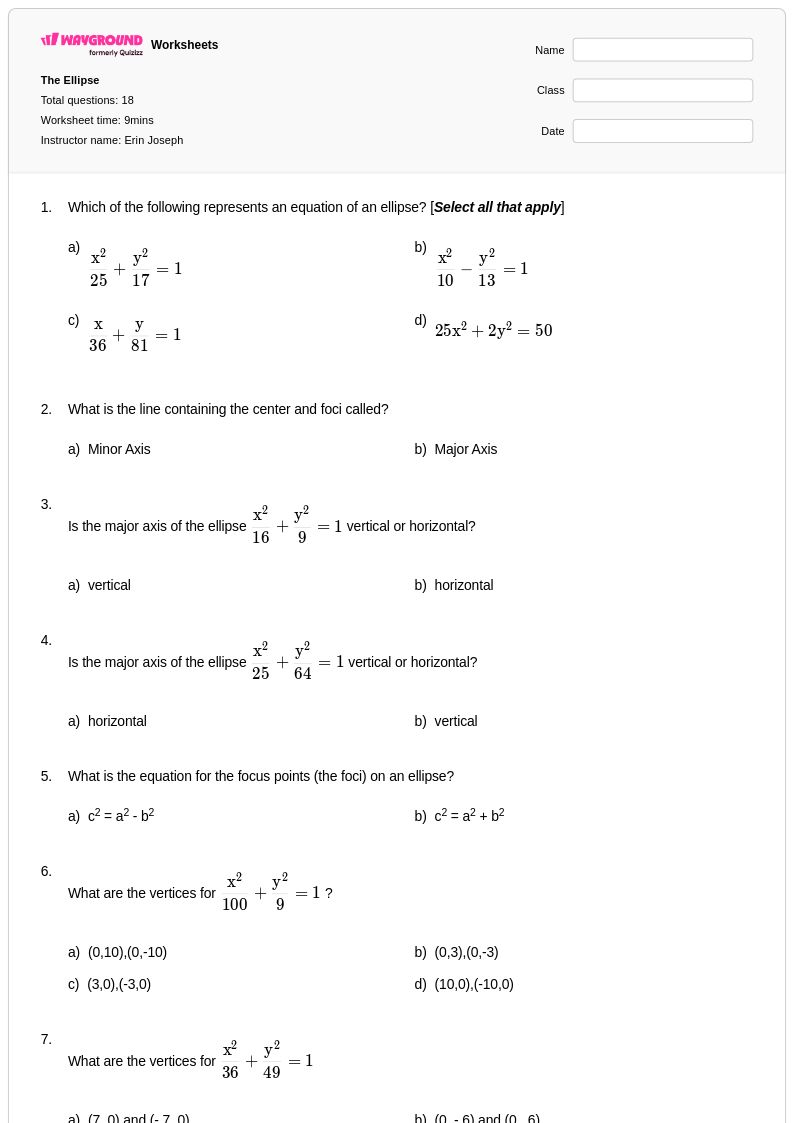
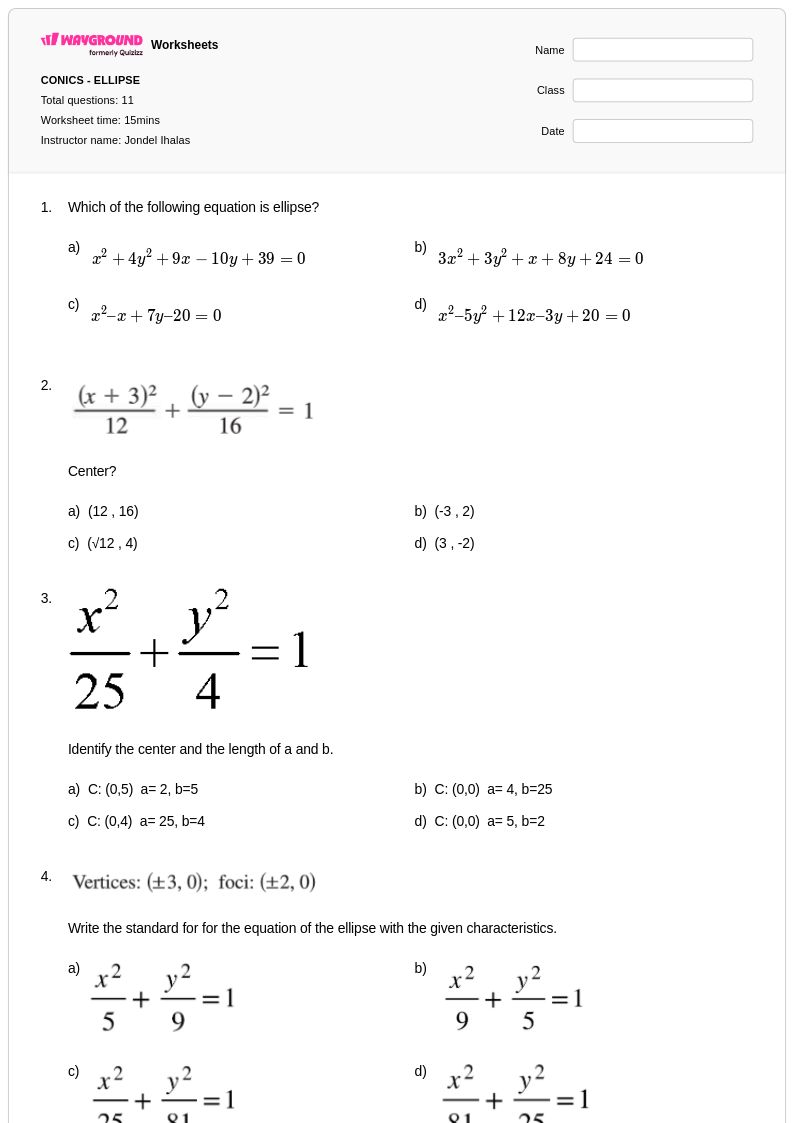
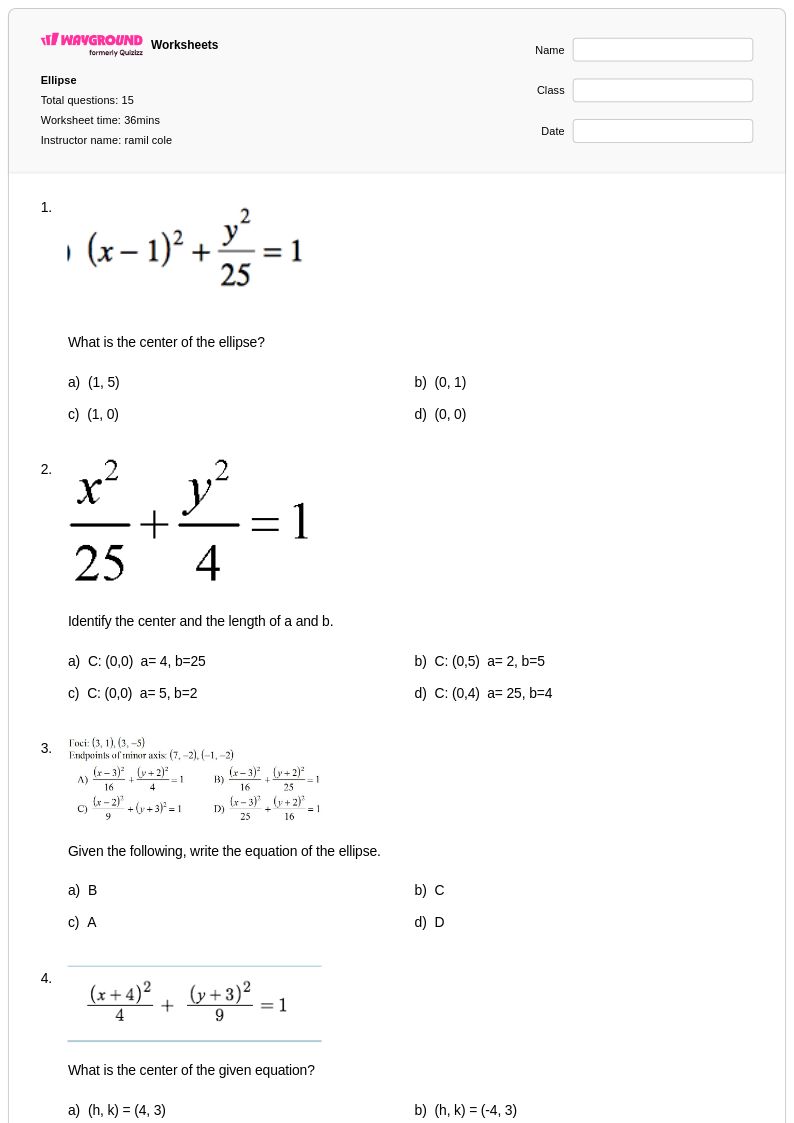
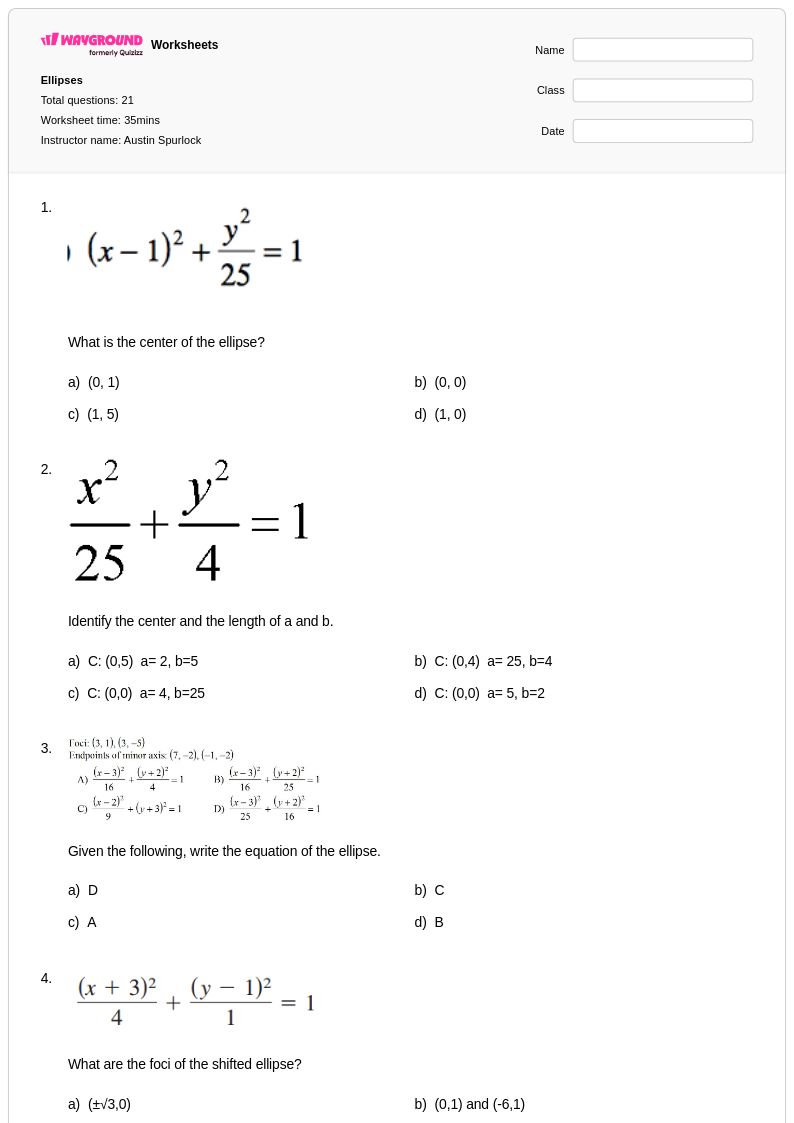
Ellipse worksheets available through Wayground (formerly Quizizz) provide comprehensive practice with one of the most fundamental conic sections in mathematics. These expertly crafted resources help students master essential ellipse concepts including identifying center, vertices, co-vertices, foci, and eccentricity while developing proficiency in writing ellipse equations in both standard and general forms. Students work through carefully sequenced practice problems that build understanding of how ellipses relate to real-world applications such as planetary orbits, architectural designs, and optical properties. Each worksheet includes detailed answer keys that support independent learning and self-assessment, while the free printable format ensures accessibility for all learners. These comprehensive resources strengthen analytical thinking skills as students learn to graph ellipses, determine their key characteristics from equations, and solve complex problems involving elliptical relationships.
Wayground (formerly Quizizz) empowers mathematics teachers with an extensive collection of ellipse worksheets drawn from millions of teacher-created resources that have been refined through classroom use. The platform's advanced search and filtering capabilities allow educators to quickly locate materials that align with specific learning standards and match their students' skill levels perfectly. Teachers can easily customize existing worksheets or create new ones using the flexible editing tools, enabling seamless differentiation for diverse learning needs within the same classroom. Available in both printable pdf format and interactive digital versions, these resources support various instructional approaches from traditional paper-based practice to technology-enhanced learning environments. This versatility makes lesson planning more efficient while providing teachers with reliable materials for targeted remediation, skill-building practice, and enrichment activities that deepen students' understanding of elliptical properties and applications.
FAQs
How do I teach ellipses to students who are new to conic sections?
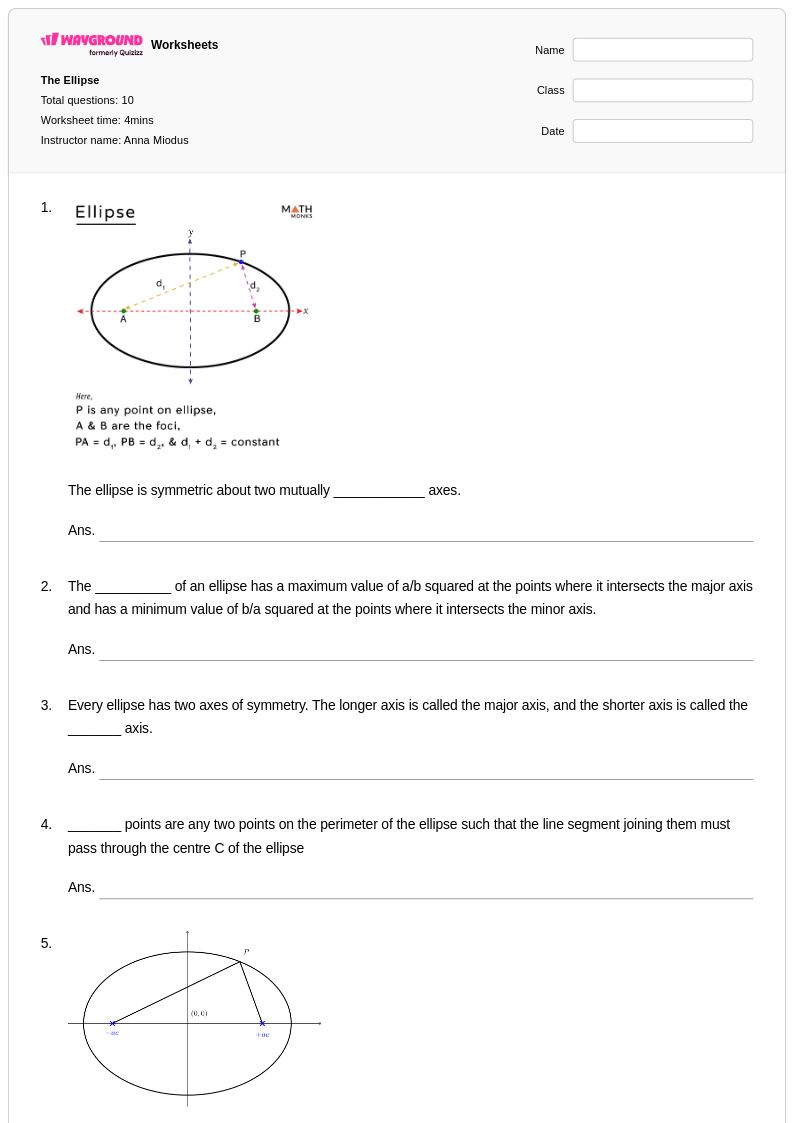
Start with the geometric definition: an ellipse is the set of all points where the sum of distances to two fixed points (the foci) is constant. That single idea unlocks why the equation looks the way it does and why foci matter. From there, move to the standard form equation, have students identify a, b, and c, then graph. Connecting the algebra to a sketch early prevents the common mistake of treating ellipse problems as pure symbol manipulation.
What kinds of practice problems help students get comfortable with ellipse equations?
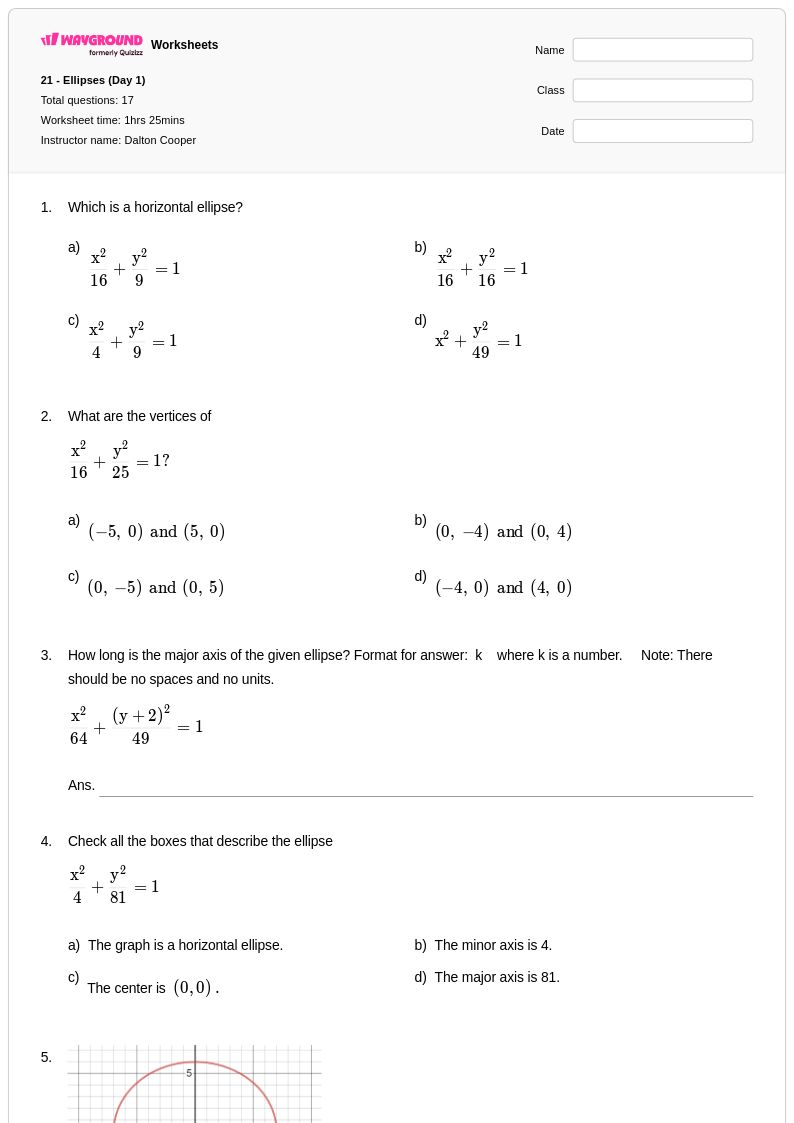
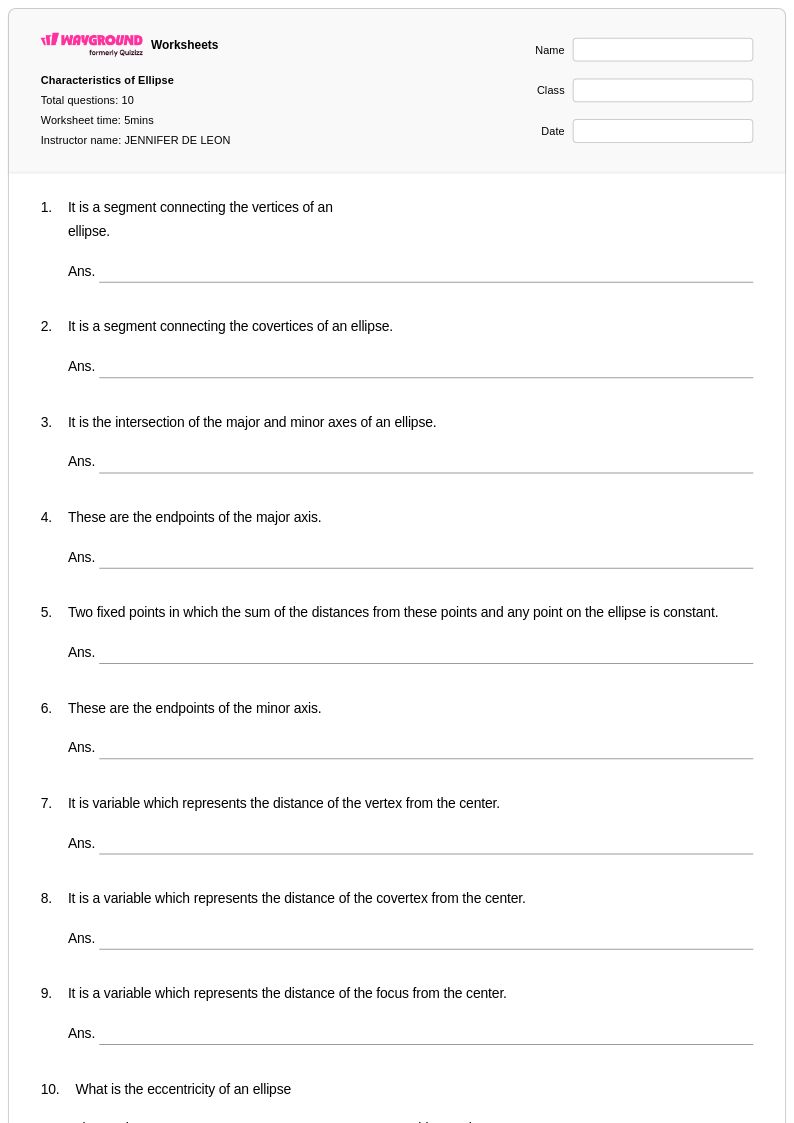
Students need practice in both directions: extracting key features (center, vertices, co-vertices, foci, eccentricity) from a given equation, and writing the equation from a described or graphed ellipse. Wayground's ellipse worksheets cover both, with problems that progress from standard form to general form and include real-world contexts like planetary orbits and architectural arches — which help students see why the math matters, not just how to execute it.
What mistakes do students commonly make with ellipses?
Three errors come up repeatedly. First, students confuse the major and minor axes, especially when the larger denominator is under y rather than x. Second, they misapply the relationship c² = a² − b², either using the wrong formula or solving for the wrong variable. Third, when converting from general to standard form, incomplete or incorrect completing-the-square steps lead to wrong center coordinates. Targeted practice that requires students to show each step — rather than just circle a final answer — catches all three.
How do I use Wayground's ellipse worksheets in my classroom?
Each worksheet comes with a complete answer key, so students can check their own work during independent practice or you can use it for quick grading. If you prefer paper, download the printable PDF and distribute it in class — offline practice is a straightforward option for schools managing screen time. For digital use, you can host the worksheet as a quiz on Wayground, where students complete it on a device and you see results in real time.
Where do ellipses fit in the high school math curriculum?
In Common Core-aligned courses, ellipses appear within the study of conic sections, typically after students have solid footing with circles and parabolas. The progression moves from recognizing the standard form equation to deriving key features algebraically, then to graphing and finally to applied problems — such as modeling orbital paths — that require interpreting eccentricity. Ellipses build directly toward hyperbolas, which share the same foci-based definition framework, so gaps in ellipse understanding tend to surface again in the next unit.
Can I differentiate ellipse practice for students at different skill levels?
Yes. In Wayground, you can generate alternate versions of the same worksheet with adjusted font size, wider spacing, or a dyslexia-friendly font for students who need it. For students who struggle with multi-step problems, the reduced answer choices accommodation lowers cognitive load on digital assignments without changing the math. Students who need more time on the completing-the-square steps can be given extended time per question — set individually so the rest of the class isn't affected.
What real-world applications of ellipses can I use to motivate the lesson?
Planetary orbits are the most compelling: Kepler's first law states that planets travel in elliptical paths with the sun at one focus, which gives eccentricity a concrete meaning students can visualize. Whispering galleries (like the one in the U.S. Capitol's Statuary Hall) demonstrate the reflective property of foci in architecture. Either example gives students a reason to care about foci before they've done a single calculation.