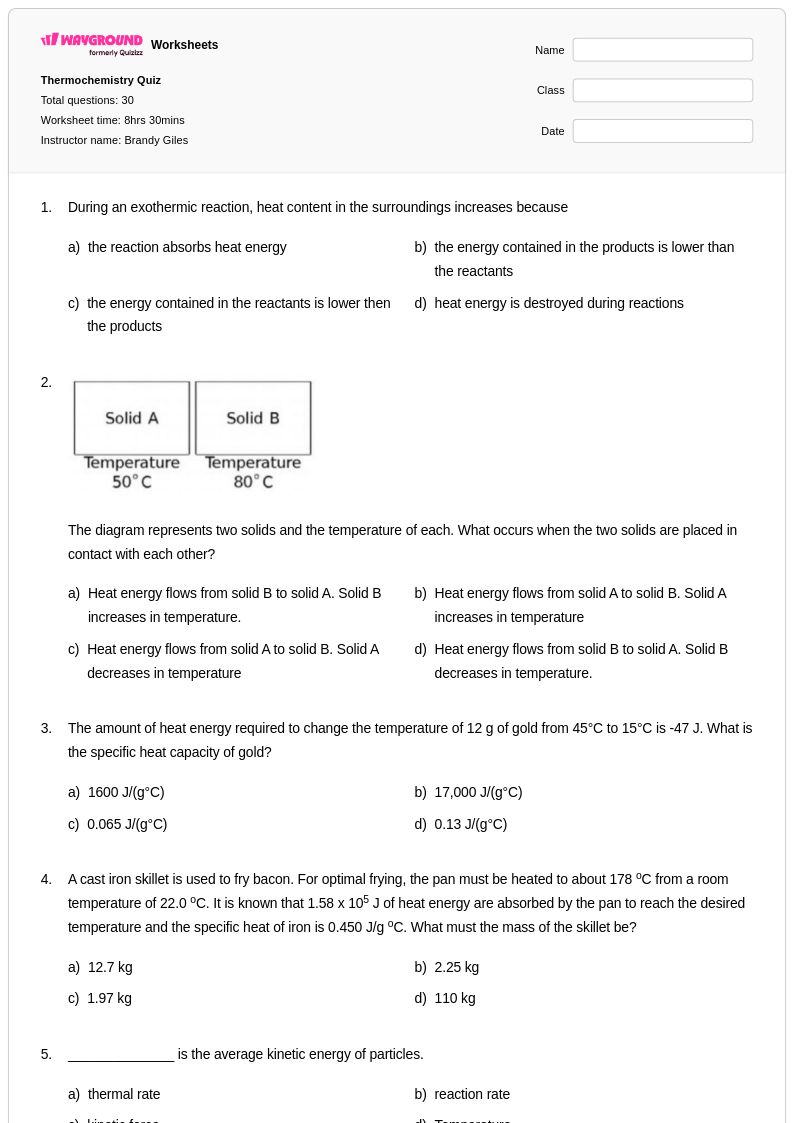
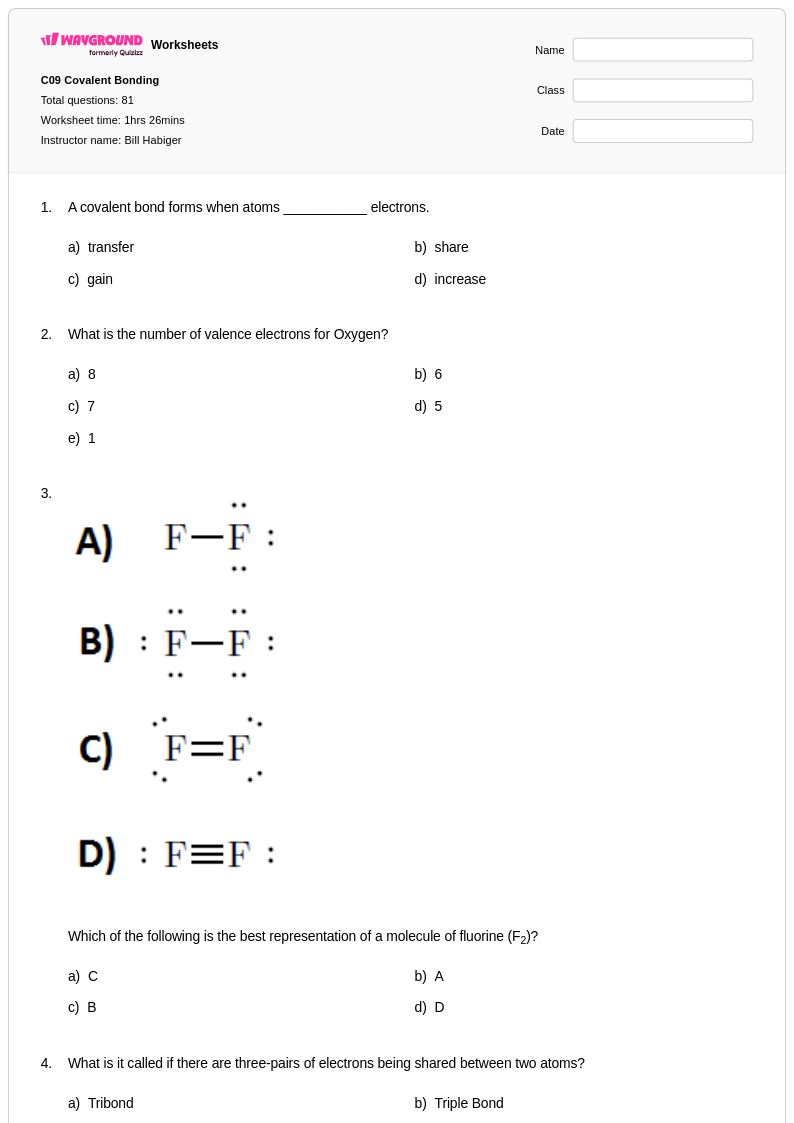
Year 10 enthalpy worksheets from Wayground offer free printables and practice problems with answer keys to help students master heat transfer calculations and thermodynamic concepts in chemistry.
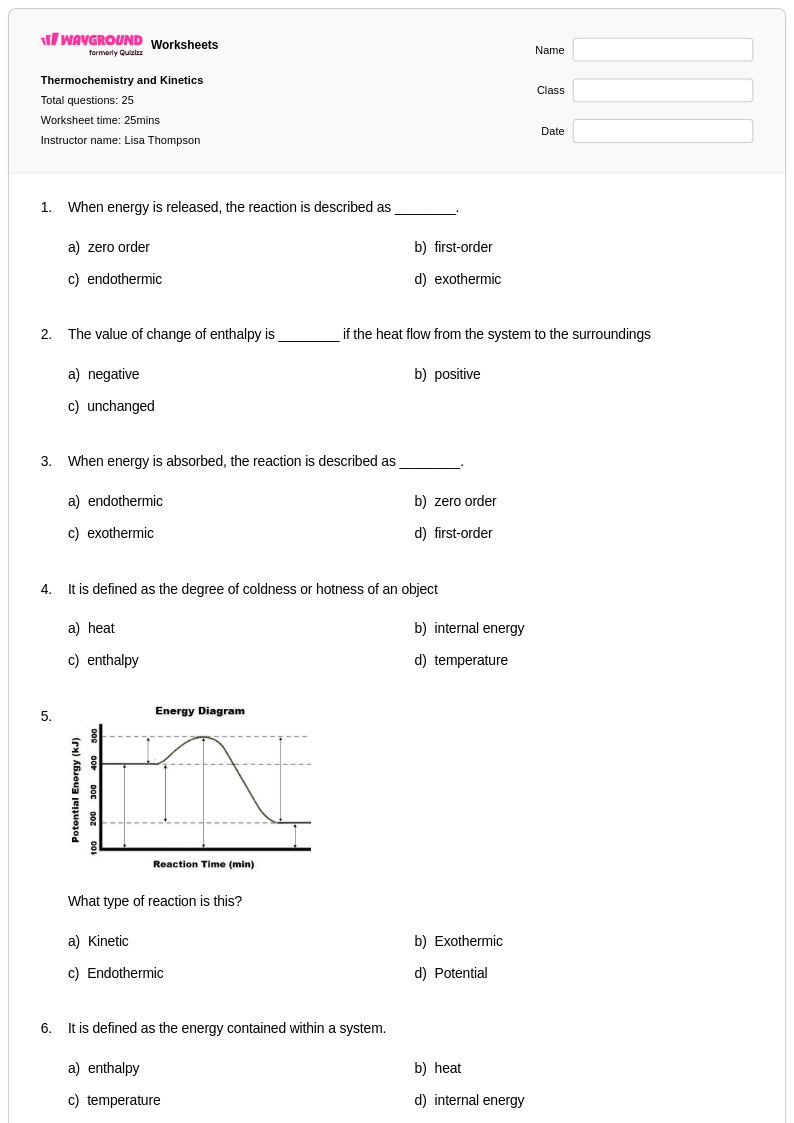
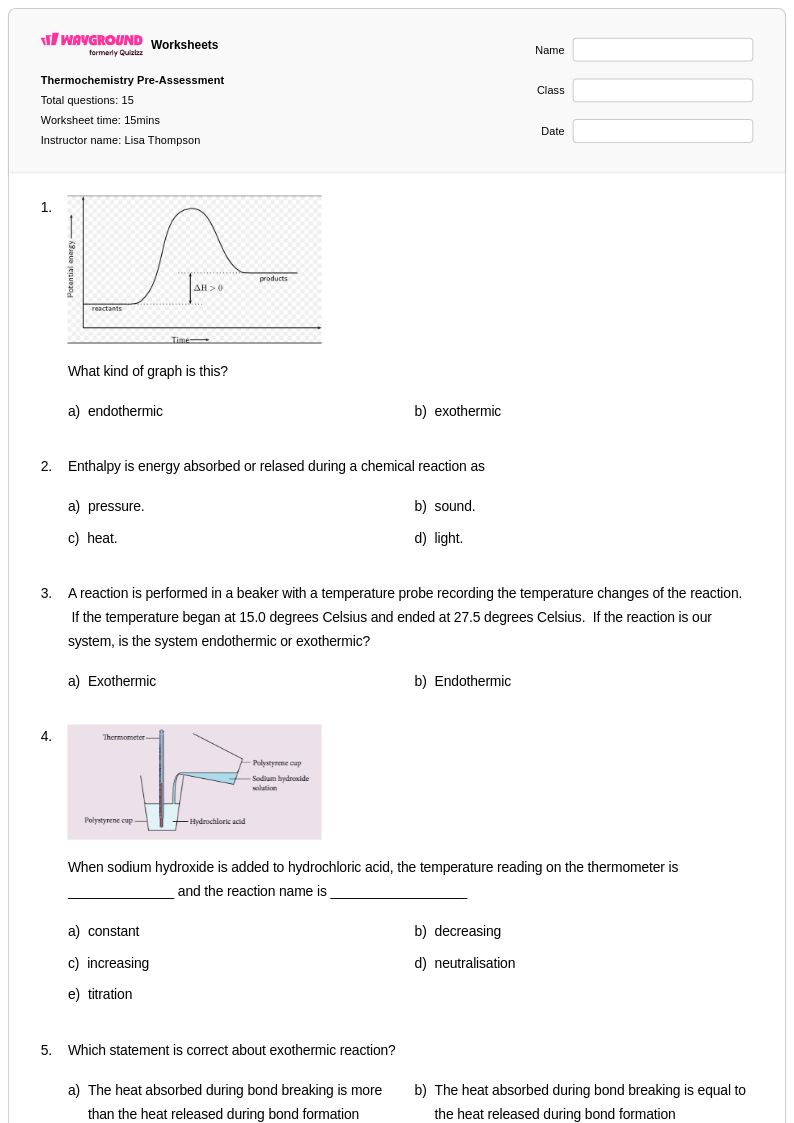
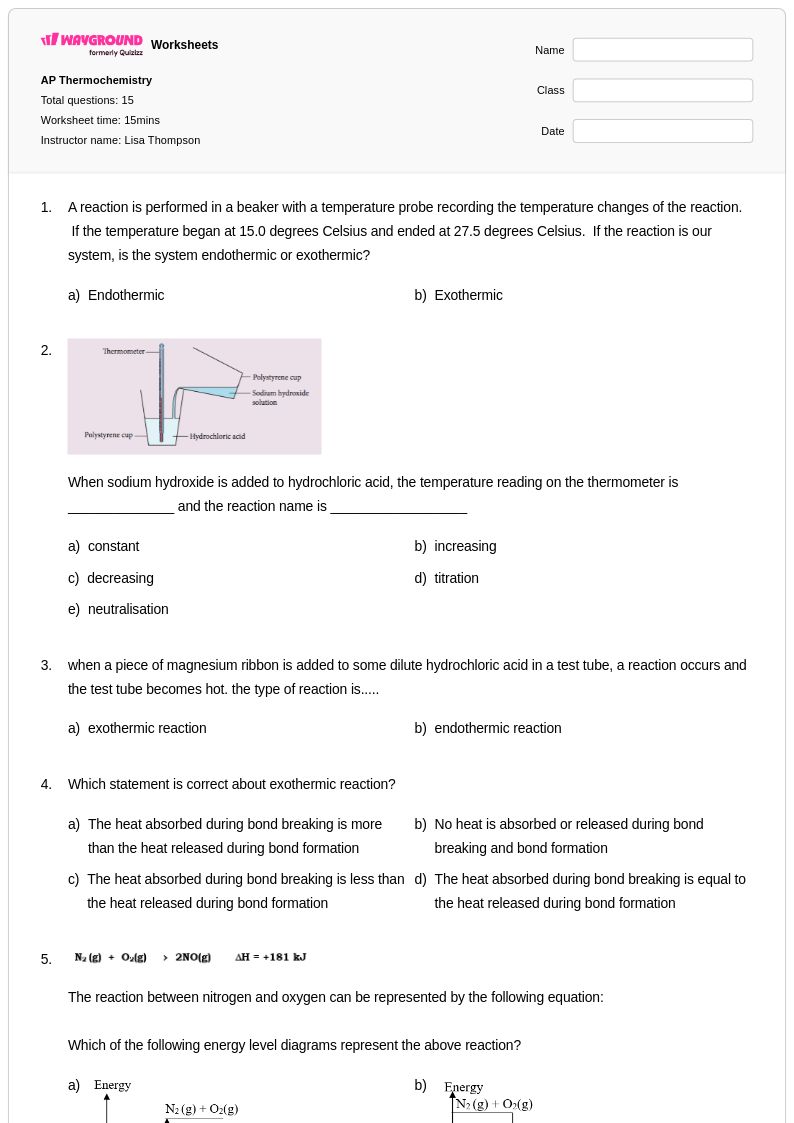
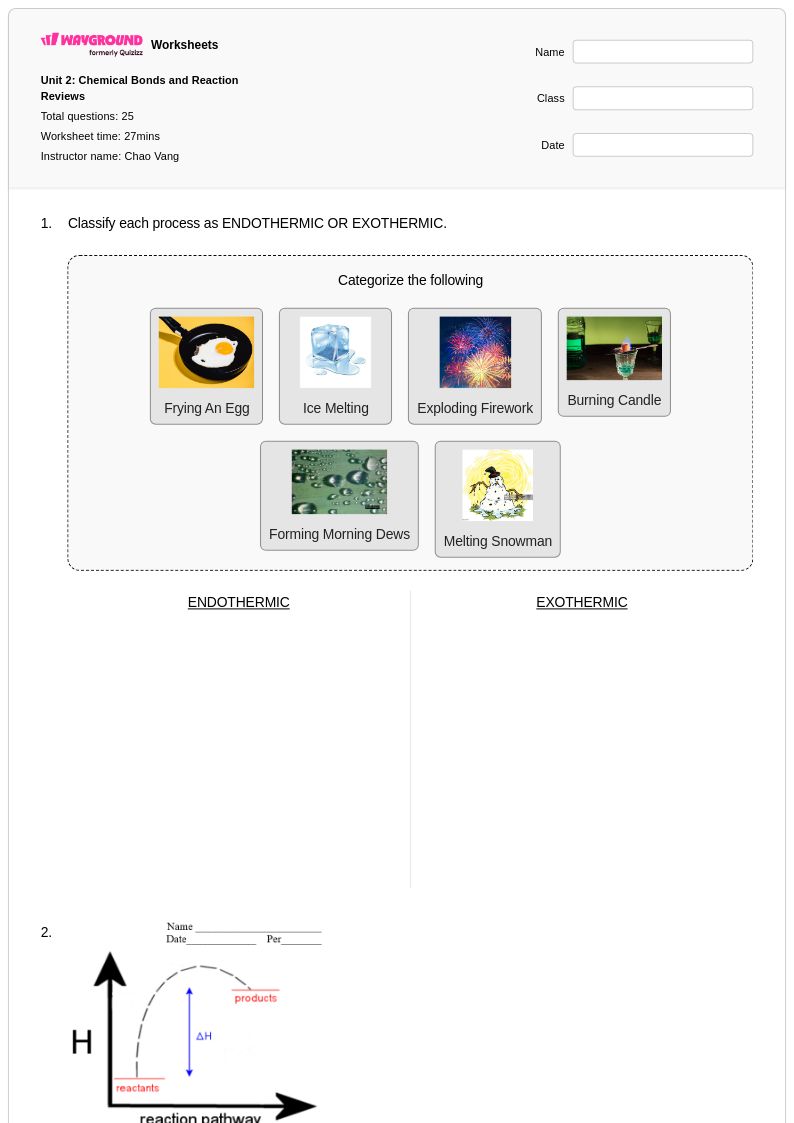
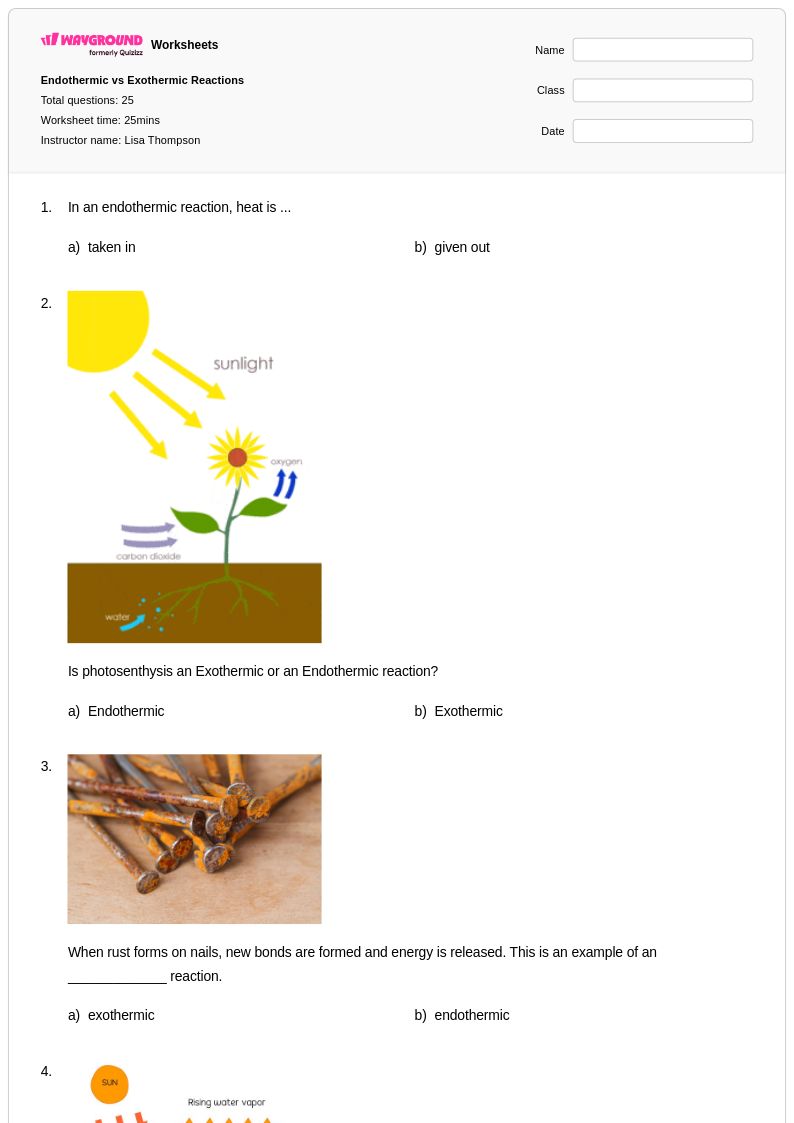
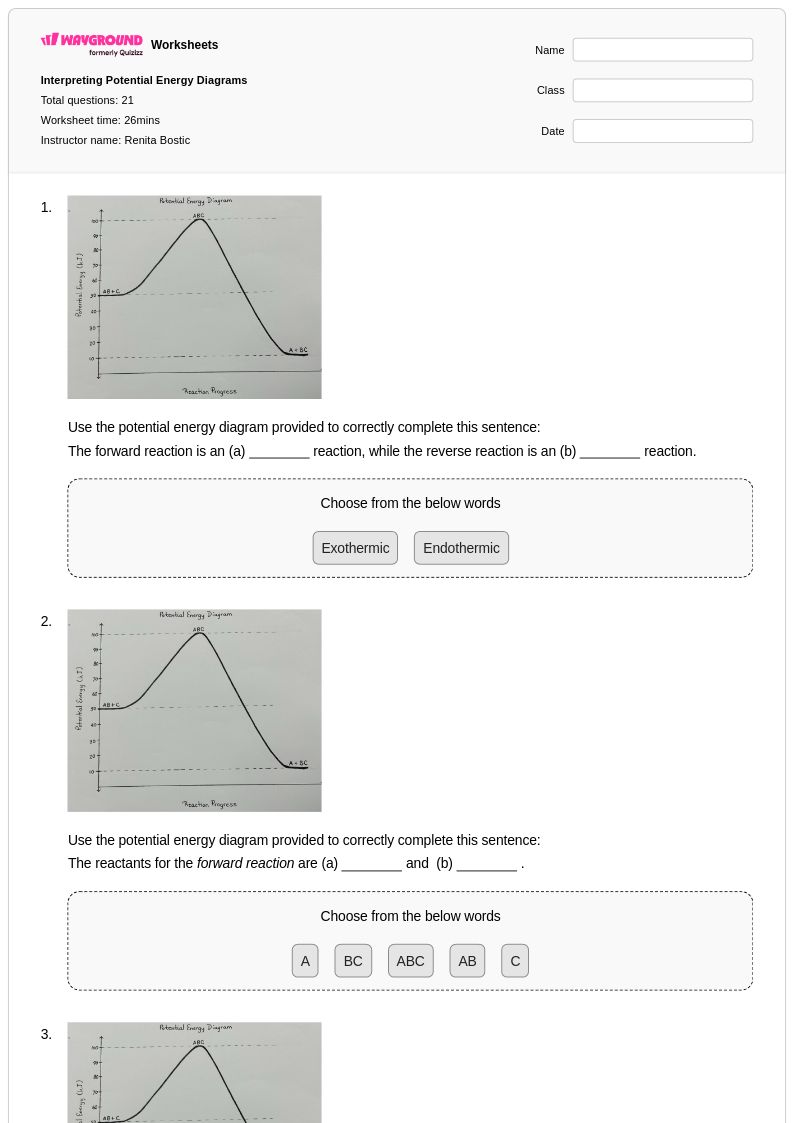
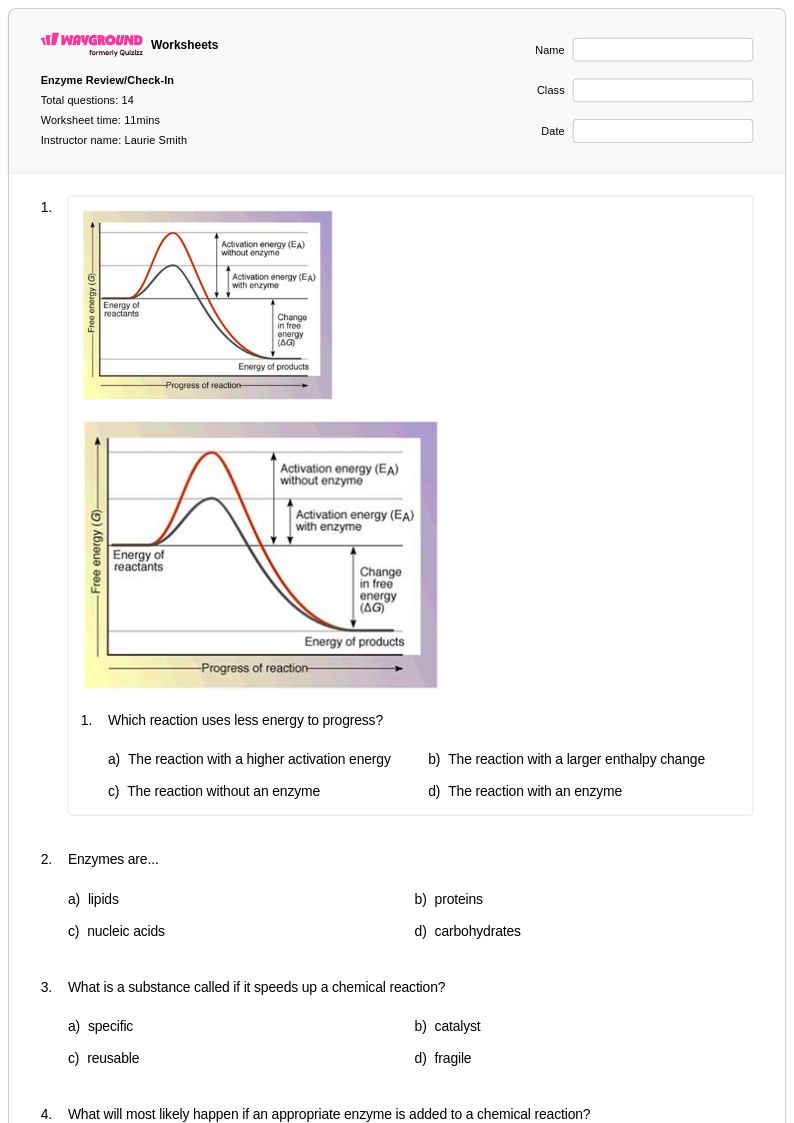
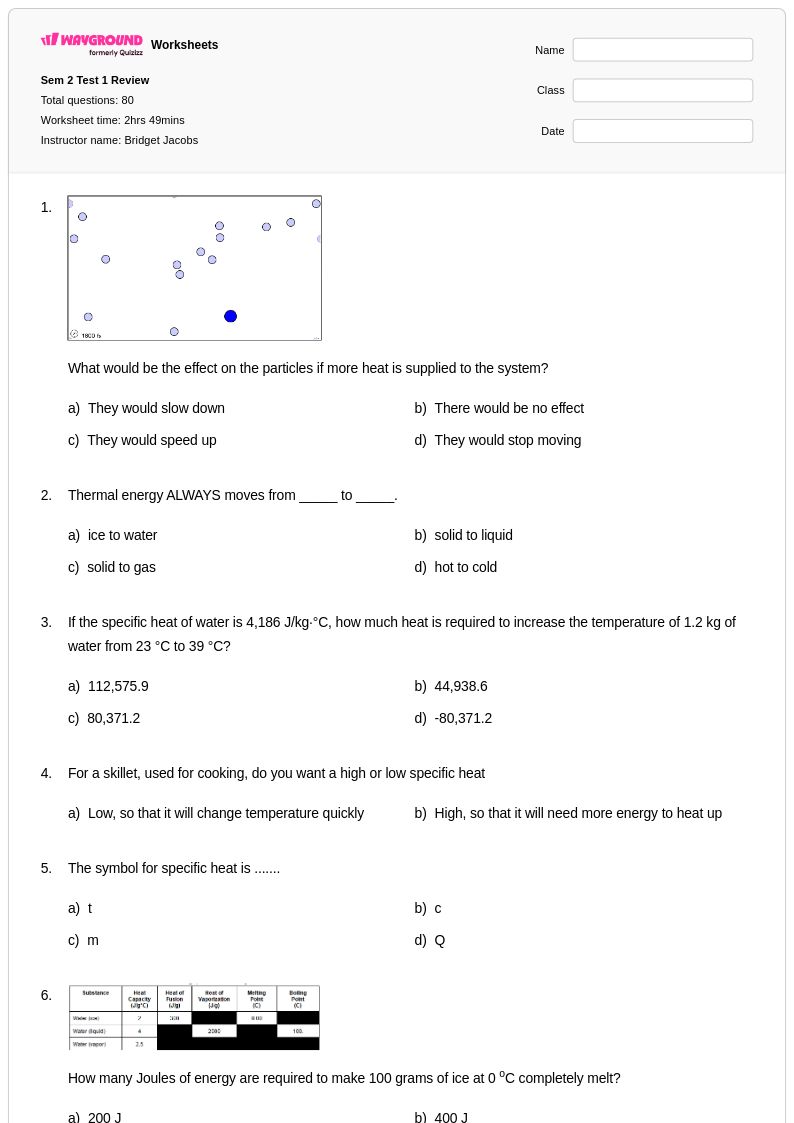
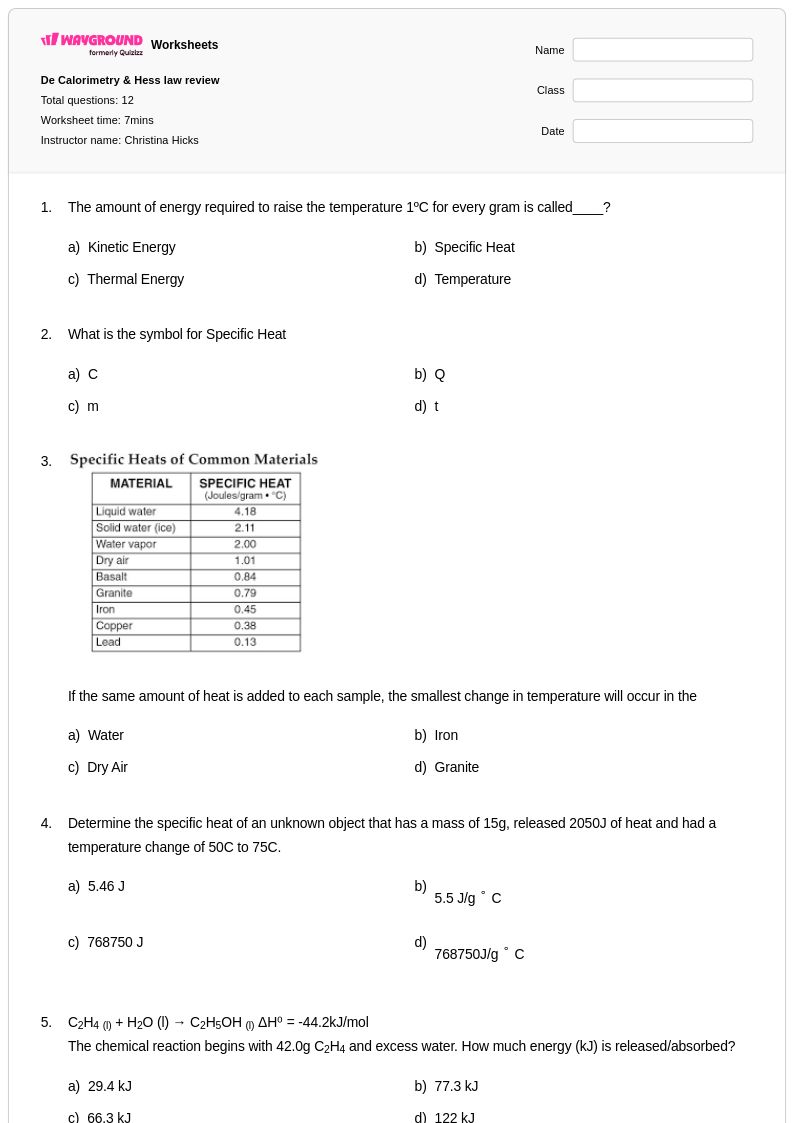
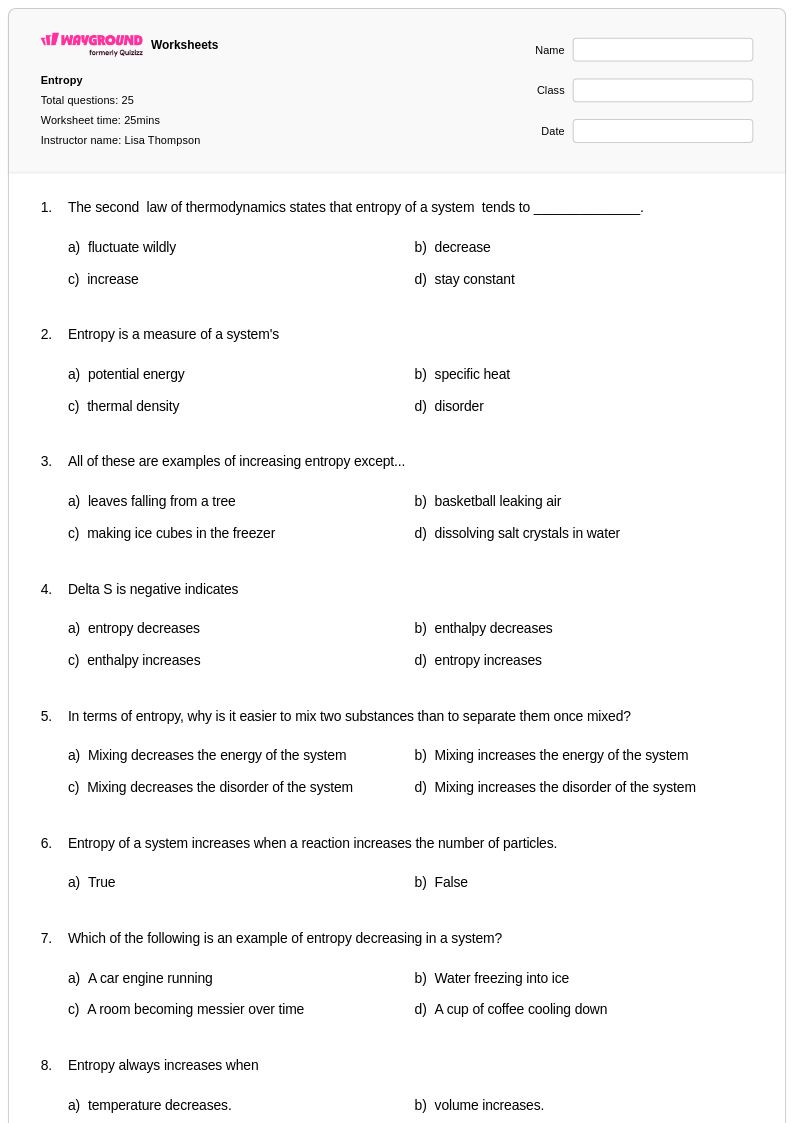
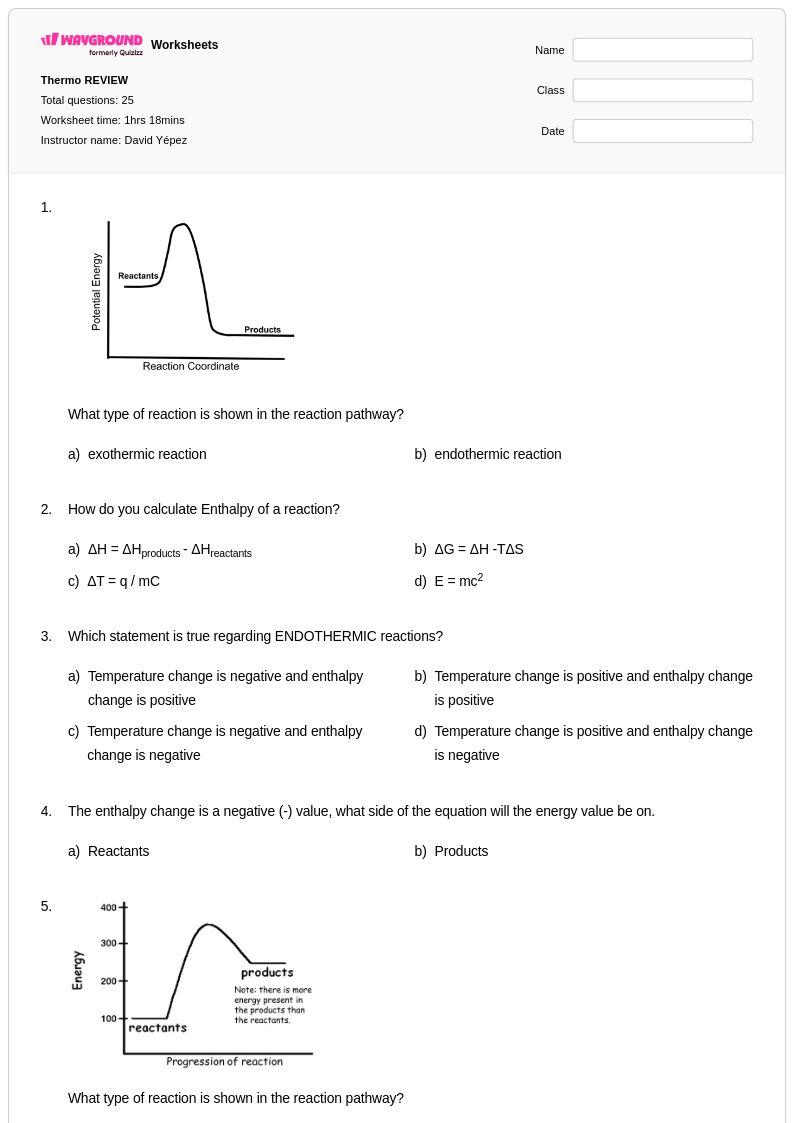
Enthalpy worksheets for Year 10 students available through Wayground (formerly Quizizz) provide comprehensive coverage of this fundamental thermodynamics concept that bridges chemistry and physics understanding. These expertly crafted resources help students master the calculation of enthalpy changes in chemical reactions, understand the relationship between energy absorption and release, and interpret enthalpy diagrams with confidence. The collection includes detailed practice problems that guide learners through bond energy calculations, Hess's law applications, and standard enthalpy of formation problems, while accompanying answer keys enable self-assessment and independent learning. Students develop critical analytical skills as they work through free printables that cover endothermic and exothermic processes, calorimetry calculations, and real-world applications of enthalpy in industrial processes, with pdf formats ensuring consistent accessibility across different learning environments.
Wayground (formerly Quizizz) empowers educators with millions of teacher-created enthalpy resources that streamline lesson planning and provide targeted support for diverse learning needs in Year 10 chemistry classrooms. The platform's robust search and filtering capabilities allow teachers to quickly locate worksheets aligned with specific curriculum standards, whether focusing on introductory enthalpy concepts or advanced thermochemical equations. Differentiation tools enable seamless customization of problem difficulty levels and question types, supporting both remediation for struggling students and enrichment opportunities for advanced learners. The flexible format options, including printable worksheets and interactive digital versions, accommodate various teaching styles and classroom configurations while facilitating skill practice through immediate feedback mechanisms that help teachers identify learning gaps and adjust instruction accordingly.
FAQs
How do I teach enthalpy to high school chemistry students?
Start by grounding students in the concept of a system and its surroundings, then introduce enthalpy as the heat exchanged at constant pressure during a chemical or physical process. Use concrete examples like hand warmers (exothermic) and cold packs (endothermic) before moving into formal calculations. From there, build toward Hess's Law by showing students how enthalpy changes are additive across reaction steps, which provides a scaffold for multi-step thermochemical problems.
What exercises help students practice enthalpy calculations?
Effective practice includes enthalpy of formation and combustion calculations, Hess's Law multi-step problems, and calorimetry problems that require students to connect experimental heat measurements to enthalpy changes. Worksheets that progress from single-step calculations to complex thermochemical equations help students build fluency incrementally. Including real-world contexts, such as fuel combustion or phase changes, reinforces why these calculations matter beyond the classroom.
What mistakes do students commonly make when solving enthalpy problems?
One of the most frequent errors is mishandling signs: students often confuse exothermic and endothermic conventions and assign incorrect positive or negative values to ΔH. When applying Hess's Law, they frequently forget to reverse the sign of ΔH when flipping a reaction or to multiply ΔH by a stoichiometric coefficient when scaling a reaction. Students also struggle with enthalpy of formation problems when they fail to account for the standard state of elements, incorrectly treating non-zero formation values for elemental substances.
How do I differentiate enthalpy worksheets for students at different skill levels?
For students who are still developing foundational skills, focus on single-step enthalpy change calculations with guided scaffolding before introducing multi-step Hess's Law problems. Advanced learners can be challenged with combined calorimetry and thermochemical equation problems or asked to derive enthalpy values from bond energy data. On Wayground, teachers can apply accommodations such as reduced answer choices to decrease cognitive load for struggling students, or enable Read Aloud for learners who benefit from auditory support, while other students receive default settings without disruption.
How do I use Wayground's enthalpy worksheets in my chemistry class?
Wayground's enthalpy worksheets are available as printable PDFs for traditional classroom use and in digital formats for technology-integrated environments, including the option to host them as a quiz directly on Wayground. Teachers can assign them as in-class practice, homework, or review before assessments. The included answer keys support independent student self-assessment and reduce grading time for teachers.