
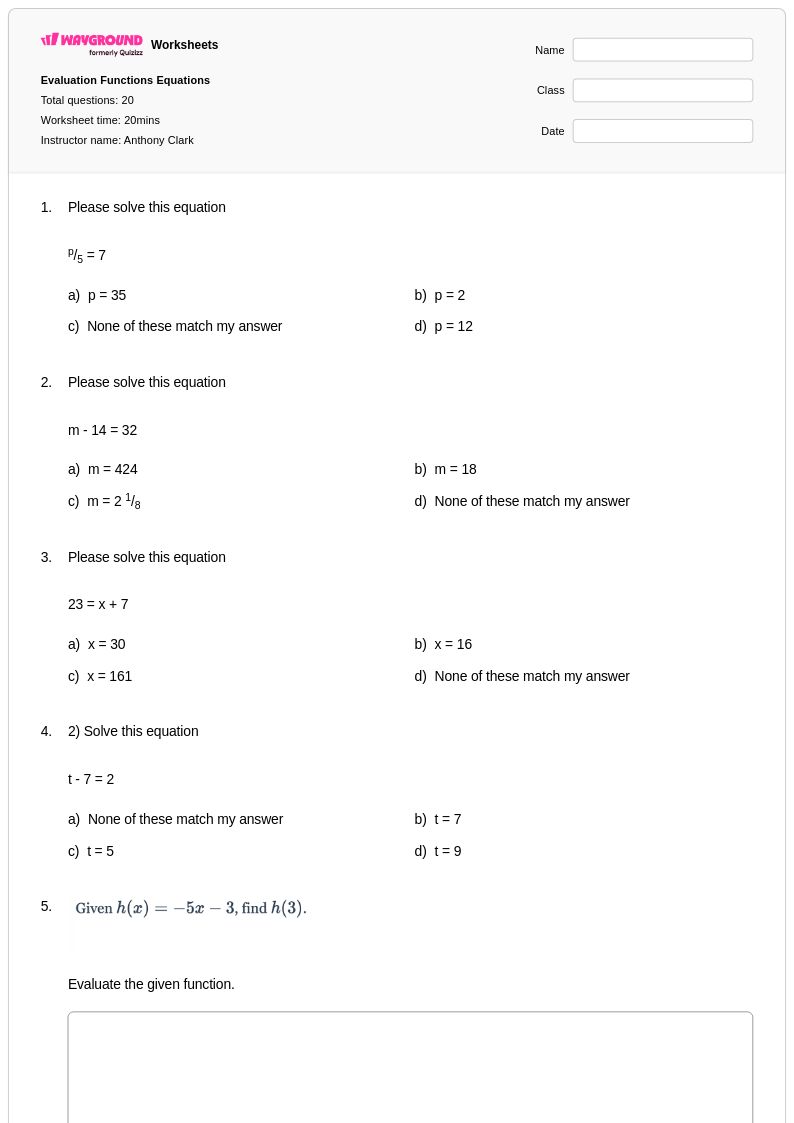
20 Q
9th - Uni
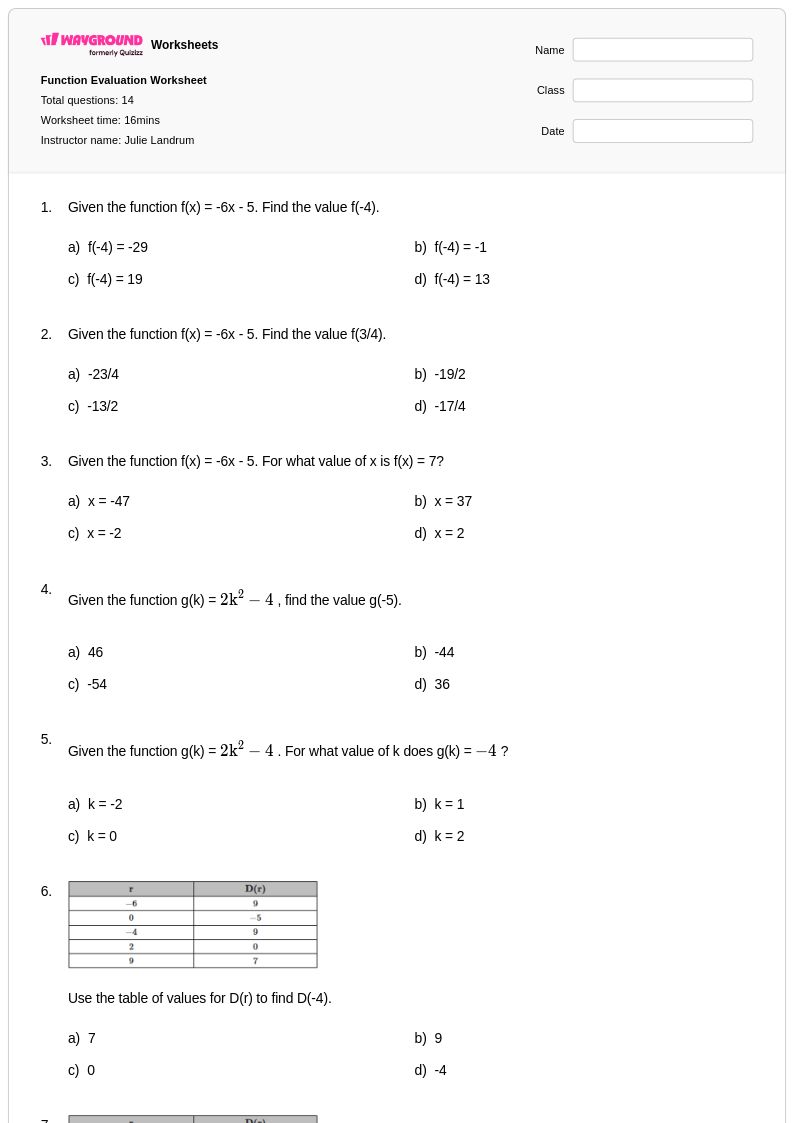
14 Q
10th
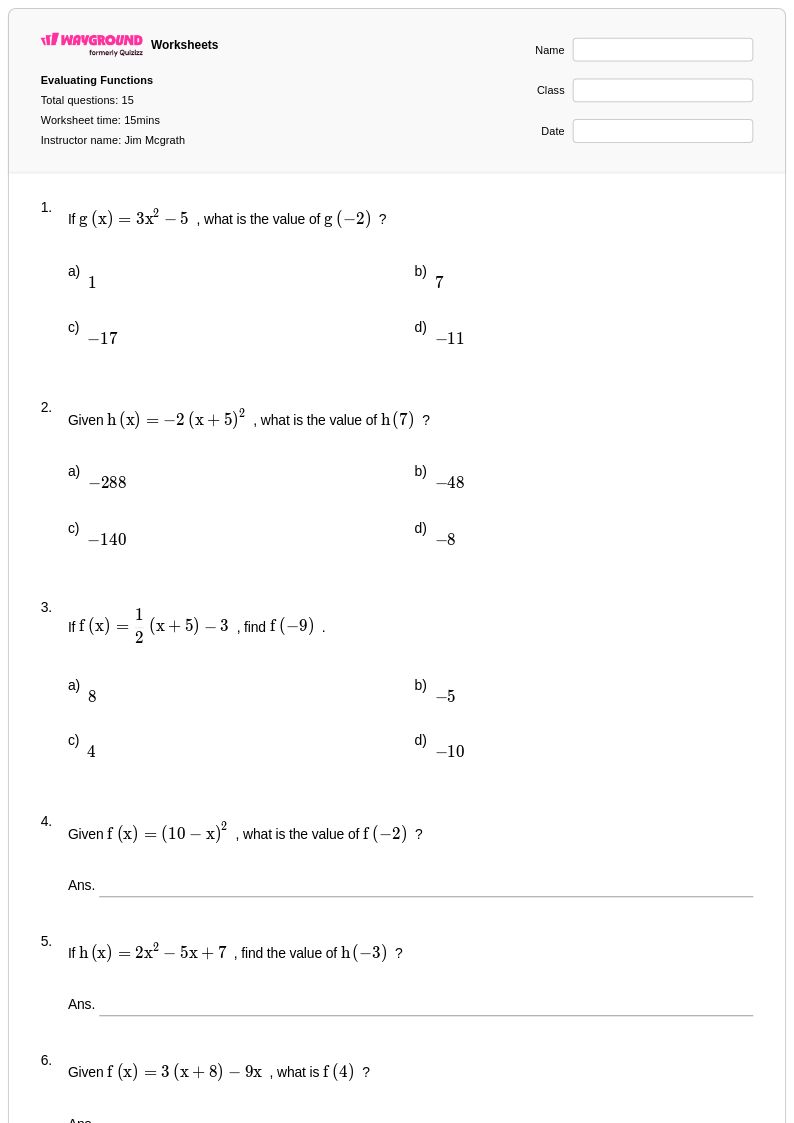
15 Q
9th
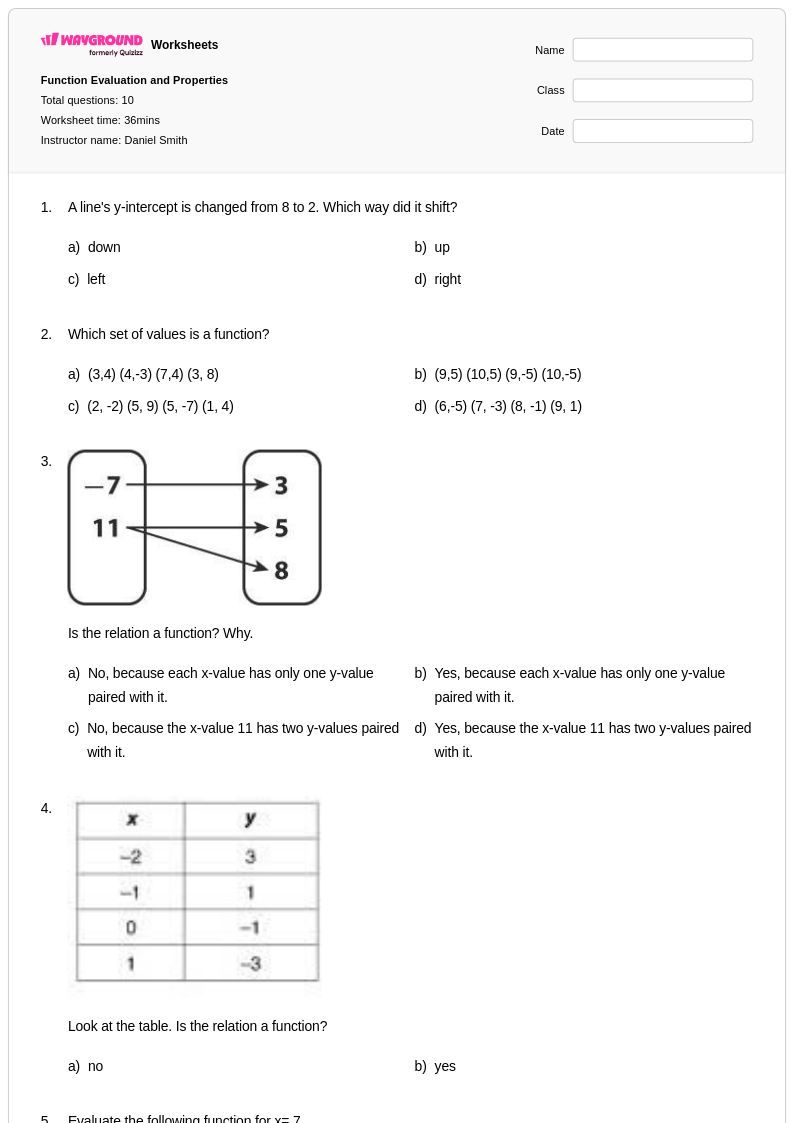
10 Q
10th
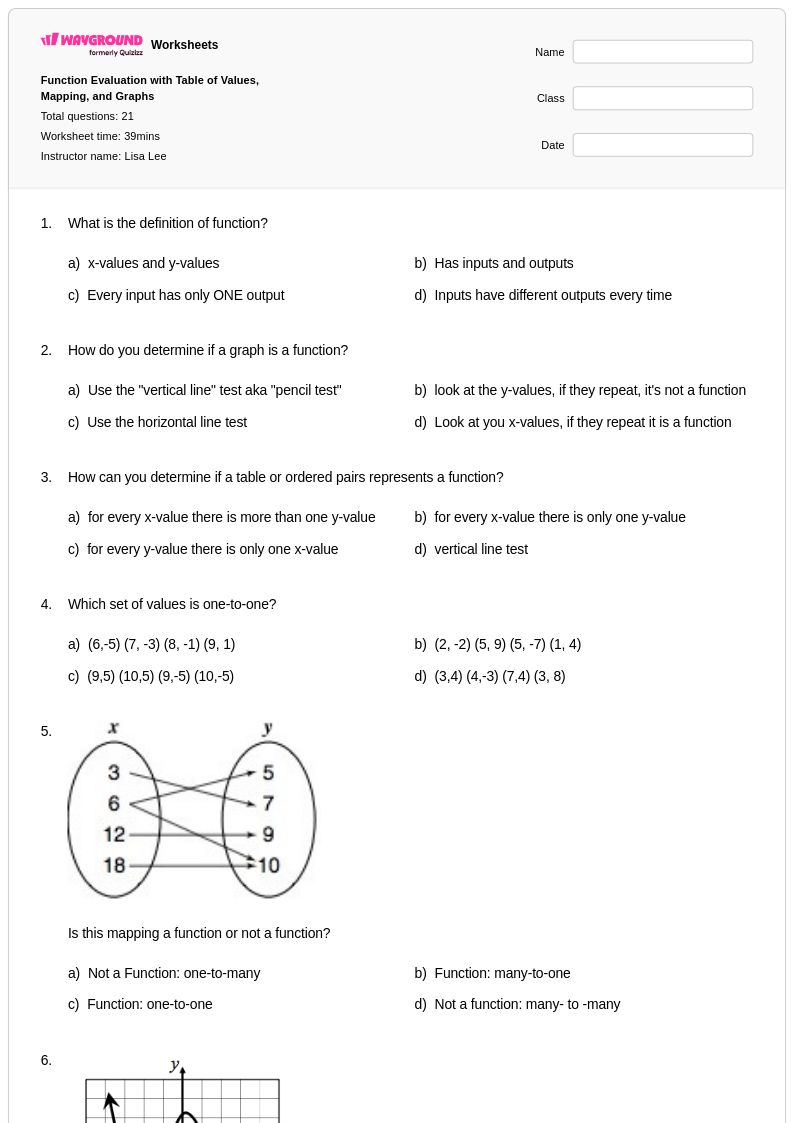
21 Q
8th
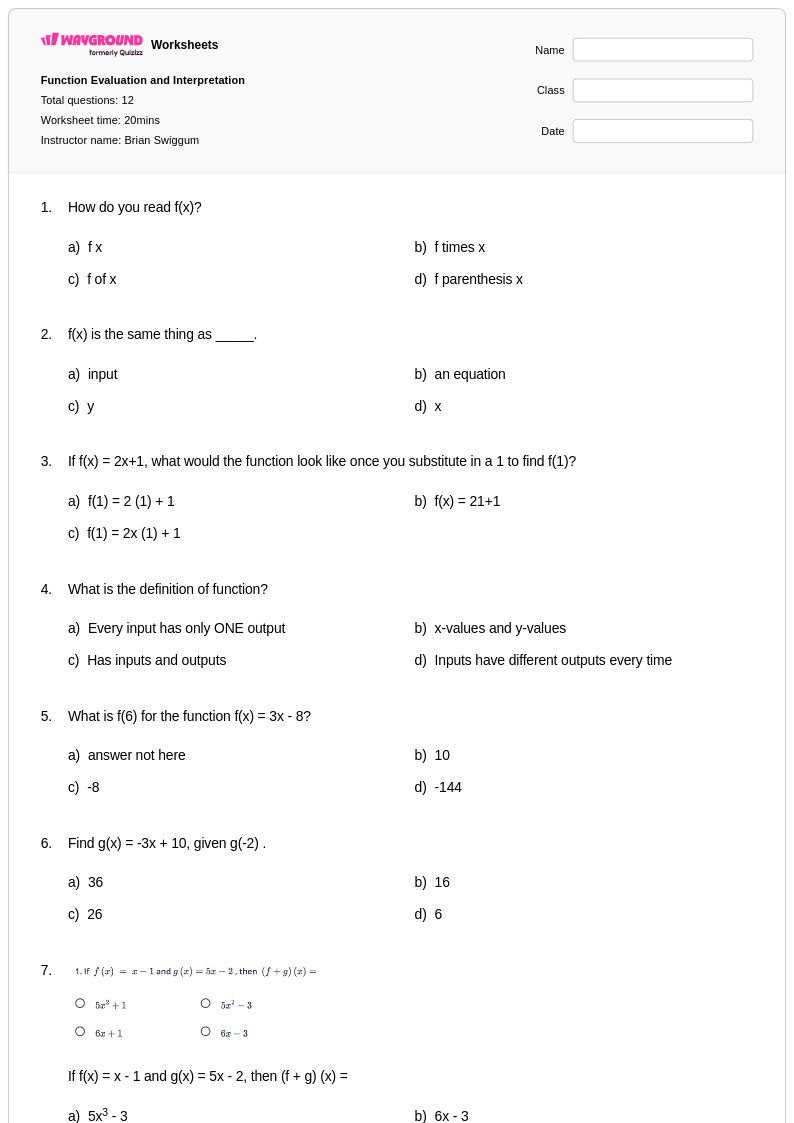
12 Q
11th - Uni
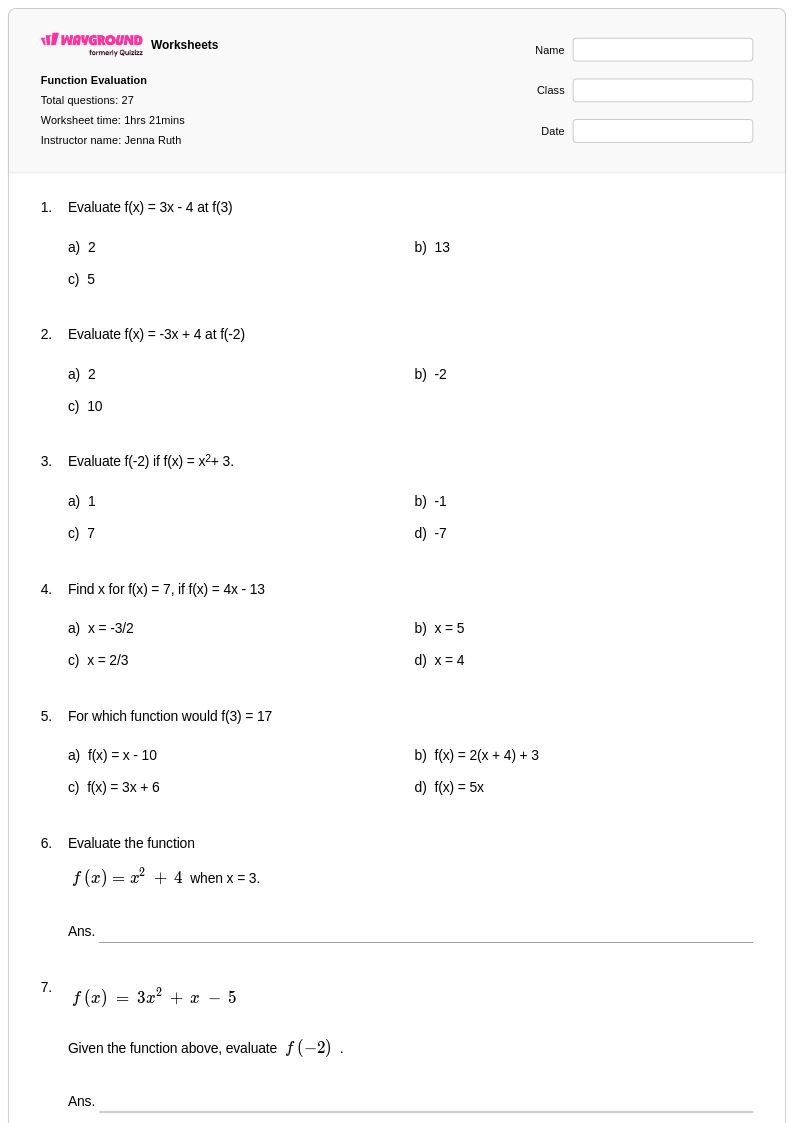
27 Q
8th - 11th

33 Q
9th
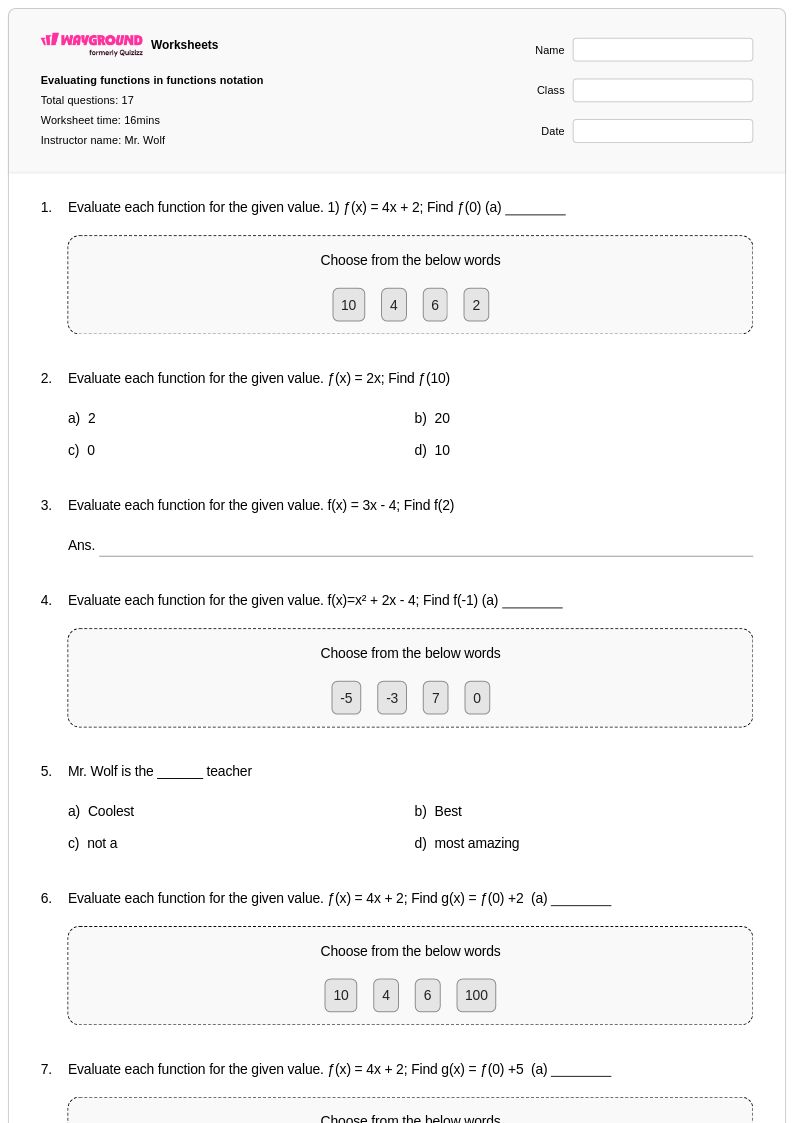
17 Q
9th
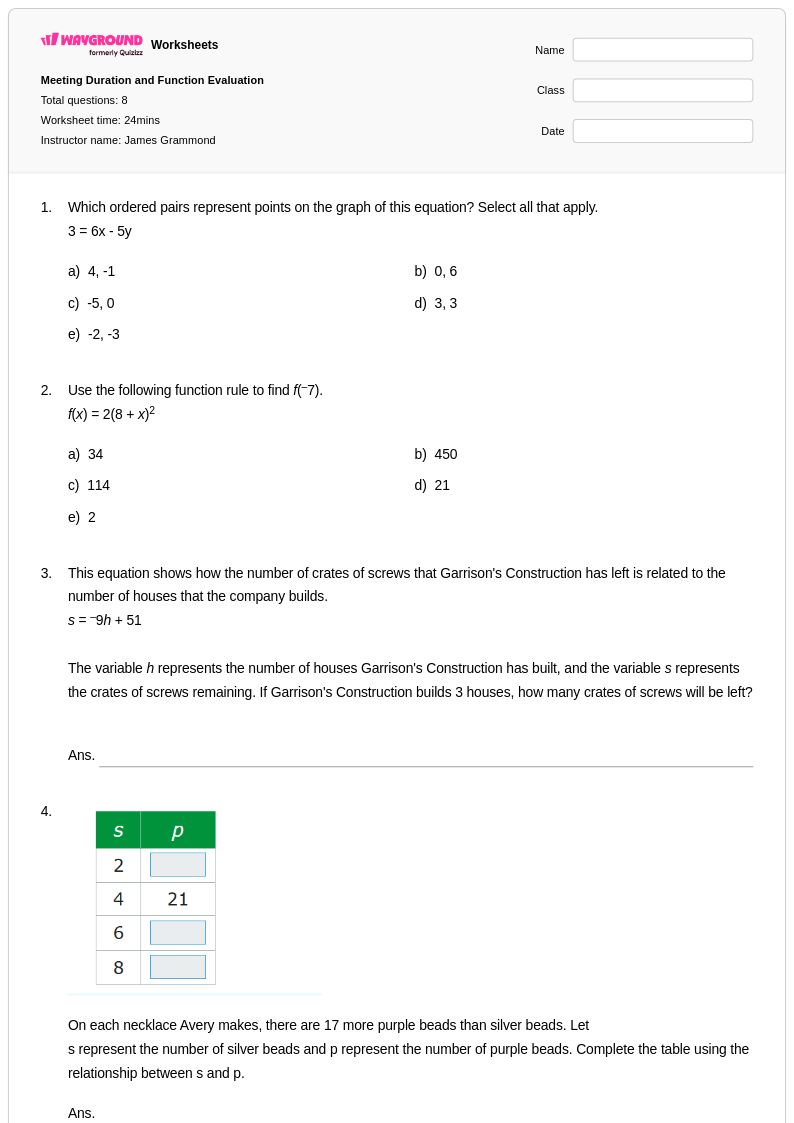
8 Q
8th
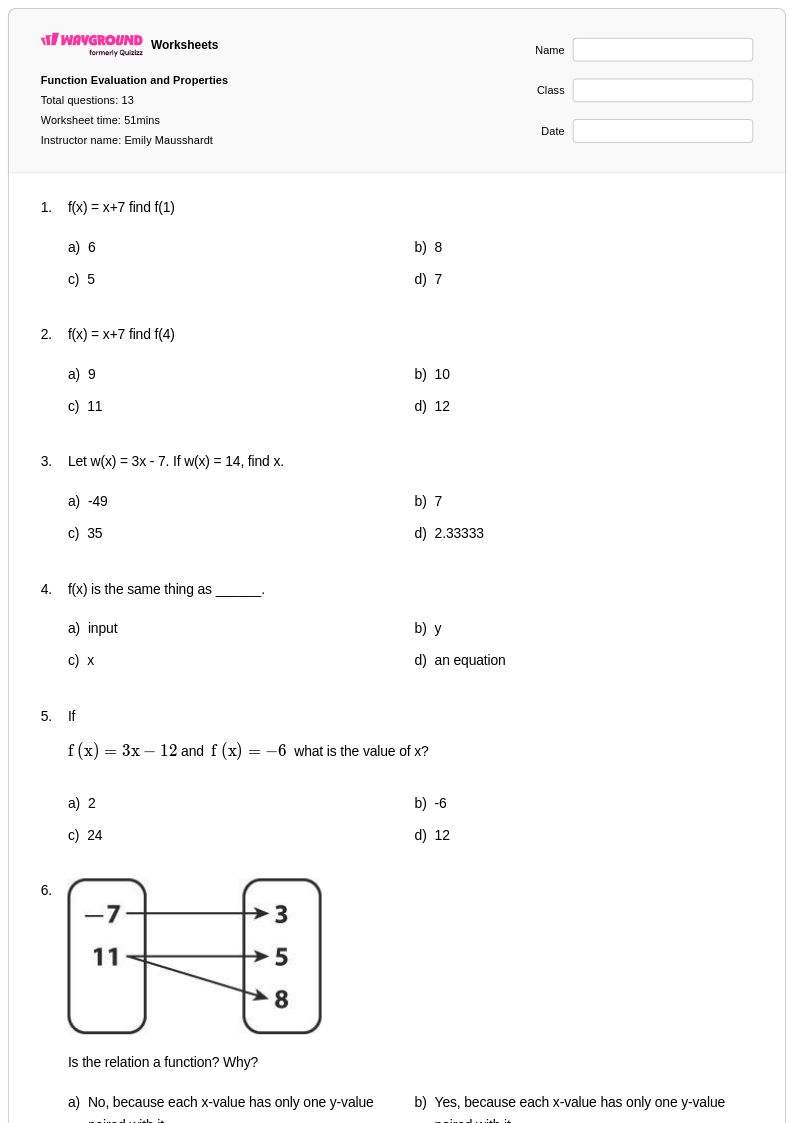
13 Q
9th - 12th
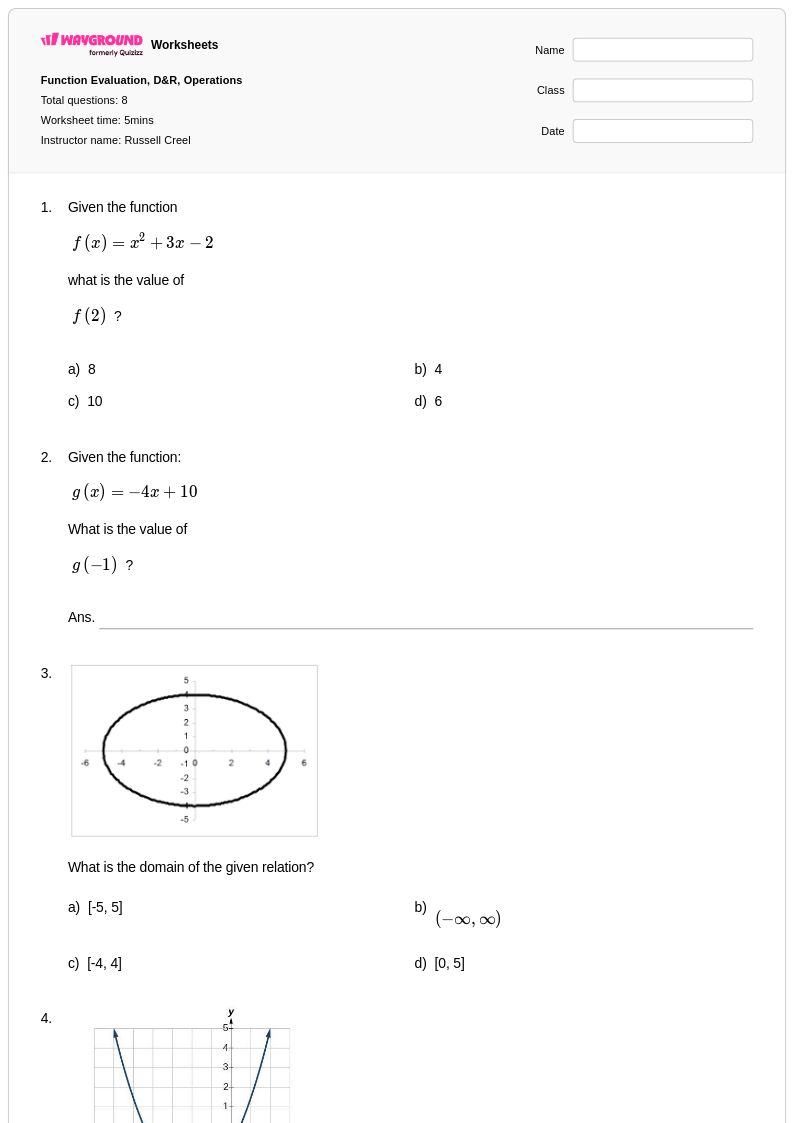
8 Q
8th - 12th
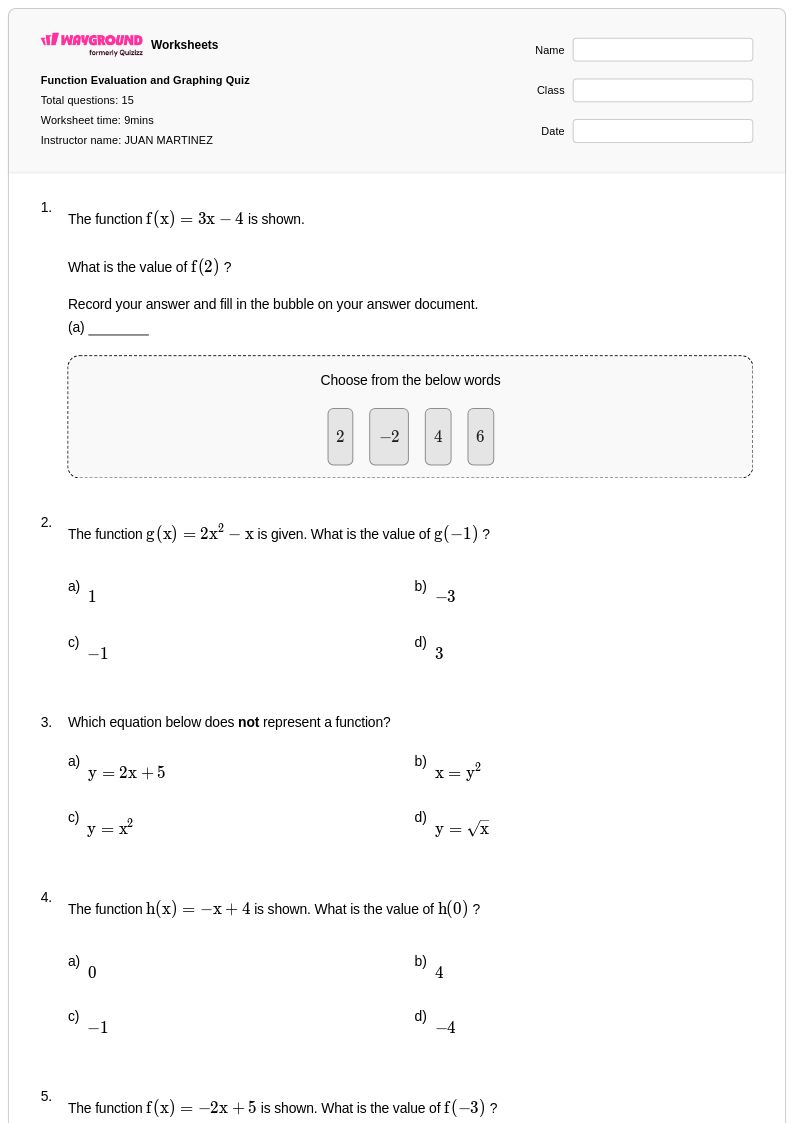
15 Q
9th
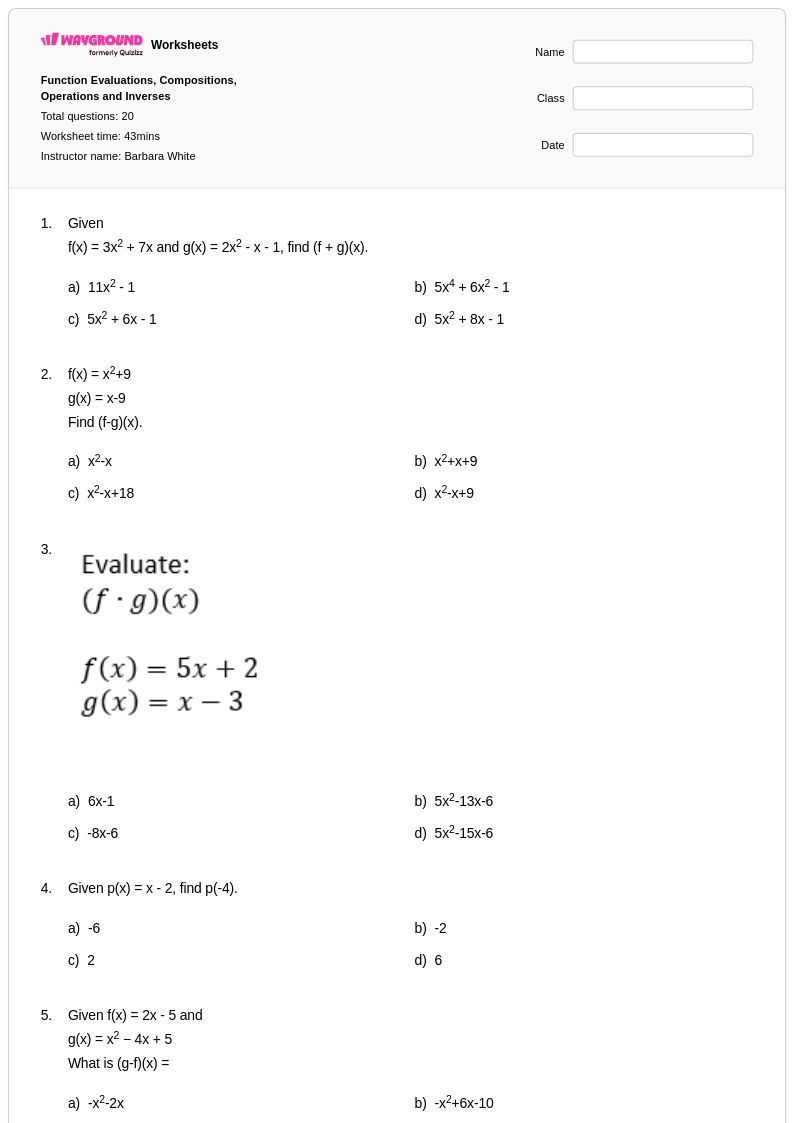
20 Q
10th - 12th
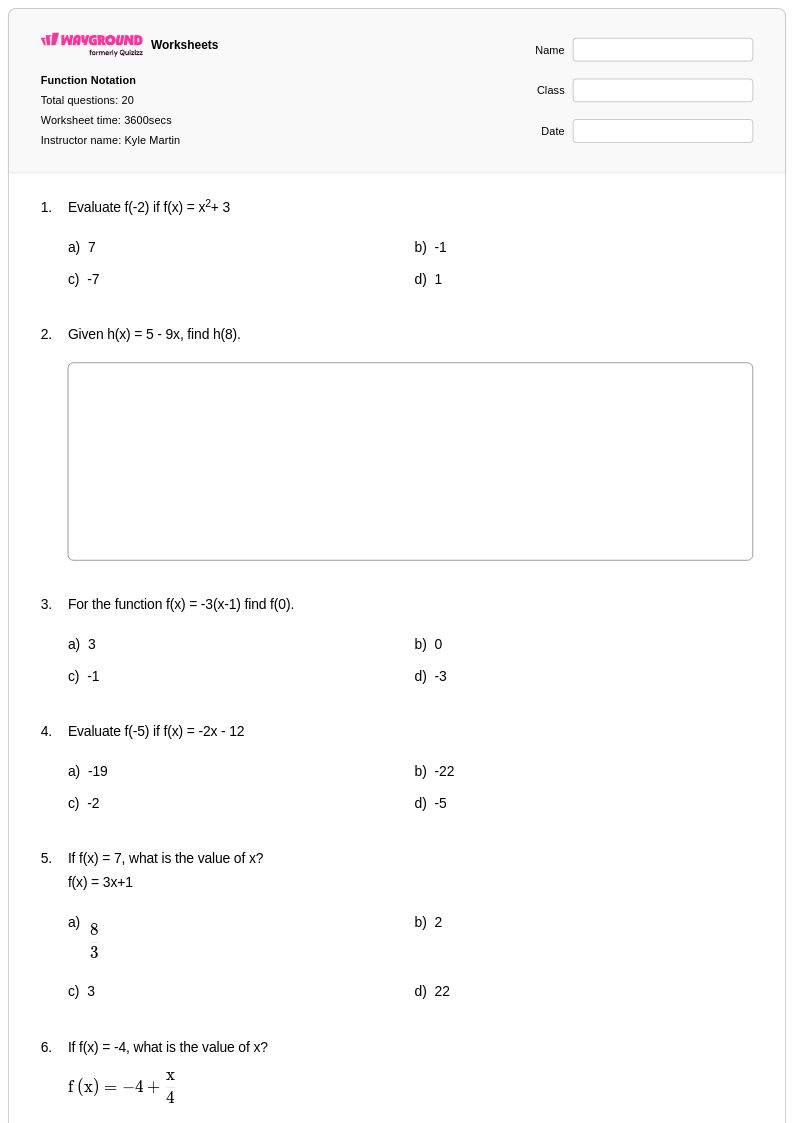
20 Q
9th
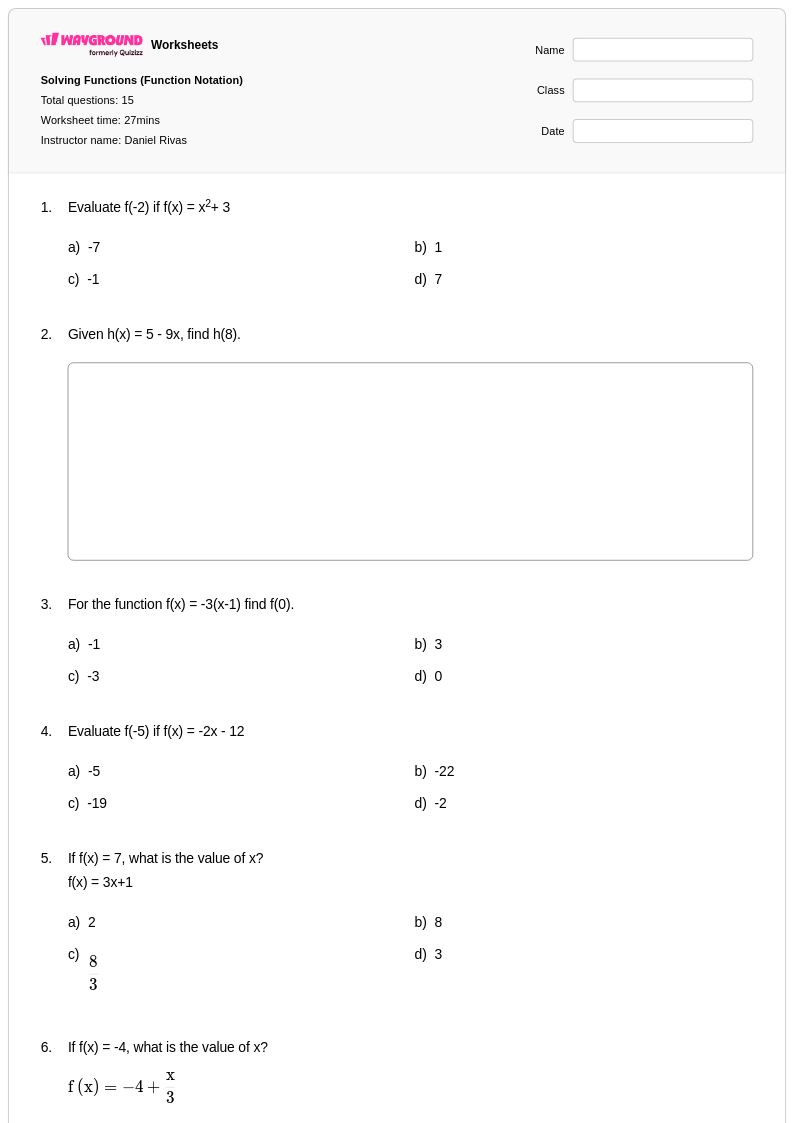
15 Q
8th
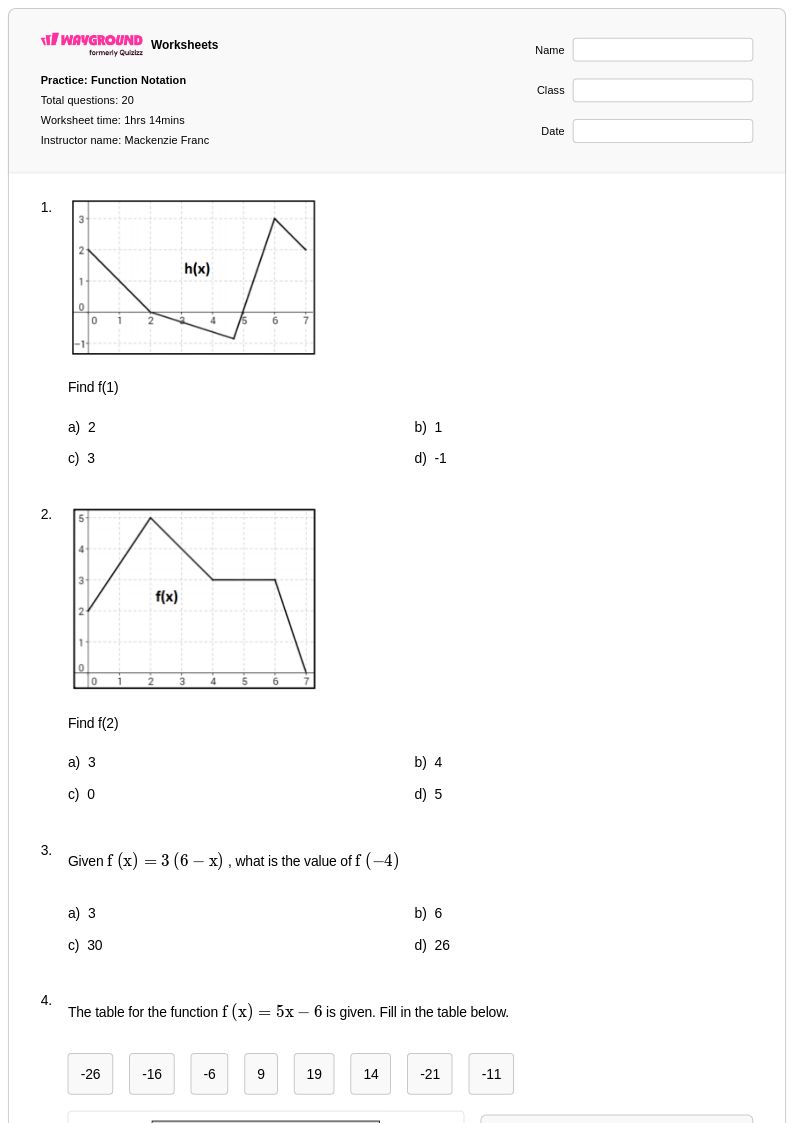
20 Q
9th
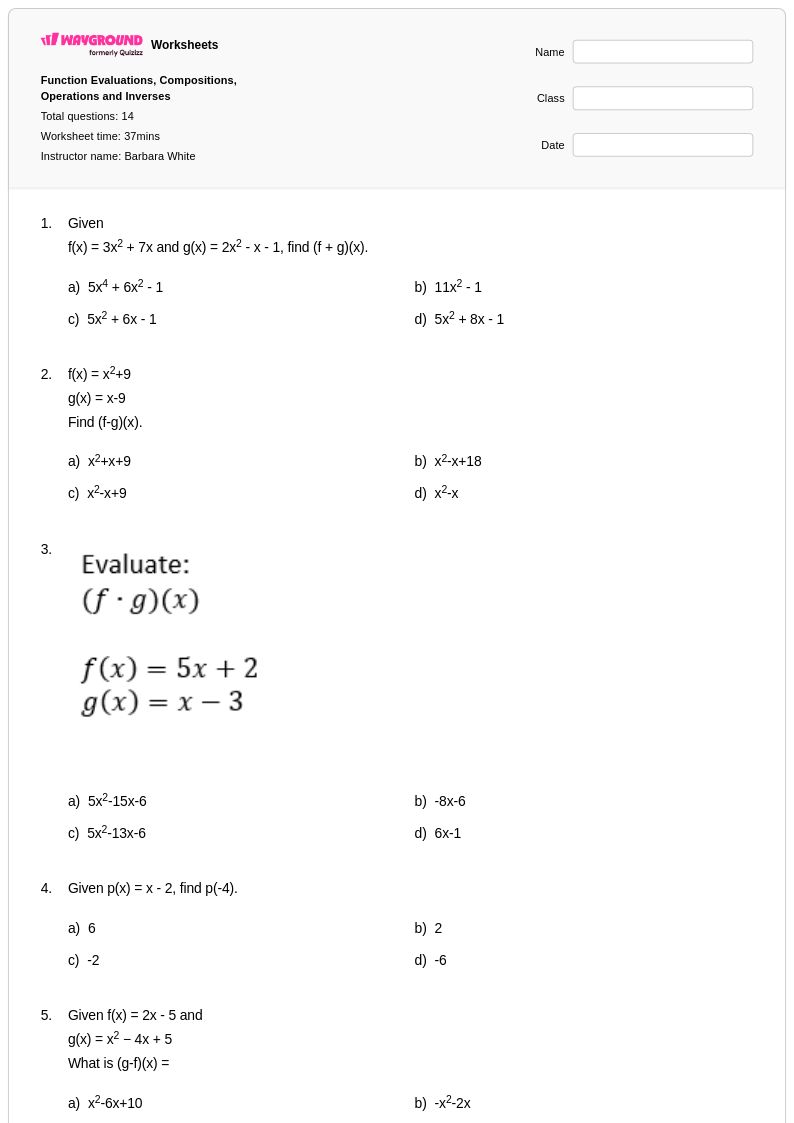
14 Q
10th - 12th
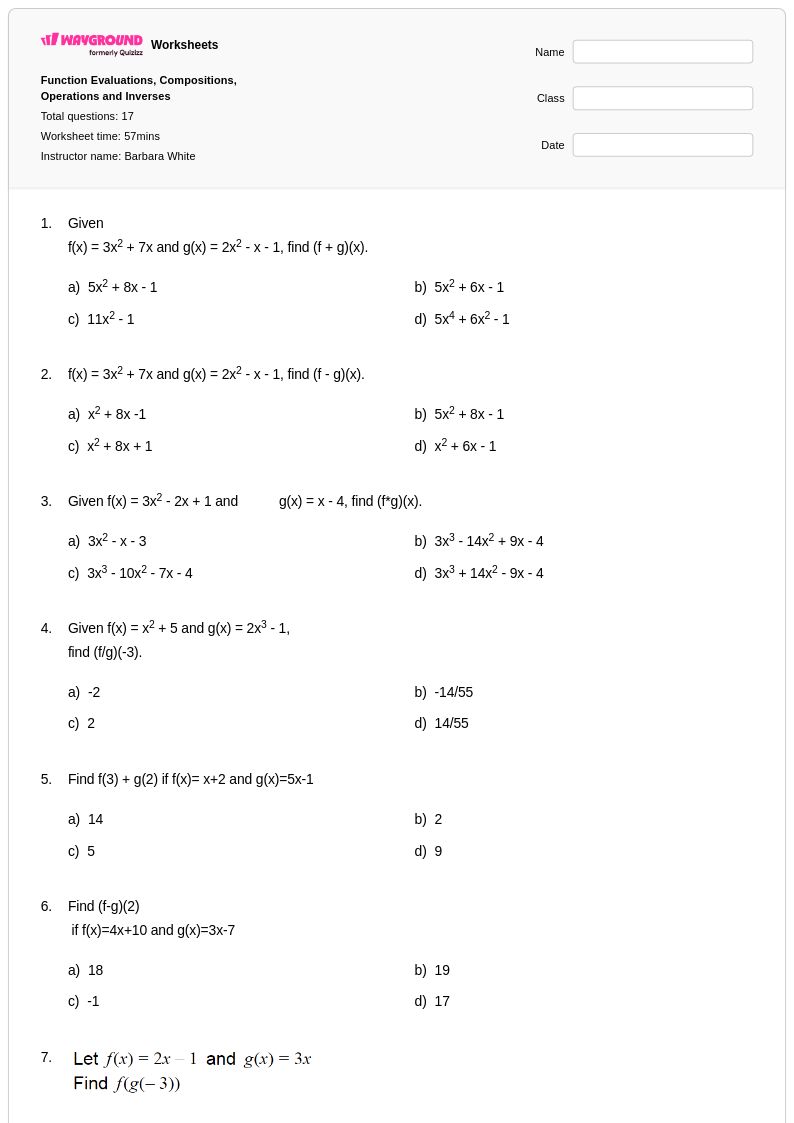
17 Q
9th - 11th
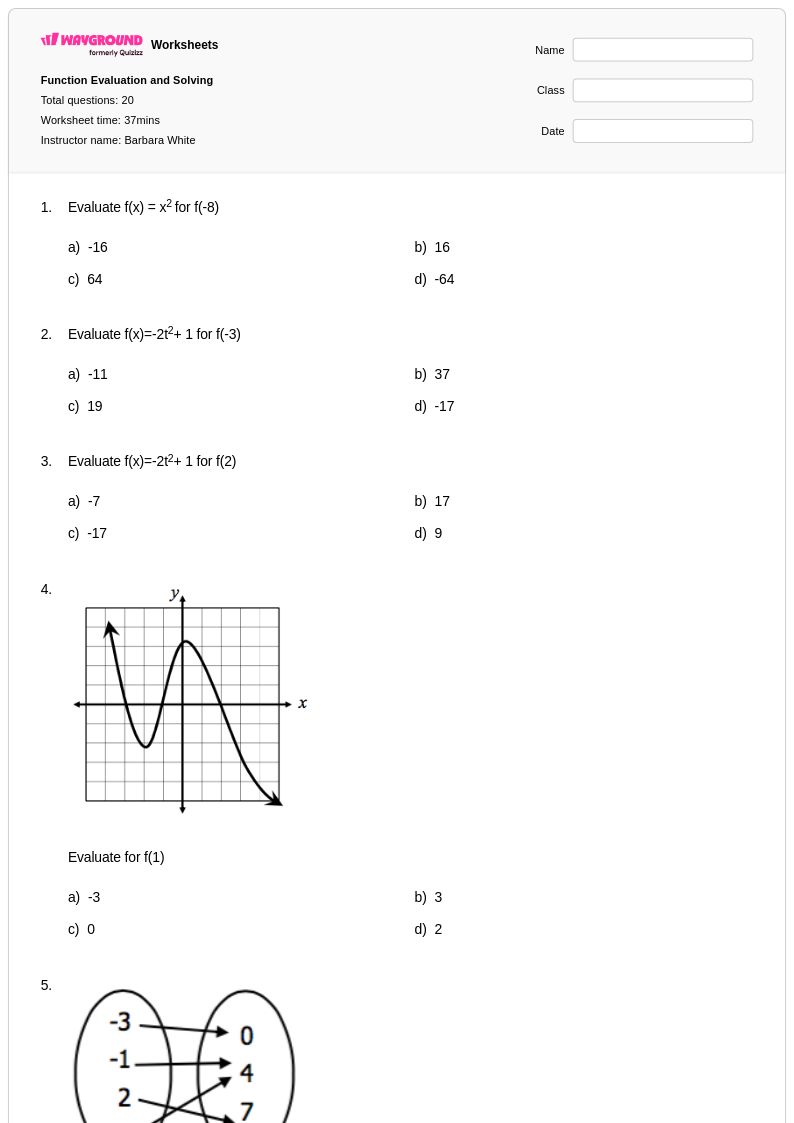
20 Q
8th - 9th
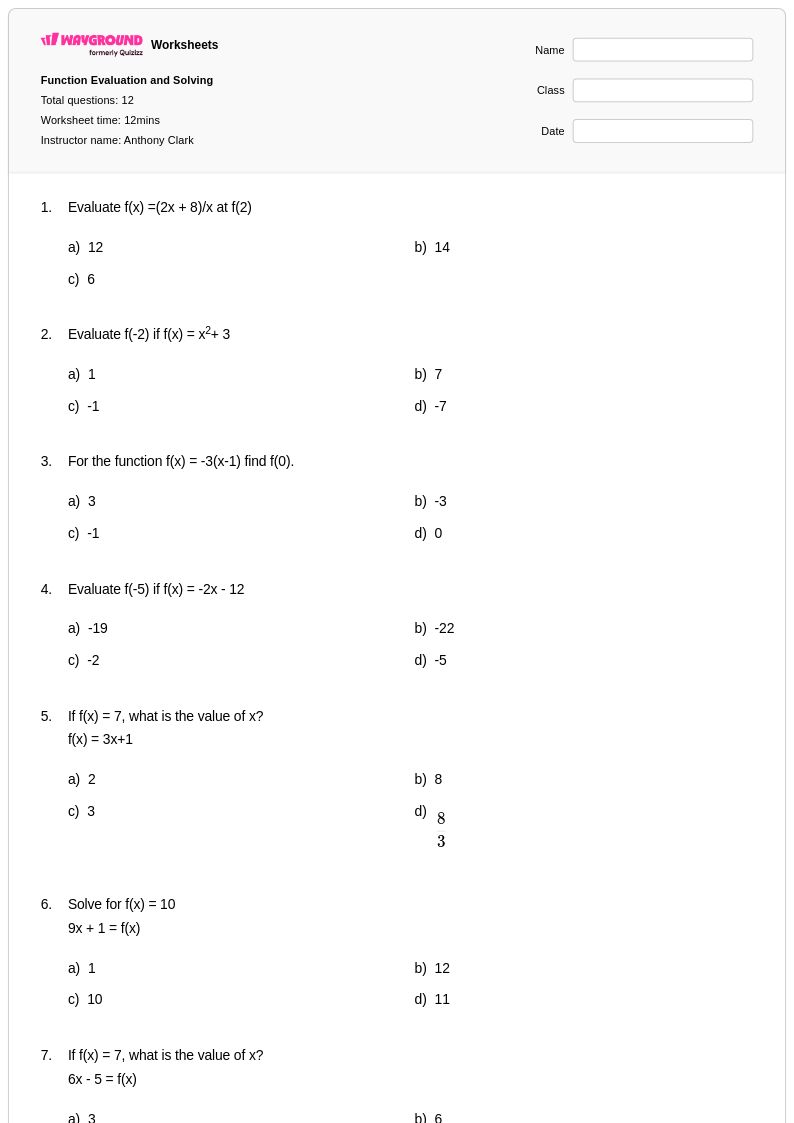
12 Q
9th - Uni
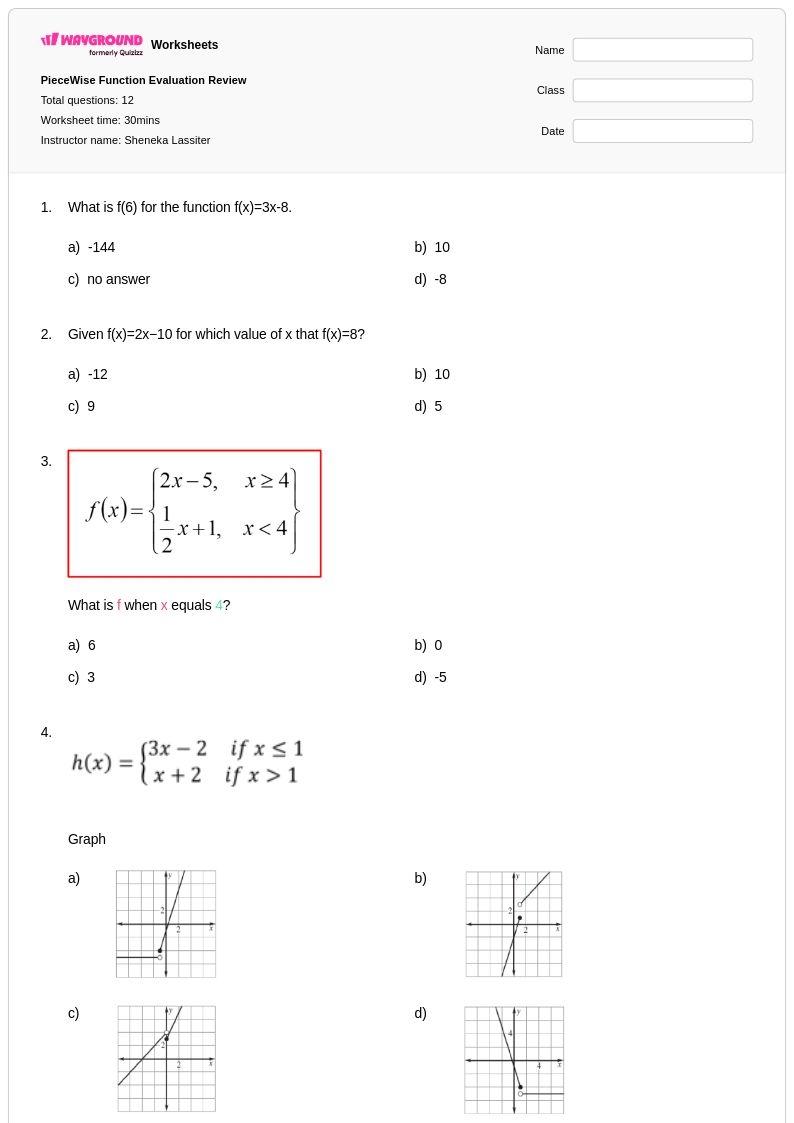
12 Q
9th - 12th
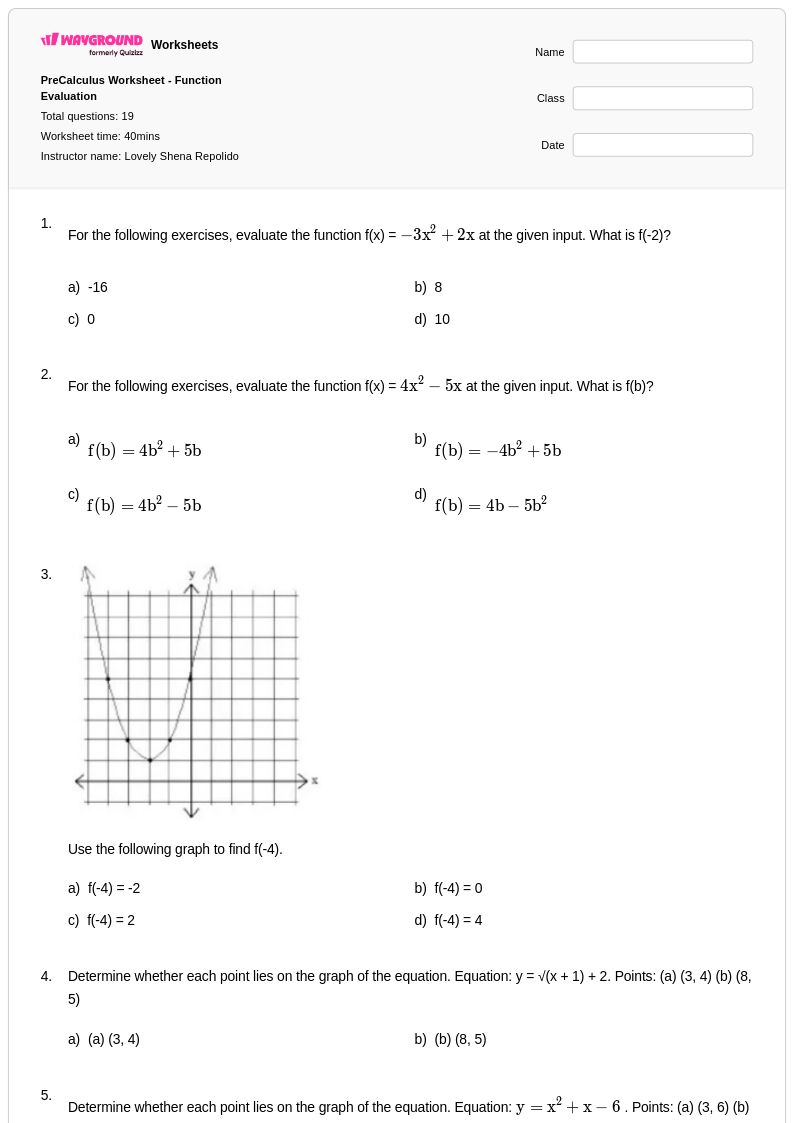
19 Q
11th
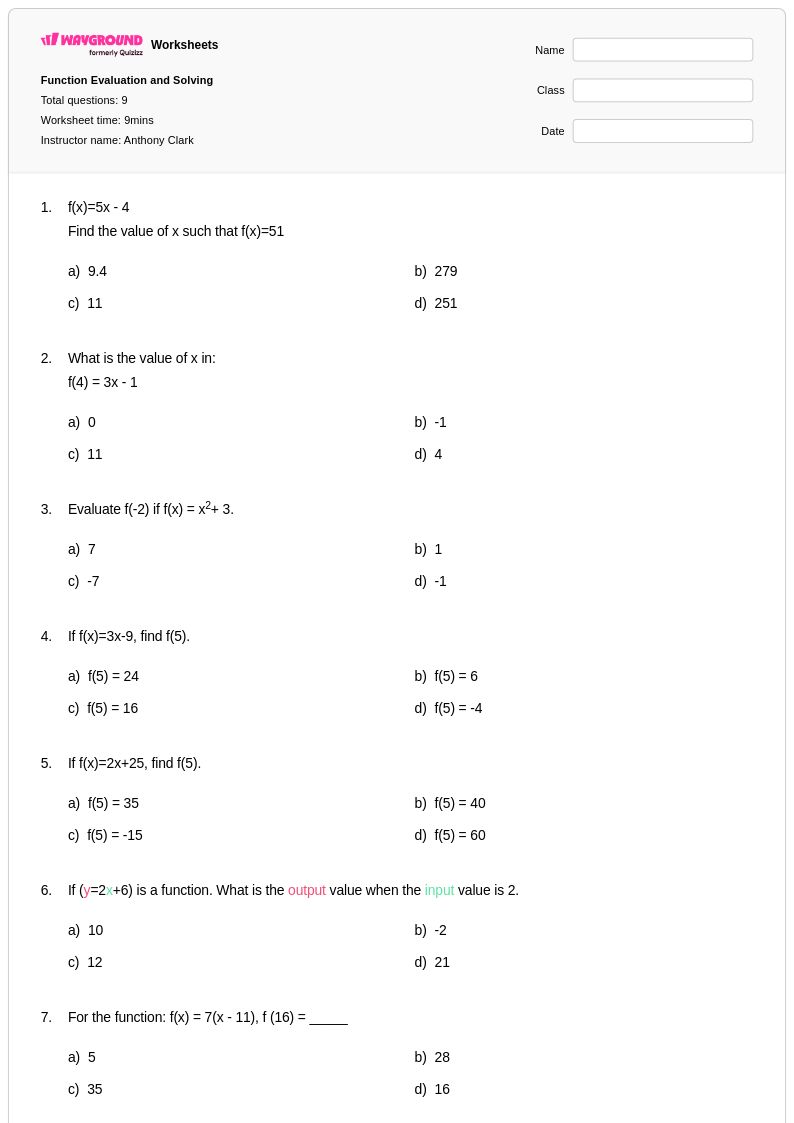
9 Q
9th - Uni
Explore Worksheets by Subjects
Explore printable Function Evaluation worksheets
Function evaluation worksheets available through Wayground (formerly Quizizz) provide comprehensive practice opportunities for students to master the fundamental skill of substituting values into mathematical functions and calculating outputs. These carefully designed resources strengthen students' ability to work with various function types including linear, quadratic, polynomial, and piecewise functions while building computational fluency and algebraic reasoning skills. The extensive collection includes practice problems that progress from basic substitution exercises to more complex multi-step evaluations, with complete answer keys provided to support independent learning and self-assessment. Teachers can access these free printables in convenient pdf format, making it easy to distribute materials for homework assignments, classroom practice, or assessment preparation.
Wayground (formerly Quizizz) empowers educators with millions of teacher-created function evaluation resources that can be easily located through robust search and filtering capabilities. The platform's standards alignment features ensure that worksheets match curriculum requirements, while built-in differentiation tools allow teachers to modify difficulty levels and problem types to meet diverse student needs. These versatile materials are available in both printable and digital formats, including downloadable pdfs, giving instructors flexibility in how they deliver content to their students. Whether used for initial skill introduction, targeted remediation, enrichment activities, or regular practice sessions, these customizable worksheet collections streamline lesson planning while providing the structured practice students need to develop confidence in evaluating functions across various mathematical contexts.
FAQs
How do I introduce function evaluation to my students?
What types of problems are best for practicing function evaluation?
What are the most common mistakes students make when evaluating functions?
How can I use this function evaluation worksheet in my class?
How does function evaluation fit into the Common Core standards?
How can I support struggling students with function evaluation?