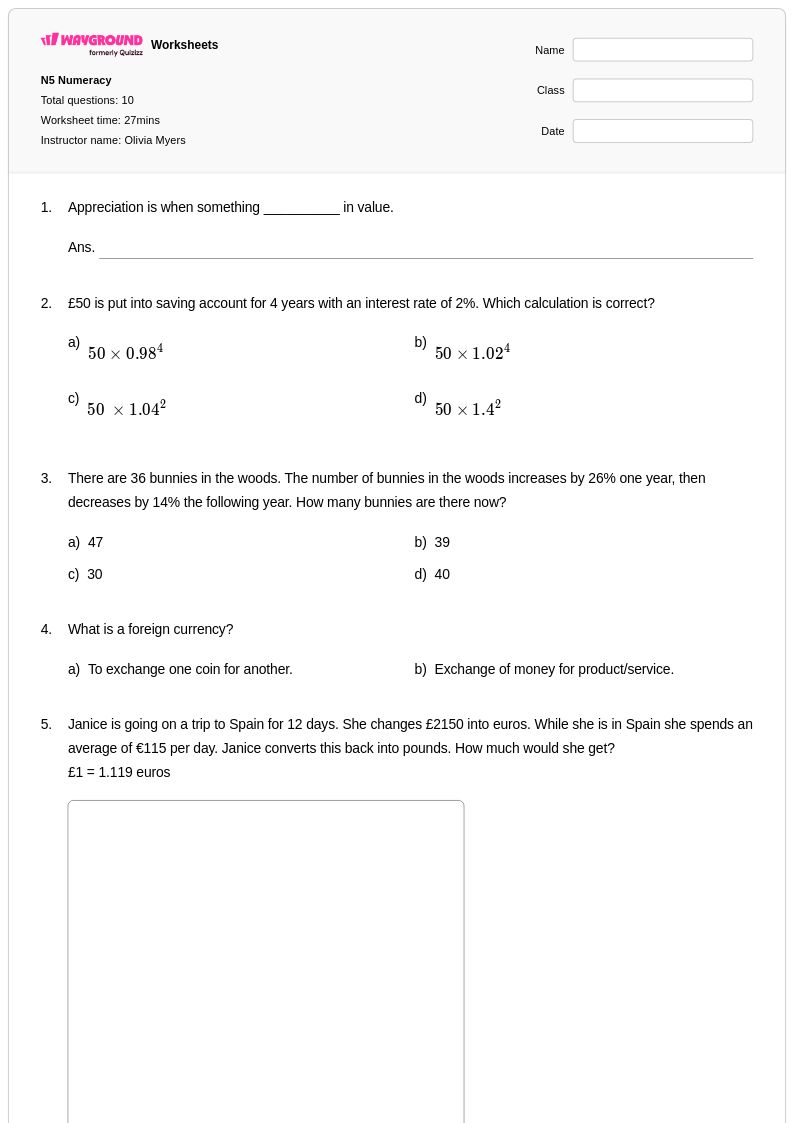
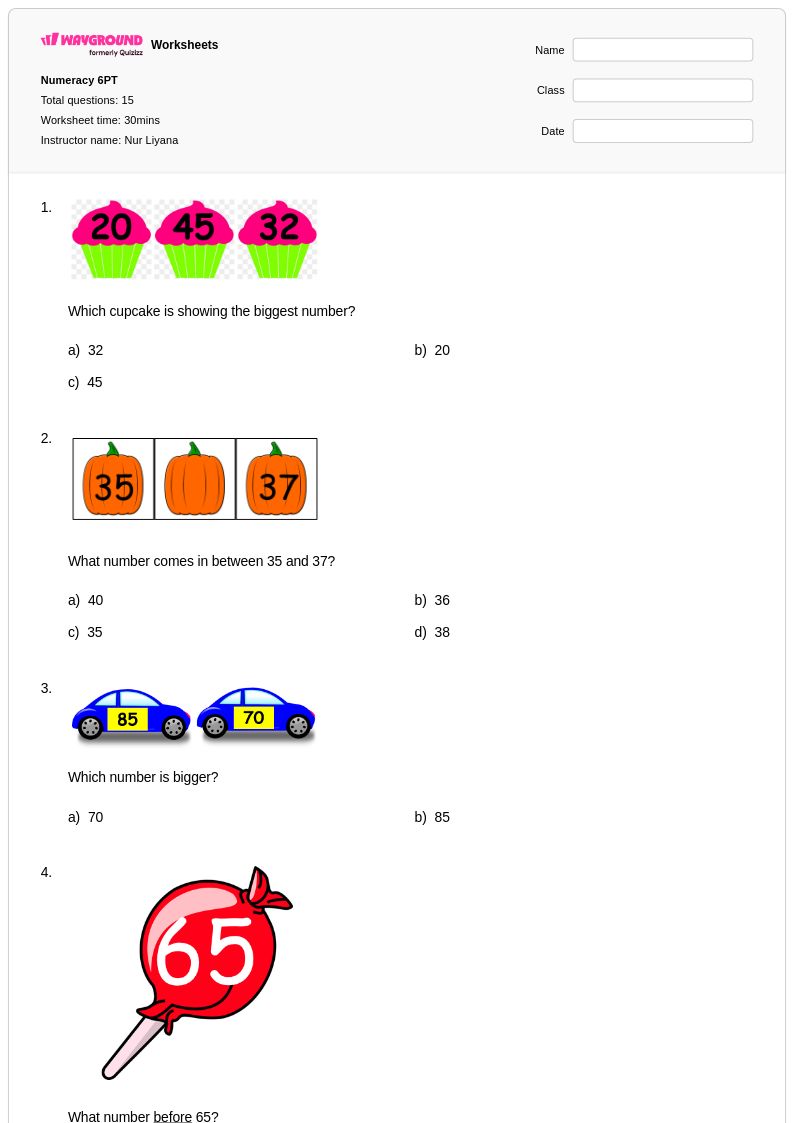
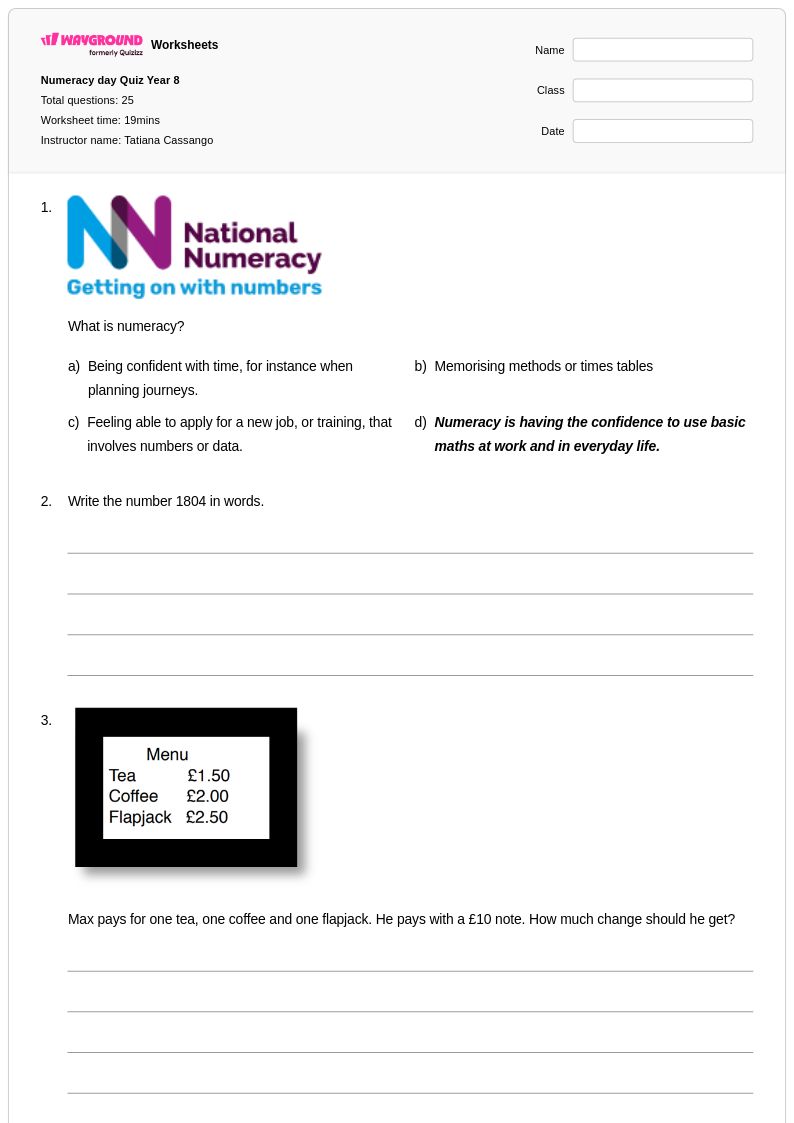
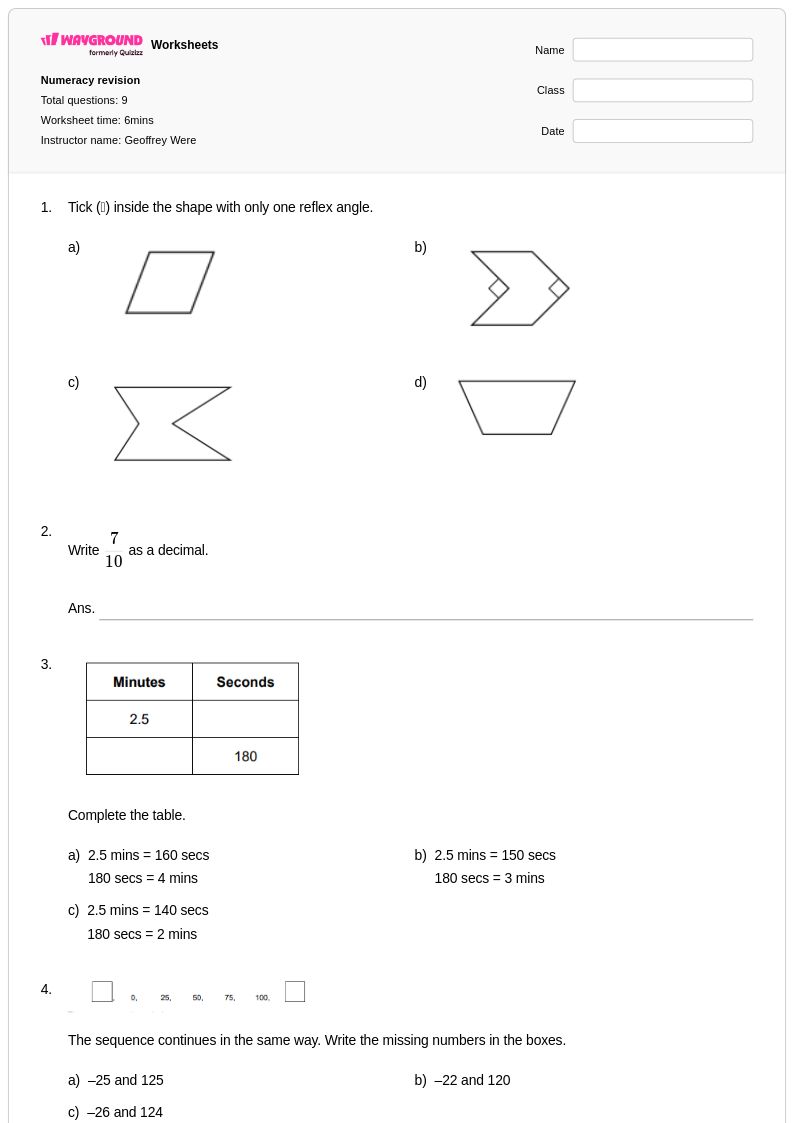
Develop essential numeracy skills with Wayground's free printable worksheets featuring practice problems and answer keys designed to strengthen mathematical understanding and computational fluency.
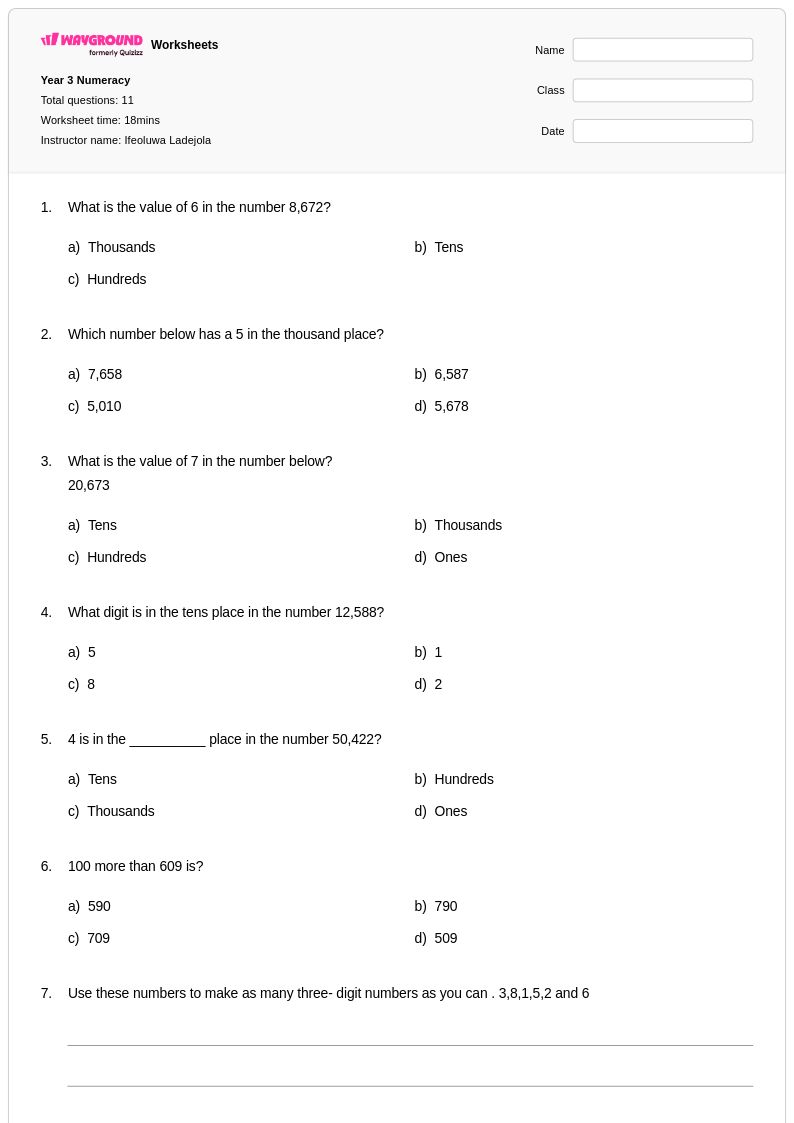
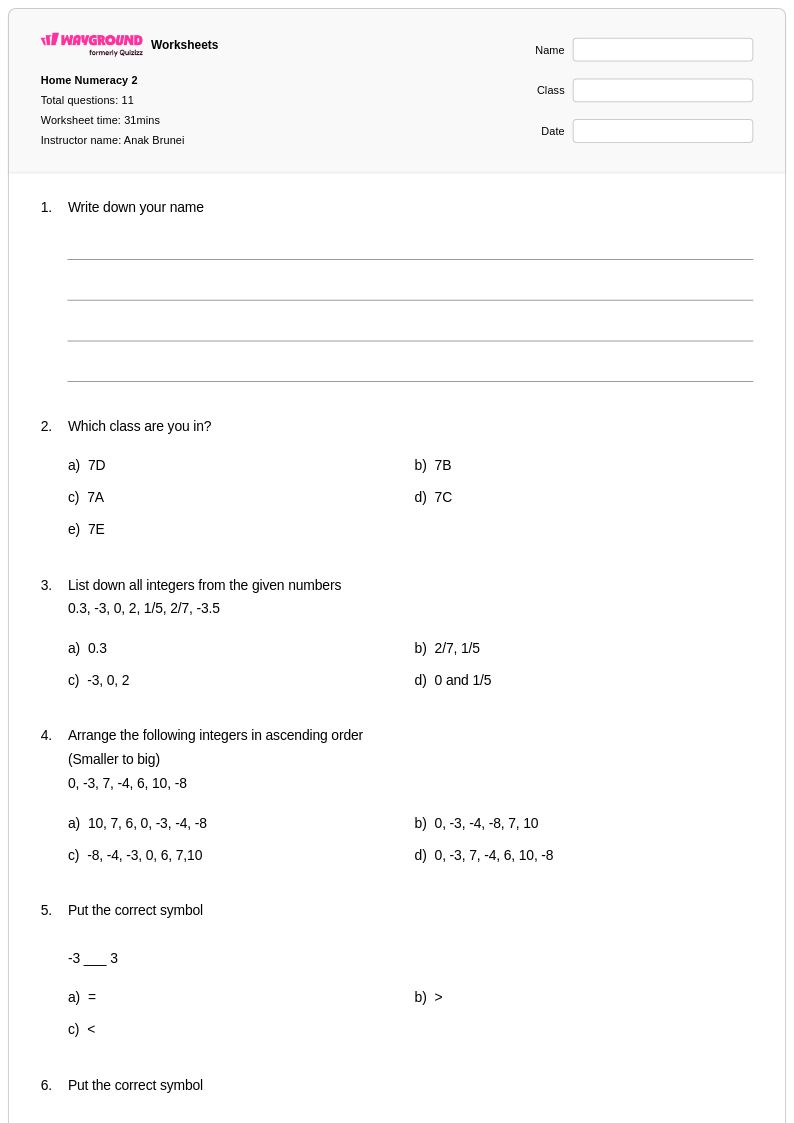
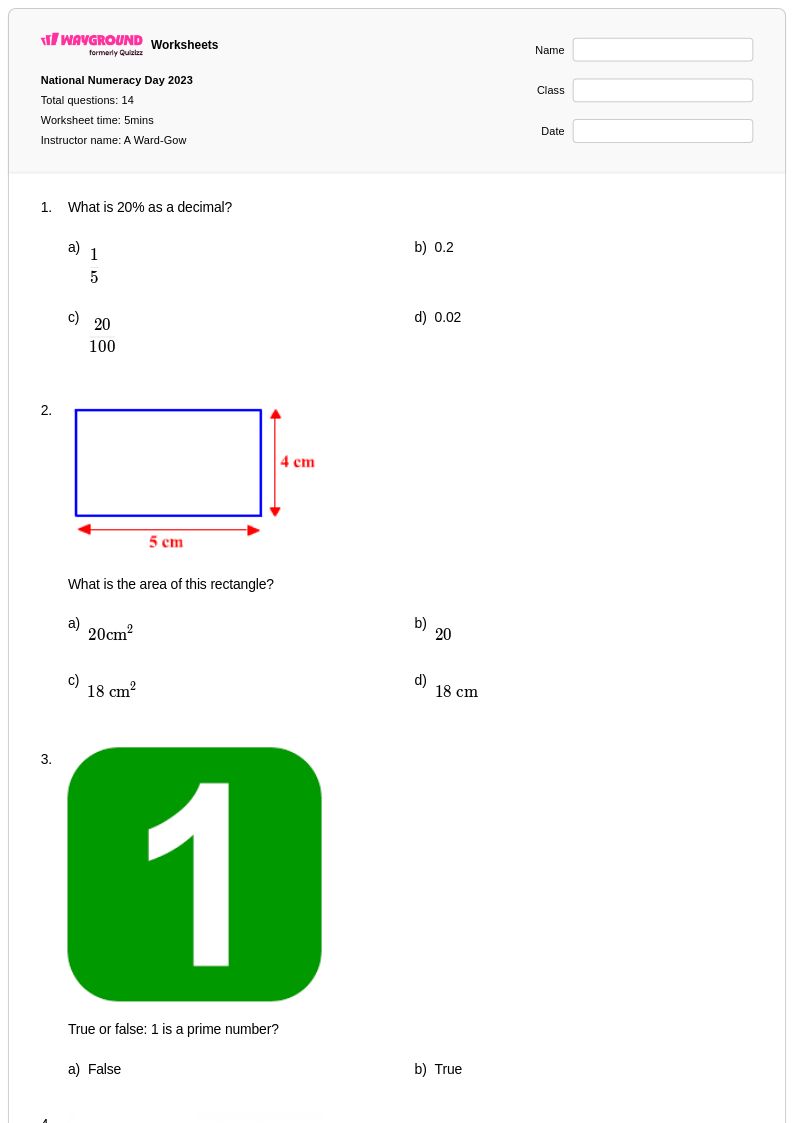
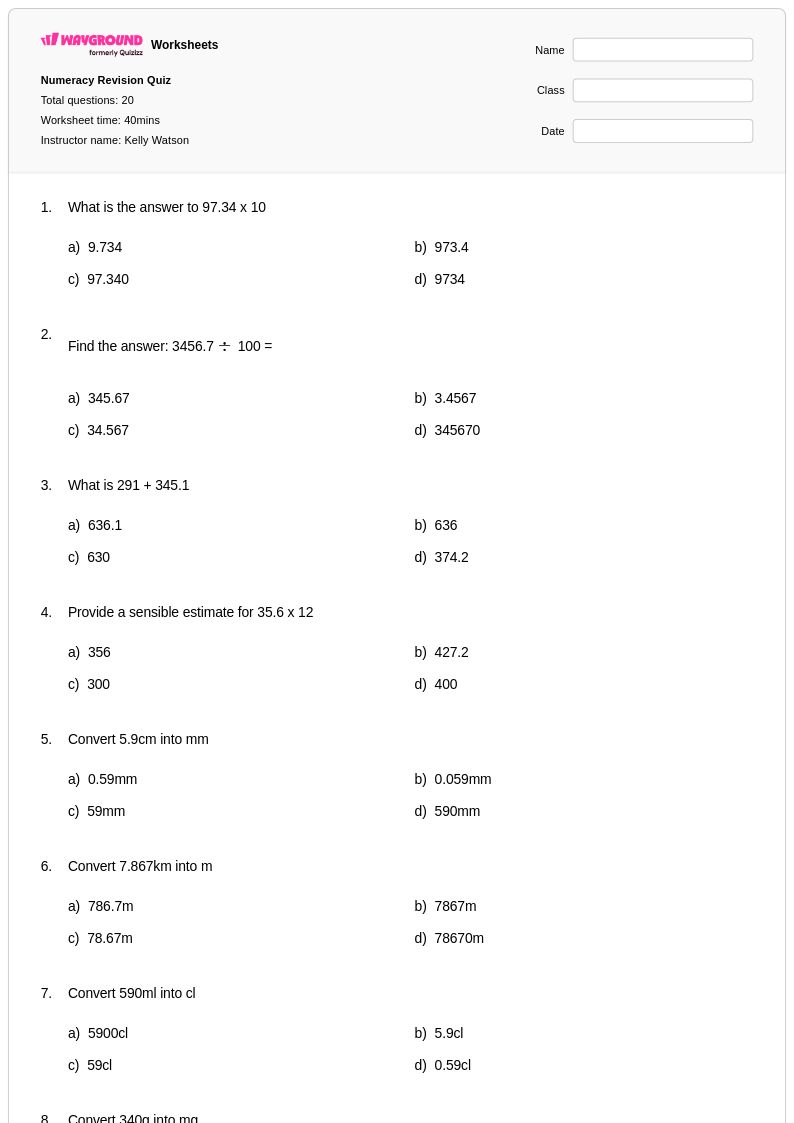
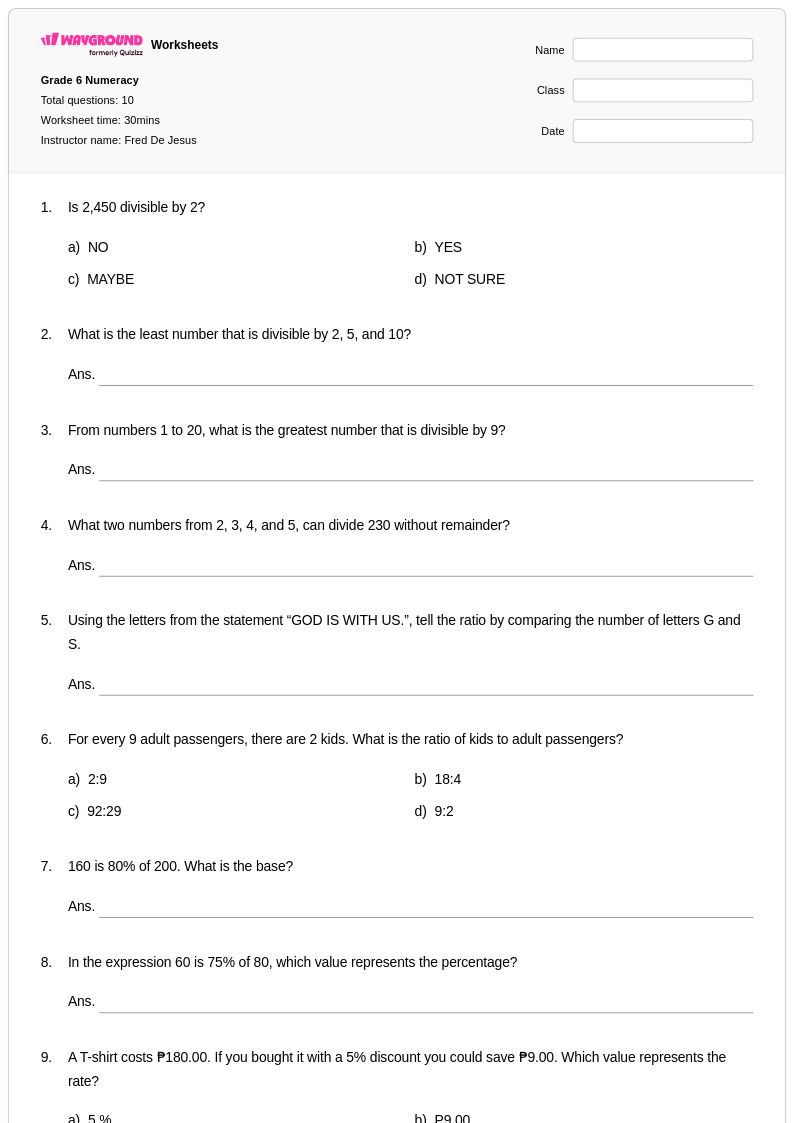
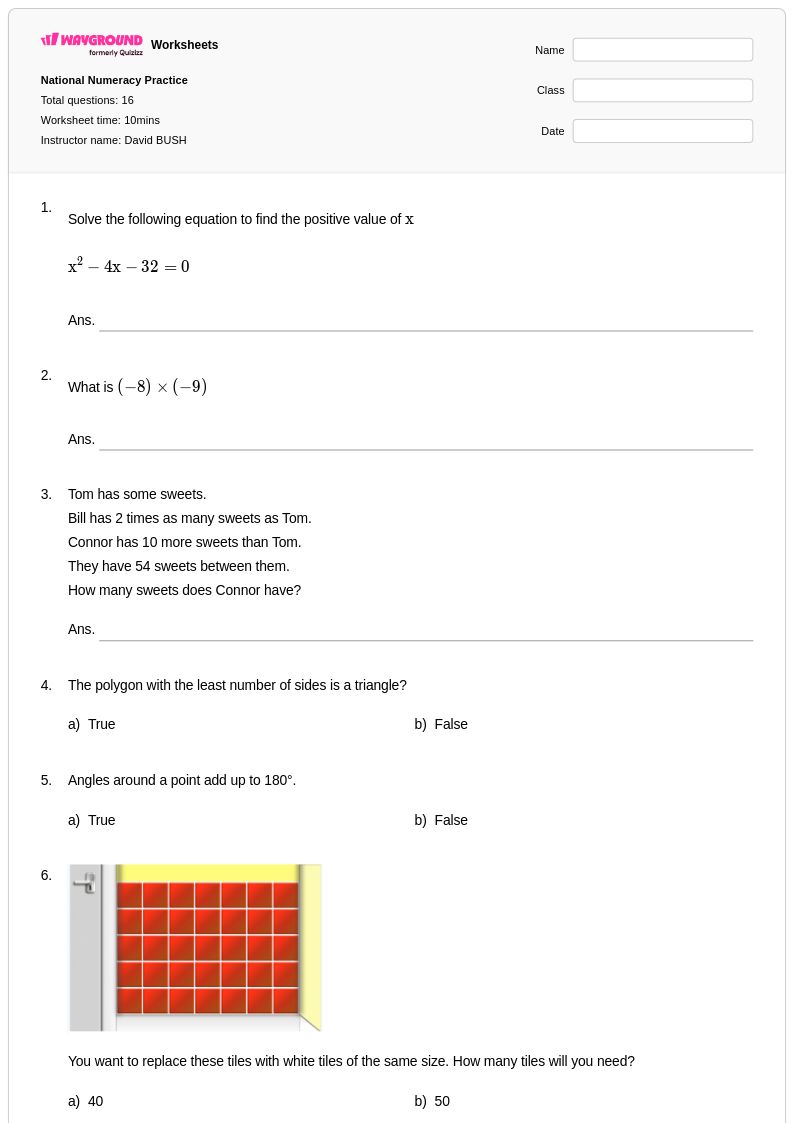
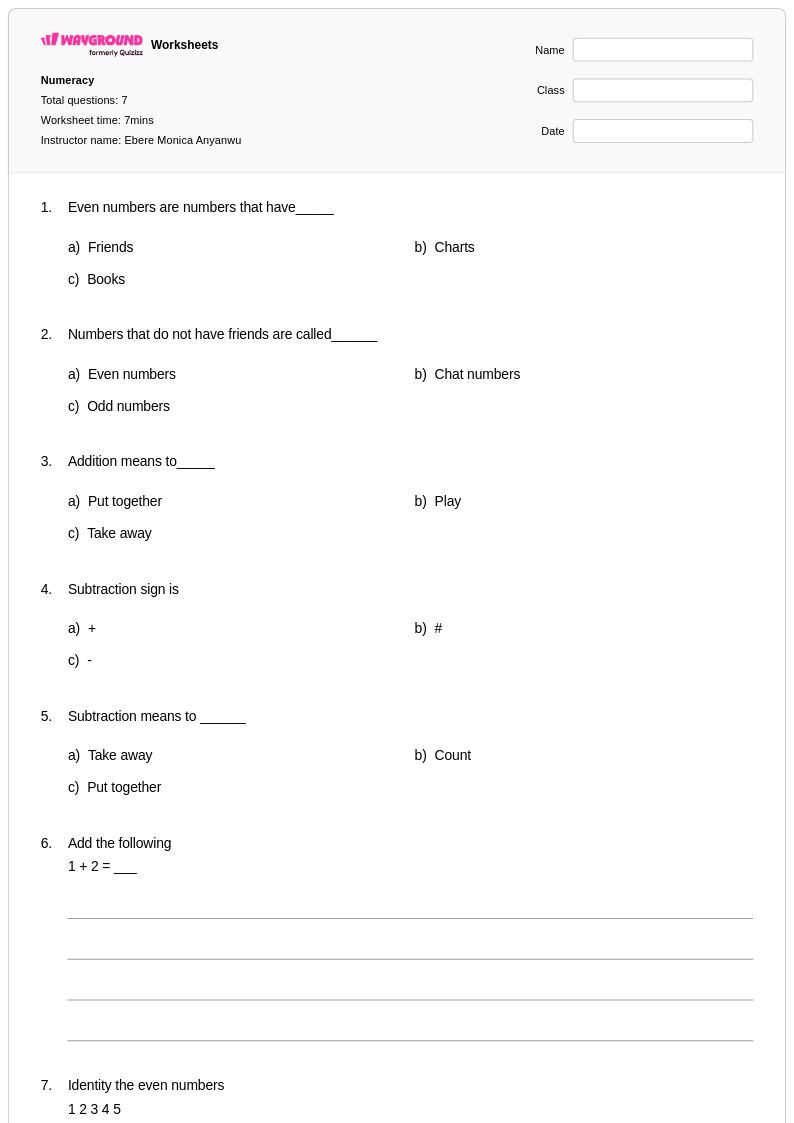
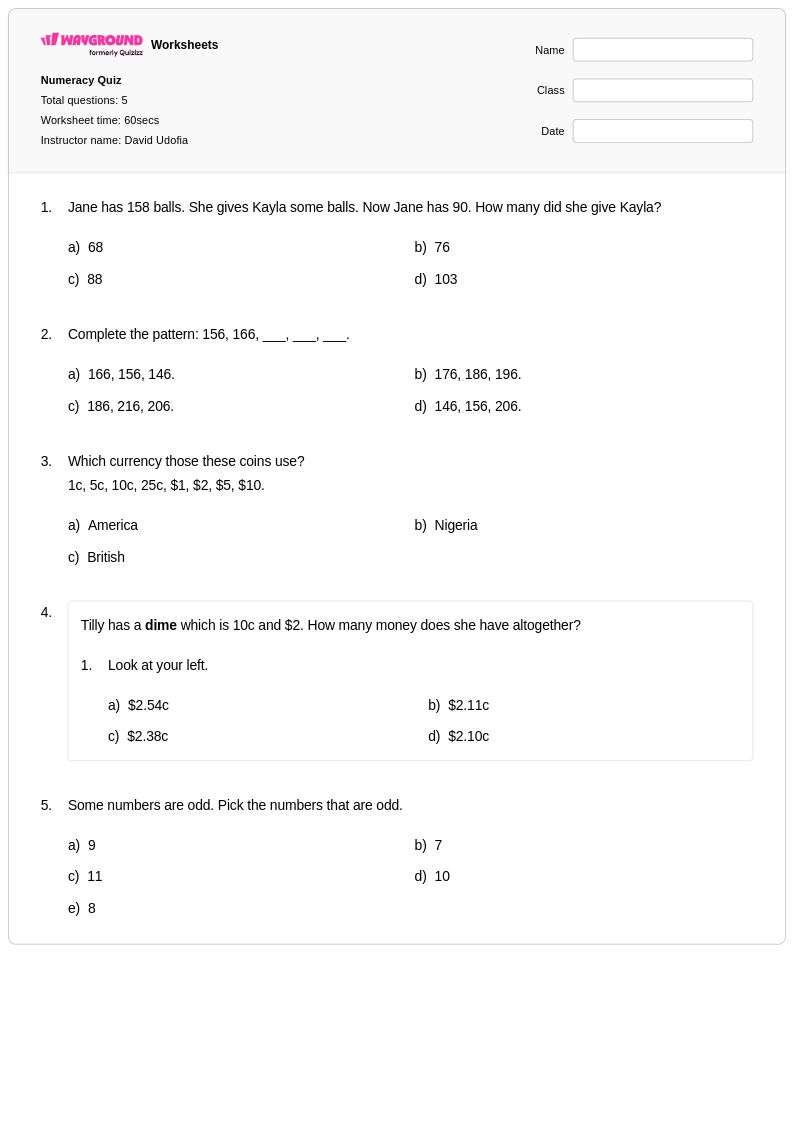
Numeracy worksheets available through Wayground (formerly Quizizz) provide essential foundational practice for students developing core mathematical understanding and computational fluency. These comprehensive resources target fundamental number recognition, counting sequences, place value concepts, and basic arithmetic operations that form the backbone of mathematical literacy. Each worksheet systematically builds students' confidence with numbers through carefully structured practice problems that progress from concrete representations to abstract numerical thinking. The collection includes free printables with complete answer keys, allowing educators to efficiently assess student progress while providing immediate feedback on essential numeracy skills that support all future mathematical learning.
Wayground (formerly Quizizz) empowers teachers with millions of educator-created numeracy resources that streamline instructional planning and support differentiated learning approaches. The platform's robust search and filtering capabilities enable teachers to quickly locate worksheets aligned with specific standards and learning objectives, while built-in customization tools allow for seamless modification of content difficulty and format. These numeracy collections are available in both printable PDF formats for traditional classroom use and interactive digital versions that accommodate diverse learning preferences and technology integration needs. Teachers can effectively utilize these resources for targeted skill practice, diagnostic assessment, remediation support, and enrichment activities, ensuring that every student develops the strong numerical foundation essential for mathematical success across all grade levels and content areas.
FAQs
What is numeracy and why is it important?
Numeracy is a student's ability to understand and work with numbers. It encompasses a wide range of foundational skills, including number recognition, counting, place value, and basic arithmetic. These skills are the essential building blocks for all future mathematical learning and for problem-solving in everyday life.
How can I teach foundational numeracy skills?
A successful approach to teaching numeracy involves moving from the concrete to the abstract. Start with physical objects (manipulatives) for counting and grouping, then transition to pictorial representations like drawings or diagrams, and finally move to abstract symbols like numerals and operation signs. This progression helps students build a deep, conceptual understanding of numbers.
What types of exercises build strong number sense?
Effective practice for building number sense includes a variety of activities. Focus on exercises that cover counting sequences, comparing quantities (more than/less than), understanding place value (tens and ones), and solving basic addition and subtraction problems. A mix of these problem types ensures a well-rounded foundation.
What are common signs of weak numeracy in students?
Students with weak numeracy may struggle to count objects accurately, have difficulty recognizing numbers, or fail to grasp that a number represents a specific quantity. Other signs include an inability to compare numbers (e.g., which is bigger, 5 or 8?) and a heavy reliance on finger-counting for simple calculations long after peers have moved on.
How can I use these numeracy worksheets in my classroom?
Wayground's numeracy worksheets are designed for flexibility. You can host any worksheet as a digital quiz for real-time feedback or download it as a printable PDF for hands-on practice. For paper assignments, you can use the Wayground for Teachers app to quickly scan and grade student work using the provided answer key.
How does numeracy development align with the Common Core standards?
Numeracy skills are the explicit focus of the Common Core State Standards for Mathematics in early grades, particularly within the Counting & Cardinality (Kindergarten) and Number & Operations in Base Ten (Grades 1-5) domains. These worksheets provide practice that directly supports the progression from counting and comparing numbers in K-1 to understanding place value and performing multi-digit arithmetic in later grades.
How can I support students with very different numeracy levels?
For digital assignments on Wayground, you can enable accommodations for individual students. The Read Aloud feature can help students who struggle with reading instructions, while the Reduced Answer Choices option can lower the cognitive load for those who are overwhelmed. These settings allow you to tailor the same worksheet to meet diverse needs.