Free Printable Parts of the Eye Worksheets for Year 6
Explore Wayground's free Year 6 biology worksheets and printables focusing on parts of the eye, featuring practice problems and answer keys to help students master eye anatomy and vision concepts.
Explore printable Parts of the Eye worksheets for Year 6
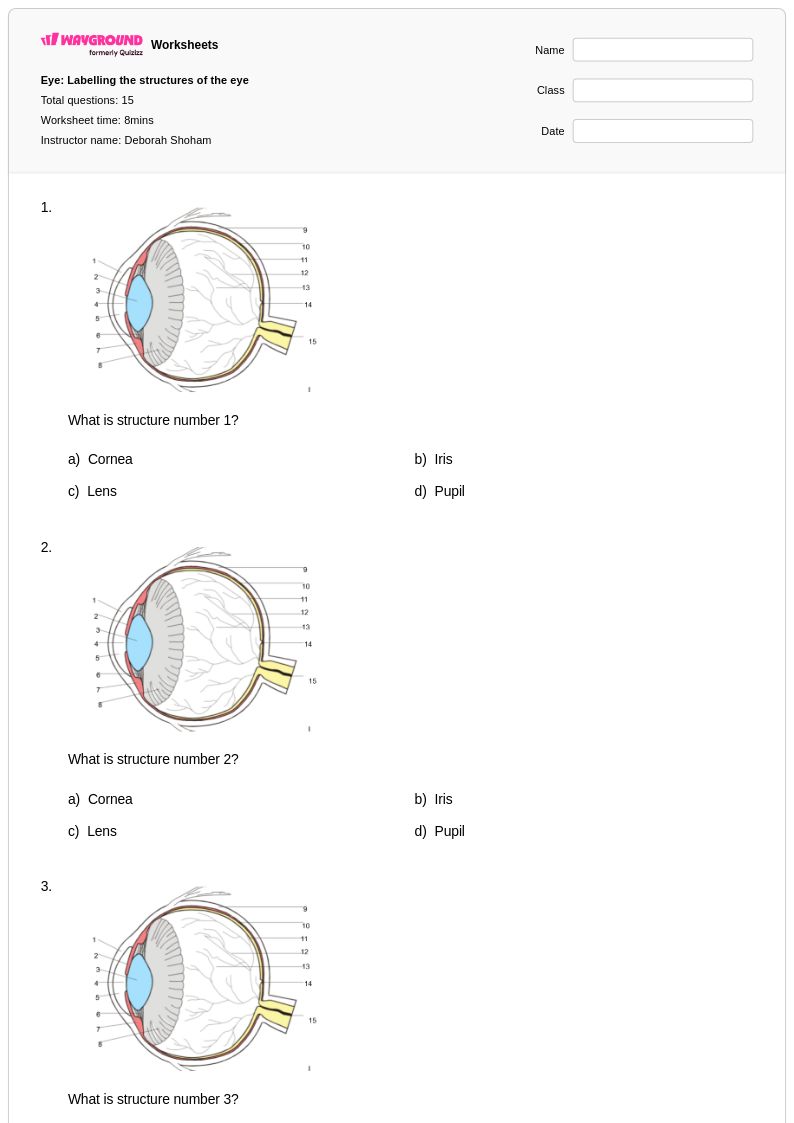
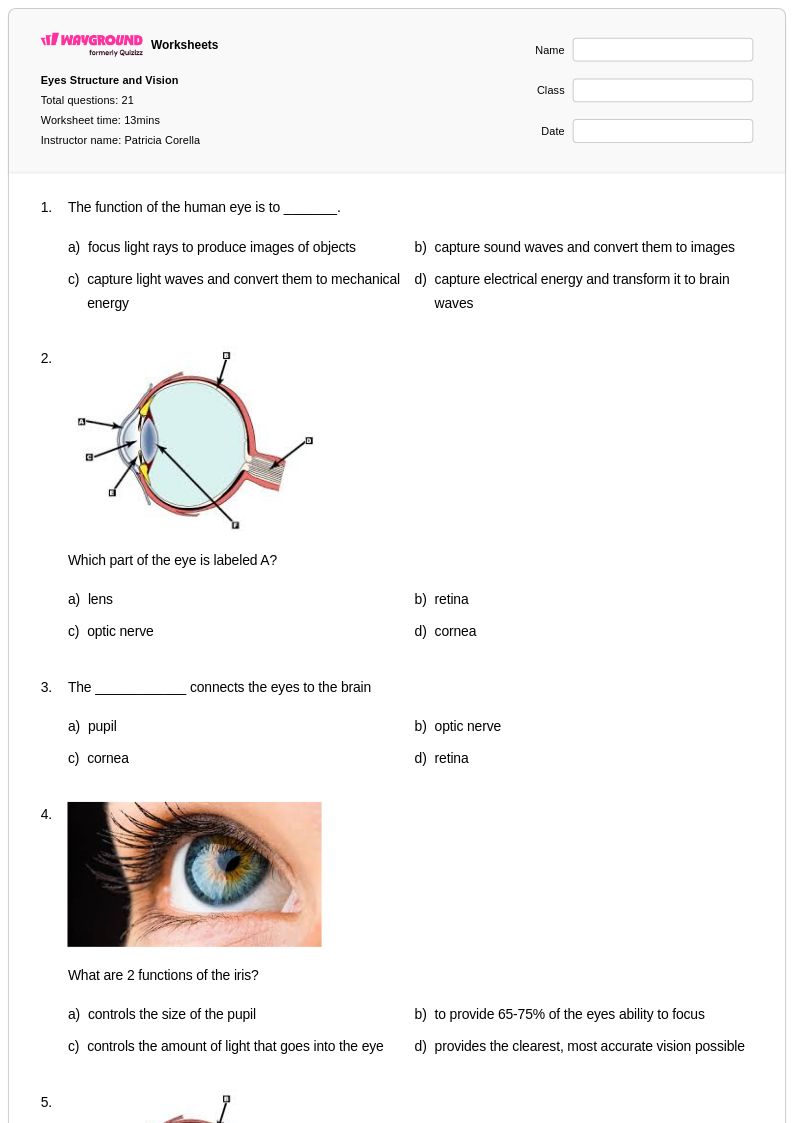
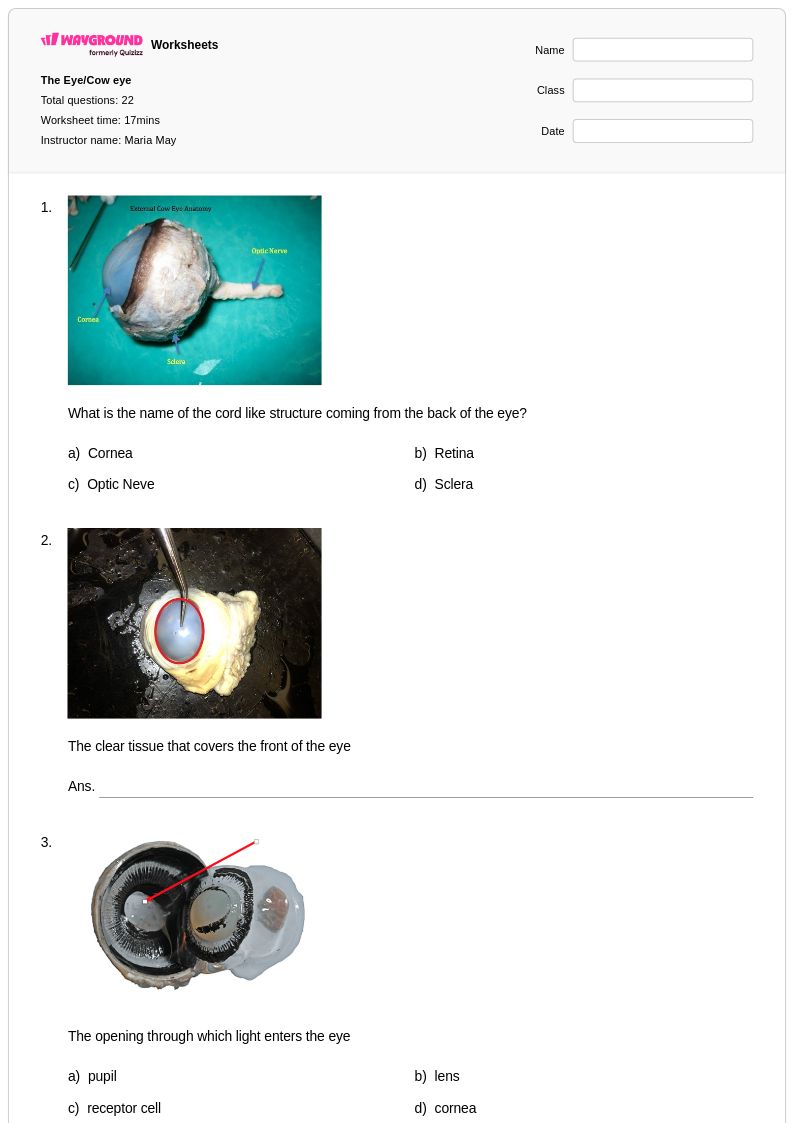
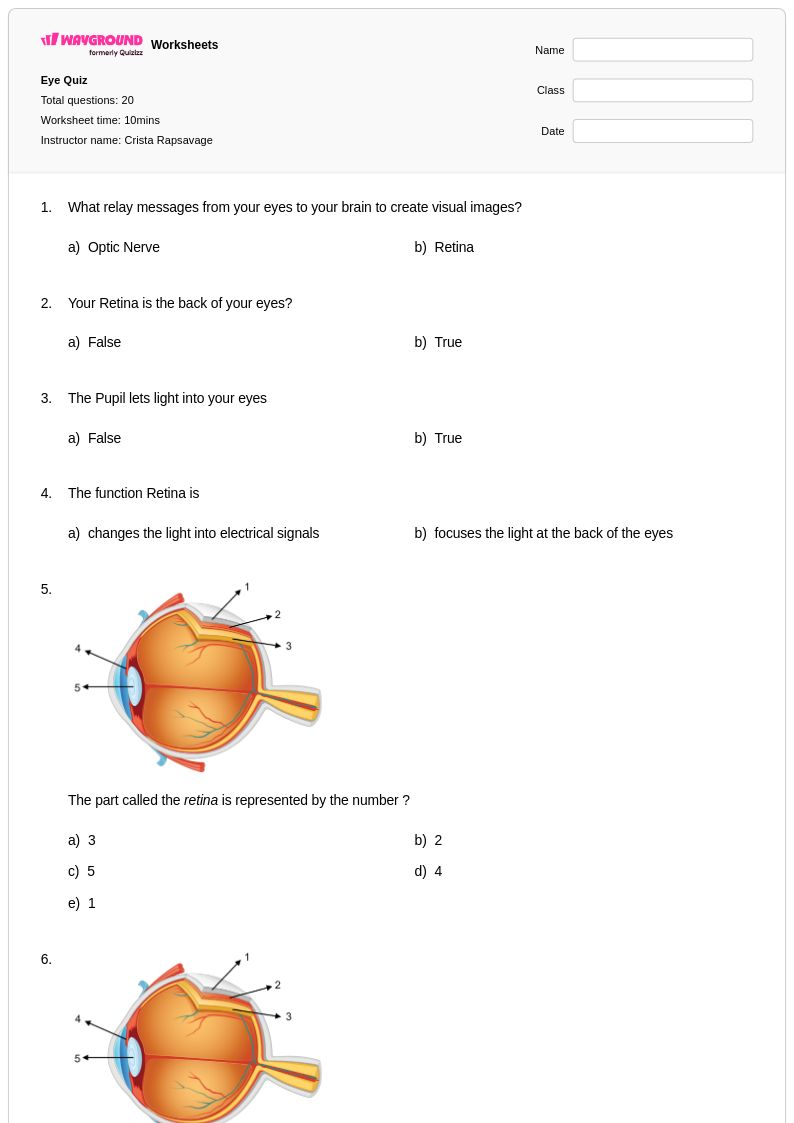
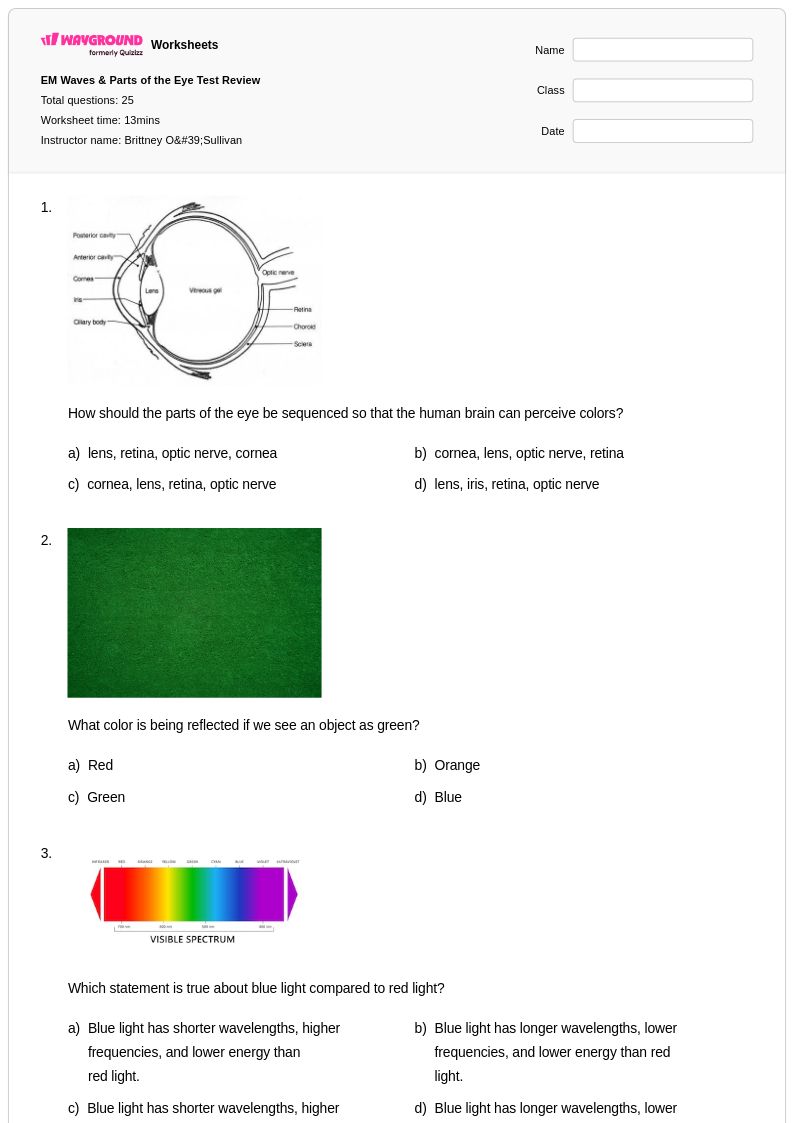
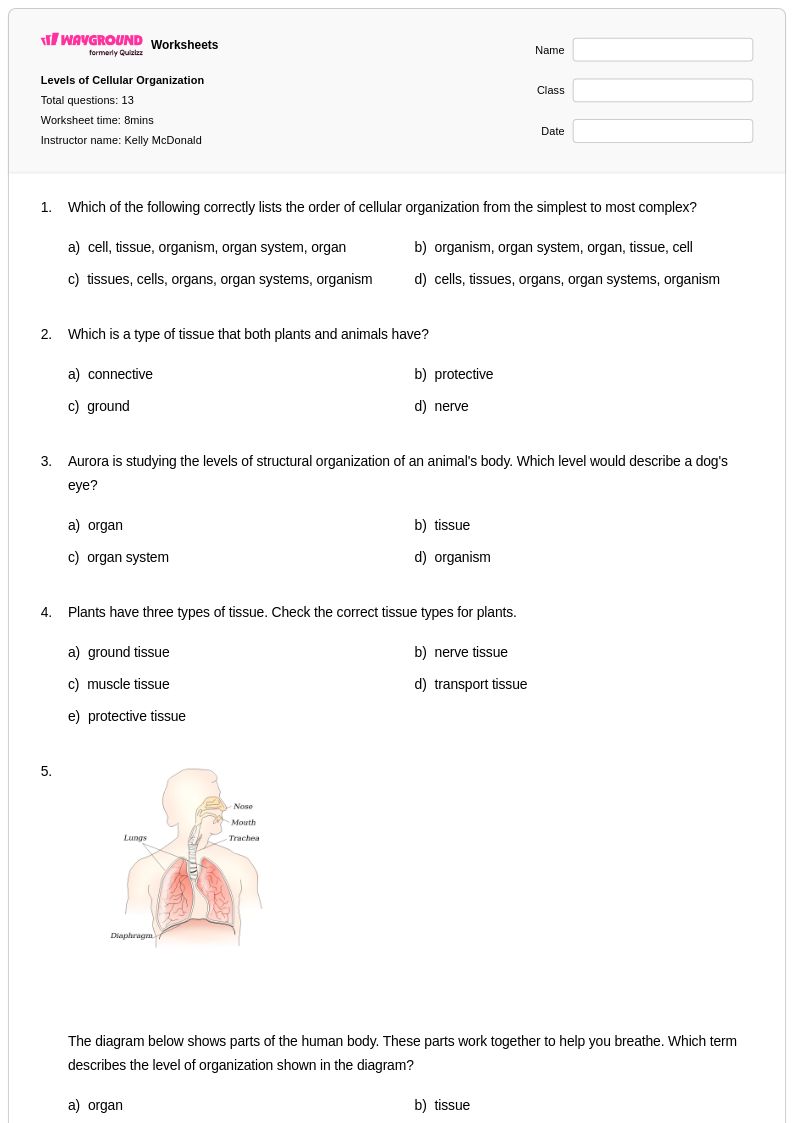
Parts of the Eye worksheets for Year 6 students available through Wayground (formerly Quizizz) provide comprehensive coverage of ocular anatomy and visual function fundamentals. These educational resources strengthen students' understanding of essential eye structures including the cornea, iris, pupil, lens, retina, and optic nerve, while developing scientific vocabulary and diagram interpretation skills crucial for middle school biology success. The practice problems guide students through identifying anatomical components, explaining light pathway mechanisms, and connecting structure to function relationships within the visual system. Each worksheet collection includes detailed answer keys and is available as free printables in convenient pdf format, allowing educators to seamlessly integrate eye anatomy instruction into their science curriculum while supporting diverse learning styles through visual diagrams and analytical exercises.
Wayground (formerly Quizizz) empowers teachers with access to millions of educator-created resources specifically designed for Year 6 Parts of the Eye instruction, featuring robust search and filtering capabilities that align with state and national science standards. The platform's differentiation tools enable instructors to customize worksheet difficulty levels, modify anatomical diagrams, and adapt content complexity to meet individual student needs across varying ability ranges. Teachers can efficiently plan comprehensive eye anatomy units while utilizing both printable and digital pdf formats for flexible classroom implementation, whether supporting whole-group instruction, targeted remediation for struggling learners, or enrichment activities for advanced students. These versatile worksheet collections facilitate systematic skill practice in biological systems understanding, scientific observation, and anatomical knowledge application that builds foundation concepts for advanced life science studies.
FAQs
How do I teach the parts of the eye to students?
Start by grounding students in the eye's overall function — converting light into electrical signals the brain interprets as vision — before introducing individual structures. Sequence instruction from the outermost layers inward: cornea, iris, pupil, lens, vitreous humor, retina, and optic nerve. Using labeled diagrams alongside a step-by-step explanation of how light travels through each structure helps students build a functional mental model rather than memorizing isolated vocabulary. Connecting each structure's anatomy to its specific role in vision reinforces both comprehension and retention.
What exercises help students practice identifying parts of the eye?
Diagram-labeling exercises are the most effective format for building fluency with ocular anatomy, requiring students to identify structures from visual cues rather than word lists alone. Matching activities that pair each structure to its function push students beyond simple recall toward applied understanding. Fill-in-the-blank passage exercises reinforce anatomical vocabulary in context, and sequencing tasks that ask students to trace the path of light through the eye consolidate how the structures work together as a system.
What mistakes do students commonly make when learning the parts of the eye?
Students frequently confuse the cornea and the lens because both refract light, but they differ significantly in location, structure, and adjustability. Another common error is conflating the pupil with the iris — students often identify the pupil as a structure when it is actually an opening regulated by the iris. Many students also struggle to distinguish the roles of rods and cones in the retina, defaulting to vague descriptions rather than linking each photoreceptor type to low-light or color vision specifically. Targeted practice with function-based questions, not just labeling, helps address these persistent misconceptions.
How do I use parts of the eye worksheets in different classroom settings?
Parts of the eye worksheets on Wayground are available as printable PDFs for traditional classroom use and in digital formats for technology-integrated environments, making them adaptable to in-person, hybrid, and remote instruction. Printable versions work well for guided note-taking, lab stations, or homework reinforcement, while digital formats allow teachers to host the content as an interactive quiz on Wayground for real-time feedback. For students who need additional support, Wayground's accommodation tools include read-aloud functionality, reduced answer choices, and extended time, all configurable at the individual student level without disrupting the experience of other learners.
How do I differentiate parts of the eye instruction for students at different skill levels?
For foundational learners, begin with simplified diagrams that label only the major external and internal structures before introducing complex terms like the choroid or vitreous humor. Intermediate students benefit from matching structures to functions and explaining how disruption to one component affects the whole visual system. Advanced students can engage with extension tasks that connect eye anatomy to conditions like myopia, cataracts, or color blindness. On Wayground, teachers can apply student-level accommodations including reduced answer choices and read-aloud support for struggling learners, while other students work through standard versions simultaneously.
How do I assess whether students understand the parts of the eye beyond just memorization?
Effective assessment moves past labeling drills and asks students to explain how structures interact — for example, describing what happens to the pupil when light intensity increases, or why a damaged optic nerve would affect vision even if the eye itself is intact. Short-answer questions that require students to trace the path of light through the eye in sequence are reliable indicators of conceptual understanding. Using Wayground's digital quiz format allows teachers to see response-level data quickly, identifying which structures or functions individual students consistently misidentify so targeted remediation can follow.