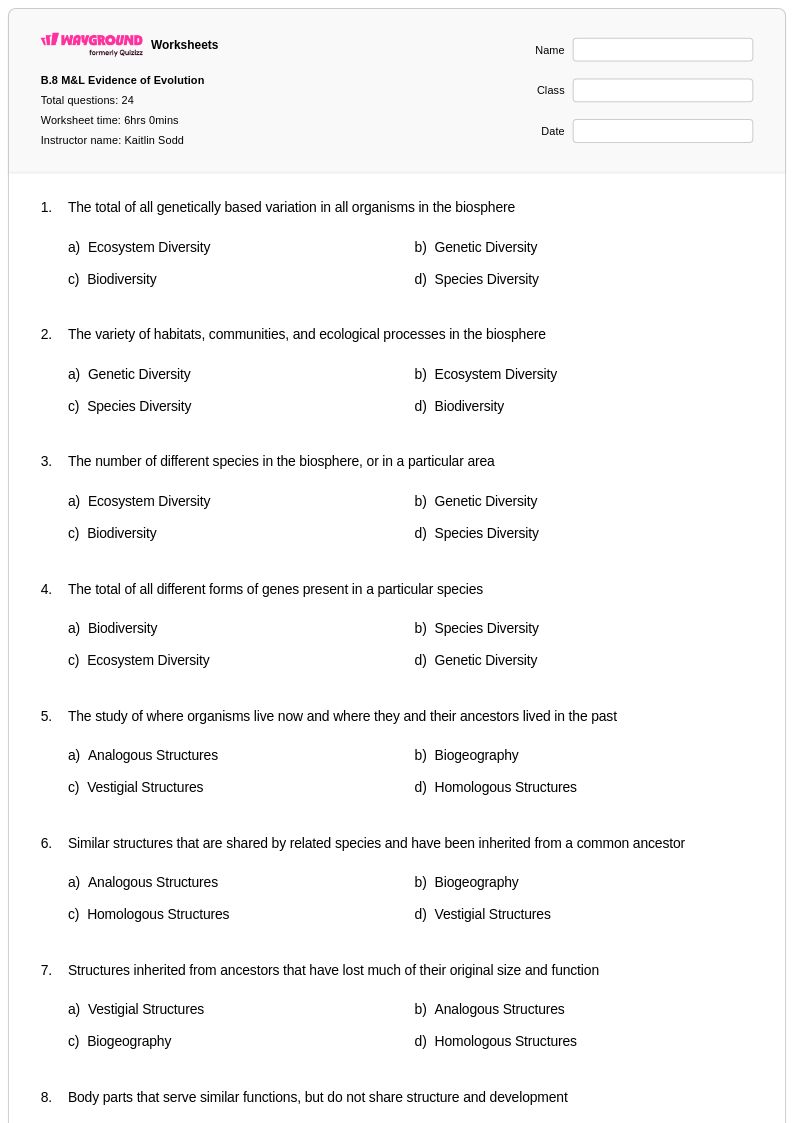
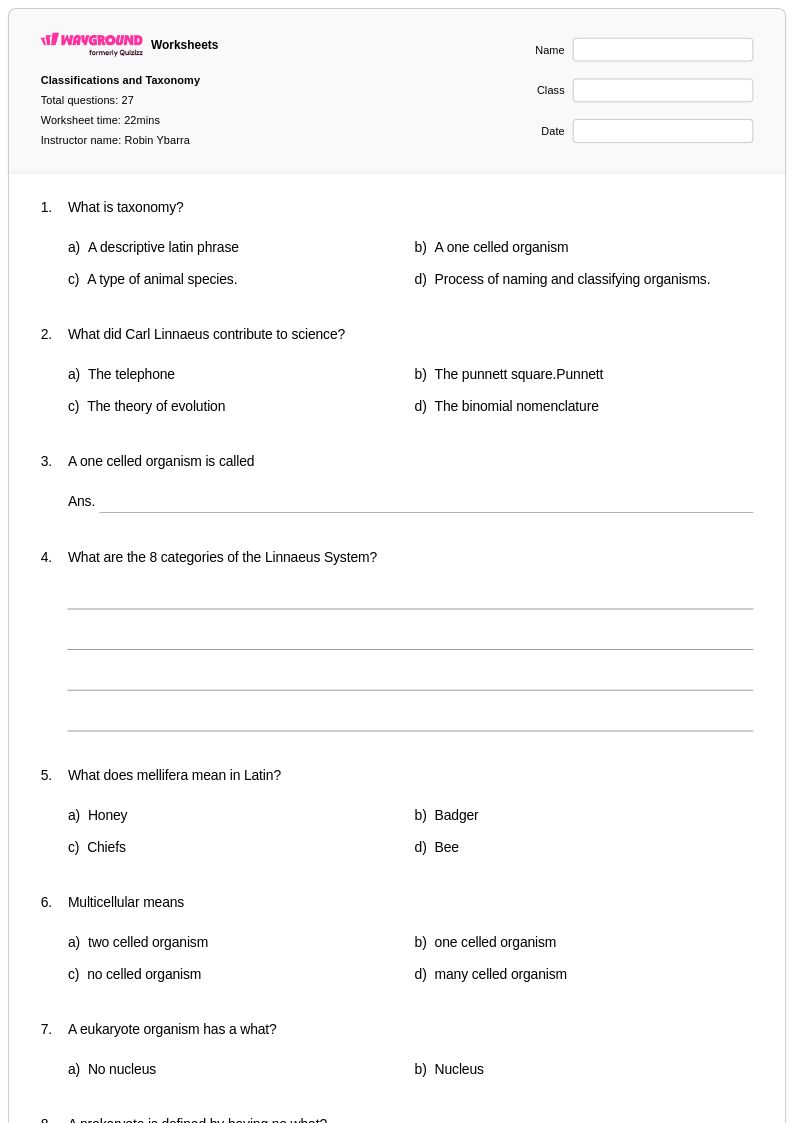
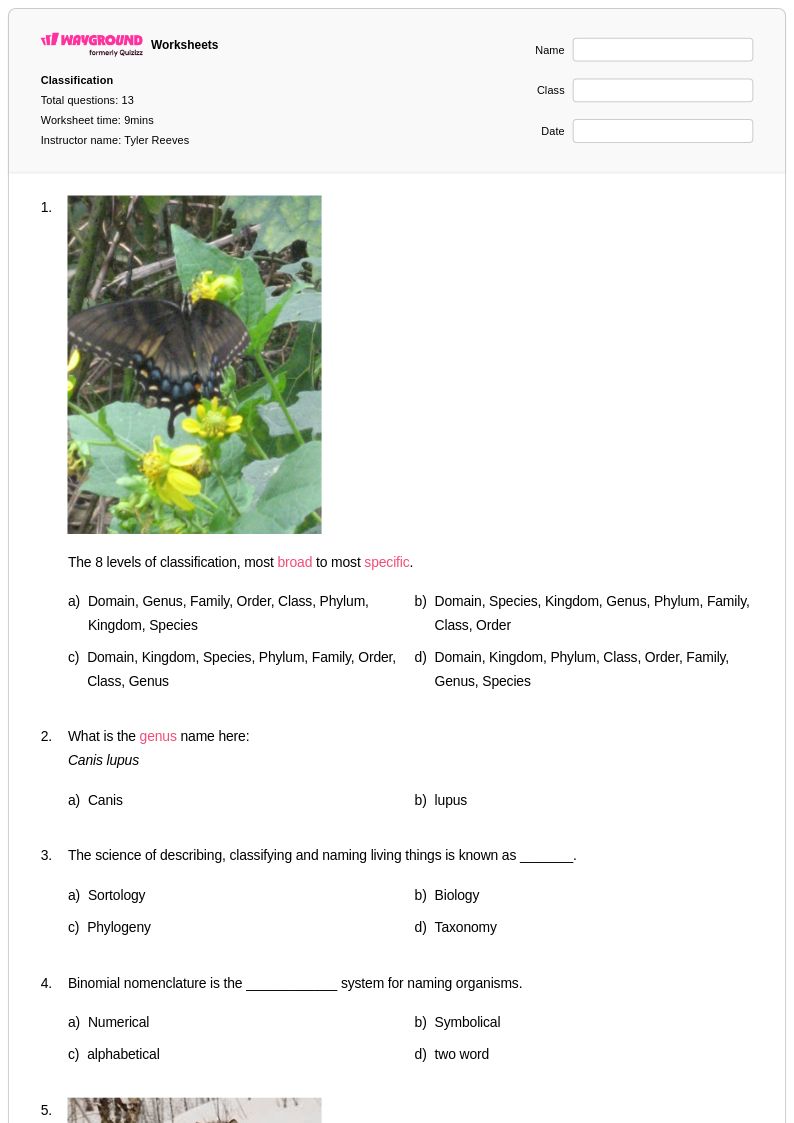
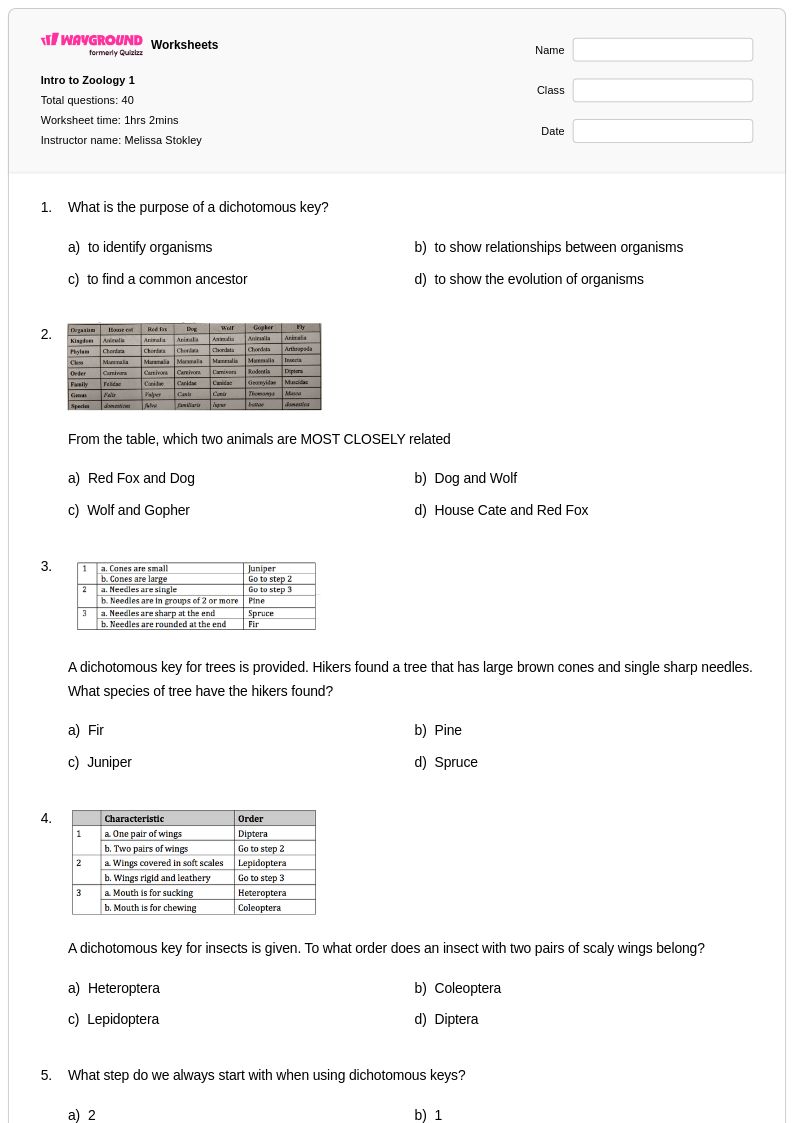
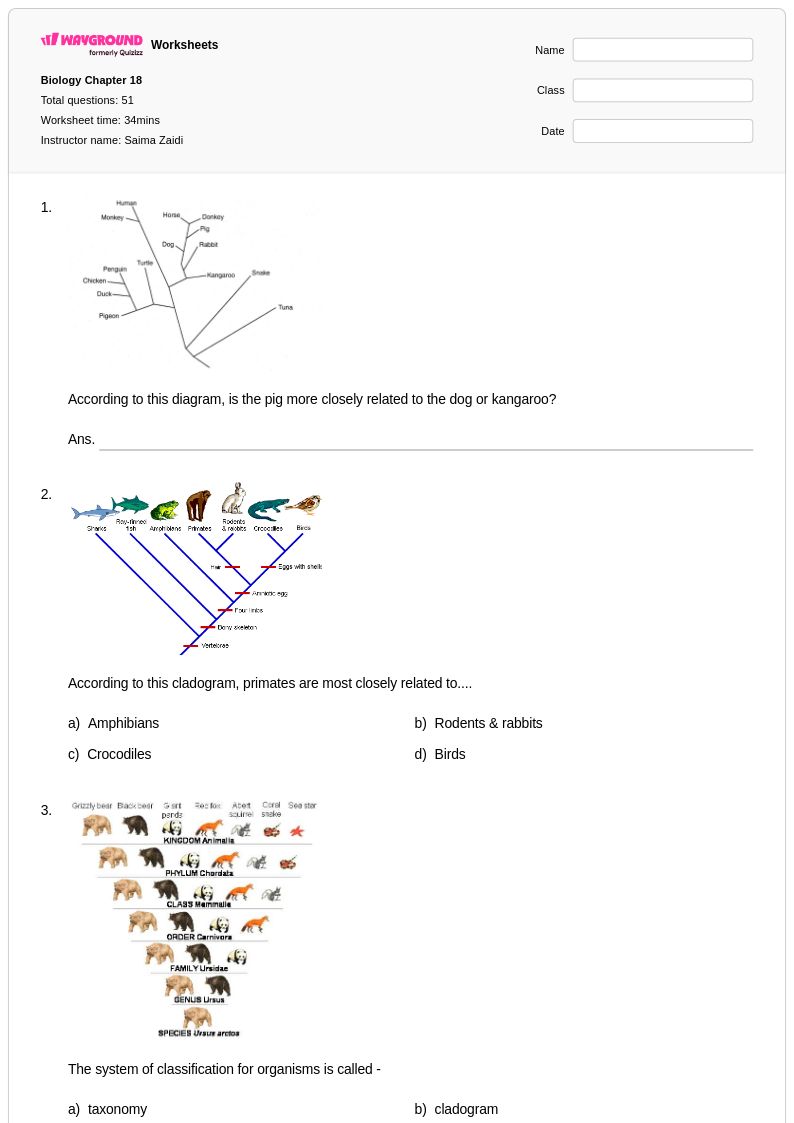
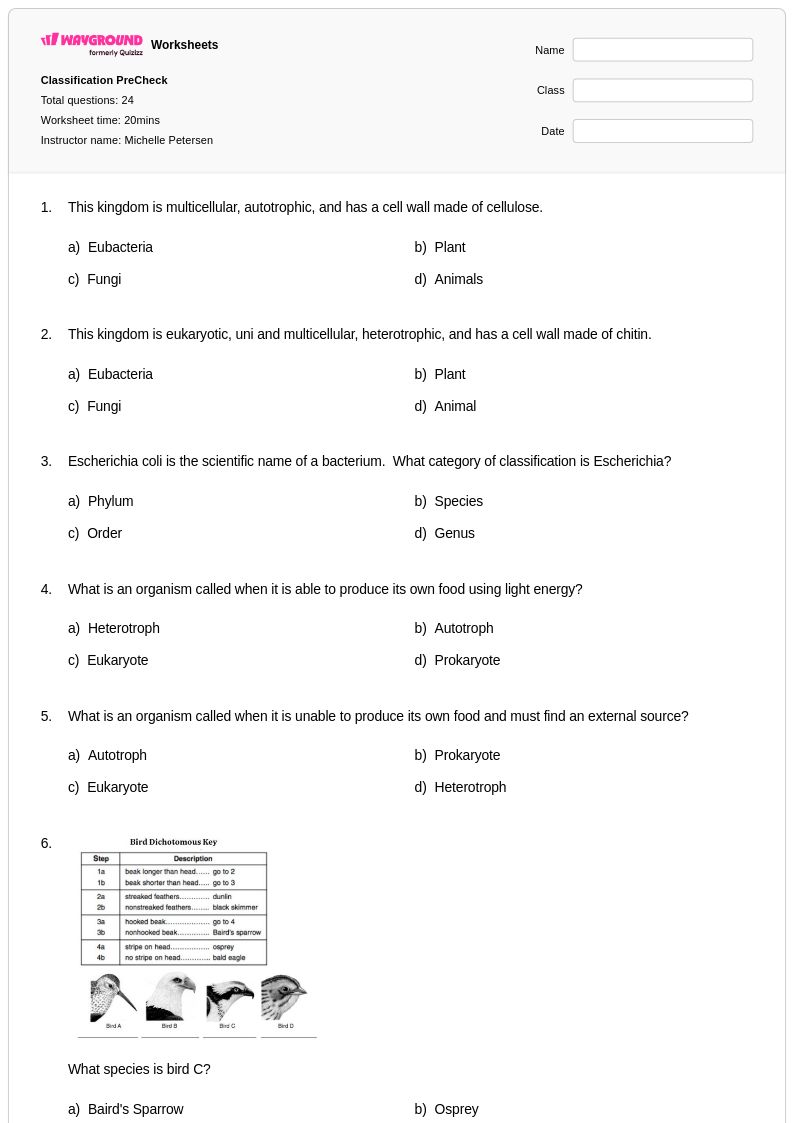
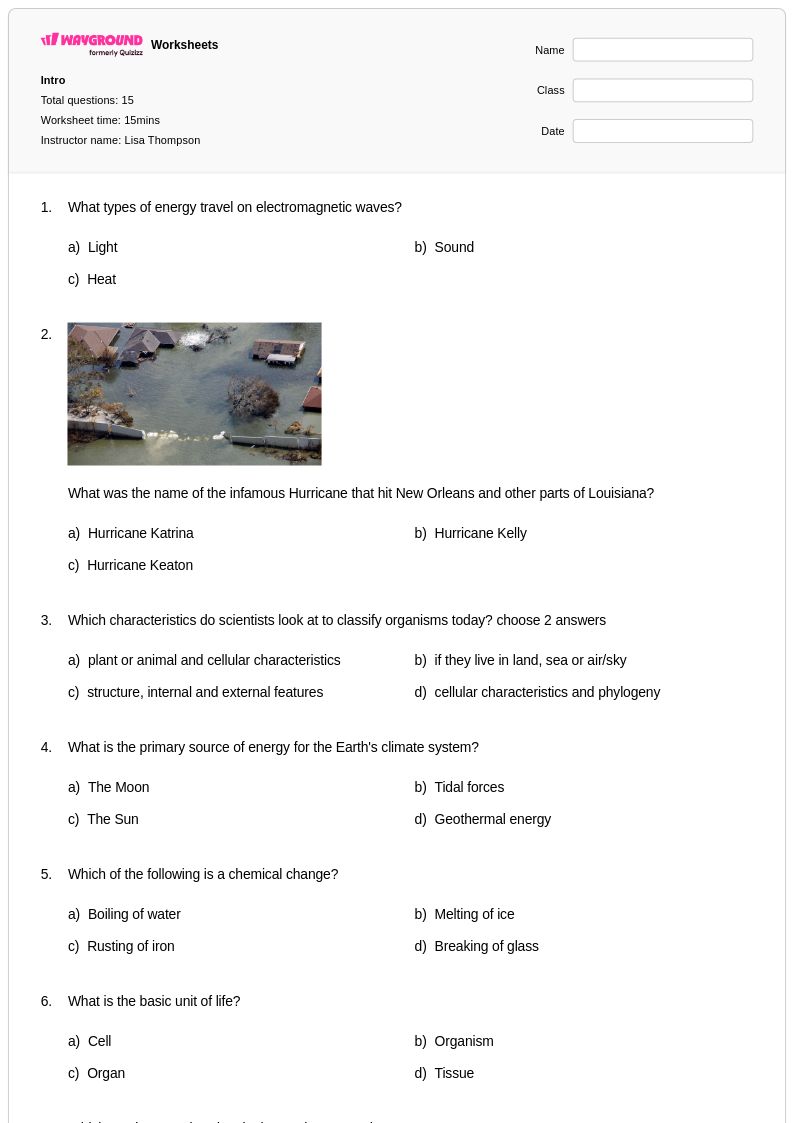
Explore Year 9 phylogeny worksheets and free printables that help students master evolutionary relationships, species classification, and phylogenetic tree analysis through engaging practice problems and comprehensive answer keys.
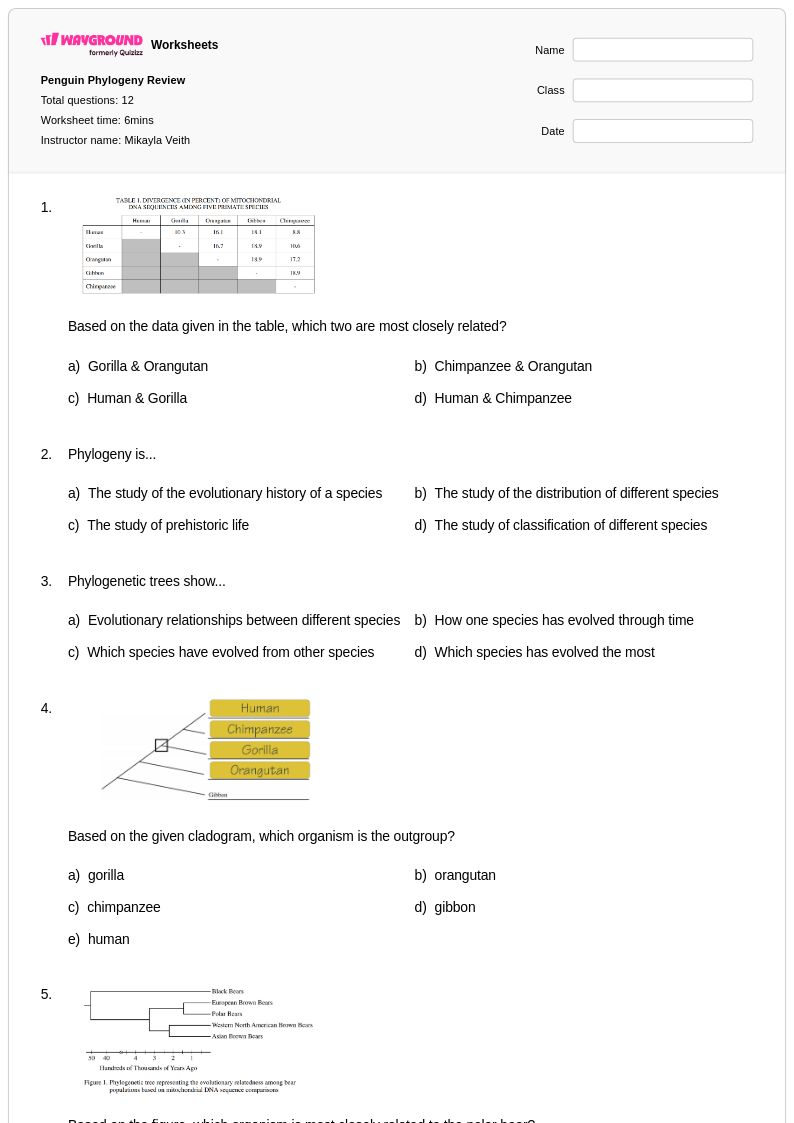
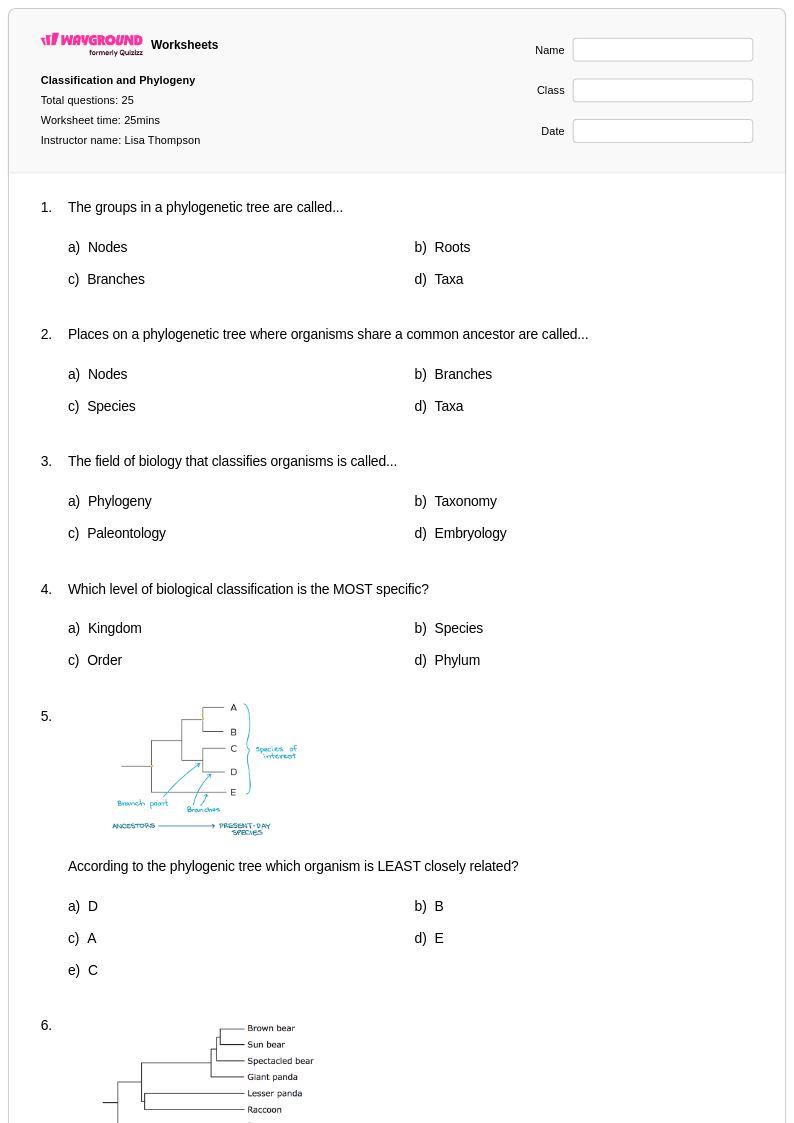
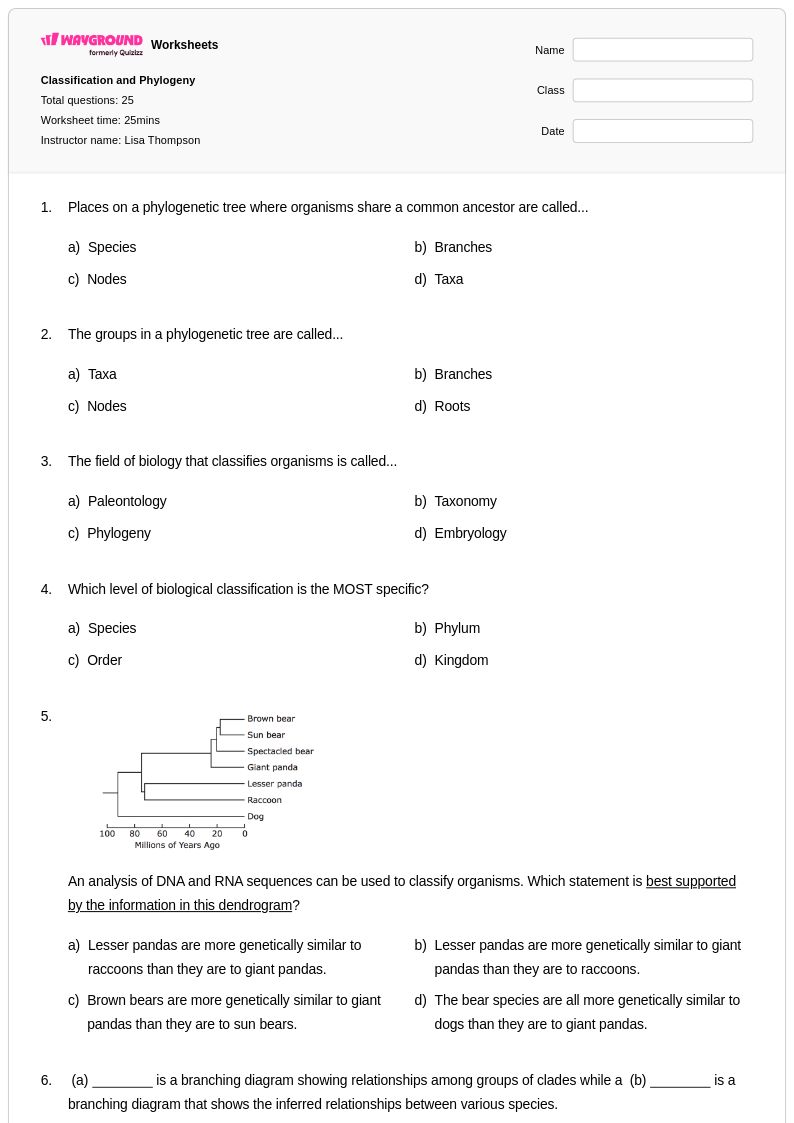
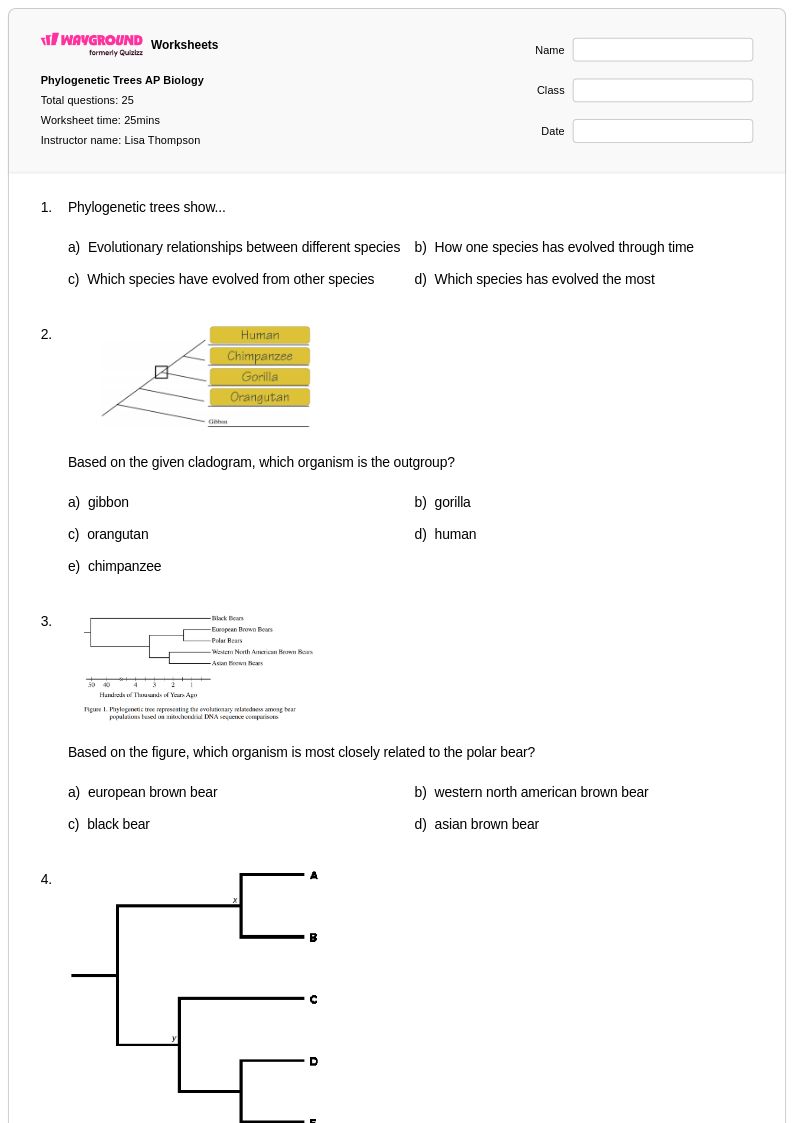
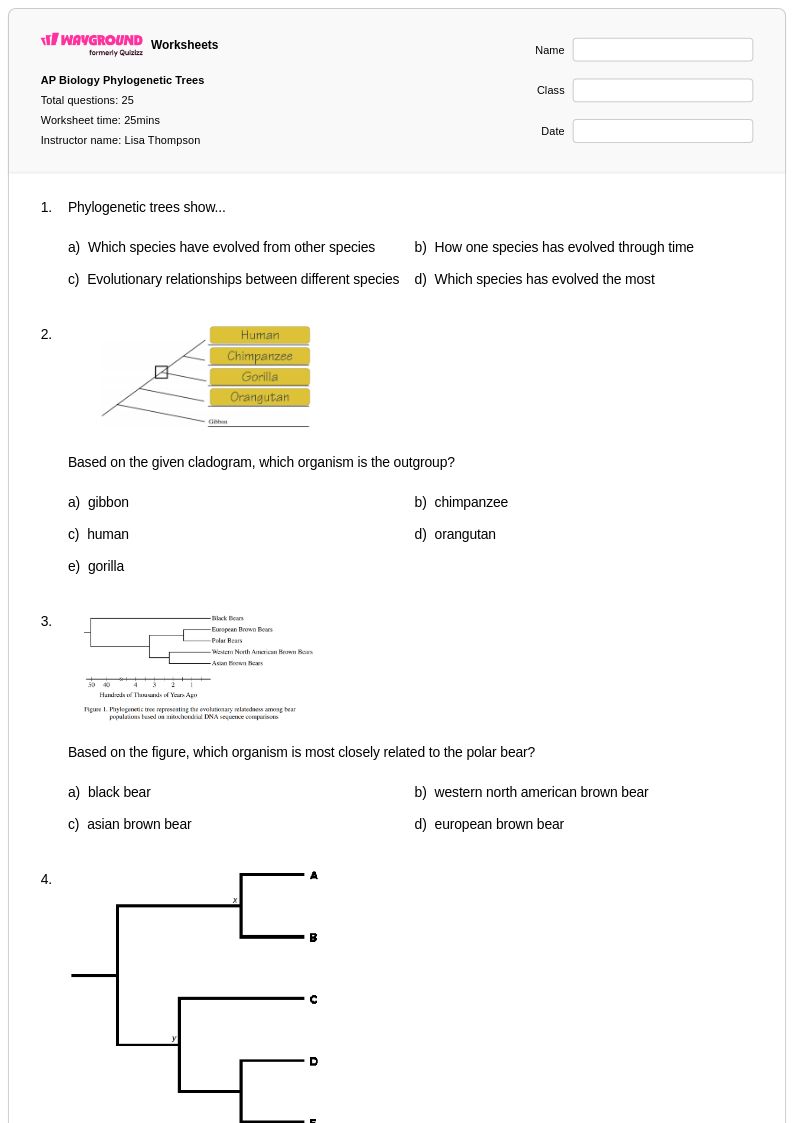
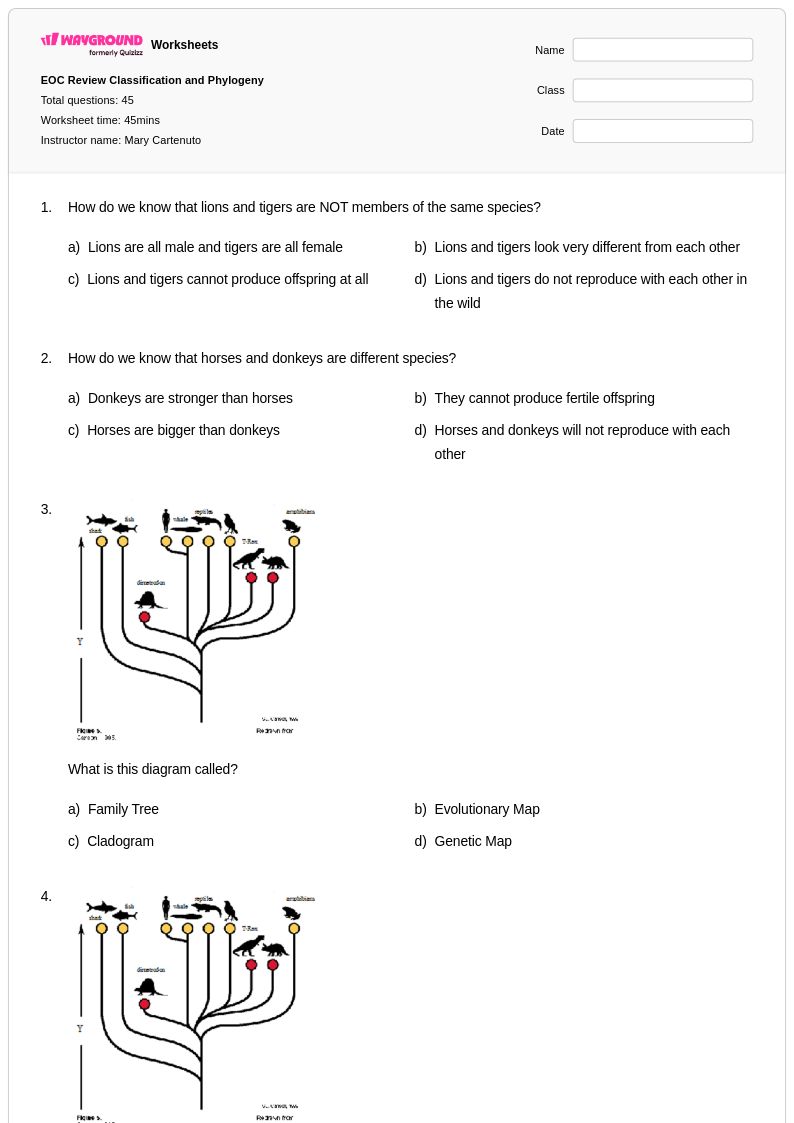
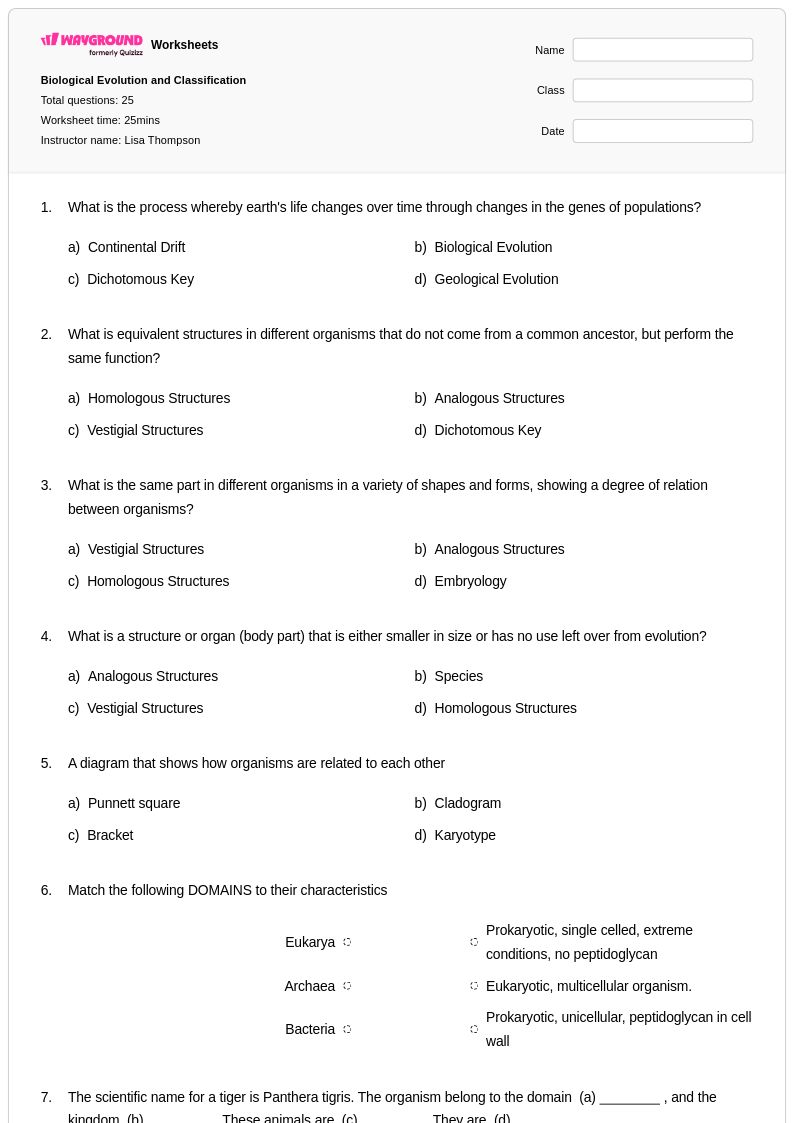
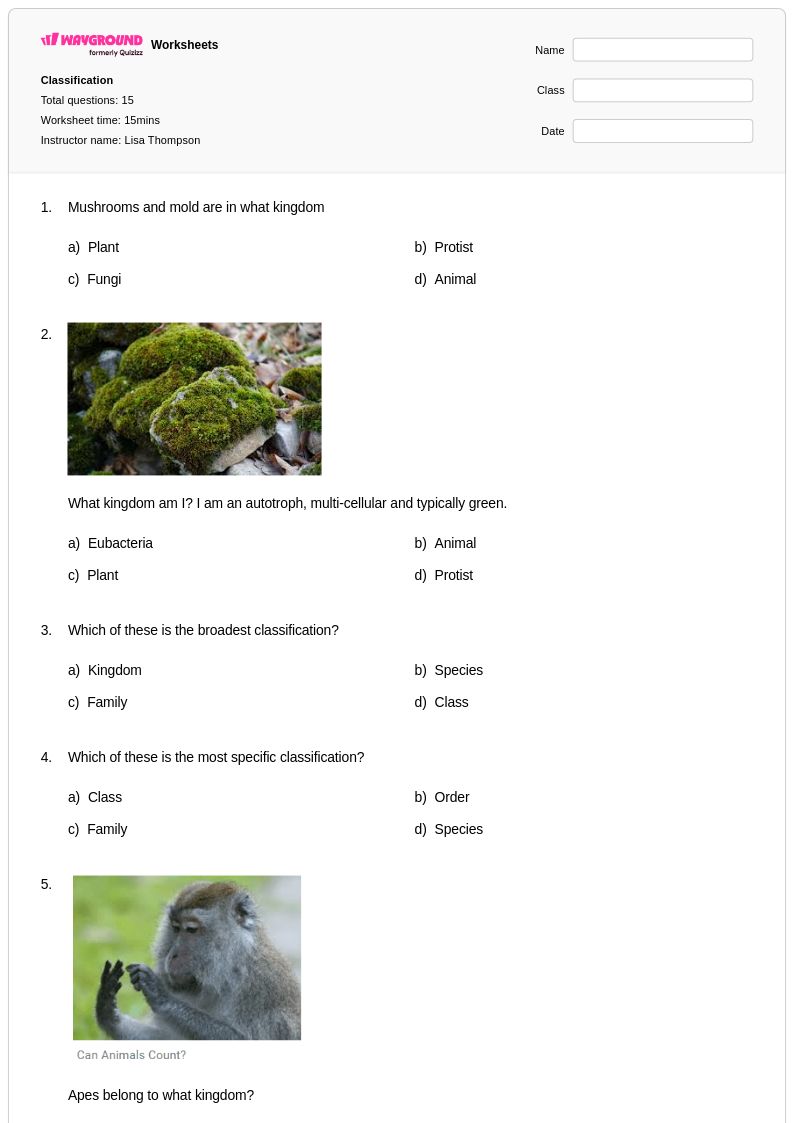
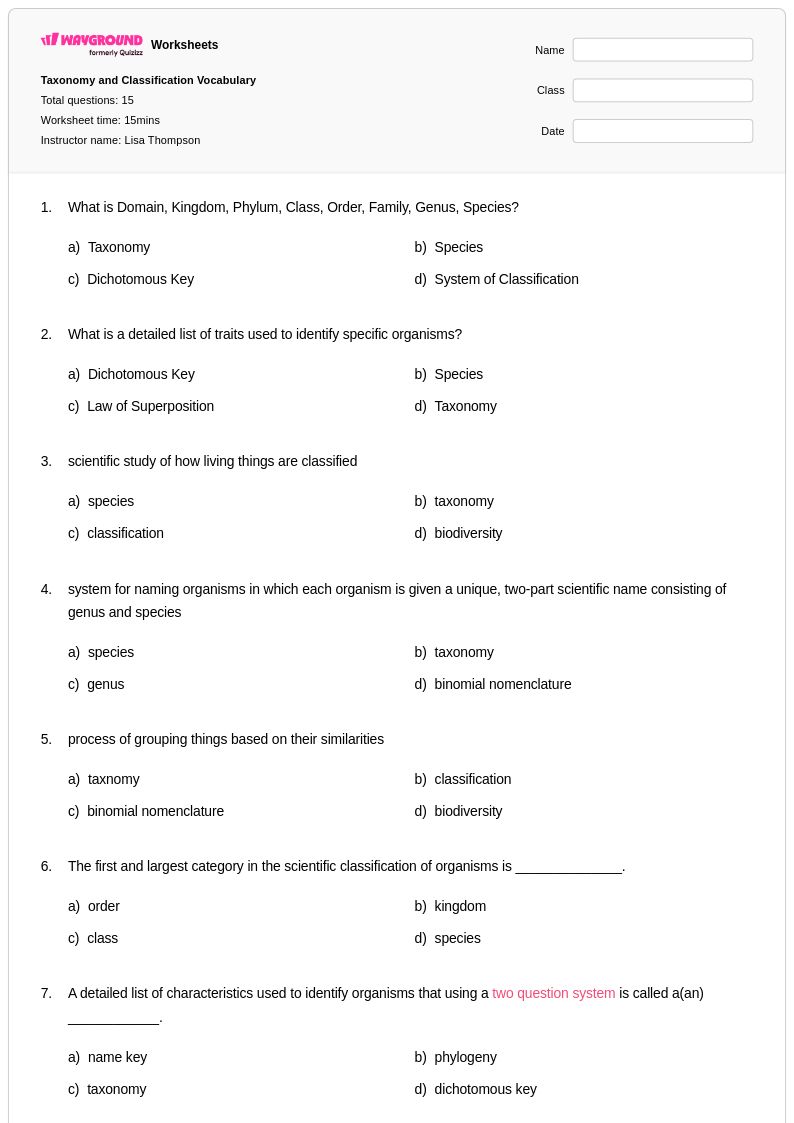
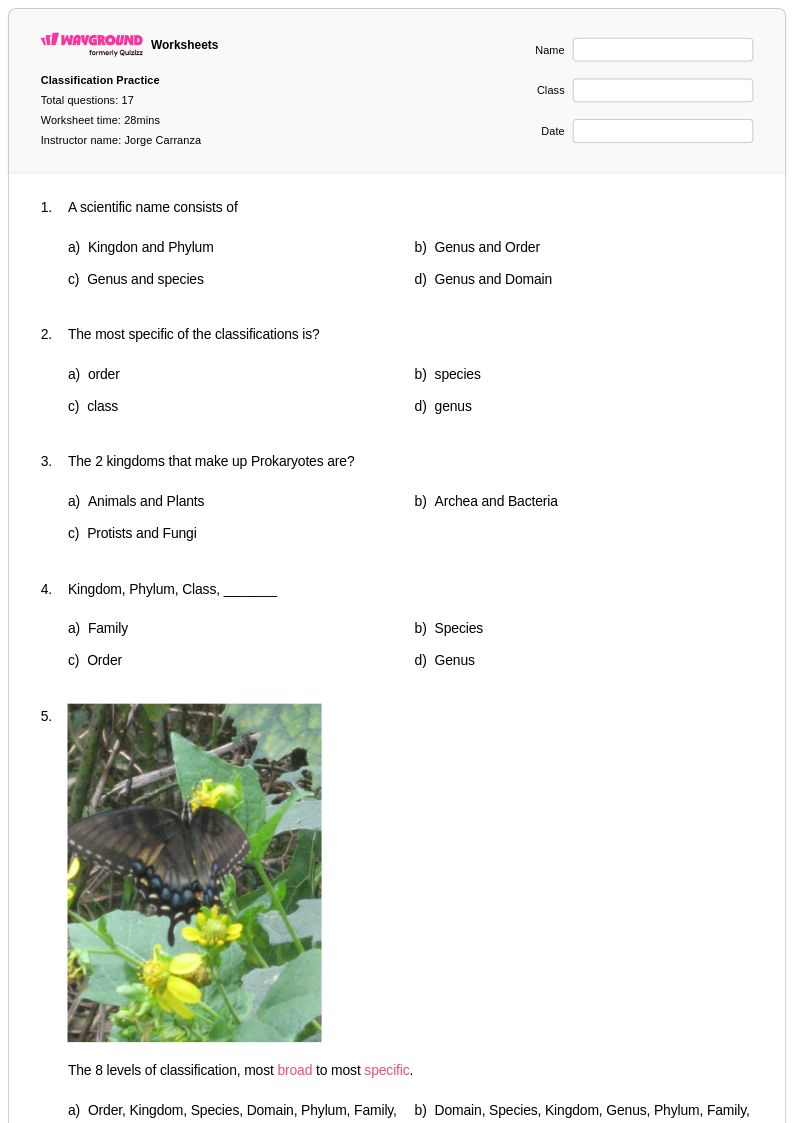
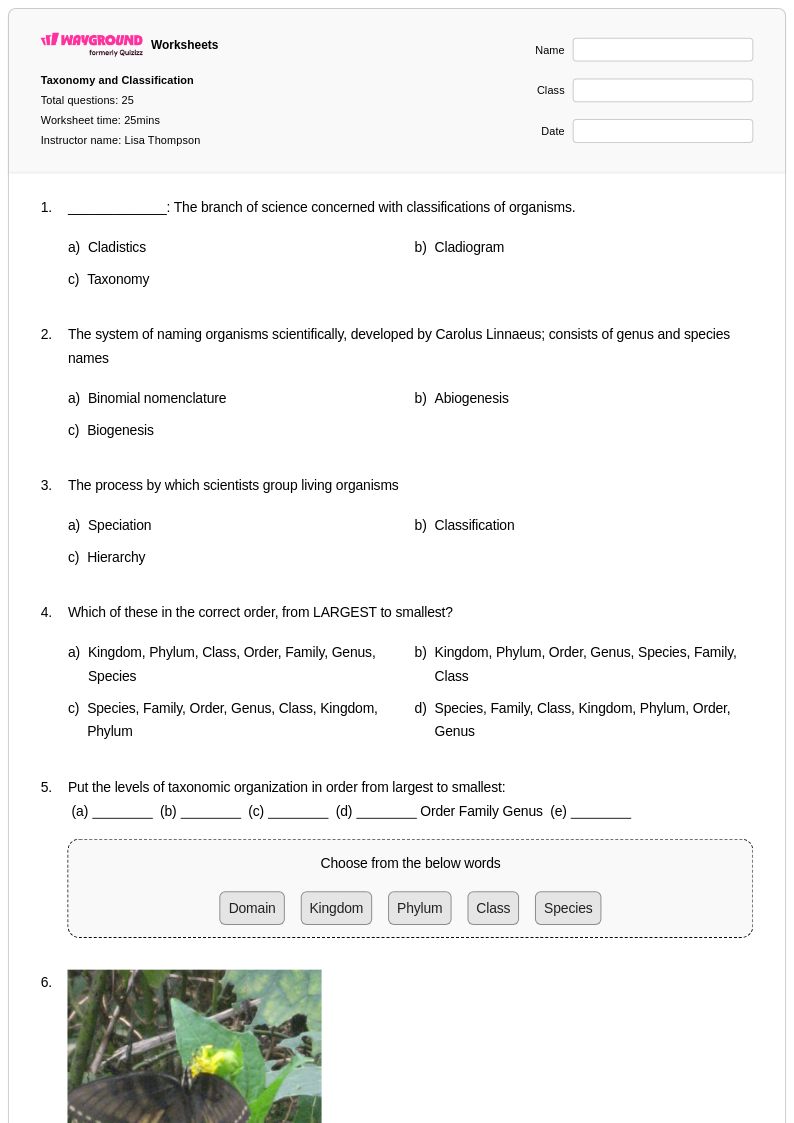
Phylogeny worksheets for Year 9 students available through Wayground (formerly Quizizz) provide comprehensive resources for understanding evolutionary relationships and the construction of phylogenetic trees. These expertly designed materials help students develop critical thinking skills in analyzing morphological and molecular data to determine how organisms are related through common ancestry. The worksheets strengthen essential competencies including interpreting cladograms, identifying synapomorphies and plesiomorphies, understanding the principles of parsimony in evolutionary biology, and recognizing branching patterns that represent speciation events. Students engage with practice problems that challenge them to construct phylogenetic trees from character matrices, analyze DNA sequence data, and evaluate competing hypotheses about evolutionary relationships. Each worksheet collection includes detailed answer keys and is available as free printables in pdf format, making these resources accessible for both classroom instruction and independent study.
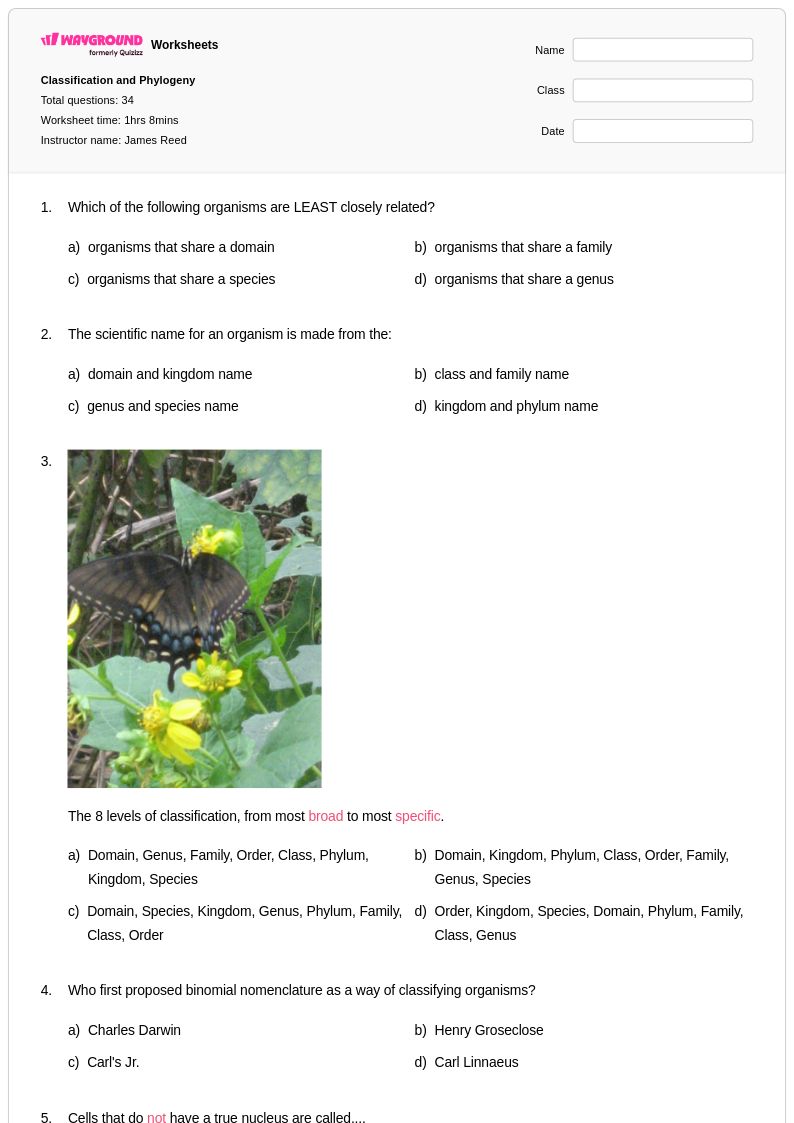
Wayground (formerly Quizizz) empowers educators with an extensive library of millions of teacher-created phylogeny resources specifically aligned with Year 9 biology standards and curriculum requirements. The platform's robust search and filtering capabilities enable teachers to quickly locate worksheets that match their specific instructional needs, whether focusing on molecular phylogenetics, morphological character analysis, or comparative evolutionary studies. Advanced differentiation tools allow educators to customize content complexity and modify assignments to support diverse learning needs, from remediation activities for struggling students to enrichment challenges for advanced learners. These phylogeny worksheet collections are available in both printable pdf formats for traditional classroom use and digital formats for interactive online learning environments. Teachers can seamlessly integrate these resources into lesson planning for skill practice, formative assessment, and targeted intervention, ensuring students master the fundamental concepts of evolutionary relationships and tree-thinking that are essential for advanced biological understanding.
FAQs
How do I teach phylogeny to high school biology students?
Teaching phylogeny effectively starts with grounding students in the concept of common ancestry before introducing cladograms and phylogenetic trees. Use concrete examples — like comparing vertebrate limb structures or cytochrome c protein sequences — to show how both morphological and molecular data inform evolutionary relationships. Once students can read a tree, move them toward constructing their own using synapomorphies, which reinforces the logic behind branching patterns rather than passive interpretation.
What exercises help students practice reading and building phylogenetic trees?
The most effective practice exercises ask students to do both: interpret a given cladogram and construct one from a data set. Identifying synapomorphies from a trait matrix and then translating that matrix into a branching diagram builds procedural fluency. Worksheets that include practice problems on determining the most parsimonious tree and labeling nodes with ancestral versus derived characters are especially useful for building analytical depth.
What misconceptions do students commonly have about phylogenetic trees?
A persistent misconception is that organisms at the tips of a phylogenetic tree are 'more evolved' than those positioned to the left or lower on the diagram — students often misread the tree as a linear ladder rather than a branching structure. Another common error is confusing overall similarity with close evolutionary relationship; two species can look alike due to convergent evolution without being closely related. Worksheets that require students to justify their reasoning when interpreting branching points help surface and correct both of these errors.
How do I use phylogeny worksheets to assess student understanding of cladistics?
Phylogeny worksheets are most effective as assessments when they require students to interpret cladograms, identify synapomorphies, and explain the significance of branching points — not just label parts. Look for tasks that ask students to compare two possible tree topologies and determine which is more parsimonious given available data, as this distinguishes surface recall from genuine conceptual understanding.
How do Wayground's phylogeny worksheets work in the classroom?
Wayground's phylogeny worksheets are available as printable PDFs for traditional paper-based instruction and in digital formats that integrate with modern classroom technology, giving teachers flexibility across in-person, hybrid, and remote environments. Teachers can also host worksheets as a quiz directly on Wayground, enabling live assignment, real-time monitoring, and immediate student feedback. Each worksheet includes a detailed answer key, making them suitable for independent practice, homework, or guided instruction.
How can I differentiate phylogeny instruction for students at different skill levels?
For students who struggle with cladogram interpretation, start with simplified two- or three-taxon trees before introducing full character matrices. More advanced students benefit from constructing trees from molecular data or evaluating competing hypotheses about evolutionary relationships. On Wayground, teachers can apply accommodations such as reduced answer choices or read-aloud settings to individual students, and customize worksheets to create differentiated versions that address both remediation and enrichment within the same class period.