Free Printable Skin Structure Worksheets for Year 9
Explore Year 9 skin structure worksheets and printables through Wayground that help students master the layers, functions, and components of human skin with comprehensive practice problems, free PDF downloads, and complete answer keys.
Explore printable Skin Structure worksheets for Year 9
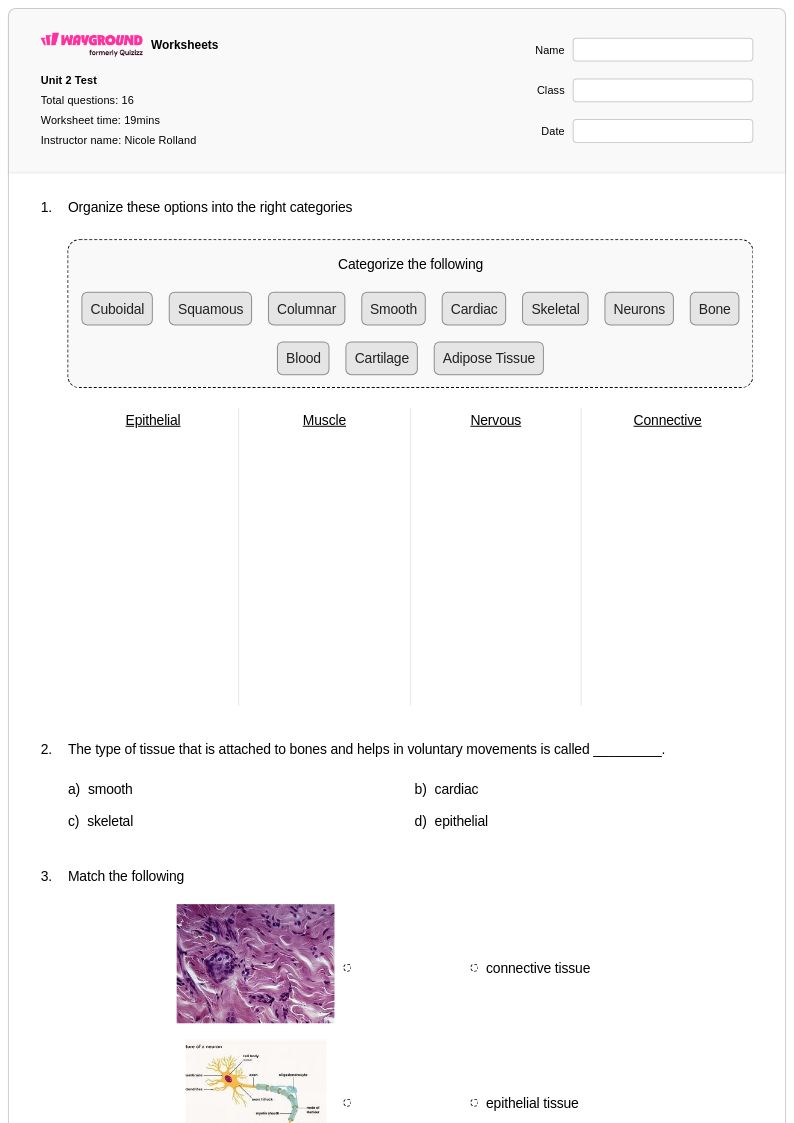
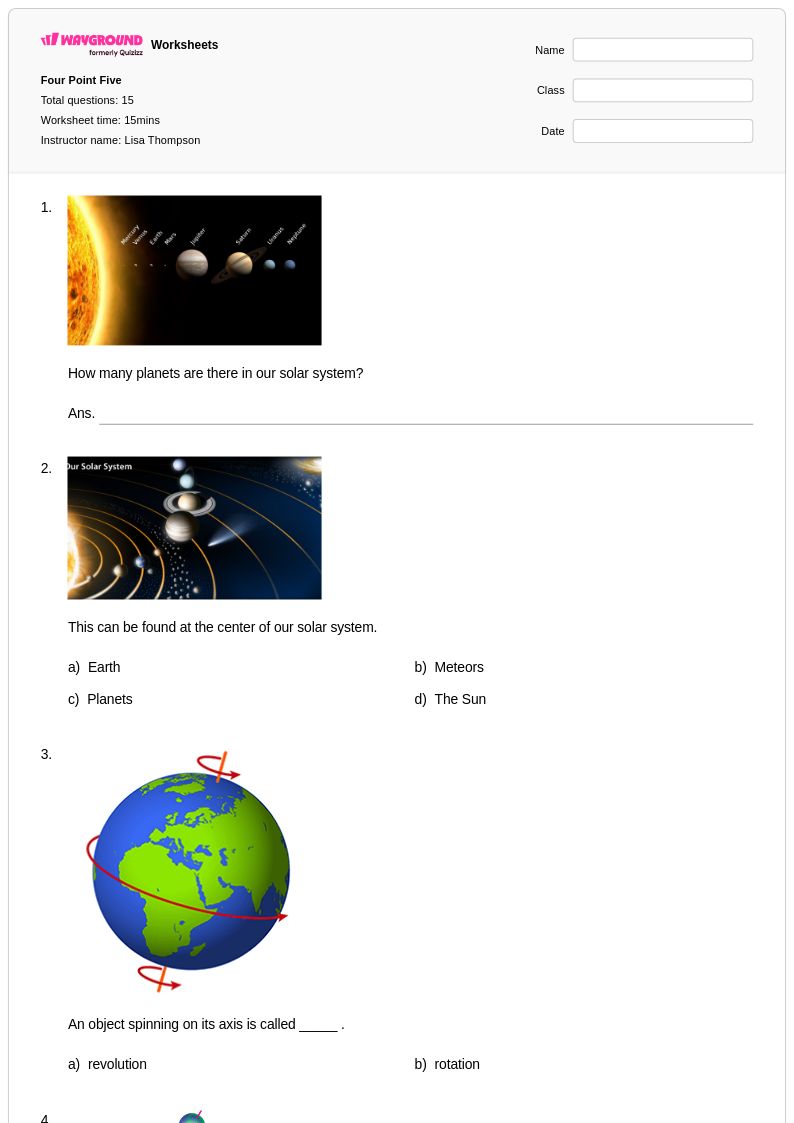
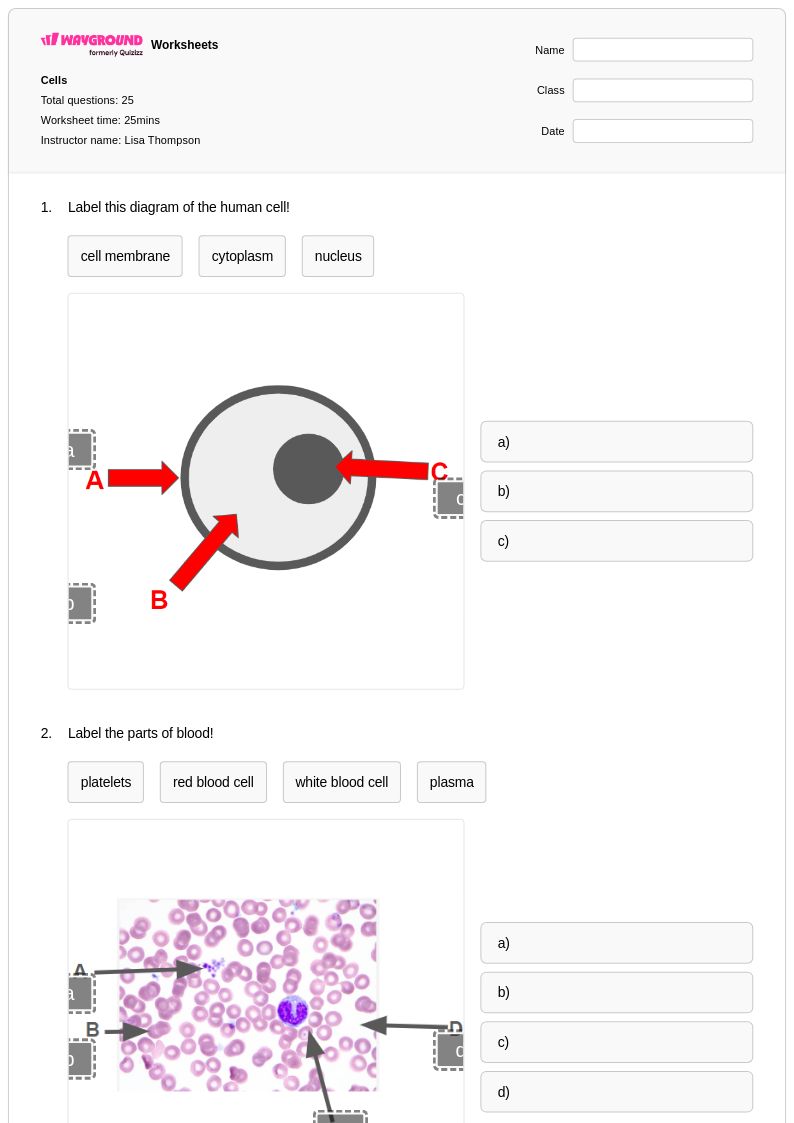
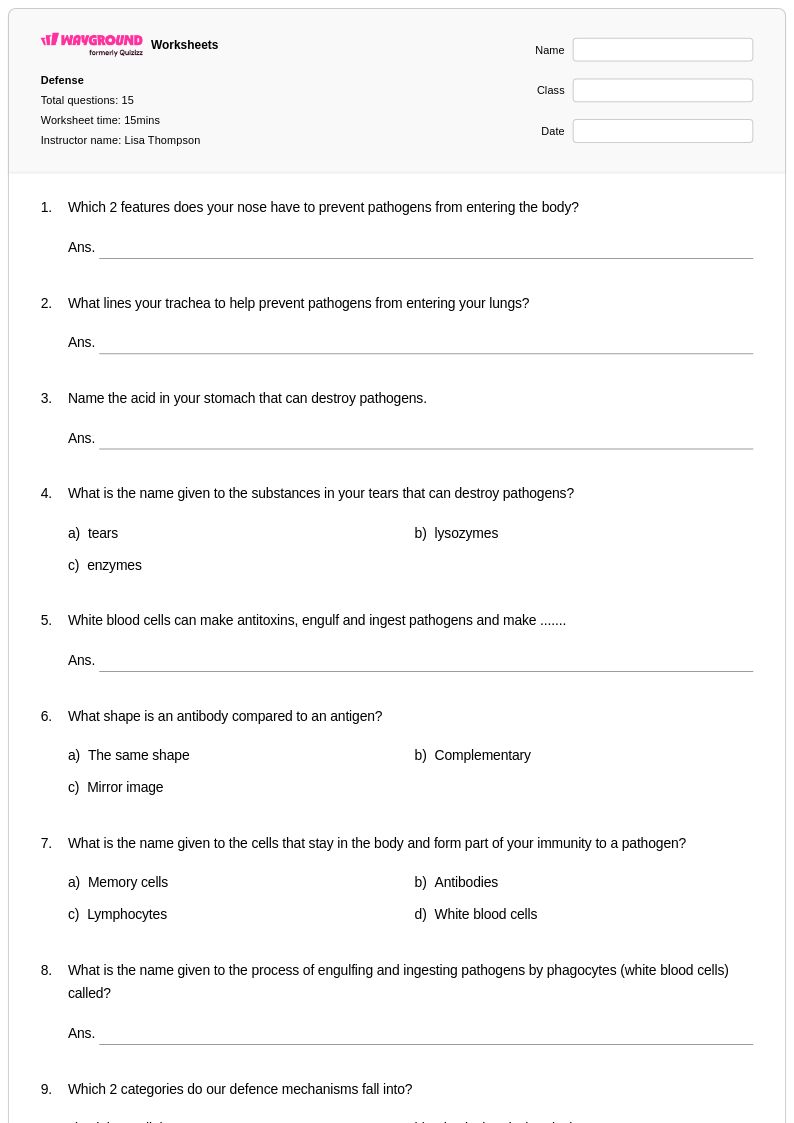
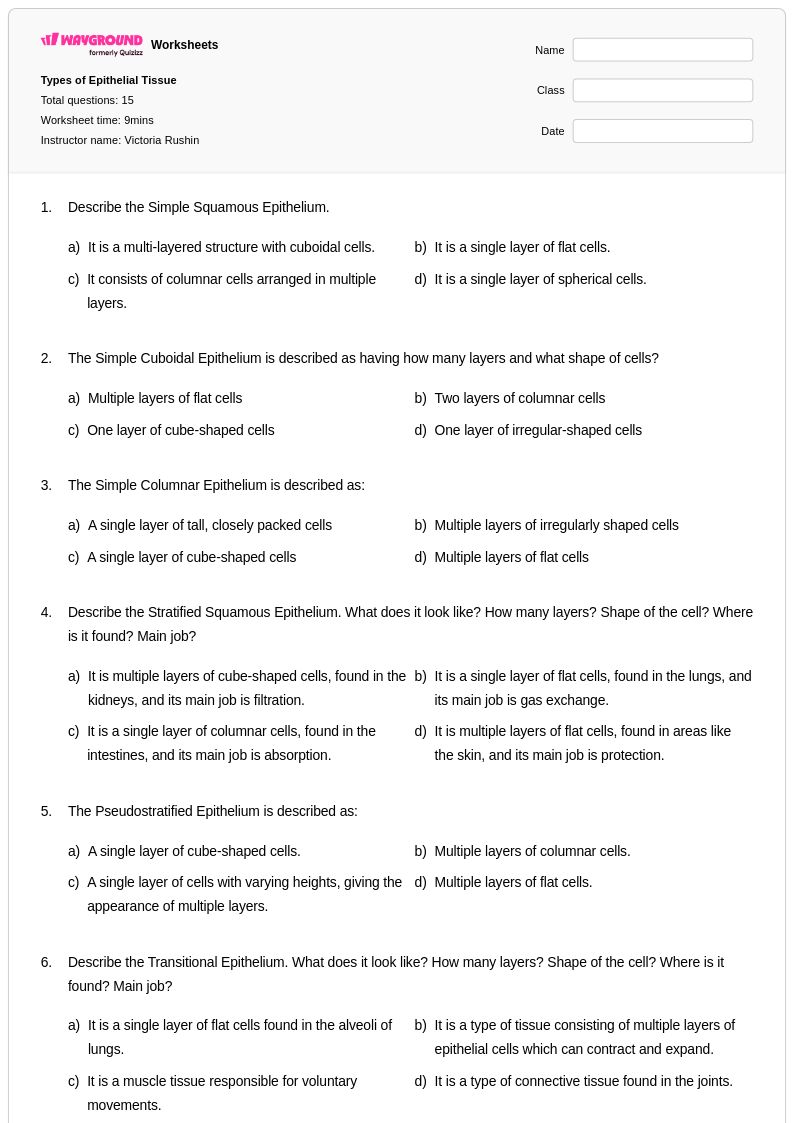
Skin structure worksheets for Year 9 biology students available through Wayground (formerly Quizizz) provide comprehensive coverage of the integumentary system's complex anatomy and physiology. These educational resources help students master the identification and functions of the epidermis, dermis, and hypodermis layers, along with specialized structures like hair follicles, sebaceous glands, sweat glands, and sensory receptors. The practice problems guide learners through detailed analysis of skin cell types, including keratinocytes, melanocytes, and Langerhans cells, while exploring critical processes such as keratinization, wound healing, and thermoregulation. Each printable worksheet includes answer keys that support independent study and self-assessment, with free pdf downloads enabling flexible classroom implementation and home practice.
Wayground's extensive collection of teacher-created skin structure resources offers millions of expertly designed materials that streamline lesson planning and enhance student engagement in Year 9 biology classrooms. Advanced search and filtering capabilities allow educators to quickly locate worksheets aligned with specific curriculum standards and learning objectives, while differentiation tools enable customization for diverse student needs and ability levels. Teachers can access both printable pdf versions for traditional classroom use and digital formats that support interactive learning environments, making these resources ideal for initial instruction, targeted remediation, and enrichment activities. The platform's robust organizational features help biology educators efficiently manage their skin structure curriculum, ensuring students develop strong foundational knowledge of integumentary system anatomy before advancing to more complex physiological concepts.
FAQs
How do I teach skin structure to biology students?
Start by anchoring instruction in function: students retain the three skin layers (epidermis, dermis, hypodermis) better when each layer is paired with what it does, such as protection, thermoregulation, or sensory reception. Cross-sectional diagram labeling is especially effective for building spatial understanding of how structures like hair follicles, sebaceous glands, and sweat glands are positioned relative to each layer. Connecting skin anatomy to real-world scenarios, like how a sunburn affects only the epidermis or how subcutaneous fat insulates the body, gives students meaningful context for abstract structures.
What exercises help students practice identifying skin layers and structures?
Labeling exercises using cross-sectional diagrams of skin are among the most effective practice tools because they require students to recall structure names, positions, and relationships simultaneously. Practice problems that ask students to match specialized structures like sensory receptors or sebaceous glands to their functions reinforce both identification and comprehension. Combining diagram analysis with short-answer questions about the skin's protective, thermoregulatory, and sensory roles ensures students move beyond memorization toward applied understanding.
What mistakes do students commonly make when learning skin anatomy?
Students frequently confuse the dermis and hypodermis, either merging them conceptually or misidentifying which layer contains specific structures like hair follicles versus adipose tissue. Another common error is treating the epidermis as a single undifferentiated layer rather than recognizing its sublayers, which becomes a problem in more advanced anatomy courses. Students also tend to isolate structure from function, naming the layers correctly but struggling to explain why, for example, sweat glands are embedded in the dermis rather than the outer epidermis.
How do I differentiate skin structure worksheets for students with different learning needs?
For students who need additional support, reduce the complexity of labeling tasks by providing a word bank or pre-labeled partial diagrams before moving to fully blank versions. Wayground supports individual student accommodations including Read Aloud for students who benefit from audio support, reduced answer choices to lower cognitive load, and extended time settings that can be configured per student without affecting the rest of the class. These settings are saved and reusable across sessions, making it straightforward to apply consistent accommodations as students work through skin anatomy content.
How do I use Wayground's skin structure worksheets in my classroom?
Wayground's skin structure worksheets are available as both printable PDFs for traditional classroom use and in digital formats for technology-integrated environments, giving teachers flexibility in how they deploy the materials. Teachers can also host worksheets as a quiz directly on Wayground, enabling real-time student responses and instant scoring. Whether used for direct instruction, independent practice, or remediation, each worksheet includes a complete answer key so teachers can assess accuracy without additional preparation.
How do I assess whether students understand skin structure beyond memorization?
Move beyond fill-in-the-blank by asking students to explain cause-and-effect relationships, such as what happens to thermoregulation if sweat glands are damaged, or why the dermis must contain blood vessels while the epidermis does not. Diagram analysis tasks where students interpret an unlabeled cross-section and justify their labels in writing reveal whether understanding is genuinely conceptual. Short constructed-response questions tied to skin functions, protection, temperature regulation, and sensory detection, are reliable indicators of whether students can apply structure-function reasoning rather than simply recall terms.