Free Printable Stoichiometry Worksheets for Year 9
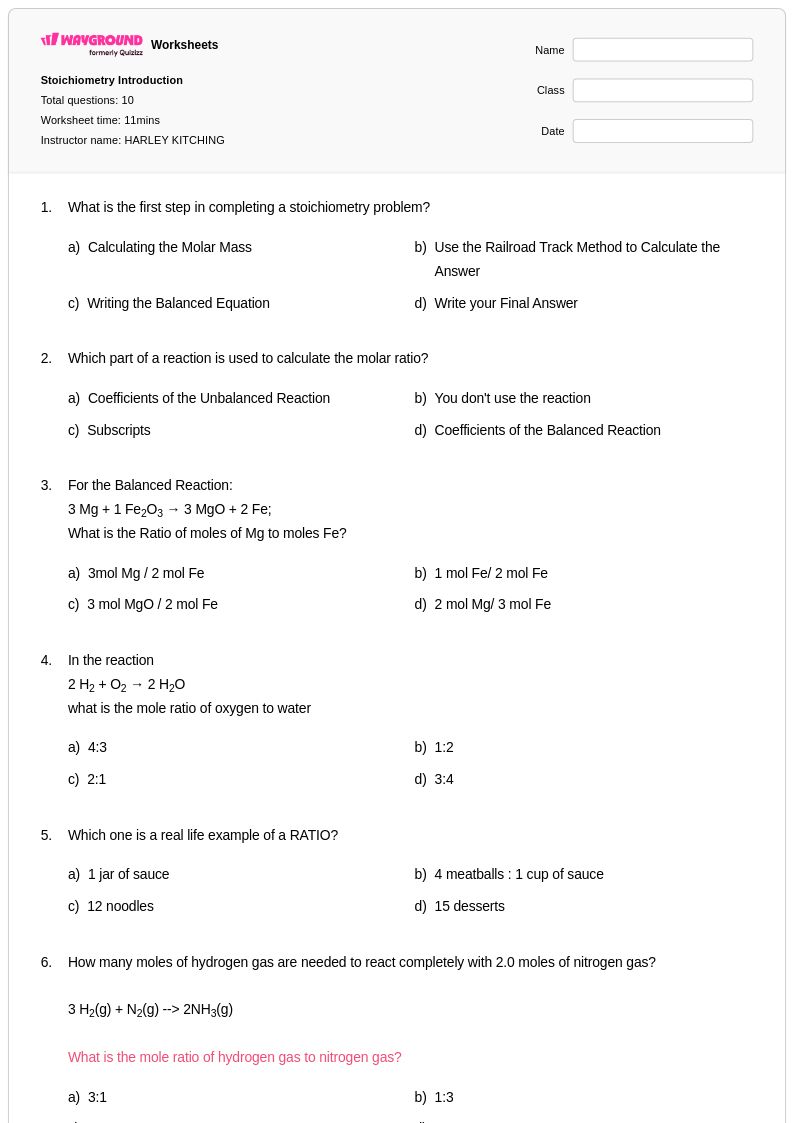
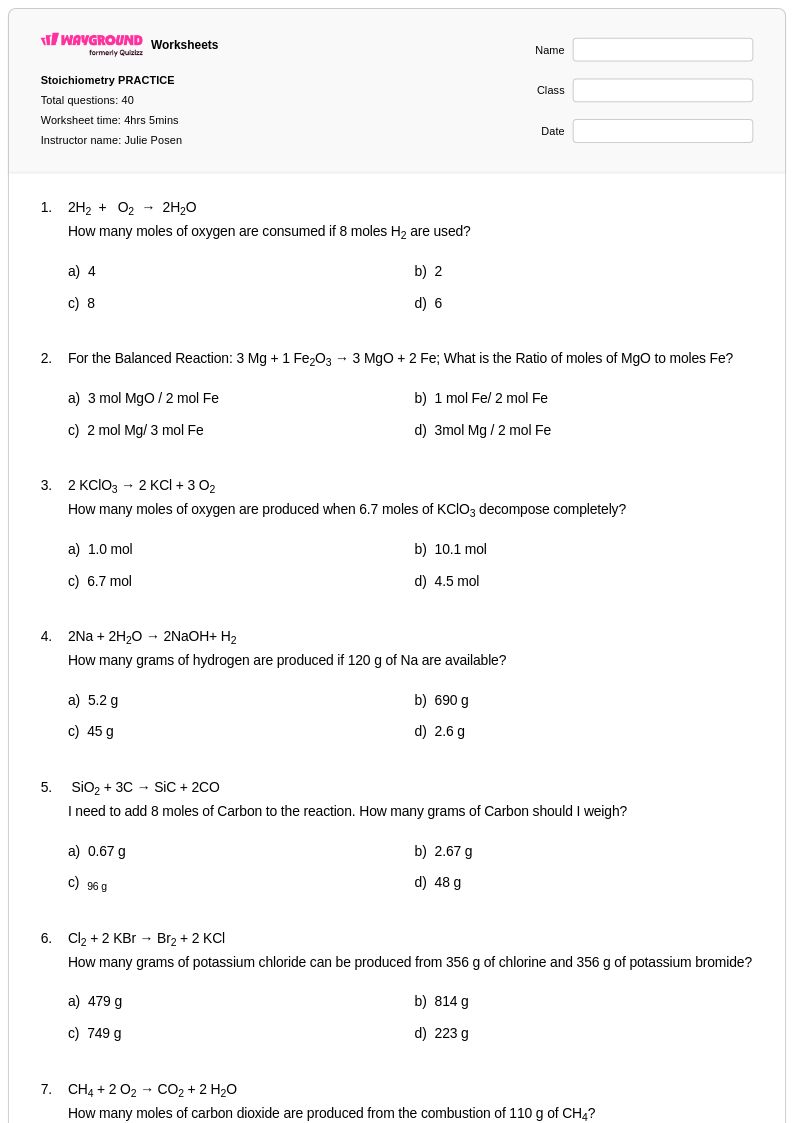
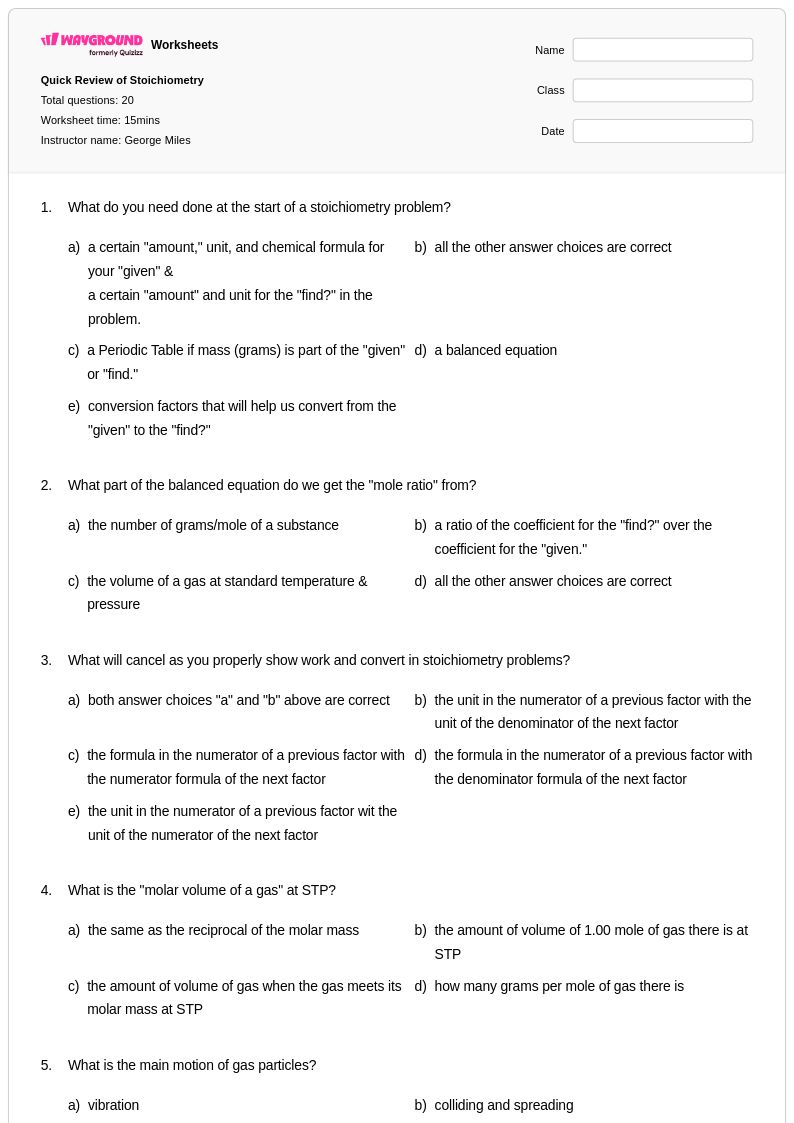
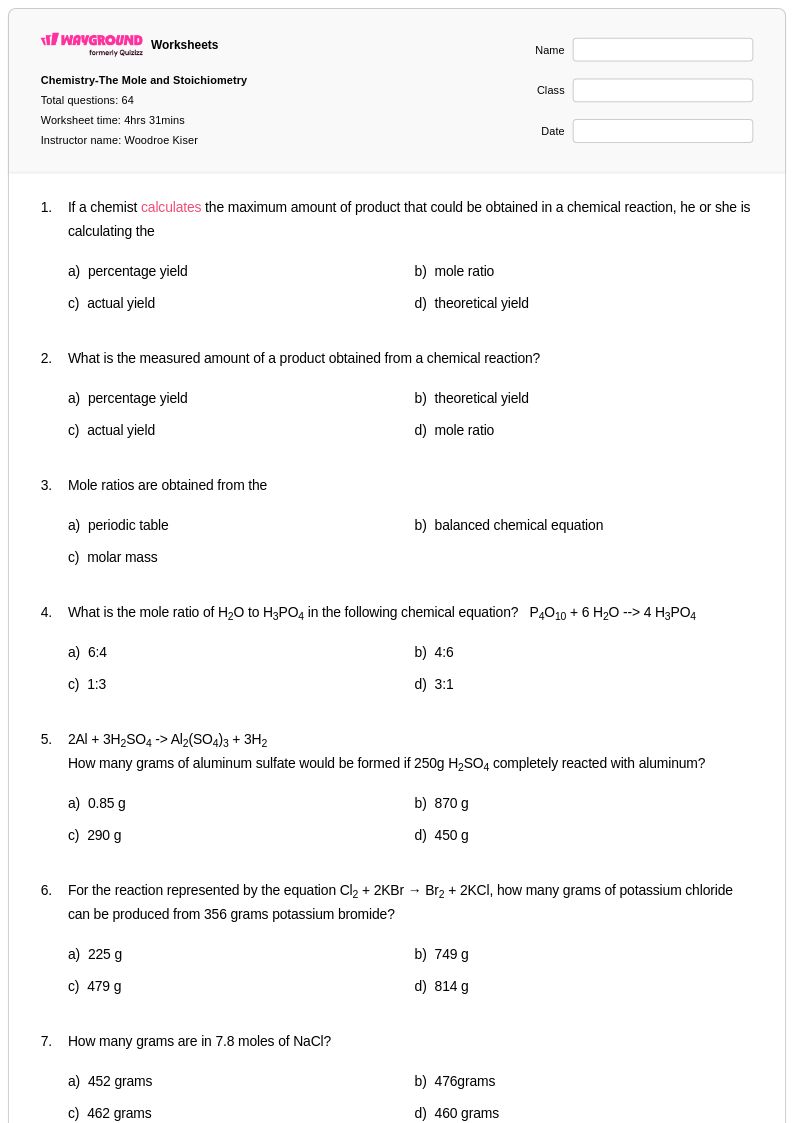
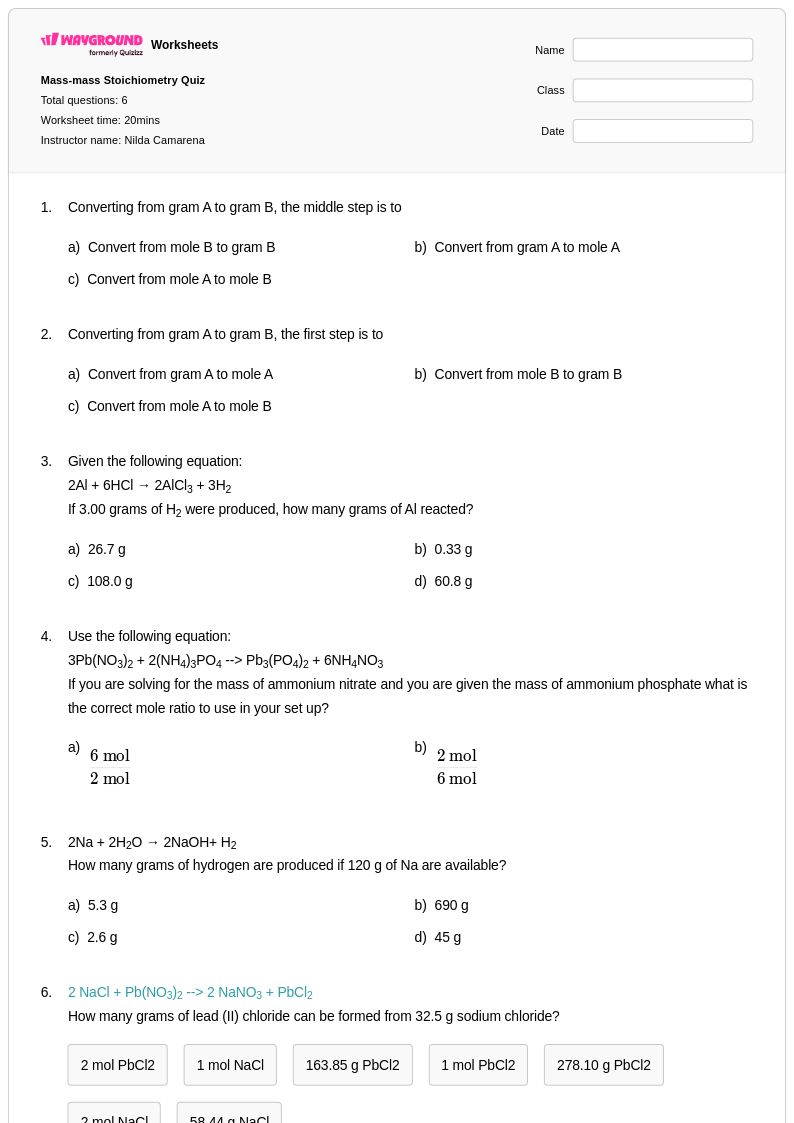
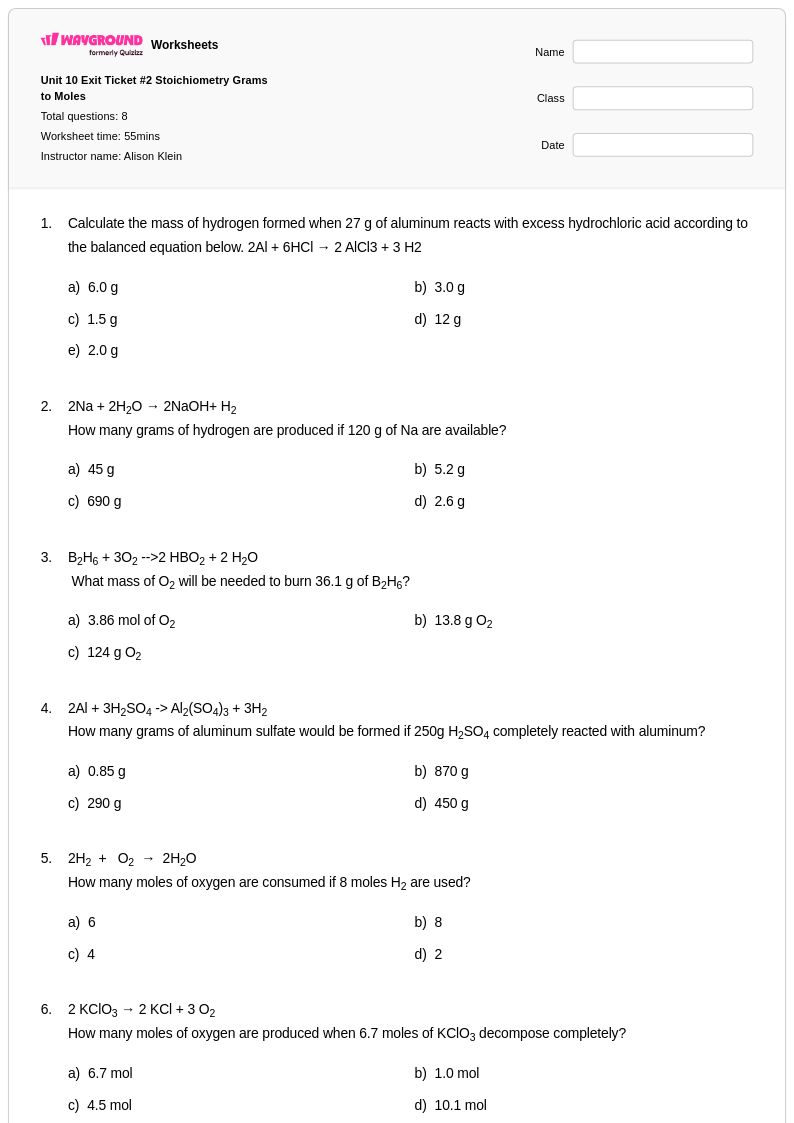
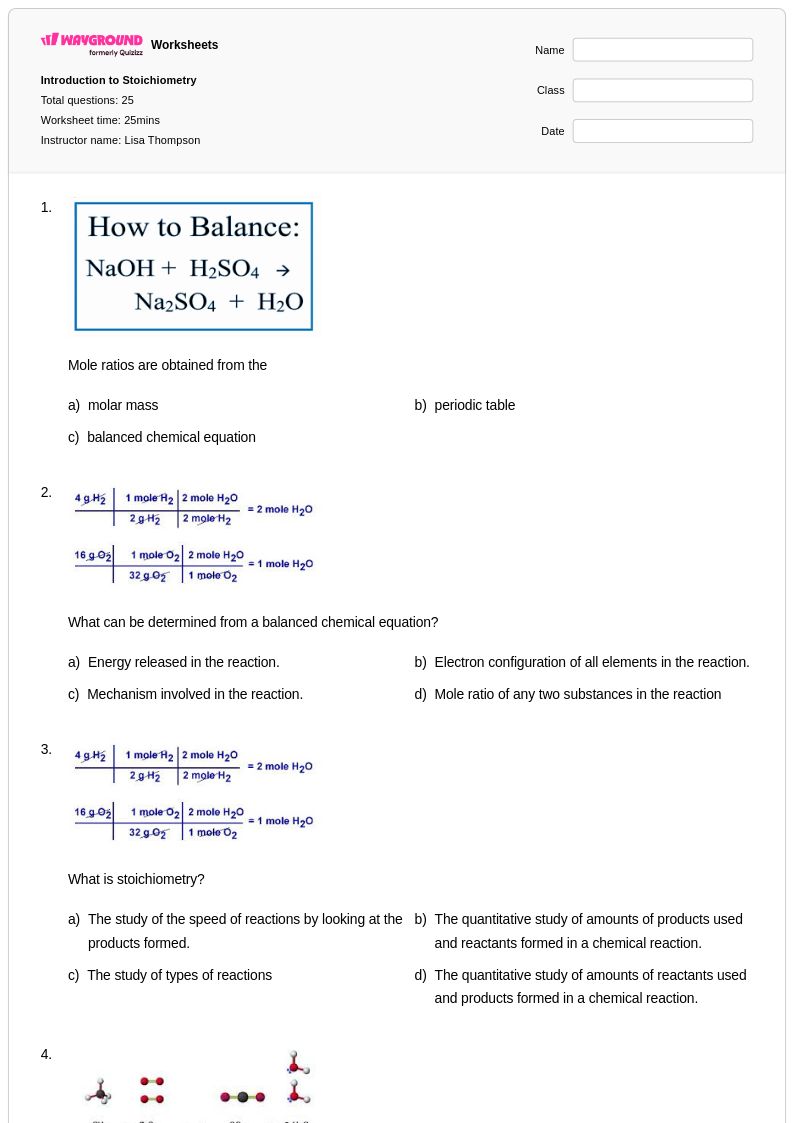
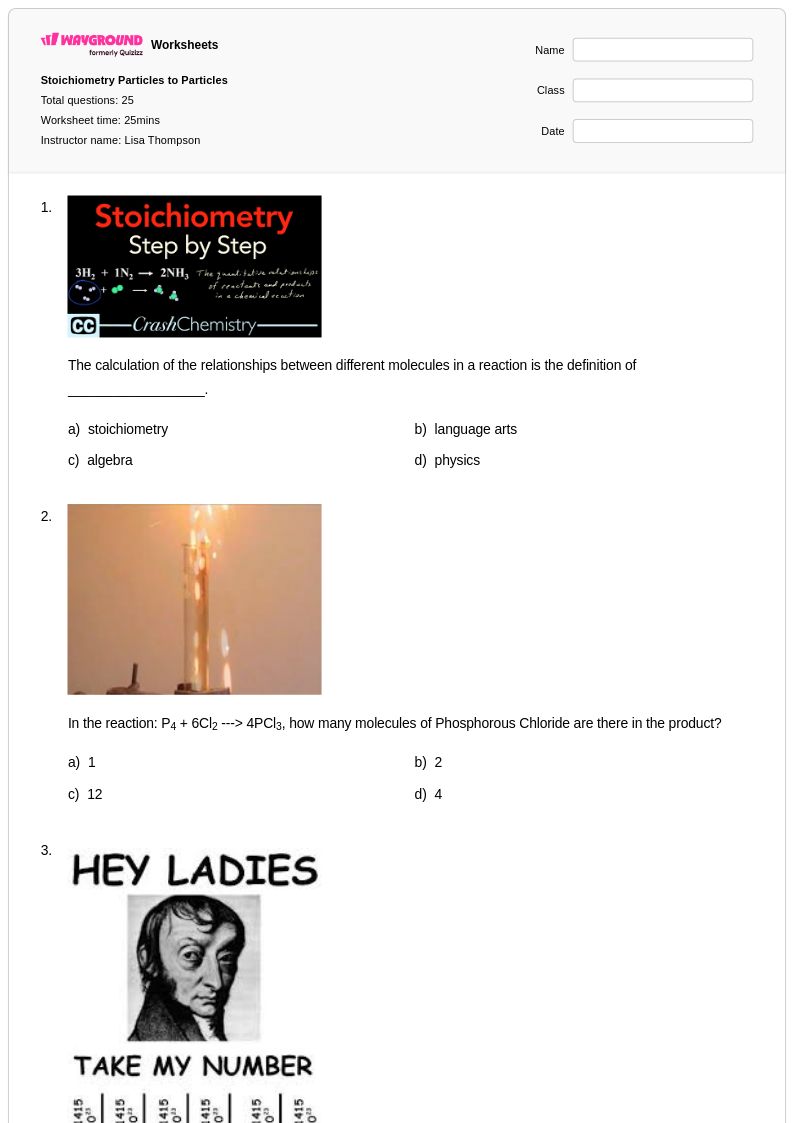
Explore Year 9 stoichiometry worksheets and printables that help students master chemical calculations, mole ratios, and balanced equations through engaging practice problems with comprehensive answer keys.
Explore printable Stoichiometry worksheets for Year 9
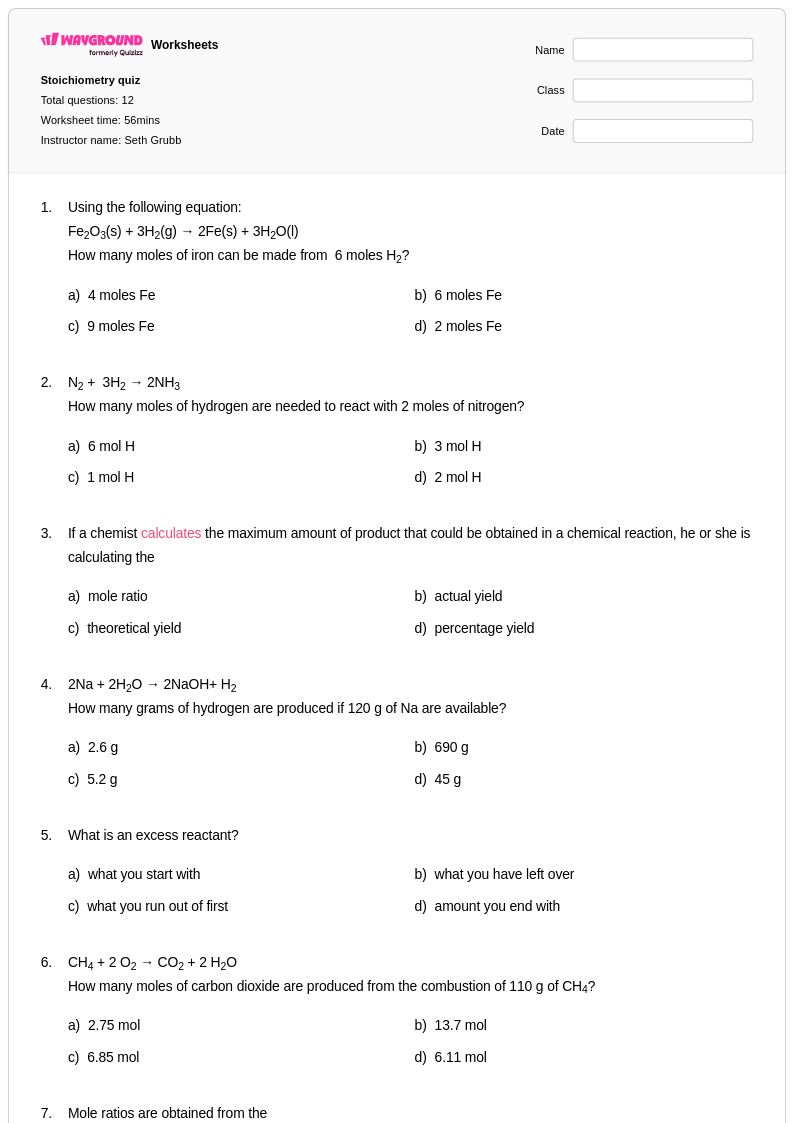
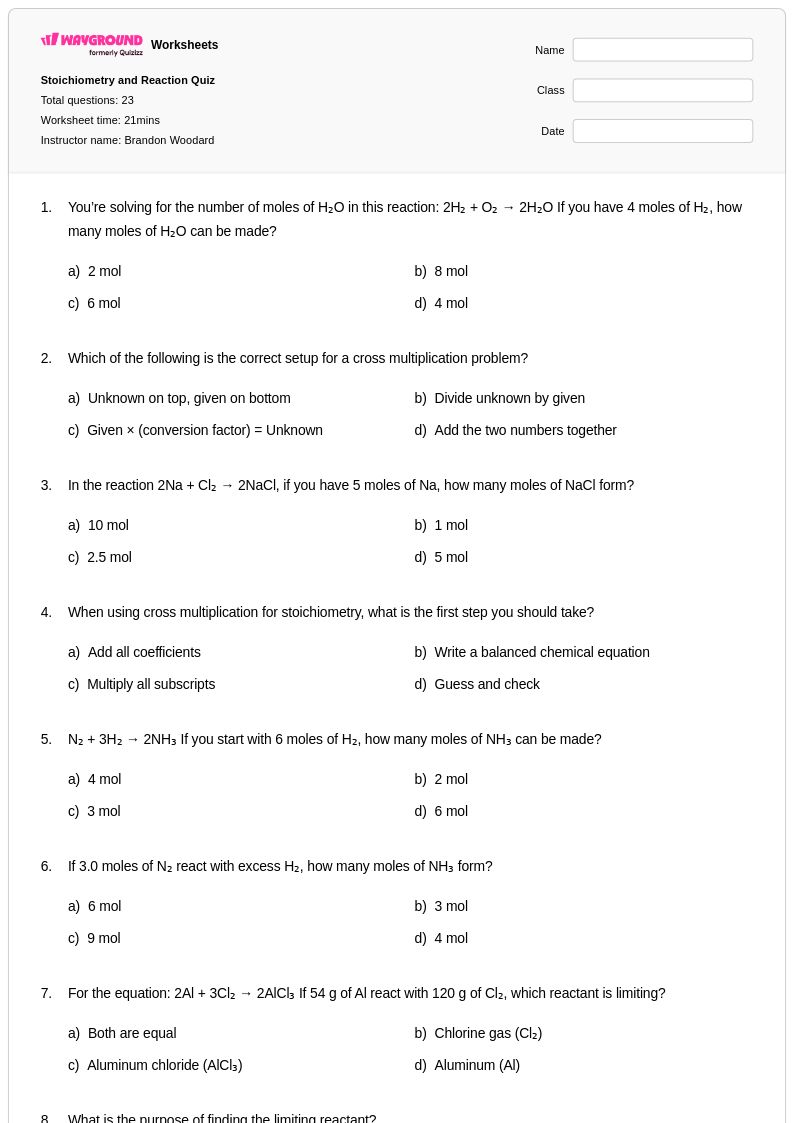
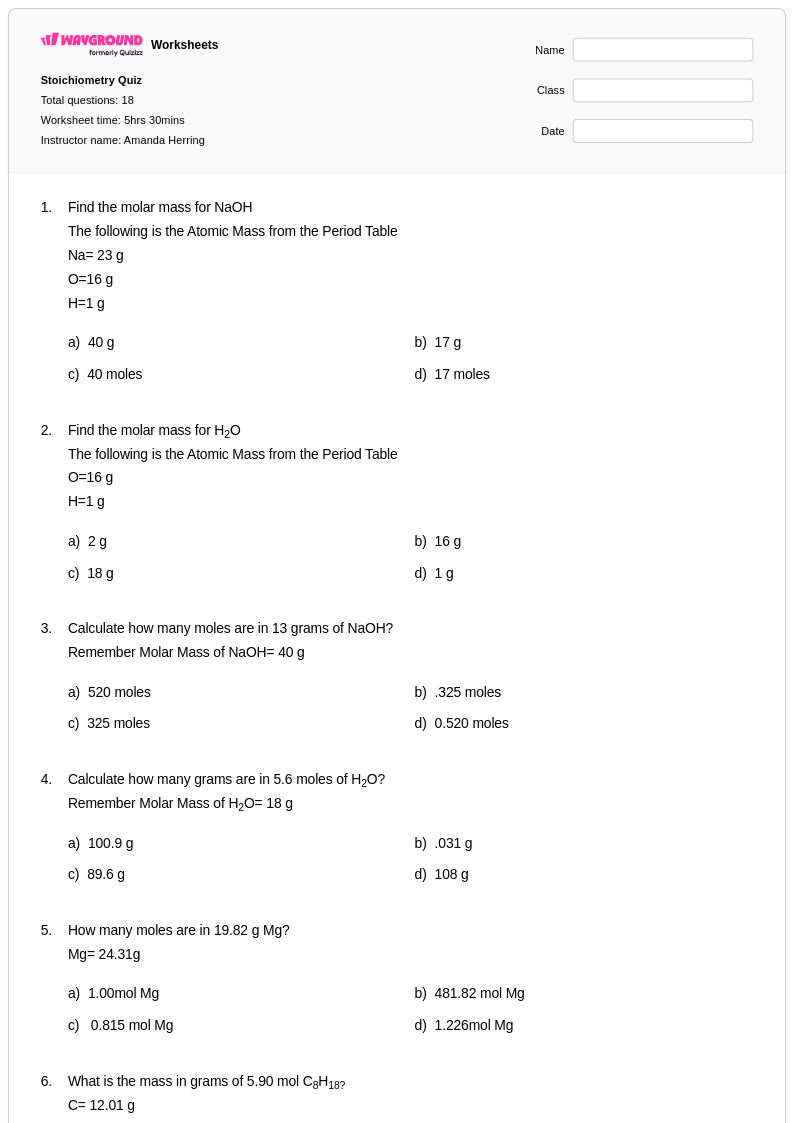
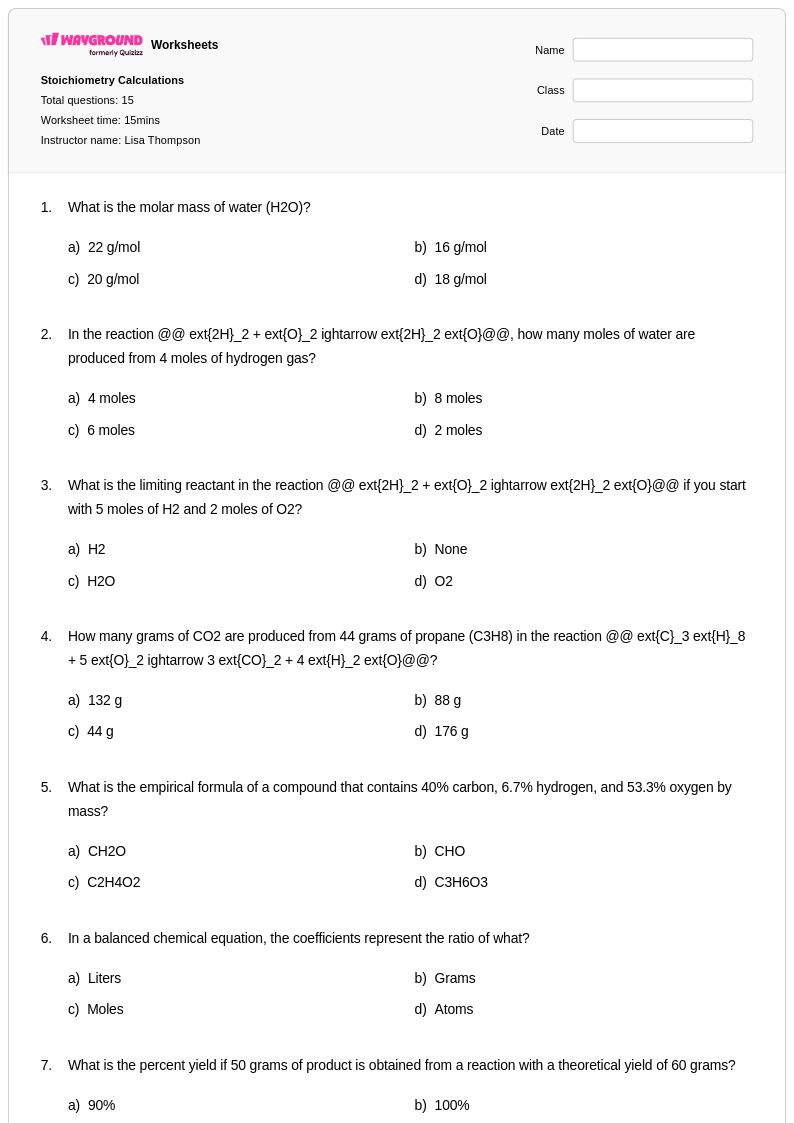
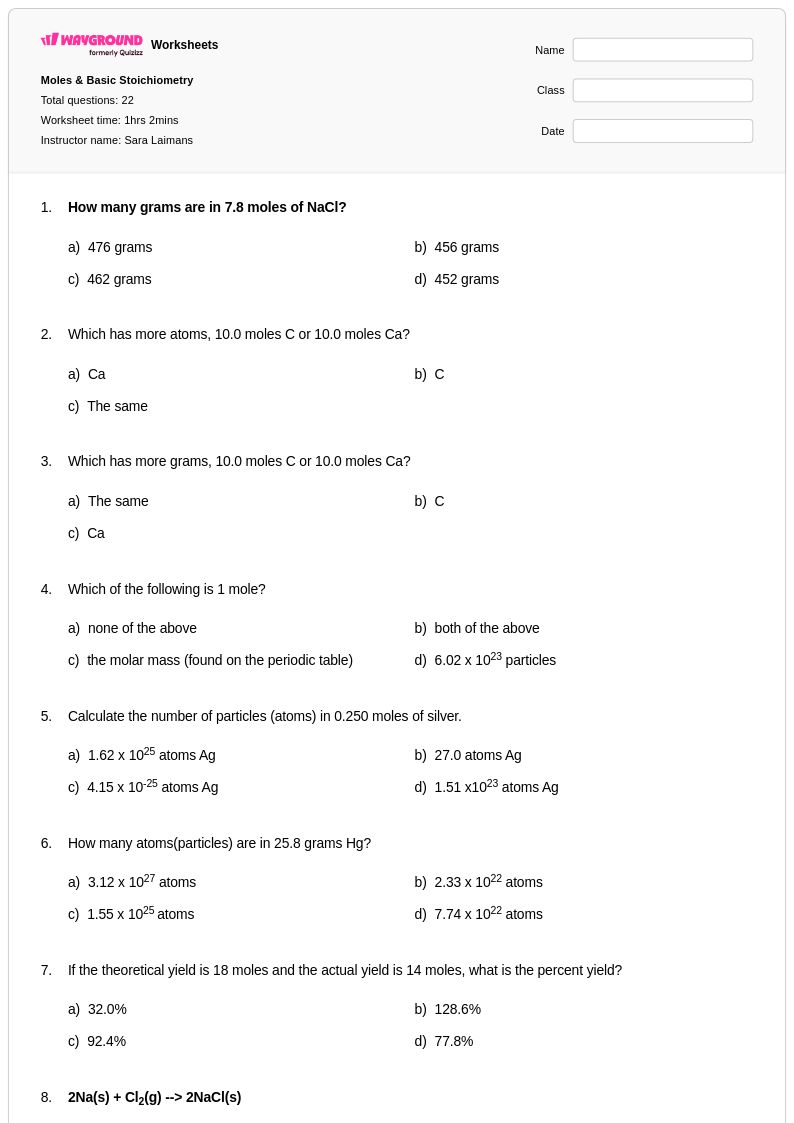
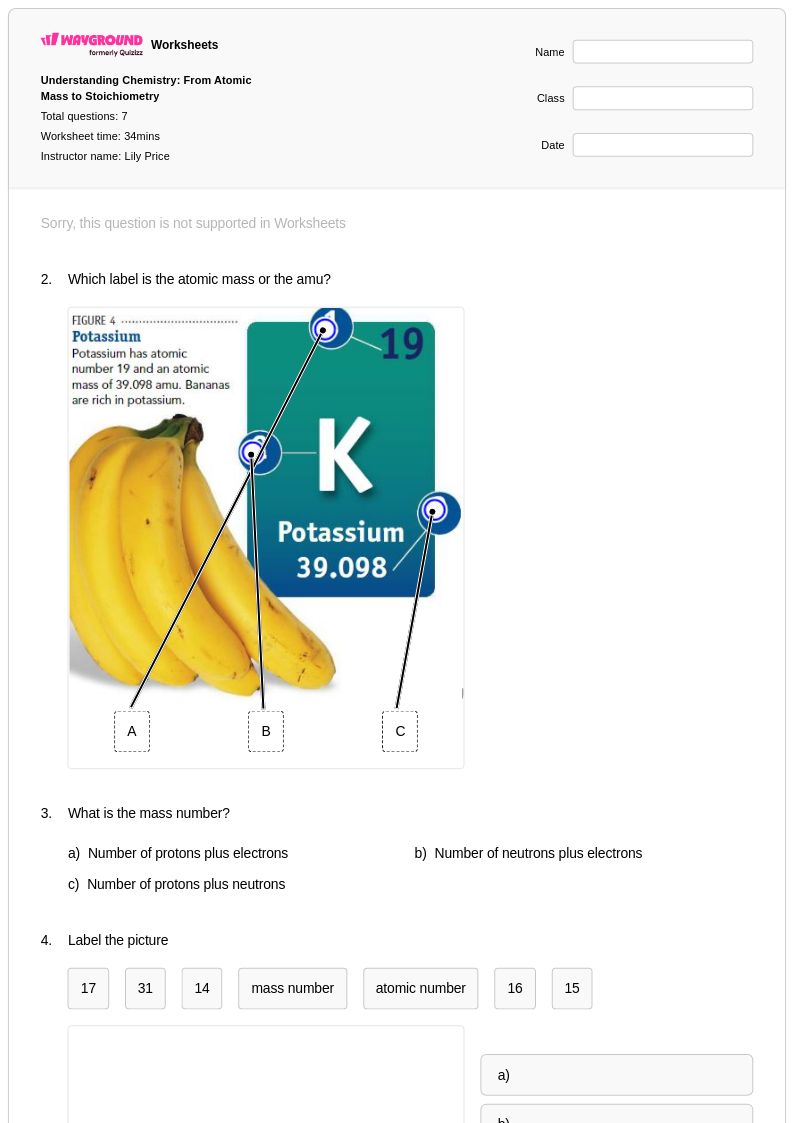
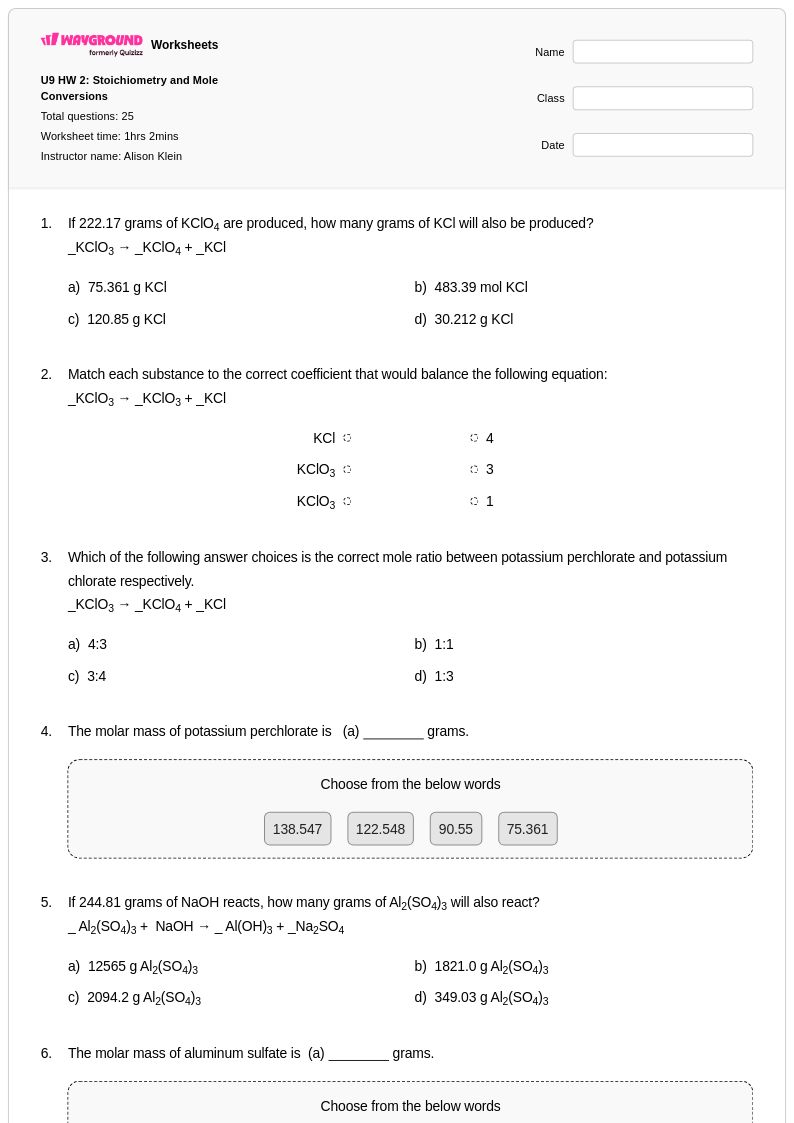
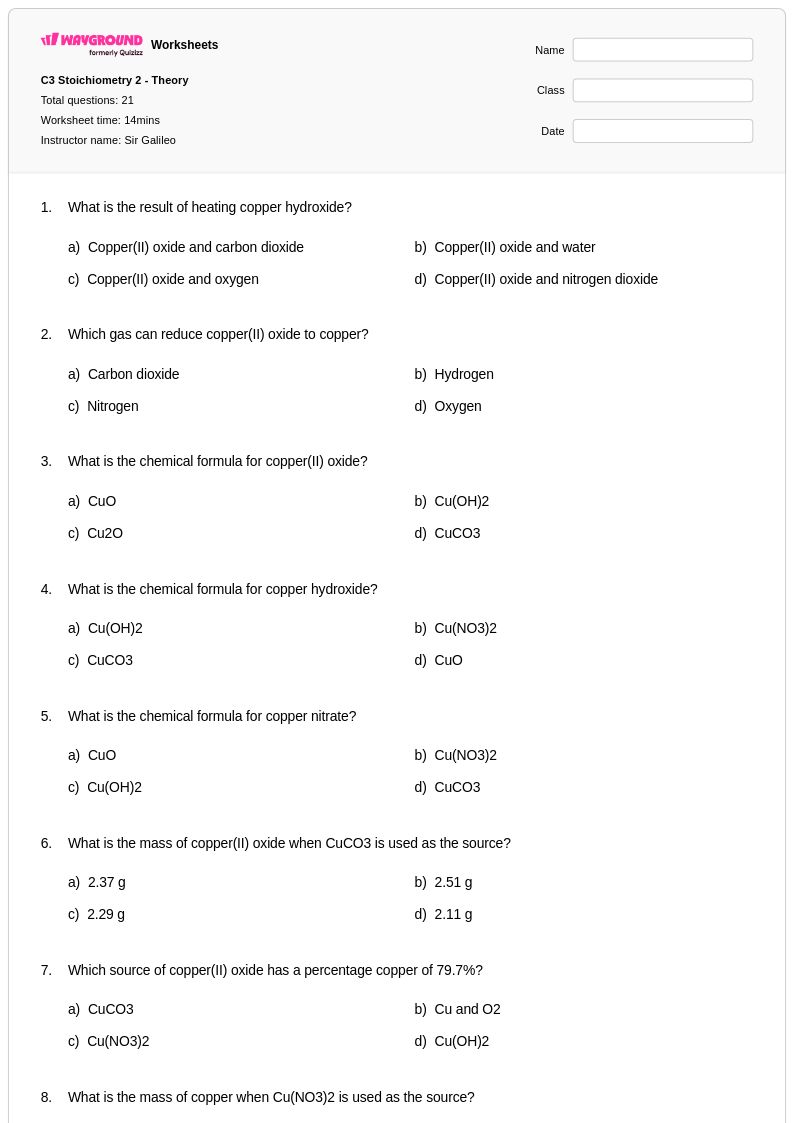
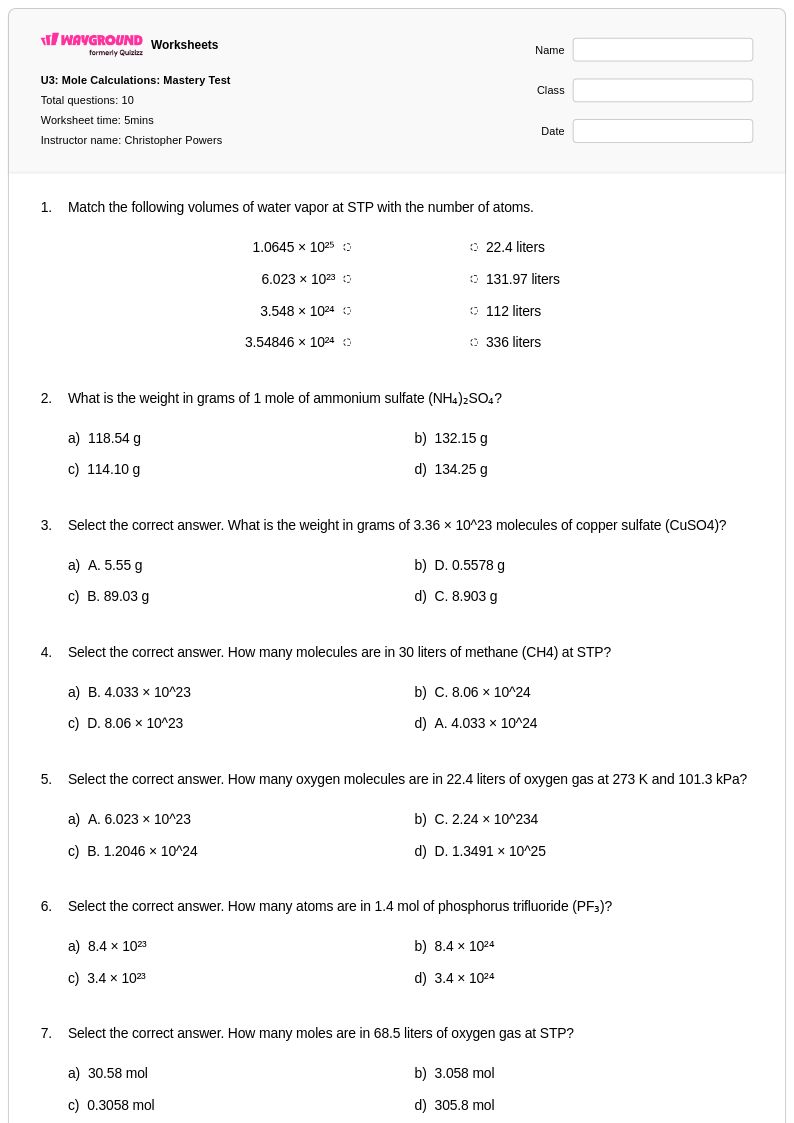
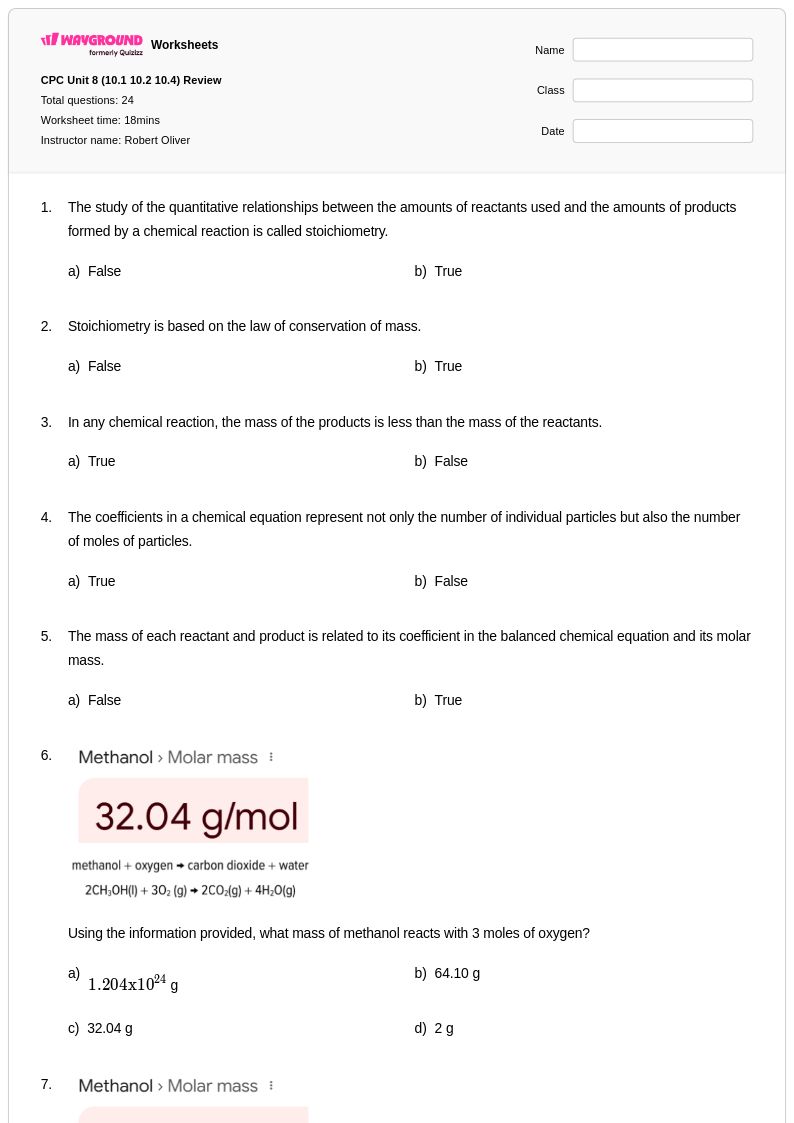
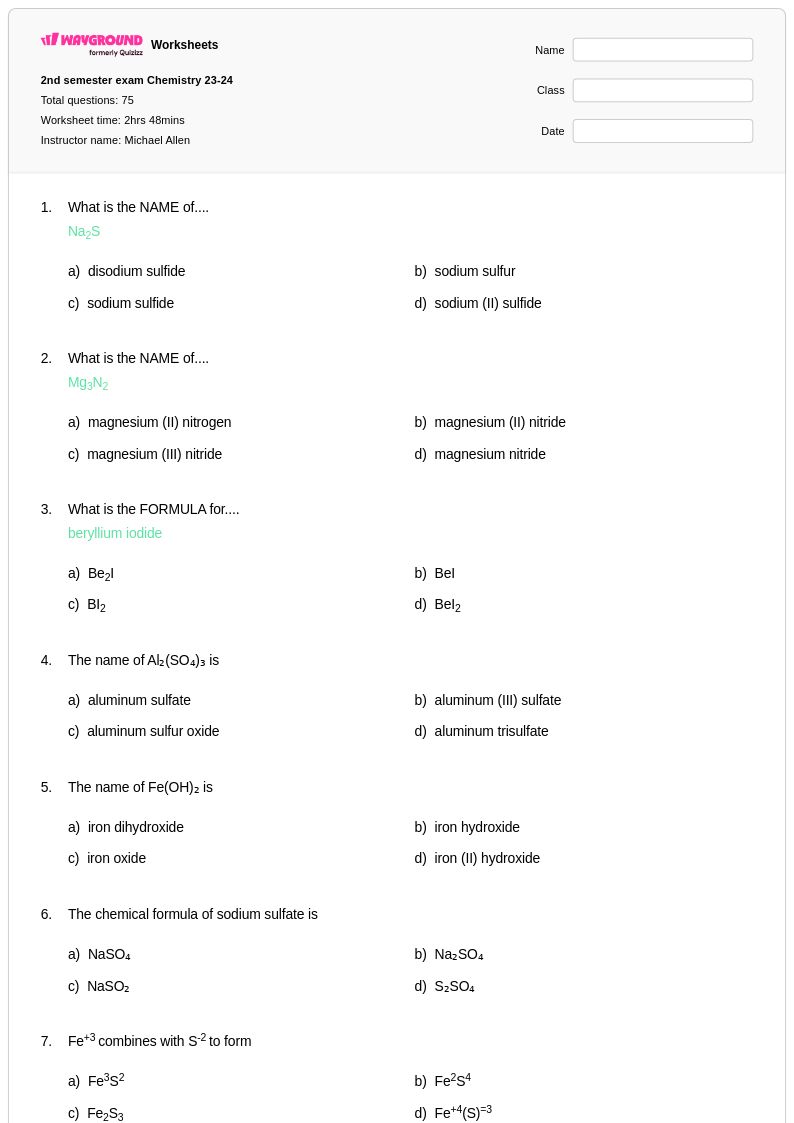
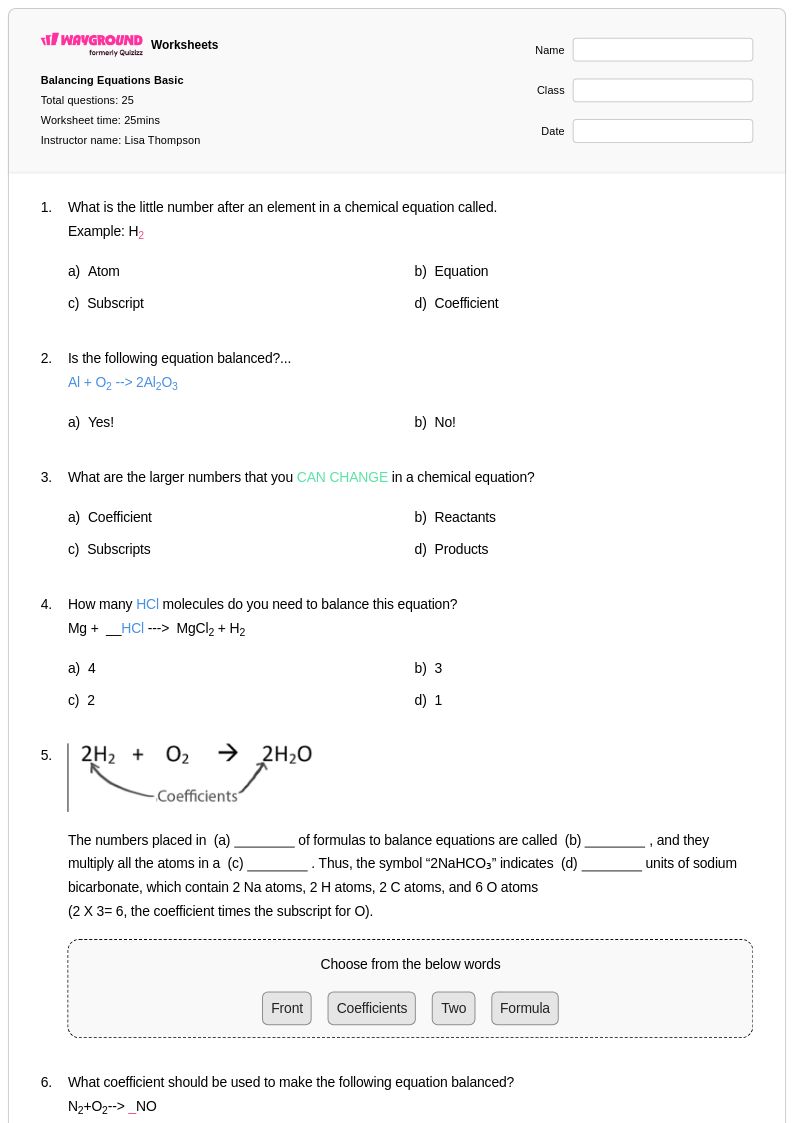
Year 9 stoichiometry worksheets available through Wayground (formerly Quizizz) provide comprehensive practice with quantitative relationships in chemical reactions, helping students master one of chemistry's most fundamental concepts. These carefully designed resources strengthen essential skills including mole-to-mole conversions, mass-to-mass calculations, limiting reactant identification, and percent yield determinations through balanced chemical equations. Students work through systematic practice problems that build computational confidence while reinforcing theoretical understanding of conservation of mass and proportional relationships between reactants and products. Each worksheet collection includes detailed answer keys that allow for self-assessment and error analysis, with many resources available as free printables in convenient pdf format for both classroom instruction and independent study.
Wayground (formerly Quizizz) supports chemistry educators with an extensive library of millions of teacher-created stoichiometry resources that can be easily located through robust search and filtering capabilities. Teachers can quickly identify worksheets aligned to specific curriculum standards and differentiate instruction by selecting materials that match varying student readiness levels, from introductory mole concept work to complex multi-step stoichiometric calculations. The platform's flexible customization tools allow educators to modify existing worksheets or combine elements from multiple resources to create targeted practice sets for remediation, skill reinforcement, or enrichment activities. These stoichiometry materials are available in both printable pdf format for traditional paper-based work and digital formats that enable immediate feedback, making them invaluable for lesson planning, homework assignments, test preparation, and formative assessment in Year 9 chemistry courses.
FAQs
How do I teach stoichiometry to high school chemistry students?
Start by ensuring students are fluent with mole concept and balanced chemical equations before introducing stoichiometric ratios, since every calculation flows from those two foundations. Build from mole-to-mole conversions first, then layer in mass-to-mass calculations, limiting reagent problems, and percent yield in that order. Using dimensional analysis as a consistent problem-solving framework from the beginning prevents students from developing informal shortcuts that break down on multi-step problems.
What exercises help students practice stoichiometry calculations?
Structured practice problems that progress from single-step mole conversions to multi-step mass calculations with gas laws and solution chemistry are the most effective. Students benefit from working grams-to-moles conversions repeatedly before tackling limiting reagent and percent yield problems, since those require layering multiple conversion steps. Timed problem sets using dimensional analysis reinforce the method as a habit rather than a one-off technique.
What are the most common mistakes students make in stoichiometry?
The most frequent error is inverting the mole ratio from the balanced equation, which flips the calculation and produces an answer that looks plausible but is wrong. Students also commonly forget to convert grams to moles before applying the mole ratio, or they skip identifying the limiting reagent and calculate theoretical yield from the wrong reactant. Requiring students to write out every dimensional analysis step explicitly, rather than combining steps mentally, catches most of these errors before they become entrenched habits.
How do I help students who struggle with identifying the limiting reagent?
Students who struggle with limiting reagent problems typically haven't internalized that both reactants must be compared in moles relative to the balanced equation, not by mass. A reliable teaching move is to have students calculate the moles of product each reactant could produce separately, then identify which gives the smaller value — that reactant is limiting. Practicing this two-column comparison method on straightforward examples before adding excess reactant analysis reduces confusion significantly.
How do I use Wayground's stoichiometry worksheets in my classroom?
Wayground's stoichiometry worksheets are available as printable PDFs for traditional classroom use and in digital formats for technology-integrated learning environments, and you can also host them as a quiz directly on Wayground. Each worksheet includes a detailed answer key, making them practical for independent practice, homework, or test preparation without additional teacher prep. The platform allows you to filter resources by skill level — from introductory mole concept work to advanced theoretical yield calculations — so you can match the worksheet to exactly where your students are in the unit.
How can I differentiate stoichiometry instruction for students at different skill levels?
For students still building foundational skills, focus practice on single-conversion problems — grams to moles or mole-to-mole ratios — before introducing multi-step calculations. More advanced students can be challenged with percent yield problems tied to real reaction scenarios or multi-step calculations involving gas laws and solution chemistry. On Wayground, teachers can apply accommodations such as reduced answer choices or read aloud settings for individual students, while the rest of the class receives standard settings, keeping differentiation seamless and unobtrusive.