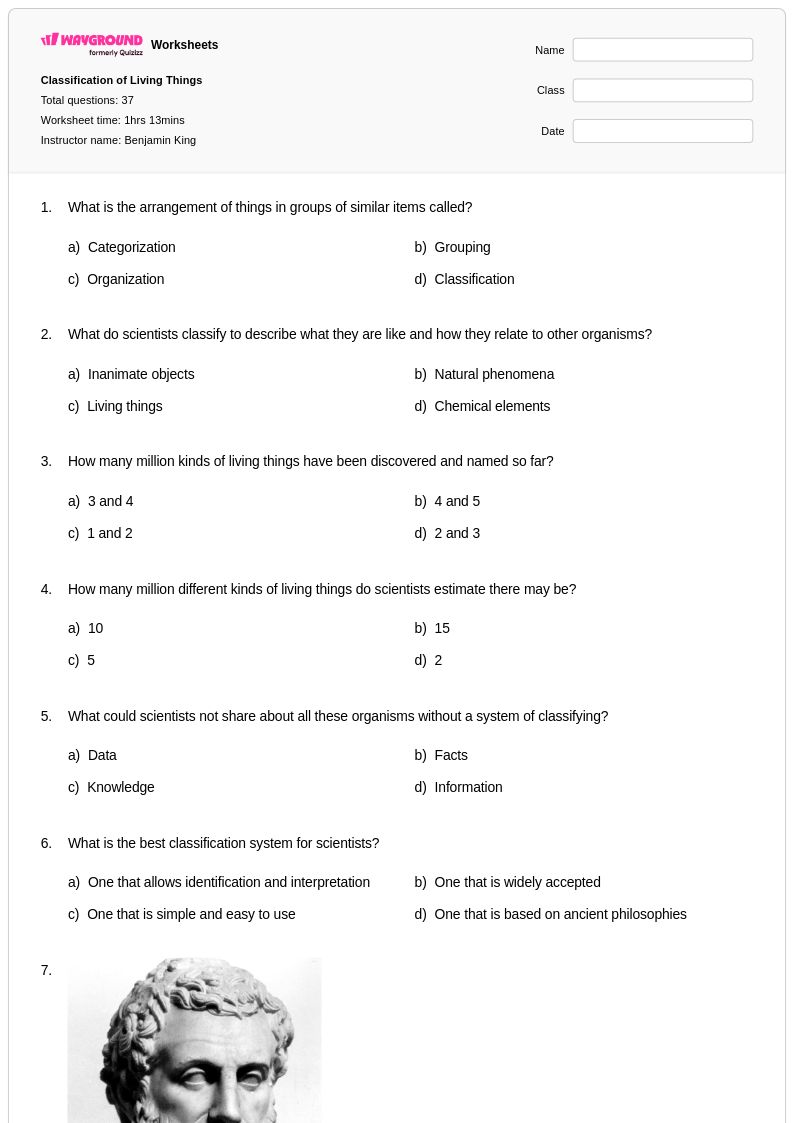
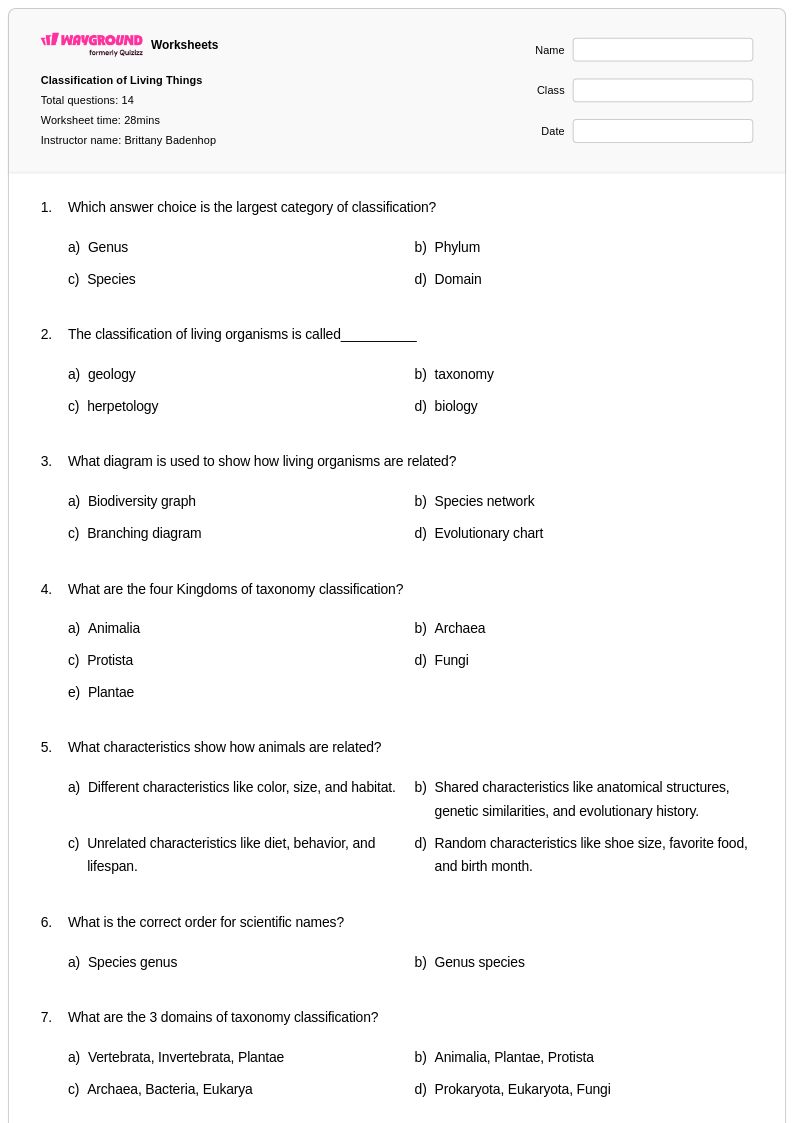
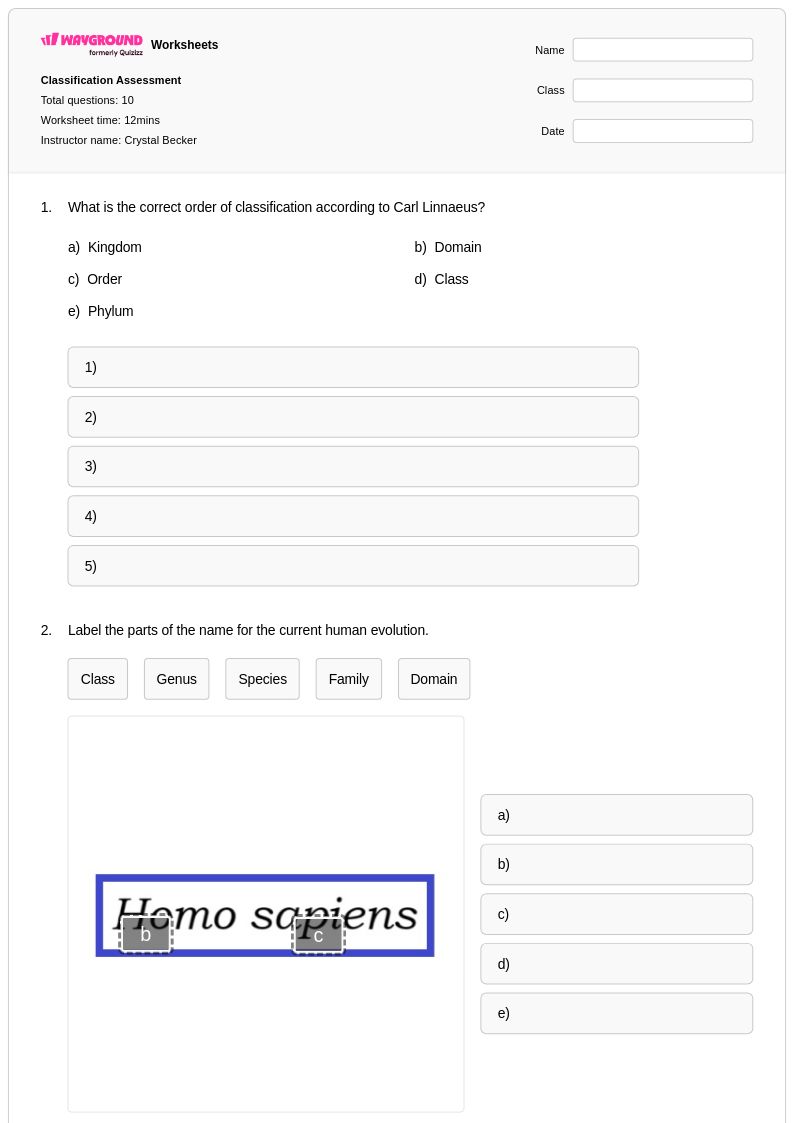
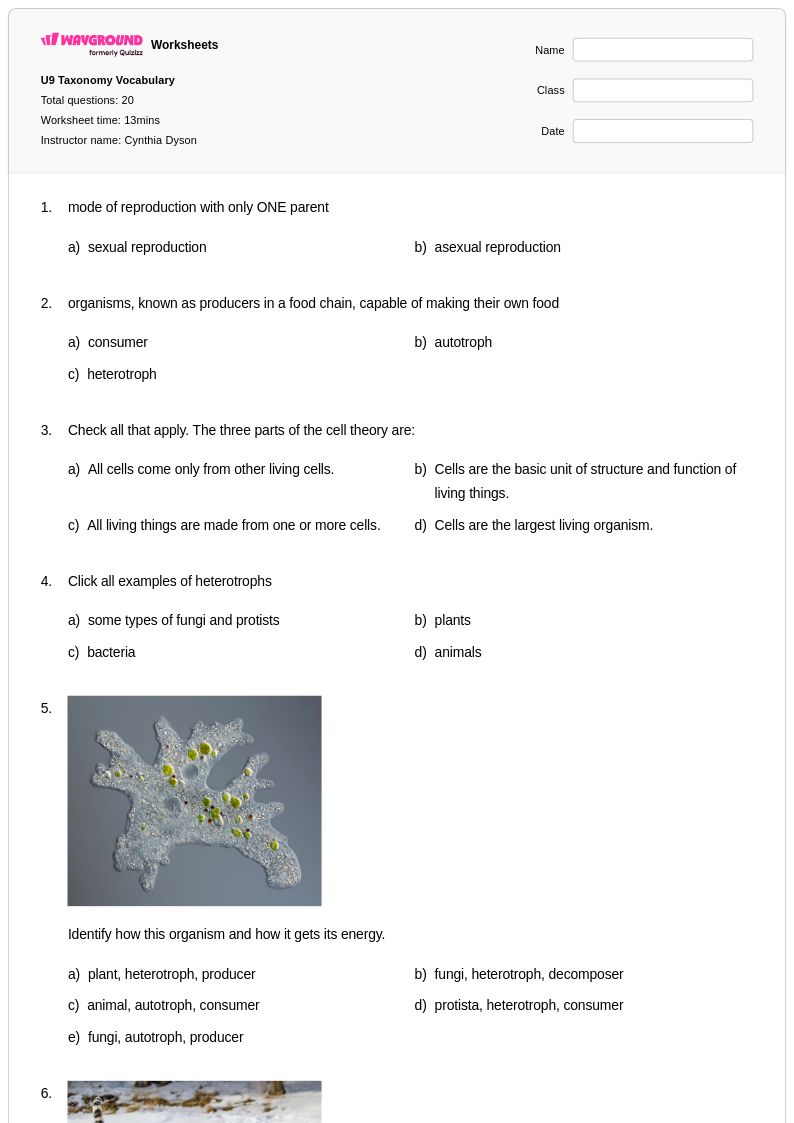
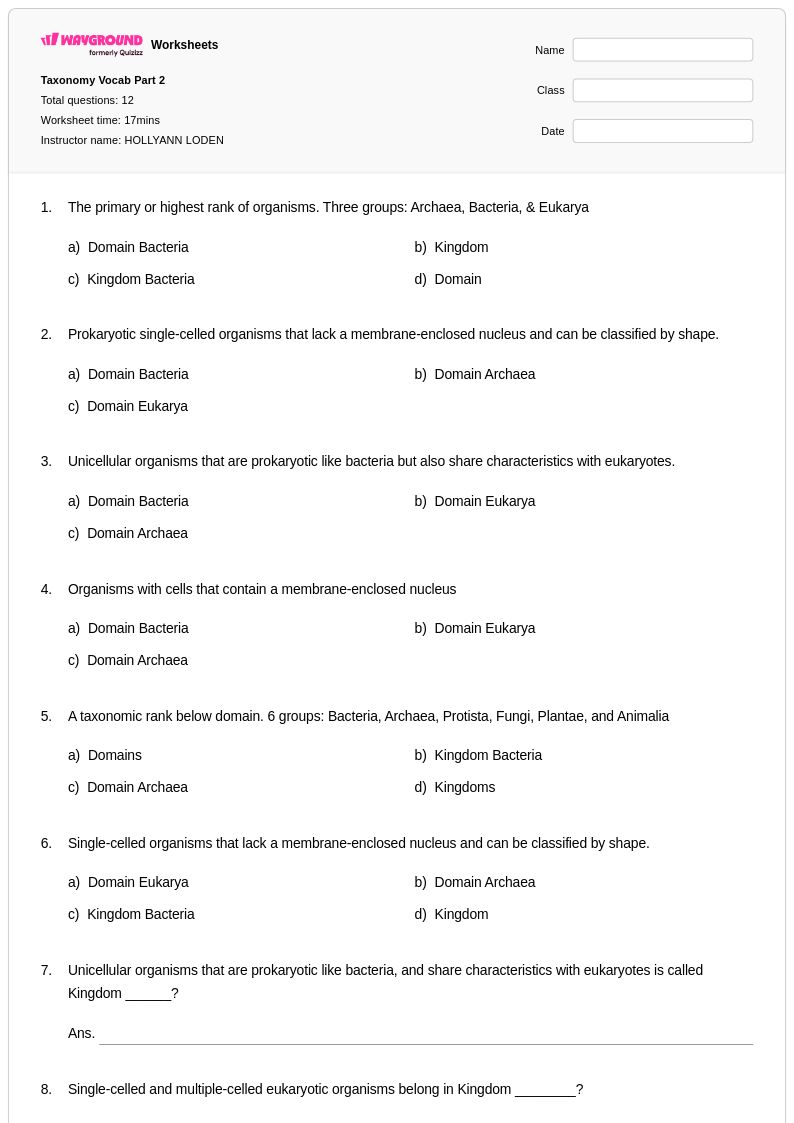
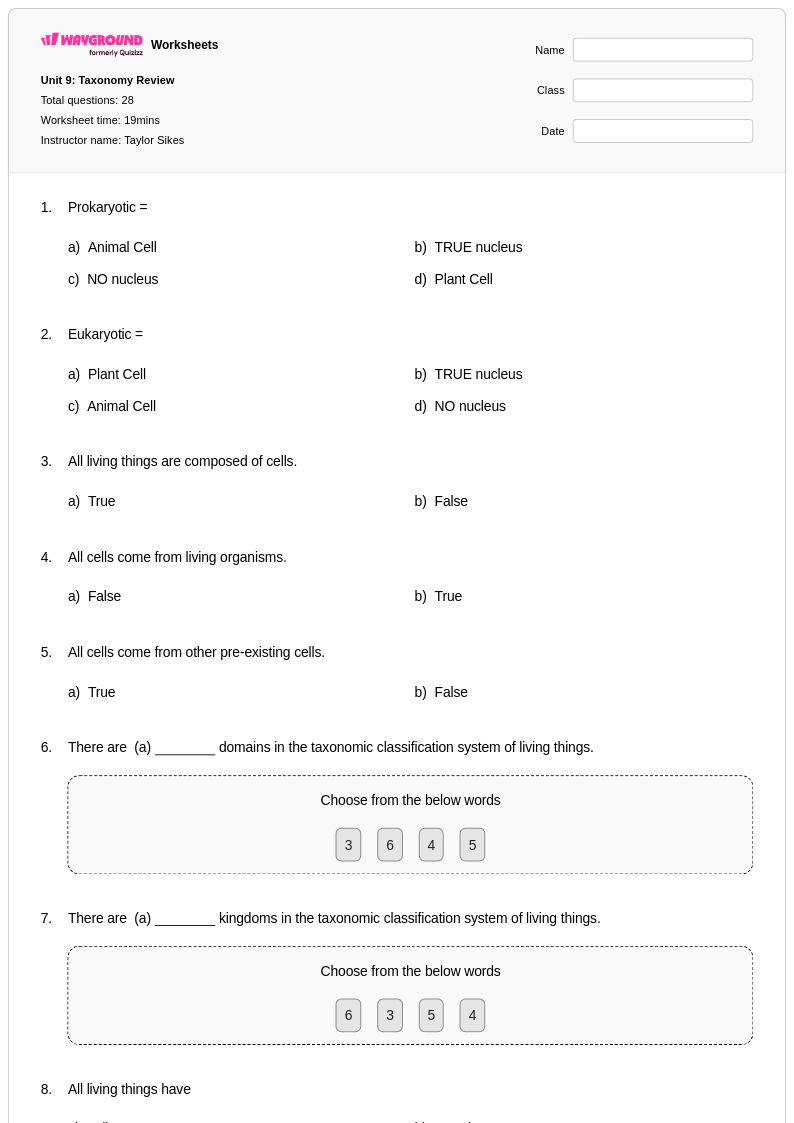
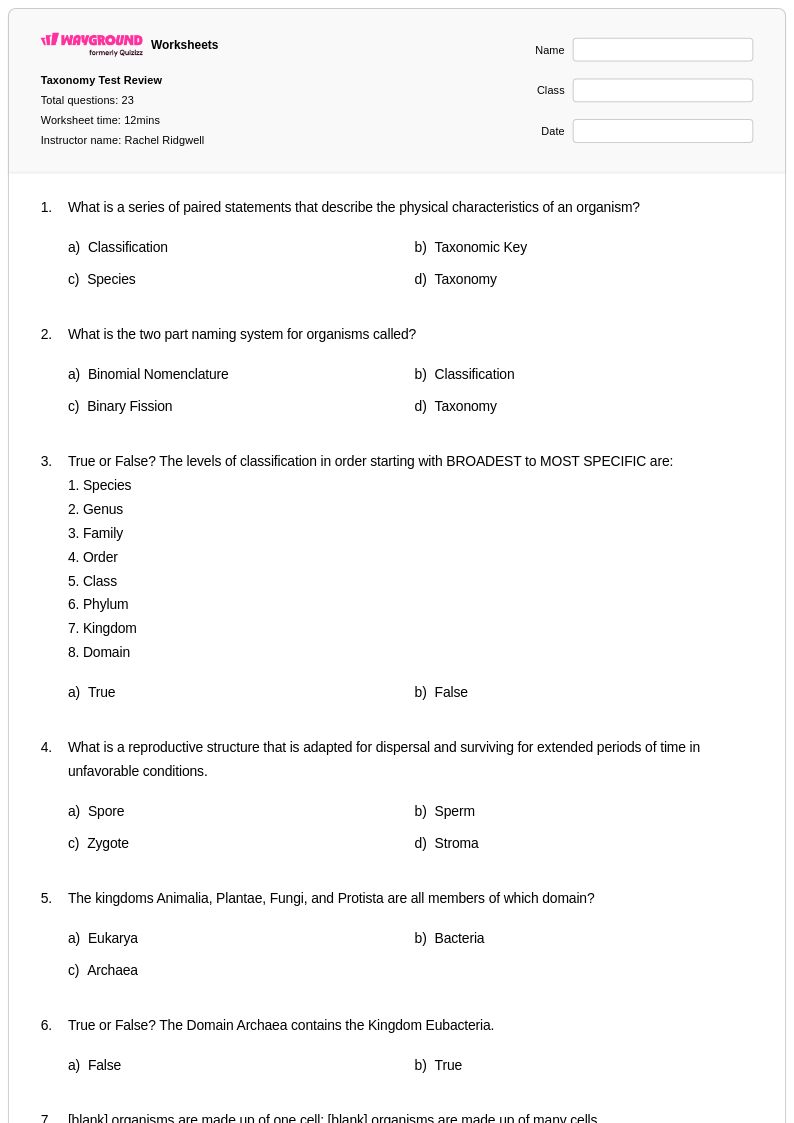
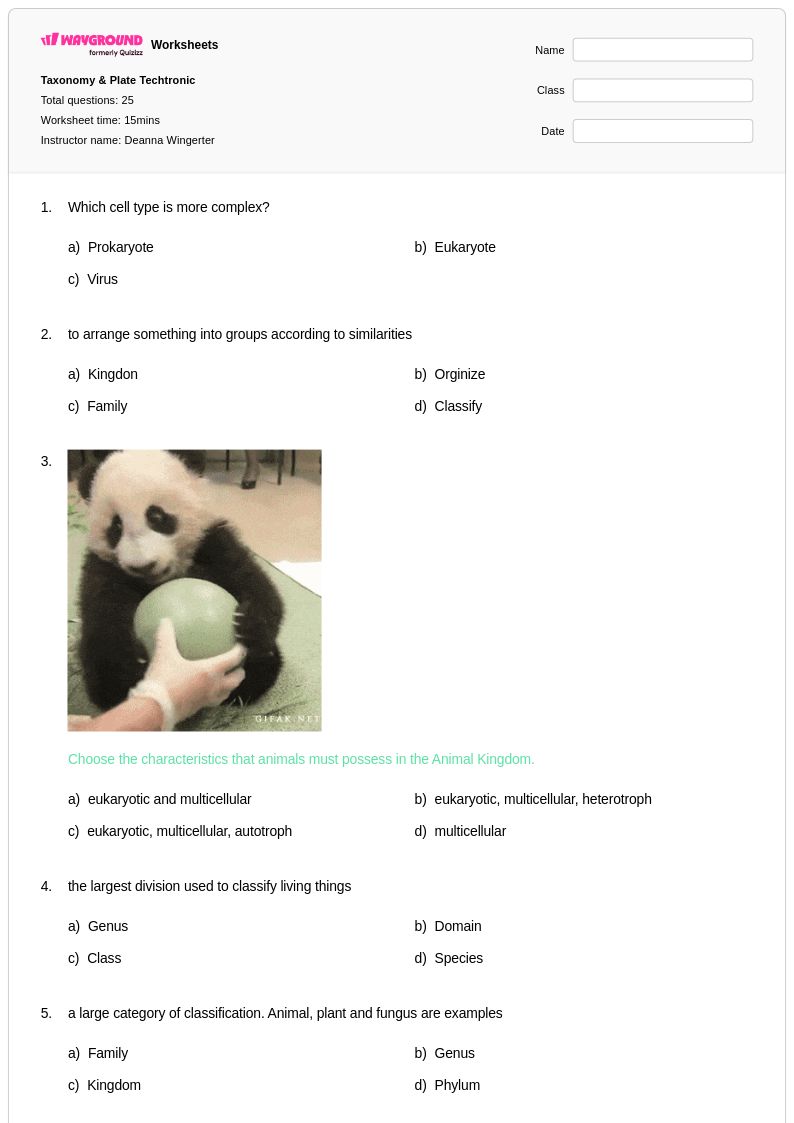
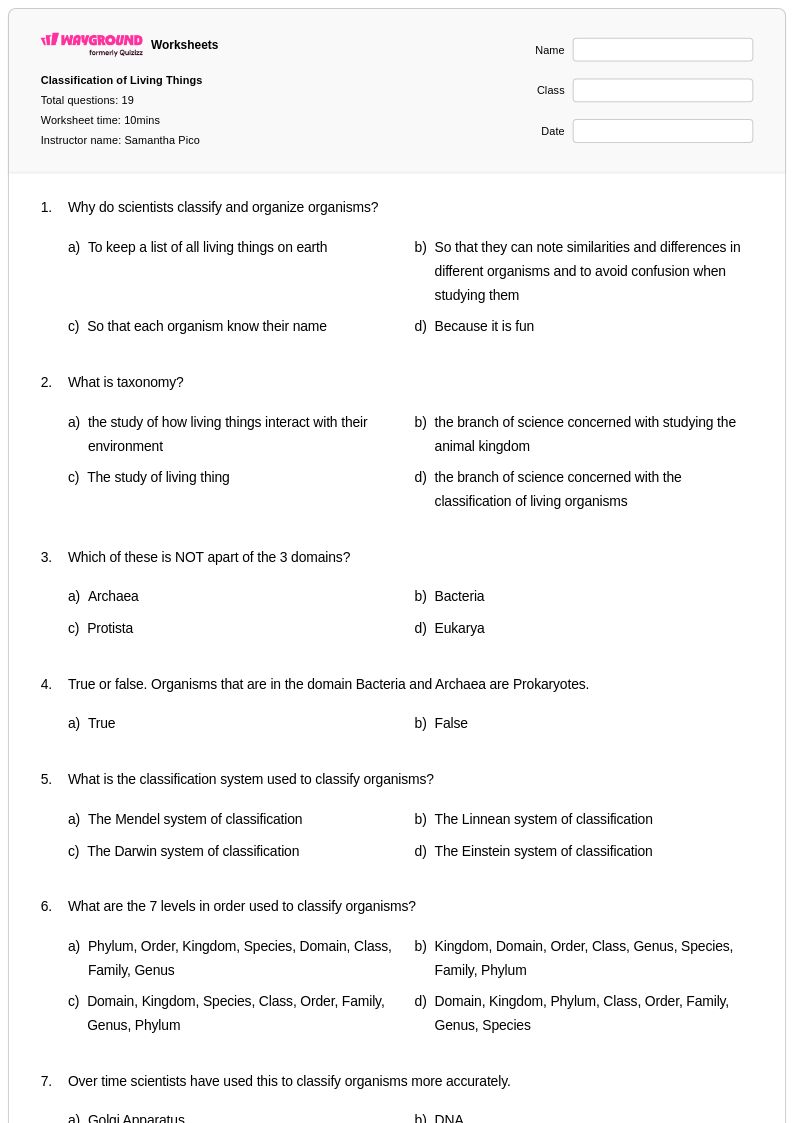
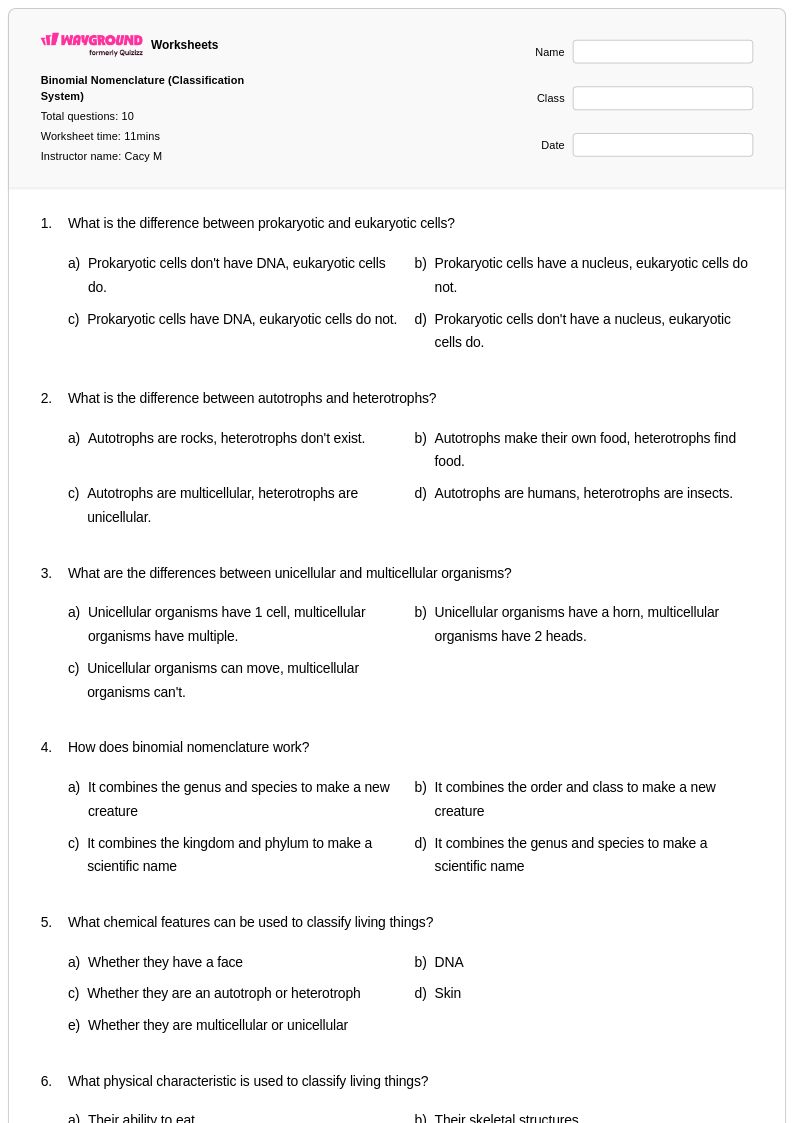
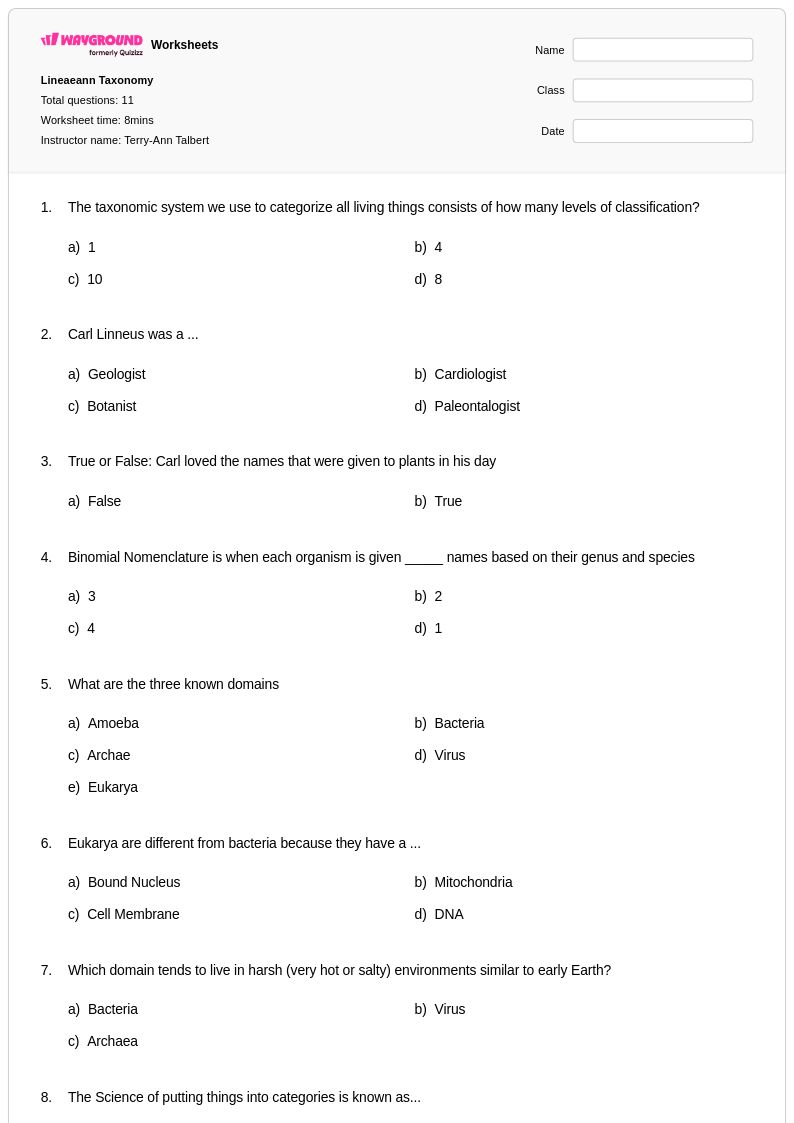
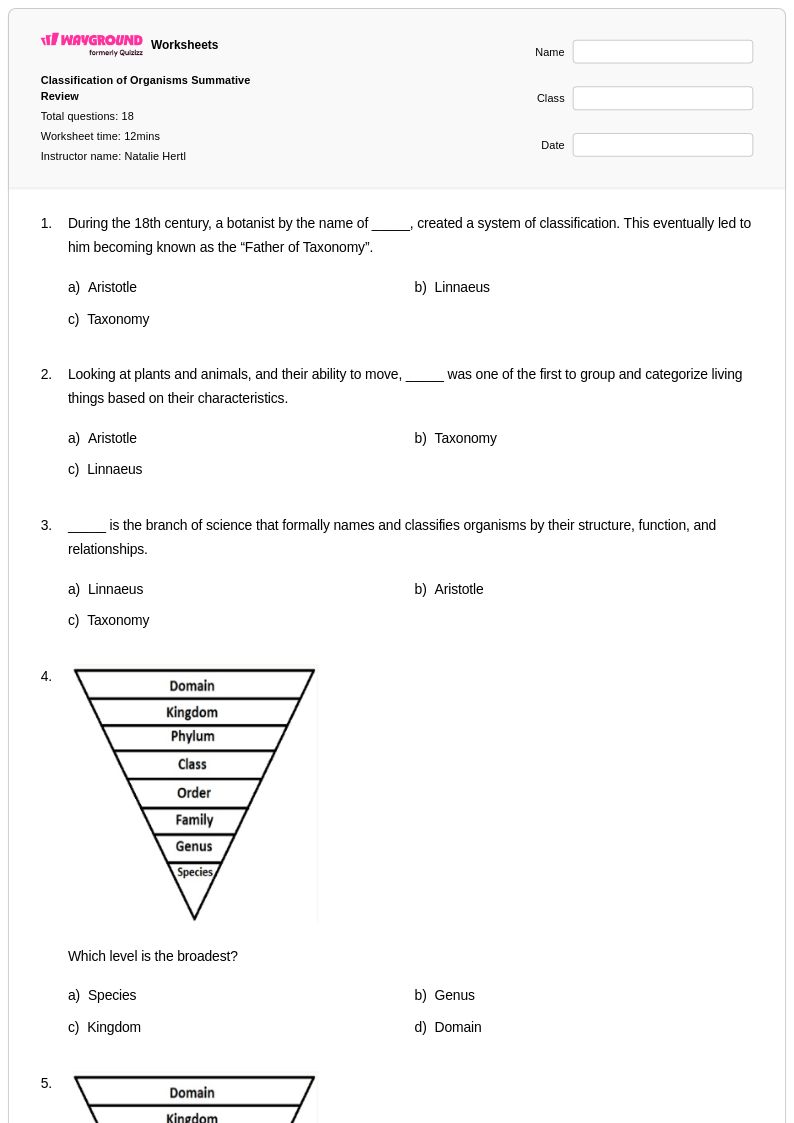
Explore Wayground's free Year 6 taxonomy worksheets and printables that help students master biological classification systems through engaging practice problems and comprehensive answer keys in convenient PDF format.
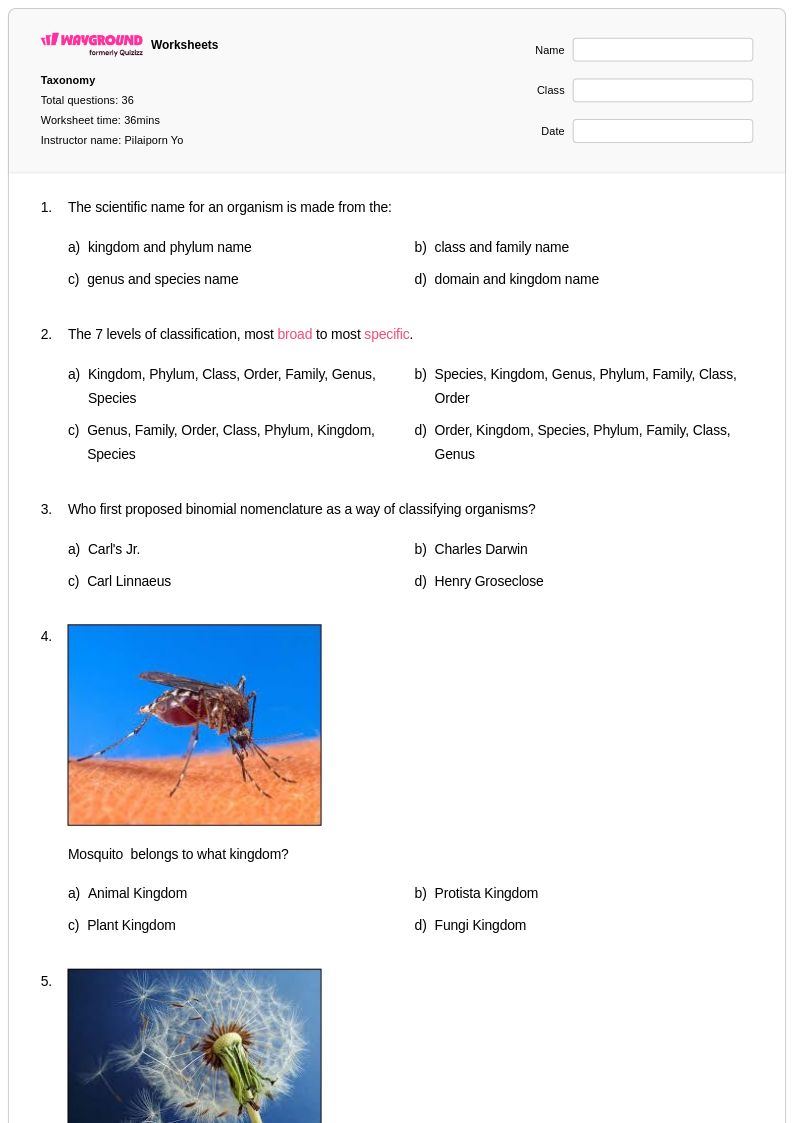
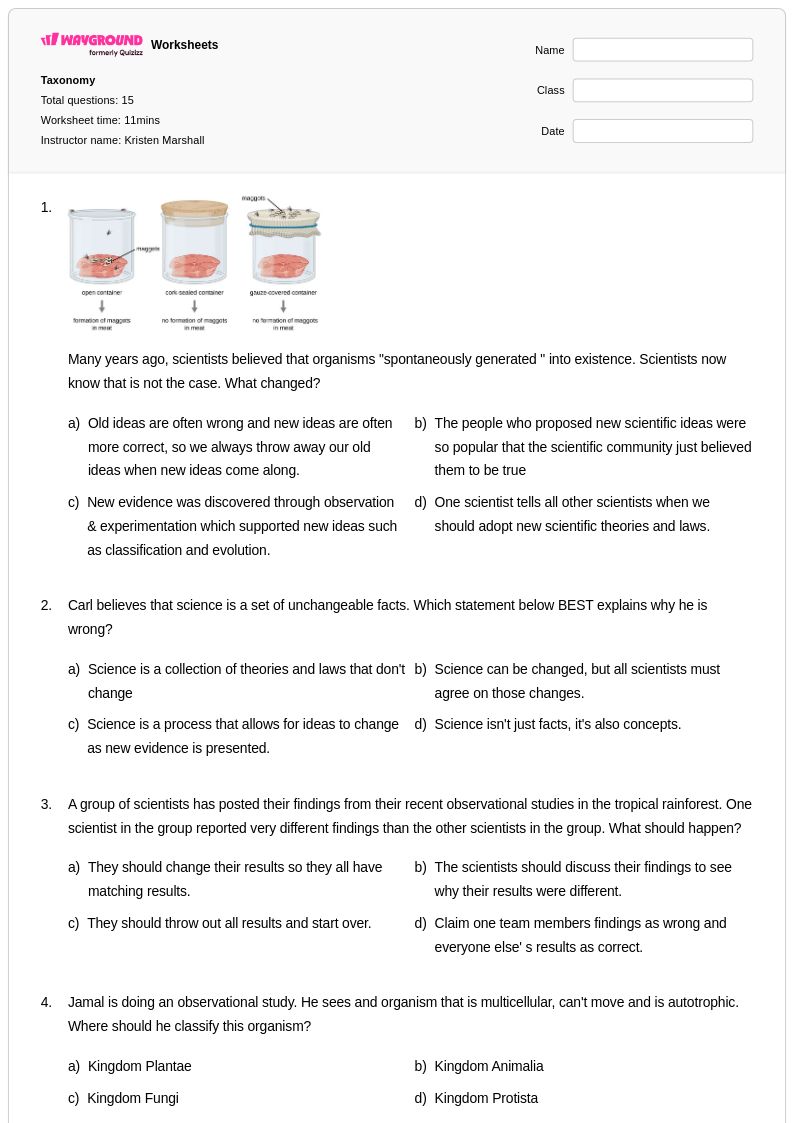
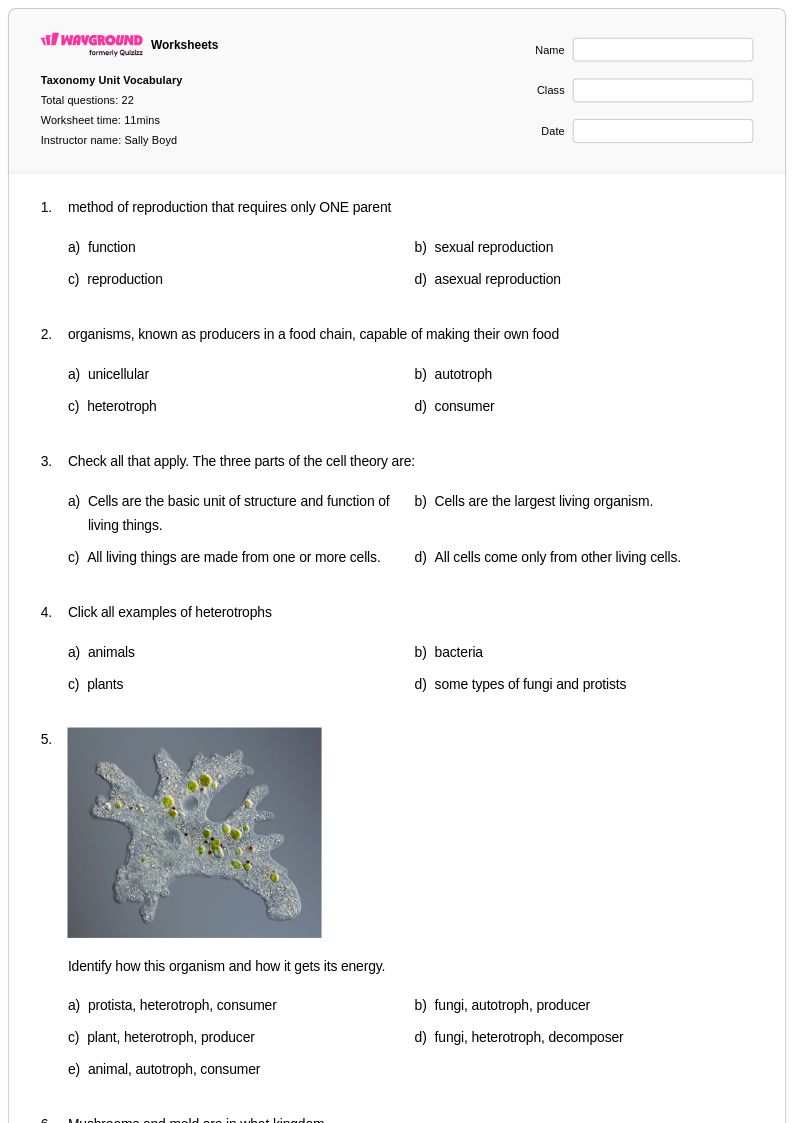
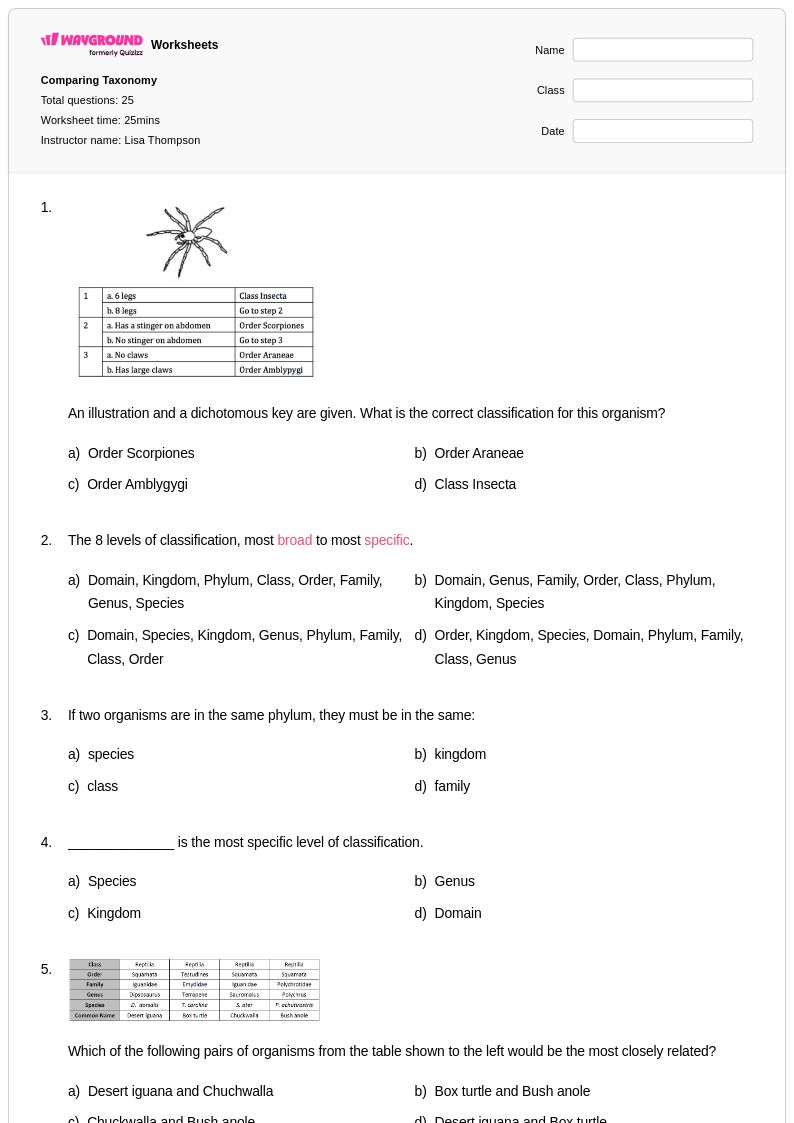
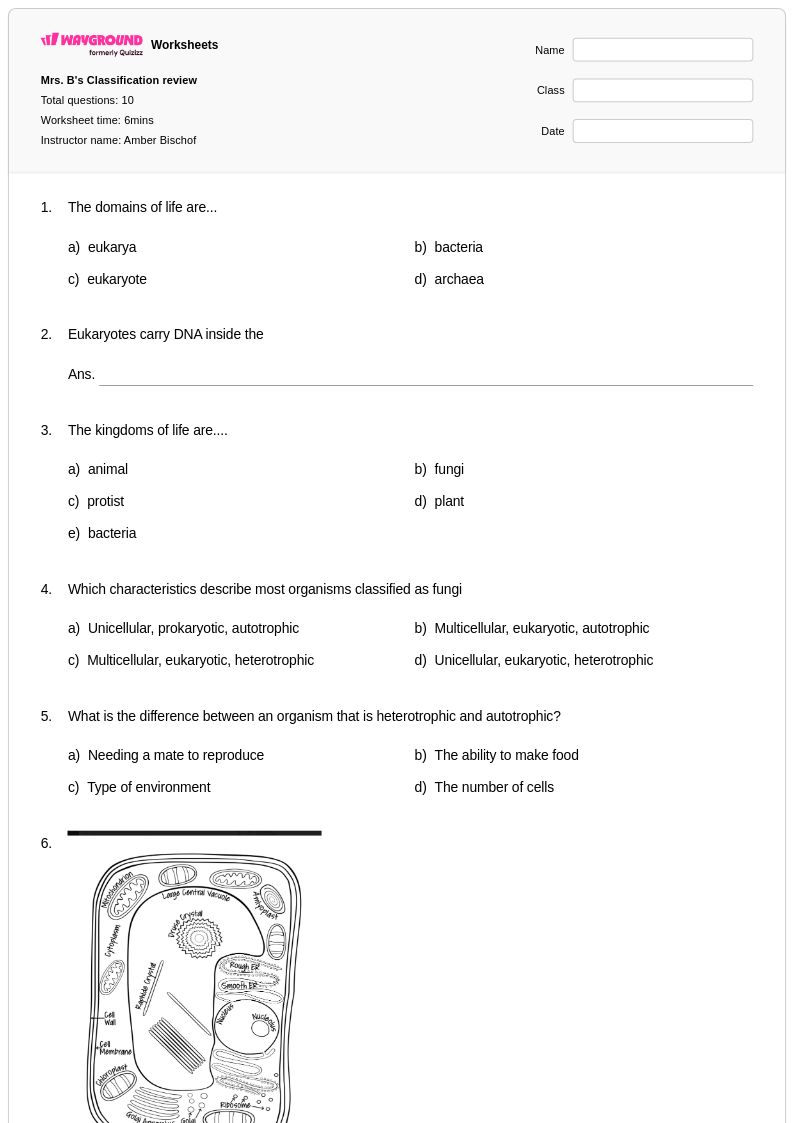
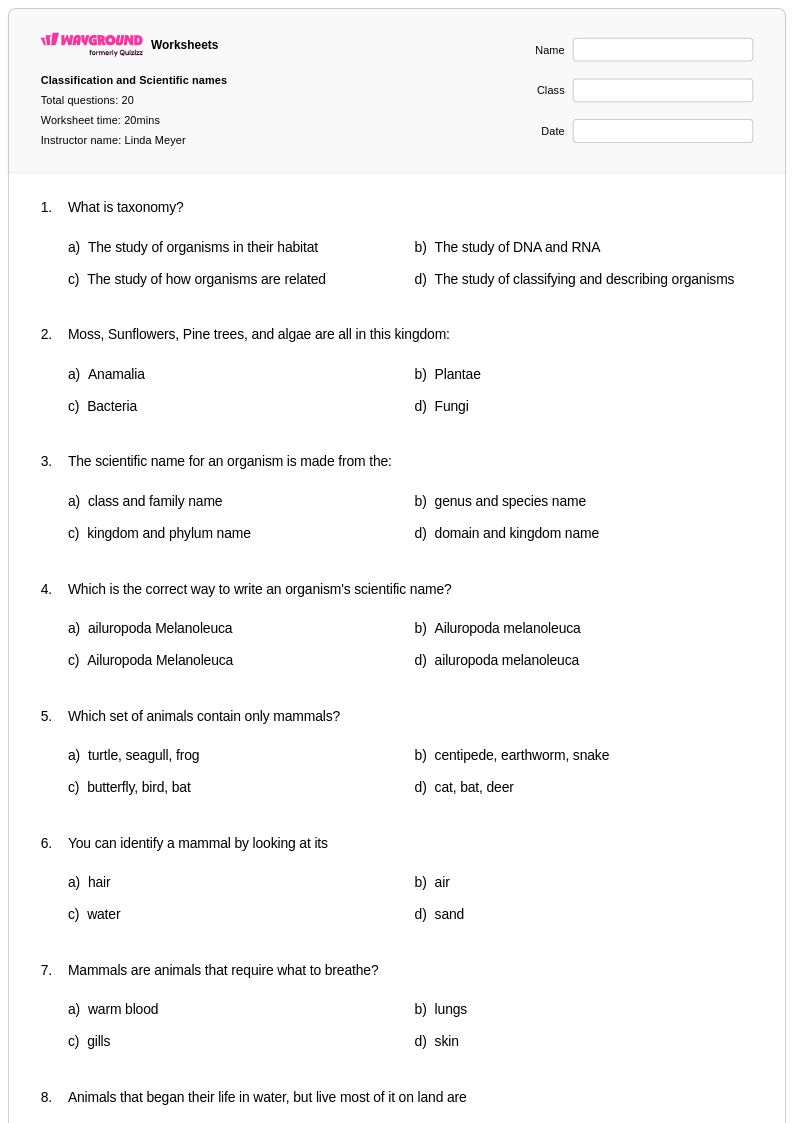
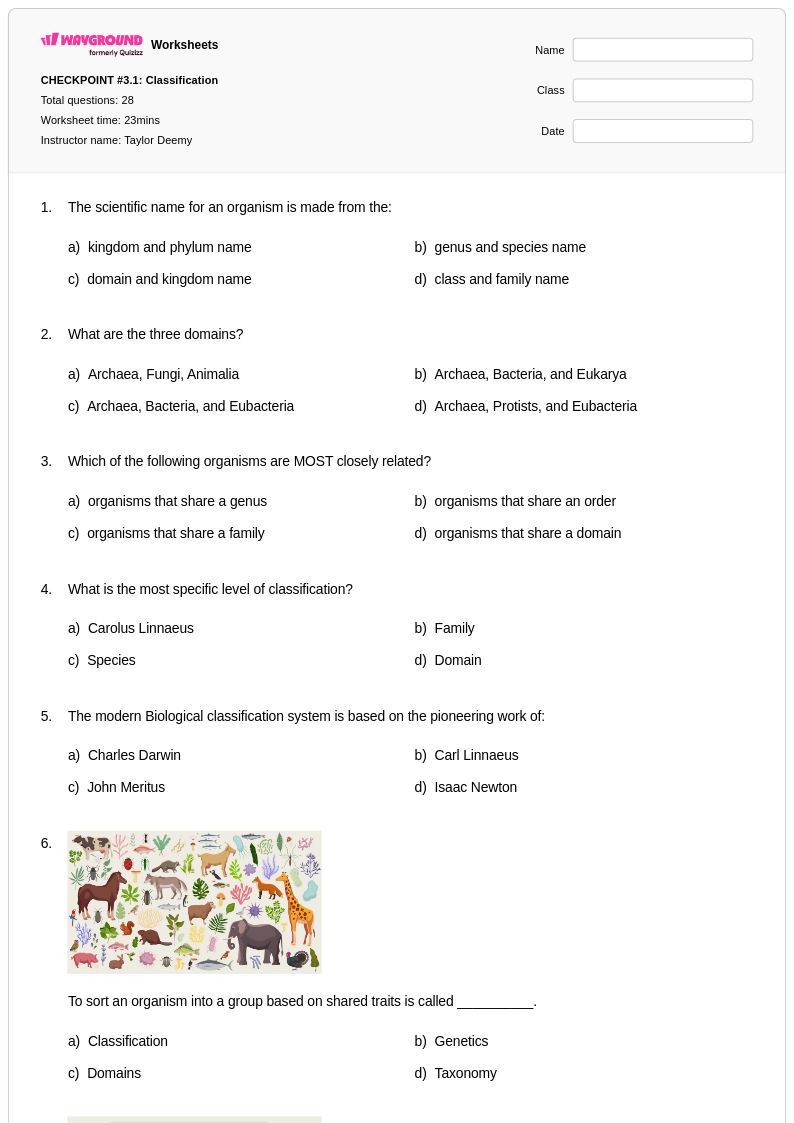
Taxonomy worksheets for Year 6 students available through Wayground (formerly Quizizz) provide comprehensive practice in understanding how scientists classify and organize living organisms into hierarchical groups. These educational resources strengthen critical thinking skills as students learn to identify characteristics that determine how organisms are grouped into kingdoms, phyla, classes, orders, families, genera, and species. The worksheets feature diverse practice problems that challenge students to analyze organism traits, construct classification charts, and apply taxonomic principles to both familiar and unfamiliar species. Each worksheet includes detailed answer keys that support independent learning and self-assessment, while the free printable pdf format ensures accessibility for both classroom instruction and home study sessions.
Wayground (formerly Quizizz) empowers educators with an extensive collection of teacher-created taxonomy resources, drawing from millions of high-quality worksheets that can be easily located through advanced search and filtering capabilities. The platform's standards-aligned materials support differentiated instruction by offering multiple complexity levels within taxonomy concepts, allowing teachers to customize content for diverse learning needs and academic abilities. These flexible resources are available in both printable and digital pdf formats, enabling seamless integration into lesson planning while supporting various teaching modalities from direct instruction to independent practice. Teachers utilize these comprehensive worksheet collections for targeted skill remediation, enrichment activities for advanced learners, and systematic practice that builds student confidence in biological classification systems.
FAQs
How do I teach biological taxonomy to middle or high school students?
Start by establishing the seven levels of classification (Kingdom, Phylum, Class, Order, Family, Genus, Species) using familiar organisms before introducing less familiar ones. Mnemonics like 'King Philip Came Over For Good Soup' help students internalize the hierarchy. From there, introduce binomial nomenclature and practice reading phylogenetic trees so students can connect classification to evolutionary relationships. Grounding abstract categories in concrete examples — such as comparing a dog, wolf, and fox across taxonomic levels — makes the system tangible.
What exercises help students practice biological classification and taxonomy?
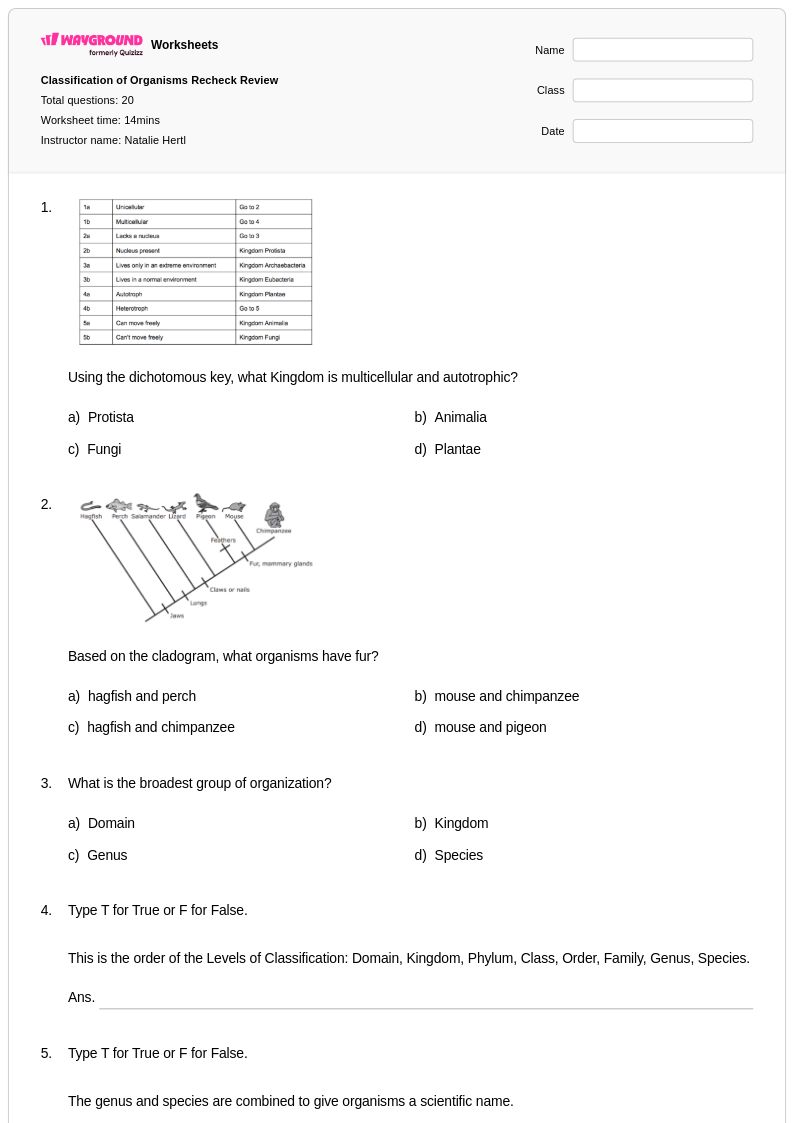
Effective taxonomy practice includes sorting organisms into the correct taxonomic groups based on shared characteristics, completing dichotomous keys, and writing or interpreting binomial nomenclature. Worksheets that require students to compare distinguishing features across major groups — bacteria, archaea, fungi, plants, and animals — reinforce both content knowledge and systematic thinking. Practice problems that move between levels of the hierarchy (e.g., identifying genus and species from a full classification) build fluency with the structure of the system.
What mistakes do students commonly make when learning taxonomy and biological classification?
One of the most frequent errors is confusing the direction of the hierarchy — students often reverse broader and narrower categories, placing species above genus or kingdom above phylum. Students also struggle with binomial nomenclature conventions, such as forgetting to italicize, incorrectly capitalizing the species epithet, or omitting the genus name when referencing a species. Another common misconception is treating taxonomic groups as fixed and permanent, rather than understanding that classification reflects current evolutionary evidence and can change with new discoveries.
How can I use taxonomy worksheets to differentiate instruction for different skill levels?
For struggling students, focus on the top three or four levels of the hierarchy before introducing all seven, and use visual organizers to map relationships. For advanced learners, extend into phylogenetic analysis, cladistics, and the difference between traditional Linnaean classification and modern evolutionary systematics. On Wayground, teachers can apply individual accommodations such as reduced answer choices to lower cognitive load for specific students, or enable Read Aloud for students who need audio support, without affecting the experience of other students in the class.
How do I use Wayground's taxonomy worksheets in my classroom?
Wayground's taxonomy worksheets are available as printable PDFs for traditional classroom use and in digital formats for technology-integrated environments, giving teachers flexibility for in-class practice, homework, or assessment prep. Teachers can also host worksheets as a quiz directly on Wayground, enabling real-time student responses and automatic grading. Each worksheet includes a complete answer key, so grading is straightforward whether students complete work on paper or digitally.
How does taxonomy connect to other biology topics students need to understand?
Taxonomy is foundational to almost every other area of biology because it provides the organizational framework for discussing living organisms. Understanding classification is a prerequisite for studying ecology (which organisms interact in a system), genetics (how closely related species share DNA), and evolution (how divergence between groups is tracked). Students who have a strong grasp of taxonomic hierarchy and phylogenetic relationships find it significantly easier to interpret scientific literature and apply comparative reasoning across biological disciplines.