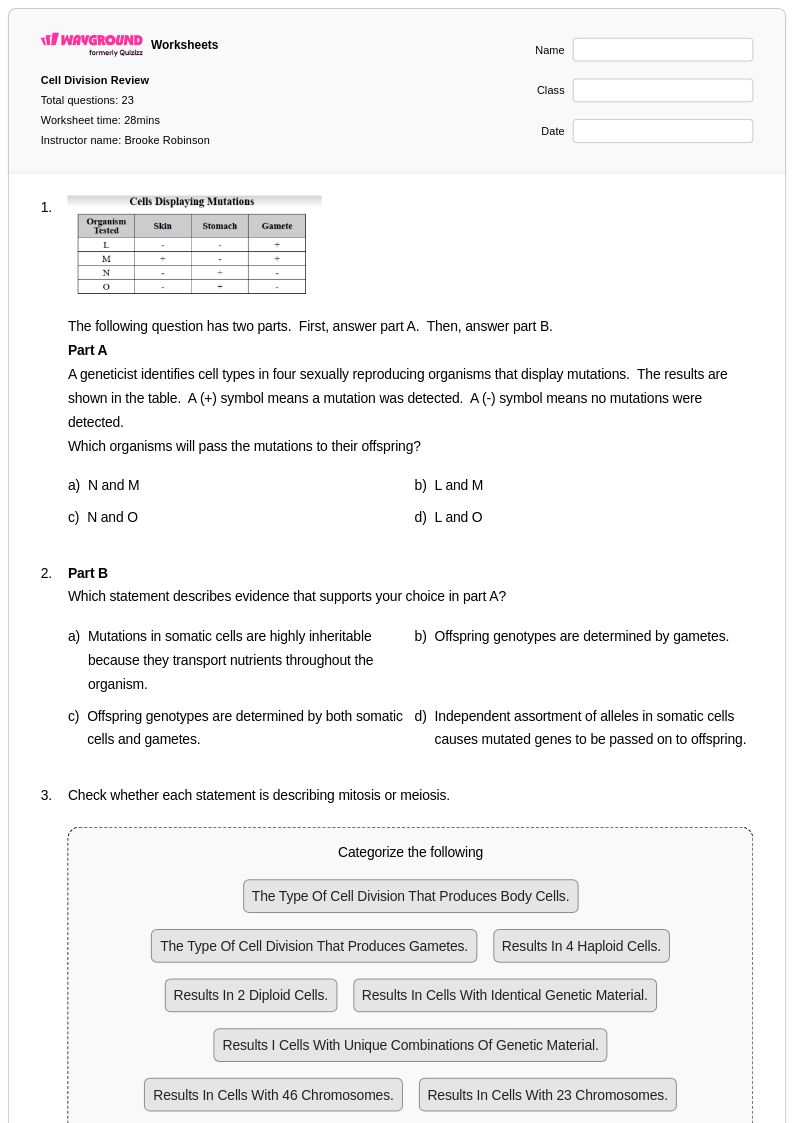
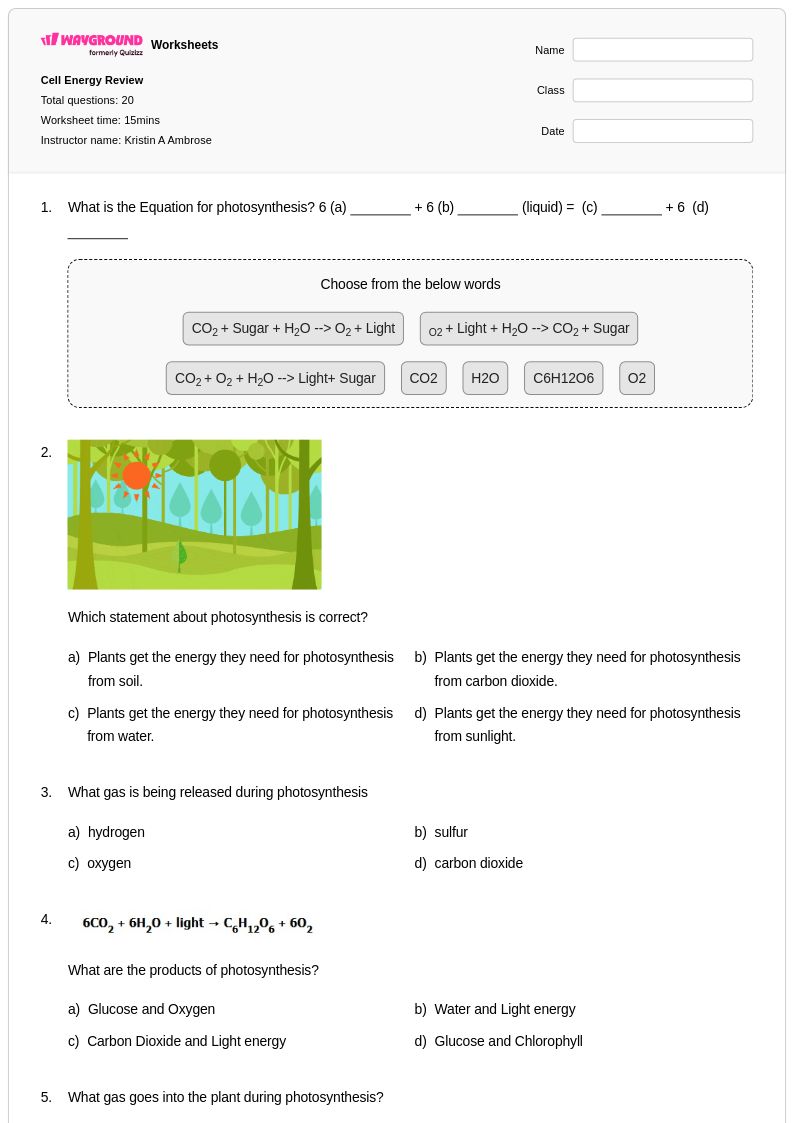
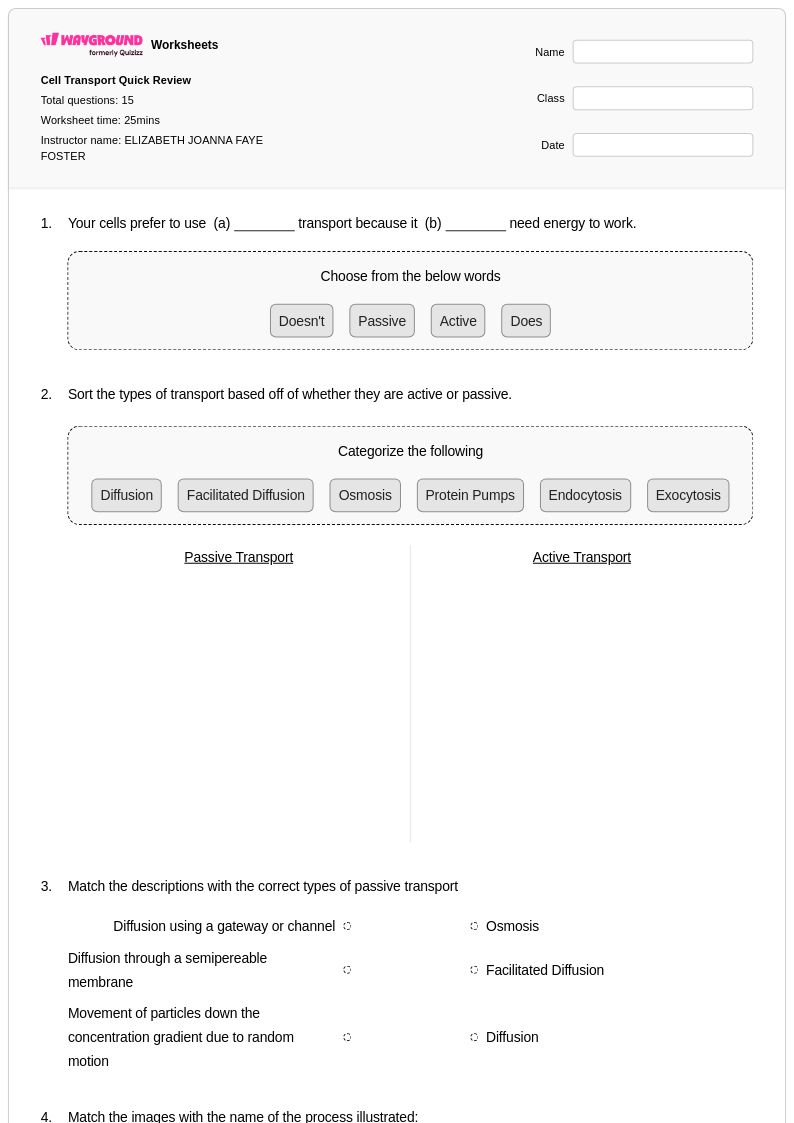
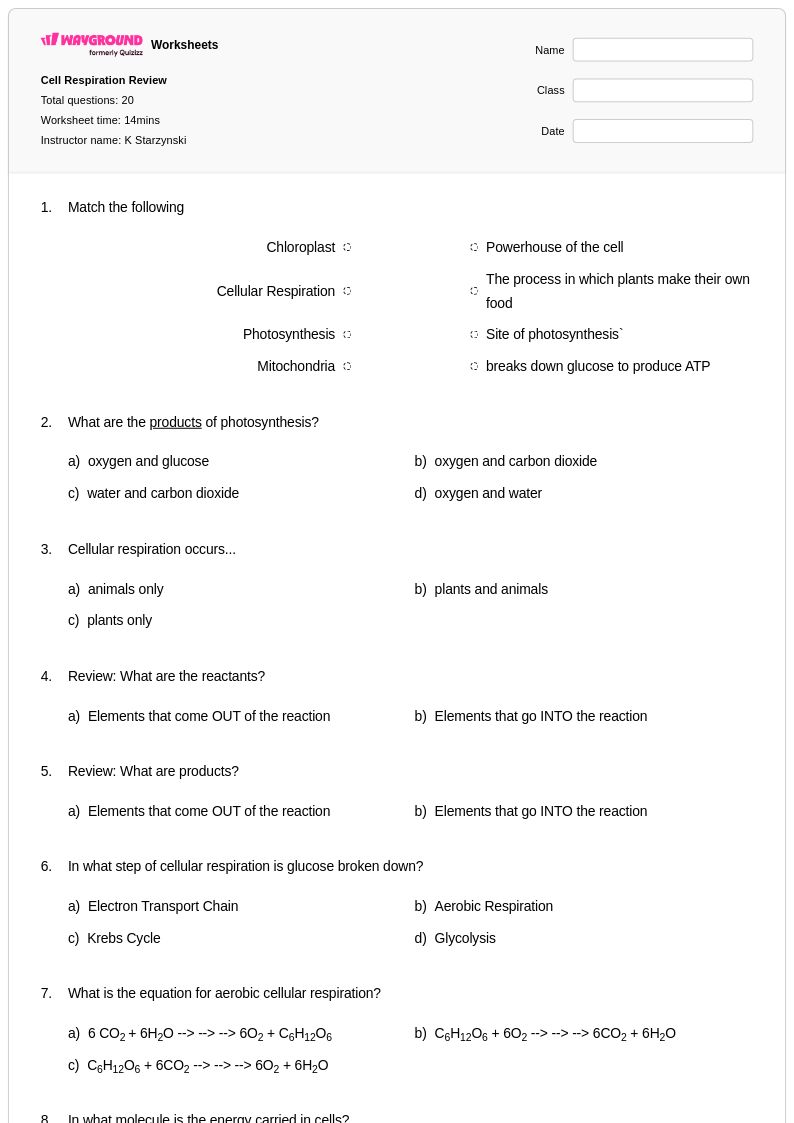
Explore Year 9 voltaic cell worksheets and printables that help students master electrochemical reactions, electron flow, and battery principles through engaging practice problems with comprehensive answer keys and free PDF downloads.
Explore printable Voltaic Cell worksheets for Year 9
Voltaic cell worksheets for Year 9 students available through Wayground (formerly Quizizz) provide comprehensive coverage of electrochemical principles that form the foundation of battery technology and redox reactions. These carefully designed educational resources guide students through the fundamental concepts of electron transfer, electrode reactions, and electrical potential differences that occur in galvanic cells. The worksheets strengthen critical analytical skills by challenging students to identify anode and cathode components, balance half-reactions, calculate cell potentials, and predict the direction of electron flow in various electrochemical setups. Each worksheet collection includes detailed answer keys and step-by-step solution guides, making them valuable practice problems for both classroom instruction and independent study. Available as free printables in convenient pdf format, these resources help students master the complex relationships between chemical energy and electrical energy conversion.
Wayground (formerly Quizizz) empowers educators with access to millions of teacher-created voltaic cell worksheets specifically designed for Year 9 chemistry instruction, featuring robust search and filtering capabilities that allow teachers to quickly locate materials aligned with specific learning standards and curriculum objectives. The platform's differentiation tools enable instructors to customize worksheet difficulty levels and modify practice problems to meet diverse student needs, supporting both remediation for struggling learners and enrichment opportunities for advanced students. Teachers benefit from flexible formatting options that include both printable pdf versions for traditional classroom use and interactive digital formats that facilitate remote learning and immediate feedback. This comprehensive worksheet collection streamlines lesson planning by providing ready-to-use assessments, guided practice activities, and skill-building exercises that help students develop mastery of electrochemical concepts through systematic, scaffolded learning experiences.
FAQs
How do I teach voltaic cells to high school chemistry students?
Start by grounding students in redox chemistry before introducing the physical setup of a voltaic cell, since understanding oxidation and reduction half-reactions is prerequisite knowledge. Use labeled cell diagrams to help students visualize electron flow from anode to cathode, the role of the salt bridge in maintaining charge neutrality, and how cell potential is calculated using standard reduction potentials. Connecting the concept to everyday batteries helps students see the real-world relevance of galvanic cell principles.
What are the most common mistakes students make when working with voltaic cells?
The most frequent error is confusing the anode and cathode, particularly which electrode undergoes oxidation versus reduction. Students also commonly misunderstand the function of the salt bridge, assuming it carries electrons rather than ions, which leads to incorrect explanations of how electrical neutrality is maintained. A third common mistake is applying the wrong sign convention when calculating cell potential, especially when reversing a half-reaction to set up the overall cell equation.
What practice problems best help students understand voltaic cell concepts?
Effective practice should progress from identifying anode and cathode in given cell diagrams to writing balanced half-reactions and calculating standard cell potential using reduction potential tables. Problems that ask students to predict whether a reaction is spontaneous based on cell potential reinforce the connection between thermodynamics and electrochemistry. Including problems that require students to draw and label a complete voltaic cell diagram solidifies their understanding of how each component functions within the system.
How do I use Wayground's voltaic cell worksheets in my classroom?
Wayground's voltaic cell worksheets are available as printable PDFs, making them easy to distribute for in-class practice, lab follow-up, or homework assignments. They are also available in digital formats, allowing teachers to assign them in technology-integrated environments, and can be hosted as a quiz directly on Wayground for immediate student feedback. Each worksheet includes a detailed answer key so students can self-check their work or teachers can use them for guided review sessions.
How do I differentiate voltaic cell instruction for students at different skill levels?
For students who are still building foundational understanding, focus practice on cell diagrams and half-reaction identification before introducing cell potential calculations. Advanced learners can be challenged with multi-step problems involving non-standard conditions, concentration cells, or real-world battery applications. On Wayground, teachers can apply accommodations such as read aloud support, reduced answer choices, or extended time to individual students, allowing the same worksheet to serve diverse learners without requiring separate materials.
What prerequisite knowledge do students need before studying voltaic cells?
Students should have a solid grasp of oxidation states, redox reactions, and how to write and balance half-reactions before engaging with voltaic cell content. Familiarity with basic electrochemistry vocabulary, including electrolyte, electrode, and ion flow, is also important for understanding how a galvanic cell operates. Without this foundation, students often struggle to interpret cell notation or correctly calculate standard cell potential, making remediation of redox concepts an important first step.