Free Printable Analogous Structures Worksheets for Class 10
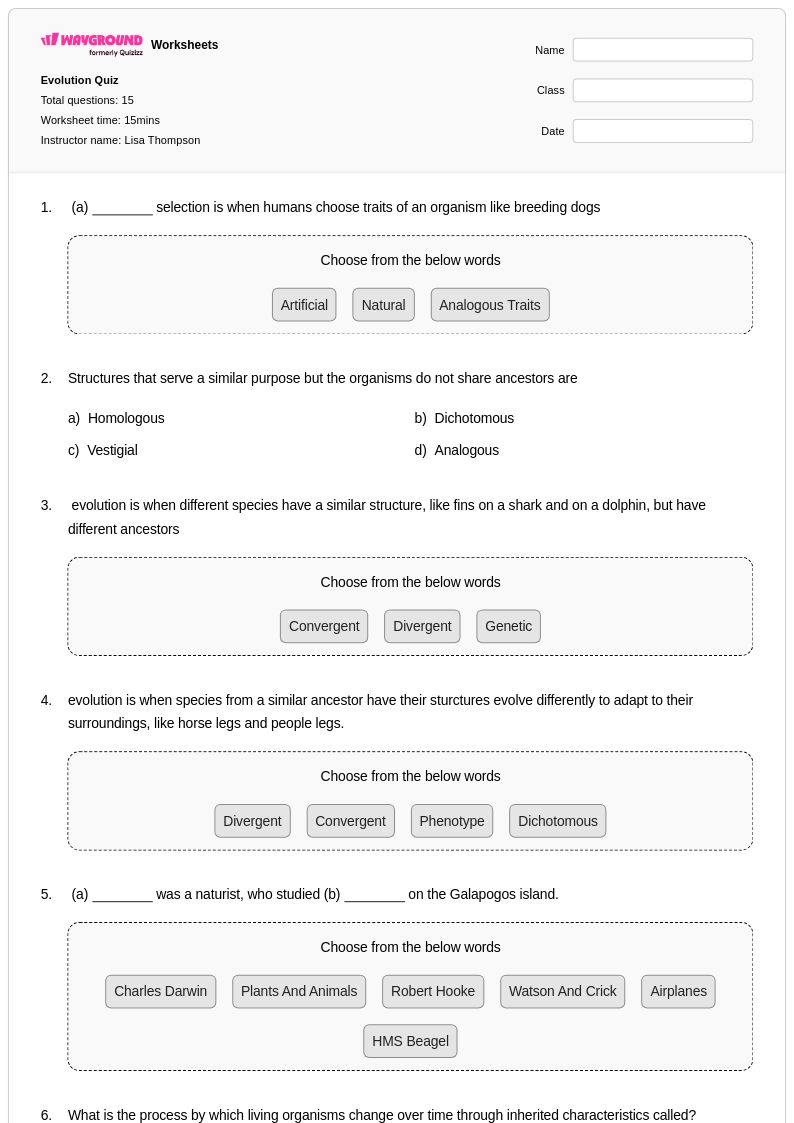
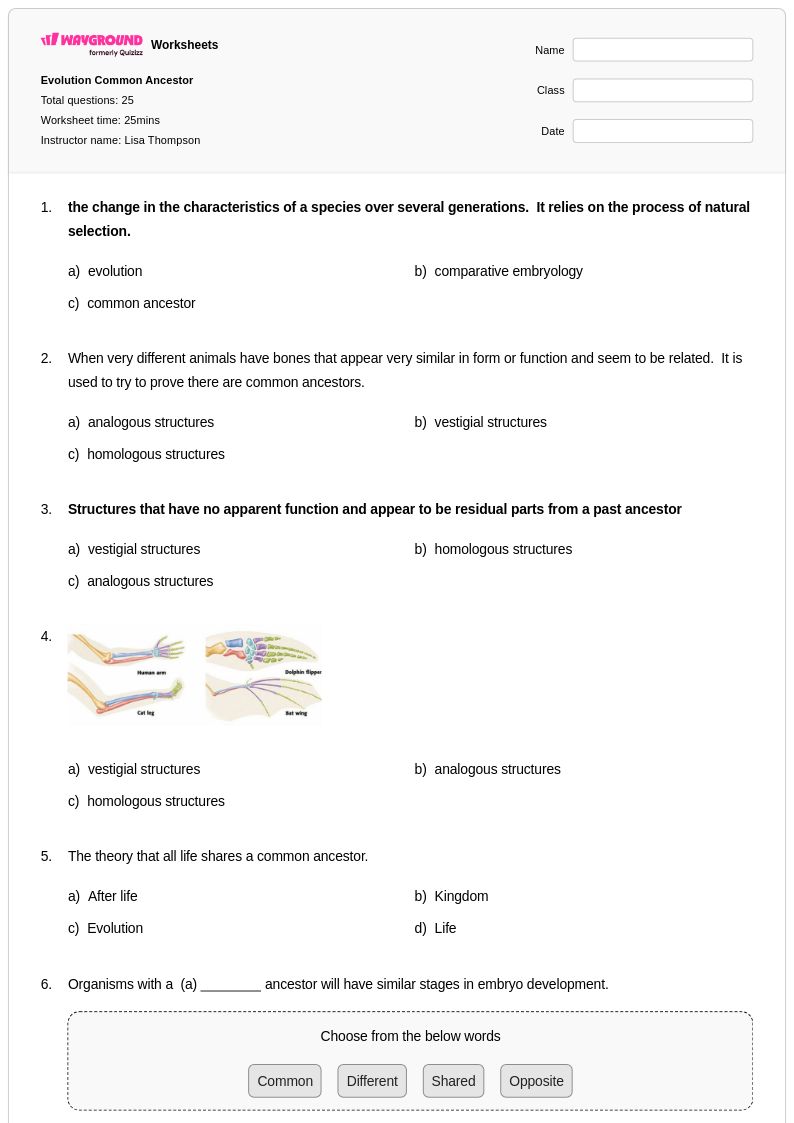
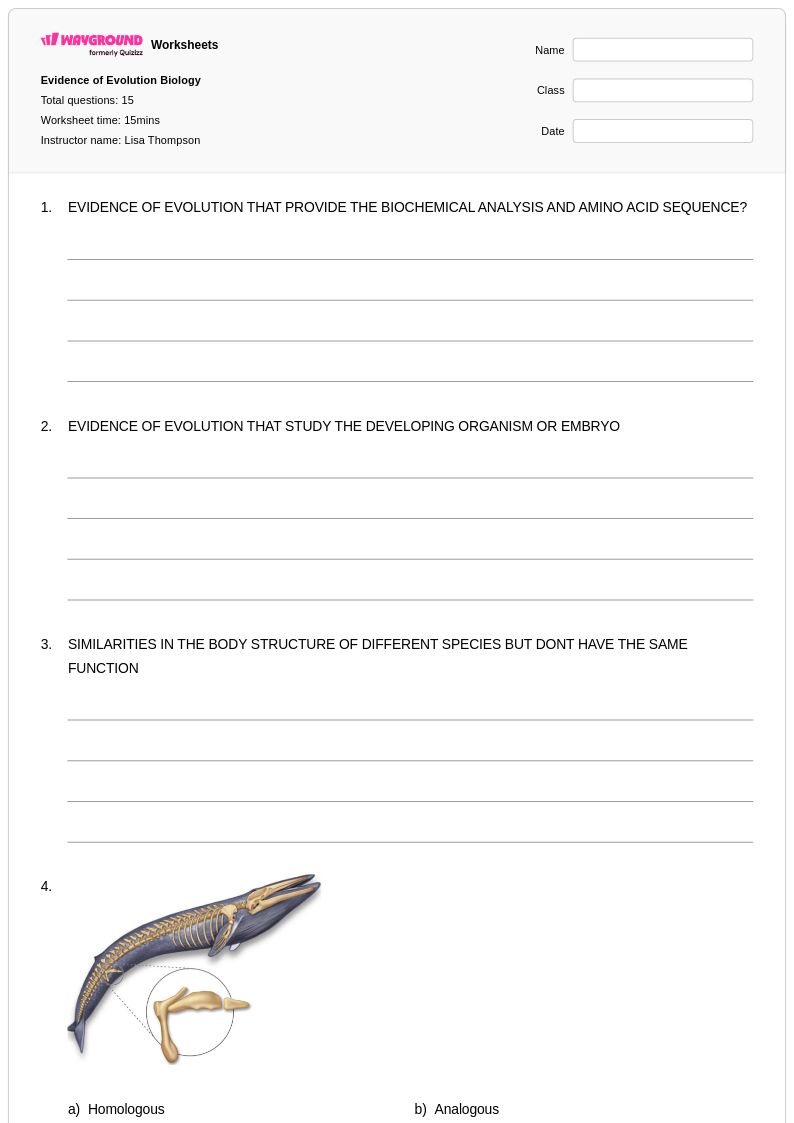
Class 10 analogous structures worksheets from Wayground help students explore convergent evolution through engaging printables and practice problems, complete with answer keys to reinforce understanding of similar functions in unrelated species.
Explore printable Analogous Structures worksheets for Class 10
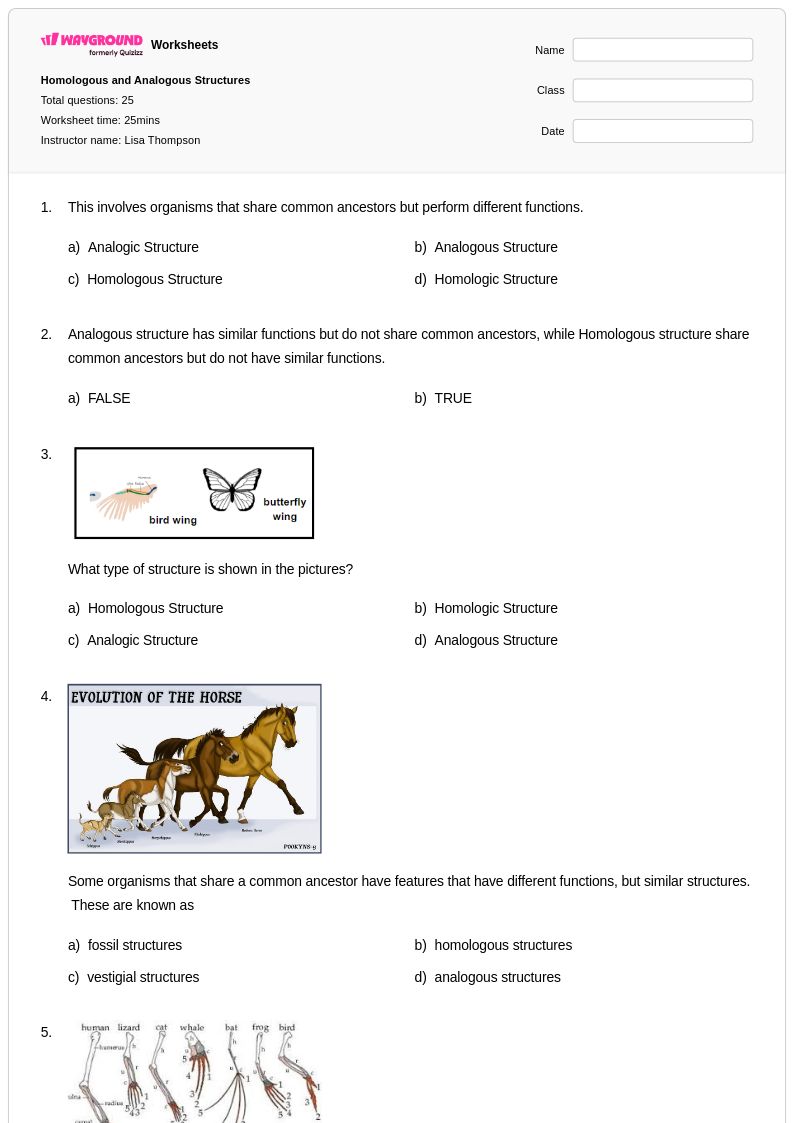
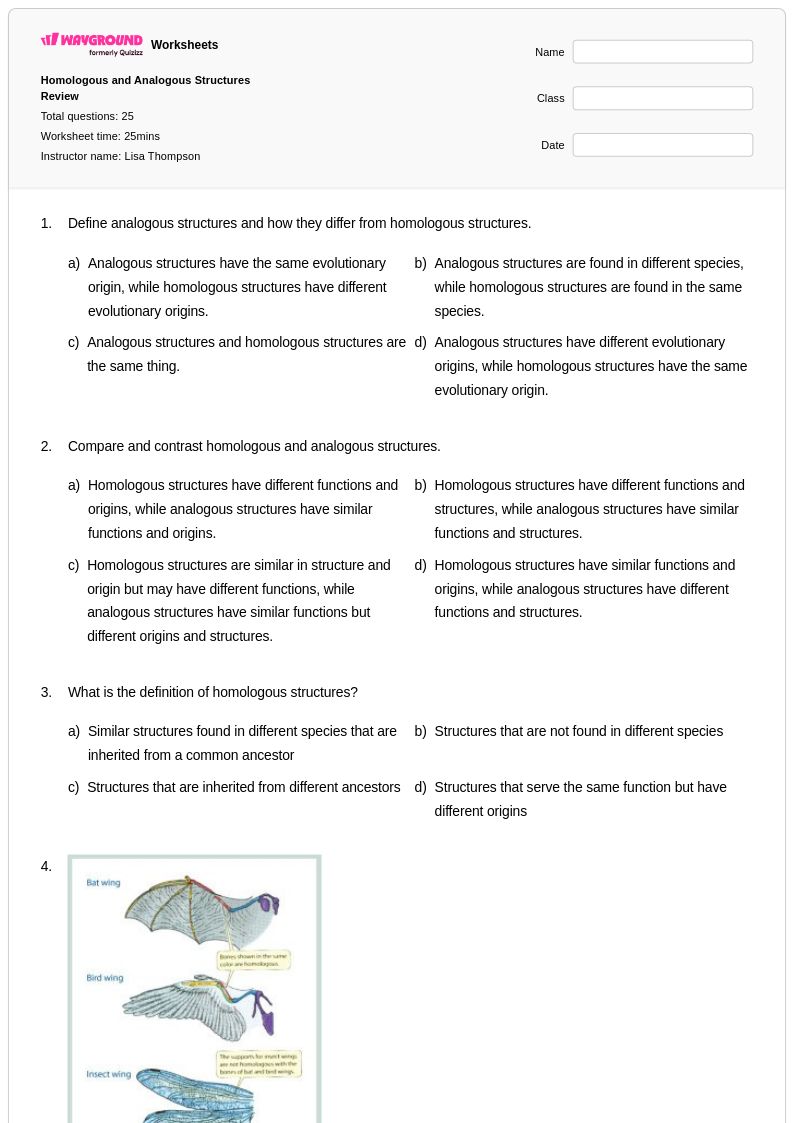
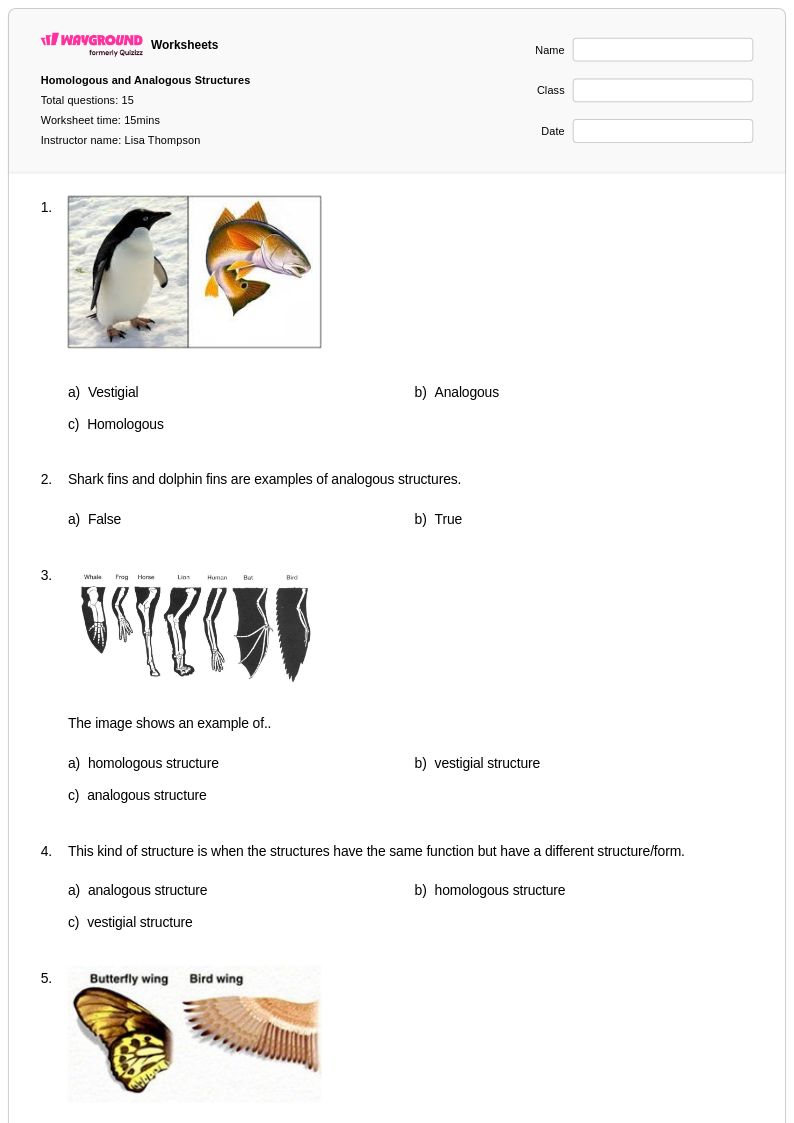
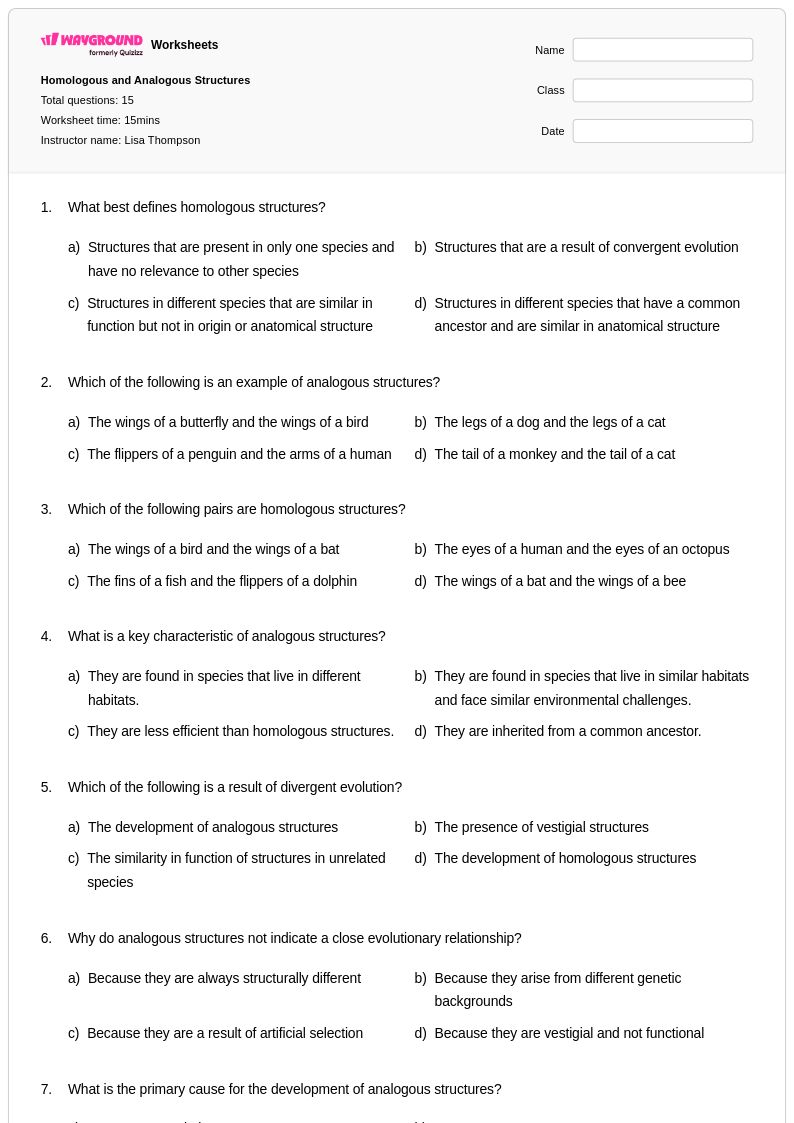
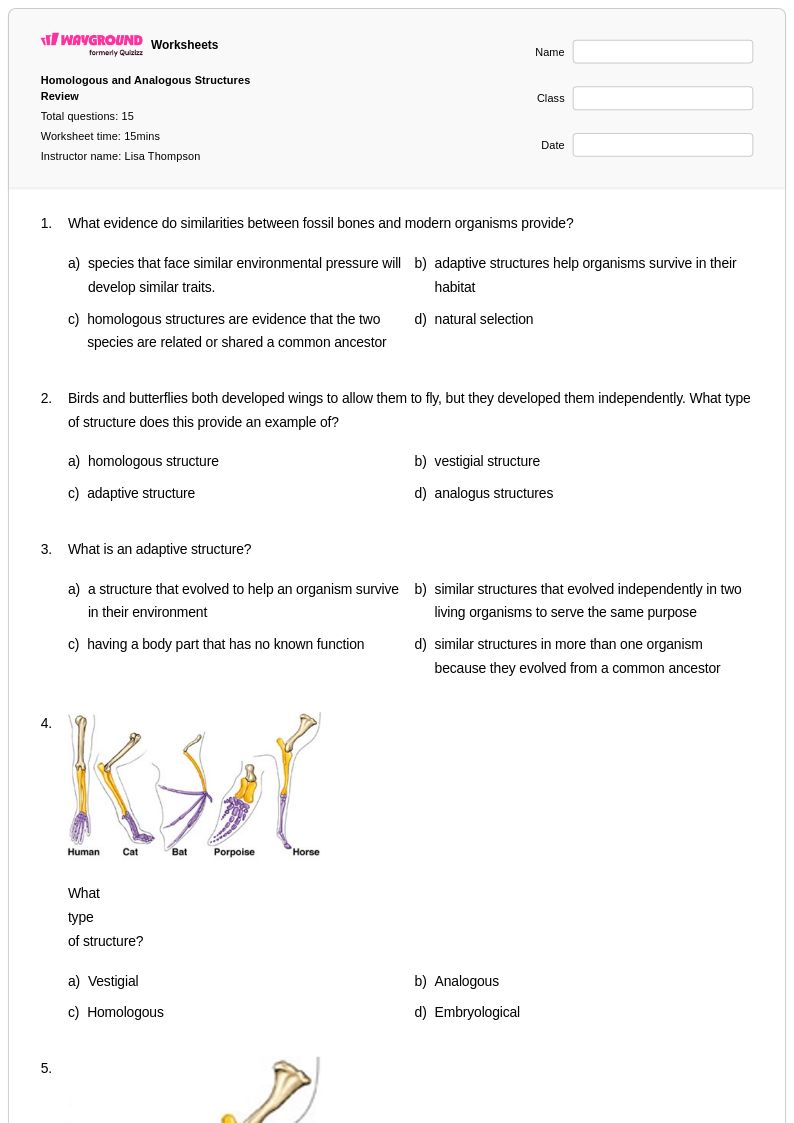
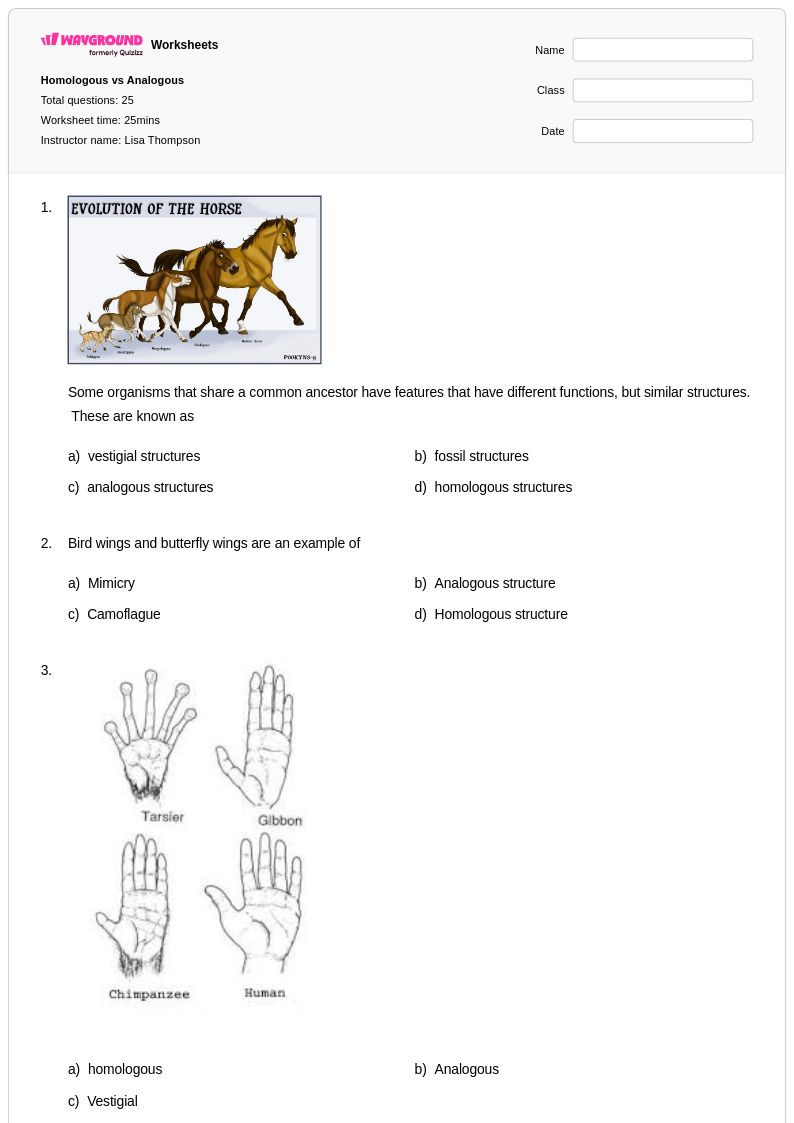
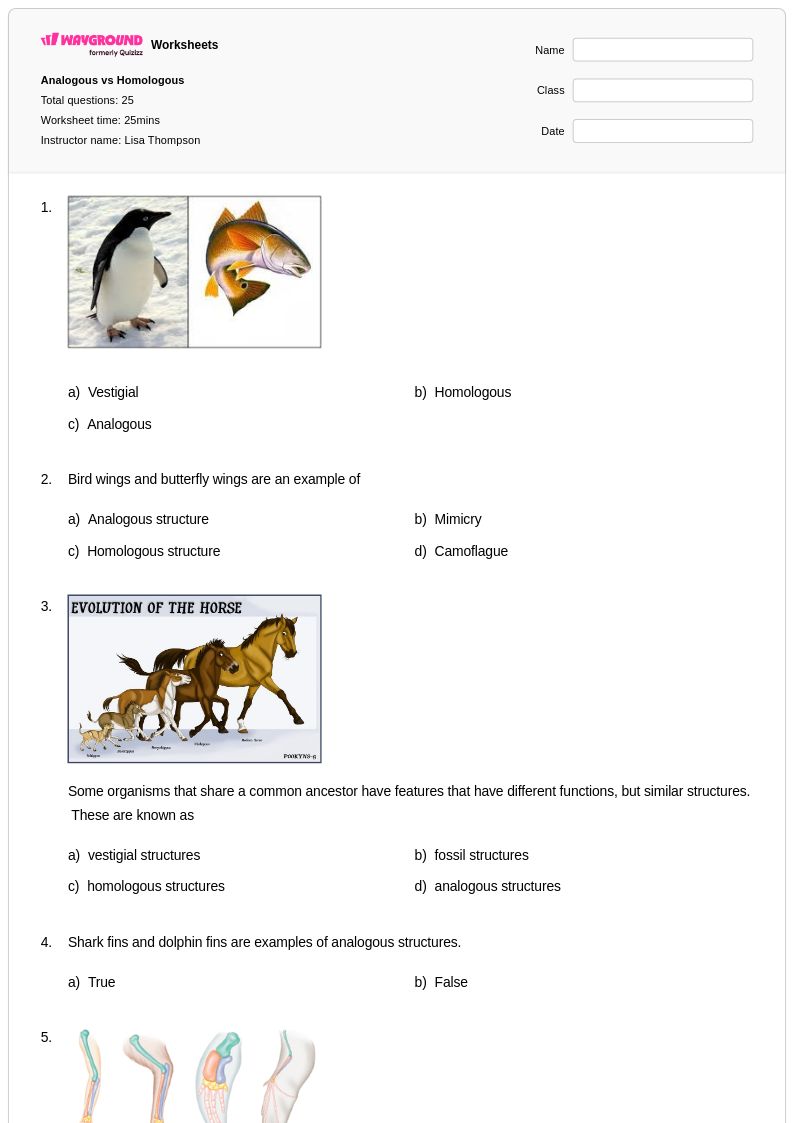
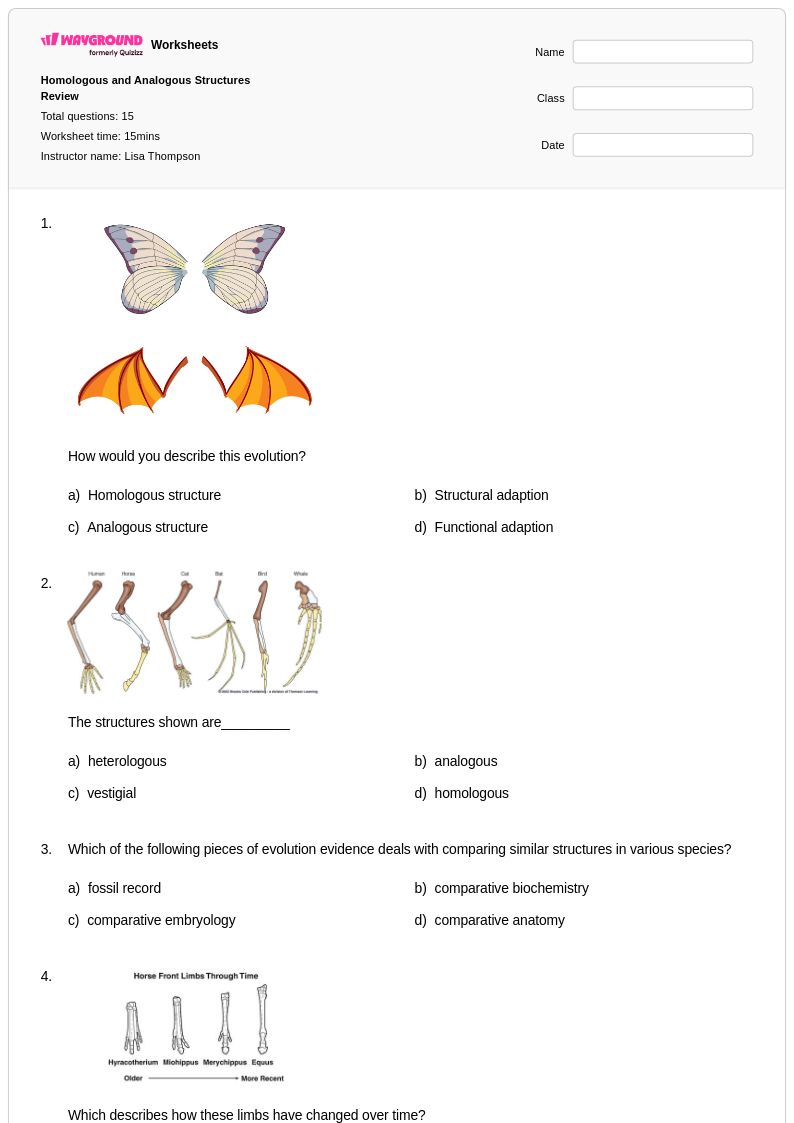
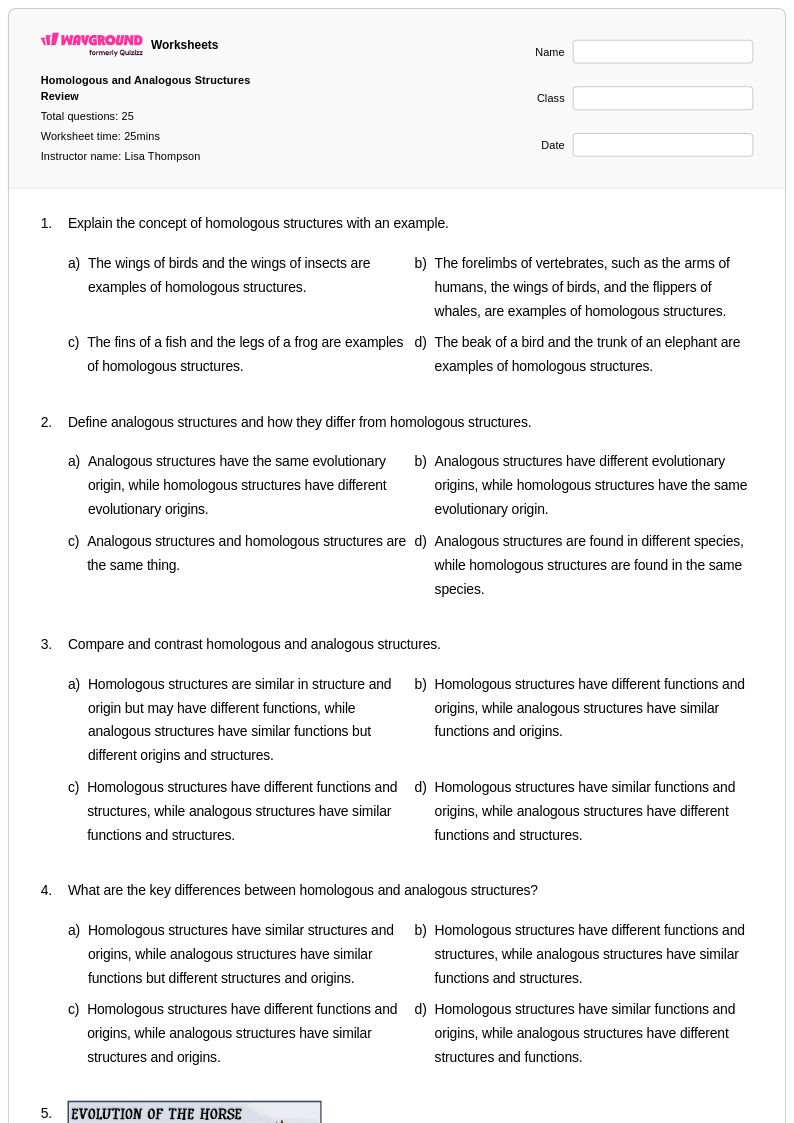
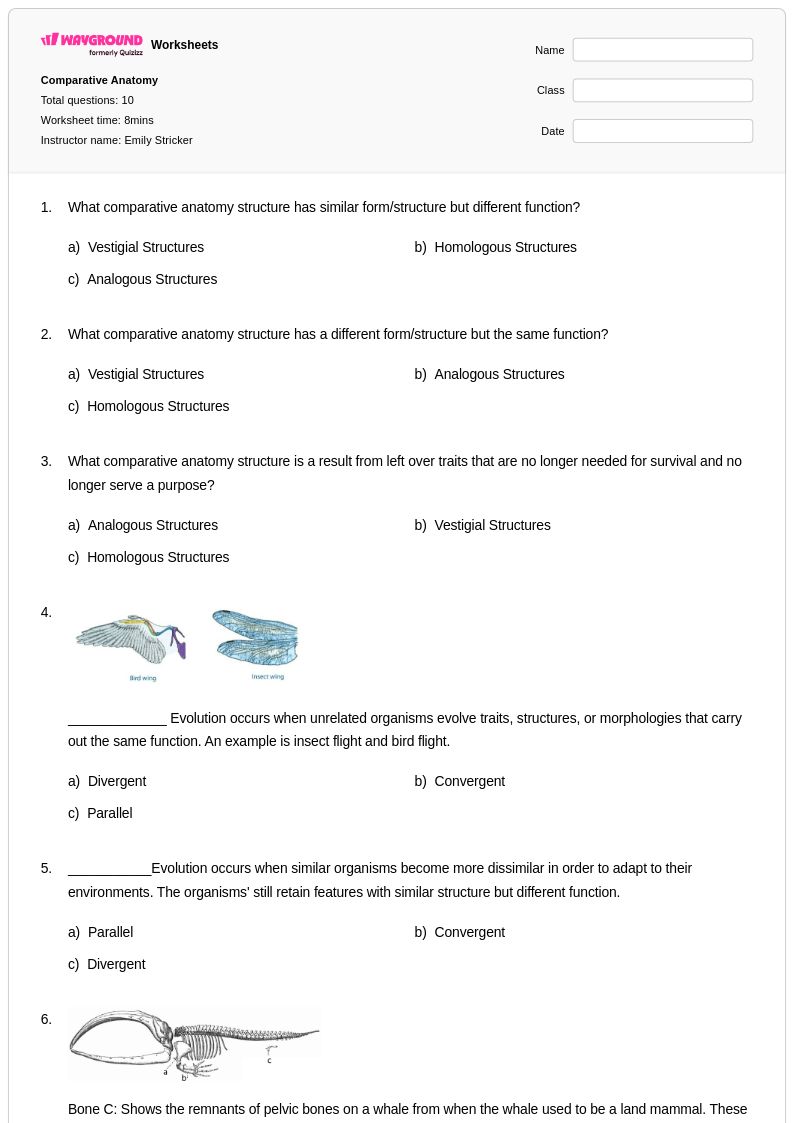
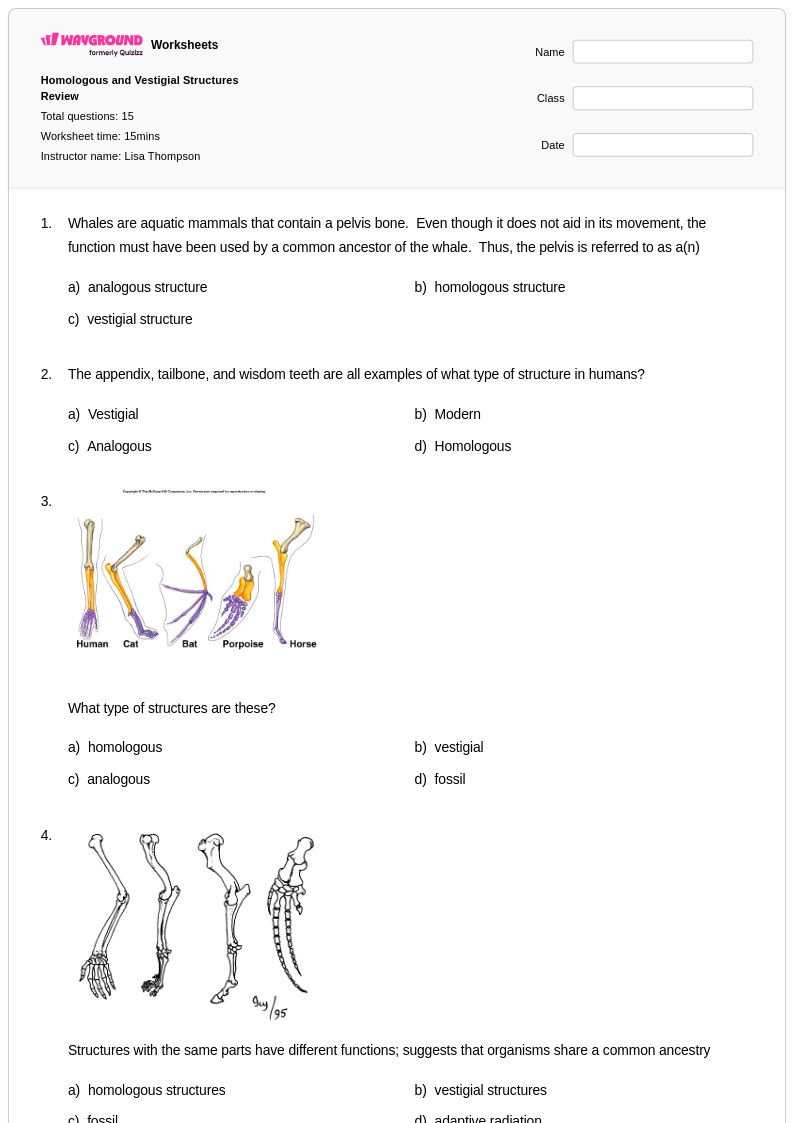
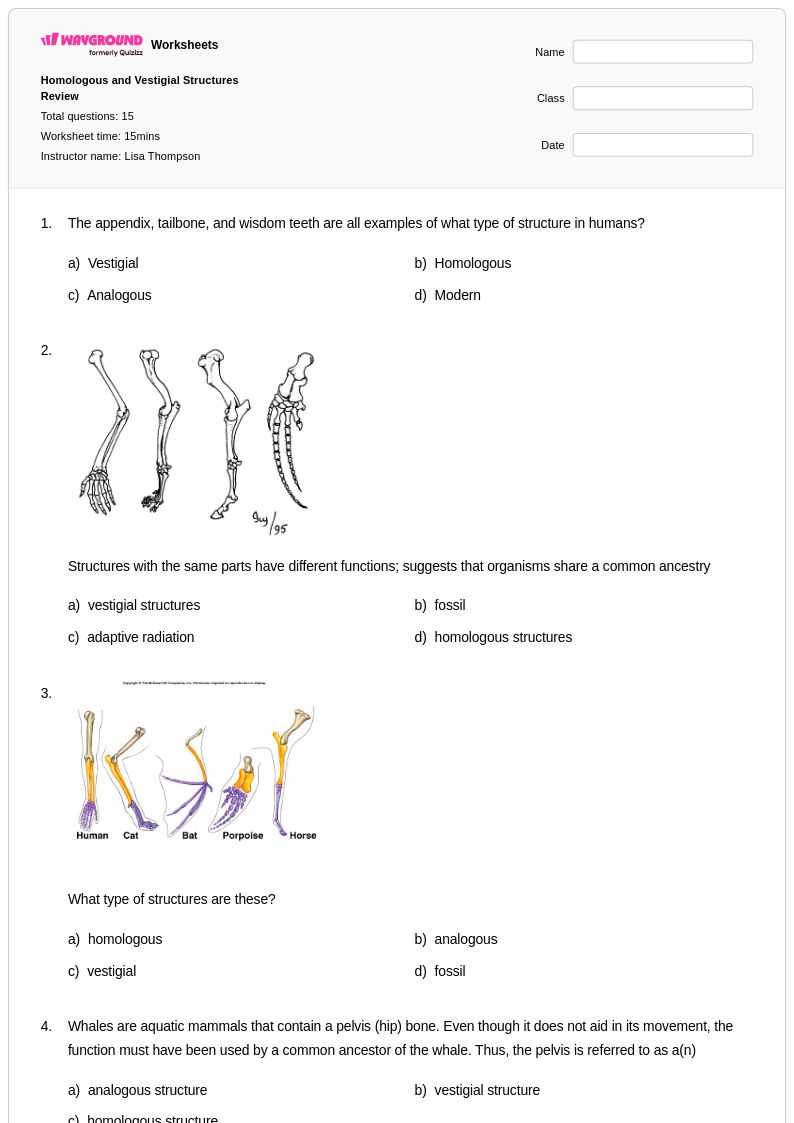
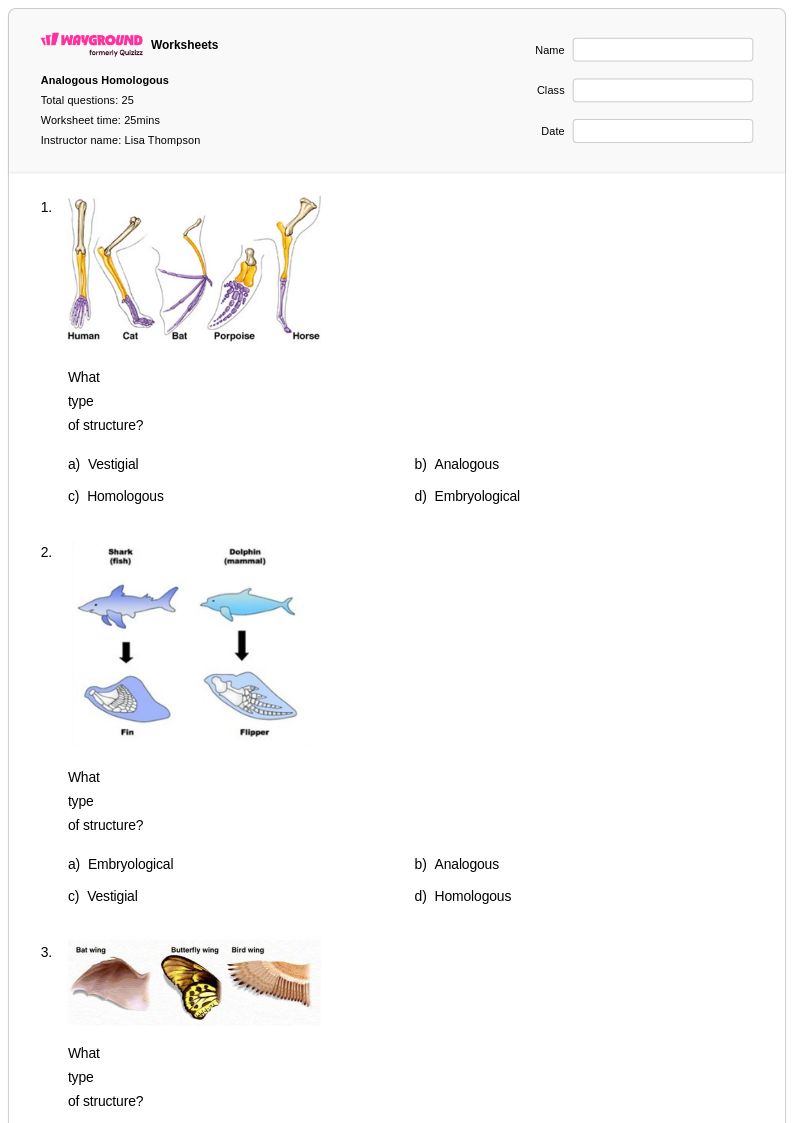
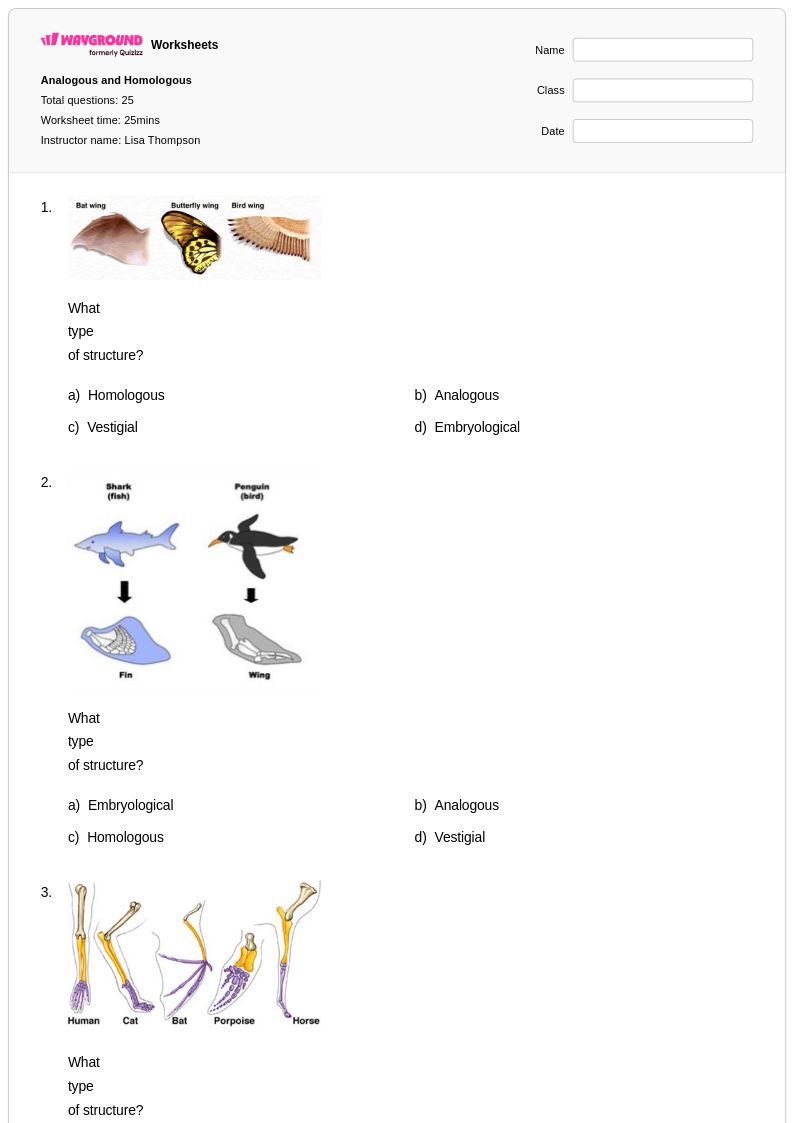
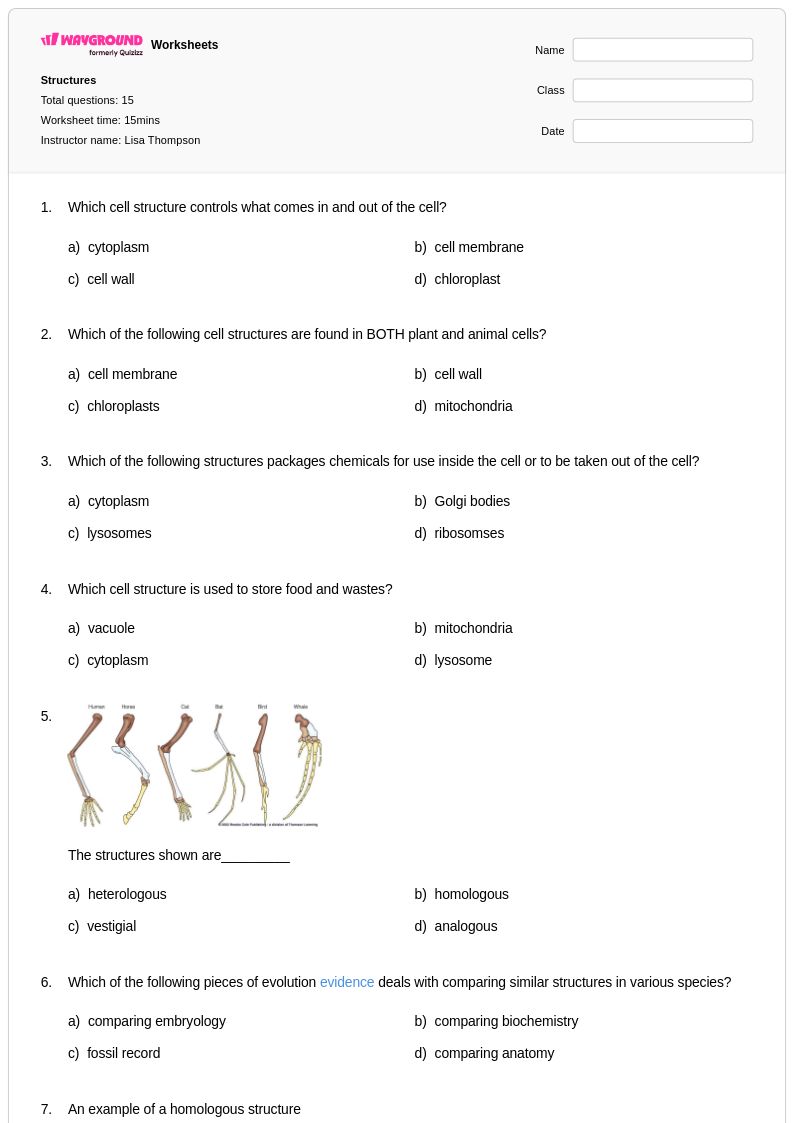
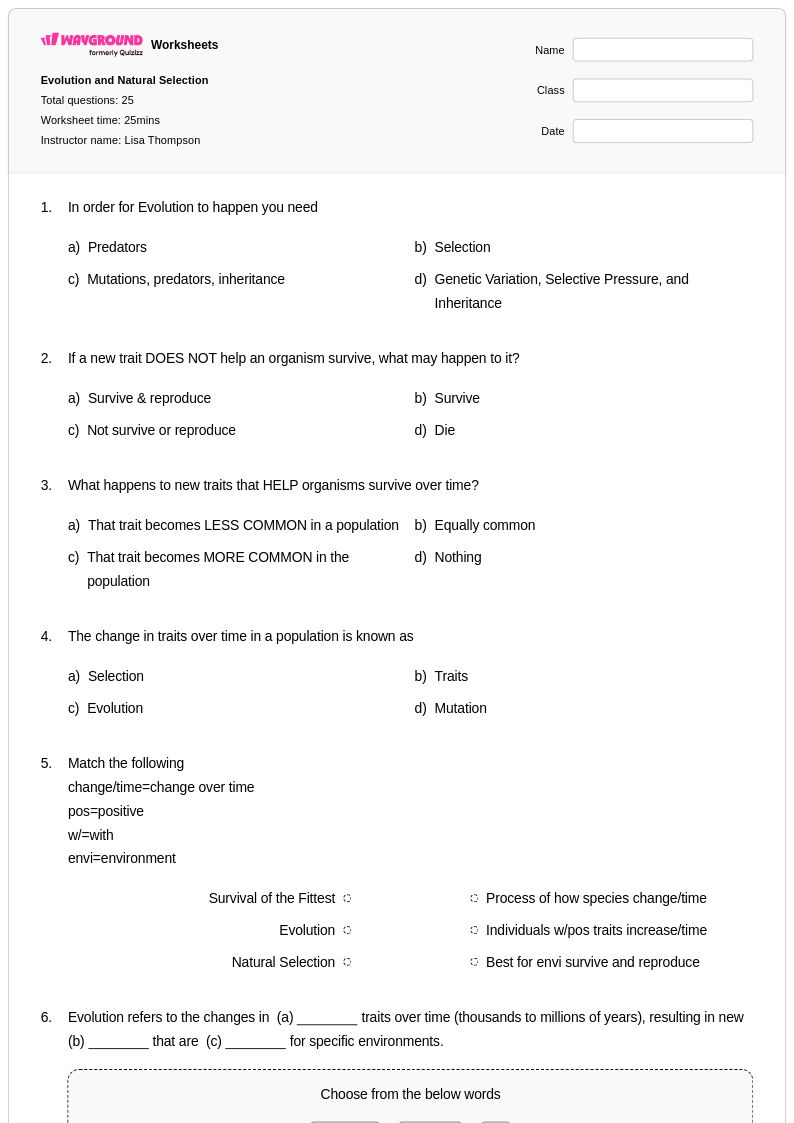
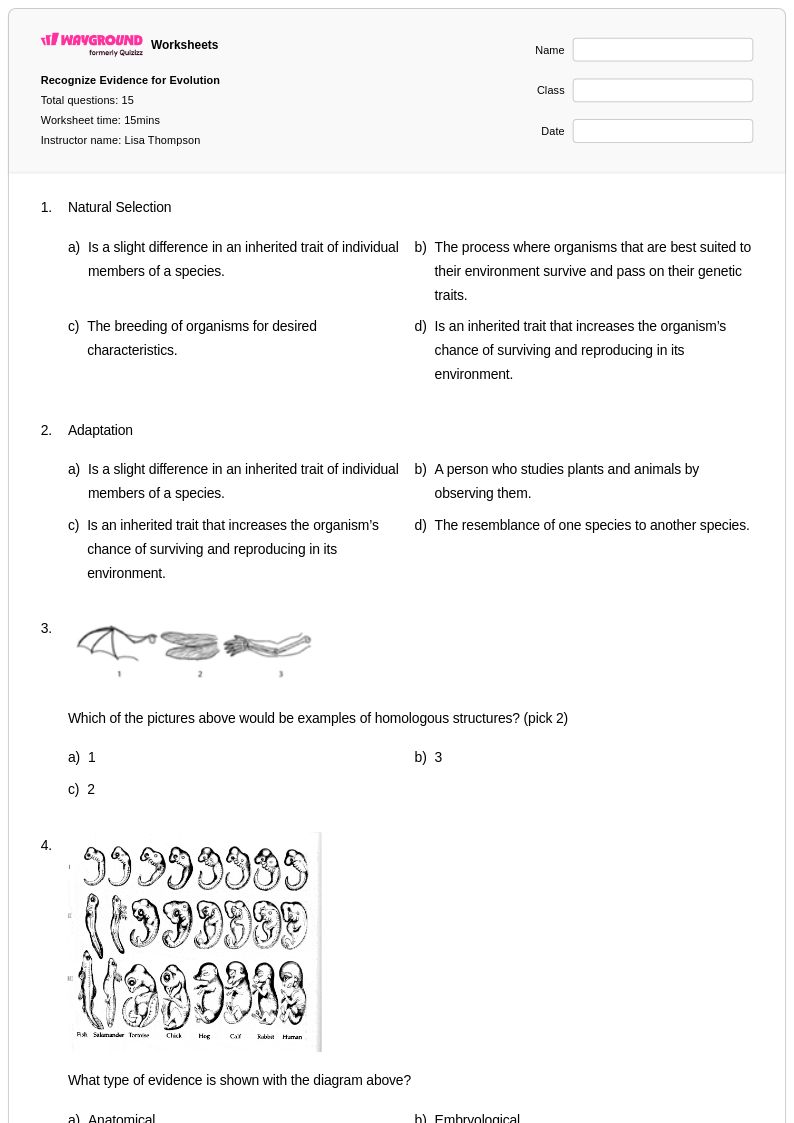
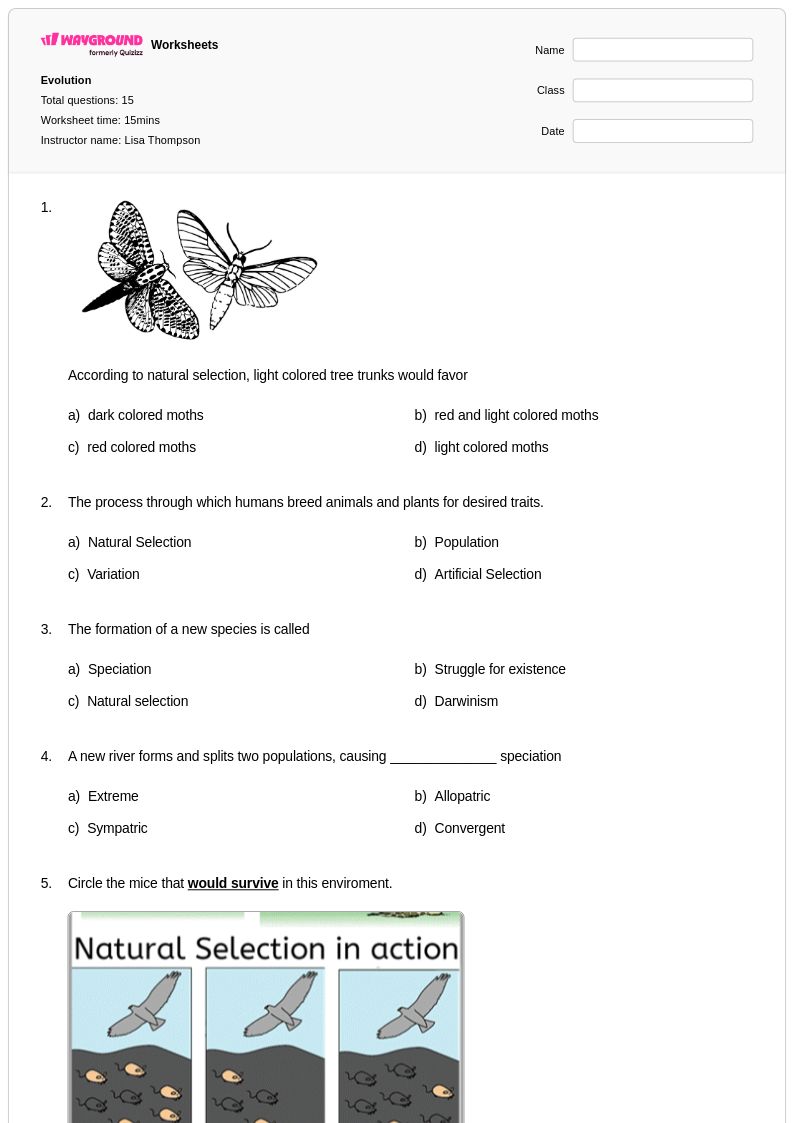
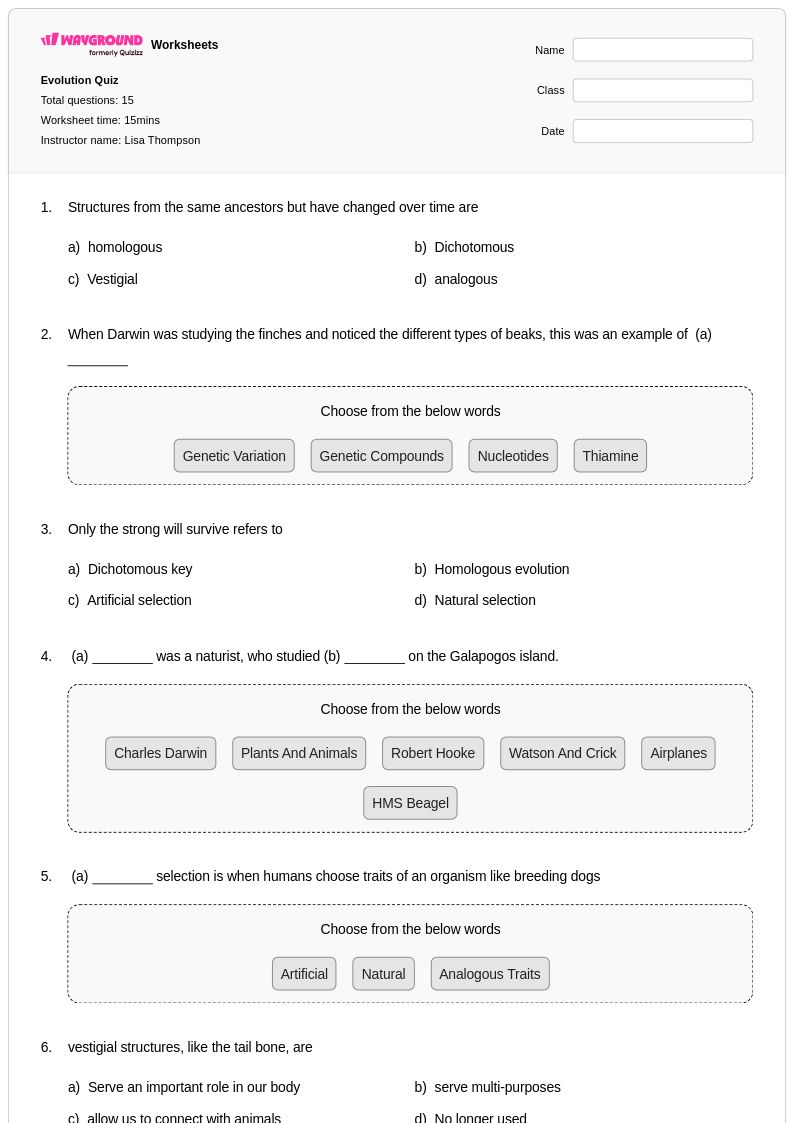
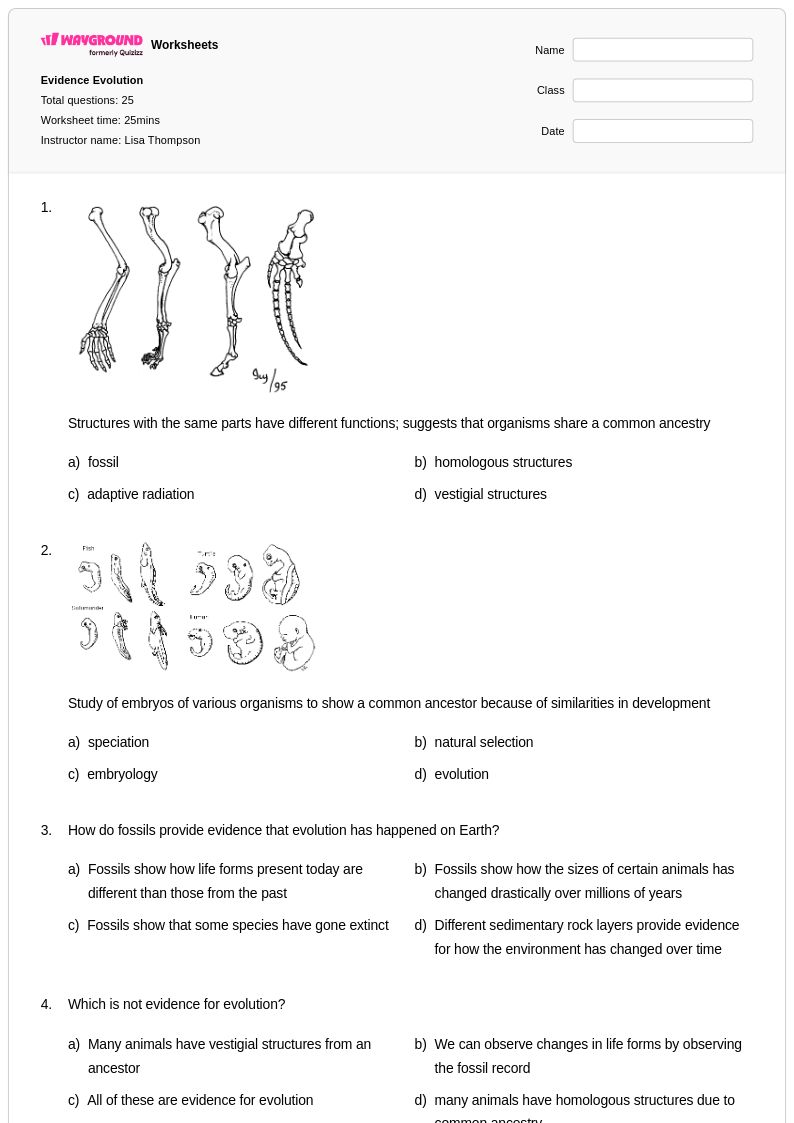
Analogous structures worksheets for Class 10 students provide comprehensive practice in understanding one of evolution's most fascinating concepts - how unrelated organisms develop similar traits through convergent evolution. These educational resources help students distinguish between analogous and homologous structures while strengthening their analytical skills in comparative anatomy and evolutionary biology. Through carefully designed practice problems, students examine examples like bird wings and insect wings, or dolphin fins and shark fins, learning to identify structures that serve similar functions but evolved independently. The worksheets include detailed answer keys that guide students through complex reasoning processes, and many are available as free printables in PDF format, making them accessible for both classroom instruction and independent study.
Wayground, formerly Quizizz, supports science educators with an extensive collection of analogous structures worksheets drawn from millions of teacher-created resources across diverse educational contexts. The platform's robust search and filtering capabilities allow teachers to locate materials that align with specific curriculum standards and match their students' varied learning needs. Teachers can customize existing worksheets or create new ones using the platform's differentiation tools, ensuring that both struggling learners and advanced students receive appropriate challenges. These resources are available in both printable and digital formats, including downloadable PDFs, providing flexibility for lesson planning, targeted remediation, and skill enhancement activities that deepen students' understanding of evolutionary relationships and structural adaptations.
FAQs
How do I teach analogous structures to biology students?
Start by contrasting analogous and homologous structures side by side so students understand that analogous structures share function but not common ancestry. Use visual comparisons like bird wings versus insect wings or shark fins versus dolphin fins to ground the concept in observable examples. Once students can distinguish function from evolutionary origin, introduce convergent evolution as the mechanism that explains why unrelated organisms develop structurally similar adaptations under similar environmental pressures.
What exercises help students practice identifying analogous structures?
Comparative analysis exercises work best — give students pairs or groups of organisms and ask them to identify which structures serve the same function, then determine whether those structures share common ancestry. Practice problems that require students to sort examples into analogous versus homologous categories are especially effective at reinforcing the distinction. Including real-world examples like streamlined body shapes in fish and whales, or the wings of birds and bats, helps students apply the concept rather than just memorize definitions.
What mistakes do students commonly make when learning about analogous structures?
The most common error is confusing analogous structures with homologous structures — students often assume that similar-looking or similar-functioning structures must share a common evolutionary origin. Another frequent misconception is believing that analogous structures indicate a close genetic relationship between species, when in fact they reflect independent evolutionary responses to similar environmental pressures. Targeted practice that forces students to explicitly justify their reasoning — not just label structures — helps correct both errors.
How can I use analogous structures worksheets to address different student ability levels?
Wayground supports student-level accommodations that allow teachers to customize the experience for individual learners without singling them out. Features like reduced answer choices can lower cognitive load for struggling students, while read-aloud support helps English language learners or students with reading difficulties access the content. These settings can be applied to individual students or the whole class and are saved for reuse across future sessions, making differentiation manageable at scale.
How do I use Wayground's analogous structures worksheets in my classroom?
Wayground's analogous structures worksheets are available as printable PDFs for traditional classroom use and in digital formats for technology-integrated environments, so they work whether students are in seats or learning remotely. Teachers can also host the worksheet as a live or asynchronous quiz directly on Wayground, which adds interactivity and allows for real-time progress monitoring. Each worksheet includes a complete answer key, making them suitable for independent practice, small group work, or whole-class instruction.
How does convergent evolution connect to the concept of analogous structures?
Convergent evolution is the process by which unrelated species independently develop similar traits in response to comparable environmental pressures — and analogous structures are the physical evidence of that process. When students understand that a dolphin's flipper and a shark's fin look alike not because of shared ancestry but because both organisms evolved in aquatic environments, they grasp why structure and function do not always indicate evolutionary relationship. Teaching analogous structures through the lens of convergent evolution gives students a causal framework, not just a vocabulary term.