Free Printable Anatomy of a Synapse Worksheets for Class 10
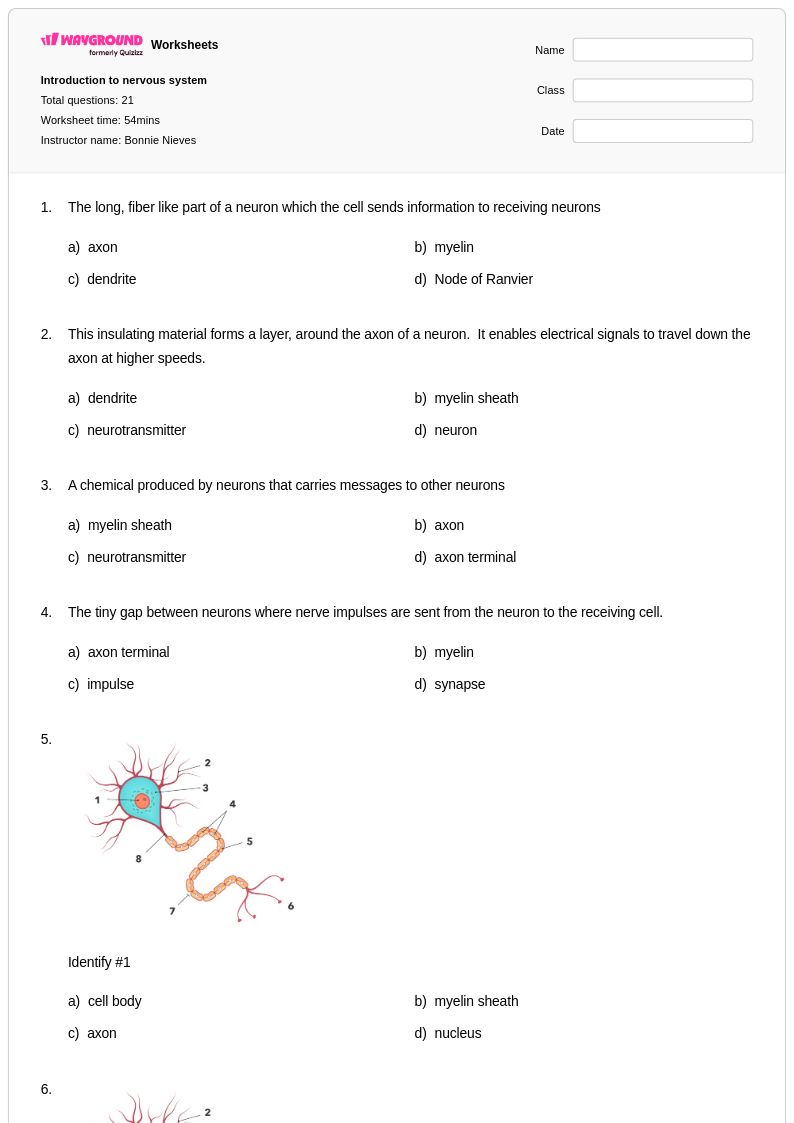
Explore Class 10 anatomy of a synapse worksheets and printables that help students master synaptic structure, neurotransmitter function, and neural communication through engaging practice problems with answer keys.
Explore printable Anatomy of a Synapse worksheets for Class 10
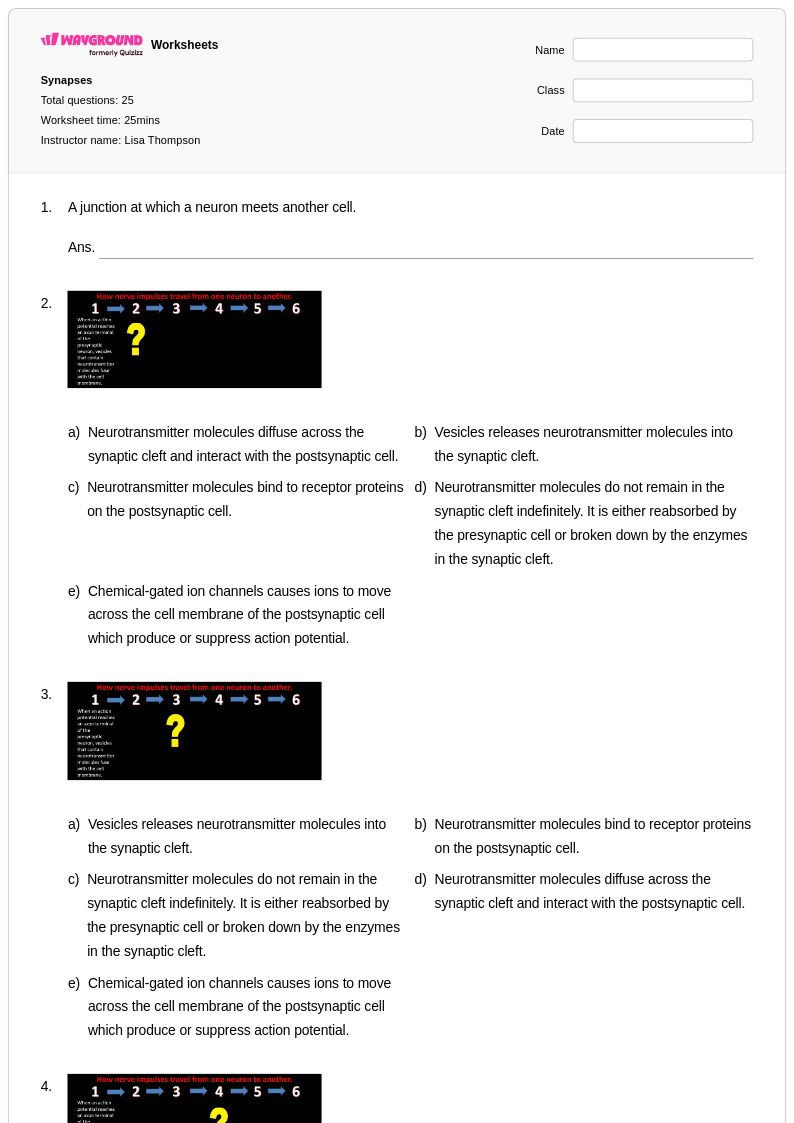
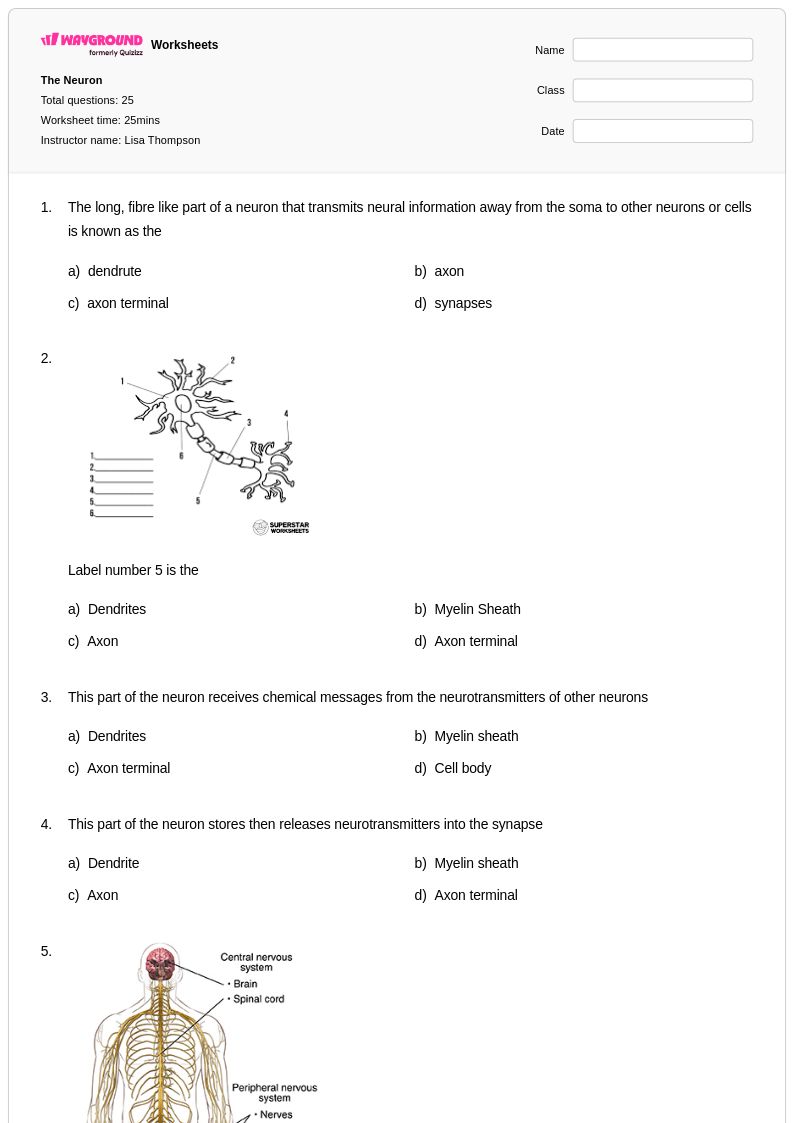
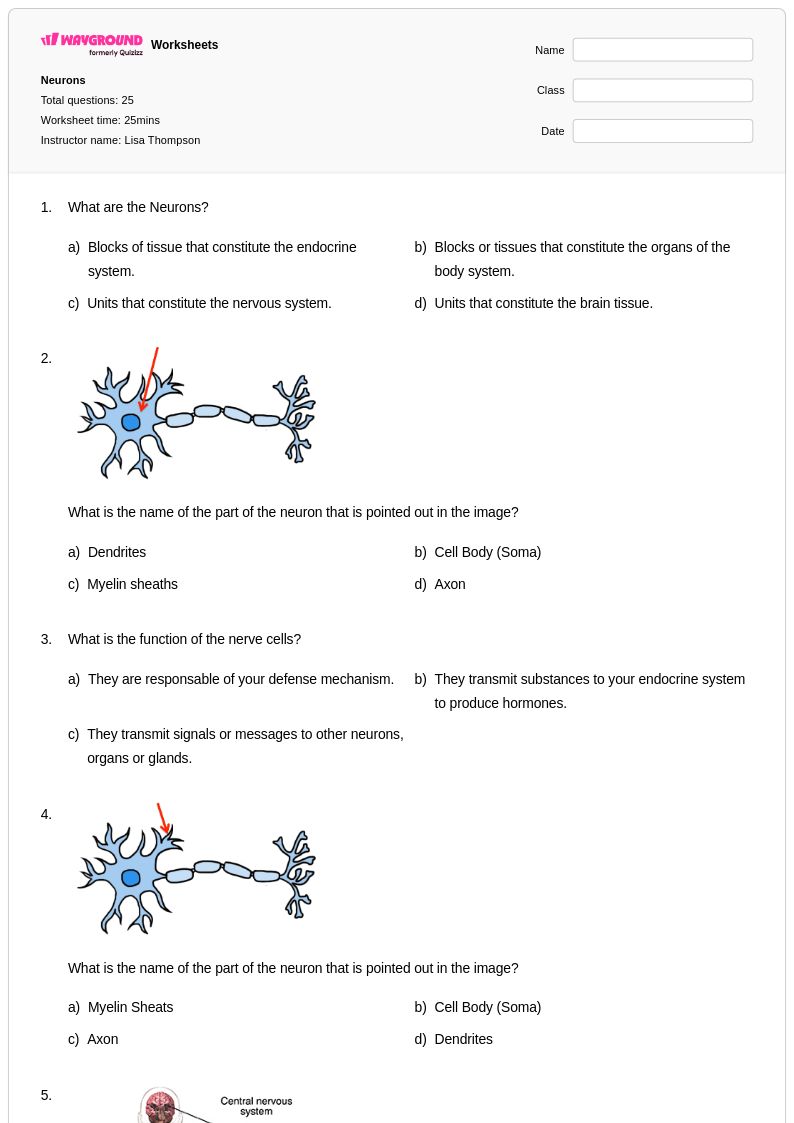
Class 10 anatomy of a synapse worksheets available through Wayground (formerly Quizizz) provide comprehensive coverage of synaptic structure and function, enabling students to master the intricate details of neuronal communication. These expertly designed resources strengthen critical skills in identifying synaptic components such as the presynaptic terminal, synaptic cleft, and postsynaptic membrane, while developing understanding of neurotransmitter release mechanisms and signal transmission processes. Students engage with detailed practice problems that explore synaptic vesicles, receptor binding sites, and the molecular events occurring during synaptic transmission, with each worksheet including a complete answer key to support independent learning and self-assessment. The collection features both printable pdf formats and digital versions, ensuring accessibility for diverse learning environments while maintaining the rigorous academic standards essential for advanced high school neuroscience education.
Wayground (formerly Quizizz) empowers educators with millions of teacher-created resources specifically focused on synaptic anatomy, offering robust search and filtering capabilities that allow instructors to locate materials perfectly aligned with their curriculum standards and learning objectives. The platform's sophisticated differentiation tools enable teachers to customize worksheet complexity and focus areas, accommodating students with varying levels of prior knowledge in nervous system function while maintaining appropriate academic rigor for Class 10 science coursework. Flexible customization options support seamless integration into lesson planning, whether educators need targeted practice for skill remediation, enrichment activities for advanced learners, or comprehensive review materials covering synaptic structure and neurotransmission mechanisms. The availability of both digital and printable pdf formats ensures that teachers can adapt these high-quality anatomy of a synapse worksheets to any instructional setting, from traditional classroom environments to hybrid and remote learning scenarios.
FAQs
How do I teach the anatomy of a synapse to students?
Start by grounding students in the physical structure before moving to function — introduce the presynaptic terminal, synaptic cleft, and postsynaptic membrane as a spatial sequence, then layer in neurotransmitter vesicles and receptor proteins. Using labeled diagrams alongside step-by-step walkthroughs of synaptic transmission helps students build a mental model before tackling the molecular detail. Connecting each structural component to its specific role in signal propagation gives students a functional framework, not just a vocabulary list.
What exercises help students practice synaptic anatomy?
Labeling diagrams of synapse components is one of the most effective practice formats because it requires students to recall and place each structure in spatial context. Sequencing exercises that ask students to order the steps of neurotransmitter release and receptor binding reinforce the process logic of synaptic transmission. Short-answer and fill-in-the-blank problems focused on the roles of synaptic vesicles, the synaptic cleft, and postsynaptic receptor proteins push students beyond recognition toward true conceptual understanding.
What mistakes do students commonly make when learning synapse anatomy?
A common error is confusing the direction of signal travel — students often misidentify which terminal is presynaptic and which is postsynaptic, particularly on unlabeled diagrams. Many students also conflate neurotransmitter release with reuptake, treating them as the same event rather than distinct steps with different mechanisms and significance. Another frequent misconception is assuming all neurotransmitters have the same effect; students need explicit instruction that receptor type, not just neurotransmitter identity, determines the postsynaptic response.
How can I differentiate synapse anatomy instruction for students at different levels?
For students who are still building foundational knowledge, simplify by focusing first on the three core structures — presynaptic terminal, synaptic cleft, and postsynaptic membrane — before introducing vesicles and receptor proteins. Advanced learners can extend into the molecular detail of receptor binding, reuptake mechanisms, and the distinction between ionotropic and metabotropic receptors. On Wayground, teachers can apply accommodations such as reduced answer choices or read-aloud support to individual students, allowing differentiated practice within the same assignment without signaling differences to the class.
How do I use anatomy of a synapse worksheets from Wayground in my classroom?
Wayground's anatomy of a synapse worksheets are available as printable PDFs for traditional classroom and lab use, as well as in digital formats for technology-integrated environments, including the option to host them as a quiz directly on Wayground. Teachers can use the platform's search and filtering tools to locate materials aligned with specific standards and appropriate for different learning levels, supporting both remediation and enrichment. Complete answer keys are included with each worksheet, making it straightforward to deploy these resources for homework, guided practice, or assessment preparation.
What components of the synapse should students be able to identify on a diagram?
At minimum, students should be able to identify and label the presynaptic terminal, synaptic cleft, postsynaptic membrane, synaptic vesicles containing neurotransmitters, and postsynaptic receptor proteins. For a more complete understanding, students should also recognize mitochondria in the presynaptic terminal as the energy source for neurotransmitter packaging and release. Being able to trace the path of a signal — from action potential arrival to neurotransmitter binding — using a labeled diagram is the benchmark for structural mastery.