
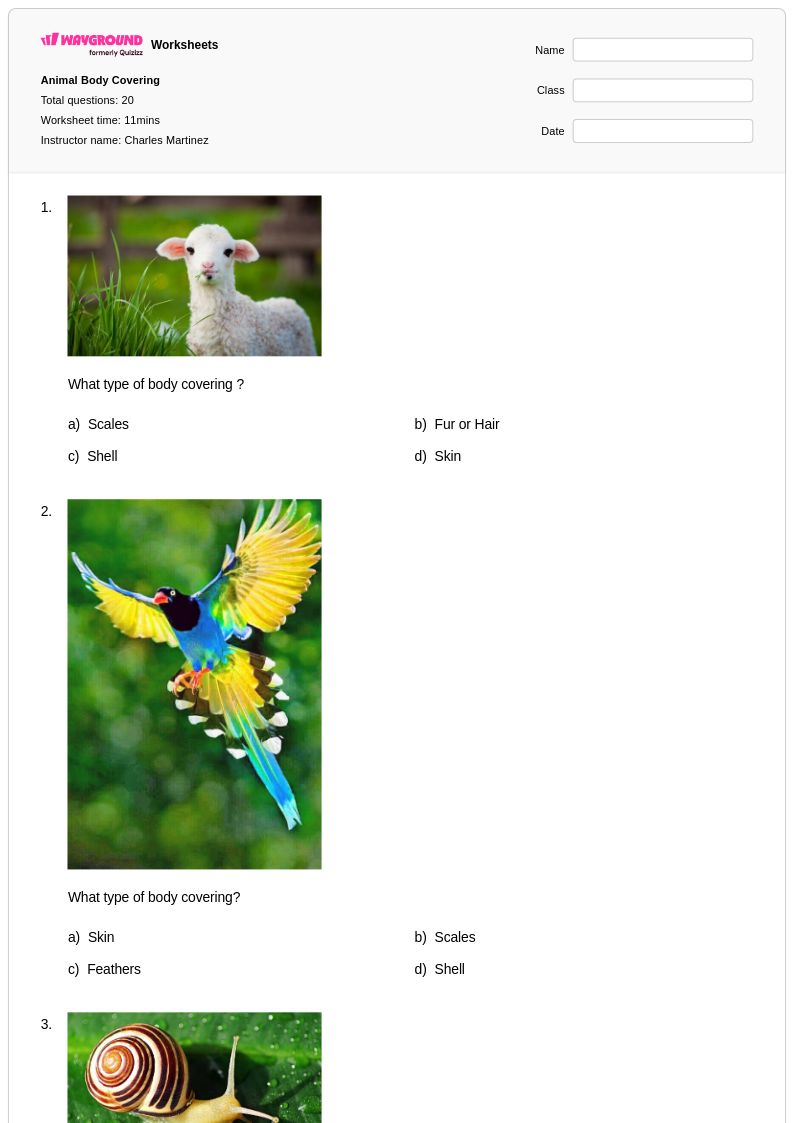
20 Q
2nd
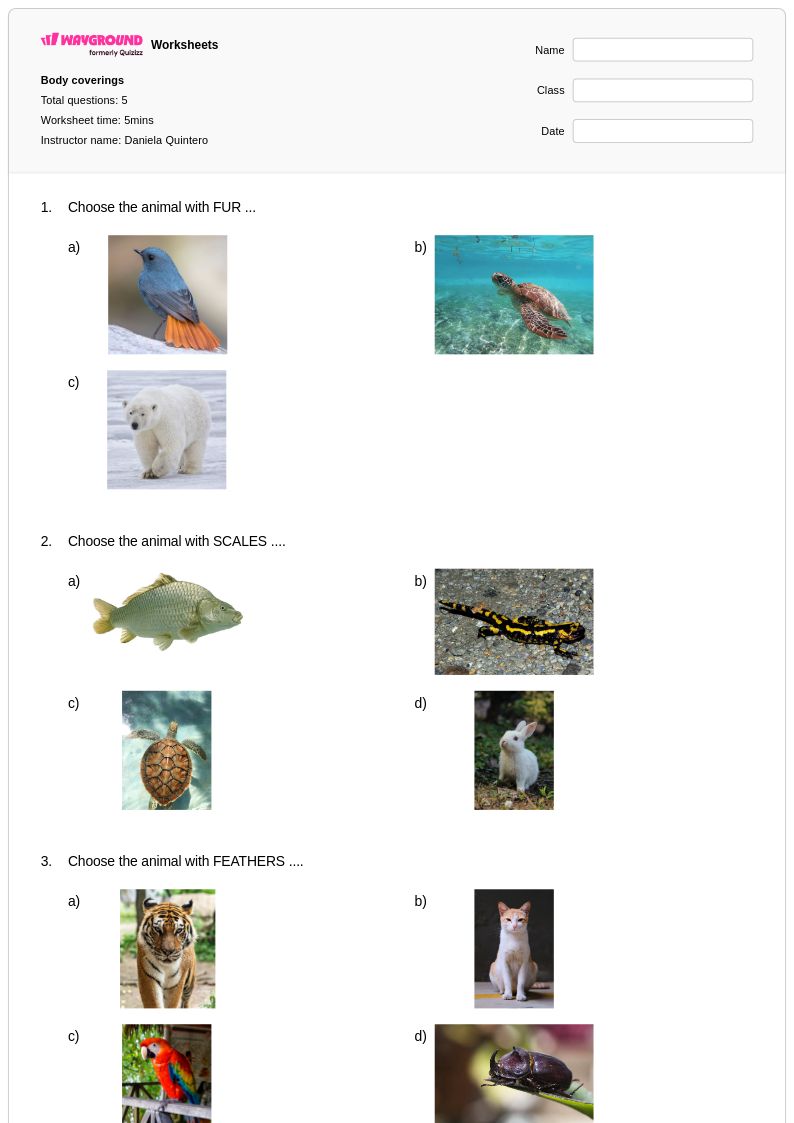
5 Q
2nd
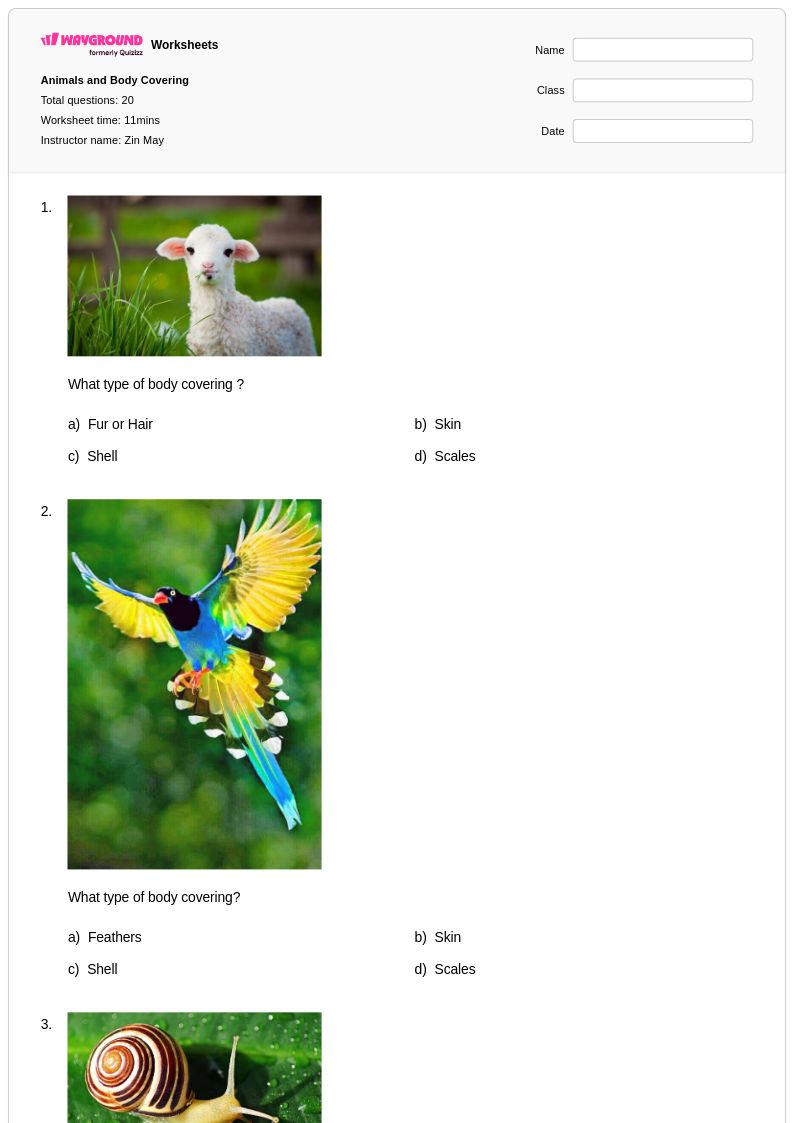
20 Q
2nd
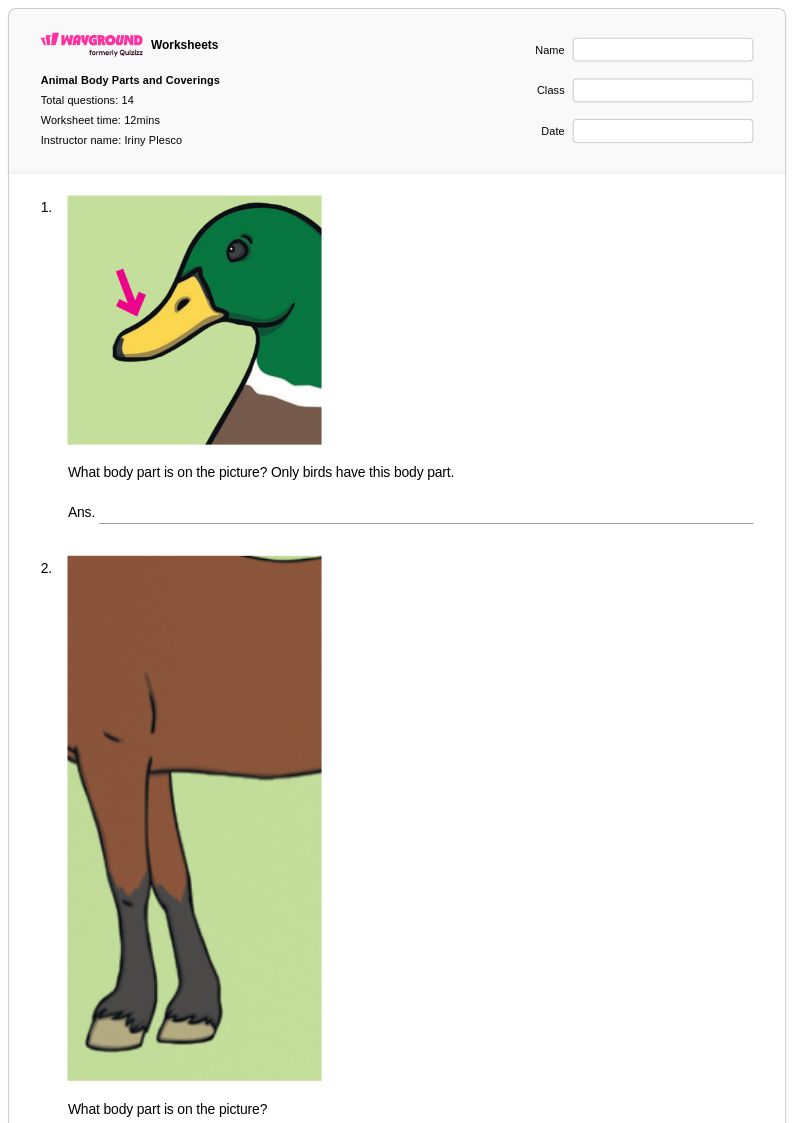
14 Q
2nd
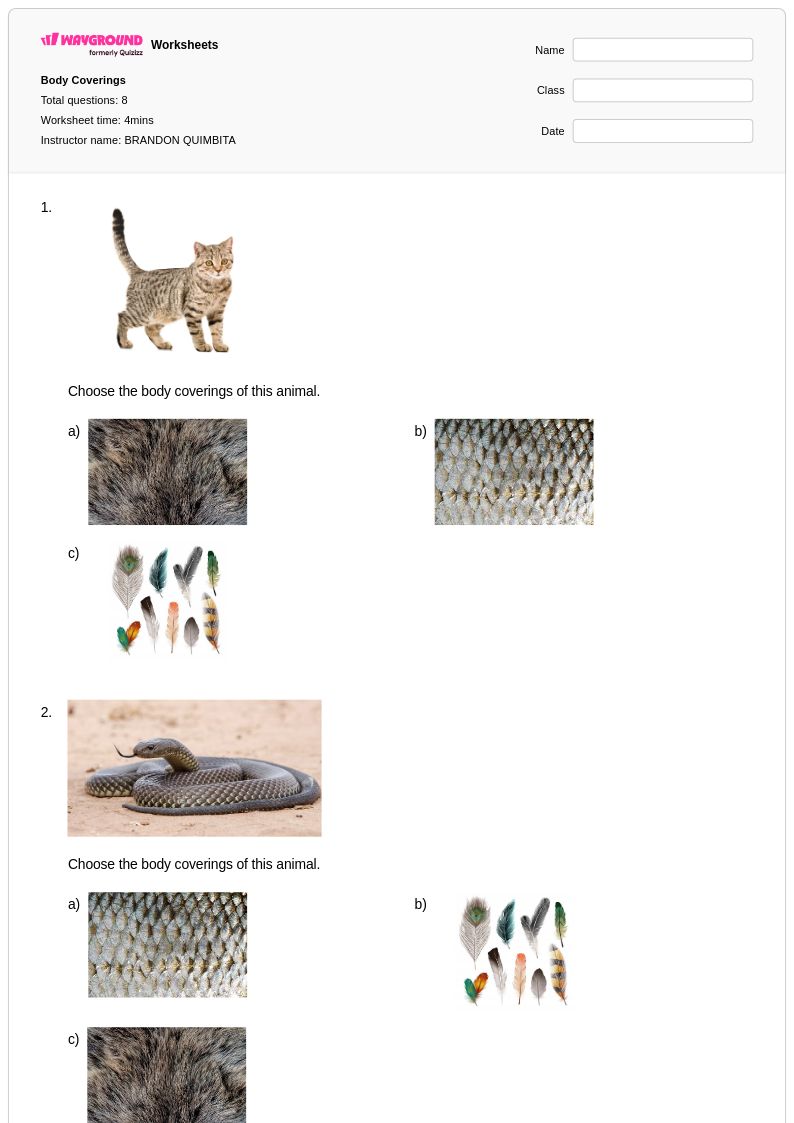
8 Q
2nd
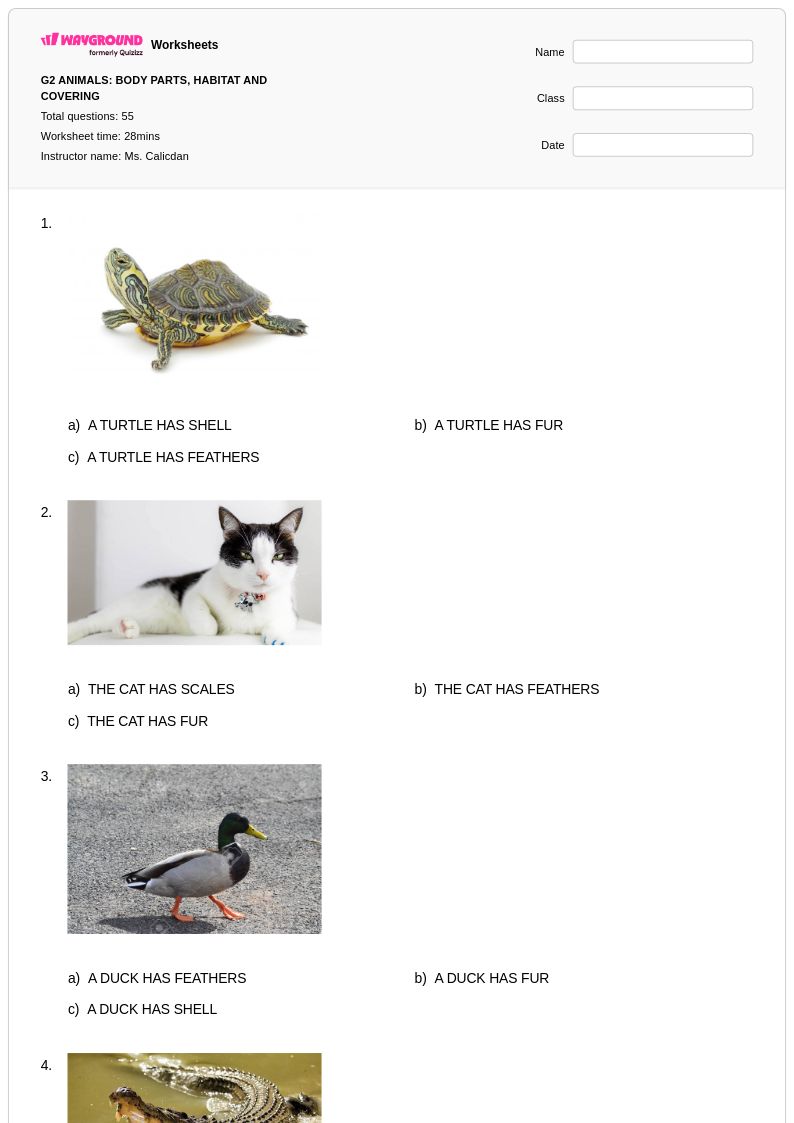
55 Q
1st - 3rd
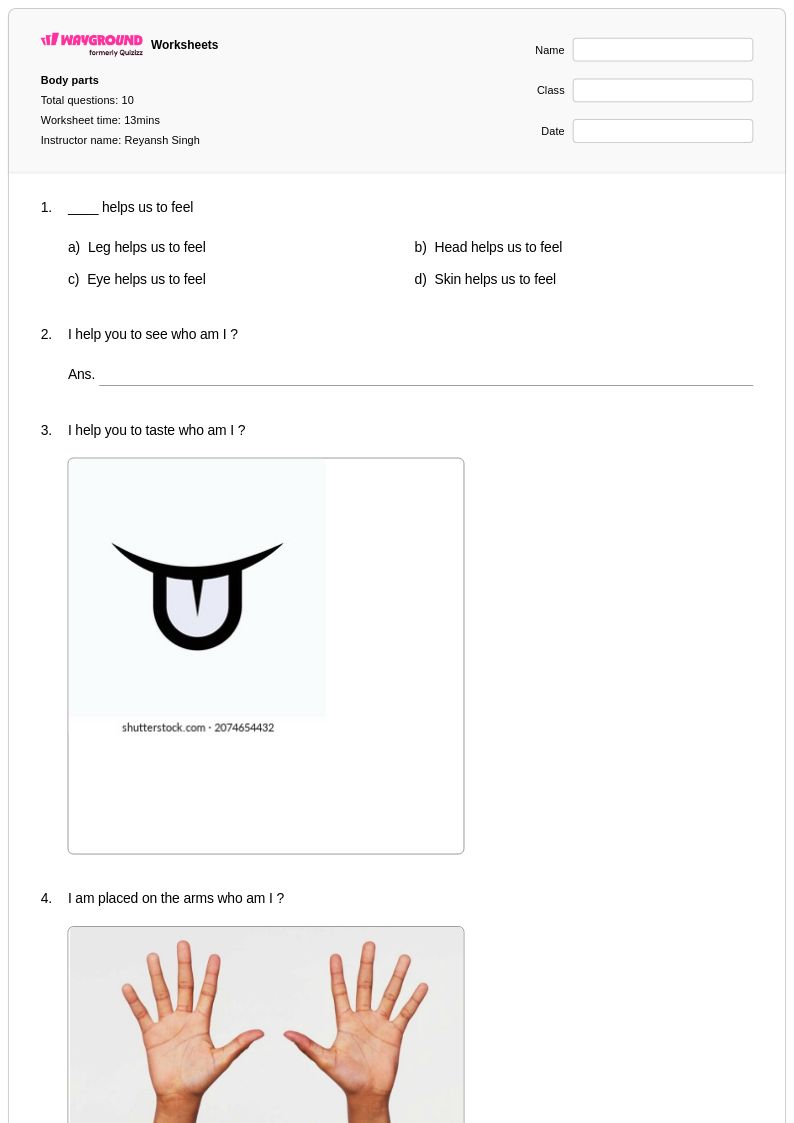
10 Q
2nd
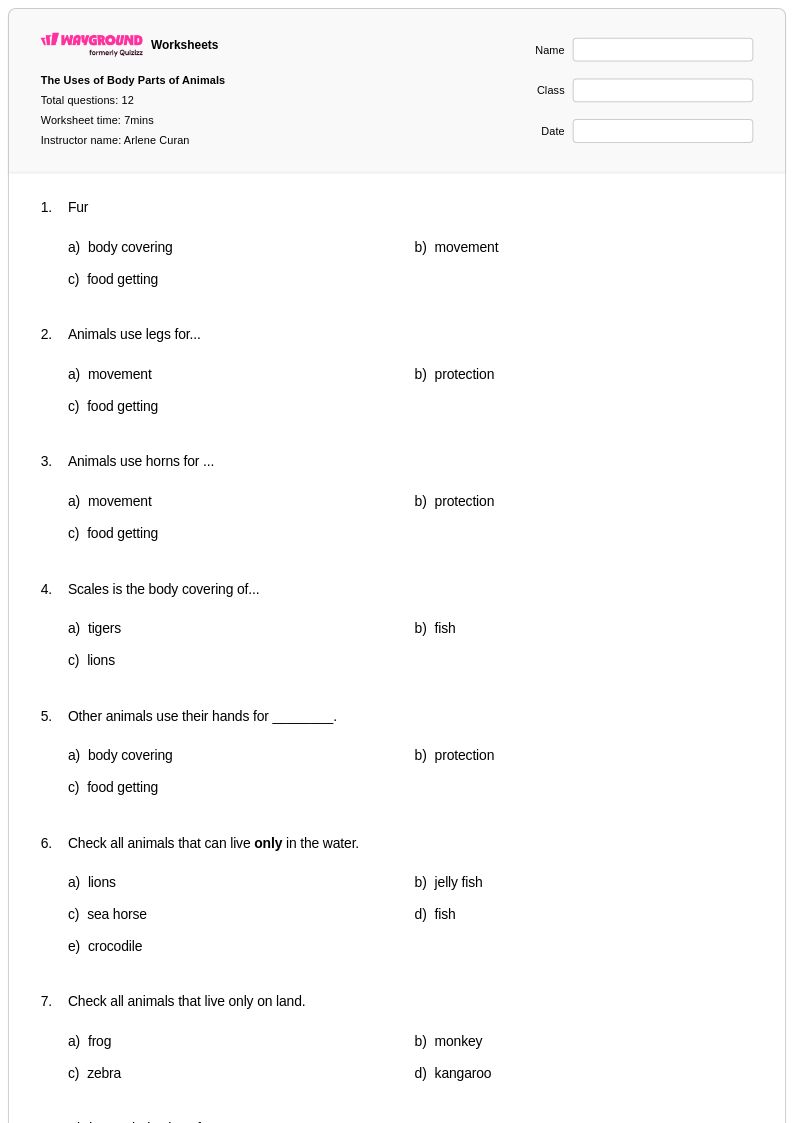
12 Q
2nd
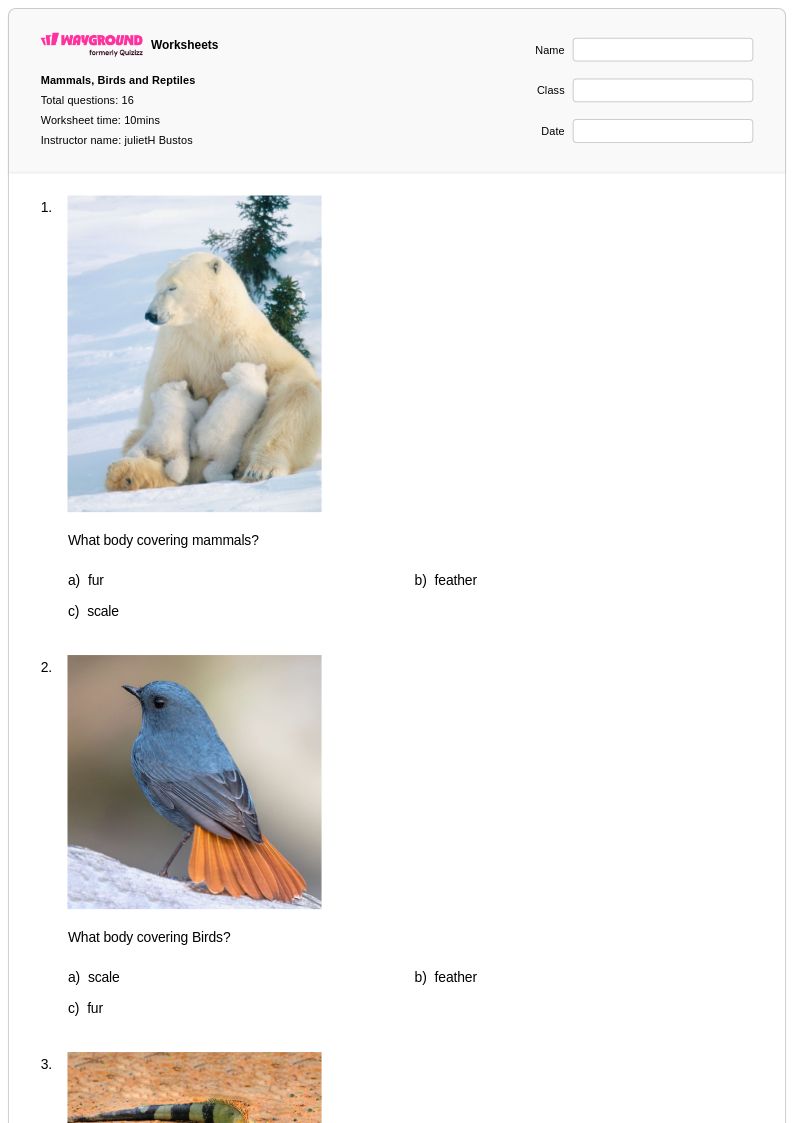
16 Q
2nd - 3rd
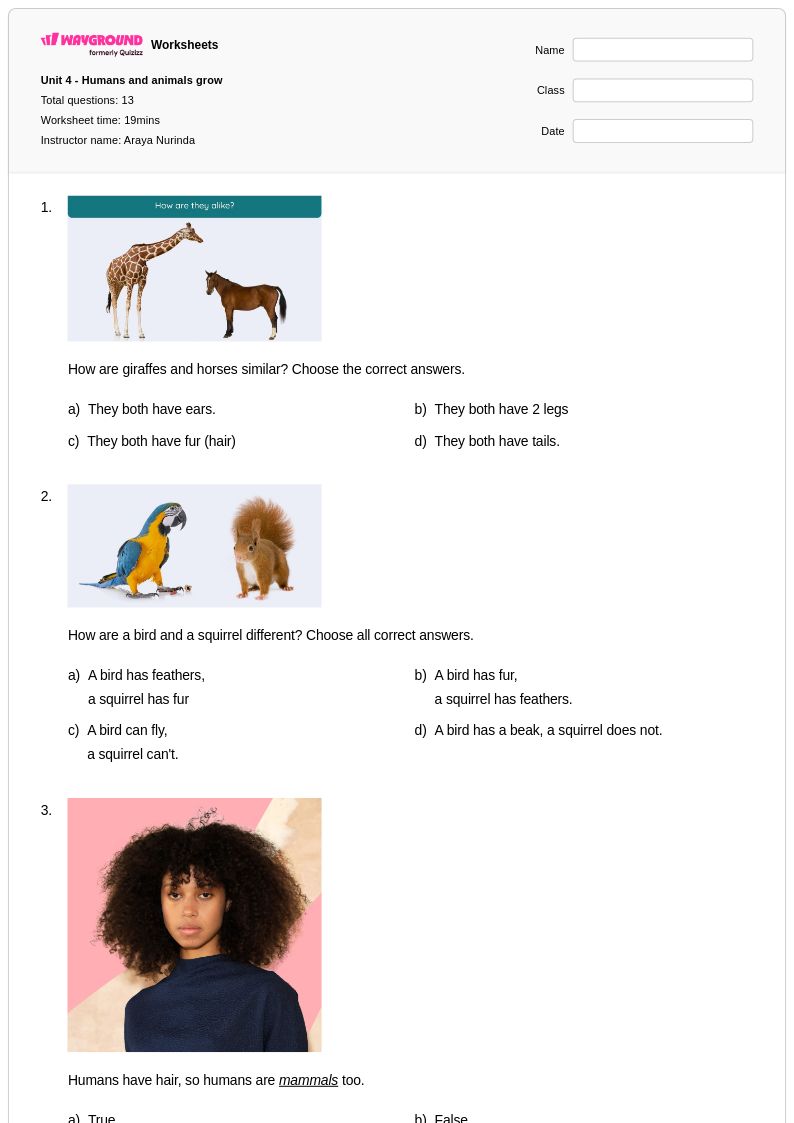
13 Q
2nd
15 Q
1st - 2nd
15 Q
1st - 2nd
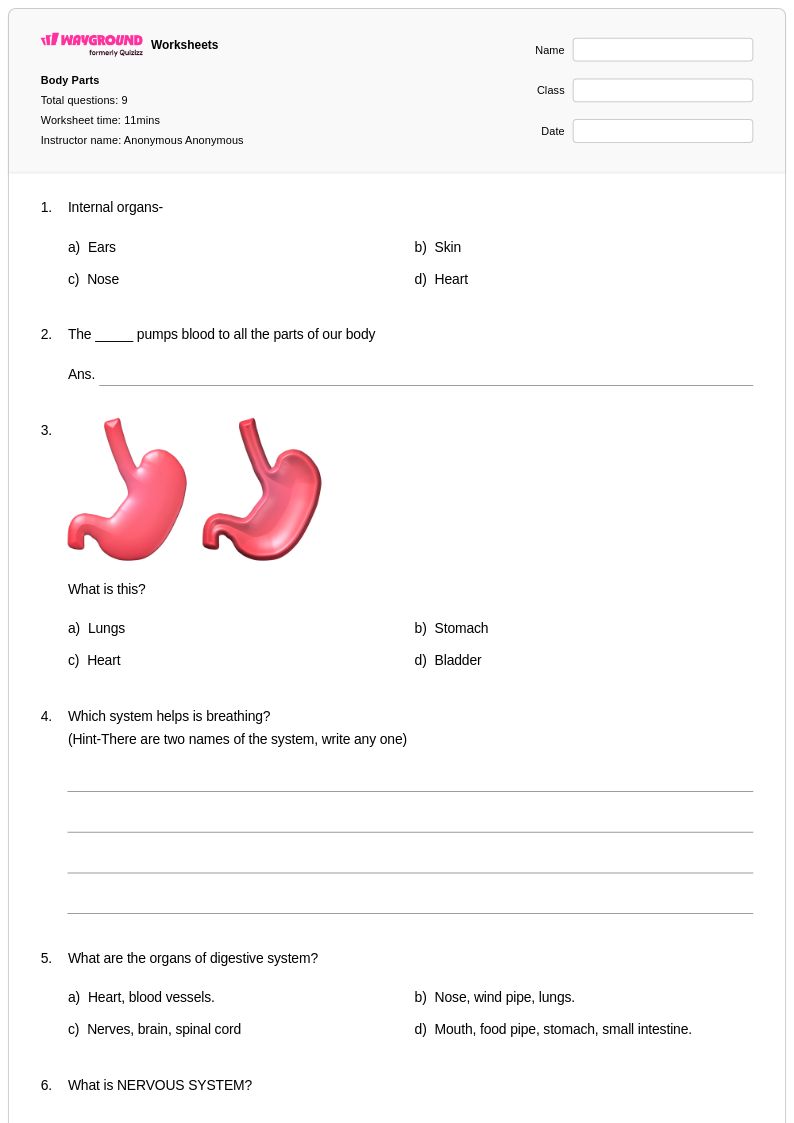
9 Q
2nd - 3rd
11 Q
2nd
21 Q
1st - 5th
17 Q
2nd - 3rd
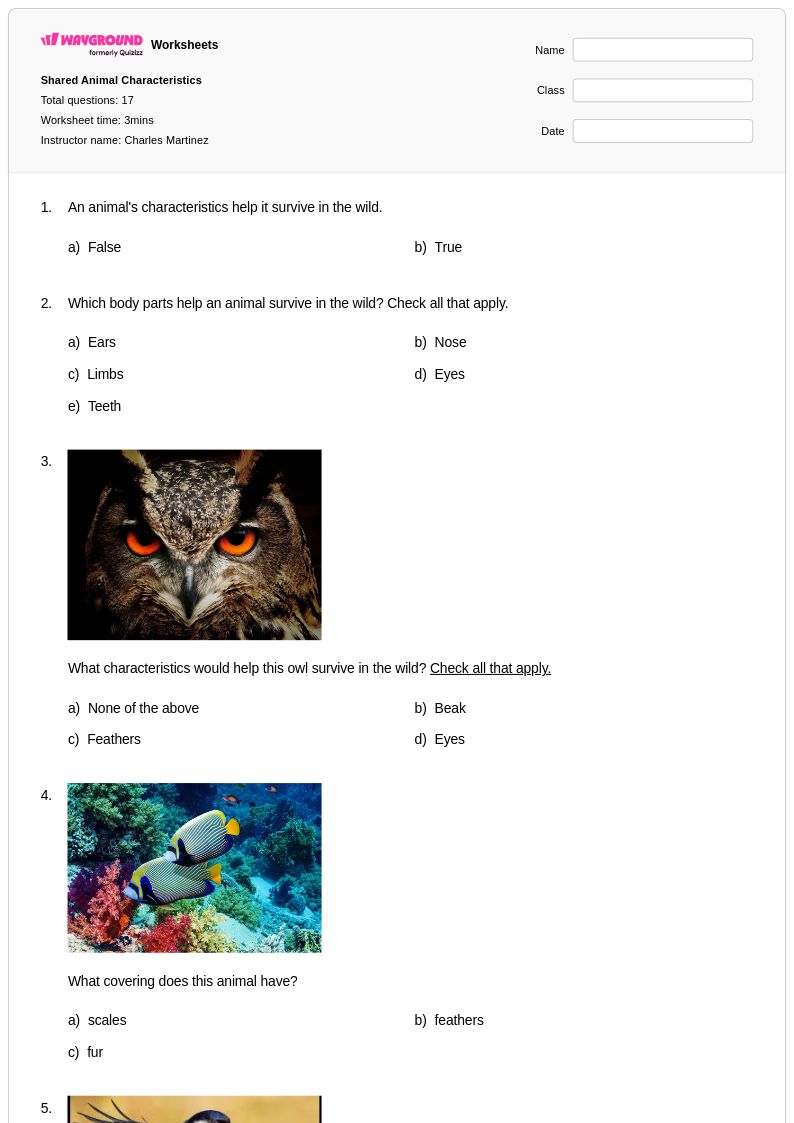
17 Q
2nd - 3rd
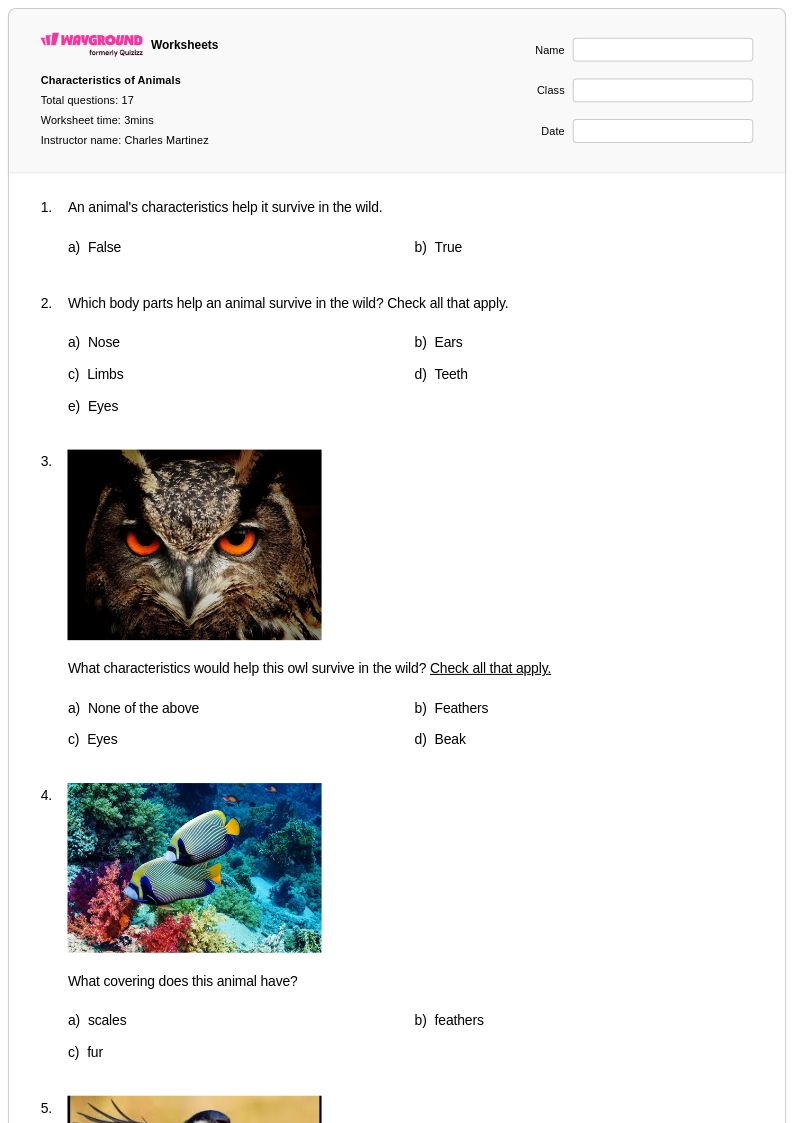
17 Q
2nd - 3rd
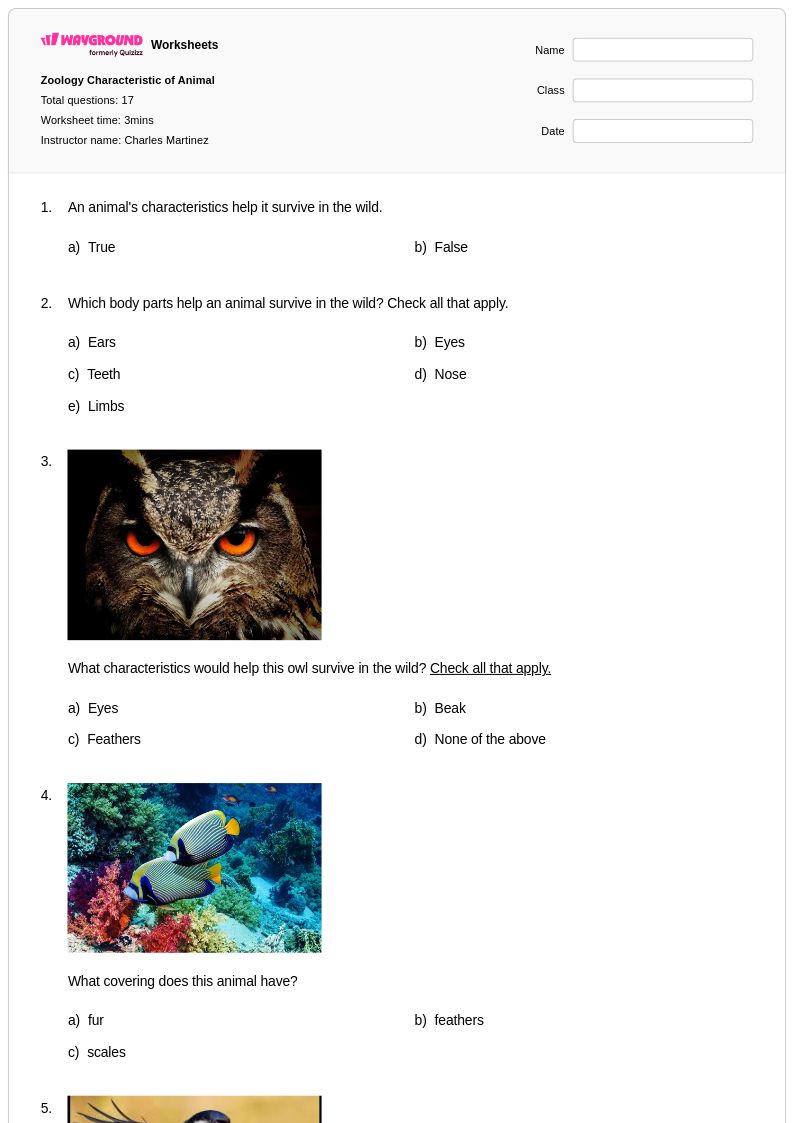
17 Q
2nd - 3rd
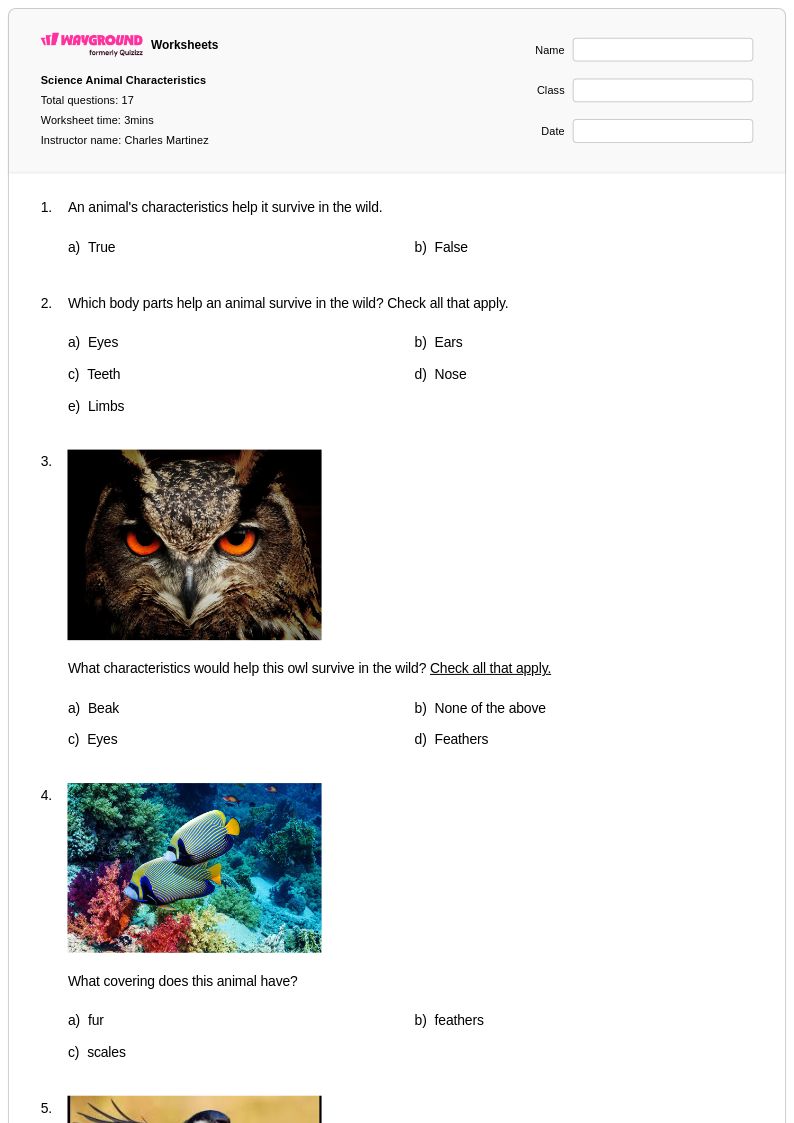
17 Q
2nd - 3rd
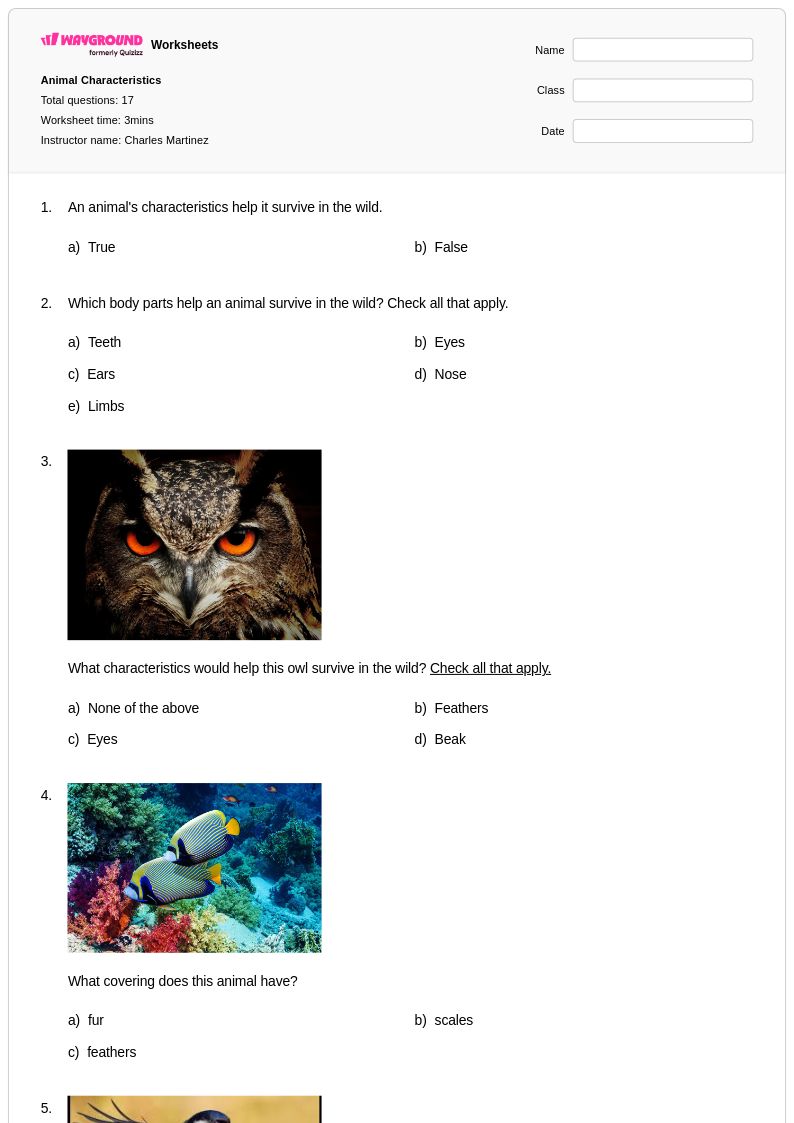
17 Q
2nd - 3rd
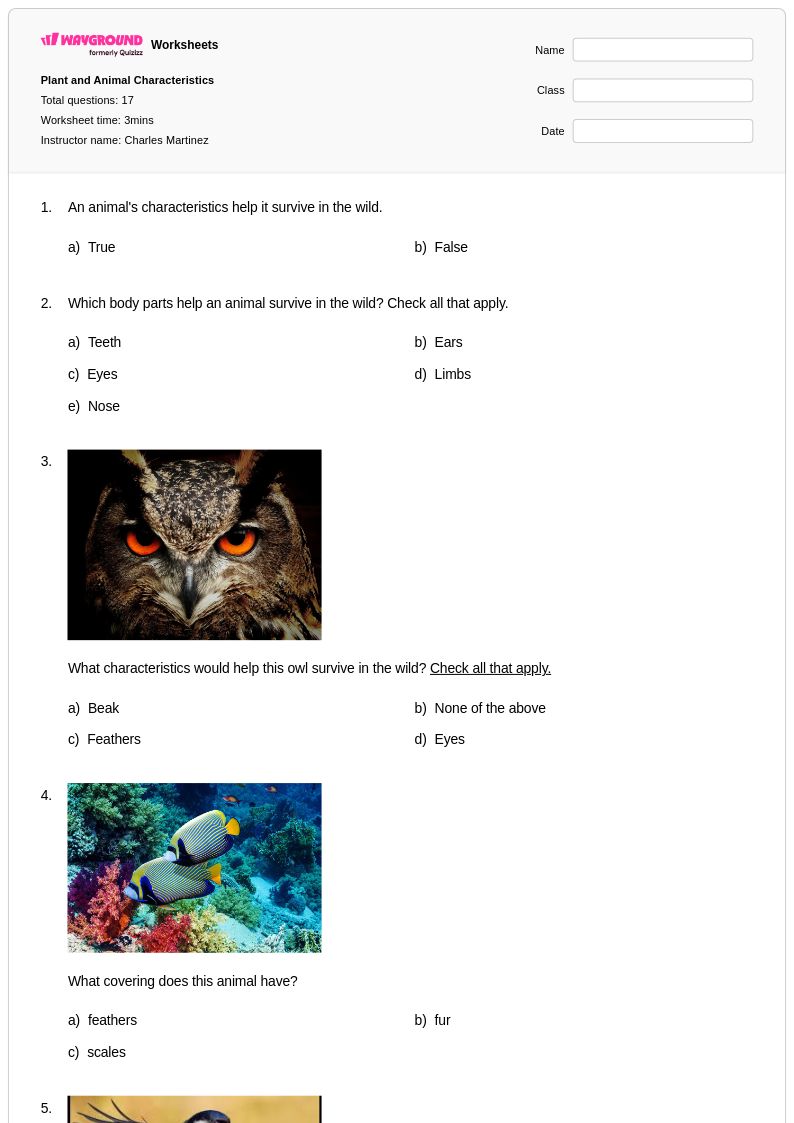
17 Q
2nd - 3rd
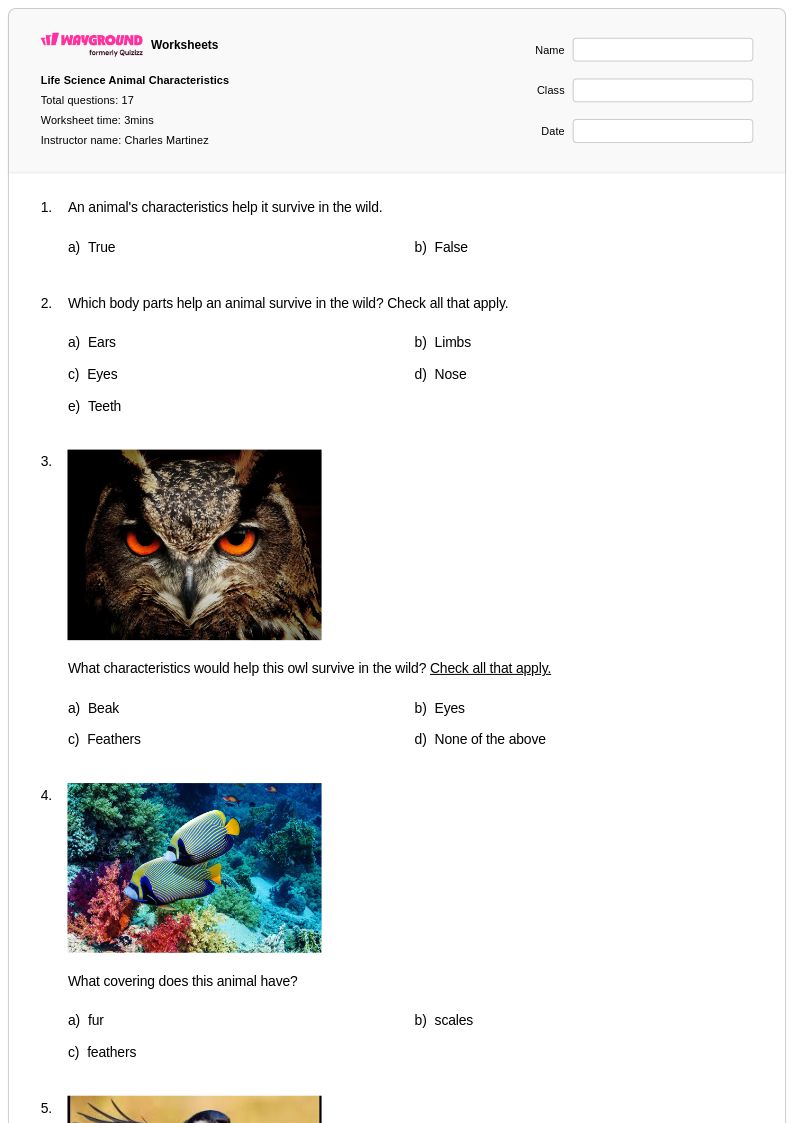
17 Q
2nd - 3rd
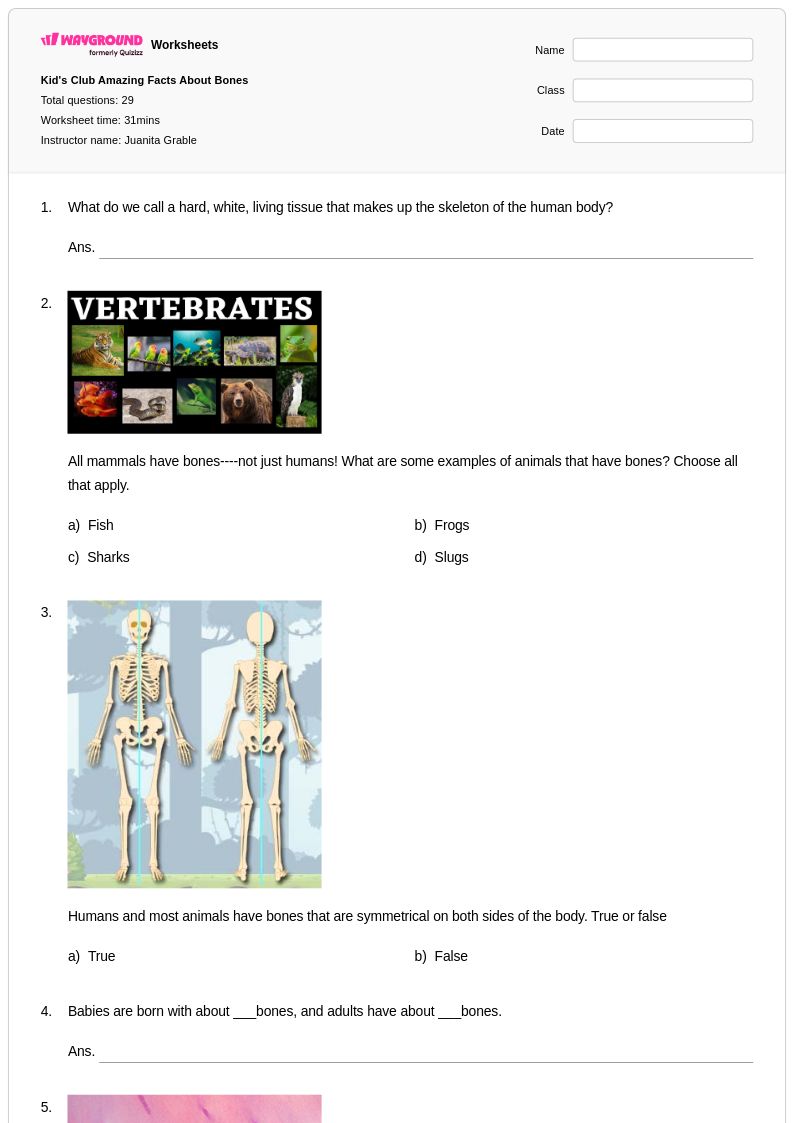
29 Q
1st - 5th
Explore Other Subject Worksheets for class 2
Explore printable Body Covering worksheets for Class 2
Body covering worksheets for Class 2 students available through Wayground (formerly Quizizz) provide young learners with engaging opportunities to explore how different animals protect themselves through various external structures. These educational resources strengthen fundamental biology concepts by helping students identify, compare, and categorize the diverse ways animals are covered, from fur and feathers to scales and shells. The practice problems guide children through scientific observation skills as they examine how body coverings serve essential functions like protection from weather, camouflage from predators, and temperature regulation. Each worksheet includes comprehensive answer keys to support accurate assessment, and the free printable format ensures accessibility for all classroom and home learning environments, allowing students to develop critical thinking skills about animal adaptations through hands-on activities.
Wayground (formerly Quizizz) empowers teachers with an extensive collection of millions of teacher-created resources specifically designed for Class 2 body covering instruction, featuring robust search and filtering capabilities that align with educational standards for early elementary science learning. The platform's differentiation tools enable educators to customize worksheets based on individual student needs, providing both remediation support for struggling learners and enrichment opportunities for advanced students ready to explore more complex animal adaptation concepts. Teachers can access these resources in flexible formats, including printable PDFs for traditional classroom use and digital versions for interactive learning experiences, making lesson planning more efficient while ensuring comprehensive skill practice. This versatility supports educators in creating targeted instruction that addresses diverse learning styles and academic requirements, from foundational concept introduction to advanced application of scientific observation and classification skills.