Free Printable Living and Non Living Things Worksheets for Class 2
Explore Wayground's free Class 2 living and non-living things worksheets with printable PDFs, practice problems, and answer keys to help young students identify and classify objects in their world.
Explore printable Living and Non Living Things worksheets for Class 2
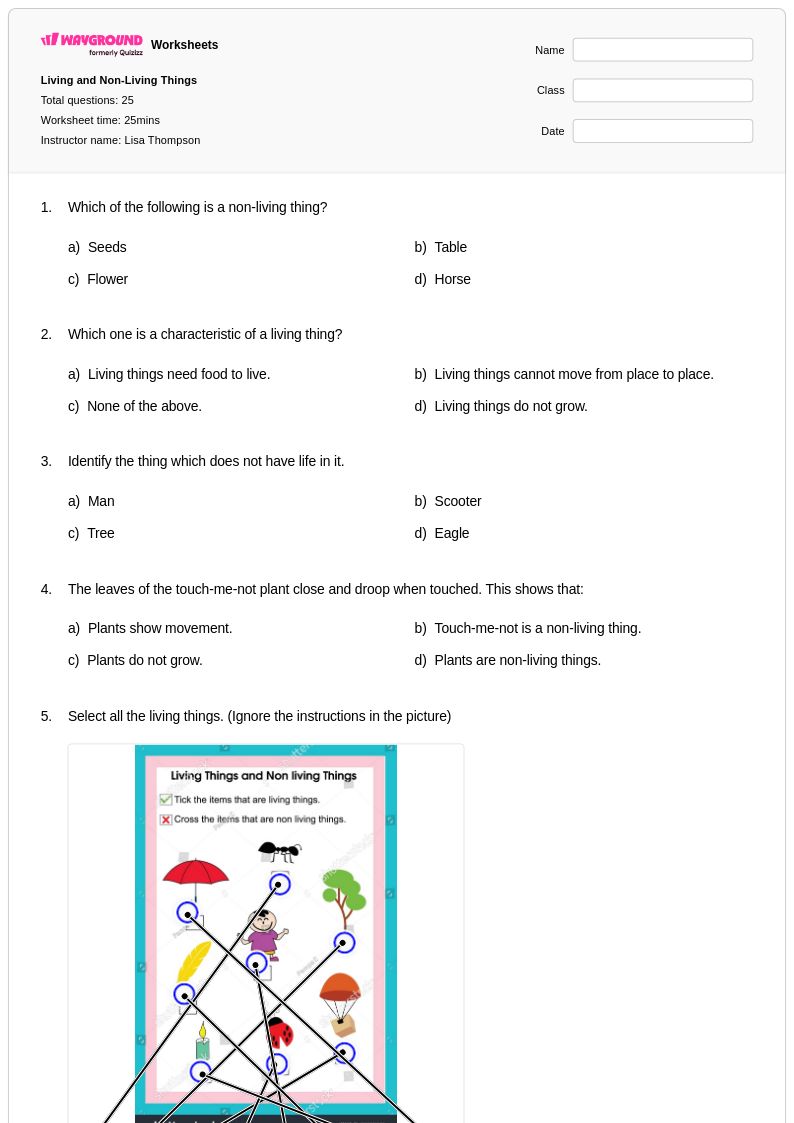
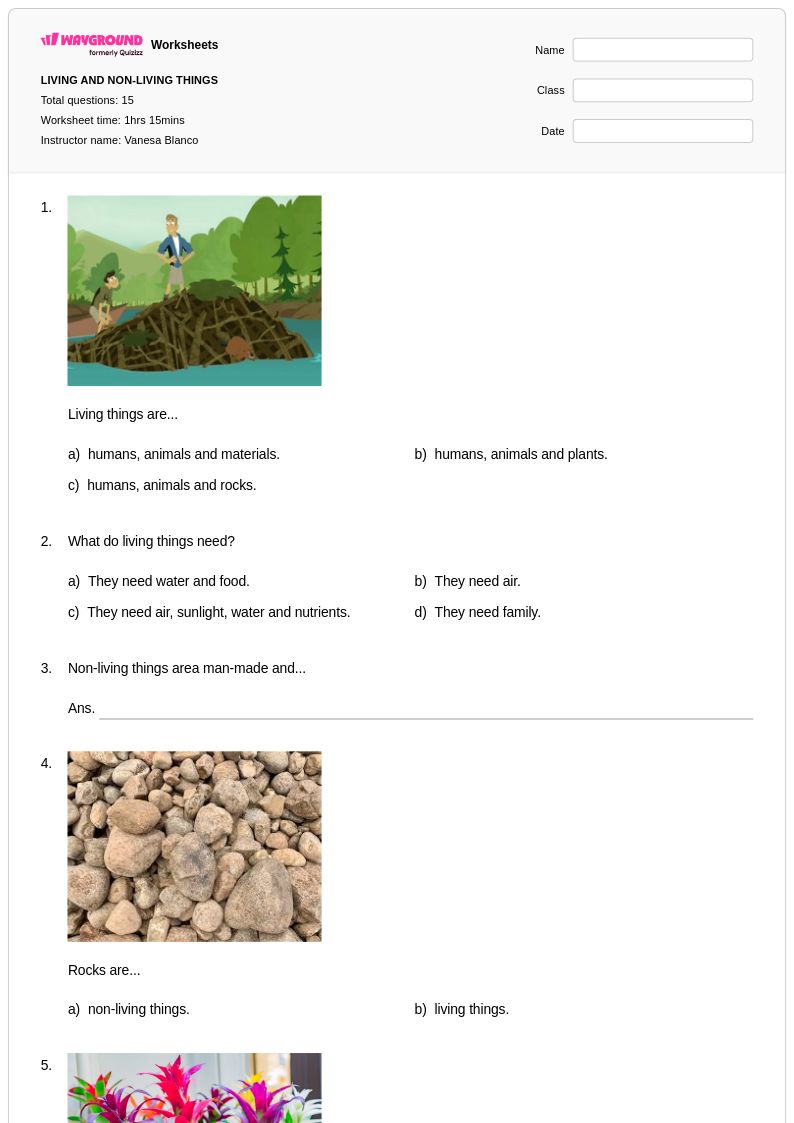
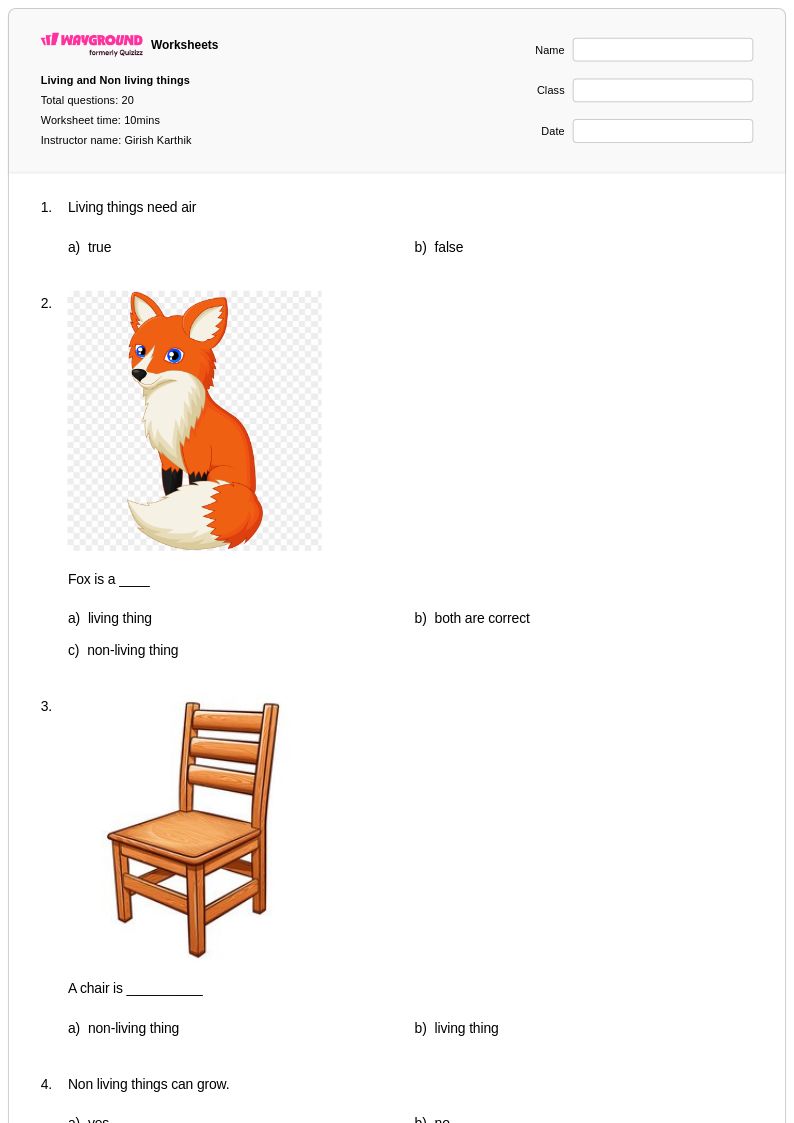
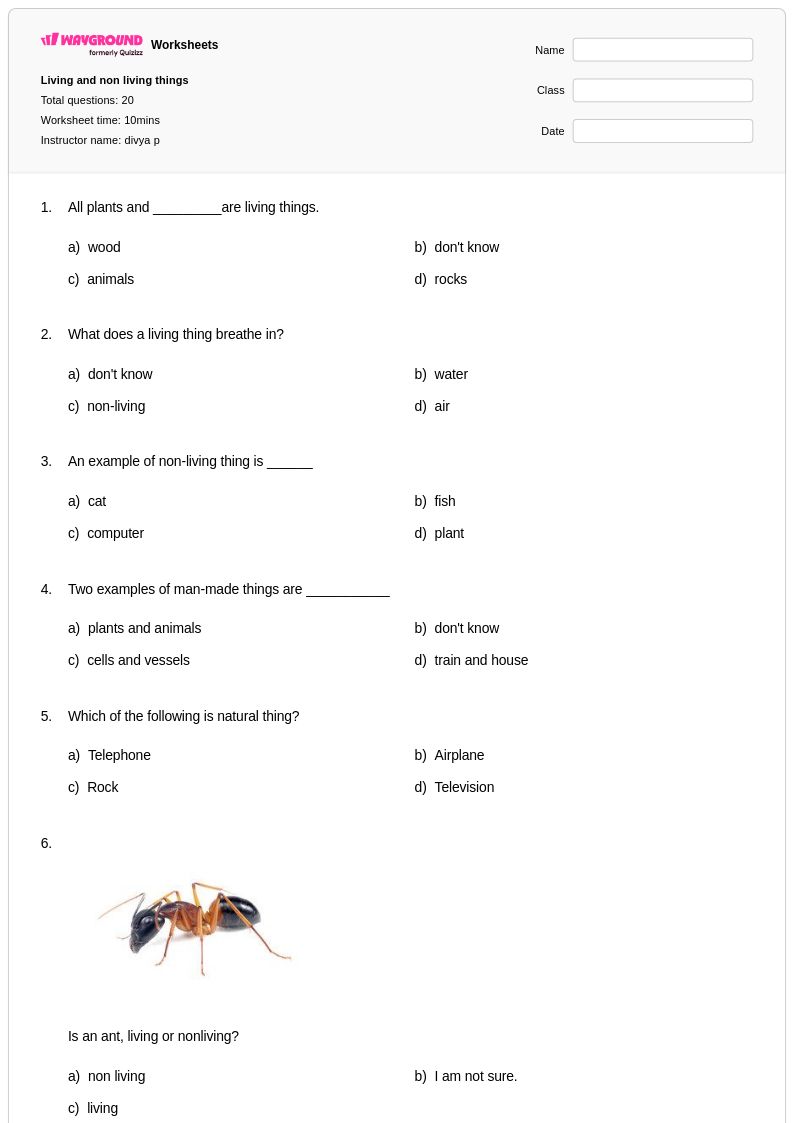
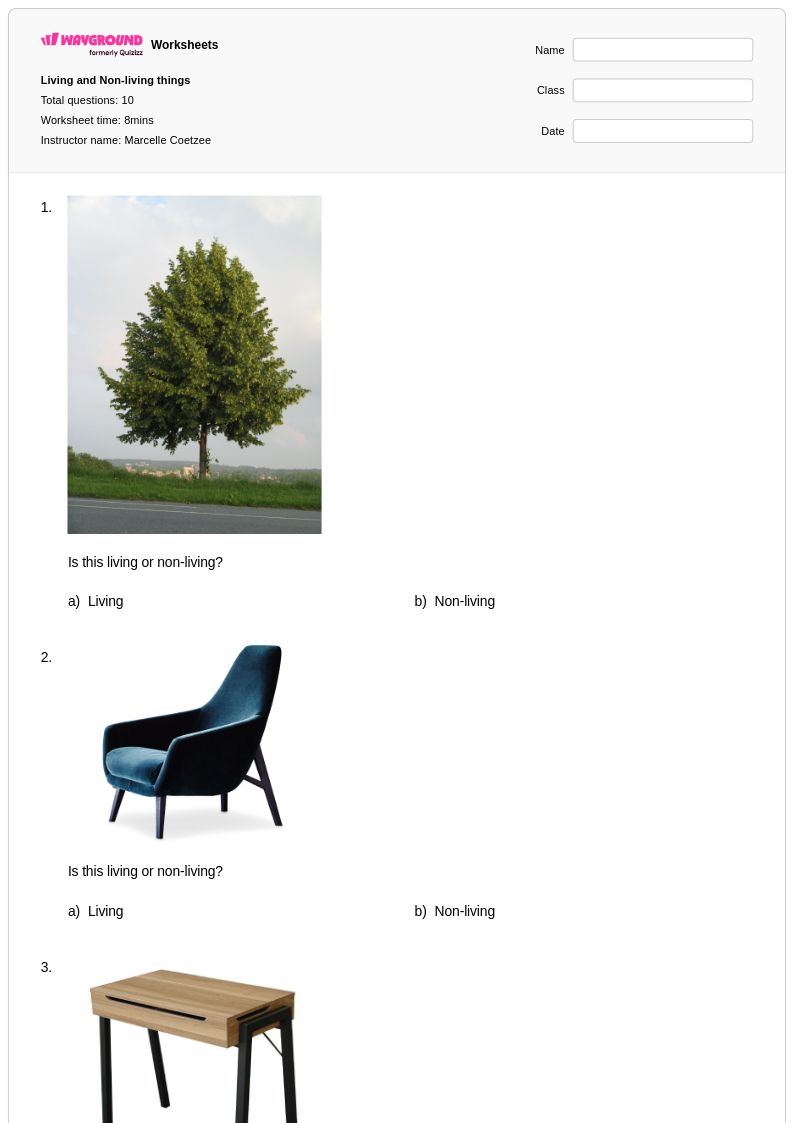
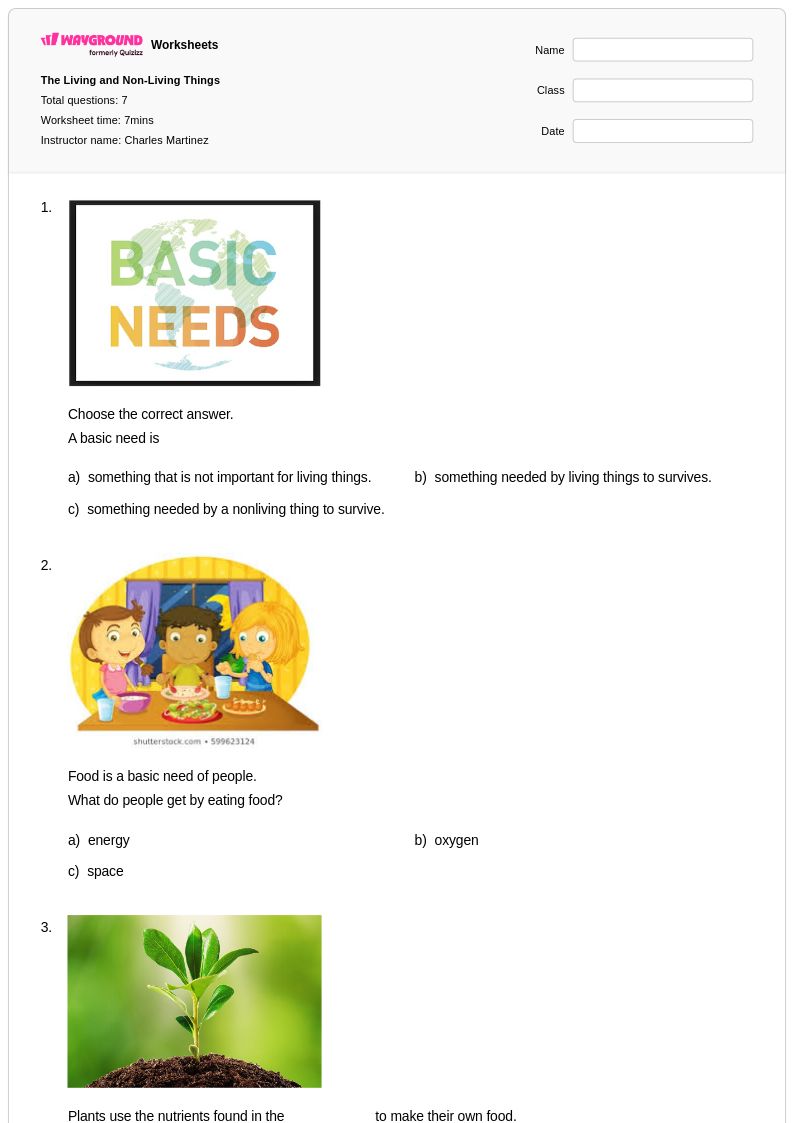
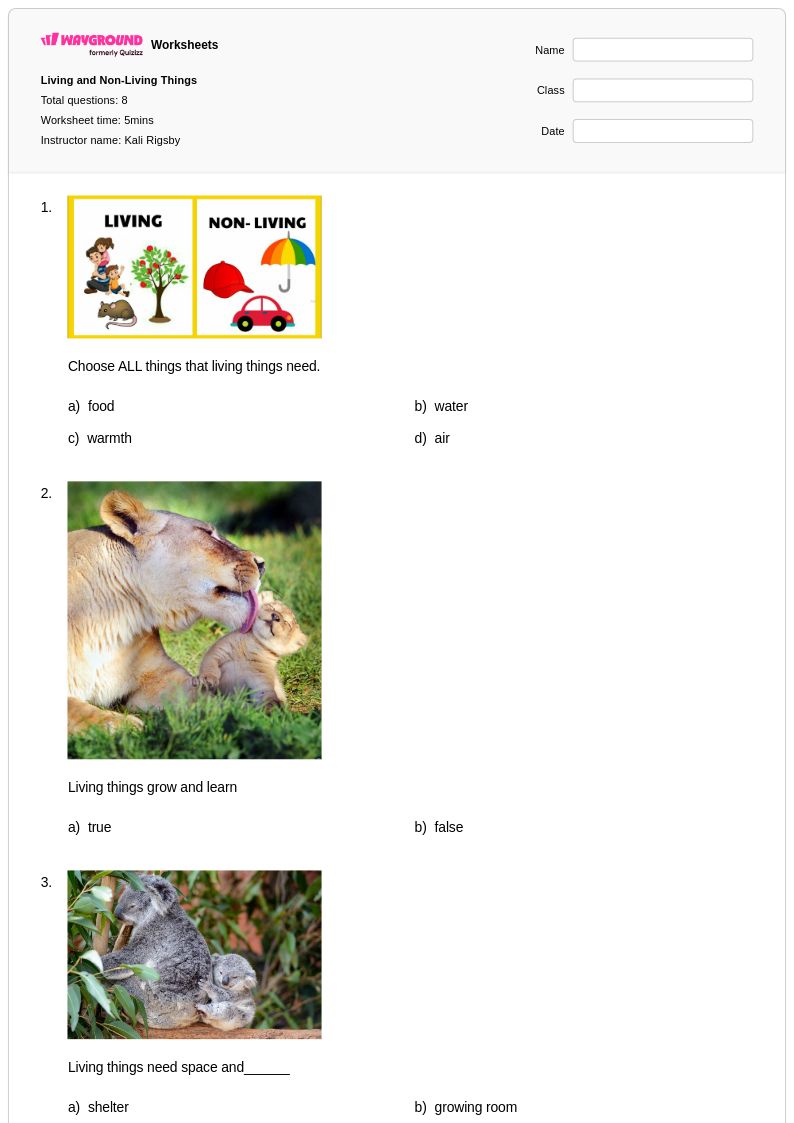
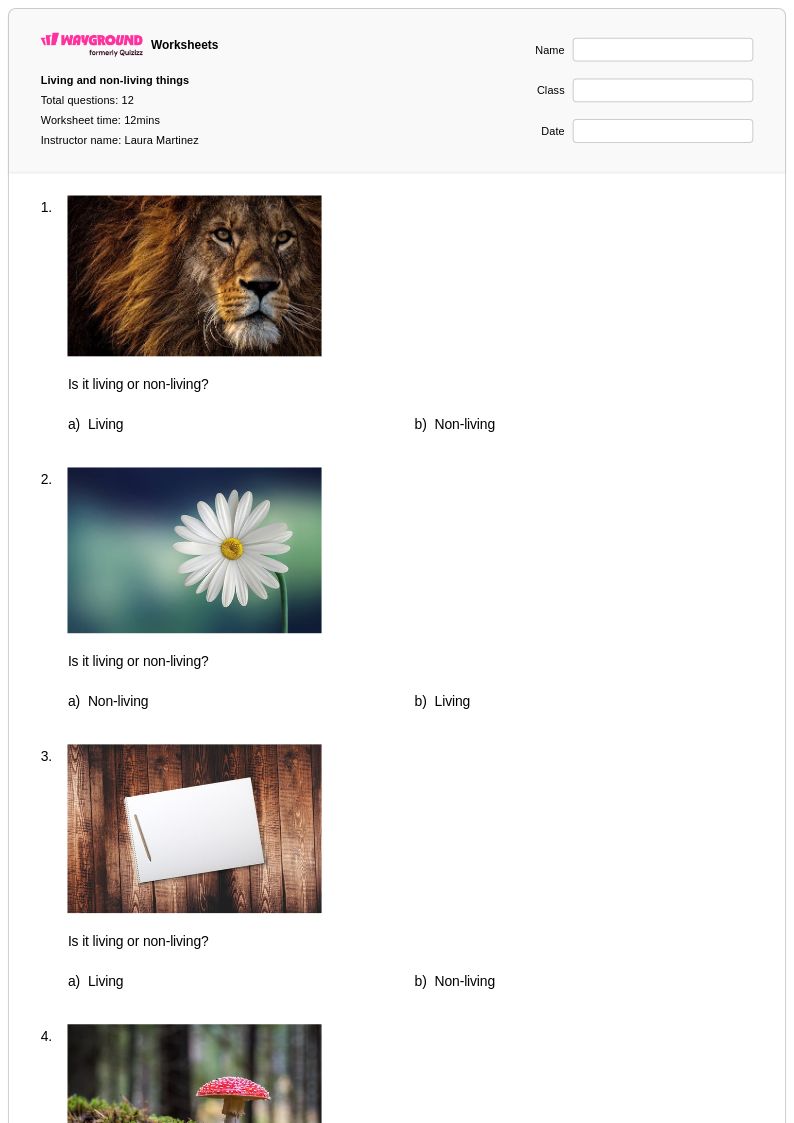
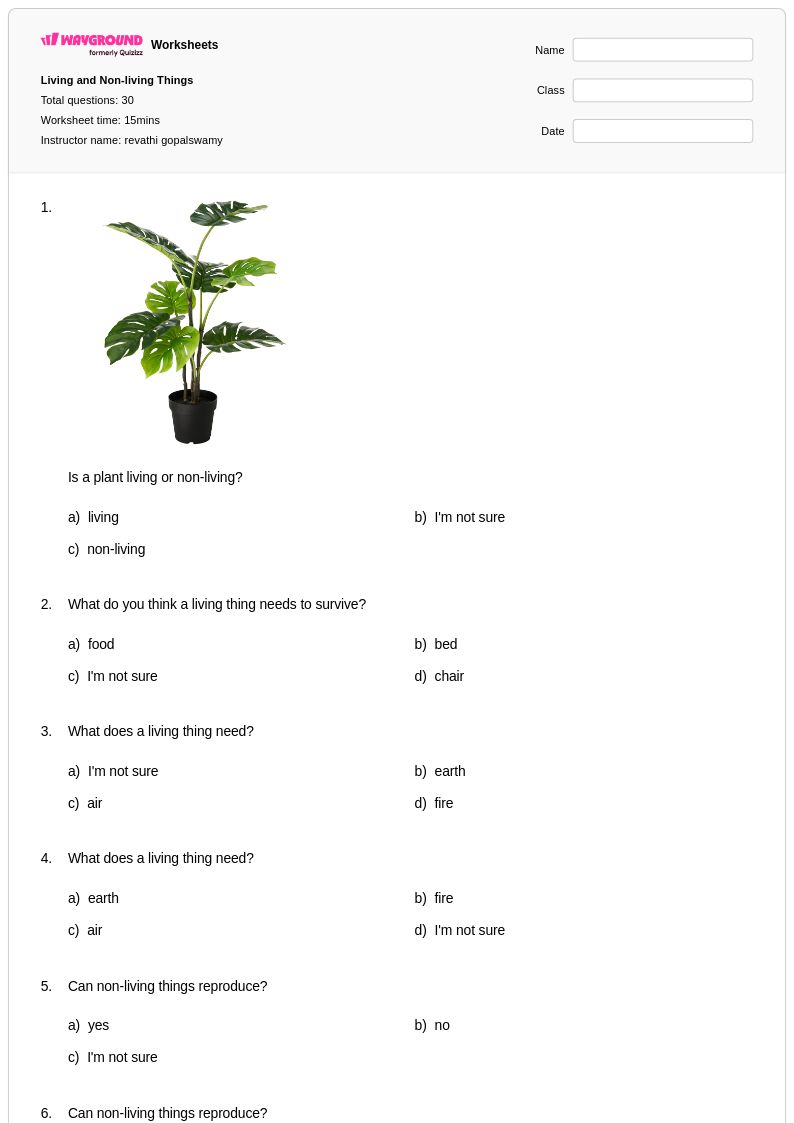
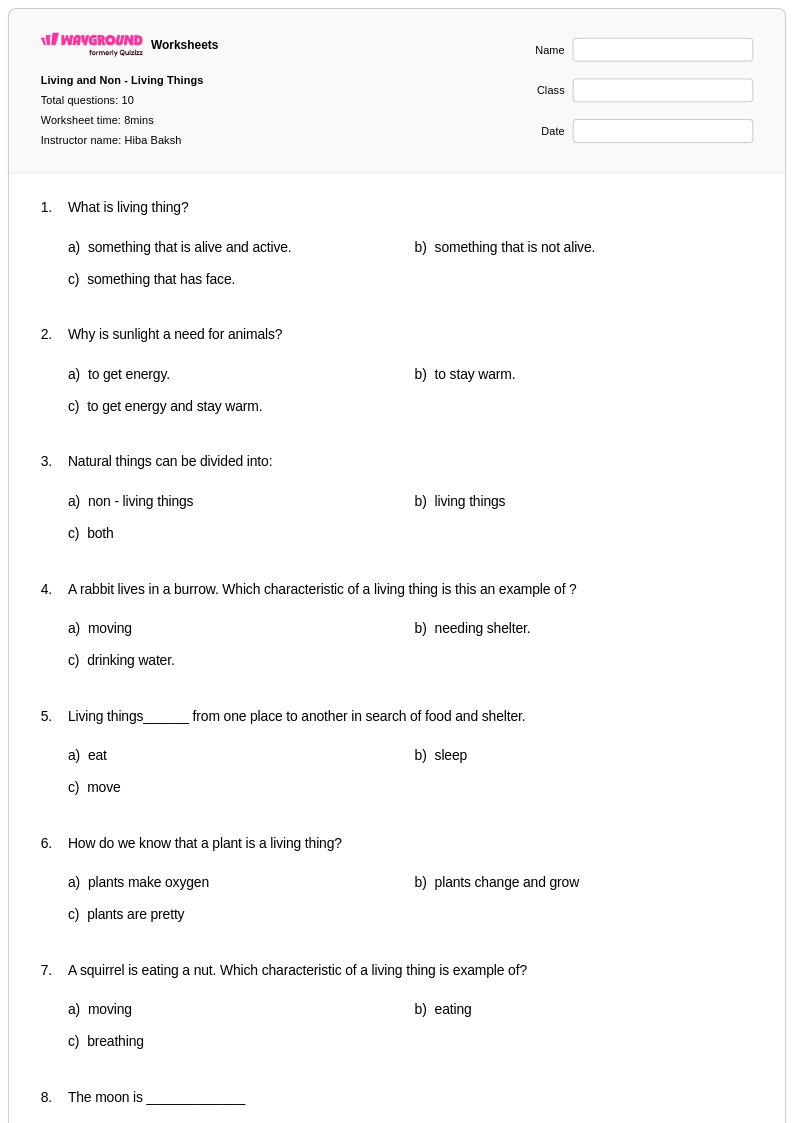
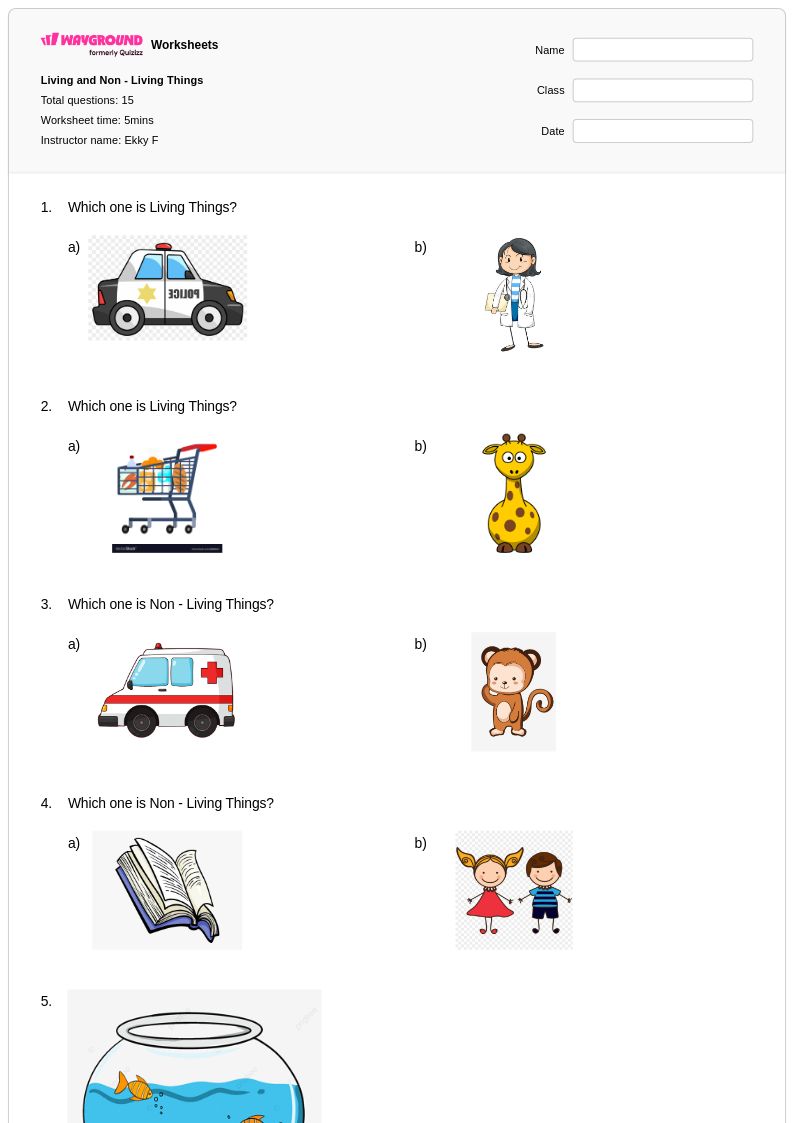
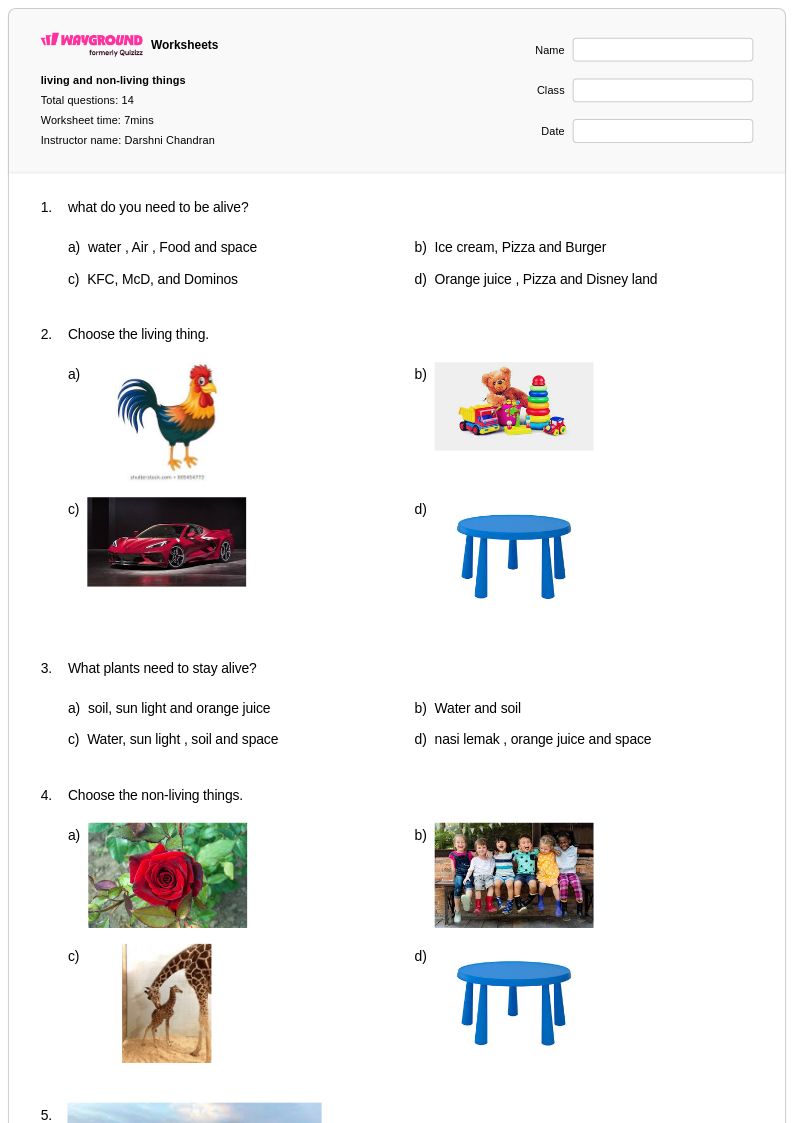
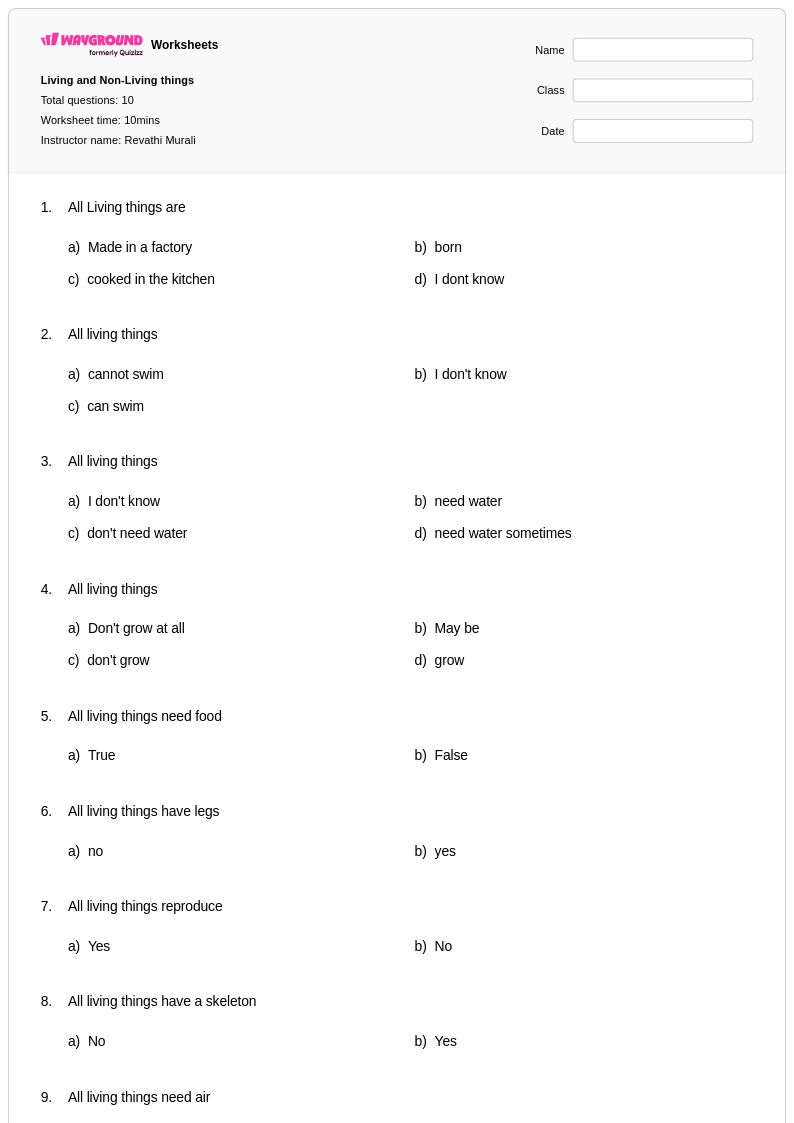
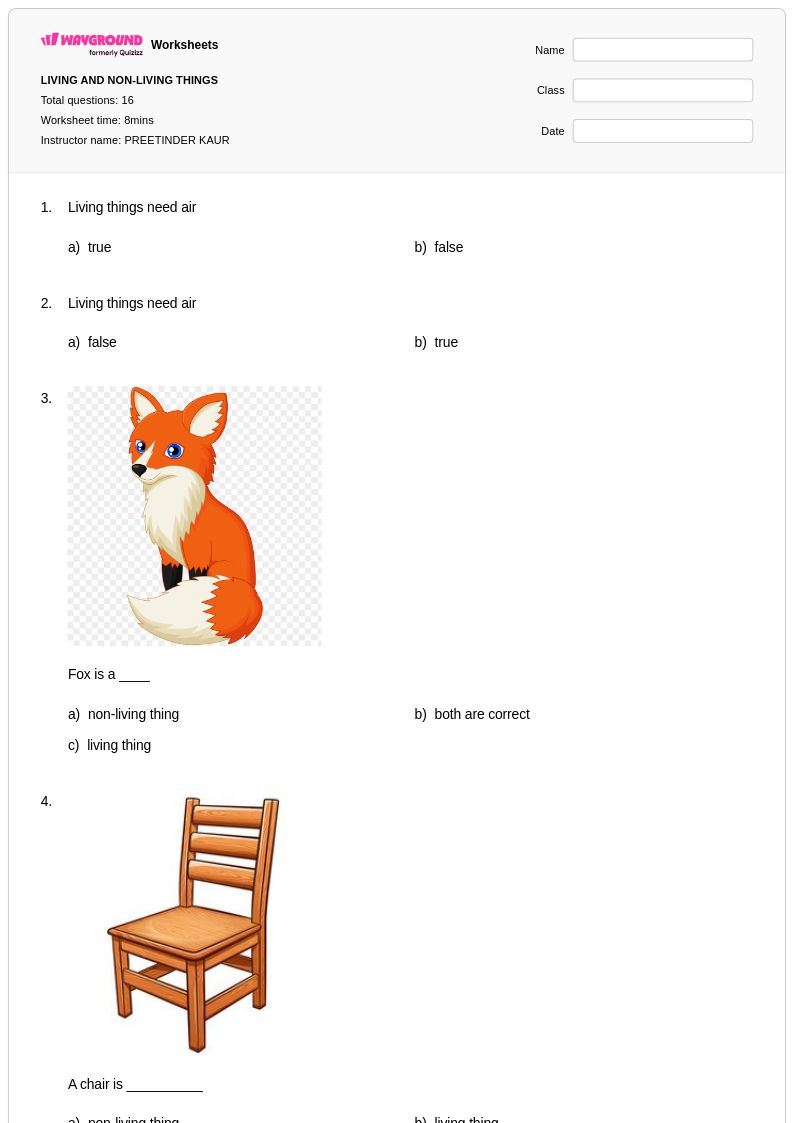
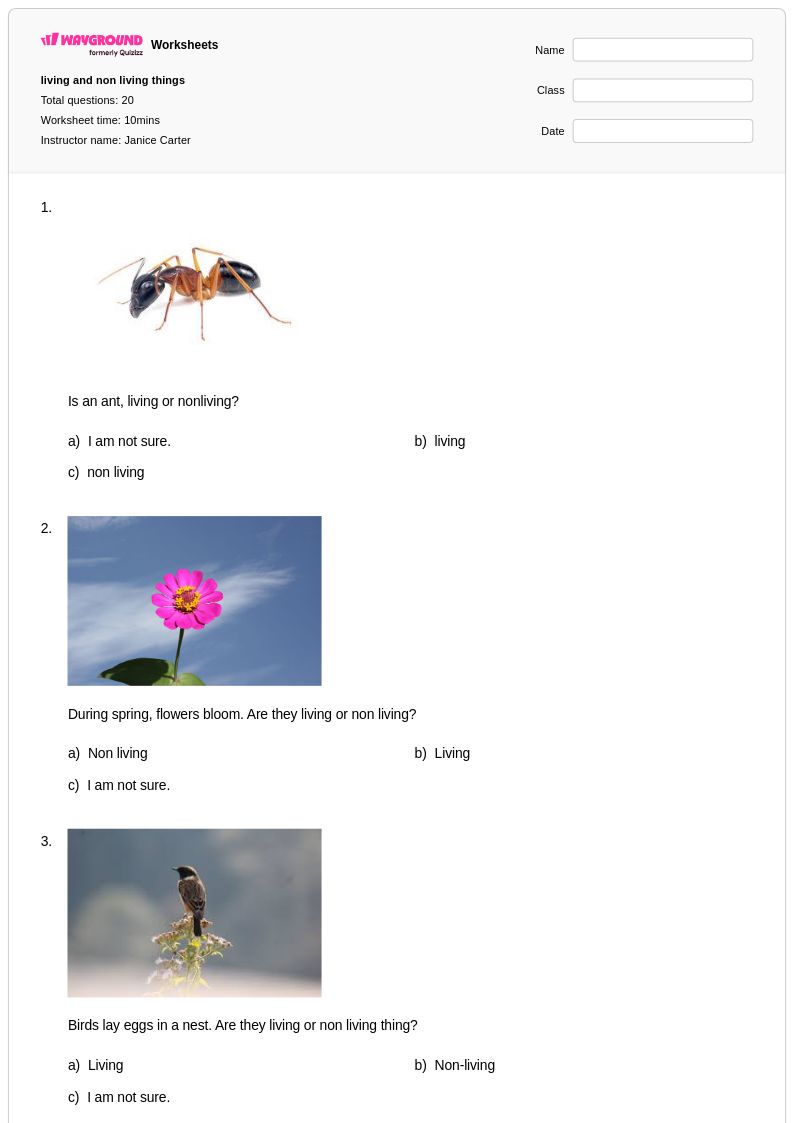
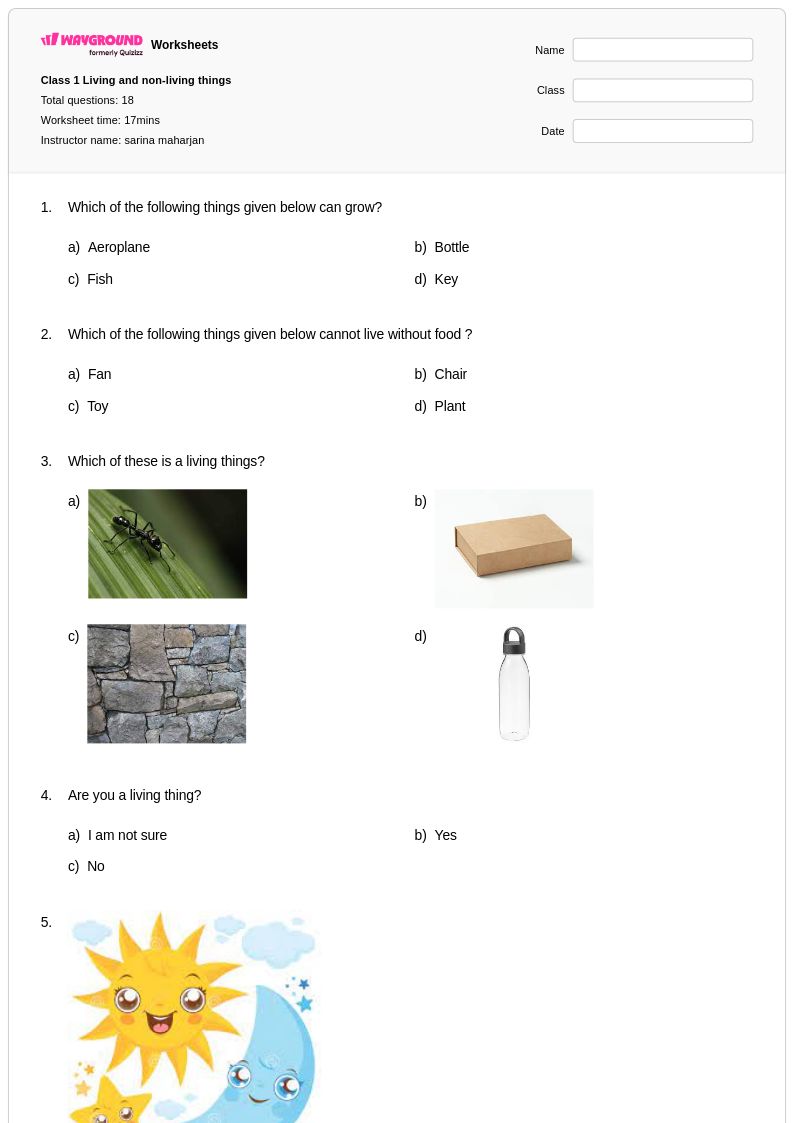
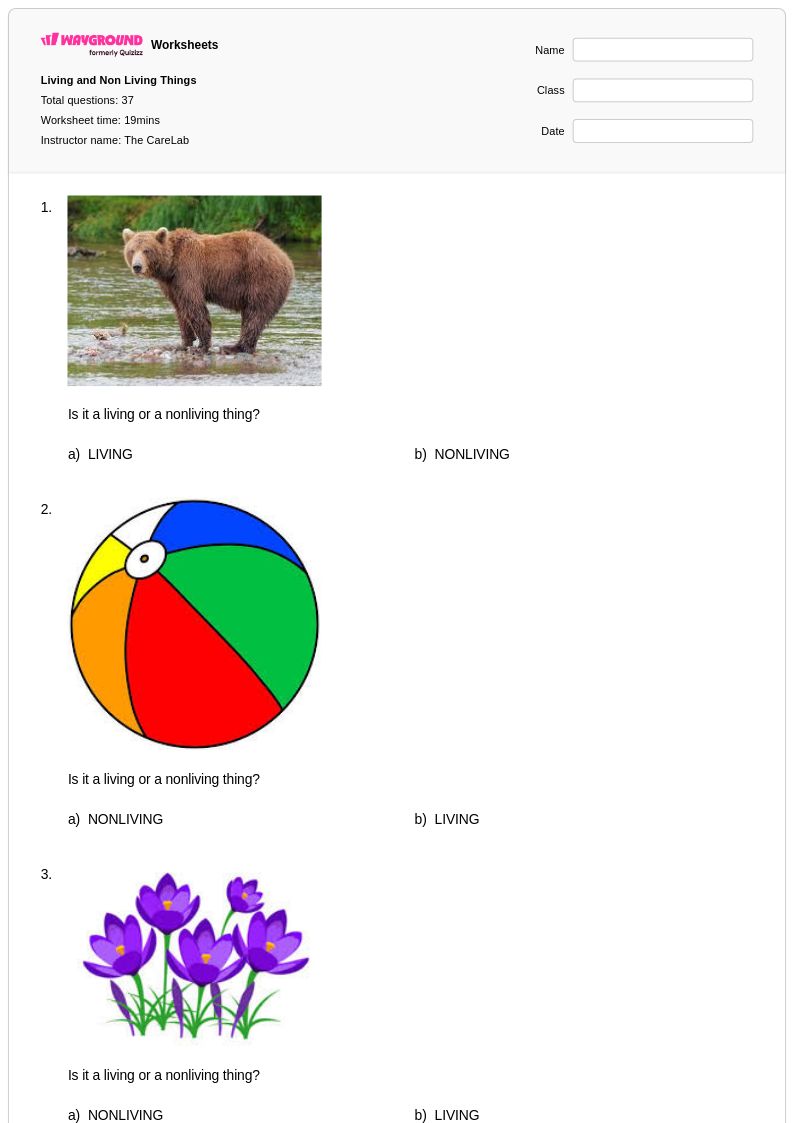
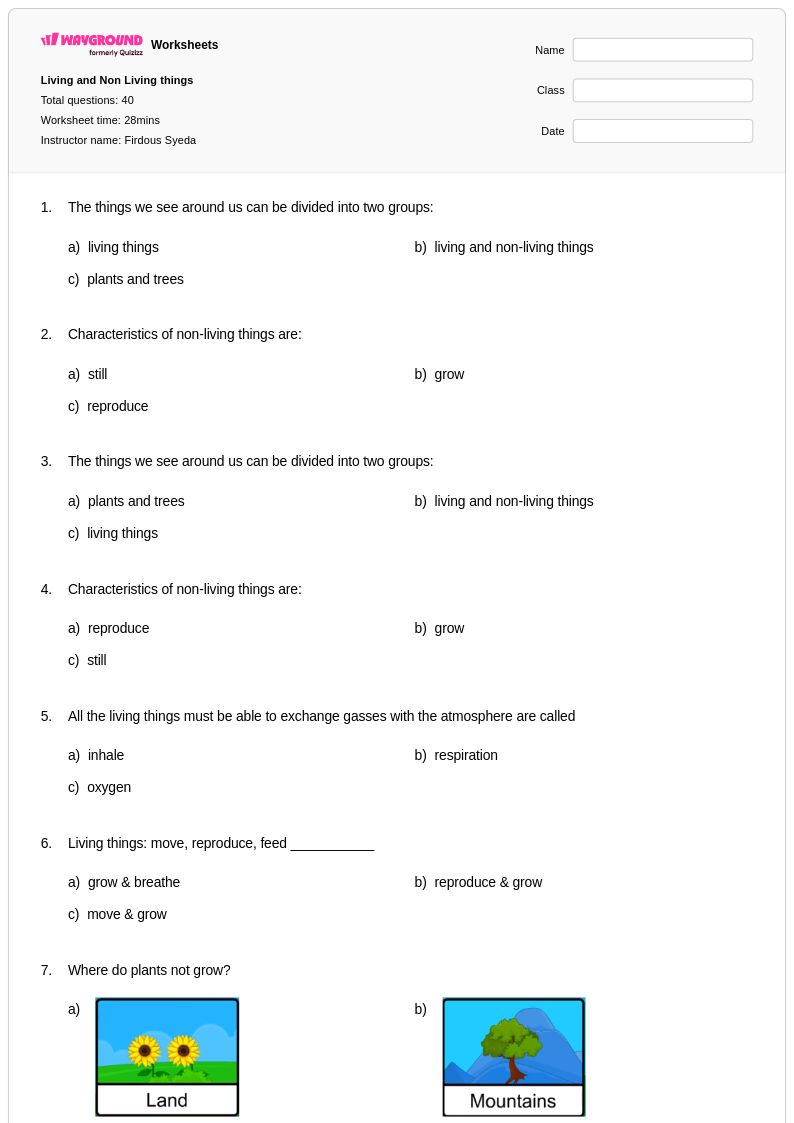
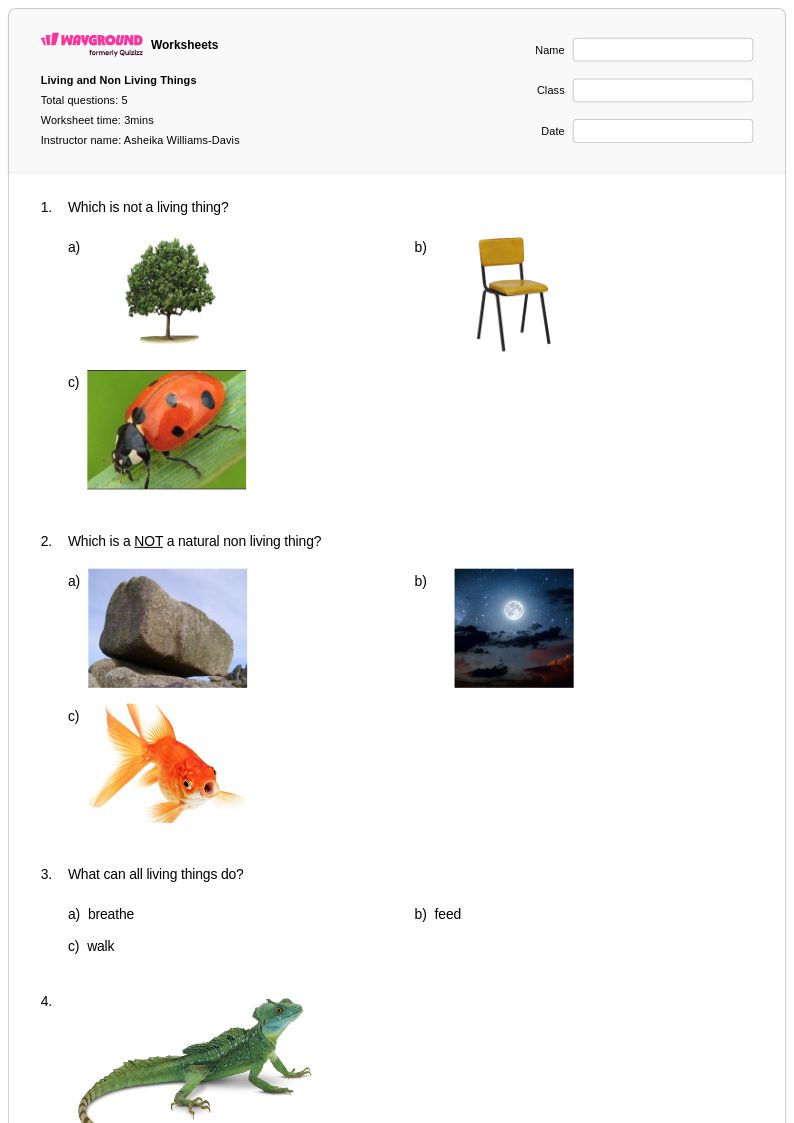
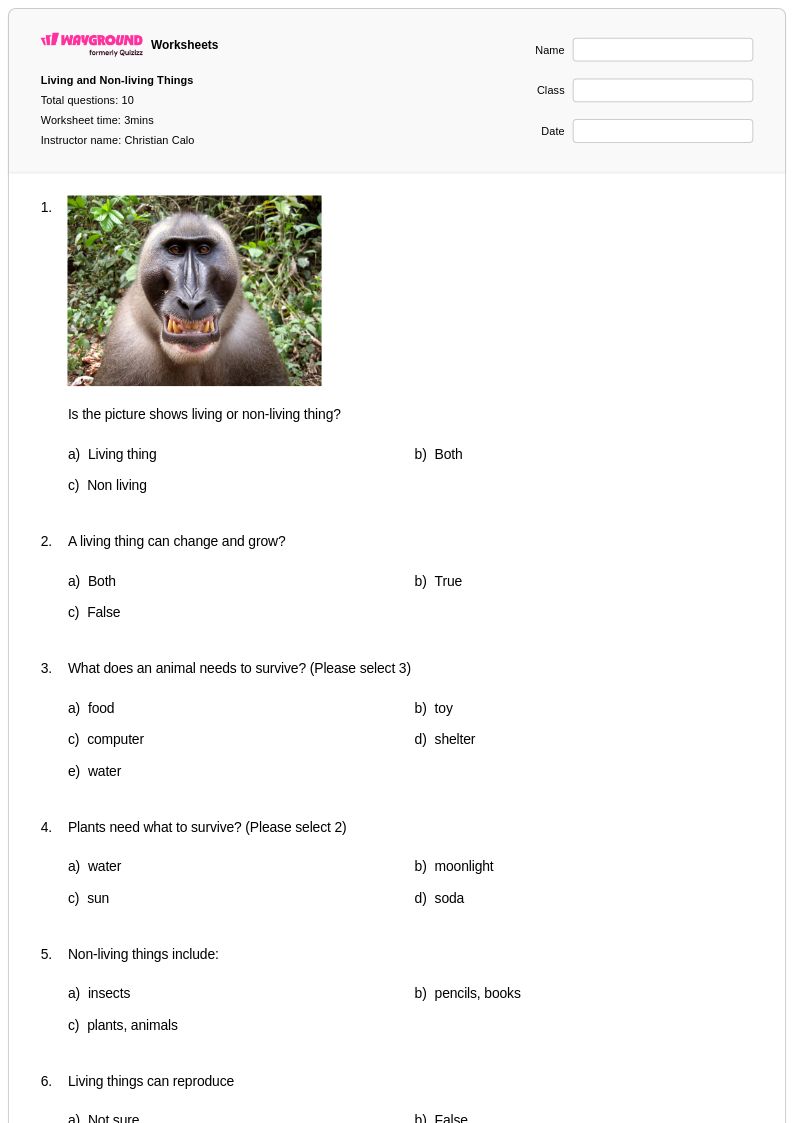
Living and non-living things worksheets for Class 2 available through Wayground (formerly Quizizz) provide young learners with essential foundational activities to distinguish between objects that are alive and those that are not. These carefully designed printables strengthen critical observation and classification skills as students explore the fundamental characteristics that define living organisms, including growth, reproduction, response to stimuli, and basic life processes. Each worksheet collection includes comprehensive practice problems that guide second-grade students through identifying animals, plants, and non-living objects while building their scientific vocabulary and reasoning abilities. Teachers can access complete answer keys and free pdf downloads that support both independent student work and guided instruction, ensuring students develop a solid understanding of this core biological concept through engaging, age-appropriate activities.
Wayground (formerly Quizizz) empowers educators with millions of teacher-created resources specifically focused on living and non-living things concepts, featuring robust search and filtering capabilities that allow instructors to quickly locate materials aligned with Class 2 science standards and learning objectives. The platform's differentiation tools enable teachers to customize worksheets for diverse learning needs, offering both remediation support for struggling students and enrichment opportunities for advanced learners exploring more complex biological classifications. Available in both printable and digital formats including downloadable pdf versions, these comprehensive worksheet collections streamline lesson planning while providing flexible options for classroom instruction, homework assignments, and skill practice sessions. The extensive library supports effective teaching strategies by offering varied question types, visual aids, and scaffolded activities that help second-grade students master the fundamental distinction between living and non-living things through systematic, standards-based practice.
FAQs
How do I teach students to distinguish living from non-living things?
Start by establishing a clear set of life characteristics — growth, reproduction, response to stimuli, metabolism, and cellular organization — and use these as a classification checklist. Hands-on sorting activities work well: give students a mix of objects or picture cards and ask them to justify each classification using the checklist rather than guessing. Grounding the lesson in familiar, real-world examples from students' own environments builds conceptual understanding before moving to more complex biological contexts.
What exercises help students practice classifying living and non-living things?
Effective practice includes identification tasks where students categorize objects as living or non-living and explain their reasoning, as well as analysis exercises that present edge cases like fire, crystals, or viruses to prompt deeper thinking. Worksheets that require students to match objects to specific life characteristics — rather than simply sorting them — build more durable understanding. Repeated exposure to diverse examples from different environments strengthens classification skills and scientific vocabulary simultaneously.
What mistakes do students commonly make when classifying living and non-living things?
The most frequent misconception is that movement equals life — students often classify fire, clouds, or rivers as living because they move or change. Another common error is assuming that dead organisms, like a fallen tree or dried seed, are non-living, when biologically they were once living and may still carry out some functions. Addressing these edge cases explicitly during instruction prevents the misconceptions from becoming entrenched.
How can I use living and non-living things worksheets to support students at different skill levels?
For foundational learners, start with simple picture-based sorting tasks that use familiar objects and basic vocabulary. More advanced students benefit from exercises requiring written justifications tied to specific life characteristics, or from analyzing ambiguous cases like viruses or seeds. On Wayground, teachers can apply accommodations such as read-aloud support for early readers, reduced answer choices to lower cognitive load for struggling learners, and extended time settings — all configurable per individual student without disrupting the rest of the class.
How do I use living and non-living things worksheets in my classroom?
Wayground's living and non-living things worksheets are available as printable PDFs for traditional classroom use and in digital formats for technology-integrated settings, making them flexible enough for in-person, hybrid, or remote instruction. Teachers can also host worksheets as an interactive quiz directly on Wayground, enabling real-time student responses and instant feedback. Each worksheet includes a complete answer key, supporting both teacher-led correction and independent student self-assessment.
How does understanding living and non-living things prepare students for more advanced biology?
Classification of living and non-living things is the entry point for nearly every subsequent biology concept — cell theory, ecology, taxonomy, and genetics all depend on students having a precise understanding of what constitutes life. Students who can articulate the defining characteristics of living organisms are better equipped to engage with concepts like ecosystems, food webs, and organism function later in their science education. Building this foundation early prevents conceptual gaps that often surface in middle and high school biology.