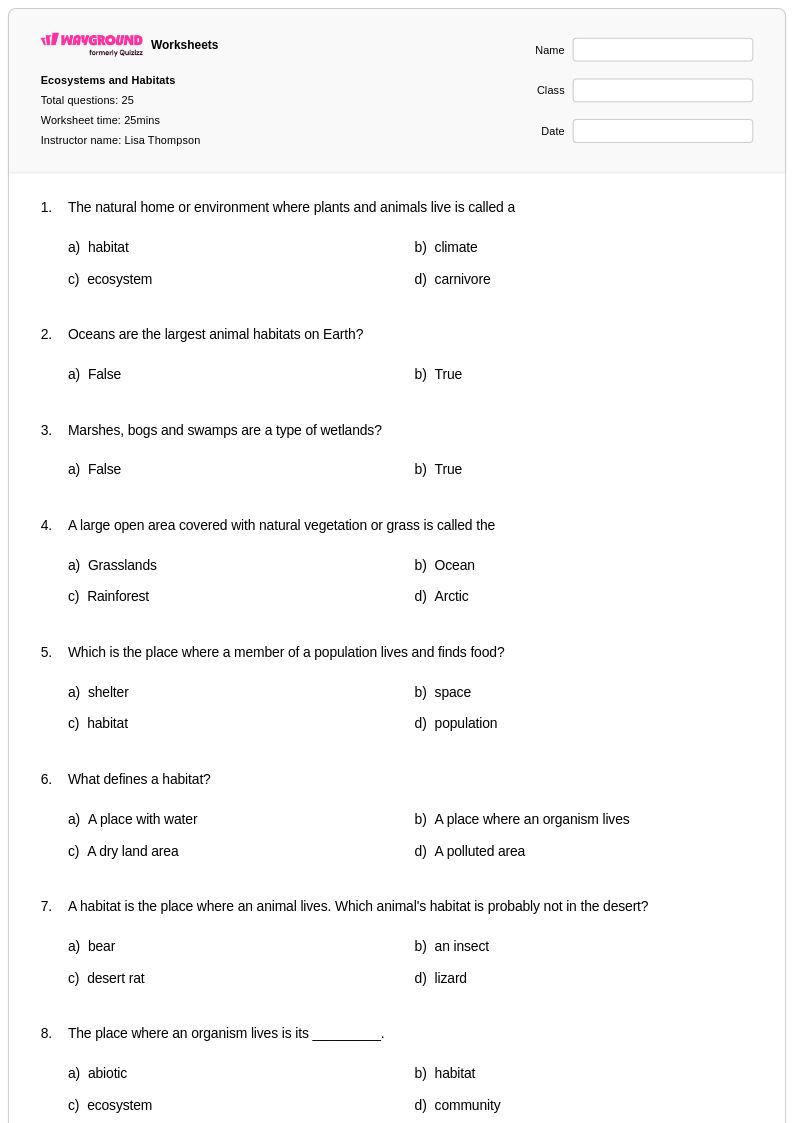
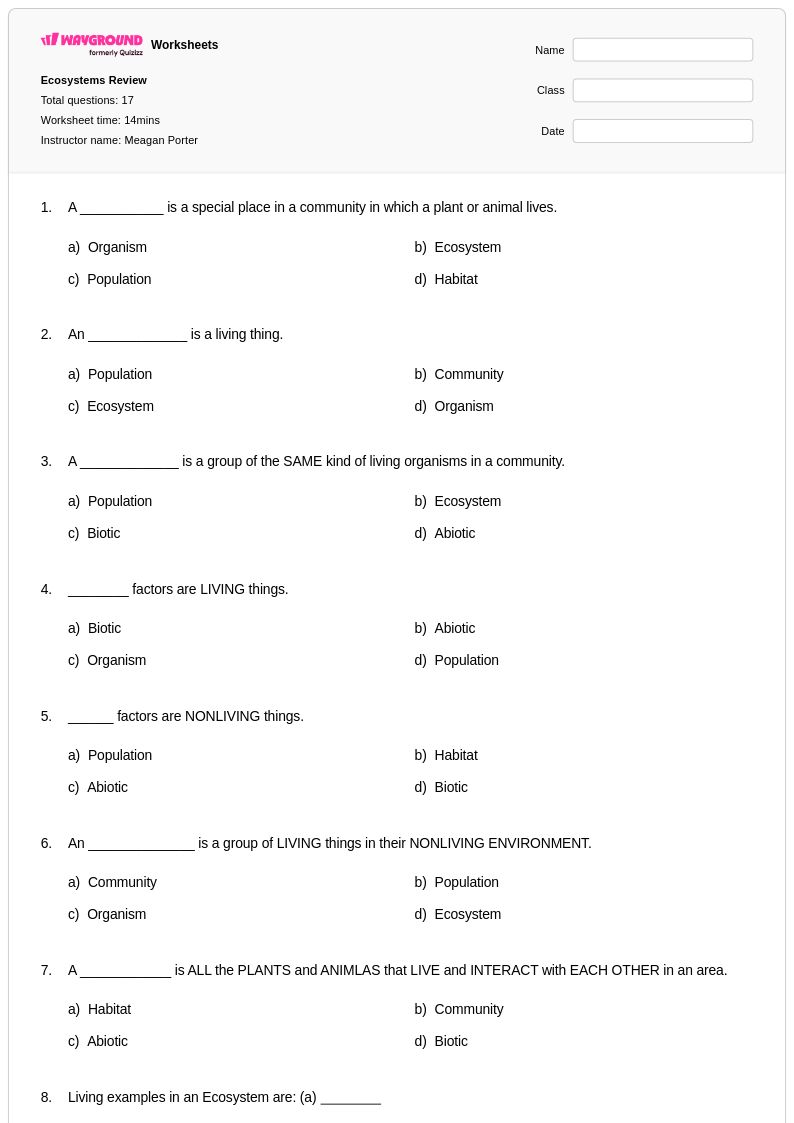
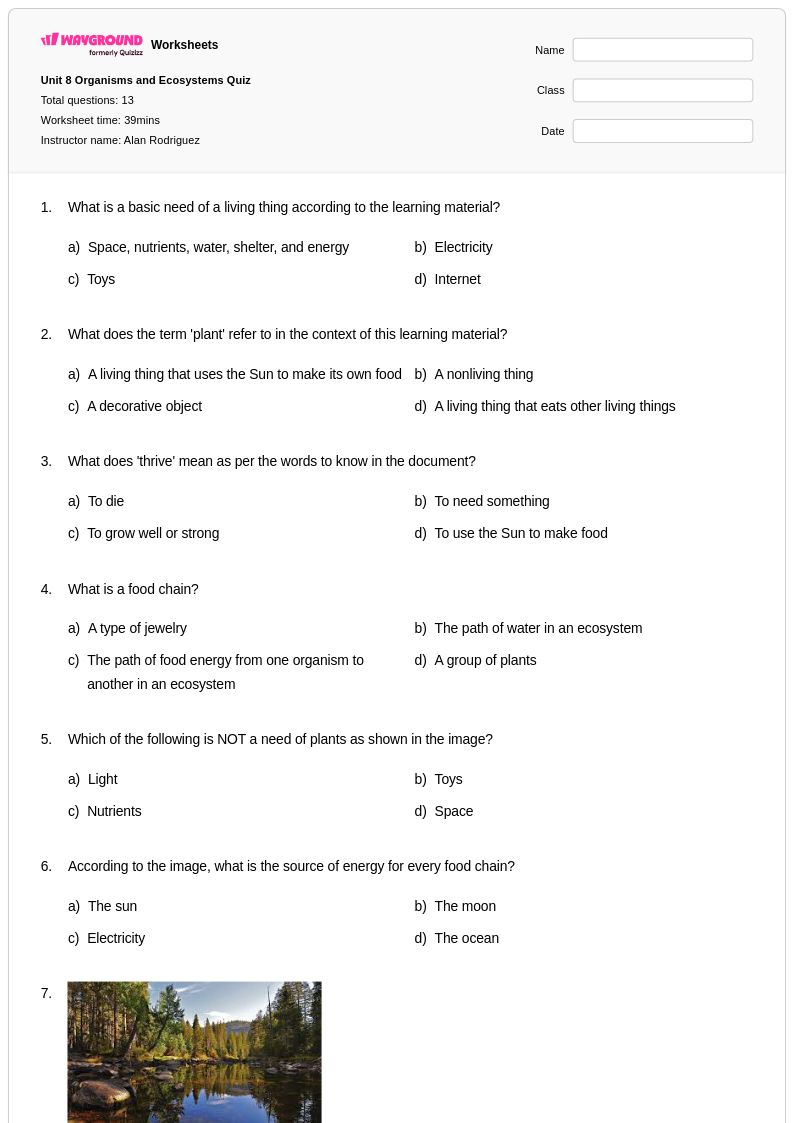
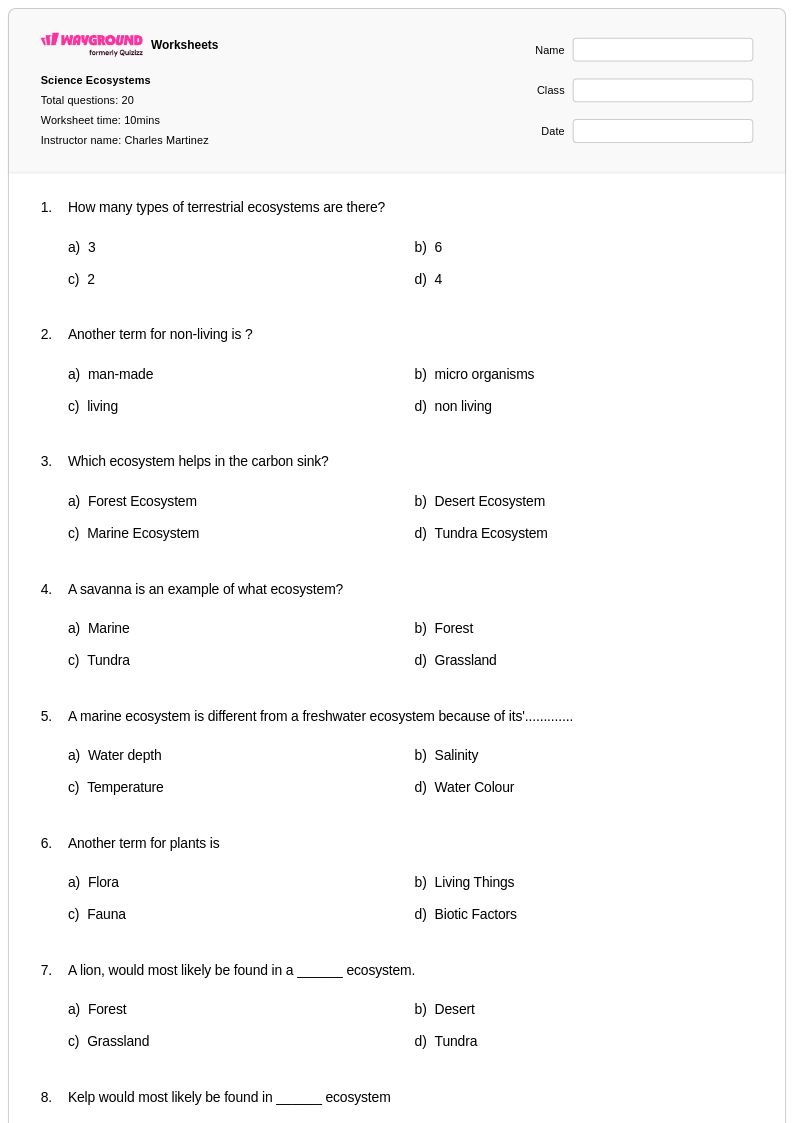
Explore Class 2 ecosystems with Wayground's free printable biology worksheets featuring engaging practice problems and complete answer keys to help young students discover how plants and animals interact in their environments.
Explore printable Ecosystems worksheets for Class 2
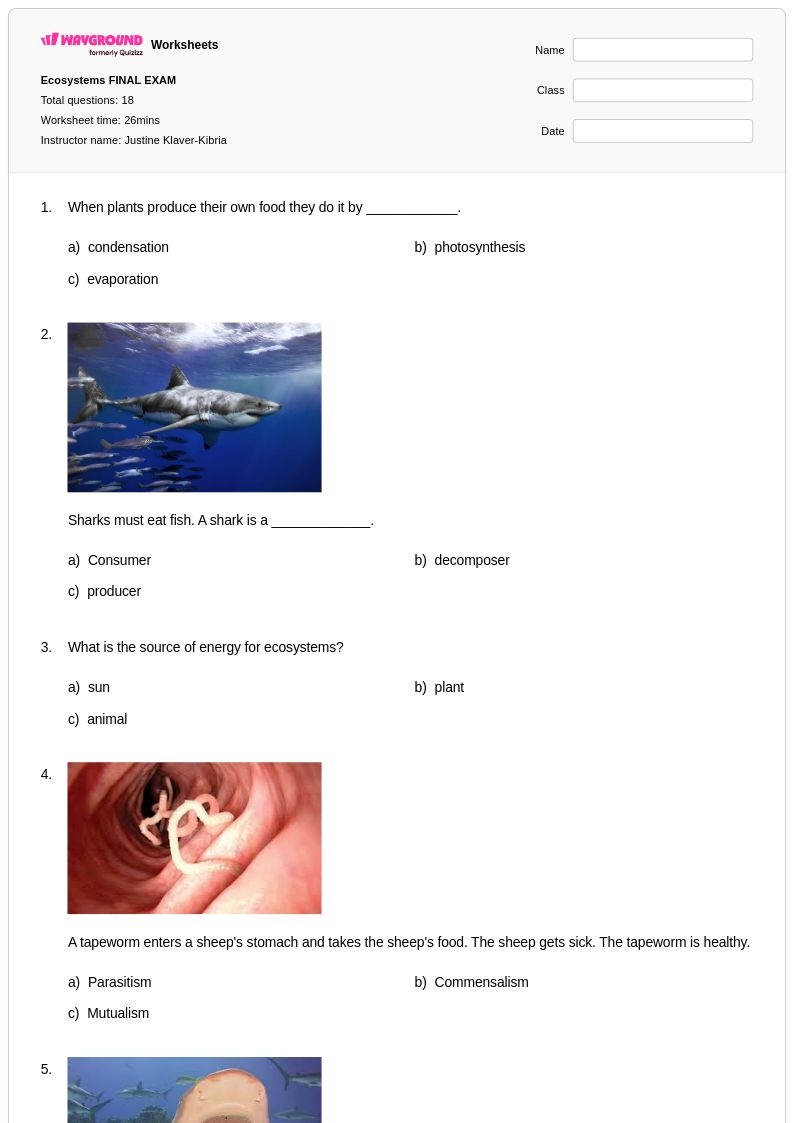
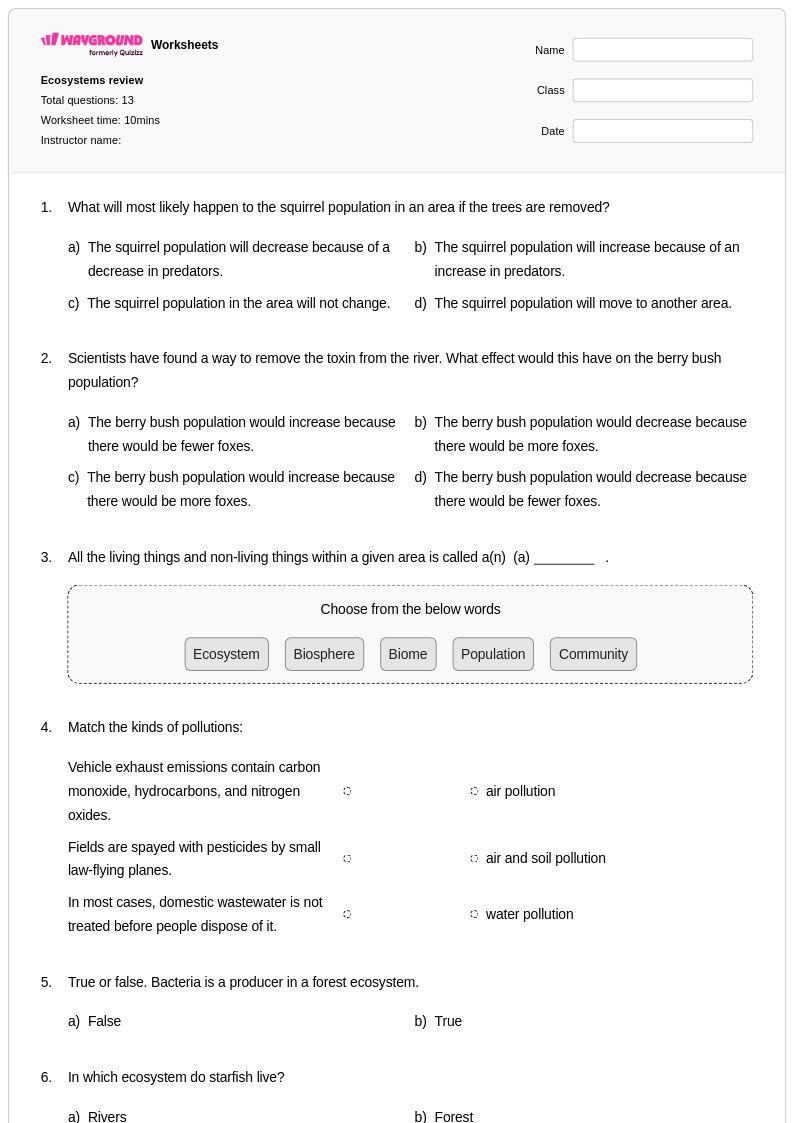
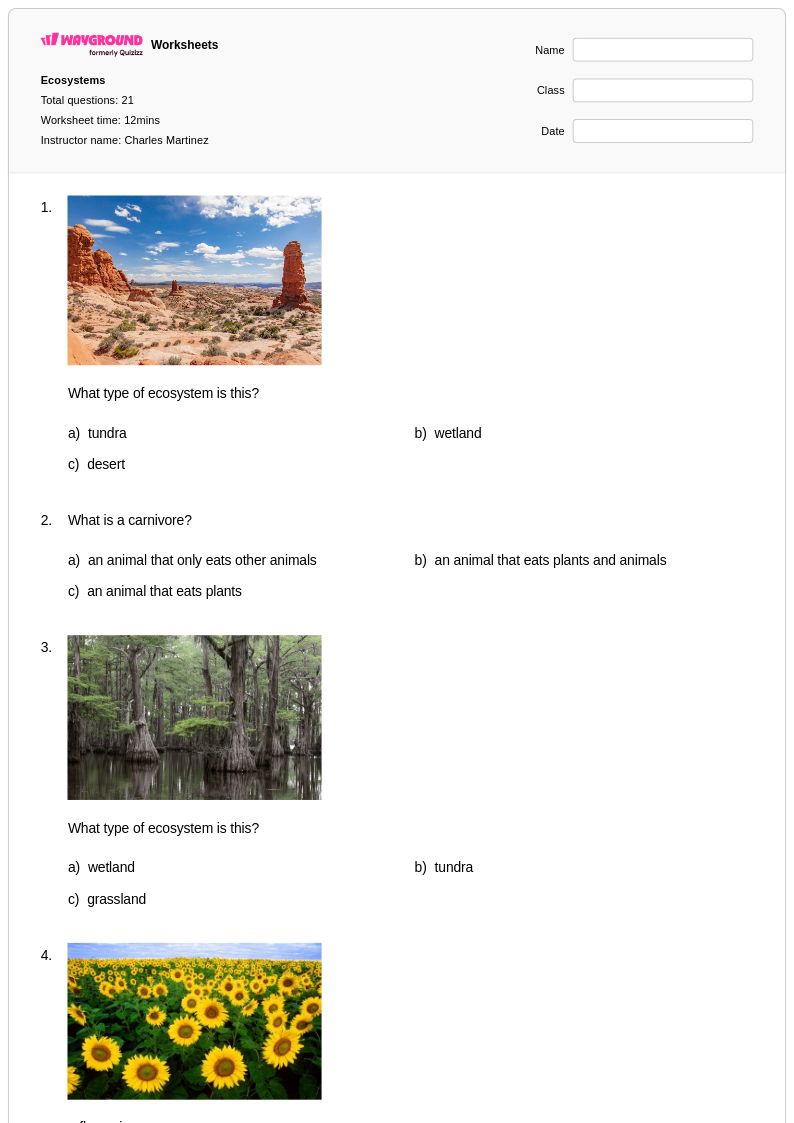
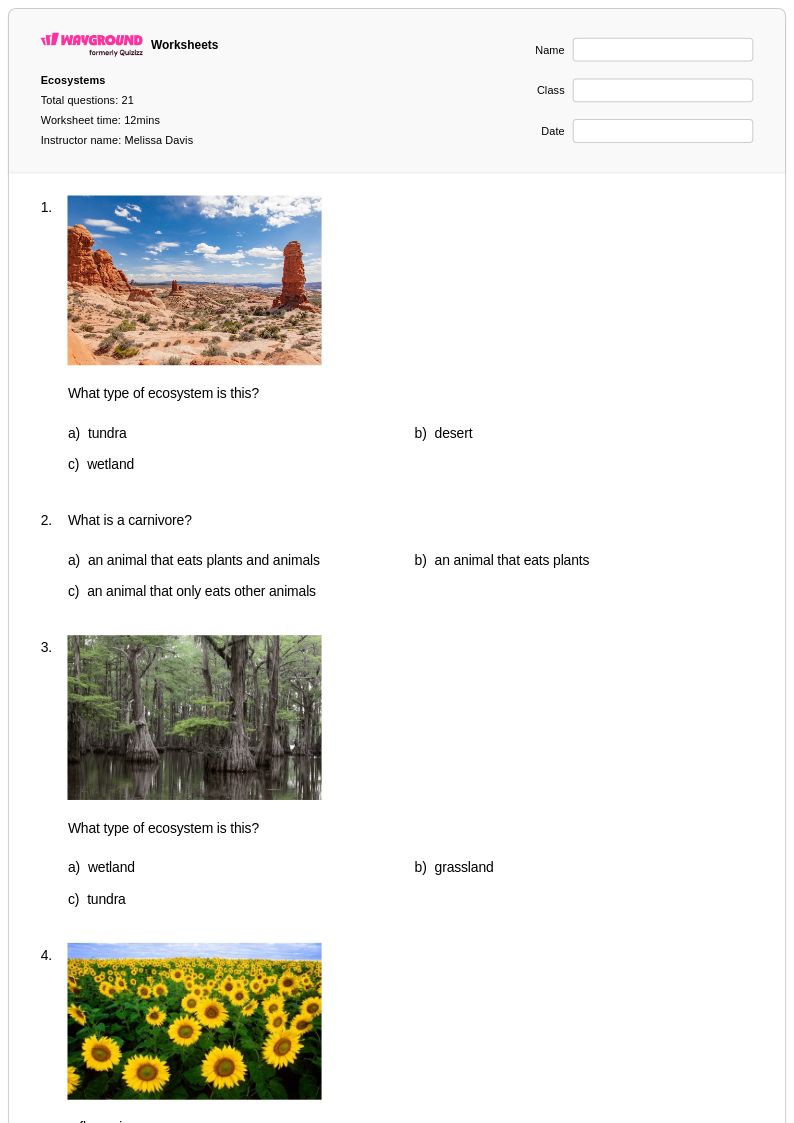
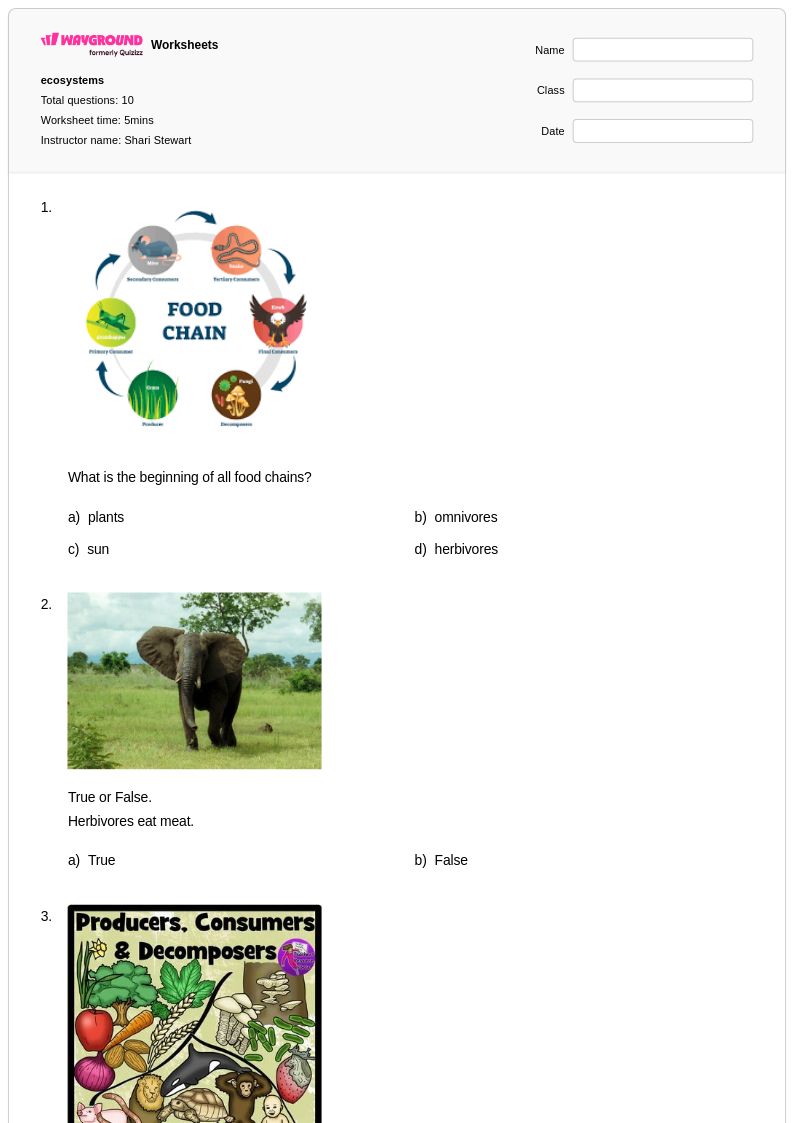
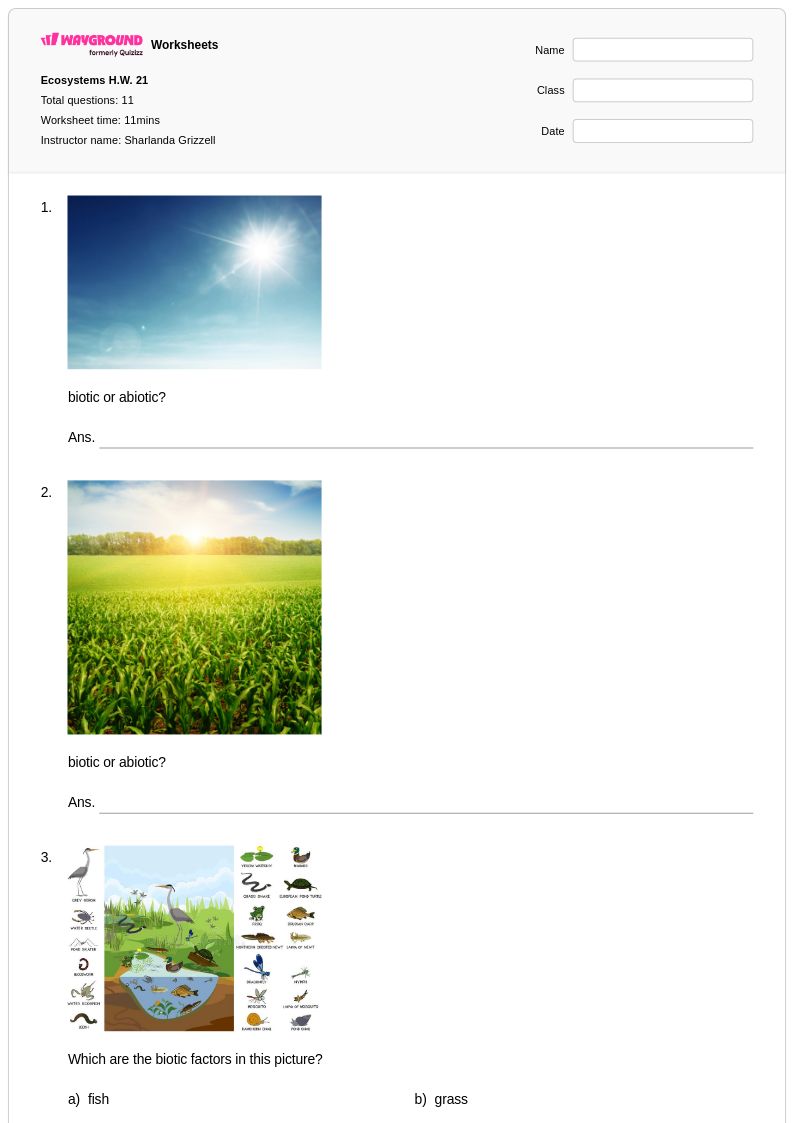
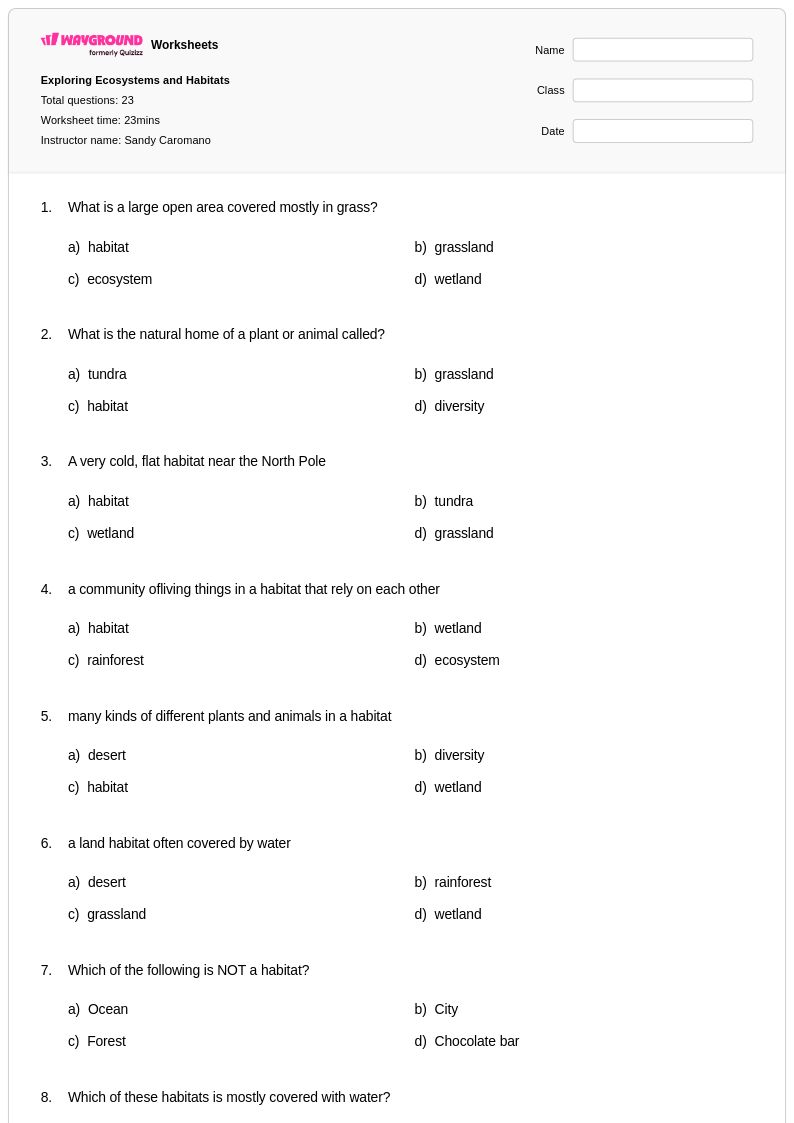
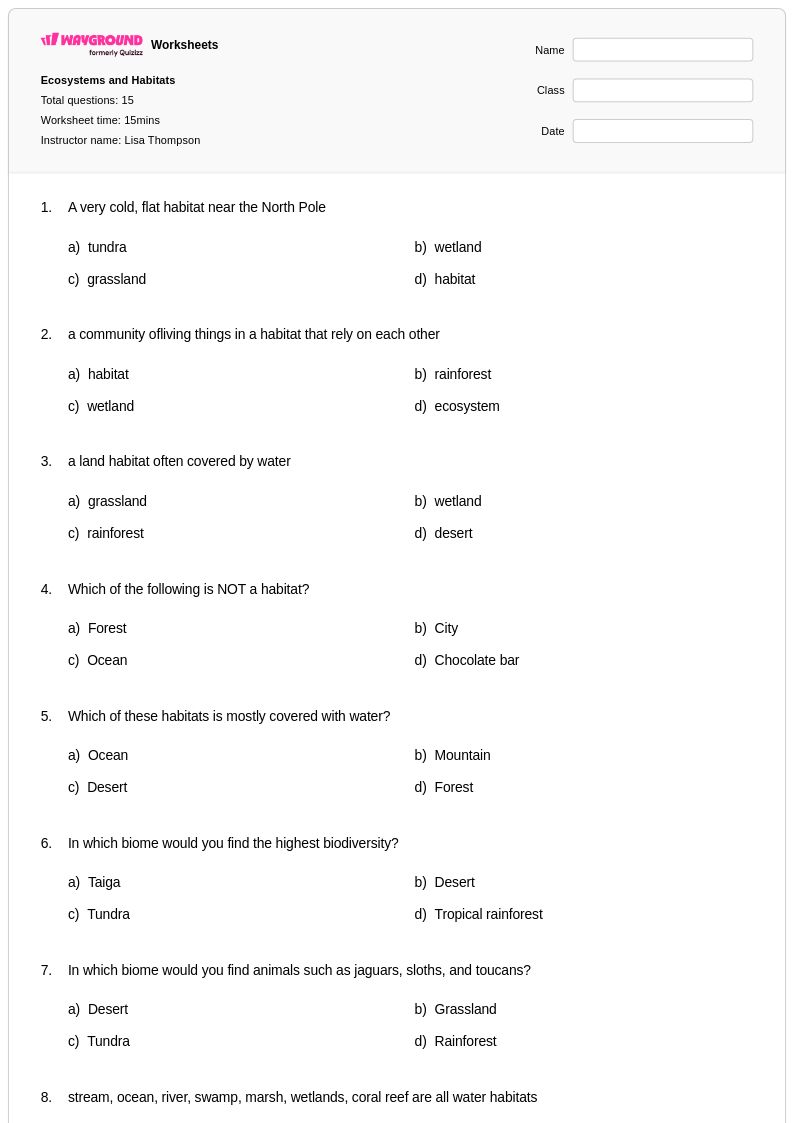
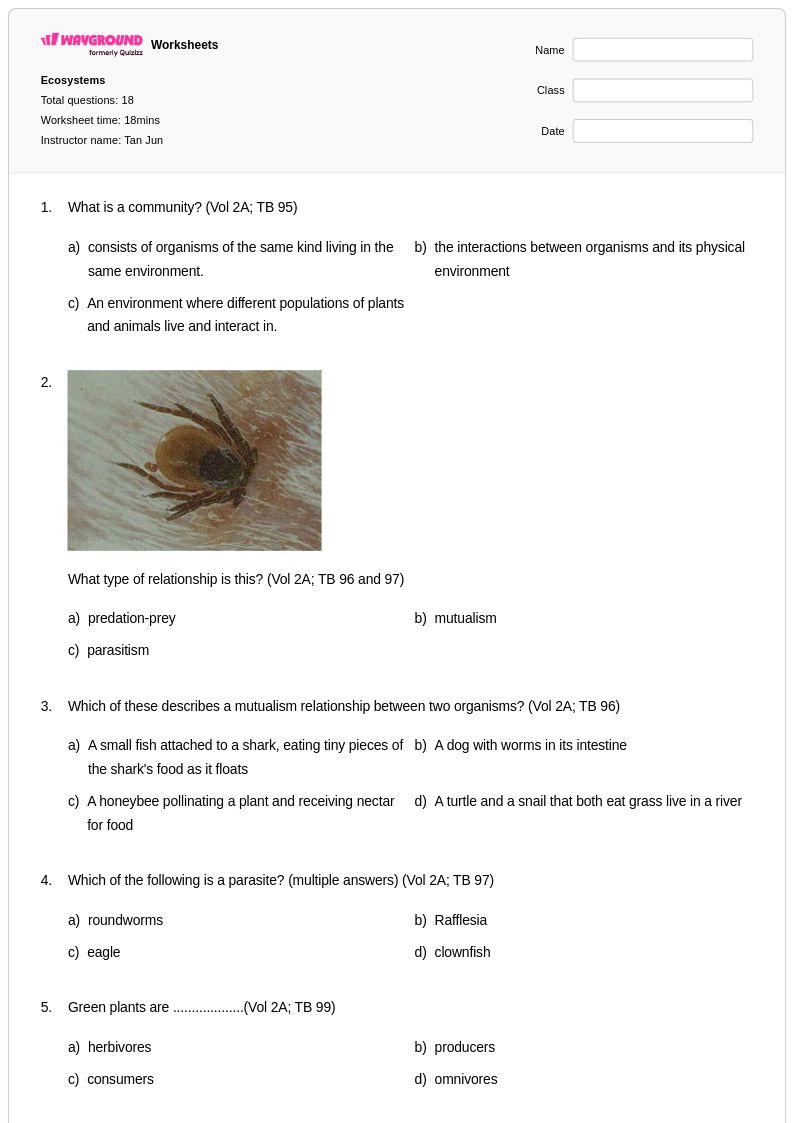
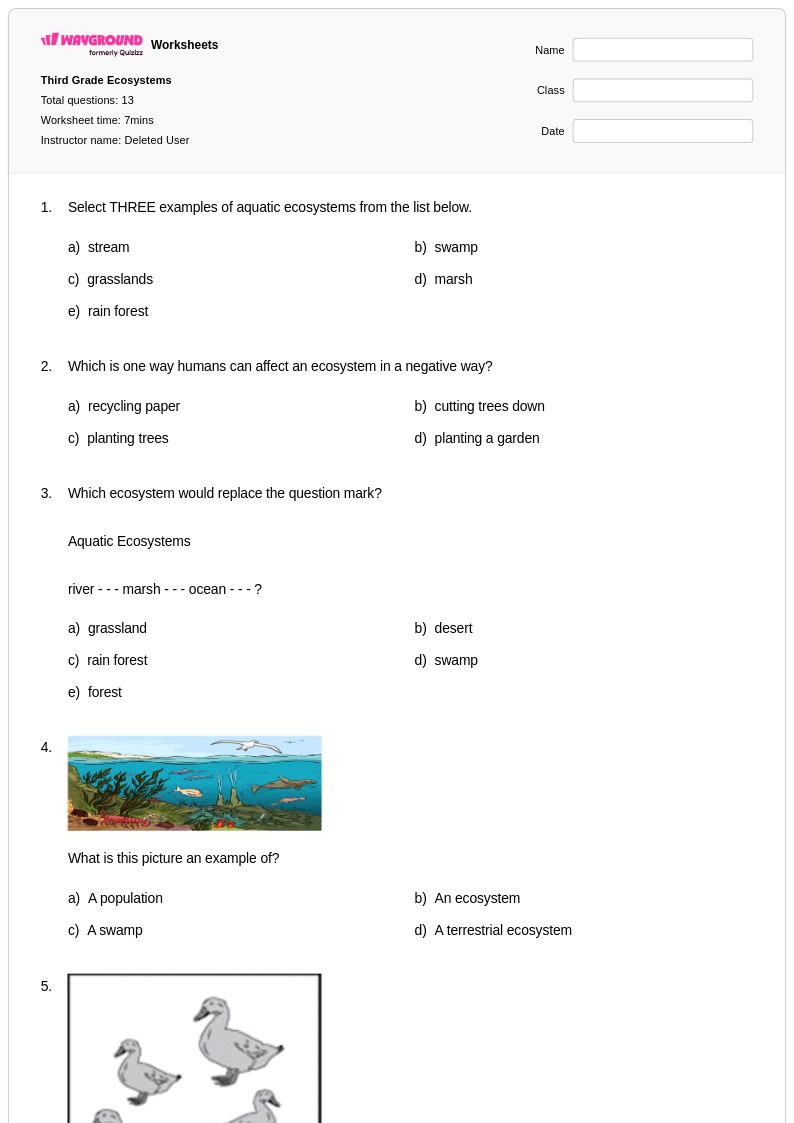
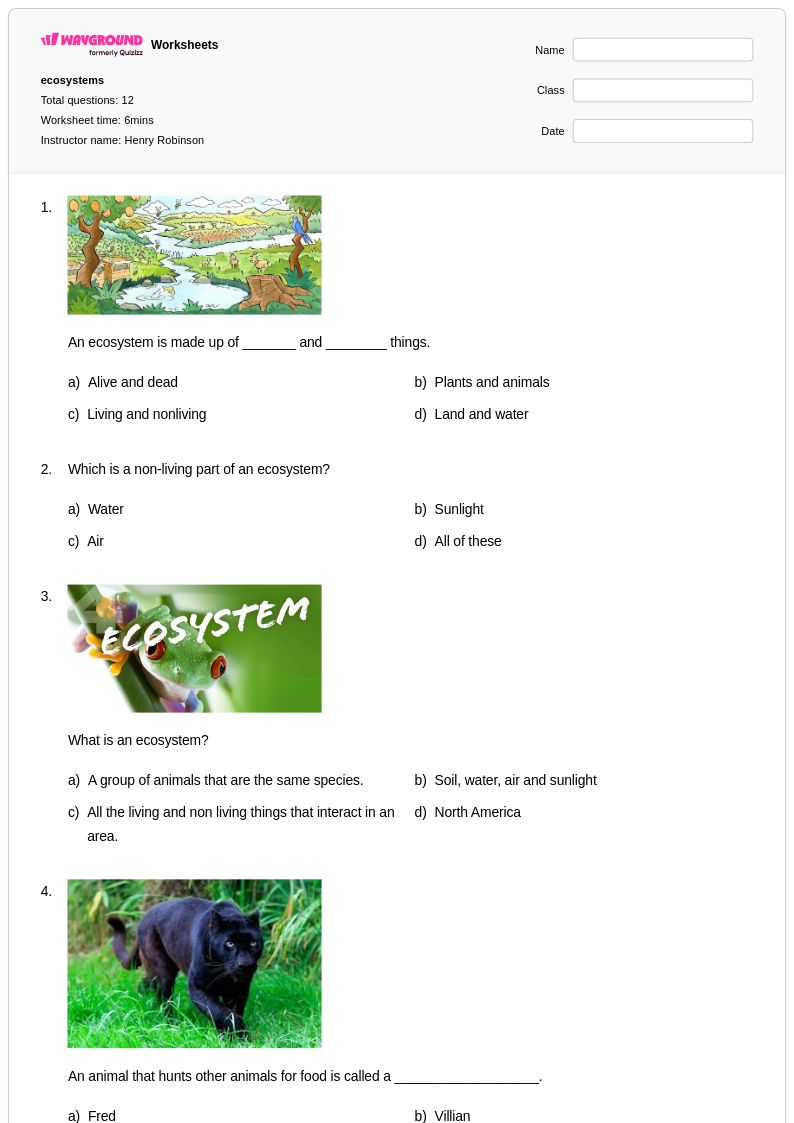
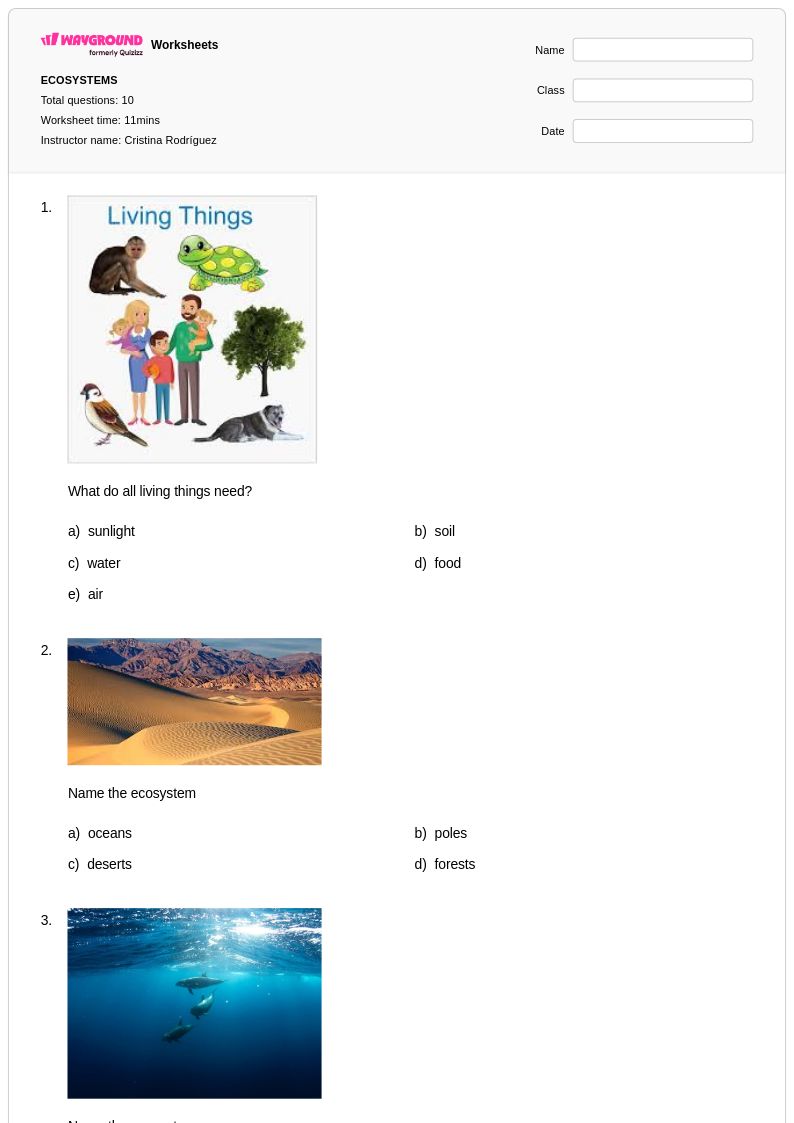
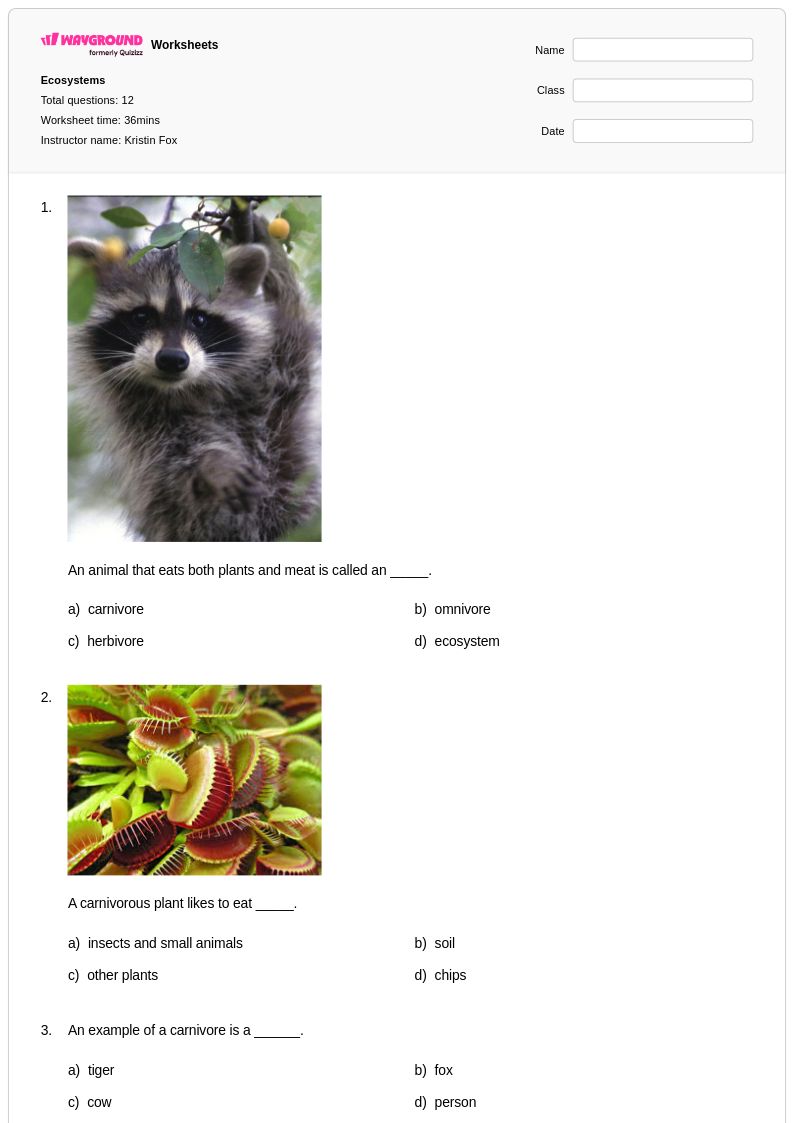
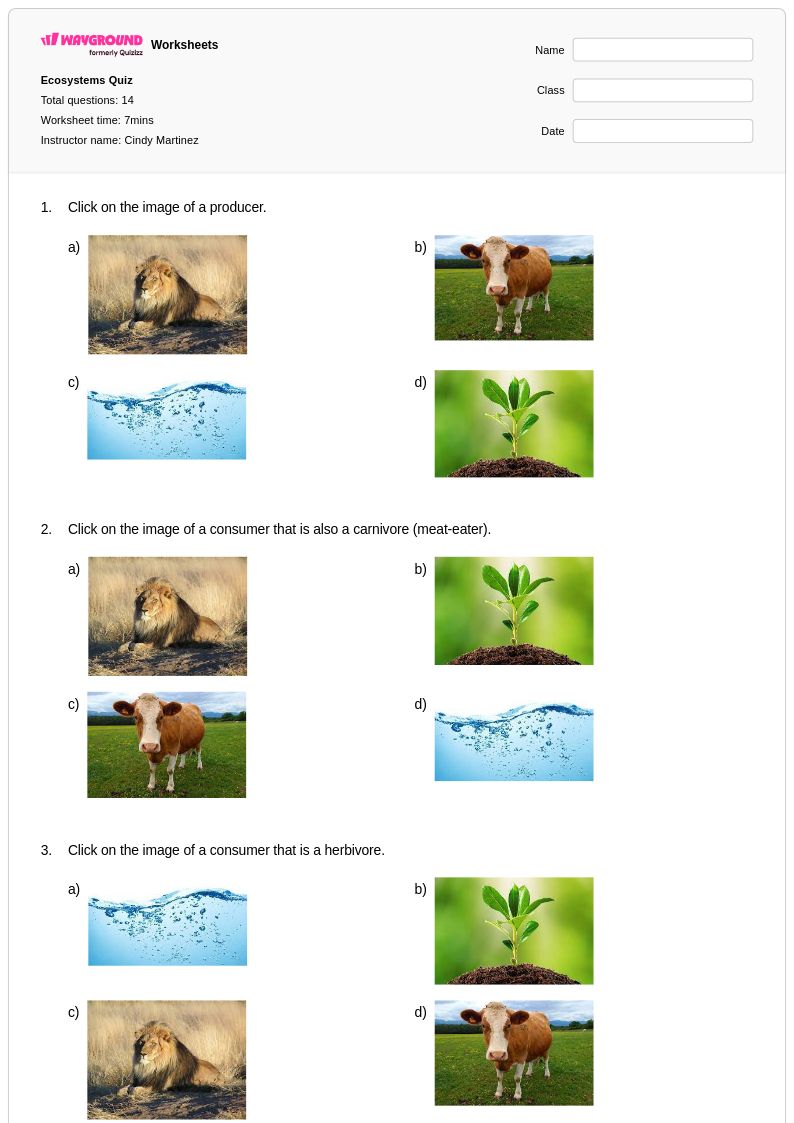
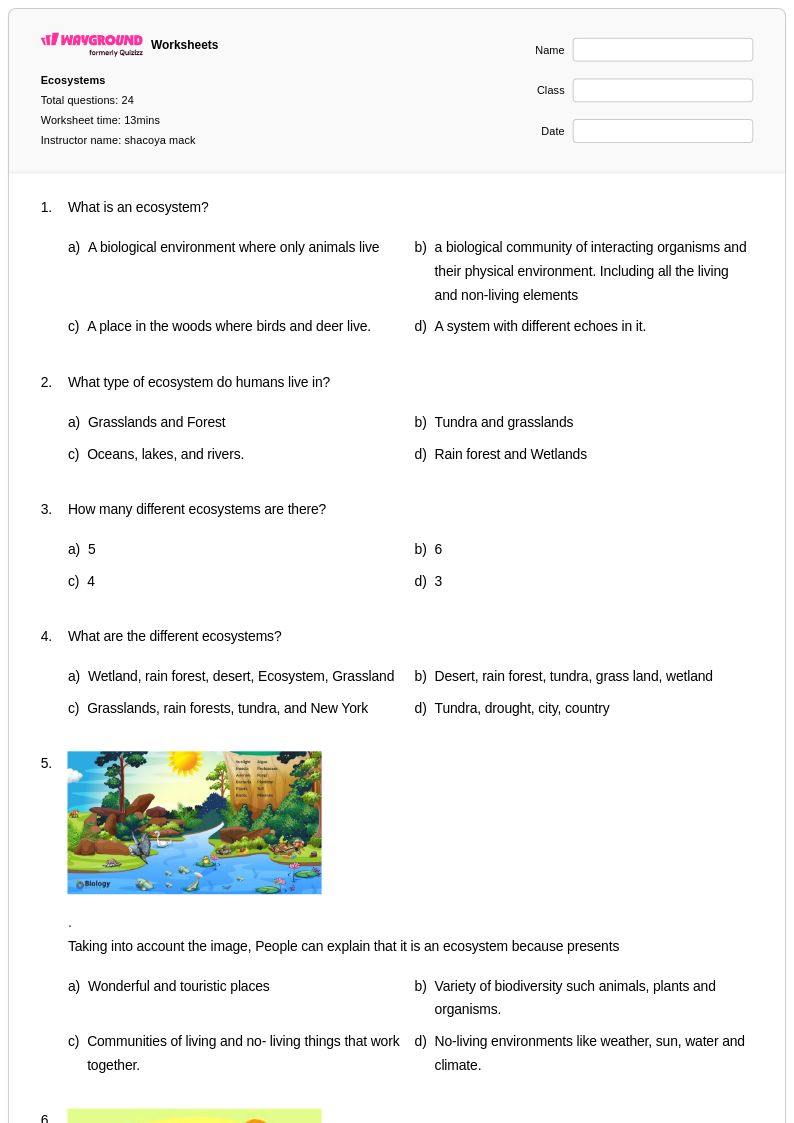
Class 2 ecosystems worksheets available through Wayground (formerly Quizizz) introduce young learners to the fundamental concepts of how living and nonliving things interact in their natural environments. These carefully designed printables help second-grade students develop essential scientific observation and classification skills as they explore different habitats, identify organisms within food chains, and understand basic relationships between plants, animals, and their surroundings. The comprehensive worksheet collection includes engaging practice problems that encourage students to recognize ecosystem components, compare various habitats like forests, ponds, and deserts, and analyze how organisms depend on each other for survival. Each worksheet comes with a detailed answer key and is available as a free pdf download, making it easy for educators to provide consistent, standards-based learning experiences that build foundational ecological literacy.
Wayground (formerly Quizizz) empowers teachers with millions of educator-created ecosystem resources specifically tailored for elementary science instruction, featuring robust search and filtering capabilities that allow quick identification of grade-appropriate materials aligned with state and national science standards. The platform's differentiation tools enable instructors to customize worksheets based on individual student needs, whether for remediation support or enrichment challenges, while the flexible format options support both traditional printable assignments and interactive digital learning experiences. Teachers can efficiently plan comprehensive ecosystem units by accessing diverse worksheet types that cover habitat exploration, organism identification, and environmental relationships, then seamlessly integrate these materials into lesson plans for skill practice, formative assessment, and reinforcement activities that deepen student understanding of ecological concepts.
FAQs
How do I teach ecosystems to elementary and middle school students?
Start with concrete, observable relationships — introduce students to the roles of producers, consumers, and decomposers using local or familiar habitats before scaling to abstract concepts like trophic levels and nutrient cycling. Use food chain diagrams first, then progress to food webs to show how multiple species interact. Once students understand basic energy flow, introduce scenarios where one species is removed and ask students to predict the cascading effects on the rest of the community.
What exercises help students practice food chains and food webs?
Effective practice starts with labeling organism roles in simple, linear food chains and then advances to constructing multi-species food webs using provided organism cards or diagrams. Interpreting population data graphs helps students connect numerical changes to real ecosystem disruptions. Evaluating human impact scenarios — such as deforestation or invasive species introduction — pushes students to apply their understanding of energy flow to real-world ecological problems.
What are the most common mistakes students make when learning about ecosystems?
The most persistent misconception is that food chain arrows point toward the predator, when they should follow the direction of energy transfer — from prey to predator. Students also frequently fail to recognize cascading effects when a species is removed from a food web, treating each organism as isolated rather than interdependent. Watch for students who conflate habitat (where an organism lives) with its ecological role or trophic level.
How can I differentiate ecosystems instruction for students at different levels?
For struggling learners, reduce the complexity of food webs to two or three species and provide sentence frames or vocabulary supports before introducing multi-trophic diagrams. Advanced students benefit from open-ended food web construction tasks and population dynamics graph analysis. On Wayground, teachers can apply accommodations such as read aloud, reduced answer choices, and extended time on a per-student basis, so each learner accesses the same content at an appropriate challenge level without disrupting the rest of the class.
How do I use Wayground ecosystems worksheets in my classroom?
Wayground ecosystems worksheets are available as printable PDFs for traditional classroom use and in digital formats for technology-integrated environments, including interactive quizzes hosted directly on the platform. Teachers can filter resources by learning objective to match worksheets to the specific concept being taught — whether that's biotic factors, predator-prey relationships, or producer and consumer roles. Answer keys are included with every worksheet, reducing grading time and making it easy to provide immediate feedback.
How do predator-prey relationships fit into ecosystem instruction?
Predator-prey relationships illustrate the interdependence that defines ecosystems — they help students understand how population sizes are regulated and how energy flows between trophic levels. Teaching this concept through population graphs (such as classic lynx-hare data) gives students practice interpreting real ecological data while reinforcing the idea that no species exists in isolation. This makes predator-prey instruction a natural bridge between basic food chain labeling and more complex food web and biodiversity analysis.