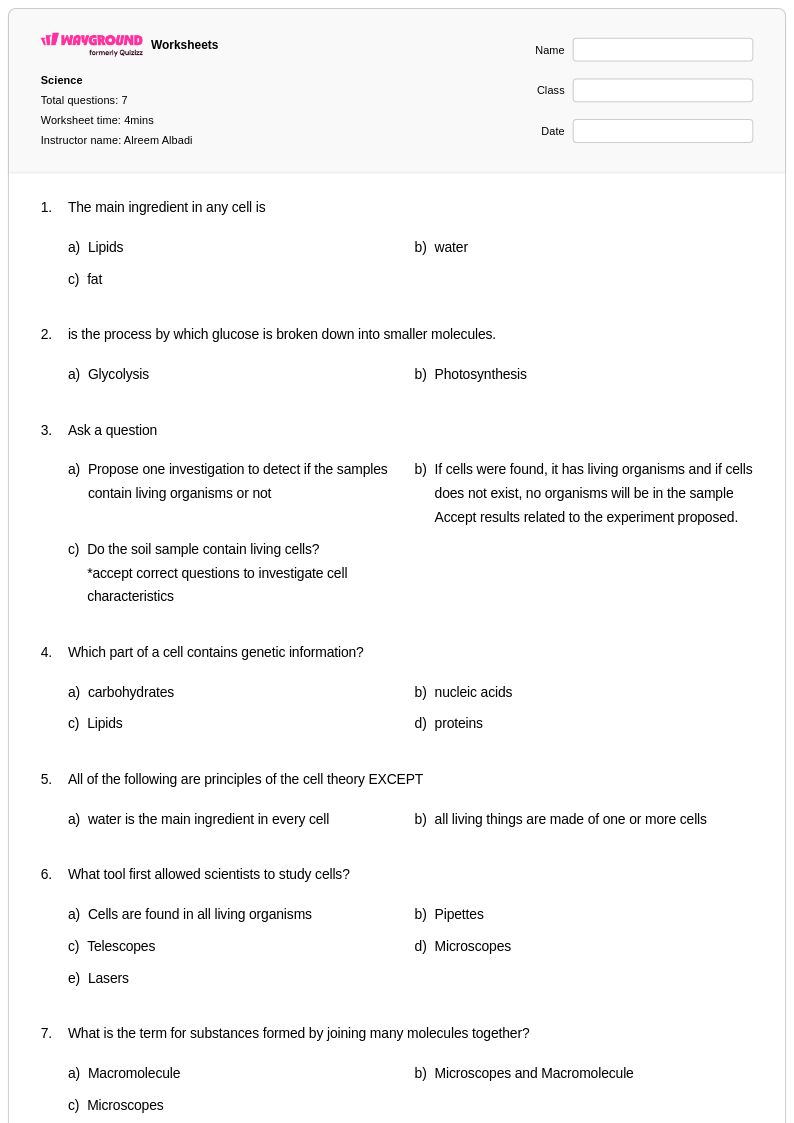
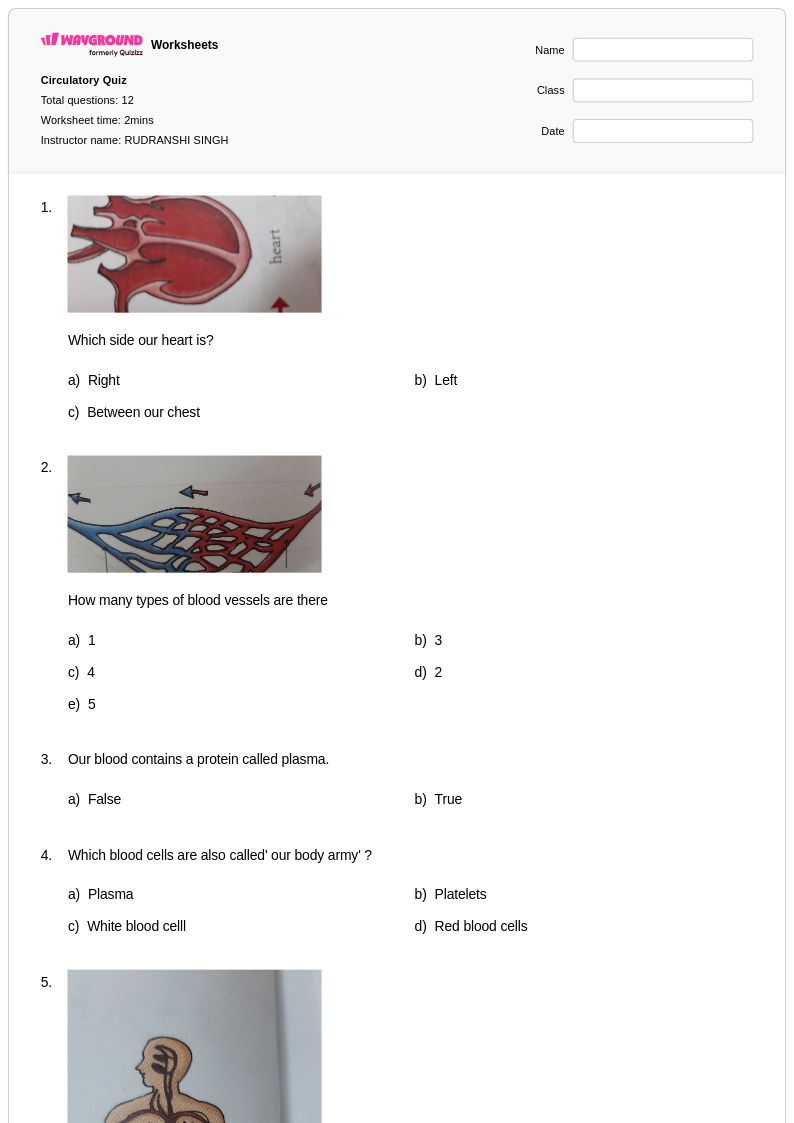
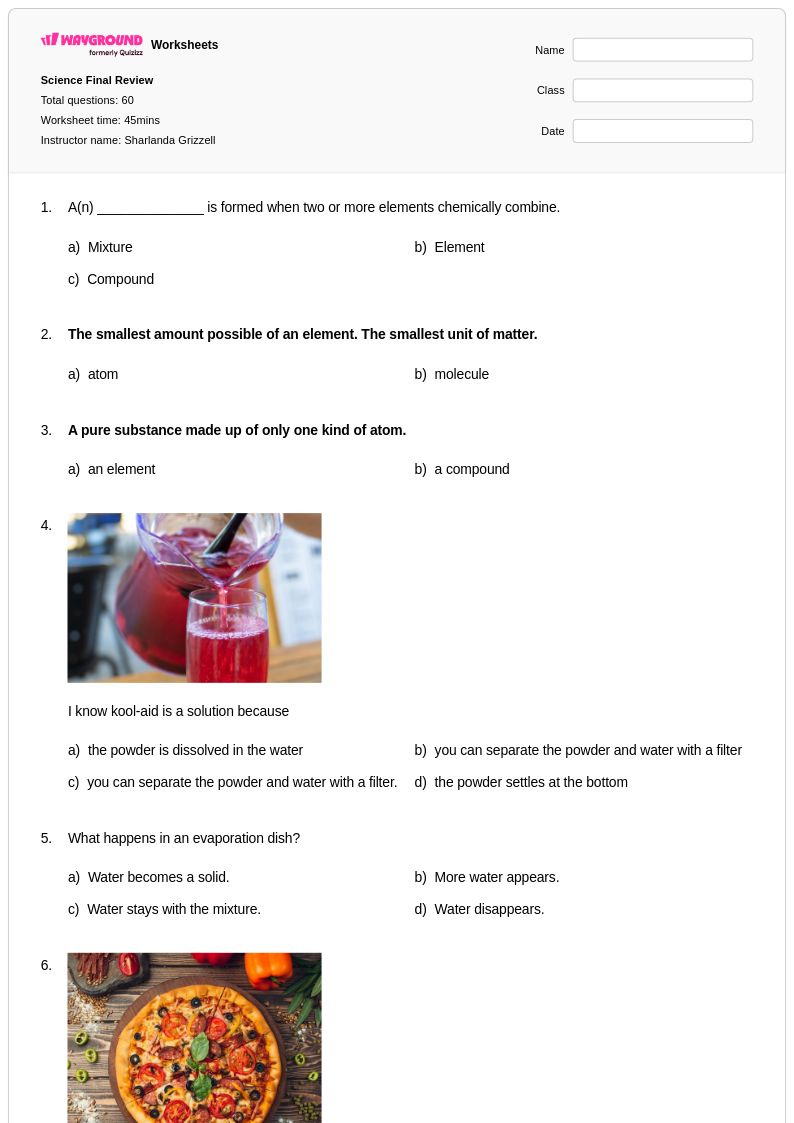
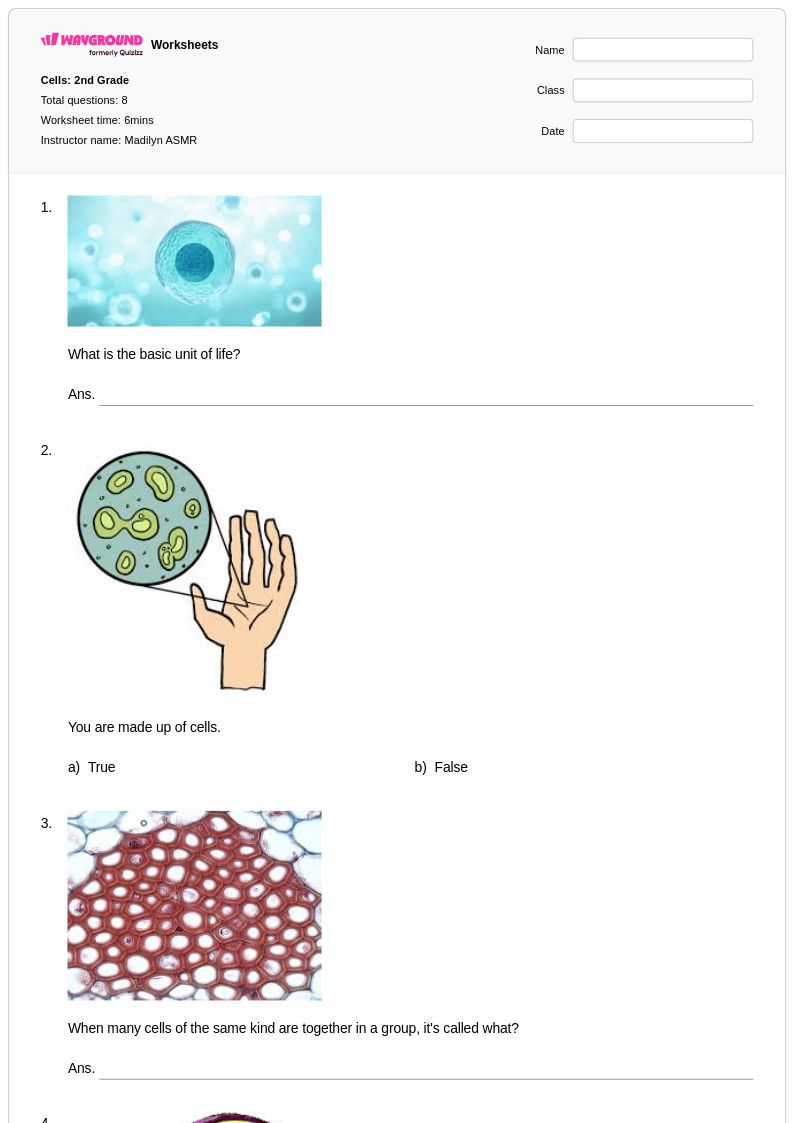
Class 2 Cell Theory worksheets from Wayground provide free printables and practice problems that help young students discover the basic building blocks of life through engaging activities with answer keys included.
Explore printable Cell Theory worksheets for Class 2
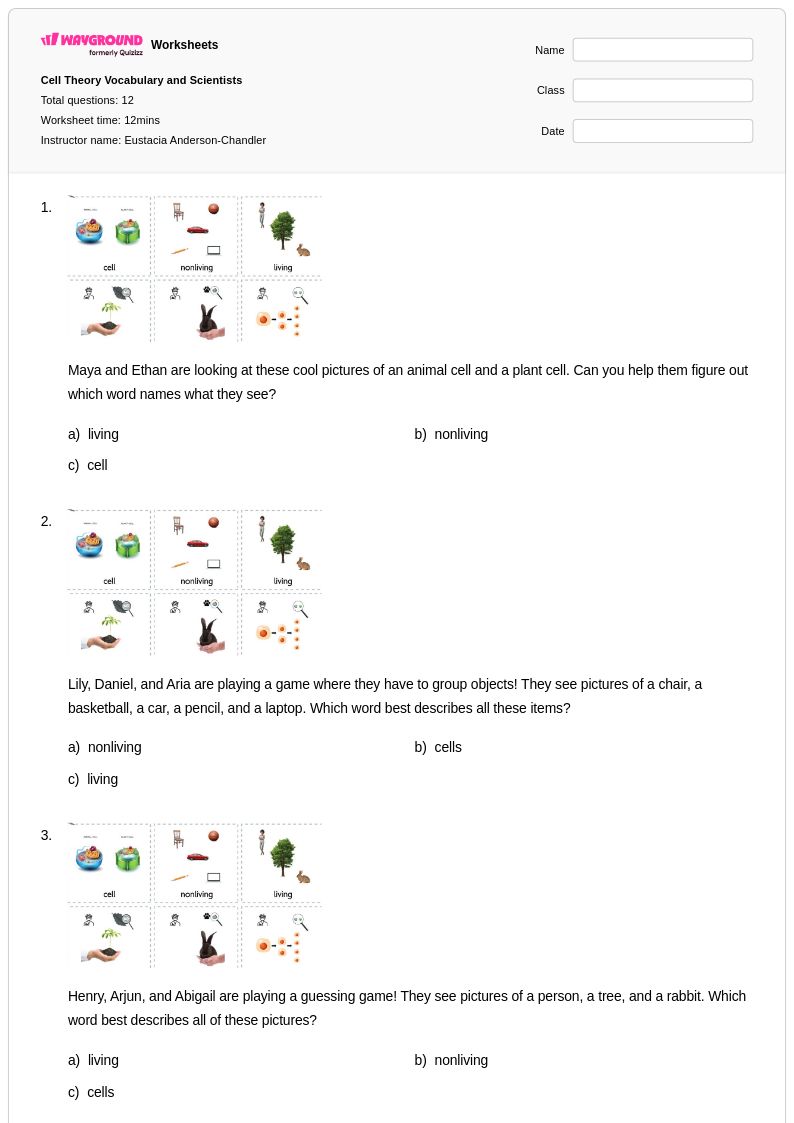
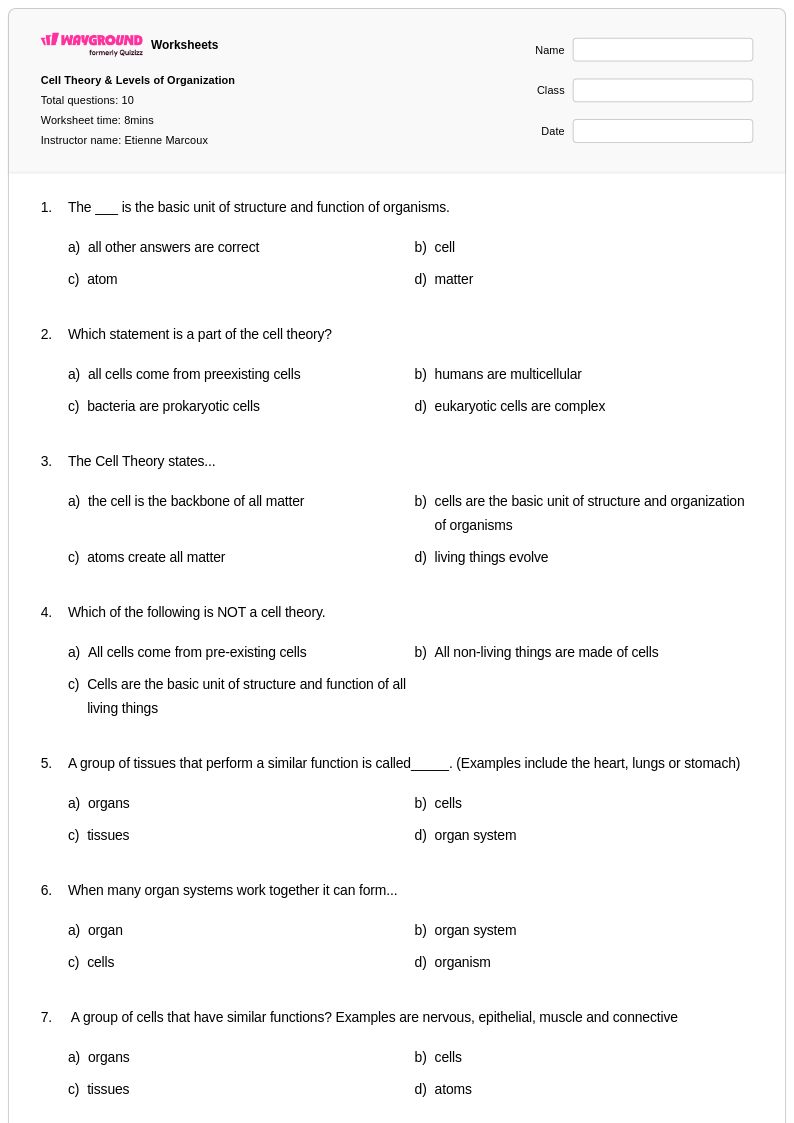
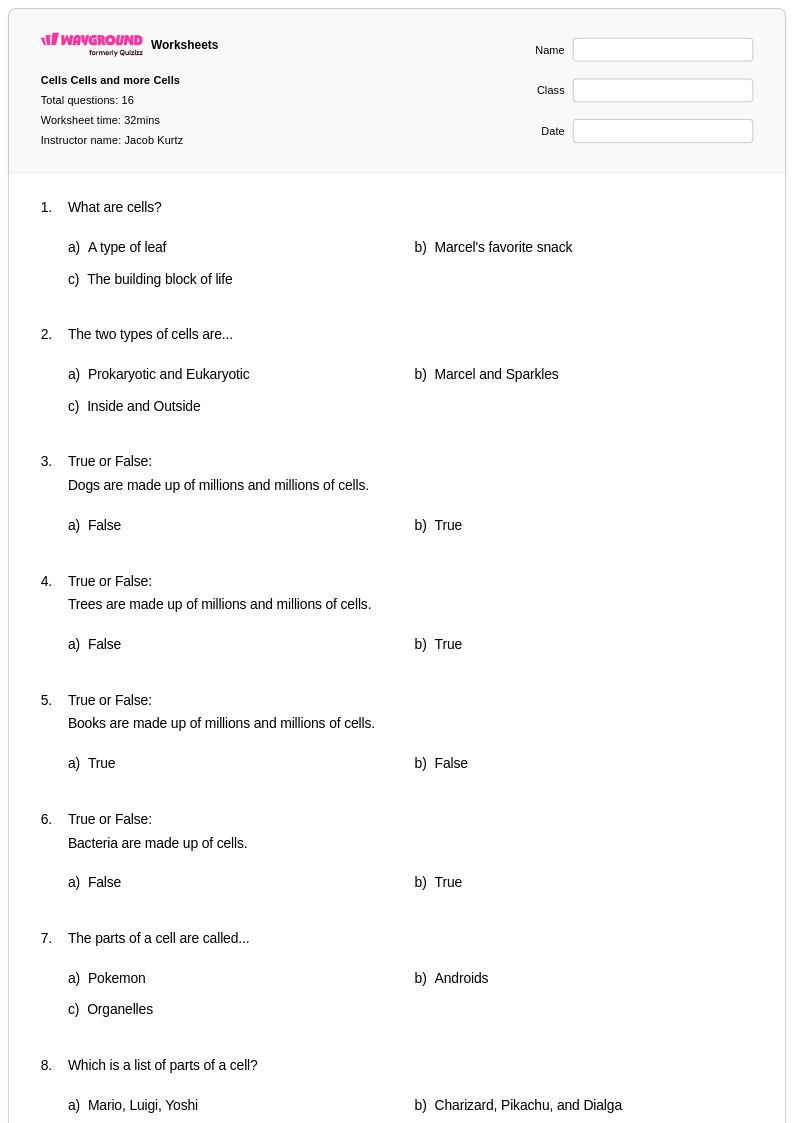
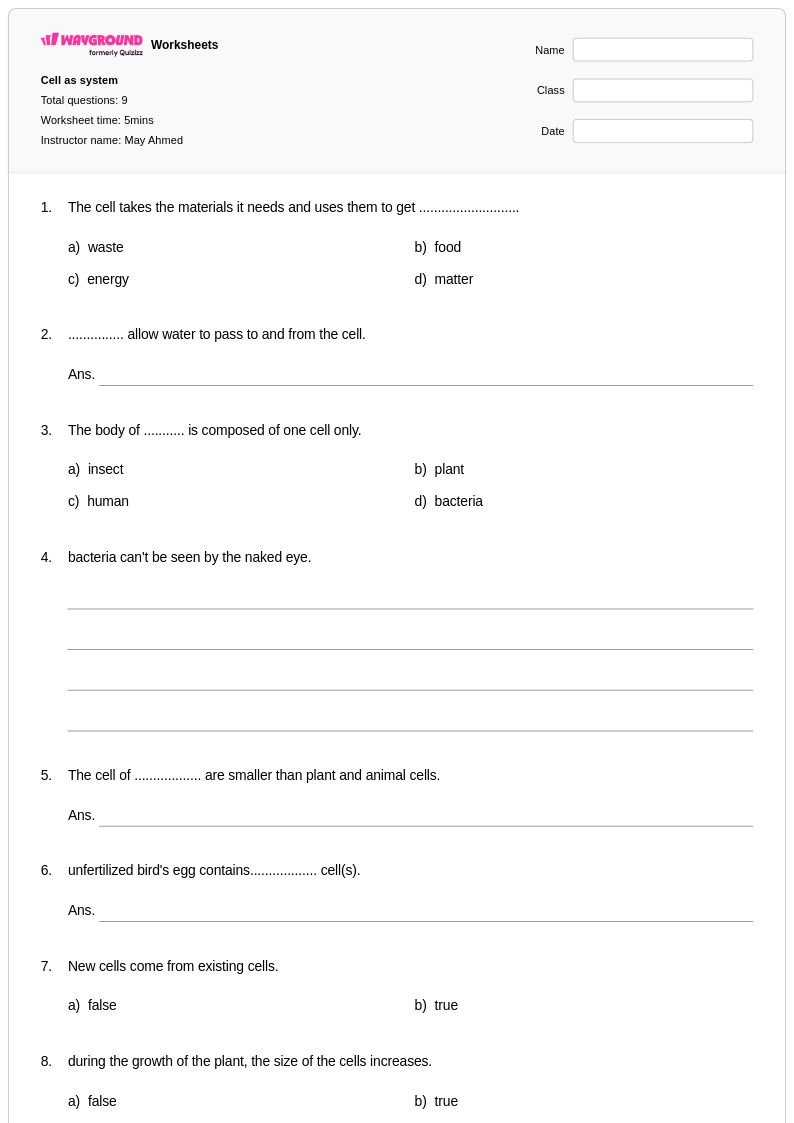
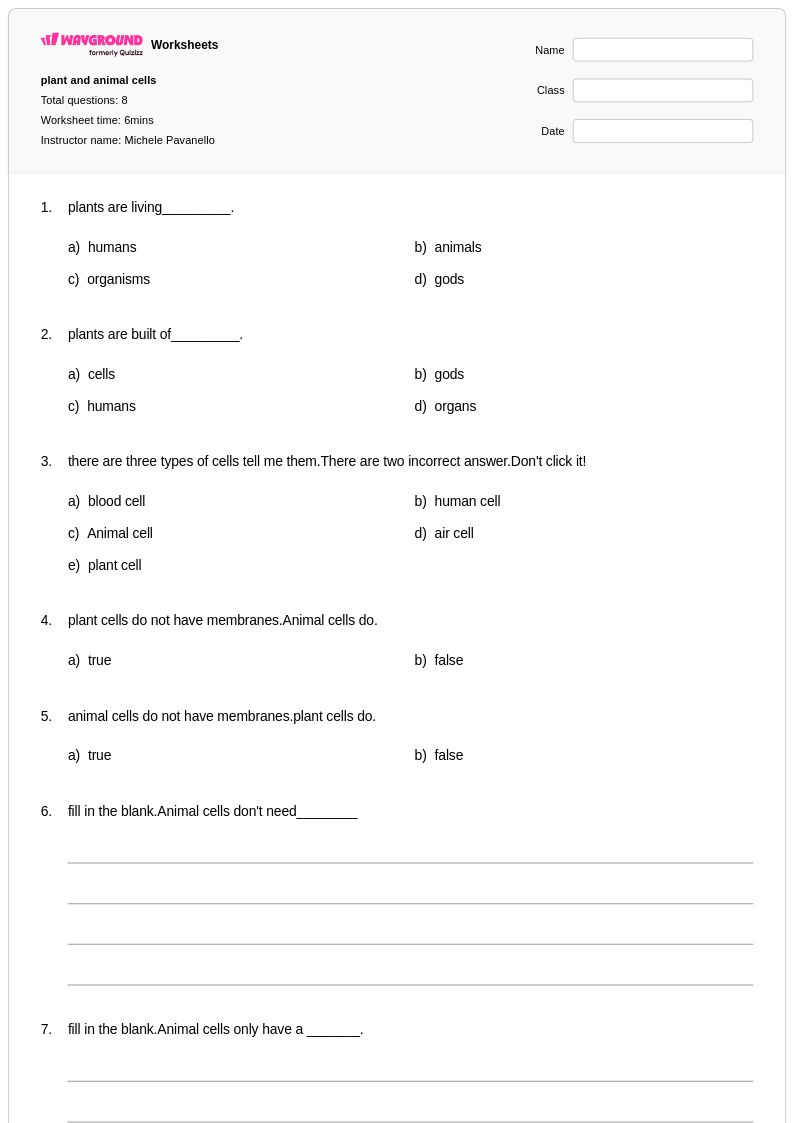
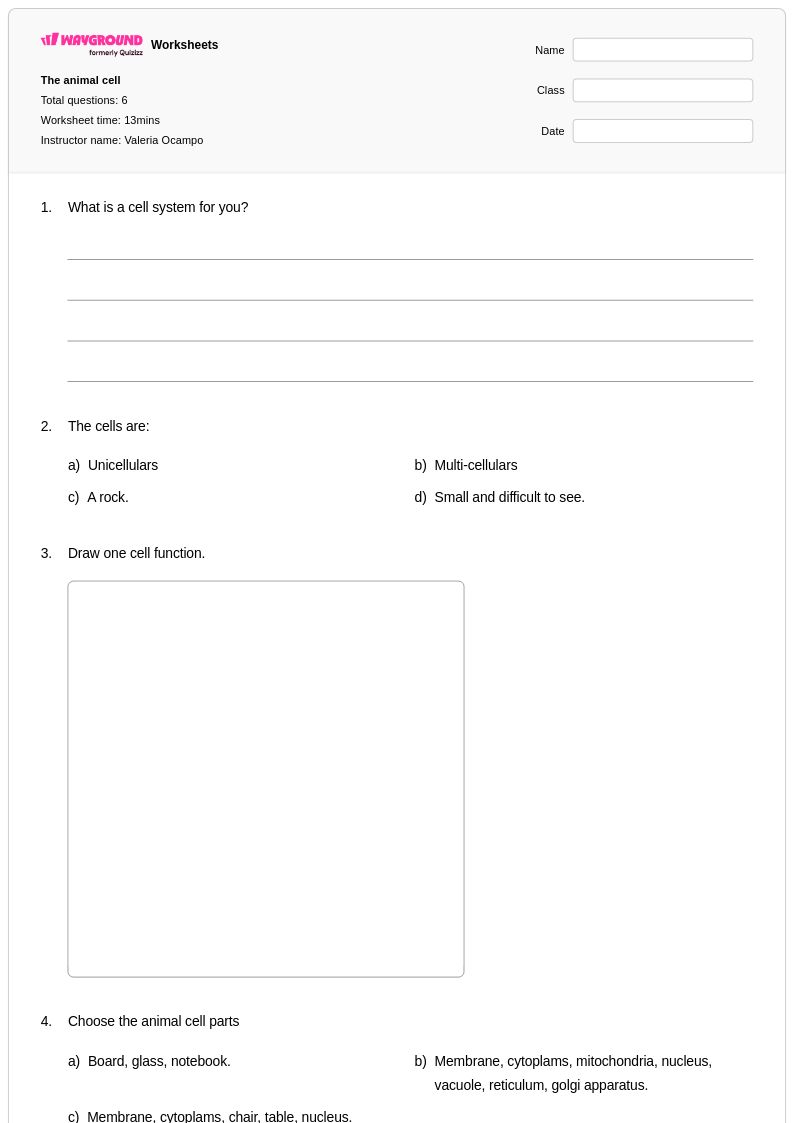
Cell theory worksheets for Class 2 students available through Wayground (formerly Quizizz) introduce young learners to the foundational concept that all living things are made of cells. These carefully designed educational resources help second-grade students develop early scientific observation skills and basic understanding of life science principles through age-appropriate activities and visual exercises. The worksheets strengthen critical thinking abilities as students practice identifying living versus non-living things, explore simple cell structures through diagrams, and engage with fundamental biological concepts. Teachers can access comprehensive materials including detailed answer keys, free printable pdf versions, and varied practice problems that make abstract cellular concepts concrete and accessible for elementary learners.
Wayground (formerly Quizizz) empowers educators with an extensive collection of millions of teacher-created cell theory resources specifically designed to meet Class 2 learning objectives and developmental needs. The platform's robust search and filtering capabilities enable teachers to quickly locate materials aligned with state science standards, while differentiation tools allow for seamless customization to accommodate diverse learning styles and ability levels within the classroom. These flexible worksheet collections are available in both printable and digital formats, including downloadable pdf versions, making them ideal for various instructional settings and learning environments. Teachers utilize these comprehensive resources for strategic lesson planning, targeted skill remediation, academic enrichment opportunities, and consistent practice that reinforces students' understanding of basic cell theory principles throughout the school year.
FAQs
How do I teach cell theory to middle or high school students?
Teaching cell theory effectively starts with grounding students in the three core principles: all living things are composed of cells, the cell is the basic unit of life, and all cells arise from pre-existing cells. From there, connect these principles to observable examples — bacteria, plant cells, and animal cells — so students see the theory applied to real biological structures. Pairing direct instruction with structured practice problems helps students internalize not just the statements of cell theory, but why each principle matters to broader biology.
What kinds of practice exercises help students understand cell theory?
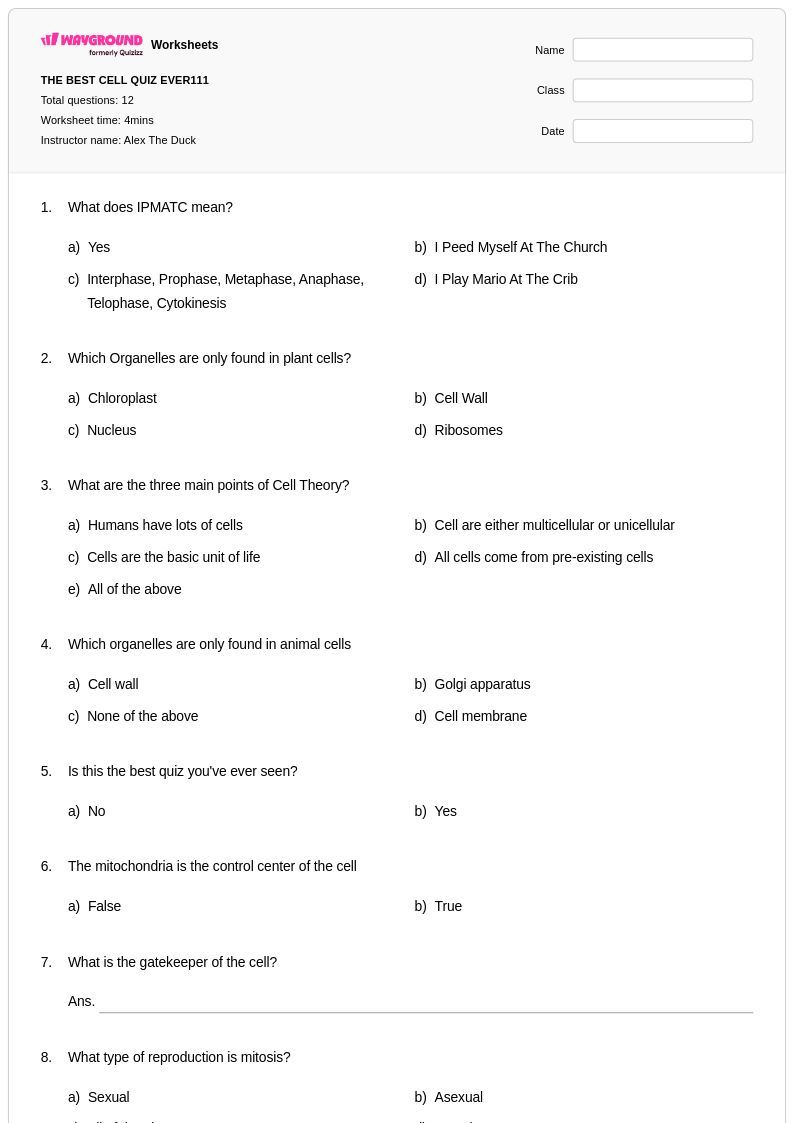
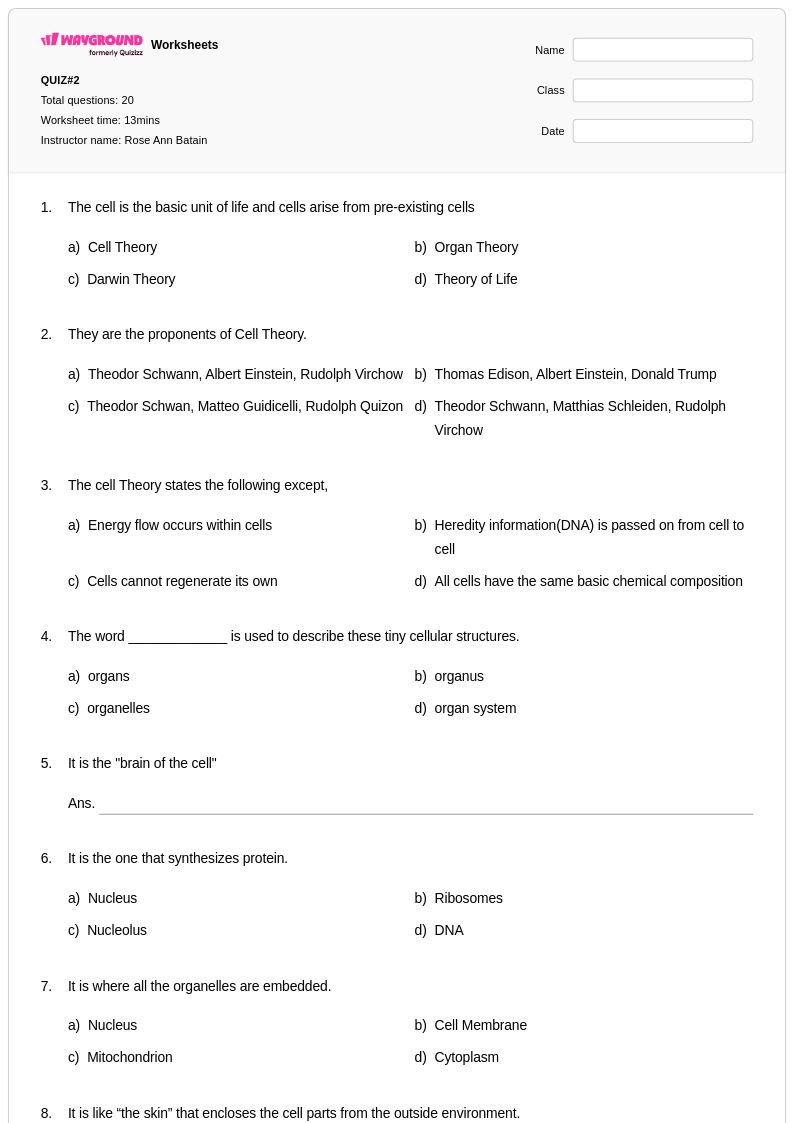
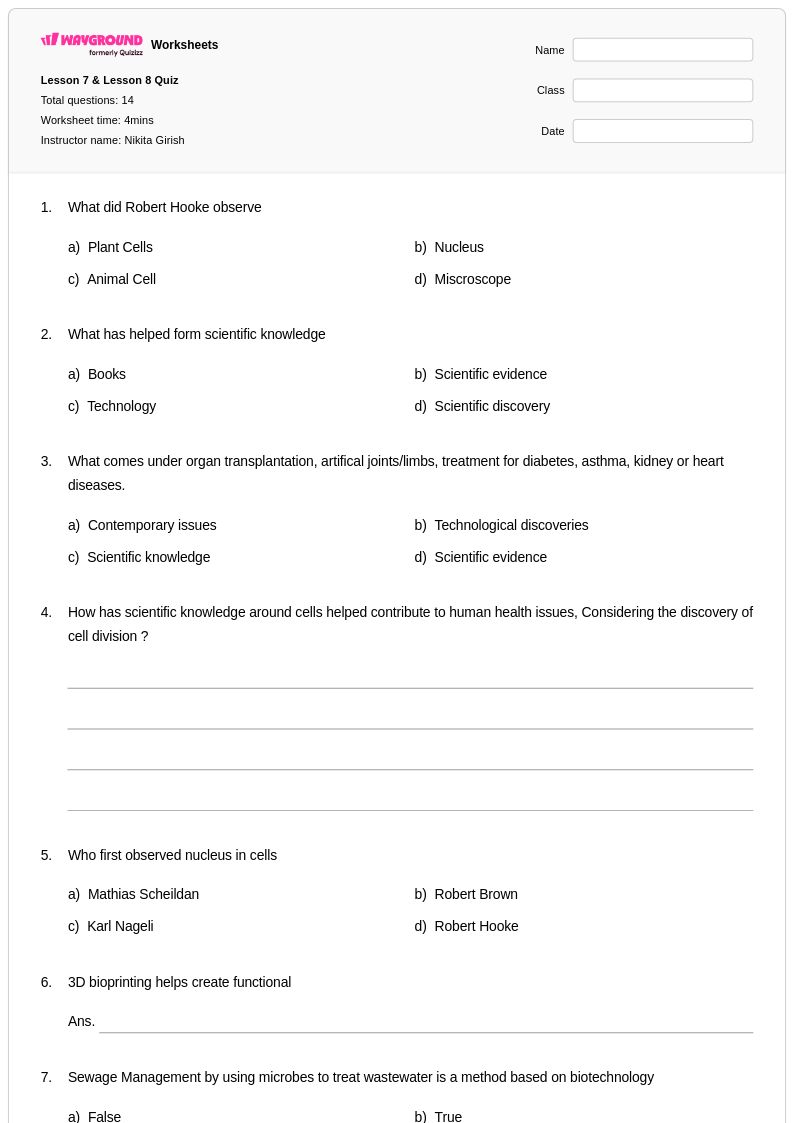
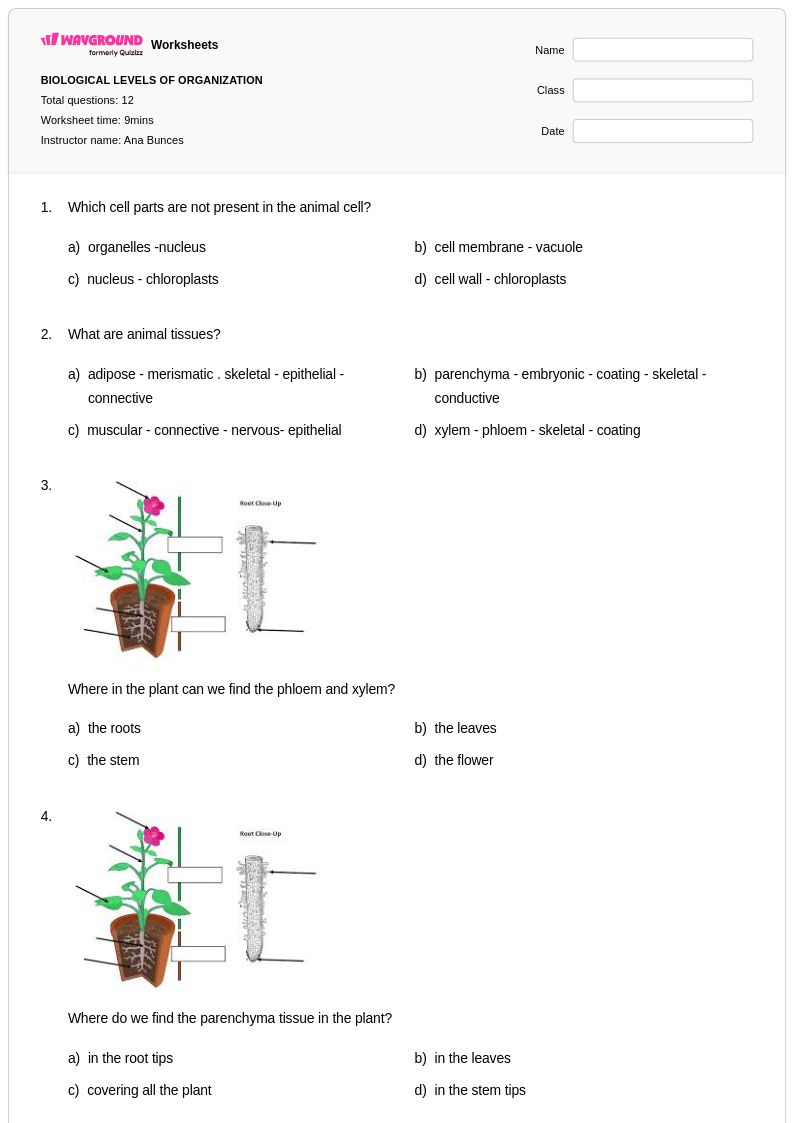
Effective practice for cell theory includes labeling diagrams of cellular structures, matching each principle to real-world biological examples, and answering short-answer questions that ask students to explain why each tenet holds true. Fill-in-the-blank and true/false exercises work well for initial reinforcement, while application questions — such as asking students how cell theory explains reproduction or disease — push toward deeper understanding. Mixing these formats in a single worksheet session keeps students engaged and surfaces gaps in comprehension early.
What misconceptions do students commonly have about cell theory?
One of the most common misconceptions is that viruses are alive because they contain genetic material, which directly conflicts with the first principle of cell theory since viruses are not composed of cells. Students also frequently confuse the historical development of cell theory — attributing it to a single scientist rather than understanding it as a cumulative framework built by Hooke, Schleiden, Schwann, and Virchow. Another recurring error is conflating the cell as the 'basic unit of life' with it being the smallest unit of matter, when in fact cells themselves are composed of organelles and molecules.
How can I use cell theory worksheets in my classroom?
Cell theory worksheets on Wayground are available as printable PDFs for traditional classroom use and in digital formats for technology-integrated or remote learning environments, including the option to host them as a graded quiz directly on the Wayground platform. Printable versions work well for in-class guided practice or homework, while digital versions allow for immediate feedback and easy tracking of student progress. Both formats include complete answer keys, so teachers can efficiently review work and address errors without additional preparation.
How does cell theory connect to other biology topics students will encounter?
Cell theory is the conceptual anchor for nearly every subsequent topic in biology — from cellular respiration and mitosis to genetics and ecology. Because the theory establishes that all living things are composed of cells and that cells come from pre-existing cells, it directly underpins how students understand reproduction, heredity, and organism function. Reinforcing cell theory early and returning to it when introducing new units helps students see biology as a connected discipline rather than a collection of isolated facts.
How do I support students who struggle with cell theory concepts?
For students who struggle, breaking cell theory into one principle at a time with targeted practice on each before combining them tends to reduce cognitive overload. Wayground's accommodation tools allow teachers to enable read-aloud support so questions are read to students who need it, reduce answer choices to lower the cognitive load on multiple-choice items, and extend time for students who need additional processing time. These settings can be applied to individual students while the rest of the class works under standard conditions, making differentiation manageable without disrupting the flow of a lesson.