Free Printable Characteristics of Life Worksheets for Class 2
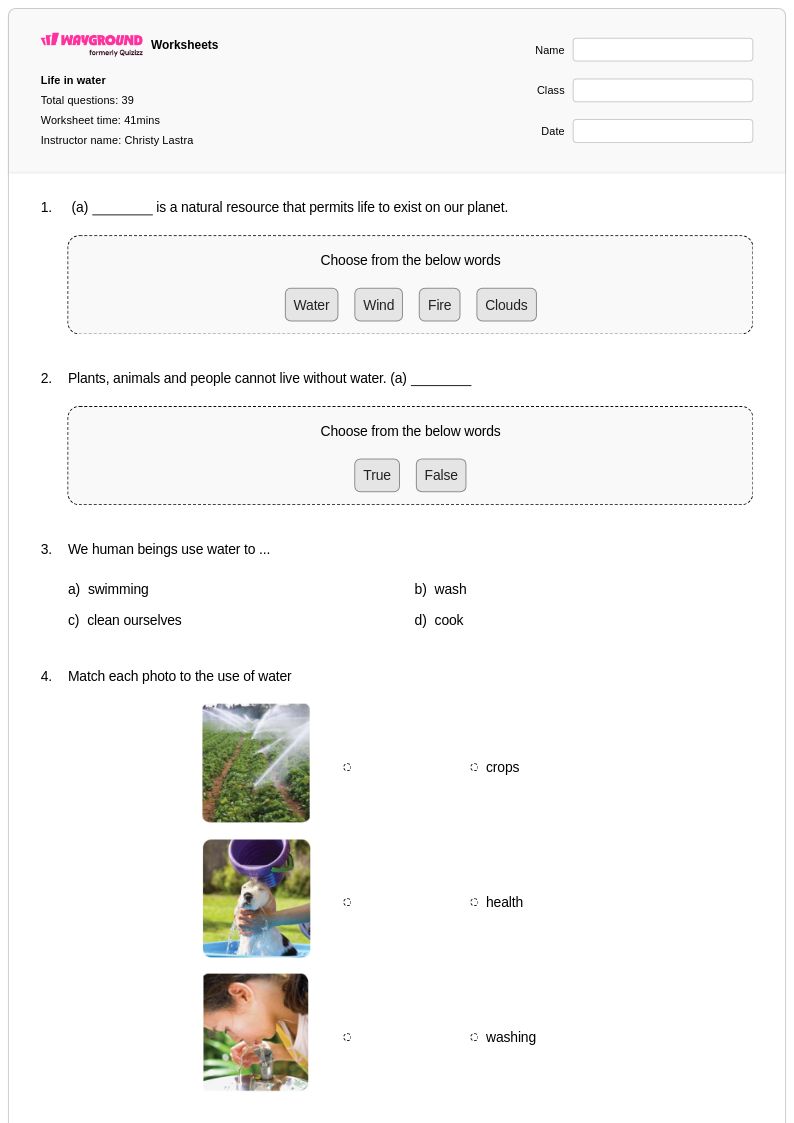
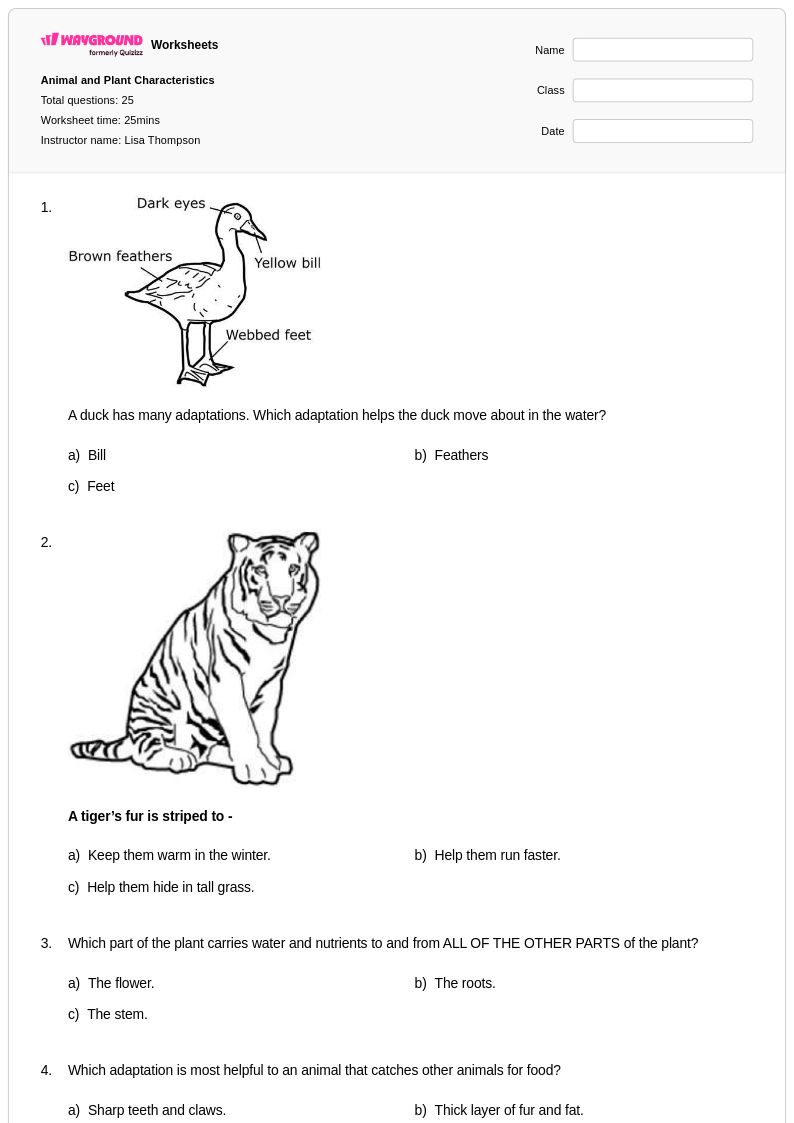
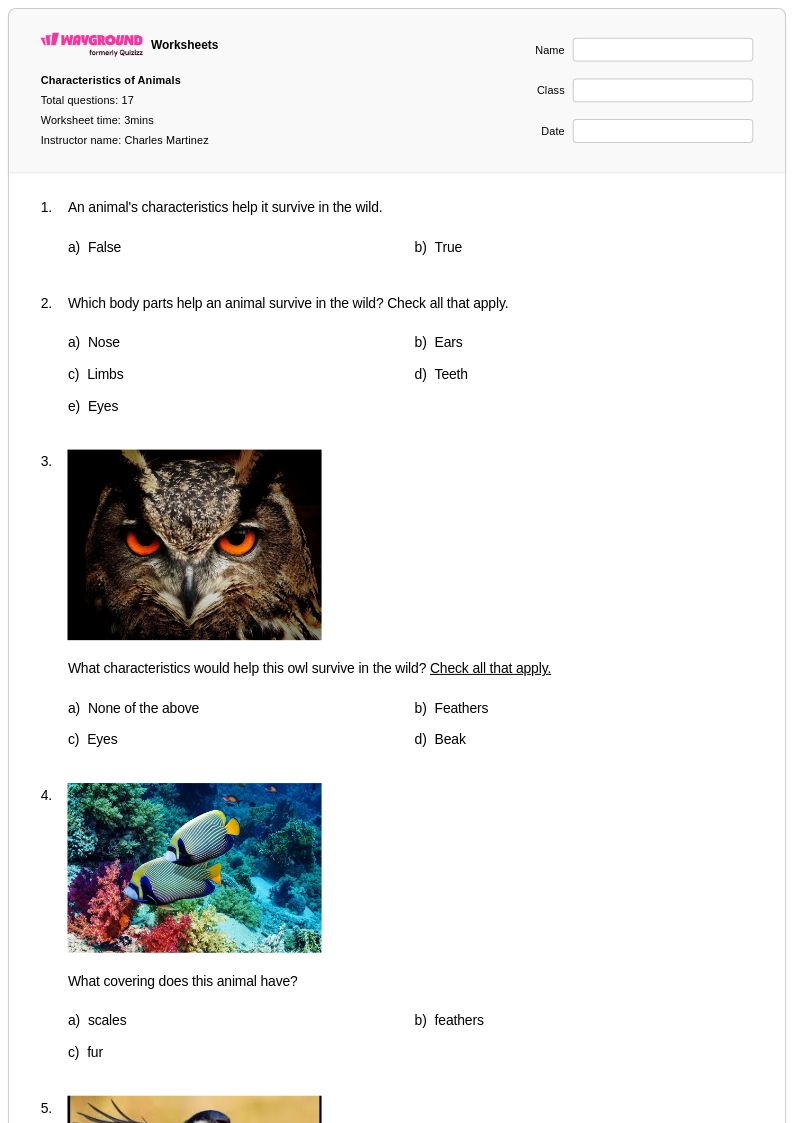
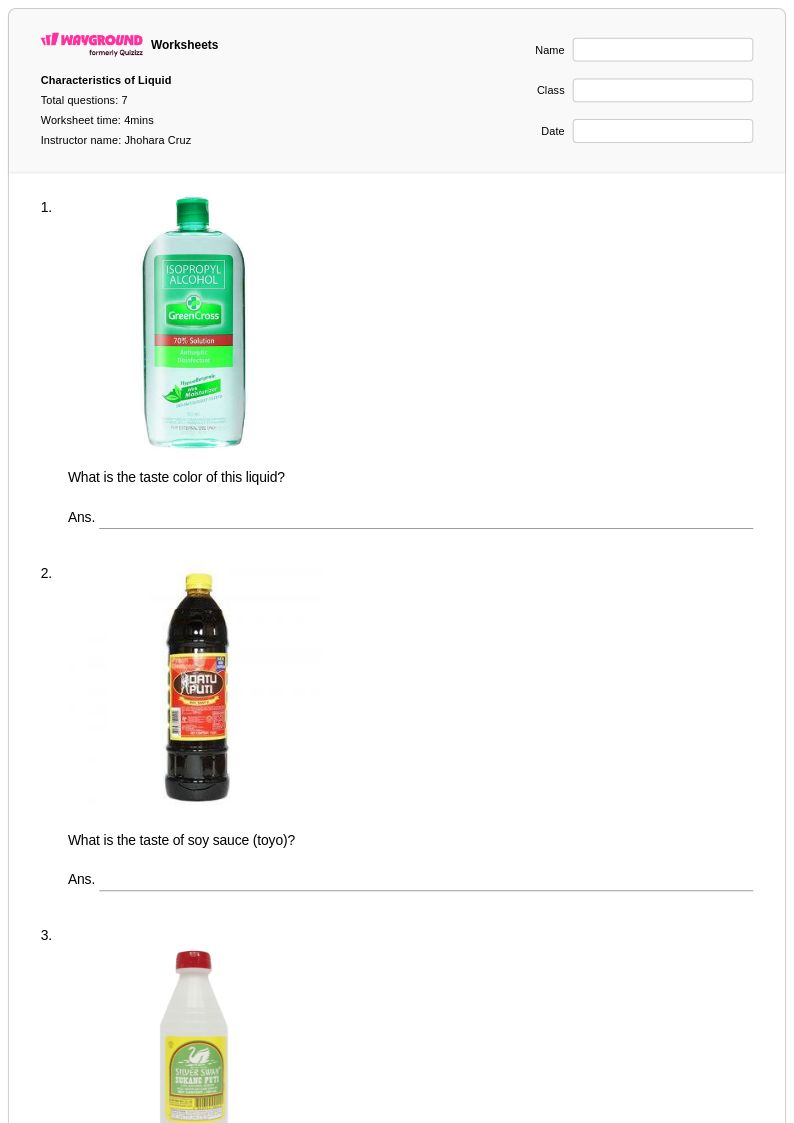
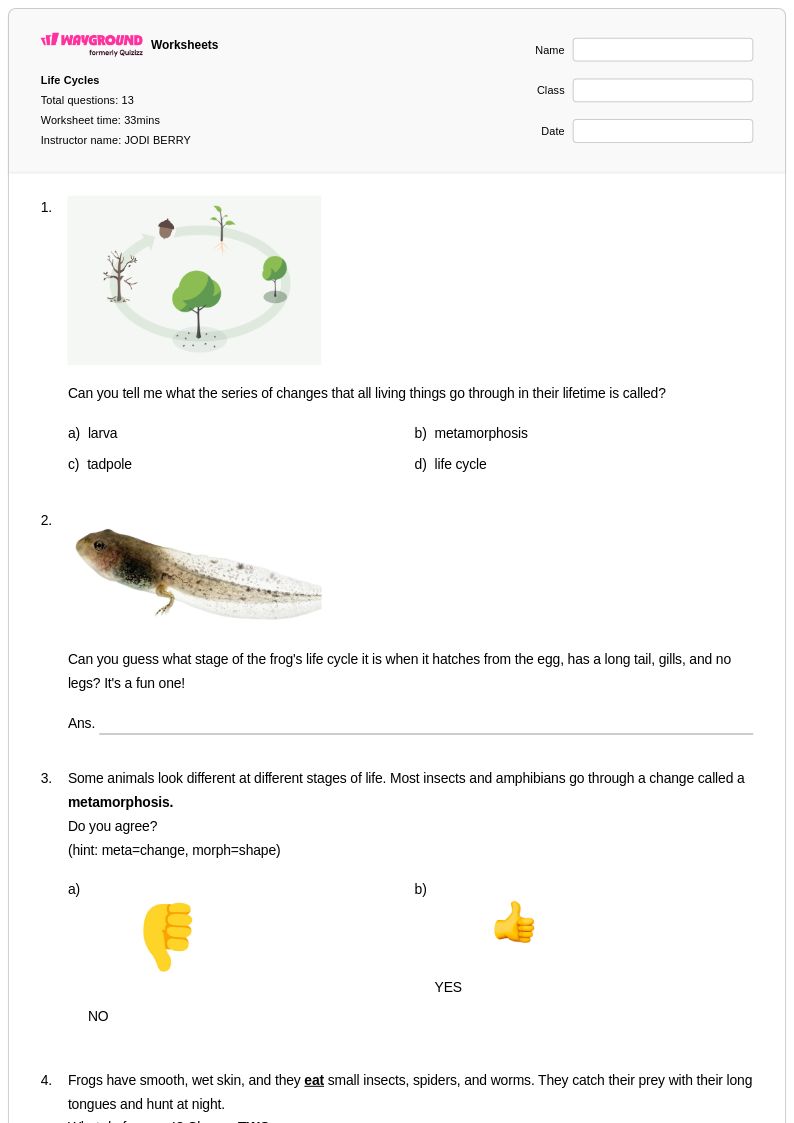
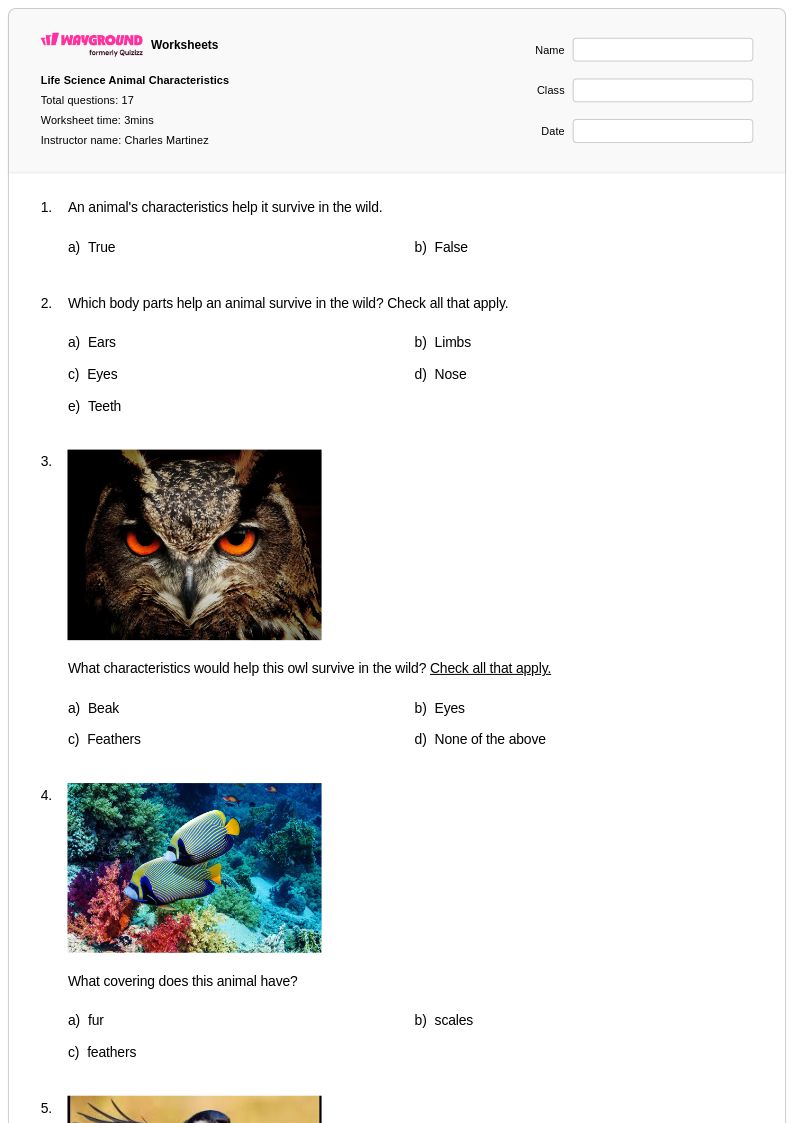
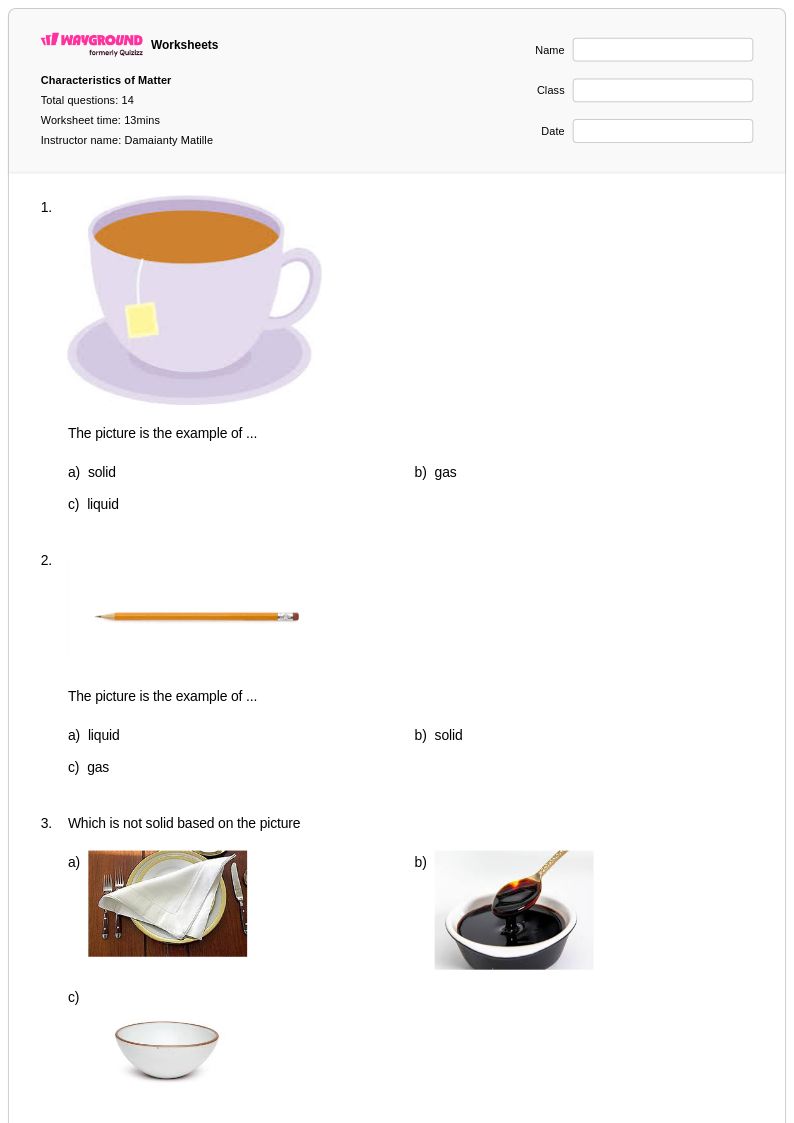
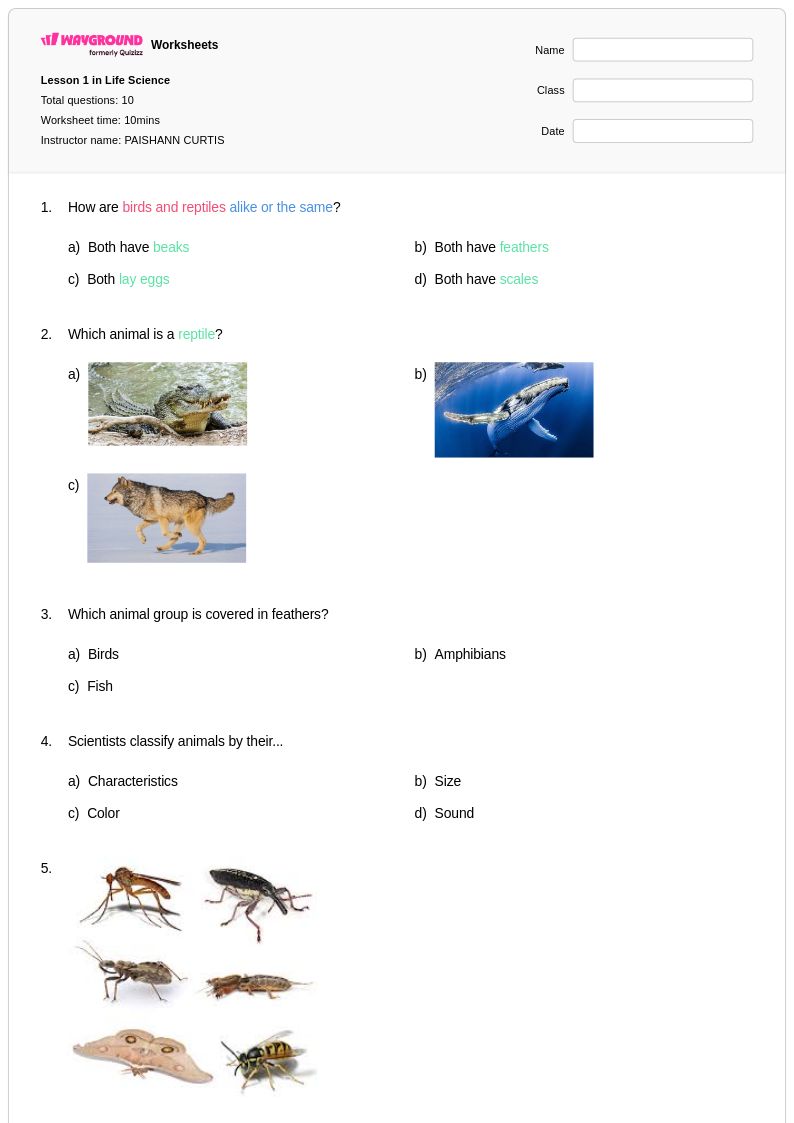
Class 2 characteristics of life worksheets help students explore living and non-living things through engaging printables, practice problems, and free PDF resources with answer keys from Wayground.
Explore printable Characteristics of Life worksheets for Class 2
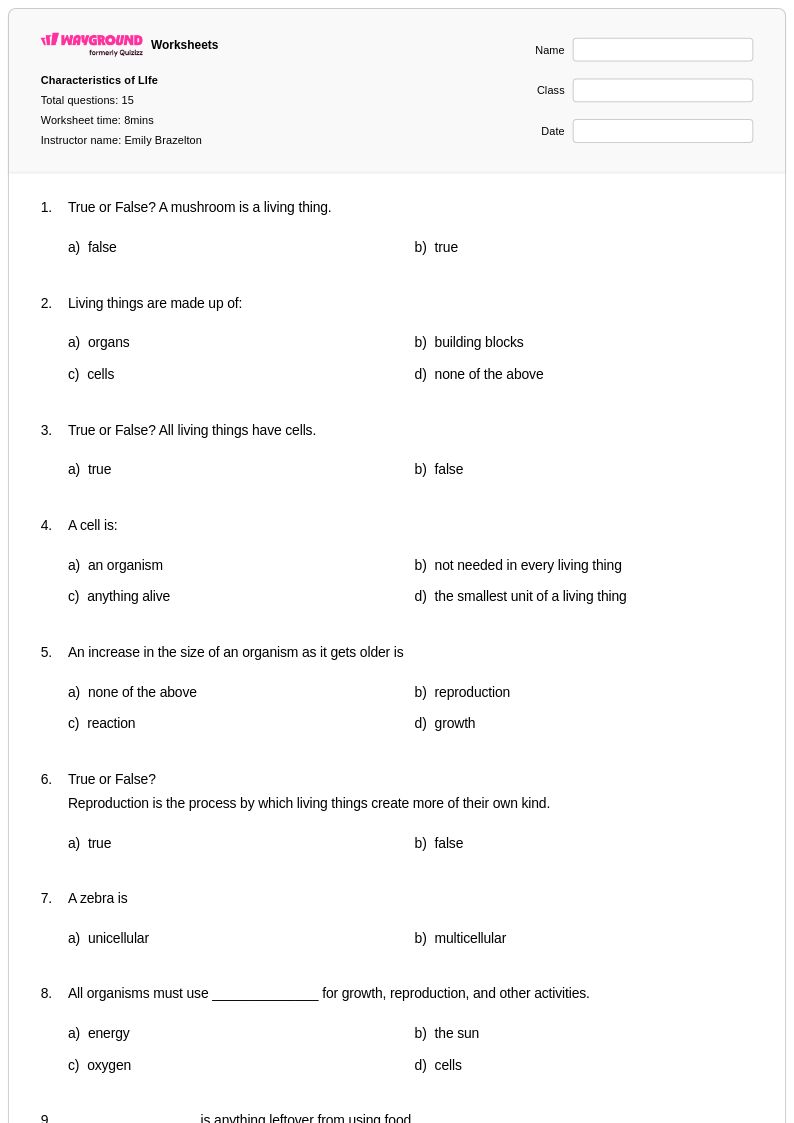
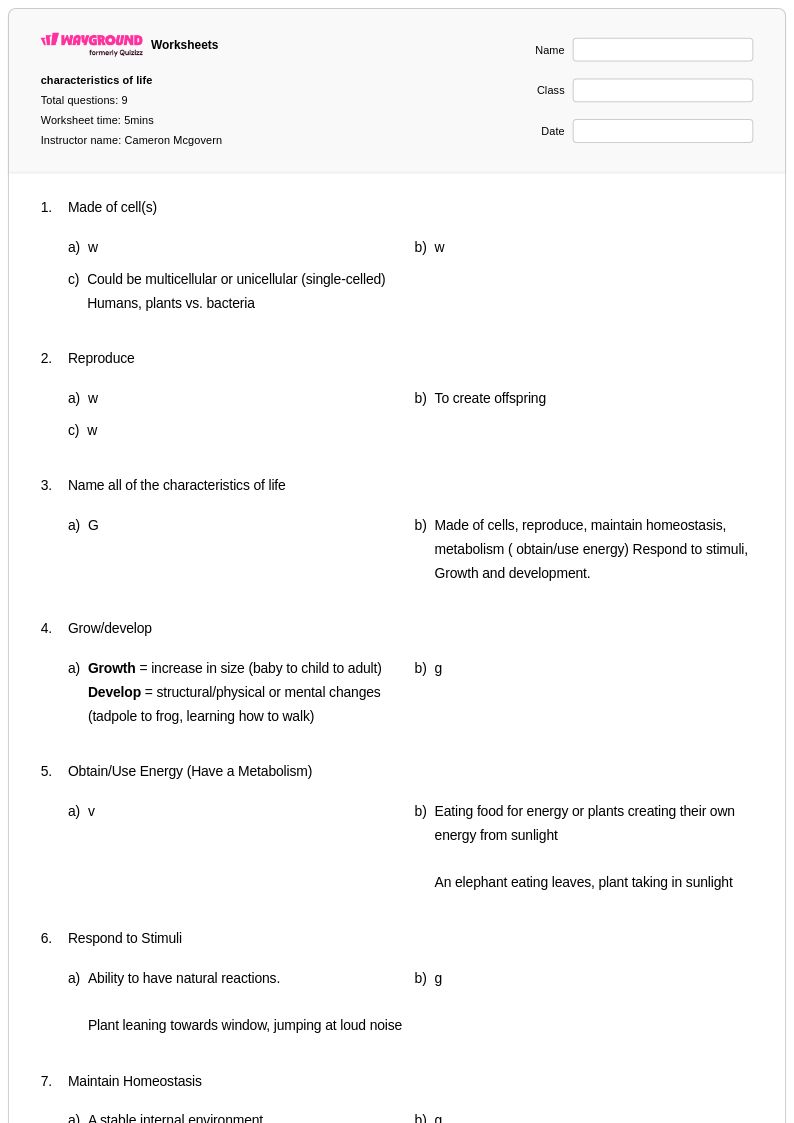
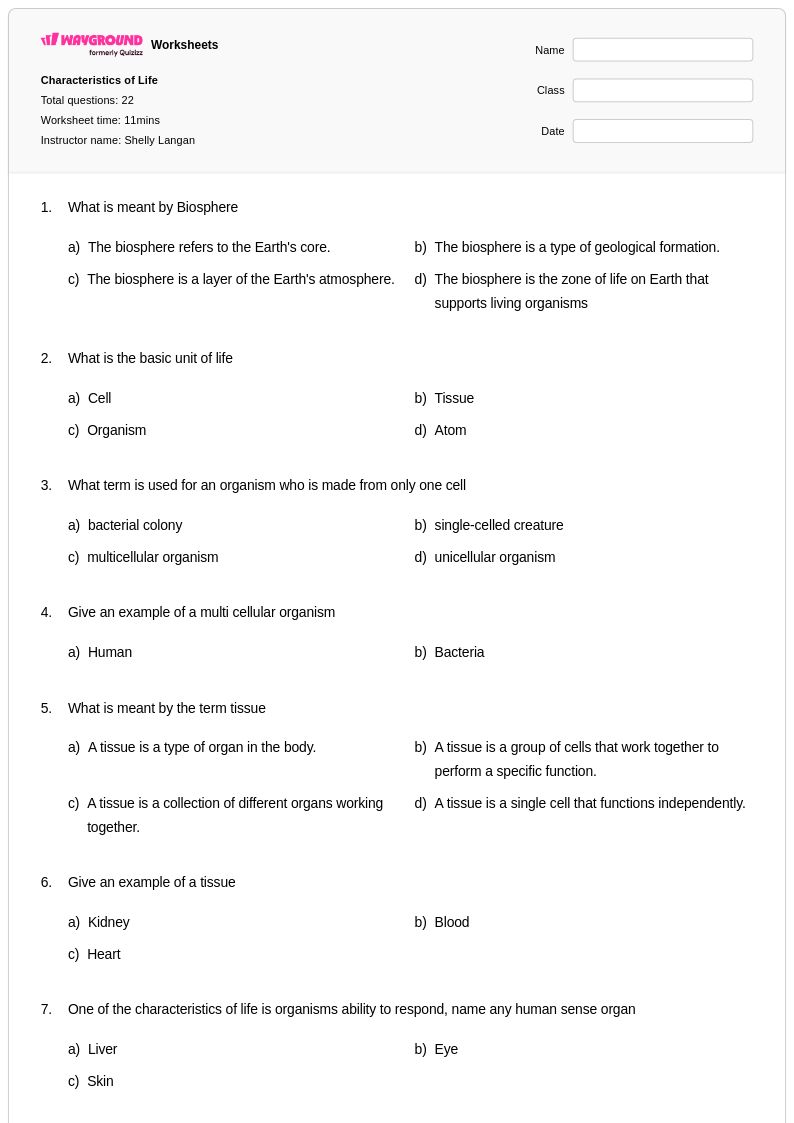
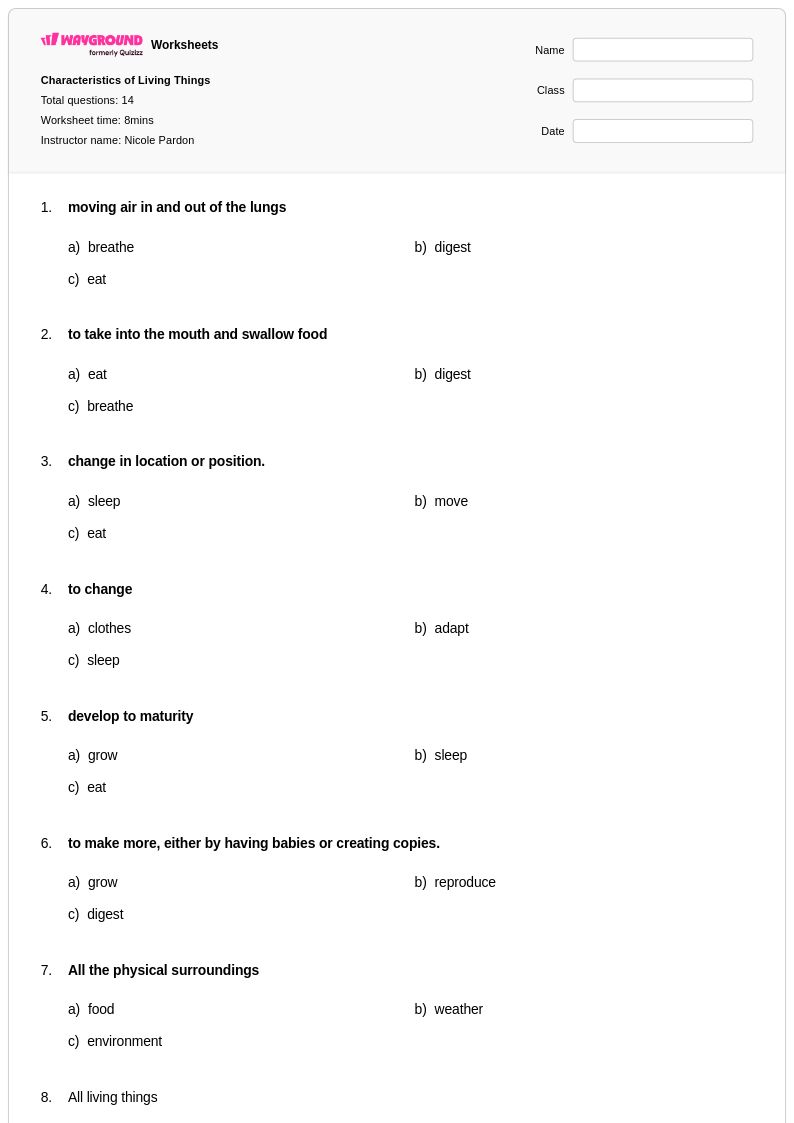
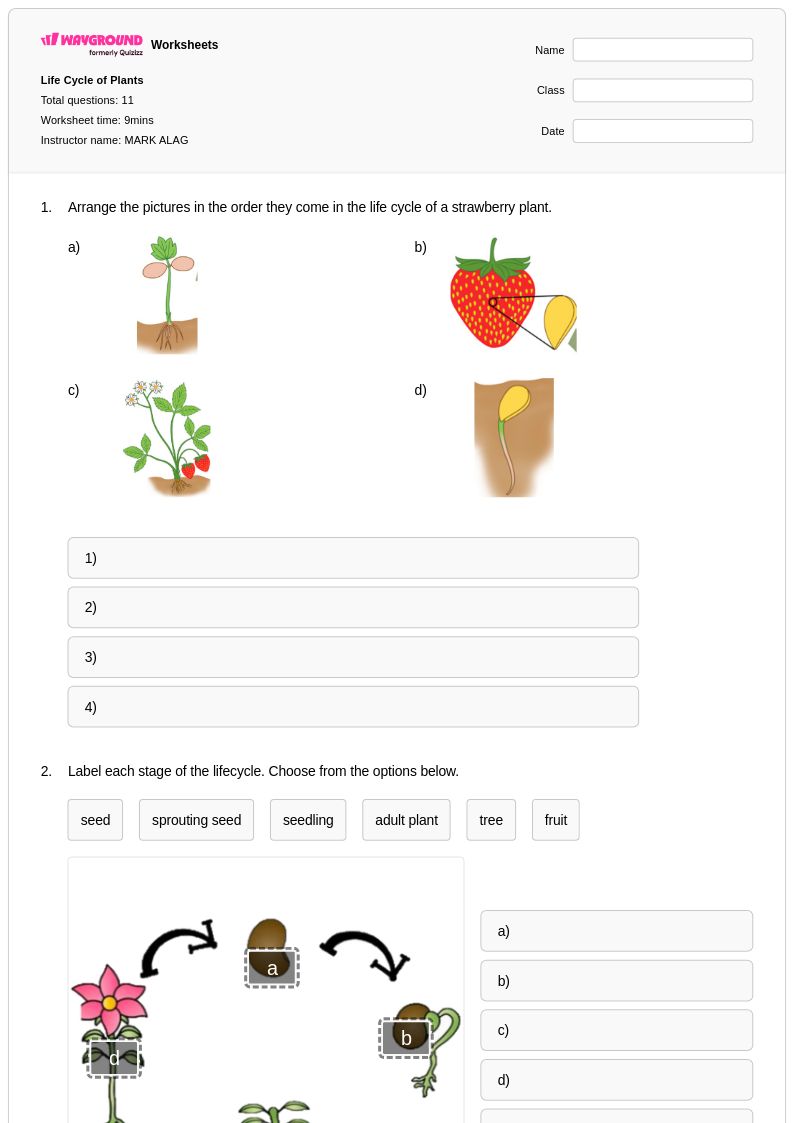
Characteristics of life worksheets for grade 2 students through Wayground (formerly Quizizz) provide young learners with engaging activities that introduce fundamental biological concepts in an age-appropriate manner. These educational resources help second graders identify and understand the basic traits that distinguish living organisms from non-living objects, including growth, reproduction, response to stimuli, and the need for food and water. The worksheets strengthen critical thinking skills as students observe, classify, and analyze different organisms through interactive practice problems that build scientific literacy from an early age. Each printable resource includes comprehensive answer keys that support both independent learning and guided instruction, with free pdf formats making these materials easily accessible for classroom and home use.
Wayground (formerly Quizizz) empowers educators with millions of teacher-created resources specifically designed to support grade 2 biology instruction on characteristics of life concepts. The platform's robust search and filtering capabilities allow teachers to quickly locate worksheets that align with curriculum standards while accommodating diverse learning needs through built-in differentiation tools. Teachers can customize existing materials or create original content that addresses specific classroom objectives, with flexible options available in both printable pdf and interactive digital formats. These comprehensive worksheet collections facilitate effective lesson planning while providing valuable resources for remediation, enrichment activities, and targeted skill practice that helps students master essential biological concepts through repeated exposure and varied applications.
FAQs
How do I teach the characteristics of life in a biology class?
Start by establishing a clear, memorable framework — most curricula organize the characteristics of life into seven properties: organization, metabolism, homeostasis, growth, reproduction, response to stimuli, and adaptation through evolution. Use concrete, organism-level examples for each property, such as comparing how a bacterium and a mammal both regulate internal temperature (homeostasis) but through entirely different mechanisms. Connecting each characteristic to familiar organisms helps students move beyond memorization toward genuine conceptual understanding.
What exercises help students practice identifying the characteristics of life?
The most effective practice tasks ask students to classify scenarios or objects as living or non-living and justify their reasoning using specific characteristics. Comparative analysis exercises — where students examine a single-celled organism alongside a multicellular plant and identify how each demonstrates metabolism or reproduction — build the analytical thinking biology requires. Practice problems that present edge cases, like viruses or fire, push students to apply the characteristics rigorously rather than relying on intuition.
What misconceptions do students commonly have about the characteristics of life?
A frequent misconception is that any one characteristic alone is sufficient to classify something as living — students often cite movement or growth without recognizing that non-living systems like crystals can also grow. Another common error is treating the characteristics as a checklist where partial fulfillment counts, rather than understanding that all seven must apply for something to be considered alive. Students also struggle with viruses, which replicate but lack independent metabolism, making them a useful case study for testing conceptual clarity.
How do I use Wayground's characteristics of life worksheets in my classroom?
Wayground's characteristics of life worksheets are available as printable PDFs for traditional classroom use and in digital formats for technology-integrated learning environments, giving teachers flexibility regardless of classroom setup. You can host the worksheets as a quiz directly on Wayground, which allows you to track student responses and identify gaps in understanding in real time. Each worksheet includes a complete answer key, supporting both teacher-led review and independent student self-assessment.
How can I differentiate characteristics of life instruction for students at different levels?
For students who need additional support, reduce the complexity of examples by anchoring all characteristics to a single familiar organism before introducing comparisons. For advanced learners, introduce ambiguous cases — such as viruses, prions, or artificial self-replicating systems — and ask students to defend a classification using evidence from each characteristic. On Wayground, teachers can apply individual accommodations such as read aloud support and reduced answer choices for students who need them, while other students receive standard settings without disruption.
How do the seven characteristics of life connect to broader biology concepts?
The seven characteristics of life — organization, metabolism, homeostasis, growth, reproduction, response to stimuli, and adaptation through evolution — serve as the conceptual spine of introductory biology because nearly every subsequent unit builds on at least one of them. Cell biology reinforces organization and metabolism, genetics and evolution extend reproduction and adaptation, and ecology frames how organisms respond to environmental stimuli at a population level. Teaching these characteristics early gives students a durable schema that makes later content easier to contextualize and retain.