Free Printable Prefixes and Suffixes Worksheets for Class 2
Explore Class 2 Science worksheets focused on prefixes and suffixes, featuring free printables and practice problems with answer keys to help students master word structure fundamentals in biology vocabulary.
Explore printable Prefixes and Suffixes worksheets for Class 2
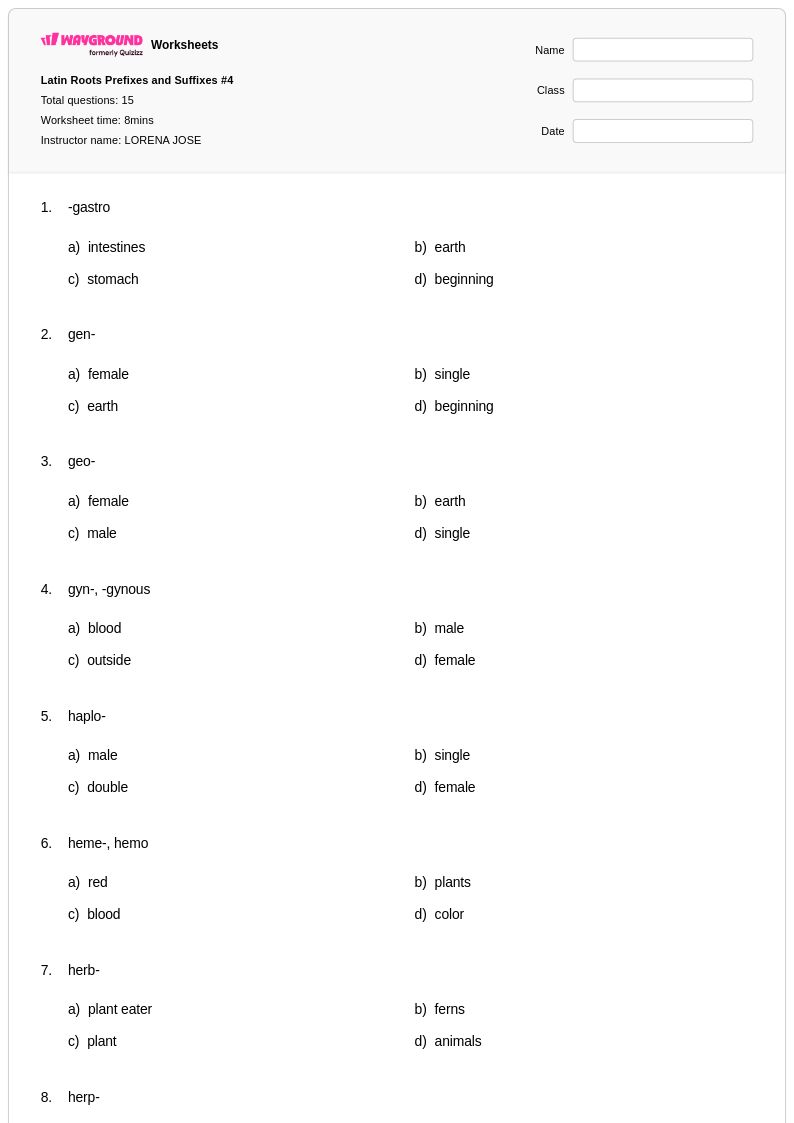
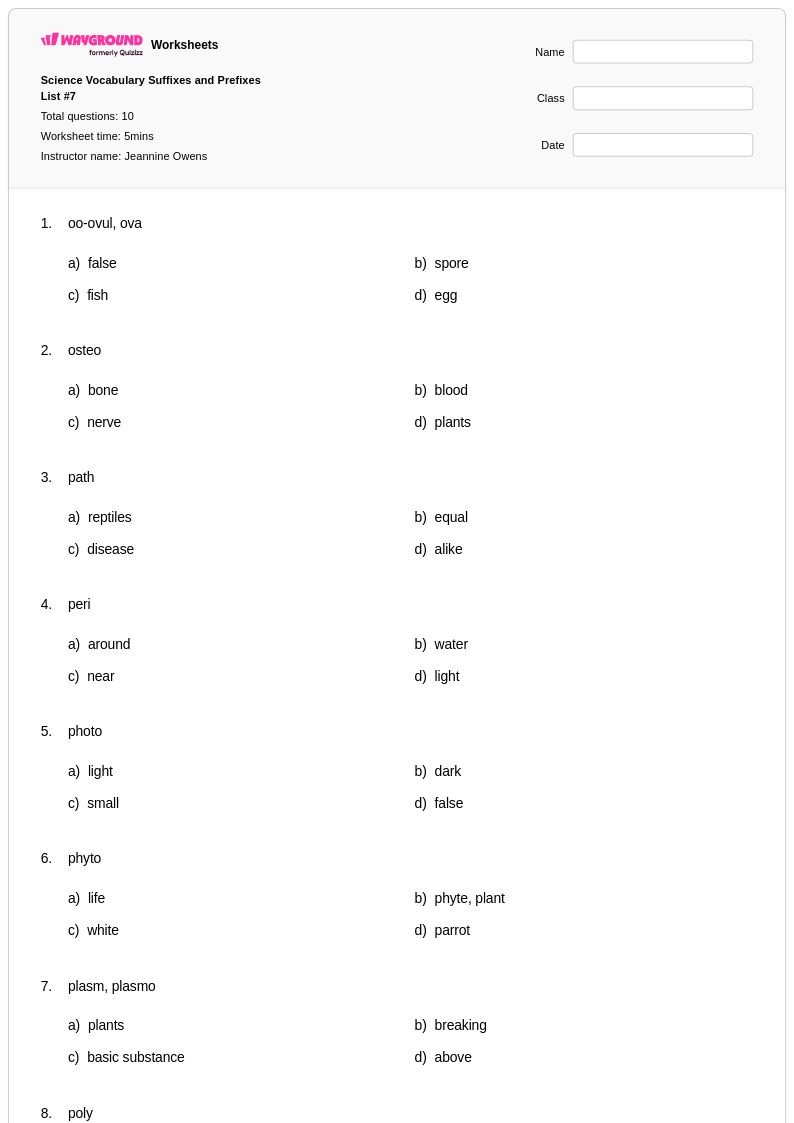
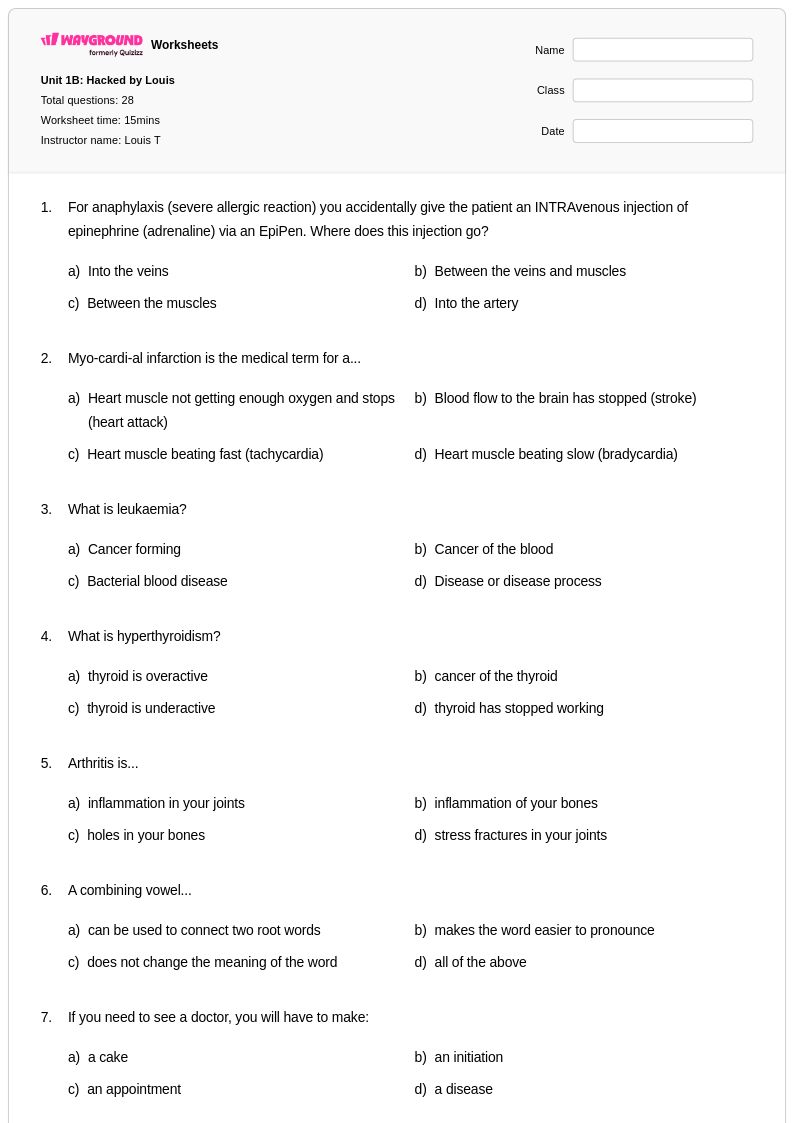
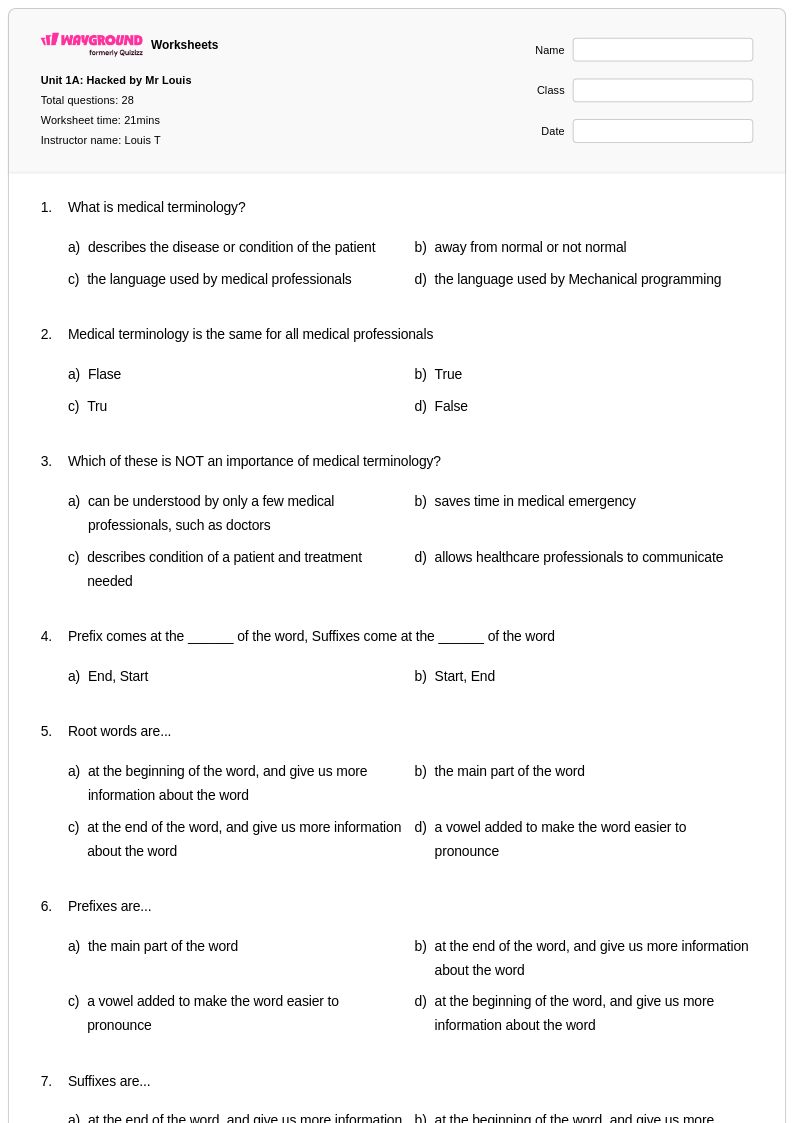
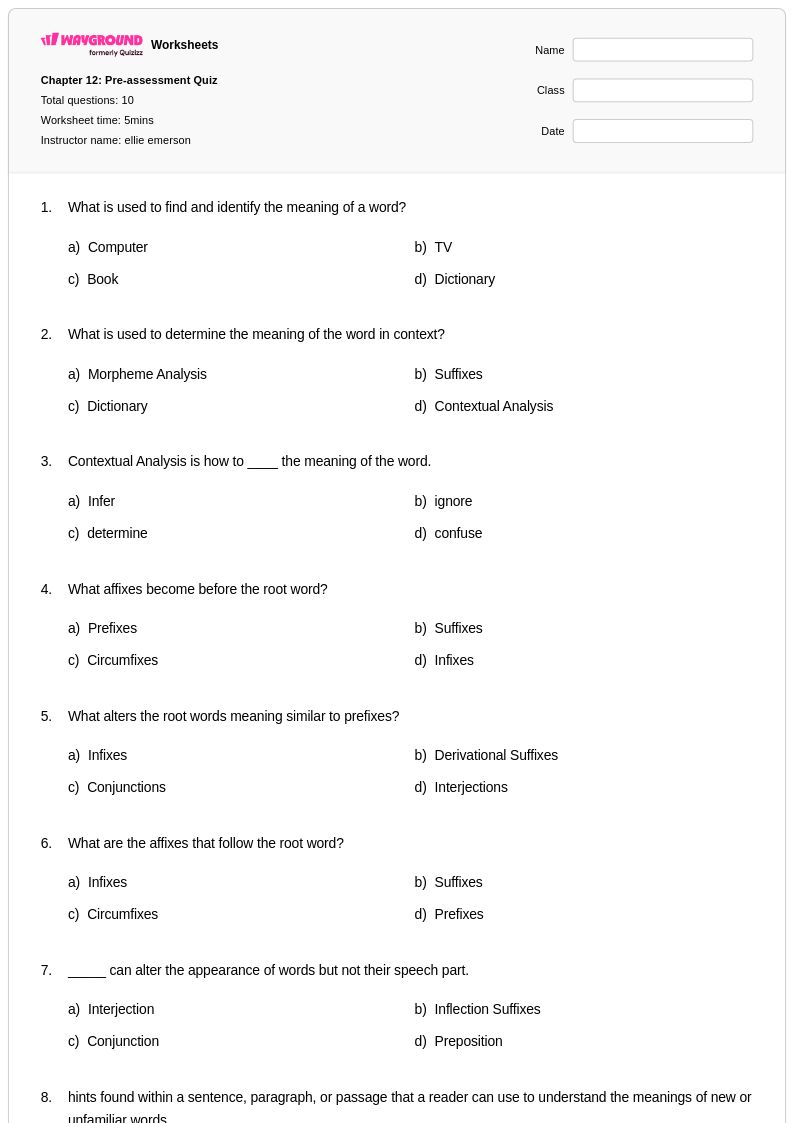
Prefixes and suffixes worksheets for Class 2 students available through Wayground offer young learners essential practice in understanding how word parts create meaning in biological and scientific vocabulary. These carefully designed printables help second graders develop foundational literacy skills by breaking down science terms into recognizable components, making complex biology concepts more accessible and memorable. Students work through engaging practice problems that teach them to identify common prefixes like "bi-" meaning two, and suffixes like "-ology" meaning the study of, building their ability to decode unfamiliar scientific words independently. Each worksheet comes with a comprehensive answer key, allowing teachers to quickly assess student understanding while providing immediate feedback on this critical language skill that supports science comprehension.
Wayground's extensive collection of teacher-created resources includes millions of customizable worksheets that support educators in delivering effective prefix and suffix instruction aligned with Class 2 standards. The platform's robust search and filtering capabilities enable teachers to quickly locate materials that match their specific curriculum needs, while differentiation tools allow for seamless adaptation of content to support diverse learners in the classroom. These resources are available in both printable pdf format and digital versions, providing flexibility for various instructional settings and learning preferences. Teachers can efficiently plan targeted skill practice sessions, create remediation activities for struggling readers, or develop enrichment opportunities for advanced students, all while building the vocabulary foundation necessary for future success in biological sciences and other academic areas.
FAQs
How do I teach prefixes and suffixes in a biology class?
Start by introducing a small set of high-frequency biological prefixes and suffixes, such as 'auto-,' 'hetero-,' and '-osis,' before students encounter them in context. Model the word-decoding process explicitly by breaking apart unfamiliar terms during direct instruction, then give students structured practice applying the same strategy independently. Repeated exposure through vocabulary matching, word analysis, and application tasks builds the habit of using morphology as a comprehension tool across biological texts.
What exercises help students practice biological prefixes and suffixes?
Effective practice exercises include word analysis tasks where students break a term into its prefix, root, and suffix; vocabulary matching activities that connect word parts to their meanings; and application problems where students encounter an unfamiliar biological term and must infer its meaning using known components. Worksheets that progress from recognition to application are especially effective because they move students from passive recall toward active use of morphological knowledge.
What mistakes do students commonly make when learning biology prefixes and suffixes?
A common error is treating prefixes and suffixes as fixed definitions rather than flexible meaning-modifiers, which leads students to misread terms when a word part appears in an unexpected context. Students also frequently confuse visually similar prefixes, such as 'photo-' and 'phyto-,' or suffixes like '-ase' and '-ose,' because they memorize them as spelling patterns rather than as units of meaning. Targeted practice that requires students to explain why a word means what it means, rather than simply matching it to a definition, helps correct both of these patterns.
How can I use prefixes and suffixes worksheets to support students who struggle with scientific vocabulary?
For students who find scientific terminology overwhelming, breaking instruction into small clusters of two or three related word parts at a time reduces cognitive load significantly. Wayground's digital worksheets support this approach and include accommodation options such as Read Aloud, which audio-reads questions for students who need it, and reduced answer choices, which limits the number of options displayed to make matching tasks more manageable. Extended time can also be configured per student so that vocabulary work does not become a speed barrier for learners who need more processing time.
How do I use Wayground's prefixes and suffixes worksheets in my classroom?
Wayground's prefixes and suffixes worksheets are available as printable PDFs for traditional classroom use and in digital formats for technology-integrated environments, giving teachers flexibility to assign them as in-class practice, homework, or independent study. Teachers can also host the worksheets as a quiz directly on Wayground, which streamlines collection and review. Each worksheet includes a complete answer key, so grading and self-correction routines are straightforward to build into any lesson structure.
At what point in a biology unit should I introduce prefix and suffix instruction?
Prefix and suffix instruction is most effective when introduced before or at the very start of a content unit, because it gives students a decoding strategy they can apply as new terminology appears. Returning to word-part practice at the midpoint of a unit also reinforces retention and helps students consolidate vocabulary they have already encountered in context. Building this as a consistent routine across units, rather than treating it as a standalone lesson, produces the strongest long-term gains in scientific literacy.