
20 Q
5th - Uni
20 Q
5th - Uni
15 Q
5th - Uni
20 Q
5th - Uni
20 Q
5th - Uni
20 Q
5th
29 Q
6th - 8th
8 Q
5th
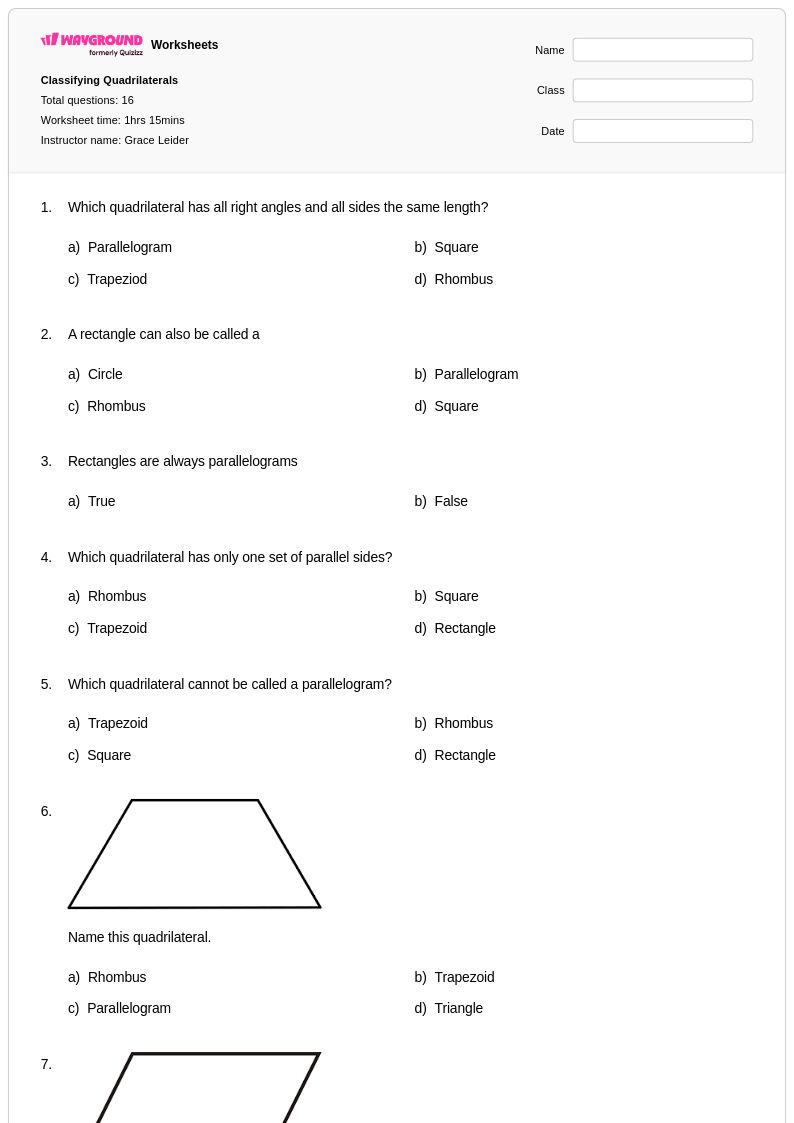
16 Q
8th - 9th
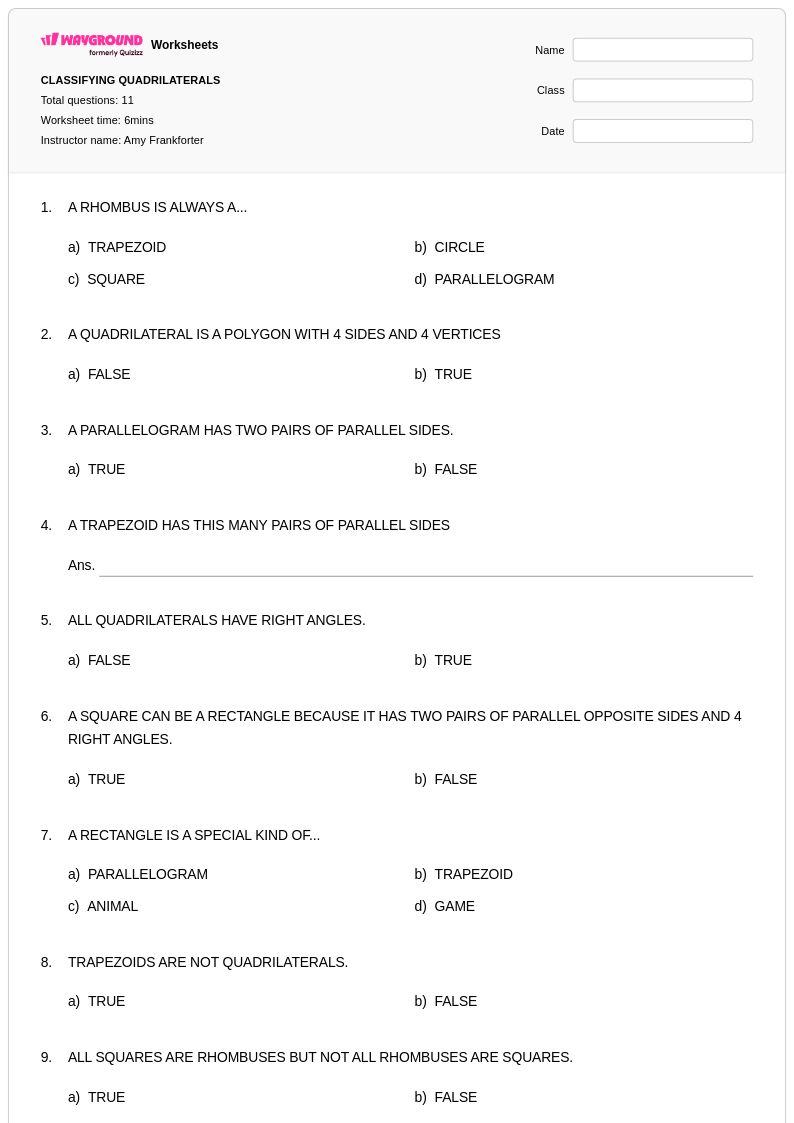
11 Q
3rd - 4th
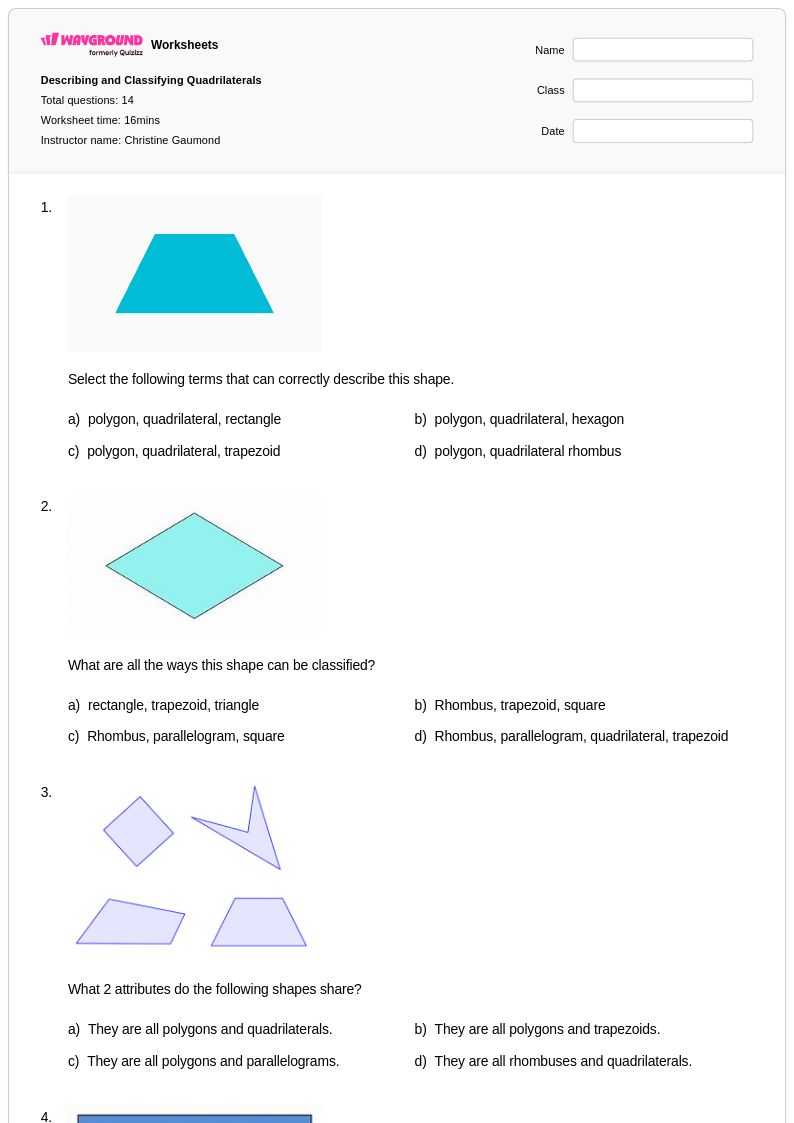
14 Q
3rd
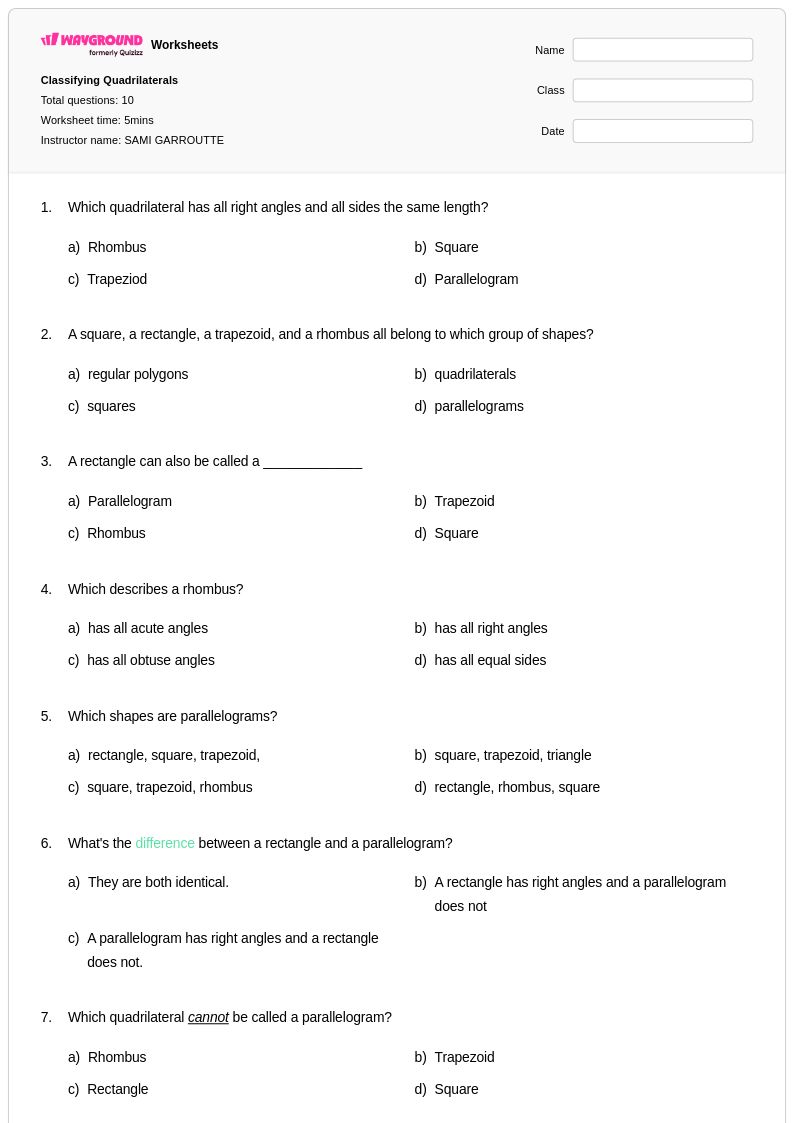
10 Q
7th - 10th
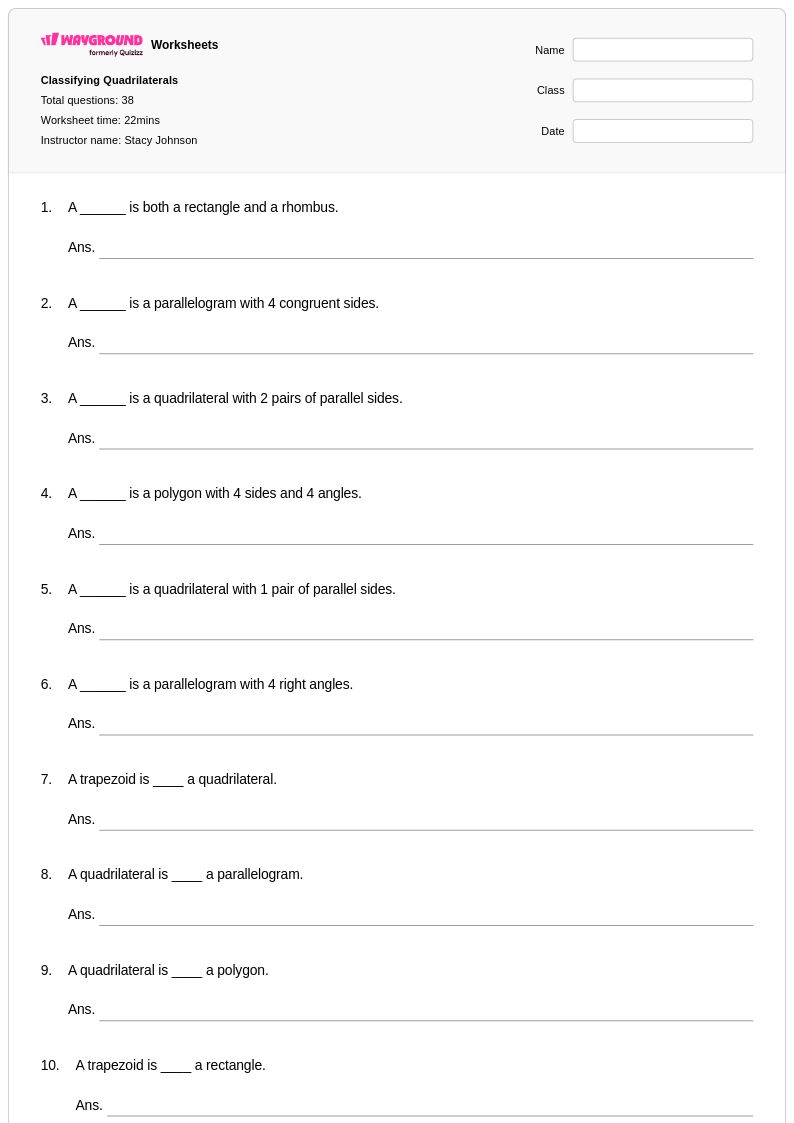
38 Q
5th
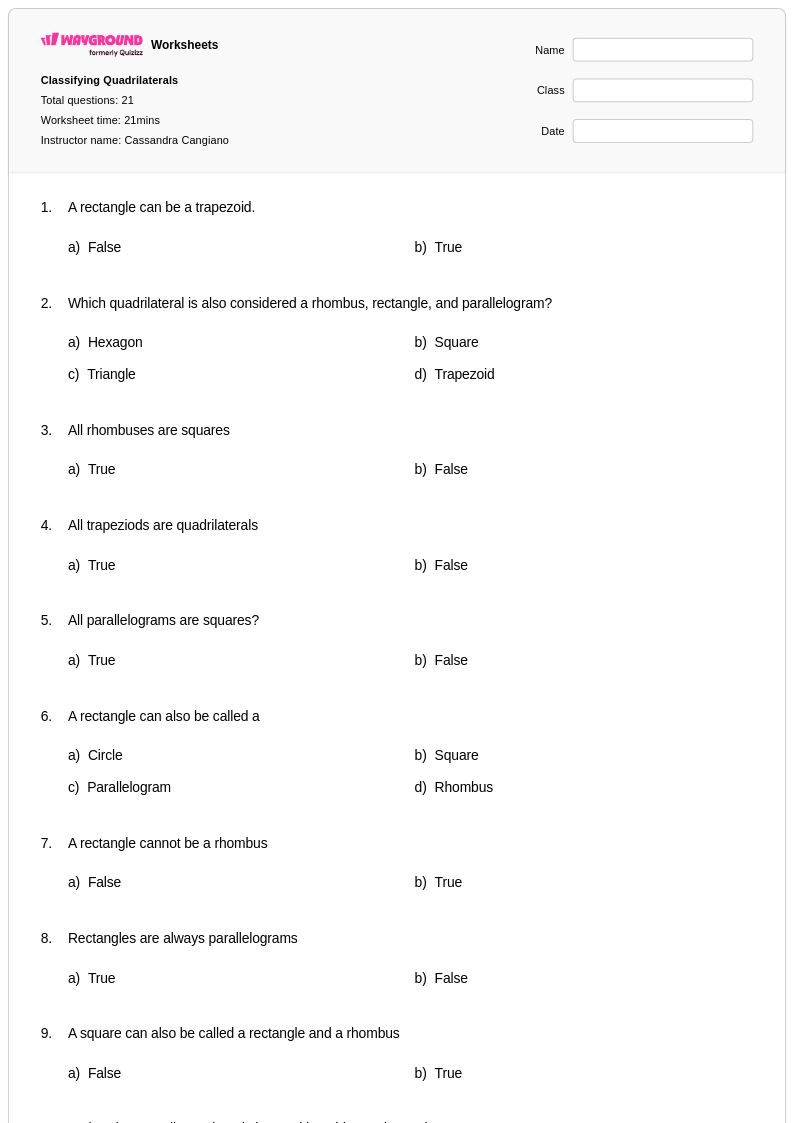
21 Q
4th - 6th
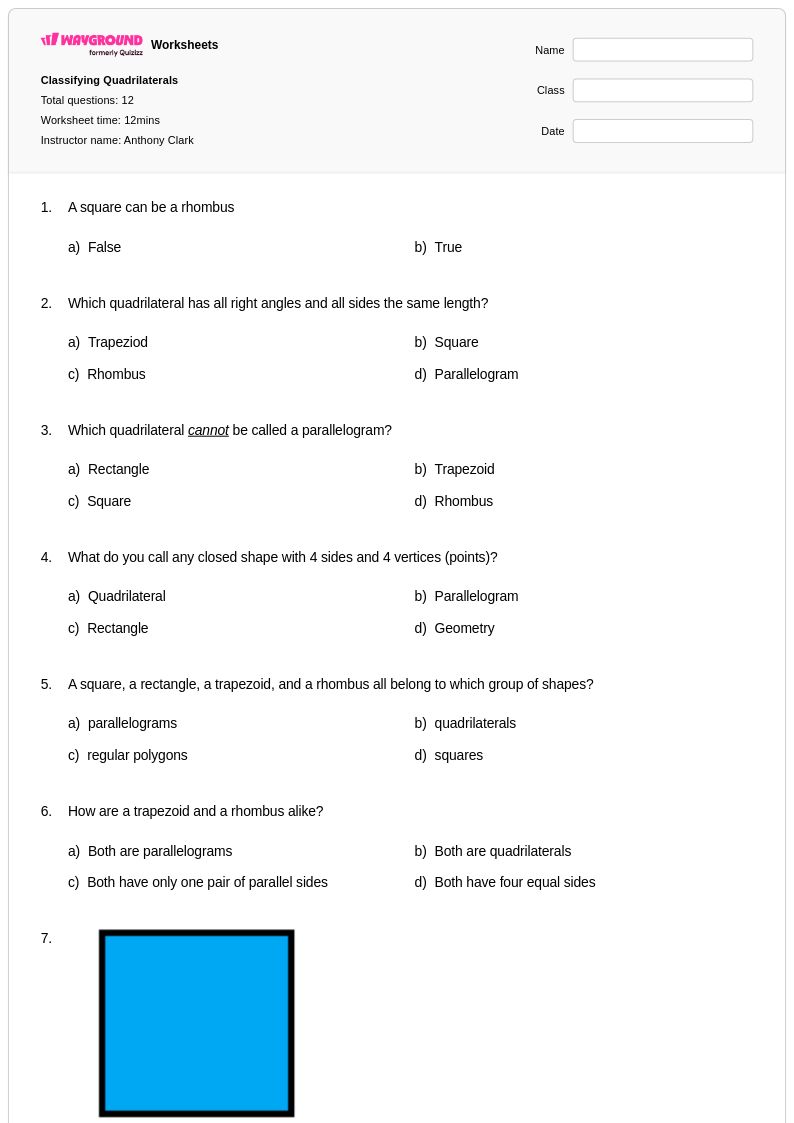
12 Q
1st - Uni
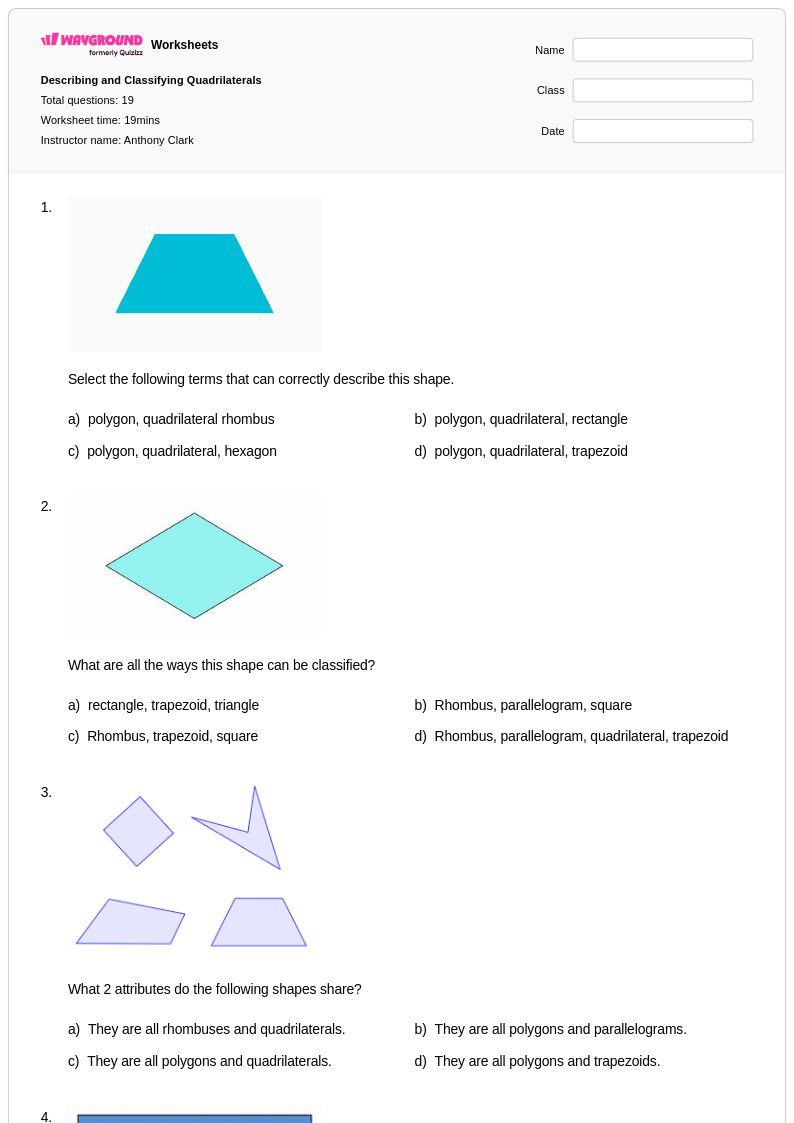
19 Q
5th - Uni
20 Q
5th - Uni
20 Q
5th - Uni
10 Q
5th - Uni
10 Q
7th - 10th
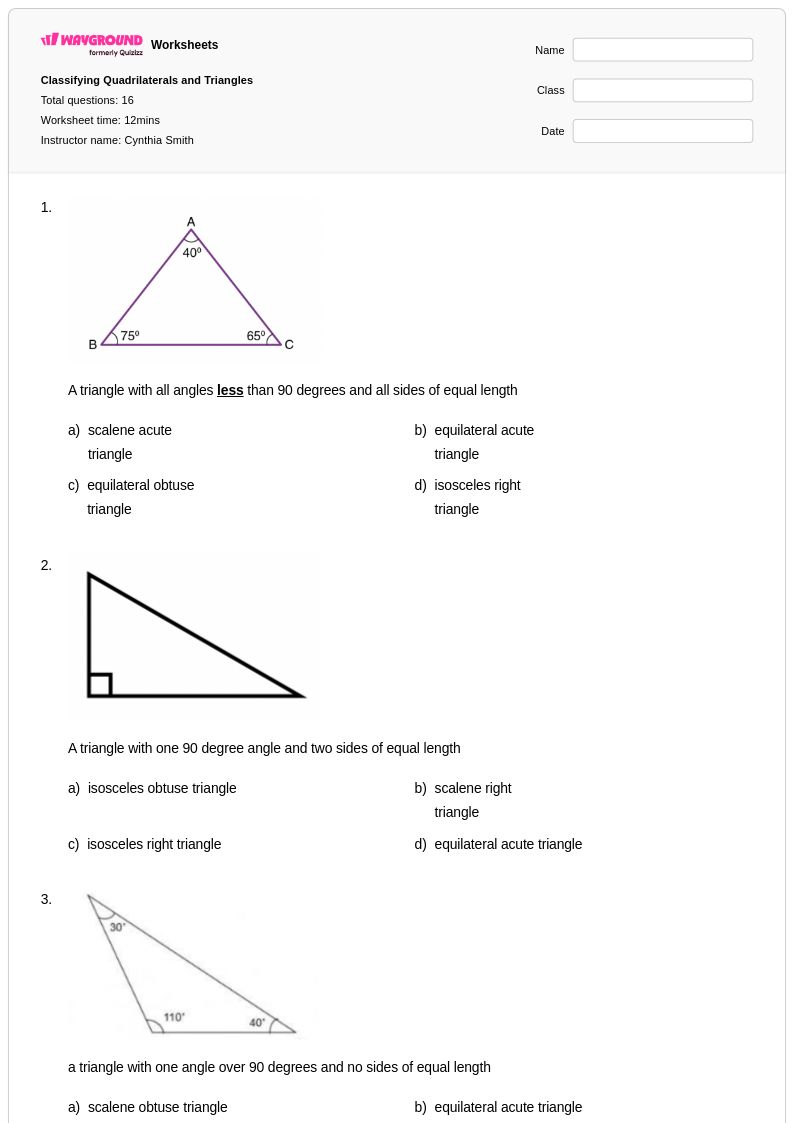
16 Q
5th
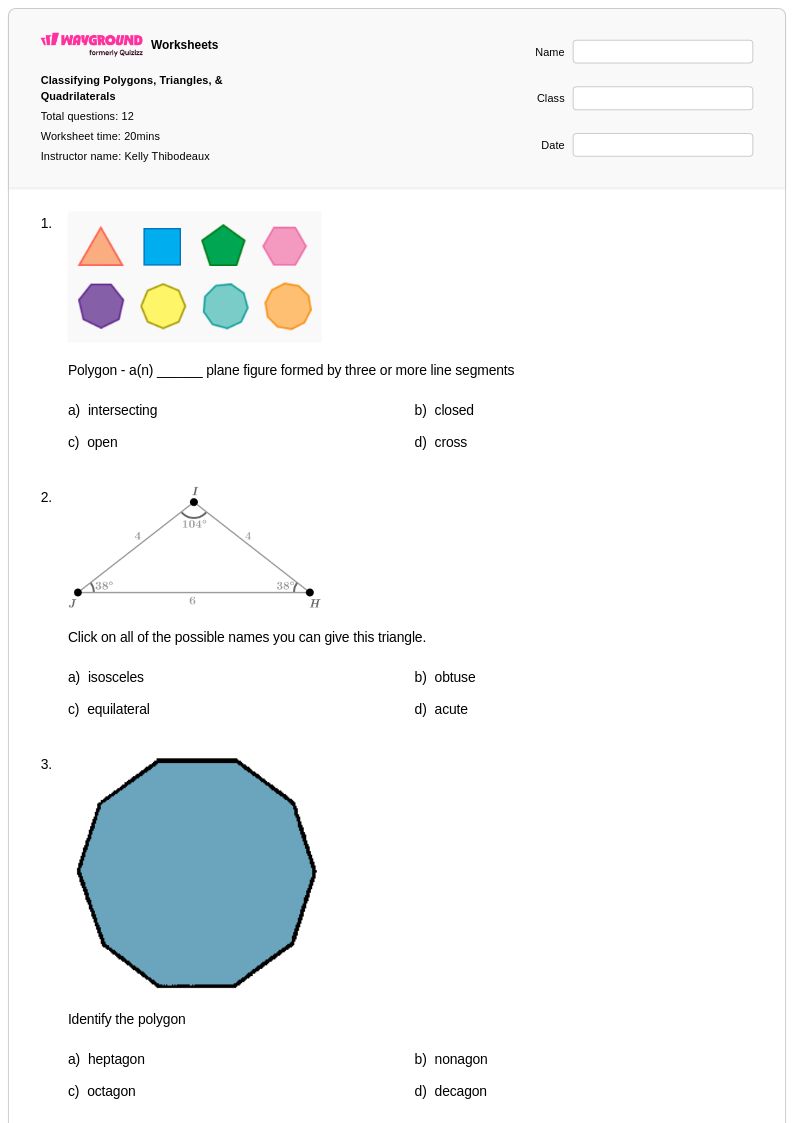
12 Q
5th
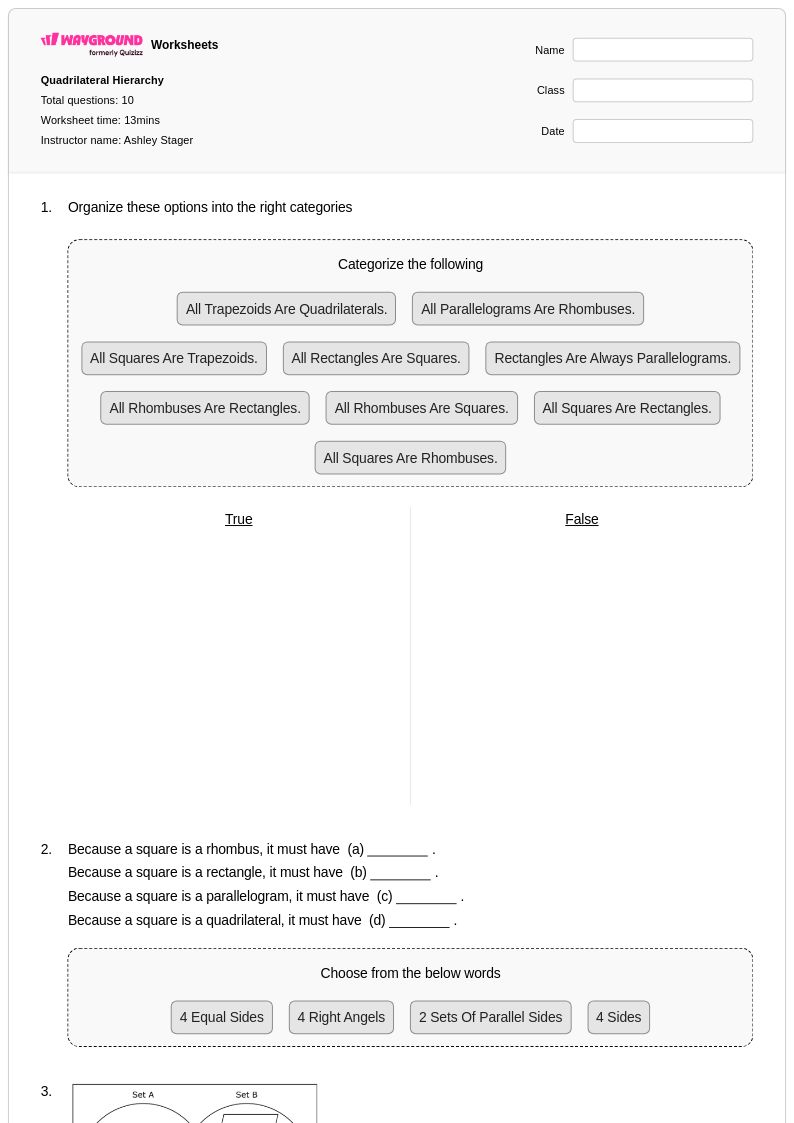
10 Q
5th
Explore Classifying Quadrilaterals Worksheets by Grades
Explore Other Subject Worksheets for kindergarten
Explore printable Classifying Quadrilaterals worksheets for Kindergarten
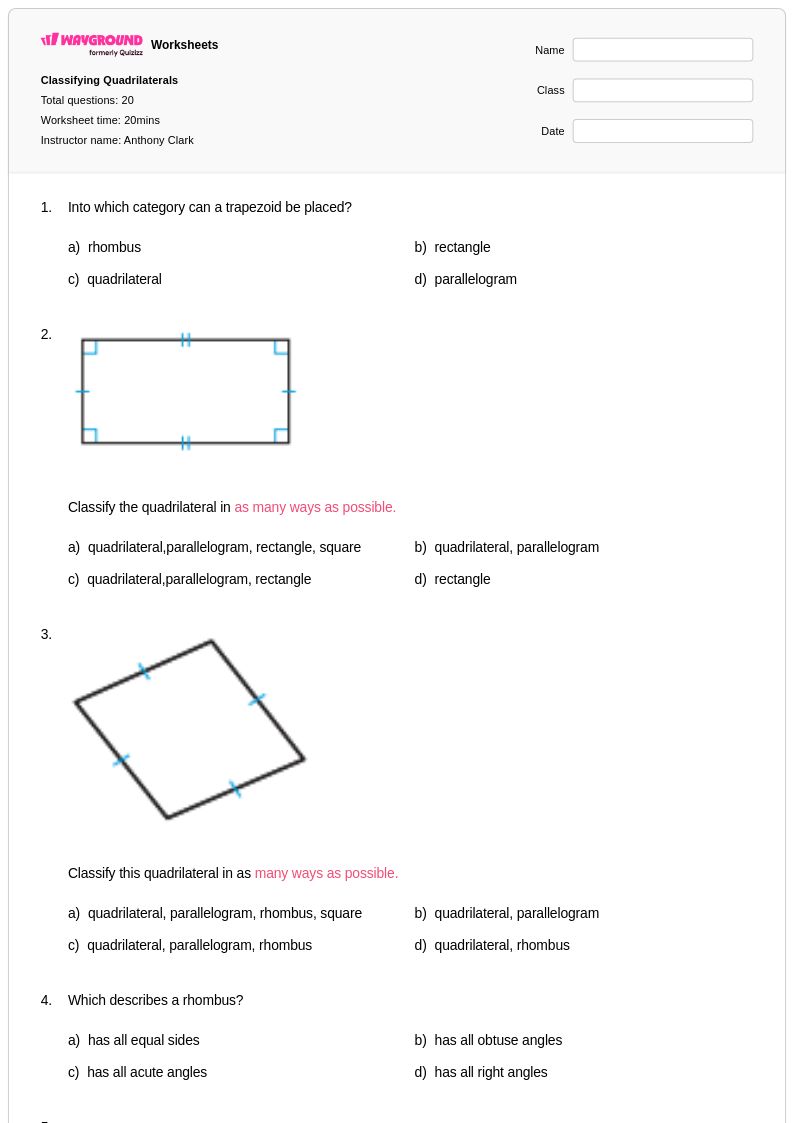
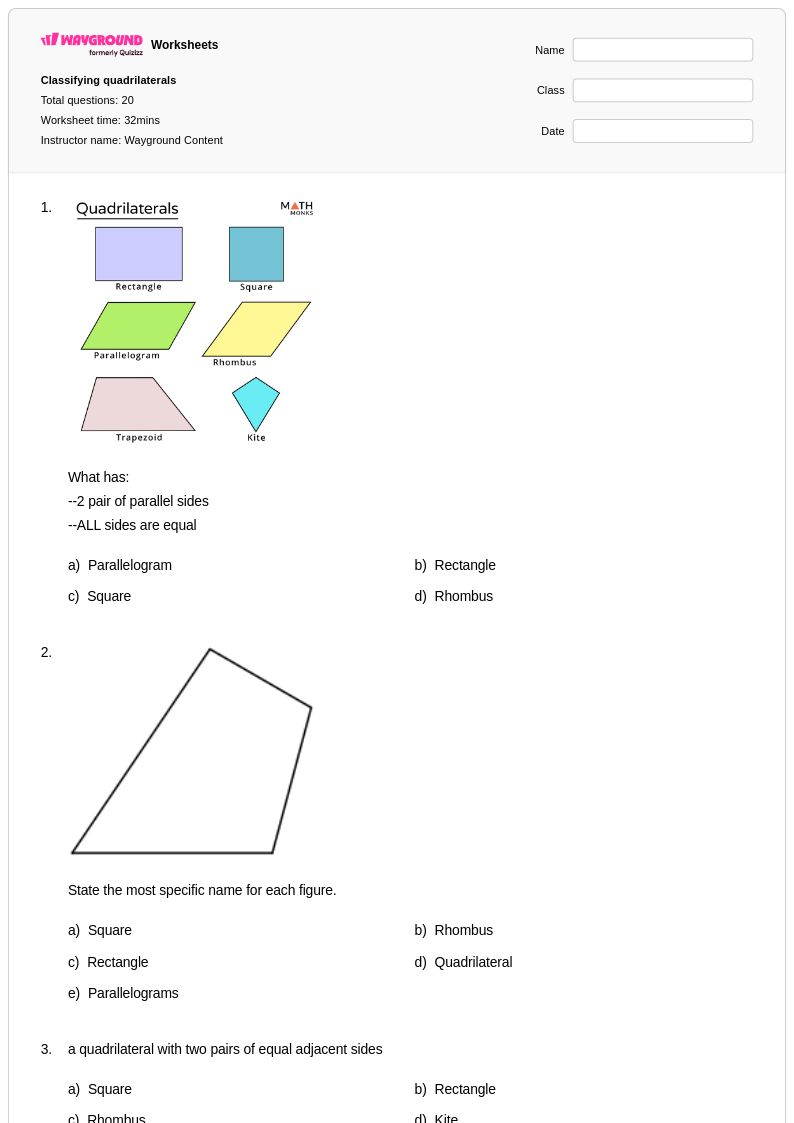
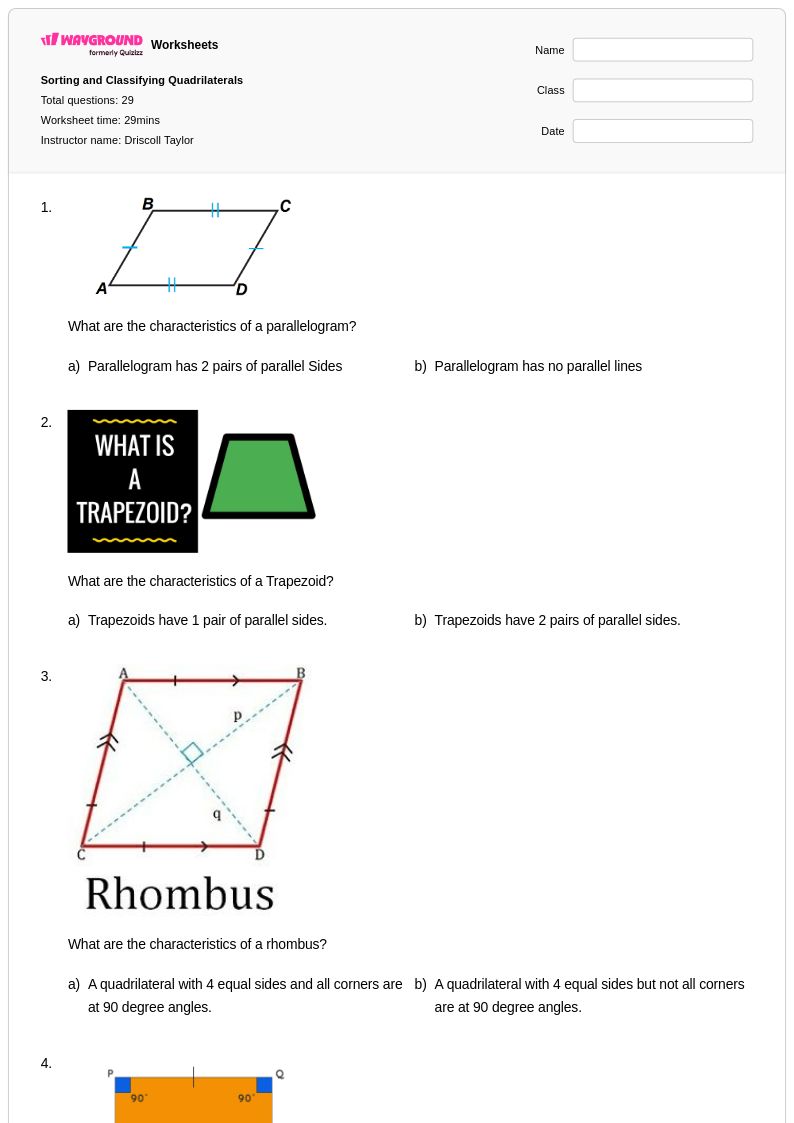
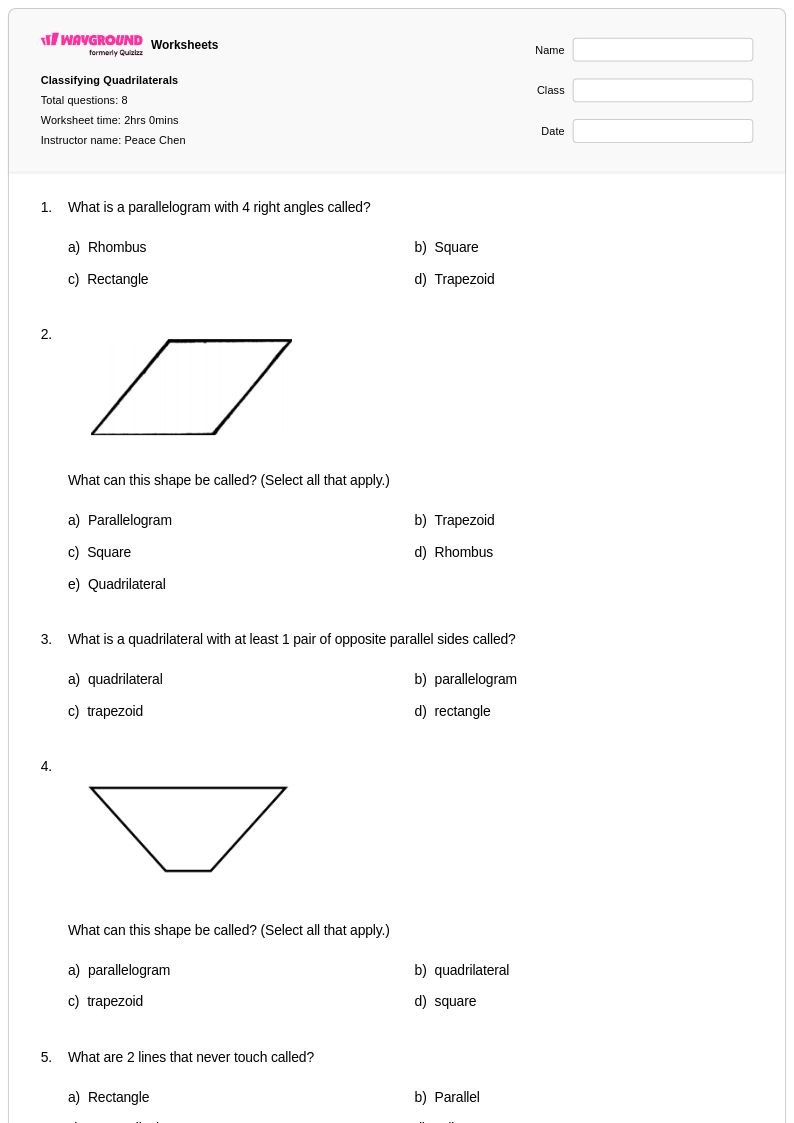
Classifying quadrilaterals worksheets for kindergarten available through Wayground provide young learners with essential foundational experiences in geometric shape recognition and categorization. These carefully designed practice problems introduce students to basic four-sided shapes like squares, rectangles, and simple rhombuses through age-appropriate visual exercises that build critical spatial reasoning skills. The comprehensive collection includes engaging activities where children identify, sort, and compare quadrilaterals based on observable characteristics such as equal sides, right angles, and parallel edges. Each worksheet comes with a complete answer key and is available as free printable pdf resources, making it easy for educators to incorporate systematic shape classification practice into daily math instruction while supporting early geometric thinking development.
Wayground supports kindergarten teachers with an extensive library of millions of teacher-created quadrilateral classification resources that streamline lesson planning and differentiated instruction. The platform's robust search and filtering capabilities allow educators to quickly locate worksheets aligned with specific learning standards and student readiness levels, while built-in customization tools enable teachers to modify content for individual learners or small groups. These versatile materials are available in both printable pdf format for hands-on classroom activities and digital formats for interactive learning experiences, providing flexibility for various teaching environments. Teachers can effectively use these resources for initial skill introduction, targeted remediation with struggling learners, enrichment activities for advanced students, and ongoing practice to reinforce quadrilateral identification and classification concepts throughout the school year.
FAQs
How do I teach quadrilateral classification in kindergarten?
What activities help kindergarten students practice classifying quadrilaterals?
What mistakes do kindergarten students make when identifying quadrilaterals?
How can I use Wayground’s kindergarten quadrilateral worksheets?
How does shape classification in kindergarten connect to Common Core math?
How can I differentiate kindergarten quadrilateral practice?
What grade do students begin learning about quadrilaterals?