Free Printable Convergent Evolution Worksheets for Class 9
Explore Class 9 convergent evolution worksheets and printables that help students understand how unrelated species develop similar traits, featuring practice problems and answer keys available as free PDF downloads.
Explore printable Convergent Evolution worksheets for Class 9
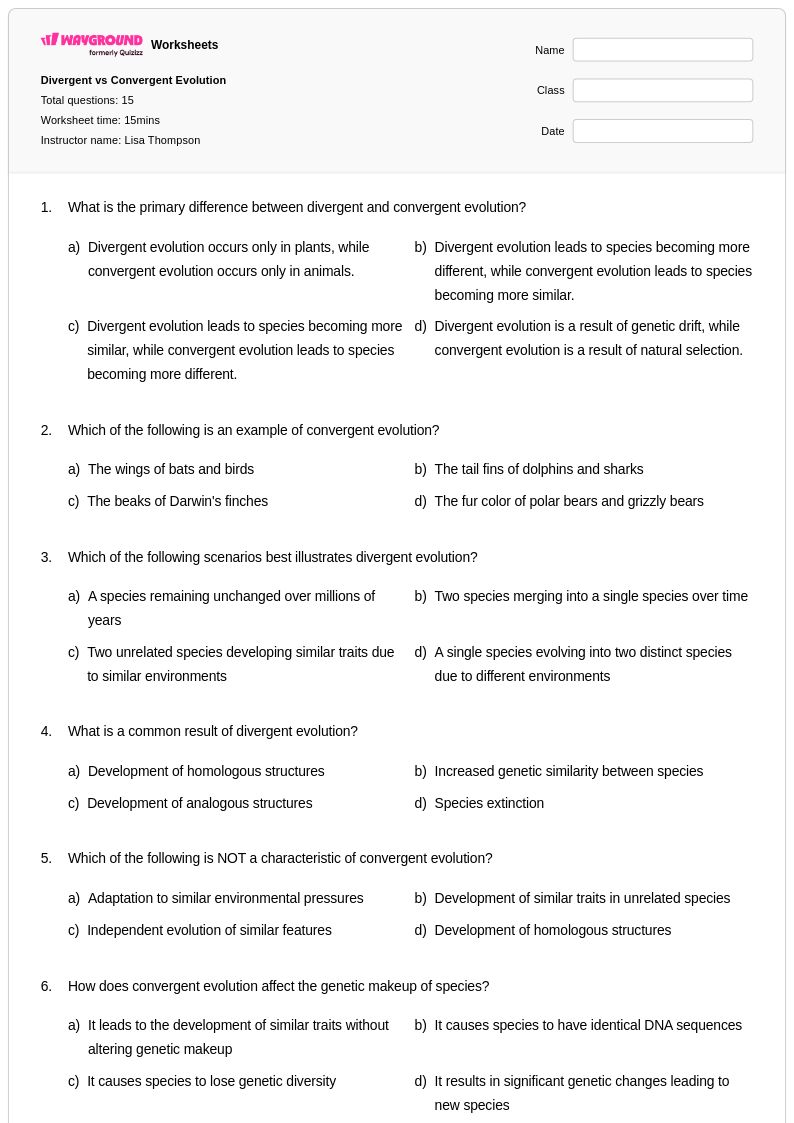
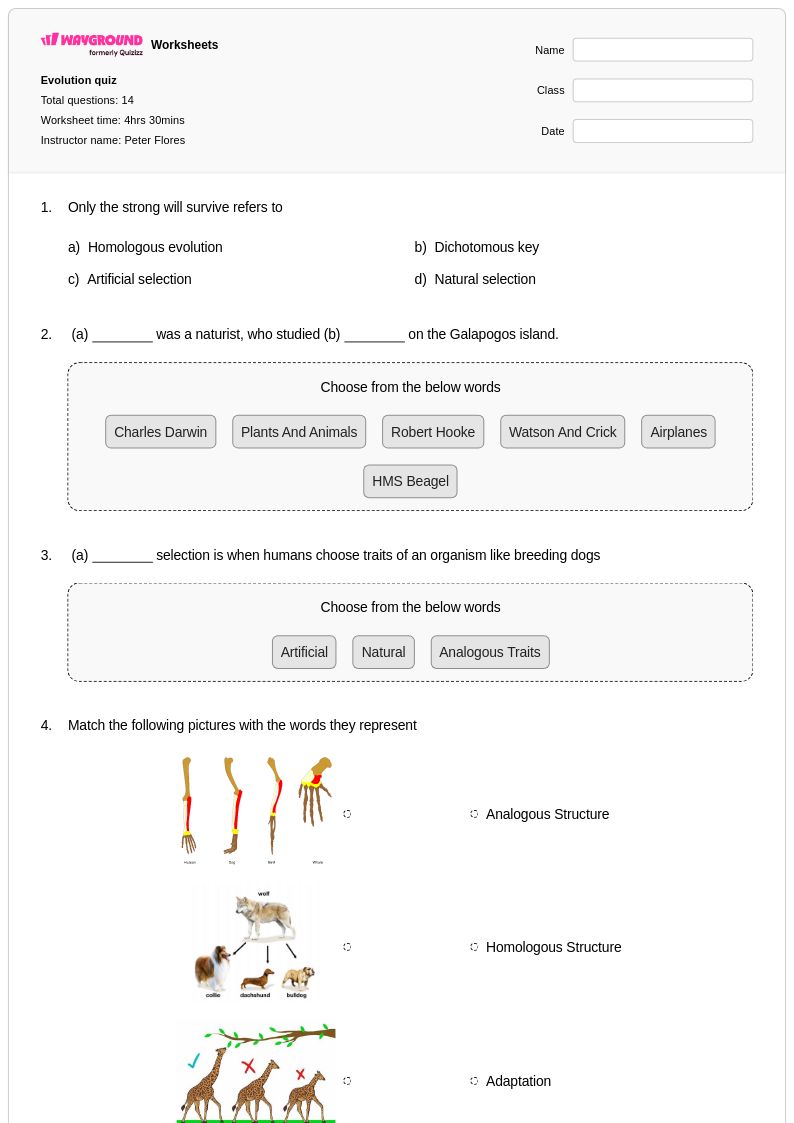
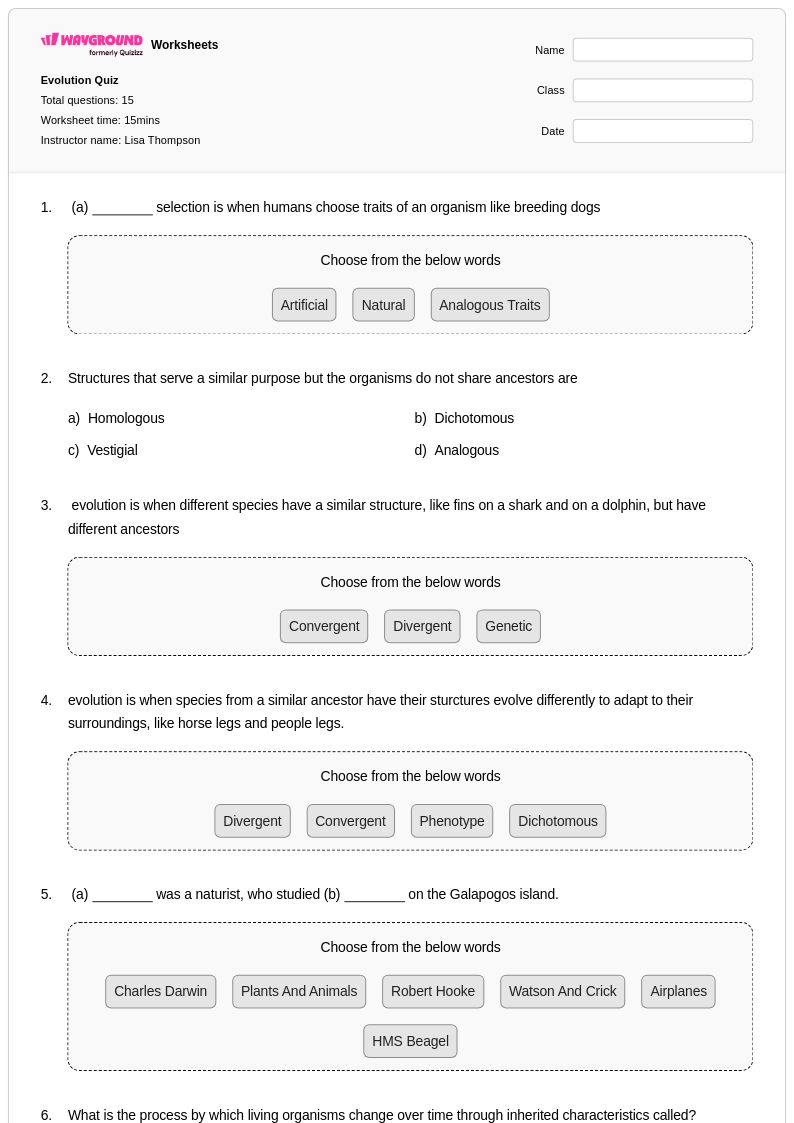
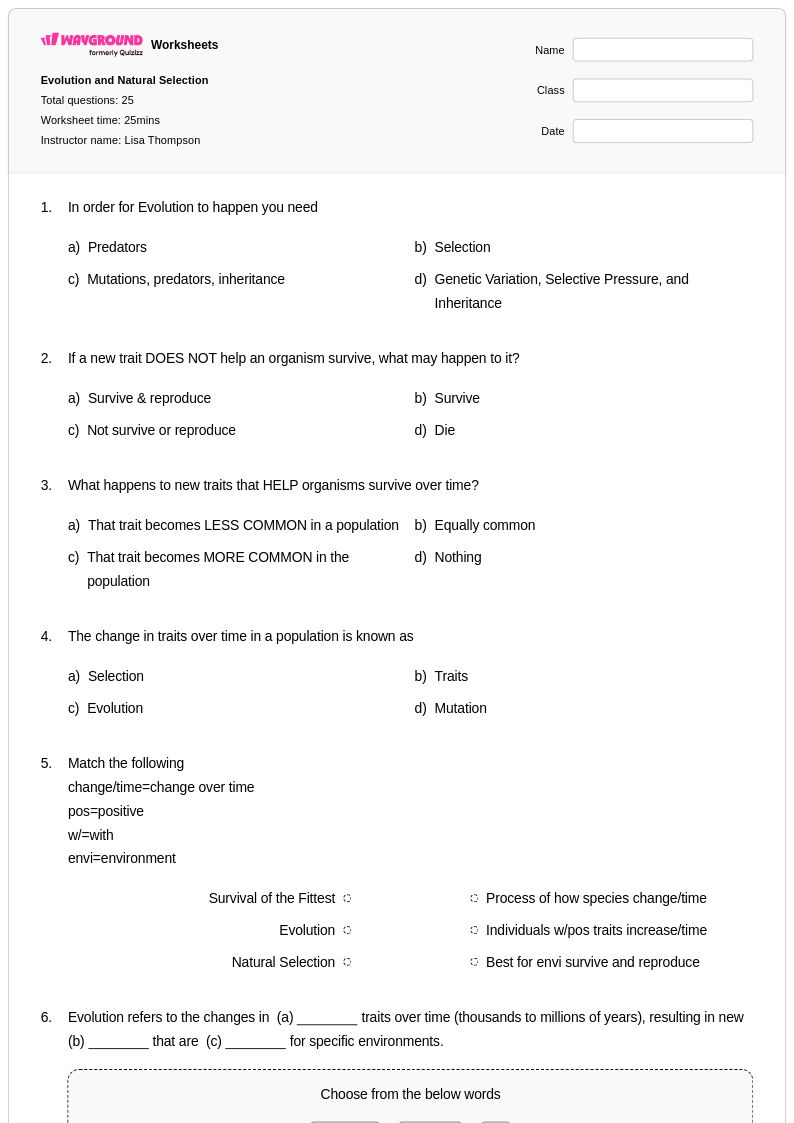
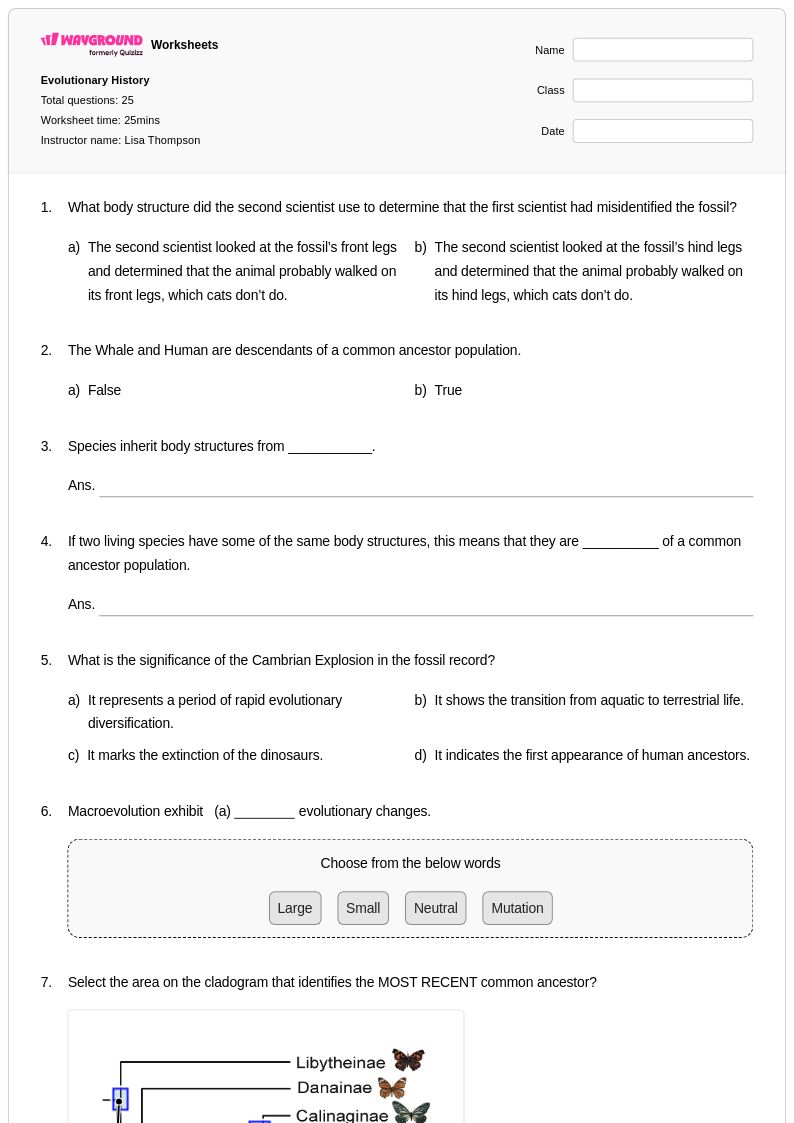
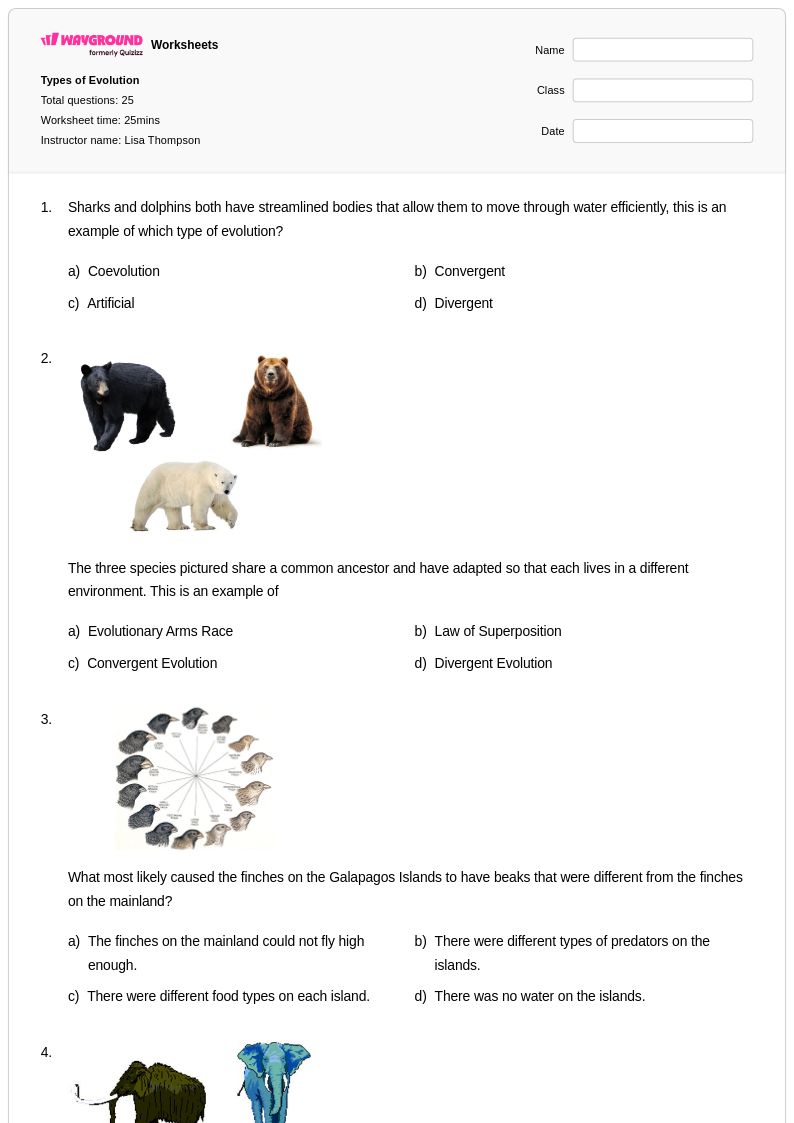
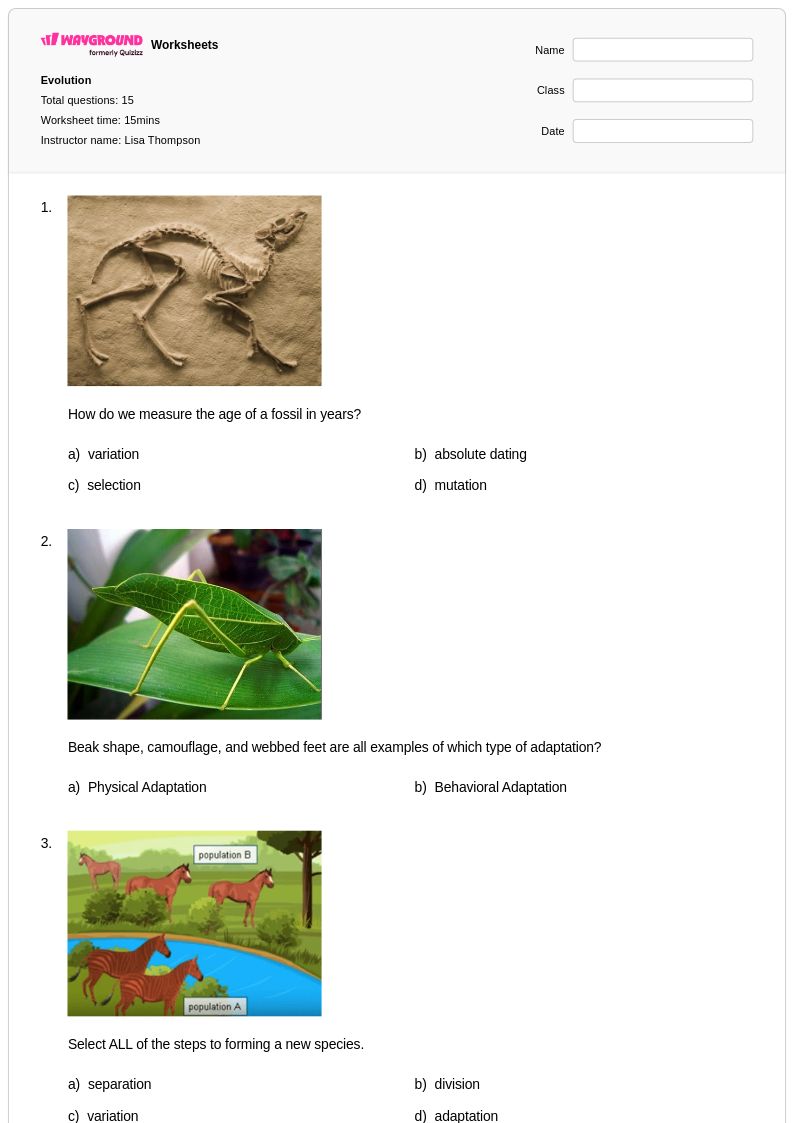
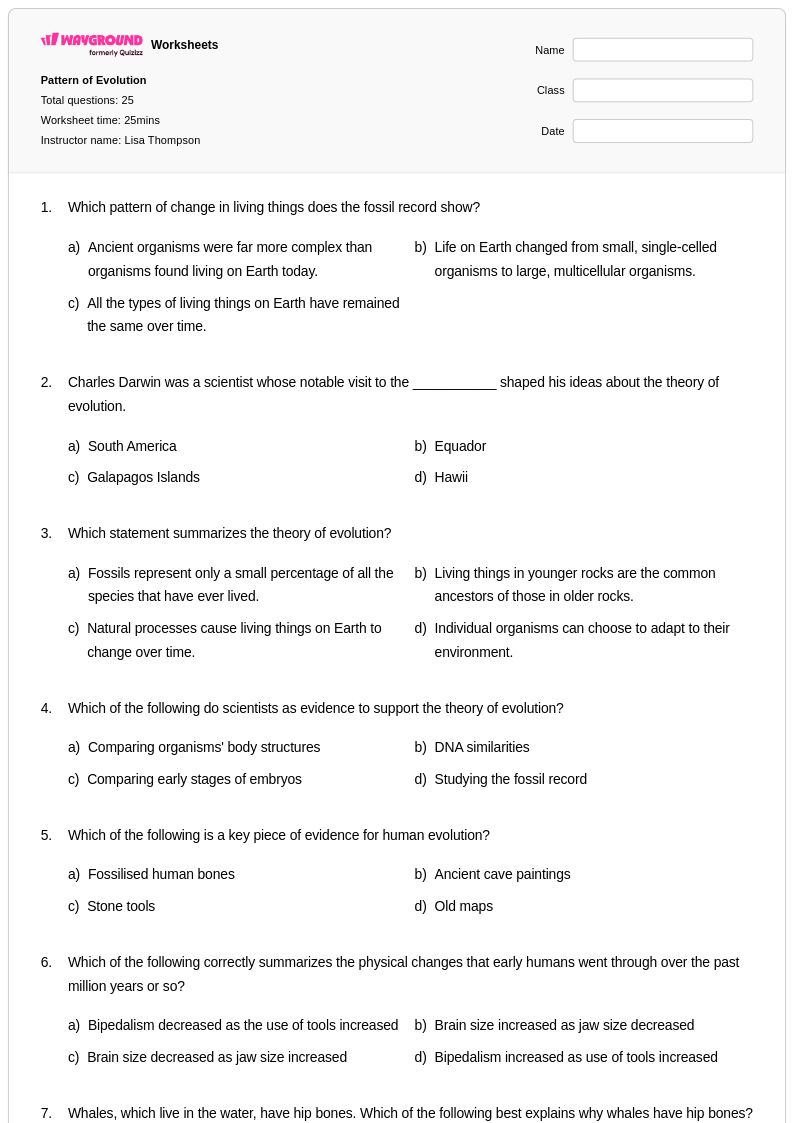
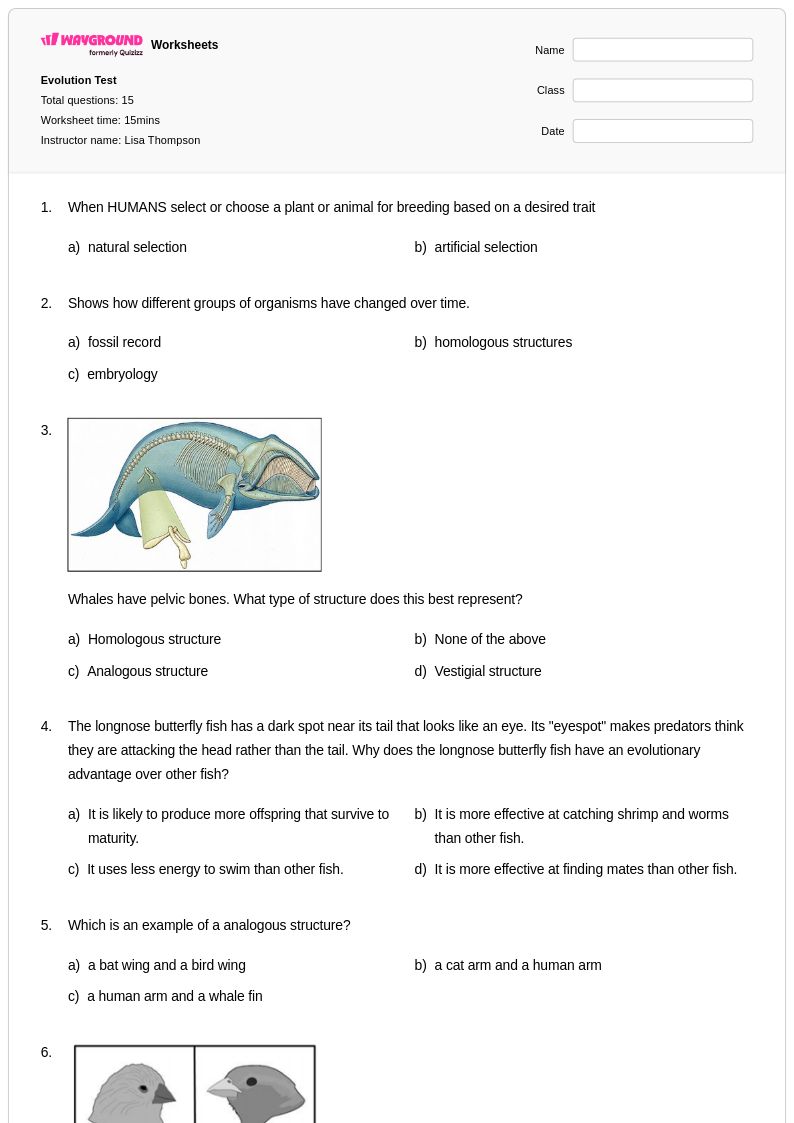
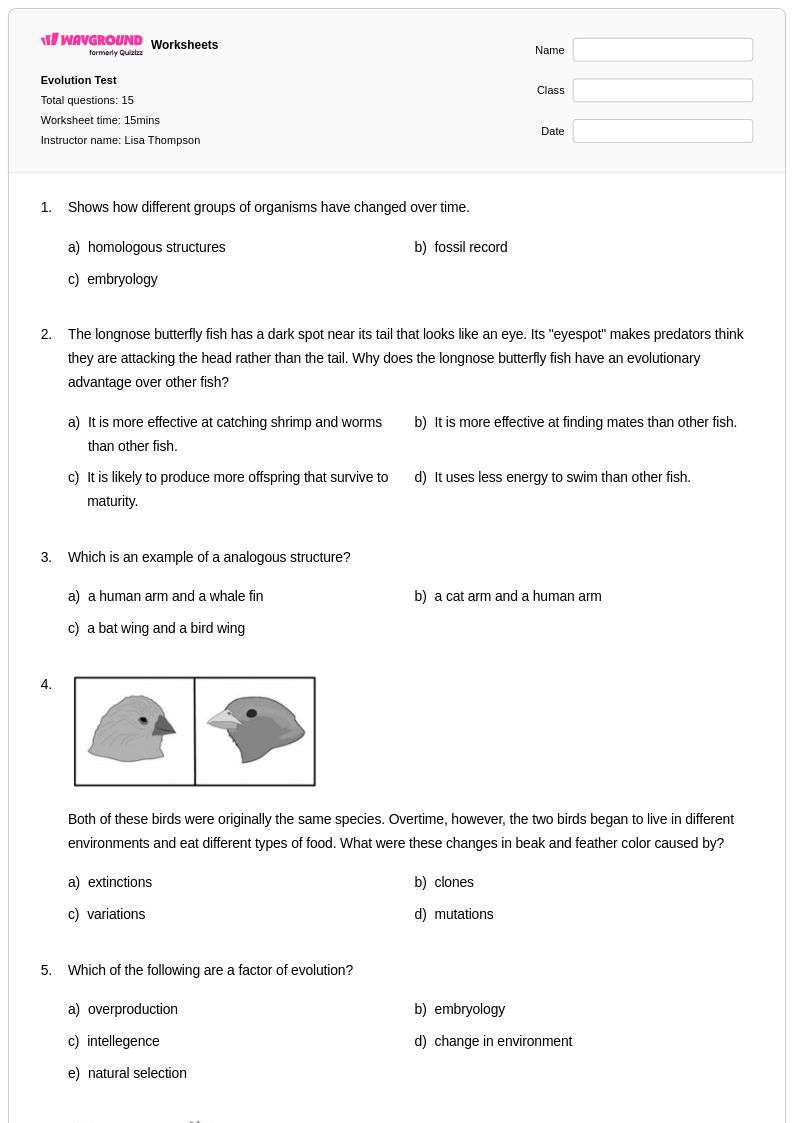
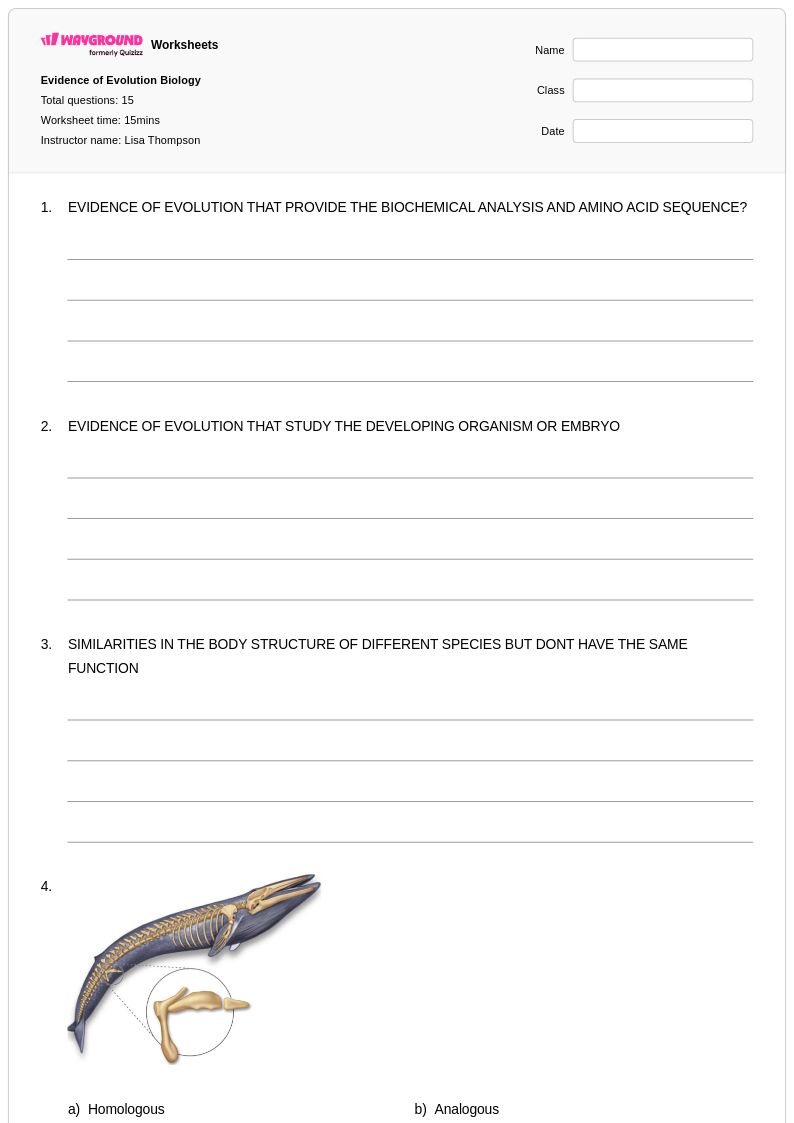
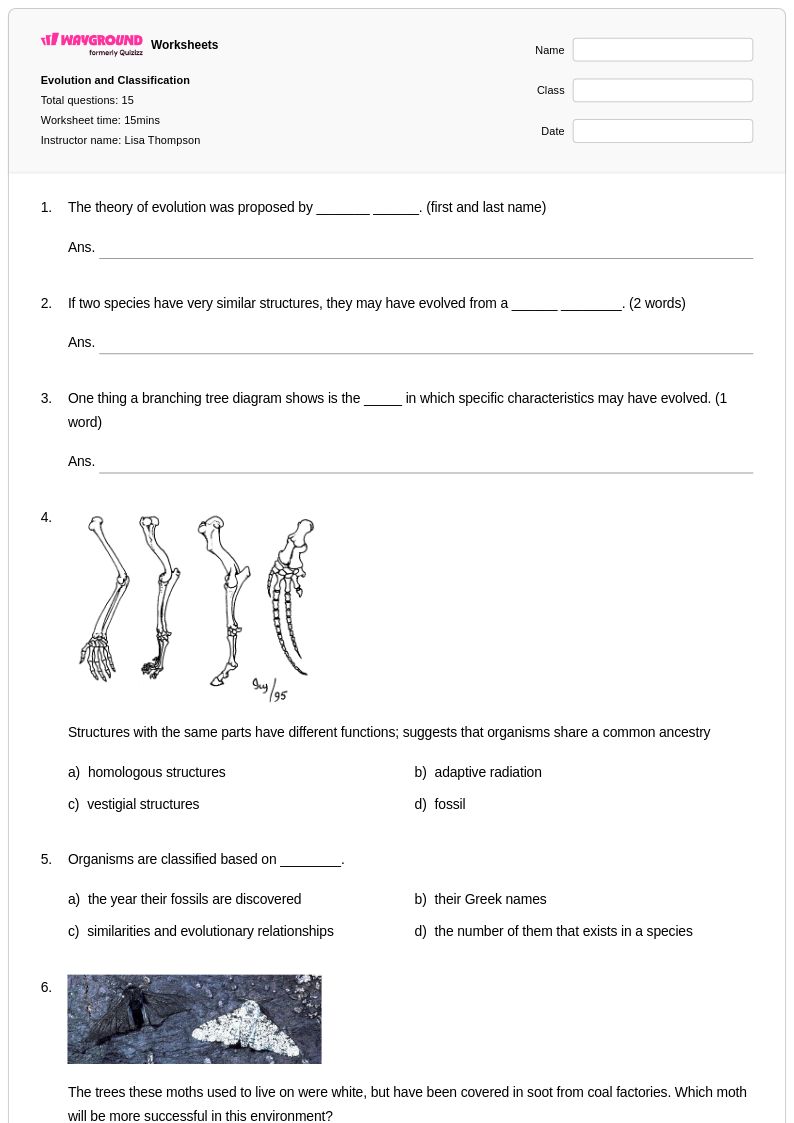
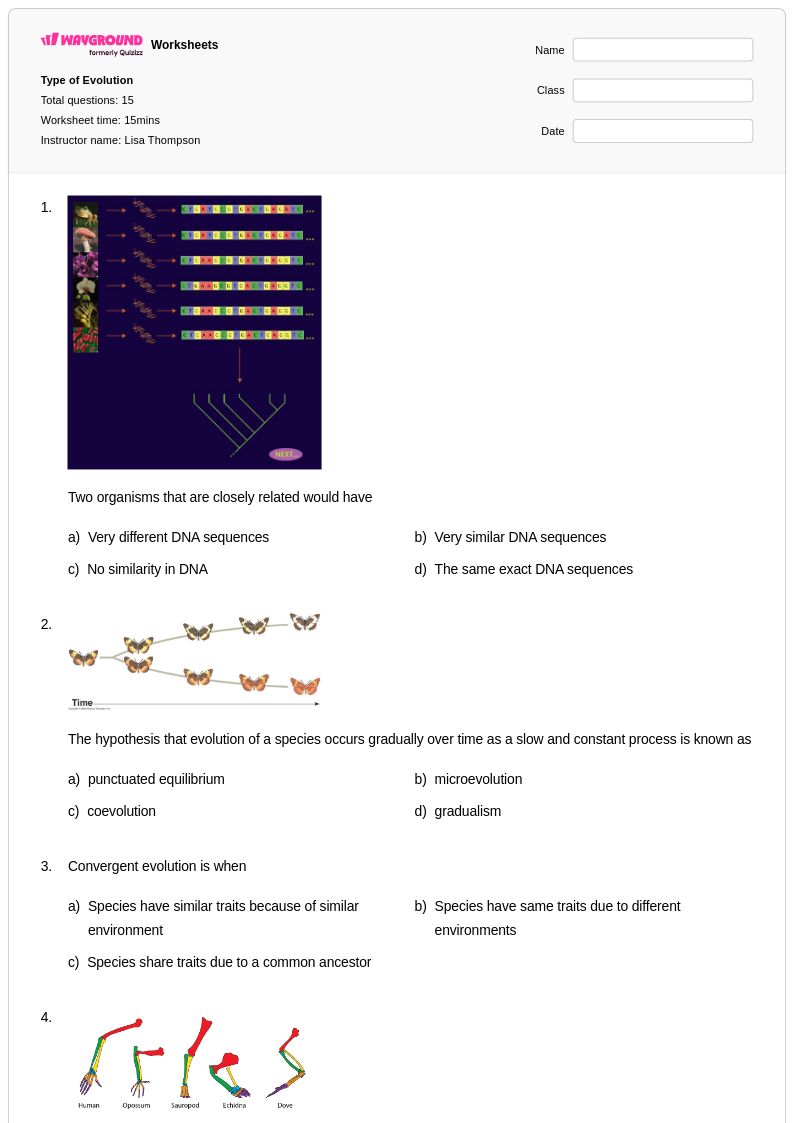
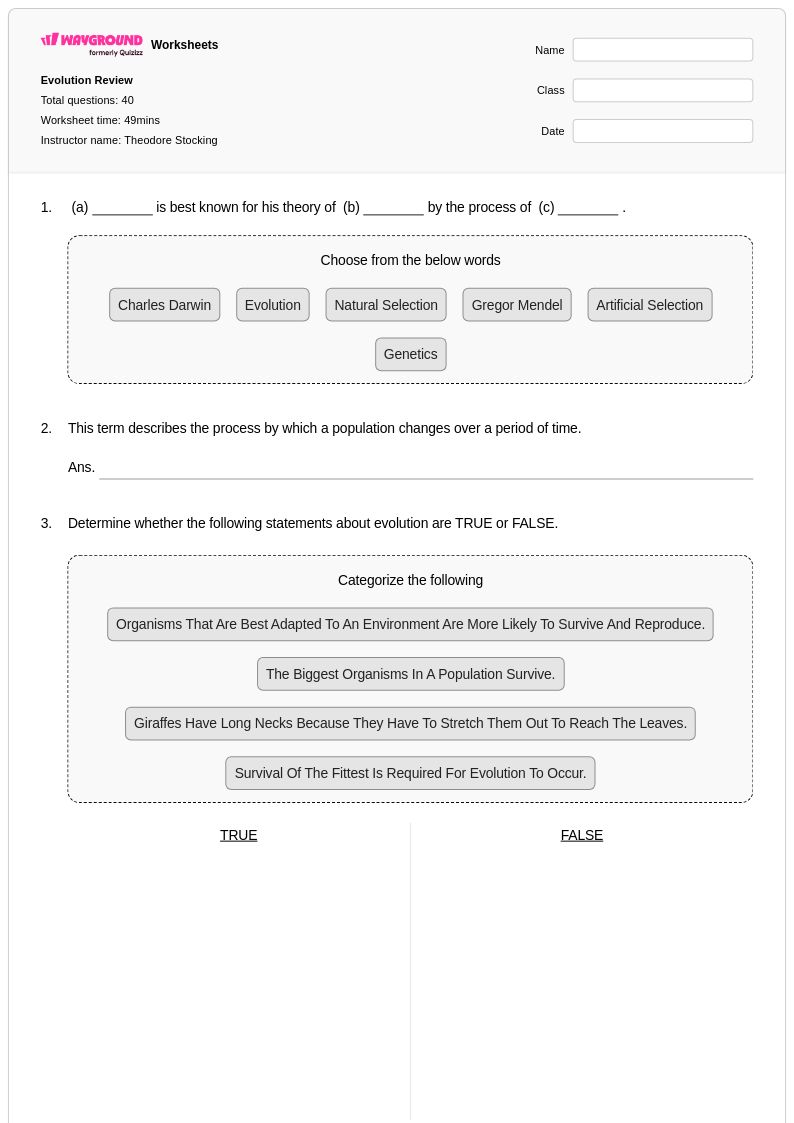
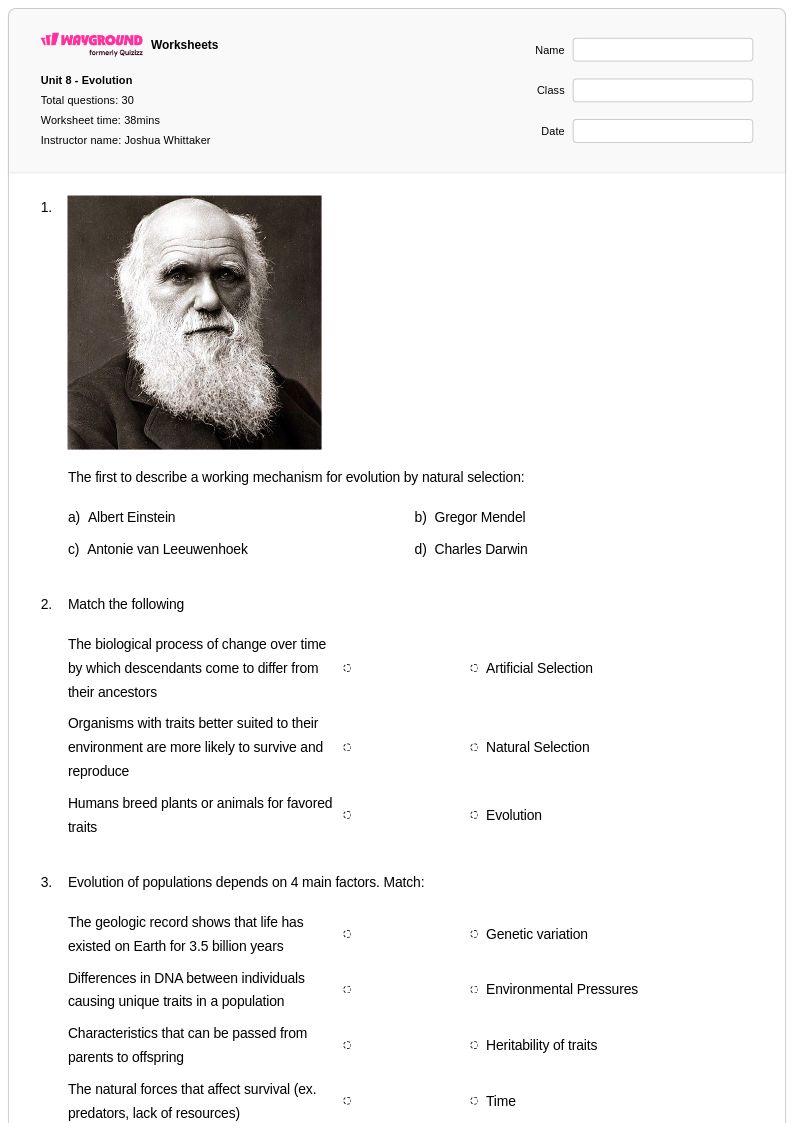
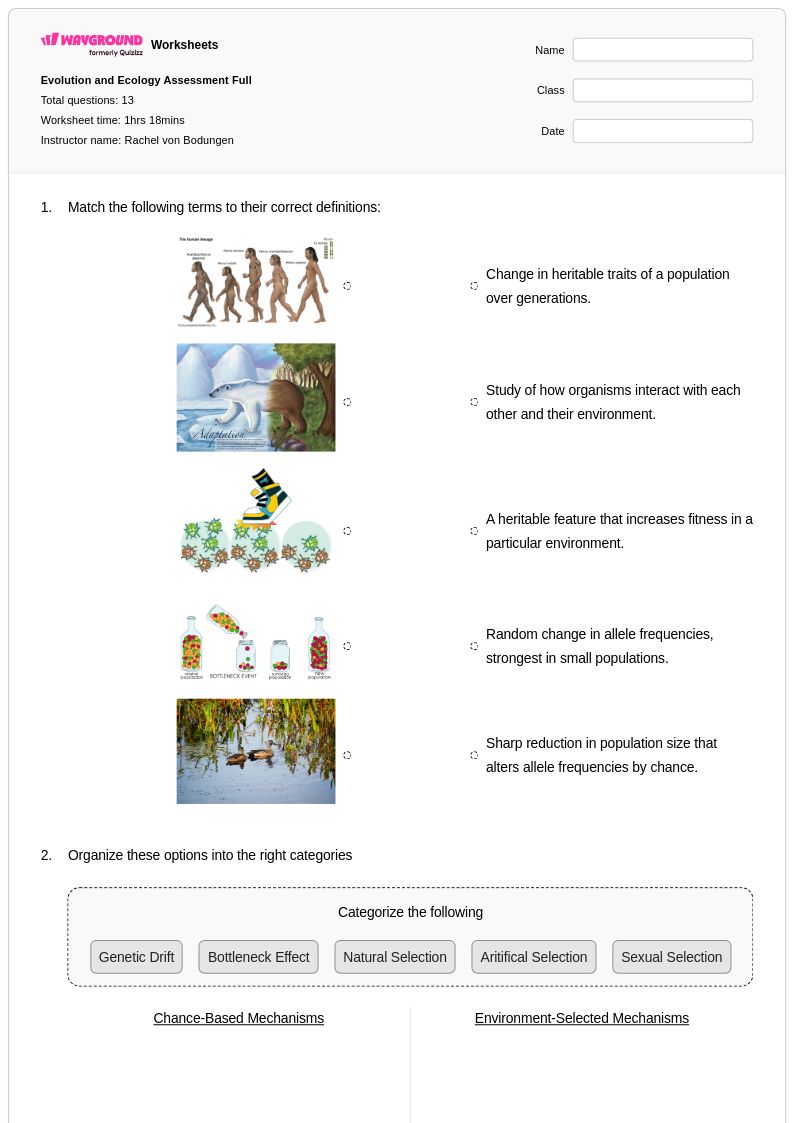
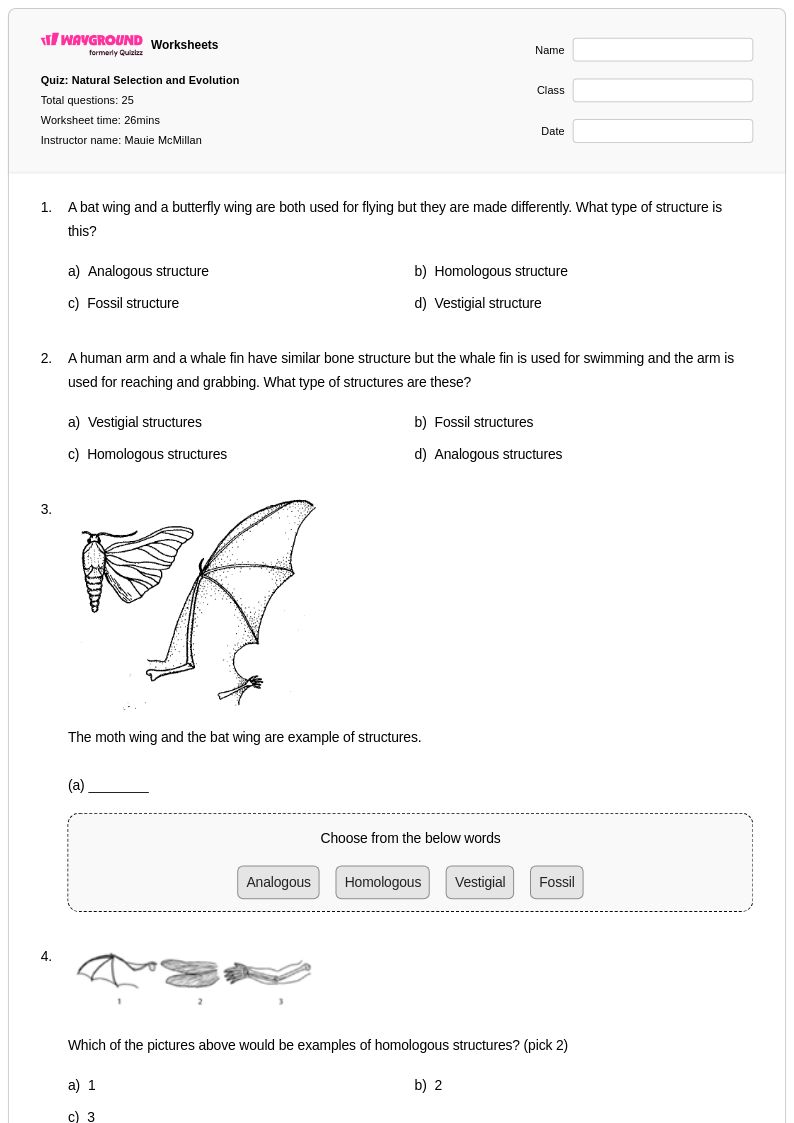
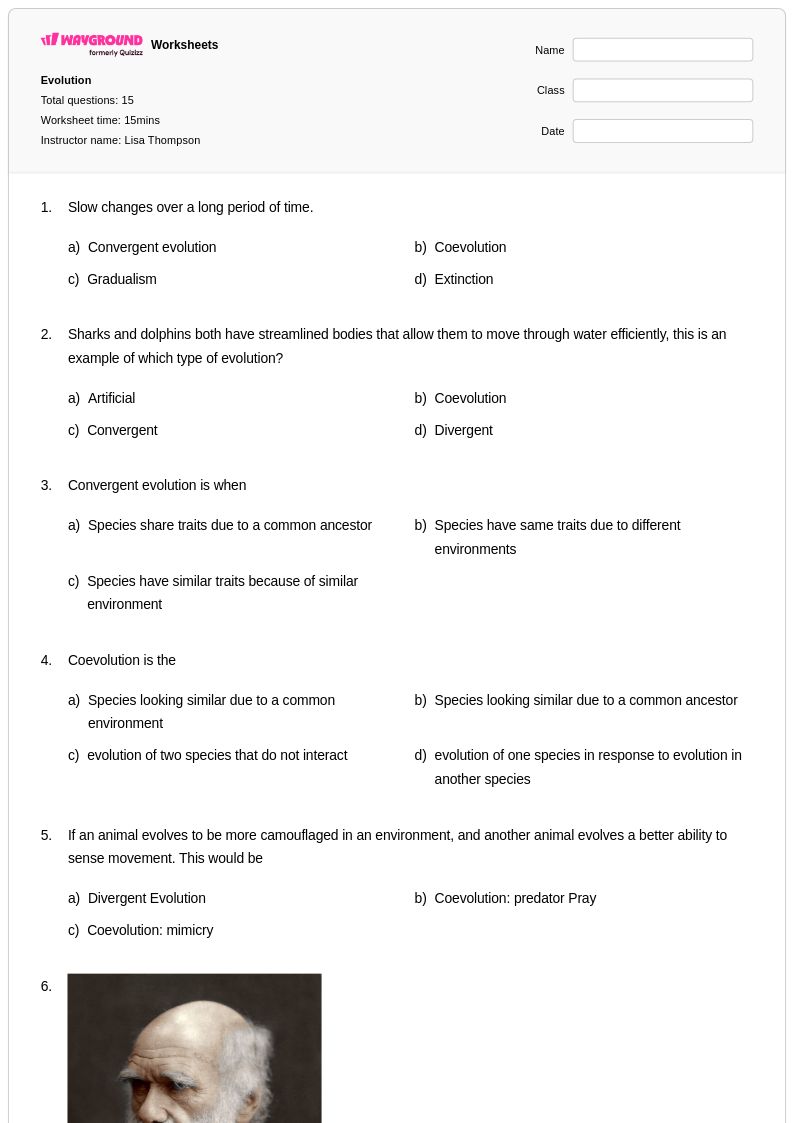
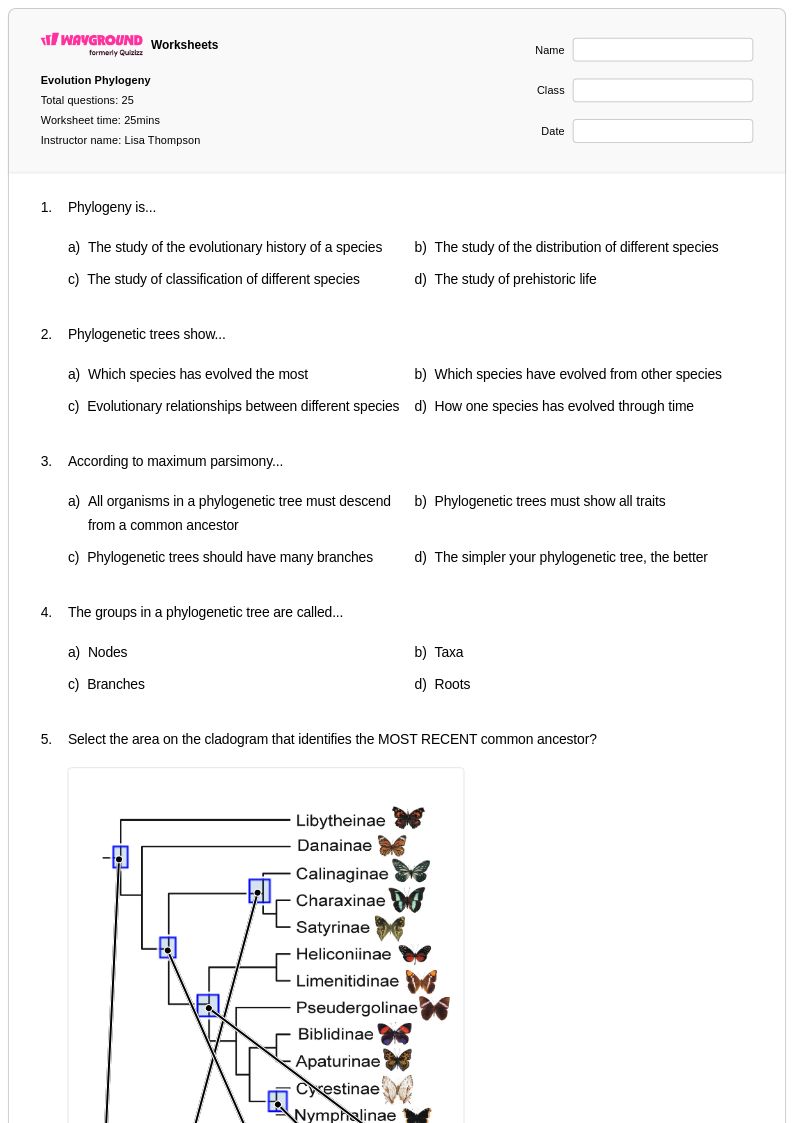
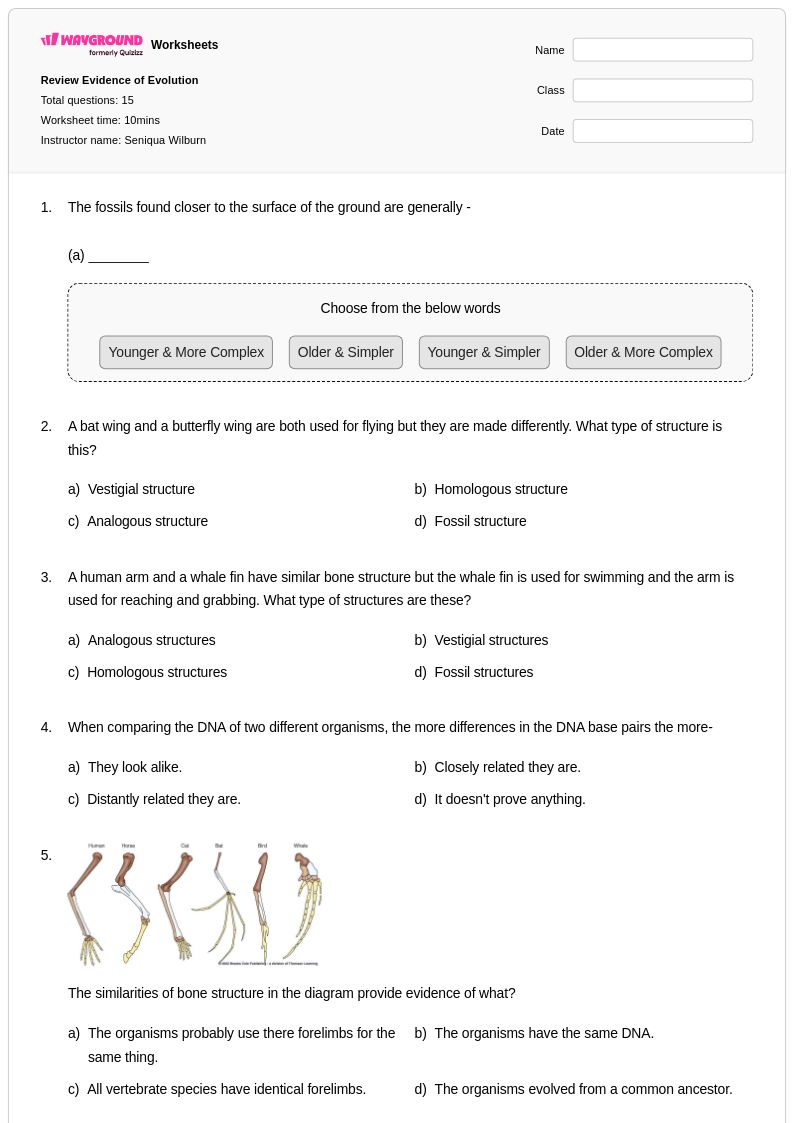
Convergent evolution worksheets for Class 9 biology students available through Wayground provide comprehensive resources for understanding how unrelated species develop similar characteristics in response to comparable environmental pressures. These expertly designed practice problems help students analyze fascinating examples such as the wing structures of bats and birds, the streamlined body shapes of dolphins and sharks, and the camera eyes found in both vertebrates and cephalopods. Each worksheet strengthens critical thinking skills by challenging students to distinguish between homologous and analogous structures, evaluate evolutionary evidence, and interpret phylogenetic relationships. The collection includes detailed answer keys that support independent learning and self-assessment, while printable pdf formats ensure accessibility across diverse classroom environments. Free resources within this collection allow educators to supplement core curriculum materials with targeted practice that reinforces understanding of adaptive evolution and natural selection principles.
Wayground's extensive library of teacher-created convergent evolution resources supports Class 9 biology educators with millions of carefully curated worksheets that align with educational standards and accommodate diverse learning needs. The platform's advanced search and filtering capabilities enable teachers to quickly locate materials that match specific curriculum requirements, student ability levels, and lesson objectives. Differentiation tools allow seamless customization of content complexity, making these resources valuable for both remediation of struggling learners and enrichment of advanced students. Available in both digital and printable pdf formats, these worksheets integrate effortlessly into traditional classroom instruction, hybrid learning environments, and remote education settings. Teachers benefit from the flexibility to modify existing materials or combine multiple resources to create comprehensive skill practice sessions that reinforce evolutionary concepts through varied question types, real-world examples, and scaffolded learning progressions that build conceptual understanding over time.
FAQs
How do I teach convergent evolution in a biology class?
Start by grounding students in the distinction between homologous and analogous structures, since convergent evolution is built on the concept of independently evolved similarities rather than shared ancestry. Use concrete, visually compelling examples such as the camera eyes of vertebrates and cephalopods or the echolocation systems of bats and dolphins to show how unrelated lineages can arrive at similar solutions under similar environmental pressures. From there, guide students to analyze what selective pressures drove those similarities, which builds the critical thinking skills central to understanding natural selection.
What exercises help students practice identifying convergent evolution?
Effective practice tasks ask students to compare anatomical structures across unrelated species and determine whether similarities reflect shared ancestry or independent adaptation. Structured worksheets that present labeled diagrams alongside classification data push students to reason systematically rather than guess based on appearance alone. Practice problems that include examples across multiple scales, from succulent adaptations in cacti and euphorbias to molecular biochemical pathways, help students generalize the concept beyond a single case study.
What mistakes do students commonly make when learning about convergent evolution?
The most persistent misconception is confusing convergent evolution with common descent: students often assume that structural similarity means the organisms are closely related. Another frequent error is conflating analogous structures with homologous ones, which undermines students' ability to read phylogenetic trees accurately. Targeted practice that explicitly contrasts these two concepts, with answer keys that explain the reasoning behind each distinction, helps students build more durable understanding.
How is convergent evolution different from parallel evolution?
Convergent evolution occurs when distantly related species independently evolve similar traits in response to similar environmental pressures, while parallel evolution refers to similar changes occurring in closely related lineages that share a common ancestor. The key distinction is phylogenetic distance: convergence happens across unrelated lineages, whereas parallel evolution happens along related ones. In practice, the line between the two can blur, which is why students benefit from analyzing specific evolutionary examples alongside cladistic evidence rather than relying on surface-level similarity.
How can I use convergent evolution worksheets in my classroom?
Convergent evolution worksheets on Wayground are available as printable PDFs for traditional classroom use and in digital formats for technology-integrated environments, including the option to host them as a quiz directly on Wayground. The included answer keys make them practical for independent practice, homework, or guided review sessions without requiring additional teacher preparation. Teachers can also customize worksheet difficulty and focus areas to support students at different levels, whether for initial instruction, remediation, or enrichment.
How do I differentiate convergent evolution instruction for students at different levels?
For students who need scaffolding, start with highly visual examples and pre-labeled diagrams before asking them to analyze unfamiliar species pairs. Advanced students benefit from open-ended tasks that ask them to hypothesize which environmental pressures could drive convergence in novel scenarios, or to evaluate molecular evidence alongside anatomical evidence. On Wayground, teachers can adjust worksheet difficulty and assign individual accommodations such as read aloud support or reduced answer choices, ensuring each student engages with the material at an appropriate level.