Free Printable Evolution and the Tree of Life Worksheets for Class 9
Class 9 Biology worksheets and printables help students explore evolution and the tree of life through engaging practice problems, free PDF resources, and comprehensive answer keys available on Wayground.
Explore printable Evolution and the Tree of Life worksheets for Class 9
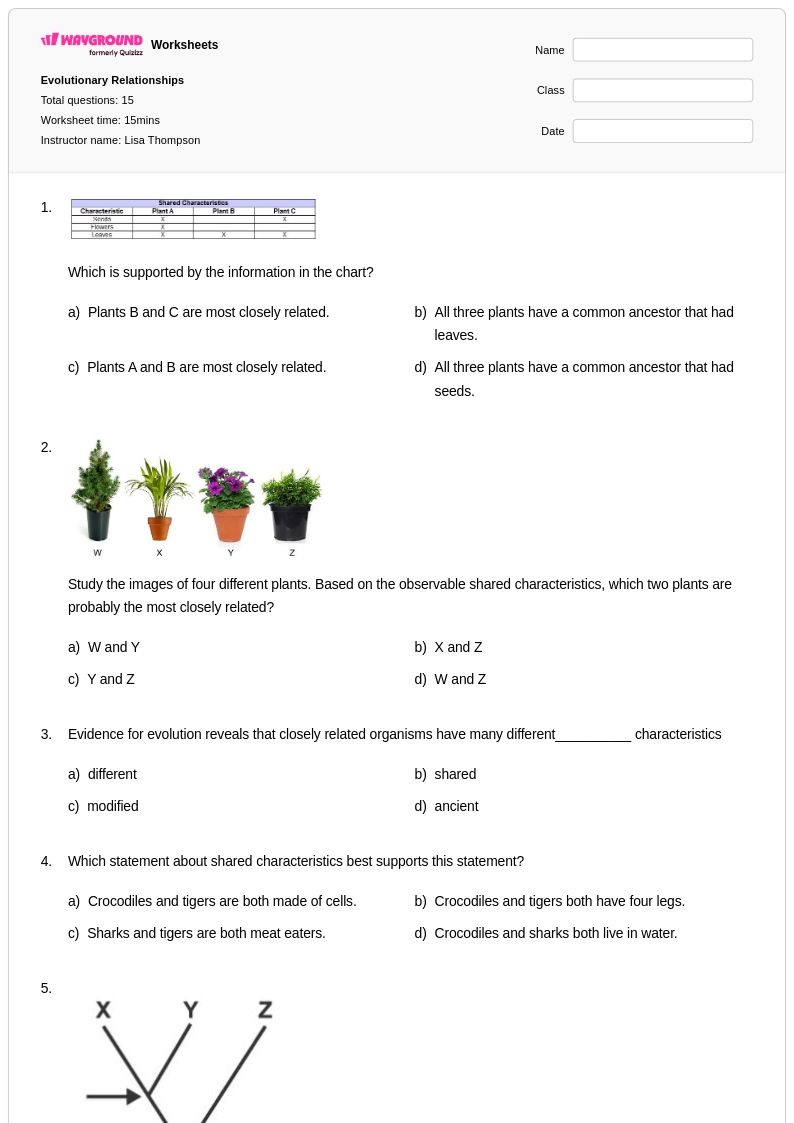
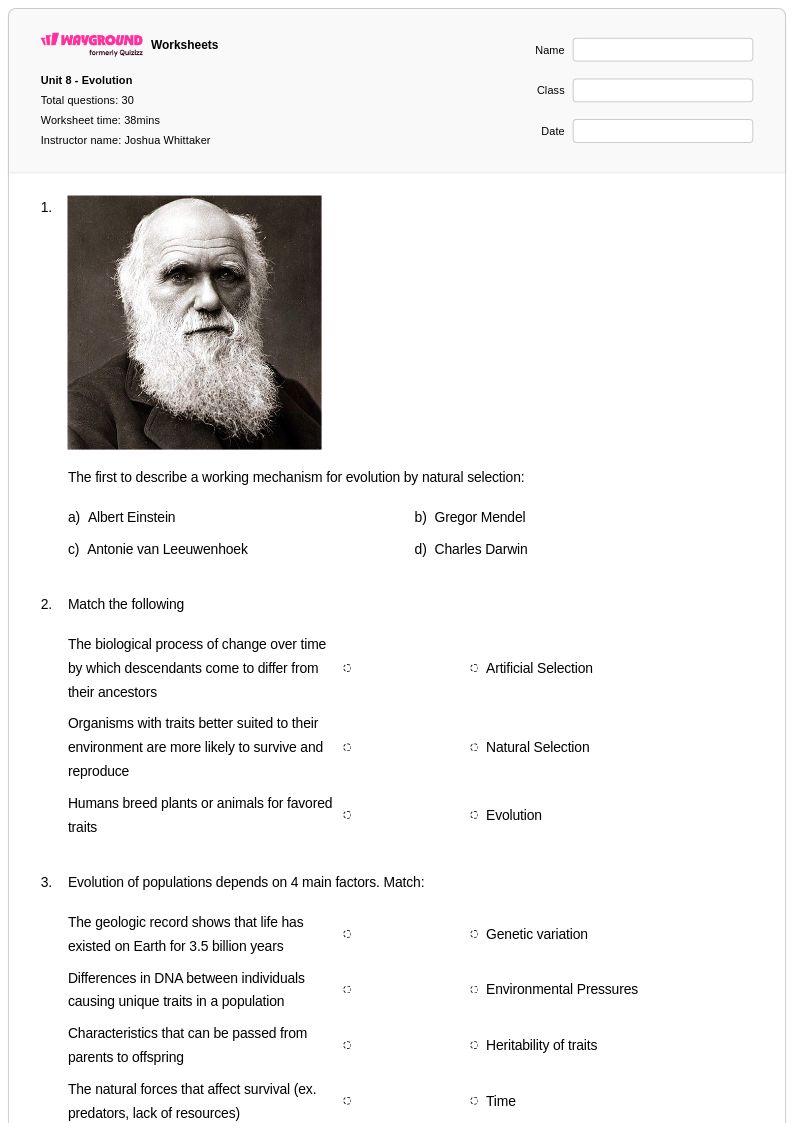
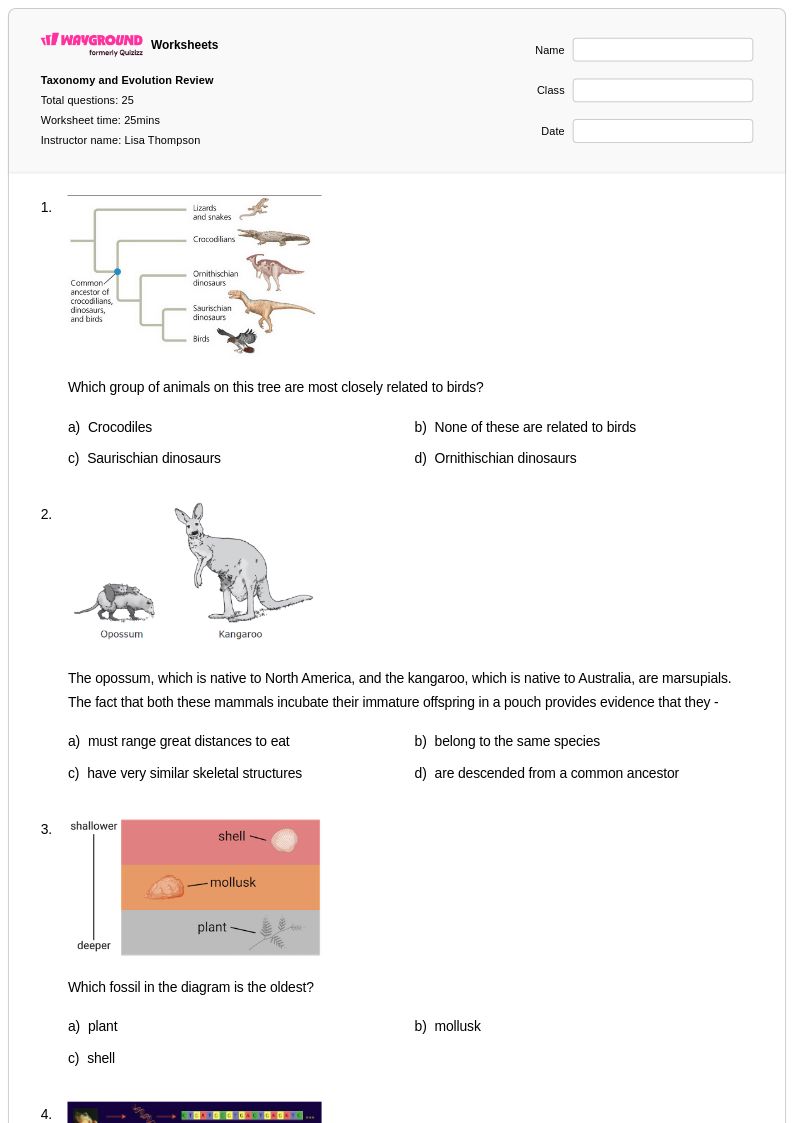
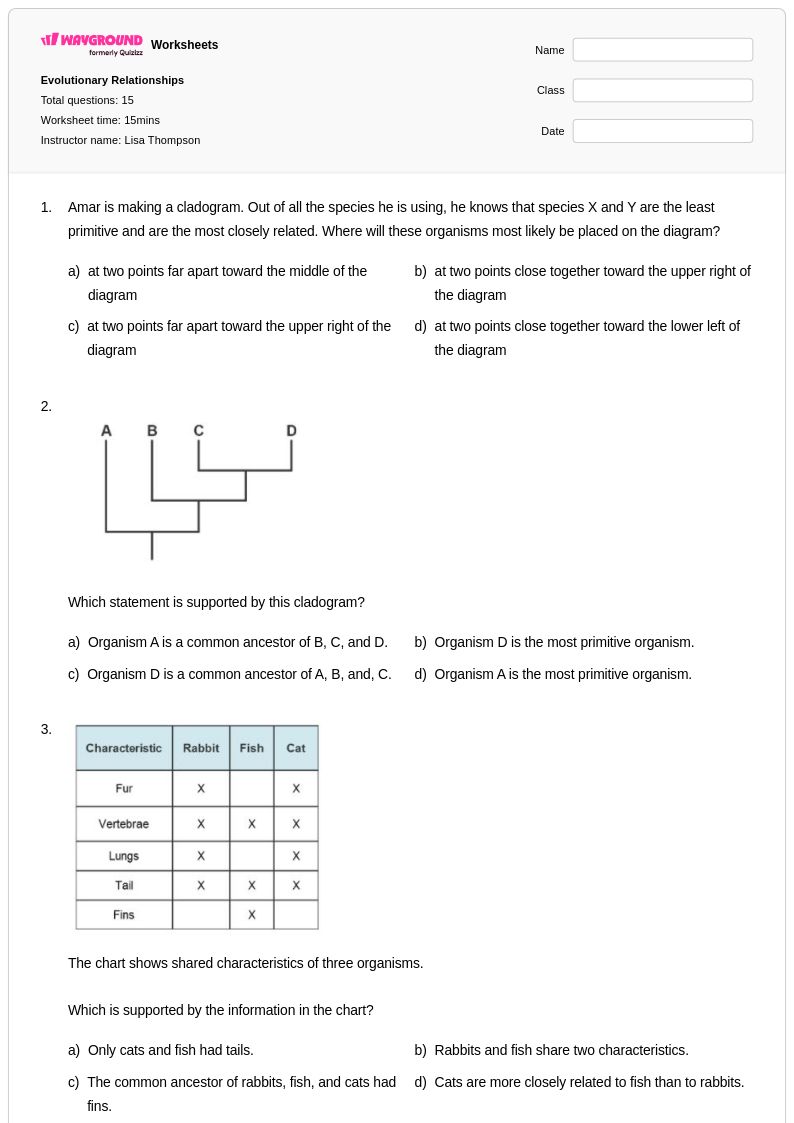
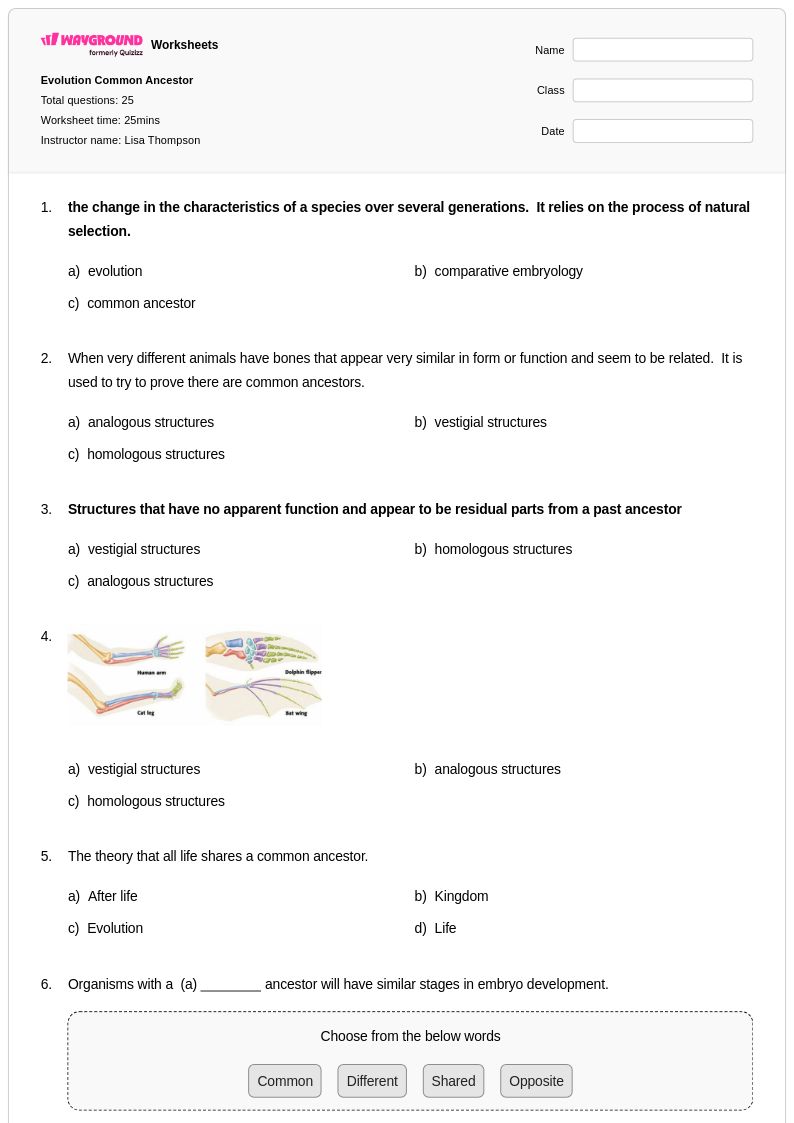
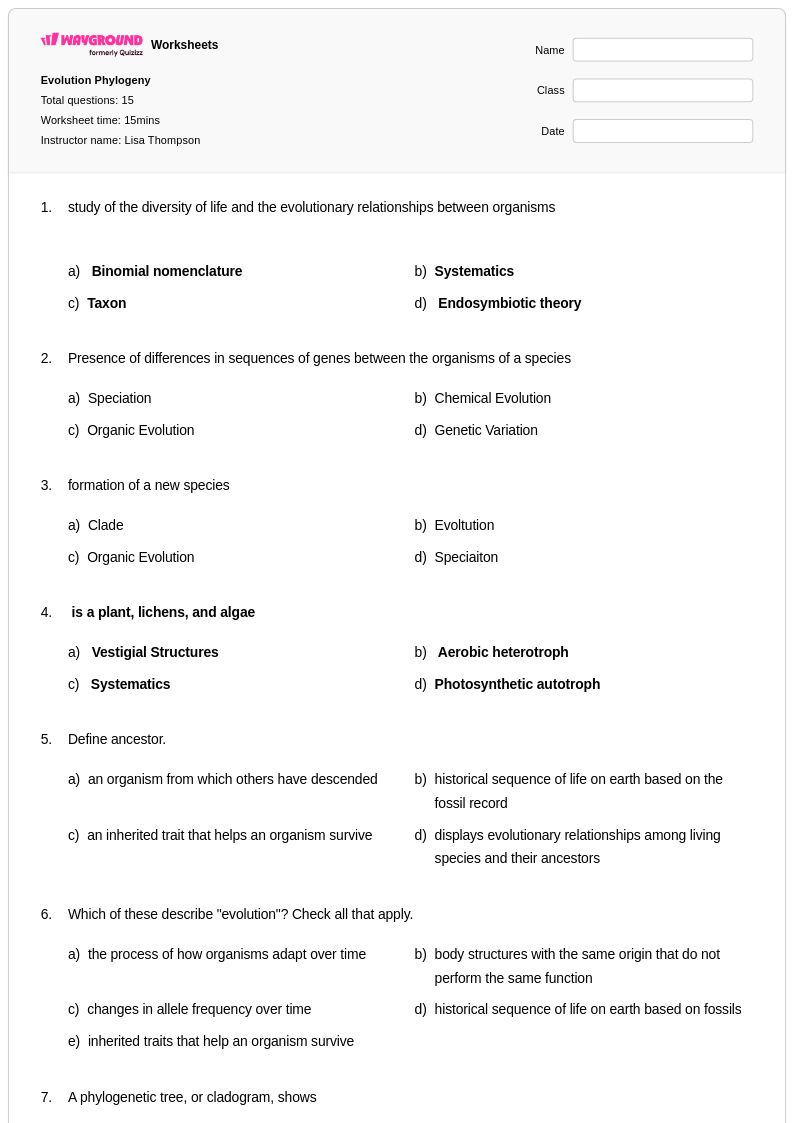
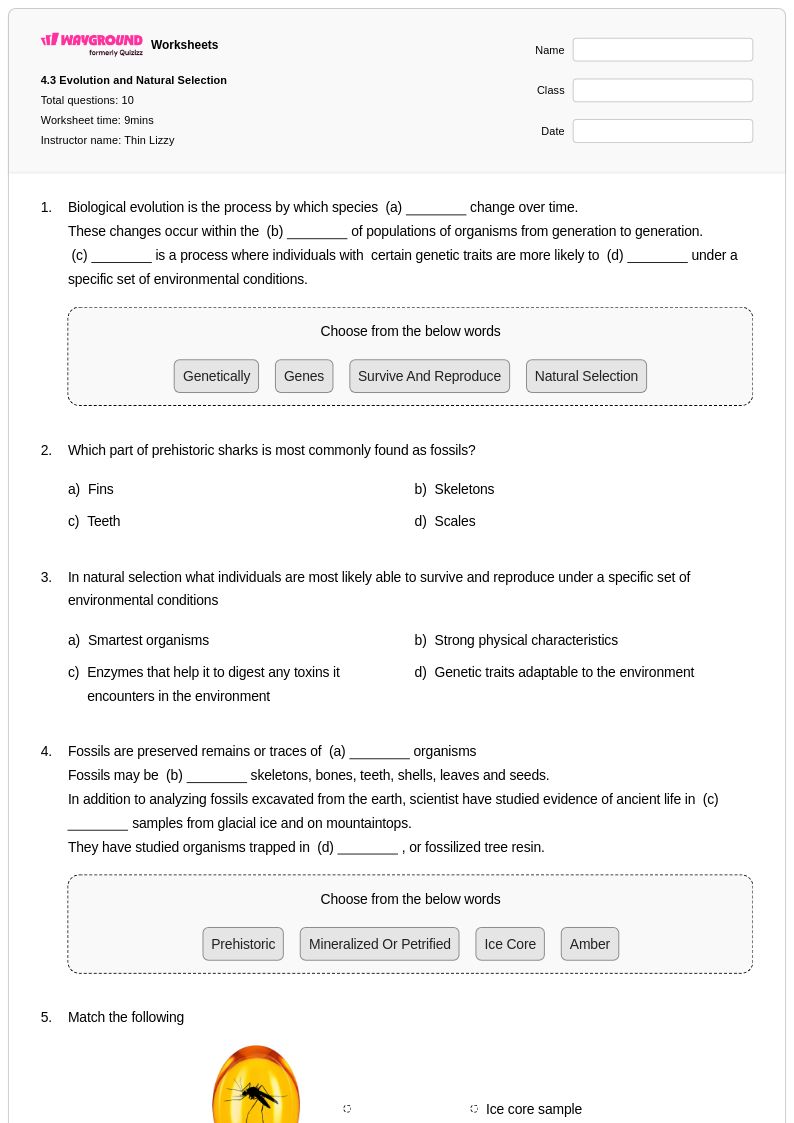
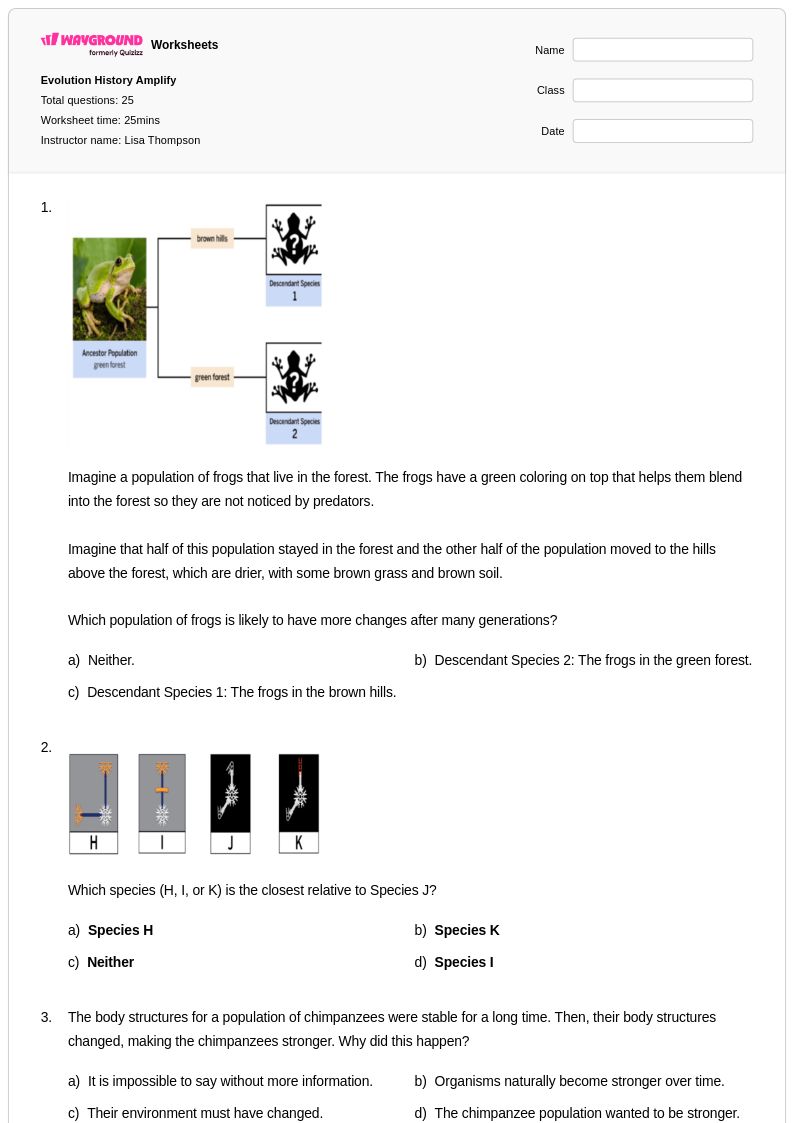
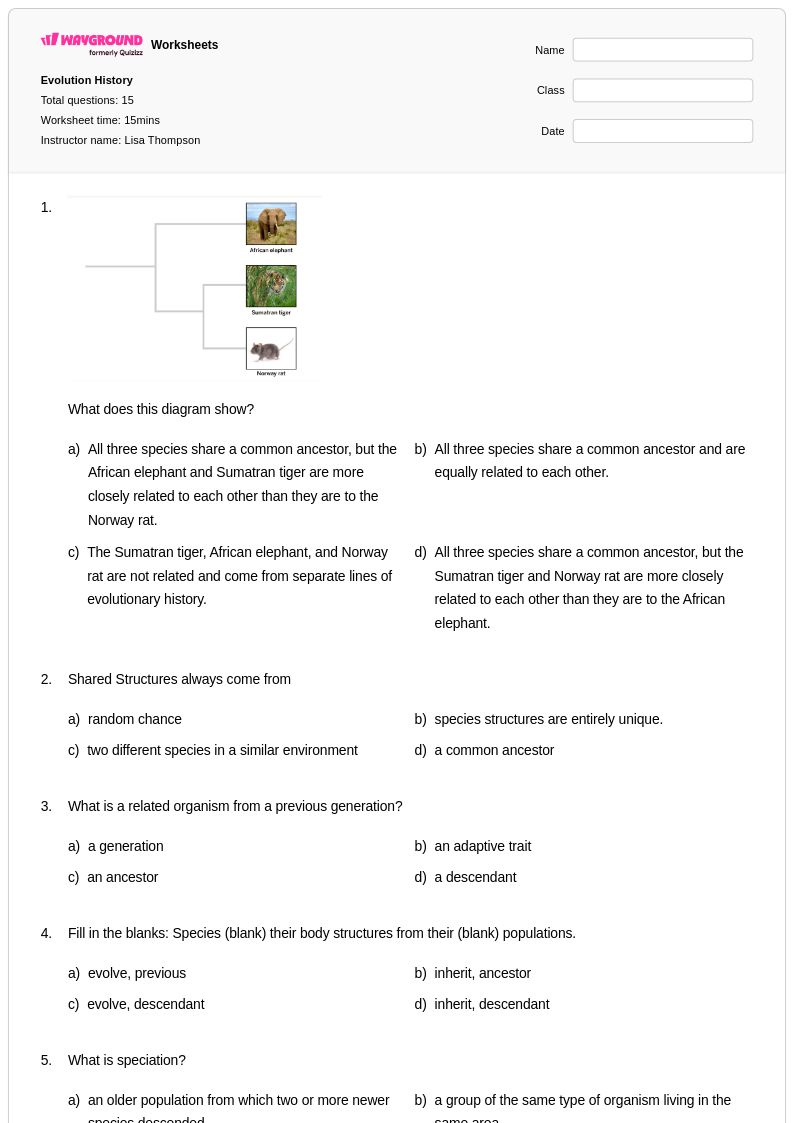
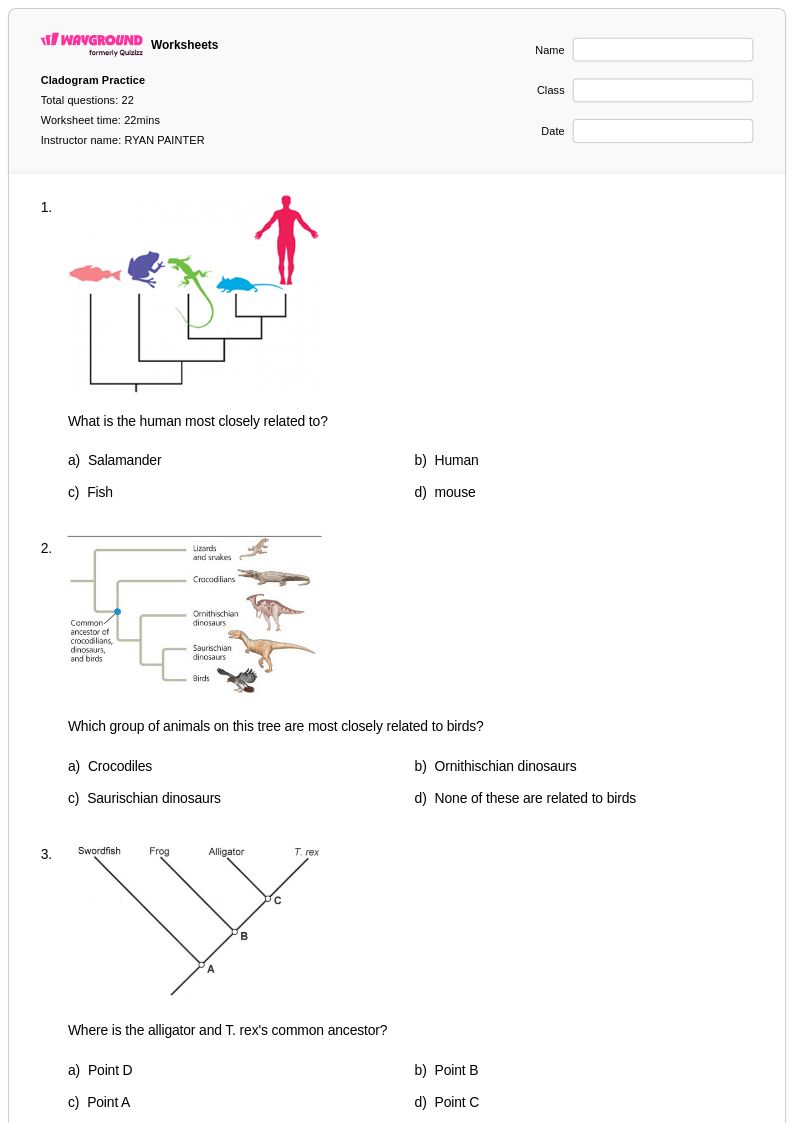
Evolution and the Tree of Life worksheets available through Wayground (formerly Quizizz) provide Class 9 biology students with comprehensive practice materials that explore the fundamental concepts of evolutionary theory and phylogenetic relationships. These expertly crafted worksheets strengthen critical scientific thinking skills by guiding students through the analysis of fossil records, comparative anatomy, molecular evidence, and evolutionary mechanisms such as natural selection and genetic drift. Students work through practice problems that challenge them to interpret cladograms, construct evolutionary trees, and analyze the evidence supporting common descent among species. Each worksheet comes with a detailed answer key that helps educators assess student understanding while providing clear explanations for complex evolutionary concepts. These free printable resources are designed as pdf downloads, making them easily accessible for both classroom instruction and independent study sessions.
Wayground (formerly Quizizz) supports biology educators with an extensive collection of millions of teacher-created Evolution and the Tree of Life worksheets that can be seamlessly integrated into Class 9 curriculum planning. The platform's robust search and filtering capabilities allow teachers to quickly locate materials aligned with specific educational standards, whether they need resources focused on Darwin's theory, speciation mechanisms, or phylogenetic analysis techniques. Advanced differentiation tools enable educators to customize worksheet difficulty levels and content focus areas, ensuring that both struggling learners and advanced students receive appropriate challenges for skill development. These versatile resources are available in both printable pdf formats for traditional classroom use and digital formats for technology-enhanced learning environments, providing teachers with flexible options for remediation activities, enrichment assignments, and targeted practice sessions that reinforce understanding of evolutionary principles and scientific evidence interpretation.
FAQs
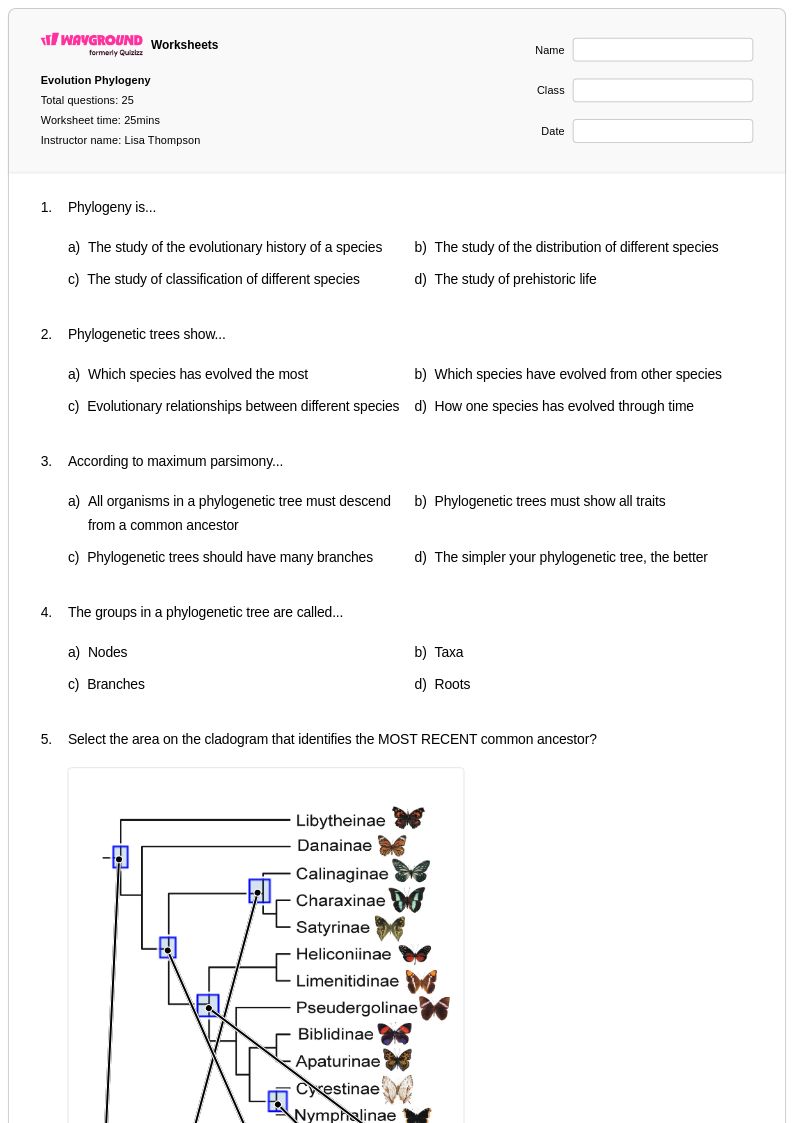
How do I teach students to read and interpret phylogenetic trees?
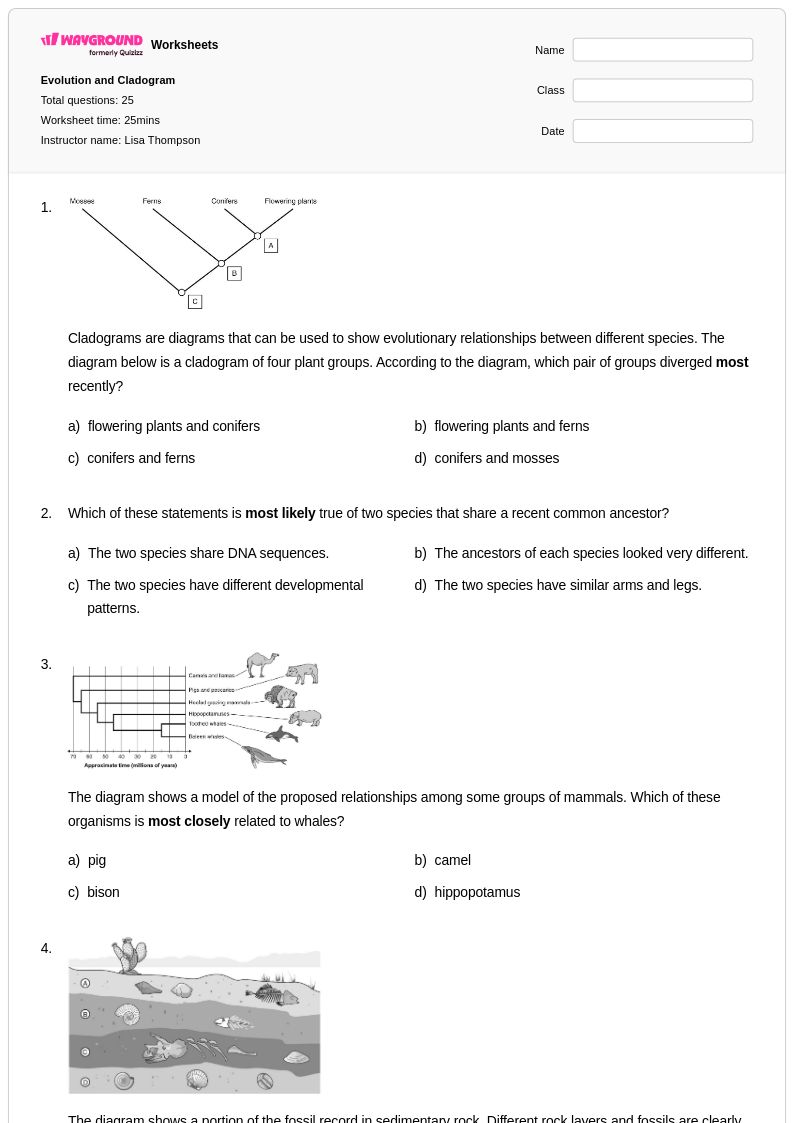
Start by teaching students the core vocabulary: nodes represent common ancestors, branches represent evolutionary lineages, and tips represent present-day species or taxa. Use simple three- to four-species trees before introducing more complex diagrams, and have students practice identifying which species share the most recent common ancestor. A common and effective technique is to give students an unlabeled tree and ask them to reconstruct it using trait data, which builds the analytical reasoning needed before they encounter more complex phylogenies.
What are good practice exercises for students learning about evidence of evolution?
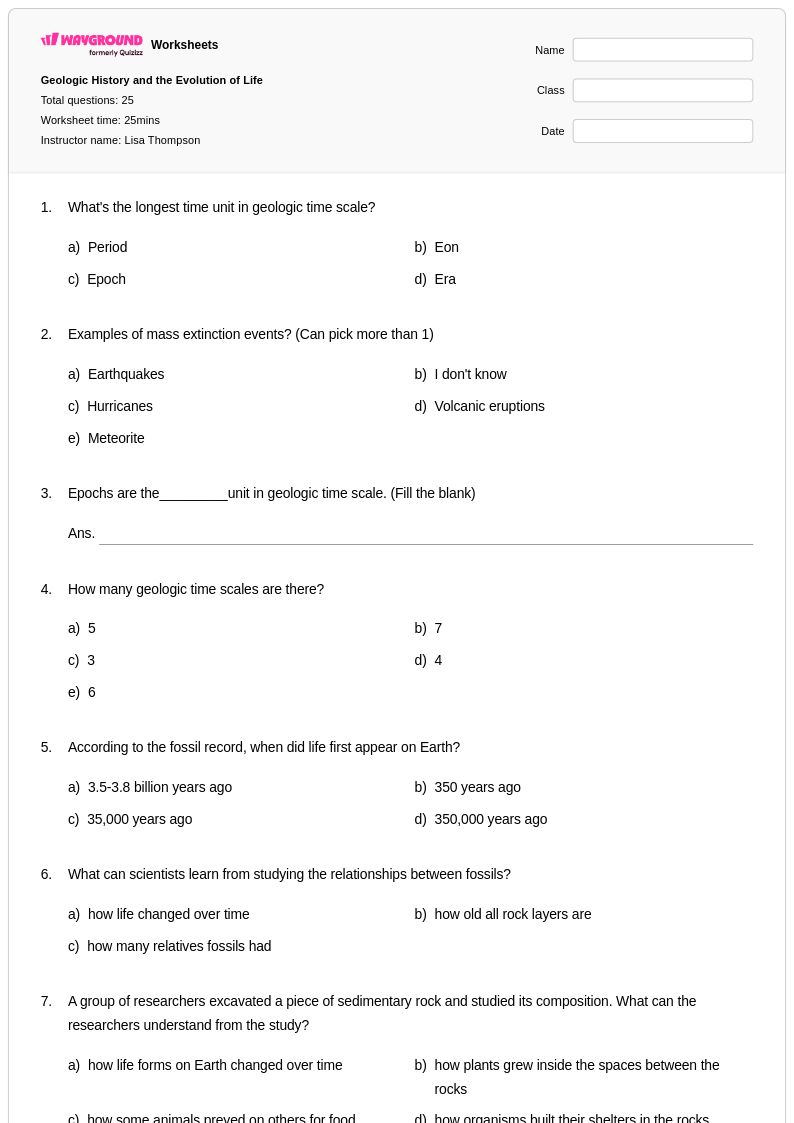
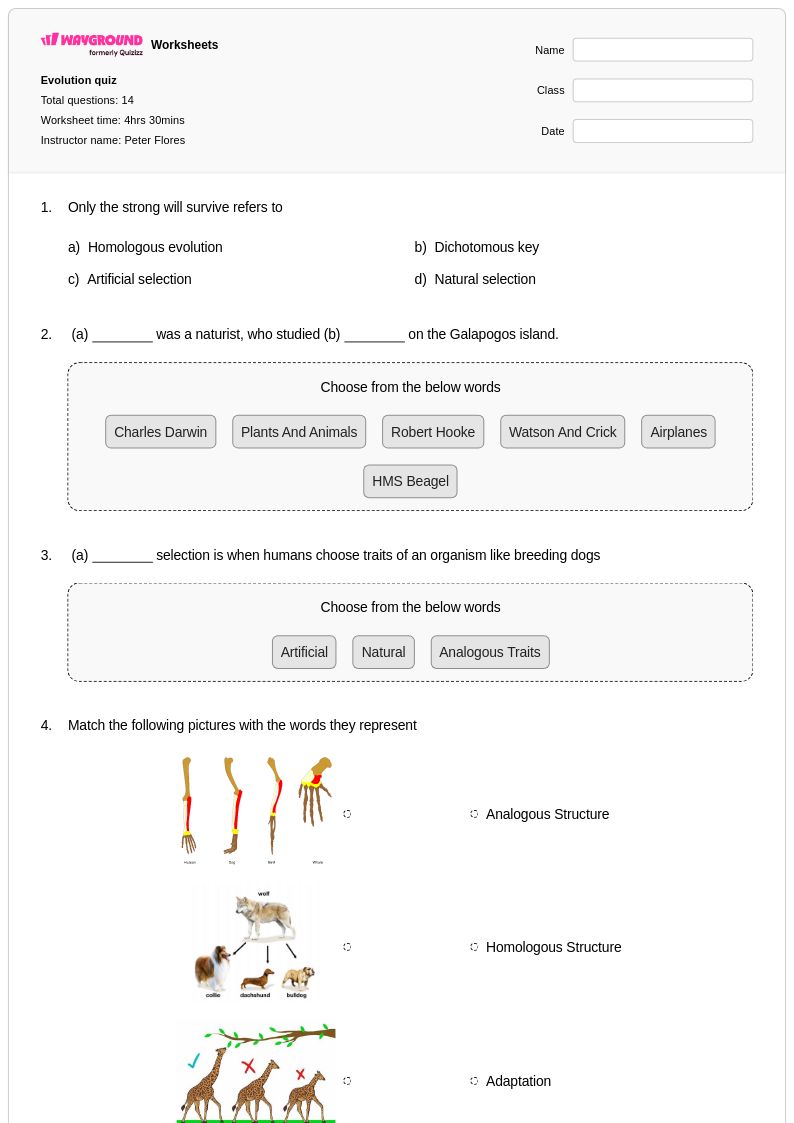
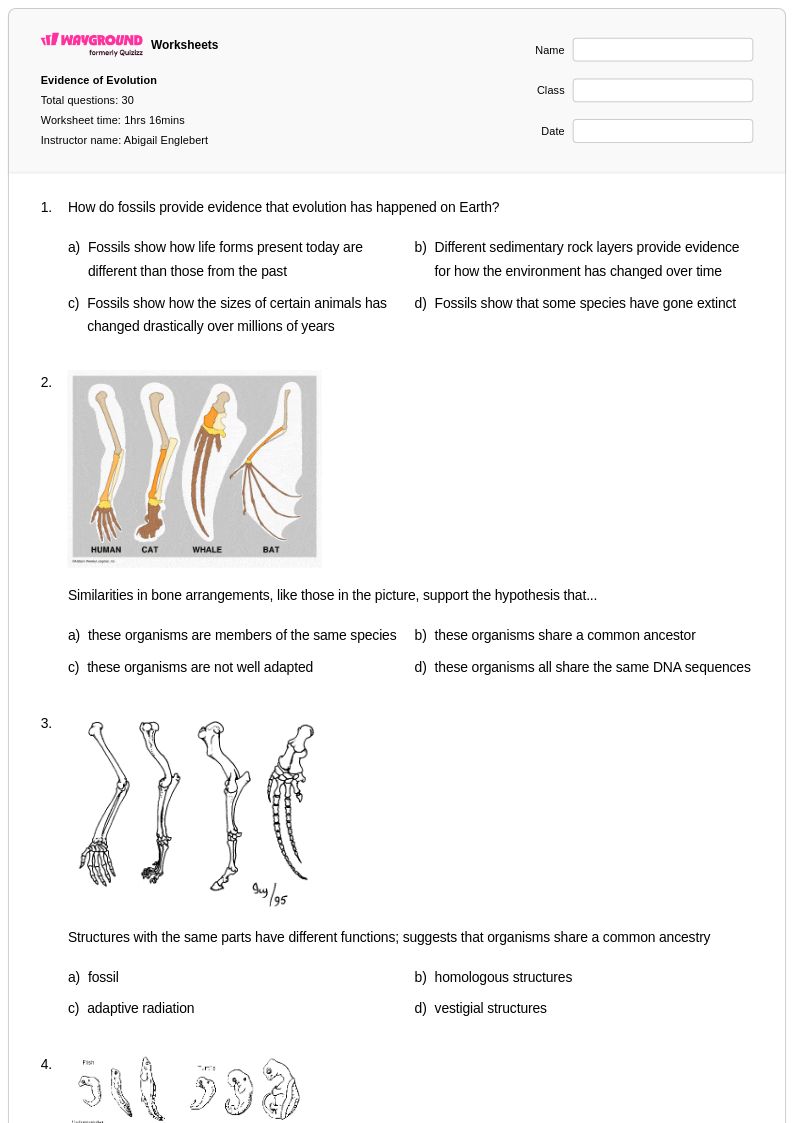
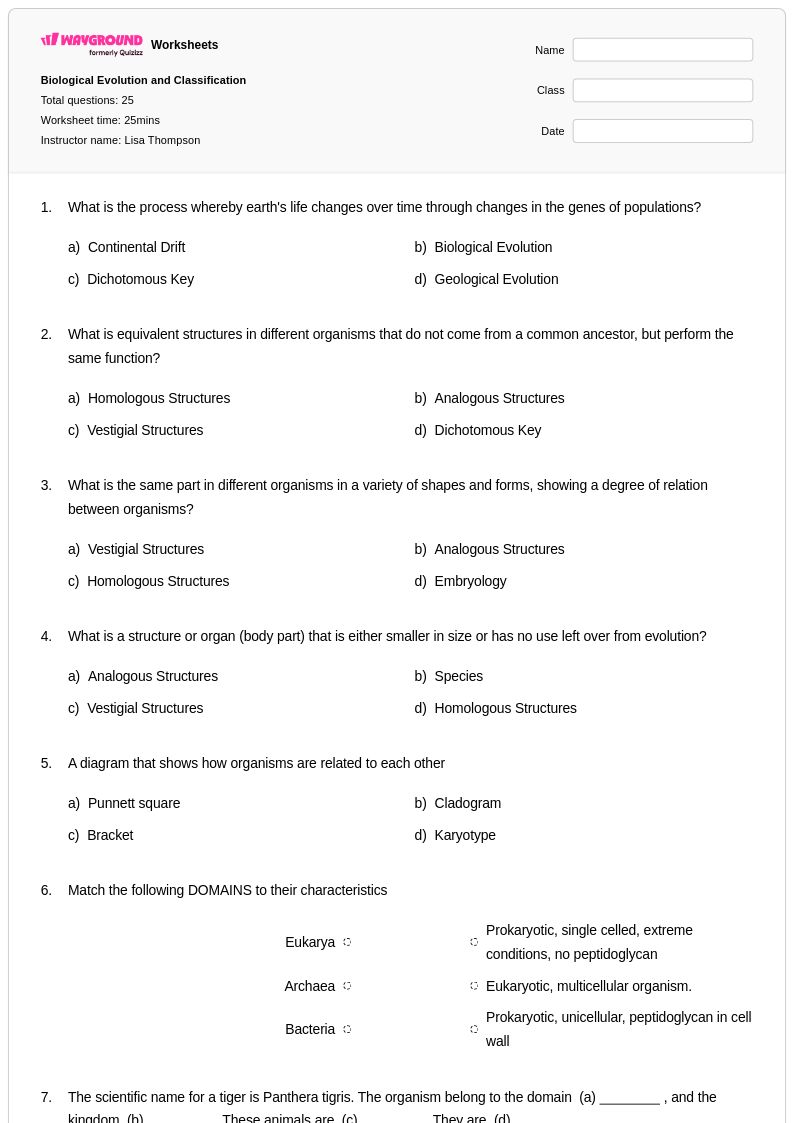
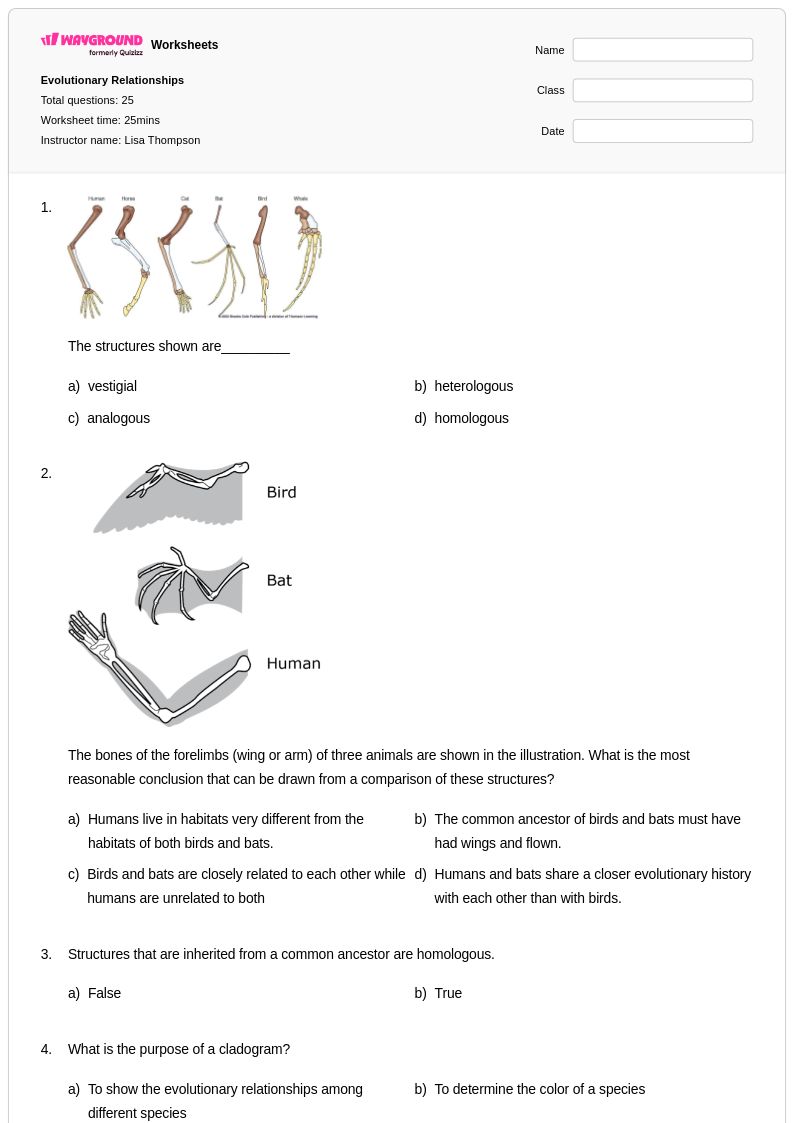
Effective practice exercises ask students to categorize and compare different types of evolutionary evidence: fossil records, homologous structures, analogous structures, vestigial structures, and molecular data such as DNA sequence comparisons. Worksheets that present a set of anatomical diagrams and require students to distinguish homologous from analogous structures are particularly useful because they target a persistent misconception. Tasks that connect fossil evidence to geologic time scales also reinforce how multiple evidence types converge to support evolutionary theory.
What is the difference between analogous and homologous structures, and why do students confuse them?
Homologous structures share a common evolutionary origin but may serve different functions, such as the forelimbs of a human, whale, and bat, while analogous structures perform similar functions but evolved independently in unrelated lineages, such as the wings of birds and insects. Students frequently confuse them because they focus on function rather than origin, leading them to incorrectly classify similar-looking structures as homologous. Emphasizing that homology is determined by shared ancestry, not appearance or function, is the key corrective move.
What misconceptions do students commonly have about natural selection and evolution?
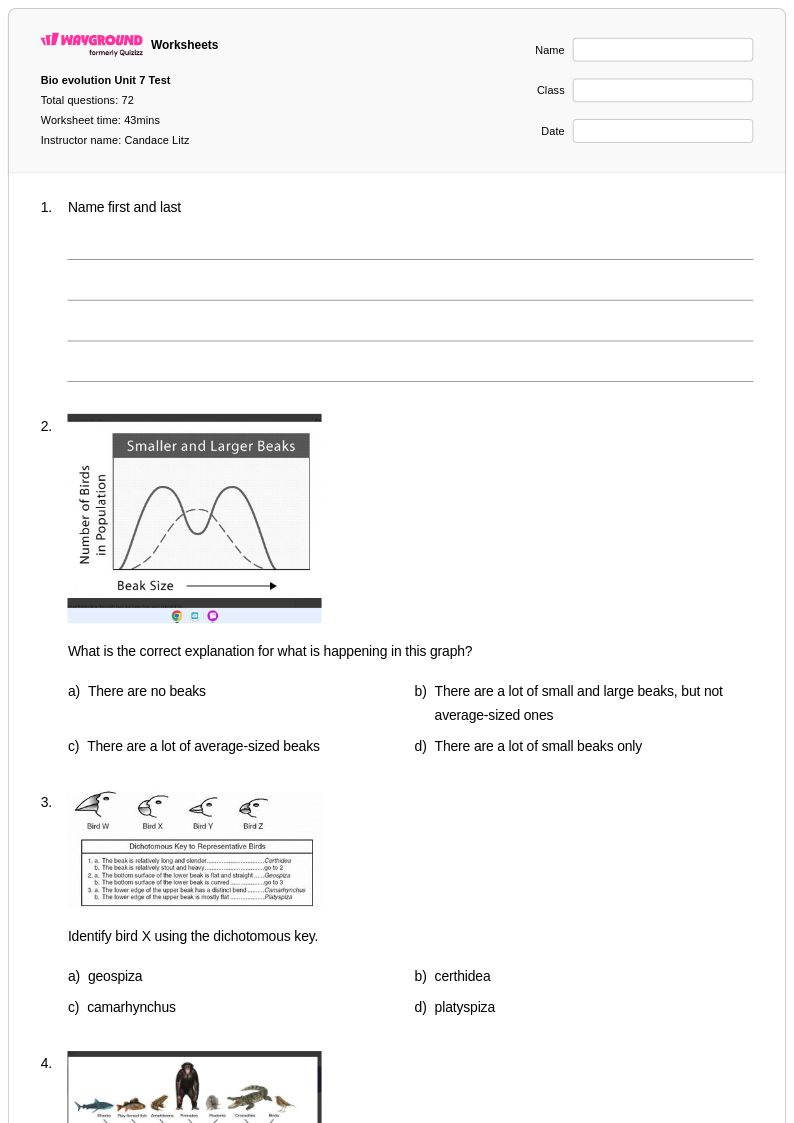
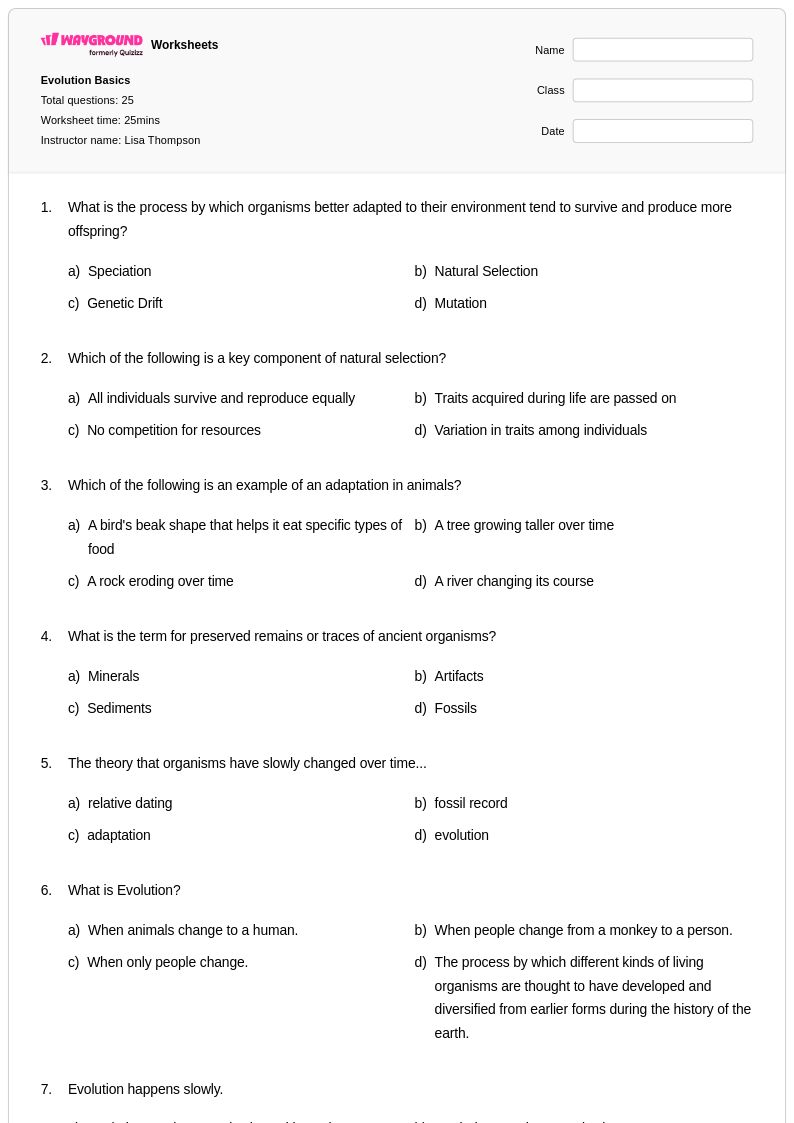
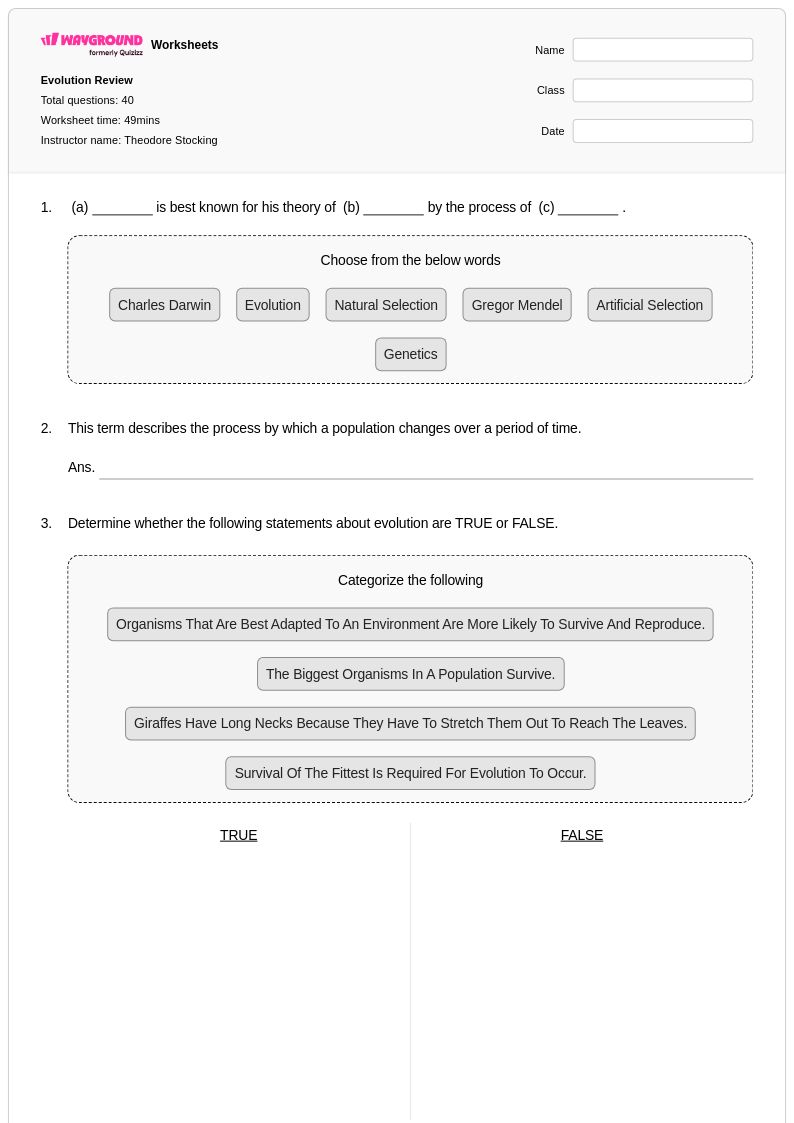
The most persistent misconception is that organisms evolve intentionally or in response to need, for example, believing a giraffe's neck grew longer because individual giraffes stretched for food. Students also frequently conflate individual adaptation with population-level change, not understanding that natural selection acts on heritable variation across generations. A third common error is treating evolution as a linear progression toward complexity or perfection rather than as branching change driven by environmental pressures.
What are vestigial structures and how should I explain them to students?
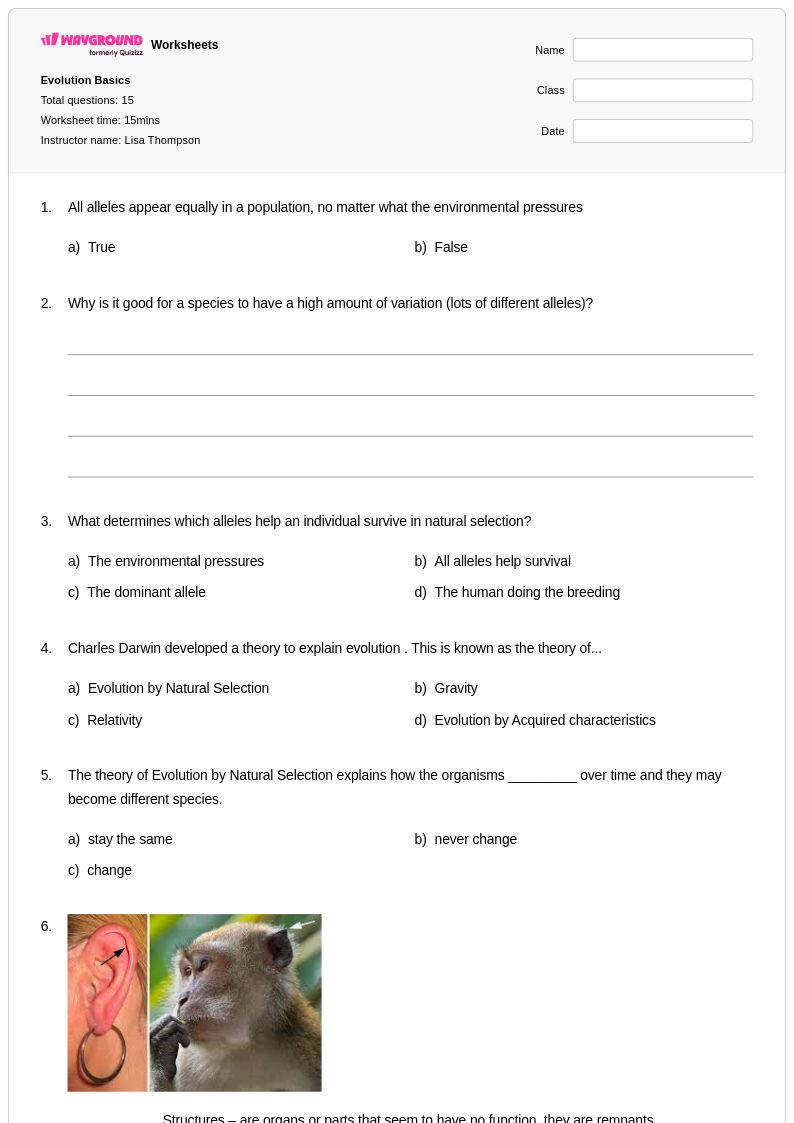
Vestigial structures are anatomical features that have lost most or all of their original function through evolution but persist in a reduced form, serving as evidence of an organism's evolutionary history. Classic examples include the human appendix, the pelvis and hind limb bones found in whales, and the wings of flightless birds. When teaching this concept, it helps to connect vestigial structures explicitly to common ancestry, asking students why a whale would have hip bones at all unless it descended from a land-dwelling ancestor.
How can I use Evolution and the Tree of Life worksheets from Wayground in my classroom?
Wayground's Evolution and the Tree of Life worksheets are available as printable PDFs for traditional classroom use and in digital formats for technology-integrated learning environments, and teachers can also host them as a quiz directly on Wayground. The digital format supports individual accommodations such as read aloud, extended time, and reduced answer choices, which is especially useful when supporting students with IEPs or English language learners working through scientific vocabulary. For in-class instruction, the printable versions work well as guided notes, partner activities, or formative exit checks tied to lessons on phylogenetics, fossil evidence, or structural comparisons.