Free Printable Hair Analysis Worksheets for Class 9
Explore Wayground's free Class 9 hair analysis worksheets and printables that help students master forensic science techniques, cellular structure examination, and biological evidence interpretation through engaging practice problems with comprehensive answer keys.
Explore printable Hair Analysis worksheets for Class 9
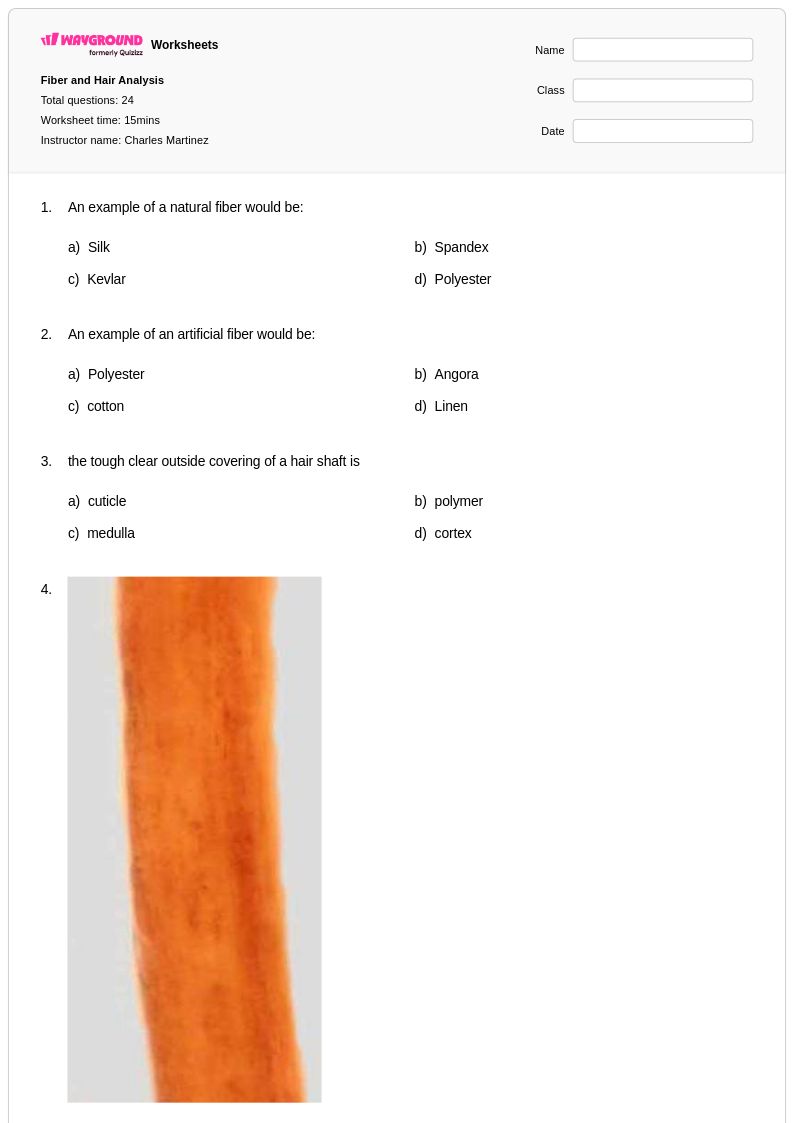
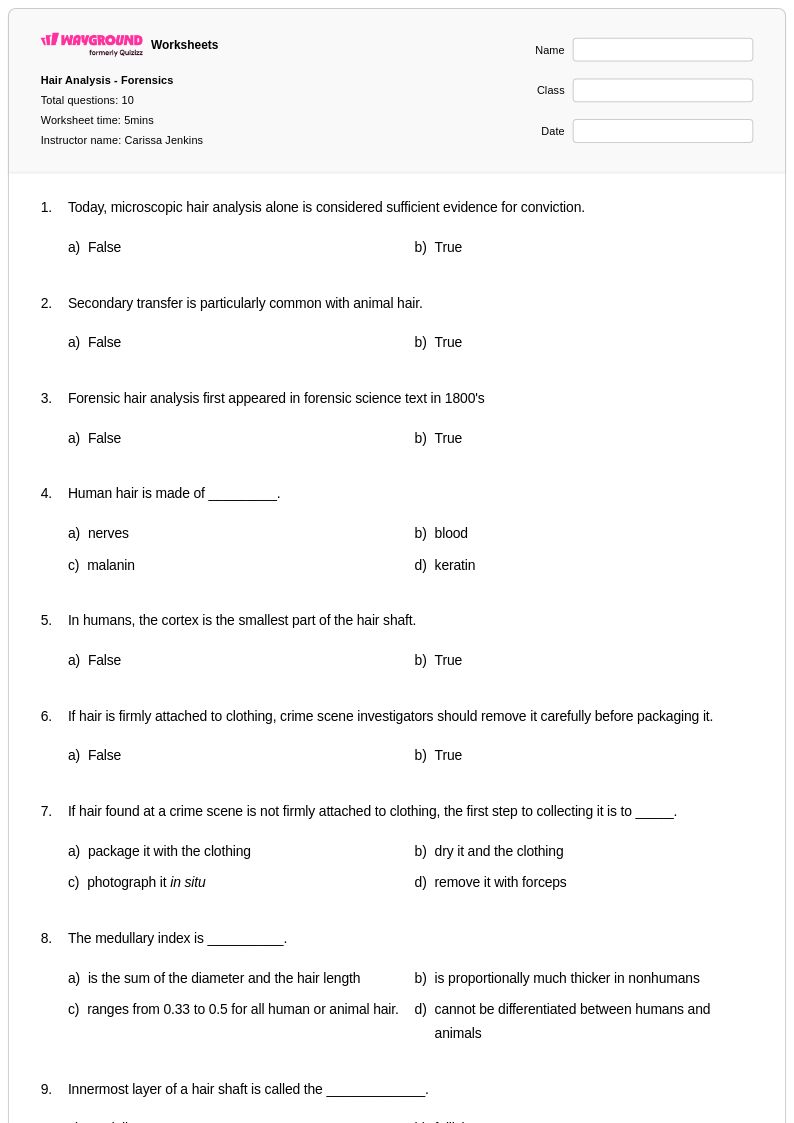
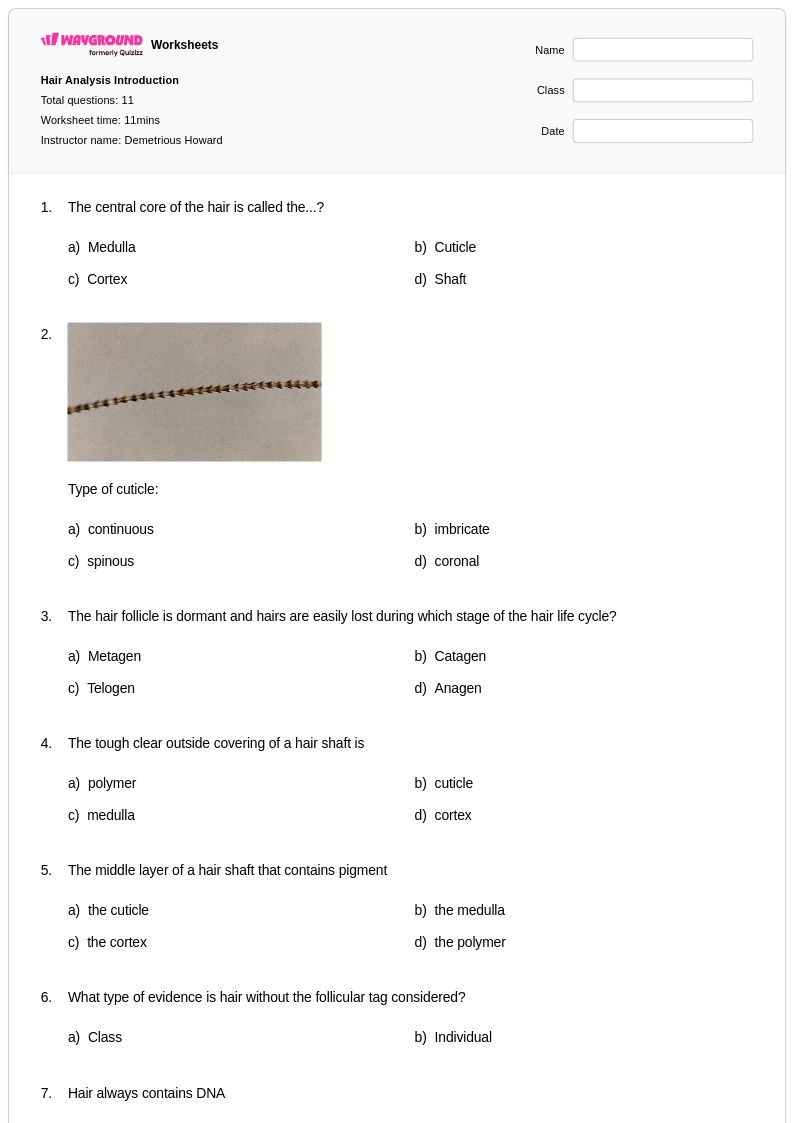
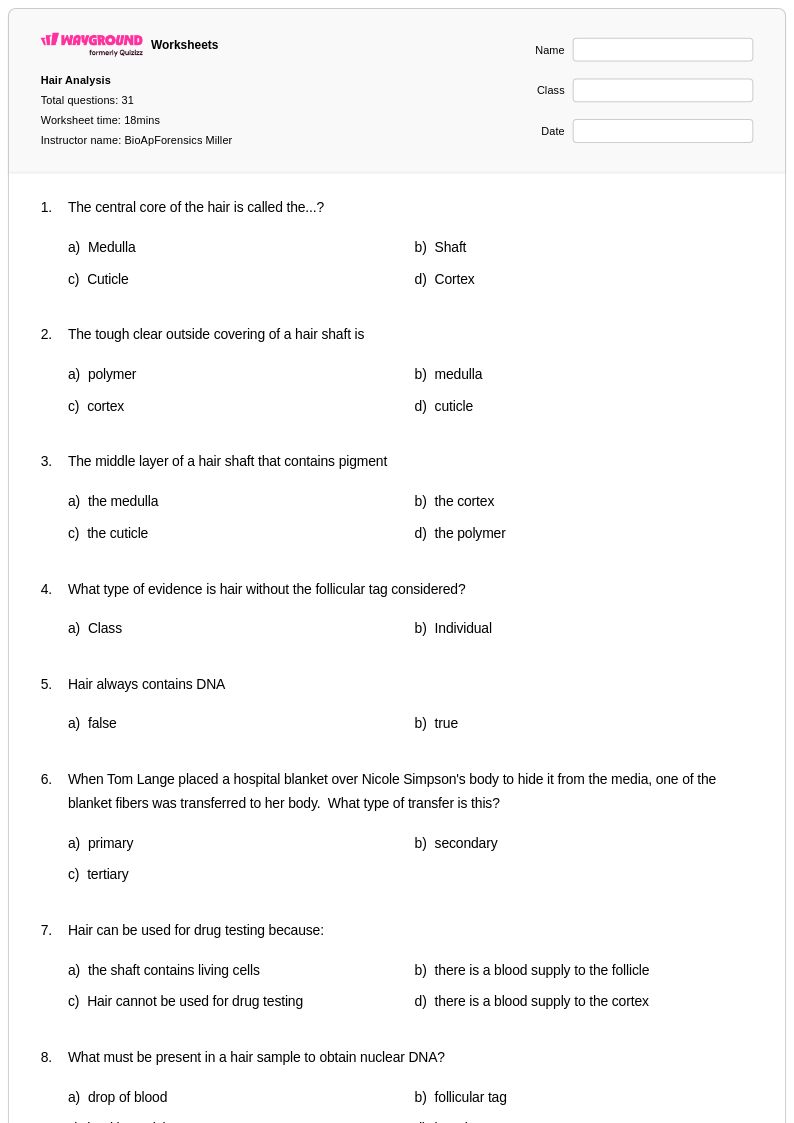
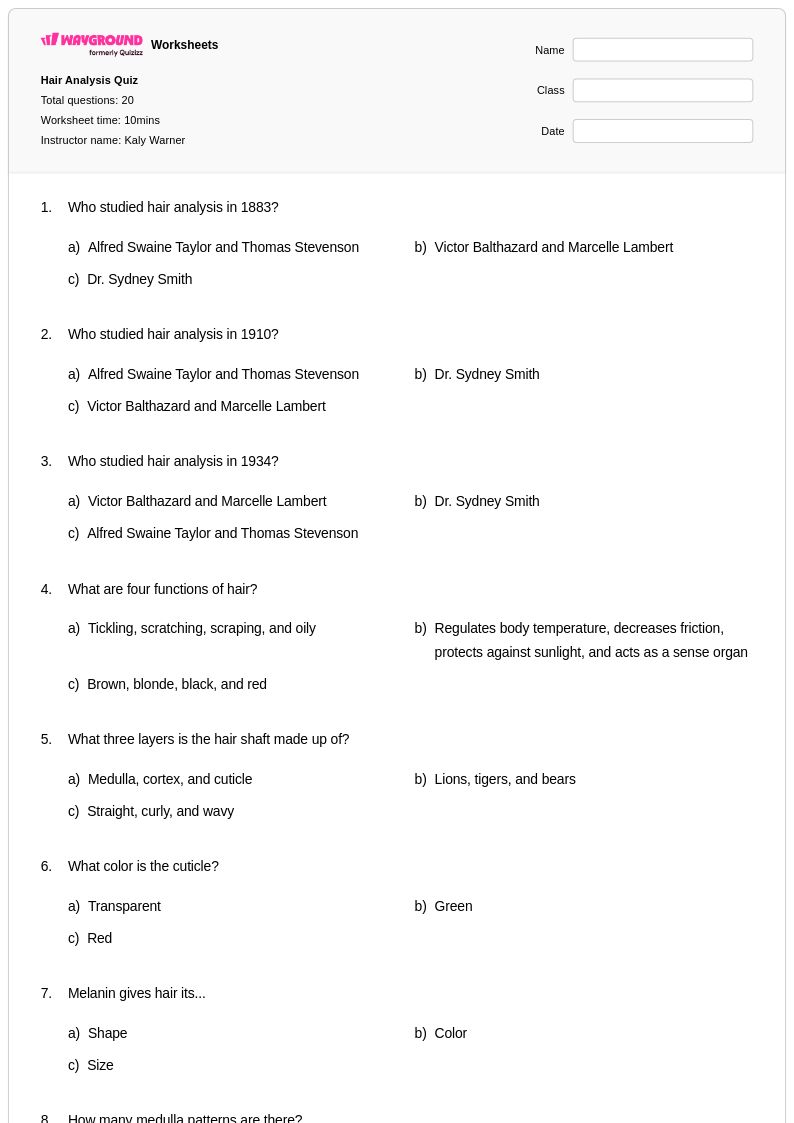
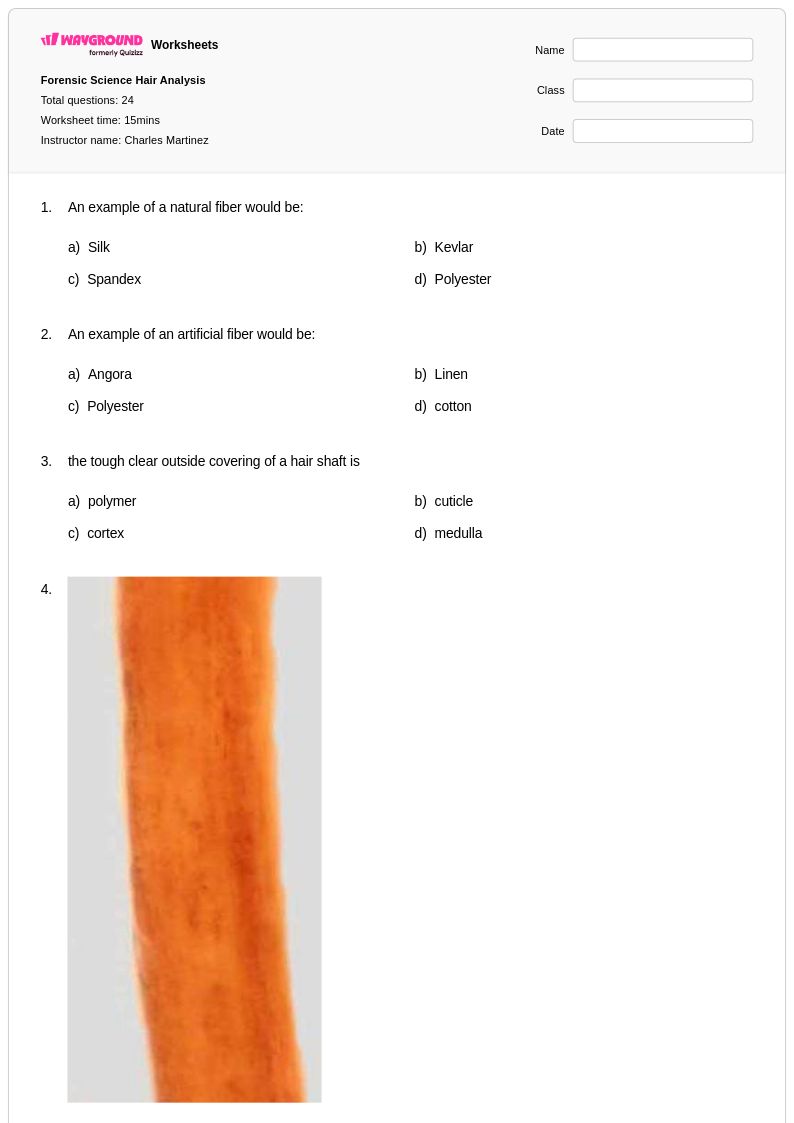
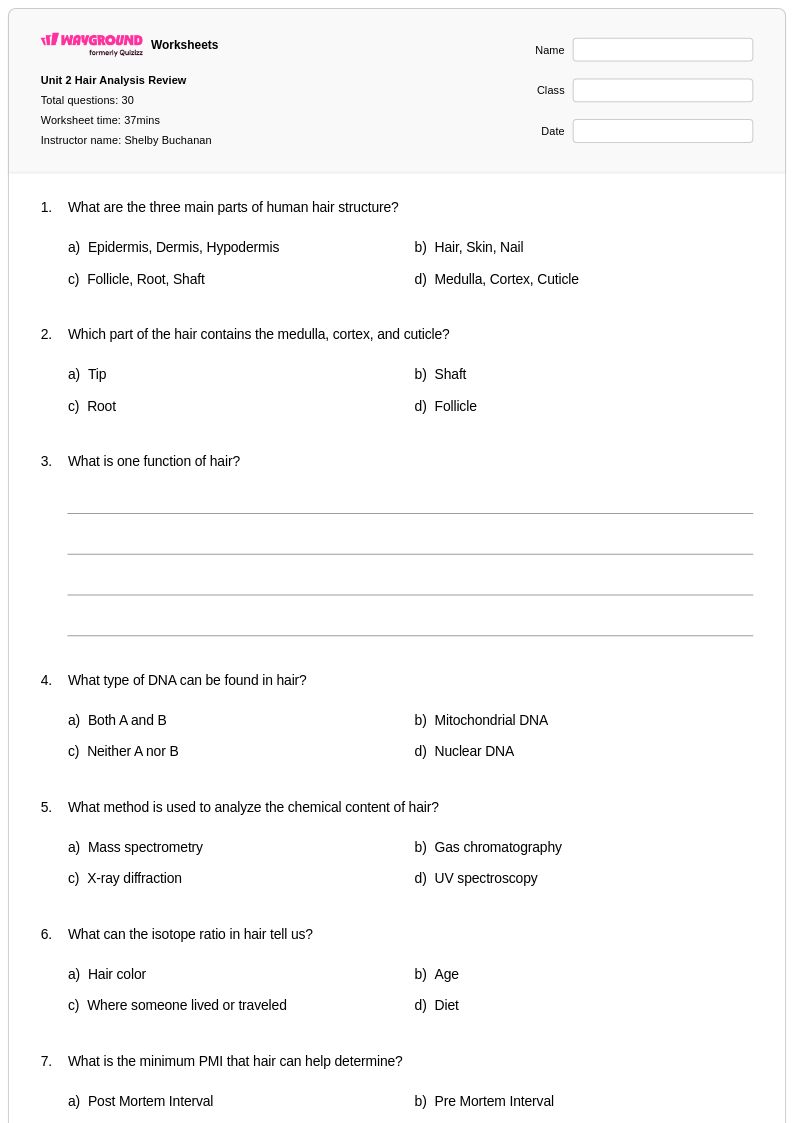
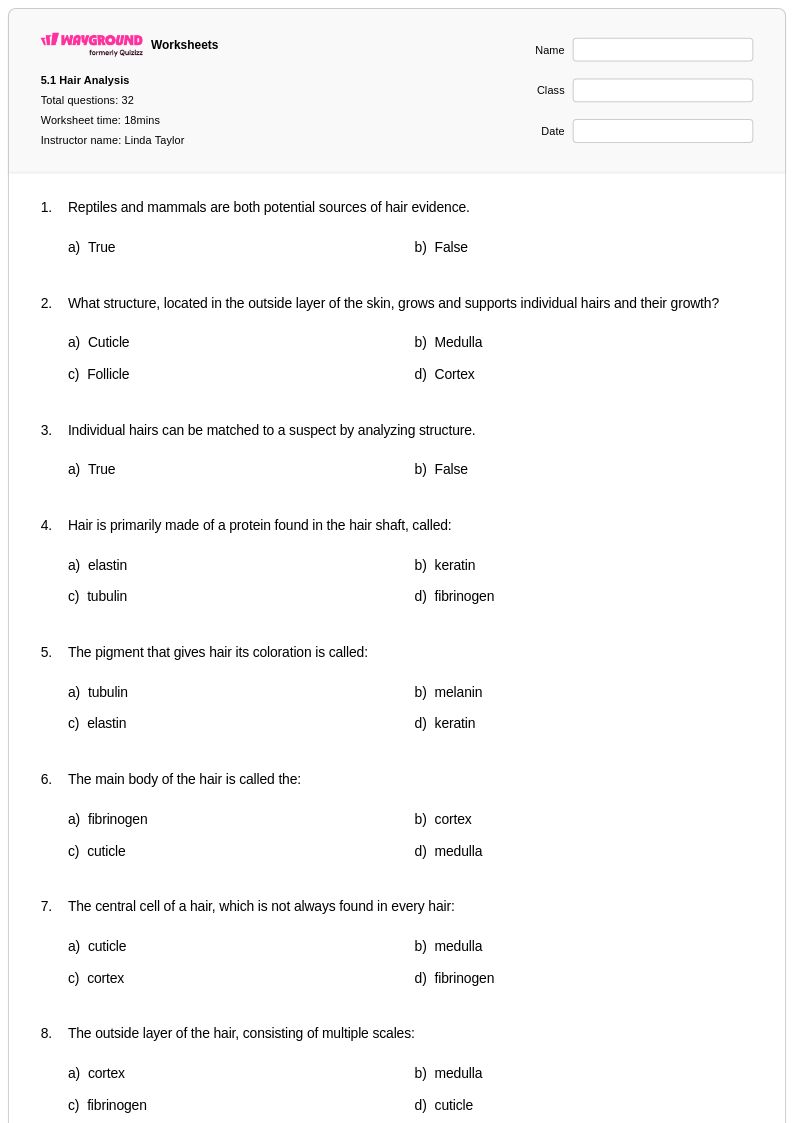
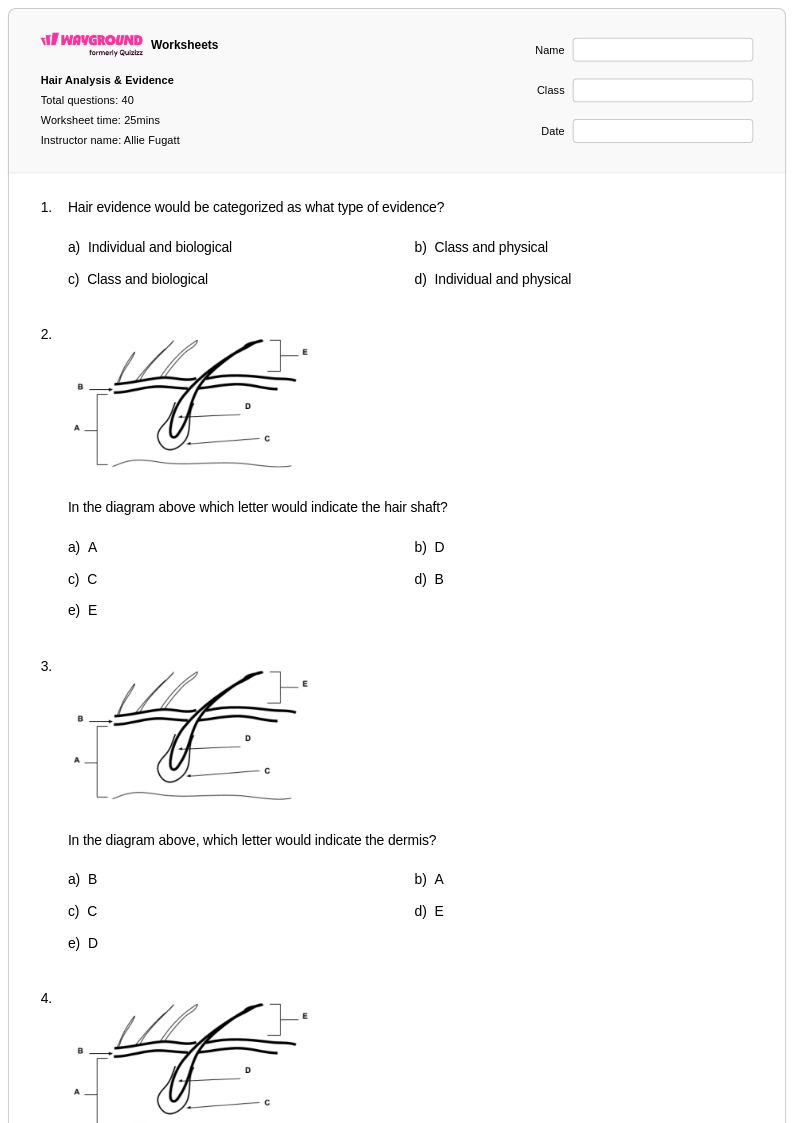
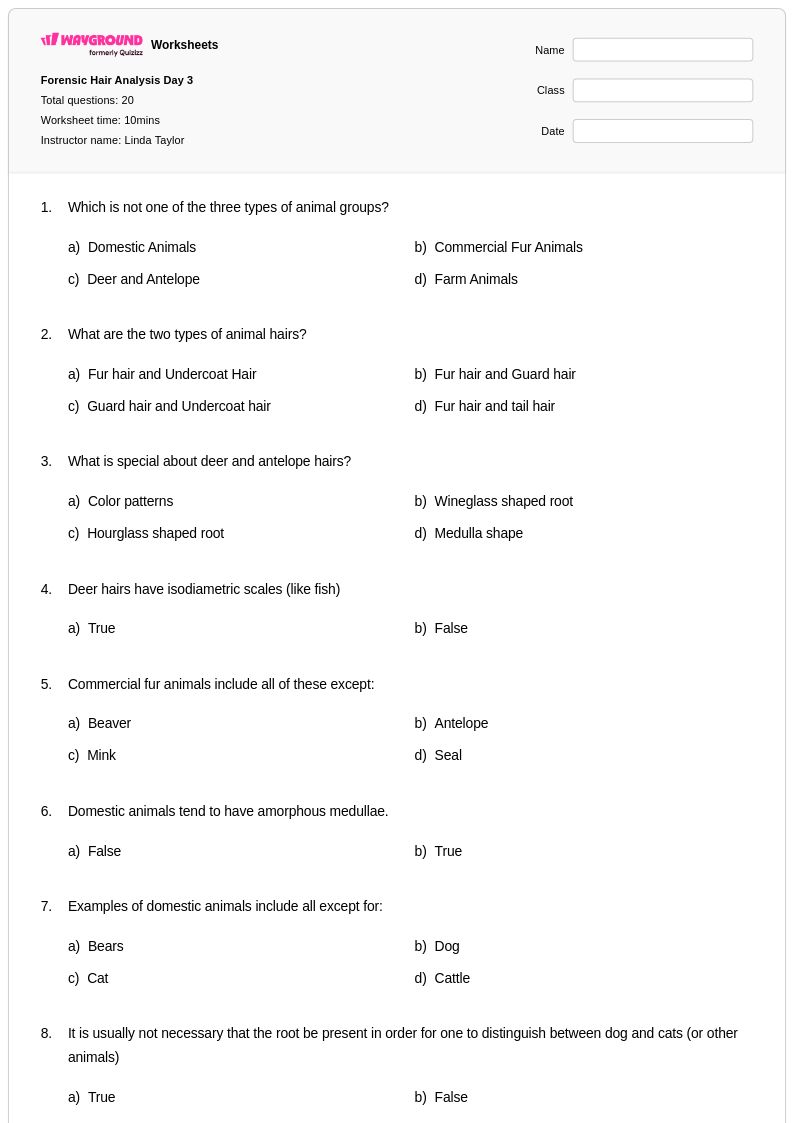
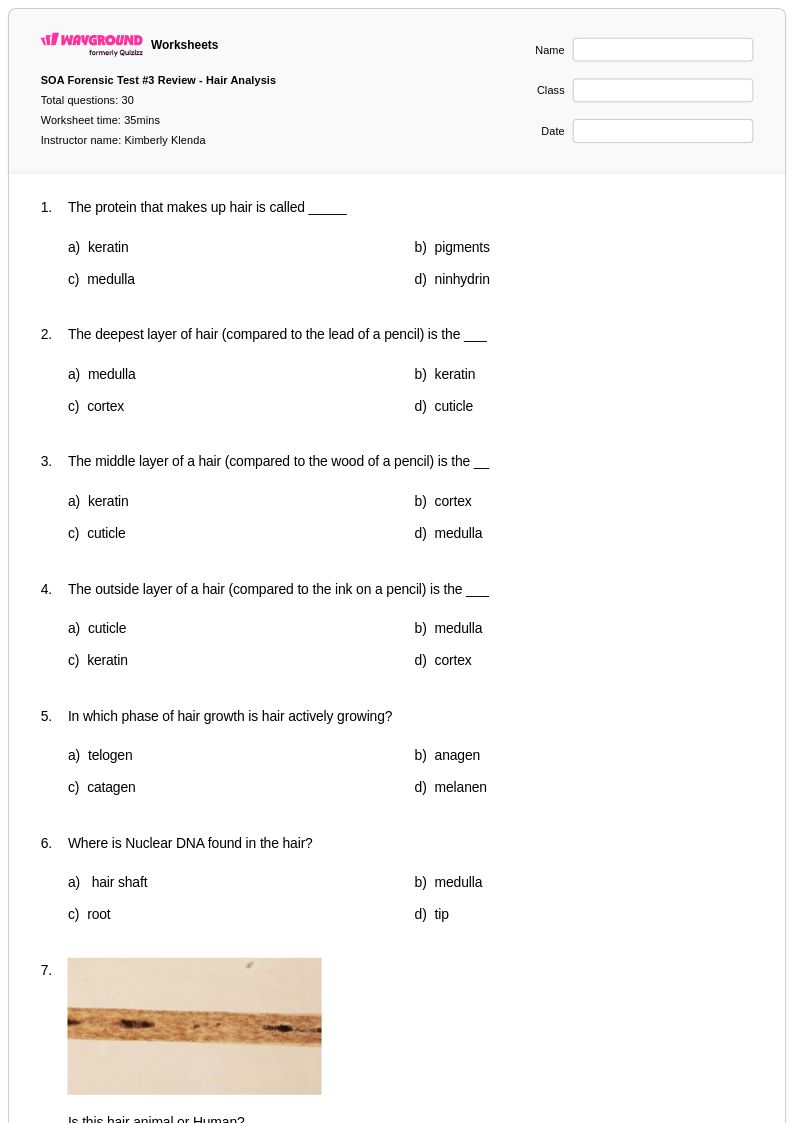
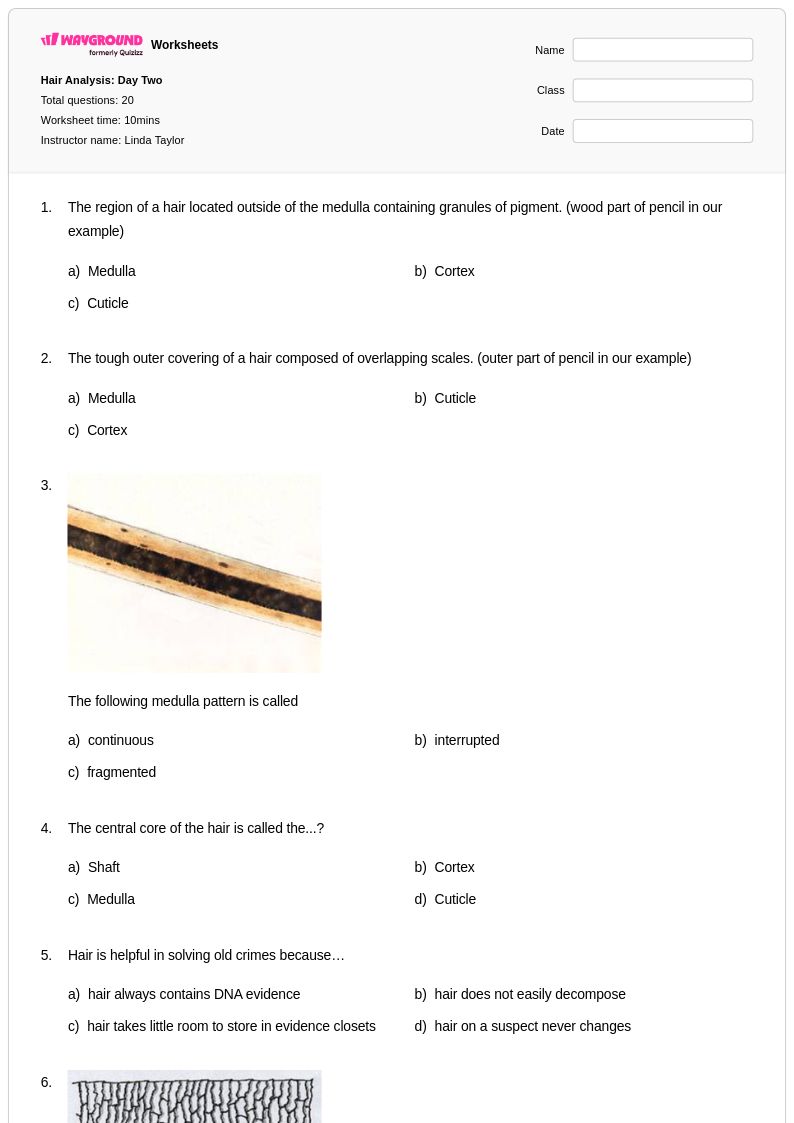
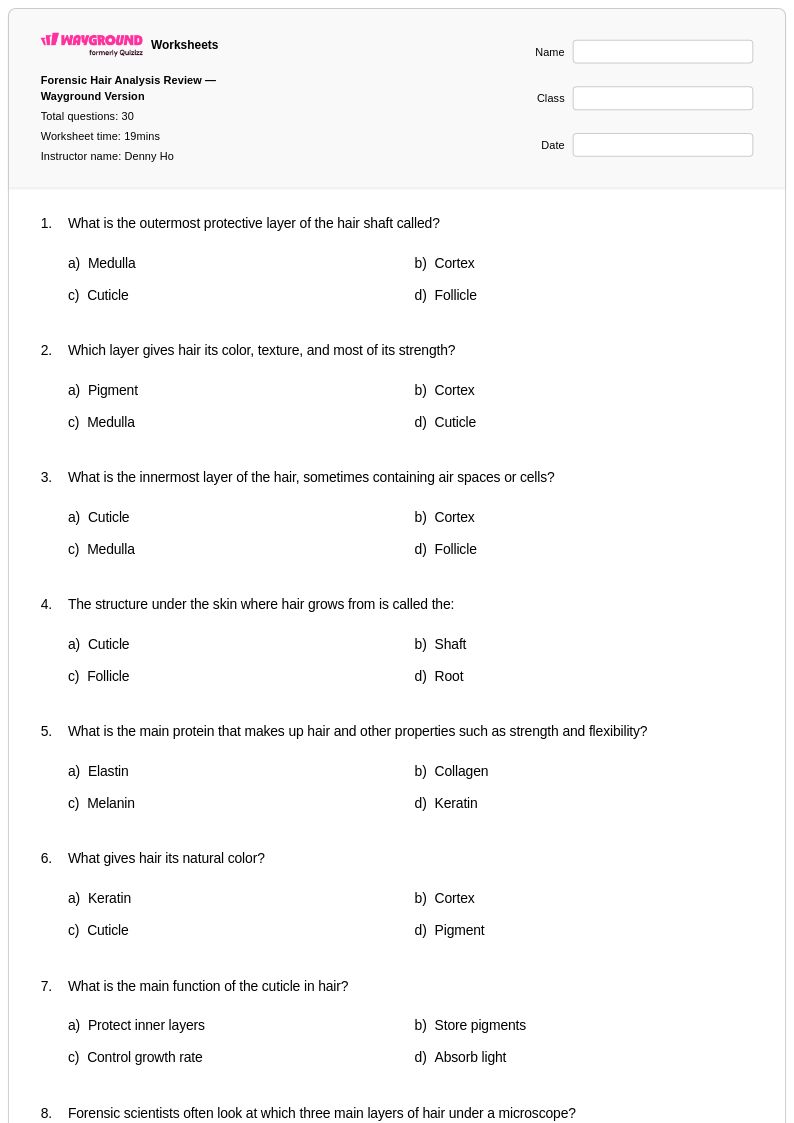
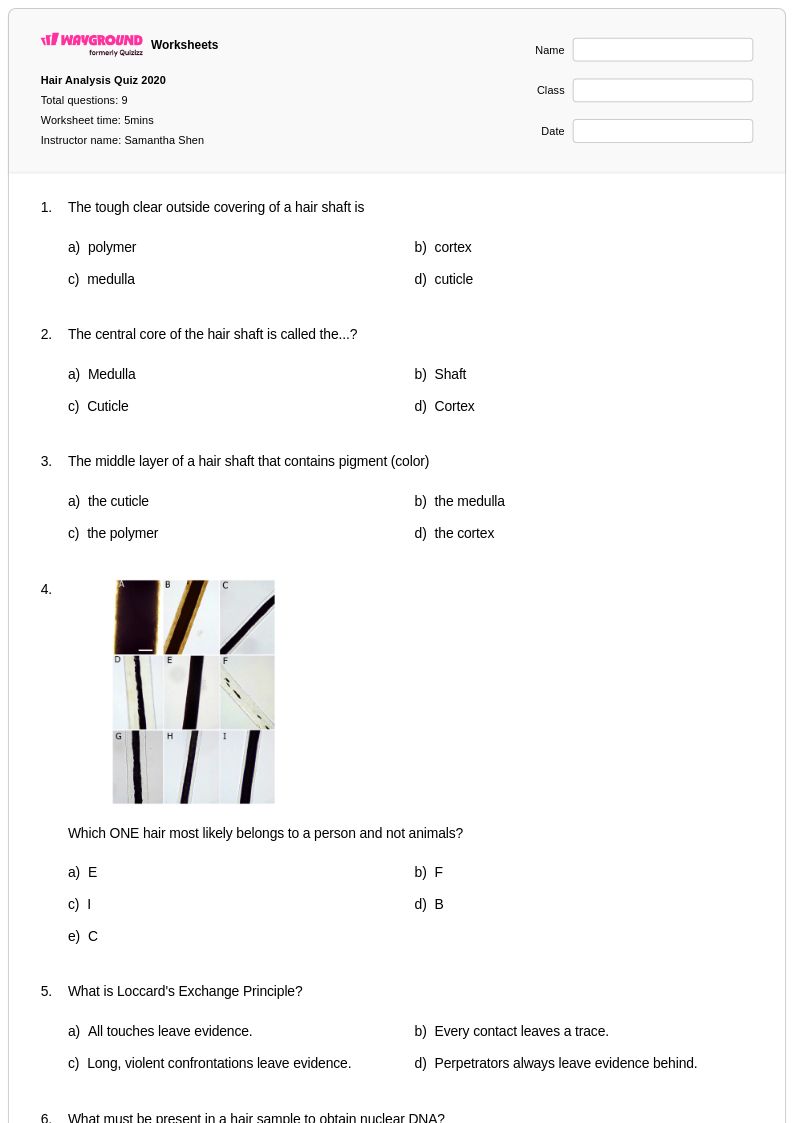
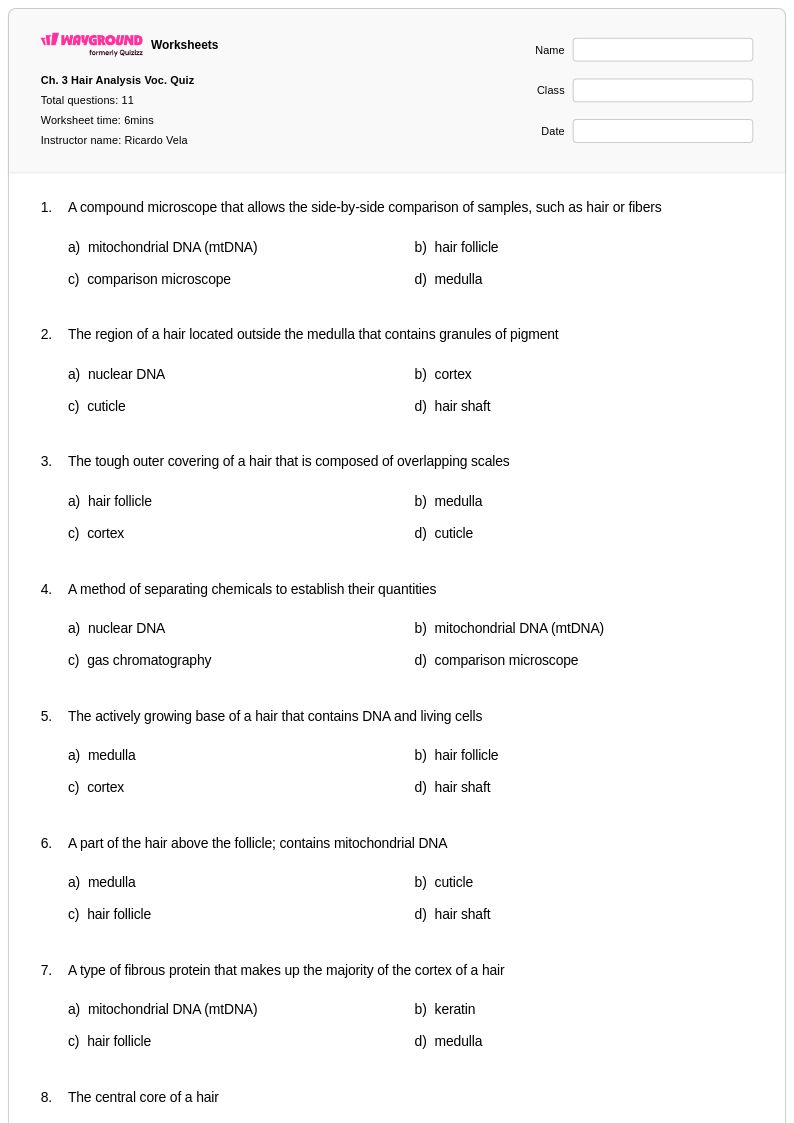
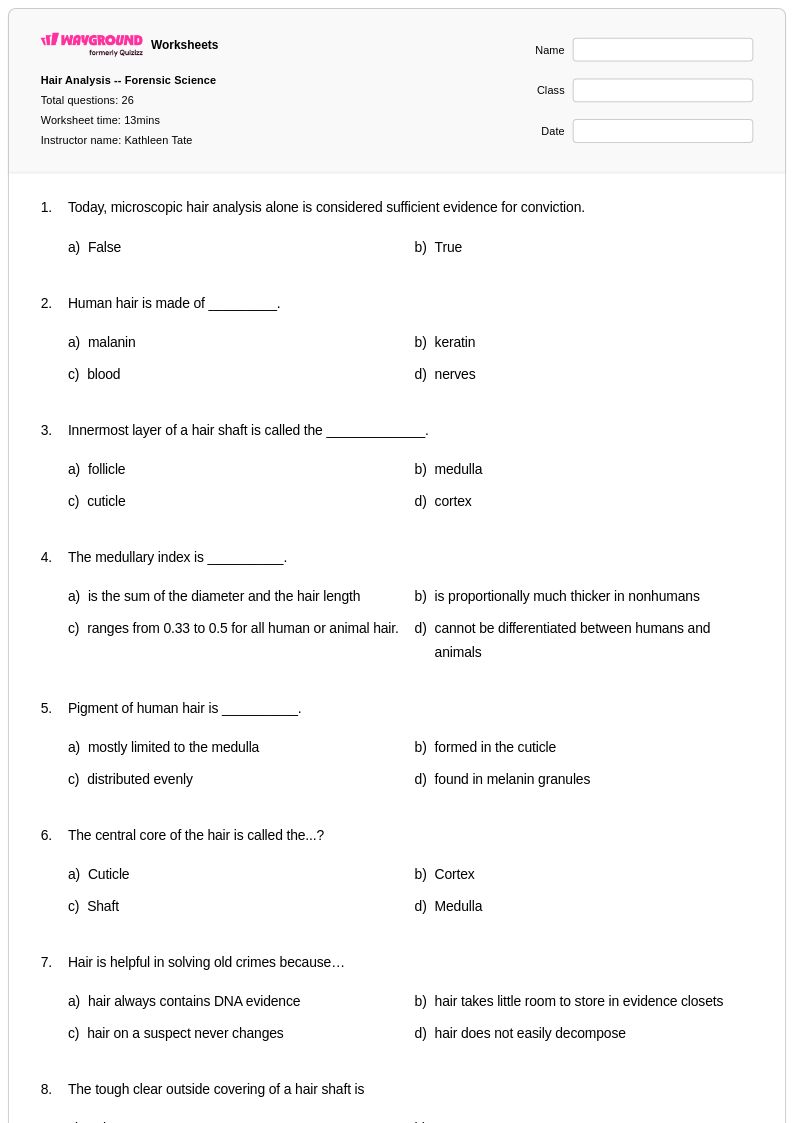
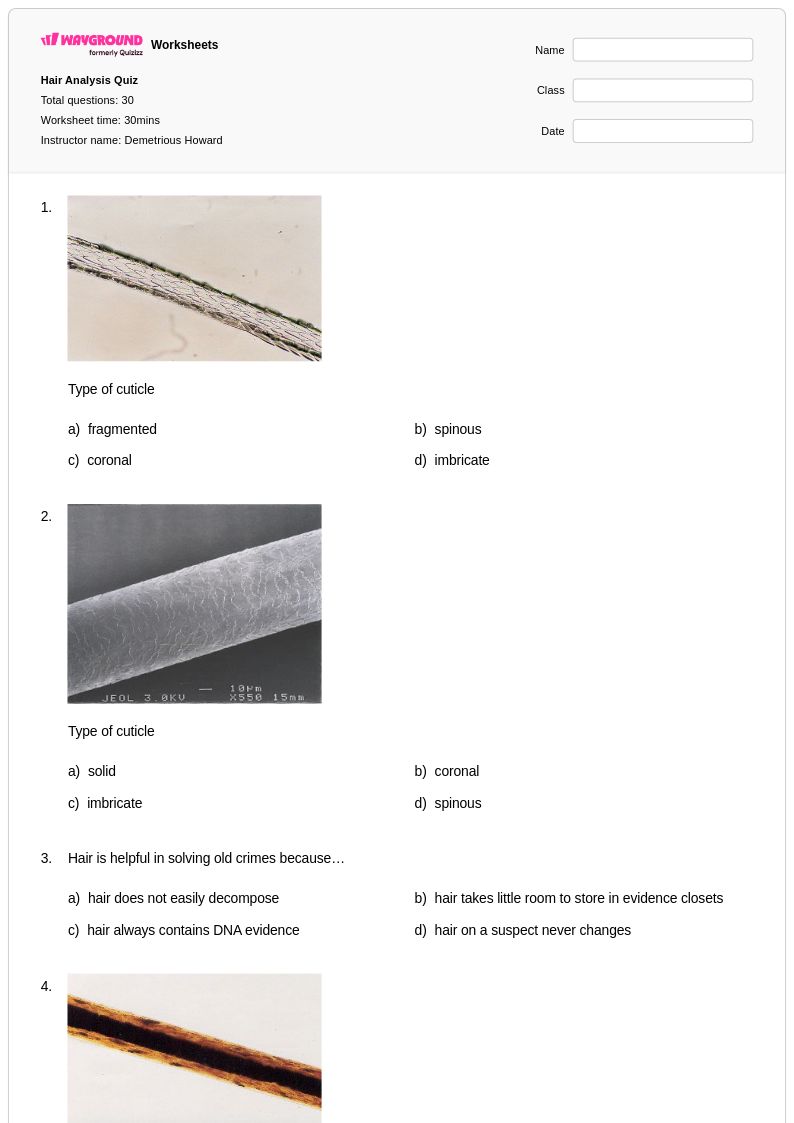
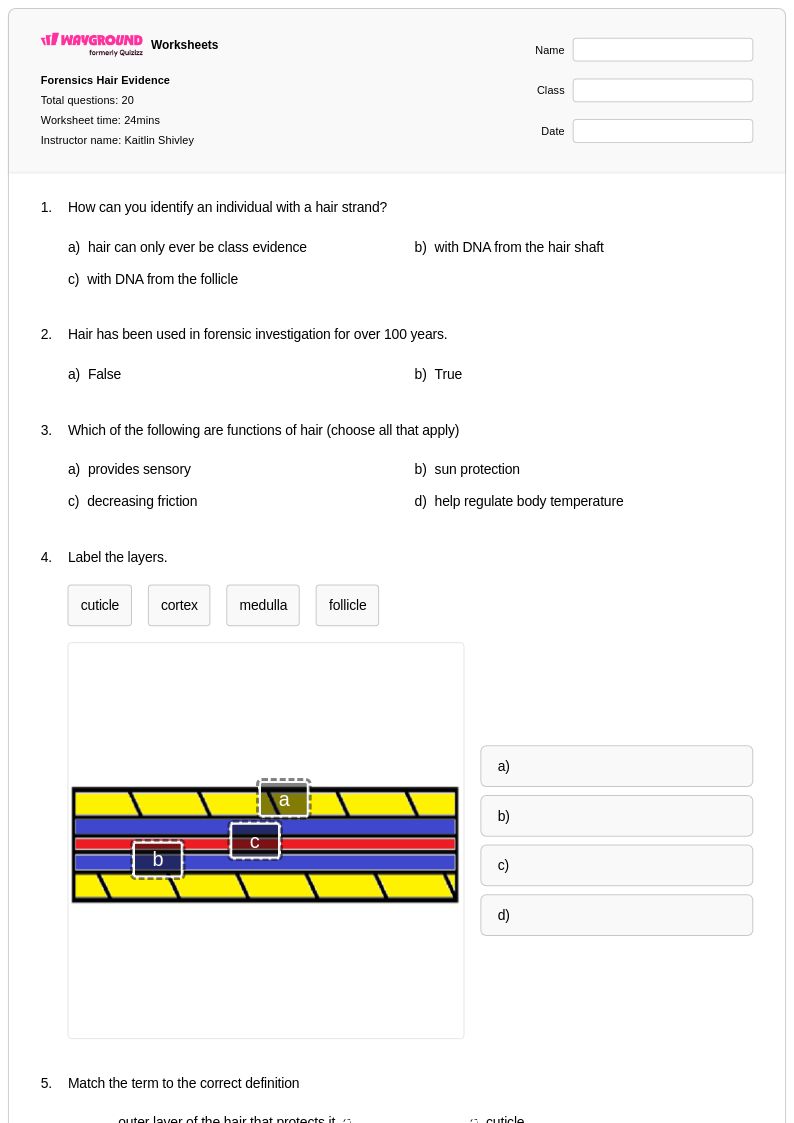
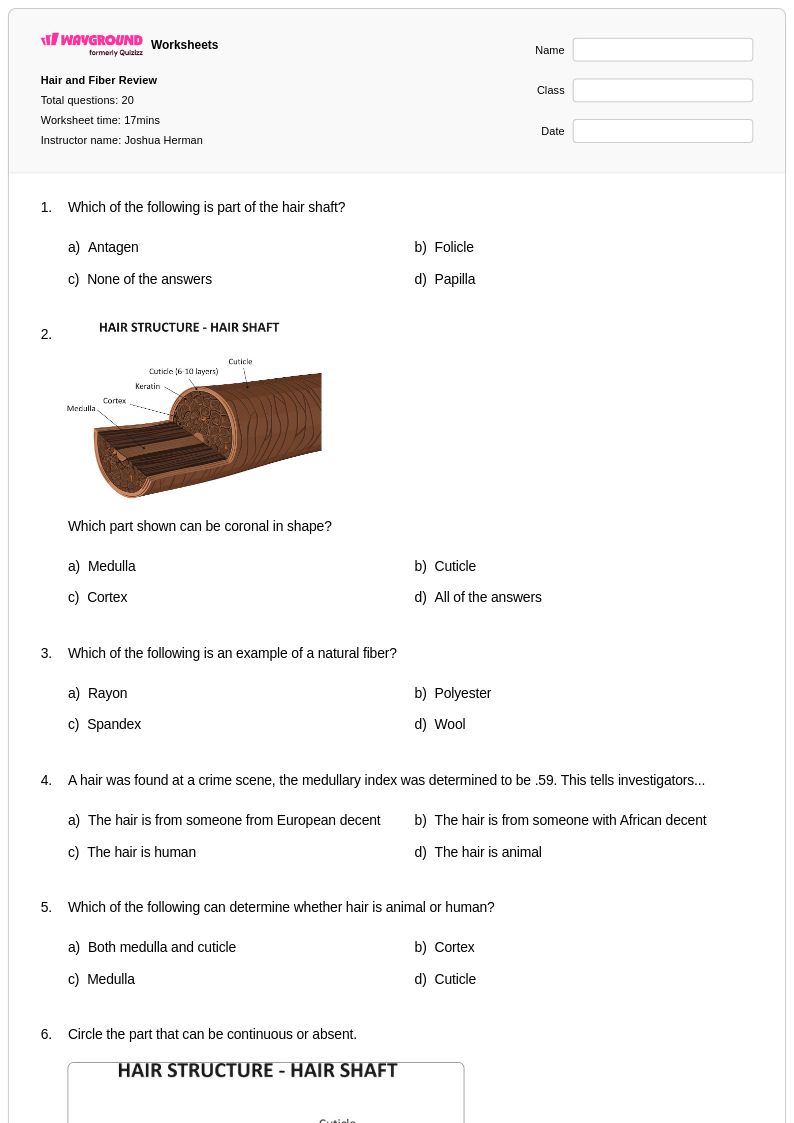
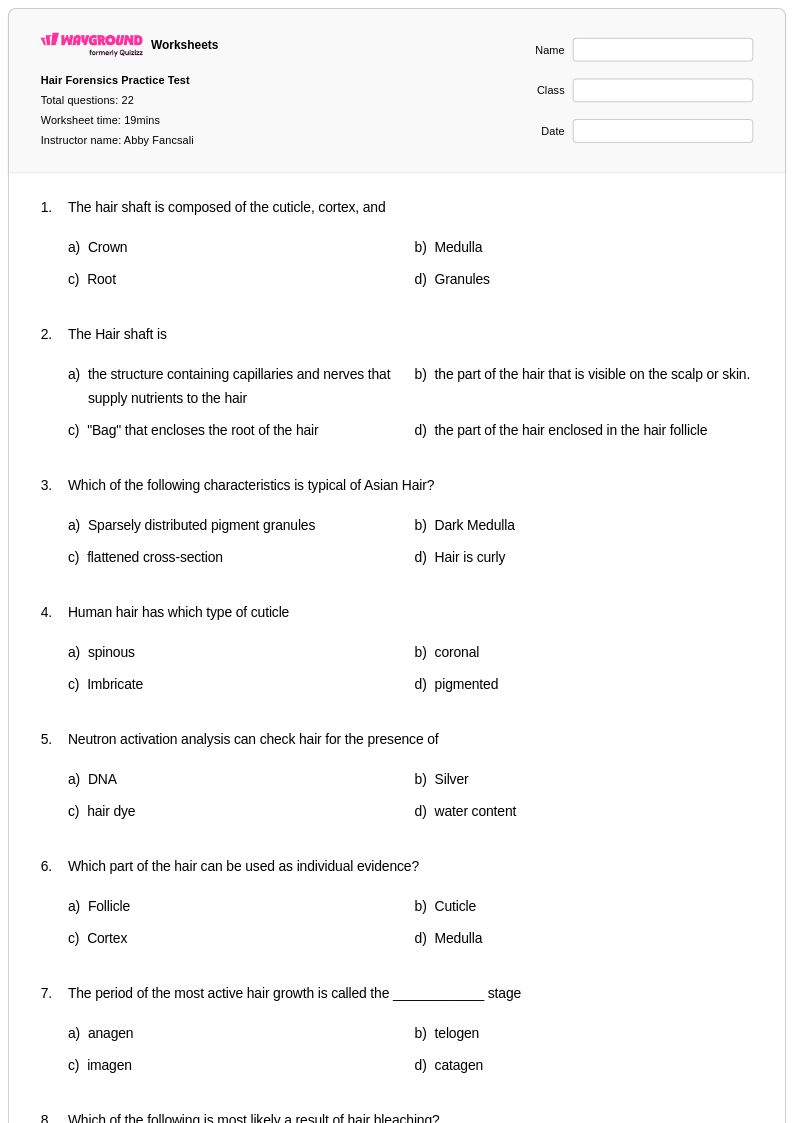
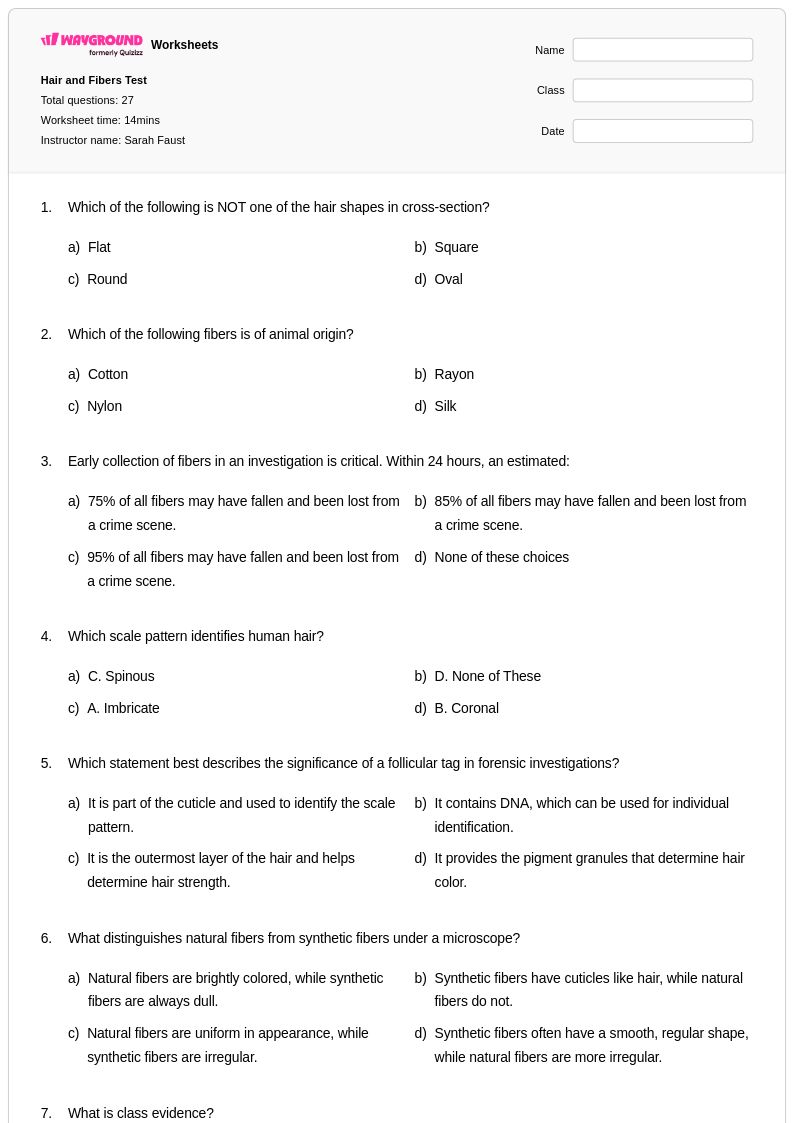
Hair analysis worksheets for Class 9 biology students available through Wayground (formerly Quizizz) provide comprehensive exploration of forensic science applications and cellular structure examination. These educational resources guide students through the microscopic study of hair samples, teaching them to identify key characteristics such as cuticle patterns, cortex composition, and medulla structures that distinguish human hair from animal hair and individual specimens from one another. The worksheets strengthen critical analytical skills by presenting practice problems that require students to interpret microscopic images, compare hair samples from crime scenes, and draw evidence-based conclusions about their findings. Each worksheet collection includes detailed answer keys and is available as free printable pdf resources, enabling students to develop proficiency in scientific observation, data collection, and forensic analysis techniques essential for understanding how biological evidence contributes to criminal investigations.
Wayground (formerly Quizizz) supports biology educators with an extensive library of millions of teacher-created hair analysis worksheets specifically designed for Class 9 students. The platform's robust search and filtering capabilities allow teachers to quickly locate resources that align with curriculum standards and match their specific instructional needs, whether focusing on basic hair structure identification or advanced forensic comparison techniques. Teachers can customize these materials to accommodate different learning levels, creating differentiated assignments for remediation or enrichment while maintaining scientific accuracy and age-appropriate complexity. The flexible format options include both digital interactive versions and printable pdf worksheets, enabling seamless integration into laboratory sessions, homework assignments, or assessment preparation, while comprehensive answer keys streamline grading and facilitate targeted feedback on student understanding of microscopic analysis and forensic science principles.
FAQs
How do I teach hair analysis in a forensic science or biology class?
Teaching hair analysis effectively means building from microscopic structure before moving into forensic application. Start by having students identify the three main structural layers of hair: the cuticle, cortex, and medulla. Once students can recognize these components under a microscope, introduce comparative analysis by having them examine human versus animal hair samples and identify distinguishing characteristics such as medulla patterns and cuticle scale variations. Connecting the science to real forensic case studies helps students understand why accurate hair identification matters in criminal investigations.
What exercises help students practice microscopic hair examination?
Effective practice exercises for hair analysis include comparative identification tasks where students examine diagrams or slides of hair cross-sections and classify them by medulla pattern, cuticle structure, and pigmentation. Data collection worksheets that ask students to record observable characteristics and draw conclusions from their findings reinforce both scientific observation skills and analytical thinking. Practice problems focused on distinguishing human hair from animal hair samples are particularly valuable because they require students to apply multiple identification criteria simultaneously.
What common mistakes do students make when analyzing hair samples?
One of the most frequent errors is conflating correlation with definitive identification: students often treat a single matching characteristic as conclusive evidence rather than understanding that forensic hair analysis requires a pattern of multiple consistent features. Students also struggle to distinguish between medulla types, particularly continuous versus interrupted patterns, which can lead to misclassification between species. Another common misconception is assuming that hair color alone is a reliable identifier, when in practice pigmentation granule distribution and density are far more diagnostically significant than surface color appearance.
How can I use hair analysis worksheets to support students at different skill levels?
For foundational learners, worksheets that focus on labeling hair follicle anatomy and matching cuticle scale images to descriptions build the vocabulary and visual recognition skills needed before forensic application. Advanced students benefit from case-based analysis worksheets where they must evaluate multiple hair samples, weigh competing evidence, and write forensic conclusions. On Wayground, teachers can apply accommodations such as reduced answer choices for students who need additional support, or enable Read Aloud for students who benefit from audio delivery of questions, ensuring all learners can engage with the same core content at an appropriate level.
How do I use Wayground's hair analysis worksheets in my classroom?
Wayground's hair analysis worksheets are available as printable PDFs, making them suitable for hands-on laboratory activities where students examine physical diagrams alongside microscope work, and in digital formats for technology-integrated classrooms. Teachers can also host the worksheets as a quiz directly on Wayground, enabling real-time data collection on student performance. Answer keys are included with each worksheet, which reduces grading time and allows teachers to focus post-lesson discussion on the misconceptions the data reveals.
How does hair analysis connect to broader forensic science standards?
Hair analysis sits at the intersection of biology and forensic science, requiring students to apply microscopy skills, comparative anatomy knowledge, and evidence-based reasoning within a single investigative context. It supports standards related to scientific observation, data interpretation, and the nature of forensic evidence, which are common threads across high school biology, anatomy, and elective forensic science courses. Because hair is a form of trace evidence, worksheets covering this topic naturally scaffold into broader units on evidence collection, chain of custody, and the limitations of physical evidence in legal contexts.