Free Printable Lung Volumes and Capacities Worksheets for Class 9
Class 9 biology students can master lung volumes and capacities with Wayground's comprehensive collection of free worksheets, printables, and practice problems that include detailed answer keys to reinforce respiratory system concepts.
Explore printable Lung Volumes and Capacities worksheets for Class 9
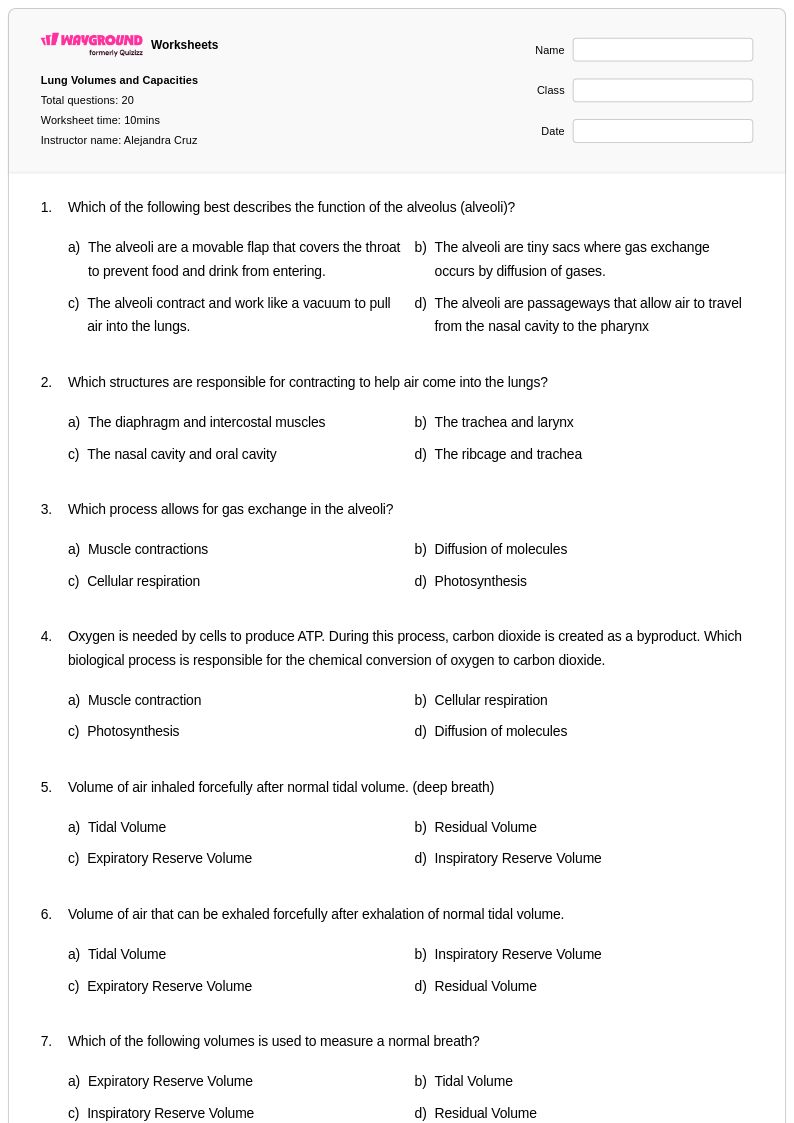
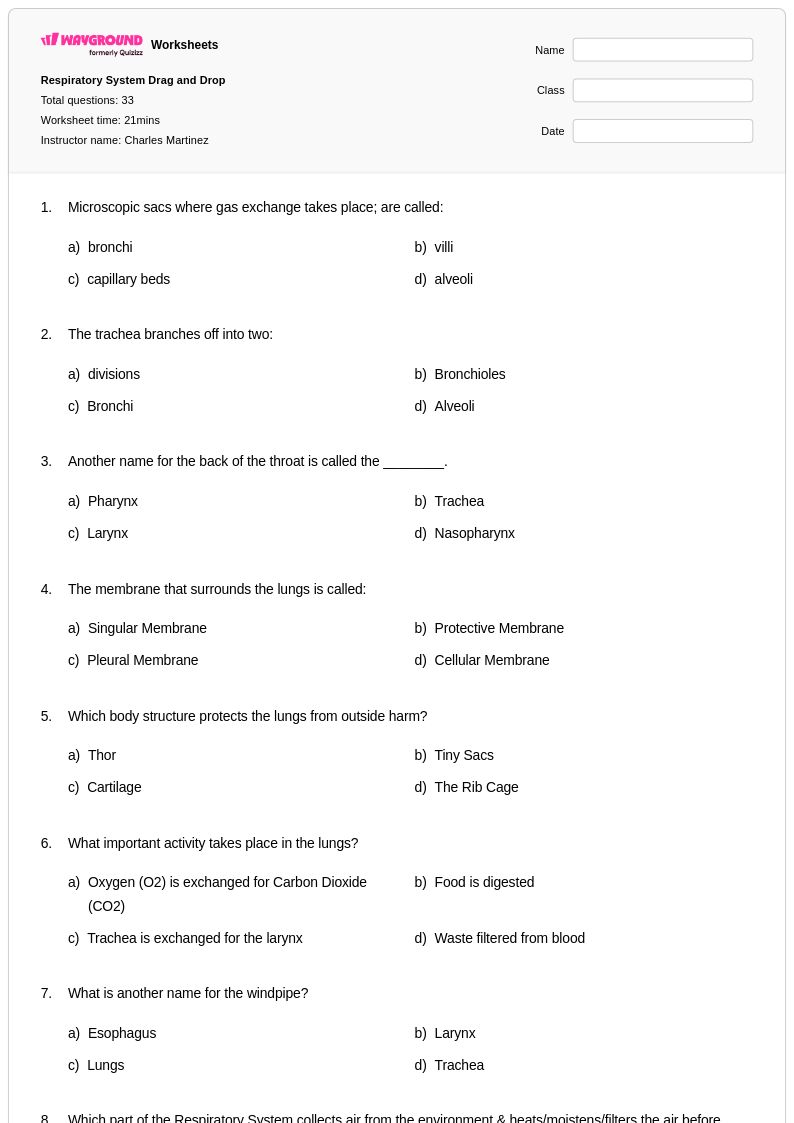
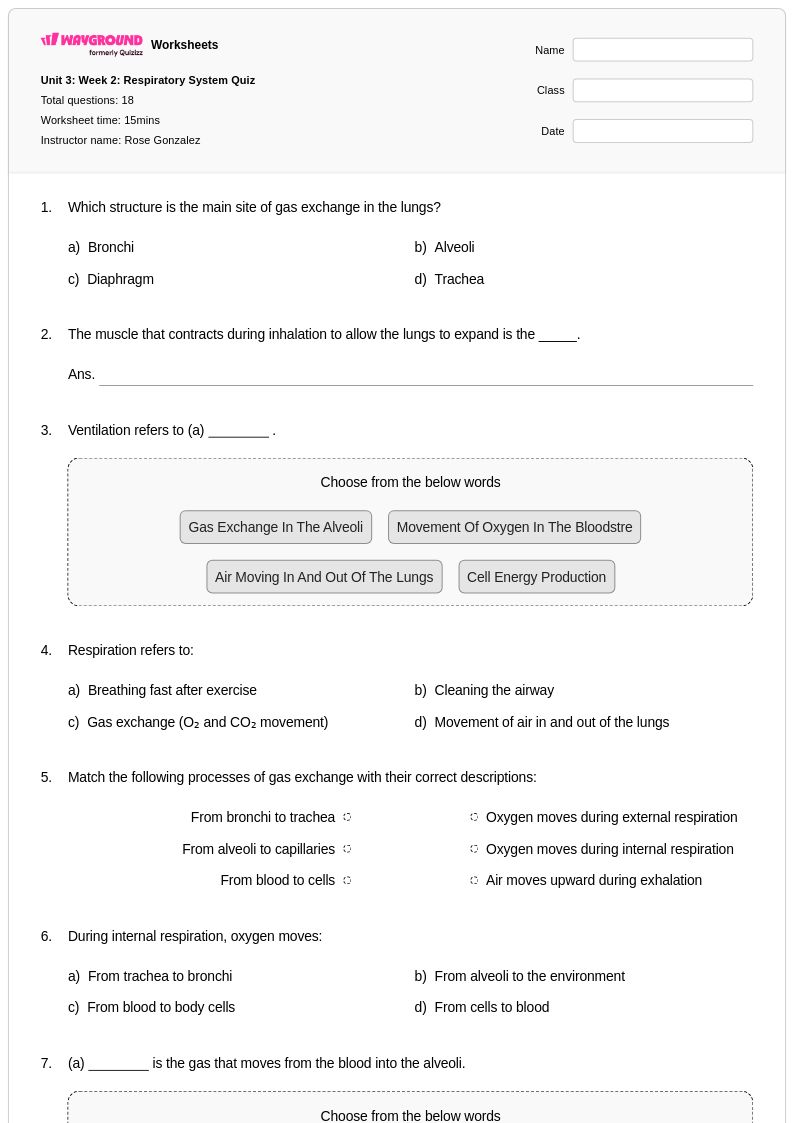
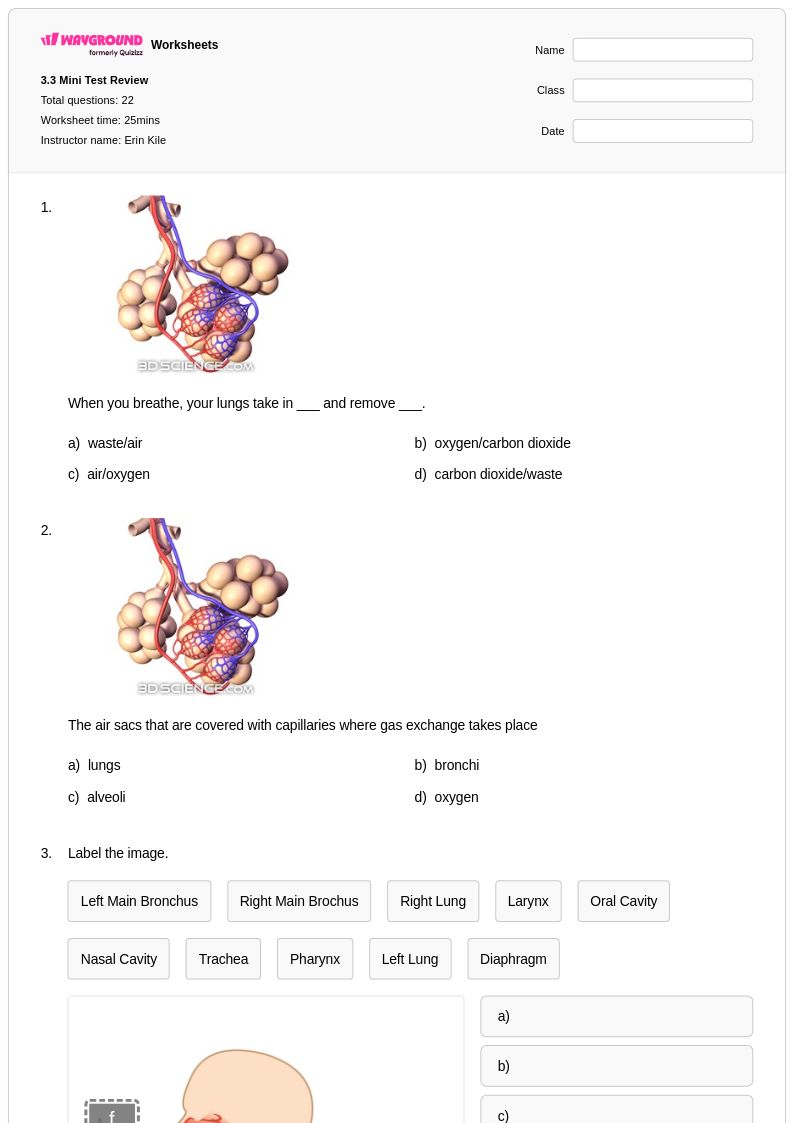
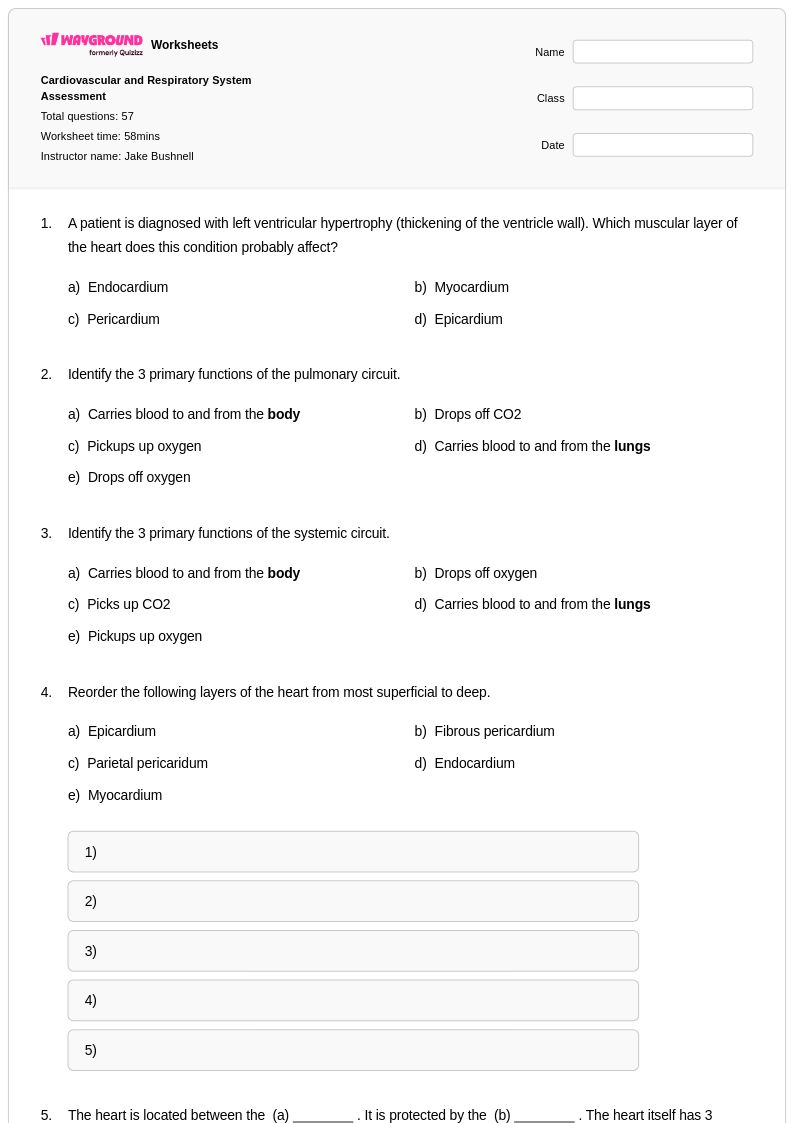
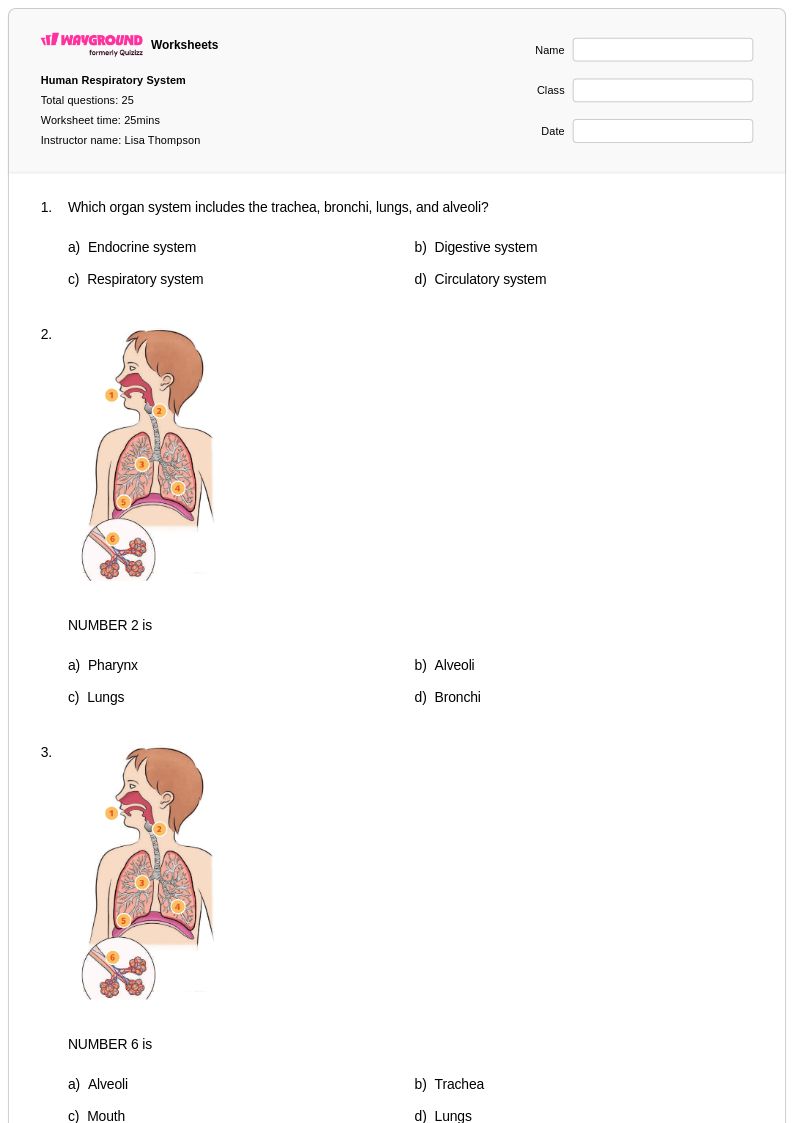
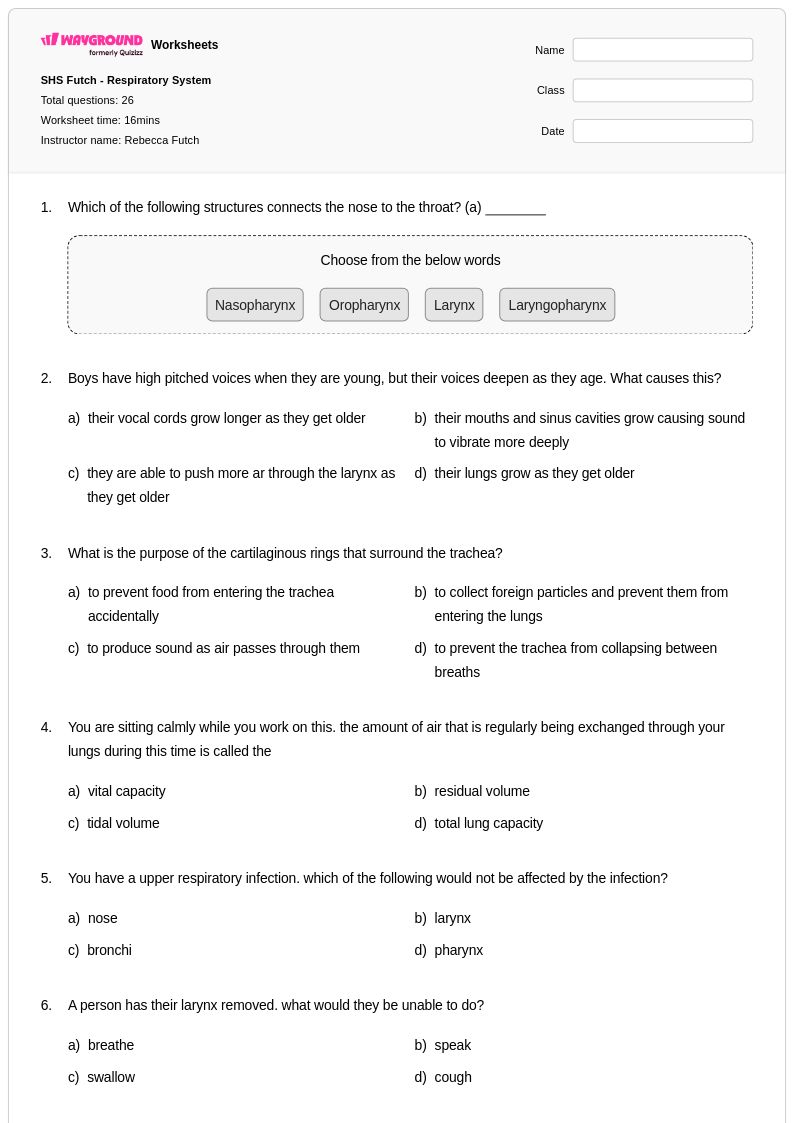
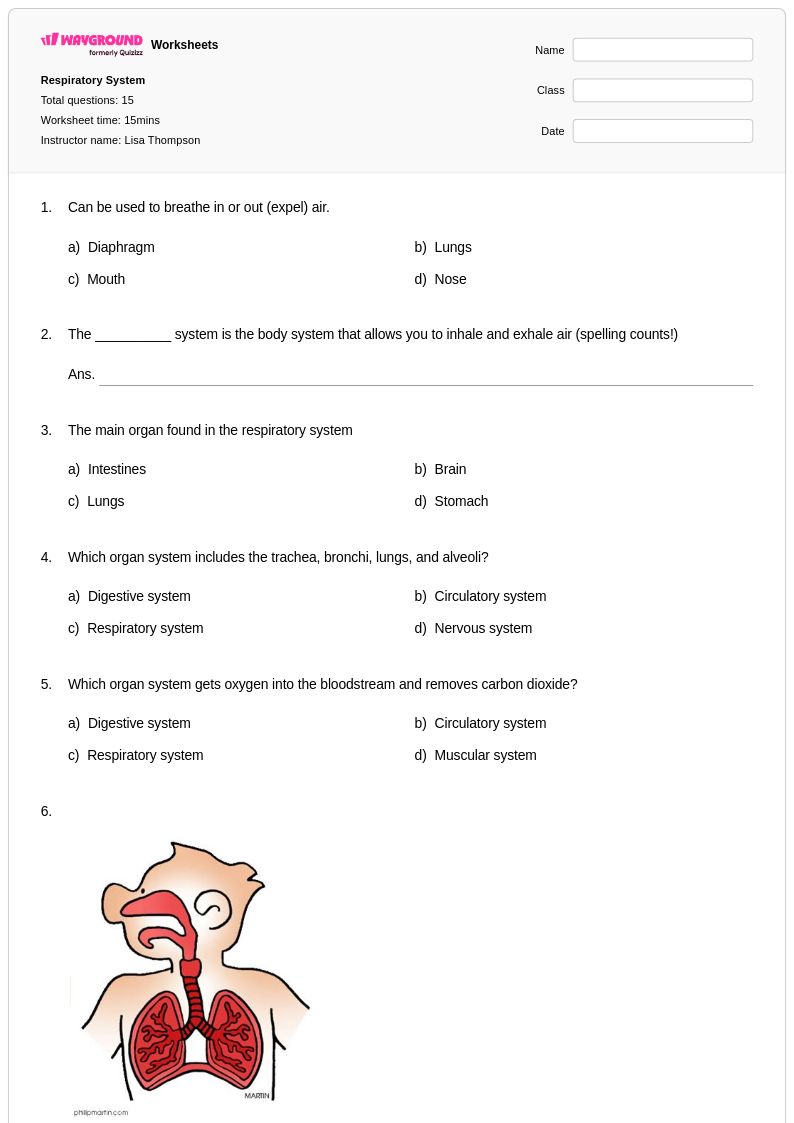
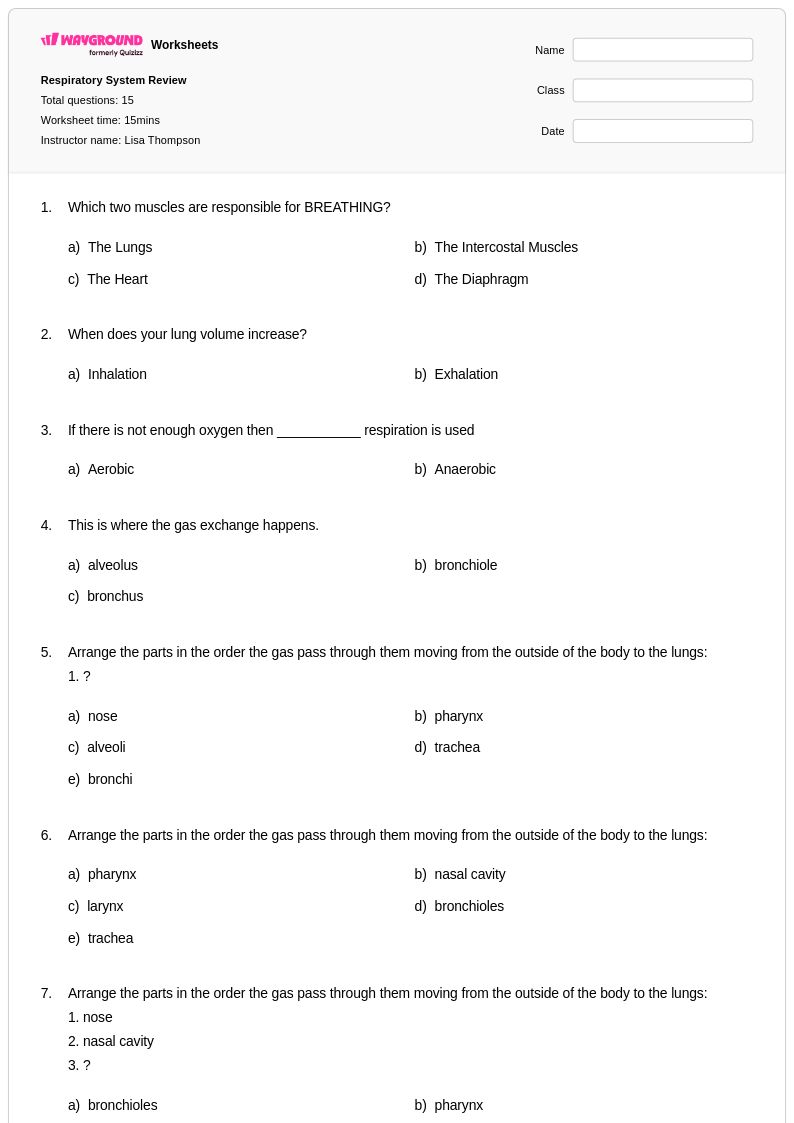
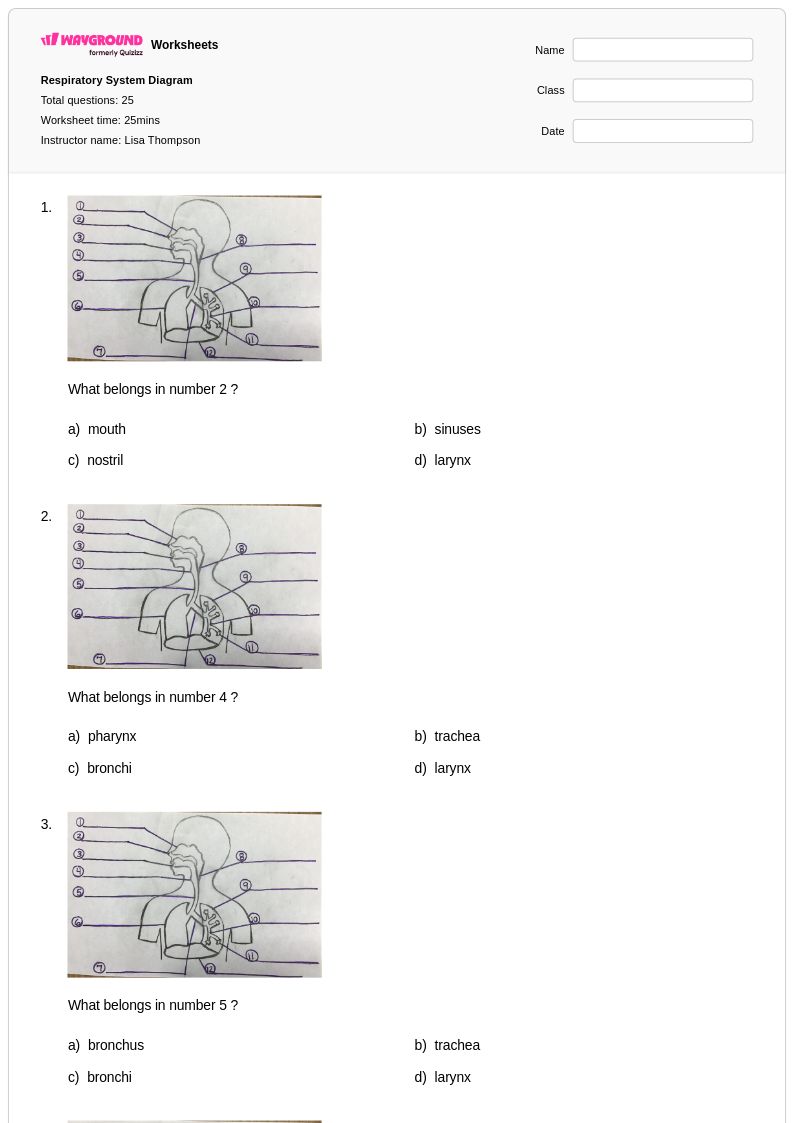
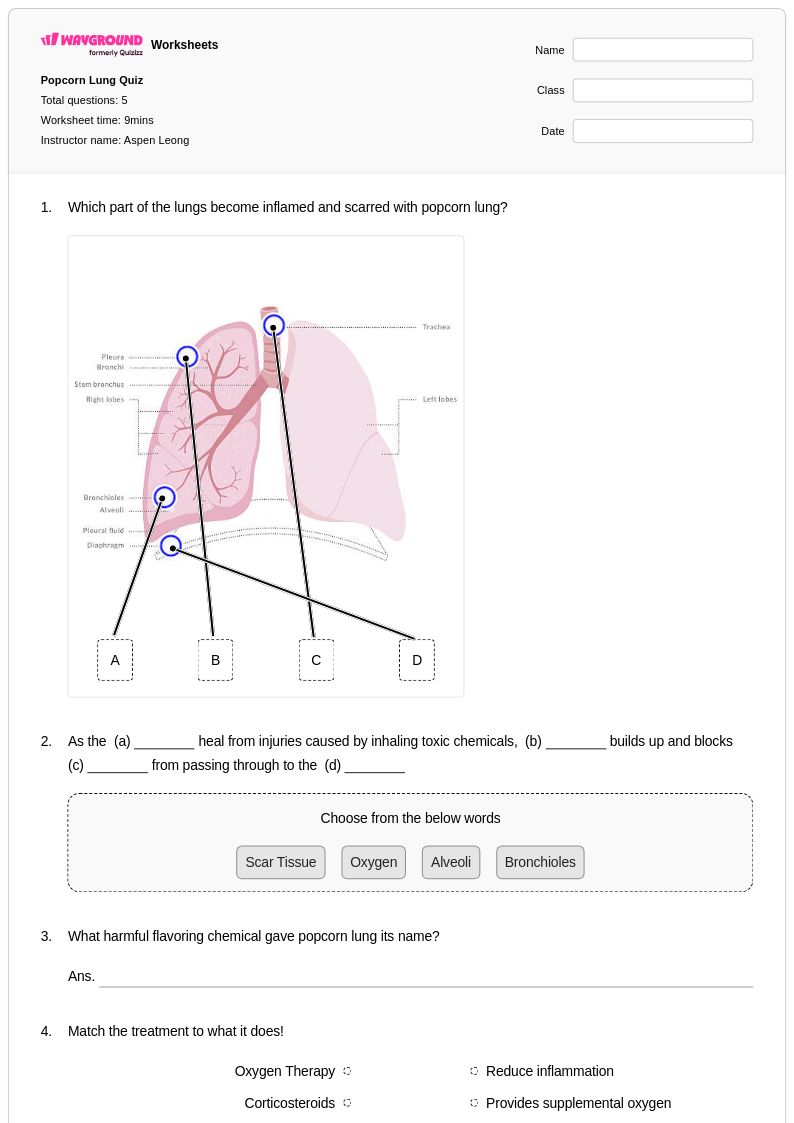
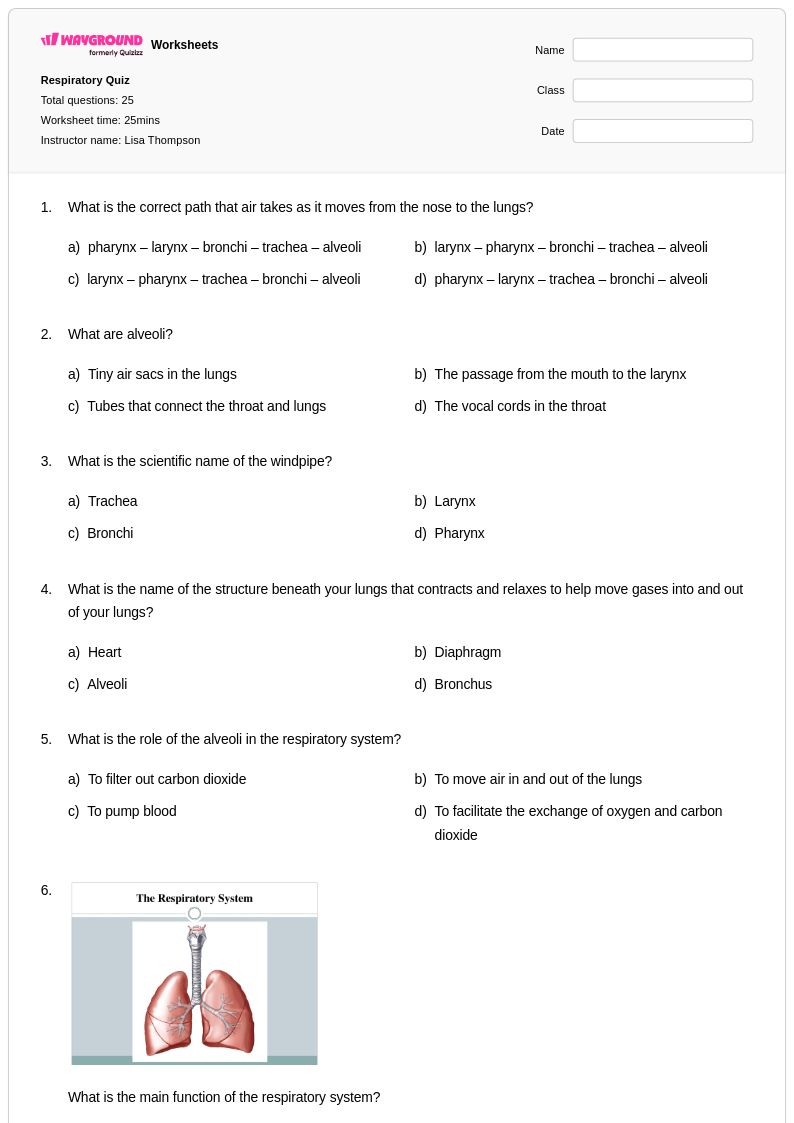
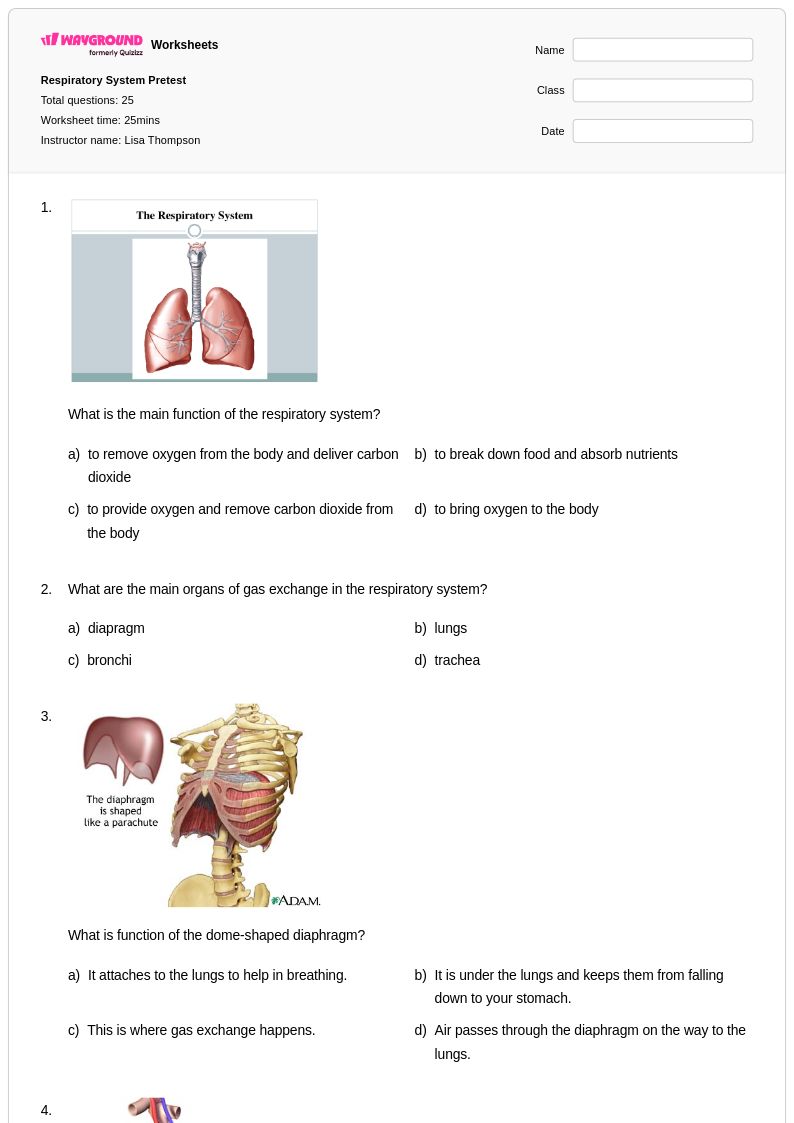
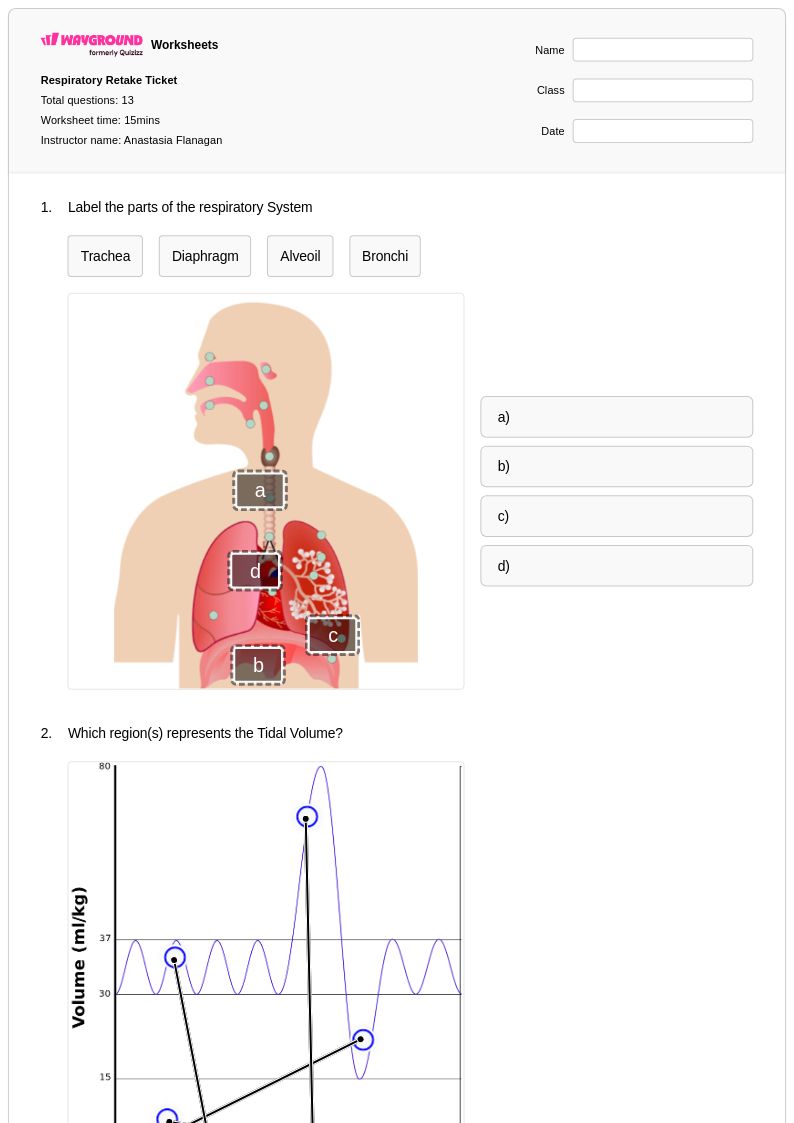
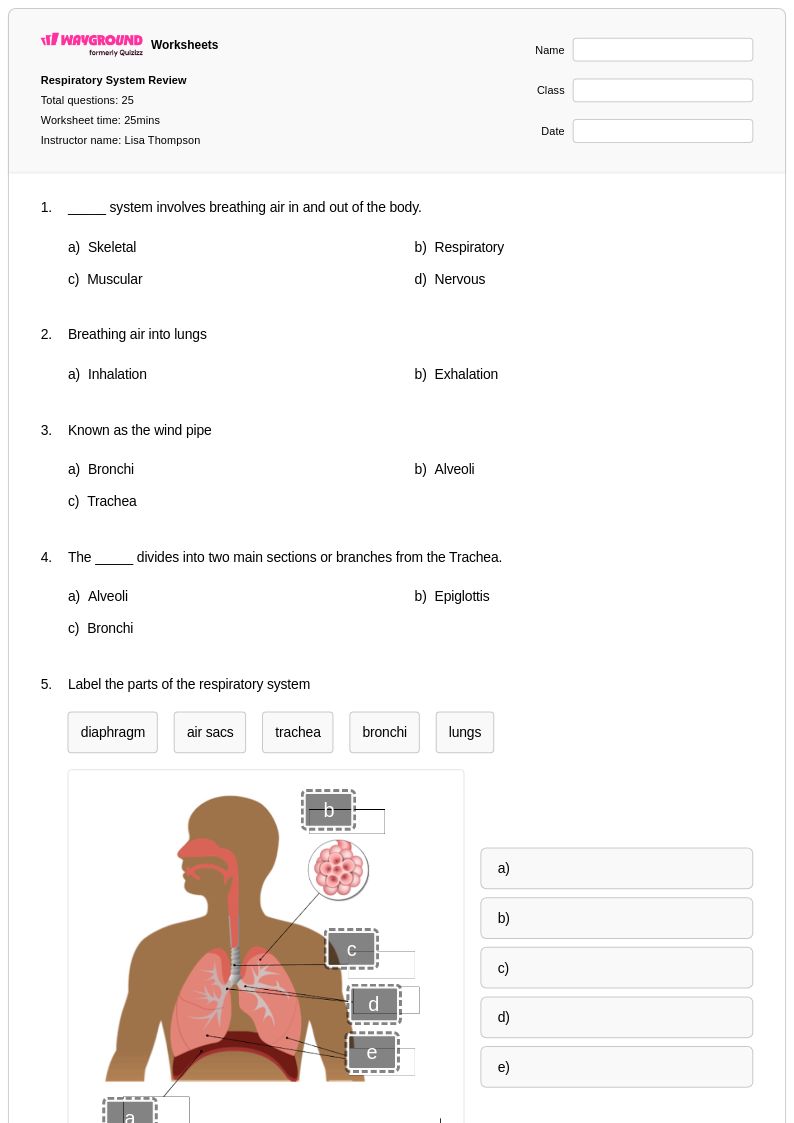
Lung volumes and capacities worksheets for Class 9 biology students available through Wayground (formerly Quizizz) provide comprehensive coverage of respiratory system measurements and their clinical significance. These educational resources help students master the distinction between the four primary lung volumes—tidal volume, inspiratory reserve volume, expiratory reserve volume, and residual volume—while understanding how these combine to form vital capacity, functional residual capacity, inspiratory capacity, and total lung capacity. The practice problems within these free printables challenge students to calculate respiratory measurements, interpret spirometry data, and connect lung function to factors such as age, fitness level, and respiratory health conditions. Each worksheet includes detailed answer keys that guide students through complex problem-solving processes, ensuring they develop strong analytical skills when working with pulmonary function data in pdf format.
Wayground (formerly Quizizz) empowers biology teachers with millions of teacher-created resources specifically designed to support respiratory system instruction at the Class 9 level. The platform's robust search and filtering capabilities allow educators to quickly locate lung volumes and capacities materials that align with state science standards and match their specific curriculum requirements. Teachers can customize these digital and printable worksheets to accommodate diverse learning needs, creating differentiated assignments for remediation or enrichment while maintaining focus on essential respiratory physiology concepts. The flexible format options enable seamless integration into lesson planning, whether educators need quick assessment tools, homework assignments, or comprehensive practice sessions that help students build confidence with spirometry calculations and respiratory system analysis.
FAQs
How do I teach lung volumes and capacities to biology students?
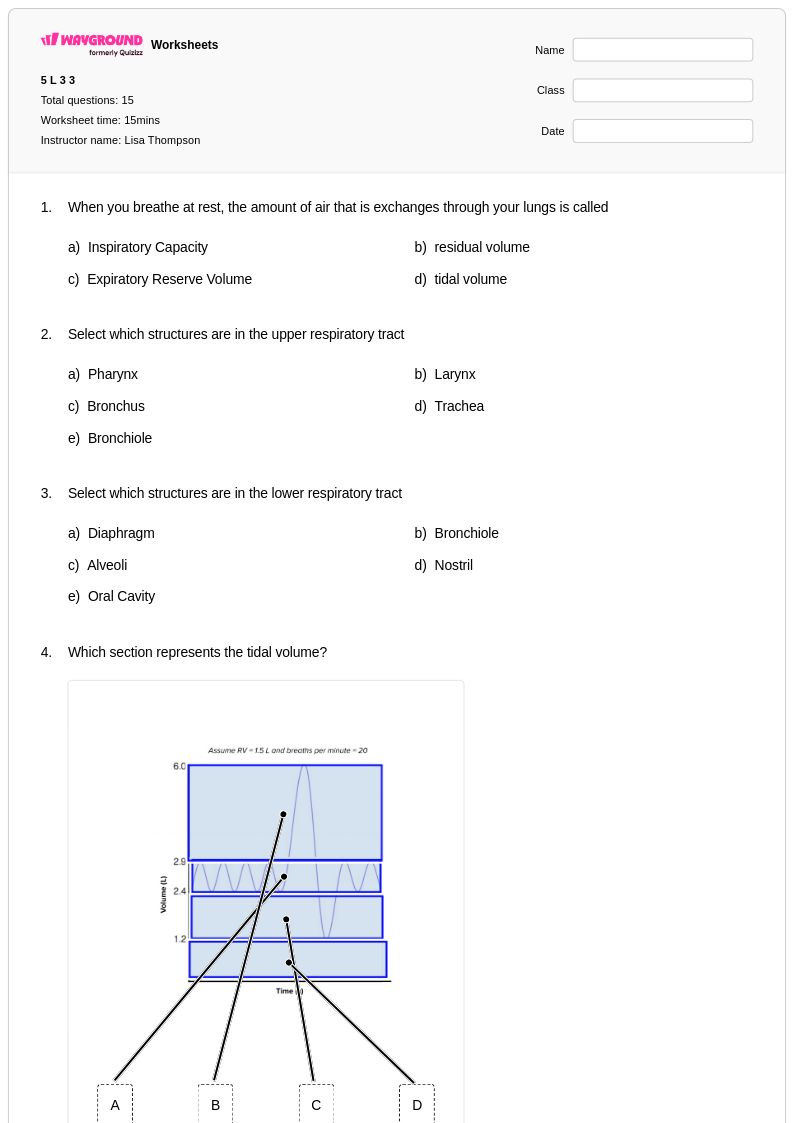
Start by establishing the four primary lung volumes — tidal volume, inspiratory reserve volume, expiratory reserve volume, and residual volume — before introducing the four capacities derived from them. Using spirometry graphs as a visual anchor helps students see how these values relate to one another rather than memorizing them in isolation. Once students can identify each component, move them toward calculating capacities like vital capacity and total lung capacity using additive formulas, which reinforces both the physiology and the math simultaneously.
What exercises help students practice calculating lung capacities?
The most effective practice exercises give students spirometry data sets and ask them to calculate derived capacities such as total lung capacity, vital capacity, inspiratory capacity, and functional residual capacity from raw volume values. Problems that include clinical context — such as asking students to identify whether a measurement pattern suggests a restrictive or obstructive condition — push beyond rote calculation and develop genuine physiological reasoning. Spirometry trace interpretation tasks, where students read values directly off a graph, are especially useful for connecting the math to real pulmonary function testing.
What mistakes do students commonly make when learning lung volumes and capacities?
The most frequent error is confusing individual lung volumes with the capacities calculated from them — students often treat vital capacity as a single measured volume rather than recognizing it as the sum of tidal volume, inspiratory reserve volume, and expiratory reserve volume. Another common misconception is believing residual volume can be measured by simple spirometry, when in reality it requires indirect techniques like gas dilution or body plethysmography. Students also frequently misplace functional residual capacity, incorrectly adding inspiratory components rather than understanding it as expiratory reserve volume plus residual volume.
How do lung volumes differ between healthy individuals and those with pulmonary disease?
In obstructive diseases like COPD and asthma, air trapping causes residual volume and functional residual capacity to increase, while forced expiratory volumes decrease — total lung capacity may remain normal or increase. In restrictive diseases such as pulmonary fibrosis, overall lung volumes are reduced, with decreases in total lung capacity, vital capacity, and tidal volume, though the ratio of forced expiratory volume to forced vital capacity is typically preserved or elevated. Teaching these contrasting patterns helps students understand why spirometry interpretation is a clinical diagnostic tool, not just a physiology exercise.
How can I use lung volumes and capacities worksheets effectively in my classroom?
Lung volumes and capacities worksheets work well as structured practice after initial instruction on spirometry and respiratory physiology, giving students repeated exposure to capacity calculations and data interpretation in varied formats. On Wayground, these worksheets are available as printable PDFs for traditional classroom and lab settings, as well as in digital formats suited to technology-integrated instruction — and teachers can also host them as a quiz directly on the platform. Wayground's accommodation tools, including read aloud and reduced answer choices, allow teachers to support students with diverse learning needs without disrupting the rest of the class.
How do I differentiate lung volumes and capacities instruction for students at different skill levels?
For introductory students, begin with volume identification tasks — labeling a spirometry trace and matching definitions before attempting any calculations. Intermediate students can move to capacity calculation problems using provided volume values, while advanced learners should tackle spirometry data interpretation problems that require clinical reasoning about what abnormal values indicate. On Wayground, teachers can apply student-level accommodations such as reduced answer choices or extended time to individual students, allowing the same worksheet set to serve multiple skill levels without requiring separate materials.