Free Printable Limbic System Worksheets for Class 9
Enhance Class 9 biology learning with our comprehensive limbic system worksheets, featuring free printables, practice problems, and answer keys that help students master brain anatomy and emotional processing functions.
Explore printable Limbic System worksheets for Class 9
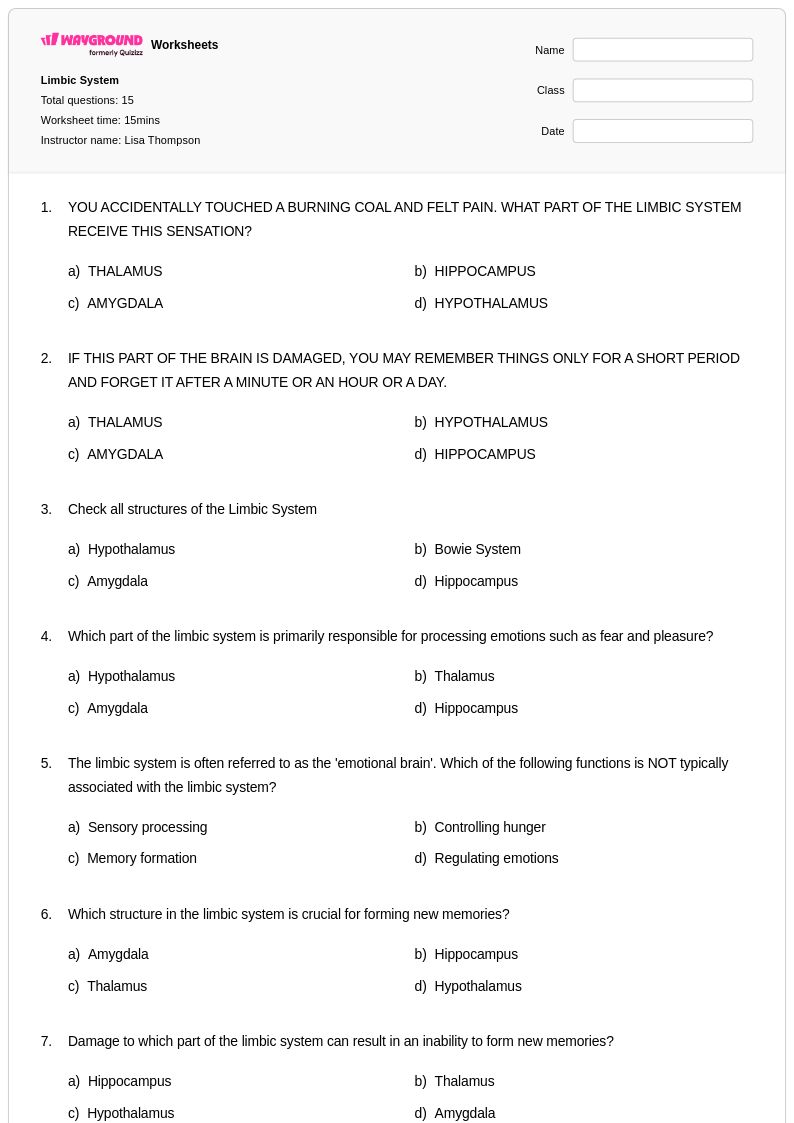
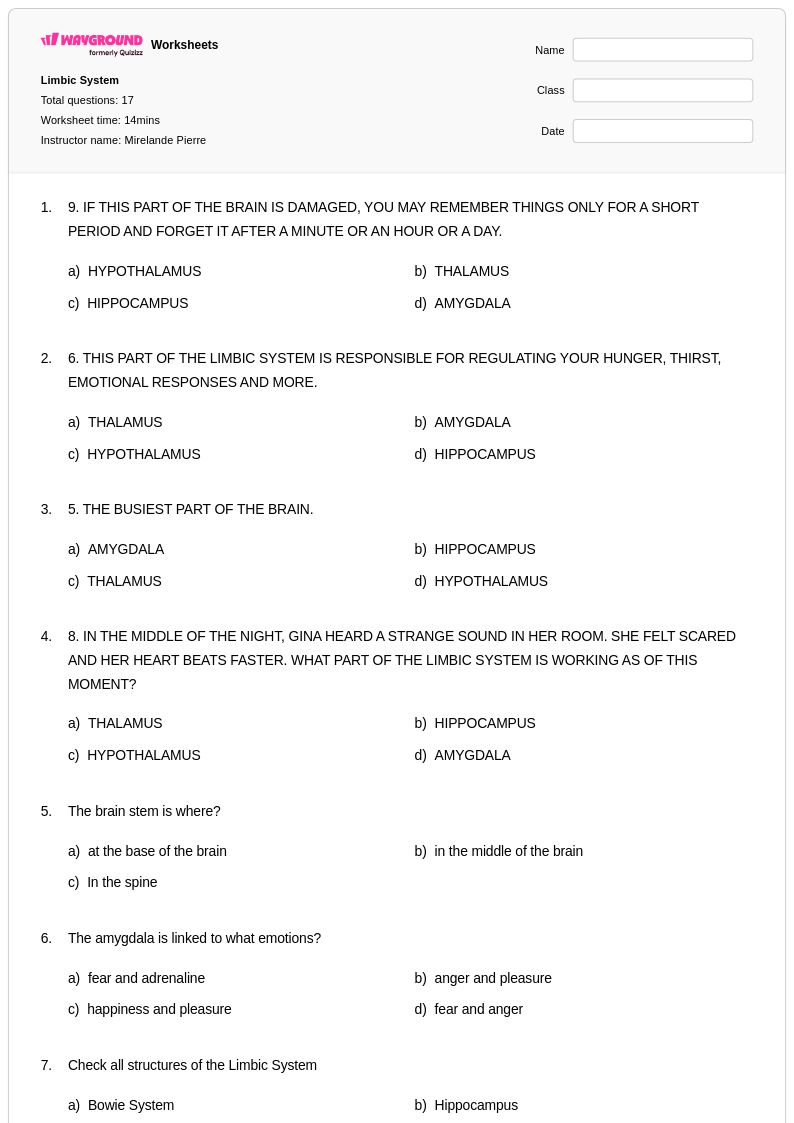
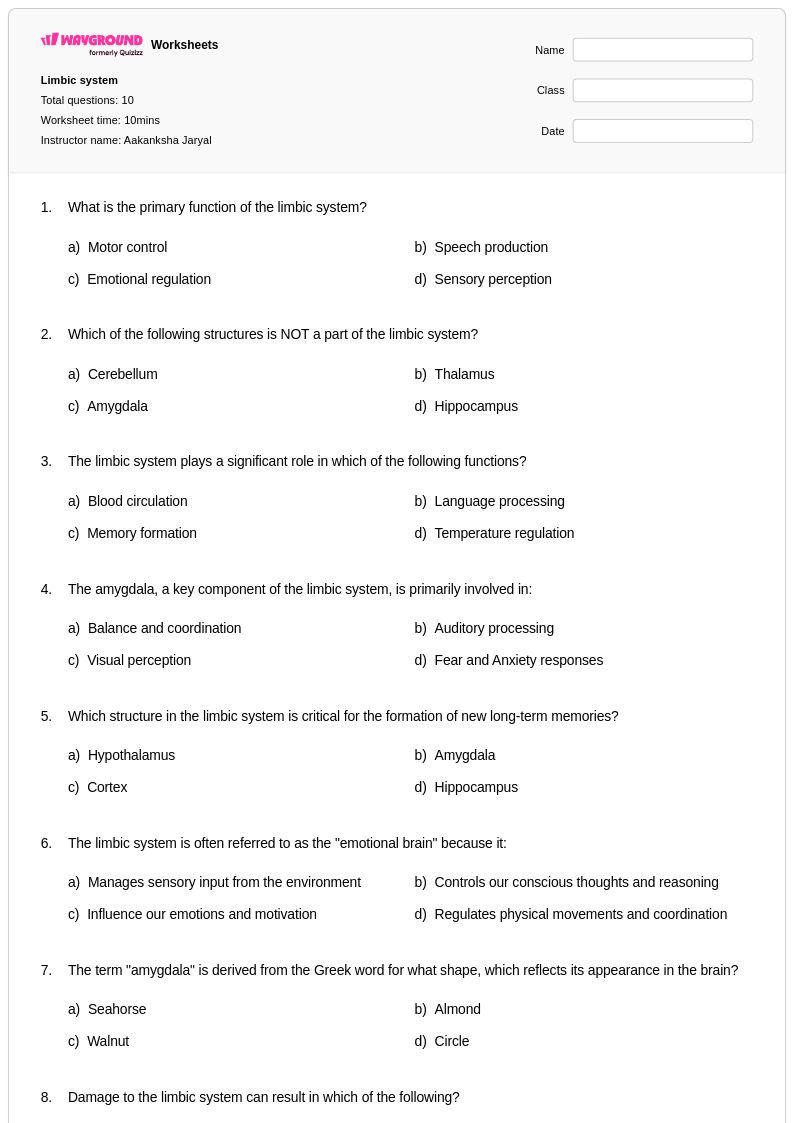
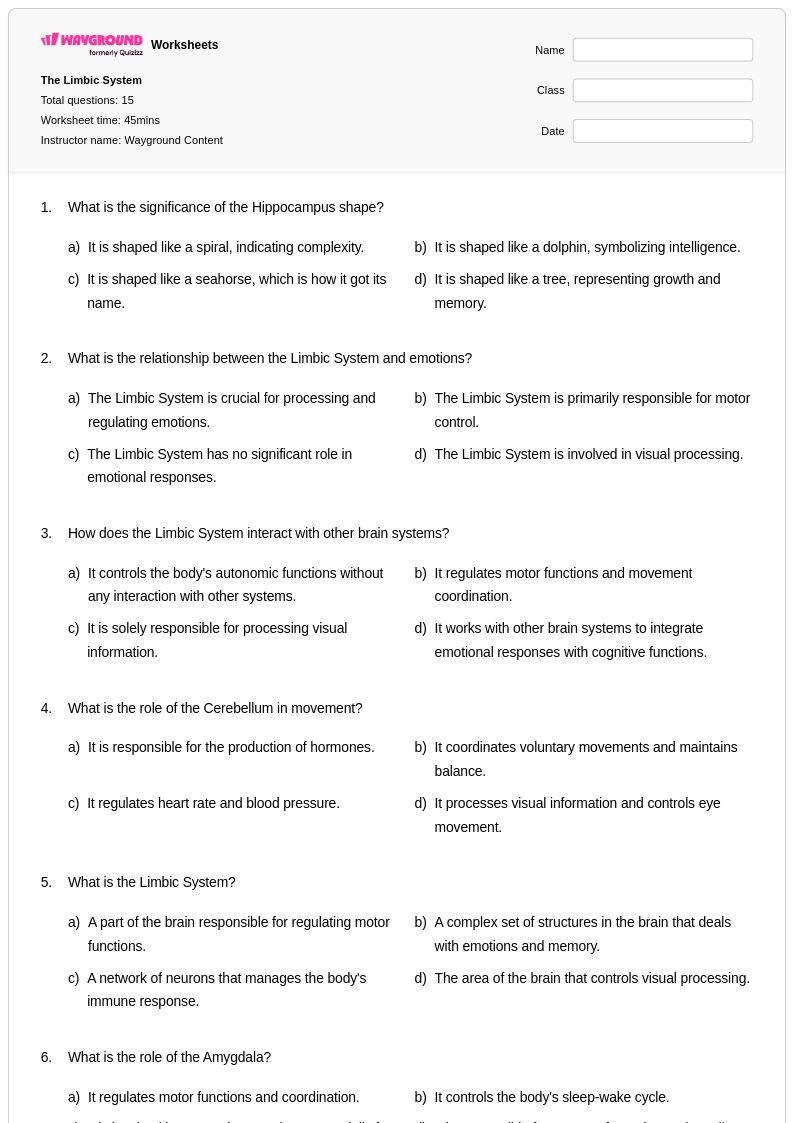
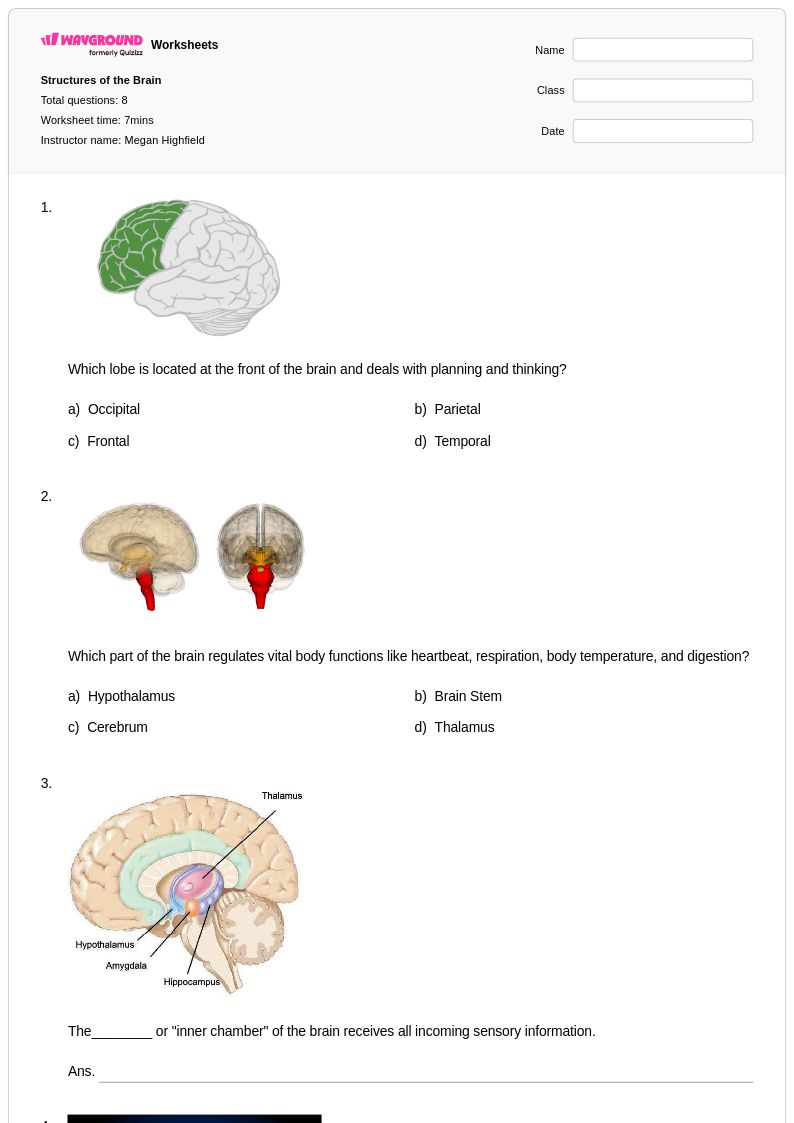
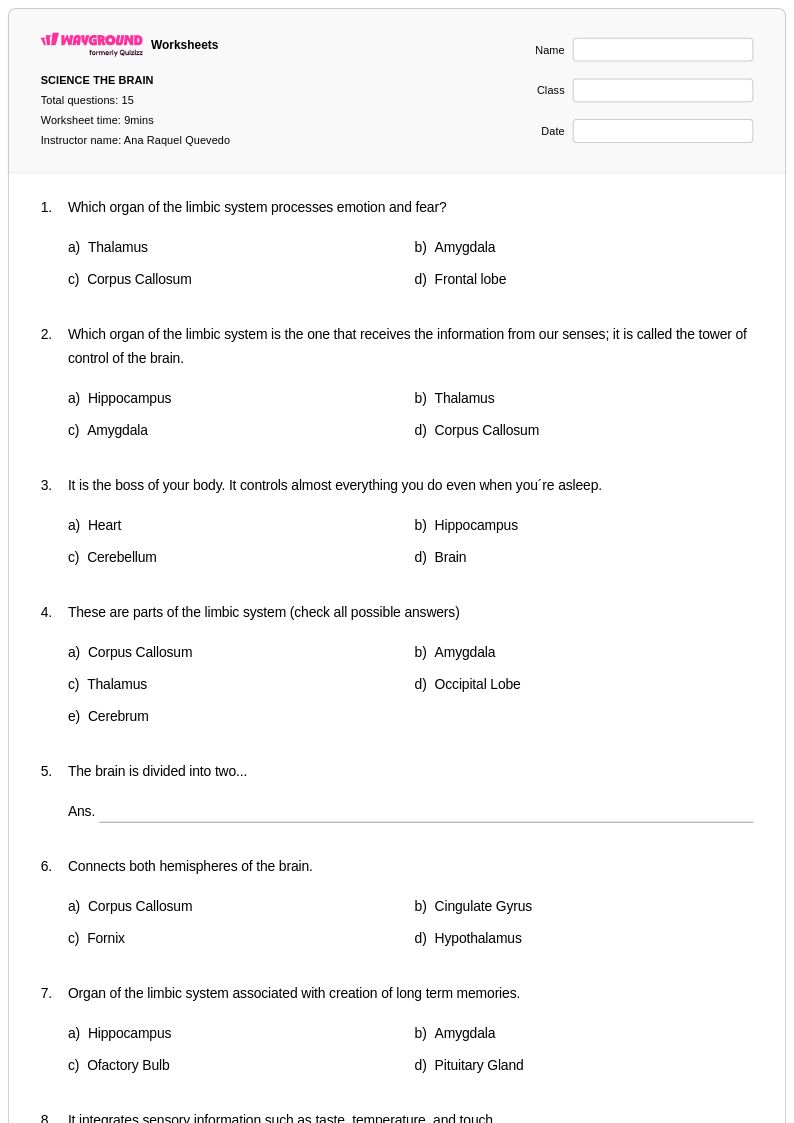
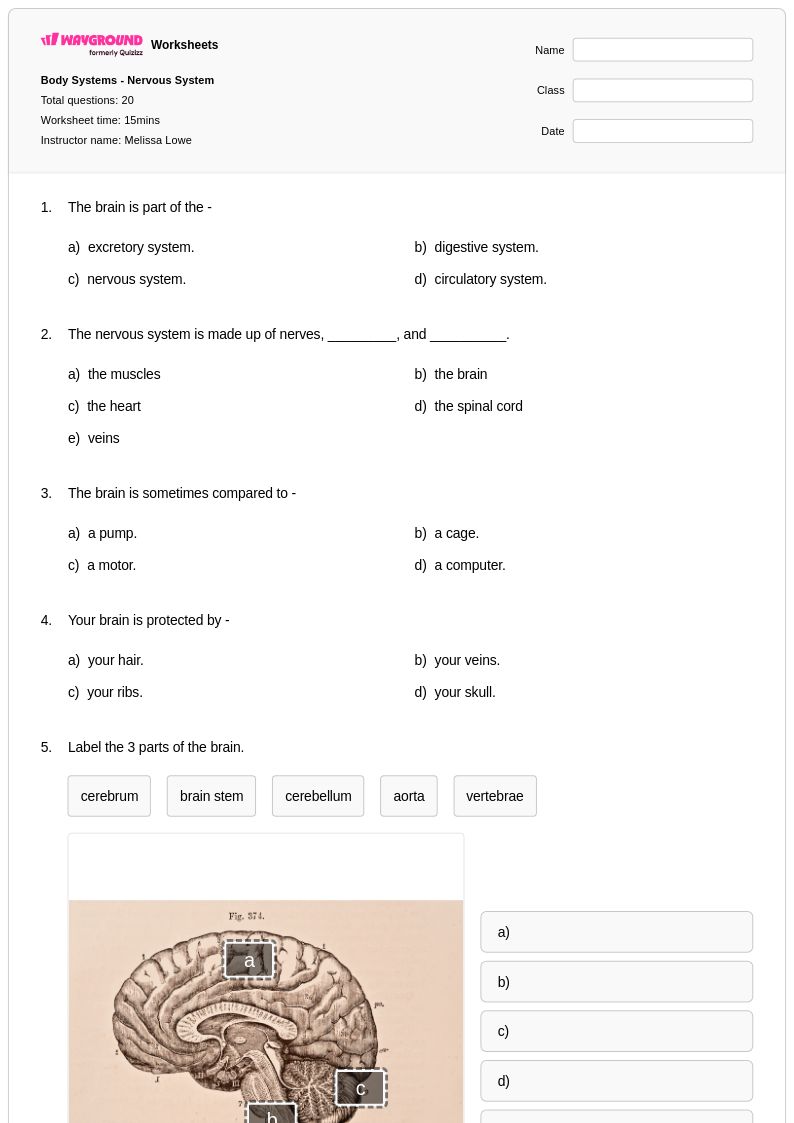
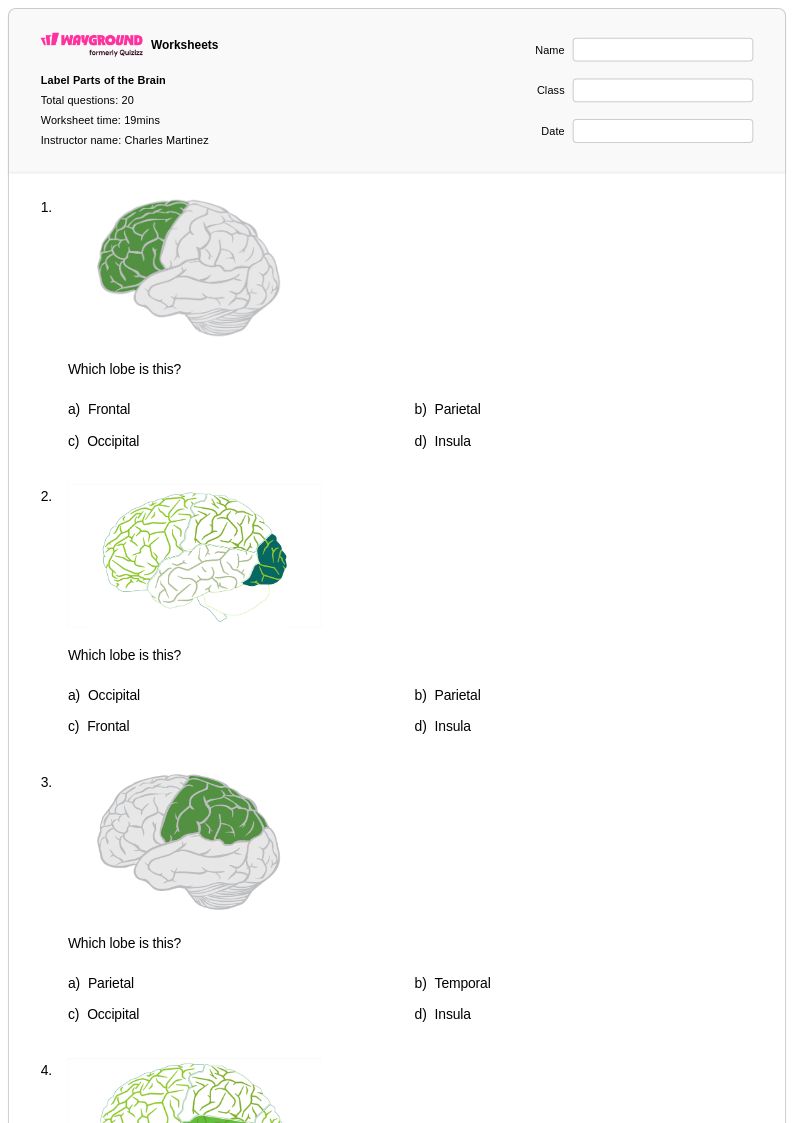
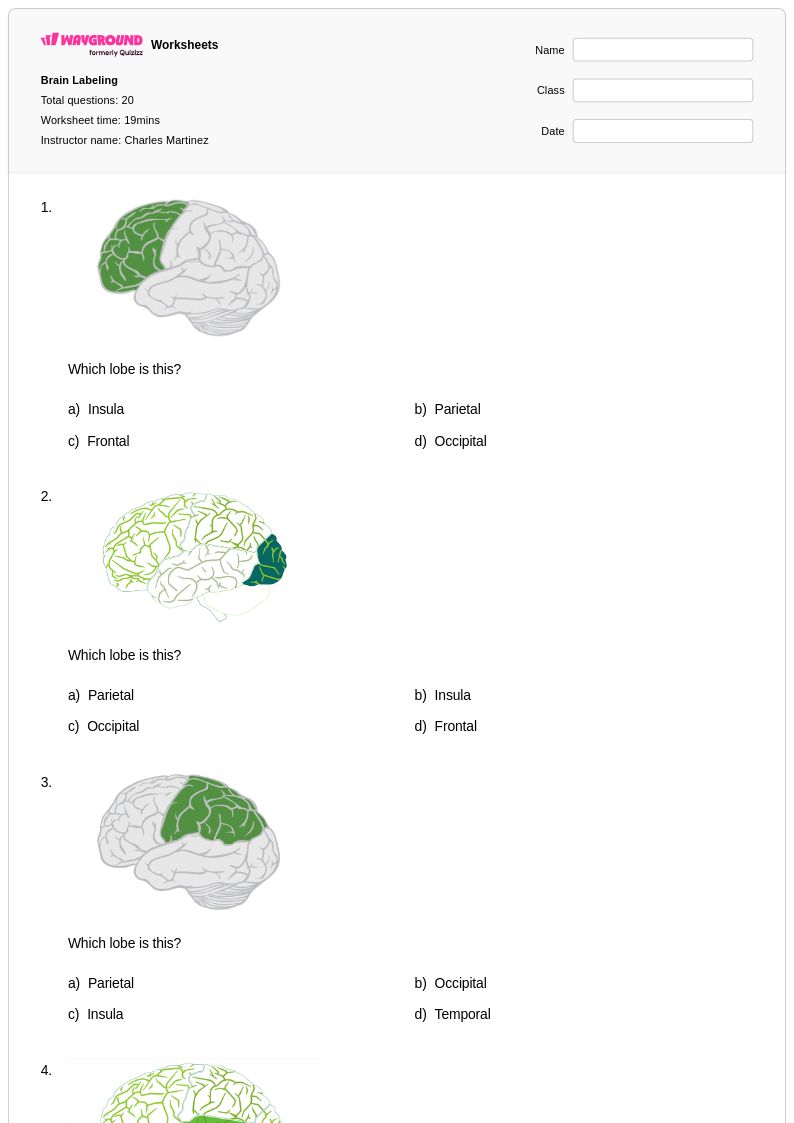
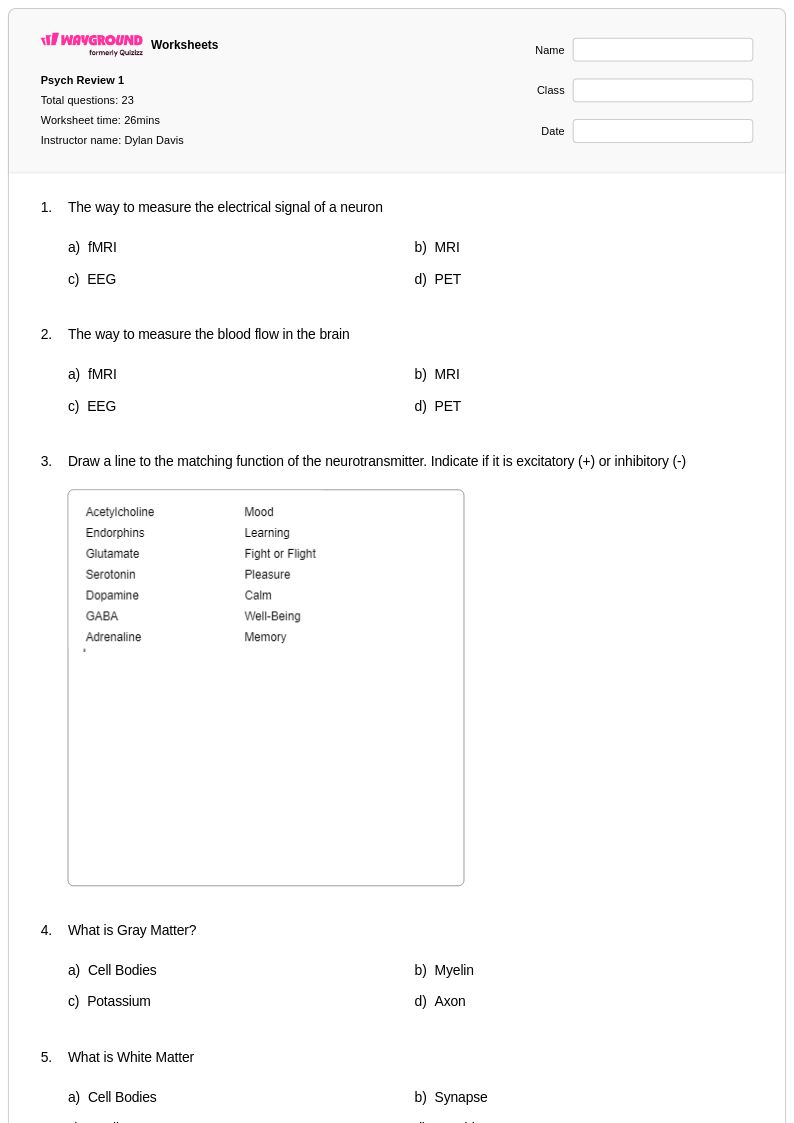
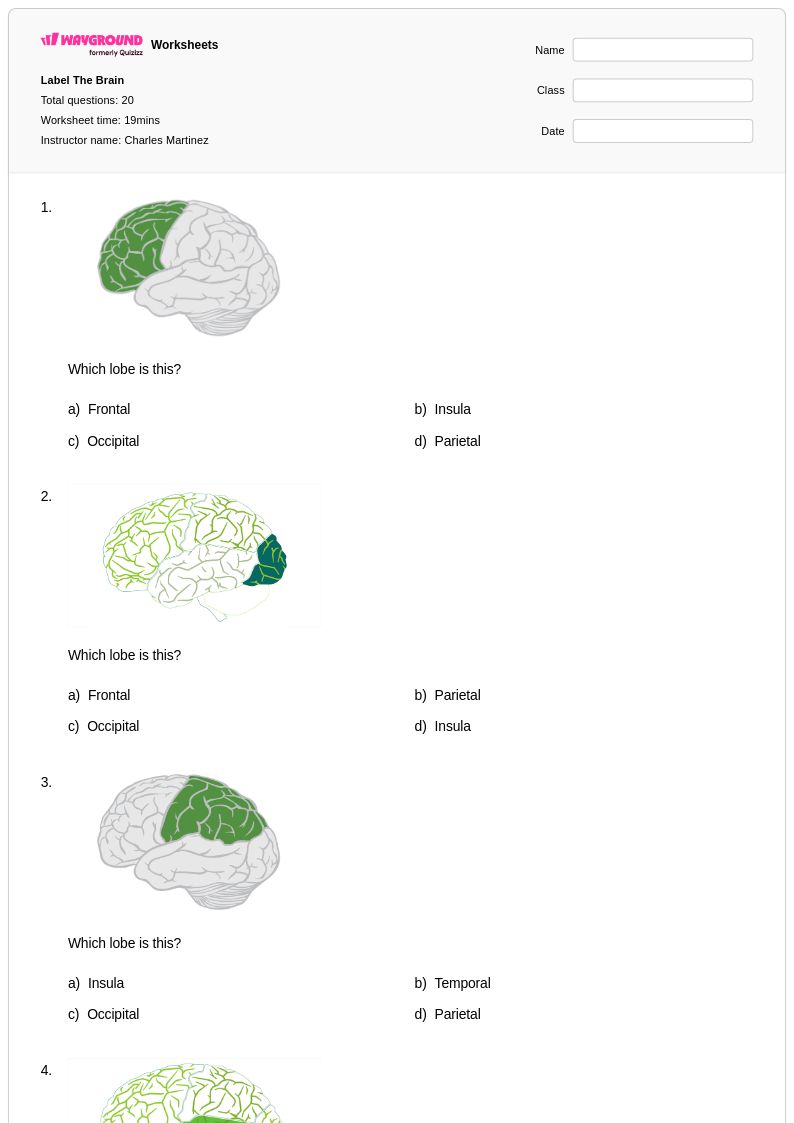
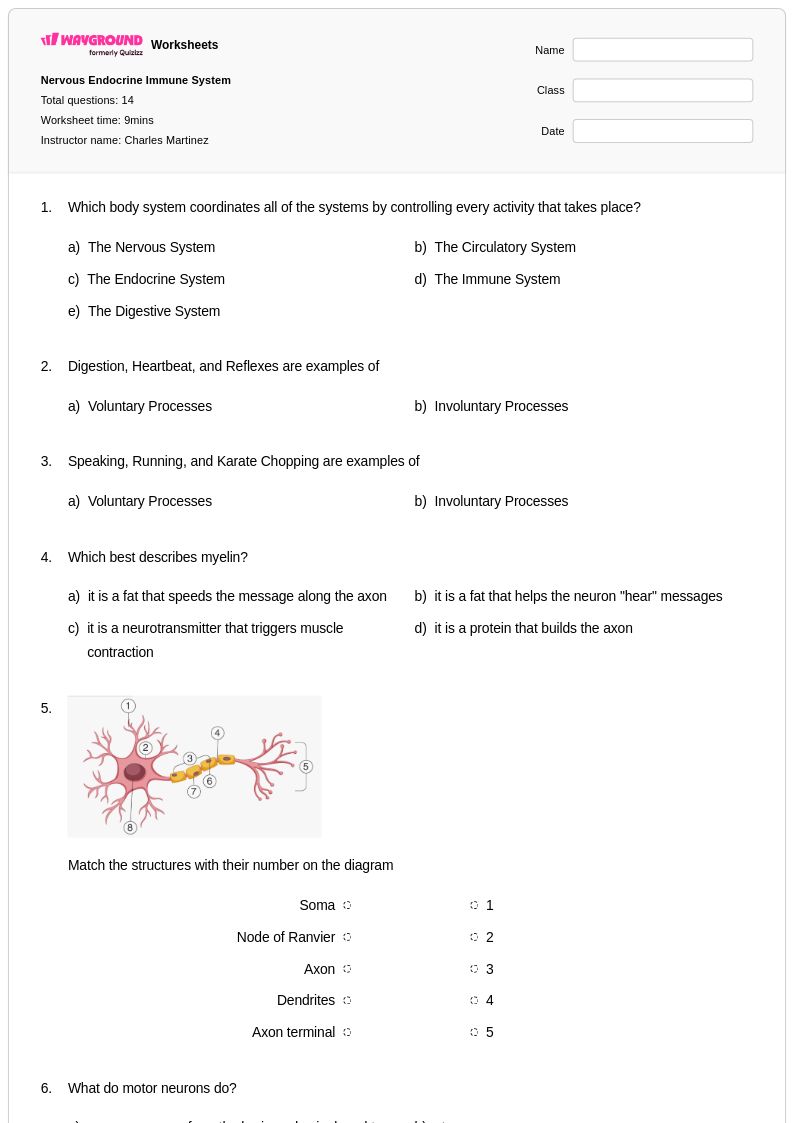
Class 9 limbic system worksheets available through Wayground (formerly Quizizz) provide comprehensive coverage of this critical brain structure and its role in emotional processing, memory formation, and behavioral regulation. These expertly designed worksheets strengthen students' understanding of limbic system anatomy, including the hippocampus, amygdala, hypothalamus, and associated neural pathways, while developing skills in scientific analysis and neurobiological reasoning. Students engage with practice problems that explore how the limbic system influences fight-or-flight responses, memory consolidation, and emotional learning, with each worksheet featuring detailed answer keys that support independent study and self-assessment. The collection includes free printables and pdf resources that guide learners through complex concepts such as the relationship between limbic structures and neurotransmitter function, making advanced neuroscience accessible to ninth-grade biology students.
Wayground (formerly Quizizz) empowers educators with millions of teacher-created limbic system resources that streamline lesson planning and enhance instructional effectiveness. The platform's robust search and filtering capabilities allow teachers to quickly locate worksheets aligned with specific biology standards and learning objectives, while built-in differentiation tools enable seamless customization for diverse learning needs and ability levels. These limbic system worksheets are available in both printable and digital formats, including downloadable pdf versions, providing flexibility for classroom instruction, remote learning, and hybrid educational environments. Teachers utilize these comprehensive resources for targeted skill practice, remediation of challenging neurobiological concepts, and enrichment activities that deepen students' appreciation for the intricate connections between brain structure and human behavior.
FAQs
How do I teach the limbic system to high school students?
Start by grounding the limbic system in experiences students already recognize, such as fear responses, emotional memories, and stress reactions, before introducing anatomical terminology. Build outward from the amygdala and hippocampus as anchor structures, then layer in the hypothalamus and cingulate cortex with their specific functional roles. Connecting each structure to a real behavioral outcome, such as how the amygdala triggers fight-or-flight or how the hippocampus consolidates long-term memory, helps students retain complex neuroanatomy by tying it to something meaningful.
What worksheets help students practice limbic system anatomy and function?
Labeling exercises that require students to identify and annotate key structures, including the hippocampus, amygdala, hypothalamus, and cingulate cortex, are among the most effective practice formats for this topic. Functional analysis problems that ask students to match each structure to its role in emotion regulation, memory consolidation, or motivational behavior build a deeper understanding beyond rote memorization. Comparative pathway studies, where students trace how signals move through limbic structures during emotional events, add another layer of applied practice.
What mistakes do students commonly make when learning about the limbic system?
A frequent misconception is that the limbic system operates in isolation, when in reality it works in continuous communication with the prefrontal cortex and brainstem. Students also tend to conflate the roles of the hippocampus and amygdala, incorrectly attributing memory storage to the amygdala or emotional tagging to the hippocampus. Another common error is treating the fight-or-flight response as solely a limbic process rather than understanding it as a coordinated output involving the hypothalamus, brainstem, and autonomic nervous system together.
How do I use Wayground's limbic system worksheets in my classroom?
Wayground's limbic system worksheets are available as printable PDFs for traditional classroom distribution and in digital formats for technology-integrated learning environments, including the option to host them as a quiz directly on Wayground. Teachers can assign worksheets for guided instruction, independent practice, or homework, and each worksheet includes a complete answer key to support self-assessment and efficient grading. For students who need additional support, Wayground's accommodation tools allow you to enable features such as read aloud, extended time, or reduced answer choices on a per-student basis without disrupting the rest of the class.
How does the limbic system connect to student learning about emotional and psychological disorders?
The limbic system provides a direct neurological entry point for discussing the biological basis of anxiety, PTSD, depression, and other emotional disorders in a science context. The amygdala's role in threat detection and fear conditioning maps directly onto how clinicians understand anxiety and trauma responses, while hippocampal dysfunction is central to understanding certain memory impairments. Teaching these connections helps students move beyond surface-level definitions of mental health conditions toward understanding them as neurological processes with identifiable anatomical correlates.
How can I differentiate limbic system instruction for students at different levels?
For students who need remediation, focus on the three or four core structures, such as the hippocampus, amygdala, and hypothalamus, and use simplified labeling tasks before introducing functional analysis. Advanced students can engage with comparative pathway studies, research into limbic system involvement in specific disorders, or analysis of how emotional memory differs from declarative memory. On Wayground, teachers can also apply individual accommodations such as read aloud support or reduced answer choices to specific students, allowing the same worksheet to serve a differentiated classroom without requiring separate materials.