
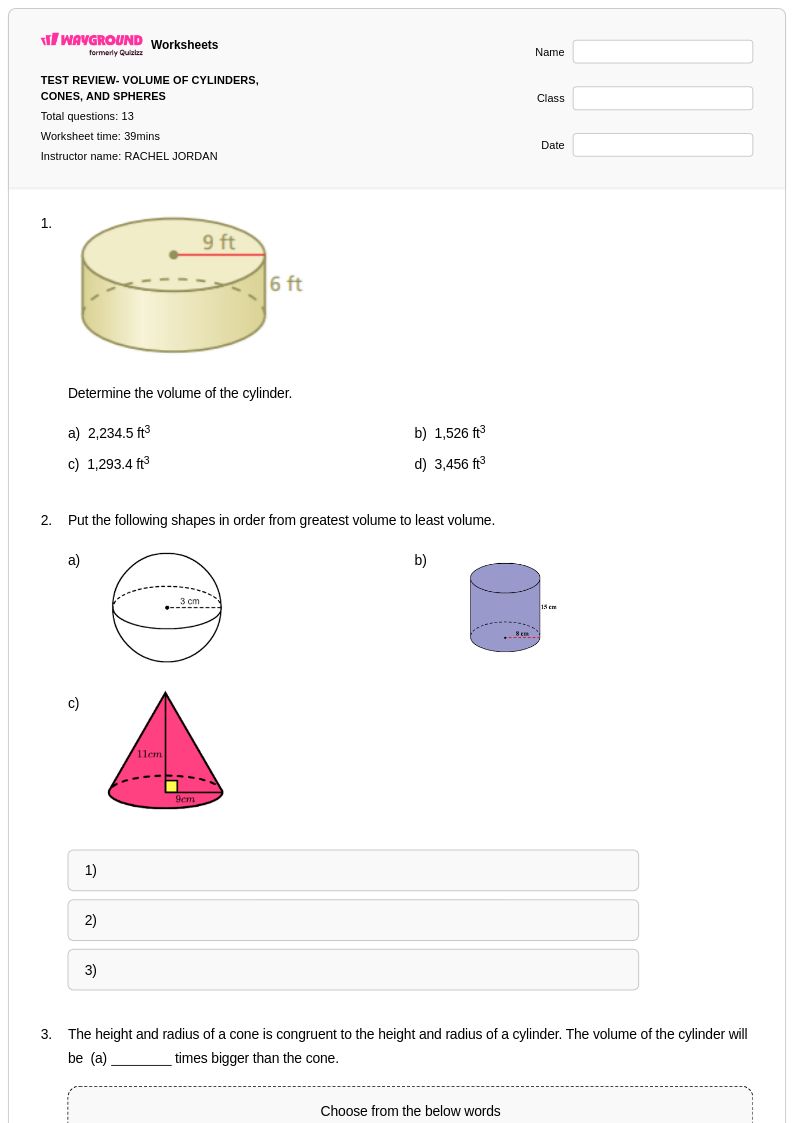
13Q
8th
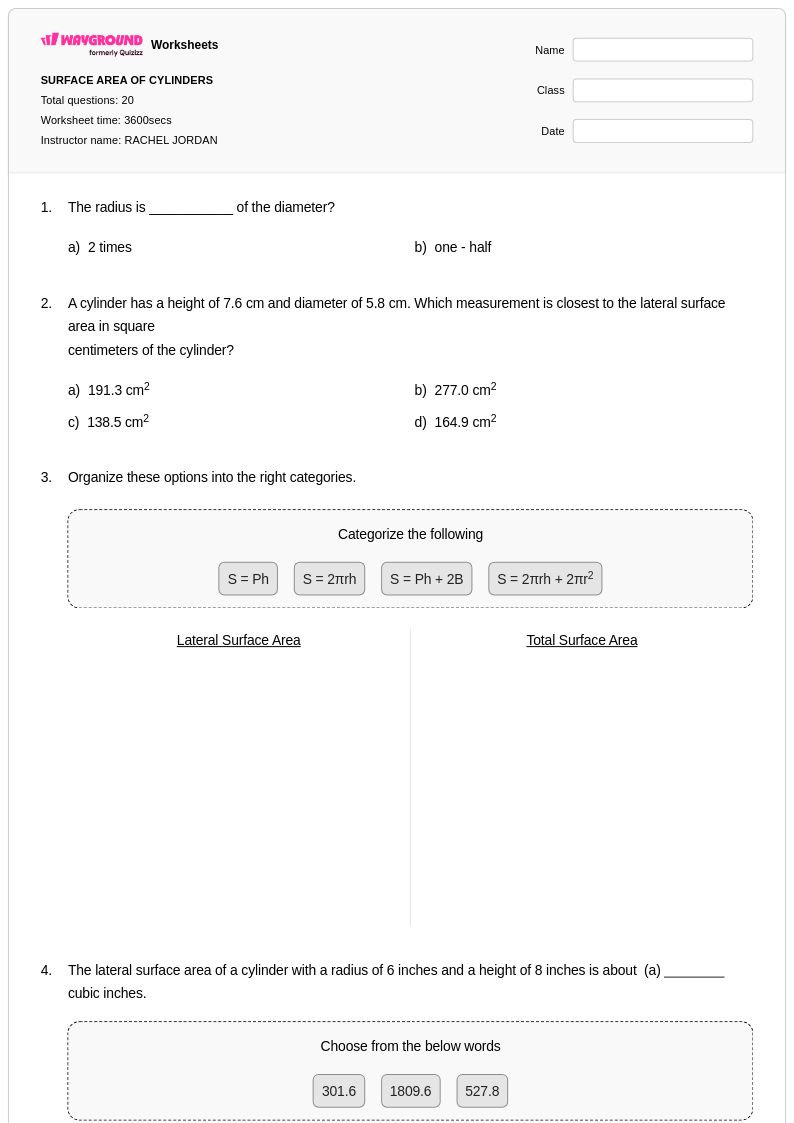
20Q
8th
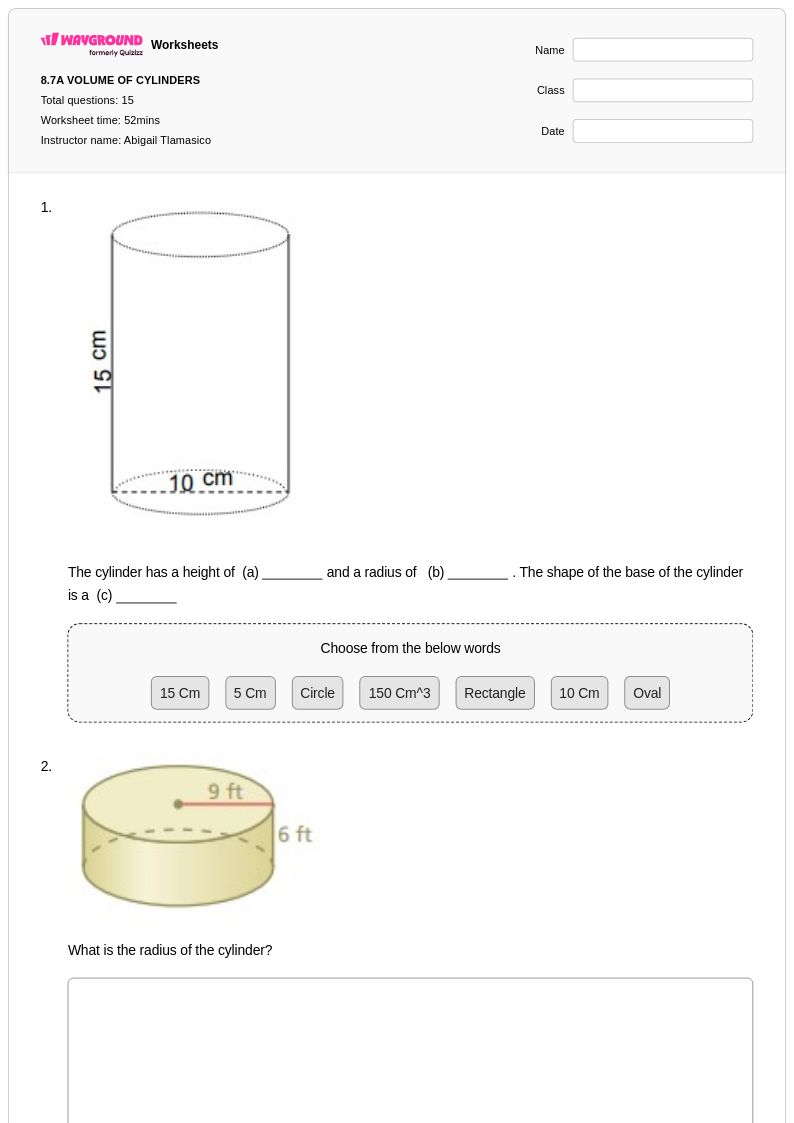
15Q
8th
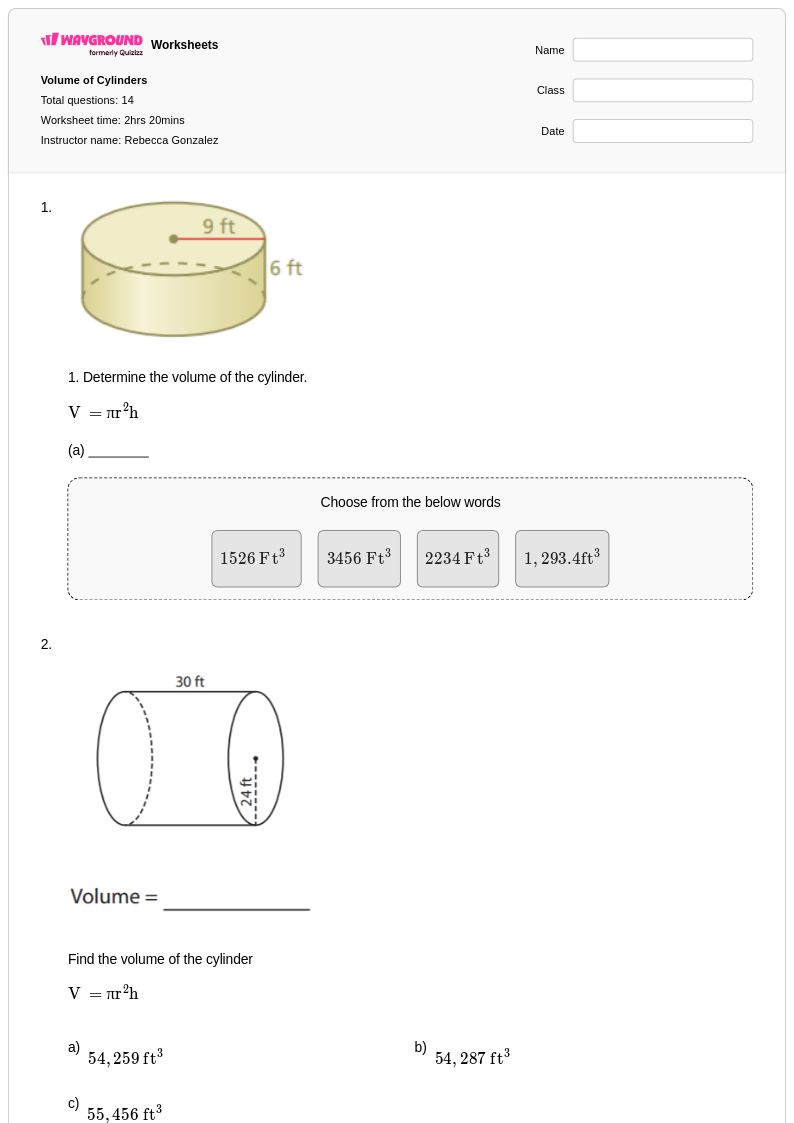
14Q
8th
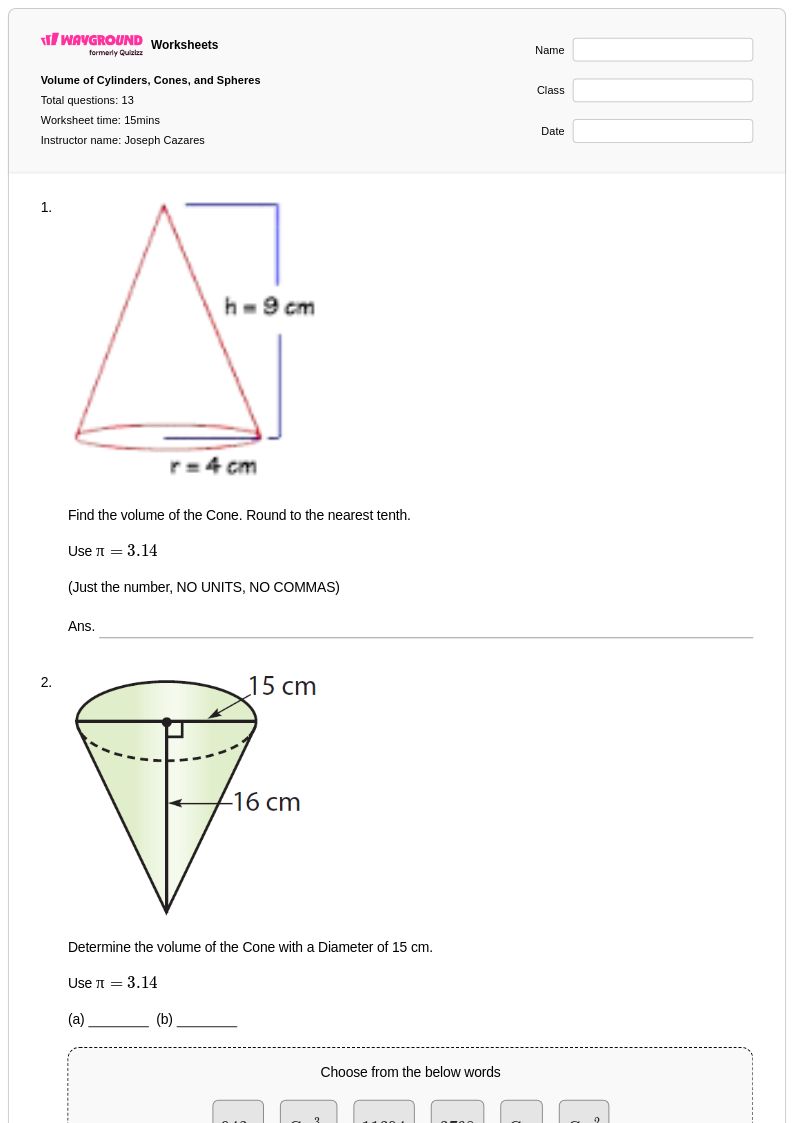
13Q
8th
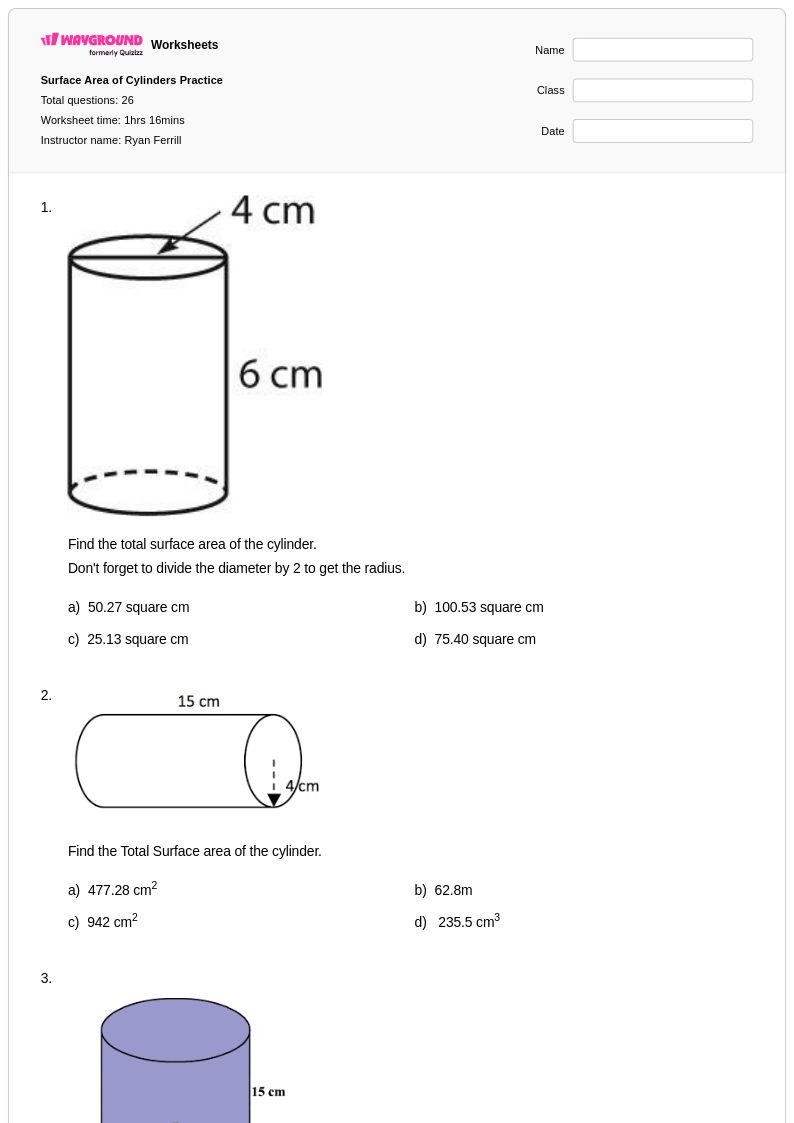
26Q
8th
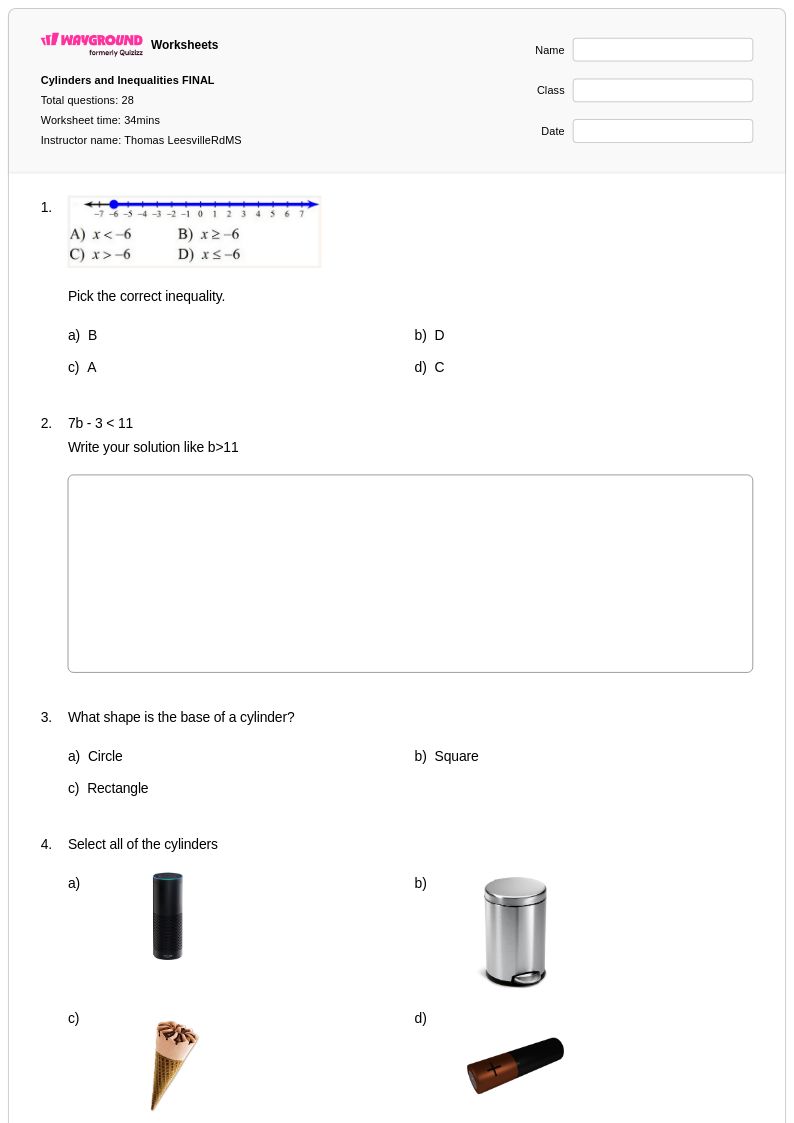
28Q
8th
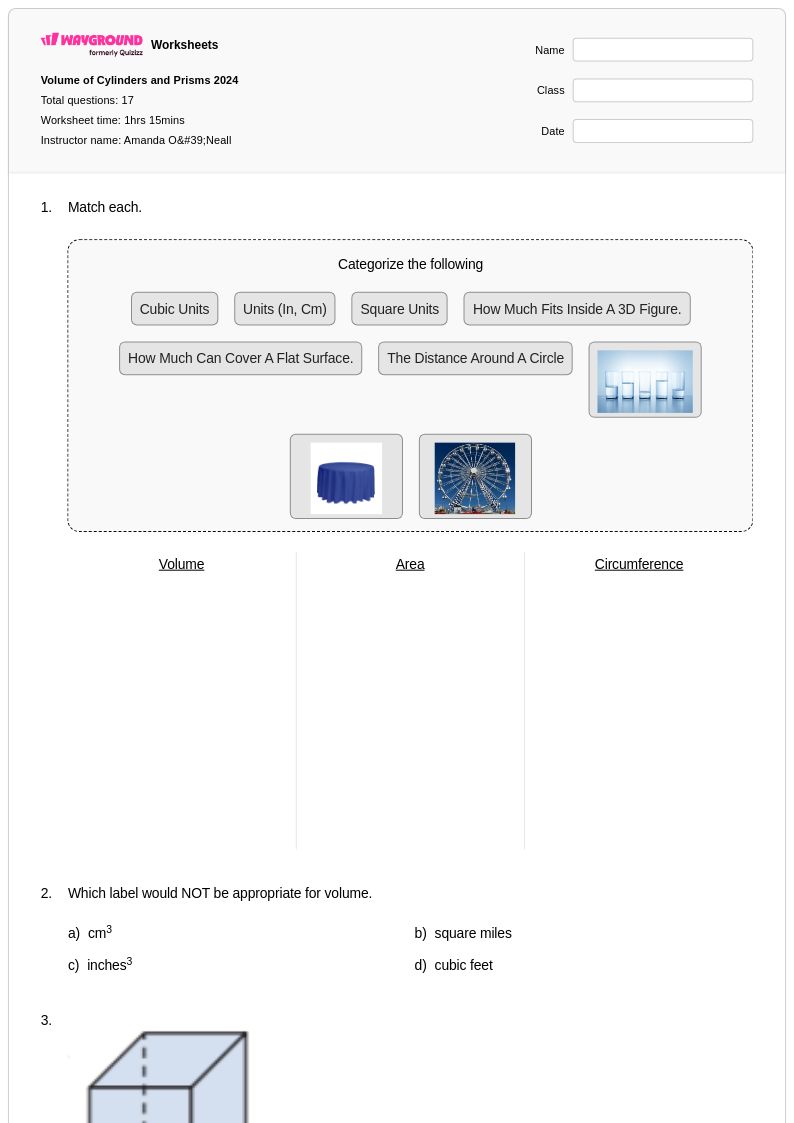
17Q
7th
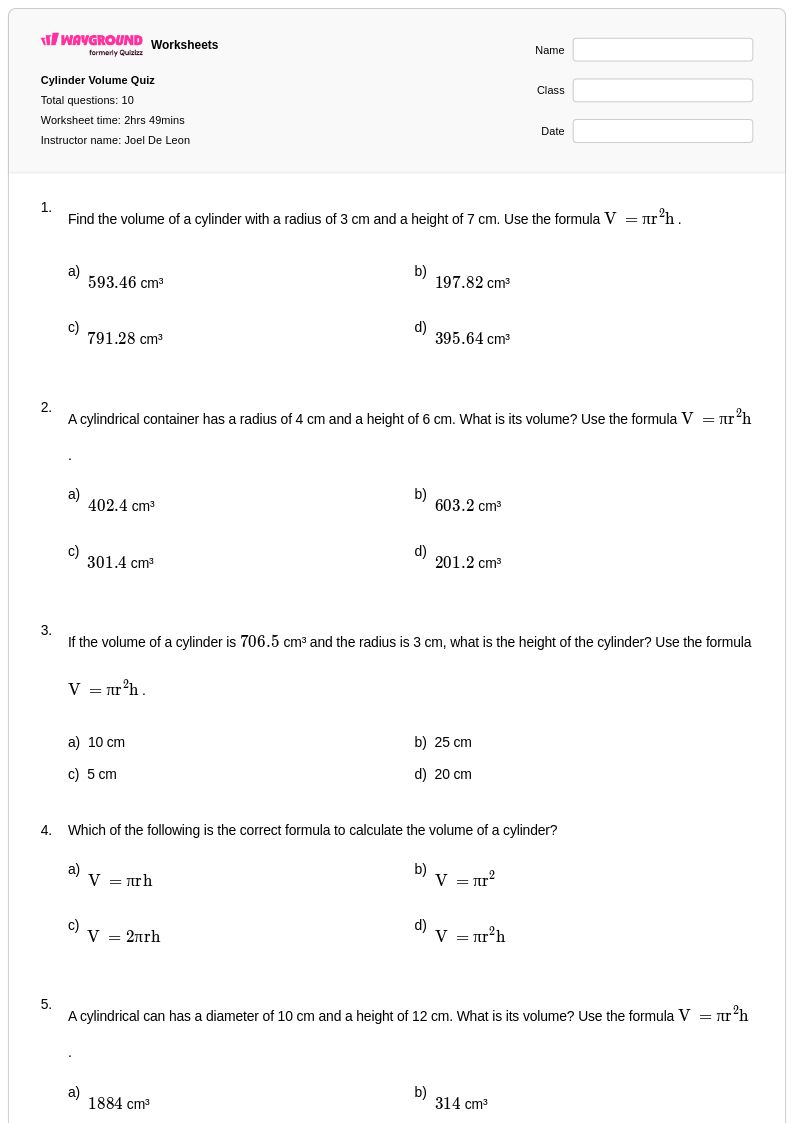
10Q
7th
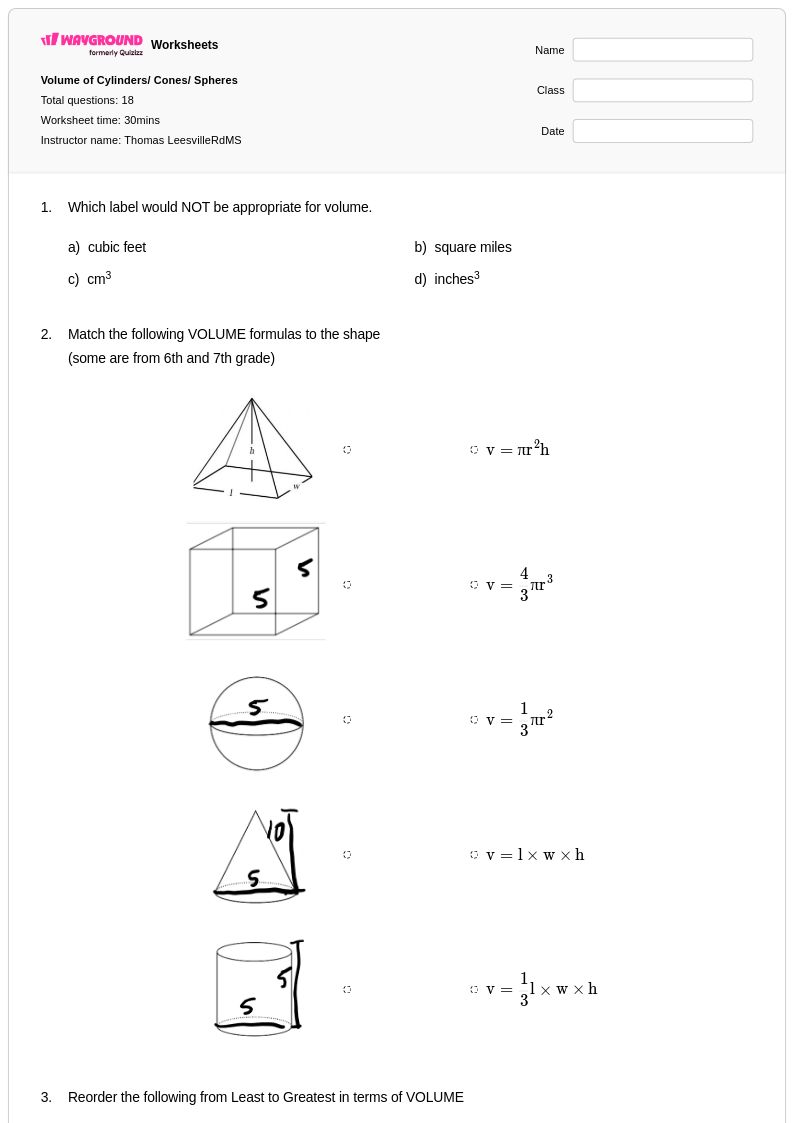
18Q
8th
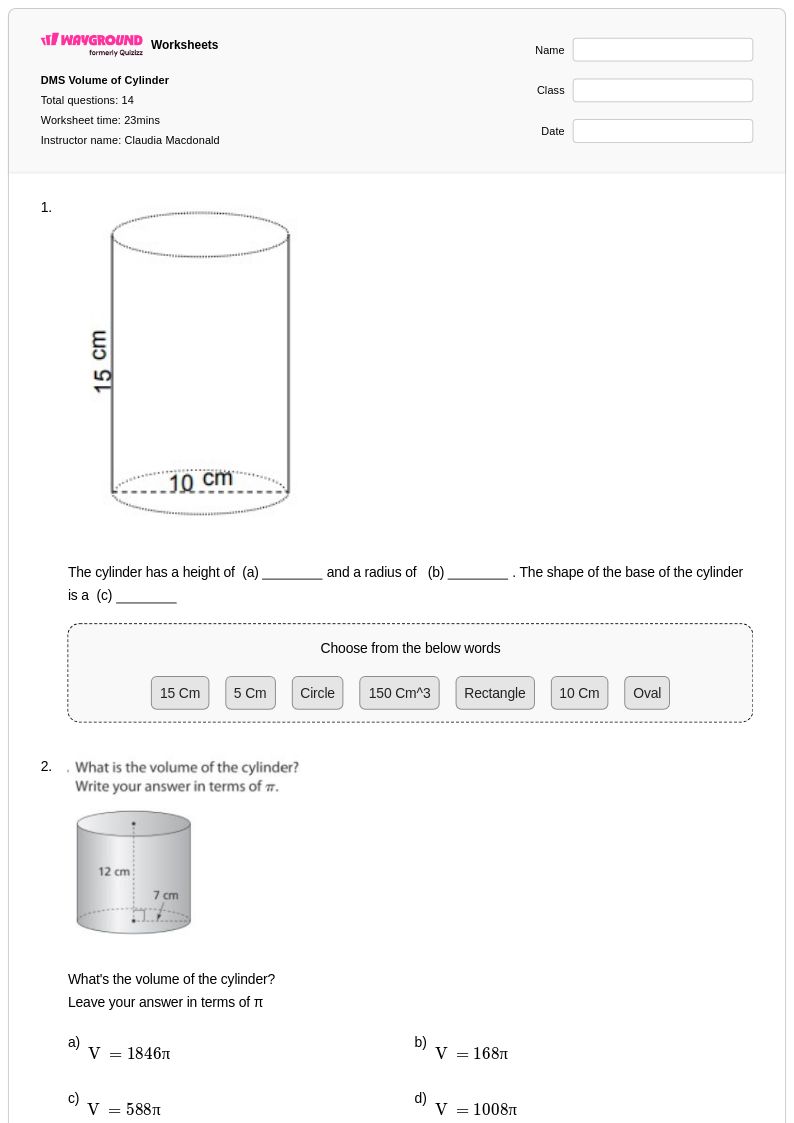
14Q
8th
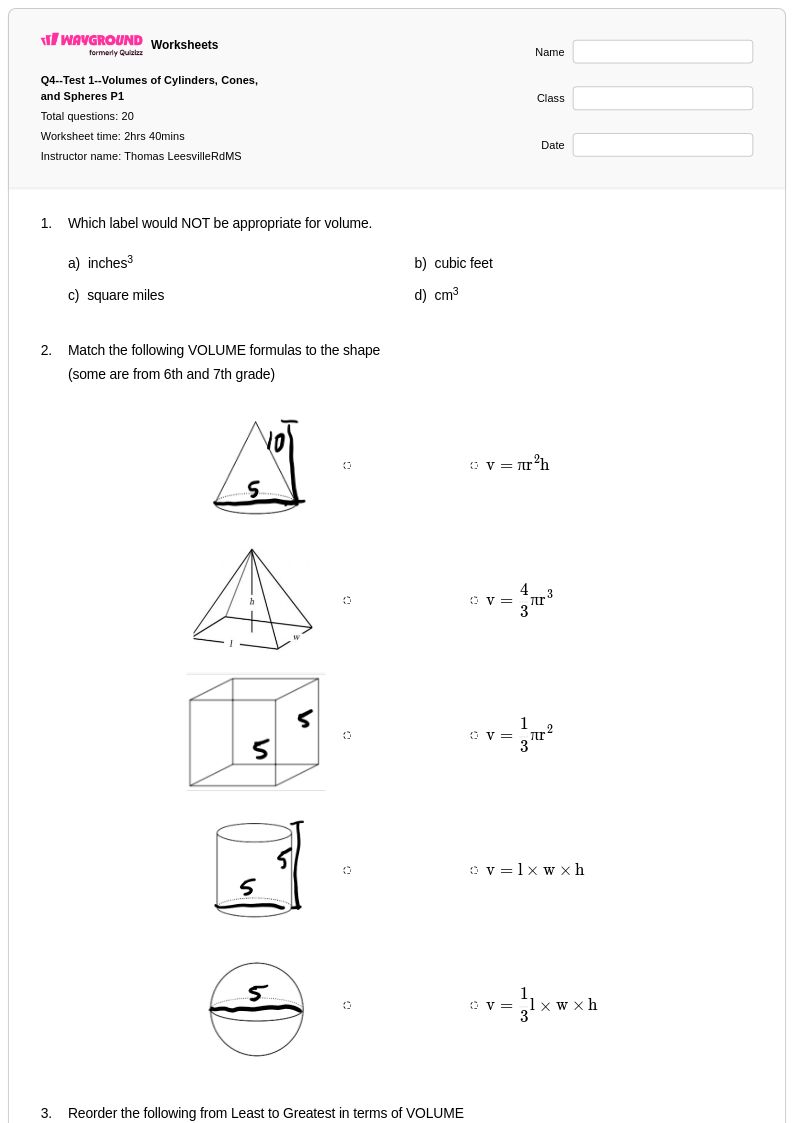
20Q
8th
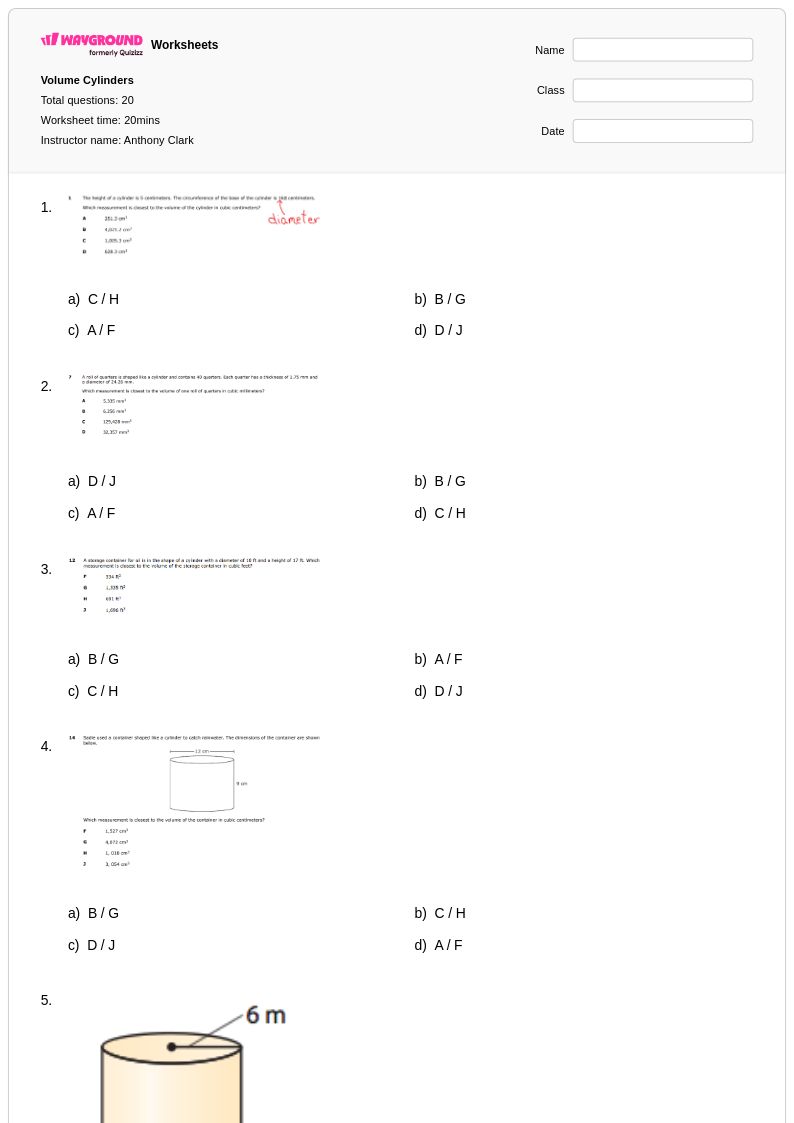
20Q
8th - Uni
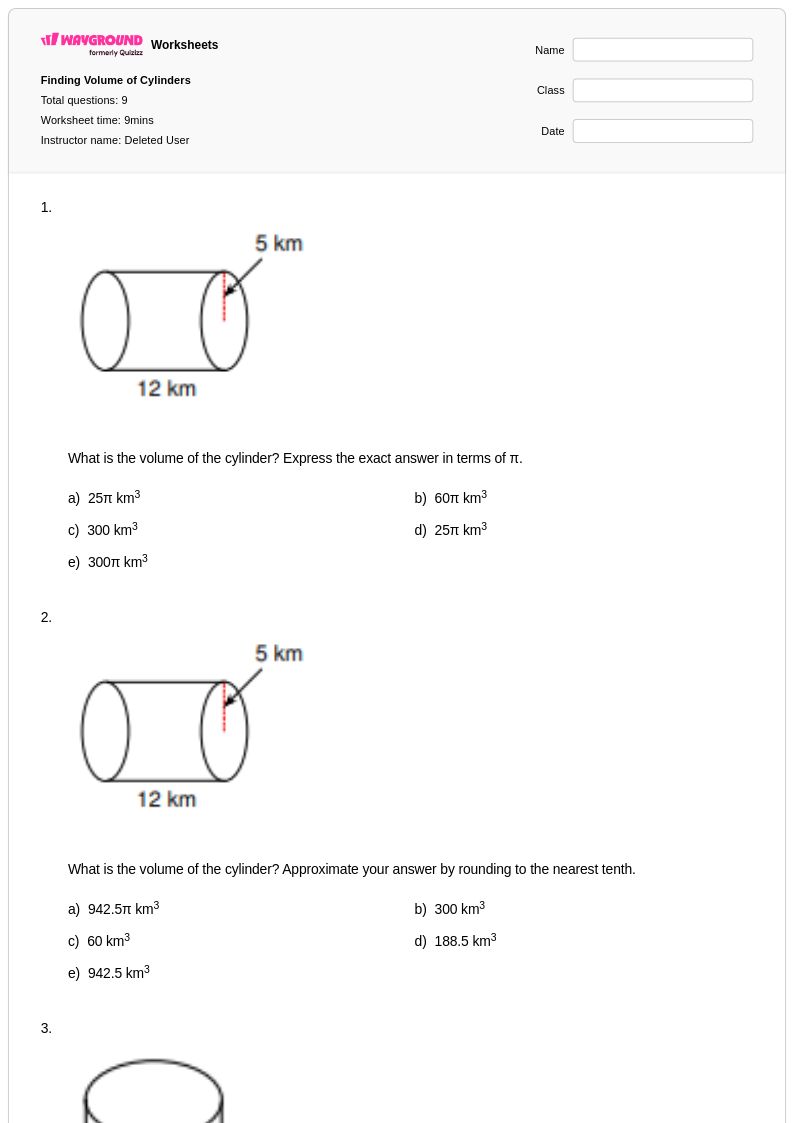
9Q
8th
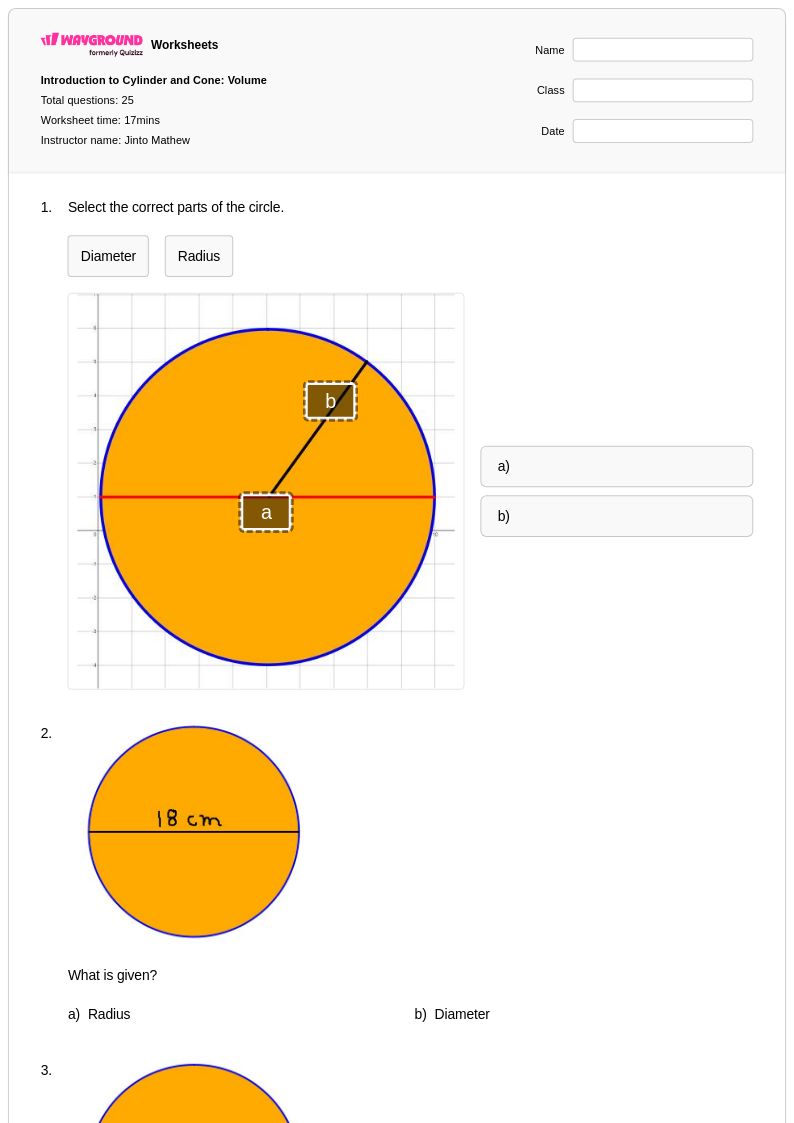
25Q
8th
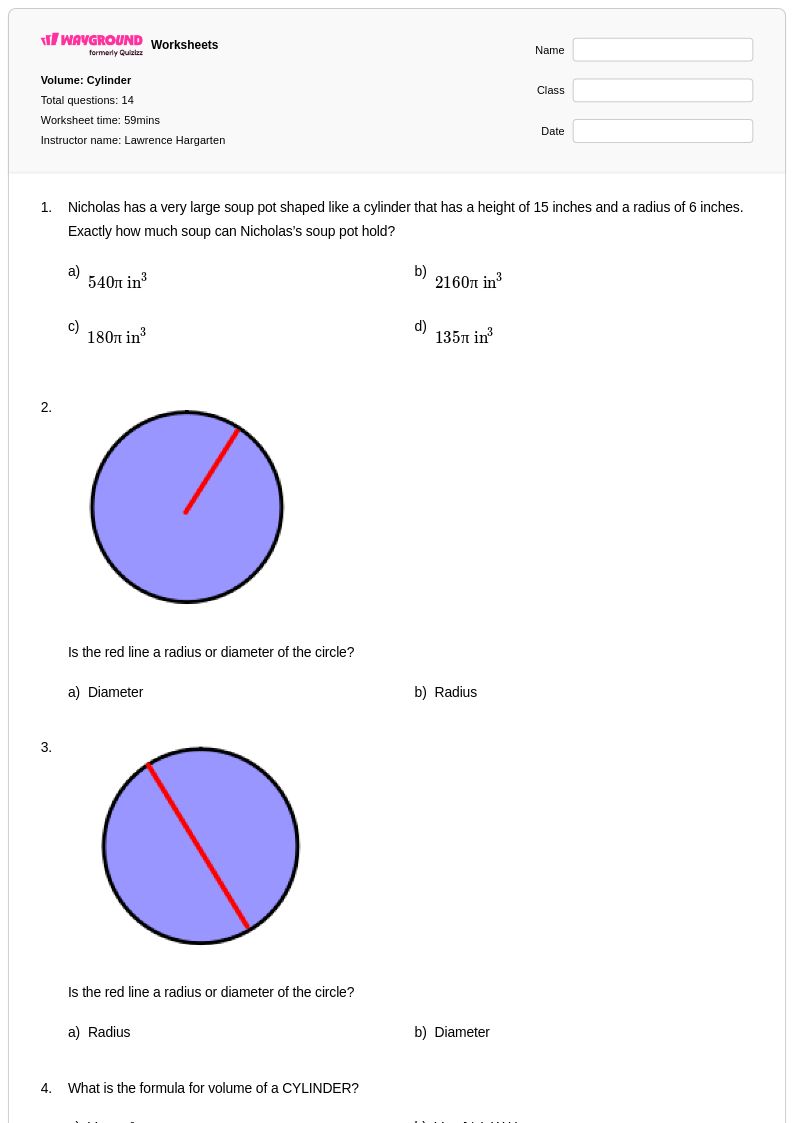
14Q
8th
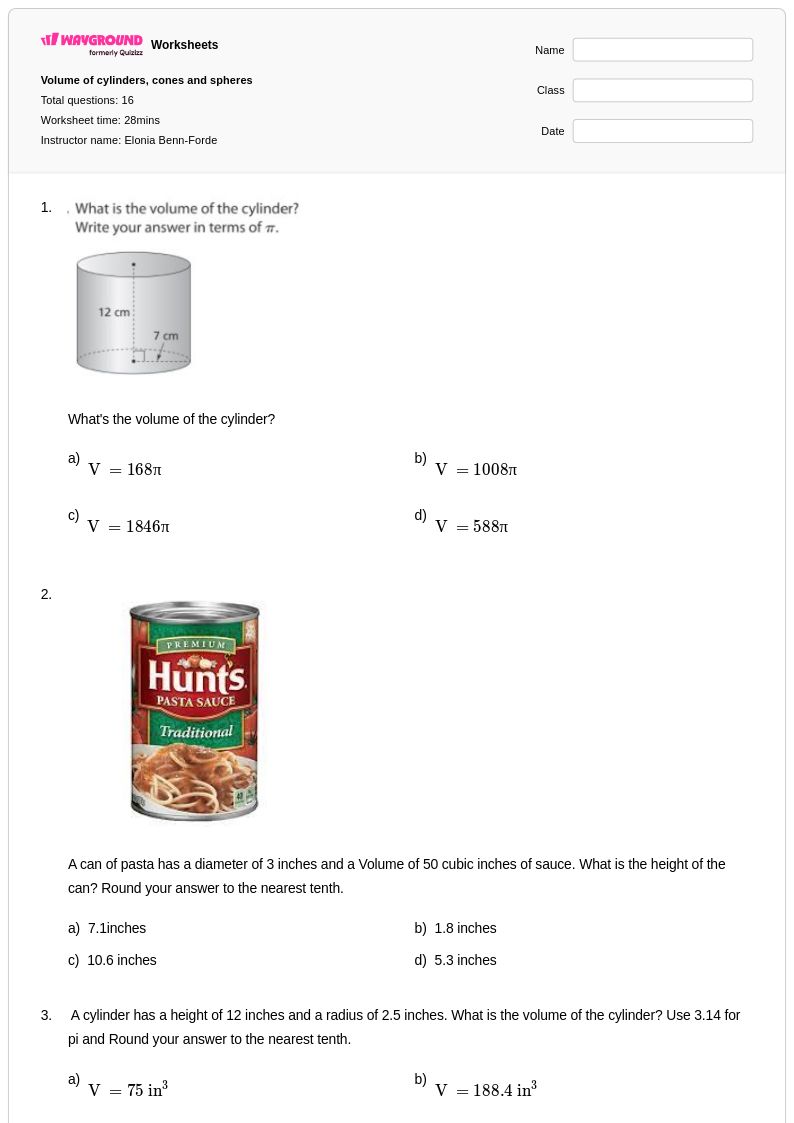
16Q
8th
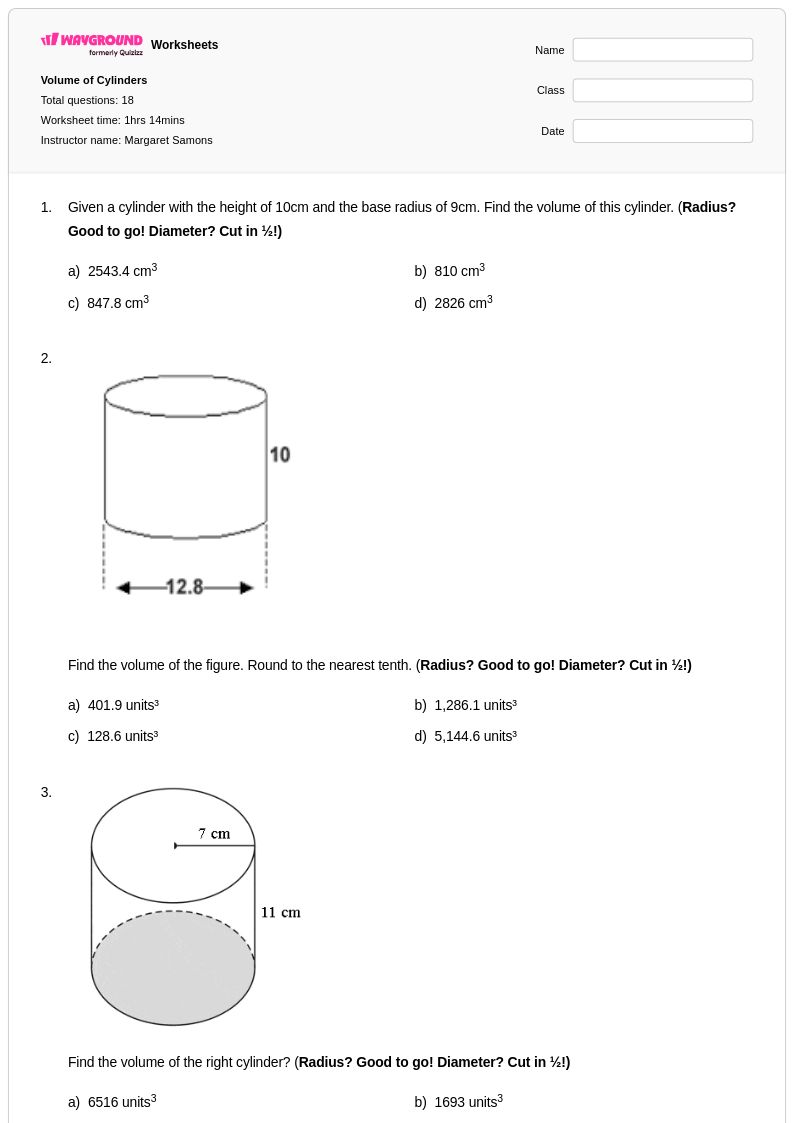
18Q
8th
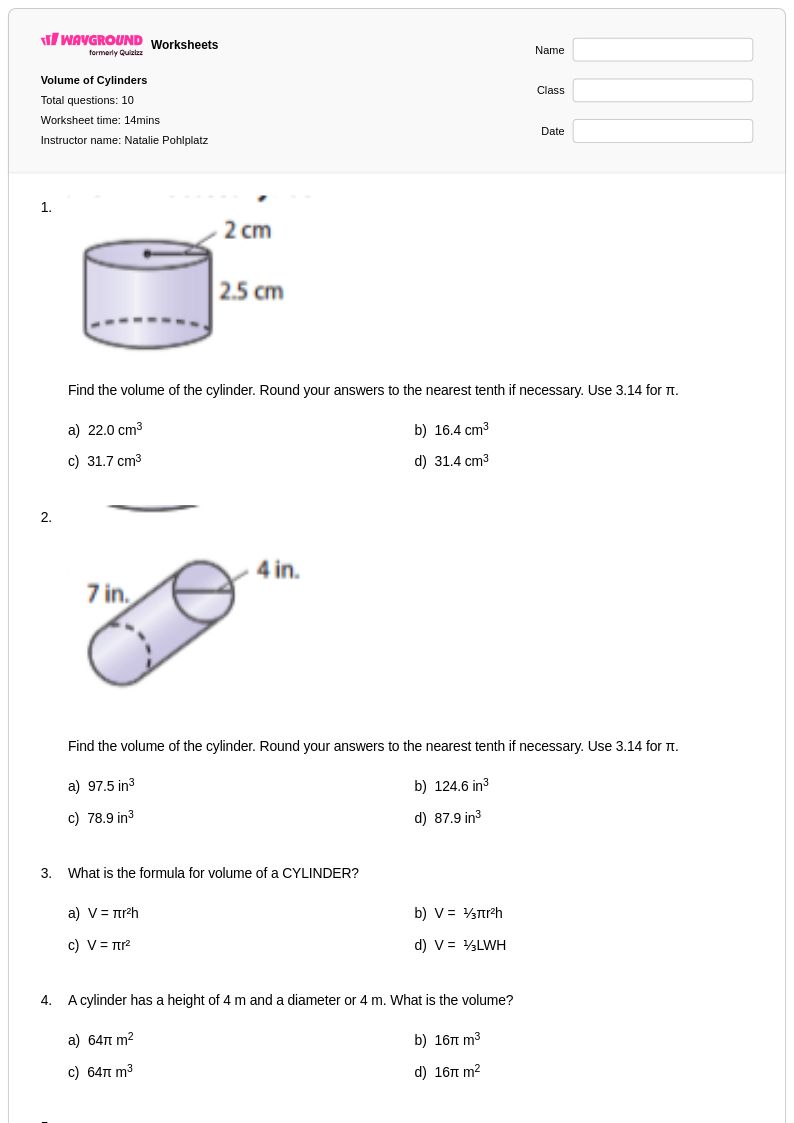
10Q
7th
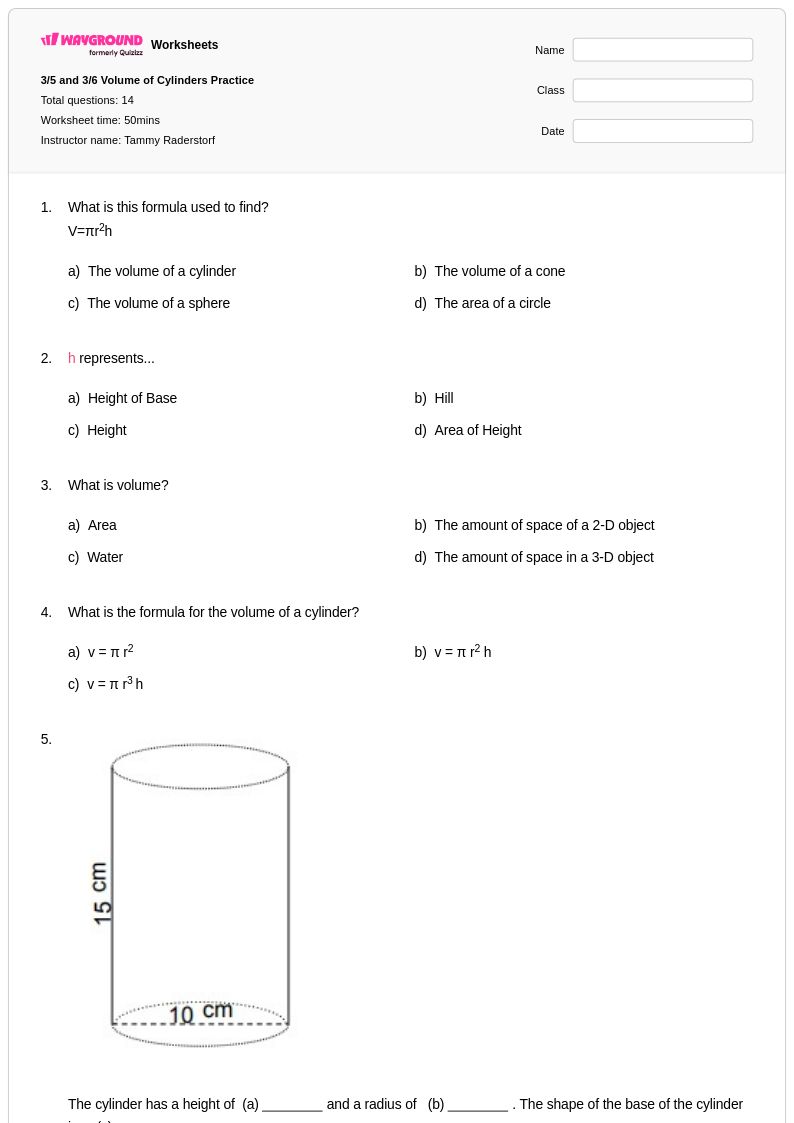
14Q
6th - 8th
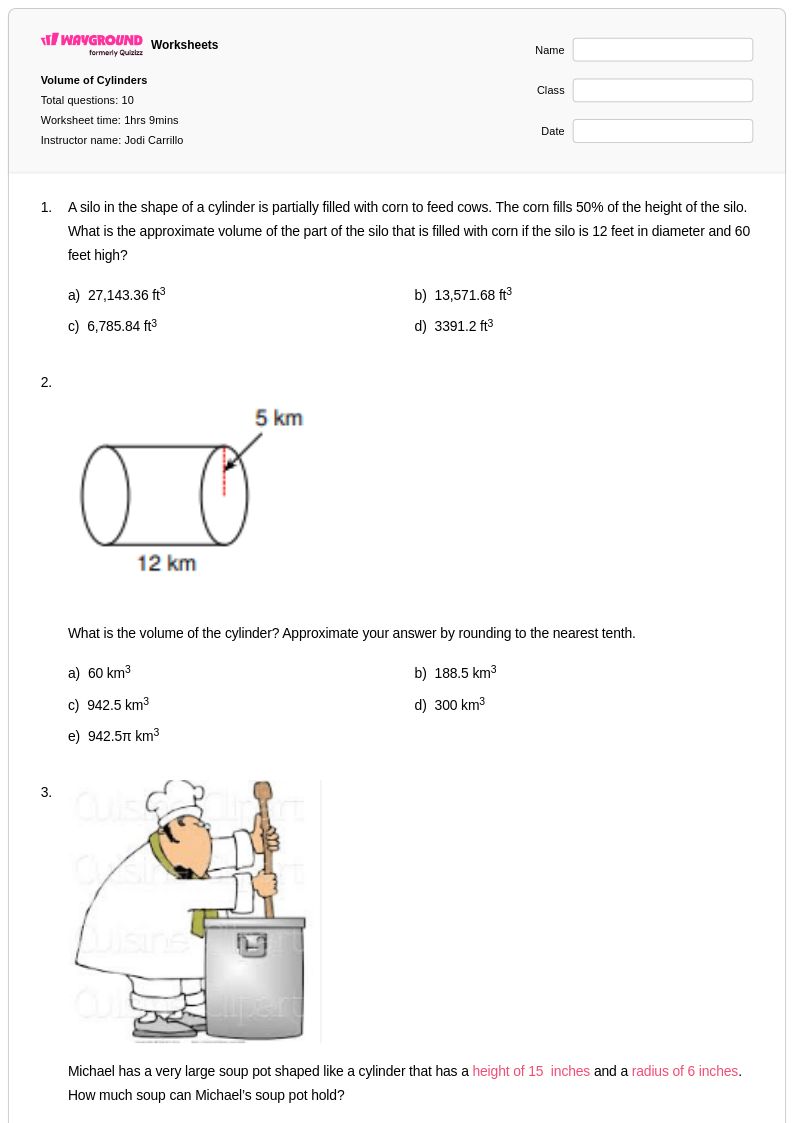
10Q
8th
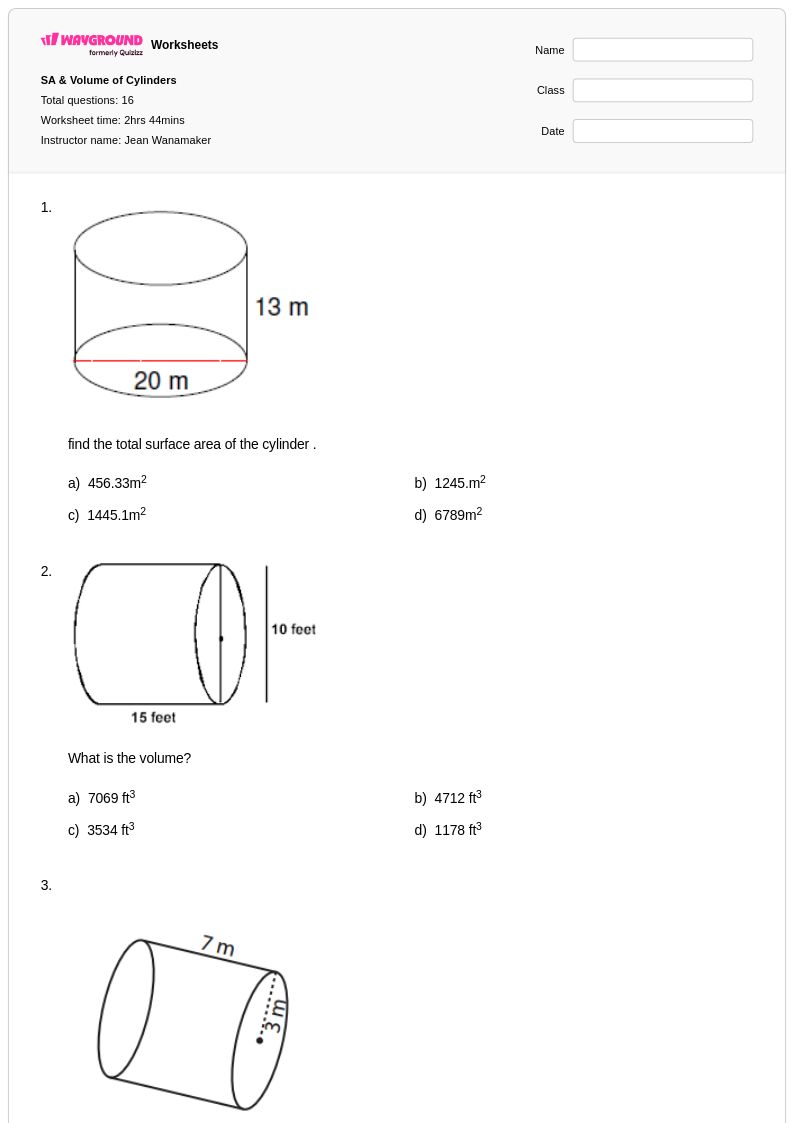
16Q
7th
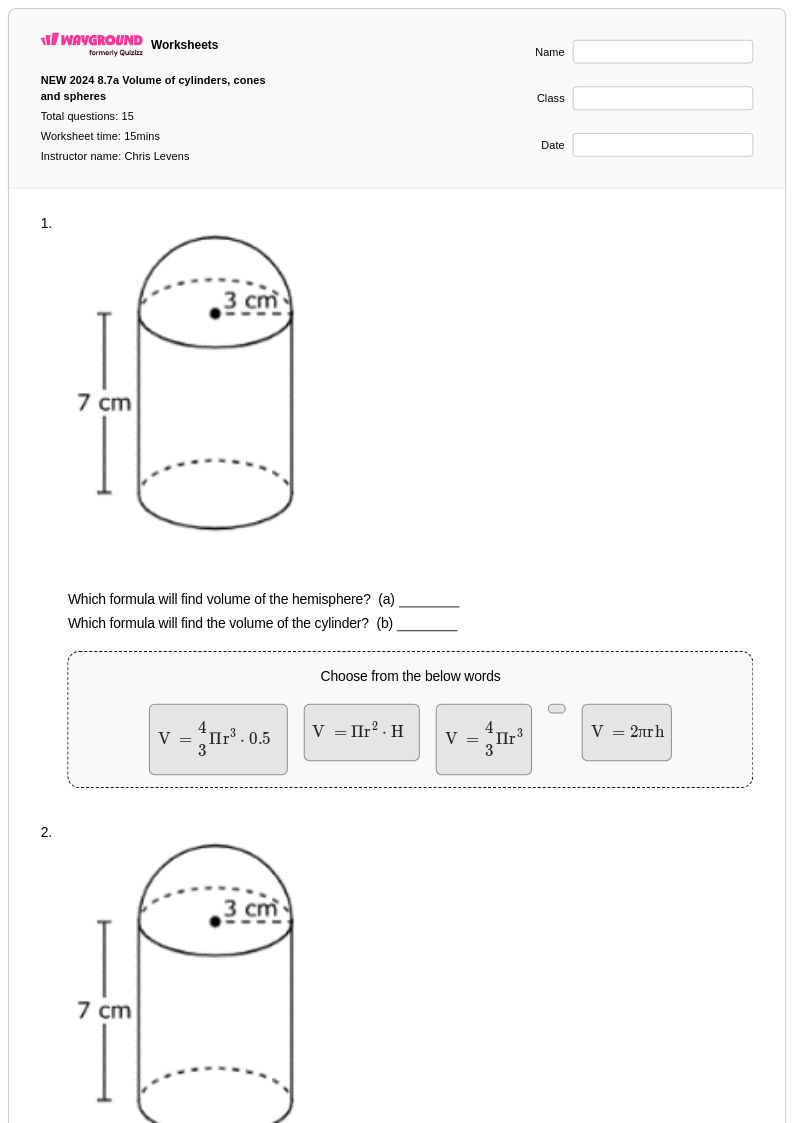
15Q
8th
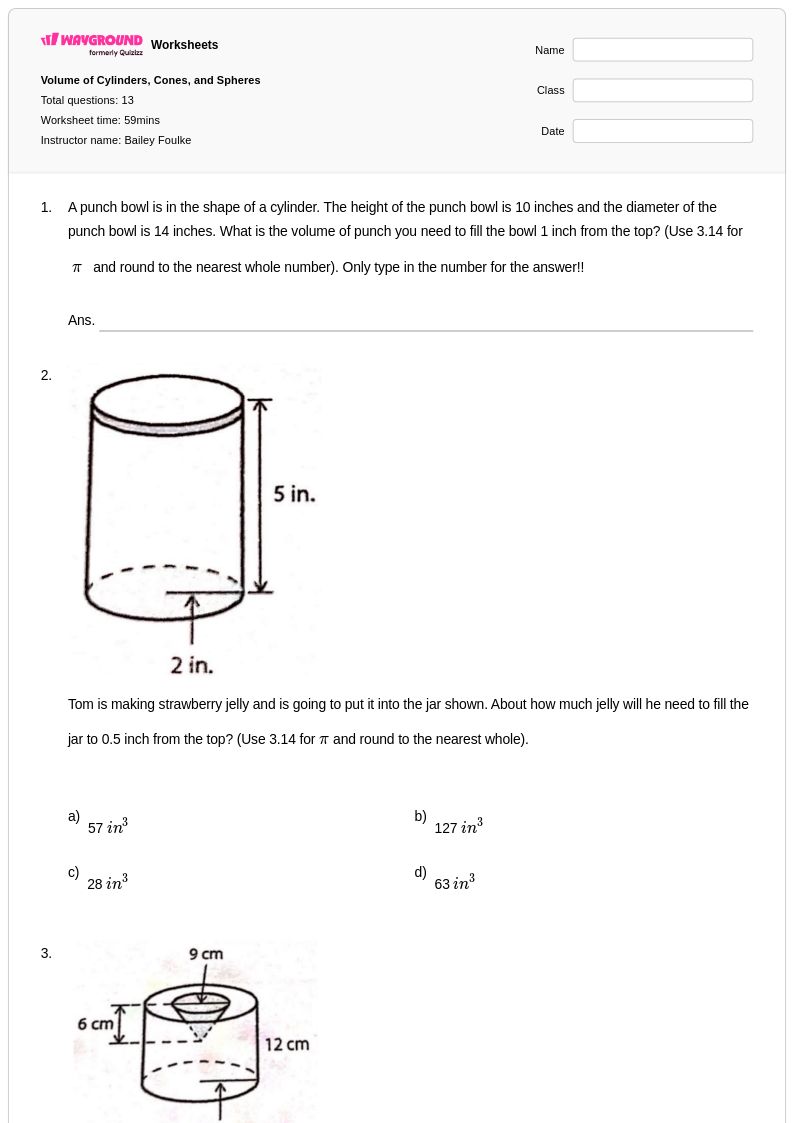
13Q
8th
Explorar Cylinders hojas de trabajo por grados
Explore otras hojas de trabajo de materias para kindergarten
Explore printable Cylinders worksheets for Kindergarten
Cylinders worksheets for kindergarten students available through Wayground (formerly Quizizz) provide foundational geometry experiences that introduce young learners to three-dimensional shapes in age-appropriate ways. These carefully designed practice problems help kindergarteners develop spatial awareness and shape recognition skills by identifying cylinders in everyday objects like cans, tubes, and rolling pins. The worksheets strengthen critical mathematical thinking through hands-on activities such as sorting cylindrical objects from other shapes, tracing cylinder outlines, and connecting real-world items to geometric concepts. Each printable resource includes clear visual representations and simple exercises that build confidence in geometry fundamentals, with answer keys provided to support both independent learning and guided instruction. These free pdf materials offer engaging practice opportunities that align with early childhood mathematics standards while making abstract geometric concepts concrete and accessible.
Wayground (formerly Quizizz) empowers teachers with an extensive collection of cylinder-focused geometry worksheets drawn from millions of educator-created resources specifically designed for kindergarten mathematics instruction. The platform's robust search and filtering capabilities enable teachers to quickly locate materials that match their students' developmental needs and curricular requirements, while standards alignment features ensure content supports established learning objectives for three-dimensional shape recognition. Teachers benefit from flexible customization options that allow differentiation for diverse learning styles and abilities, making it simple to provide targeted remediation for struggling students or enrichment activities for advanced learners. The availability of both printable and digital formats, including downloadable pdf versions, supports varied classroom environments and teaching preferences, whether educators need materials for hands-on manipulative work, homework assignments, or assessment preparation that reinforces cylinder identification and spatial reasoning skills.
FAQs
How do I teach cylinders to kindergarten students?
What activities help kindergarteners practice identifying cylinders?
What mistakes do kindergarteners commonly make when identifying cylinders?
How can I use Wayground kindergarten cylinder worksheets?
How do cylinder activities fit into the Common Core kindergarten math progression?
What grade do students begin learning about cylinders?
How can I support diverse learners with kindergarten cylinder worksheets?