
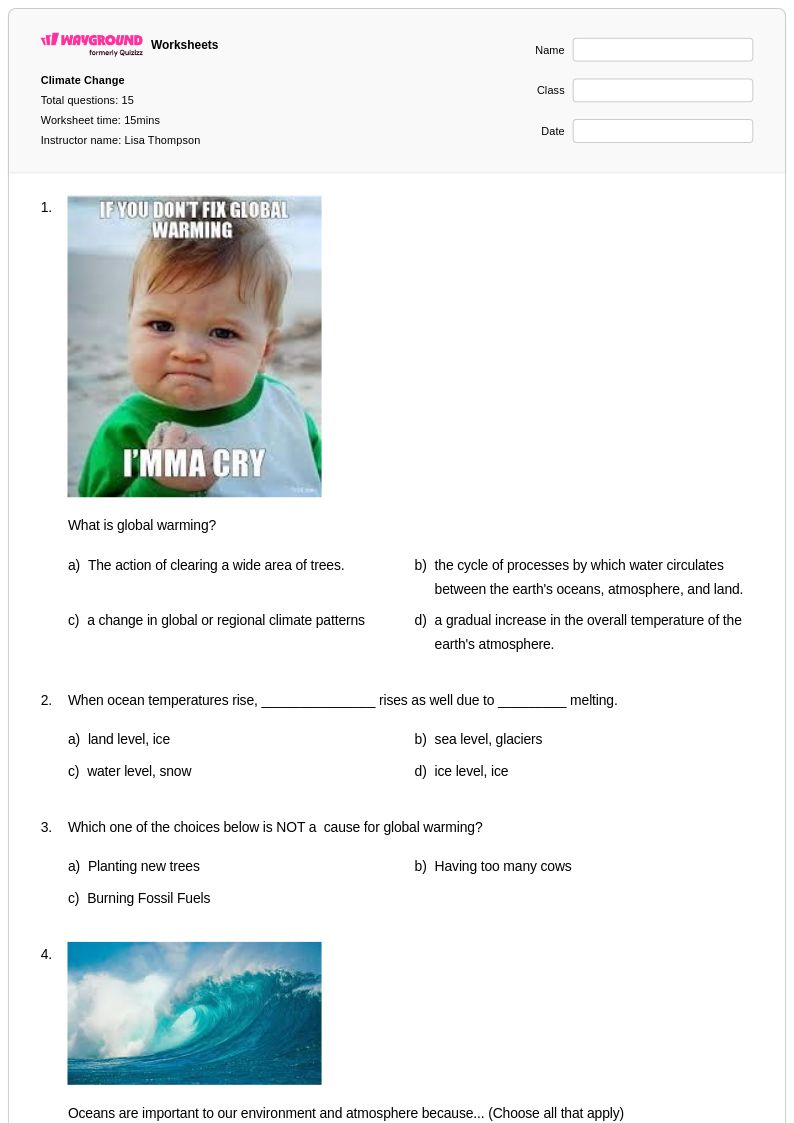
15 Q
7th - Uni
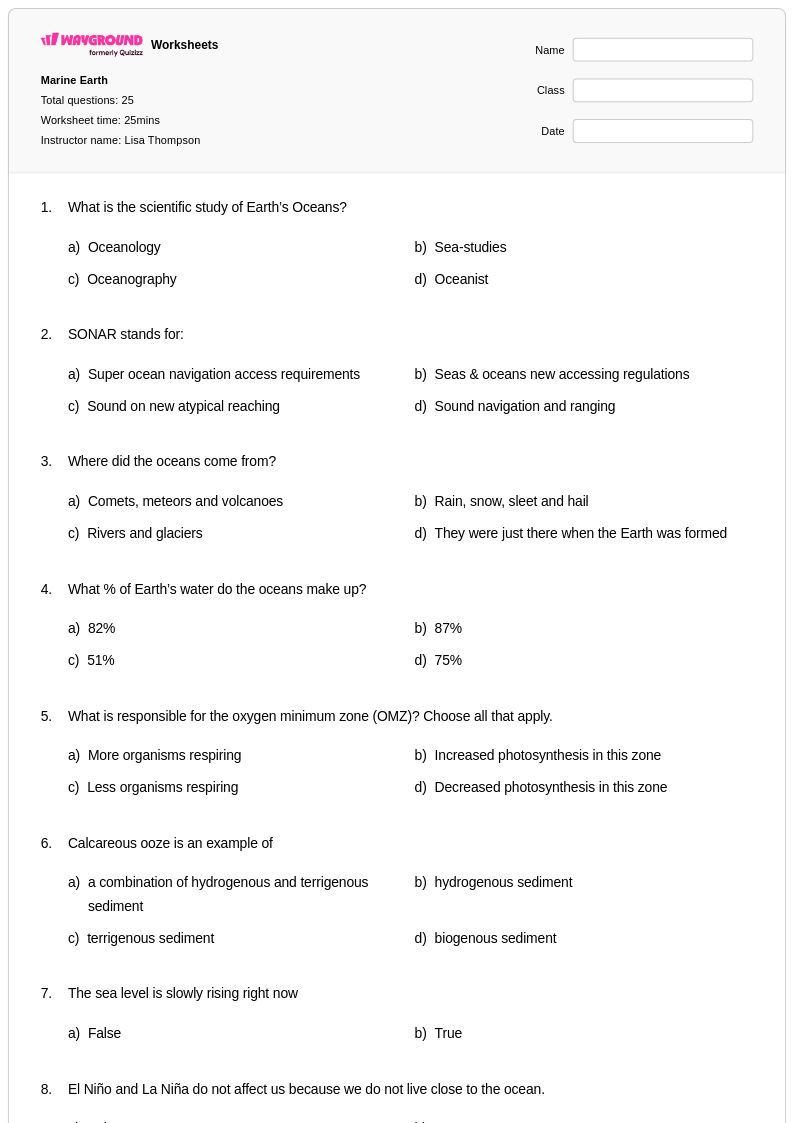
25 Q
11th - Uni
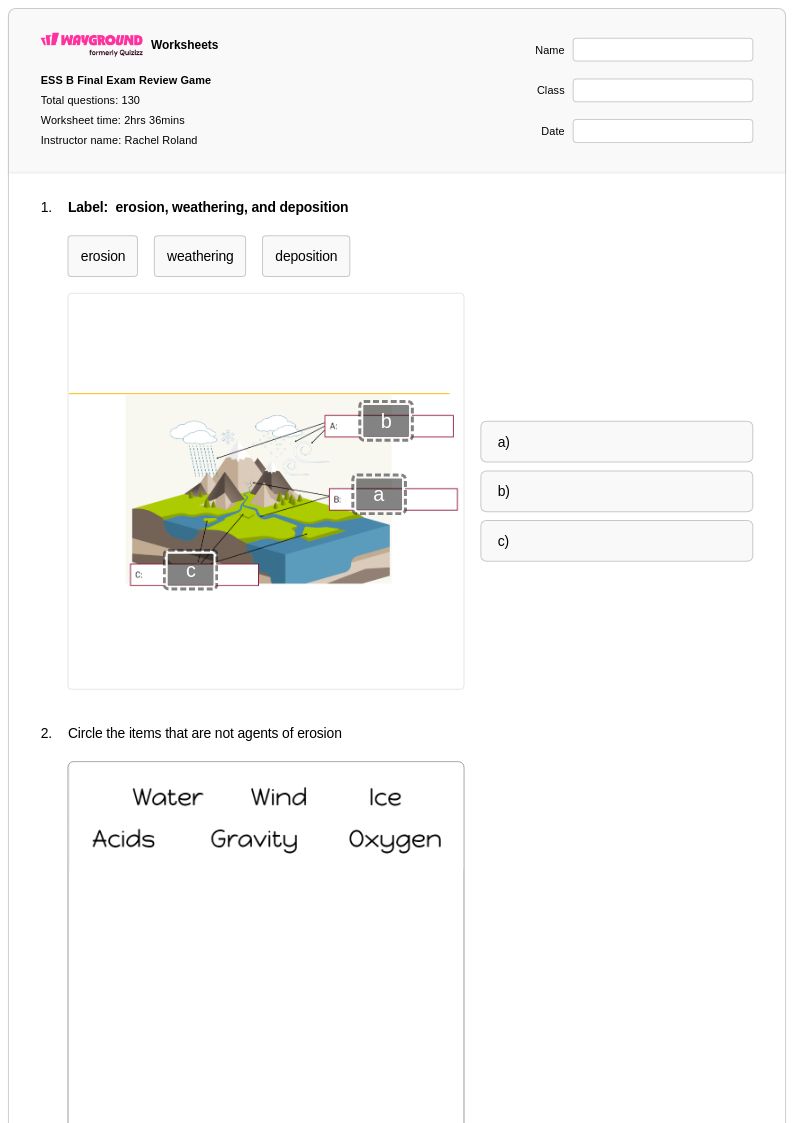
130 Q
11th
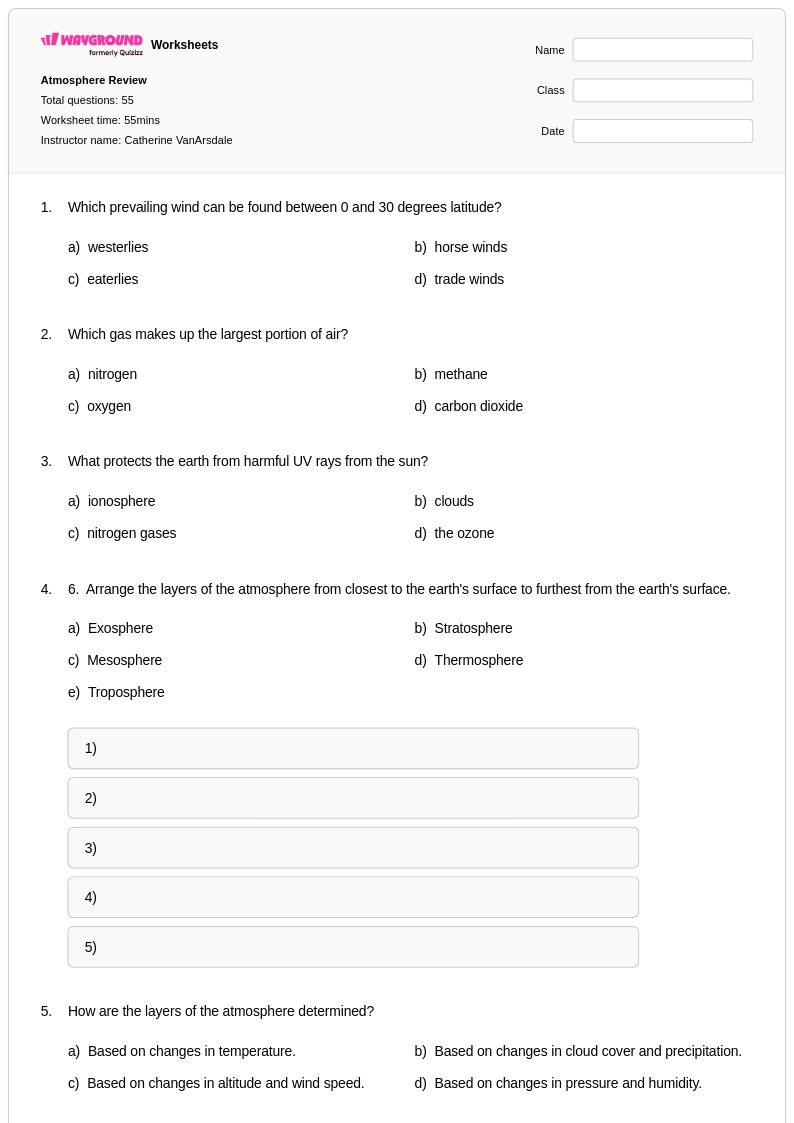
55 Q
11th
15 Q
8th - Uni
25 Q
6th - Uni
22 Q
11th
25 Q
6th - Uni
15 Q
9th - Uni
25 Q
5th - Uni
15 Q
11th - Uni
15 Q
11th - Uni
35 Q
8th - Uni
15 Q
11th
25 Q
9th - 12th
14 Q
9th - 12th
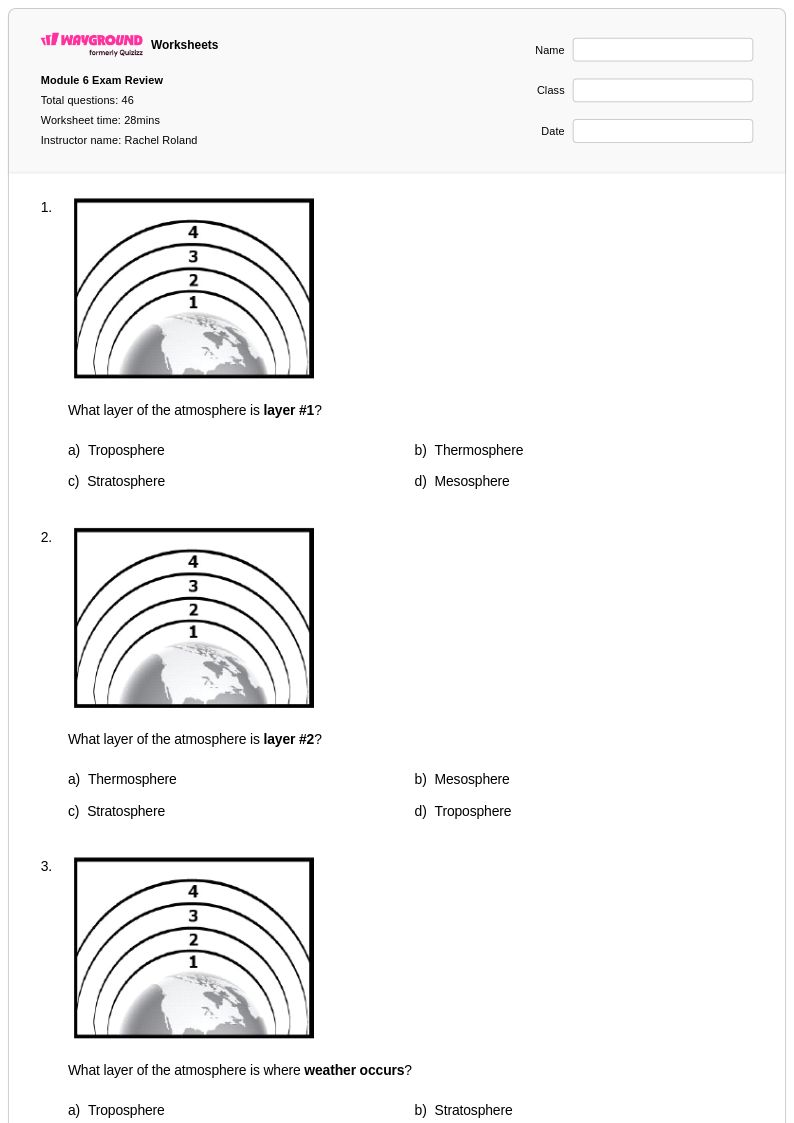
46 Q
9th - 12th
136 Q
9th - 12th
25 Q
10th - Uni
15 Q
7th - Uni
18 Q
11th
40 Q
11th
17 Q
10th - 12th
20 Q
9th - 12th
Explore El Niño and La Niña Worksheets by Grades
Explore Other Subject Worksheets for class 11
Explore printable El Niño and La Niña worksheets for Class 11
El Niño and La Niña worksheets for Class 11 students available through Wayground (formerly Quizizz) provide comprehensive resources for understanding these critical oceanic-atmospheric phenomena that significantly impact global weather patterns. These educational materials strengthen students' ability to analyze the complex interactions between ocean temperatures, atmospheric pressure systems, and their far-reaching effects on climate conditions worldwide. The worksheets feature detailed practice problems that guide students through identifying the characteristics of El Niño and La Niña events, interpreting oceanographic data, and connecting these patterns to regional weather anomalies. Each printable resource includes carefully structured exercises with corresponding answer keys, enabling students to develop mastery of concepts such as the Southern Oscillation, sea surface temperature variations, and teleconnections. These free pdf materials support deep learning through data analysis activities, graph interpretation exercises, and case study evaluations that demonstrate how these phenomena influence precipitation patterns, temperature extremes, and seasonal weather predictions across different continents.
Wayground (formerly Quizizz) empowers educators with millions of teacher-created El Niño and La Niña worksheet collections that streamline lesson planning and enhance student engagement with complex earth science concepts. The platform's robust search and filtering capabilities allow teachers to quickly locate resources aligned with specific learning standards and customize materials to match their students' diverse academic needs. These differentiation tools enable instructors to provide targeted remediation for struggling learners while offering enrichment opportunities for advanced students ready to explore sophisticated climate modeling and prediction techniques. The flexible format options, including both printable and digital versions with comprehensive pdf downloads, accommodate various classroom environments and learning preferences. Teachers can seamlessly integrate these resources into their curriculum to support skill practice sessions, formative assessments, and in-depth exploration of how El Niño and La Niña cycles connect to broader climate science principles, ensuring students develop the analytical capabilities essential for advanced earth and space science coursework.