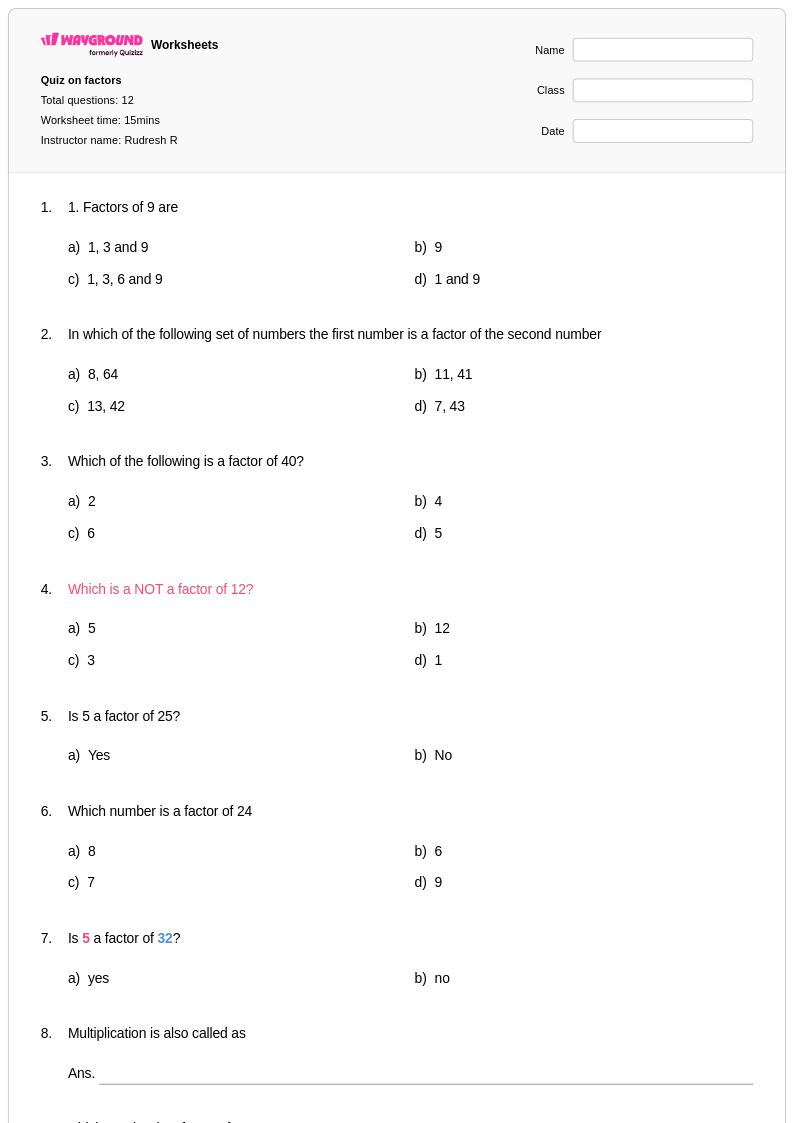
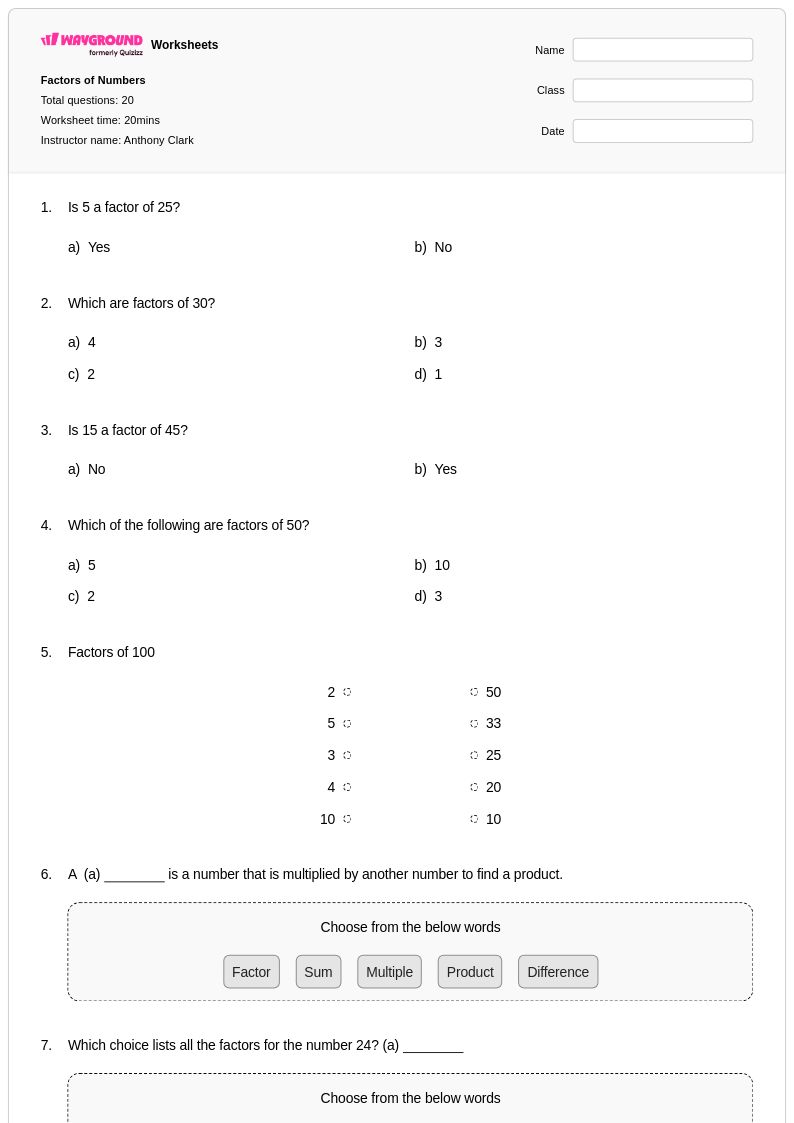
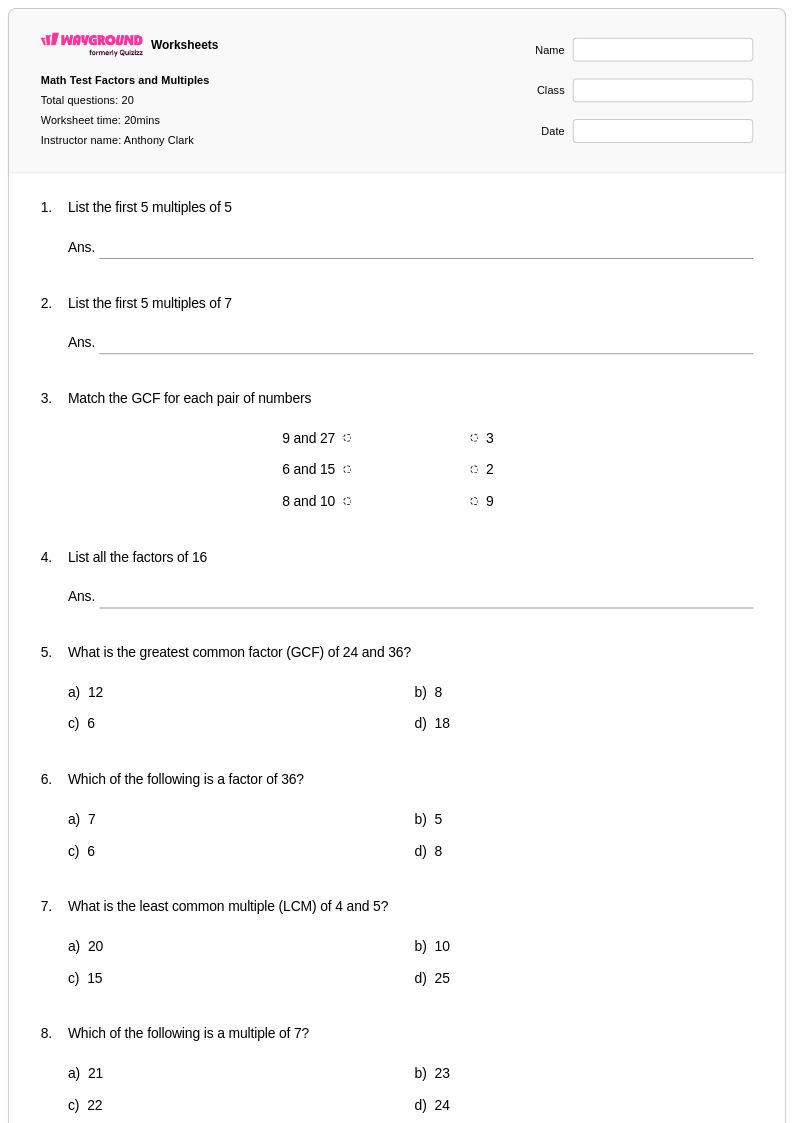
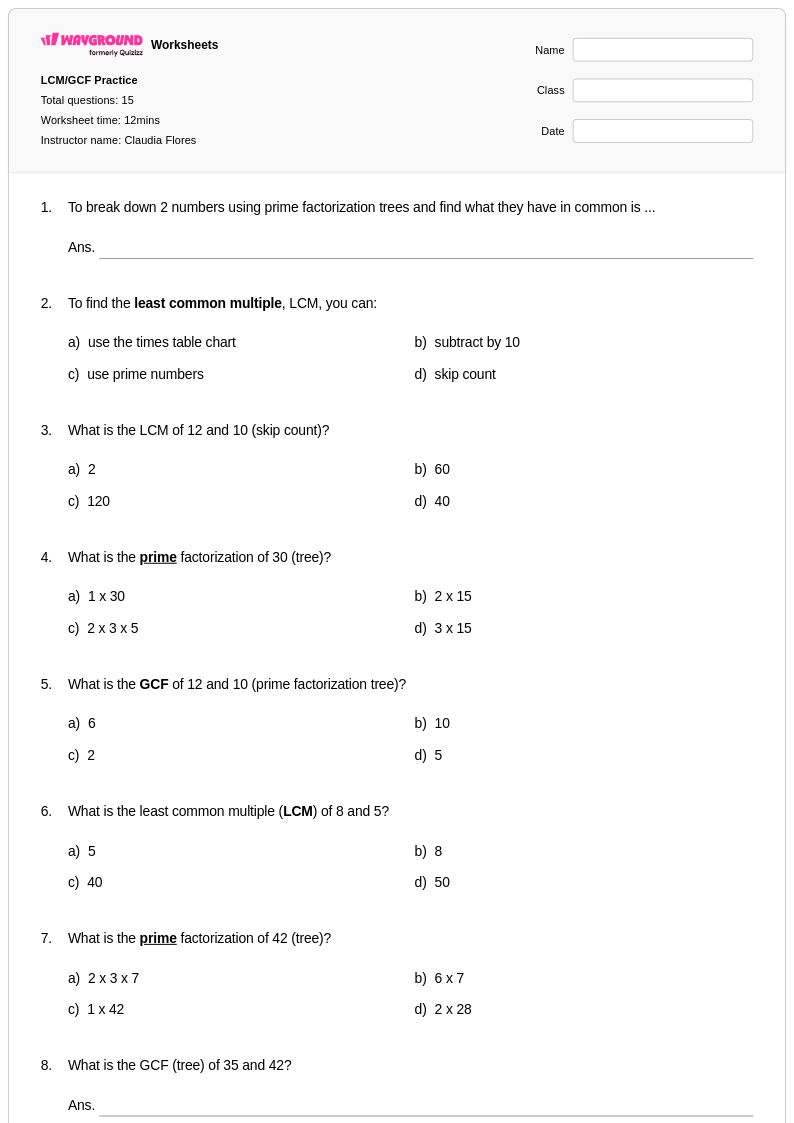
Free Printable Factor Trees Worksheets for Class 5
Discover free Class 5 factor trees worksheets and printable PDFs from Wayground that help students master prime factorization through engaging practice problems with comprehensive answer keys.
Explore printable Factor Trees worksheets for Class 5
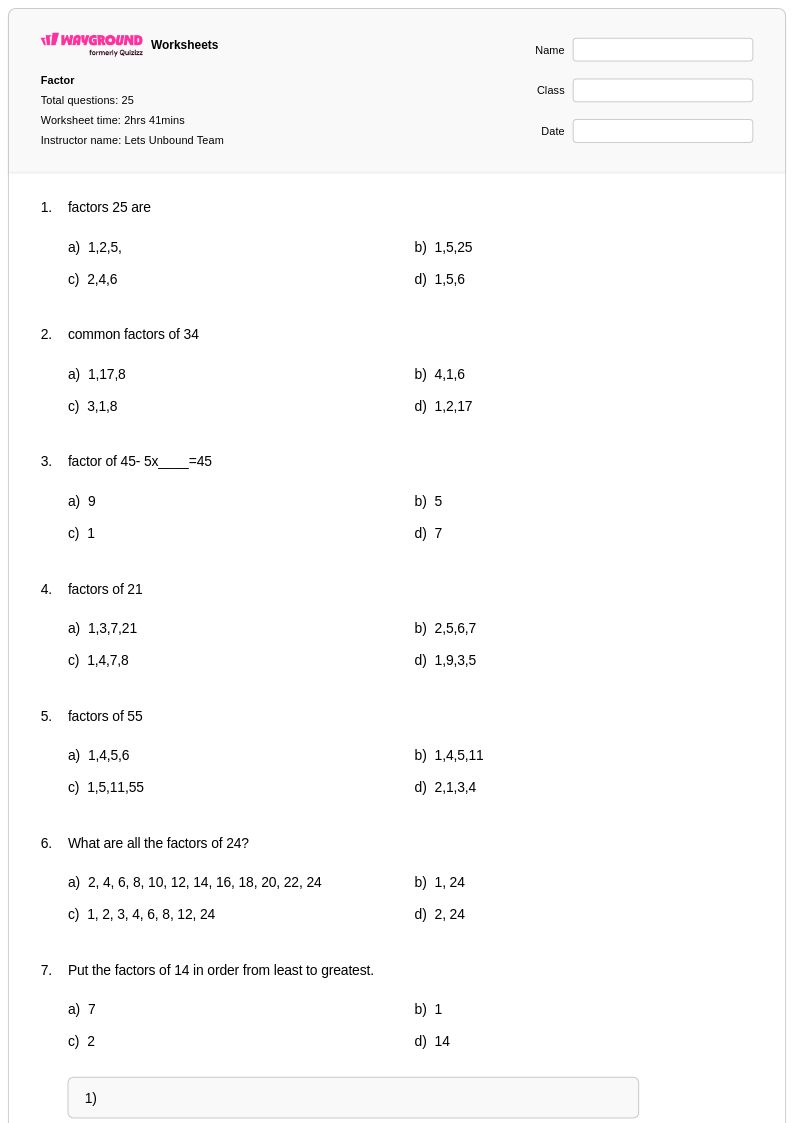
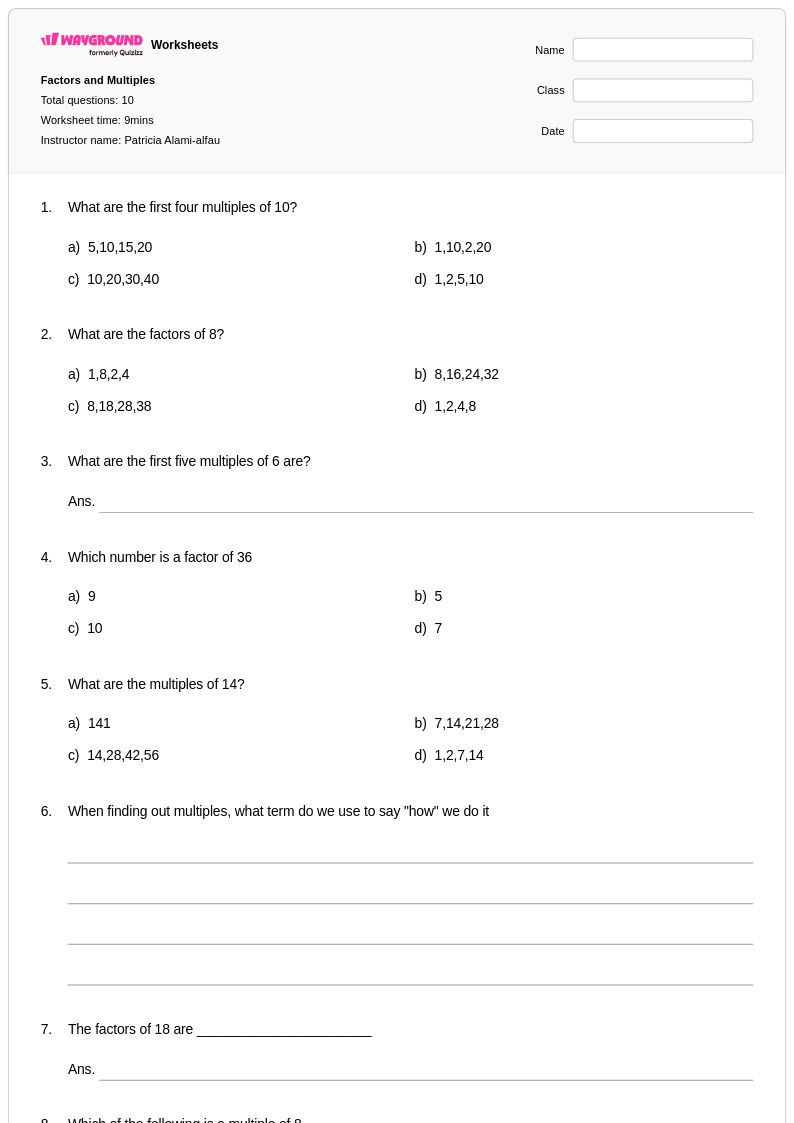
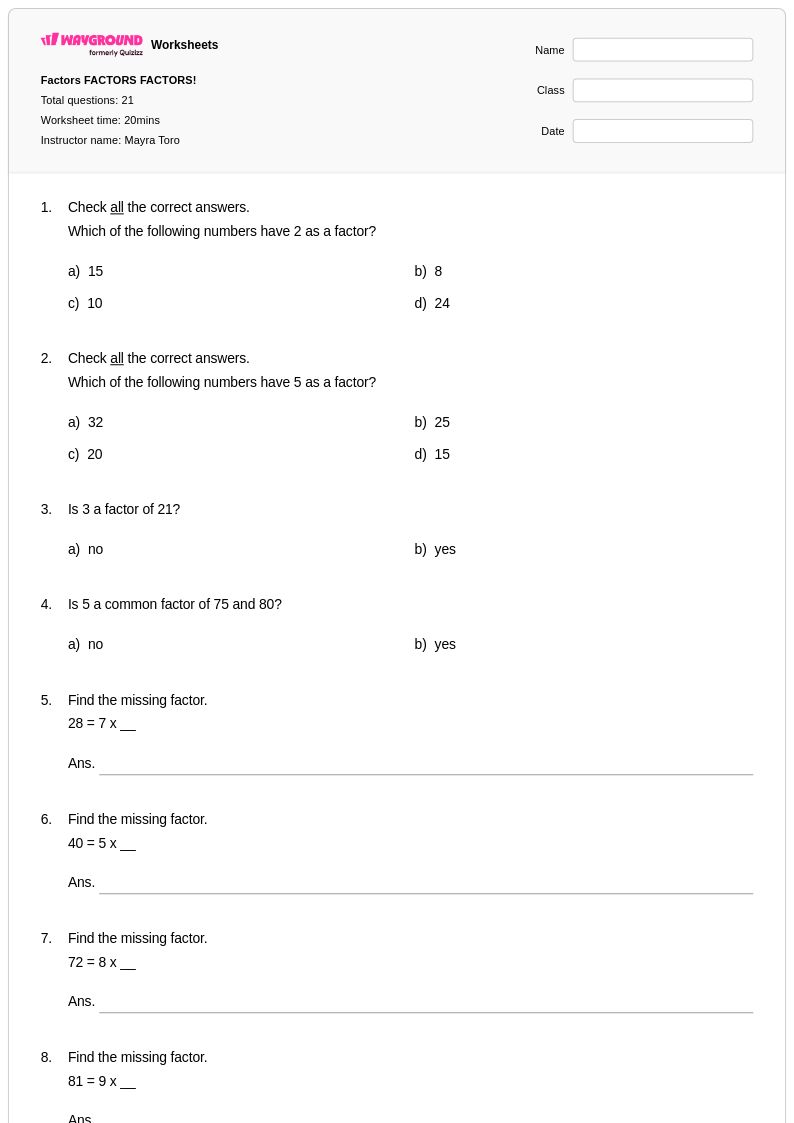
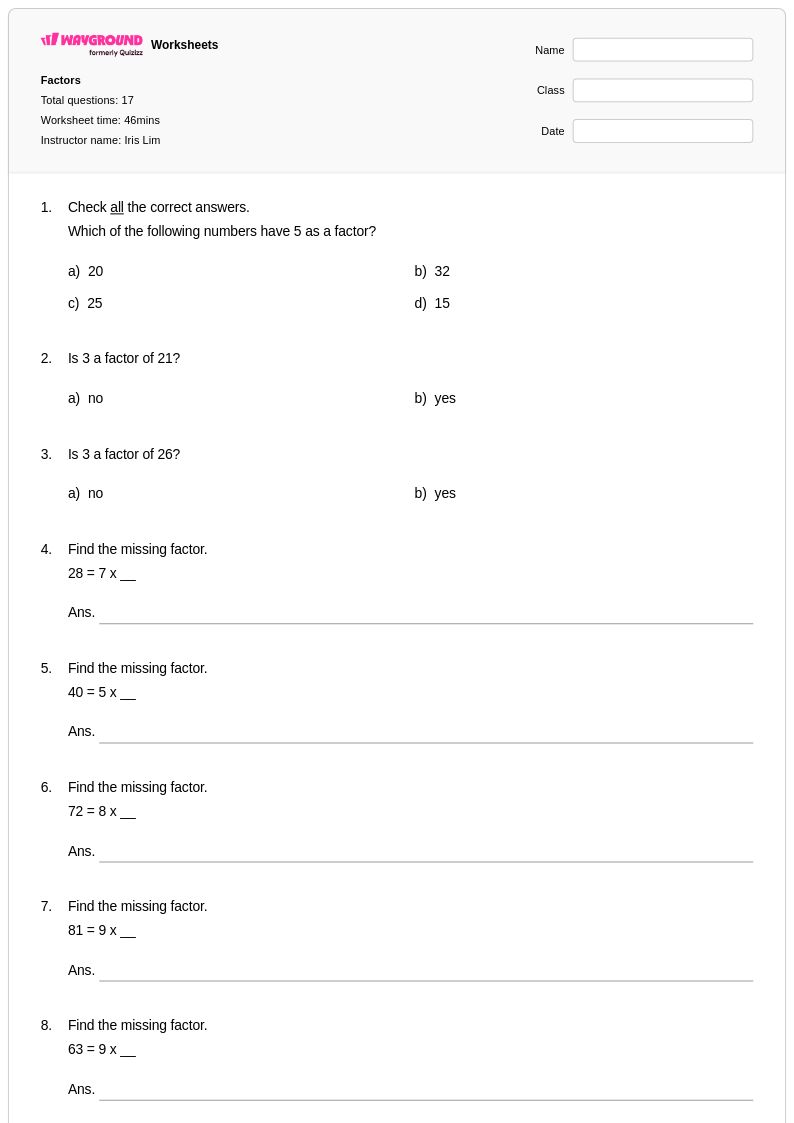
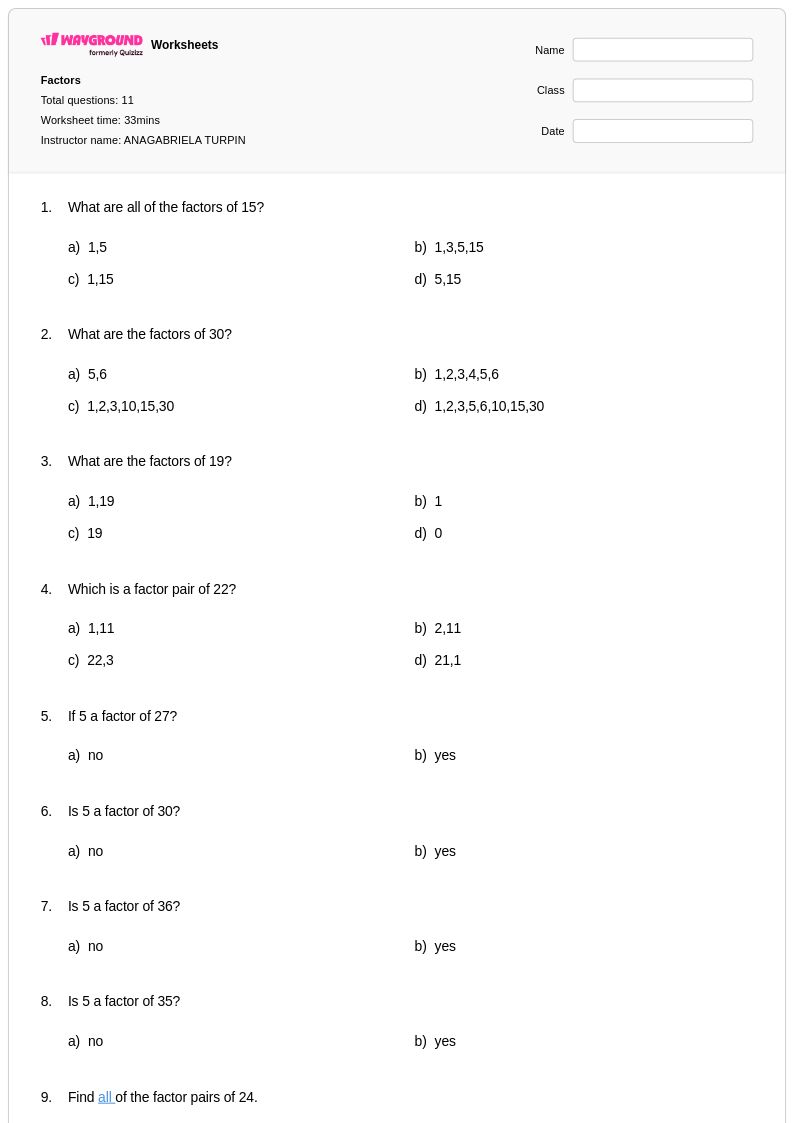
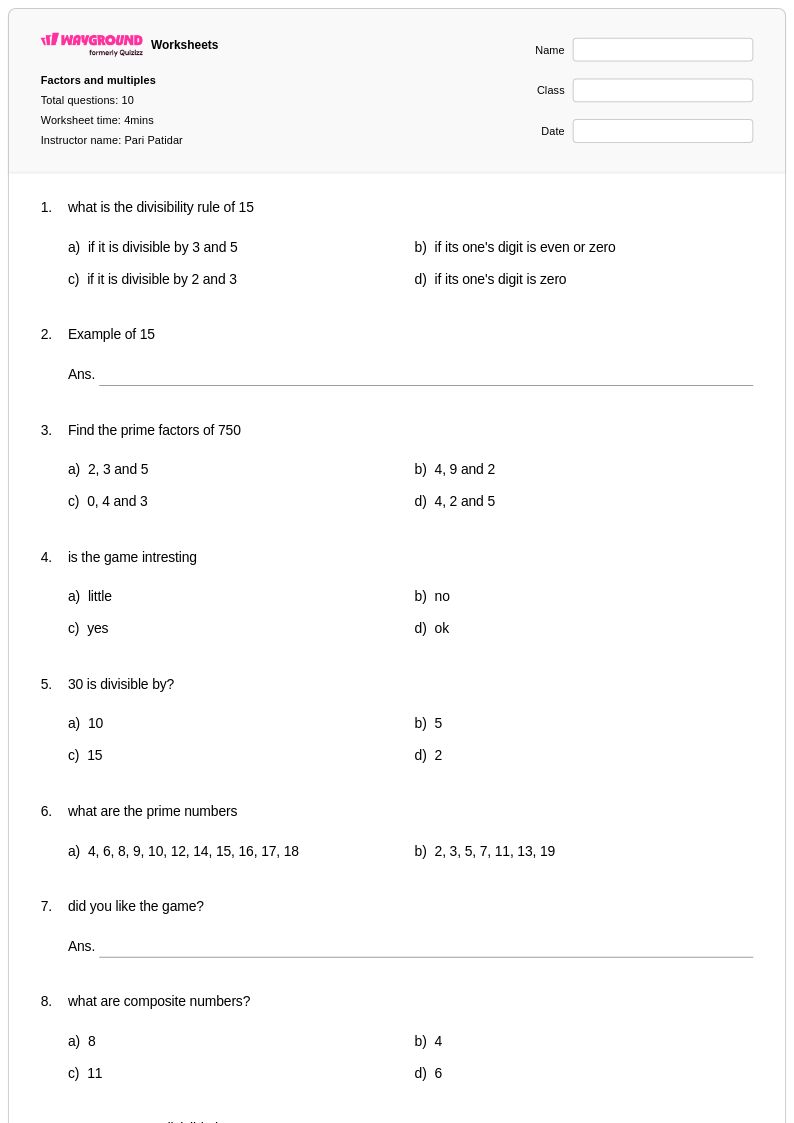
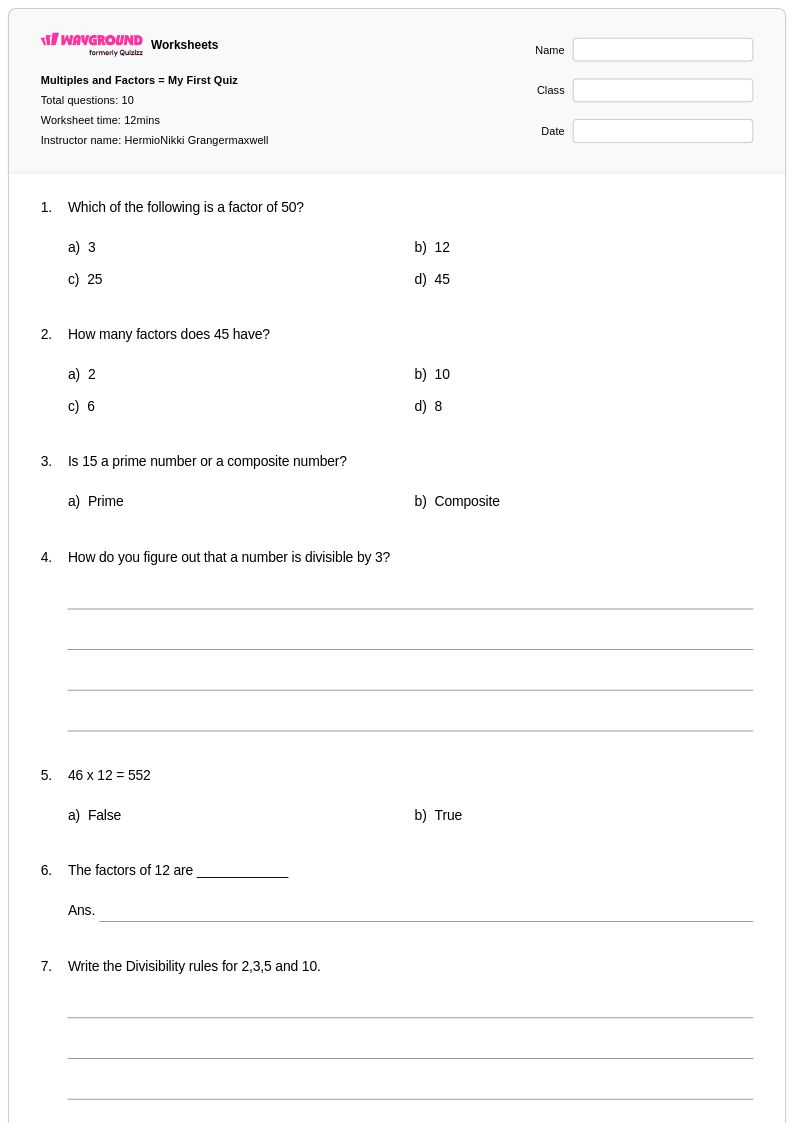
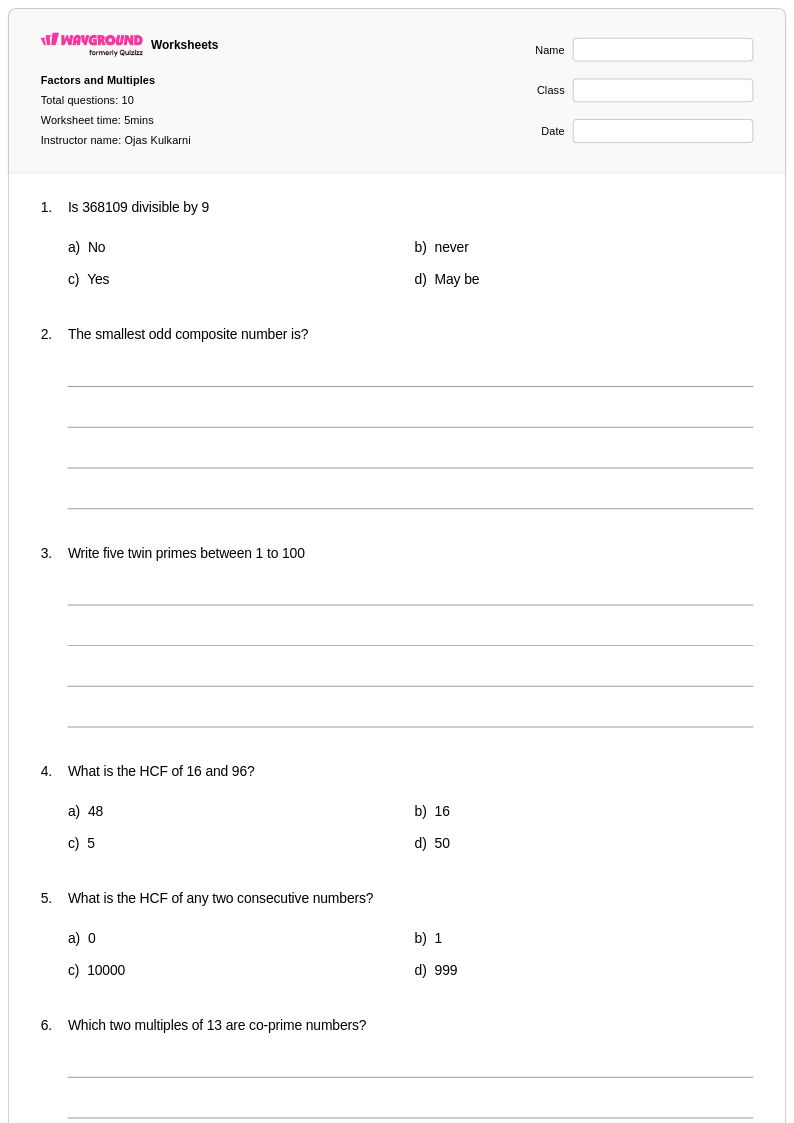
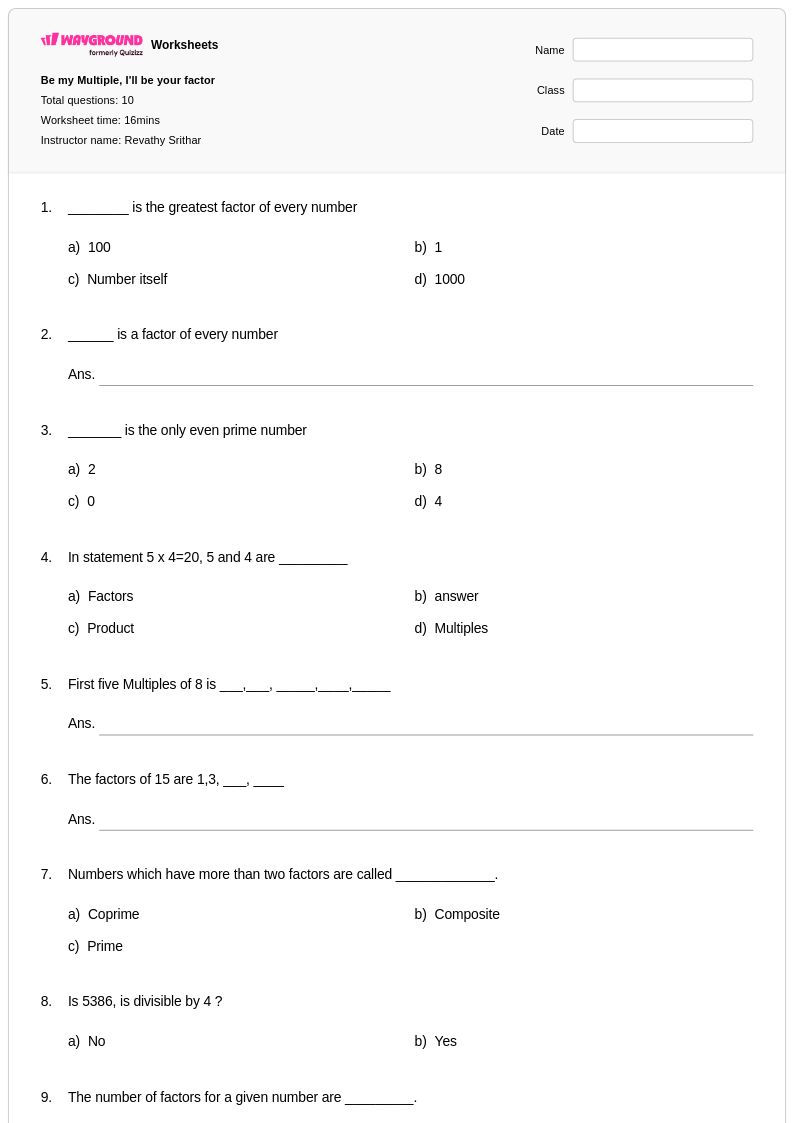
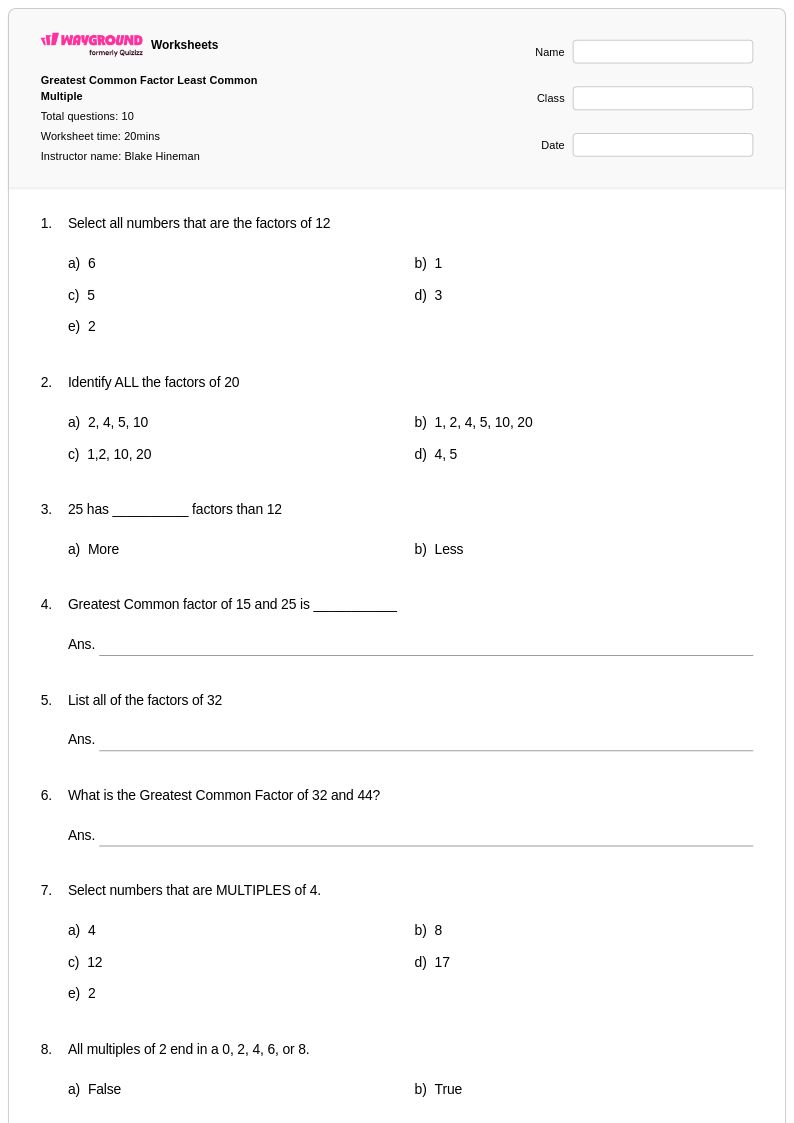
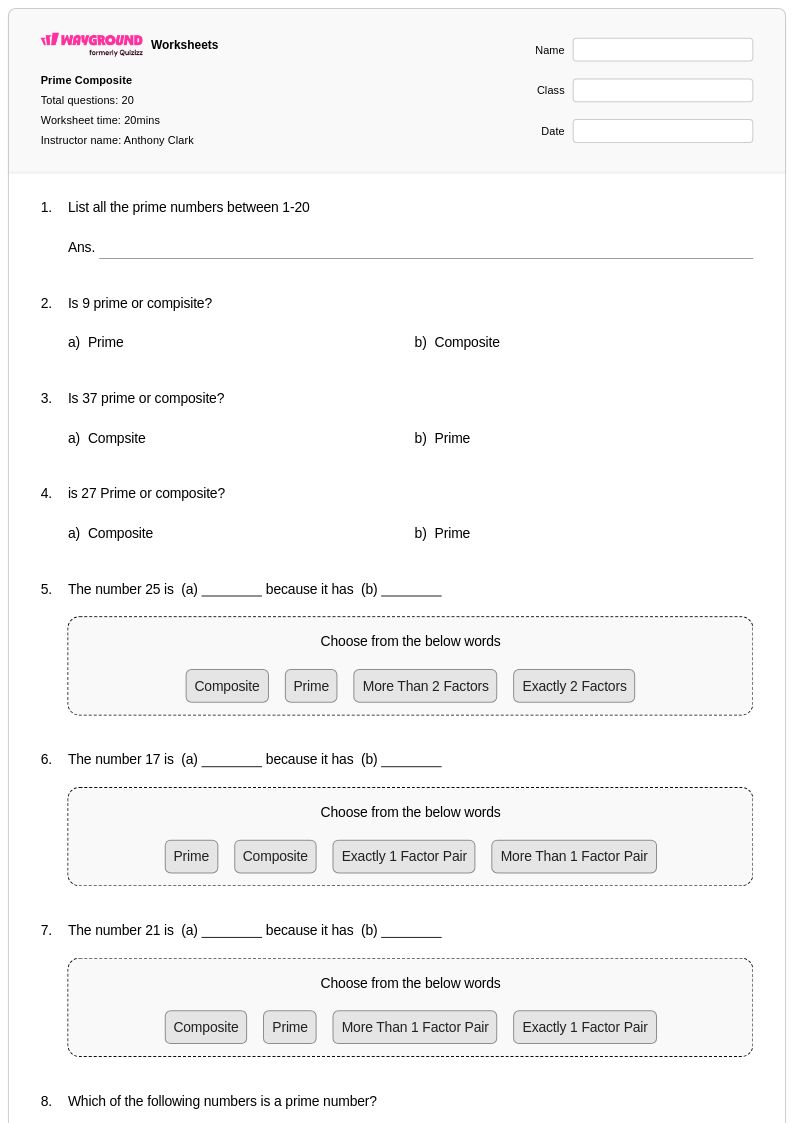
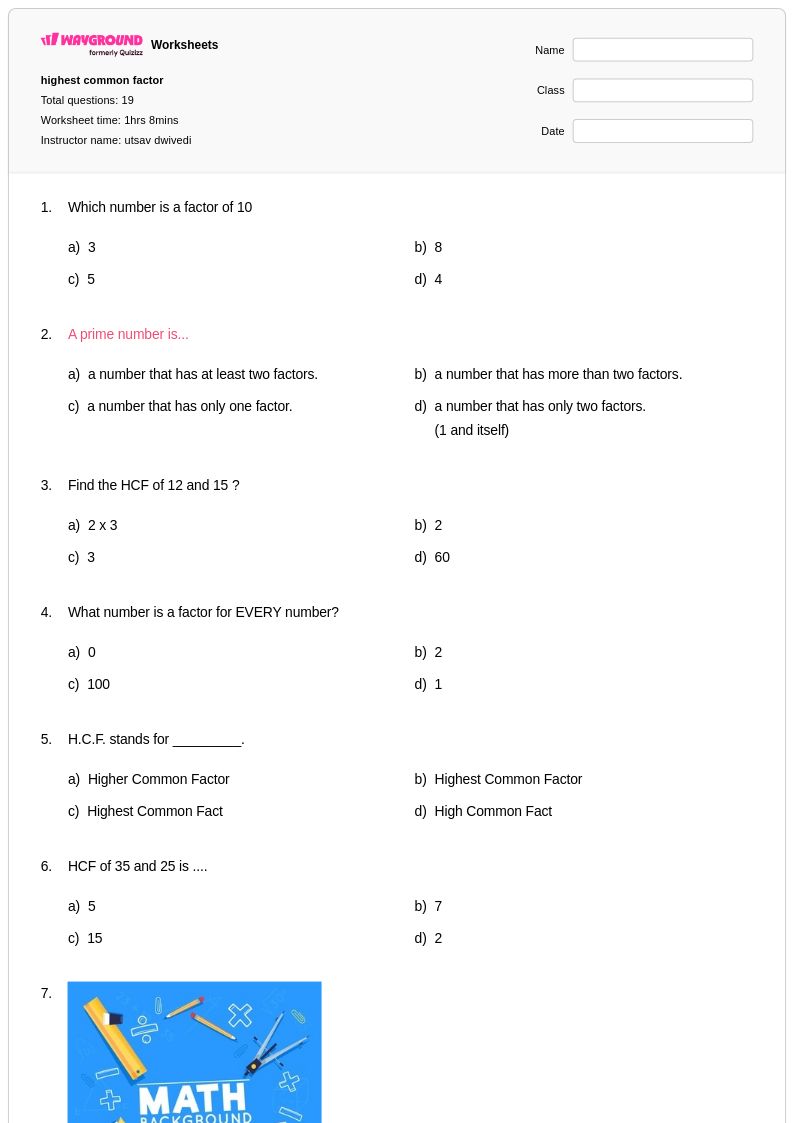
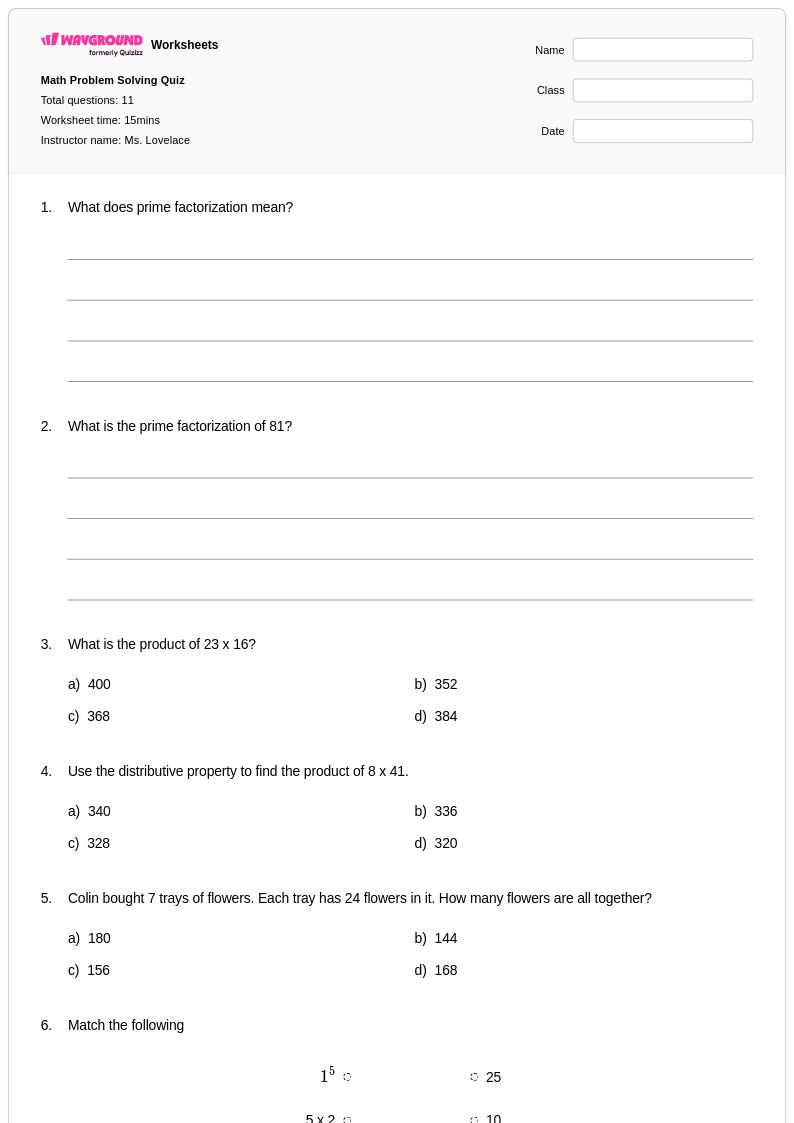
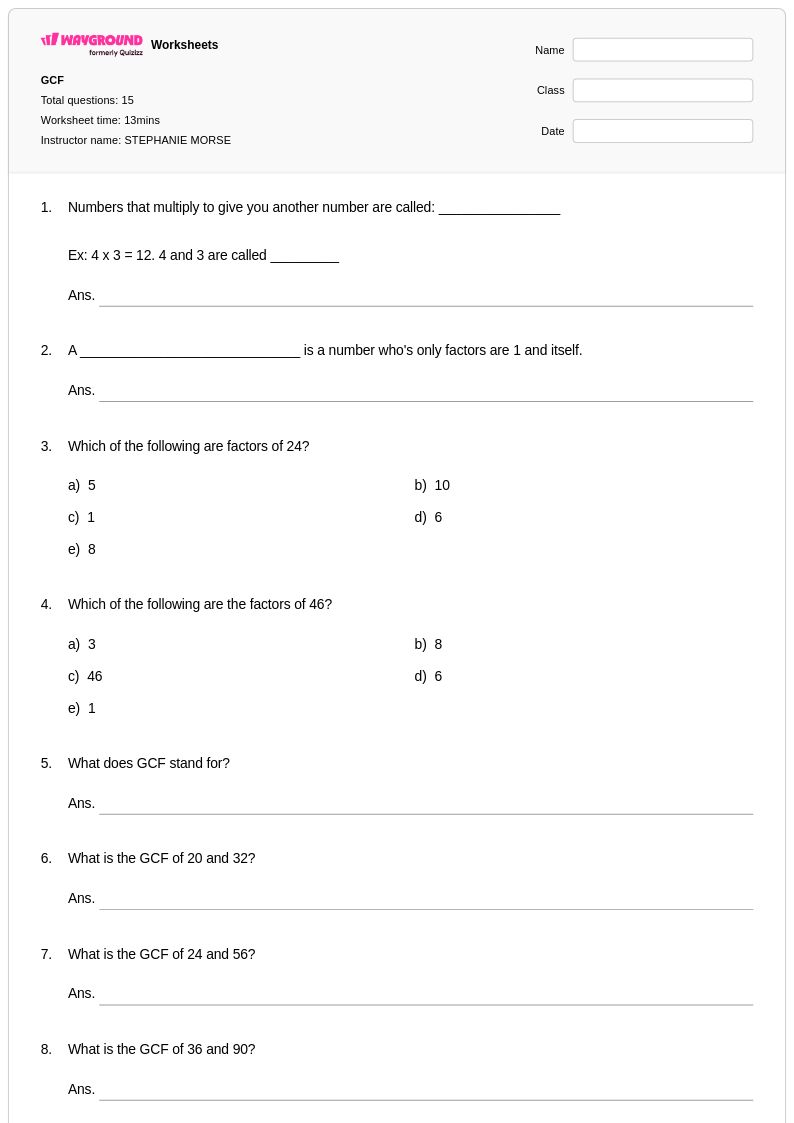
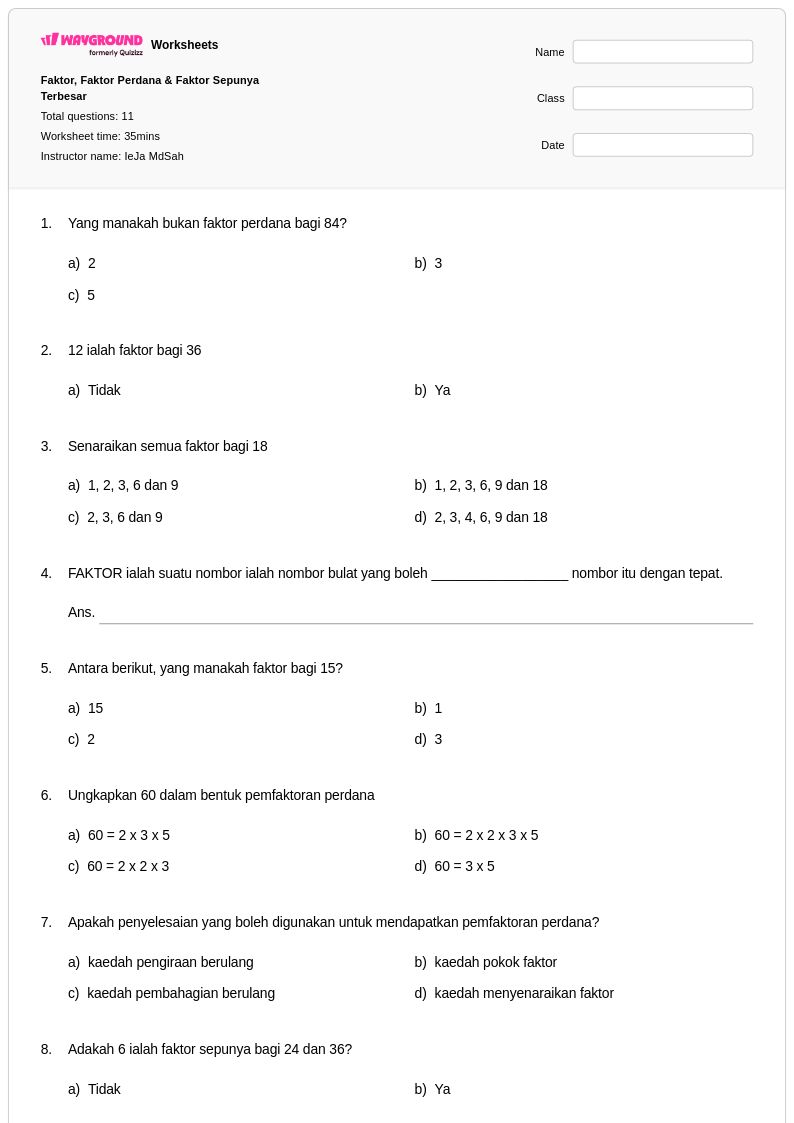
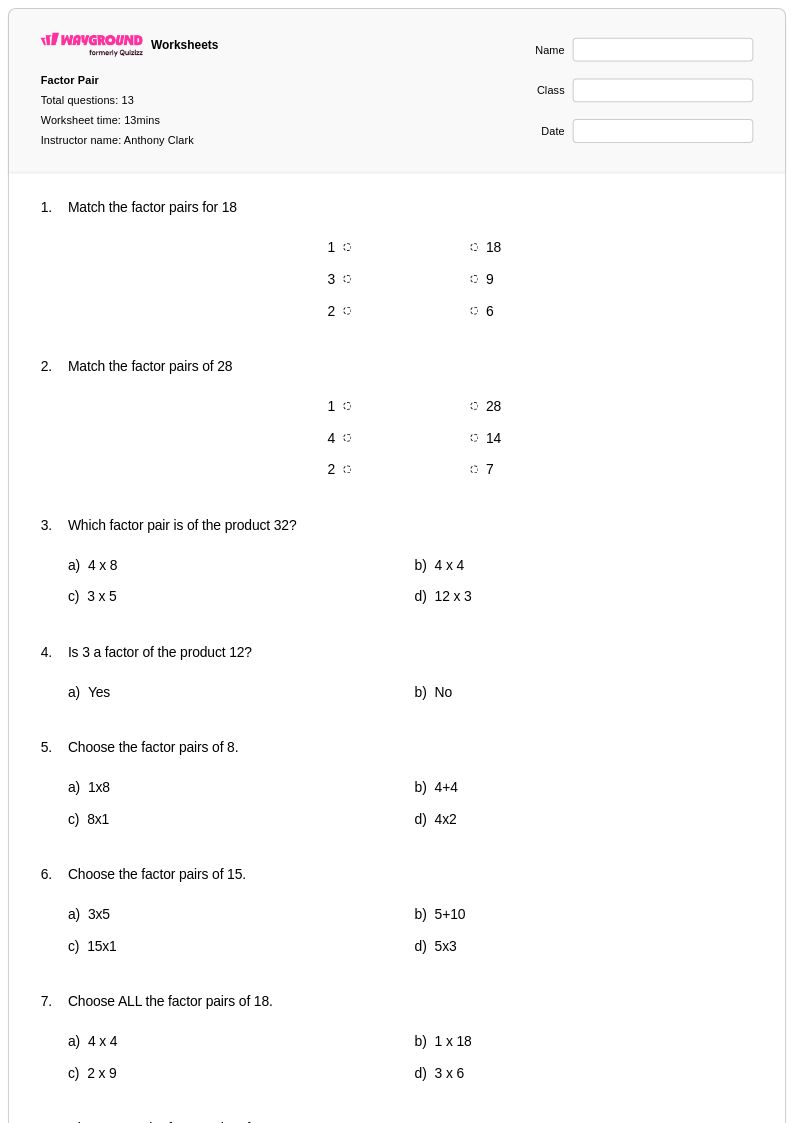
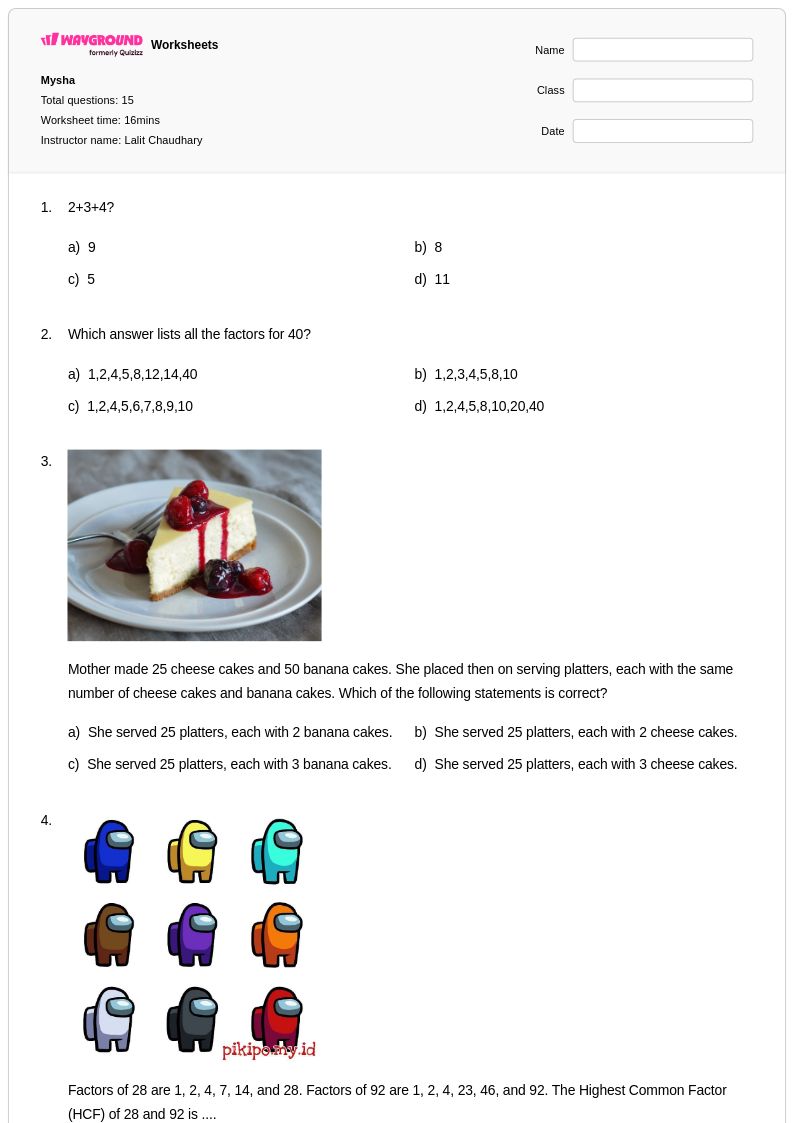
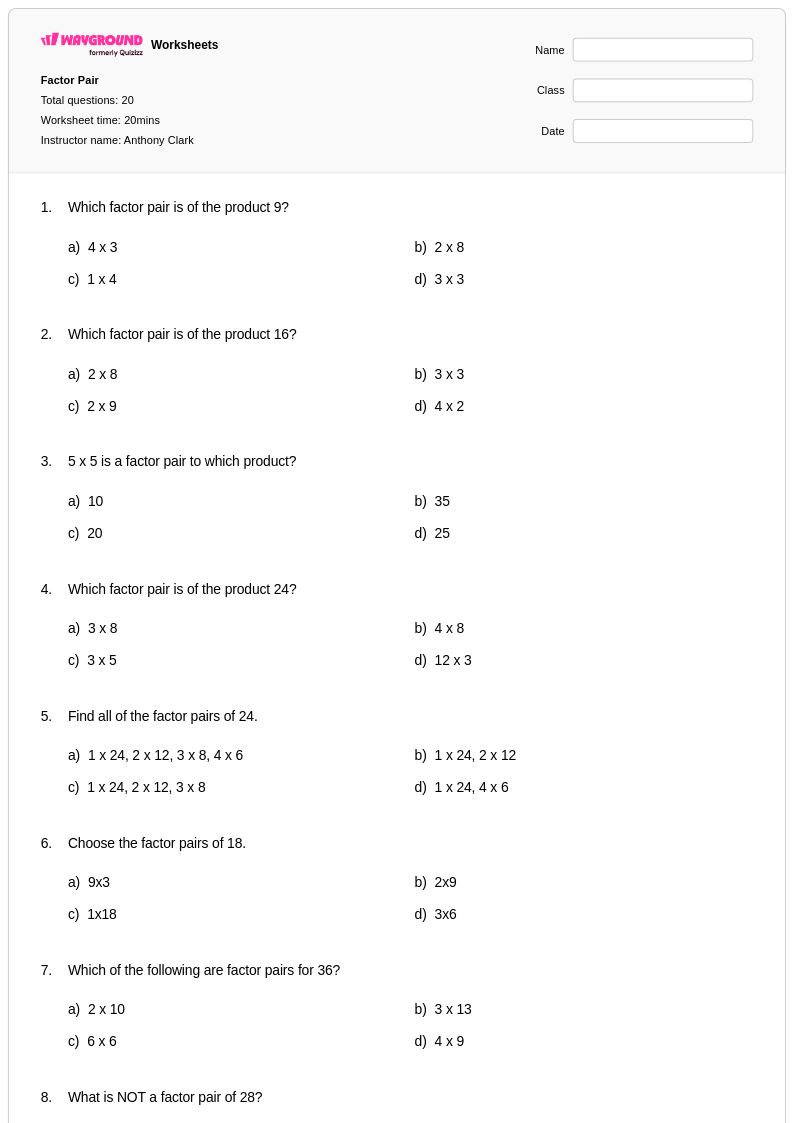
Factor trees provide Class 5 students with a systematic visual method for breaking down composite numbers into their prime factors, and Wayground's comprehensive collection of factor tree worksheets delivers targeted practice to master this fundamental mathematical concept. These carefully designed worksheets guide students through the step-by-step process of decomposing numbers using branching diagrams, strengthening their understanding of prime and composite numbers while building essential number sense skills. Each worksheet includes varied practice problems that progress from simple two-factor breakdowns to more complex multi-level decompositions, complete with answer keys that allow students to verify their work independently. Available as free printables in convenient PDF format, these resources support both classroom instruction and independent study, helping students develop the analytical thinking skills necessary for advanced mathematical concepts like finding greatest common factors and least common multiples.
Wayground's extensive library of teacher-created factor tree worksheets offers educators unparalleled support for mathematics instruction through millions of high-quality resources that can be easily located using robust search and filtering capabilities. These worksheets align with curriculum standards and provide flexible customization options that enable teachers to differentiate instruction based on individual student needs and learning objectives. Available in both printable and digital formats including PDF downloads, the collection supports diverse classroom environments and teaching styles while facilitating seamless lesson planning. Teachers can utilize these resources for initial skill introduction, targeted remediation for struggling learners, enrichment activities for advanced students, and ongoing practice to reinforce factor tree concepts, ensuring that all Class 5 students develop confidence and proficiency in prime factorization through systematic visual decomposition methods.
FAQs
How do I teach factor trees in 5th grade?
By Grade 5, most students have seen factor pairs before, so the teaching focus shifts from "what is a factor" to "why does the order of splitting not matter." A good anchor activity: have two students factor the same number starting with different pairs, then compare their completed trees. When both arrive at the same prime factorization, the point lands without you having to state it. From there, connect factor trees explicitly to GCF and LCM — fifth graders are ready to see factor trees as a tool, not just an exercise.
What factor tree exercises work best for 5th graders?
Fifth graders benefit from three types of practice: completing trees from scratch for two-digit composites, working backward from a given prime factorization to identify the original number, and using factor trees to find the GCF of two numbers side by side. The backward problems are especially valuable — they reveal whether students understand what the tree represents or are just following a procedure.
What errors do 5th grade students commonly make with factor trees?
At this grade, the most persistent error is an incomplete prime factorization — students split a number into two factors, recognize one as prime, and then fail to continue splitting the composite branch. This often happens with numbers like 36 (split into 4×9, then left) because students see familiar numbers and assume they're done. Requiring students to circle every prime endpoint before writing the final factorization is a simple check that catches this almost every time.
How do I use Wayground's Grade 5 factor tree worksheets in my class?
These worksheets work well as a digital quiz on Wayground — students complete the problems online and you can review class-wide results to spot which numbers are tripping students up. Every worksheet includes a complete answer key, so they're equally useful as printable PDFs for independent practice or homework. For schools limiting device time, the paper version gives students the added benefit of physically drawing the tree branches, which many fifth graders find helps them track their work.
How do factor trees fit into the Common Core progression for Grade 5?
Common Core doesn't formally require prime factorization until Grade 6, but Grade 5 is where students deepen their understanding of multiplication and division relationships — the conceptual groundwork factor trees depend on. Using factor trees in Grade 5 is a well-timed bridge: it consolidates multiplication fluency while previewing the GCF and LCM work that becomes a Grade 6 standard. Students who arrive in 6th grade comfortable with factor trees move through GCF and LCM significantly faster.
How can I differentiate factor tree practice for my 5th grade class?
For students still building multiplication fact fluency, Wayground's reduced answer choices option on digital assignments narrows the decision space so they can focus on the factorization logic rather than getting stuck on arithmetic. For students ready for more challenge, assign problems involving three-digit composites or ask them to use factor trees to find the GCF of two numbers — that extension is a natural next step that doesn't require a separate worksheet.