Free Printable Geological Time Worksheets for Class 11
Explore Class 11 geological time worksheets and printables that help students master Earth's history, rock layers, and dating methods through comprehensive practice problems with answer keys available as free PDF downloads.
Explore printable Geological Time worksheets for Class 11
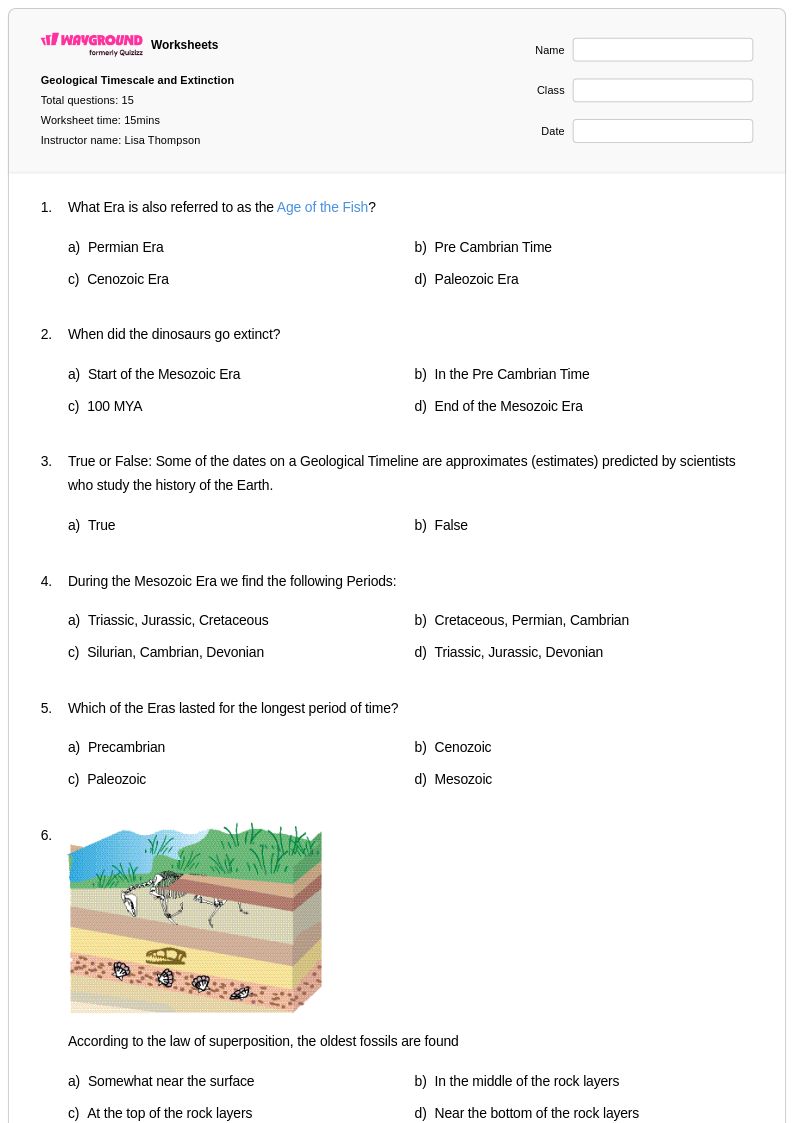
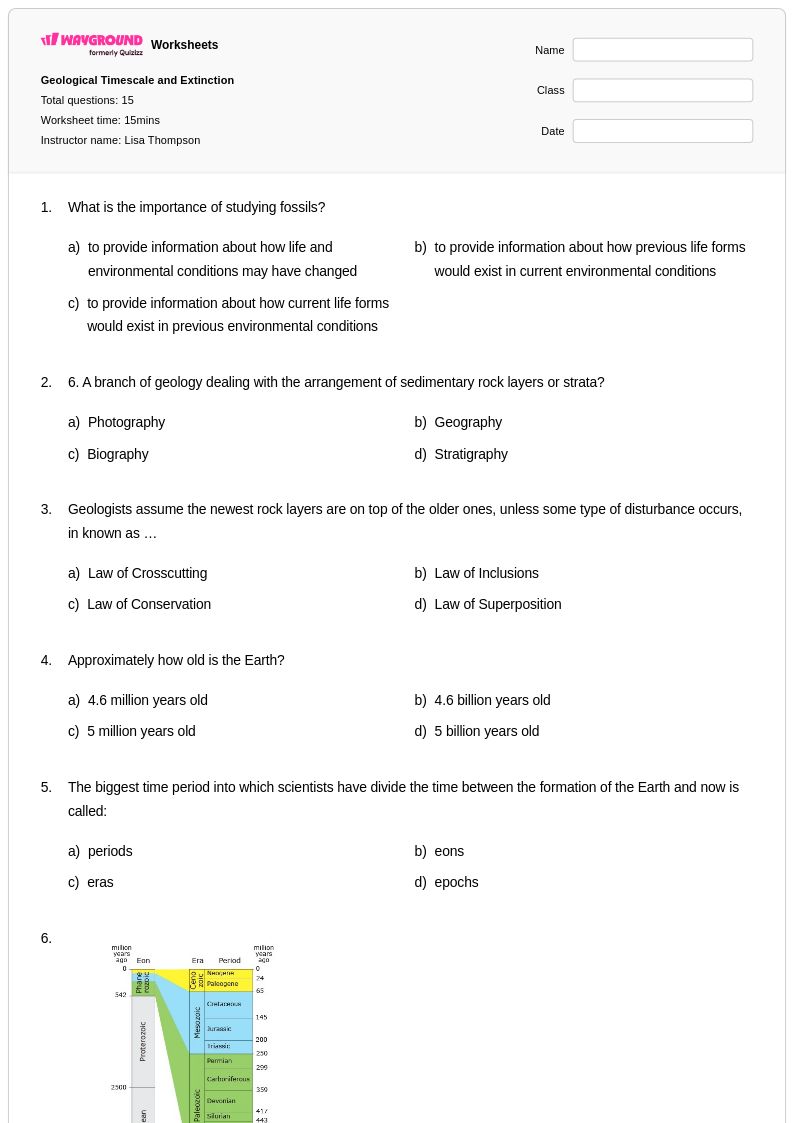
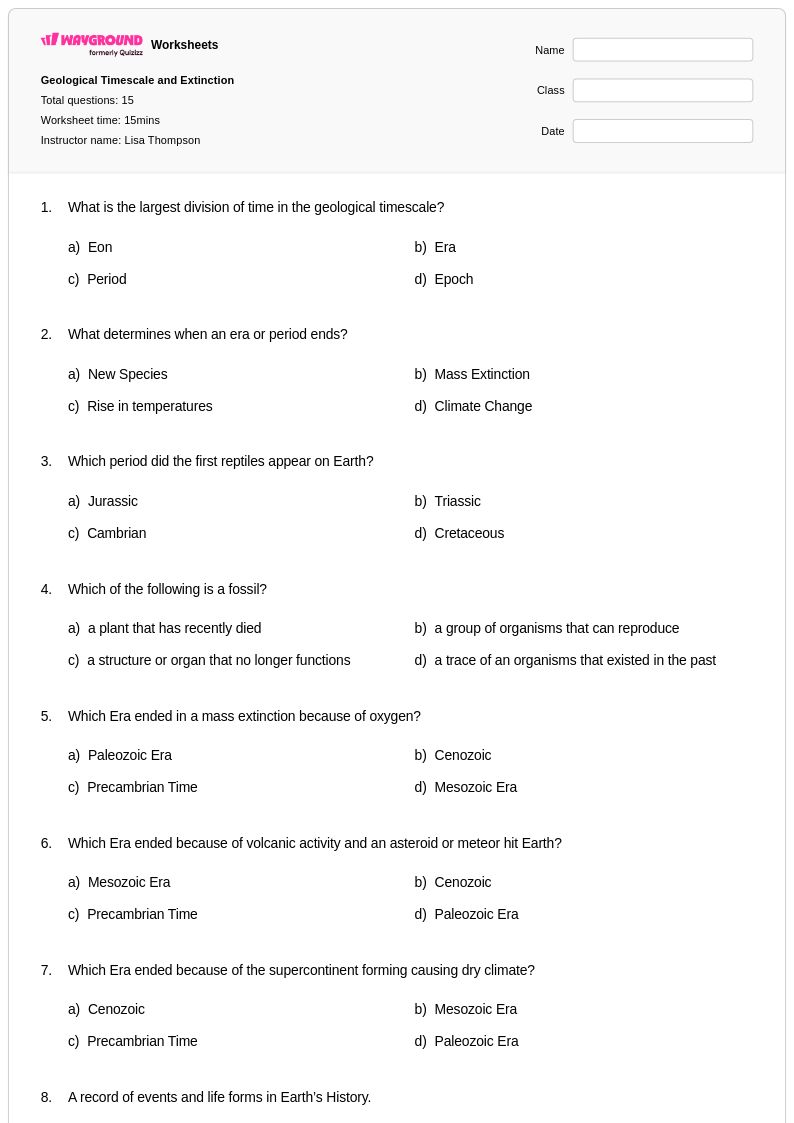
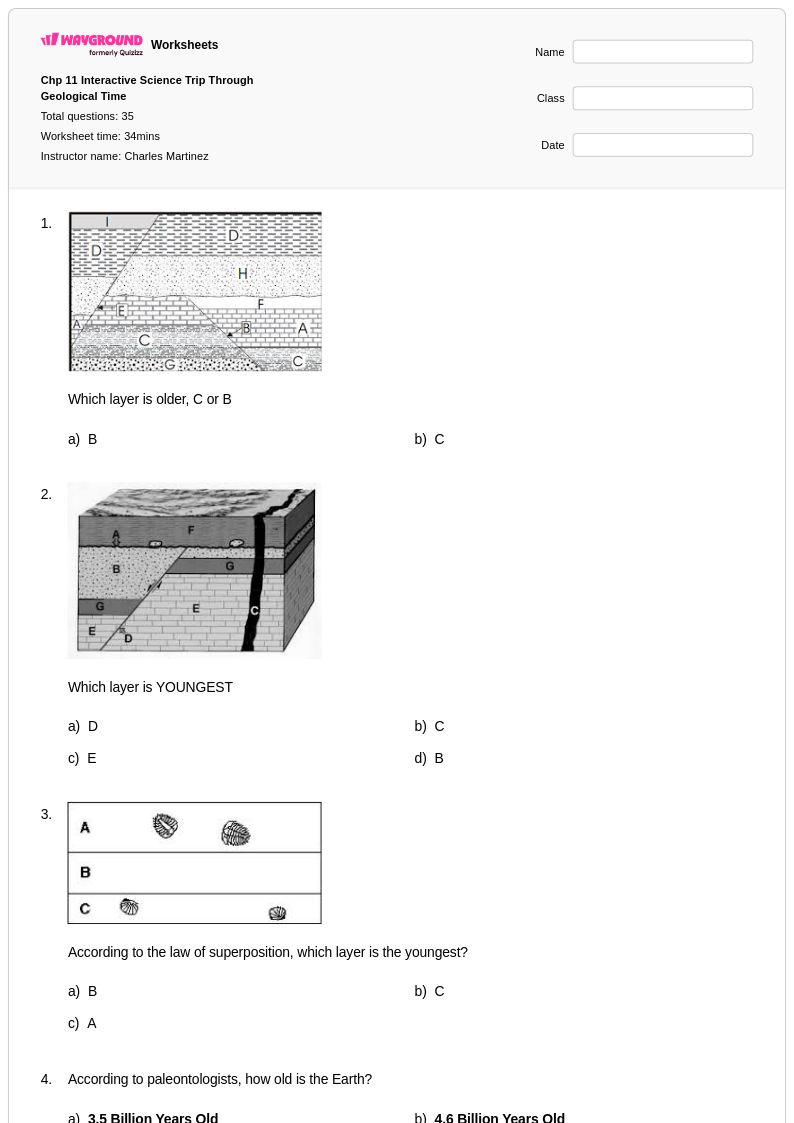
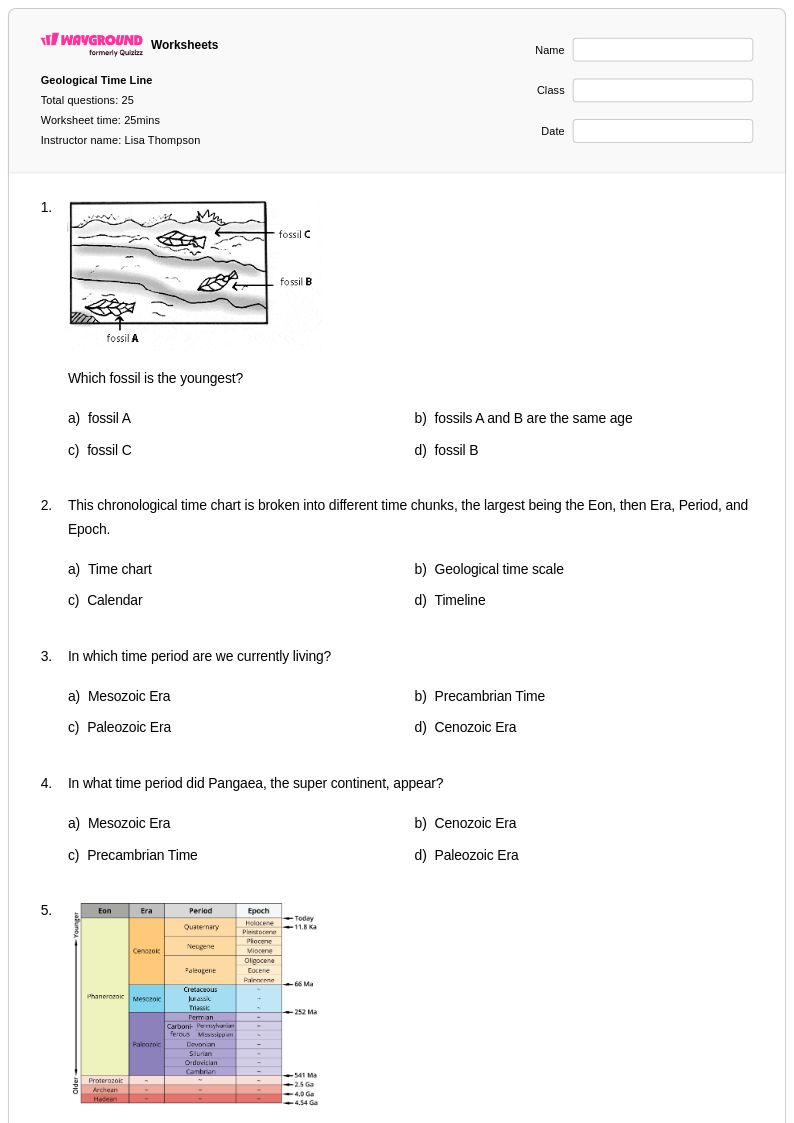
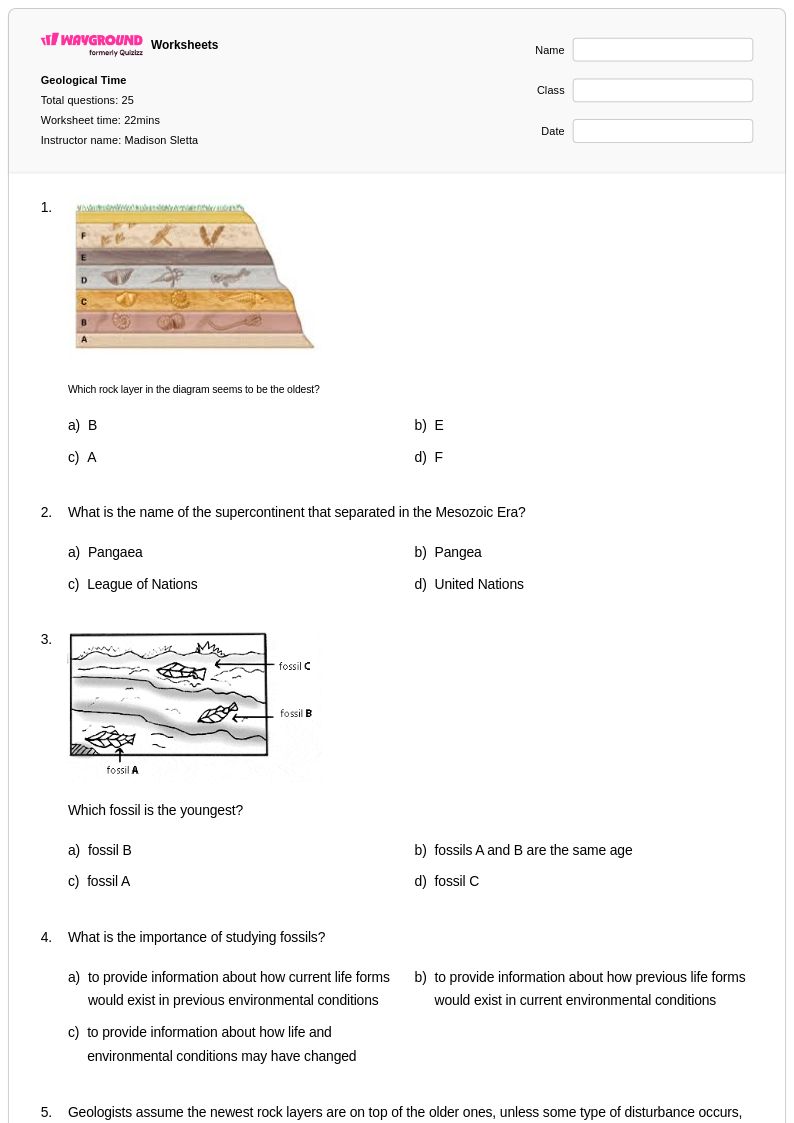
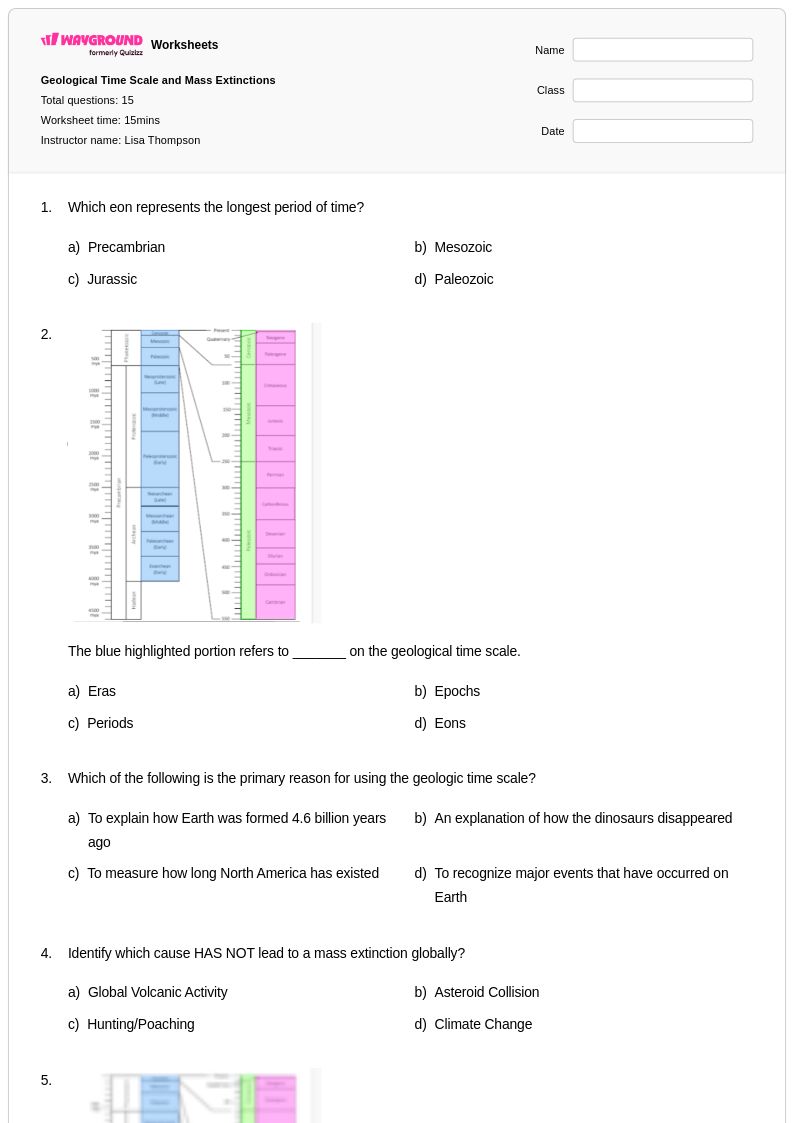
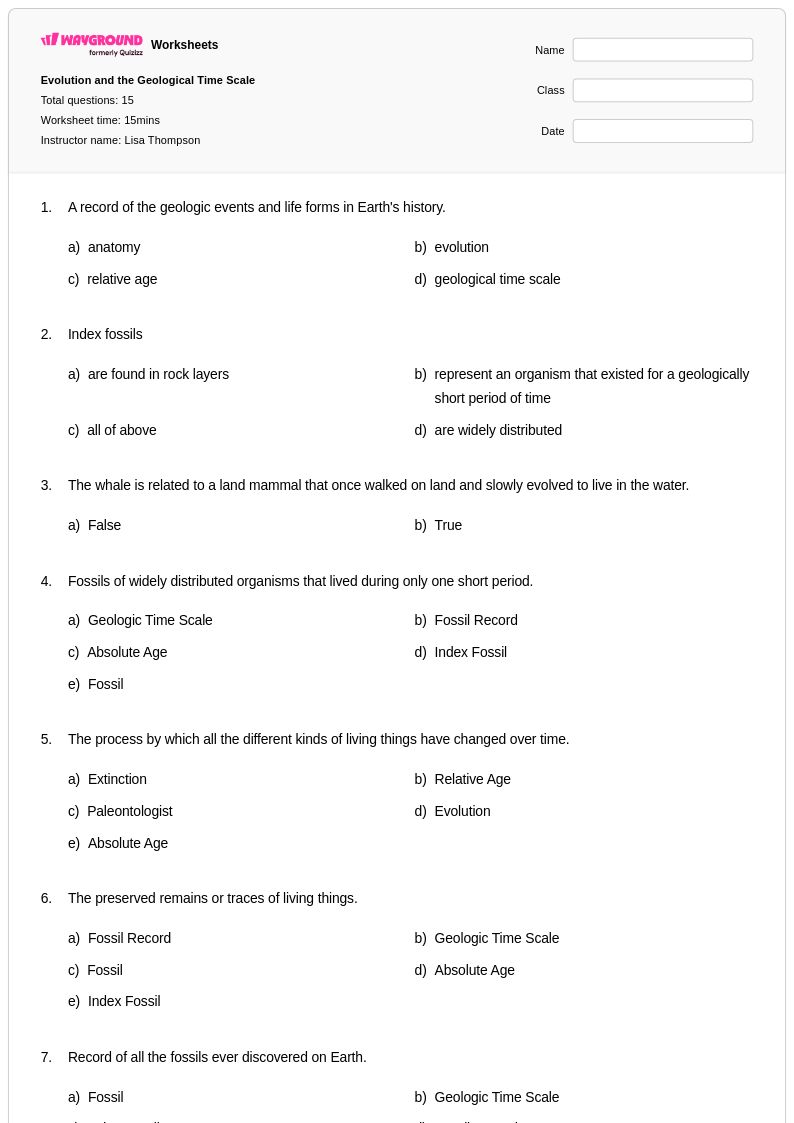
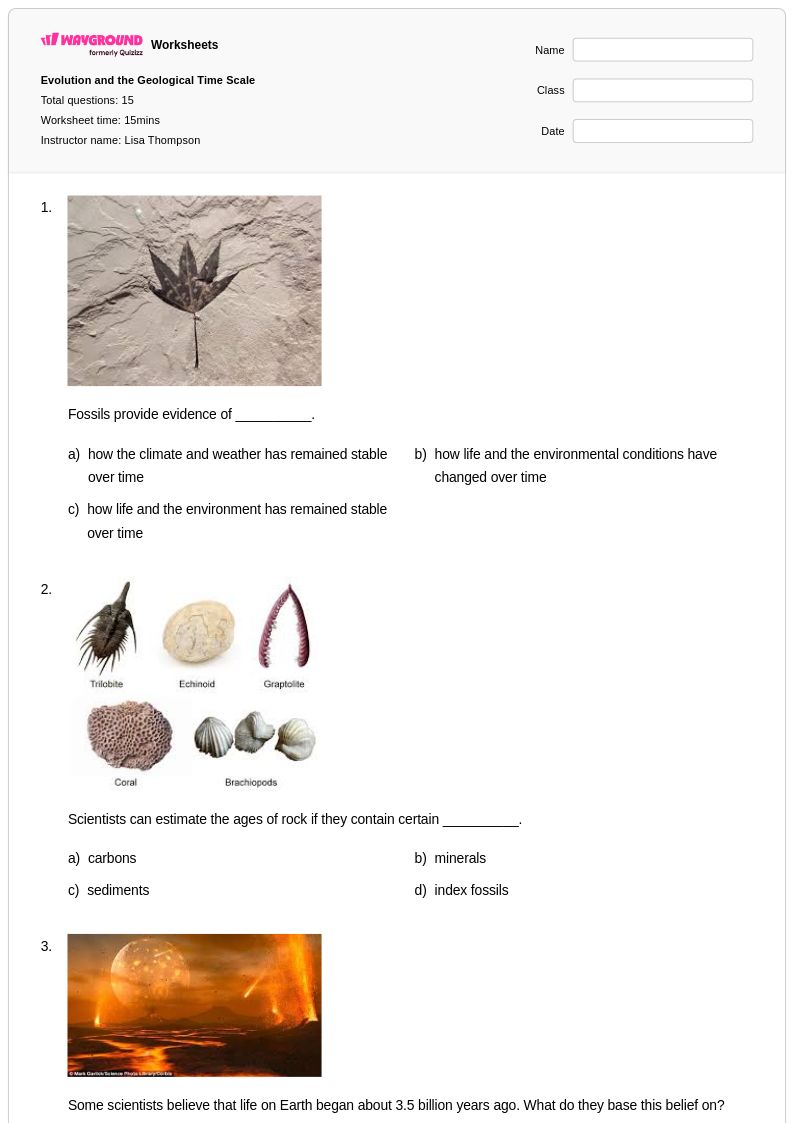
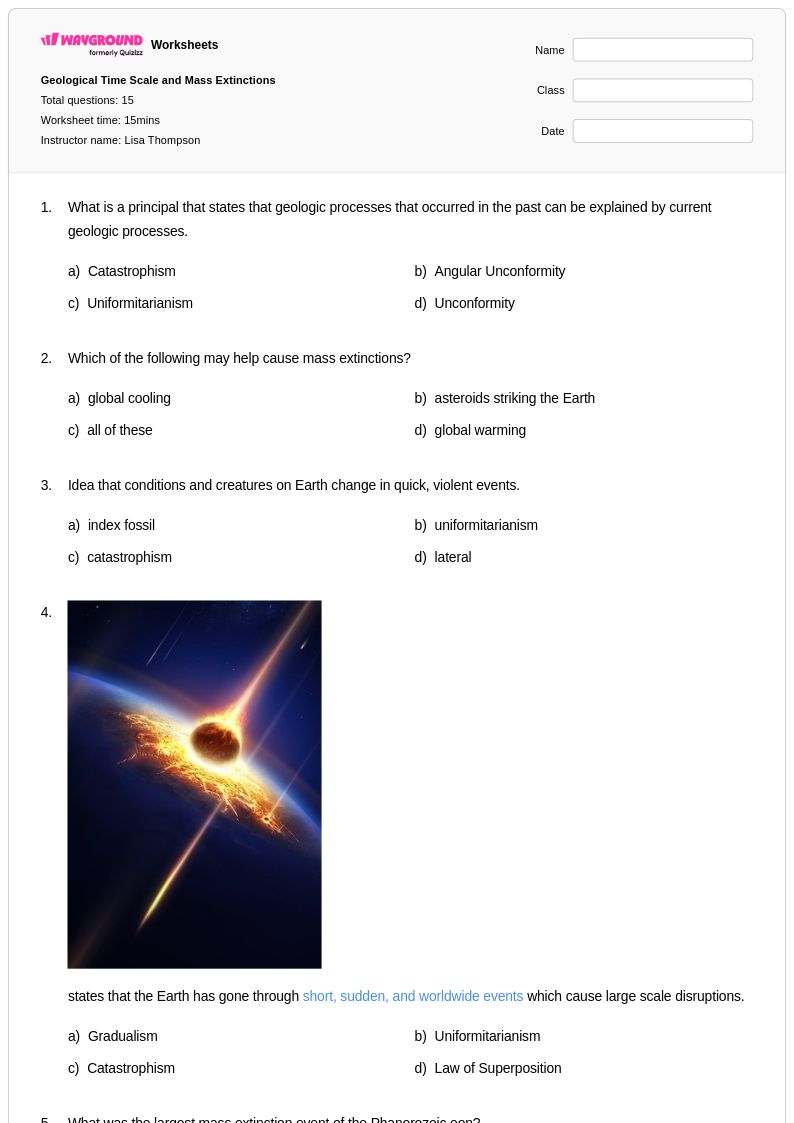
Geological Time worksheets for Class 11 students available through Wayground (formerly Quizizz) provide comprehensive coverage of Earth's vast temporal framework, enabling students to master the complex concepts of deep time that define our planet's history. These expertly designed educational resources strengthen critical thinking skills as students analyze rock layers, interpret fossil records, and understand the principles of relative and absolute dating methods. The worksheet collections include detailed practice problems that guide students through radiometric dating calculations, stratigraphic correlation techniques, and the construction of geological timelines spanning billions of years. Each printable resource comes complete with answer keys that facilitate self-assessment and targeted review, while the free pdf format ensures accessibility for diverse learning environments and study preferences.
Wayground (formerly Quizizz) empowers educators with an extensive library of millions of teacher-created Geological Time resources that streamline lesson planning and enhance instructional effectiveness for Class 11 Earth and Space Science curricula. The platform's sophisticated search and filtering capabilities allow teachers to quickly locate worksheets aligned with specific educational standards, while built-in differentiation tools enable seamless customization to meet varied student learning needs and abilities. These flexible resources are available in both printable and digital formats, including downloadable pdf versions, making them ideal for classroom instruction, homework assignments, remediation sessions, and enrichment activities. The comprehensive collection supports teachers in developing students' understanding of geological processes, evolutionary timelines, and the scientific methods used to reconstruct Earth's dynamic history across multiple temporal scales.
FAQs
How do I teach geological time to middle or high school students?
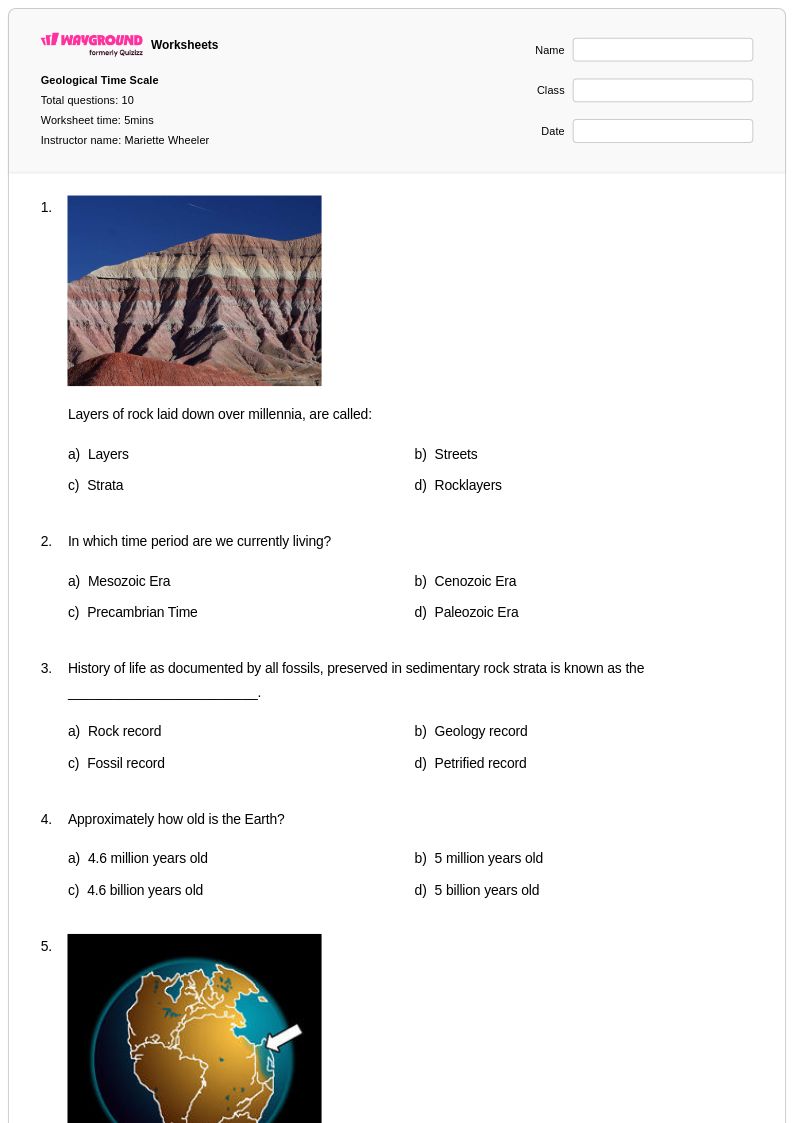
Teaching geological time effectively requires helping students internalize the concept of 'deep time' — the idea that Earth's 4.6-billion-year history operates on a scale that is nearly impossible to grasp intuitively. Start by having students build or interpret a scaled geological timeline, then layer in the major eons, eras, and periods alongside the biological and geological events that define each boundary. Connecting rock layers and fossil evidence to specific time periods helps students move from abstract numbers to concrete, evidence-based reasoning.
What exercises help students practice reading a geological time scale?
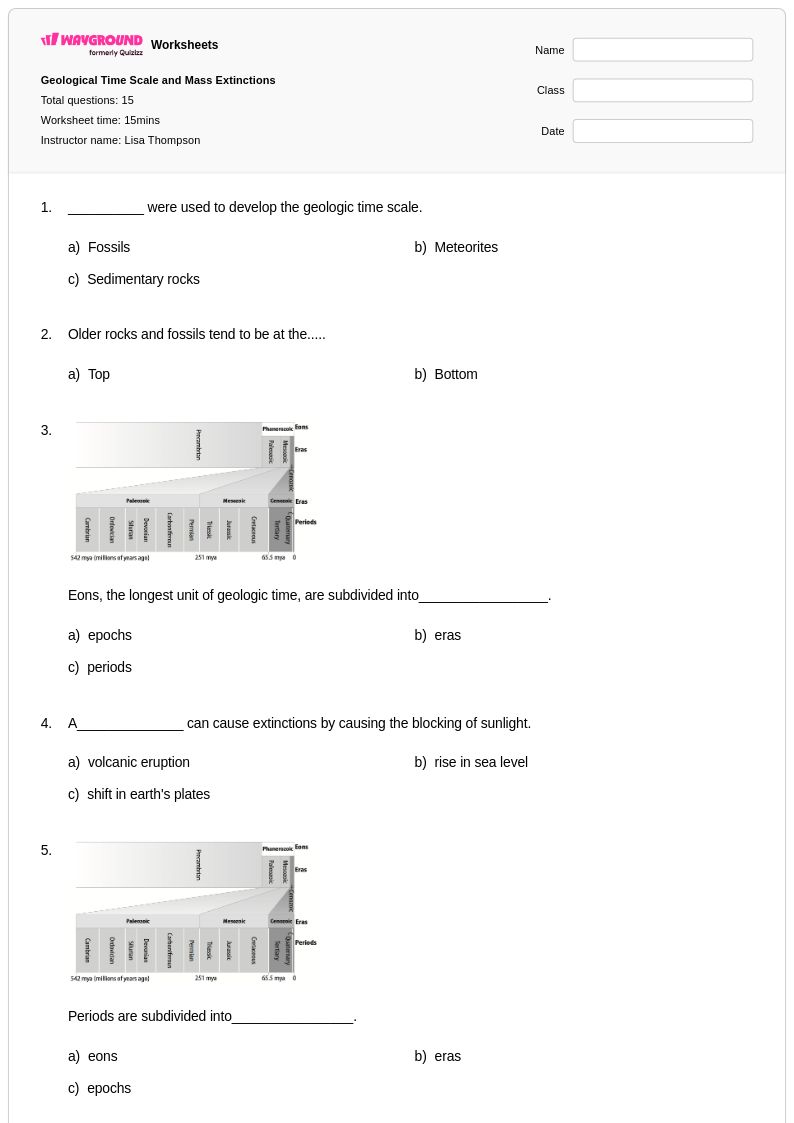
Effective practice exercises include interpreting geological time scale diagrams, sequencing major eras and periods in chronological order, and analyzing rock strata to apply principles of relative dating such as superposition and cross-cutting relationships. Problems that ask students to connect extinction events — like the end-Cretaceous boundary — to specific geological periods reinforce the relationship between Earth's physical history and the evolution of life. Worksheets that combine fossil evidence analysis with timeline placement are especially useful for building fluency with the scale.
What is the difference between relative dating and absolute dating in geology?
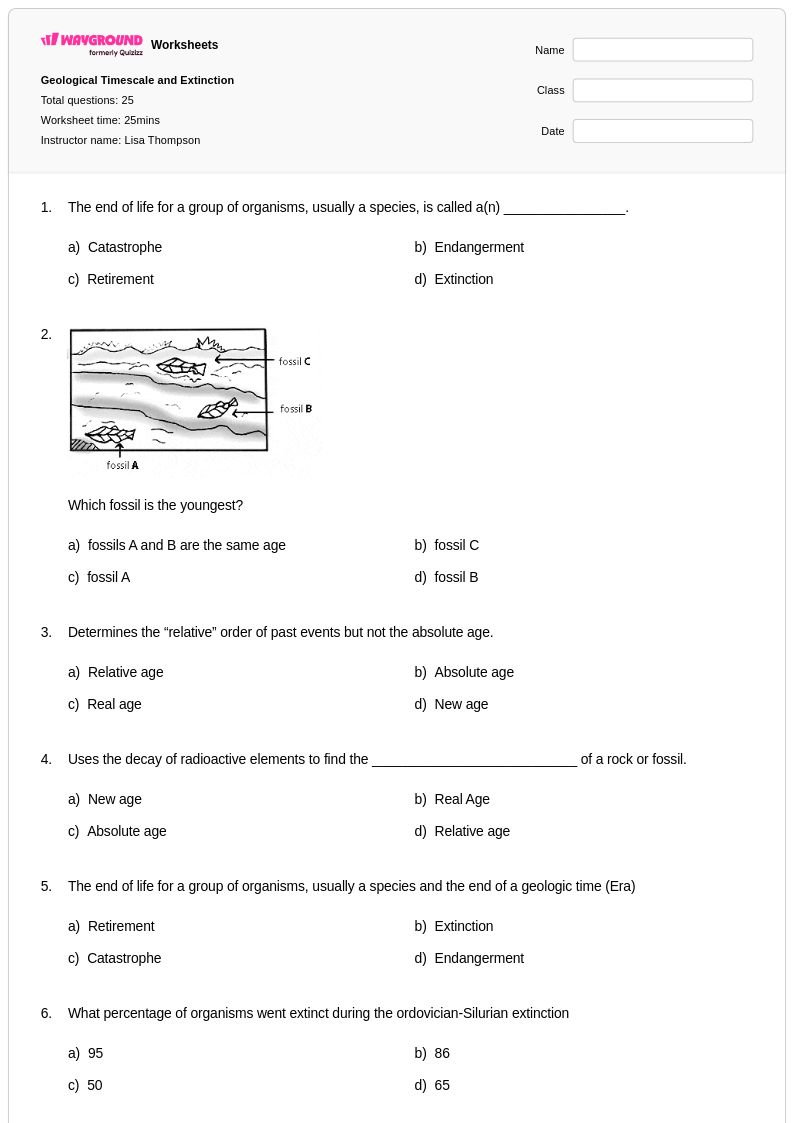
Relative dating determines the sequence of geological events without assigning a specific age in years, using principles like superposition (older layers lie beneath younger ones) and fossil succession. Absolute dating, by contrast, assigns a numerical age to rocks or fossils using techniques such as radiometric dating, which measures the decay of radioactive isotopes. Students often confuse these two methods, so pairing direct instruction with practice problems that require students to apply each method to a specific scenario is an effective strategy.
What misconceptions do students commonly have about geological time?
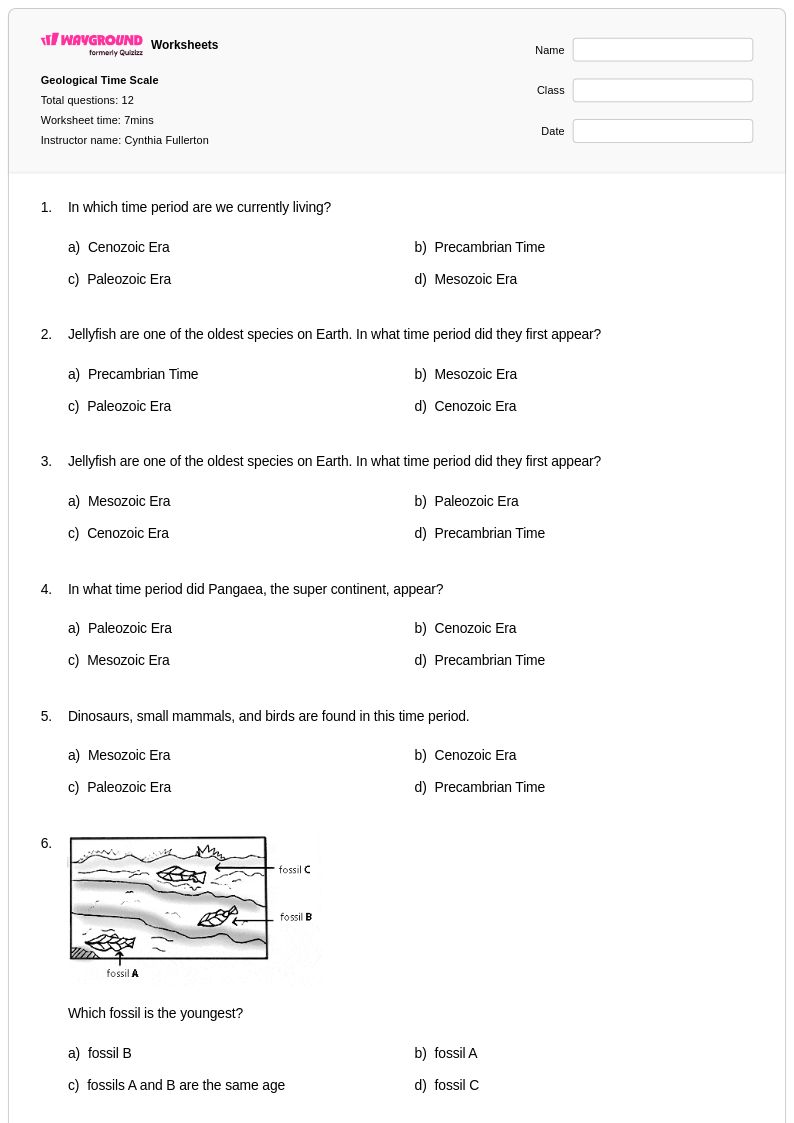
The most common misconception is underestimating the scale of deep time — students frequently treat millions and billions of years as interchangeable or fail to appreciate how brief the Cenozoic Era is relative to Precambrian time. Another frequent error is conflating relative and absolute dating, assuming that identifying a rock layer's position in a sequence also tells you its age in years. Students also commonly misplace the appearance of major life forms on the timeline, such as placing the origin of dinosaurs far earlier than the Triassic or assuming humans coexisted with non-avian dinosaurs.
How can I use geological time worksheets in my classroom?
Geological time worksheets on Wayground are available as printable PDFs for traditional classroom use and in digital formats for technology-integrated environments, giving teachers flexibility for in-class practice, homework, and remediation. Teachers can also host the worksheets as a quiz directly on Wayground, enabling real-time tracking of student responses. Wayground's differentiation tools allow teachers to customize the experience for individual students — for example, enabling read-aloud support for students who need it or adjusting answer choices to reduce cognitive load for struggling learners, while other students receive standard settings without disruption.
How do I help students who are struggling with the concept of geological eras and periods?
Students who struggle with geological eras and periods typically need repeated exposure to the hierarchy of eons, eras, periods, and epochs before they can place events accurately. Anchor instruction around a small number of memorable boundary events — the formation of Earth, the Cambrian explosion, the end-Permian mass extinction, and the end-Cretaceous extinction — and build outward from those landmarks. Reducing the number of answer choices on practice problems through Wayground's accommodation settings can also lower cognitive load for students who are still developing their foundational understanding.