Free Printable Global Warming Worksheets for Class 11
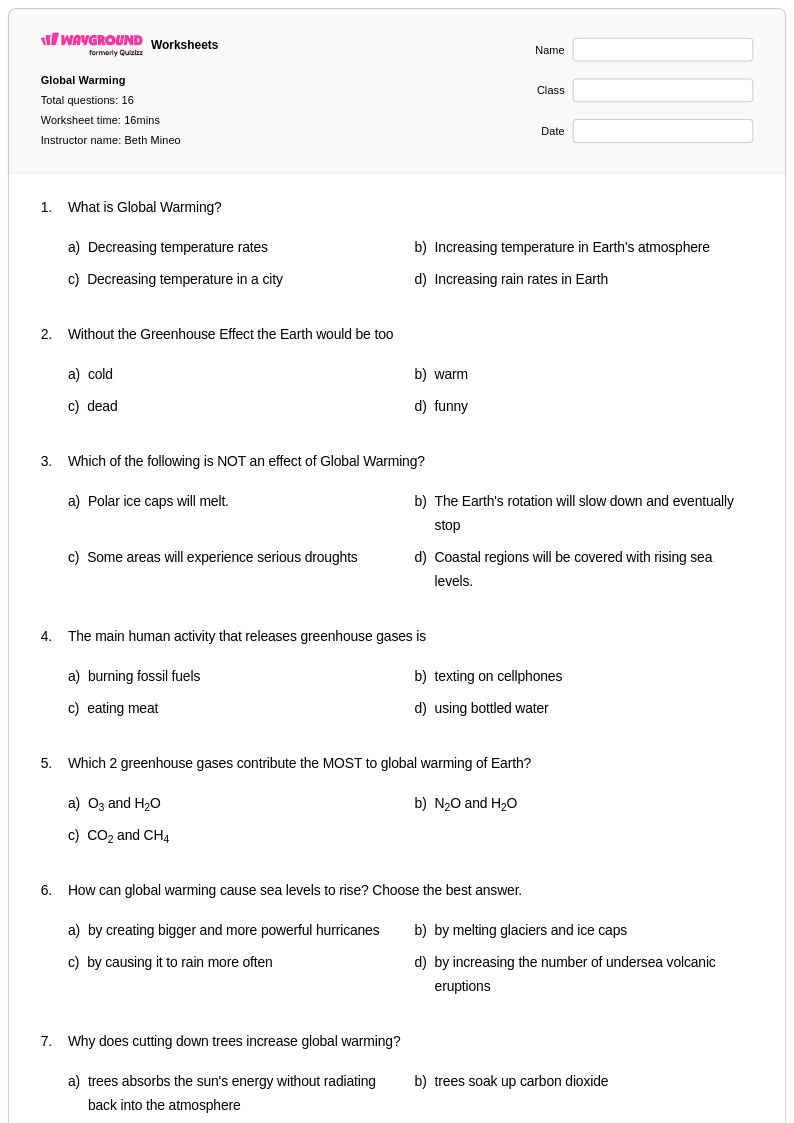
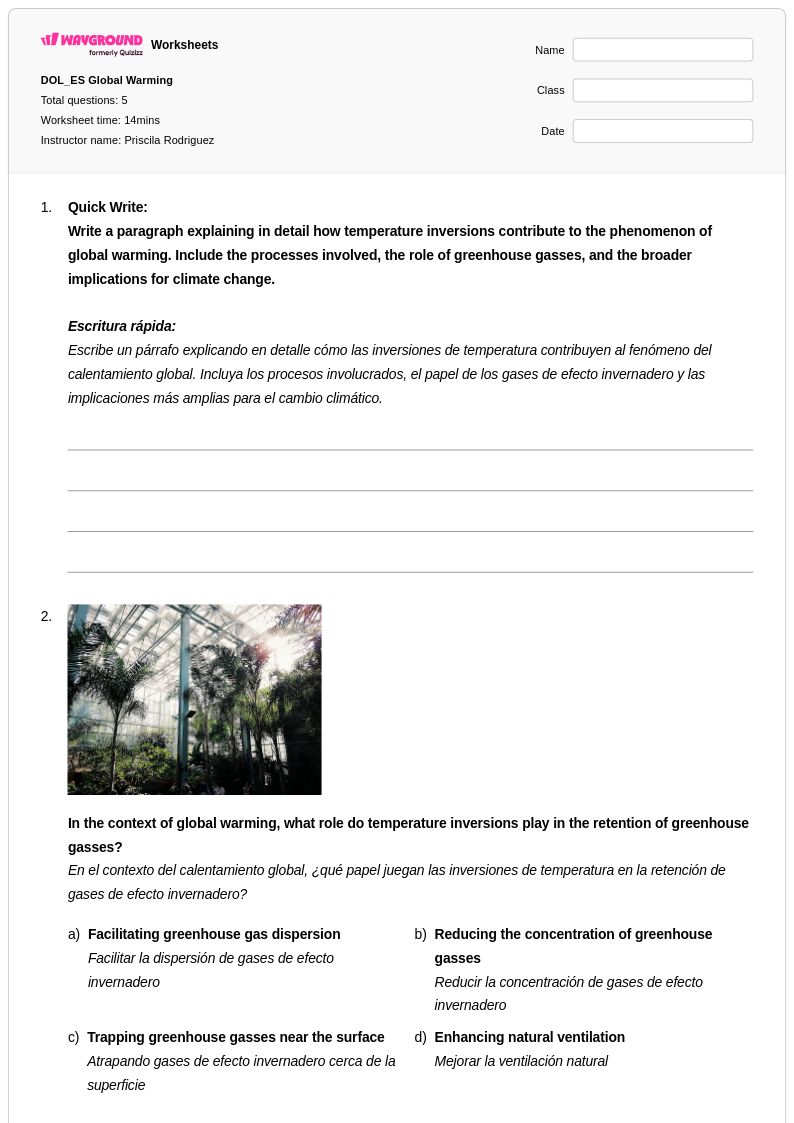
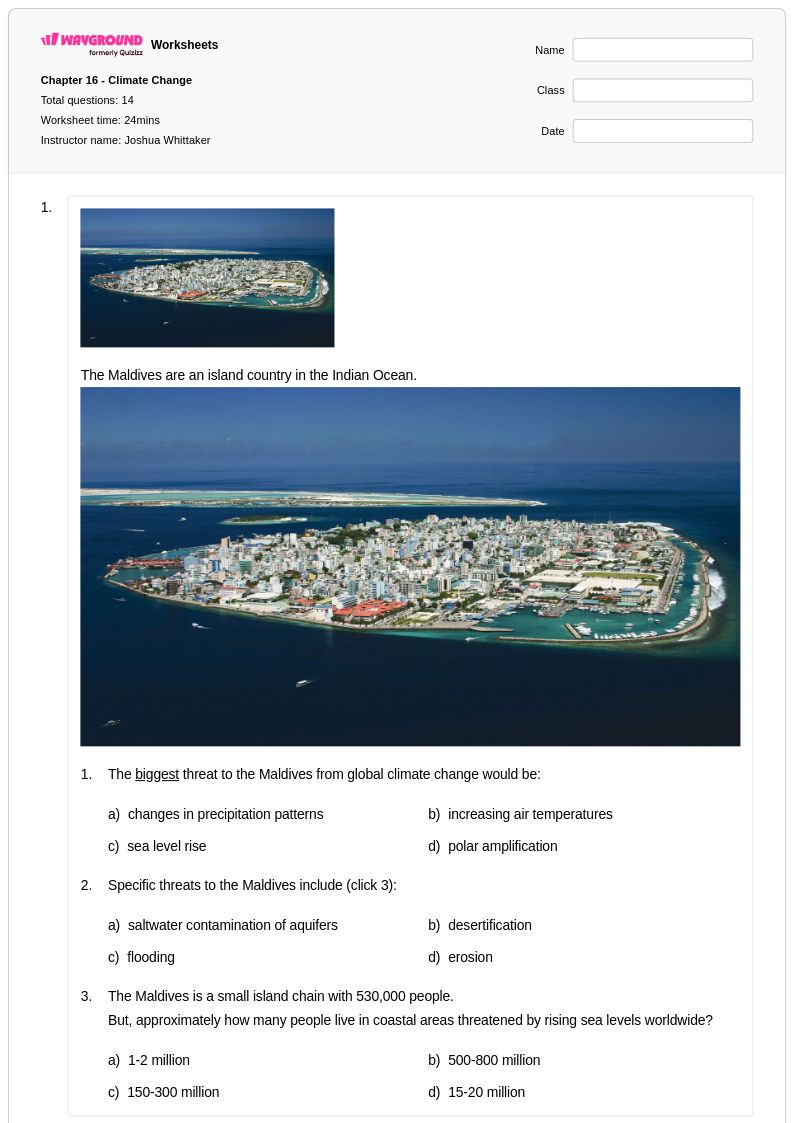
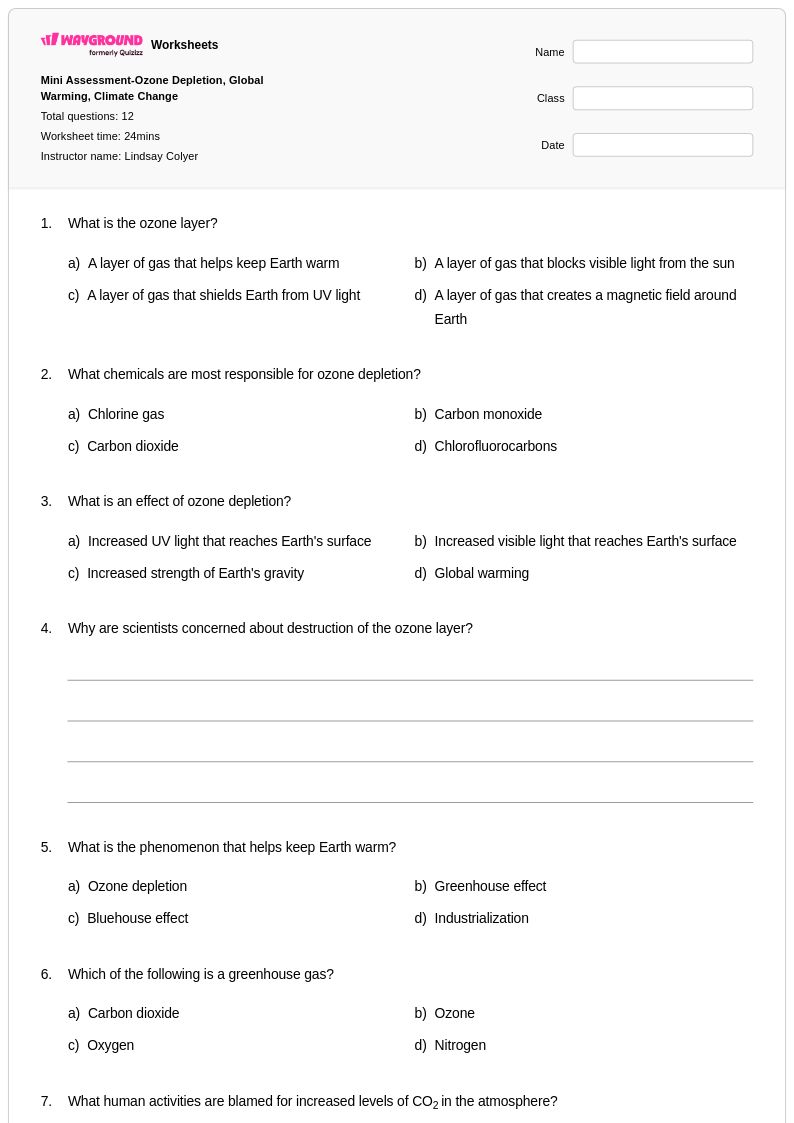
Explore Wayground's comprehensive collection of Class 11 global warming worksheets featuring printable PDFs, practice problems, and answer keys to help students understand climate change impacts, greenhouse effects, and environmental science concepts.
Explore printable Global Warming worksheets for Class 11
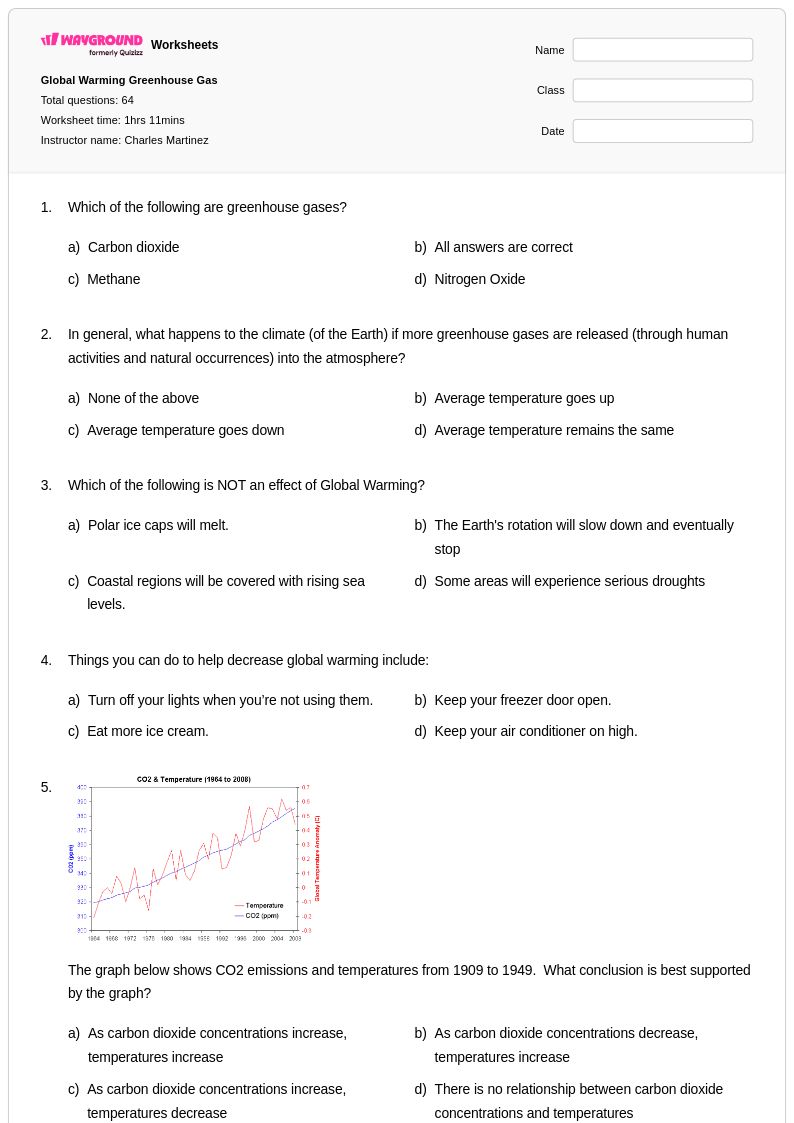
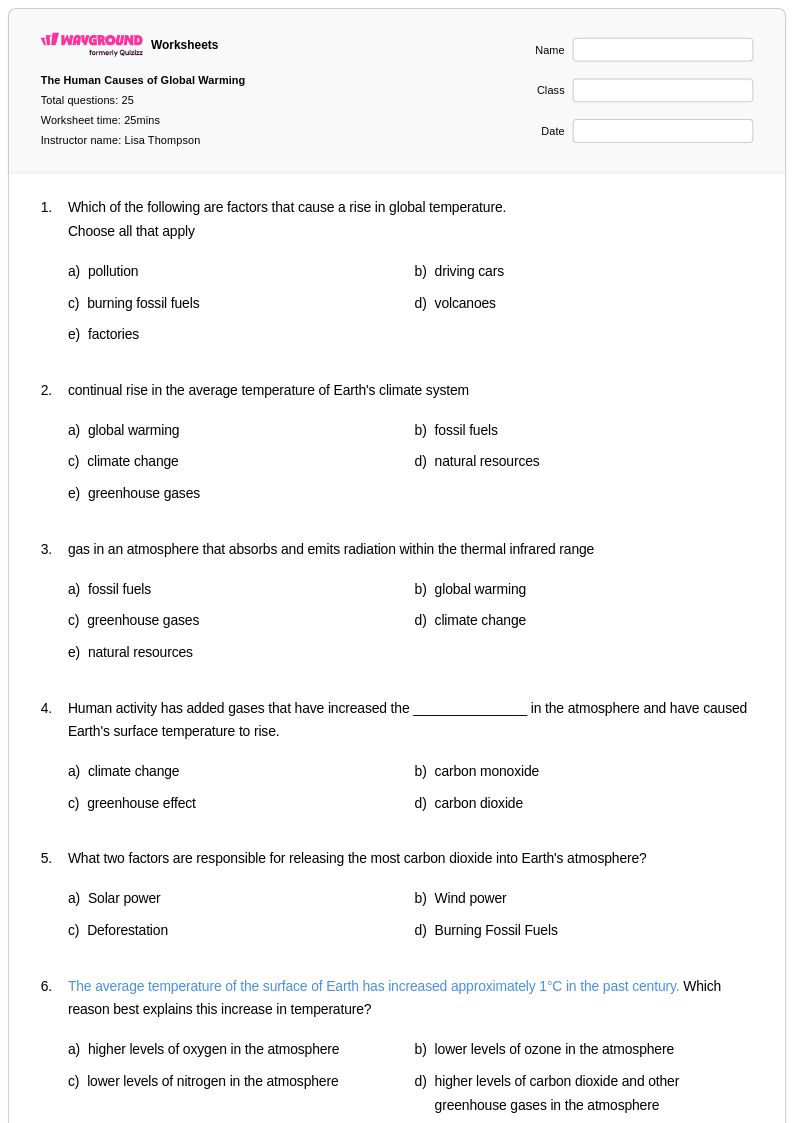
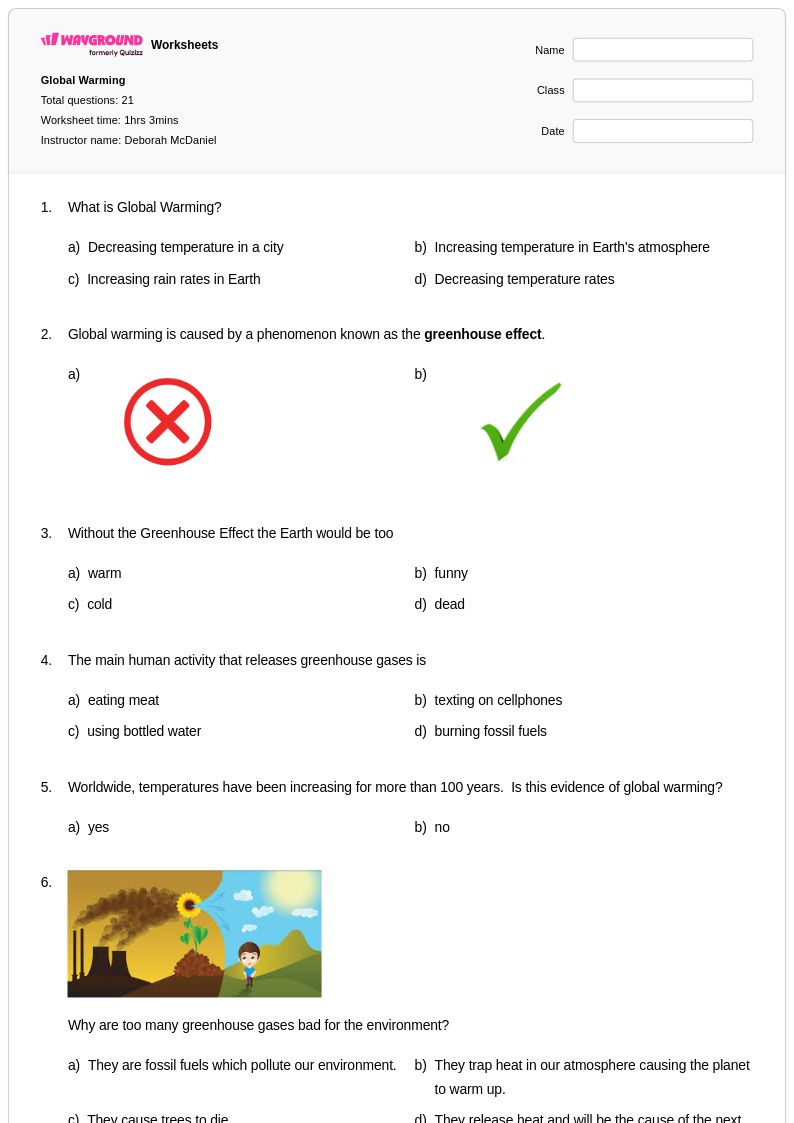
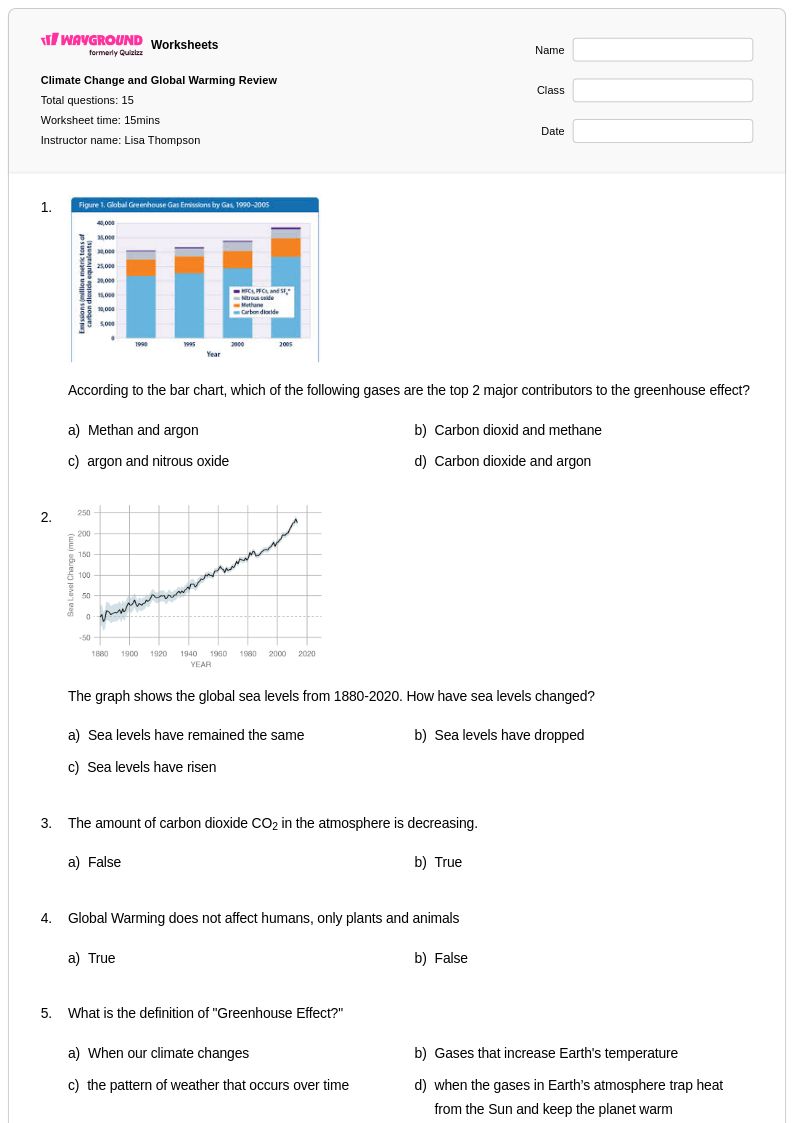
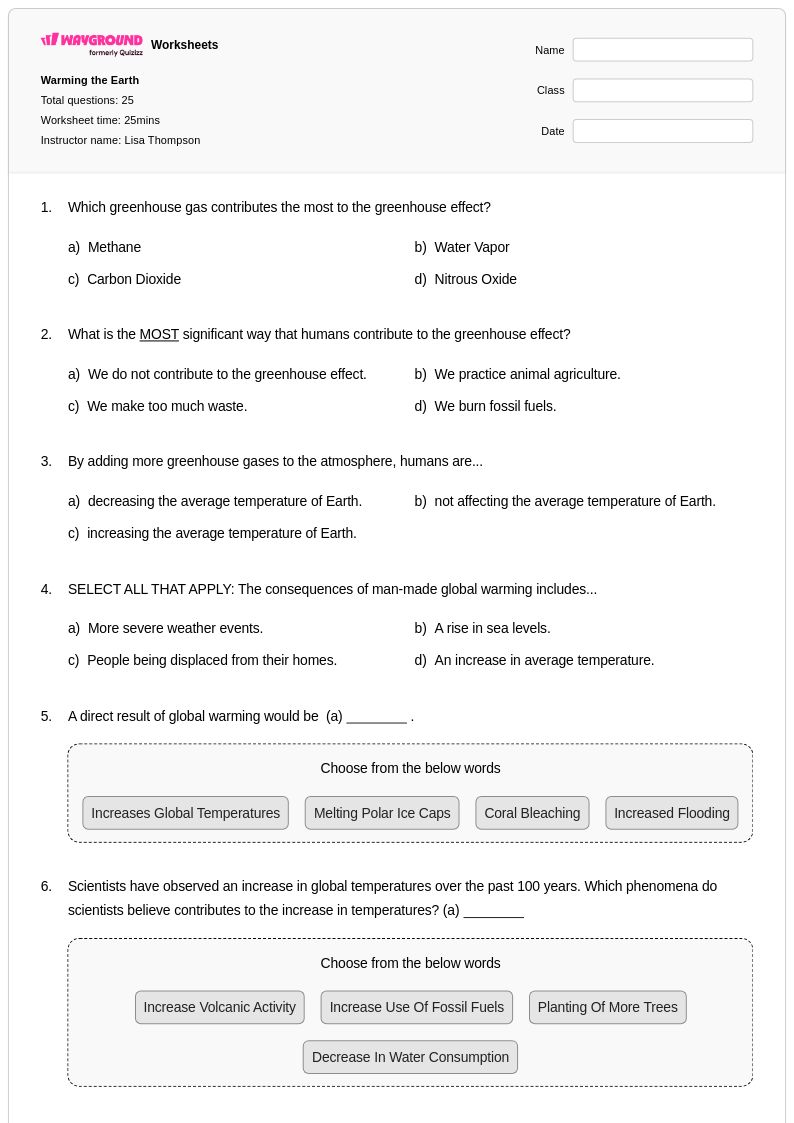
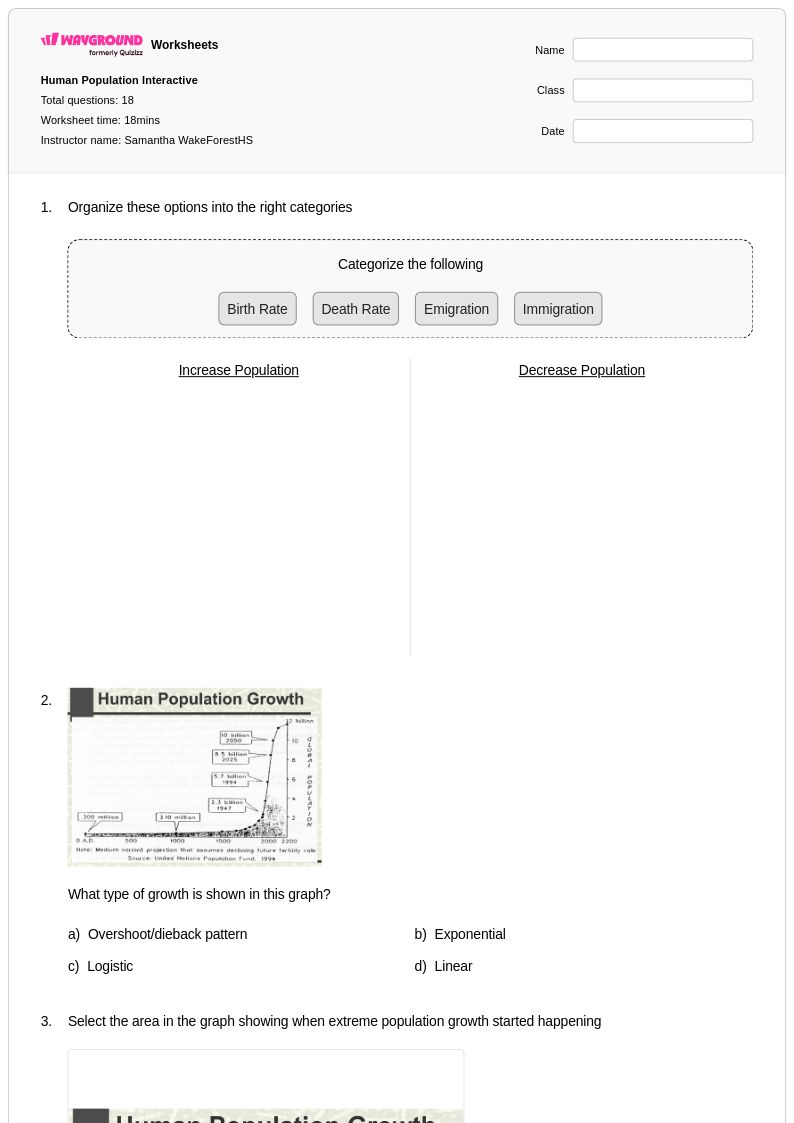
Global warming worksheets for Class 11 students available through Wayground (formerly Quizizz) provide comprehensive coverage of climate change science, greenhouse gas dynamics, and anthropogenic impacts on Earth's atmospheric systems. These educational resources strengthen critical thinking skills by engaging students with data analysis exercises involving temperature records, carbon dioxide concentrations, and sea level measurements spanning decades of climate research. The worksheets incorporate practice problems that challenge students to interpret climate models, calculate carbon footprints, and evaluate mitigation strategies, while accompanying answer keys enable educators to efficiently assess student understanding of complex environmental processes. Students work through free printable activities that explore feedback loops, tipping points, and the interconnected nature of Earth's climate system, developing the analytical skills necessary for advanced environmental science coursework.
Wayground (formerly Quizizz) empowers educators with millions of teacher-created global warming resources that streamline lesson planning and provide flexible differentiation options for diverse Class 11 classrooms. The platform's robust search and filtering capabilities allow teachers to quickly locate standards-aligned materials covering specific aspects of climate science, from radiative forcing calculations to policy analysis exercises. These customizable worksheet collections are available in both digital and printable PDF formats, enabling seamless integration into hybrid learning environments while supporting varied instructional approaches. Teachers utilize these comprehensive resources for targeted skill practice, remediation of challenging concepts like albedo effects and carbon cycling, and enrichment activities that connect global warming science to real-world environmental challenges, ensuring students develop the scientific literacy needed to understand and address climate change issues.
FAQs
How do I teach global warming to middle and high school students?
Effective global warming instruction starts with establishing the greenhouse effect as a foundational concept before moving into human-driven carbon cycle disruptions and their consequences. Teachers often sequence lessons from atmospheric chemistry basics to real-world data analysis, using temperature trend graphs and ice core evidence to make abstract processes concrete. Grounding lessons in observable phenomena, such as rising sea levels or shifting weather patterns, helps students connect scientific mechanisms to current events and builds genuine engagement with the topic.
What are common misconceptions students have about global warming?
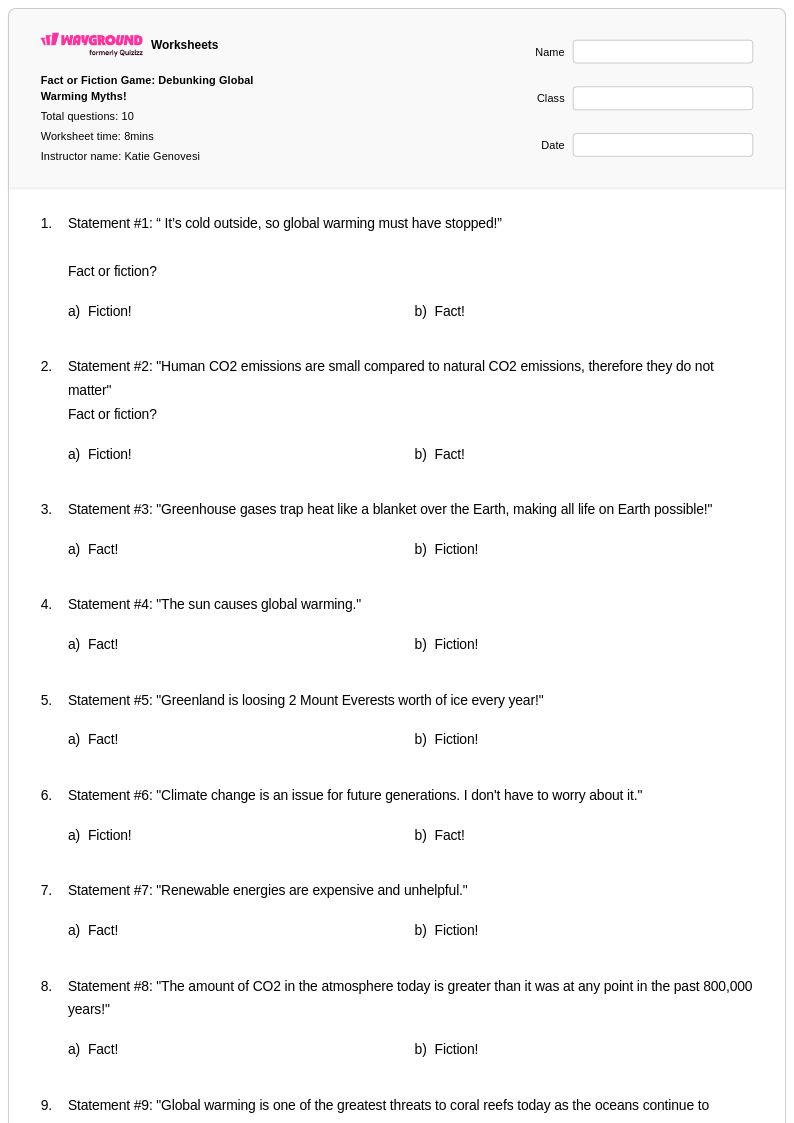
One of the most persistent misconceptions is that global warming and weather are the same thing, leading students to dismiss climate change after a cold winter. Students also frequently confuse the greenhouse effect with the ozone hole, treating them as the same problem when they involve distinct atmospheric processes. Another common error is assuming global warming affects all regions equally, when in reality temperature and precipitation changes vary significantly by geography and ecosystem.
What types of practice problems help students understand global warming concepts?
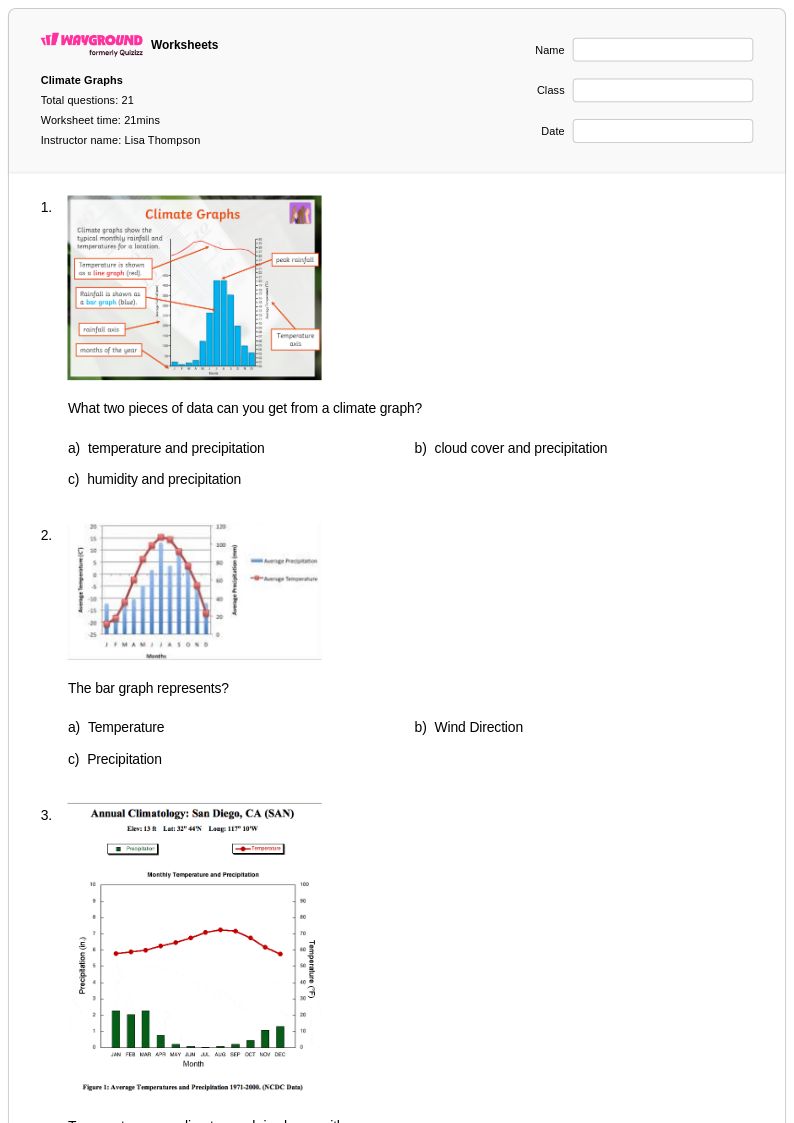
Practice problems that require students to interpret climate graphs, analyze temperature anomaly data, and calculate basic carbon footprints are particularly effective for building scientific reasoning skills. Exercises that ask students to evaluate evidence from ice core samples or satellite measurements reinforce the difference between correlation and causation in climate science. Problems connecting deforestation rates to atmospheric CO2 levels help students see how human activities interact with natural systems in measurable ways.
How can I use global warming worksheets to assess student understanding?
Global warming worksheets are well-suited for formative assessment because they can target specific concepts, such as greenhouse gas mechanisms or the carbon cycle, while revealing where student understanding breaks down. Look for student errors that conflate natural climate variability with human-caused warming, or that misread trend lines in temperature data, as these signal gaps that need reteaching. Using worksheets with detailed answer keys allows students to self-assess after independent work, reinforcing correct reasoning before misconceptions become entrenched.
How do I use Wayground's global warming worksheets in my classroom?
Wayground's global warming worksheets are available as printable PDFs for traditional classroom use and in digital formats for technology-integrated learning environments, giving teachers flexibility to assign them as in-class practice, homework, or assessment. Teachers can also host worksheets directly as a quiz on Wayground, allowing students to complete them digitally with instant feedback. For students who need additional support, Wayground's accommodation tools, including read aloud and reduced answer choices, can be configured individually so every learner can access the same rigorous content.
How do I differentiate global warming instruction for students at different levels?
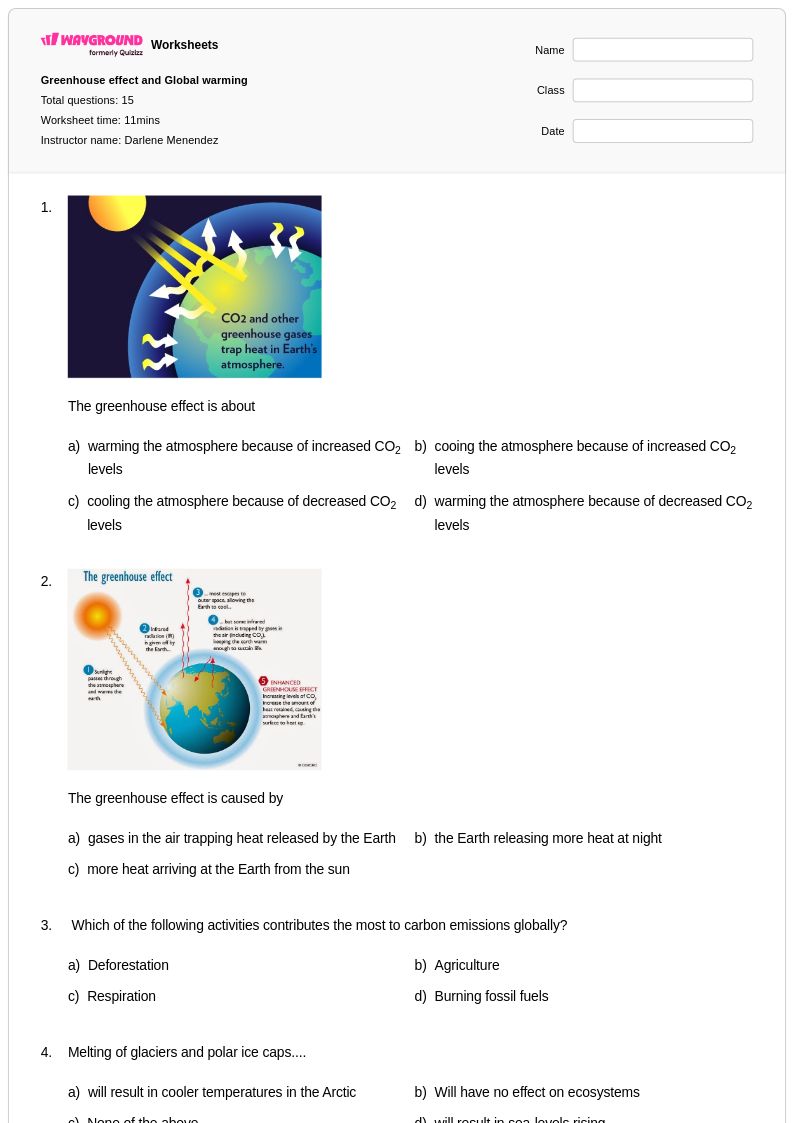
For students who are struggling, scaffolded worksheets that break the greenhouse effect into step-by-step diagrams or guided data interpretation tasks lower the entry barrier without sacrificing conceptual accuracy. Advanced learners benefit from open-ended problems, such as evaluating competing climate models or analyzing the societal trade-offs of renewable energy policy. On Wayground, teachers can apply accommodations like extended time or read aloud to individual students, ensuring differentiation happens at the assignment level without singling anyone out in front of the class.