
15 Q
1st - Uni
15 Q
6th
10 Q
KG
35 Q
5th - 6th
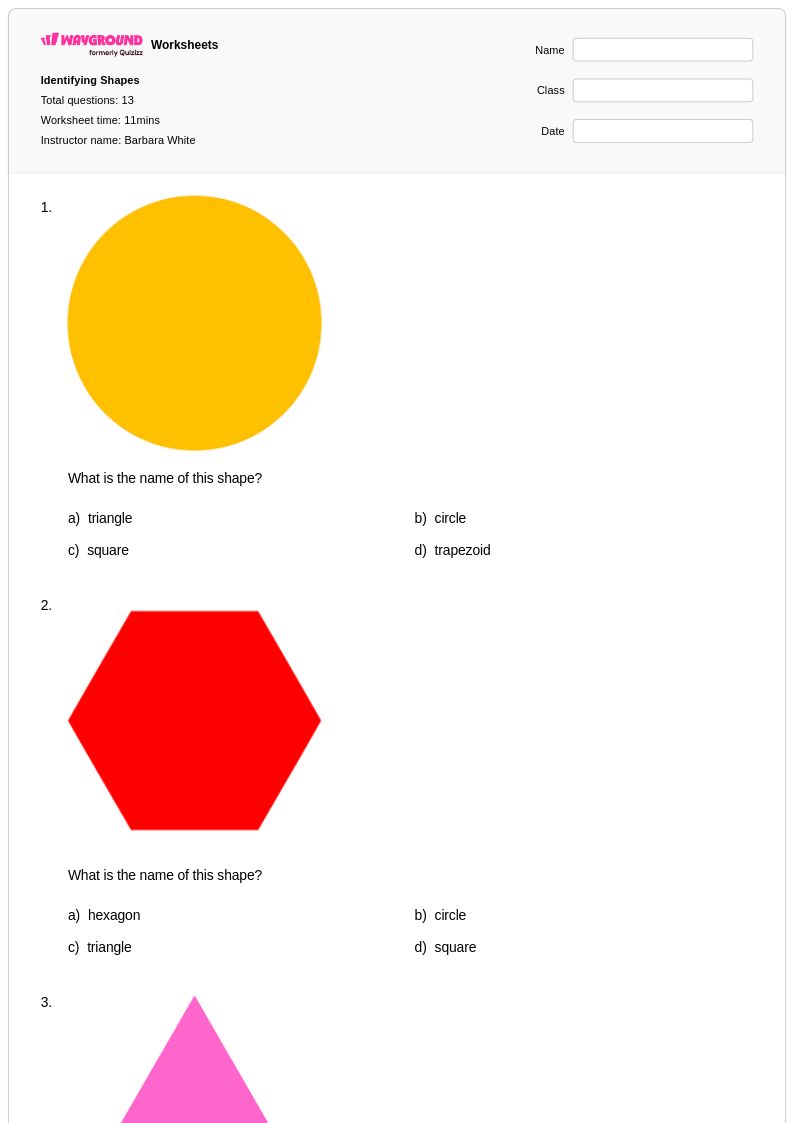
13 Q
1st
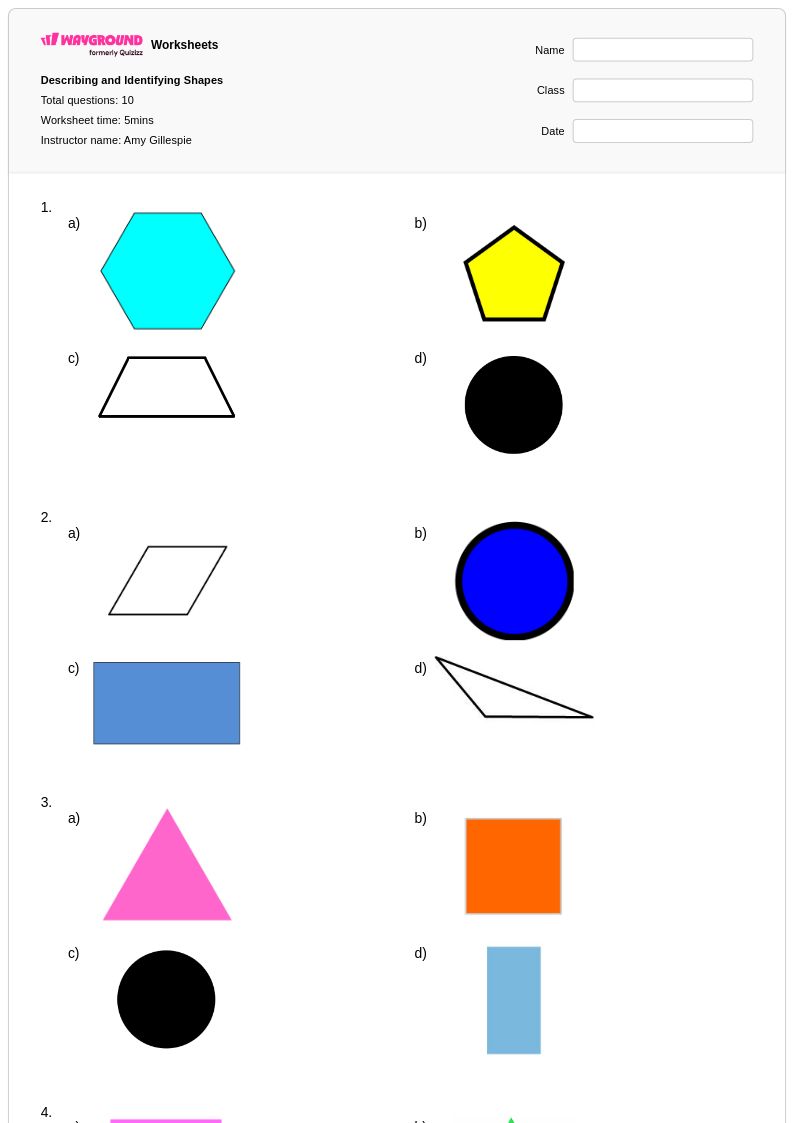
10 Q
KG
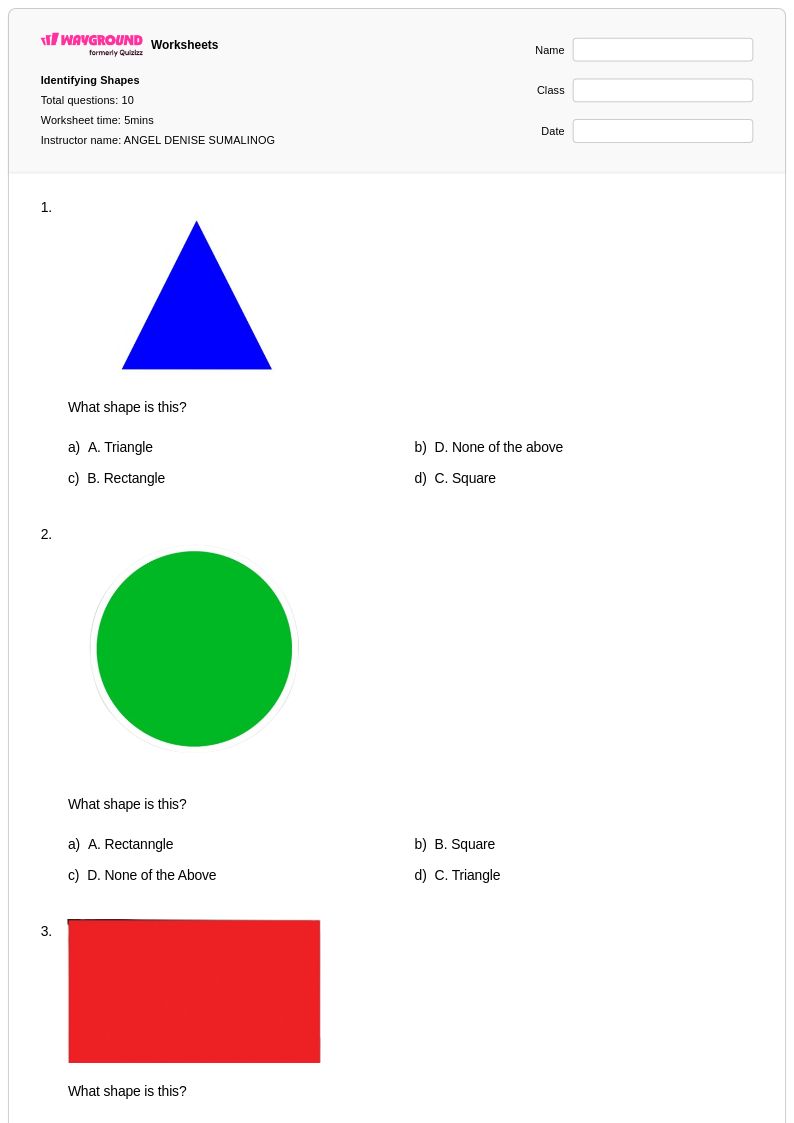
10 Q
1st - Uni
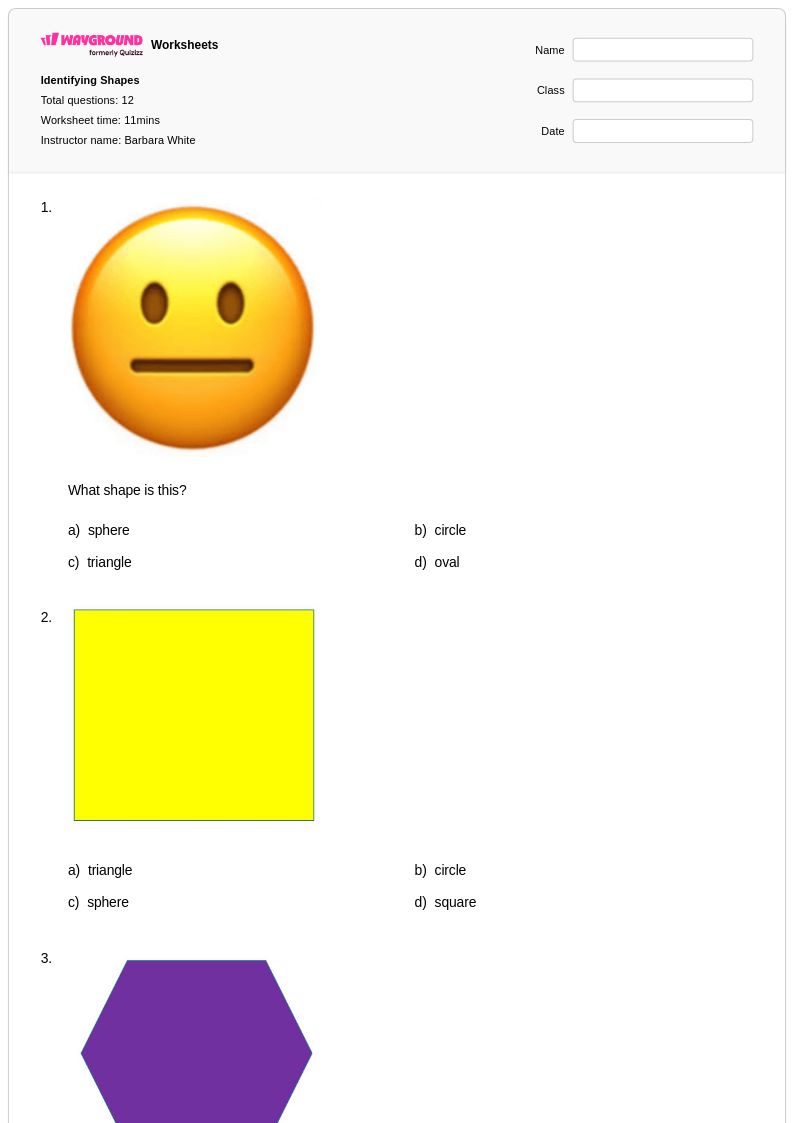
12 Q
1st
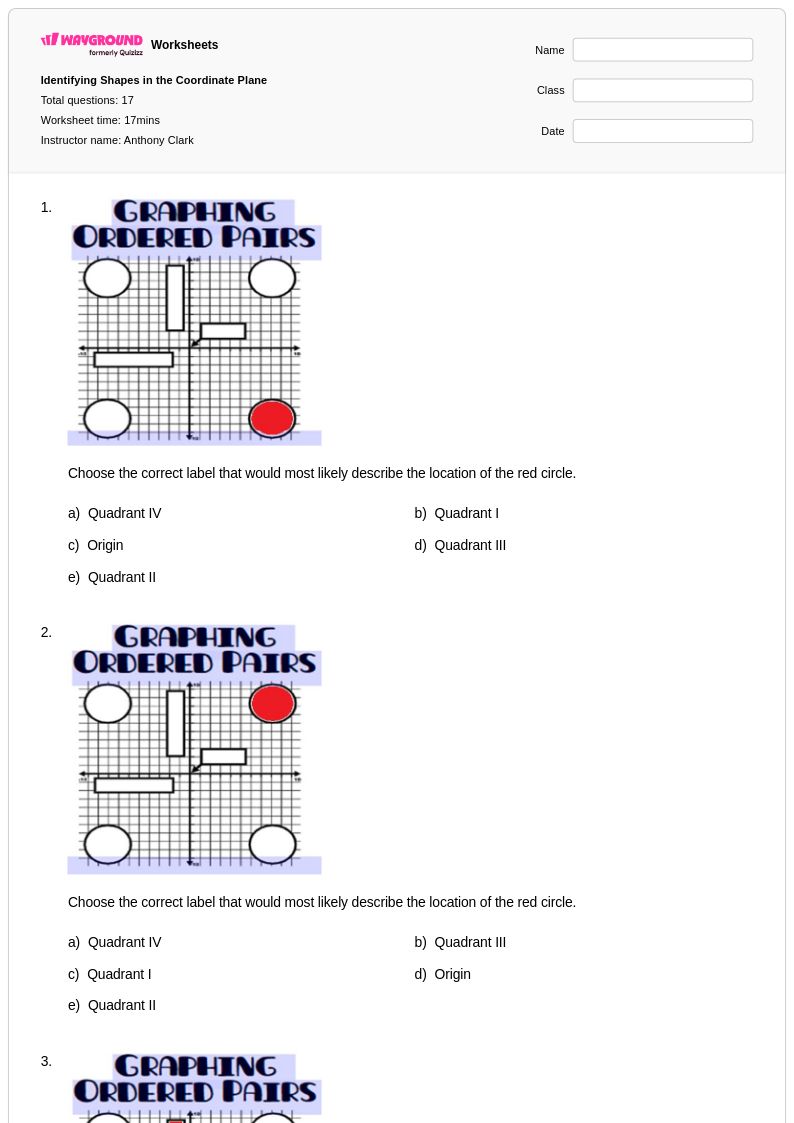
17 Q
6th - Uni
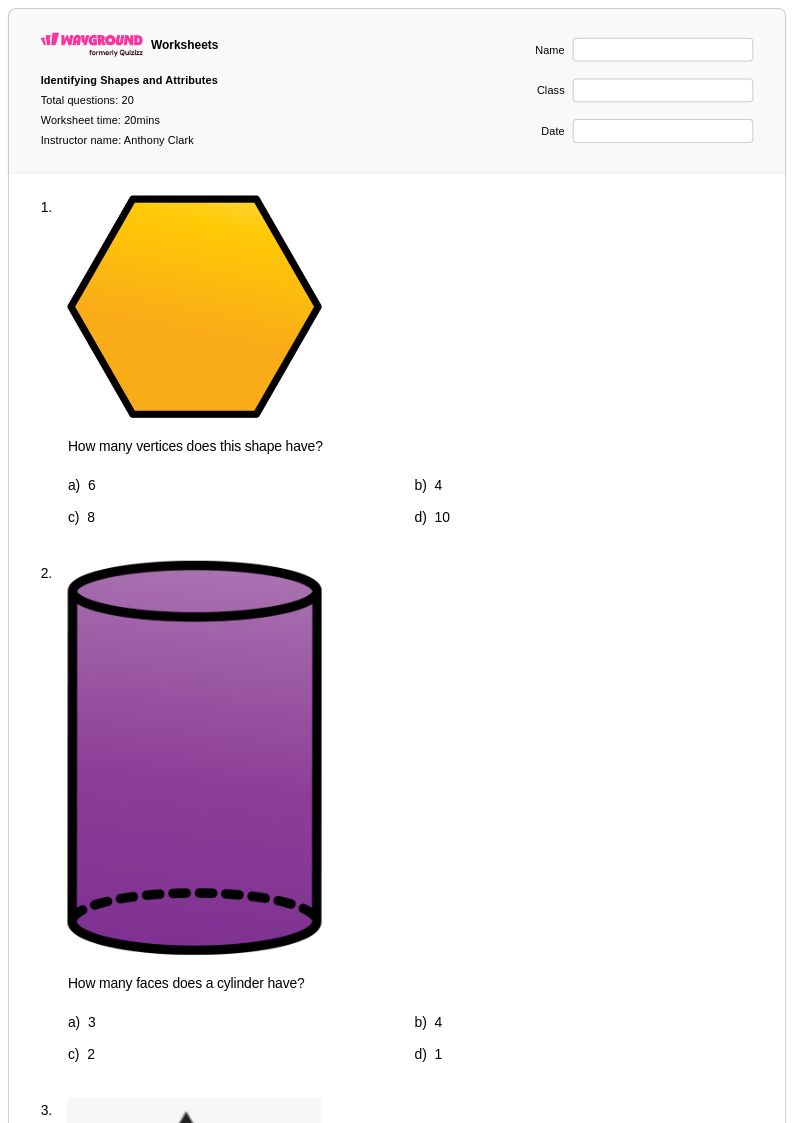
20 Q
3rd - Uni
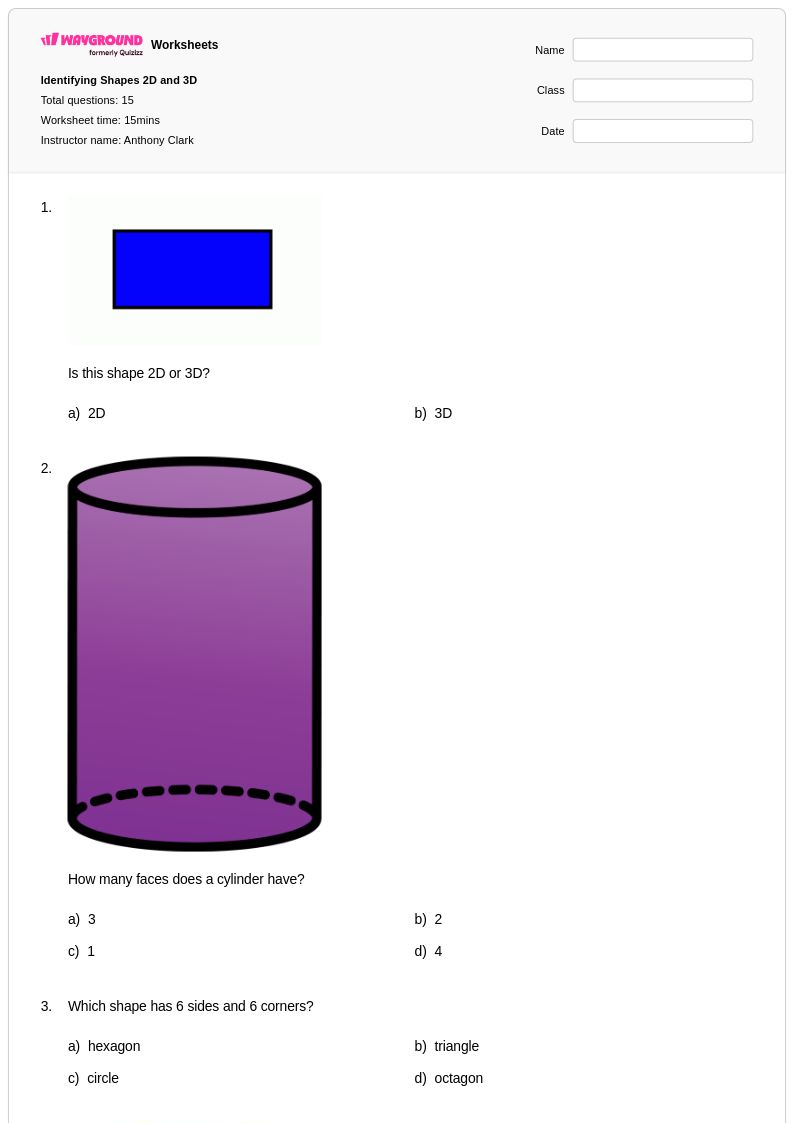
15 Q
1st - Uni
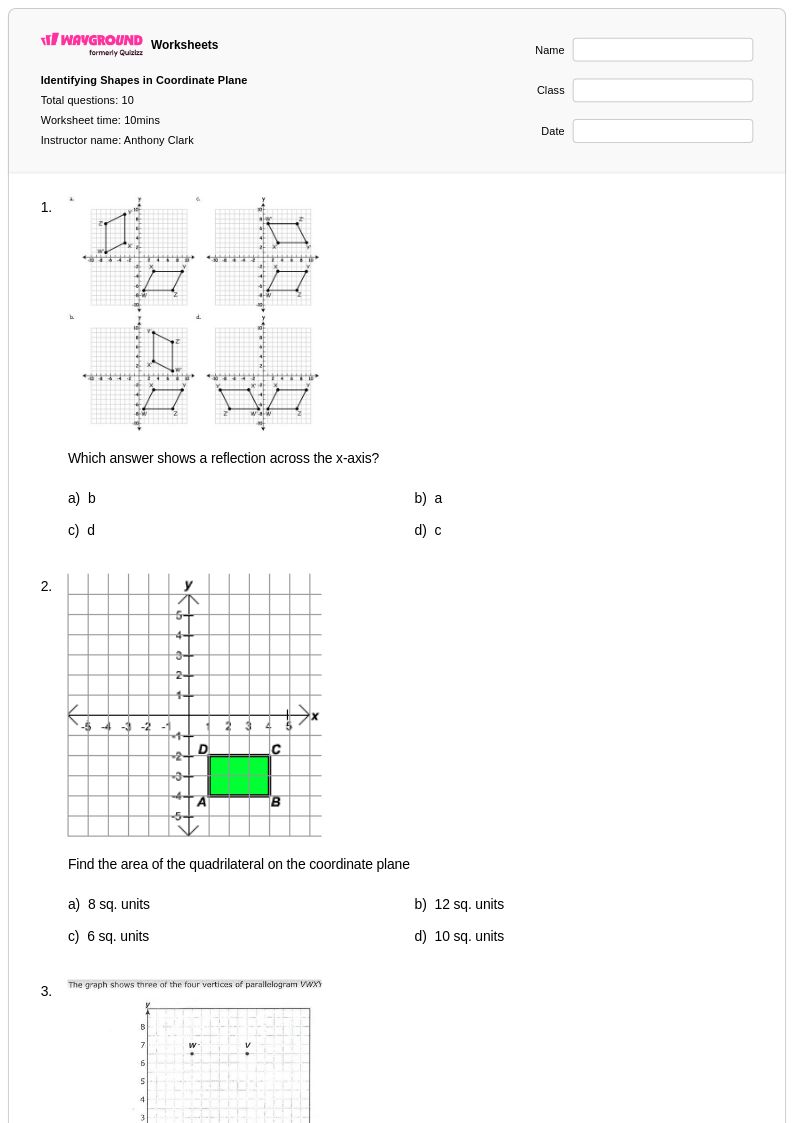
10 Q
6th - Uni
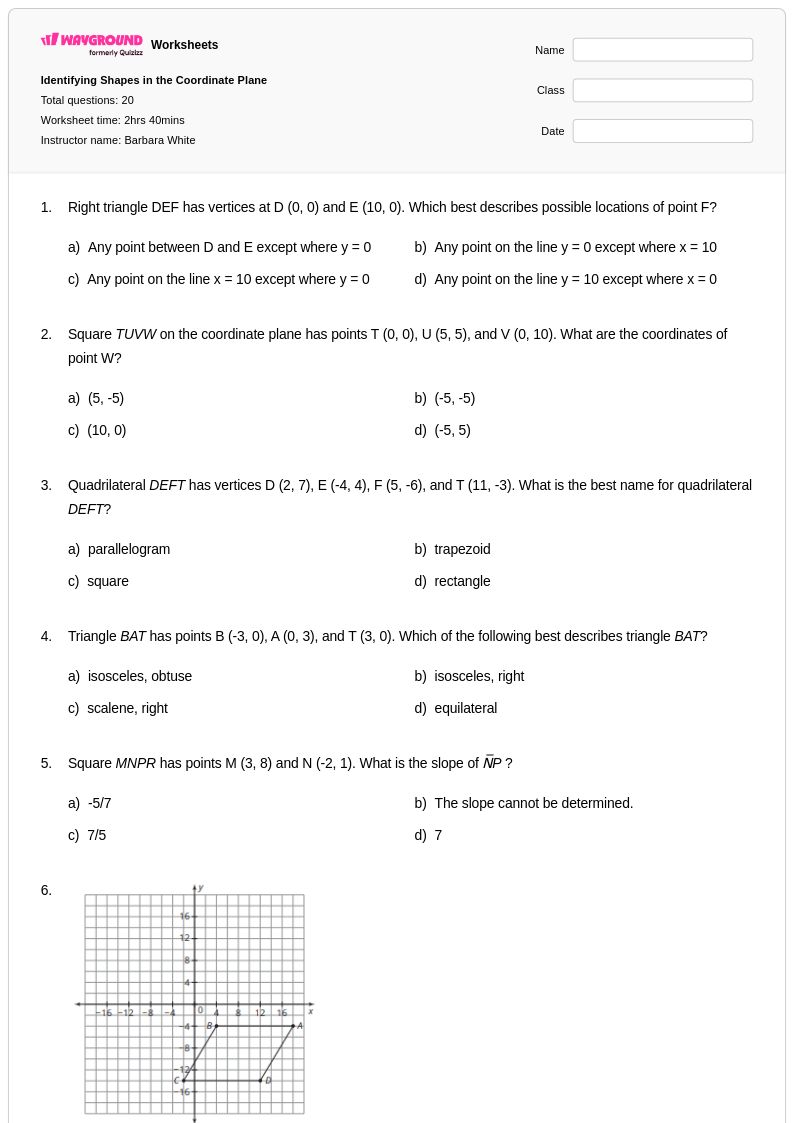
20 Q
9th
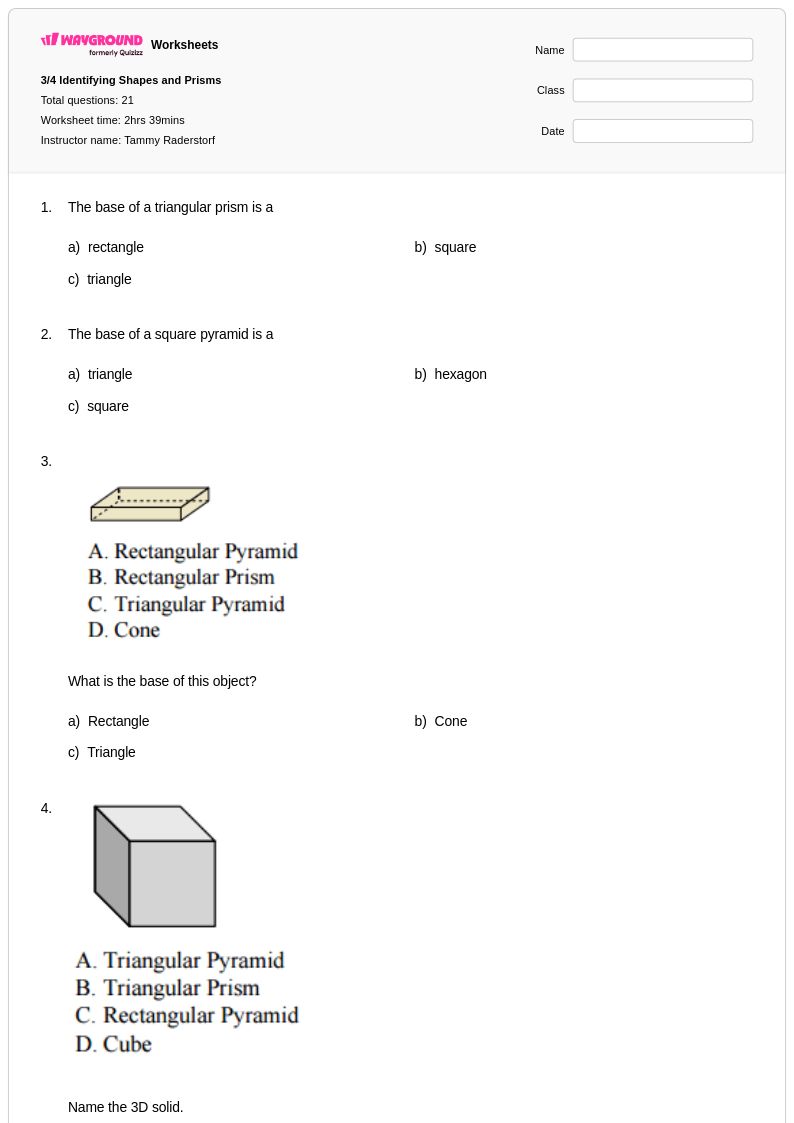
21 Q
6th - 8th
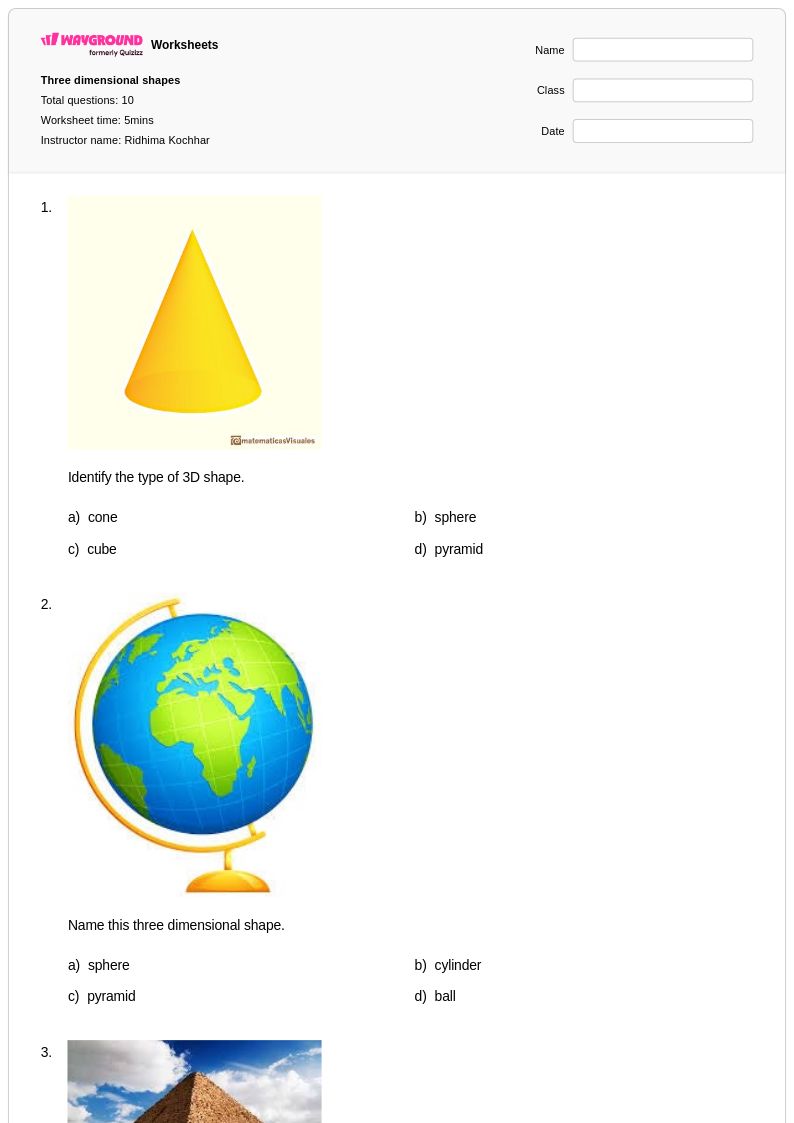
10 Q
5th - 6th
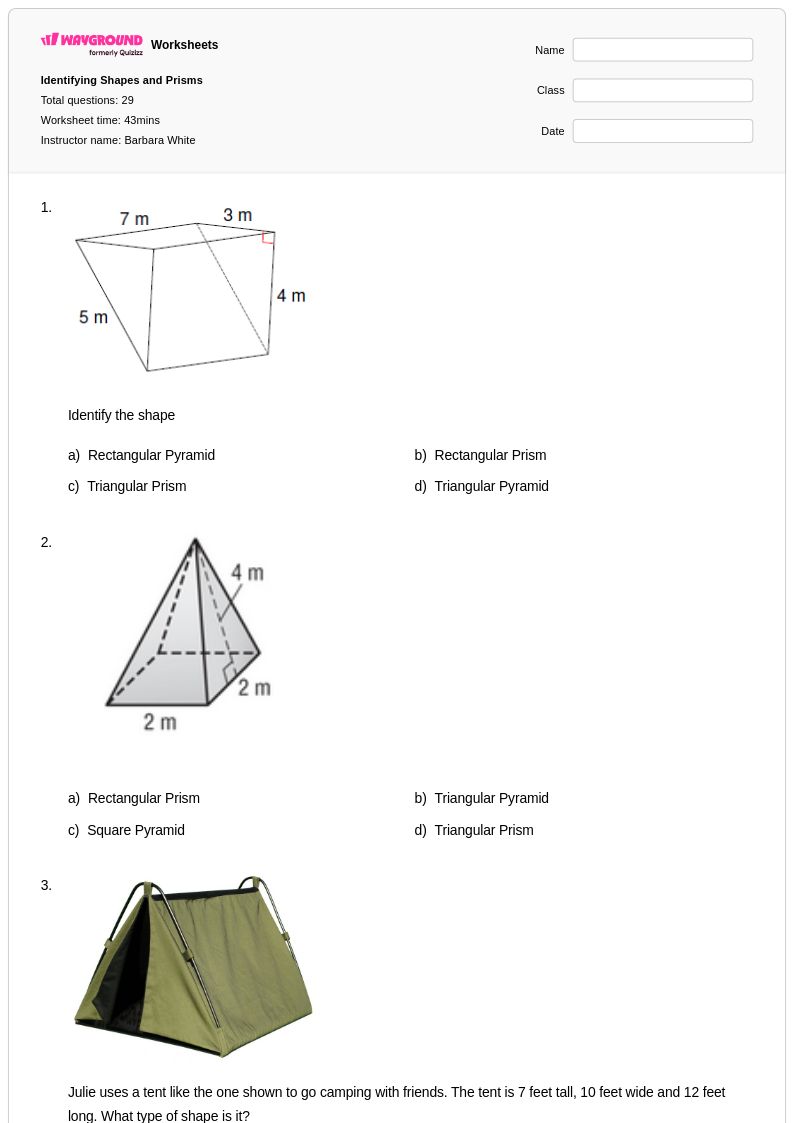
29 Q
7th
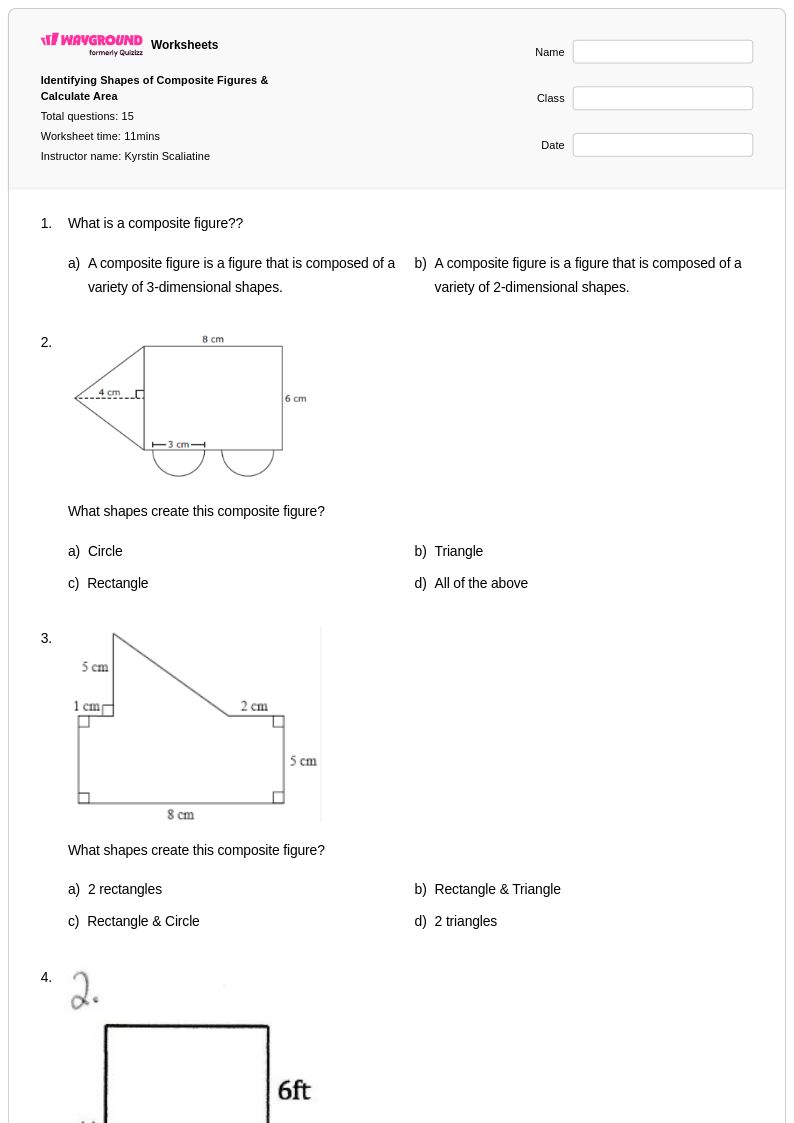
15 Q
7th
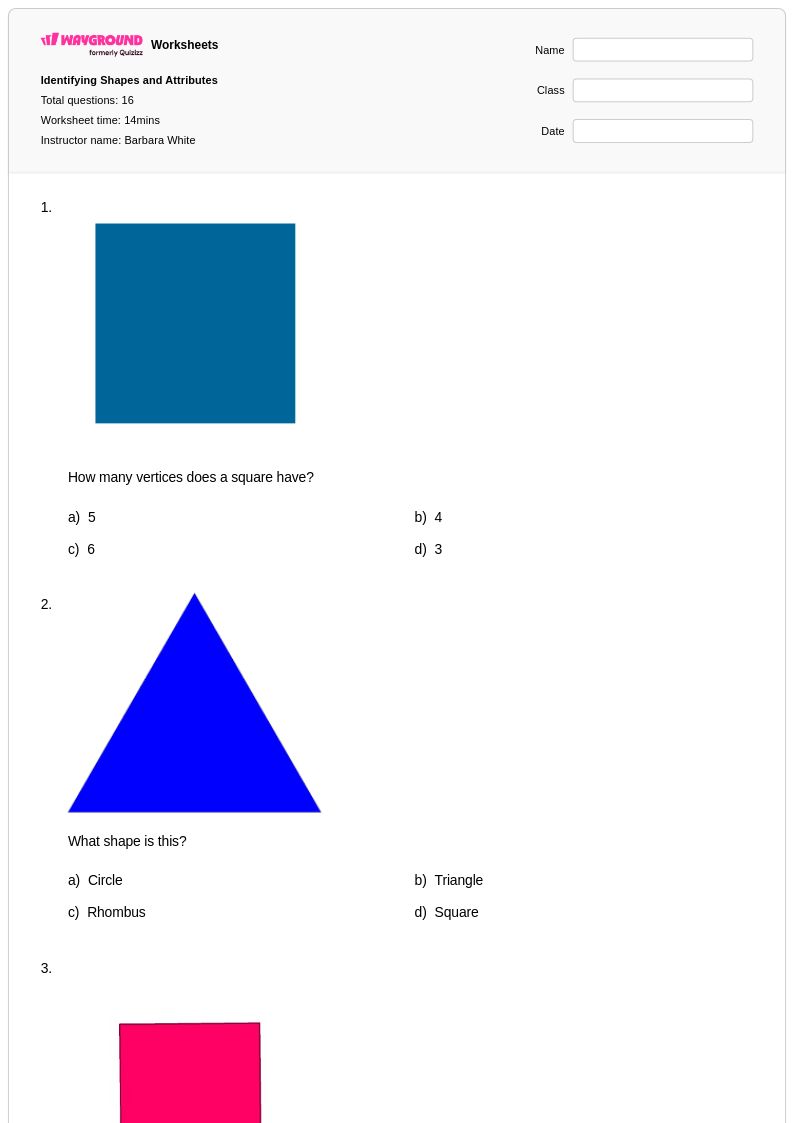
16 Q
5th
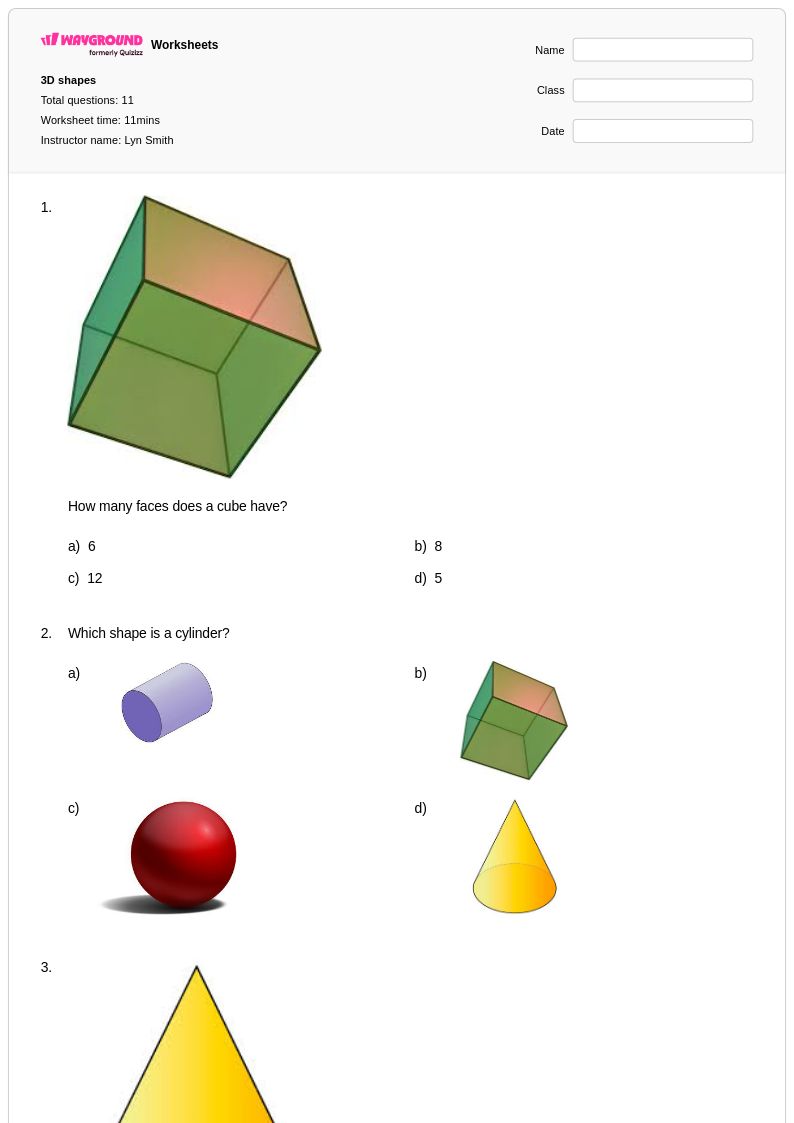
11 Q
3rd
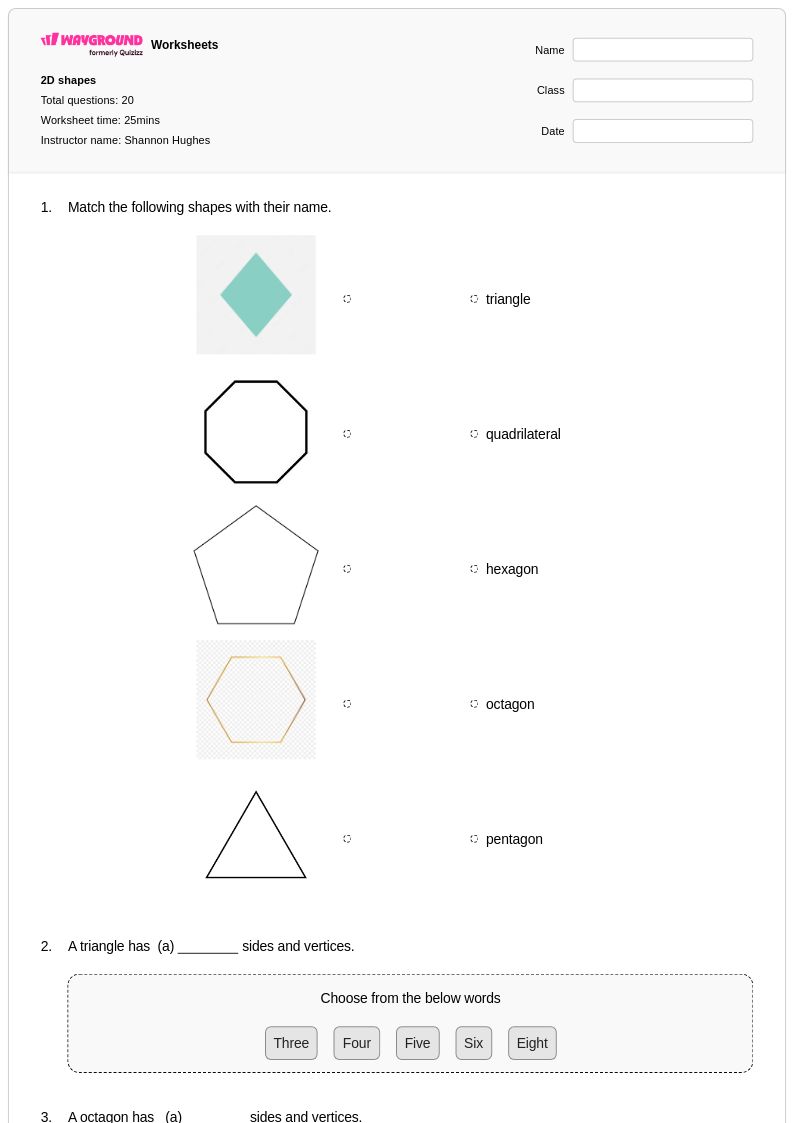
20 Q
2nd
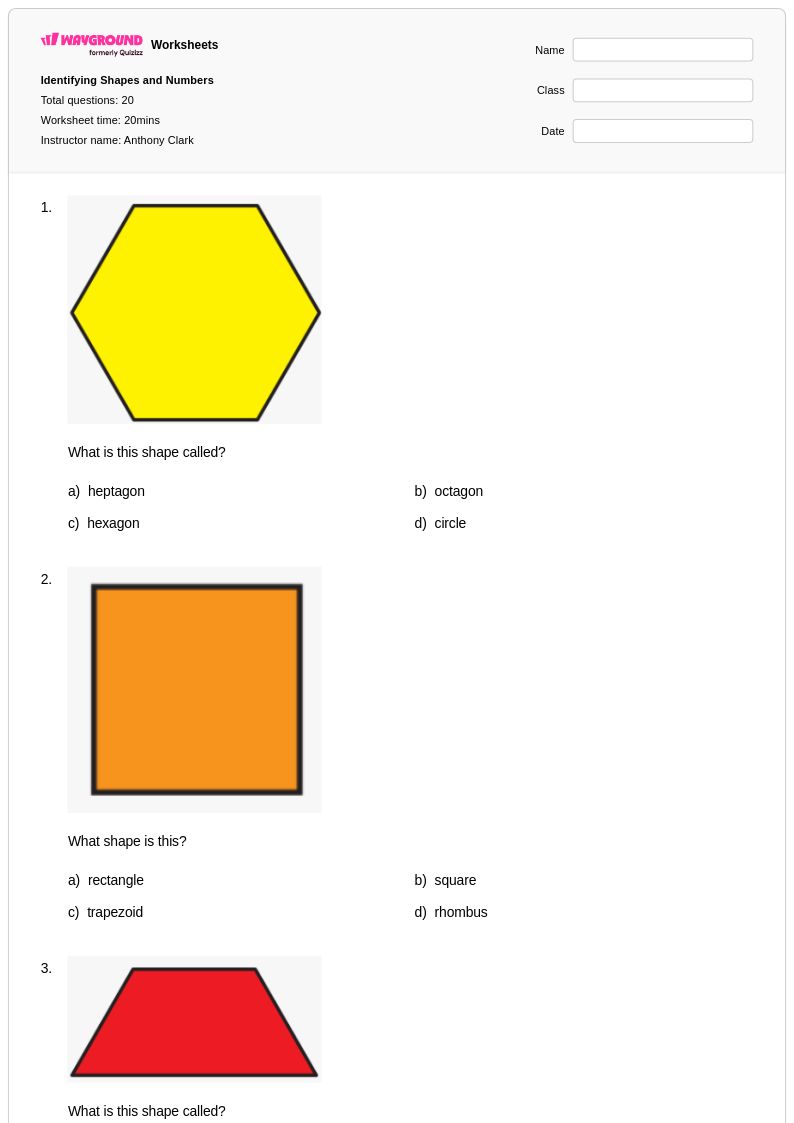
20 Q
1st - Uni
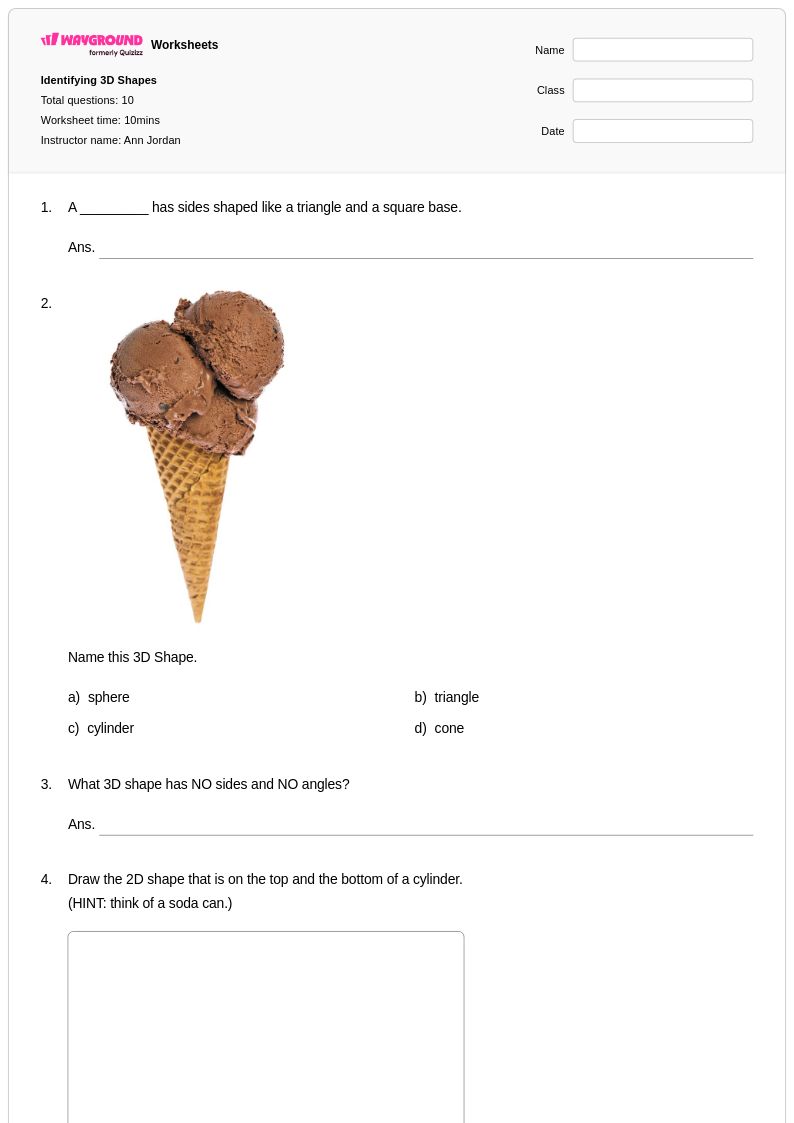
10 Q
7th
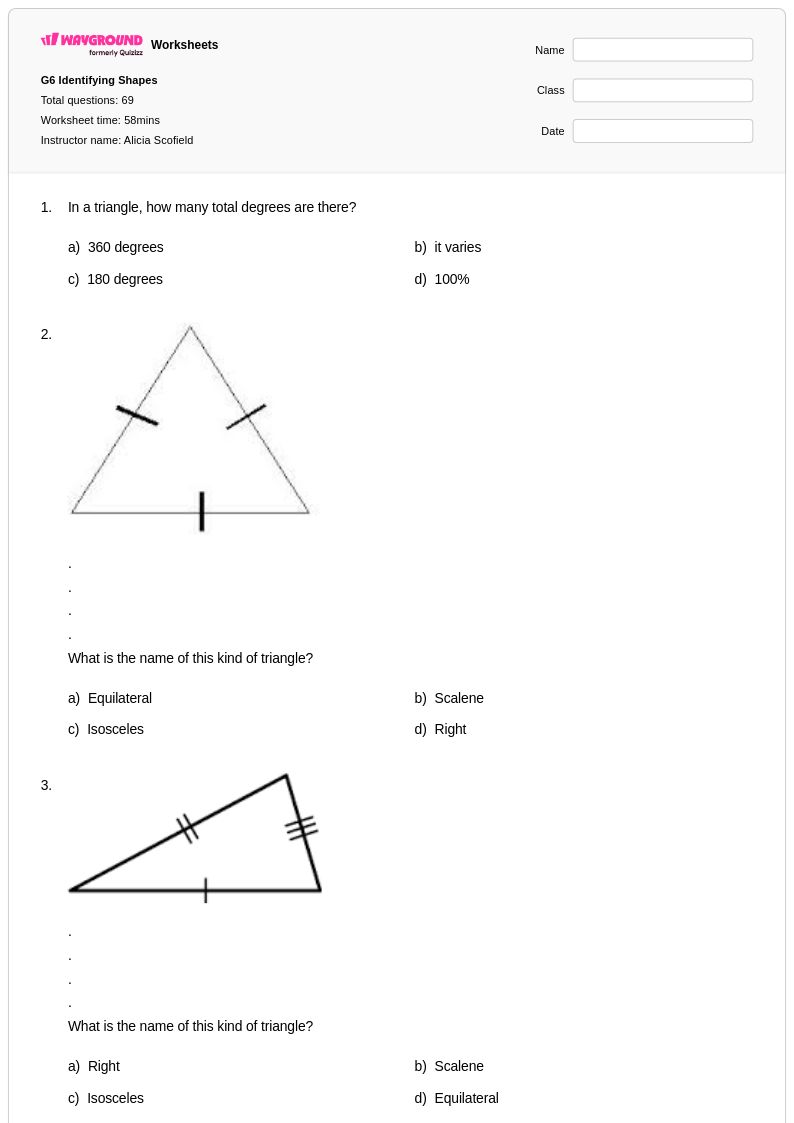
69 Q
6th
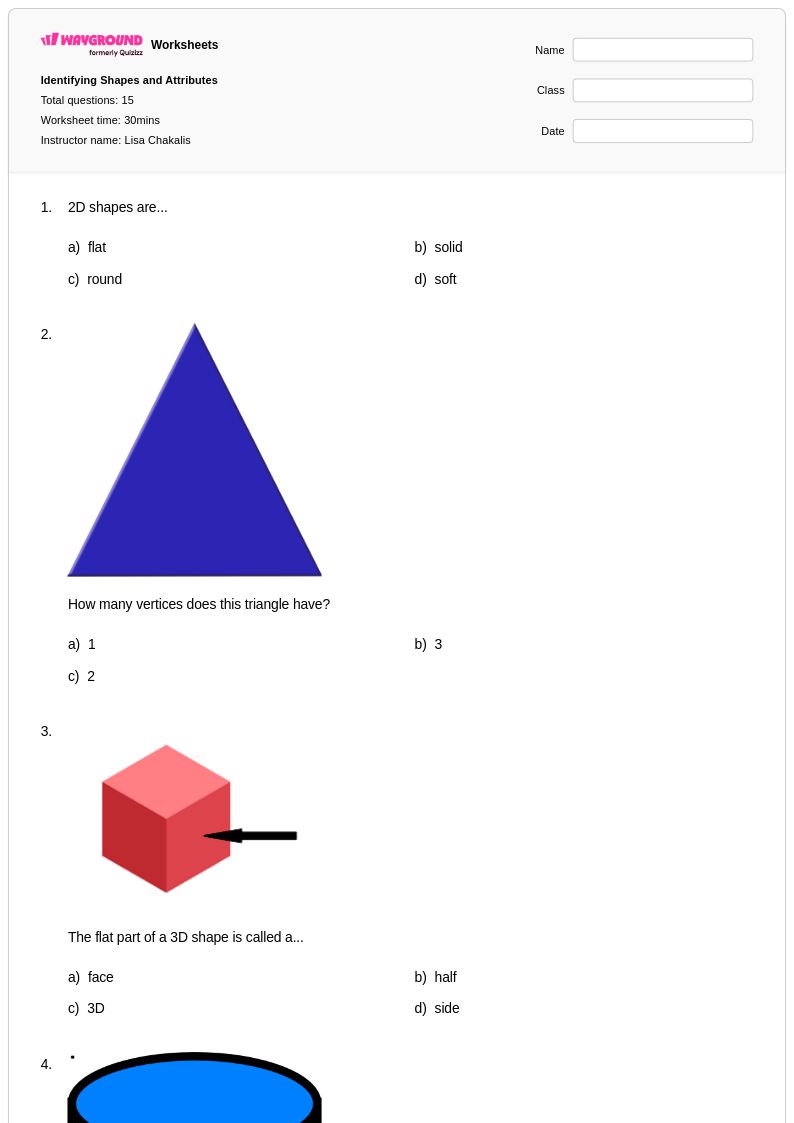
15 Q
KG - 1st
Explore Other Subject Worksheets for kindergarten
Explore printable Identifying Shapes worksheets for Kindergarten
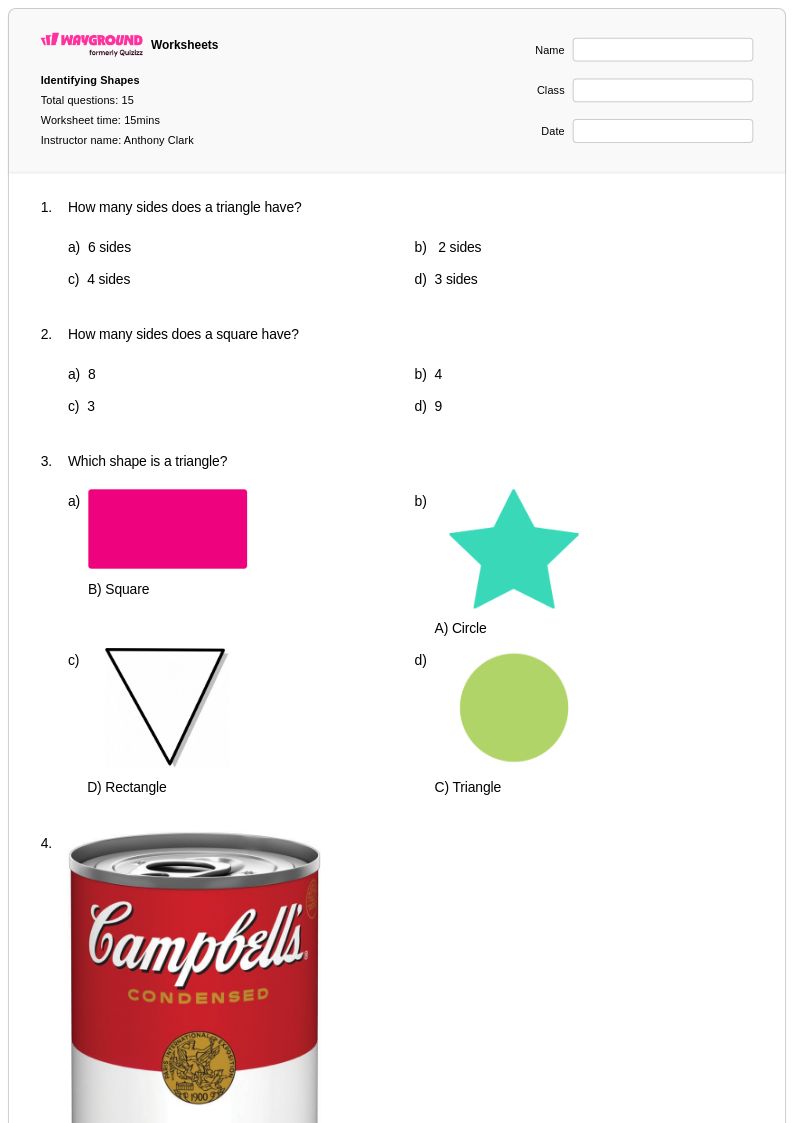
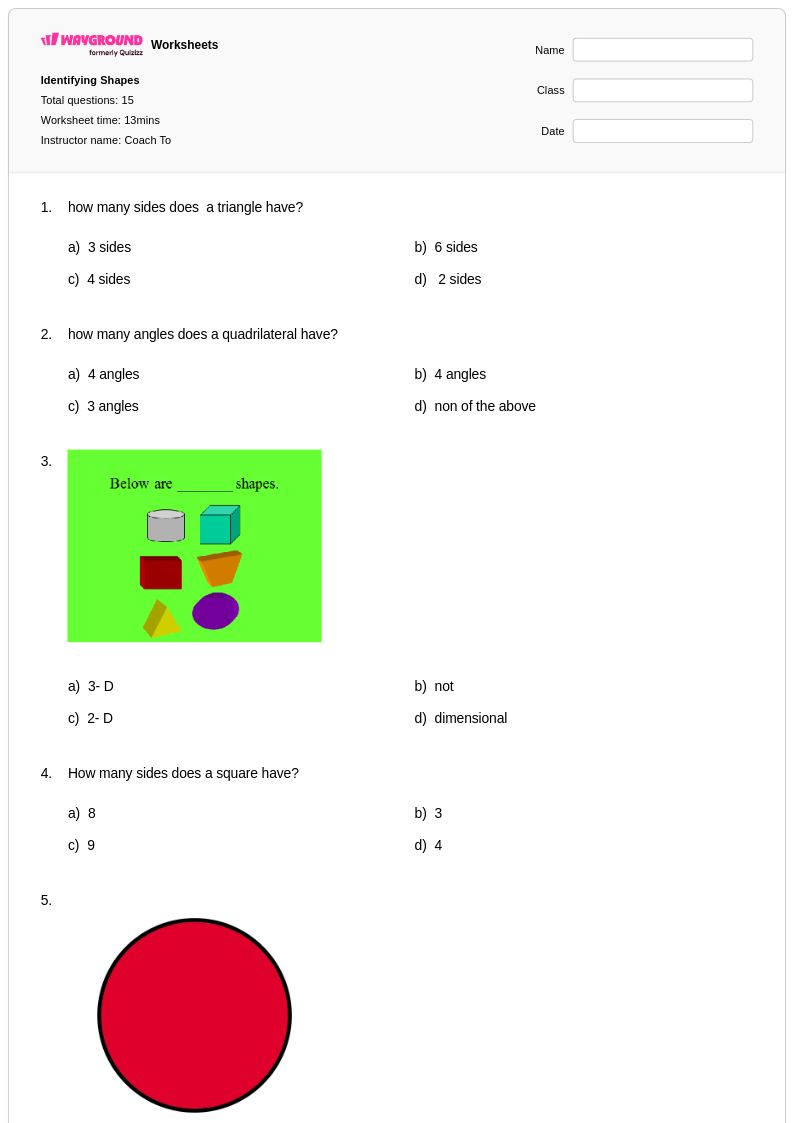
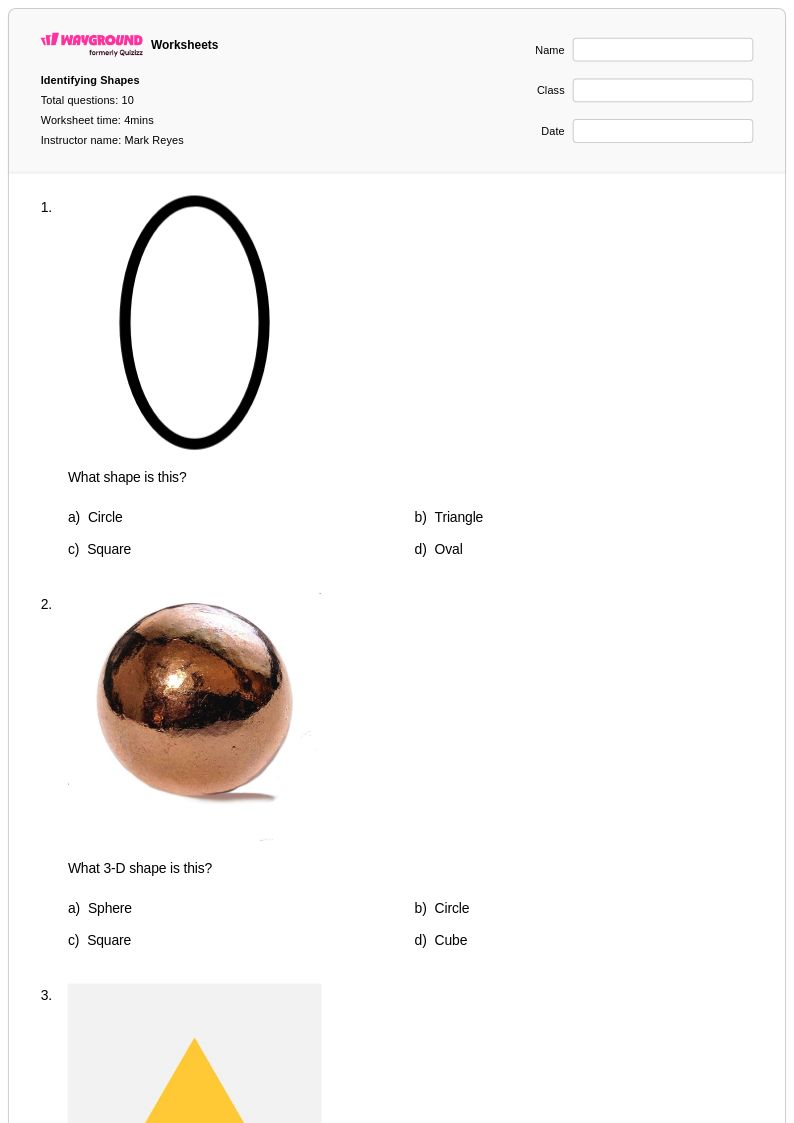
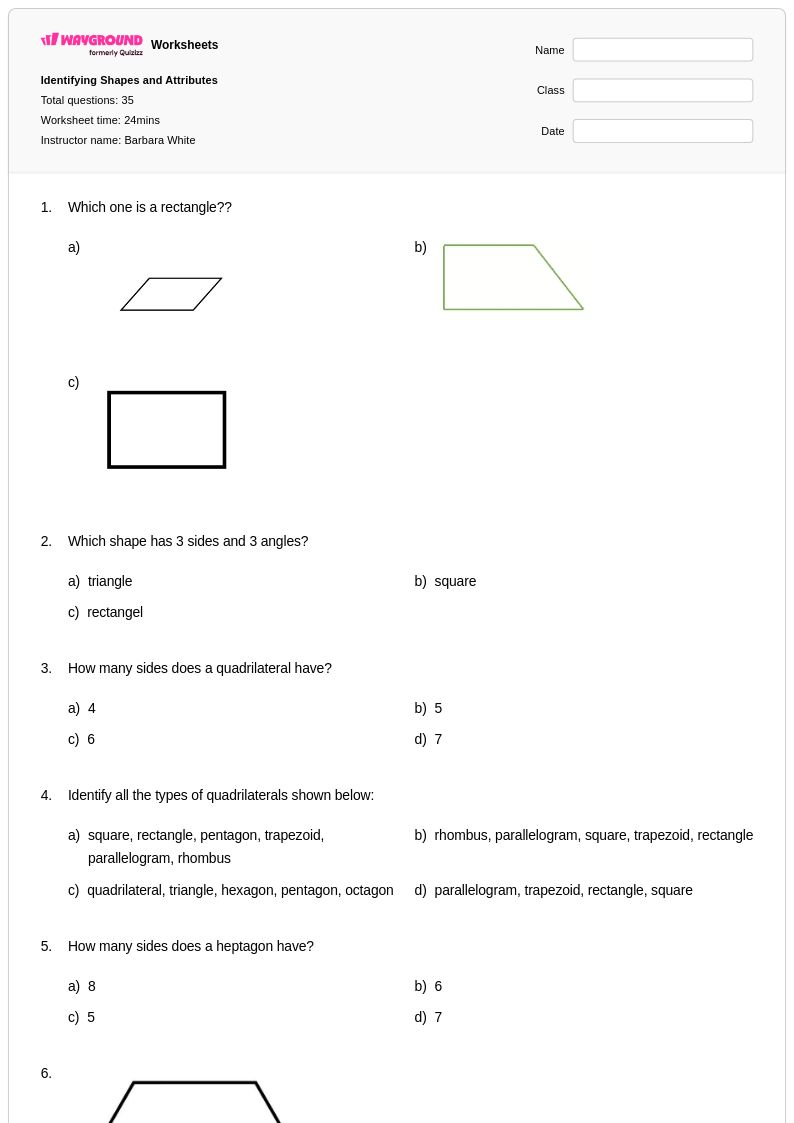
Identifying shapes worksheets for kindergarten students provide essential foundational practice in recognizing and distinguishing between basic 2D geometric forms including circles, squares, triangles, and rectangles. These carefully designed printables strengthen visual discrimination skills, spatial reasoning abilities, and geometric vocabulary development that kindergarten learners need to build mathematical confidence. Each worksheet collection includes comprehensive answer keys and features engaging activities such as shape matching, coloring exercises, and real-world object identification that help young students connect abstract geometric concepts to familiar items in their environment. The free pdf resources offer systematic practice problems that progress from simple shape recognition to more complex tasks like sorting and categorizing different geometric forms.
Wayground, formerly Quizizz, empowers educators with access to millions of teacher-created identifying shapes resources specifically designed for kindergarten mathematics instruction. The platform's advanced search and filtering capabilities allow teachers to quickly locate worksheets that align with state standards and match their students' specific learning needs, while built-in differentiation tools enable seamless customization for varying ability levels within the classroom. These comprehensive worksheet collections are available in both printable pdf formats for traditional paper-based learning and digital formats for interactive online practice, providing flexible options for lesson planning, targeted remediation, and skill enrichment activities. Teachers can efficiently organize their geometry instruction using these professionally developed resources that support systematic progression through 2D shape identification concepts while maintaining student engagement through age-appropriate visual elements and activities.
FAQs
What's the best way to introduce shapes to kindergarteners?
What activities help kindergarteners practice identifying shapes?
What are common challenges for kindergarteners learning shapes?
How can I use these kindergarten shape worksheets?
What are the kindergarten expectations for learning shapes?