Free Printable Lung Dissection Worksheets for Class 10
Explore Wayground's comprehensive Class 10 lung dissection worksheets and printables that help students master human respiratory system anatomy through hands-on practice problems, detailed diagrams, and complete answer keys.
Explore printable Lung Dissection worksheets for Class 10
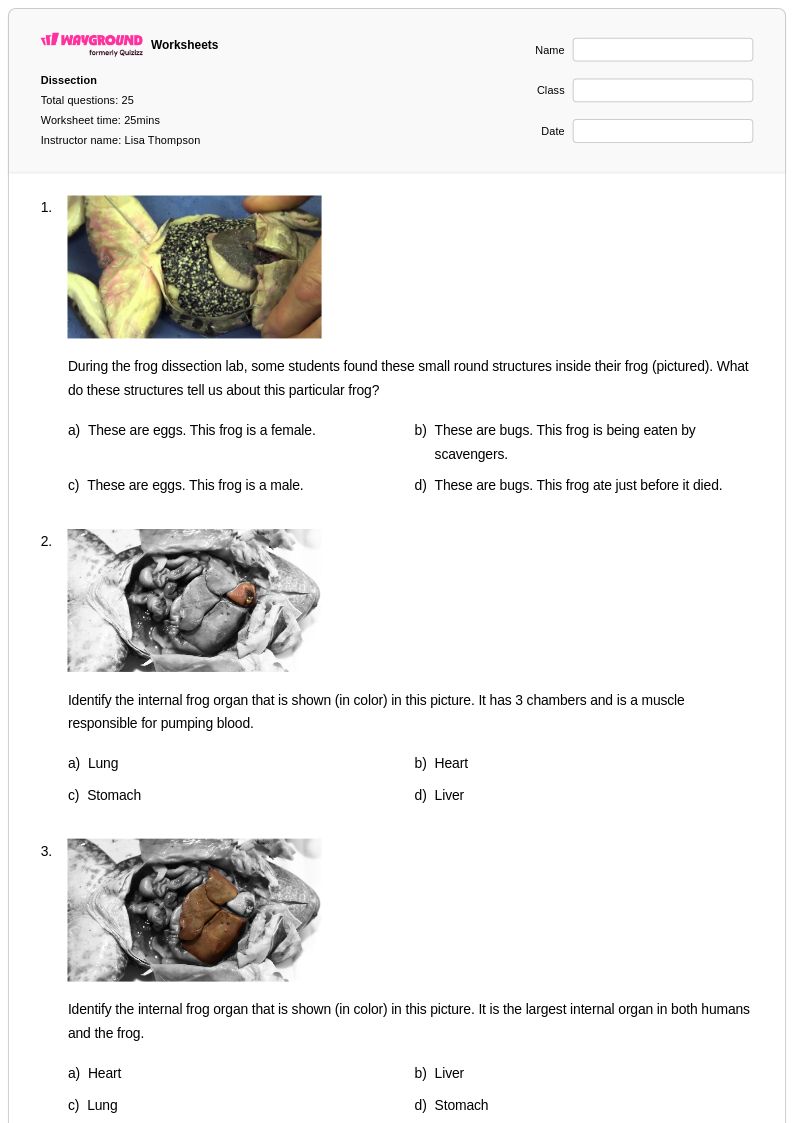
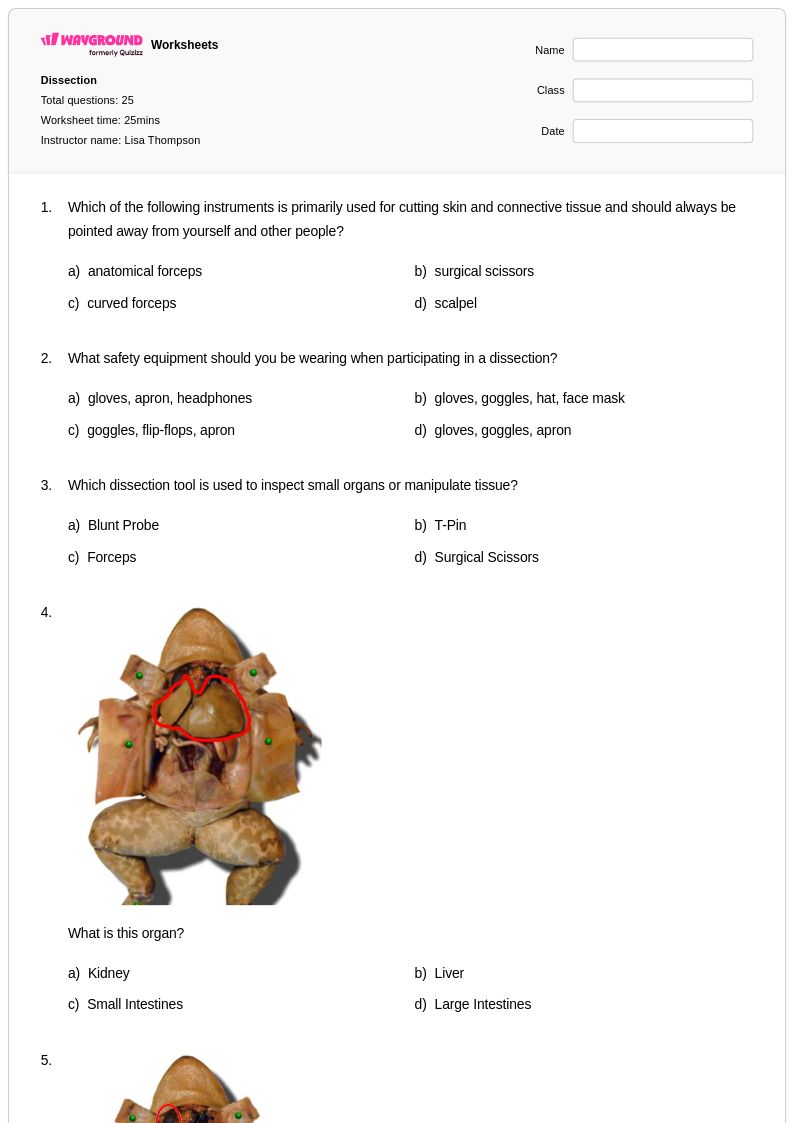
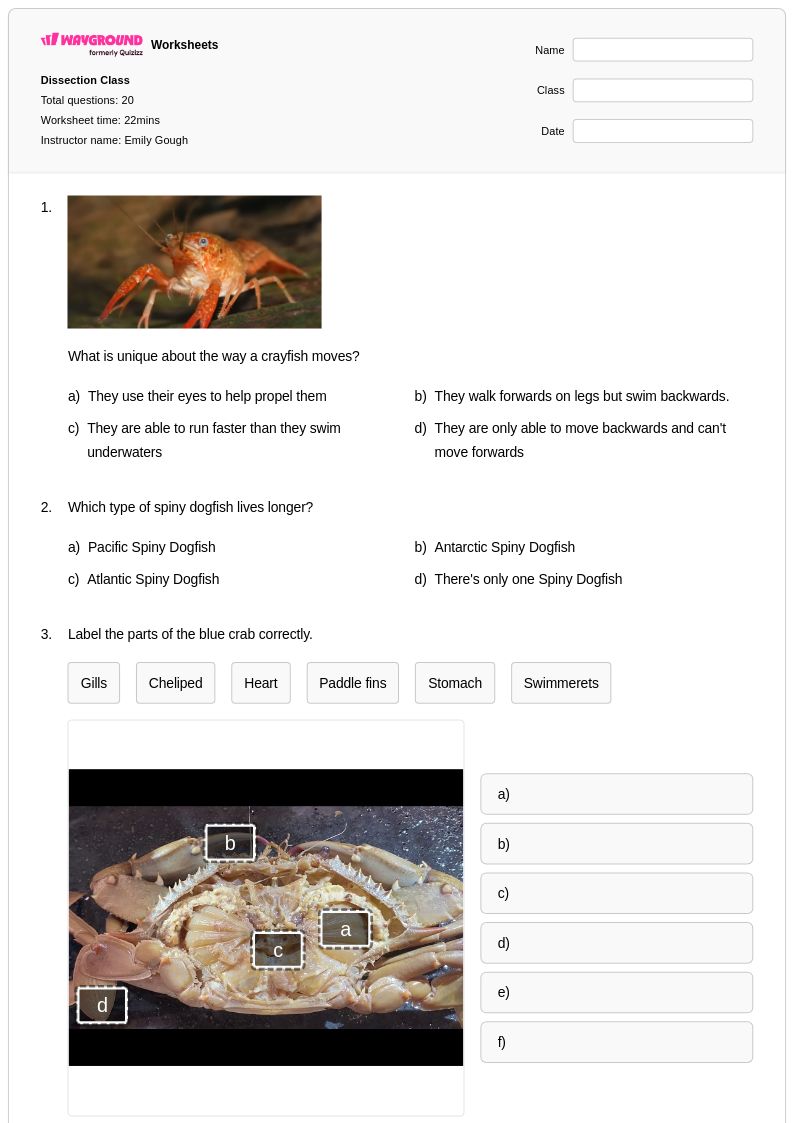
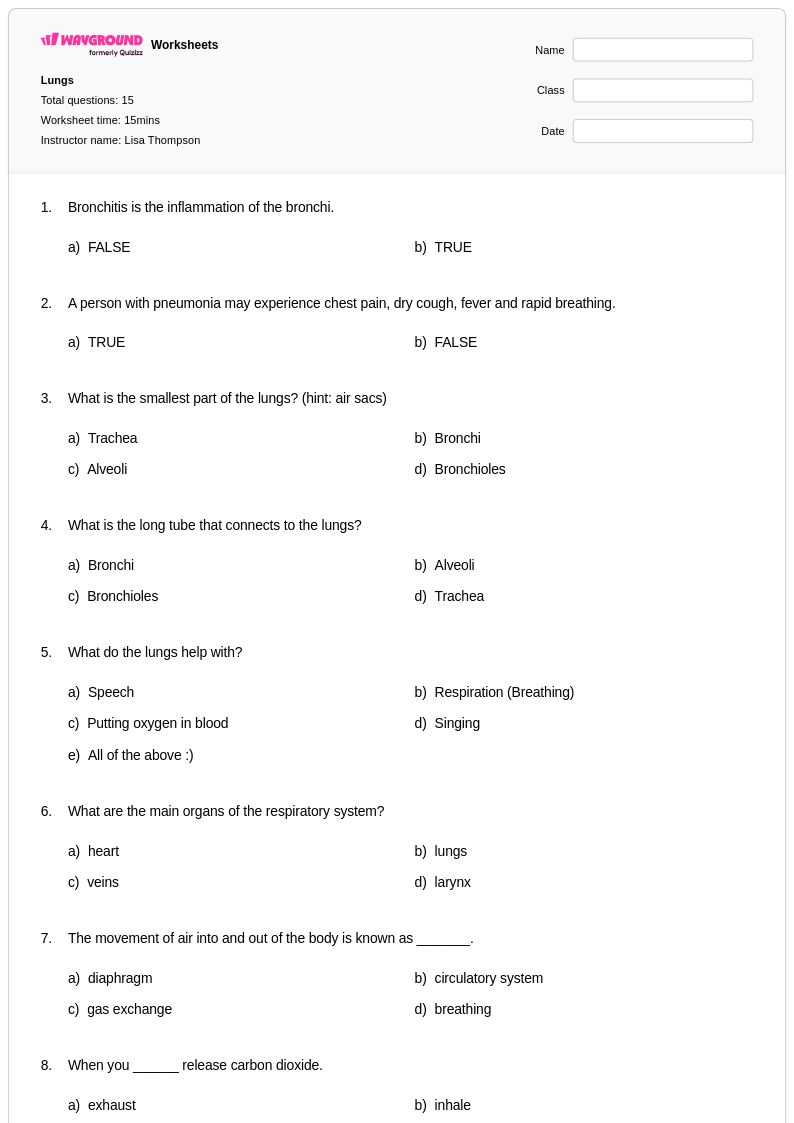
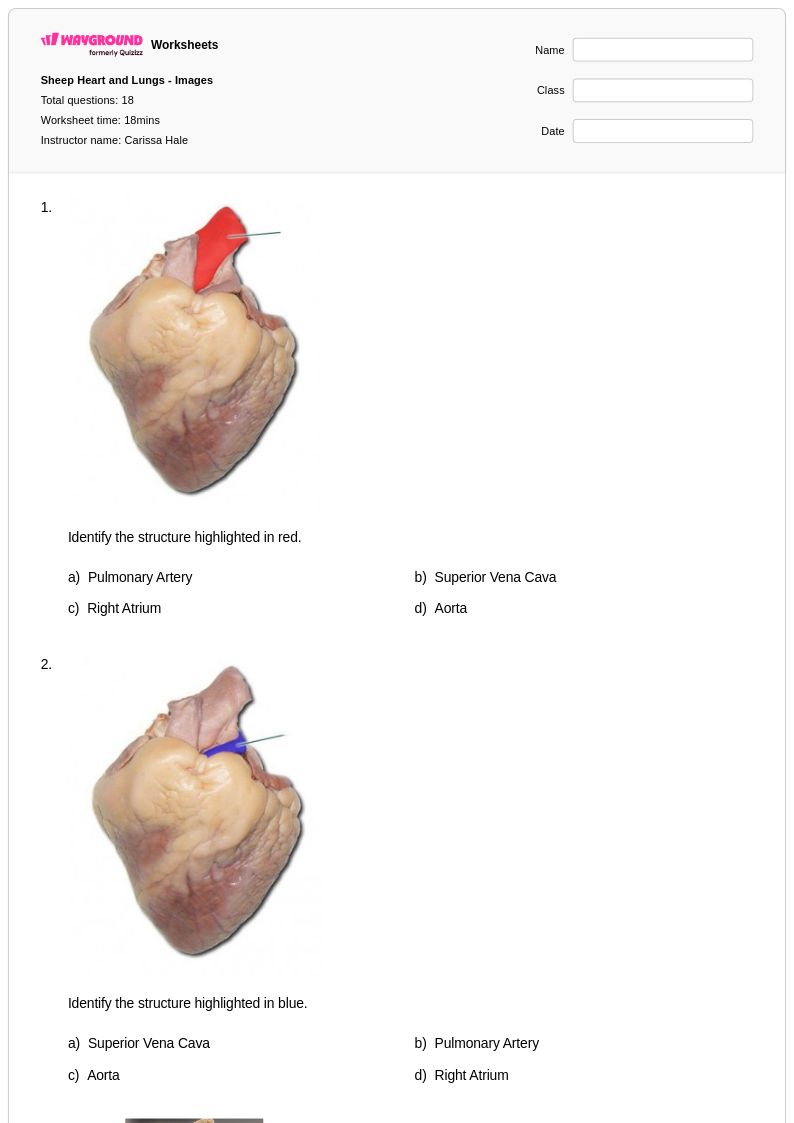
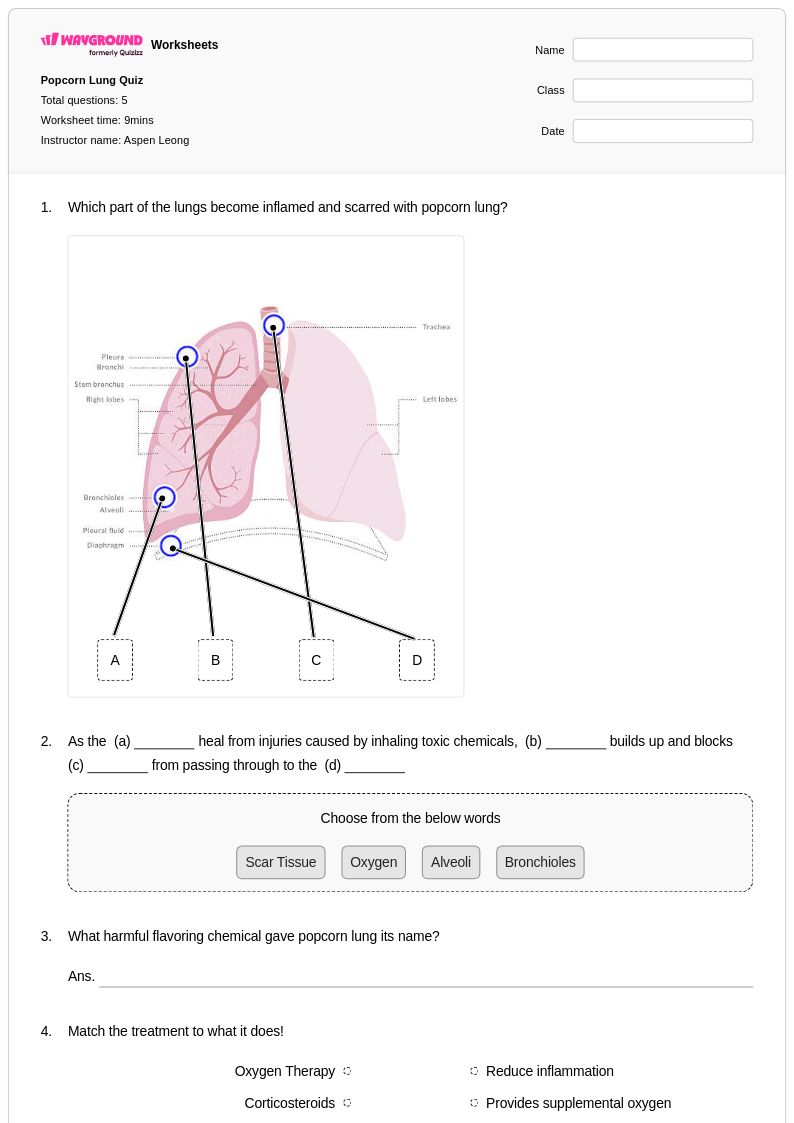
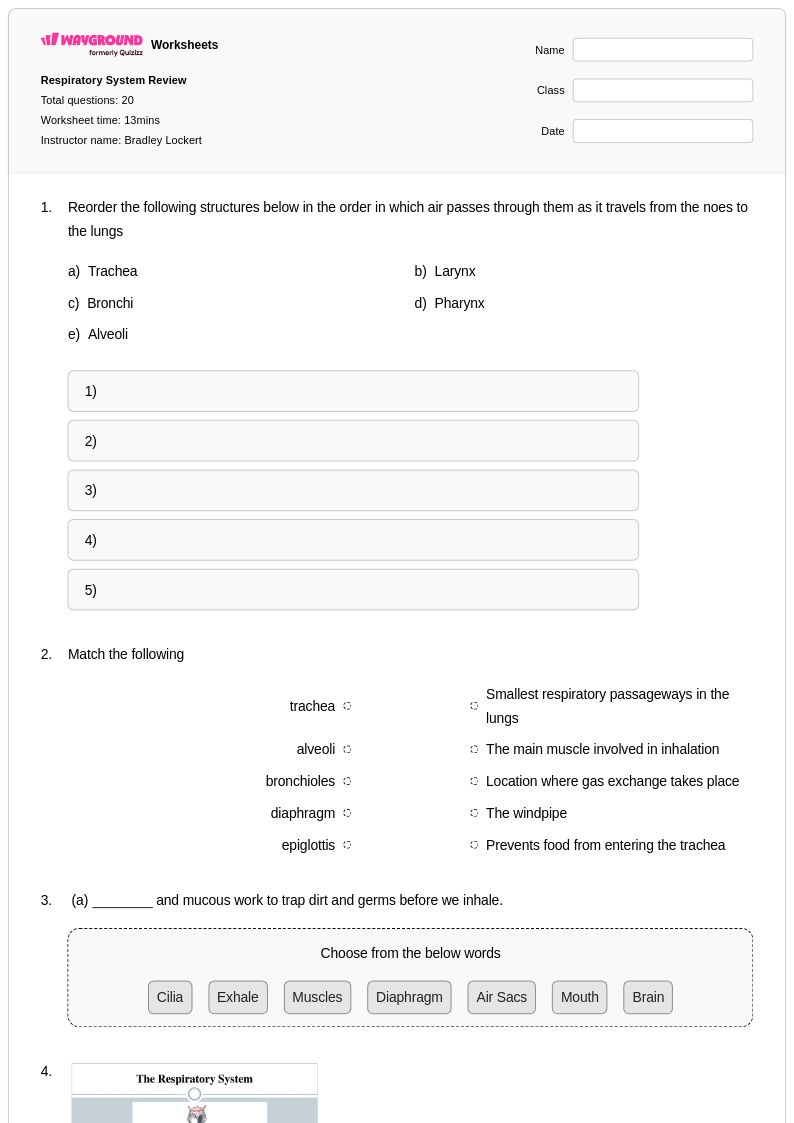
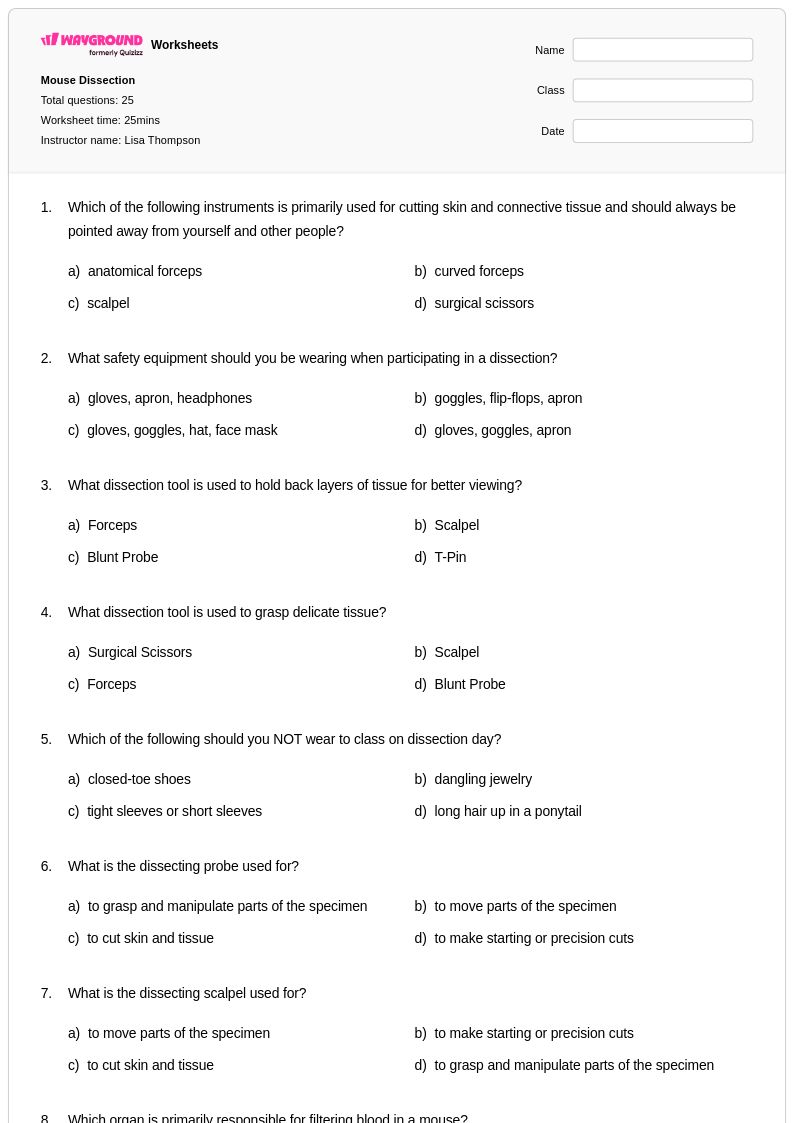
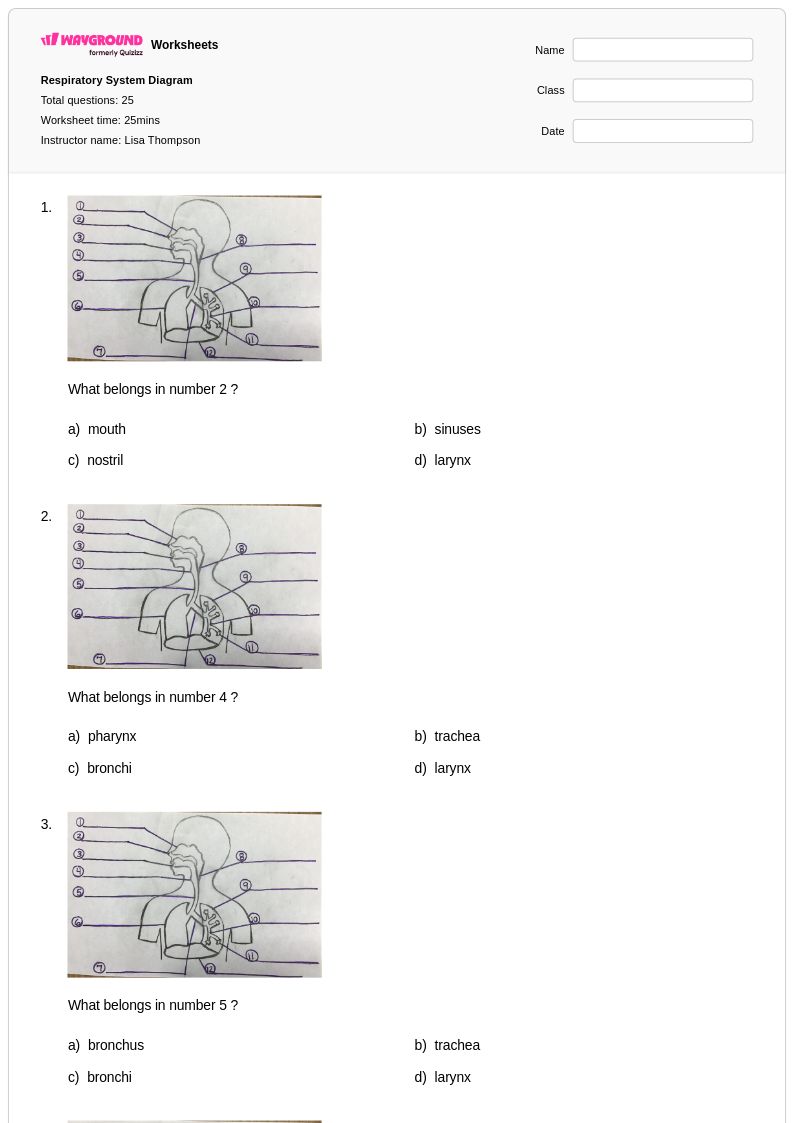
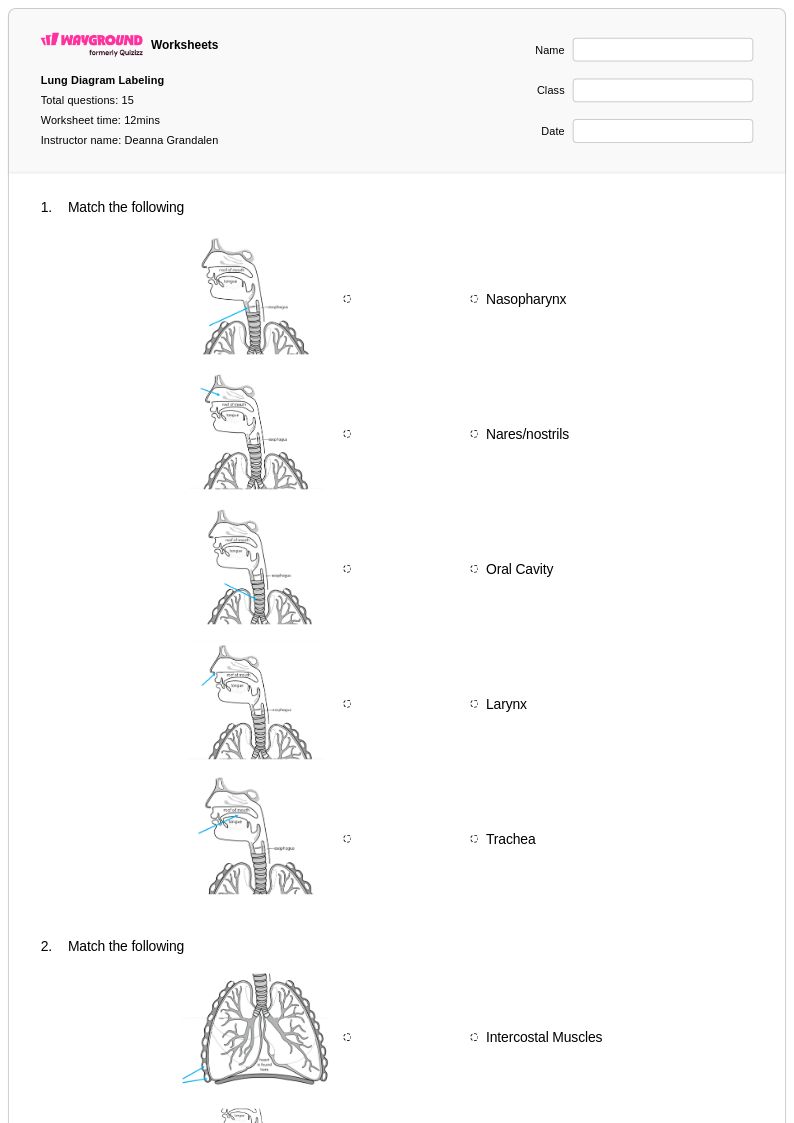
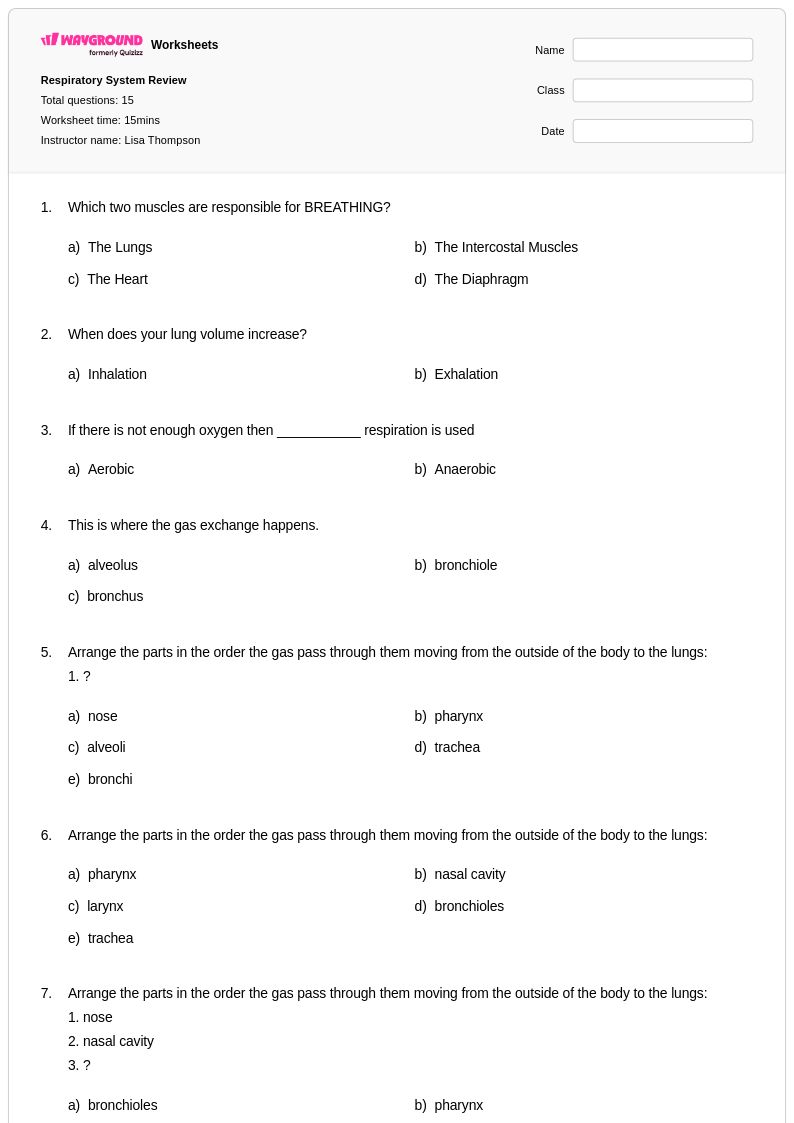
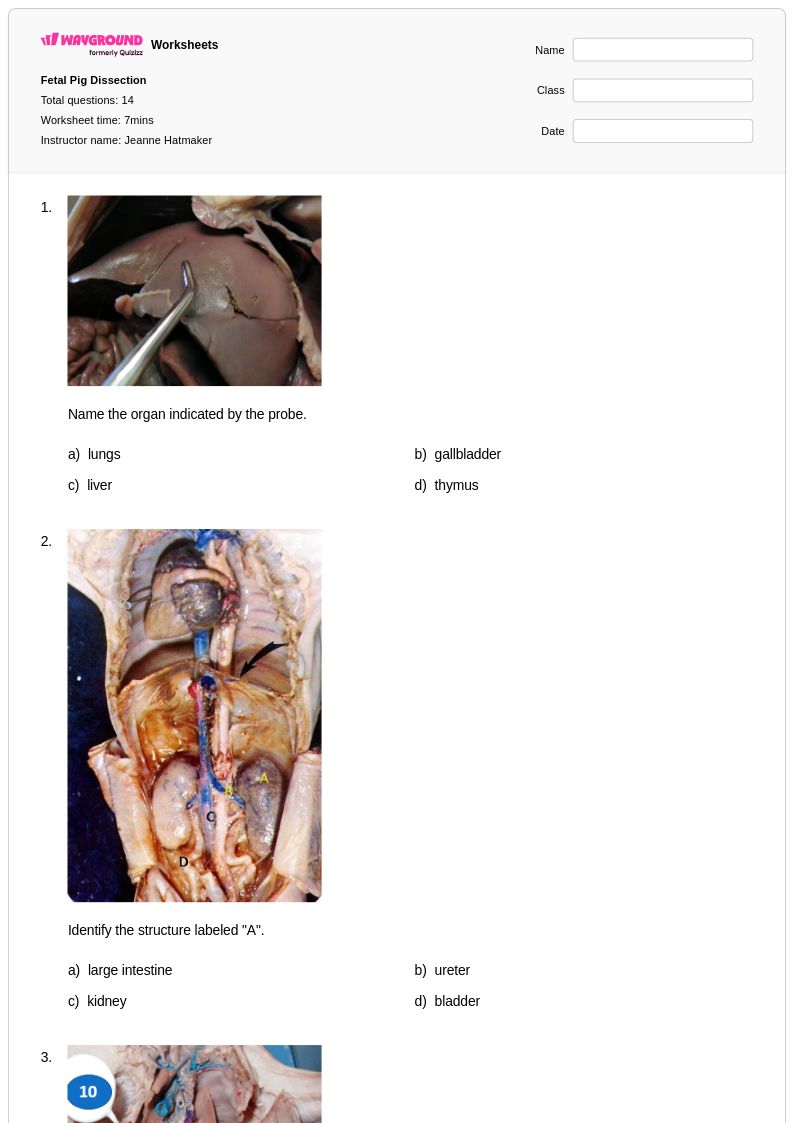
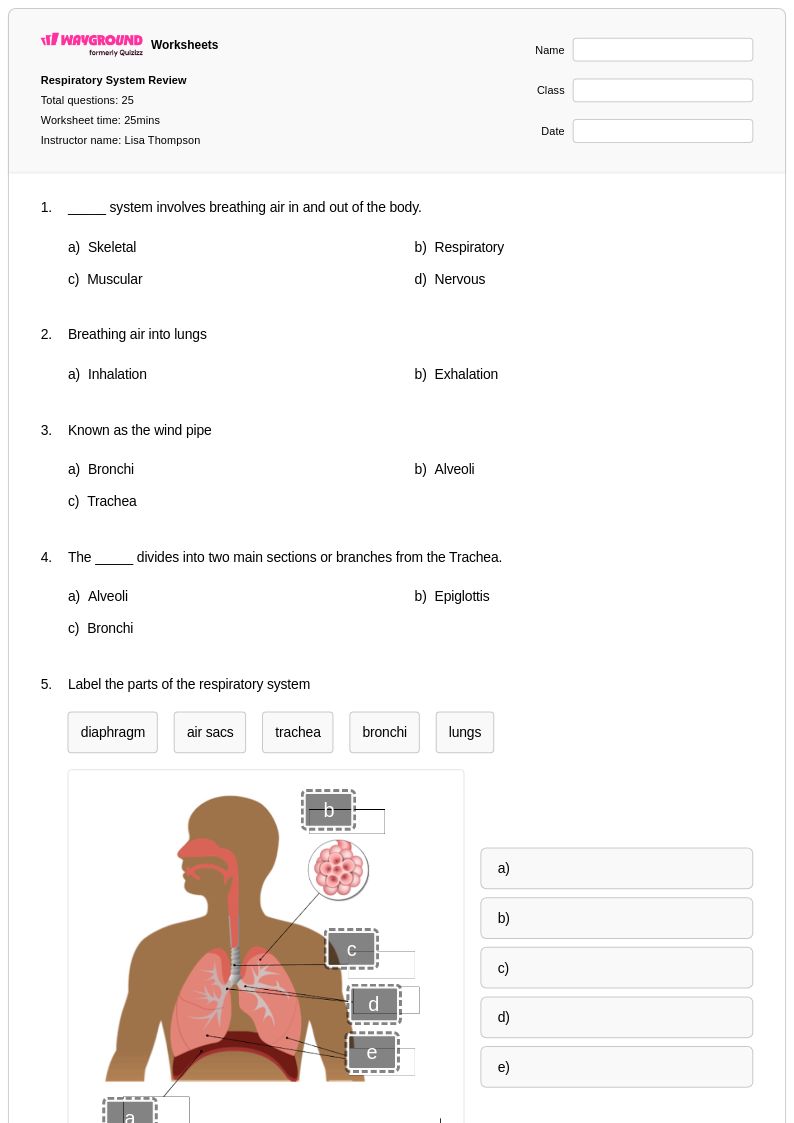
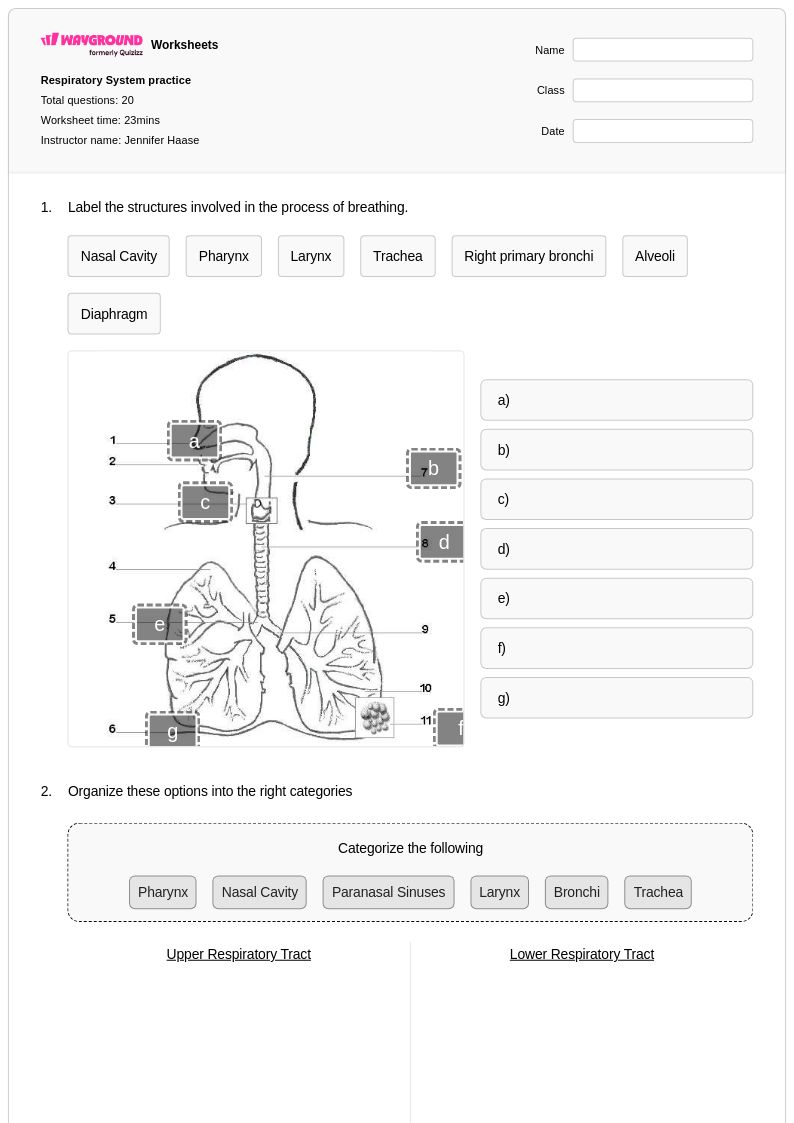
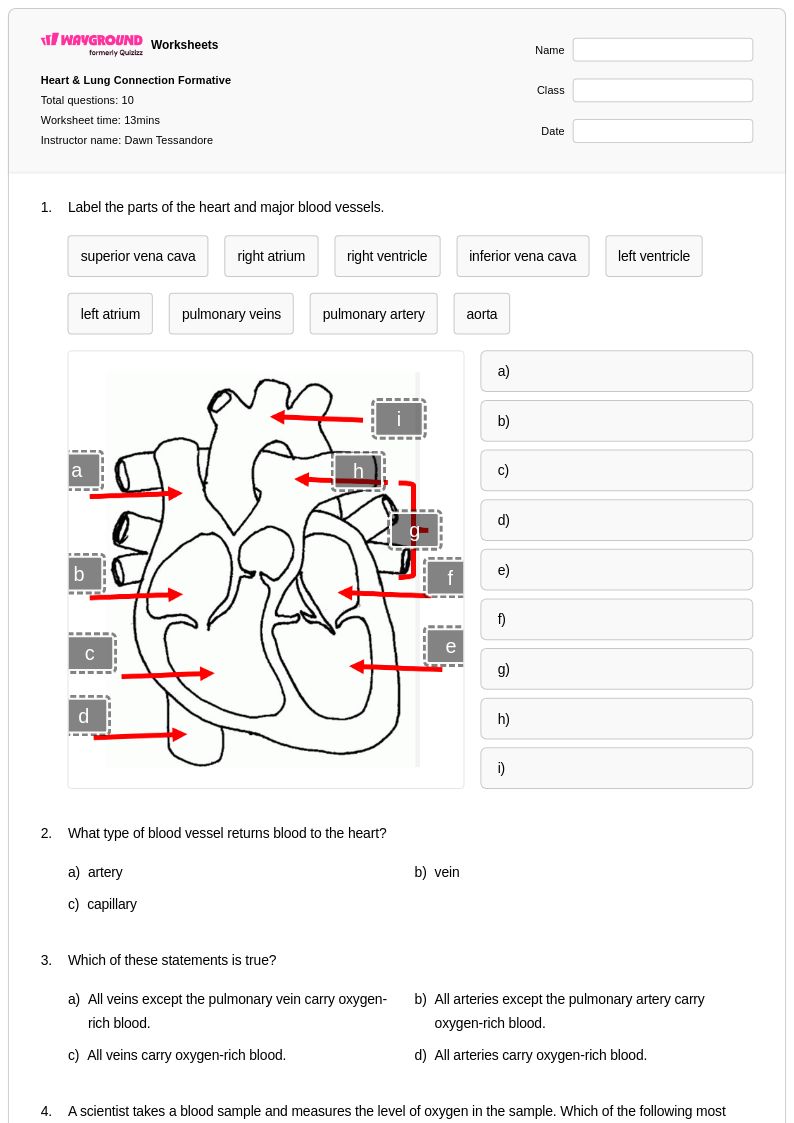
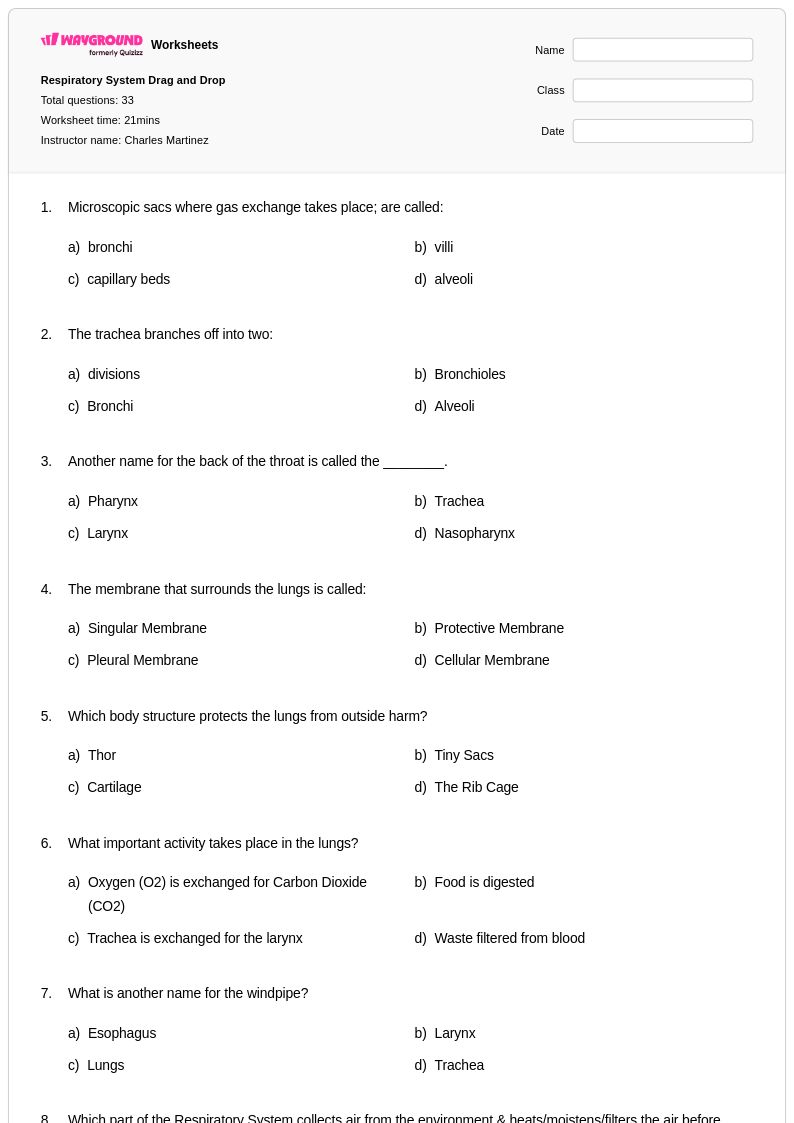
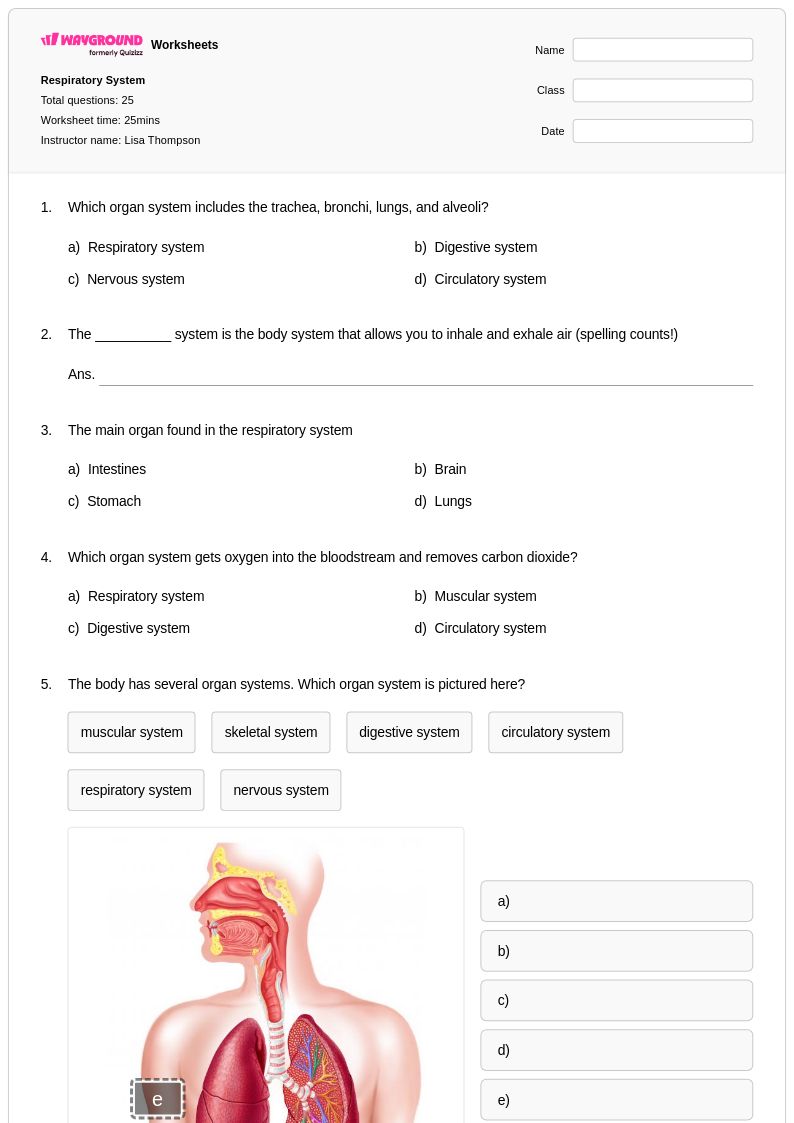
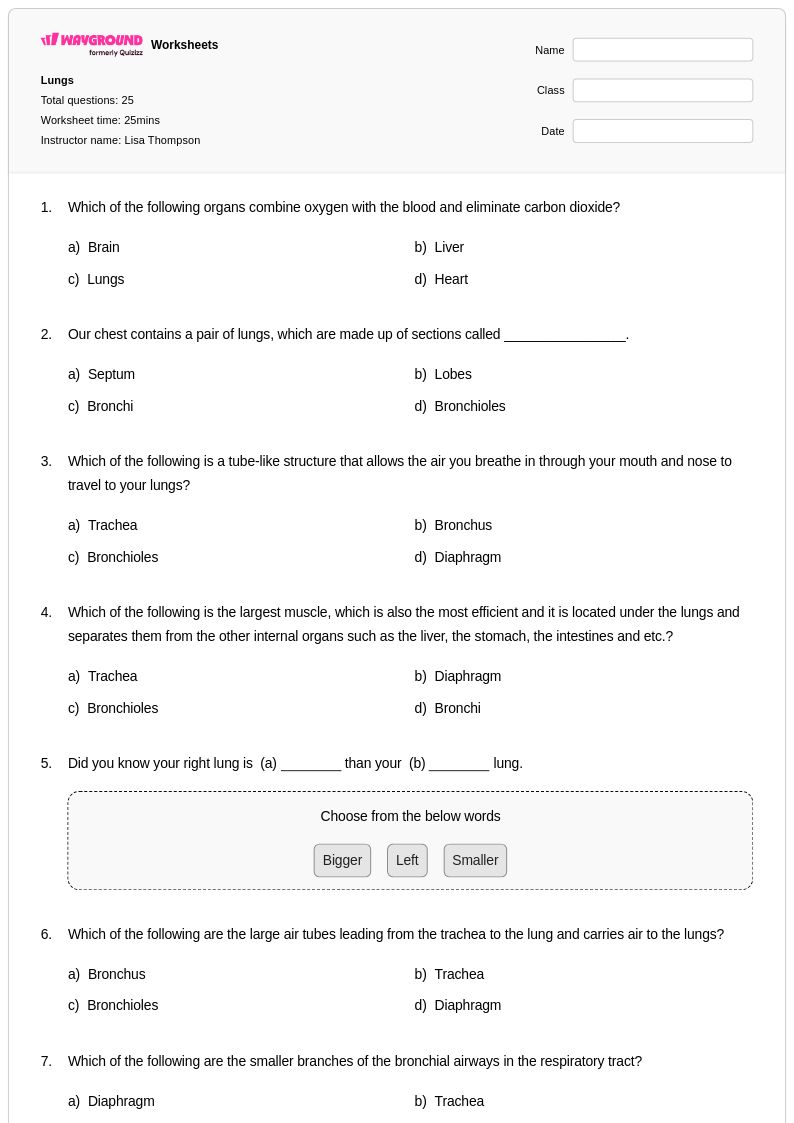
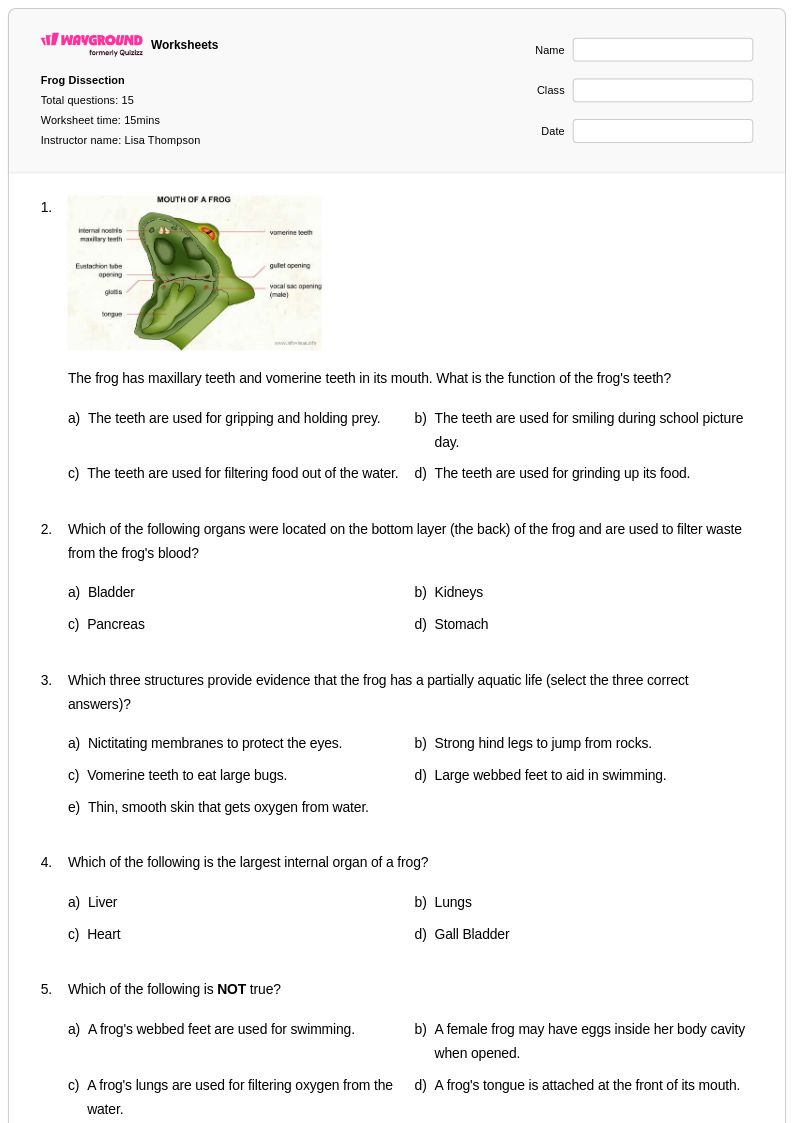
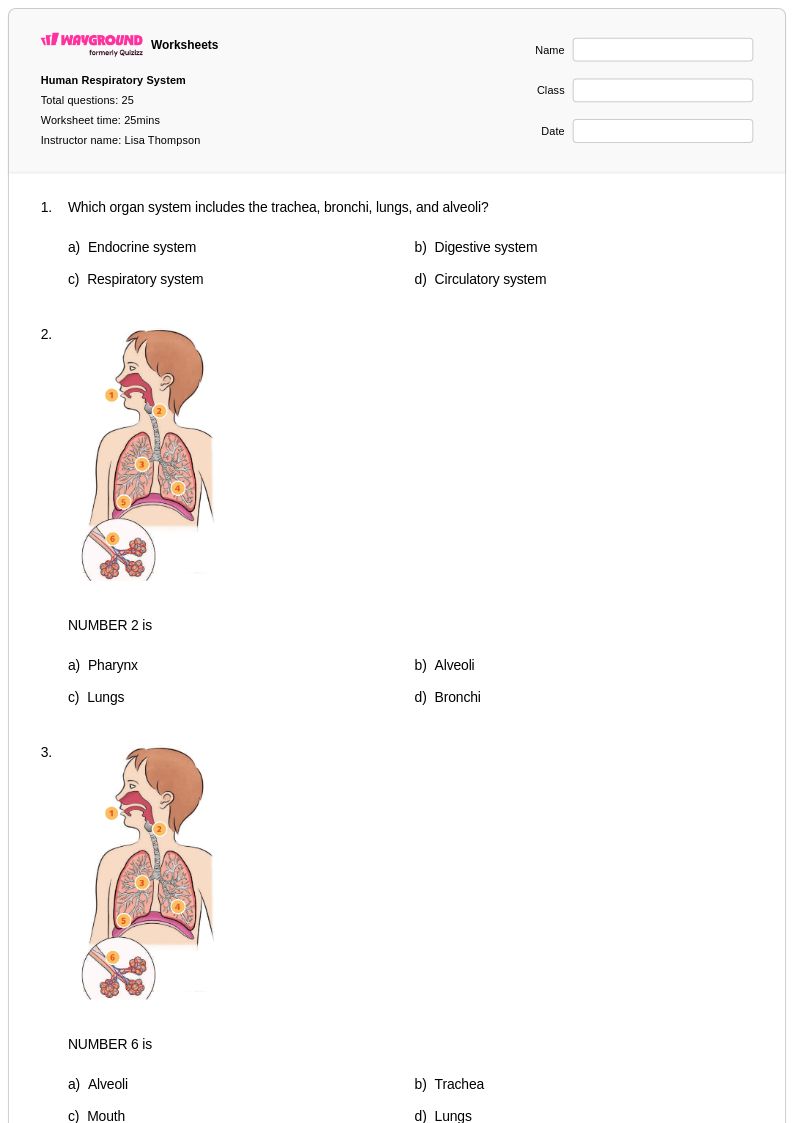
Lung dissection worksheets for Class 10 students available through Wayground (formerly Quizizz) provide comprehensive guidance for one of the most impactful hands-on learning experiences in human biology education. These expertly designed worksheets support students as they examine the intricate structure of mammalian respiratory systems, identifying key anatomical features such as the bronchi, bronchioles, alveoli, and pleural membranes while understanding their functional relationships. Each worksheet includes detailed procedural steps, anatomical diagrams for labeling, observation questions that promote critical thinking, and answer keys that help students verify their understanding of respiratory system morphology. The free printables incorporate practice problems that challenge students to connect their direct observations with physiological concepts, reinforcing essential skills in scientific observation, data recording, and biological analysis while building confidence in laboratory techniques.
Wayground (formerly Quizizz) empowers teachers with millions of educator-created lung dissection resources that streamline lesson planning and enhance student engagement in Class 10 human biology courses. The platform's robust search and filtering capabilities allow teachers to quickly locate worksheets that align with specific curriculum standards and match their students' varying skill levels, while differentiation tools enable customization for both remediation and enrichment purposes. Teachers can access these materials in both printable pdf formats for traditional laboratory settings and digital versions for virtual or hybrid learning environments, providing flexibility in delivery methods. The extensive collection supports diverse instructional needs, from pre-dissection preparation activities that build foundational knowledge to post-laboratory assessments that reinforce anatomical terminology and physiological understanding, ultimately helping educators create comprehensive learning experiences that bridge theoretical concepts with practical application.
FAQs
How do I teach a lung dissection lab in a high school biology class?
Begin by grounding students in respiratory system anatomy before the lab, covering key structures such as the trachea, bronchi, bronchioles, alveoli, and pleural membrane. During the dissection, use a structured observation guide so students record findings systematically rather than passively watching. Pairing anatomical identification with hypothesis-based questions, such as predicting how lung tissue will respond to inflation, encourages deeper scientific reasoning and keeps students analytically engaged throughout the procedure.
What exercises help students practice identifying lung structures after a dissection?
Labeling diagrams of mammalian lung anatomy is one of the most effective reinforcement exercises because it requires students to retrieve and apply what they observed during dissection rather than simply re-reading notes. Comparative analysis activities, where students contrast healthy lung tissue with diseased tissue models or images, extend that understanding into real-world physiology. Data table completion tasks that ask students to record observations about texture, color, and inflation response also reinforce the connection between hands-on findings and course content.
What mistakes do students commonly make during a lung dissection lab?
A frequent error is misidentifying the bronchi and trachea, particularly when students cut before orienting themselves to the specimen's dorsal and ventral sides. Students also tend to confuse the pleural membrane with surrounding connective tissue, especially in preserved specimens where color differentiation is limited. Another common misconception is assuming all mammalian lung lobes are symmetrical, when in fact the right and left lungs typically have different lobe counts, which structured observation guides can help students discover and correct in real time.
How can I support students who are uncomfortable with dissection or who cannot participate?
For students who are uncomfortable or unable to participate in physical dissection, virtual dissection activities and digital worksheet versions provide an equivalent learning experience without requiring physical specimens. Structured observation guides and labeling exercises can be completed using high-resolution anatomical diagrams or virtual lab platforms, preserving the analytical rigor of the activity. On Wayground, worksheets are available in digital formats that allow these students to engage with the same content independently, and the platform's Read Aloud accommodation can support students who need audio assistance while working through the material.
How do I use Wayground's lung dissection worksheets in my classroom?
Wayground's lung dissection worksheets are available as printable PDFs, making them straightforward to distribute in a traditional lab setting alongside physical specimens or models. Digital versions can also be assigned for virtual dissection experiences or homework review, accommodating classrooms where physical dissection is not feasible. Teachers can host the materials as a quiz on Wayground to track student responses and assess comprehension in real time, and complete answer keys are included with each worksheet to support efficient grading and post-lab discussion.
How do I differentiate a lung dissection lab for students at different skill levels?
For developing learners, scaffolded observation guides with sentence starters and pre-labeled reference diagrams reduce cognitive load while keeping students focused on the core anatomical concepts. Advanced students benefit from open-ended comparative analysis tasks, such as examining how lung structure supports gas exchange efficiency, which push beyond identification into applied physiology. On Wayground, teachers can apply student-level accommodations such as reduced answer choices or extended time to individual students without disrupting the rest of the class, making differentiation practical to manage during a busy lab period.