
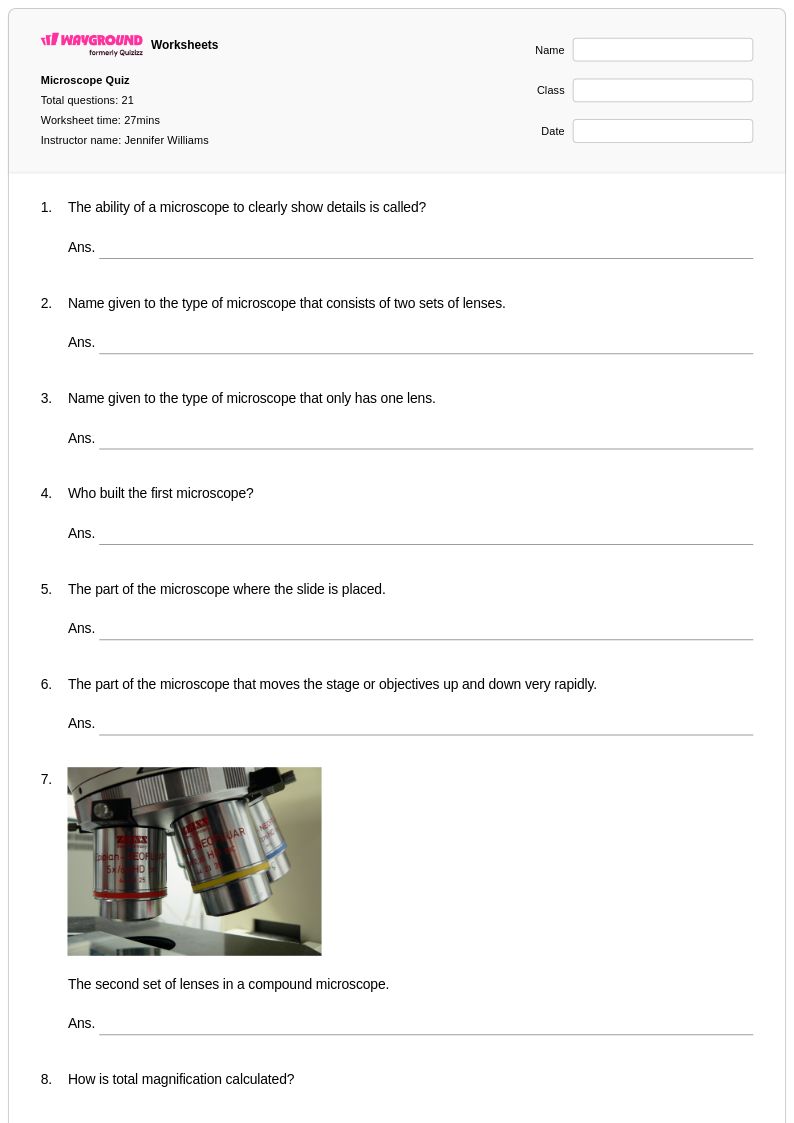
21 Q
7th
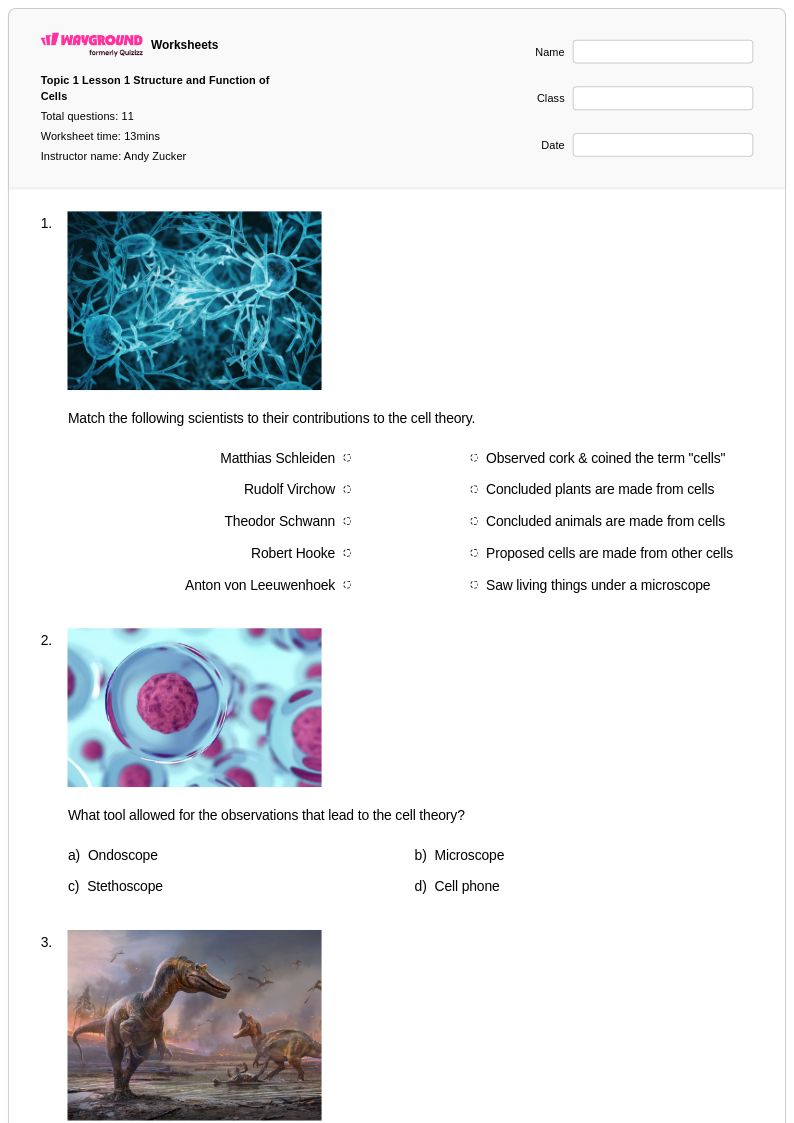
11 Q
7th
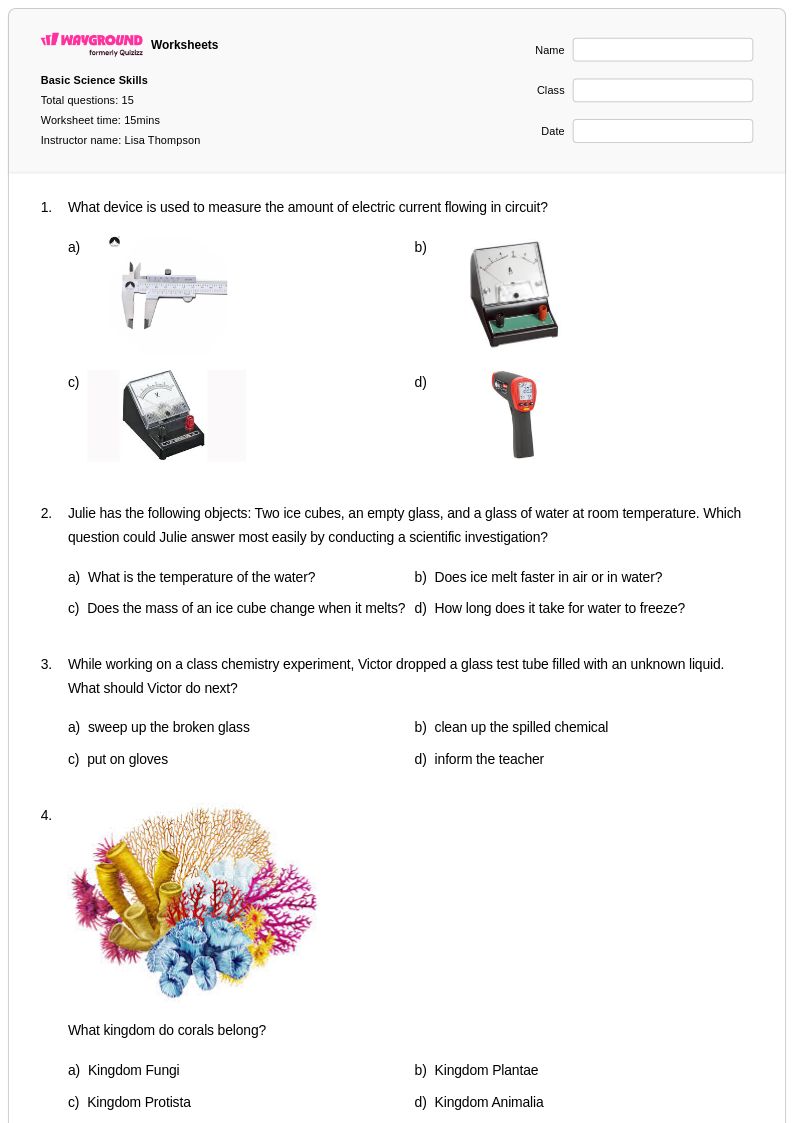
15 Q
7th - Uni
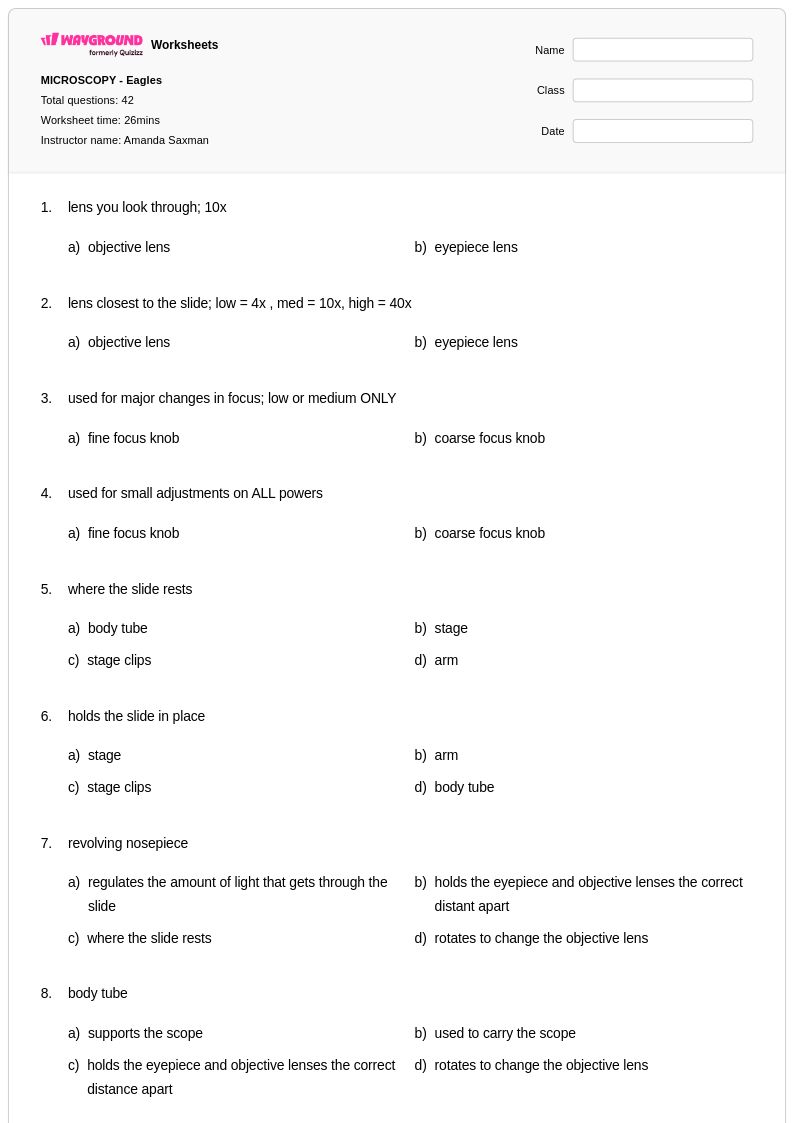
42 Q
7th
46 Q
6th - 8th
15 Q
6th - Uni
20 Q
7th - 9th
20 Q
7th
8 Q
7th - 9th
10 Q
7th - 8th
16 Q
6th - 8th
21 Q
6th - 8th
25 Q
7th - Uni
15 Q
7th
20 Q
7th
37 Q
7th
21 Q
7th
30 Q
7th
15 Q
7th
25 Q
5th - Uni
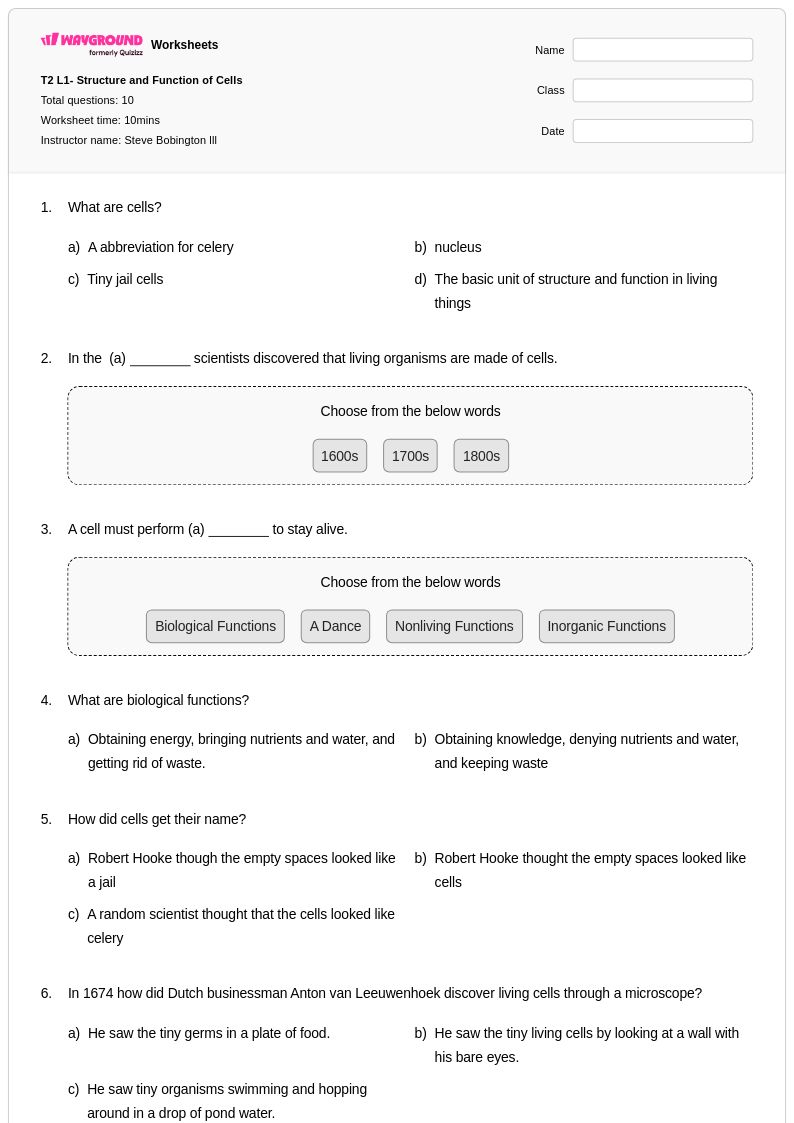
10 Q
7th
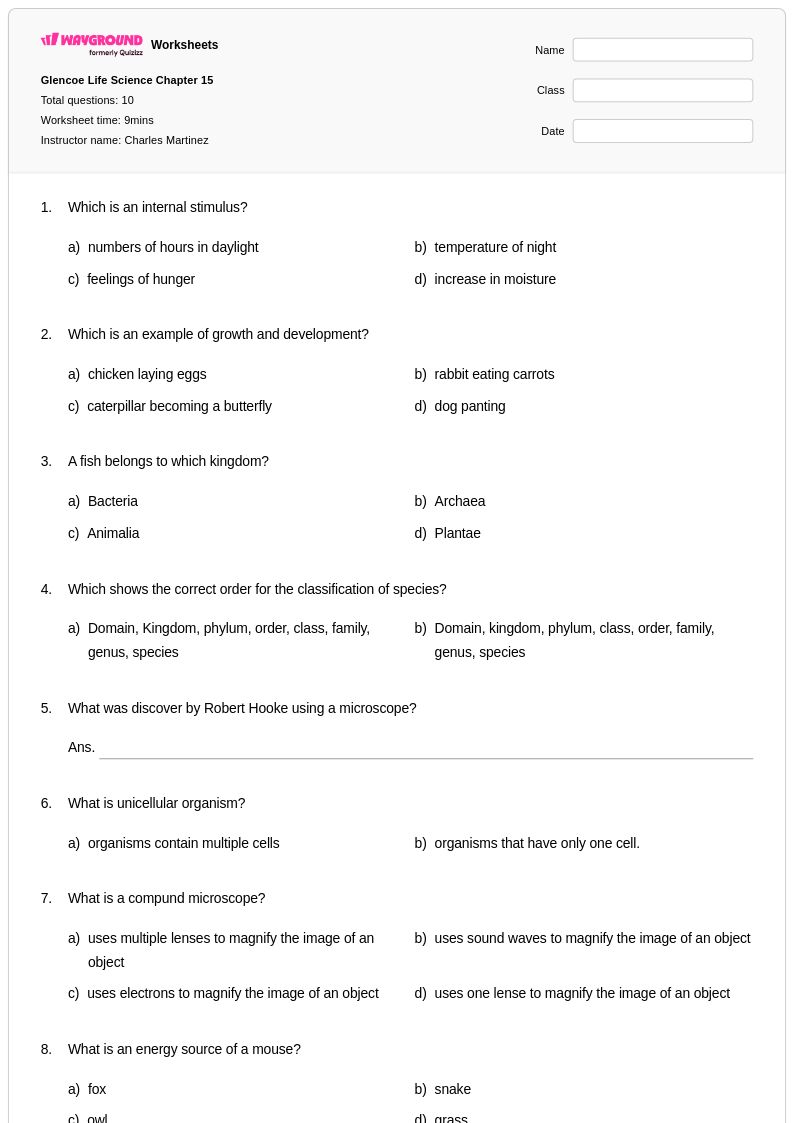
10 Q
5th - 7th
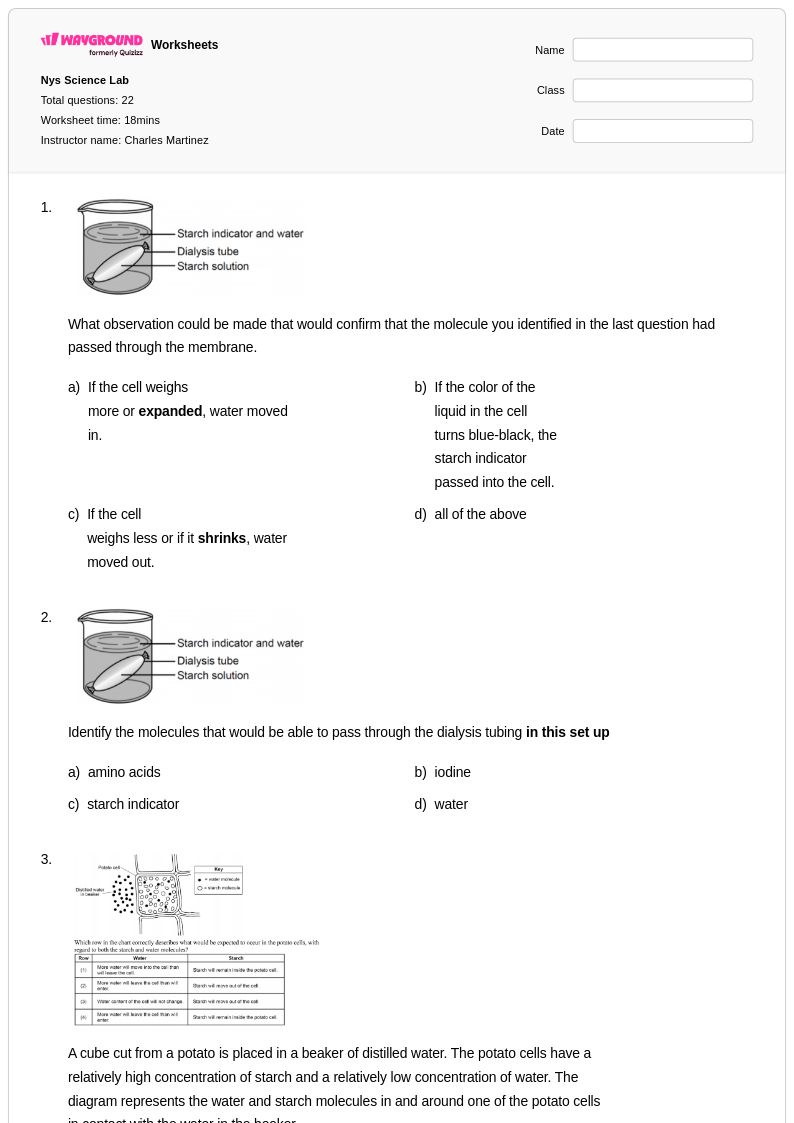
22 Q
6th - 9th
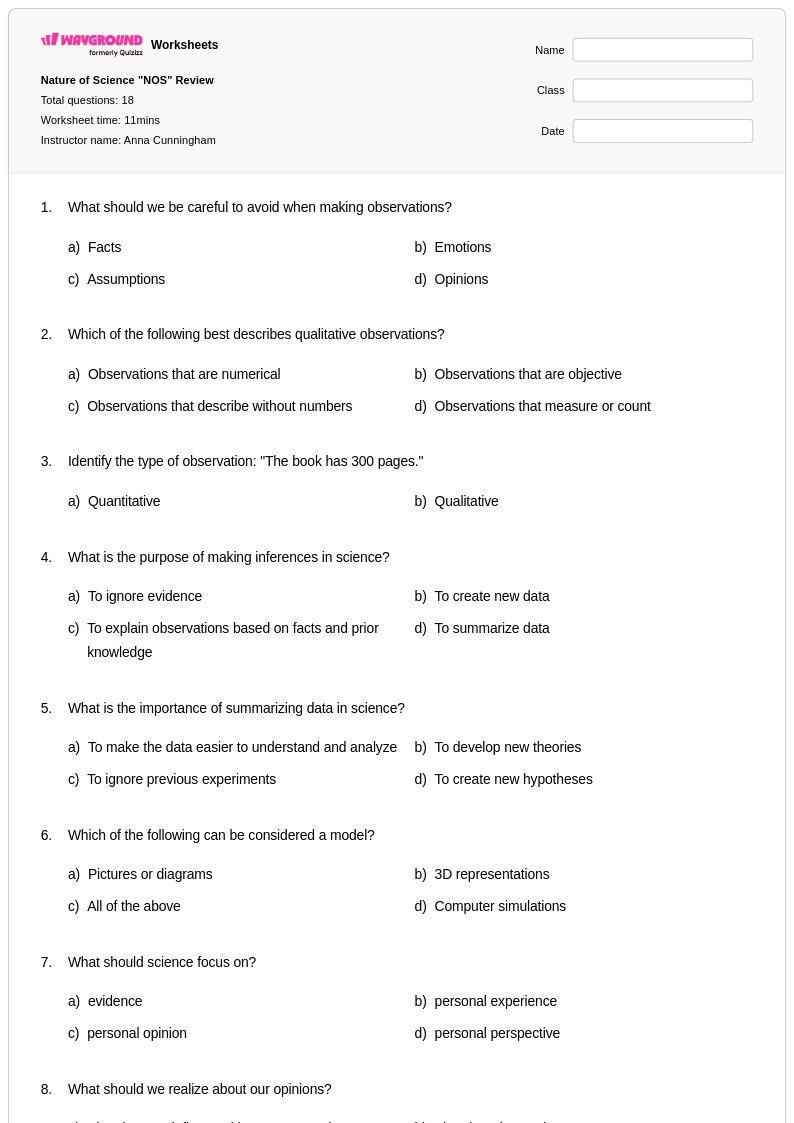
18 Q
7th
Explore Microscope Observation Worksheets by Grades
Explore Other Subject Worksheets for class 7
Explore printable Microscope Observation worksheets for Class 7
Microscope observation worksheets for Class 7 biology students available through Wayground (formerly Quizizz) provide comprehensive practice in fundamental laboratory skills essential for life science education. These carefully designed resources help students develop proficiency in proper microscope handling, specimen preparation, and accurate scientific observation techniques. The worksheets strengthen critical thinking abilities as students learn to identify cellular structures, calculate magnification levels, and document their findings using precise scientific language. Each printable worksheet includes detailed practice problems that guide students through the step-by-step process of microscopic examination, from focusing techniques to field of view calculations, with corresponding answer keys that support both independent study and classroom instruction. These free educational materials incorporate real-world applications that connect microscope usage to broader biological concepts, ensuring students understand the practical importance of microscopy in scientific research and discovery.
Wayground (formerly Quizizz) empowers educators with an extensive collection of millions of teacher-created microscope observation resources specifically designed to meet diverse Class 7 biology classroom needs. The platform's advanced search and filtering capabilities enable teachers to quickly locate worksheets aligned with specific curriculum standards, whether focusing on plant cell observation, bacterial identification, or comparative microscopy studies. These versatile materials support differentiated instruction through customizable content that accommodates various learning levels and can be easily modified for remediation or enrichment purposes. Teachers can access these resources in multiple formats, including downloadable pdf files for traditional classroom use or digital versions for interactive learning environments. The comprehensive worksheet collections facilitate effective lesson planning by providing ready-to-use materials for skill practice, laboratory preparation, and assessment activities, allowing educators to focus more time on direct instruction and student support rather than resource creation.
FAQs
How do I teach microscope observation skills to biology students?
What exercises help students practice microscope observation and magnification calculations?
What mistakes do students commonly make when recording microscope observations?
How do I differentiate microscope observation worksheets for students at different skill levels?
How can I use Wayground's microscope observation worksheets in my classroom?