Free Printable Naming Covalent Compounds Worksheets for Class 11
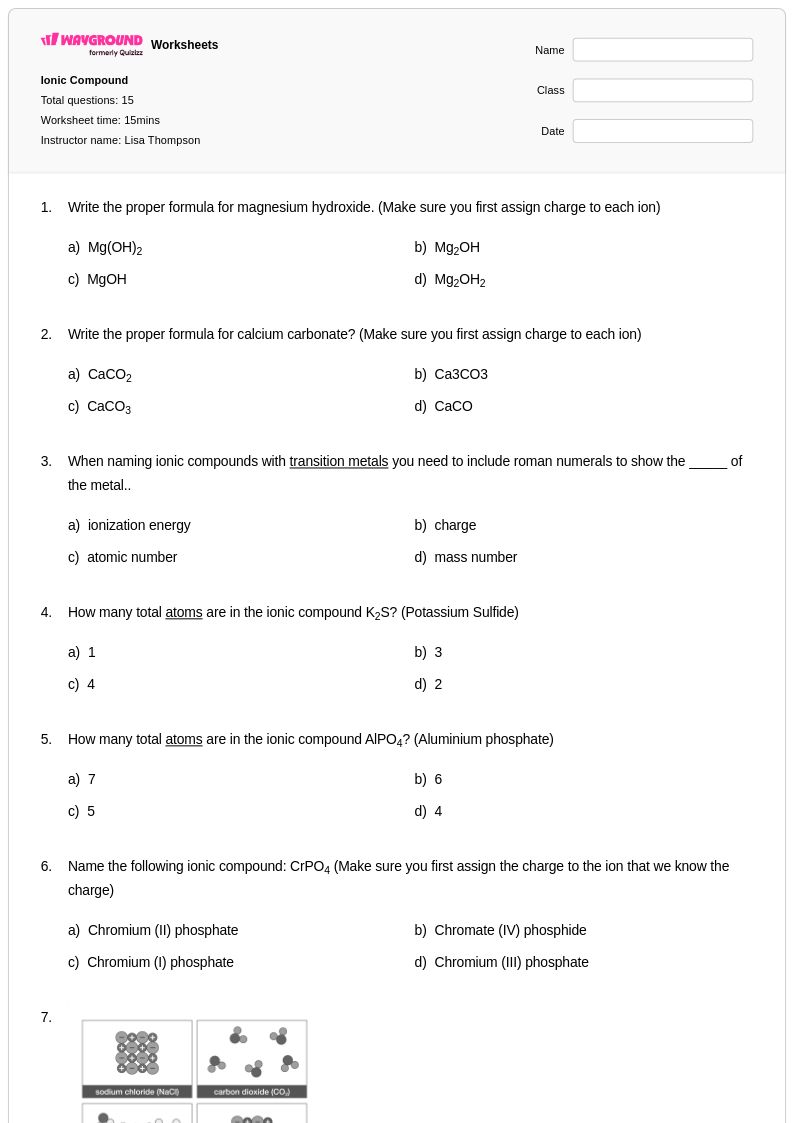
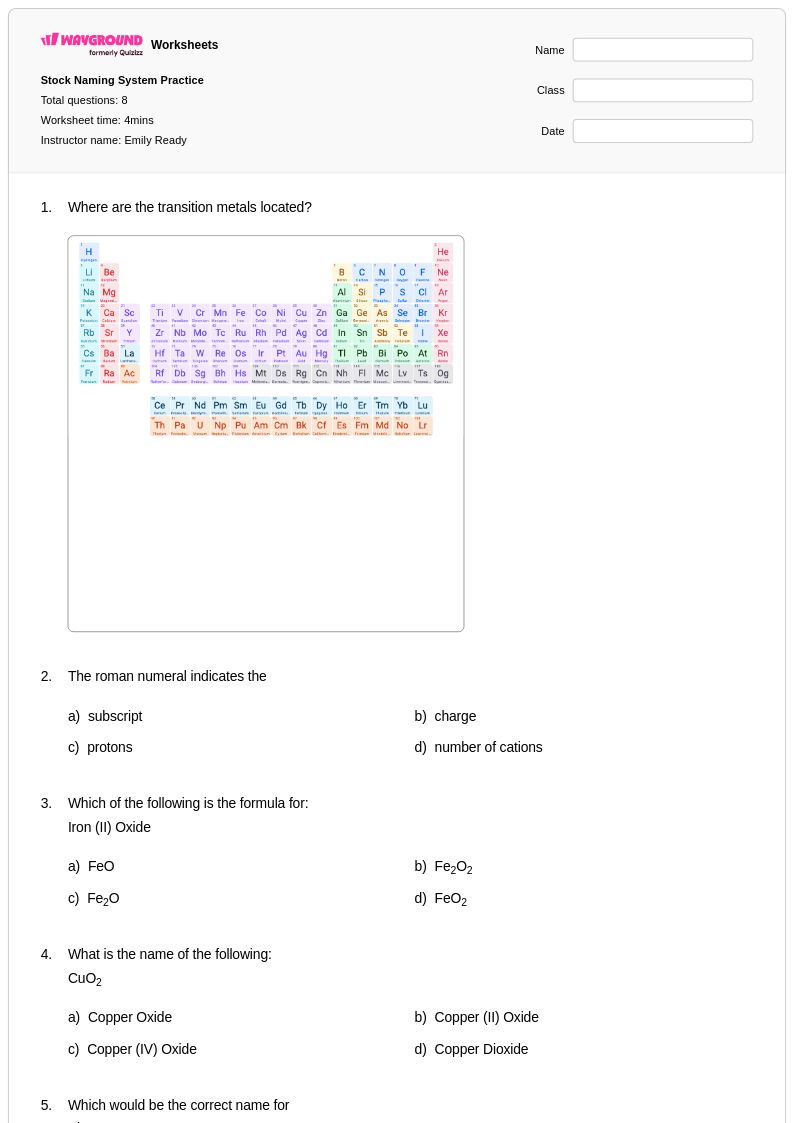
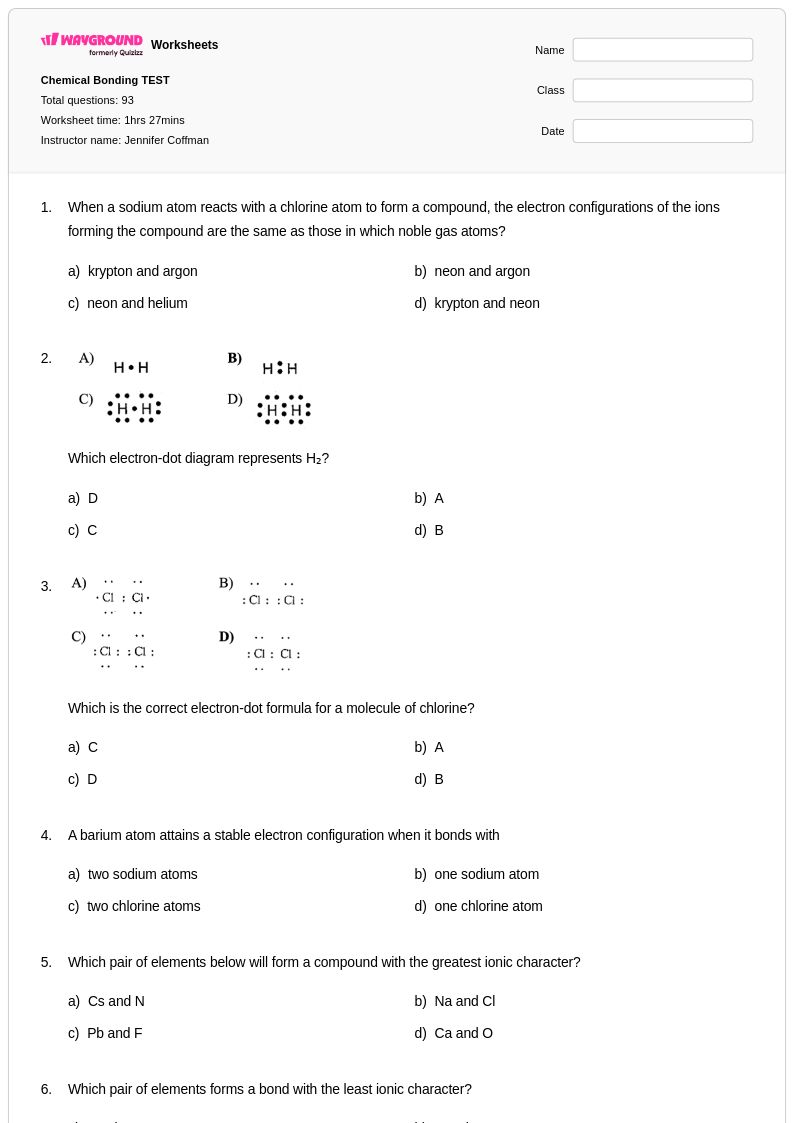
Wayground offers free Class 11 naming covalent compounds worksheets and printables with practice problems and answer keys to help students master chemical nomenclature rules and molecular compound identification.
Explore printable Naming Covalent Compounds worksheets for Class 11
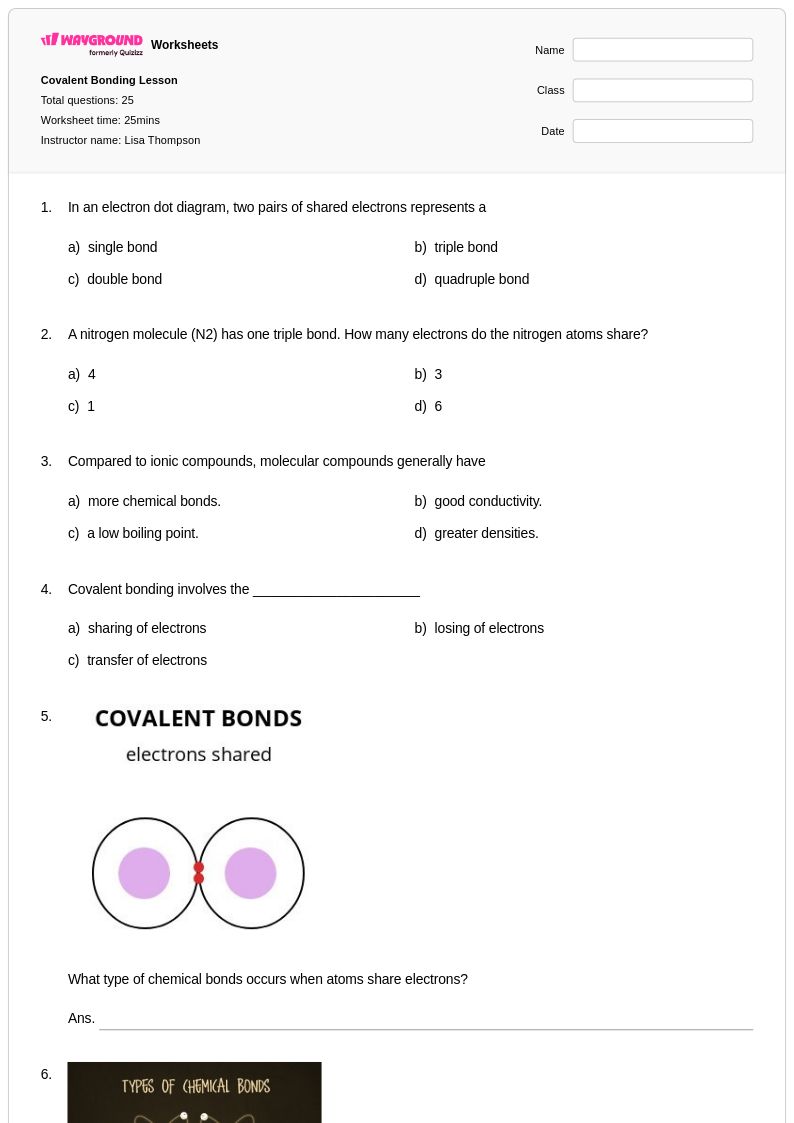
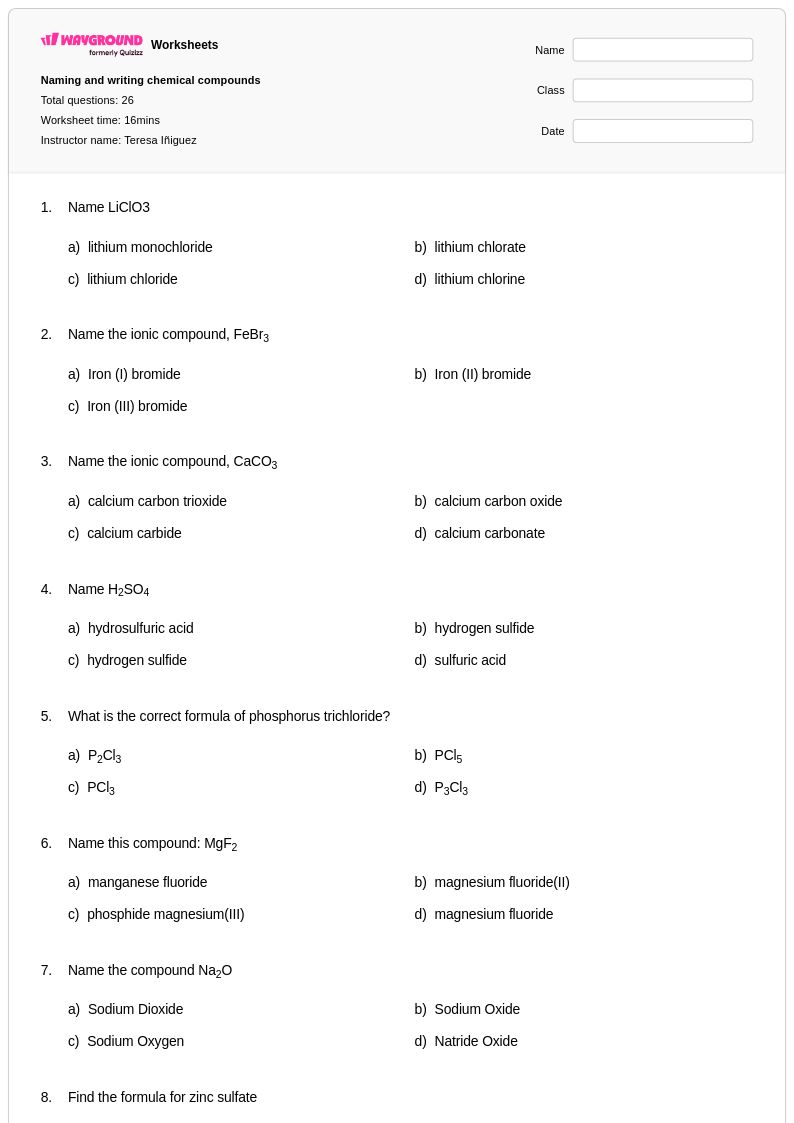
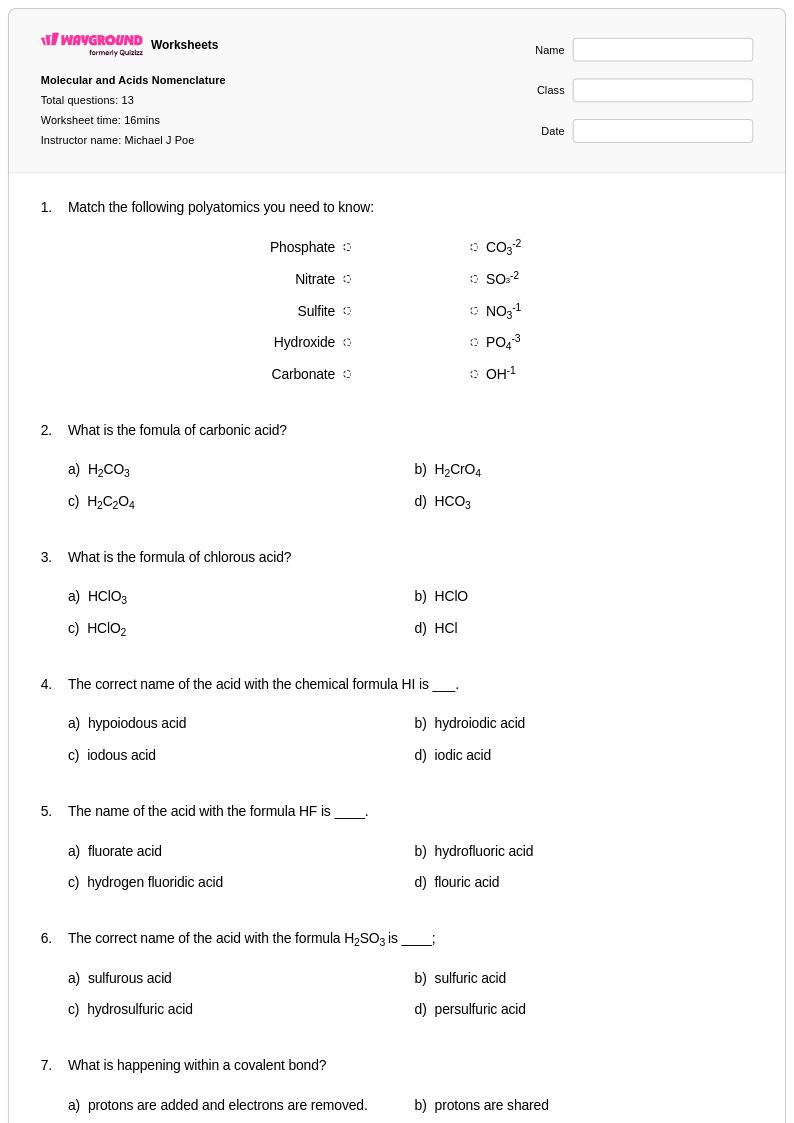
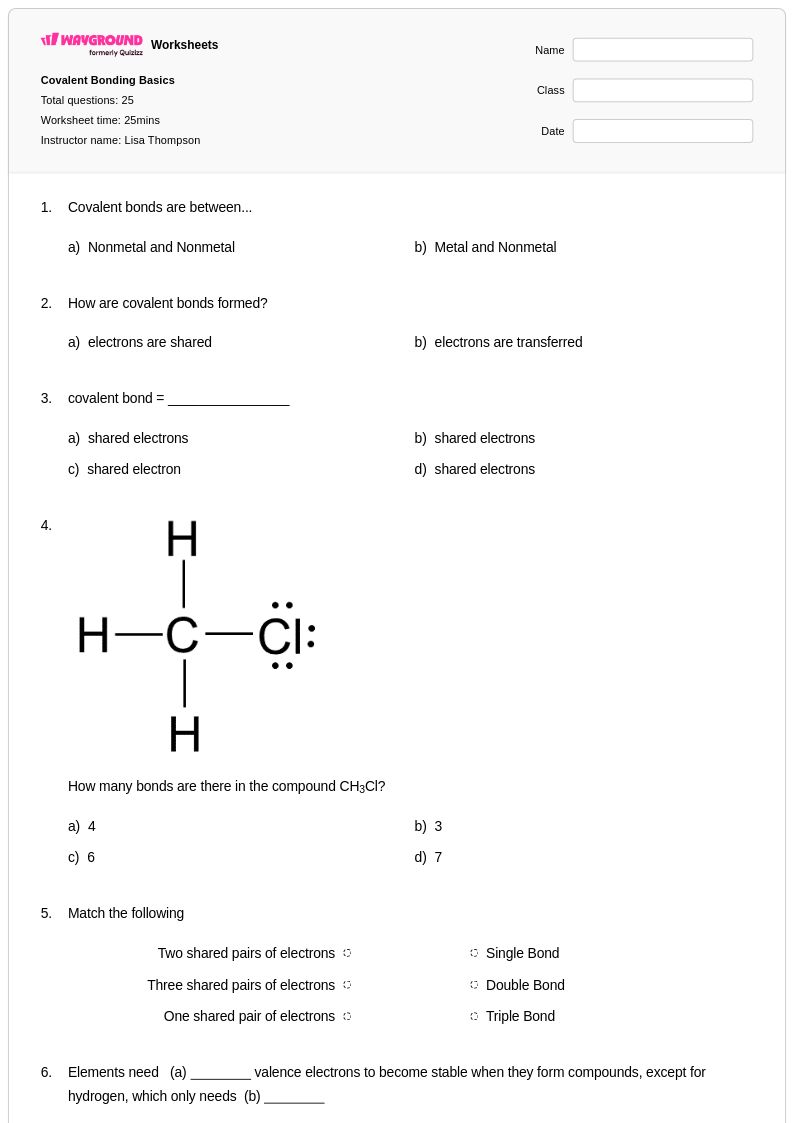
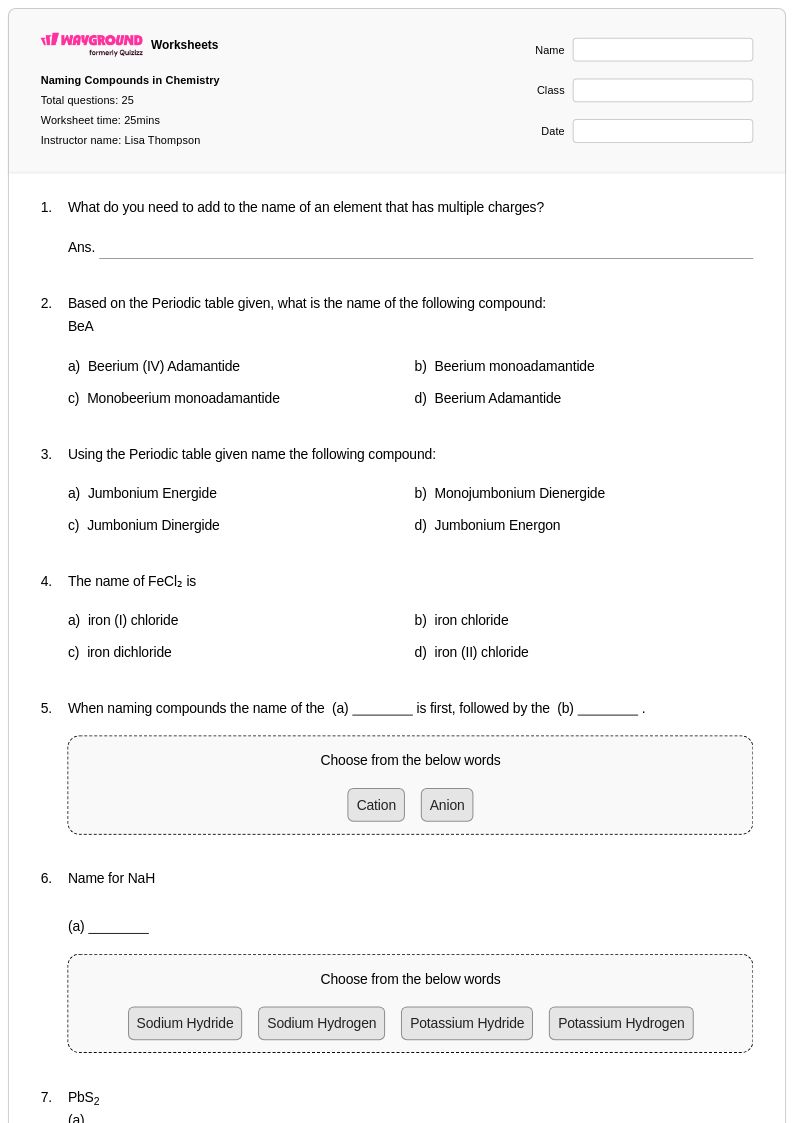
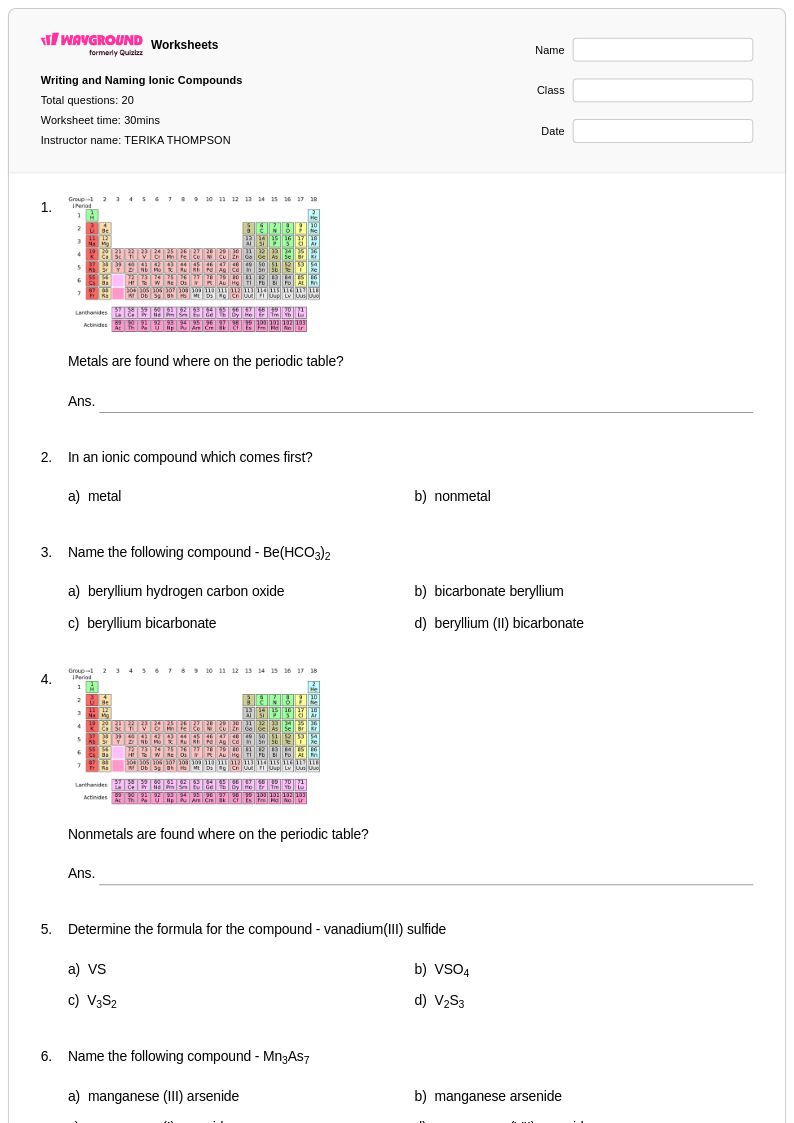
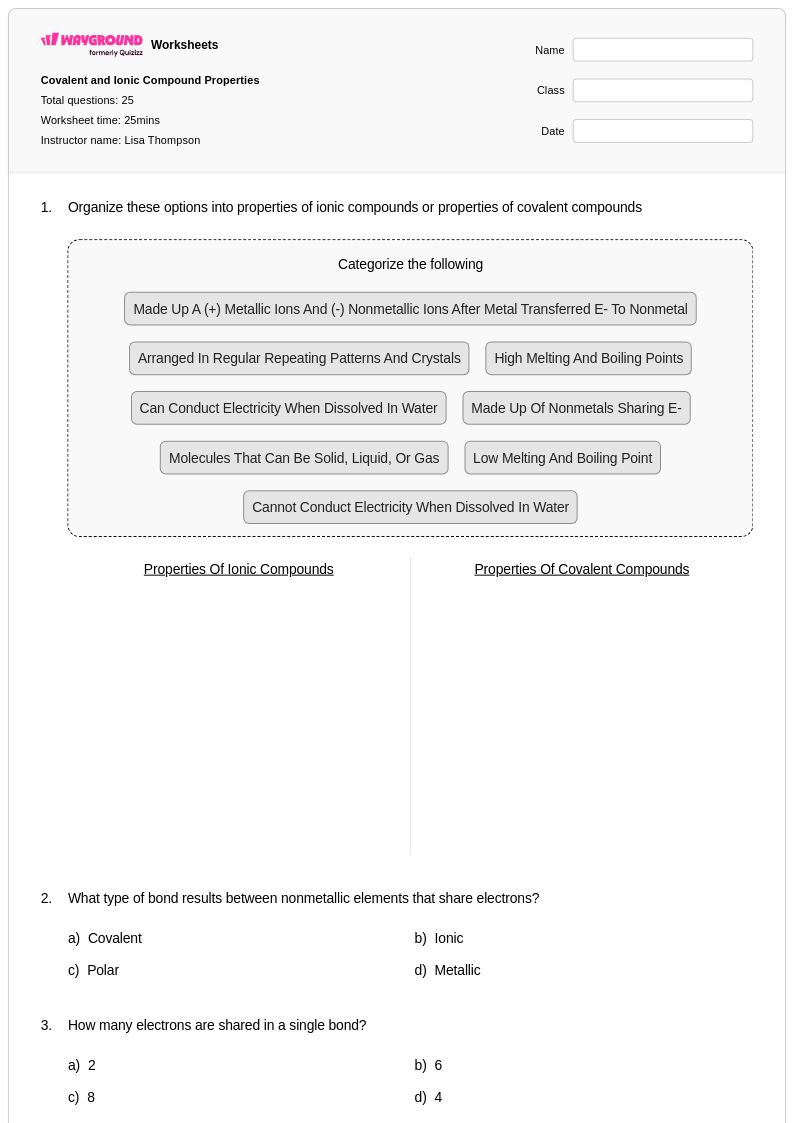
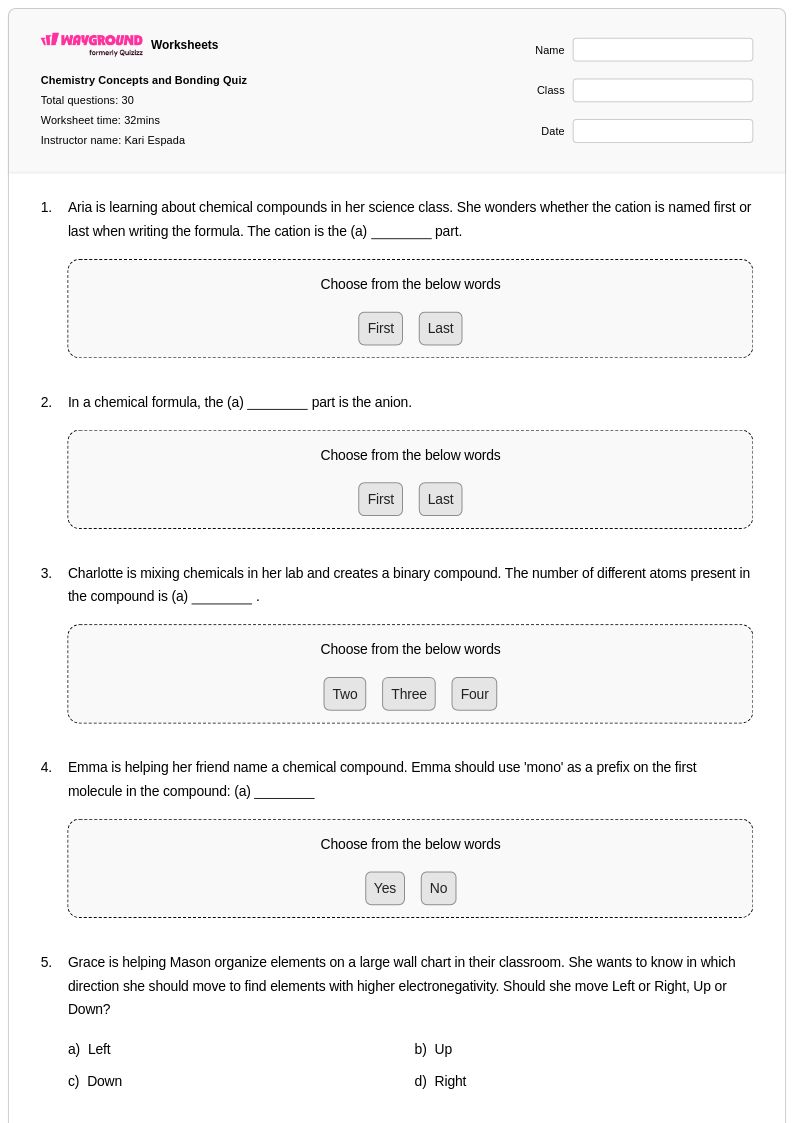
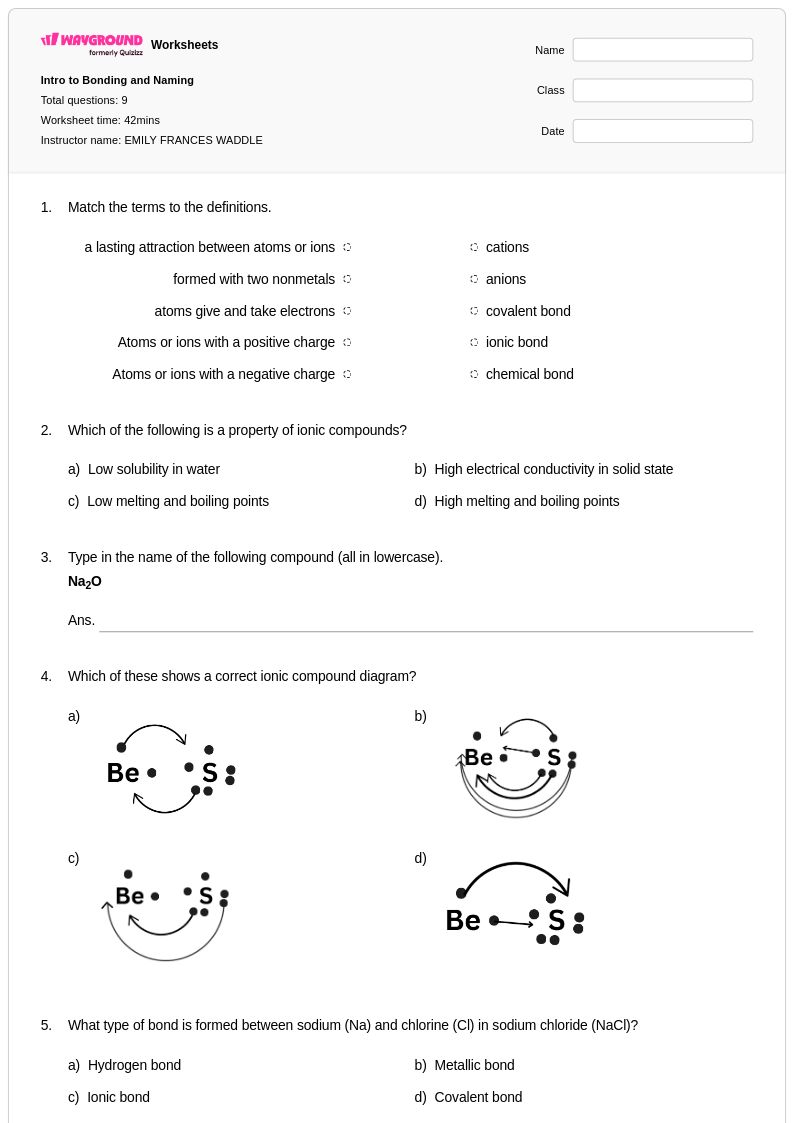
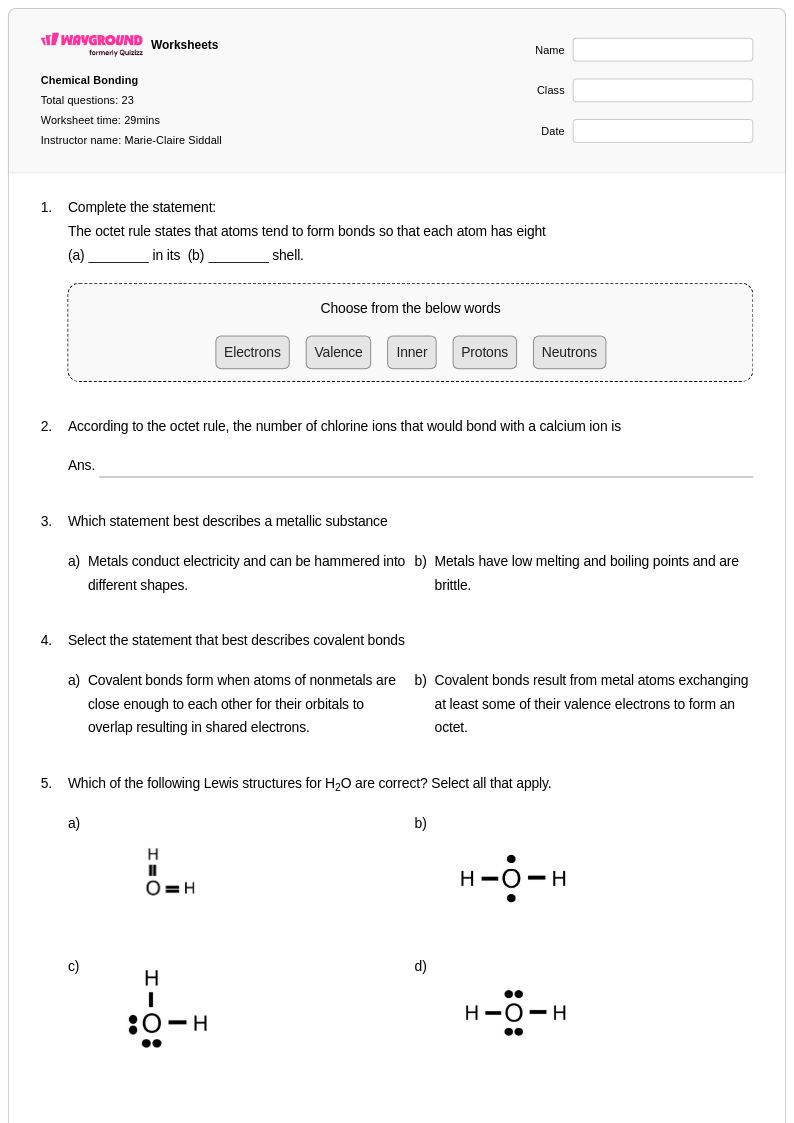
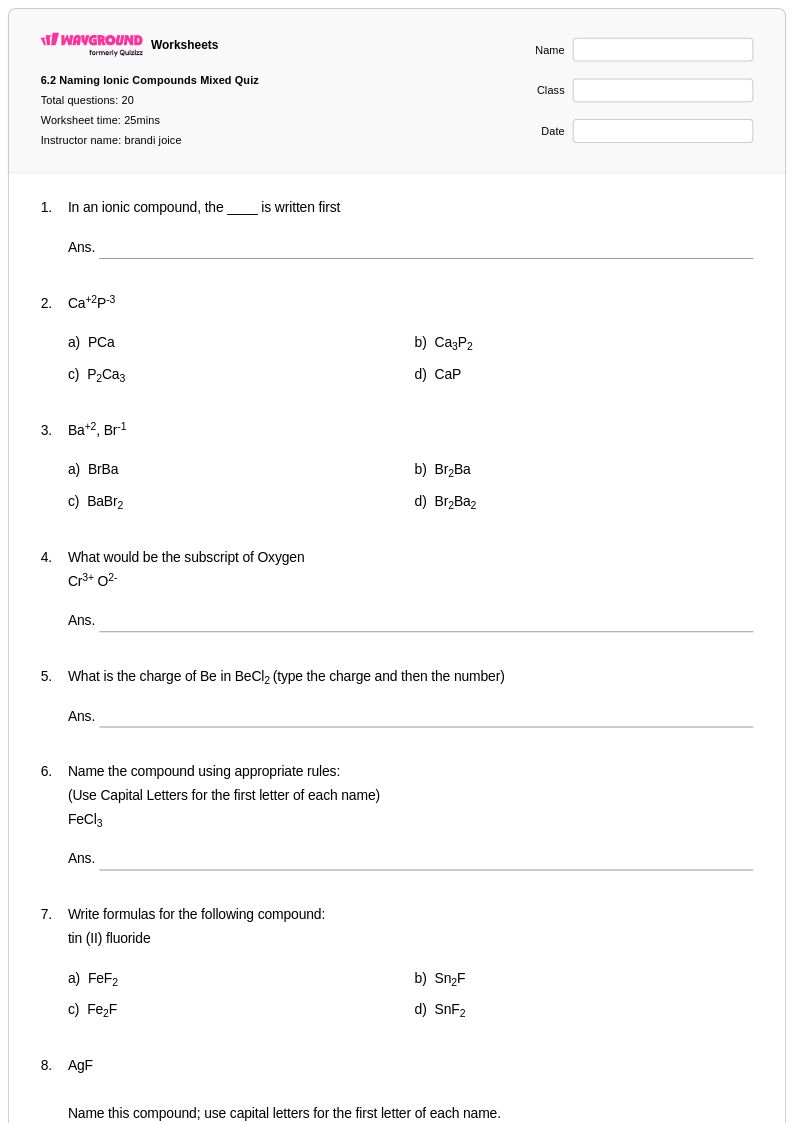
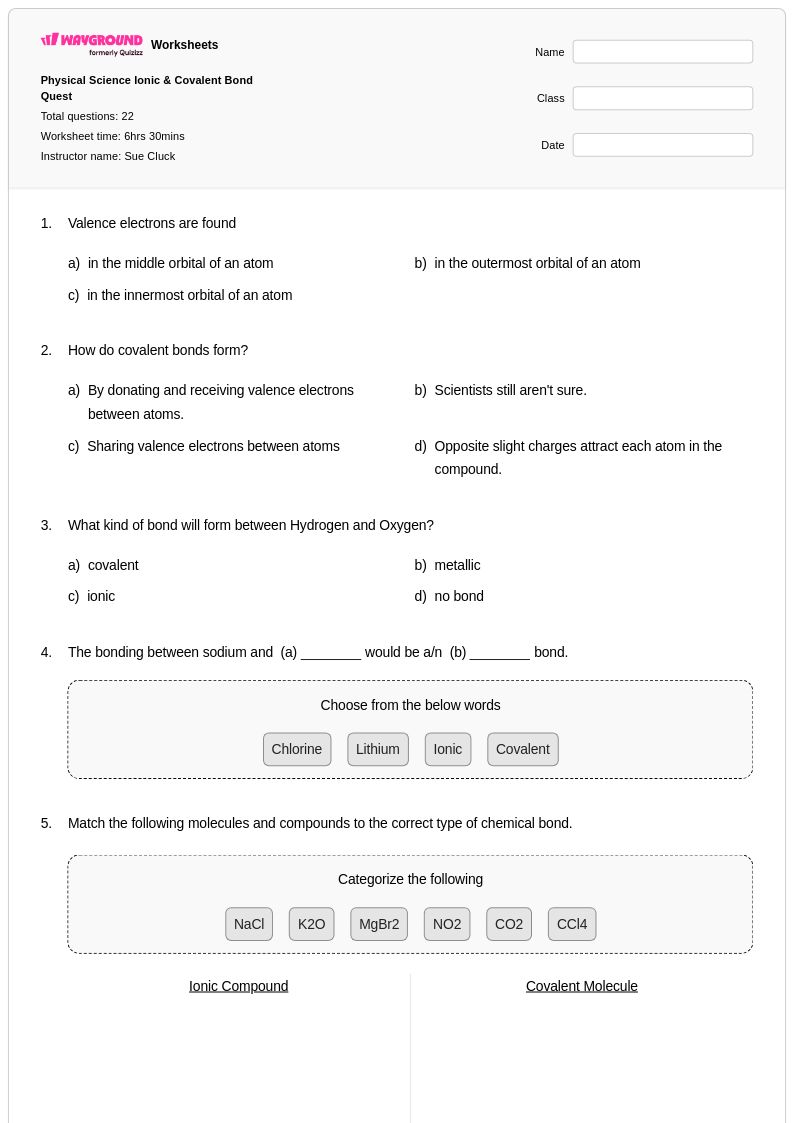
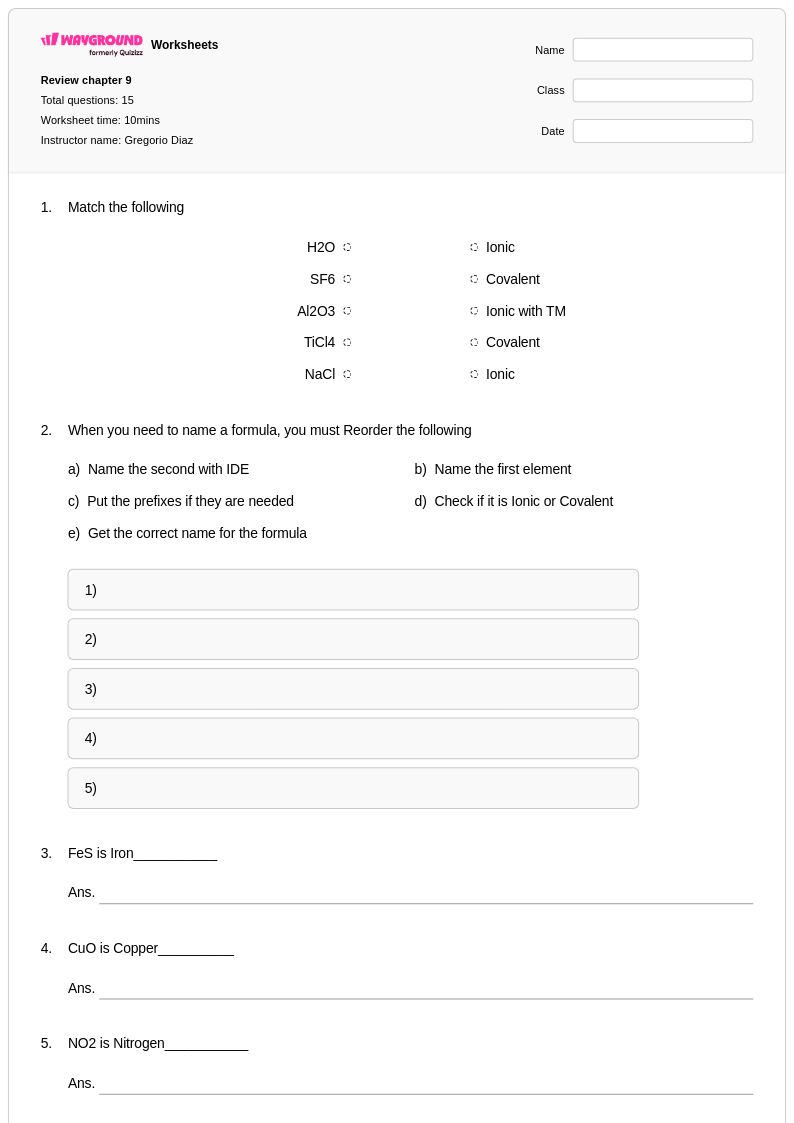
Naming covalent compounds represents a fundamental skill in Class 11 chemistry that requires students to master systematic nomenclature rules for molecular substances. Wayground's comprehensive collection of naming covalent compounds worksheets provides structured practice with binary molecular compounds, helping students learn to identify nonmetal elements, apply proper prefixes, and construct accurate chemical names following IUPAC conventions. These expertly designed practice problems strengthen students' ability to translate between molecular formulas and systematic names, covering everything from simple diatomic molecules to complex polyatomic compounds. Each worksheet includes detailed answer keys and is available as free printable pdf resources, allowing students to work through progressively challenging examples that build confidence in distinguishing between ionic and covalent naming systems.
Wayground's platform supports chemistry educators with millions of teacher-created resources specifically designed for Class 11 chemical nomenclature instruction. The advanced search and filtering capabilities enable teachers to locate worksheets aligned with specific curriculum standards, while differentiation tools allow customization for varied skill levels within the classroom. These naming covalent compounds materials are available in both printable pdf format for traditional classroom use and digital formats for interactive learning environments. Teachers can efficiently plan remediation sessions for struggling students, provide enrichment activities for advanced learners, and implement consistent skill practice that reinforces proper nomenclature techniques. The flexible customization options ensure that educators can adapt these resources to meet diverse learning needs while maintaining rigorous academic standards in chemical naming conventions.
FAQs
How do I teach students to name covalent compounds?
Start by ensuring students can distinguish covalent (molecular) compounds from ionic ones, since the naming rules differ significantly. Then introduce the IUPAC prefix system — mono, di, tri, tetra, and so on — and have students apply prefixes to each element in a binary molecular compound, noting that the first element drops 'mono' while the second always carries a prefix. Reinforce the pattern with high-frequency examples like carbon dioxide (CO₂) and dinitrogen tetroxide (N₂O₄) before moving to less familiar formulas, since repeated exposure to common compounds builds the automaticity students need.
What exercises help students practice naming covalent compounds?
The most effective practice alternates between two directions: converting molecular formulas to names and converting names back to formulas, which forces students to use the prefix system in both directions rather than memorizing one-way patterns. Structured worksheets that progress from simple binary compounds to more complex molecular structures are particularly useful because they build confidence incrementally. Mixing naming and formula-writing problems within the same assignment also helps students recognize when they have genuinely internalized the rules versus when they are pattern-matching.
What mistakes do students commonly make when naming covalent compounds?
The most common error is applying ionic naming rules to covalent compounds — students often drop prefixes entirely because they are used to naming ionic compounds by ion identity rather than atom count. A second frequent mistake is forgetting that 'mono' is never used for the first element but is required for the second (carbon monoxide, not monocarbon oxide). Students also struggle with vowel elisions, writing 'monooxide' instead of 'monoxide' or 'tetraoxide' instead of 'tetroxide,' which signals that they are applying the prefix mechanically without internalizing the phonetic rules.
How do I help students tell covalent compounds apart from ionic compounds when naming?
Teach students to check the periodic table position of the elements involved: covalent compounds form between two nonmetals, while ionic compounds involve a metal and a nonmetal. A reliable classroom shortcut is to have students ask whether the first element is a metal — if yes, name it as ionic; if no, use the prefix system. Providing side-by-side comparison practice, where students see both compound types and must select the correct naming method before writing the name, is more effective than teaching each type in isolation.
How can I use naming covalent compounds worksheets in my classroom?
Naming covalent compounds worksheets on Wayground are available as printable PDFs for traditional classroom use and in digital formats for technology-integrated environments, including the option to host them as a quiz directly on Wayground. The included answer keys make them practical for independent practice, homework assignments, and test preparation, since students can self-check and identify exactly where their naming process breaks down. Teachers can also use them for guided instruction by working through the step-by-step naming process with the whole class before releasing students to practice independently.
How do I differentiate naming covalent compounds practice for students at different skill levels?
Begin lower-level learners with simple, high-frequency binary compounds like CO₂ and SO₃ before introducing less familiar formulas, and provide a prefix reference chart they can consult while working. More advanced students can be challenged with multi-step problems that require distinguishing between covalent and ionic naming within the same worksheet, or with introductory organic nomenclature. On Wayground, teachers can also apply individual accommodations — such as reduced answer choices to lower cognitive load or read-aloud support for students who benefit from hearing questions — without affecting the experience of the rest of the class.